They say you should never meet your heroes, but for Mike, meeting the legendary Adrian Sherwood has been a transformative experience, leading to creative collaborations that have benefited both of them.
Nearly 30 years after first being mesmerized by OnU Sound’s releases, a cheeky bit of radio ripping serendipitously led to Mike helping Pats Dokter, the label’s official archivist, with his work restoring master tapes, and eventually to him creating visual content for Adrian’s live shows.
A while after this collaboration began, Adrian offered to remix some of Mike’s music, either by his solo project @misledconvoy or our tunes, and it’s four cuts by us that grace this heavyweight platter.
From the dreamy dub of Transient Transmission to the rolling rhythms of A Doubtful Sound, our originals have been re-arranged and dubbed to $%># in Adrian’s signature style, with fluid melodies, pounding basslines and vocal samples awash in a wall of effects.
Trumpets by David “Ital Horns” Fullwood bookend the release, haunting in the first track and celebratory in the last, while Doug Wimbish (Tackhead) added an extra bassline to the heaving version of 1000 Mile Drift, which also features the voice of the iconic Lee “Scratch” Perry.
Reflecting on the collaboration, Mike says, “the whole experience has been slightly unreal, from working on Adrian’s videos to being in the OnU studio and watching him dub-mixing the tracks I’ve made, something I could never have imagined happening!”
Mike isn’t the only OnU fan, as a pivotal moment for Paddy was “watching Adrian mixing Tack>head at the Powerstation in 1995 and seeing the cause-and-effect of what he was doing and hearing the unbelievable sounds coming out of the speakers. It was the first time I’d ever seen somebody dub mix like that.”
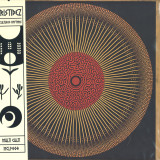
The cover of Echoes of the Night is based upon an original artwork by Hamish Macaulay, while the vinyl has been pressed using a 100% recycled compound known as eco-mix, making each record totally unique as the colours subtly change across the pressing run.
Buscar:k un experience
DJ Support: DJ Sabo, Gordon Invisible Inc, Ground Chill Mountain, Roe Deers, Thomas Von Party, Vidis
Multi Culti serve up a full-length treat from Peruvian artist Aristidez. Cofounder of Lima-based party collective Casa Locasa and the non-profit label Behua Icara (translated as Healing Rhythms), in support of indigenous culture, Aristidez has recently relocated to Berlin. With releases on Calypso, Disque-Discos, and Kebrada, as well as remixes for Amplio Espectro, Ida Sound, Discos Aquelarre, Rotten City Files, and Playground Records, Aristidez has quietly made a name for himself with a growing catalog of low-key dance tracks that have been championed by the likes of Matias Aguayo, Andrew Weatherall (RIP), and Inigo Vontier, to name a few. With an emphasis on the hypnotic power of rhythm, Aristidez channels indigenous influences in subtle fashion, alluding to visionary experience without resorting to pastiche or obvious tropes. There are freaky tribal rhythms but no shaman samples, just expertly produced tracks than reveal an expansive set of electronic influences that range across tempos and decades, from breaky 90s rave, 80s proto-trance, cult dub, downtempo and more. It’s listenable, danceable, heady and kaleidoscopic stuff that should stand the test of time.
Electric Lady Studios: A Jimi Hendrix Vision is the latest in-depth project from Experience Hendrix, encompassing 5 LP / 1 Blu-Ray of previously unreleased music Jimi Hendrix recorded at his newly created recording facility in 1970. The deluxe box set offers 39 tracks (38 previously unreleased) that were recorded by the new-look Experience (Billy Cox on bass, Mitch Mitchell on drums) at Electric Lady Studios between June and August of 1970, just before the legendary musician’s untimely death the following month.
The project also includes 20 newly created 5.1 surround sound mixes of the entire First Rays Of The New Rising Sun album plus three bonus tracks “Valleys Of Neptune,” “Pali Gap,” and “Lover Man”. The Blu-ray includes the critically acclaimed, full-length documentary Electric Lady Studios: A Jimi Hendrix Vision. The film chronicles the creation of the studio, rising from the rubble of a bankrupt Manhattan nightclub to state-of-the-art recording facility inspired by Hendrix’s desire for a permanent studio. Directed by John McDermott and Produced by Janie Hendrix, George Scott and McDermott, the film features exclusive interviews with Steve Winwood who joined Hendrix on the first night of recording at the new studio, Experience bassist Billy Cox, and original Electric Lady staff members who helped Hendrix realize his dream. The documentary includes never-before-seen footage and photos as well as track breakdowns of Hendrix classics such as “Freedom,” “Angel” and “Dolly Dagger” by recording engineer Eddie Kramer. The 5LP’s were pressed on audiophile grade vinyl by Quality Record Pressings and the box set includes an extensive booklet filled with unpublished photos, Hendrix’s handwritten song drafts, and comprehensive liner notes.
During the early days of Deepchord Records, Detroit's transient and forgotten subculture musically inspired label founders Mike Schommer and Rod Modell in significant ways. The apex of Mike's creative fixation with the city was in 2001 when he recorded the Von Schommer album dc15. To capture the nature of the environment he found so fascinating, Schommer recorded the project at the Crown Motel in Detroit, Michigan. While overlooking the transient life displayed in the motel courtyard, Mike crafted lonely tones from his modular synthesizer and mixed them with his rudimentary DIY electronics. Still, most significantly, he allowed the music to become impregnated by the environment (much like the stains in the permanently soiled carpets of the motel room floor), creating a holistic experience that remains close to his heart almost 25 years later. Initially available as a limited edition preorder cdr to the Hypereal 313 maillist, the album has been remastered and is now available on color vinyl for the first time.
Original photography and treatments on tracks untitled 4 and untitled 10 by Rod Modell.
Dive into the mesmerizing fusion of sounds with Alpha Sect’s latest vinyl release, ‘Fragmented Reality’, on Soil Records.
Featuring remixes by the renowned talents of Curses, Local Suicide x Skelesys, and Raw Ambassador, this EP spans the realms of EBM, Italo-Disco, Wave, and Techno. Each track invites you to journey through a sonic realm where pulsating rhythms and ethereal melodies converge, blurring the lines between genres. With Alpha Sect leading the way, immerse yourself in a hypnotic experience that transcends conventional boundaries.
‘Fragmented Reality’ is out now, offering a unique sonic adventure for the discerning listener.
Balancing glitch-pop and contemporary piano, the Belgian pianist explores the edges of her voice, language and twisted electronica
The Belgian pianist and producer maya dhondt releases a new album titled 'wow, x', marking her debut solo album under her own name. Navigating between bedroom glitch-pop and contemporary piano, she presents sounds of alienating beauty.
The album ‘wow, x’ will be released on September 13 on vinyl and all digital platforms via VIERNULVIER Records.
“I find beauty in the uncomfortable and disorienting" - maya dhont
The first single, 'desire,' is a mutated synth-pop track that gets under the skin. The song centralizes longing for something you don't know (yet). Perhaps it's the smell of damp earth, which can be both pleasant and unsettling? The single is now available on all streaming platforms and comes with a schizophrenic video by Sakis Brönnimann.
The first release show is scheduled for Saturday, October 5, at De Koer, Ghent.
More shows will be announced soon.
A postmodern cramp, that's how one could describe the music of pianist and producer maya dhondt. Her music is an intuitive and a never ending exploration that has the potential to be and become a multitude of things at once.
On her first solo album under her own name, 'wow, x,' she presents 10 varied tracks in which she creates equally idiosyncratic sound worlds. She takes the liberty to endlessly experiment with vocals, piano, and a mix of distorted lo-fi electronic sounds with an open mind. The result is sometimes synthetic and weird, sometimes compellingly beautiful, and always captivating, drawing you into its underlying melody. These intelligently crafted productions are connected by a penchant for alienating beauty: like a warm, but damp cave where it’s pleasant to linger just a little longer. Her original sound moves within a sonic spectrum reminiscent of contemporary artists such as Lolina, Astrid Sonne, claire rousay, aya or Carla Dal Forno.
"What I create never stands alone, it can be many things at once"
If the world were a sculpture garden, maya dhondt eagerly picks from it to draw inspiration from both visual and literary passages as well as personal experiences. Her highly personal bedroom productions are grounded firmly in the world due to philosophical references and politically charged messages. And the world she lives in is being questioned on 'wow, x', as the title refers to "What Or Why?". This is evident in the single 'desire': "What is the thing that matters / to exist / or to know you’re existing?" What does one choose in life: to live in the moment or to live to remember that moment?
In the lyrics on 'wow, x', maya dhondt plays - at times childishly - with language and its boundaries. On 'tip toe tip,' banal wordplay leads to an unexpected confession, and the seemingly simple phrases in 'untitled' conceal hidden life lessons. dhondt's world of words is multilayered and multilingual: Dutch ('kleine cijfers, groot verlies'), English ('desire'), and French ('untitled') are at her disposal. And on the fierce track that is 'minimalinvasiv,' not only she turns to hardstyle, but also to German - a language dear to her due to her Swiss heritage.
In their musical journey spanning 15 years, Jungle by Night always knew their music isn't about individual talent, but in the blend of all elements its members bring to the table. This realization birthed the theme of their seventh album, “Synergy”. With the mantra "the whole is greater than the sum of its parts" echoing in their minds, Jungle by Night embarked on a mission to make an album that is recorded right in the moment, and as live as possible, to capture the energy between musicians. And to take it a step further, they threw open the doors of their studio in Amsterdam and invited some of Holland’s most prolific vocalists such as: Spinvis, Sef, Merol, Pitou, and Meral Polat. Each vocalist brought their unique style to the mix, infusing the tracks with depth and emotion. Recorded in their beloved studio in Amsterdam Noord, "Synergy" captures the essence of Jungle by Night's creative spirit. Here, imperfection is embraced, and spontaneity reigns supreme. It's about capturing the energy of the moment, where music comes alive in all its vibrant glory. So, dive into the world of "Synergy" and experience the crazy world Jungle by Night, and friends. It's more than just an album – it's a testament to the beauty of coming together and creating something greater than the sum of its parts. Jungle by Night are seven Dutch guys who together form a live act to be reckoned with. This Amsterdam band consists of a lot of synths, drums, bass, guitar and percussion enhanced by a trumpet and trombone. From more brass-heavy earlier albums to a stronger focus on the electronic groove on their latest, they bravely go where no band has gone before and now find themselves in the goldilocks zone between analogue dance music, nu-disco, Krautrock, 70’s funk and 80’s electro. The transfer to a more electronically driven sound might have been a small step for this merry band of highly skilled musicians, but it became a giant leap for the people on the dance floor. Their radiant and energetic live shows have become the must-see festival act that festivalgoers all over Europe include as a staple in their concert schedule. They know this won’t be a show, it’ll be a downright party. It’s like that tree in the forest. Was it really a festival if you didn’t see Jungle by Night? What constitutes this ever-present attraction is the highly danceable and addicting build up of their set, in which they take their audience by the hand and lead them into the groove. What happens when you come out on the other side? Depends. Just know you won’t be the same.
"Springing from Osaka, Japan’s cultural center and historical heart, comes HYPER GAL, a two-piece band consisting of visual artist Koharu Ishida on vocals and noise artist Kurumi Kadoya on drums.
The minimalist duo make maximum impact - stripping music down beyond the bare essentials, to create shimmering, no wave pop from blast beat drums, glittery keyboard loops and ethereal bubblegum vocals - laced with velvet and firecrackers.
On “After Image” HYPER GAL hold fast to their limited palette, but expand their reach. Working with a canvas larger than ever before, the band fearlessly alternate bold, avant-garde strokes with intimate, deliberate gestures. The result is a new world awash in a sea of endless possibilities - only visible with closed eyes and open ears.
“There's something almost vapor-wave-adjacent about the glorious racket riled up by this pair. The effect of repetition throughout, the way the beat slips in and out of time, is hypnotic” - THE WIRE
“Blends elements of noise, no wave, pop and blistering punk to create something remarkable and new… Endlessly inventive and challenging” - MAXIMUMROCKNROLL
“These royalty of no-wave-pop don't blink and their delivery is absolute. An exhilarating, total experience” - NOISE-FI
""Indescribable, just listen to it for yourself. And don't take any stimulants beforehand, you could end up in the emergency room"" – OX FANZINE
“It looks like noise, but there is too much color. Pop, but unsellable. Their music goes beyond barriers, genres and boundaries, as if a virus had been injected into a video game bringing delirious ruin to a perfect world” – SODA POP
“Intensely good. A beautiful challenge, a noise, relentless, not an onslaught, always inviting, like they want to pull you in rather than chase you away. Actually, this is joyous” - THE ORGAN"
The debut album from Paris Paloma, 'Cacophony' follows (and includes) her breakthrough single 'labour'. Written around themes of feminine rage, societal expectations on women and deeply embedded misogyny, the album continues the deep consideration and dissection of Paris' own experiences and observations as a woman. 'labour', and subsequent singles including 'as good a reason', have seen her lyrics and music resonate deeply with an every growing fanbase. The 700+ fans at her sold out London show were termed a 'politely loving coven', capturing the sense of community and female energy which Paris inspires. Unheard tracks such as 'his land' are emotive and cinematic, while the gloriously climactic 'the last woman on earth' has become a fan favourite already via TikTok.
With her new single release "Uh-Ah Song" the Ghanaian Frafra Soul singer Florence Adooni announces her debut album "Fo Yelle" on Philophon.
A lot has happened since the release of her first single "Mam Pe'ela Su'ure" in 2021. While this release was a pure studio project, Florence Adooni is now an eight-member live formation, made up of young talents from the highlife scene of Kumasi. The group has already considerable credentials: In 2023, they toured Europe twice and thrilled their audiences at festivals such as Roskilde, Down The Rabbit Hole and Überjazz. And this year, with the debut "Fo Yelle" under the belt, Florence and her group embarking on a 50+ concert summer tour through Europe, from Sweden to Portugal to UK and at festivals like FMM Sines, Xajazz, Africa Oye, Fusion, End of The Road.
The title track "Uh-Ah Song" is based on a rhythm typical of Kumasi and shines with its playful and cheerful character. Florence remembers the process of creating the piece: "When my producer Max Weissenfeldt came to me to play me on the piano an idea for a new piece, my daughter, who had just been born, began to sing in rhythm ah-ah-ah, with all joy in her face ever imaginable, while Max was playing. Max turned around and answered her with uh-uh-uh, to which she replied again with ah-ah-ah. We laughed so much and decided to make it a piece that would capture that very moment of joy we just had experienced. That's why it's somehow a children's song".
"Otoma Da Naba" (The Creator Has Done Well) has a sequencer bass line from a Roland TB-303 as its foundation. While Florence holds her verse in a kind of Ethiopian pentatonic scale, in the pre-chorus she switches to a sweetly swinging heptatonic motif, with a typical highlife guitar in the background creating the atmosphere. In the chorus, the singing then changes in that unique choir style, which is the trademark of Frafra music.
The international debut album "Fo Yelle" will be released on Philophon this summer.
Welcome to the fascinating musical universe of EXOTIC ROOSTERS! It emerges as a burst of freshness and originality, blending an eclectic variety of musical influences to create a truly unique and exciting auditory experience. Comprised of experienced and virtuosic musicians on their respective instruments, the group captivates audiences of all ages with its energy and unmistakable style. Exploring the intersection between tradition and modernity, EXOTIC ROOSTERS combines the rich soundscapes of marimba, vibraphone, double bass, percussion, and drums to create an expansive and nuanced musical landscape. From frenetic rhythms that invite dancing to captivating melodies that transport the listener on an emotional journey, each performance aims to be a celebration of cultural diversity and artistic expression.
In the relentless musical era of the late 90s, two passionate souls, Eugeni Camacho and Rafa Navarro, embarked on a unique sonic odyssey by blending the melodious marimba with the pulsating drums. Together, they successfully created STAMINA PERCUSSIO in their concerts. However, life composed its own score, separating Rafa, who was abducted by the Canary Islands, and Eugeni, who was drawn to vibrant New York. Upon their return, after years of musical exploration in different projects with the Oscars (Oscar Cuchillo and Oscar Rocher), their hearts aligned with a new melody. In the loom of destiny, they discovered the emerging talent of Bernat Cucarella. A prodigy with drumsticks and a 4.0 brain. By uniting Rafa's island experiences, Eugeni's resonant jazz from the Brooklyn alleys, and the rich musical diversity harvested in life's journeys by each of the members, they gave birth to a magical musical tale: EXOTIC ROOSTERS
Belarusian post-punk / synth pop group Molchat Doma have always exuded the kind of brutalist aesthetic of the architecture that adorns their album art. It's cold, gray, imposing, industrial and yet there are human hearts beating within those foundations. In the wake of their breakthrough success in 2020, the trio endured a polarity of experiences, from the nadir of an uprooted life and forced relocation away from their native Minsk to the apex of headlining massive shows across the world. It was in this headspace that the band settled into their new home of Los Angeles to finish writing their fourth album Belaya Polosa, a testament to change in difficult times, a love letter to the digital pulse of the `90s, and a technicolor reinvention of the band's somber dancefloor anthems. From the opening synth swell and drum machine throb of "Ty Zhe Ne Znaesh' Kto Ya," to the goth / post-punk austerity of "Son", to the swirling electronic textures mixed with reverb-drenched guitar flourishes, expansive space, and yearning vocals of title track "Belaya Polosa" - that suggests Depeche Mode at their most reflective or The Cure at their most downtrodden - to the sultry and seductive "Chernye Cvety"_ a track reminiscent of Duran Duran's early `90s output in its fusion of dreamy guitars and authoritative mechanized beats _ and the interwoven layers of instrumentation, soaring chorus, and melodic sophistication of "Ya Tak Ustal", it's clear that Molchat Doma are operating on another level. Molchat Doma gained following with earlier albums that sound like third-generation bootlegs of banned recordings from the Eastern Bloc made after a few key entries in the Factory Records catalog were smuggled in from the West. Belaya Polosa propels them into a new direction while retaining their cold minimalist delivery they're known for. The basement grime and dirty tape-head sound of their previous work are now making space for digital luster and shimmering production values. And while Molchat Doma's broadened aural spectrum adds a synesthetic power to Belaya Polosa, the mood remains rooted in stark and unflinching self-reflection. Molchat Doma retain the duality of being both cold and feverish in their delivery while pushing their music into expanded territories through an armory of new textures. The trio continue to harness the sound of harrowing beauty thriving under harsh realities.
Kato Hideki's Statement: "The Walk is the first collaboration between me and my brother from another mother, Kramer. We started working together in the late summer in 2023, discussing the thematics and the sonic palette of the album. We shared strong connections with the writings by Robert Walser and Basho - both of them walked, dreamed, lived and died on the road. Ambient music was our natural plane for us to transduce the power of their literature into our music as signifiers. Neither of us imagined just to make 'another ambient record', nor a direct translation of their writings. My instinct was to use various modal colors with modulation - slow yet structured music that sounds deceivingly similar to ambient music. Kramer's genius was apparent to me: his ability to elaborate the music as a composer / musician with his keen ears; to frame the album conceptually, sonically and musically as a producer. What you hear in this album is a true collaboration between two artists who trusted each other to let the music transcend. Here you have it, enjoy YOUR walk - dream, live and die well!" Kato Hideki - Brooklyn, NY on April 3rd, 2024 Kramer's Statement: "Sometime in the latter 20th Century, I became aware of the art of The Brothers Quay, two American animators living in London and making the most beautiful works of art I'd ever experienced in cinema. I noted that some of their work was inspired by_ 'the writings of Robert Walser'. Fast forward to 2024 and I have now read every word there was to read (translated into English) by this unique Swiss-German writer. I'd waited decades to find the right 'environment' in which to create music in dedication to this great prose writer and poet, and in 2023, I found that it was not 'the right environment' that I'd been waiting for, but rather, the right collaborator. Kato Hideki and his extraordinary work as composer for film, dance and just about every other creative discipline you can imagine, was equally as inspiring to me for this project as the words and worlds of Walser and Basho. Our journey in collaborative composition began all over the global map, but arrived at the same physical endpoint, and at the very same point in time. I'm not sure that I would even be interested in music at all, unless there were other artists to partner with as I worked. Working alone means Nothing to me. This months-long act of co-creation i have shared with Kato for "THE WALK" has made me as happy to be alive as Walser and Basho were so happy to be alive while on their walks, as evidenced by their extraordinary descriptive powers, knowing that the world around them - so simple yet so very complex - made life so wondrous, and so well worth the sometimes seemingly insurmountable struggles of finding a way to survive Today, so that we might try again Tomorrow." - Kramer, April 9, 2024 (Asheville, NC)
Black Truffle is thrilled to present a Song for two Mothers / Occam IX the first ever solo release from Laetitia Sonami. Born in France in 1957, Sonami studied with Éliane Radigue in Paris before moving to California in 1978 to study electronic music at Mills College, going on to make important innovations in the field of live electronics interfaces and multi-media performance. Sonami is perhaps most closely associated with one of her inventions, the Lady’s Glove, an arm-length tailored glove fitted with movement sensors allowing the performer fluidly to control digital sound parameters and processing, as well as motors, lights and video playback. Having performed with the Lady’s Glove for 25 years, Sonami retired it in 2016, turning her attention to the interface/instrument heard and pictured here, the Spring Sprye.
In Sonami’s own description, “The Spring Spyre is composed of three thin springs that are attached to reverb tank pickups, mounted on a metal ring. The audio generated when the springs are touched, rubbed or struck is analyzed in Max/MSP. The extracted features are then used to train machine learning models in Wekinator and Rapidmax and control the audio synthesis in real time. We never actually hear the springs.” After decades of aversion to documenting her work on recordings, a Song for two Mothers / Occam IX treats listeners to two side-long performances with the Spring Spyre: the very first piece developed for the instrument and the most recent, the two contrasting remarkably in sound palette, energy and form. A Song for two Mothers (2023) spins an intricate web of rippling synthetic burbles, rapid sweeps and fizzing textures. Performed in real time with the sensitive and partly uncontrollable Spring Sprye ("a bit tyrannical," Sonami calls it), the music is delicate yet chaotic. Abrupt gestures hover against a backdrop of silence, "devoid of spatial or temporal direction". After several minutes, the sound-world becomes metallic and percussive, tapping and ticking in pointillistic flurries before a wavering harmonic cloud emerges, sprinkled with resonant drips and pops.
Occam IX is a radically different proposition. At the outset of Sonami’s exploration of the Spring Sprye, she asked her former teacher Éliane Radigue to compose a piece for it—and her: like all of Radigue’s work since she ceased working with analogue electronics at the beginning of the 21st century, Occam IX is written not only for an instrument but also for a particular performer. These scores are developed verbally, through meetings and conversations between performer and composer; each is grounded in an image (usually kept from listeners, to avoid influencing their experience); all magnify the subtlest acoustic phenomena and require great commitment and patience from the performer. Sonami’s is one of the few Occam pieces to make use of electronics, bringing it closer to Radigue’s famous longform pieces for ARP 2500. Beginning from a rumbling low tone, the listener is gradually immersed in slowly lapping waves of synthetic tones, eventually thinning out into delicate bell-like pings against a background of white noise, reminiscent of one of the most beautiful sections of Kyema from the Trilogie de la Morte.
Accompanied by notes from Sonami, her longtime collaborator Paul DeMarinis, and Radigue, and illustrated with scores, photographs and images of the Spring Spyre, a Song for two Mothers / Occam IX is an essential document celebrating an under-recognised pioneer of electronic music and performance.
Coming out on September 6th on Sharptone Records, Sundiver is Boston Manor’s fifth album and one that represents a glimmering dawn for the Blackpool five-piece. Grown from a seedbed of optimism and sobriety, the LP celebrates new beginnings, second chances and rebirth. With two members recently stepping into fatherhood, hope is baked into every note. “Datura came out of these really dark few years over the hangover of the pandemic,” Henry reflects. “I'd been struggling a lot with drinking and not taking care of myself and bad mental health and stuff. We wanted Sundiver to be the next morning of the following day.” He explains that it feels good this time round to write through the lens of positivity. “The themes began to emerge, of rebirth, spring, dawn, sunshine and then other elements just started to fit into that.” It was during the making of Sundiver that Henry found out he was going to be a dad. This album is a significant one for the band. Originally coming out of the emo and pop punk scene, they’ve explored sonics and genres throughout their career, taken risks and achieved more than they could ever had dreamed of. They’ve grown up as Boston Manor – their lives and the world changing around them. They’re now taking stock, at a crossroads of the band they were and the band they could be.
While writing the album, they revisited the bands that shaped them in the late 90s and early 00s. “I was listening to the music I loved when I was a teenager and I just thought, why don't we make music like our favourite bands?”, guitarist Mike Cuniff remembers with a smile. “So we brought our interests to the table that way. Y2K kind of vibe. There are elements of Deftones, there are elements of Portishead in there, some Garbage, The Cardigans.” He laughs and adds NSYNC to the list of inspirations. From this cocktail of classics comes a dynamic and ambitious record, rich with depth, groove and more hooks than Peter Pan’s nightmares. Lyrics that foxtrot from parallel universes to personal growth, vivid dreamscapes to raw grief. Individually they’re single strokes full of meaning and magic. Together they’re a landscape.
Container (out Feb 15th) is the first single and it’s them at their best – impassioned and infectious. “This song is about the stagnancy of life creeping up on you & how that can bring about change.,” Henry explains, citing Ocean Song by US band Daughters as an inspiration.
The concept of the butterfly effect is present on Sundiver – how small actions can lead to big changes. This is no clearer than on their second single, Sliding Doors (out April 5th). It has the golden sound of late 90s Lollapalooza rock – think Smashing Pumpkins - rebooted with crisp 2024 production and a potent heaviness. In the lyrics Henry wonders, what if?, pondering on what could be. The idea that there are infinite versions of you whose lives splinter off in different directions at every decision you make. That there’s another you out there somewhere right now reading this sentence, and another me writing it. “So much is down to chance and circumstance,” Henry says. “You might catch that train and your life totally changes. Or you might miss it and things stay the way they are.”
Heat Me Up (out May 30th) is defiant and victorious, the audio equivalent of quitting your shit job and driving into the hot summer sun with a head full of dreams. “The lyrics are about love and gratitude,” Henry shares. “Another theme on the record is just appreciating what you have. It’s about not taking for granted the things that you've been afforded.”
There was some natural magic in the creation of Sundiver. They worked with their usual producer, Larry Hibbitt, and engineer, Alex O’Donovan, but instead of recording in London again they ended up in the green pastures of Welwyn Garden City. “Because Larry lives out in the countryside now, it was a way different environment and way different experience recording this time,” Mike remembers. “That contributed a lot to the brighter sound of the record.” The daily barbecues they had during their recording sessions imbued the process with harmony – five old friends spending quality time together and making quality music.
However, the album is by no means one-note. Birthing this new world they’ve created wasn’t without it’s pain, and that can be heard in the heavier moments on Sundiver. What Is Taken Will Never Be Lost is the most-stripped back on the album, a slow rock number seasoned with the downtempo Portishead influence. The heartfelt lyrics are Henry’s way of processing the loss of his grandfather, who died in a hospice last year(?). “It was just fucking horrible. It was always cold when I went there and they were always trying to get rid of me. The song title, What Was Taken Can Ever Be Lost, is the idea of his memory fading at the time because of dementia.” Henry goes onto explain that shoeboxes of photographs, diaries and a legacy is what he’s left behind. “He lived a really rich life and it has really impacted me and my father. His legacy is etched into the fabric of history in a very small way.” This song continues the connection between his grandfather and the band, as his painted face is emblazoned on the cover of the very first Boston Manor EP, Driftwood. As well as emotionally heavy themes, there’s heaviness in the music of Sundiver too. The closing song, Oil In My Blood, descends into an intense shoegaze outro with Debbie Gough from Heriot screaming hellfire. It’s in moments like this that the band show us aggression and fury can be as much a part of positive change as quiet introspection. The last lyrics of the song, “It resets and starts again,” leaves us in contemplation as the final chord rings out.
Touring the US, Europe and Japan over the years makes for an impressive CV, but if you know anything about Boston Manor you’ll know that they’re all about their hometown. Their choice to work with Blackpool-based photographer Nick Barkworth is testament to that. They’ve been working with him since the pandemic. “He captures Blackpool in a light that really reflects the weirdness and quirkiness of the town,” Henry says.” He's got a really good way of presenting that.” For the Sundiver cover, Nick photographed a 30ft tall abstract glass sculpture made by the local artist John Ditchfield. A striking and bewitching monolith that’s familiar to them but unusual to most people. “It has such kind of a gravity and power to it,” Henry describes the sculpture which stands in a field just outside of the seaside town. “It reminds me of either an explosion or a star or a supernova. To me it represents new life, power and radiance.” Boston Manor have got a knack for that - connecting the otherworldly and the everyday, the stars and the streets.
They’re a band known for using their music to make bigger statements about society. This time round they’re harnessing the uplifting power of music, and the communion it creates, as an antidote to the daily doom and isolation. “It seems like absolute chaos out there at the moment,” Henry says. “You’ve got Gaza and Israel, you've got Russia, you've got the fact that 40% of the world is going to have an election this year and increasingly most governments are leaning very far to the Right. The internet is dividing everybody, people are getting poorer and more desperate. It's really, really scary.” They considered trying to tackle the weight of it all in their music. “We could’ve written Welcome to the Neighbourhood on steroids, where it's just absolute darkness and misery”. He’s referring to their 2018 concept album that deals with class, inequality and the bleaker side of Blackpool. “But I think it's really important to write something that people can be immersed in and find some sort of solace in. Somewhere they can escape to from the modern day pressures and everything that’s going on. We’re all in this together.”
Campo's debut album, released in 2012, was a milestone in the new South American music scene. The brainchild of Juan Campodónico - one of the creators of Bajofondo - combines sophisticated pop, electronica, and South American roots, uniting past and present in a unique way. Neo-cumbia, tango, and candombe shake hands with Britpop, soul, and trip-hop in a timeless album. A place where indie rock intersected with the great Latin bands of the 1950s, fringe genres like cumbia villera were transformed into sophisticated music, tango joined alternative pop, and track music became contemplative and landscaped. Juan Campodónico has a long artistic career (Peyote Asesino, Bajofondo) and extensive experience as an artistic producer on some fundamental records of Uruguayan and South American music (Jorge Drexler, Cuarteto de Nos, No te Va Gustar among others). In 'Campo' is a very heterogeneous group of composers, performers and instrumentalists from different genres and geographical locations (Jorge Drexler, Martín Rivero, Ellen Arkbro, Pablo Bonilla and Verónica Loza, among others). 'Campo' was based on the song format, jumping the limits of the Río de la Plata, immersing himself in rhythms, genres and forms of South American songs from the past and present, seeking the link with pop, rock and electronic music. The album -which received nominations for the American Grammys, the European MTV Awards and the Latin Grammys- broke schemes and prejudices. He brought together opposite worlds such as cumbia and britpop, songwriters and dance music, or bolero and electropop, finding beauty and sophistication in unexpected places.
At once a spiritually-charged journey and a shit-kicking party record, American Cream Band comes to Quindi covering all the bases.
American Cream Band was formed by Twin-Cities musician Nathan Nelson around 10 years ago, taking the form of improvised live shows and albums Frankensteined from these sessions into exultant, fully-formed records you can sink your teeth into. The trick with improvised music is to start with intentions, however abstract they might be, and Nelson leads his rolling cast of collaborators into the creative fray with subtle guidance which drives the impulsive musical moment forward.
The band's previous records have manifested on labels like Moon Glyph and Medium Sound, and now Presents arrives in a freewheeling flash of snappy new wave, skronky sax, call and response sass and some krautrock-minded sonic cosmology. The album came together in December 2021, when Nelson took ten musicians to legendary studio Pachyderm in Cannon Falls, Minnesota. Living together, eating together, and with Nelson quietly setting up his low-key magick intentions around Jupiter's planetary frequency and the studio's abundance of elephant statues and carpets, they laid down some drum-heavy sessions that became the building blocks of the record.
'Taste What We Taste' is the perfect example of an exuberant groove pounded on skins as a vessel for a joyous get-down, with the singers and players free to freak out on top. Nelson remains at the centre of the melee, throwing half-sardonic, half-heartfelt calls out for connection. 'Banana' celebrates nonsense and holds down the most serious of beats - a disco-not-disco deadeye dripping in late night sleaze and lysergic potential. On 'Royal Tears', the jagged guitar chops call back to Gang Of Four, while the hot n' heavy sax from Cole Pulice baits James Chance and all the other angular New York un-jazz misfits.
Amongst his other implied intentions for the recordings, Nelson wanted to channel opposites, not least the distinct male-female energies in his vocal sparring with the girls on assistance duties. It wouldn't be right to call them backing singers as they shoot back at his punchy mantras, bringing a certain fierce femininity that tips its hat to The B-52's Cindy Wilson and Kate Pierson, not to mention iconic post-punk bands like Au Pairs, Delta 5 and Bush Tetras.
There's space for the dreamier kosmische which has crept into the American Cream oeuvre in the past, as 'Sirens' opens the album up in a swirling pond of rag tag percussion and molten synths. 'Words Would Handcuff Us' cools the whole riotous assembly down in unmoored perfection, a strung-out Bossa nova seance dusted with celestial drips from analogue spaceships.
Equally treading the line between light and dark, conscious and unconscious, the sacred and profane, Presents is a life-affirming, creep-under-the-skin listening experience - a joyously transient chapter in the evolution of American Cream Band.
The impact, influence, and importance of Run-D.M.C.'s self-titled debut – the album that invented hardcore hip-hop and bridged rap, rock, and funk in then-unparalleled ways – cannot be measured. The first full-length record released by Profile Records, the 1984 set permanently changed the sound of music, broadcast streetwise wisdom to every corner of the country, and made the notion of a one-man band a distinct reality. Bolstered by an incendiary blend of staccato deliveries, stark beats, aggressive exchanges, evocative hooks, and socially conscious messages, Run-D.M.C. still hits listeners in the jaw with the same intensity it did nearly 40 years ago when it could be heard booming from ghetto blasters carried around city blocks nationwide.
Sourced from the original master tapes, pressed on MoFi SuperVinyl, and strictly limited to 3,000 numbered copies, Mobile Fidelity's 180g SuperVinyl 33RPM LP is the definitive-sounding version of the groundbreaking work cited by Rolling Stone as the 378th Greatest Album of All Time. This reissue also represents the first time this gold-certified effort has been presented in audiophile quality. Benefitting from the ultra-low noise floor, superb groove definition, and dead-quiet surfaces of SuperVinyl, Run-D.M.C. now plays with a clarity, immediacy, punchiness, and directness worthy of the artistry, urgency, and intellect of the trio's material.
The brilliance of Russell Simmons and Larry Smith's production comes into view as if the music is being broadcast on a giant system in a small club — only more focused, lively, and unlimited. Free of dynamic constraints and fatiguing harshness, this LP invites you to turn up the volume and experience the raw, rough, invigorating songs that changed the look, sound, and feel of hip-hop overnight. Think the trio’s sparse framework of drum machines, tag-team rhymes, keyboard accents, and turntable scratches is stuck in the mid-80s? Spin MoFi’s SuperVinyl LP and gain new appreciation for the music, messages, and production on display on Run-D.M.C.
Recorded in the wake of two successful and pioneering singles, both included on the album, Run-D.M.C. effectively took a sheet of coarse-grit sandpaper to the polish, sheen, and linear presentation of all the hip-hop that preceded it. Stripped to bare-bones foundations, the songs grab your attention and shake you by the collar with a combination of industrial-leaning rhythms, staggered deliveries, dance drama, and hard, minimalist percussion. Then there are the lyrics.
The LP broadcasts a smart mix of boots-on-the-ground reports, uplifting advice, and then-nascent b-boy culture. In one fell swoop, its narratives and music rendered the scene’s proclivity toward glamor and softness passé. Run-D.M.C.’s tough, cool-minded fashion sense showed the trio walked its talk and gave fans — particularly those living in long-ignored urban areas — heroes which with they could identify. Kangol hats, black jeans, leather jackets, Adidas sneaks, and gold chains were the new currency.
In every regard, Run-D.M.C. signifies the birth of modern hip-hop. Never more obviously than on the groundbreaking “Rock Box,” where rap and rock were first fused. As the first hip-hop video to receive regular rotation on MTV, the track eviscerated racial and social boundaries, awakened musicians and listeners to new possibilities, and redefined both popular music and, ultimately, popular culture. As the Roots’ Questlove has stated, it “ knocked down many obstacles, enabling hip-hop to become the new gospel."
Such teaching includes the real-world scripture of “Hard Times,” utopian hopefulness of “Wake Up,” and observational truths of “It’s Like That.” Released as the group’s debut single well before its eponymous album, the latter tune established themes and outlooks Run-D.M.C. would embrace during its career. Namely, the keen awareness of various prejudices, economic ills, and disruptive violence as well as the knowledge that education, self-motivation, and hard work were the ways to escape disadvantages and disillusionment.
Inspired and inspirational, the song reflects the spirit and shrewdness that courses throughout Run-D.M.C. That includes a detailed account of the trio’s not-so secret weapon (“Jam-Master Jay”), purpose statement (“Hollis Crew (Krush-Groove 2)”), and a revolutionary hybrid autobiographical narrative-dis track (“Sucker M.C.’s (Krush-Groove 1)”) widely regarded as one of the best hip-hop songs ever created. The same can be said for every moment on Run-D.M.C.
MoFi SuperVinyl
Developed by NEOTECH and RTI, MoFi SuperVinyl is the most exacting-to-specification vinyl compound ever devised. Analog lovers have never seen (or heard) anything like it. Extraordinarily expensive and extremely painstaking to produce, the special proprietary compound addresses two specific areas of improvement: noise floor reduction and enhanced groove definition. The vinyl composition features a new carbonless dye (hold the disc up to the light and see) and produces the world's quietest surfaces. This high-definition formula also allows for the creation of cleaner grooves that are virtually indistinguishable from the original lacquer. MoFi SuperVinyl provides the closest approximation of what the label's engineers hear in the mastering lab.