Ten bad boy digi riddims from the myspace era by Copenhagen’s Maffi crew, dubbed out into 3D space by disrupt in 2024. Raw, minimalist CyberDancehall at its best, nostalgic and oddly futuristic at the same time, this album is quickly becoming RoboCop’s favorite playlist when going to work.
…………………………………………………………………
Maffi Promotions a.k.a. Maffi Boys come straight outta 1773 Kbh V, Copenhagen, Denmark. Originally founded in 1990 by the two homeboys, lazy body Moog and Junior the Rat, Maffi Promotions have been a steady producer of simple digital riddims for years. Hanging out in the streets of Hummel City Junior & Moog used to entertain their friends with the primitve riddims of the Maffi sound. Not knowing that they would do the exact same thing fifteen years later, they continued to believe that one day they would move up the ladder, break out of the underground and reach for the stars.
Now, after finally adopting a little sense of realism, the two homeboys have realised that stardom is nothing compared to spamming people on myspace. So the two stoners decided to get a couple of friends together and turn up the bass online. Together with their sound crew FIREHOUSE, Maffi deal nuff weed and gyals!
Maffi Boys are very dedicated to the art of playing Sensible World of Soccer, rolling weed joints with Manitou tobacco and keeping it real in a Vesterbro-style. So watch out! And don’t test! We’ll be putting up new riddims on a weekly basis. We have nuff things brewing – including a delicious chicken!
………………………………………………………………
Growing up in the streets of Hummel City, Vesterbro, MOOG learned the pleasures of sleeping late, playing Sensible World Of Soccer and picking up hot gyals at an early age. He has spent most of his life trying to master these crucial skills. Taking a break from the dog race, Moog is currently focused on reaching a higher understanding of reggae-science and weedology.
JUNIOR experienced the necessity of rolling well-made spliffs at an early age. Incorporating the aestethic heritage of Scandinavian design, he has spent most of his life perfectionizing this old and traditional art form. Junior is currently taking his ph.d. in digital reggae by buying crates of 80’s 7″ and selecting for his sound system Firehouse.
Suche:k un experience
Comes with insert and download coupon.
Imagine a Latin remake of Back to the Future. The mad scientist is Arsenio Rodriguez (the godfather of salsa) and the young student who travels through time with him is Eblis Alvarez (Meridian Brothers). This album can only be described as the perfect soundtrack for that movie that never was.
After the massive buzz generated by his first solo album, Mentallogenic, Alex Figueira got back in the studio to work in a more collective fashion this time, carefully assembling the second album of his largest project to date, Conjunto Papa Upa; a team of 6 musicians, spanning 3 generations of some of the best talent in the Latin and avant-garde scenes.
In an era where tropical music is dominated by purely electronic and rhythmically uniform sounds, the ten songs encompassed in “Fruta Madura” (“Ripe Fruit”) wander through the most diverse tempos, rhythms, and motifs effortlessly. A real breath of fresh air that gracefully incorporates soul, funk, jazz, psychedelia, and electronics into a solid tropical, irresistibly polyrhythmic foundation, without ever succumbing to the many genre clichés.
The distinctive production and catchy songwriting of Figueira shine in a very distinctive light on this second full-length. Living up to his reputation (Miles Cleret, founder of Soundway Records, called him “one of the scene's truly authentic and eccentric producers”), he takes the opportunity to show he’s not afraid to keep walking his own path.
Taking the band for a wild ride through the traditions of Africa, America, and the Caribbean; contrasting them with a ridiculously wide plethora of vintage, contemporary, and futuristic sounds, and pivoting on the exuberant musicality displayed by his musicians; the result leaves no doubt: this album is destined to be considered a future classic of the exciting tropical psychedelic music of the 21st century.
Addressing the most diverse themes in this new collection of songs, things take on a much more mature tone, as the title clearly suggests.
The opening track “El segundo es más sabroso” (“The second one is tastier”) sets the tone in the most assertive way imaginable, with the band boldly declaring, through multiple metaphorical references (laid upon a crazy mix of Dominican merengue, Detroit techno, classic and free jazz, dub, and electro), that the bar will be set higher with this second album.
The remaining compositions touch upon the most diverse subjects, with a fair dose of humor, sarcasm, and postmodern “magic realism”. “El Algoritmo” (The Algorithm) is a parranda-cumbia hybrid (for lack of a specific term) about the omnipresence of technology in our lives. The sophisticated Latin soul of the titling track “Fruta Madura” makes a case for the beauty of the maturity process. Some key philosophical teachings of Marcus Aurelius (the role of causality, the impositions of “the logos” and the importance of self-control) get a twisted cumbia treatment on “Reos del Deseo” (Prisoners of Desire). “No le pongas Coca-Cola” (“Don’t put Coca Cola in it”) shows us the most satirical side of the band, accusing those who mix Coca Cola with Rum of committing "sacrilege", on a powerful base of Dem Bow (the grandfather of Reggaeton), intertwined with touches of soul, salsa, and Cuban comparsa.
"Háblame Claro" (“Talk to me clearly”) is a story of heartbreak that evokes in its first part the spirit of the erotic salsa of the 80s (a subgenre deeply despised by purists), and after an unexpected samba interlude, leads to the hardest salsa of the 70s (a subgenre adored by purists), to end up in the surprising form of pure Afro-Cuban ceremonial music.
“Tu mamá tenía razón” ("Your Mom Was Right") is an attempt to exalt the spirit of the Latin American soap opera in the key of “acid bachata”, to recount a real-life case, witnessed by the band on countless occasions: the partying woman who arrives at the show accompanied by her bitter husband, who obviously does not like to dance. A very cheeky song to talk about the very serious and pertinent topic of female empowerment.
“La misma vaina” (“The same thing”) with its indescribable blend of bantú, candomblé, and Mozambique rhythms with abstract synthesizers, is an ode to adventure in favor of the aversion to taking risks and seeking predictability.
“Amigas picadas” (“Salty friends”) is another humorous song recounting another real-life case witnessed by the band on countless occasions: a love encounter sabotaged by the girlfriend's friends, who all happen to fancy the same guy. A jazzy take on the ancient Dominican rhythm of pambiche (grandfather of merengue), with generous psychedelic touches, resembling the classy late 60s releases of Guadeloupe's legendary producer / label owner Henri Debs.
“Vinimos a hablar” (“We came to talk”) takes sarcasm to the highest level, to ridicule the absurdity (also experienced by the band firsthand) seen in live music venues where people pay a ticket to go and have conversations that could be carried out much better on any bar, where no band is playing. The music alternates between a delicate melody with loose, sparse percussion and a full-on, pumping Angolan semba, with a techno kick drum included; bringing things to an apotheotic grooving finale, where the peculiar swing of Venezuelan calypso from the Callao region is thrown on top of all the precedent elements; closing the album in the most uplifting, “end of the carnival parade” feel.
The artwork is a delicate and impactful oil painting by Colombian artist Kevin Simón Mancera, who has collaborated many times with the label before (“Maracas, tambourines and other hellish things” tape and the Lola’s Dice LP).
What the experts are saying:
“Alex (Figueira) dove into this work with a brutal cohesion between lyrics and synths. Timbre poetry, sound poetry (you name it). And that, superimposed on his always impeccable percussive base, confirms the title of “avant-garde visionary of our beautiful Latin music”".
EBLIS ALVAREZ (MERIDIAN BROTHERS)
“Papa Upa's infectious quirkiness is a balm against boredom. A mature album, but without an expiration date”.
GLADYS PALMERA
“Here there is a lot of strength, drum, cadence and psychedelia, lost dance rhythms, united in an intercontinental Latin/African/and Caribbean journey, a unique winning combination that we could consider the new “Ritmo Figueira”.
DISCODELIC
Conjunto Papa Upa are:
Alex Figueira - Timbales, percussion, vocals.
Gerardo Rosales - Congas, percussion, vocals.
Ramón Mendeville - Bongos, percussion, vocals.
Randy Winterdal - Bass.
Andrew Moreno - Guitar.
Nico Chientarolli - Organ, piano, synths.
All songs written by Alex Figueira.
Arranged and performed by Conjunto Papa Upa.
Recorded, produced, mixed and mastered by Alex Figueira at Heat Too Hot, Amsterdam.
Experimental black metal from Brooklyn featuring members of Pyrrhon, Krallice, Sigur Rós, The Glen Branca Ensemble, Steve Reich. Recorded by Colin Marston (Dysrhythmia, Krallice, Liturgy). Follow-up to the bands well received 2022 debut Aveilut. The Promise Of Rain, the sophomore album of the experimental black metal band Scarcity, is an embodiment of the hard-to-believe truth that burdens are easier to bear when distributed, a realization Brendon Randall-Myers (conductor of the Glenn Branca Ensemble) grappled with extensively while writing this record. This is a sweat-drenched album about dispersion, about spreading, about the collective relieving of burdens through shared experience: one doesn’t have to go through everything alone. When Scarcity’s debut album Aveilut was written in early 2020, Randall-Myers and vocalist Doug Moore (Pyrrhon, Weeping Sores, Glorious Depravity, and Seputus) never expected to be able to play their songs live. The cathartic experience of playing something that came from a place of isolation out to people in a live setting is the root of the intensity in The Promise Of Rain. The Promise Of Rain begins where the craziest climaxes of Aveilut end, and is the first Scarcity record to include Tristan Kasten-Krause (Sigur Ros, Steve Reich, LEYA) on bass, Dylan Dilella (Pyrrhon) on guitar and Lev Weinstein (Krallice) on drums. Rather than building density with the quasi-orchestral layering on Aveilut, Scarcity challenged themselves to document what five people in a room could do, recording most of The Promise Of Rain in one or two takes, capturing the physical effort and urgency of a live performance. Scarcity forges a completely fresh sound in The Promise Of Rain with their alarming guitar work and melodic arpeggiating, shedding dead skin and breaking ground with sheer vulnerability. The lyrics for The Promise Of Rain were inspired by a trip Moore took to the high deserts of southern Utah in 2023. “To thrive in the desert is an act of abnegation—” he observes, “you do right by the land and receive its gifts, or it does away with you.” The necessity of adaptation is as evident in the desert as it is to the landscape of the human experience. The transformation of ideas and beliefs, the grief of losing relationships that had to end, and the fear involved in forming new ones under the grip of mental illness is conjured over and over again on this panoramic album.
A holy grail for fans of French boogie, early hip hop, Arabic funk and Balearic bops,"Ettika" has been seriously sought after since Vidal Benjamin found it in the 1€ bin back in 2006. Teasing the ears of the underground via Vidal's 'Balearic Nightmare' mix for Noncollective, copies of the original were soon snapped up completely, and the later adopters were sated by a Blackdisco edit from Alexis Le-Tan (himself gifted Vidal's second copy), which is now also rare as hen's teeth. The fervour for the track is easy to understand. Underpinned by an endlessly buoyant bass groove, chanted female vocals dart out the speakers like a post- modern mantra while synth vamps flare in stuttering stereo.
Middle-Eastern motifs add an air of mystery, but this truly belongs in a dance floor utopia. That the track was the product of a 'back-to-work' scheme aimed at unemployed immigrant youth in Rouen only adds to the appeal. Led by teacher Bernard Guégan, a quartet of students delivered lyrics in French and Arabic inspired by their rejection letters, serving a little social commentary and a lot of funk. If you're mad on Ahmed Fakroun and Shams Dinn, or even those folks in the Bush of Ghosts, then this is a must have for you.
Archeology isn't just about excavation, there should be interpretation too, and in this case it comes from Italian duo Hear & Now and Leeds' The Veteran Delinquents. The former furnish the 12" with two radical takes, the dreamy downtempo stroll of their French Remix - all unhurried percussion, Gilmour-riffing and coastal élan - and the peaktime pump of their Arab Remix, which transports the original vocal into a land of desert new beat and Balearic trance with a little space left for some frazzled fretwork. If you've followed their work with Claremont you know the quality on show.
The Veteran Delinquents, the collaborative vehicle of Leeds stalwarts Craig Christon and Tim Hutton, condense a lifetime of club experiences into their remix, establishing the infectious groove of the original before subverting with chugging bass and winking acid, all augmented with their own slick synth work. The original was an all time classic at Craig's Joe's Bakery nights way back when, and this new interpretation is both respectful and revolutionary.
Blue/Yellow Vinyl[18,91 €]
140g transparent blue and green galaxy marble vinyl housed in a matte 3mm cardboard sleeve with lyrics insert featuring photography and artwork by Hidrico Rubens. Limited to 300 copies. The creation of ‘Chrysalis’ was a retreat from a seemingly endless string of unfortunate events, a cocoon from which Zanias could weave hope from hopelessness. In each of its eight songs she has engineered unique worlds to express alternate facets of the modern human experience, from burnout and the toxicity of capitalism to processing death and the inherent isolation of personal trauma. Written and recorded between Berlin and the rainforest of Queensland, Australia, the sound design of ‘Chrysalis’ reflects the rich biodiversity of the latter environment, where she drew much of her inspiration. Her voice shifts and morphs into ghostly, alien forms between catchy hooks that plant this album firmly in the ‘pop’ genre, without losing the underground rawness and lyrical depth for which she is known. With her third full-length album, Zanias is expressing her truest form thus far, fusing her seemingly discordant influences into a genre-defying electronic artpop, as dark and evocative as it is ethereal and uplifting. Written and produced by Alison Lewis Bass guitar on ‘Lovelife’ by Laura Bailey Mixed by Ewan Kay Mastered by Alain Paul Photography and artwork by Hidrico Rubens Sigil by Nat Soba Design and layout by Alison Lewis Makeup by Eavan Derbyshire
Pedro Vian and Merzbow release their first joint work, an unbounded expression of creativity and experimentation. Over the album's forty-minute duration, listeners can experience a blend of field recordings made by Pedro Vian at the DIA Bacon Foundation in NYC, specifically inside Richard Serra's sculptures. These recordings are interwoven with the ambient percussion and melodies characteristic of Vian's work, alongside the piercing and sharp computer frequencies produced by Merzbow, one of the most acclaimed artists in the global noise scene.
"Inside Richard Serra Sculptures" is both a complex and spontaneous piece, an abstract journey into the unconscious that may be difficult to grasp for closed minds. This work stands as a masterpiece of contemporary expressionism, merging ambient sound and noise in a way that challenges and redefines the boundaries of sound art.
The collaboration between Vian and Merzbow is notable not only for its innovation but also for its ability to transport listeners to a space where sound becomes an immersive and visceral experience. The use of Richard Serra's sculptures as a source of inspiration and sonic material adds a unique dimension to the project, emphasizing the interaction between physical space and musical creation. Photo by Alba Ricard
Beyond the Bridge is excited to welcome a novel sonic experience to the roster with the debut of Australian artist gi. Capturing the essence of live experimentation, this release was recorded at the Worm Turns festival in 2023. It charts an immersive course through the uncharted territories of drone, IDM, and techno. Each track is thoughtfully selected, guiding the listener on a profound journey marked by peaks of intense emotional release and valleys of serene recuperation. Dive into a meticulously crafted soundscape that promises to enrich and challenge the auditory senses.?
Fractal Void is an avant-garde duo based in Düsseldorf, Germany. Their experimental music blends electronic and contemporary genres located somewhere in the field of musical tension between ambient, drone, halfstep and floor-affine IDM. During their live sets, Fractal Void create vertical reflections by processing sounds through software and interaction with real instruments in every unique musical performance like the Chinese contemporary calligraphic practice Dishu.
Their debut album Elemental Collection unveils a dense and lavishly layered transformation of artificial organic signals, sculpting an auditory world filled with emotive landscapes, overgrown polyrhythms and futuristic elements. Embedded within each track are field recordings serving as the heartbeat of the album. Through innovative and expansive deconstruction, Fractal Void create an energetic and sometimes contemplative experience.
The persons behind Fractal Void:
Back in 2008, their musical journey began with winning a Spectrasonics competition using field recordings of a locker door, that was implemented as a bass synth. Their collaboration was continued as producers of the eight-piece electronic jazz project „Mothers of Guru“.
Marcus Scheltinga is a composer, producer and multi-instrumentalist. Besides studying jazz trombone at the Conservatorium Hilversum and the Folkwanghochschule, he works as a musical director, lecturer and coach in 39 countries around the world. From ZDF sound design to live and studio performances with international greats, his own productions have included such as Grammy winner Larry Carlton and Peter Erskine. Mid-east and Indian inspired, Marcus is a true story teller as a musician and composer.
BORGBORG is a producer and DJ. She moves freely in different styles of electronic music with a focus on avant-garde driving techno, dark hypnotic vibes seamlessly blended with deconstructed beats, noise and timeless elements of IDM. She is a member of About Repetition, a group of artists dedicated to the research of repetition through artistic means, collaborating with a wide range of other collectives across Europe and co-founder of the techno event series „SCHLEIFEN“.
For over a decade, COHN has been crafting his unique blend of house music. The DJ and producer, from London, combines crisp beats and rich synth lines to ignite speakers and dancefloors with his disco and Italo-infused creations. Now, he arrives at Bordello with a new EP, “Kafka in the Sheets”, featuring four tracks.
The EP kicks off with “Margiela in the Streets”. Driven by a steady snare and a pulsating arpeggiator, a soaring melody of analogue arcs sails skyward.“Balearic Sun” awakens the listener with birdsong and bongos. A relaxing, revitalising and re-energising experience, guiding hearts and minds through an audio oasis of light wind instruments and soothing samples.
The energy ramps up with the powerful “Uptown and Queens”. A HI-NRG-inspired rhythm is set to a steady march, delivering a workout of wry smiles and bold builds. The EP concludes with “Let’s Groove On,” a track that welcomes the dawn. Classic hi-hats and toms are garnished with a low whistle while juddering vocals push the track forward, making it the perfect last dance before sunrise.
Coloured[28,53 €]
Formed in Liverpool in 1985, the Revolutionary Army of the Infant Jesus is a unique experimental ensemble whose work goes beyond music. For over thirty-five years the band’s cult following has grown. Their mesmerising recorded material is influenced by diverse cultural perspectives and stimulates a deeply personal and subjective awakening. Ethereal vocals, ambient compositions, chants, acoustic instrumentation and field recordings generate beautiful and emotionally intense soundscapes. ‘The Dream We Carry’ is the band’s fifth album and perhaps their most coherent body of work to date. It captures echoes and fragile remnants of the lived experience. The emotional traces that affect us. The joys and sorrows we hold. The dreams that we carry. Founder member Leslie Hampson said: “The RAIJ is a project in pursuit of beauty; we have tried to jettison anything that doesn’t address that. We’ve been active for a long time and this album represents another phase in our work. We’re not trying to reinvent ourselves or be something we’re not. We’ve never done that. We only ever try to be more of ourselves.”
Black[26,85 €]
Formed in Liverpool in 1985, the Revolutionary Army of the Infant Jesus is a unique experimental ensemble whose work goes beyond music. For over thirty-five years the band’s cult following has grown. Their mesmerising recorded material is influenced by diverse cultural perspectives and stimulates a deeply personal and subjective awakening. Ethereal vocals, ambient compositions, chants, acoustic instrumentation and field recordings generate beautiful and emotionally intense soundscapes. ‘The Dream We Carry’ is the band’s fifth album and perhaps their most coherent body of work to date. It captures echoes and fragile remnants of the lived experience. The emotional traces that affect us. The joys and sorrows we hold. The dreams that we carry. Founder member Leslie Hampson said: “The RAIJ is a project in pursuit of beauty; we have tried to jettison anything that doesn’t address that. We’ve been active for a long time and this album represents another phase in our work. We’re not trying to reinvent ourselves or be something we’re not. We’ve never done that. We only ever try to be more of ourselves.”
For the thirteenth instalment of the Swinging Flavors catalog, Beat Machine Records presents a gem of pure energy by the talented Kyoto-based producer Naco. Set to ignite dance floors worldwide, this release delivers an electrifying fusion of acid, techno, and breaks, with a rave-inspired twist.
Naco, known for his innovative approach to electronic music, defies convention with his genre-defying sound. Drawing inspiration from Bass, Breaks, and Electro, Naco creates a distinctive sonic landscape that captivates audiences worldwide. Since 2017, he has been at the forefront of the music scene, spearheading 85acid, a label dedicated to showcasing emerging talent from Japan and beyond.
"Wavefunk," the lead track on Swinging Flavors #13, is a testament to Naco's unparalleled creativity and sonic mastery. With its infectious rhythm and hypnotic melodies, the fast-paced percussion and minimal character of the release "Wavefunk" transport listeners to a dimension where the boundaries between genres blur and the energy is palpable.
But the journey doesn't end there. Swinging Flavors #13 also features a remix of "Wavefunk" by We Rob Rave. The Polish duo injects his fresh signature style into the track, taking it to new heights and delivering an unforgettable dance floor experience. Transforming it into a full club experience, increasing the beats, and immersing the listener in a rave-like atmosphere fueled by danceable rhythms and an acid edge that cuts through the dance floor.
Another surprise that comes with the latest Swinging Flavors is 'Pure Water,' exclusively on Bandcamp. Let yourself be carried away by the bouncing sounds that make up this Break-style track, closing an energetic and vibrant release.
Naco's music is really pushing the boundaries of electronic music, inspiring both listeners and fellow artists. With a solid track record and a strong commitment to musical innovation, Naco is definitely going to leave a mark on the global music scene.
“Todavía No”, La Paloma’s debut album, consolidates the young band from Madrid as one of the realities of the current scene. Undoubtedly, it’s definitely a bold step forward in all senses: compositional, interpretative, and artistic. Noise-rock to combat all the noise out there.
In “Una idea, pero es triste”, their celebrated debut EP, La Paloma expounded something very serious, but they explained it only once. Five songs that instantly connected with an audience eager for new references. In “Todavía no” there is more depth; here practically each cut shows a different shade of being La Paloma. “Tiré una piedra al aire” is far from “Algo ha cambiado”, but both are unequivocally La Paloma. Surely, this is something that can be attributed to the baggage acquired during this time lapse, but it certainly speaks very well of the artistic ambition of a band to which now seems to have no ceiling.
We are not, therefore, facing a mere extension of their 2021 EP, although musically they pick it up from where they left off. “Todavía no” is an accessible and contagious work, equal qualities shared with “Una idea, pero es triste”. It’s a work that conveys discontent and liberation, ambition and boredom. In large part, it’s due to the accredited ability of its composers Nico Yubero and Lucas Sierra to observe the world with the right dose of skepticism and disappointment, avoiding tormented gesticulation.
The presentation tour that followed the publication of the EP was extensive and led La Paloma to defend their songs throughout the Spanish geography, as well as visits to Portugal, Mexico and the United States. That state of grace was transferred to the studio, where they tried to reflect their live sound and proposal. With an elegant production and without undue frills, the mission of preserving the sharp fang shown in concert halls was achieved, ensuring, in turn, that the elements, arrangements and the proposal of each instrument were heard crystal clear.
Right from the start, we notice in the sequence many of the virtues that make La Paloma one of the most advantaged groups of the current scene: gushing guitars, the solidity of its rhythm section with Rubén Almonacid on bass and Juan Rojo on drums and the color tone provided by the voices of Nico and Lucas, who share the vocal tasks on alternate tracks.
But there’s more: songs that destroy the most generic canon of noise-rock to take it to little-explored territories, frantic guitar games and a cascade of imaginative arrangements. It combines popular song constructions with unpredictable structures that prevent you from anticipating what twist is to come next, making listening experience exhilarating and addictive.
“Todavía no” is a tightly cohesive album, a remarkable fact considering the two creative inputs from which the band draws from and the artistic ambition with which they faced the building of this work. Because we are talking about a complete work, conceived as such. The first chords of “Sigo aquí” sound and the disorganization of reality… is still disorganized, but somehow it makes sense now.
2024 Repress
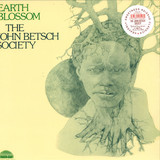
180 Gram, Tip On Sleeve RSD version of this classic. One of the rarer records of the mythical Strata East albums is finally reissued for the first time on Heavenly Sweetness!
The recording of Earth Blossom, the John Betsch Societys one and only album, seems something of an enigma nowadays. For even though Nashville is clearly one of the towns in the US with the highest number of recording studios, who would have thought that the capital of country music would give birth to one of the forgotten masterpieces of 1970s spiritual jazz. The path leading to the album starts in 1963 when John Betsch, originally from Jacksonville in Florida, arrives in Nashville to study at Frisk University. He is a young drummer and joins Bob Holmes trio. Holmes is one of the towns major jazz organists and pianists; he becomes Betschs mentor and, over the space of two years, John will play alternately with him and with the trumpeter Louis Smiths group. However, in 1965, John leaves town to go to the prestigious Berkeley University in Boston and do a two-year course along with his fellow debutants with names like John Abercrombie, Ernie Watts and Alan Broadbent. Two years later, he is invited by a pianist friend, Billy Chilf, to join the legendary singer/songwriter Tim Hardins group. Just after Woodstock, John Betsch and Tim record a psychedelic album Columbia will never release together with the members of the future group Oregon: Colin Walcott, Glen Moore, Paul McCandles and his friend Billy Chilf. But he soon leaves this group to return to Nashville where he hooks up again with his friend Bob Holmes. Two years later, he is accepted on Archie Shepp and Max Roachs famous course at the University of Massachusetts Amherst (UMASS) and for the next four years he participates in this collective of intellectuals and musicians under the aegis of the two masters.
During this period he returns to Nashville to form his Society whose music is obviously influenced by the Afrocentric ideas of the UMASS student and political movement. However, the album, recorded in one day and in one take, also bears the hallmark of their generations psychedelic experiences, and in the themes and playing of the musicians we can hear a less violent form of music than the radical free jazz of New York or Chicago. Nature and environmental themes are the inspiration behind tracks touched by the spirit of Coltrane but also of Flower Power.
After Amherst, John Betsch joins Marion Browns group in 1976, leaves Tennessee for good and makes his home in New York over the next ten years or so. He plays and records with Dollar Brand, Kalaparusha Maurice McIntyre and many others, before heading off to France. He has lived in Paris for the last twenty years and played in Steve Lacy, Mal Waldron and Archie Shepp bands, as well as forming groups of his own. He now lives in Paris and plays with many musicians/bands.
- A1: Psycho Killer
- A2: Heaven
- A3: Thank You For Sending Me An Angel
- A4: Found A Job
- A5: Slippery People
- A6: Cities
- B1: Burning Down The House
- B2: Life During Wartime
- B3: Making Flippy Floppy
- B4: Swamp
- C1: What A Day That Was
- C2: This Must Be The Place (Naive Melody) (Naive Melody)
- C3: Once In A Lifetime
- C4: Big Business/I Zimbra
- D1: Genius Of Love
- D2: Girlfriend Is Better
- D3: Take Me To The River
- D4: Crosseyed & Painless
LOS ANGELES—To celebrate the 40th anniversary of the celebrated Talking Heads and Jonathan Demme’s concert film Stop Making Sense, the set will be re-released as a 2LP and 2CD/Blu-ray set this summer.
Released last year, the sold-out Deluxe Edition of the soundtrack will return as a 2-LP black vinyl on Rhino and 2-LP crystal clear vinyl at retail. Both variants feature a 12-page booklet with liner notes from all four band members –Tina Weymouth, David Byrne, Chris Frantz, and Jerry Harrison—and band photos. The 2CD/Blu-ray version includes the entire 28-page booklet from last year’s Deluxe Edition and a Dolby Atmos mix of the complete concert, mixed by Jerry Harrison and E.T. Thorngren, who also mixed the original release. Both will be available on July 26. Pre-order now.
The band appeared together for a sold-out screening and Q&A last night at the Pantages Theater, the same theater at which Stop Making Sense was recorded. They were joined by Blondshell, who performed “Thank You For Sending Me an Angel.” Another special screening with the band will occur in Brooklyn at the King’s Theater on June 13, with the Q&A hosted by Questlove and The Linda Linda’s performing “Found a Job.” The two events cap off a banner year of celebrations for what many consider to be the best concert film of all time.
The inspiration for Stop Making Sense came when director Jonathan Demme saw Talking Heads perform during the band’s 1983 tour for Speaking in Tongues. Afterward, he approached them with the idea of making the show into a concert film. They agreed and worked together over the next few months to finalize the details. Ultimately, Demme filmed three shows at Hollywood’s Pantages Theater in December 1983 to create Stop Making Sense.
The concert film presents a retrospective of the band up to that point, with a performance that weaves together songs from all six of its studio albums. The show progresses methodically, opening with Byrne onstage performing “Psycho Killer” alone with a drum machine. After each song, he’s joined by a new band member until Weymouth, Frantz, and Harrison are all on stage with him. The group continues to grow throughout the concert as members of the stellar touring band are added: keyboardist Bernie Worrell, percussionist Steve Scales, guitarist Alex Weir, and backup singers Lynn Mabry and Ednah Holt.
The band performs 18 songs in Stop Making Sense, including its recent single at the time, “Burning Down The House.” That summer, the song was in heavy rotation on radio and MTV, helping the song become the band’s first top 10 hit in America. It was, however, a different song from Speaking in Tongues that was destined to deliver one of the film’s signature moments. Talking Heads would perform “Girlfriend Is Better” wearing the now iconic, oversized suit inspired by costumes worn in traditional Japanese theater. For good measure, a picture of David Byrne in the suit also graces the album cover.
Stop Making Sense focuses mainly on music by Talking Heads but does include a few songs recorded outside the band: “Genius Of Love” by Tom Tom Club, “What A Day That Was” and “Big Business” from Byrne’s 1981 album, The Catherine Wheel. Limited edition vinyl versions of both of these albums, along with Harrison’s The Red And The Black, were released for this year’s Record Store Day.
When it arrived in September 1984, Stop Making Sense was an artistic and commercial triumph. The film had people dancing in theatre aisles, and the soundtrack sold over two million copies. Just last year, the Library of Congress added Stop Making Sense to the National Film Registry in recognition of its cultural, historical, and aesthetic significance.
Weymouth praises Demme as a collaborator: “…Jonathan was a very enthusiastic, highly adaptive, and imaginative guy who was just as good a listener as he was a talker and collaborator. From the get-go you just got the impression he was as flexible as he was disciplined. Being team players, that boded well for a great relationship and a great film!”
Harrison says the film still holds up today: “To me, Stop Making Sense has remained relevant because the staging and lighting techniques could have been created in a much earlier time period. For example, Vari-Lights, lights with motors to re-aim them, had just come into vogue. Had we used them, there would have been a timestamp on the film, and it eventually would have felt dated...The absence of interviews, combined with the elegant and timeless lighting, created a film that can be watched over and over.”
Byrne says it’s interesting that this album was – for many people – an introduction to Talking Heads. “We had done a live album before this, but coupled with the film, and with the improved mixes and sound quality, this record reached a whole new audience. As often happens, the songs got an added energy when we performed them live and were inspired by having an audience. In many ways, these versions are more exciting than the studio recordings, so maybe that’s why a lot of folks discovered us via this record.”
Frantz recalls the sheer joy surrounding the entire Stop Making Sense experience. “I’m talking about real, conscious, transcendent joy… I’m talking about what the Southern gospel people call ‘getting happy,’ which means ‘to be filled with the Spirit.’ That is what happened to us onstage every night, and from my seat behind the drums, I recognized that this was happening to the audience too. Joy was visible in front of me and all around me every night.”
forgive too slow, Avant Garde artist julia-sophie’s deeply personal debut album is testament to her ability to transform adversity into raw beauty, combining her traditional songwriting roots with her own take on experimental electronica. It features her intimate voice backed by warm and precise electronic sounds whose free spirited explorations give body to the carefully written personal songs julia-sophie comes off the drama of her 2010s rock band, Little Fish, which was signed to a major label. The surreal experiences (like being flown to Las Vegas in helicopters with a bag of slot machine money or given limousines for the day to go shopping), along with having to work in environments where she felt unsafe, drove her decision to leave the fame game. She turned down the offer to emigrate to America and engage with the machinations of the system as it did not feel “true or congruent with who I was”. Instead, she focused her attention on her hometown (Oxford, UK). She started recording lo-fi pop in her garage, using an old laptop, wonky microphones and hitting whatever was around for beats. Candy Says grew to be more of a collective than a band, and eventually co-wrote a film score for indie film Burn Burn Burn and recorded a cover of Running Up That Hill for the Netflix film Close (starring Noomi Rapace). Julia-Sophie soon started recording songs with her friend B, who had a studio stacked from wall-to-wall with analogue recording gear, vintage synths and drum machines. She decided to self-release and the music reached audiences beyond her expectations, including support from BBC Radio 6 and a feature in The Quietus. forgive too slow is Julia-Sophie’s debut solo album, and concerns relationships and the struggles we go through when we “forgive too slow” and can’t break out of patterns from the past. The songs narrate her story of self-destruction (“numb”), love (“falling”), and loss (“telephone”). By the end, embers are still burning and there is no telling if Julia-Sophie has found peace, but we do get a sense that she has gotten closer to the core of her being and is finally living authentically.
180g, red marble vinyl. This album features Babe Ruth's iconic LIVE performance in Montreal on April 9th, 1975, featuring 4 out of the 5 original band members in their prime. With every track, the band's unparalleled musical craftsmanship takes center stage, showcasing their ability to blend rock, jazz, and Latin influences into a unique auditory experience. The collectible status of this record makes it a must-have for any aficionado of classic rock. So, immerse yourself in the cool, creative vibes of "Babe Ruth - Live in Montreal April 9th, 1975," and let the transcendent sounds of a bygone era enchant your modern soul.
180g, red vinyl. This album features Babe Ruth's iconic LIVE performance in Montreal on April 9th, 1975, featuring 4 out of the 5 original band members in their prime. With every track, the band's unparalleled musical craftsmanship takes center stage, showcasing their ability to blend rock, jazz, and Latin influences into a unique auditory experience. The collectible status of this record makes it a must-have for any aficionado of classic rock. So, immerse yourself in the cool, creative vibes of "Babe Ruth - Live in Montreal April 9th, 1975," and let the transcendent sounds of a bygone era enchant your modern soul.
- A1: Institution Man
- A2: Jesse
- A3: Startdust Bubblegum
- A4: Mr Freedom
- A5: Dragster
- A6: Find It
- B1: The People Tree
- B2: Apple Green
- B3: Time Of The Future
- B4: Saturation
- B5: Illusions
- B6: A Trip Down Brian Lane
- C1: Jesse" (Alternate)
- C2: Institution Man" (Edit)
- C3: Warlocks Of The Mind" (Pt 1)
- C4: Time Of The Future" (Alternate Ep Mix)
- C5: Find It" (Radio Edit)
- C6: Almost Grown
- D1: Apple Green" (With Harmony Vocal)
- D2: Illusions" (No Horns Mix)
- D3: A Trio Down Brian Lane" (7" Mix)
- D4: Slide Sweet Baby
- D5: The People Tree" (No Mellotron)
- D6: Jesse" (Brendan Lynch Radio Mix)
Acid Jazz's announcement of the 30th anniversary 2LP remastered edition of Mother Earth's The People Tree is a momentous occasion for fans of acid jazz and soul music alike. Originally released in 1994, this album holds a significant place in the genre's history, blending elements of soul, funk, and folk-tinged rock from the 70s with a modern twist. The special edition reissue boasts the original album, along with three previously unreleased tracks and six making their vinyl debut. Remastered from the original analogue recordings, this release promises to breathe new life into the beloved classic. Featuring guest appearances from iconic artists like Paul Weller, Dee C Lee and Simon Bartholomew of Brand New Heavies, The People Tree is a testament to the collaborative spirit of the acid jazz scene. Notable bonus tracks include the previously unreleased alternative version of 'Apple Green,' an alternate take on 'Illusions,' and the title track itself. First-time vinyl cuts offer fresh perspectives on tracks like 'Jesse' and 'Slide Sweet Baby,' adding depth to the listening experience. The album's presentation is equally impressive, with a beautiful 'wide-spine' layout, printed inner sleeves, and insightful notes from label-founder Eddie Piller, accompanied by unseen photos from the original cover shoot. Overall, this anniversary edition of The People Tree is a album worth your time as it often selected for one of the best examples in the genre.
The opening track to the Alan Parsons Project’s Eye in the Sky remains the most recognized instrumental in sports—fanfare inseparably tied with introducing NBA legend Michael Jordan and his six-time world-champion Chicago Bulls mates before games, and still used by many teams as an energy-raising prelude. Indeed, the subdued grandiosity, cosmic bluster, and lights-out wonder of “Sirius” sets the table for the band’s smash 1982 album, whose hallmark smoothness, lushness, and balance extend to the music’s exquisite song writing, dreamy emotions, and underlying orchestral scope. Credit for the record’s craft, cohesiveness, and accessibility also falls to Alan Parsons and creative partner Eric Woolfson’s knack for recruiting session pros that translate their visions with unquestioned feeling—particularly, vocalists who include former Zombie leader Colin Blunstone and soul singer Lenny Zakatek.
Mastered from the original master tapes, Mobile Fidelity’s RTI pressed 180g 45RPM 2LP version of Eye in the Sky features succulent warmth, magnificent balance, low-end heft, and see-through transparency that take you into the studio with Parsons at Abbey Road Studios. Each note seems perfectly placed, every sequence painstakingly considered. Boasting front-to- back depth, concert-hall-level separation, realistic presence, and bang-on accuracy. This release will test the capabilities of the world’s finest stereo systems. There’s more information, more texture, more nuance— more of everything to be experienced. British progressive rock would never again sound so sophisticated, suave, or steady.