Recorded live at the Black Hawk, San Francisco in September 1959, At The Blackhawk 1 is the first of 4 volumes released in 1960. Featuring six cuts, Manne (drums), is joined by Joe Gordon (trumpet), Richie Kamuca (tenor sax), Victor Feldman (piano) and Monty Budwig (bass). This new edition of the album is released as part of the Contemporary Records Acoustic Sounds series and is pressed on 180-gram vinyl pressed at QRP with (AAA) lacquers cut from the original tapes by Bernie Grundman and is presented in a tip-on jacket.
Suche:ka§par
- Conspire
- Clubs
- Rock 2000
- Si J'prefere
- Héros National
- Merci La Ville
- Palace Meetic
- Le Sang De Papa Et Maman
- Pinata
- Parce Que J'ai Rêvé D'être Riche
Gwendoline werden nicht gern in Schubladen gesteckt. Wir tun es dennoch: Nu Wave with wit, Synthwave with edge, Postpunk with Pop. Als wenn Benjamin Biolay Molchat Doma vorstehen würde, ,I'm Not In Love" (Chrystal Castles) auf ,Anyway" (OTO) trifft, Ladytron mit DAF in den Urlaub fahren würden. Seit 2017 verfolgt das social medial scheue Duo Micka (a.k.a. Mikoune) und Pierre (a.k.a. Daniel) im eher verborgenen ihre Cold Wave-Vision. Das Debut wurde in reinster DIY-Manier zu Hause im Keller aufgenommen und ohne Umschweife in kurzer Zeit produziert. Lange Zeit gab es kaum was zu Gwendoline zu googlen, aber an den Kennnern ist es natürlich nicht vorbeigegangen. Das spanische Label Dead Wax Records fand das so super, veröffentlichte digital und sehr limitiert auf Vinyl, ein Reissue gab's auf bandeigenem Label 2022. Nun sind sie bei Born Bad gelandet und dabei in bester Gesellschaft mit Vox Low, Frustration und Bracco. Was macht Gwendoline einzigartig? Sicherlich ihre Wut und gleichzeitige Zurückhaltung, die sie mit Selbstkritik, Ironie und Humor vermischen, was sich in den Texten wie auch im Sound wiederspiegelt. LP-Version in klassich schwarz mit Download Code und Digipack-CD.
Know What I Mean?” was originally released in 1960 as a collaboration between jazz saxophonist Cannonball Adderley and legendary pianist Bill Evans, along with the rhythm section of the Modern Jazz Quartet, Percy Heath (bass) and Connie Kay (drums). This new edition of the album is released as part of the OJC Series and is pressed on 180-gram vinyl at RTI with (AAA) lacquers cut from the original master tapes by Kevin Gray at Cohearent Audio. It is presented in a Tip-On Jacket. "
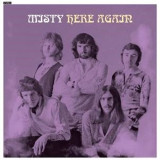
First ever vinyl release of the album recorded in 1969/70 by UK prog-psych band Misty. Including their terrific mod-psych “Hot Cinnamon” 45.
A dazzling fusion of classically-inspired progressive rock and song-based psychedelic pop with an organ-based sound, in the vein of Procol Harum and The Nice.
“In October 1969, King Crimson released their debut, In The Court Of The Crimson King, Pink Floyd unleashed Ummagumma and Led Zeppelin put out their second LP. At the same time, Misty were in London’s Regent Sound Studios recording what turned out to be the only album of their career with producer, Adrian Ibbetson, who had cut his teeth as an engineer working with everyone from the Beatles to the Equals.
After only a handful of gigs, Misty signed a deal with Parlophone and began to gather momentum with the release of Hot Cinnamon. Although they received a lot of airplay, the single failed to chart and the band’s hopes of releasing their debut album were dashed. Reluctantly, Misty went their separate ways and the Here Again master tapes sat gathering dust on a shelf until Gelardi came across the original acetate and decided it was time for the album to finally see the light of day.
Bridging late psych and early prog, songs like Life Has Just Begun, Witness For The Resurrection and the title track were played with a perfect mix of high-flying experimentation and virtuosic musicianship. Blurring the fine lines between rock, jazz, classical and chamber pop, Here Again is a transcendent kaleidoscope of colour that is beyond definition.
Maybe you can tell an album is truly timeless when it takes half a century for it to be properly appreciated. Misty were a rare bird, a brilliant, truly original band who should have left an indelible mark instead of joining what now seems like the never-ending line of half-remembered and long-forgotten flotsam and jetsam of the psychedelic era.
Both the first and the final statement from a group who never really got their chance to be heard, Here Again is a slice of pristine psychedelic pop that so embodies the dizzying energy and the progressive spirit of the time, it’s astonishing that it stays afloat under the weight of its own intentions. But float it does, like mist in the air - a half-forgotten diaphanous dream slowly coming back to you after 50 years of silence.” – Jonathan Wingate
Felix Machtelinckx is a singer, composer, producer and lyricist from Belgium. Featuring an array of film scores, dance soundtracks, pop, folk and electronic music, Felix's music resonates with a familiar, almost nostalgic patina, applied with a distinctly crooked touch. Through artistic collaboration, coaching and production, Felix has cut a dash in the pop and indie cult scenes of Belgium, especially with his band Tin Fingers, who are feted as one of the most promising indie acts of the moment. Night Scenes, Felix’s solo debut is, in contrast to his other work, more humble and less traditional, roughly hewn from a series of ambient soundscapes, earthy textures and playful structures. Felix’s voice, normally the flagship of his music, becomes more of a distant memory, an indistinct emotion feathered throughout the music. Many lyrics are improvised, sometimes unintelligible, conjuring haunted, uncertain undertones. Similarly, the album is innately peripatetic to the core, being created, written and recorded in Lithuania, Belgium, France, mastered in the US, and finally released in the UK. In the first instance, some of the tracks were created for the contemporary dance piece Doggy Rugburn by Brandon Lagaert of Kaiho and Peeping Tom; others were created enigmatically for a film that never surfaced; while the remainder are the product of more personal work and research. As Felix began to collect and review these disparate parts, the concept of a unified album began to evolve. With 'night' featuring as a suitably dark leitmotif, or backdrop to a series of emotionally fraught 'scenes', each track depicts a form of trauma, locked within the confines of the mind. Felix observes: "Imagine yourself in a dusty old room unable to sleep. Emotions, fears and other demons haunt your mind. This in-between state makes your mind reach for other worlds. This is Night Scenes." For the most part, Night Scenes was created using a variety of old, and rare, analogue equipment. With almost no digital editing, the record was primarily mixed through a vintage cassette desk, giving it a nostalgic character with a noisy undertone. Felix fully embraced the synergy of his emotional themes and retrograde gear, enthusing: "A lot of textures were created on an old Soviet synthesizer that causes a blackout when you hit the lowest note on the keyboard. The dysfunctionality of the synths was often used to create rhythm and texture." This unnerving ability Night Scenes has to comfort and confound the listener is summed up by Jordan Hudson, House Of Media producer, and music podcaster, when he concludes: "Some songs on the album have this sort of fleeting comfort and tonality, which dissolves into a subtle rhythmic/structural or modulated disarray the moment I settle into them - this really fits with my experience of the night .. This record is a winner, and will be something I'll listen to a lot from here on
"The 'Kashkaval EP' marks DJ 3000's fourth vinyl release, stemming from his acclaimed 'Mezë' album.
This EP encapsulates DJ 3000's evolution, weaving a narrative from his Albanian heritage to his current thriving career. 'Kashkaval EP' stands as his most intimate and comprehensive work to date, embodying a profound musical odyssey. It extends an invitation to all, urging them to partake in a celebration of diverse cultures and a symphony of sound that transcends geographical boundaries. Through meticulously crafted tracks, it guides listeners on a shared and cherished voyage, forging connections through the universal languages of music, culture, and food.”
Kashkaval - Is a cheese originating from the Balkans. When producing this electro track, it all came together quite swiftly, to be honest. I only needed one final element to complete it. Coincidentally, my dad was discussing this cheese at the time, so I recorded him talking about it on my phone and seamlessly integrated it into the track. I applied various effects and kept it subtle in the mix, making it almost unrecognizable in Albanian. The chords fell into place after that.
Constant Sorrow - This song took shape during the pandemic. I had nearly completed the concept, and for some time before that, I had been in conversation with producer and vocalist Keith Caden. I believed his vocal talents would be a perfect fit for this track. I shared the track and its title with him, and he subsequently wrote the vocals, even contributing harmonica and a few other embellishments. I'm particularly fond of this electro-style track, and Keith's vocals truly bring a unique and special dimension to it.
From The Ashes - Electro played a significant role in this album. When I mention electro, it's not the typical style of tracks but rather a more unique approach. The vocals on this album truly infuse profound meaning into the songs, and I have a deep appreciation for the way the chords resonate and create a dynamic bounce in the tracks.
Crown Royal - There's an amusing backstory to the essence of this track. "Crown Royal" harkens back to a liquor we used to enjoy back in the day. We'd have our Crown Royal and pair it with those Black & Mild cigars – quite the combo! This track was born from the memories of those late-night drives back home from the club.
Das Debütalbum der irischen Post-Punk Newcomer.
"Madra" (was auf Irisch "Hund" bedeutet) ist ein
gitarrenlastiges, instinktgeleitetes Album, auf dem sich die
irischen NewDad auf eine Reise der Selbsterkundung,
Selbstsabotage und Reflexion begeben. Durchtränkt von
Dysfunktion sucht "Madra" Trost im Schmerz und setzt
sich mit Themen wie Mobbing,
Selbstmedikation/Depression, Zerstörung, Co-Abhängigkeit
und Widerstand auseinander. Geschrieben in ihrer
Heimatstadt Galway, Irland, fanden die Aufnahmen des
Albums in den legendären Rockfield Studios (Black
Sabbath, Queen) in London statt, wo die Band inzwischen
auch wohnt. Julie Dawson, Cara Joshi und Fiachra
Parslow gründeten ihre Band, um bei der
Musik-Abschlussprüfung der Secondary School nicht solo
antreten zu müssen; kurz darauf stieß Sean O'Dowd
dazu, erst nur als Toningenieur, bald aber festes
Bandmitglied. Ihren Bandnamen NewDad ließen sie von
einem Zufallsgenerator erzeugen, und ein weiterer Zufall
kam ins Spiel, als kurz nach der Bandgründung Anfang
2020 die Welt plötzlich fast zum Stillstand kam. Trotzdem
schafften es die vier, im März 2021 ihre Debüt-EP
"Waves? zu veröffentlichen und im Januar 2022 den
Nachfolger "Banshee?. NewDad erinnern uns an die
Rastlosigkeit, all die Ängste und Beziehungsprobleme, mit
denen wir alle im Laufe unseres Lebens konfrontiert
werden. Sie verschmelzen Fantasie und Autobiografie mit
Einflüssen aus dem modernen Kino und Fernsehen - und
der ruhigen Küstenlandschaft von Galway, die den
Hintergrund ihrer prägenden Jahre bildet.
From out of nowhere - if nowhere is the febrile, warped and twilit imagination of Julia McFarlane - comes Whoopee, the second album by J.McFarlane’s Reality Guest. Whoopee is an esoteric, kaleidoscopic movie in music form directed by Julia McFarlane and co-conspirator Thomas Kernot. Full of life, breakbeats and smokey vignettes on the fragile nature of interpersonal relationships, Whoopee is a stylistic evolution from everything McFarlane has done before. Surreal, beautiful in parts and replete with the aching wisdom McFarlane’s songwriting has always promised, this Reality Guest pulls back the curtain on a whole scene of naked truth. Recorded in Melbourne in bursts since the release of 2019’s Ta Da, Whoopee features a new sound palette and band member in Kernot. The duo dive deep into electronic pop tropes, mining digital synths, samples, breakbeats and deep bass grooves, largely dispensing with live instrumentation. If Ta Da took twists and turns with your expectations, offering a Dada-ist, monochromatic take on pop music, Whoopee is McFarlane’s subterranean love-sick pinks, reds, greens, purples and blues. Becoming something of a tradition, the album starts with an instrumental intro pilfered from a 90s’ spy film or cinema intro music, puffing up the listener for the heart-squeezing bathos of Full Stops. Over a bleary backdrop of walking bass lines, jazz- inflected keys and smoked-out atmosphere, McFarlane’s poetry narrates the fragile state of a relationship: “You put a full stop where I thought there’d be a comma, I want the story to continue even with all the drama.” Over a palpable pain, the narrator is revelling in the drama of a relationship, addicted to tumult and heightened emotion. On Sensory, a space age bachelor lounge pad ballad, the converse state of the previous song is explored, here the narrator is battling the numbness of being out of the drama, stuck in a sensory-deprivation tank, anaesthesized and battling to emerge from the fog. Wrong Planet explores an otherworldly pop music, hewing a bright hook out of a sense of confusion. A bona-fide, sing-along chorus bursts out of the narrator musing on the absurdity of existing in this reality. It speaks of one of Julia McFarlane’s main talents, her knack of inspecting human relationships and states with a clear perspective, like an alien visiting Earth and realising everything we are is really, really strange. Whoopee is both more accessible than previous Reality Guest work and somehow more obfuscated. Where the production on Ta Da was dry, sharp and strange, this Reality Guest is blurred, almost smeared with the effluvium of 90s+00s culture and existence. Through it all, it’s hard to deny the undeniable pull of the songs. Precious Boy carries on the lounge theme with a whole sampler of cut up sounds fading in and out of the haze as McFarlane’s voice is right up to the speaker cooing and free- associating, maybe in love or maybe in confusion... maybe they’re the same thing? Sometimes the listener is invited to just bathe in the tone of the vocal, as on Apocalypse, where the texture and timbre of the vocal is luxurious, bathing in piano tinkles and double bass throb. On lead single Slinky, a cut up beat reminiscent of Washingtonian Go-Go drum patterns leads, the song slipping through your fingers, elusive and presenting sound as pure pleasure. Closer Caviar jumps back into the broken breakbeats of a surreal funk, fuelled by the sensory pleasure of the music, a hedonistic whirl in rapture, the narrator now living life to the fullest in all its giddy heights and deep troughs. This is the album’s main character fully-actualised and in the terrible, beautiful moment.
For more than 30 years, singer-songwriter and guitar hero Mary Timony has cut a distinctive path through the world of independent music, most recently as vocalist and guitarist of acclaimed garage-pop power trio Ex Hex (Merge) but also as a member of seminal postpunk band Autoclave (Dischord), celebrated leader of the deeply influential Helium (Matador), multifaceted solo artist (Matador, Lookout!, Kill Rock Stars), and a co-founder of supergroup Wild Flag (Merge). Described by Sleater-Kinney's Carrie Brownstein as "Mary Shelley with a guitar" and dubbed "a trailblazer and an innovator" by Lindsey Jordan a.k.a. Snail Mail, Timony has distinguished herself as one of her generation's most influential. Although she has remained a cult hero and critical favorite since the early '90s, Timony's many triumphs have long been counterbalanced by crippling doubt and self-nullification. Her fifth solo album, Untame the Tiger, approaches these emotions head on. Her first solo release in 15 years is a startling document of an artist fully coming into her own power during the fourth decade of her career. It is the product of lessons learned during life-altering struggle. The mystical, acoustic-driven Untame the Tiger emerged after the dissolution of a long-term relationship and was bookended by the deaths of Timony's father and mother. The album was recorded during a two-year period during which she was the primary caregiver for her ailing parents. The tectonic psychic shift Mary experienced due to this loss informs many of her lyrics. Standout track "No Thirds" "is a song about losing everything and having to keep on going," says Timony. "I wanted the verses to sound like a wide-open barren space, like driving across a desert, because that is what the song is about - losing people and the feeling that your future is a giant, wide-open blank space." The stripped-back acoustic instrumentation of "The Guest" conjures Sweetheart-era Byrds. Timony describes it as a song sung directly to loneliness: "I was imagining loneliness as a house guest who keeps knocking on your door. I thought it would be funny to say loneliness is the only one who always comes back." Untame the Tiger does not eschew Timony's guitar hero reputation; in fact, "Summer" relishes in it, a straight-up banger that you'd be half tempted to call "no frills" until its initial garage rock stomp breaks into the unexpected bliss of a twin guitar solo conclusion. "I wanted the recording to have the energy of the Kinks, early Dio and Elf, or Rory Gallagher," she explains. "I was also listening to a lot of Gerry Rafferty's first solo album and was inspired to have two simultaneous guitar solos." Untame the Tiger picks up the thread woven through Timony's freak-folk-anticipating solo albums of the early '00s. Basic tracks were recorded at Studio 606 in Los Angeles, with Timony backed by Dave Mattacks, drummer of legendary British folk-rock band Fairport Convention. "Mattacks is a hero of mine and one of my favorite musicians of all time. He is a true legend. I never in a million years thought he'd agree to play on my record," says Timony. "Before the session, I had a panic attack and had to go sit alone in the parking lot_ Once we started playing together, it felt so great that the fear subsided and turned into excitement. His playing felt instantly familiar, which makes sense because it's the foundation of many of my favorite records." Untame the Tiger was produced by Mary Timony, Joe Wong, and Dennis Kane. The album was recorded over the course of two years at Studio 606, Magpie Cage, 38North, and in Mary's basement Additional engineering by J. Robbins (Jawbox, Burning Airlines). Musicians include Chad Molter (Faraquet, Medications), David Christian (Karen O, Hospitality), and Brian Betancourt (Cass McCombs, Devendra Banhart, Hospitality). The album was mixed by Dave Fridmann (MGMT, The Flaming Lips, Mercury Rev), Dennis Kane, and John Agnello (Dinosaur Jr., Kurt Vile, Waxahatchee).
Original Sufferhead beginnt mit einer minimalen Improvisation mit Felas neuer Band Egypt 80 und steigert sich dann zu einer kühnen, komplex strukturierten Afrobeat-Hymne, die die Situation der Massen in Nigeria anprangert. "Lasst uns zusammen ein schönes Lied singen", schlägt Fela vor, während der Refrain parallel zu der lebhaften Melodie seines Saxophons erklingt. Mit Hilfe des Refrains zählt er dann die Probleme auf, die das Volk plagen: keine Wasserversorgung, exorbitante Lebenshaltungskosten, keine Gesundheitsversorgung, zweistellige Inflationsraten. Die "großen, großen Leute" haben das Volk zum Sarg des Staatschefs gemacht: Nach der Plünderung und Verbrennung von Felas Kalakuta Republic 1977 schrieb Fela mehrere musikalische Antworten, in denen er die schuldige nigerianische Regierung direkt angriff, darunter diese traurige Hommage an seine Mutter, Coffin for Head of State. Nachdem seine Mutter an den Komplikationen der Verletzungen gestorben war, die sie erlitten hatte, nachdem sie während des Überfalls auf Kalakuta aus einem Fenster geworfen worden war, trugen Fela, seine Frauen und seine Anhänger den Sarg seiner Mutter zum Eingangstor der Armeekaserne: ein mutiger Akt des Trotzes.
"Coffin For Head of State" ist Felas düstere Anklage gegen diejenigen, die "durch Jesus Christus, unseren Herrn" das afrikanische Volk korrumpieren, bestehlen und berauben. Der wummernde, gleichmäßige Beat und die sich wiederholende Struktur des Liedes ahmen den Marsch zur Kaserne nach, während der Text Felas überwältigende Trauer über den Verlust seiner Mutter und den Zustand seines geliebten Nigerias direkt anspricht: eine Nation von ewig Leidenden. Seid nicht passiv, fordert er: Steht auf für eure Rechte.
Die B-Seite, Power Show, baut auf dem gleichen Thema auf und hebt die Unterdrückung der Massen durch die herrschende Klasse hervor. Der Text handelt von einem reichen Mann in einem schicken Auto, der an den Straßenrand ranfährt, um einen armen, allein reisenden Mann zu beschimpfen. Fela nennt dies die "Power Show" und prangert das Verhalten an. So verhält man sich nicht gegenüber seinen Mitmenschen.
Original Sufferhead war im Box Set #5 enthalten, das von Chris Martin und Femi Kuti kuratiert wurde. Das Album wurde auf opakem, hellgrünem Vinyl neu gepresst und ist untergebracht in einer bedruckten Innen- und single sleeve Außenhülle.
- Prologue
- Main Title
- Flashback
- Dad's Death
- Tina's Theme
- The Pier 12 Years Later
- Matchbook Exercise
- Tina Simmons
- Jason Resurrected
- Tina's Vision
- This Is Some Birthday
- Mom I Saw Him Again
- Dan & Judy
- Jason Impales Dan
- Sleeping Bag Bush
- Nick & Tina
- Pearls Go Flying
- I Hate This Place
- Flying Tv
- Skinny Dip
- Russel Gets Axed
- Mom In The Study
- Tina Overhears Crash
- Death From Above
- Kate's Murder
- Nick And Tina Find Mike
- Blood On The Floor
- It Was Him In The Lake
- Robin's Death
- Human Body Shield
- Death By Bush Trimmer
- Tina Finds Mom And Meets Jason
- Jason Comes Up For Air / Jason Unmasked!
- Jason Grabs Tina / Nails / Tina Burns Jason
- Resurrecting Dad
- Ambulance / Where's Jason? We Took Care Of Him
- End Title
- End Credits
The debut release of FRIDAY THE 13TH PART VII: THE NEW BLOOD Original Motion Picture Soundtrack By Harry Manfredini and Fred Mollin! Available for the very first time in any format, Waxwork worked closely with Paramount Pictures to locate the original 1988 master tapes in the Paramount vault. Archived away for many years, and thought to have been lost, multiple master tapes containing the the complete score by composer Fred Mollin have been located, transferred, and re-mastered for this deluxe double vinyl release. Also included in this double album are the complete original soundtrack cues featured in the movie and composed by Friday the 13th veteran, Harry Manfredini.
FRIDAY THE 13TH PART VII: THE NEW BLOOD is a 1988 American Slasher-Horror movie that follows a psychokinetic teenage girl who inadvertently unleashes Jason Voorhees from his grave in Crystal Lake. The film features, for the first time, actor / stuntman Kane Hodder, as Jason Voorhees. Hodder would go on to portray Jason in numerous Friday The 13th films.
Waxwork Records is excited to present the definitive FRIDAY THE 13TH PART VII: THE NEW BLOOD soundtrack by including, for the first time, the complete film music by both composers Harry Manfredini and Fred Mollin. Features include 2xLP 180 gram “Psychokinetic Splatter” colored vinyl, deluxe packaging, new artwork by Sarah Deck, the complete soundtrack sourced from the original 1988 master tapes, and heavyweight gatefold jackets with satin coating.
Während sich das letztjährige Album von den etwas düsteren Synthie-Landschaften der 70er-Jahre inspirieren ließ, spielt dieses Nachfolgealbum des Sugarfoot-Sängers wahrscheinlich eher auf Holms Faszination für die Popmusik der späten 60er-Jahre an, oft mit leicht psychedelischen Untertönen. Einige dieser neuen Songs haben ein eher akustisches Fundament, aber die Arrangements sind durch den umfangreichen Einsatz von Streichern, Hintergrundstimmen und exotischen Instrumenten umso großartiger. Die physische Veröffentlichung des Albums wird Vinyl-Enthusiasten sicherlich erfreuen. Die LP erscheint als Deluxe-Edition auf grünem Vinyl und einem sehr aufwendigen "Split Opening"-Cover. Design und Layout stammen von Håvard Gjelseth, während das Cover vom deutschen Künstler Marco Wagner stammt. Das alles verleiht dem Album eine visuelle Verpackung, die perfekt mit dem harmoniert, was Holm sowohl durch den Titel des Albums als auch durch seine zehn Songs vermitteln möchte. Mit 'Paradox Of Laughing' hat Holm ein Album abgeliefert, das ein bedeutendes Kapitel in seinem beeindruckenden Musikkatalog darstellen wird.
My first EP, June McDoom, was hugely inspired by the minimal sound of the 60s and 70s folk era. I wanted to reimagine a couple of those songs more stripped down as a follow up to that first EP. Judee Sill's songwriting and arrangements have impacted me deeply, and so I hoped to honor the music she made by recording a version of her song, "Emerald River Dance" - one of my favorite songs for many years and a song I still sing at most of my shows. The first time I heard "Black is the Color" was Tia Blake's version that she recorded in 1971, and then Nina Simone's performance inspired me to try and record a rendition of mY own. While writing "On My Way" and "The City," I always imagined versions of those songs stripped down with three-part harmonies, which I was finally able to do here with dear friends, Cécile McLorin Salvant and Kate Davis, who have both been big inspirations to me throughout the years. One of my close friends, Sam Weissberg - who I met while studying in jazz school when I first moved to New York City - worked with me and arranged the harp and strings for each song. I produced the songs and tracked the remaining instruments and vocals with Evan Wright at our new studio in Greenpoint, Brooklyn that we share with our friend, Nick Hakim (who also provided backing vocals on "On My Way").
'Reet' is a lost treasure of late 1960s folk/psych-folk. The only album she ever put to tape, with clear pure voice and guitar. luckily recorded by Andres Raudsepp in 1969.
Reet will be loved in the same breath as ;Sibylle Baier, Vashti Bunyan, Molly Drake, Bridget st John, Reet Hendrikson deserves wider listening and recognition.
Reet Hendrikson was born in Estonia only months before the "great escape" into exile in 1944. Brought up and educated in Sweden, she went to study in the US in 1967 on a Fulbright scholarship, before she made her mark as an Estonian musician in Canada. While her arrangements of Estonian folksongs on the guitar reflected the styles of the sixties, her voice and choice of material sounded authentic and made a connection with ages past.
When Hendrikson arrived in Canada in 1968 via the US, her Estonian was native-like because of the high quality of Estonian schools in Sweden. She was thus able to characterise the identity of young ex-patriate Estonians – especially those born in exile from Soviet occupation – in a new and meaningful way. A formal musical background allowed her to create the arrangements that accompanied her simple but pure singing voice. Having heard her under northern Muskoka pines at an Estonian summer seminar, it didn't takeAndres Raudsepp ( of raindeer records)long to bring her to a recording studio. "Reet – Estonian folksongs" appeared in 1969.
Hendrikson soon found her way to the scholarly atmosphere of Boston where, as a multi-instrumentalist, she joined a group of musicians who favoured traditional folk music. Back in Sweden in the 1980ies, she was invited to join a scholarly society of Estonian young women, which she led during musical sessions. She visited Estonia as frequently as possible, trying in particular to be helpful to Estonian musicians by providing sheet music and much-needed repertoire from the Swedish National Radio Archives, where she worked for a while..
Reet Hendrikson died in Stockholm in the autumn of 2000.
- Strange Stairway
- Spiritual Mansions
- Planet Earth Daytime
- Goodnight Stan
- Tomorrow Tomorrow And Tomorrow
- Just A Moon
- To Be A Part
- Sam
- Lamp Shining
- Turning The Pages
- Love Is The Tune
- After The Revolution
- Jericho Road
- Strange Stairway (Demo)
- Birdman (Bonus Track)
- Life
- Hypocrite
- Man
- Cosmic Boxer
- We Are Raised
- Isle Of Sleep
- Coming Down
- Hypocrite (Demo)
- Spiritual Mansions (Demo)
- Man (Take 1)
- When We Set Sail (Bonus Track)
- Cosmic Boxer (Alternate Version)
- The Coast No Man Can Tell (Bonus Track)
Die Versuchung, Bill Fay zu mythologisieren, kann überwältigend sein. Sein Status als unbesungener Held hat sich langsam, aber stetig, über fünfundzwanzig Jahre hinweg entwickelt und mit jedem neuen Album kommen Fans hinzu, darunter prominente Musiker wie Jeff Tweedy, Kevin Morby, Adam Granduciel und Julia Jacklin, um nur einige zu nennen. Fay war jahrzehntelang ebenso produktiv wie unterschätzt, innerhalb seines Katalogs ist die Bill Fay Group seine bedeutendste Zusammenarbeit. Nach seinem selbstbetitelten Debüt Bill Fay (1970) und dem Klassiker "Time of the Last Persecution" (1971) hatte Decca Records kein Interesse ein drittes Album zu veröffentlichen. Bill Stratton, Gary Smith, Rauf Galip formierten sich mit Fay zur Bill Fay Group und nahmen zwischen 1978 und 1981 in mehreren Sessions, trotz minimaler finanzieller Mittel, ein brillantes Album auf. Die Bandmitglieder beschwören ein elegantes Gegengewicht zu seinem Gespür für das Unauffällige. "Tomorrow Tomorrow and Tomorrow" bringt die galaktischen Qualitäten des frühen Rock, die Komplexität der Jazz-Improvisation und Fays erdigen Folk-Zauber zusammen. Zur Zeit der Fertigstellung fand sich aber leider kein Label für das Projekt. Erst 2005 brachte David Tibet auf seinem Label Durtro Records eine unvollständige, nur auf CD erhältliche Version heraus. Eine Neuauflage von 2006 machte das Album auf Vinyl erhältlich, allerdings mit stark gekürztem Tracklisting, es fehlten neun Songs. Jetzt endlich erscheint Tomorrow Tomorrow and Tomorrow weltweit in voller Länge. Es enthält die 22 Original-Songs des Albums, dazu 6 Bonustracks, sowie seltene und bisher unveröffentlichte Fotos von den ursprünglichen Aufnahmesessions von "Tomorrow Tomorrow and Tomorrow".
It’s a family affair. One formed almost thirty years ago, back in the mid-nineties, when the pair joined seminal French jazz combo Olympic Grammofon. For twenty-four years they have worked together as Bumcello, each complementing the other, echoing polar opposites. The Boom in Bumcello is none other than Cyril Atef, incisive drummer, relentlessly pushing beats towards new horizons. The Cello is Vincent Ségal, cellist without blinkers and extraordinary musical alchemist. Since 1999, these two die-hard music fans, coming together for mercurial results, have released one record after the other whilst conquering the hearts of their live audiences, old regulars as well as new recruits. We have all been seduced by the way their music leapfrogs categories - these two experts are much more interested in kindred spirits than pigeonholing, and this very spirit is celebrated on more than one track of this ninth record, whose concept is original to say the least.
Everything began with an idea by Cyril Atef - a soundtrack based upon drawings penned by Marin, Vincent’s son, architect and visual artist. The musicians involved then coached their reaction to these images on a score, and the pair were charged with collating and adjusting the results. These thirteen ink drawings, in a heroic fantasy vein, constituted a matrix which was then to serve as a guide, like a roadmap through a singular and multi-faceted labyrinth. The key to this sonic fresco is in Bumcello’s image – an eclectic aesthetic twinned with a great sense of contrast. Herein lies the trademark of this entity animated by the gift of musical ubiquity, gorged on scales and rhythms, capable of a slap as much as a gentle caress. From classical music to electronics, from improvised music to sophisti-pop, everything is allowed with no preconceived ideas. They can even reclaim the traditions of others, all the better to propel them towards new horizons - this is how the very history of music has always panned out.
If you listen between the lines and look at the details, more than one piece bears witness to the moments and individuals that have impacted the criss-crossing lives of Vincent and Cyril. The track Crash is the perfect excuse to create a Jamaican-style jam with New York inflections, and we can see, in capital letters, the name Hilaire Penda, playing alongside Bumcello at the Apollo Theater in the associated drawing. This bass player from Cameroon, who died on 5th November 2018, was more than just a friend for the two Frenchmen. He was one of the family. Similarly, they give a nod to another Cameroonian, and another departed friend - singer of rock band les Têtes brûlées, Zanzibar, through the vocals of fellow countryman Zanzi. The ghost of Rémi Kolpa Kopul, emblematic voice of Radio Nova, haunts the margins of Spark Av, in a vocal sample with a smattering of effects. As for I Remember Tim, it directly honours the memory of Timothy Jerome Parker, aka The Gift Of Gab, another friend who left us in 2021. Tim is depicted in a drawing with the docks of Oakland in the background, and it’s his alter ego within Blackalicious, Chief Xcel, who remotely added his signature to the track, notably by adding the words of Lateef The Truthspeaker to brass and woodwind sounds.
These are the only additions to Bumcello’s original nucleus, all the better to create a genuine musical concoction where Vincent Taurelle is in charge of production and mixing sessions recorded live and direct. He is also invited for a twinkle on the keys (piano, synths, Wurlitzer, organ), on a handful of tracks. Already at the commands of previous opus Monster Talk, always taking care over the slightest detail, the one that makes all the difference, this pianist is now also part of the family. “Everything he brings is perfect, whether added though slight touches or through very important choices”, say the two members of a combo which today, appears to us under the guise of a trio, adding an extra dimension to a far-reaching mix, in the image of the veiled or more explicit tributes making up the cornerstones of this release.
Booker, a drawing where we see the musicians enter a club, honours James Booker, great pianist from New Orleans who has always fascinated Vincent, in a genre that is off-beat and gender defying. Her Story was created by Cyril in support of the Iranian women’s movement. Aysyen Kampe evokes, even in the original drawing, a tradition that remains impactful for Bumcello – Haitian mysticism, and Ouï Khouïette Ouï conjures up the beats of the Allaoui, a war dance from Western Algeria, one they have taken part in in the past with the help of Cheikha Rabia. They deliver a metal version, original and surprising, especially as Marin Ségal’s drawing features the Nicholas Brothers, those iconic dancers of the 30s jazz scene!
Resolutely hard to pin down, Bumcello’s beats can initially take on the structure of disjointed house, though Sangre begins like a film soundtrack, “in a Mexican style” adds Vincent, who was at the origin of this track. A delicate alap on the cello can open up onto afrobeat rhythms, a well-pitched voice can enchant, like on the amazing The City Has Eyes which has everything of a hummable pop hit. Emblematic of this manner of encompassing all music without being exclusive, Le Grand Sommeil, a direct reference to the Howard Hawks movie inspired by Raymond Chandler, a precursor of David Lynch, begins nice and smooth but ends on a wild tempo, on a drum’n’bass tip, as in the good old days of Cithéa, when this Party story began in the other century.