
нет на складе
Закажите сейчас, и мы закажем товар для вас у нашего поставщика.
10,50 €
Последний логин: 8 мес. назад
Закажите сейчас, и мы закажем товар для вас у нашего поставщика.
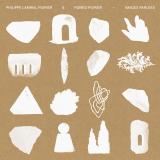
Besides his work as a painter, filmmaker and set designer, Philippe Lamiral Poirier (1951-2025) played guitar and saxophone in the group Kat Onoma, which he co-founded with Rodolphe Burger.
His fifth studio album combines his written texts with music composed by his son, Roméo Poirier, whom he considered to be cut from the same musical cloth as he was. It also confirms what has emerged from his previous albums, namely songs more spoken than sung and whose words evoke images, thus the album’s title – Images parlées.
A book of his paintings, Images traversées, will be published simultaneously with the album.
In this continual back and forth movement between text and image, music has always been present – sensitive and abstract, expressing nothing other than itself. It hollows out a place to tell us where we are. It is life without delay.
Roméo Poirier is working in the field of electronic music, focusing on heavy processing of samples and digital collage. He released albums on the London based record label Kit Records (Plage Arrière), the mancunian record label Sferic (Hotel Nota), and Jan Jelinek’s own imprint Faitiche (Living Room and Off The Record).
он должен быть опубликован на 29.05.2026
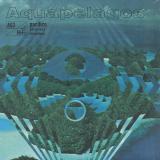
Presenting the third thematic volume on the “Aquapelagos" series - a collection of split LPs where selected artists offer their own take into water surrounded cultures and communities. After the initial release of the Anthology compilation Aquapelago in 2022 (Discrepant ,CREP91) and the split LP Atlantico by Lagoss & Banha da Cobra (Keroxen, KRXN027) as well as the direct collaboration LP Índico by Mike Cooper & Pierre Bastien we proudly introduce an the third volume in the series in the shape of no other than two inspiring artists, Vica Pacheco and Pak Yan Lau. Two different sound journeys inspired by the majestic and peaceful Pacific Ocean, the vastest, largest and deepest ocean of our planet.
Vica Pacheco’s composition takes a calm meditation approach where water flutes and synths brush shoulders to create a ever expanding mind journey whereas Pak Yan Lau’s ambitions Neo classical piece, The Ocean in Us, talks about that grand overwhelming feeling, that vast space deep under, on the bottom of the Pacific. Both compositions were recorded and created with the particular wet acoustics of the Tank in Santa Cruz de Tenerife in mind.
From Philip Hayward and Matt Hill’s liner notes: ‘’The Pacific is a complex space, comprising a third of the Earth’s surface. A cascade of islands runs along its eastern flank, down from the Kamchatka peninsula, through Japan, Taiwan, The Philippines, Melanesia and on to Australasia. In its watery heart the islands of Micronesia and Polynesia stretch across huge distances, north-east to the Hawaiian archipelago, south east to Rapa Nui and south west to Aotearoa and Chatham island. Closer to the shores of the Americas lie Tierra del Fuego, the Galapagos Islands, Haida Gwaii and the Aleutians. This is a space that resists easy characterisation. The Pacific laps the shores of Japan and Chile, the beaches of Australia’s East Coast and the cold, damp coasts of British Colombia and Alaska alike. Indeed, the space is so vast that it is a world in itself and one rarely navigated in its entirety. In this manner, strands of genres and the songs that reflect them are components in an intricate mesh of associations.‘’ Philip Hayward and Matt Hill, April 2022
Есть у нас в наличии и готов к отправке

Heith's music has always been infused with sacred mystery, striking a delicate balance between lived experience and imagination. On Escape Lounge, his second full-length release for PAN, Heith draws inspiration from contemporary digital spirituality and interpretations of experience that are crossing over from cultural niches into the mainstream - including internetbased conspiracy theories and psychological operations. The album presents a sonic diary recorded across Milan, Berlin, London, and Stockholm, crafting a post-informational folklore while exploring new territories in personal songwriting. The title Escape Lounge, inspired by airport waiting areas, serves as a metaphorical waiting room of the mind. Its hidden passages can lead either to peril and loss or to enlightenment and kaleidoscopic mental landscapes. This liminal space echoes the mysterious realms of Twin Peaks or the viral "Backrooms" phenomenon. Within it, contributing musicians - including frequent collaborators Leonardo Rubboli, Aase Nielsen, and 33 drummer Alexander Iezzi - move like ethereal presences, creating intangible soundscapes that leave traces of post-hypnotic melancholia. Notably, the vocal contributions from Price and James K enhance the otherworldly atmosphere, their multifaceted timbres adding layers of intentional ambiguity. Throughout the album, Heith masterfully blends acoustic instruments, human voices, and digital technology along an uncharted path that references the experimental pop of 90s trip-hop, 2000s indie-folk songwriting, and lush Mediterranean psychedelia. The sounds are meticulously crafted, combining synthesizers with guitar-based compositions in a computational songwriting approach that creates a collage across eras and landscapes. Each track unveils new dimensions of this delicate hallucinogenic narrative, delivering an immersive listening experience. As reality continuously shifts, Escape Lounge emerges as both sanctuary and confinement - a space of momentary connections and endless potential. In 2025, Heith will debut a new live show and audiovisual collaboration titled 'The Talk' with James K and Günseli Yalcinkaya, commissioned and premiering at Sonar Festival, Terraforma, Nuit Sonores, and Reworks.
Есть у нас в наличии и готов к отправке

‘LE DON DES LARMES’, and was conceived and recorded during the artist's pregnancy — a time of deep transformation. It is a poetic offering to her newborn child, where the cycle of the seasons becomes a metaphor for birth, vulnerability, and renewal.
Her sound draws from the lullabies of her Kabyle childhood and the gentle melancholy of Algerian chaabi, carrying their echoes into a world entirely her own. LÉO LA NUIT is a Franco-Algerian writer and composer who weaves music as one might weave dreams — with tenderness, intuition, and a reverence for nature.
Through field recordings, intimate textures, and delicate pop melodies, LÉO LA NUIT invites us into her inner landscape. Her music breathes closely to the skin — fragile yet luminous — a collage of fleeting moments, stitched together with care. It is a world both grounded and dreamlike, where emotion flows freely, like tears given as a gift
Есть у нас в наличии и готов к отправке

Есть у нас в наличии и готов к отправке

Kaba & Hyas continue their musical exploration at the crossroads of Rap and House by announcing their 3rd opus “Wooferz Only”, a 7-track EP to be released in early February on H3 Records and Entreprise.
The two comparses establish their club music more than ever, reviving sensations of hectic nights from Detroit to Manchester, and hammering home the markers of the style they've made their own. Like a block party MC, Kaba chants incisive, edgy lyrics, set to the energetic rhythms of Hyas, obviously at the center of the game.
Solid on their feet, Kaba & Hyas have not hesitated to step out of their comfort zone, exploring new styles (Juke, Baltimore...), collaborating with a jazz pianist on a couple of tracks, or hosting their first French featuring with thaHomey on the track “Magic Stick”.
After a spring/summer tour packed with dates including Nuits Sonores, Macki Music Festival and Ed Banger Party, the duo followed up their winter season with appearances at the MaMa Festival and the Transmusicales de Rennes. In peak time, we'll have the chance to see them perform “Wooferz Only” at La Maroquinerie for their first headline show on April 10, 2025.
Есть у нас в наличии и готов к отправке

Following on from September's "Sonic Underworld EP" by Shlomi Aber & Kashpitzky, James Ruskin's label delivers another first as Chloe Lula presents her Blueprint Records debut with the "Torpor EP".Her debut on Blueprint, "Torpor" is a reflection of her stylistic evolution, bringing the sounds of ambience and synths into a clean, contemporary techno framework.
Chloe is a resident DJ at Tresor. She's played at Berghain, Boiler Room, Khidi, Movement weekend in Detroit, and countless clubs, festivals and parties across Asia, Europe, and North and South America alongside artists like Kanding Ray, Helena Hauff and Lewis Fautzi, becoming known for atmospheric, acidic sets that dig deep into the niche recesses of techno. In addition to her career as a DJ and producer, Lula is a cellist-her debut instrumental full-length will be out on James Ginzburg's Subtext label in November 2024-and the senior producer of Resident Advisor, where she hosts and curates panels and interviews as a broadcast journalist at festivals like Nuits Sonores, Dekmantel, Unsound, Rewire and more.
Her debut on Blueprint, "Torpor" is a reflection of her stylistic evolution, bringing the sounds of ambience and synths into a clean, contemporary techno framework. A lifelong reader, each track-and the EP's name itself-pays homage to a book or piece of writing that has been influential in her development as a writer and an artist.
Есть у нас в наличии и готов к отправке

Repress.
The follow up of the acclaimed first volume of this compilation, a real discovery for many DJs and music lovers worldwide who didn't know that much about Zouk or DIY electronic music of the french west indies.
.
The selectors Julien Achard and Nicolas Skliris continue the excavation of French Antillas vinyl from the 80's and the 90's and for this second volume, they found some really exciting new references which should be soon « classics » on the dancefloors.
Есть у нас в наличии и готов к отправке

Mit ihrem Debütalbum "Luiza" präsentiert die französisch-brasilianische Sängerin eine faszinierende Mischung aus World, Pop, Electronica und organischen Grooves. Aufgewachsen zwischen Jazz, Tanz, Amazonas-Reisen und Dub-Partys auf La Réunion, formt Luiza aus all diesen Einflüssen einen eigenen, sofort wiedererkennbaren Sound. Ihre Stimme nutzt sie wie ein Instrument - warm, flexibel und voller Emotion, oft mehrsprachig und manchmal sogar in ihrer eigenen Fantasiesprache. Ihr viraler Durchbruch gelang 2025 mit "Soleil bleu", einem Song, auf den sich überraschend Jugend- und Adult-Radiostationen gleichermaßen einigen konnten. Auch in Deutschland wurde der Titel zum erfolgreichsten französischsprachigen Radiosong des Jahres. Das Album "Luiza" knüpft an diesen Erfolg an: ein sonniges, energetisches Werk, das Natur, Freiheit und Lebenslust miteinander verbindet. Zwischen brasilianischen Klassikern wie "Manha de Carnaval", kraftvollen Hymnen wie "Étincelles" und internationalen Kollaborationen entsteht ein vibrierendes Klangbild, das Grenzen aufhebt und pure Lebensfreude transportiert. Luiza zeigt auf ihrem Debüt, wie moderne Global Pop Music klingen kann: farbenreich, mutig, intuitiv und voller Herz. Ein Album, das berührt - und das die außergewöhnliche Persönlichkeit dieser Künstlerin in jeder Sekunde spürbar macht.
он должен быть опубликован на 10.04.2026

High Roller Records, Picture Disc, limitiert auf 500 Stück, handnummeriert, Deluxe-Plastiktüte, Kartoneinlage. Alle Titel wurden im September 2022 von Patrick W. Engel bei TEMPLE OF DISHARMONY gemastert. Geschnitten von SST Germany auf Neumann-Maschinen für optimale Qualität auf allen Ebenen... Die ultimative audiophile Neuauflage dieses zeitlosen französischen Metal-Klassikers!
он должен быть опубликован на 30.01.2026

Swan Song
The vinyl LP at the heart of this éthiopiques 31 tracks 2 to 11 was one of the very last vinyl records ever released in Ethiopia. But above all it represents, we felt, the absolute masterpiece of the Ethiopian Groove – the Swan Song of Swinging Addis. The album leaves a clear idea for posterity of the level of sophistication and mastery that modern Ethiopian music had achieved, before being crushed under the Stalino-military heel of the Derg – as the bloody revolution that was unfolding came to be called.
Ethiopia1976.
The Revolution that broke out in February 1974 rolled on in a ruthless march. The whole of Ethiopian society was utterly stunned. The bouquets of flowers handed joyfully to the first tanks of the coup d'état were to wilt very rapidly. From September 1976 to February 1978, 18 months of Red Terror (the name given by the junta itself) spilled blood throughout the country. This fratricidal conflict took its heaviest toll among students and youth. The shift from feudalism to a cruel and primitive Stalinism left the country's citizens deeply traumatised, and snuffed out any pretence of activism, whatever the sector of society. This ice age was to last for seventeen long years.
ሙሉቀን፡መለሰ Mulukèn Mellèssè Muluqän Mälläsä
It was three tracks by Muluken that served as the opener for éthiopiques-1 more than 25 years ago. Seven more tracks appeared on éthiopiques-3 and 13, all accompanied by The Equators, which was soon to become the Dahlak Band.
The first track, Hédètch alu, also the very first piece that Muluken ever recorded, left audiences both unsettled and amazed. Reflecting the singer's extremely young age (he was just 17 at the time), this angelic voice mystified many, who thought they were in fact listening to a feminine voice. He was not yet 22 when he released his last vinyl record in 1976 with Kaifa Records (KF 39LP), one of the very last to be issued in Ethiopia, before the cassette tape became the dominant medium for music distribution – and before the new revolutionary regime put a stop to all independent musical life, via an unspeakable barrage of prohibitions and other persecutions.
Mulu qèn, literally, “A well filled day”. This tender maternal intention wasn't enough to ward off the cruelty of fate. His mother's premature death drove Muluken to leave his native Godjam, in northeast Ethiopia, to live with an uncle in Addis Ababa. Born Muluken Tamer, he took his uncle's last name – Mèllèssè.
The spelling Muluken appeared in his administrative records. Transcription of Amharic to the Latin alphabet, both in Ethiopia and for scholars, gives rise to controversies and quibbles that can never be neatly settled. French allows for a closer approximation of the original pronunciation, thanks to its battery of accent marks, confusing as they may be to anglophones.
Between rather accommodating administrative record-keepers and the various versions that pop up in interviews given by the artist, Muluken's year of birth oscillates between 1953 and 1955…
1954? One thing is certain: the artist's talent made itself known very early indeed, because he got his start in 1966-67, at the age of 13 or 14. Photos from the period attest to his extreme youth. It's a strange sort of initiation for a very young teenager to become a sensation in the heart of Addis's nightlife at the time, Woubé Bèrèha – the Wilds of Woubé. And what's more, in the club of the Queen of the Night, the Godjamé Assègèdètch Alamrèw herself, the very same that was portrayed by Sebhat Guèbrè-Egziabhér in his novel-memoir Les Nuits d’Addis Abeba2… The legendary female club owner who is remembered to this day by the capital's ageing boomers.
Muluken first tried his hand at the drums, before he grabbed the microphone. He emigrated briefly to the Zula Club, across the street from the old Addis Post Office, one of the ground-breaking bars of the burgeoning musical scene, before joining the Second Police Band in 1968, for around three years. He spent a few months with the short-lived Blue Nile Band founded by saxophonist Besrat Tammènè. As the musical scene grew increasingly successful, and pulled slowly but decisively away from its institutional ties, Muluken released his first 45rpm single in February 1972 (Amha Records AE 440). It was included in two LP Ethiopian Hit Parade compilation albums in September of the same year. All in all, Muluken released eight two-track 45s and the same number of original cassette tapes between February 1972 and 1984, the year that he departed for permanent exile in the USA. After converting to Pentecostalism in 1980, Muluken gradually abandoned all secular musical activity. In 1985, at the end of a concert in Philadelphia, he decided to quit concerts and recording for good. Mèlakè Gèbré, the historic bass player from the Walias band who was playing with him that night, recalls that everything appeared so irredeemably diabolical in Muluken's eyes, that it was to be the end of his contribution to Ethiopian Groove.
The end of the story, the beginning of a legend.
Dahlak Band, forgotten by History
Aside from his personal history and vocal talents, it must be remembered that Muluken Mèllèssè was one of the biggest names in the musical innovations that marked the end of the imperial period. These éthiopiques aim to convince those who are just discovering this hidden gem... As for Ethiopians themselves, they are to this day captivated by this singular and atypical figure in the Abyssinian pop landscape – even though he withdrew from public life some 40 years ago. Incorrigible devotees of poetic twists, of more or less hidden meanings, Ethiopians appreciate above all the care Muluken took in choosing his lyrics and the writers who penned them, such as Feqerte Haylou, Alemtsehay Wodajo and, here, Shewalul Mengistu (1944-1977). Love songs, written by women, a far cry from the conventional drivel that pleases sappy sentimentalists.
Muluken is equally acclaimed for his perfectionism when it came to music, the opposite of the overly casual approach that is all too common. He remained a faithful partner of musicians who came from a lineage that borrowed from several inventive and pioneering bands (Venus, Equators, Dahlak). Amongst them were certain artists who began their musical lives with Nersès Nalbandian at the Haile Sellassie Theatre and who come of age in around 1973 – at just the wrong time, you might say. Among them were the pillars Shimèlis Bèyènè (trumpet), Dawit Yifru (keyboards) and Tilayé Gèbrè (sax & flute). Most notably Tilayé Gèbrè, certainly one of the most important musicians, composers and arrangers of his generation, of the end of the imperial era, and of the early years of the Derg.
It was only in 1981 that a miraculous opportunity arose for Tilayé to escape the Stalinist paradise of the dictator Menguistou Haylè-Maryam. Once again it was Amha Eshèté (1946-2021) who provided a solution. The spirited and courageous producer, who had been in exile in Washington since 1975, succeeded, thanks to his incredible perseverence, in bringing the Walias Band to the USA. It was, in fact an extended Walias Band comprising ten musicians3, six of whom chose to slip away after a few concerts and the recording of an LP (The Best of Walias, WRS 100). Tilayé Gèbrè was one of these. He has been living in the USA ever since. There he joined the then-nascent Ethiopian diaspora, which lived largely unto itself, and was making only very modest headway in the American musical market. It seems unfair that Tilayé Gèbrè and the Dahlak Band were not able to benefit earlier from the public recognition that they do deserve.
A similar draining away of the top-rate talents would lead to the reorganization of the major groups of the “Derg Time”. The remaining artists spread themselves around between Ibex Band (renamed Roha Band), Ethio Star Band and a remodeled Walias Band. That spelled the end of the Dahlak Band.
With this record, produced by the essential Ali Abdella Kaifa a.k.a. Ali Tango, we can appreciate everything that the Derg not only destroyed, but also prevented from flourishing. This gem of Ethiopian-style afrobeat came out in 1976 (and, by way of a parenthesis, before the FESTAC 1977 in Lagos, which was attended by an impressive delegation of Ethiopian musicians — although Fela was already personna non grata in his own country). Despite everything that might distinguish this ethio-groove from Fela’s music – no colonial axe to grind, no question of political confrontation with the authorities, no claims to negritude or Africanism for the Ethiopian musicians, and less extrovertion! –, this LP fits beautifully into the saga of intense and electrified soul of the new “African” groove that Fela and Manu Dibango embodied so well from that point onwards.
In restoring this record to its place in the afrobeat epic, it can be seen that, if nothing else, the timeline bestows a legitimate pedigree and a historical primacy to works that had no international impact when they were originally released.
Warning! Masterpiece!
Закажите сейчас, и мы закажем товар для вас у нашего поставщика.

The piano recital/album sans retour forms the concluding part of Croene's 'Trilogy of Hopelessness' (Cortizona). The overarching theme is the sense of doom inherent in our responses to climate change. After the doomed indulgence in nostalgia ('cul de sac', 2019) and the doomed yearning for landscapes lost through climate change and human mismanagement ('solastalgia', 2022), he now presents 'sans retour': the doom of the inevitably failed fantasy of escape.
Six piano pieces serve as an in memoriam for six fearless aviation pioneers who ultimately lost their lives in plane crashes. The album opens with a sound recording of the communication between Yuri Gagarin and mission control one minute before the launch of the first manned space flight. At the end of Side A and the beginning of Side B, excerpts from the conversation between Richard Russell and air traffic control can be heard.
Conceived as a single, Beethovenian composition, Croene once again demonstrates the wide range of sound palettes a piano can produce. The common thread is a melody based on the 'Dies Irae', which takes six different forms to embody the in memoriam concept.
он должен быть опубликован на 05.12.2025

ensemble 0 (pronounced zero) is a band /contemporary music ensemble, whose line-up and instruments can change according to the repertoire performed. Directed by Stéphane Garin and Sylvain Chauveau, performing pieces by, mostly, contemporary composers including its own members, and working with numerous collaborators.
The year 0 of ensemble 0 was 2004, when four friends decided to assemble a vessel, essentially dedicated to acoustic music for the present time. A light and adaptable vessel, of varying geometry and geography (its members are based in different cities and countries, including France, Catalonia and Belgium.)
Zero, in cartography, is the reference level from which altitudes are erected. In other words, where the field of possibilities stands. Depending on the chosen direction, the disentangled or deciphered compositions, the musicians and instruments brought in, ensemble 0 performs upon a unique range of reliefs. First, its own compositions are specifically performed by the pulsating heart of the collective, i.e. a trio made of Sylvain Chauveau (acoustic guitar, glockenspiel), Stéphane Garin (metallic percussions) and Joël Mérah (acoustic guitar). Then, with a contemporary repertoire the ensemble expands according to the needs of each work. ensemble 0 occasionally performs pieces by Moondog, Julius Eastman or Ligeti but is particularly keen on living composers such as Tristan Perich, Michael Pisaro or Rachel Grimes.
Here, ensemble 0 plays in according to the movie: L’Incroyable Femme Des Neiges (directed by Sébastien Betbeder with Blanche Gardin and Philippe Katerine) a soundtrack with their own strong and beautiful imprint.
он должен быть опубликован на 28.11.2025

Da ich schon seit Jahren von Andrew Chalks Arbeit mit MIRROR (und auch von seinen Solo-Projekten als FERIAL CONFINE sowie seinen vielen Kollaborationen mit David Jackman, The New Blockaders, Daisuke Suzuki usw.) und Timo van Luijk (als Af Ursin, In Camera, La Poupée Vivante und Kollaborationen mit Kris Vanderstraeten und anderen) fasziniert, war ich natürlich neugierig, von ihrem Duo-Projekt ELODIE zu hören. Das Projekt wurde 2010 gegründet und hat bis heute schon elf wunderschöne Alben rausgebracht. ,Vieux Silence" für Ideologic Organ ist ihre erste Veröffentlichung außerhalb ihres eigenen Plattenlabels Faraway Press & La Scie Dorée. Das ist aber nicht das erste Mal, dass Ideologic Organ und ELODIE zusammenarbeiten. Sie traten im Februar 2012 bei einem von mir kuratierten Abend in London zusammen mit Jessika Kenney und Eyvind Kang auf. Elodies Auftritt war einer der feinfühligsten und gekonntesten, die ich je gesehen habe ... so still, während draußen vor den Fenstern des Cafe Oto in London der Schnee fiel, versank das Publikum spürbar in hochkonzentriertem Zuhören. Die Erinnerung daran ist echt beeindruckend, wenn man bedenkt, wie sparsam die einzelnen Elemente an diesem Abend eingesetzt wurden. ,Vieux Silence" und ELODIE im Allgemeinen regen sofort die visuelle Vorstellungskraft an, vielleicht gefiltert durch alte Aquarelle, Bandkorn, antike Linsen, vergessene Ebenen des Zuhörens und beobachtende Geduld. Auf diesem wunderschönen Album arbeiten Chalk & van Luijk auch mit Klavier, Pedal Steel und Klarinette zusammen (gespielt von Tom James Scott, Daniel Morris und Jean-Noel Rebilly). Jedes Detail wurde sorgfältig durchdacht und Schritt für Schritt koloriert, wie ein impressionistisches Aquarell. - Stephen O'Malley, Les Lilas 2017
он должен быть опубликован на 14.11.2025
On the record New Chapter, sound from all directions of the sky is transformed as it flows through the bodies of the musicians. The source material is Viola Klein’s solo record Confidant and the collaboration with the Sabar Ensemble Diop from Saint Louis, titled We. Whodat in Detroit, Kassem Mosse in Leipzig, Nídia in Lisbon, and Viola Klein in Cologne and Dakar reshape the places where Deep House, Leftfield, Kuduro, and Mbalax originated and/or continue to thrive: the USA, Germany, Portugal, and Senegal.
Закажите сейчас, и мы закажем товар для вас у нашего поставщика.

Das von Kritiker:innen gefeierte niederländische Elektronik-Duo, Weval (bestehend aus Harm Coolen und Merijn Scholte Albers) ist mit seinem lang erwarteten neuen Album, „CHOROPHOBIA“, auf dem Ninja Tune-Sublabel Technicolour zurück!
Als es darum ging, ihr viertes Album, „CHOROPHOBIA“, zu produzieren, stellten sich Weval ihren Ängsten. Obwohl Harm Coolen und Merijn Scholte Albers seit ihrer 2013 veröffentlichten Debüt-EP, „Half Age“, in der Dance-Szene verankert sind und mit ihrer fünfköpfigen Band Festivalbühnen wie Nuits Sonores, Lowlands, Primavera, Best Kept Secret, Pukkelpop und DGTL Amsterdam bespielten, haben sie sich aktiv davon entfernt, als Floorfiller-Act bekannt zu sein. Doch als die beiden vor kurzem über den Begriff Chorophobie stolperten - was so viel bedeutet wie Angst vor dem Tanzen -, beschlossen sie, sich der Ironie hinzugeben und aus ihrer Komfortzone herauszukommen. „Bis zu diesem Zeitpunkt hatten wir immer mit einer ‚Zuhör‘-Mentalität an unseren Platten gearbeitet.“, sagt Harm über die Herangehensweise beim zweiten und dritten Weval-Album („The Weight“ von 2019 und „Remember“ von 2023), „und uns wurde klar, dass wir während unserer gesamten Reise als Produzenten Angst davor hatten, Tanzmusik zu machen.“.
Der Sprung ins kalte Wasser hat zu Wevals bisher extrovertiertesten Tracks geführt. Während sie diese neue Richtung bereits mit der groovigeren „Night Versions“-EP von 2024 für Technicolour angedeutet hatten, erforderte das Loslassen ihrer Hemmungen eine geduldige künstlerische Entwicklung. „Wir wollten uns auf eine Art und Weise engagieren, die sich noch immer befreiend und wahrhaftig anfühlt.“, erklärt Harm und fügt hinzu, dass die Bezeichnung als Dance-Album sich nicht nur wie eine Kehrtwende anfühlt, sondern sie auch von den Grenzen und Klischees bestimmter Kategorien befreit.
он должен быть опубликован на 05.09.2025

Yellow Marbled Vinyl[27,10 €]
Das von Kritiker:innen gefeierte niederländische Elektronik-Duo, Weval (bestehend aus Harm Coolen und Merijn Scholte Albers) ist mit seinem lang erwarteten neuen Album, „CHOROPHOBIA“, auf dem Ninja Tune-Sublabel Technicolour zurück!
Als es darum ging, ihr viertes Album, „CHOROPHOBIA“, zu produzieren, stellten sich Weval ihren Ängsten. Obwohl Harm Coolen und Merijn Scholte Albers seit ihrer 2013 veröffentlichten Debüt-EP, „Half Age“, in der Dance-Szene verankert sind und mit ihrer fünfköpfigen Band Festivalbühnen wie Nuits Sonores, Lowlands, Primavera, Best Kept Secret, Pukkelpop und DGTL Amsterdam bespielten, haben sie sich aktiv davon entfernt, als Floorfiller-Act bekannt zu sein. Doch als die beiden vor kurzem über den Begriff Chorophobie stolperten - was so viel bedeutet wie Angst vor dem Tanzen -, beschlossen sie, sich der Ironie hinzugeben und aus ihrer Komfortzone herauszukommen. „Bis zu diesem Zeitpunkt hatten wir immer mit einer ‚Zuhör‘-Mentalität an unseren Platten gearbeitet.“, sagt Harm über die Herangehensweise beim zweiten und dritten Weval-Album („The Weight“ von 2019 und „Remember“ von 2023), „und uns wurde klar, dass wir während unserer gesamten Reise als Produzenten Angst davor hatten, Tanzmusik zu machen.“.
Der Sprung ins kalte Wasser hat zu Wevals bisher extrovertiertesten Tracks geführt. Während sie diese neue Richtung bereits mit der groovigeren „Night Versions“-EP von 2024 für Technicolour angedeutet hatten, erforderte das Loslassen ihrer Hemmungen eine geduldige künstlerische Entwicklung. „Wir wollten uns auf eine Art und Weise engagieren, die sich noch immer befreiend und wahrhaftig anfühlt.“, erklärt Harm und fügt hinzu, dass die Bezeichnung als Dance-Album sich nicht nur wie eine Kehrtwende anfühlt, sondern sie auch von den Grenzen und Klischees bestimmter Kategorien befreit.
он должен быть опубликован на 05.09.2025

Unreleased electronic / jazz / madness from two titans of jazz and experimentation: JOHN SURMAN and KARIN KROG.
I could now write a load of blown up puffery about how amazing this is, but everyone does that, and a lot of the time it’s all a load of bollocks. But basically this was sent to me by Karin / John when I asked if they had anything hanging about that had not been released. This came through and blew my tiny mind. Like something from prime Annette Peacock “Pony” period. Here is what John Surman said…
John Surman writes:
Back in 2012/13 there had been some talk about a big futuristic open air urban dance/theatre production for about 80/100 actors/dancers with lasers and all kinds of lighting effects on different stages. I was invited to get involved and, together with Ben and Karin, we eventually decided to get to work on some ideas. I think that the original plan was that in performance there would be a mixture of live music and electronica.
Not altogether surprisingly, bearing in mind the complexity of the project, it never moved forward and developed into anything more than an interesting idea. It was probably over ambitious & I guess the funding never came through.
The only information I that I can find relating to the production refers to two silent movies made in 1927/1928 by the filmmaker Eugene Deslaw, entitled `La Marche Des Machines´ and `Les Nuits Électriques.These were clearly intended to act as inspiration for the project.
After months turned into years it became obvious that the project was going nowhere, and so the recorded music laid around gathering dust until Johnny Trunk asked Karin if she had any interesting music that he might be interested in releasing. One thing led to another and so, finally, Electric Element found a home!
For anyone interested in the equipment used this will have to be an approximation since the memory might be playing tricks. Karin was probably using a Yamaha Rex50 f/x unit, a Roland VT-3 Voice Transformer and an Oberheim Ring Modulator. I was playing Bass Clarinet and Contrabass Clarinet through various f/x units together with a Yamaha WX5 wind synth. All the instruments and voice were also processed through Ben´s equipment. After writing this I asked Ben for his recollections and he came up with the following:
John, Karin and I created this music in 2 or 3 days in the winter of 2013 at their studio in Oslo, Norway. I followed up with another 2 or 3 days of mixing, editing and post-processing . We kept a collaborative, improvisational and free-form approach to the sessions. I grew up immersed in music such as Cloudline Blue, the 1979 duo album of Krog/Surman, and this felt like a similar approach. I have mixed sound for many of their live duo concerts and I would use effects and electronics as an
accompaniment and counterpoint to the performed music. The relation of organic and artificial sound sources in music has always fascinated. In this case, I used some contemporary digital signal processing to introduce my own aesthetic into the conversation, in particular using granular synthesis to recombine small 'clouds' of sound into alternate forms. Some of the software tools I used included Ableton Live, Max/MSP and Reaktor.
Закажите сейчас, и мы закажем товар для вас у нашего поставщика.

TRANSPARENT 7 inch VINYL[14,08 €]
Two Times Juno awards listed and 2 times Polaris price listed, Canadian Soul Star Tanika Charles unleash the new album "Reason To Stay that drops on May 16 via independent soul label Record Kicks. Reasons To Stay is Tanika Charles' fourth full-length album, and her most introspective to date. Where her songs have typically touched on romantic love and heartache, the core love and loss of this record is family focused. It has taken years for Tanika to be able to publicly reflect on the childhood trauma and family breakup that occurred during her teens. The majority of the album was composed by Tanika with the tight knit team of Scott McCannell (Lydia Persaud, Henry Nozuka), Kyla Charter (Aysanabee) and Chino de Villa (Jessie Reyez). Kelly Finnigan of the Monophonics joined in to mix the bulk of the project and apply some trademark analogue grit to Tanika's sheen. Guests include Quebec-based Soulful singer/songwriter Clerel on the last track "Win", as well as Toronto soul artists Aphrose and Claire Davis providing additional vocals. "I love this album. I love singing these songs. I love that it's made me step outside of my comfort zone. It's forced me to face the root causes of my own insecurities that I carry to this day. Why am I striving so hard to seek validation, and why take it so personally when it doesn't come? That distortion has prevented me from celebrating my own successes at times. This album is me trying to change that." "I love the conversations that have begun with these songs. It's about childhood trauma, but it's not a victim story. I'm doing well, despite the baggage I carry. I want others to be able to carry theirs too." In the last few years, Canadian Soul/R&B powerhouse Tanika Charles has transformed from an emerging solo artist to a commanding performer and bandleader, cementing her status as a staple in the Canadian soul scene. Her previous studio albums - "Soul Run" (2017), "The Gumption" (2019), and "Papillon De Nuit" (2022) - have propelled her to international acclaim, earning her two JUNO nominations, two Polaris Prize listings, and a growing global fanbase. Extensive touring across North America and Europe has further solidified her reputation, with standout performances at festivals such as Trans Musicales in France, Fusion Festival in Germany, Mostly Funk & Soul Festival and Jazz Festival in the UK, Holy Groove Festival in Switzerland, and Canarias Jazz Festival in Spain. She has also shared the stage Estelle, Mayer Hawthorne, Haitus Kayote, Lauryn Hill, Bedouin Soundclash and Macy Gray. Tanika's meteoric rise and undeniable artistry have been widely championed by outlets such as KCRW, KEXP, BBC6 Music, Exclaim!, CBC Music, Uncut Mag, PopMatters, Albumism .. further solidifying her position as a global soul sensation.
он должен быть опубликован на 16.05.2025
