Blitz Vega is a Rock band based between New York City and Los Angeles featuring Andy Rourke, bassist of The Smiths alongside frontman and guitarist Kav Sandhu of the Happy Mondays. The band debuted their first single "Hey Christo" in 2019. It was described as 'a
rager that springs from the Primal Scream/Kasabian/Black Rebel Motorcycle Club family tree' by Buzz Bands LA.
quête:kasa
Technically, Yeah. Detroit artists Eddie Logix and Jo Rad Silver alchemize sonic matter on Real, No. The EP emerges from years of creative collaboration and blends each of the artists’ strengths into a deep-house, hi tech jazz, dubby leftfield assemblage straight from the pulse of today’s Detroit.
Since 2017, the pair has been producing tracks and co-curating Technically, Yeah., an influential monthly happening that encourages (Live) electronic musical expression. The duo’s curation is grounded in community, widely genre-diverse and steadfast in commitment to technological experimentation. The Real, No. EP distills this ethos and puts it on wax.
While Jo Rad is known for techno leanings and Eddie for organic jams (recently on Rocksteady Disco,) the two transform beats into substance with a diverse and thoughtfully constructed release. Glued together with attuned mixing from Salar Ansari and cut loud at Archer Pressing in Detroit, the EP’s range puts deep grooves in the bag for every discerning DJ.
AKKA’s Side: “King David” sticks the synthy deep house groove right in gear with a driving, bubbling bassline and floating effervescent vocal chops from and for a special someone. “Mango Strut” offers a slight island twang and dives into a breaky depth of a bracing cathartic arpeggiated, hand drum ecstasy. A vitamin filled chugger.
BEEP’s Side: The duo recorded “June Buggy” the first time they jammed together on a borrowed Juno. This propulsive Italo-ish conga groover is a mechanical piece of action. The record ends by summoning the ancestry of “Callin’ Dybbs,” a textured hi-tech jazz heater. Kasan Belgrave, young-gun horn of known pedigree, lays down the sax. The sultry brass tones lock in with buxom stabs. For those who know and those who don’t yet. This one holds depths!
“Fierce jazz buggin futurism in outerspace” - Luke Una
“Driving and psychedelic and gorgeous hi-tech.” - Peter Croce
“Perfectly crunchy soul squeezed jams begging to be rinsed” - 2Lanes
“Funky, jackin’, atmospheric, groovy, ravey and ethereal”- Father Dukes
“I’m calling dibs on callin’ dybbs!” - DJ Etta
Black Vinyl[27,31 €]
Wie Galyas Debütalbum Aralkum aus dem Jahr 2020 kehrt die Komponistin, Produzentin und Musikerin zu Geschichten aus ihrem Heimatland Kasachstan zurück. Während es auf Aralkum um das Schrumpfen des Aralsees ging, erzählt Polygon die Geschichte einer der dunkelsten Episoden der kasachischen Geschichte. Obwohl es mehr nuklearen Fallout verursachte als Tschernobyl, ist die Geschichte des Semipalatinsk-Testgeländes in der Steppe im Nordosten Kasachstans (bekannt als das Polygon) international wenig bekannt.
Es war das wichtigste Testgebiet der Sowjetunion für Atomwaffen. Von 1949 bis 1989 wurden dort 456 Atomtests durchgeführt, wobei die weite Landschaft Anonymität und Isolation bot.
Jeder Track auf der LP ist nach einem Merkmal des Polygons benannt: Dörfer, Städte, natürliche Gegebenheiten und andere Wahrzeichen. Für die sowjetischen Machthaber war die Steppe "unbewohnt", doch in Wirklichkeit war sie der Schmelztiegel der kasachischen Kultur, Heimat von Dichtern, Musikern und der berühmtesten literarischen Figur des Landes, Abai Quananbaiuly, ganz zu schweigen von der außergewöhnlichen Ökologie der
Berge, Hügel und Kiefernwälder entlang des Flusses Irtysch.
Dusk Color Vinyl[28,78 €]
Wie Galyas Debütalbum Aralkum aus dem Jahr 2020 kehrt die Komponistin, Produzentin und Musikerin zu Geschichten aus ihrem Heimatland Kasachstan zurück. Während es auf Aralkum um das Schrumpfen des Aralsees ging, erzählt Polygon die Geschichte einer der dunkelsten Episoden der kasachischen Geschichte. Obwohl es mehr nuklearen Fallout verursachte als Tschernobyl, ist die Geschichte des Semipalatinsk-Testgeländes in der Steppe im Nordosten Kasachstans (bekannt als das Polygon) international wenig bekannt.
Es war das wichtigste Testgebiet der Sowjetunion für Atomwaffen. Von 1949 bis 1989 wurden dort 456 Atomtests durchgeführt, wobei die weite Landschaft Anonymität und Isolation bot.
Jeder Track auf der LP ist nach einem Merkmal des Polygons benannt: Dörfer, Städte, natürliche Gegebenheiten und andere Wahrzeichen. Für die sowjetischen Machthaber war die Steppe "unbewohnt", doch in Wirklichkeit war sie der Schmelztiegel der kasachischen Kultur, Heimat von Dichtern, Musikern und der berühmtesten literarischen Figur des Landes, Abai Quananbaiuly, ganz zu schweigen von der außergewöhnlichen Ökologie der
Berge, Hügel und Kiefernwälder entlang des Flusses Irtysch.
Repress!
The Pretty Things Classic Album S.F. Sorrow re-issued with original UK artwork on Madfish. This vinyl edition of the album re-mastered from the original analogue tapes. It is pressed on 180g heavyweight vinyl and packaged with the original UK artwork gatefold sleeve, with cover art from Phil May.
The Pretty Things created some of the most exciting and innovative records of the late sixties and early seventies. Winners of the Hero award at the 2009 Mojo Honours, the band have been name checked over the years by an array of artists ranging from The Clash, David Bowie and Aerosmith through to The Libertines and Kasabian.
'SF Sorrow' is one of the great classics of the psychedelic era. The album stands favourable comparison with 'Sgt Pepper' and 'Piper At The Gates Of Dawn' as one of the defining records of the time. Originally recorded at Abbey Road in 1967 and 1968 it was the first and the most complete rock-opera to be recorded and released, pre-dating 'Tommy' by a full year.
The Pretty Things are active today and still play live regularly.
"a psychedelic masterpiece" - The Guardian
- Panda Bear, Voice of the Seven Woods, Mammane Sanni Abdoulaye. File under: Jazz / Electronic. Titi Bakorta almost didn't make it. Born in and raised in Kinshasa, the Congolese multi-instrumentalist was on his way to Uganda when he fell off the boat as it traversed the mighty Congo River. Unable to swim, Bakorta was saved by a friend who dragged him to the closest city Kisangani, where he was unexpectedly acquainted with local singer Dancer Papalas. Soon they were performing in bands together, traveling across the continents and settling in Tanzania, South Sudan and Dubai - they even appeared in front of General Defao, the beloved Congolese vocalist who fronted legendary soukous bands Grand Zaiko Wawa, Choc Stars and Big Stars. Now based in Kampala, Bakorta offers his own unique take on Congolese pop and folk sounds, weaving traditional elements through a psychedelic lattice of guitar loops, mangled voices and eccentric beatbox rhythms on his debut full-length. He bends woodblock snaps on 'Kop' into stuttered blurs, wailing emotionally over twanging riffs and bizarre, theatrical xylophone twinkles. It's still pop music on some level, but curved around Bakorta's unwieldy personal narrative - there's a sense that everything could unravel at any time but it all hangs together, strengthened by Bakorta's confident, contemporary production smarts. 'Elles Vais' is more airy, with celestial soukous vocals that float above tight, electronic drums. Tangled guitar echoes overlap each other like dense, weaved tapestries, contrasting perfectly with Bakorta's urgent, driving pulse. Occasionally, he transcends completely, like on 'Molende' where his chants and phrases neatly flutter between praise music and contemporary R&B. "Hustling, hustling, hustling, everyday I'm hustling," an angelic voice coos over phased electric guitar plucks and looped, AutoTuned chorals. It makes perfect sense that Bakorta should team up with Metal Preyers' Jesse Hackett on the album's final track, the aptly-titled 'Titis Haunted House'. The two artists share a similar obsession with moonlit, carnivalesque soundscapes, and Hackett's eerie synths provide a suitably eccentric foundation for Bakorta's ghostly wails and fuzzy guitar sounds.
William The Conqueror's fourth album finds the indie-rock triofiring onall cylinders as frontman Ruarri Joseph confronts the thin linebetween creativity and madness, inspired by compassion for thereal-life angels of the world.Produced by the band in aplayground of vintage gear and mixed byBarny Barnicott (Arctic Monkeys, Sam Fender, Kasabian), the resultingalbum's ten tracks marry earworm tunes with insistent, imperious,soaring rock shapes, punctuated by chorus hooks that aresimultaneously nuanced and anthemic.Joseph's compelling semi-spoken vocals and swamp-blues-Seattle-scuzz guitars are propelled by the rhythm section of Naomi Holmes(bass) and Harry Harding (drums) as Excuse Me While I Vanish deliversan effortlessly winning blend of melody and ensemble dynamics, themost accomplished and undeniable William The Conqueror album todate.
Five years after the release of ‘Luyando’, Zimbabwe’s most celebrated music export returns with their long-awaited follow-up album ‘Tusona: Tracings in the Sand’. The six musicians from Victoria Falls are refining their unique sound: infectious Afro grooves deeply connected to Zimbabwe’s cultural DNA. ‘Tusana’ is their most danceable album to date, a DIY production recorded in Zimbabwe. It features horns by Ghanaian highlife outfit Santrofi.
Every Sunday, there is a gathering in the sweltering heat on grounds of an old local beer hall in the Chinotimba township in Mosi-o-Tunya (Victoria Falls). Entertainment is provided by various traditional groups including the Luvale Makisi masquerade. It is a day full of singing, drumming, dancing and storytelling. Mokoomba’s lead vocalist Mathias Muzaza can often be found here singing with a voice both soaring and vulnerable. In the course of the afternoon the other band members - guitarist Trustworth Samende, bass player Abundance Mutori, keyboard player Phathisani Moyo, percussionist Miti Mugande and drummer Ndaba Coster Moyo - often join in with singing. The drum driven song “Bakalubale” featured on their new album invites you to this gathering.
Mokoomba recorded ‘Tusona: Tracings in the Sand’, the follow-up album to ‘Luyando’ (2017, Outhere), in Zimbabwe during the pandemic. Instead of working with outside producers like Manou Gallo or Steve Dyer as they have in the past, this album was entirely recorded in a DIY fashion by Mokoomba. The collective from Zimbabwe put in all the experiences made over the previous years and have forged their music into a unique Zimbabwean sound. On popular demand from their fans in Zimbabwe they have even re-recorded three songs from their last more acoustic album ‘Luyando’ turning them into dancehall bangers (featured on the CD and digital versions of the album). In short, this album is more Mokoomba than any of the ones before.
On the album Mokoomba are singing about love, loss, courage in a changing society. The first single “Nzara Hapana” means “no money” in Shona. The song talks about a man who wants to ensure the future of his wife and family and is trying to protect them against the greed of his relatives. The danceable up-tempo song “Nyansola” praises the goddess of harvest and asks her for rain. “Makisi” is sung in Luvale. It celebrates the beauty of the initiation ceremony for which the whole community comes together. “Manina” is a song about losing a loved one. It was written during the pandemic and features the young singer Ulethu from Harare. Mokoomba sing in many different local languages. Their songs are in Tonga, Luvale, Shona, Nyanja and even Lingala used in “Makolo” when they team up with Congolese singer Desolo B. (The album also features horns by Nobert Wonkyi Arthur (trumpet), Bernard Gyamfi (trombone) and Emmanuel Arthur (sax) from Ghanaian highlife outfit Santrofi.)
The title of the album is a nod towards their immense respect for tradition. ‘Tusona’ refers to an ancient system of signs and symbols, drawn in the sand and used for instruction during initiation ceremonies by the Luvale in Southern Africa. Another important part of the Mukanda initiation ceremony is the incredible Makisi masquerade. Since 2008 the Makisi dances are on the UNESCO list of intangible heritage. The Makisi are masked characters, representing the spirit of deceased ancestors. During the yearly initiation ceremony the Makisi return to the living world to teach the young children to become responsible adults among the Lubale people of Southern Africa. In the last decade the interest - especially among the young people – has faded and the Makisi dances have nearly died out.
“Our inspiration comes from these gatherings”, Trustworth Samende explains, “from listening to and playing pure traditional music with everyone in the township. We then add influences from music that we listened to in our homes growing up and the sounds we experience travelling around the world.” It is the connection with the cultures around them that gives Mokoomba’s music its spiritual power. When you hear Mathias Muzaza singing and you watch closely, you will see the music carrying him away to a different sphere, a place where he is singing with the ancestors. Only a split second later though Trust Samende’s sparkling guitar riffs kick in, blending Congolese influences from neighbouring Kasai with Zamrock and Mbira inspired Chimurenga music, making you want to hit the dancefloor. It is this unique blend of local musical styles with contemporary dance music that is at the heart of Mokoomba’s music. The strong reference to tradition is also reflected in the cover illustration by young Zimbabwean visual artist Lomedy Mhako.
It has been nearly 10 years since this young energetic band from Zimbabwe has exploded onto the international music scene. Since then they have shared their music with fans all over the world: Mokoomba have performed in over 40 countries, rocking audiences in places like Roskilde festival (Denmark), WOMAD festival (UK), Sziget festival (Hungary), SXSW (USA), Apollo Theatre (New York) to name but a few.
Like anywhere in the world Africa’s musical output has become more and more producer based. Mokoomba are the living proof that Africa’s great guitar band heritage is well alive and ready to set any dancefloor on fire. Most important though is that deep below the surface of Mokoomba’s sound - flowing like the Zambezi River - you can still hear the heartbeat and the rhythm of a community connected by its music. Like ‘Tusona’, it is a source of rejuvenation, resilience and strength in these changing times. May the tracings in the sand not fade.
- A1: Vampire Weekend - A-Punk
- A2: The Cribs - Another Number
- A3: Razorlight - Golden Touch
- A4: Mystery Jets - Young Love (Feat Laura Marling)
- A5: Klaxons - Golden Skans
- A6: Modest Mouse - Float On
- A7: Kaiser Chiefs - Ruby
- B1: The Ting Tings - Shut Up & Let Me Go
- B2: Electric Six - Danger! High Voltage (Soulchild Radio Mix)
- B3: Lcd Soundsystem - Daft Punk Is Playing At My House
- B4: Hard-Fi - Hard To Beat
- B5: Editors - Blood
- C1: Mgmt - Kids
- C2: Basement Jaxx - Where's Your Head At
- C3: The Rapture - House Of Jealous Lovers
- C4: The Futureheads - Hounds Of Love
- C5: Interpol - Slow Hands
- C6: The Fratellis - Chelsea Dagger
- D1: Kasabian - Club Foot
- D2: Yeah Yeah Yeahs - Heads Will Roll (A-Trak Remix Radio Edit)
- D3: Bloc Party - Banquet
- D4: The Wombats - Moving To New York
- D5: The Libertines - Don't Look Back Into The Sun
- D6: Jet - Are You Gonna Be My Girl
- A1: Kimiko Kasai - Use Me
- A2: Eric & The Vikings - Get Off The Street Y'all
- A3: Junior Mance - Don't Cha Hear Me Calling To Ya
- A4: Leroy Winegar - Damn! Somebody Stole My Pants
- B1: Hammer - Tuane
- B2: Mystic Moods - Honey Trippin
- B3: Estelle Levitt - All I Dream
- B4: Jimmie & Vella Cameron - Chica Boom
- B5: Little Feat - Spanish Moon
- C1: The Young Rascals - It's Love
- C2: John Fitch - Romantic Attitude
- C3: Nino Tempo & April Stevens - Land Of 1000 Dances
- C4: Vincent Geminiani - Insidieusement Les Elfes
- C5: Piet Van Meren - Cool Echo
- D1: Experience - Pink Movement
- D2: Syd Dale - Disco Tek
- D3: Les Mccann - Shamading
- D4: Johnny Harris - Stepping Stones
Repressed! Mochilla’s Timeless series reignites for RSD 2021 housed in full color gatefold jackets with the vinyl housed in printed inner sleeves. In 2009, Brian Cross (aka B+) organized a series of live events at the Luckman Fine Arts Complex in Los Angles. The Timeless series captured the lasting impact of several artists on the world of Hip Hop and beyond. Live fully orchestrated performances by Ethiopia’s Mulatu Astatke and Brazil's Arthur Verocai bookended the incredible Suite For Ma Dukes, a tribute to James "Dilla" Yancey, by Miguel Atwood-Ferguson. These superb quality live recordings, now long out of print, are back in effect for RSD 2021. On Mochilla Presents Timeless: Mulatu Astatke the sold out crowd at the Luckman witnessed the famed Ethiopian artist perform with veterans of the Los Angeles jazz community including Bennie Maupin, Azar Lawrence, Phil Ranelin and more. Having just witnessed the performance Cut Chemist remarked “Musically, he has been my biggest inspiration” with producer Quantic noting “One of the musical visionaries of our age…We are still trying to catch up.”
- A1: Opening (Lp1: Original Soundtrack)
- A2: Sky Palace
- A3: Advent
- A4: Fillmore
- A5: Beast Appears
- A6: Round Clear
- A7: Bloodpool - Kasandora
- A8: Aitos - Temple
- A9: Powerful Enemy
- A10: Pyramid - Marahna
- B1: Northwall
- B2: World Tree
- B3: Satan
- B4: Silence
- B5: Birth Of The People
- B6: Level Up
- B7: Offering
- B8: Peaceful World
- B9: Ending
- C1: Opening/Sky Palace/Advent/Fillmore (Lp2: Symphonic Suite: Actraiser 2018)
- C2: Birth Of The People/Level Up/Offering
- C3: Bloodpool - Kasandora/Beast Appears/Round Clear
- C4: Pyramid - Marahna
- D1: Aitos - Temple
- D2: Northwall
- D3: World Tree
- D4: Powerful Enemy/Satan
- D5: Silence/Peaceful World/Ending
To celebrate the 30th anniversary of ActRaiser, we have remastered the full original soundtrack composed by Yûzô Koshiro, and completed this divine tribute with the Symphonic Suite performed by New Japan BGM Philharmonic Orchestra at Ancient Festival in 2018! An unique chance to rediscover this intemporal classic with this new orchestral arrangement!
ActRaiser's original soundtrack was a true revolution at the time. Yûzô Koshiro's showed a technical prowess using the hardware's full ressources to create a majestuous score that inspired many composers.
SIDE B
Photoprint
Dutch vocalist Anouk is one of the most popular rock singers of The Netherlands. Her big breakthrough happened back in 1994, but she has been making hits ever since. Due to her versatile repertoire, she’s able to surprise us each time with new work in a different direction.
Her brand new album Trails of Fails describes her desire to keep on growing and discover new musical grounds. Trails of Fails is, in fact, a mini-album, consisting of seven tracks. Anouk recorded the album together with high profile producer Jim Abbiss, who previously worked with Arctic Monkeys, Adele and Kasabian amongst others. The tracks were written during her year-long quarantine due to COVID-19, during which she was separated from both her husband and children. The results are seven very personal and intimate tracks.
Trails of Fails is available as a limited edition of 2000 individually numbered copies on white coloured vinyl. The B-side contains a unique photoprint.
- A1: Where's The One?
- A2: Resila
- A3: Kule Kule Redux
- A4: The Chief Enters Again
- A5: Château Rouge
- A6: Super Duper Rescue Allstars
- A7: Tita Tita
- A8: Doubt/Hope
- A9: Banza Banza
- A10: Kabongo Celeste
- B1: On The Road
- B2: Beyond The
- B3: Many Tongues In Our Band
- B4: For Augustin
- B5: Even The Boa Can't Swallow A Viper
- B6: Mama's Way/Above The Tree Line
- B7: Ambulayi Tshaniye
- B8: Bombo & Sifflets
- B9: Tshitua Fuila Mbuloba
- B10: Mulume/Change
- B11: Tandjolo's Greetings
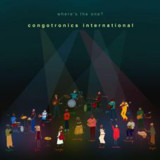
A supergroup comprising Deerhoof + Juana Molina + Kasai Allstars + Konono No.1 + Skeletons + Wildbirds & Peacedrums. It all started when the music of Konono No.1 and Kasai Allstars was first released in the US and Europe, in the later part of the '00s. With its blend of ritual music, traditional percussion, thumb pianos, electric guitars, and makeshift instruments made from junkyard scrap, their out-of-this-world sound now also known as Congotronics, a word coined to title the series in which their albums appeared on Crammed Discs - deeply struck the imagination of musicians and fans worldwide. Leading rock media enthused about this newly rediscovered brand of "primal rock", while an impressive string of avant-rock, electronic & hip hop artists (from Dirty Projectors, Andrew Bird, Animal Collective and Deerhoof to Beck, Björk, Wilco, Radiohead, Saul Williams, Questlove and many more) repeatedly quoted the Congotronics bands as major sources of inspiration.
Montparnasse Musique is a balance of two distinct sensibilities: Algerian-French producer Nadjib Ben Bella’s passion for raw organic beats, and South African DJ Aero Manyelo’s love of DIY synthesis in the digital realm. It’s a bold blend of fresh and processed flavours; the acoustic grit of traditional Africa combined with the pulse of modern Johannesburg — gqom, kwaito, techno, afrohouse. Together they produce an electro-acoustic sound, loaded with infectious hooks, uncompromising and authentic. For their self-titled debut EP, the cross-continental duo collaborates with Congolese bands Kasai Allstars, Konono Nº1, Mbongwana Star and Basokin on five audacious dance tracks forged from the tribal rhythms and mystic voices of the Kasai rainforests, amplified by the aggressive growl of hand-wrought instruments from Kinshasa’s urban wilderness, and augmented with the slick precision of an EDM toolkit. The end result is an inevitable evolution of Congotronics into a sharp-edged, club-ready sound. Nadjib Ben Bella is a DJ and producer who draws influences from the gnawa music of his North African roots and a diverse range of Sub-Saharan sounds from musicians he has worked with over the years. Most recently he has been touring Europe with West African band Les Amazones d’Afrique. Aero Manyelo, a name now synonymous with the burgeoning South African house scene, has honed a distinctive electronic sound that translates across the international club circuit and has attracted a broad range of collaborators — including Idris Elba and The Mahotella Queens on the opening track of an album inspired by the Nelson Mandela biopic Long Walk to Freedom. The EP was recorded and mixed by Kwezydoctor at Khaima Studio in Lille, France.
c 3 Bitumba (feat. Mbongwana Star) Extended
d 4 Sukuma (feat. Muambuyi) [Extended]
[Extended]
- A1: Mulatu Astatqe - Munaye
- A2: Mulatu Astatqe - Meche Dereshe
- A3: Tesfa Maryam Kidane - Yetesfa Tezeta
- A4: Mulatu Astatqe - Kasalefkut Hulu
- A5: Mulatu Astatqe - Tezeta
- B1: Bahta Gebre Hiwot - Ewnet Yet Lagegnesh
- B2: Mulatu Astatqe - Yegele Tezeta
- B3: Mulatu Astatqe - Bemgnot Alnorm
- B4: Mulatu Astatqe - Yekermo Saw
- B5: Tesfa Maryam Kidane - Heiwote
The fact that Ethiopian Modern Instrumentals Hits has been reissued on numerous occasions over the last two decades is testament to the enduring quality of this most obscure of compilations.
Revelers Stone Bricks, musical project from north west Italy, launch their “Anni di Piombo”, a dreamlike travel to the obscure Italian years of lead with the featuring, on vocals, by Antonio Cuciniello aka Tonico 70, one of the most representative Neapolitan hip hop artist.
In the other side with the instrumental one, there is also “Simply B” a trip hop addicted beat produced with the collaboration of Marco Di Giuseppe at the Saxophone.
Written and Composed by Manuele Roberto, Nicola Arecco, Tommaso Delfino e Marco Di Giuseppe.
Masterered at Kasablanka Mastering Studio, Paris - Recorded At Gaina Studio, West Coast, Italy
Produced by Brad Von Gusto for Girotondo Records & Girotondo Produzioni Musicali