Поиск:kassav

Стили
Все
  • 1
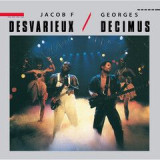
Jacob Desvarieux & Georges Decimus (Kassav') - Yelele

S
Brand new vinyl reissue to celebrate the 40th anniversary of seminal
album Yelele by Georges Decimus and Jacob Desvarieux, from zouk
pioneers Kassav', includes the massive worldwide crossover hit "Zouk-la
se sel medikaman nou ni"
Whether in concert, or on the radio or TV, the image of Kassav' remains vivid in
the minds of listeners and spectators. The group, founded in 1979 by Jacob
Desvarieux, Georges and Pierre-Edouard Decimus, has become legendary, putting
Guadeloupe and Martinique on the musical map of the world. Touring the world
with zouk, a musical movement introduced and popularized by Kassav', their
albums have repeatedly been rewarded with both gold and platinum discs.
A victim of Covid in 2021, the loss of Jacob Desvarieux leaves a huge void.
The mix of Jacob Desvarieux and George Decimus with Jocelyne Beroard, JeanPhilippe Marthely, Patrick Saint-Eloi and Jean-Claude Naimro has played sold out
concerts in 82 countries. With texts recounting real life in the Caribbean world
their lively music draws on the rhythms of Guadeloupe's gwo-ka and Martinique's
ti-bwa. Transcending the well-defined codes of Caribbean music, they have turned
the 1980s and all the succeeding decades into a fabulous ballroom.
They have been welcomed in Japan and the USSR, where they became the first
group of black musicians to tour. Forty years after the group's creation, their
timeless hits continue to resonate

Сделать предзаказ09.08.2024

он должен быть опубликован на 09.08.2024

23,74

Последний логин: 2026 г. назад
KASSAV' (JACOB DESVARIEUX & GEORGES DECIMUS) - YÉLÉLÉ LP

" Brand new vinyl reissue to celebrate the 40the anniversary of zouk pioneers Kassav’ .

Who hasn’t retained at least one memory of the group Kassav’ from their youth? For whether in concert, or onthe radio or TV, the image of Kassav’ remains vivid inthe minds of listeners and spectators.

The group,founded in 1979 by Jacob Desvarieux, Georges andPierre-Edouard Décimus, has become legendary, putting Guadeloupe and Martinique on the musicalmap of the world. Touring the world with zouk, amusical movement introduced and popularized by Kassav’, their albums have repeatedly been rewarded with both gold and platinum discs .A victim of Covid in 2021, the loss of Jacob Desvarieux leaves a huge void. The mix of Jacob Des varieux and George Decimus with Jocelyne Béroard, Jean-Philippe Marthély, Patrick Saint-Éloi and Jean-Claude Naimro has played soldout concerts in 82 countries. With texts recounting reallife in the Caribbean world their lively music draws on the rhythms of Guadeloupe’s gwo-ka and Martinique’sti-bwa. Transcending the well-defined codes of Caribbean music, they have turned the 1980s and all the succeeding decades into a fabulous ballroom.

They have been welcomed in Japan and the USSR, where they became the first group of black musicians to tour. Forty years after the group’s creation, their timeless hits continue to resonate. "

нет на складе

Закажите сейчас, и мы закажем товар для вас у нашего поставщика.

18,91

Последний логин: 18 мес. назад
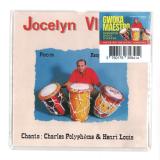
Jocelyn Virapin - Respè Pou Fanm 7"

JOCELYN VIRAPIN is one of the master of the Guadeloupean Gwoka percussion.
Born October 17th, 1957 in Basse-Terre, he’s an author, composer, producer and a vinyl digger.
His Gwoka is a pure tribute to the traditional combination of responsorial singing in Guadeloupean creole, rhythms played on the Ka drums and dancing.
He started to play in the 90’s with his band Gwaka. He opened and collaborated with prestigious band such as Kassav or Zouk Machine.
He has a massive discography as arranger and musician: he appears on more than 78 albums! The track "Pasyon" was originally released in 1994 on a rare vinyl , but with the artist we decided to do an edit, so we invited the super talented jazz player Florian Pellissier for a Rhodes improvisation on the original take.
The track "Respè Pou Fanm" was originally released with his band BELOKA in 2010 and was only pressed on a Cd format at a very limited quantity. This beautiful song is a blend of Ka, fantastic jazzy keys on Rhodes, hypnotic bass, sublime creole spiritual chants. With an incredibly joyous feel, the lyrics gave a timeless advice to men: Respect Women .
It definitely deserves a vinyl version for all the music lovers, Dj’s and diggers from all over the world !
Kenbé red pa moli !

В наличии на складе

Есть у нас в наличии и готов к отправке

14,08
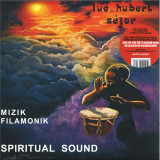
LUC-HUBERT SEJOR - MIZIK FILAMONIK: SPIRITUAL SOUND

180 G. BLACK VINYL WITH LINER NOTES IN CREOLE, FRENCH, ENGLISH

Originally released in 1979, "Spiritual Sound" lives up to its name, a soaring, triumphant album, six tracks of spirit magic from Guadeloupe.

Telluric, intense, terribly alive, the gwoka drums of Guadeloupe carry the identity of a painful and fervent island. Marked forever by the crime of slavery, Guadeloupe's créolité cherishes the ka drums and their natural environment: the low-pitched boula drum with male goatskin, the high-pitched soloist makè drum with female goatskin, the chacha, ti bwa, triangle, calabash and other percussion instruments that surround them, and the voices - the fiery, proud, timbred, urgent voices of the gwoka.


This album is also a legend for its voices: in his then dazzling youth, singer Lukuber Séjor was one of the first gwoka artists to largely feminize the chorus of répondè, who converse with his text delivered in a straight and powerful voice.

And everything here sets new standards. In 1979, Mizik Filamonik - Spiritual Sound proclaimed a spiritual patriotism of ferocious intensity. The album by Lukuber Séjor - whose spelling alone is a battle - sets out to give Guadeloupe the intangible weapons of self-respect and self-knowledge, through a singular practice of traditional music.

The genesis of gwoka music is less straightforward than one might imagine... The drums performed the servile task of accompanying the work of slaves in the fields and during the “corvées” imposed by the administration, before being freely practiced by the common people after the abolition of 1848. At the heart of the conviviality of the Guadeloupeans furthest from the cities - geographically and socially - the gwoka drums come out for carnival, funeral wakes and neighborhood celebrations, but also during strikes, fits of anger and armed vigils of the riots and revolts that have punctuated the island's history. For generations, governors of the colony and then the prefects of the overseas department of Guadeloupe have been viewing the gwoka as a potential for turbulence and a threat to public order.

But as the Beatlesmania, “chanson engagée” and rock revolutions unfolded in Europe, young people turned to the drums of mizik a vié nèg (“bad negro music”, in Creole), which Guadeloupeans had learned to despise by following the “assimilation” process advocated by the school system and most of the political class. At the end of the sixties, in a Guadeloupe mourning the deadly repression of the May 1967 social movement, they played traditional music, refusing to wrap it up in tourist prettiness and madras folk costumes. Instinctively, they played a rough and contemporary gwoka, led by the incendiary Guy Konkèt. This was the era of decisive 45 rpm records such as Robert Loyson's Kann a la richès, which brought to light the fieriest words of union rallies.

At his home in Sainte-Anne, Lukuber Séjor played with flautist Olivier Vamur and his brother Claude Vamur, who cobbled together a drum kit from tin crockery and became, a few years later, the most influential drummer in Kassav'.

These were the years of the Bumidom program, when young Guadeloupeans were encouraged to emigrate to mainland France. At the age of twenty, Lukuber Séjor embarked on the liner Irpinia, disembarking at Le Havre and taking the train to the Gare Saint-Lazare - the route taken by thousands of young West Indians who went on to study or looked for work, all the while trying to maintain a link with their homeland. In this case, it's at the Antony university residence, where Lukuber played the drum and participated in a thousand gwoka updates and aggiornamentos, while exile reinforced the need for a spiritual link with the native land.

In 1978, Guy Konkèt played at the Salle Wagram, a historic event for West Indian music. After serving as répondè - i.e. backing vocalist - on one of his home-recorded albums, Lukuber joined his live band. Little by little, he became one of the key artists on a circuit parallel to French show business. At a student party in Caen, he met a young woman from Martinique who, at the time, was more motivated by her ambitions as a visual artist than by her vocation as a musician. Her name was Jocelyne Béroard and, a few years before she plunged into the Kassav' adventure and became the greatest West Indian singer of her generation, she designed the cover of Lukuber Séjor's LP.

This ambition was obvious and imposed its will. A more or less regular band was formed, with Roger Raspail, Rudy Mompière and Éric Danquin on ka drums, Claude Vamur on ti bwa, Olivier Vamur and Françoise Lancréot on flutes and Annick Noël on keyboards. Lukuber Séjor is set on wanting to extend the gwoka palette to other instruments, as the jazz-rock revolution opens a thousand new doors. Annick Noël will play a wide range of timbres and textures on electric piano and synthesizer. Another novelty: the répondè are two men and two women, Roger Raspail, Olivier Vamur, Françoise Lancréot and Maryann Mathéus ...

Mizik Filamonik - Spiritual Sound is a self-production in which the singer and leader sank all his savings, allowing him no more than a single day in the studio. The first side is more of a musical manifesto, with the first two tracks, Éritage and Penn é plézi, being instrumentals. The third, Son, forcefully celebrates the need for Guadeloupeans to connect with the gwoka. In fact, Jocelyne Béroard's cover shows a tambouyé in the shadow of a cloudy sky, against which a radiant sun is rising and whose light will soon flood the entire landscape. The silhouette and face of this man strongly evoke the immense Vélo, master of the ka, rejected at the time on the fringes of society.

The second side of the LP is surprising. Formally, three tracks are explicitly linked like the three parts of a triptych. Primyé voyaj evokes the appalling tribulation of Africans deported as slaves to Guadeloupe; dézyèm voyaj speaks of the Bumidom program and the economic, political and social forces driving young Guadeloupeans towards the mirage of prosperity in France; twazyèm voyaj closes the cycle with the emigrants' return from Europe after years away from their island...

This gwoka, obsessed with the need to save Guadeloupe spiritually, appeals far beyond the politicized audience. Mizik Filamonik - Spiritual Sound instantly became a classic, although Lukuber Séjor never really made a career for himself as a musician.

After all, the album was released in 1980, with no promotional resources in France or Guadeloupe - and therefore no concerts. The thirty-two-year-old author, composer and performer made his own third trip back to Guadeloupe. He set up a small woodworking business, which he lost in Hurricane Hugo in 1989. His other activity, teaching in a medical-educational institute, became the core of his professional life. He continued to be an active campaigner - a campaigner for the Creole language, a campaigner for the reawakening of identity, a campaigner for special education, a campaigner for a thousand causes that he ignited with his generous and perceptive enthusiasm, such as the defense of breadfruit fries...

The echoes of his 1979 album have not died down. Of course, the use of Penn é plézi as the theme tune for Radio Guadeloupe's funeral notices from 1980 to 1992 kept him in the collective memory, but he continues to sing and compose sporadically, as with his all-female

vocal group Vwapoulouéka... Still convinced that music is a means of liberating the spirit, he continues the journey of a young man eager to deploy the power of Creole music and language.

Bertrand Dicale
В наличии на складе

Есть у нас в наличии и готов к отправке

19,75
VARIOUS - MIZIK MALADI: DISQUES DEBS INTERNATIONAL VOL. 3 LP 2x12"

Strut introduces the highly anticipated third volume in the Disques Debs International series, diving deeper into the archives of one of the greatest French Caribbean labels, Disques Debs, based in Guadeloupe. Founded by the visionary Henri Debs in the late ‘50s, the label and studio operated for over 50 years, releasing more than 300 7” singles and 200 LPs, making it a cornerstone of Caribbean music history.

By the dawn of the 1980s, Henri Debs had already established himself as a prolific producer, with a record of releases unmatched in Guadeloupe and Martinique. From its humble beginnings with a 2-track tape machine in the back of a clothes shop, Disques Debs evolved into a powerhouse, boasting a state- of-the-art studio in downtown Pointe-à-Pitre, retail shops for records and musical instruments in Guadeloupe, Martinique, and Paris, a nightclub in Gosier, and international distribution deals reaching Europe, the U.S., and South America.

Disques Debs played a pivotal role in shaping modern Caribbean music. The label bridged traditional genres like biguine and gwoka with contemporary styles like cadence, compas, and zouk, the latter becoming a global phenomenon in the 1980s with contributions from iconic acts like Kassav’ and Zouk Machine. The period also saw Disques Debs champion a new generation of artists while maintaining ties with legendary figures from earlier decades.

Volume 3 in this series spotlights one of the label’s most dynamic and influential periods as it expanded its global reach during the 1980s. Across 2 LPs, the release features a curated selection of tracks from the Disques Debs circle, highlighting both emerging talents and established artists who defined the era.

This collection not only celebrates Henri Debs’ unmatched legacy but also offers a snapshot of Caribbean music’s golden age, cementing Disques Debs as a cultural institution.

нет на складе

Закажите сейчас, и мы закажем товар для вас у нашего поставщика.

24,79

Последний логин: 11 мес. назад
MANU DIBANGO - MANU 76 LP

A true jack-of-all-trades, he has played and recorded virtually every style of music you can think of - Soul, Reggae, Jazz, Spirituals, Blues, African, Electro. Etc... Initially trained on classical piano, his musical career began in Brussels and Paris in the 50s. In the 60s, he flew to the Congo as a member of Joseph Kabasele's African Jazz group, Le Grand Kalle. Next came Cameroon in 1963, where he formed his own group before returning to Paris in 1965. For the Manu 76 album, we are - obviously - in 1976, still in Paris. Four years after his international breakthrough with his hit Soul Makossa, Manu assembled a prestigious cast of musicians including Jo Tongo on bass, Slim Pezin on guitar, Lucien Dobat (from Kassav) on drums, Alex Francfort on piano and 7-year-old Georgia Dibango as guest vocalist.

Сделать предзаказ28.06.2024

он должен быть опубликован на 28.06.2024

32,35

Последний логин: 2026 г. назад
VARIOUS - TRACE ZOUK

Various

TRACE ZOUK

12inch3424616
Wagram
25.11.2022

As a true reference in the world of cultural media, Trace completes its musical offer with a first collection of 3 vinyls! Find the cream of Zouk selected by Trace and journalist Osman Jr. With: Kassav"-Perle Lama-Admiral T..

Сделать предзаказ25.11.2022

он должен быть опубликован на 25.11.2022

19,12

Последний логин: 2026 г. назад
DESUMANOS - DESUMANOS

Desumanos

DESUMANOS

12inchVAMPI245
Vampisoul
10.11.2022

Desumanos' fresh mixture of guitar driven melodies is as evocative as it is playful. This instrumental project is made up of a dream-team of Brazilian producers and musicians. Kassin, on bass, was member of The +2's band and co-produced Gilles Peterson's Brazilian project Sonzeira, featuring legendary artists such as Elza Soares, Naná Vasconcelos, Wilson Das Neves_ While Liminha, on guitar, is a former member of Os Mutantes. His signature sound is heavily influenced by classic instrumental surf music, but tropical rhythms are also dropped in the mix. The band is completed with Felipe and Manoel Cordeiro (on guitar), one of the lambada originators, and Stephane San Juan (drums), currently playing with David Byrne. Across the tracklist of this Desumanos debut album we can find a unique combination of musical styles that are all filtered through the sieve of instrumental surf music without losing their roots anchored in tropical sounds such as cumbia, African rhythms and, of course, popular genres from Brazil such as forró or lambada. Ten original songs in which the guitar is the undisputed protagonist and the tropical atmosphere emanates through each note.

Сделать предзаказ10.11.2022

он должен быть опубликован на 10.11.2022

25,63

Последний логин: 2026 г. назад
The GROUP NSI - Roger A Ti Wawa

ULTRA RARE album reissue for the first time Worldwide.

Fantastic Proto-Zouk from Georges and Pierre-Edouard Decimus

NSI (New sound From the Islands) is a concept launched by the Decimus family, and the album was released at the end of 1981, at the same time as Kassav's Album "N'4" with the singer Jocelyn Moka.

Under exclusive license George Decimus

нет на складе

Закажите сейчас, и мы закажем товар для вас у нашего поставщика.

29,62

Последний логин: 3 г. назад
Various - Vintage Zouk
Сделать предзаказ05.08.2022

он должен быть опубликован на 05.08.2022

18,28

Последний логин: 2026 г. назад
Various - Horse Meat Disco LP (2x12")
 
15
также имеющийся в продаже

Yellow Vinyl[30,97 €]


The first volume of Back To Mine was released back in 1999 by Nick Warren, designed to showcase a selection of tracks you’d find and be heard playing at the artist's home. Selectors have come in the form of New Order, Pet Shop Boys, Fatboy Slim, and Faithless who all dug deep to find their essential at-home listening.

The latest compilers in the Back To Mine series are none-other than the renowned four-piece, Horse Meat Disco. The horsemen are known for their incredibly fun, deep-diving selections, and this shines through in their Back To Mine compilation in flamboyant style.

Over the course of 16 years of their nightclub tenure, they have become a global brand as pinnacle players of the queer party scene in London and beyond, holding down residencies in New York, Berlin, and Lisbon. Their flamboyant nature and incredibly fun, deep-diving selections have made them one of Disco’s most beloved acts.

Across 15 eclectically brilliant tracks, Horse Meat Disco, which comprises Jim Stanton, James Hillard, Luke Howard, and Severino Panzetta expertly traverse through classic disco cuts, wonky dancefloor groovers, and silky smooth soul.

нет на складе

Закажите сейчас, и мы закажем товар для вас у нашего поставщика.

29,20

Последний логин: 2 г. назад
Various - Horse Meat Disco LP (2x12")
 
15
также имеющийся в продаже

Black Vinyl[29,20 €]


Yellow Vinyl
The first volume of Back To Mine was released back in 1999 by Nick Warren, designed to showcase a selection of tracks you’d find and be heard playing at the artist's home. Selectors have come in the form of New Order, Pet Shop Boys, Fatboy Slim, and Faithless who all dug deep to find their essential at-home listening.

The latest compilers in the Back To Mine series are none-other than the renowned four-piece, Horse Meat Disco. The horsemen are known for their incredibly fun, deep-diving selections, and this shines through in their Back To Mine compilation in flamboyant style.

Over the course of 16 years of their nightclub tenure, they have become a global brand as pinnacle players of the queer party scene in London and beyond, holding down residencies in New York, Berlin, and Lisbon. Their flamboyant nature and incredibly fun, deep-diving selections have made them one of Disco’s most beloved acts.

Across 15 eclectically brilliant tracks, Horse Meat Disco, which comprises Jim Stanton, James Hillard, Luke Howard, and Severino Panzetta expertly traverse through classic disco cuts, wonky dancefloor groovers, and silky smooth soul.

нет на складе

Закажите сейчас, и мы закажем товар для вас у нашего поставщика.

30,97

Последний логин: 3 г. назад
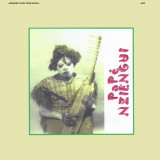
Papé Nziengui et son Groupe - Kadi Yombo LP 2x12"

Kadi Yombo, published in 1989, is the most successful album in the quest for a fusion between tradition and modernity in Bwiti harp music of the Tsogho people of Gabon. Combining beating rattles with a layer of synthesizers, Papé Nziengui blends in a contrapuntal dialogue characteristic of harp playing: male song in appeal and female choir in response, male voice of the musical arc and rhythms of female worship. But above all it’s Tsogho ritual music and modern studio orchestration. The result is an initiatory itinerary of 10 musical pieces which are all milestones likely to be simultaneously listened to, danced, meditated on, and soon acclaimed. In the years since, Nziengui has traveled he world from Lagos to Paris, from Tokyo to Cordoba, from Brussels to Mexico City to become a true icon, the emblem of Gabonese music.

Like Bob Dylan, "electrifying" folk and Bob Marley mixing rock with reggae, some purists have criticized Nziengui for having distorted the music of harp by imposing a cross with modern instruments. They even went so far as to claim that Nziengui was just an average harpist covering his shortcomings with stunts that were only good for impressing neophytes; like playing a harp placed upside down behind his back or playing two or three harps simultaneously. Sincere convictions or venomous defamations, in any case, Nziengui never gave in to such attacks, imposing himself on the contrary to pay homage to the elders (Yves Mouenga, Jean Honoré Miabé, Vickoss Ekondo) while instructing the maximum of young people. He is thus the promoter of many young talents, the most prominent of which is certainly his nephew Jean Pierre Mingongué. In a conservative society where the sacred is confused with secrecy, exposing the mysteries of Bwiti in broad daylight can be punished by exclusion or even execution.

Papé Nziengui has always claimed that he faces such risks because he never felt enslaved to a community that governs his life, that regulates his conduct, that has a right of censorship over his activities. Like Ravi Shankar, the famous sitarist, Papé Nziengui is a man of rupture but also of openness, a transmitter of culture. As proof, he has established himself in Libreville, Gabo’s capital, as the main harpist for sessions and concerts, accompanying the greatest national artists (Akendengué, Rompavè, Annie-Flore Batchiellilys, Les Champs sur la Lowé, etc.) as well as foreign artists (Papa Wemba, Manu Dibango, Kassav', Toups Bebey, etc.). In 1988, he was the first harpist to release an album in the form of a cassette produced by the French Cultural Center (Papé Nziengui, Chants et Musiques Tsogho). At the same time, he created his own group (Bovenga), combining traditional music instruments (musical bow, drums, various percussion instruments, etc.) in the framework of a true national orchestra, which gave the first concert and the first tours of a traditional music that was both modern and dynamic, thus "democratizing" the harp, to the dismay of certain purists.

On the other hand, in modern music, dominated by the logic of profit or even commercialism, artistic creation must often be adjusted for a specific audience based on reason rather than heart. But instead of allowing himself to be distorted, Papé Nziengui has always tried to produce music that is not a caricature, worthy in its expression as in its content, of the sacredness and transcendence of the music of the Origins. This is what makes Nziengui not only the musician, but the man someone whose age hasn’t altered any of his freshness or authenticity

Сделать предзаказ08.04.2022

он должен быть опубликован на 08.04.2022

32,73

Последний логин: 2026 г. назад
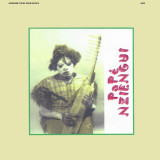
Papé Nziengui et son Groupe - Kadi Yombo LP

Kadi Yombo, published in 1989, is the most successful album in the quest for a fusion between tradition and modernity in Bwiti harp music of the Tsogho people of Gabon. Combining beating rattles with a layer of synthesizers, Papé Nziengui blends in a contrapuntal dialogue characteristic of harp playing: male song in appeal and female choir in response, male voice of the musical arc and rhythms of female worship. But above all it’s Tsogho ritual music and modern studio orchestration. The result is an initiatory itinerary of 10 musical pieces which are all milestones likely to be simultaneously listened to, danced, meditated on, and soon acclaimed. In the years since, Nziengui has traveled he world from Lagos to Paris, from Tokyo to Cordoba, from Brussels to Mexico City to become a true icon, the emblem of Gabonese music.

Like Bob Dylan, "electrifying" folk and Bob Marley mixing rock with reggae, some purists have criticized Nziengui for having distorted the music of harp by imposing a cross with modern instruments. They even went so far as to claim that Nziengui was just an average harpist covering his shortcomings with stunts that were only good for impressing neophytes; like playing a harp placed upside down behind his back or playing two or three harps simultaneously. Sincere convictions or venomous defamations, in any case, Nziengui never gave in to such attacks, imposing himself on the contrary to pay homage to the elders (Yves Mouenga, Jean Honoré Miabé, Vickoss Ekondo) while instructing the maximum of young people. He is thus the promoter of many young talents, the most prominent of which is certainly his nephew Jean Pierre Mingongué. In a conservative society where the sacred is confused with secrecy, exposing the mysteries of Bwiti in broad daylight can be punished by exclusion or even execution.

Papé Nziengui has always claimed that he faces such risks because he never felt enslaved to a community that governs his life, that regulates his conduct, that has a right of censorship over his activities. Like Ravi Shankar, the famous sitarist, Papé Nziengui is a man of rupture but also of openness, a transmitter of culture. As proof, he has established himself in Libreville, Gabo’s capital, as the main harpist for sessions and concerts, accompanying the greatest national artists (Akendengué, Rompavè, Annie-Flore Batchiellilys, Les Champs sur la Lowé, etc.) as well as foreign artists (Papa Wemba, Manu Dibango, Kassav', Toups Bebey, etc.). In 1988, he was the first harpist to release an album in the form of a cassette produced by the French Cultural Center (Papé Nziengui, Chants et Musiques Tsogho). At the same time, he created his own group (Bovenga), combining traditional music instruments (musical bow, drums, various percussion instruments, etc.) in the framework of a true national orchestra, which gave the first concert and the first tours of a traditional music that was both modern and dynamic, thus "democratizing" the harp, to the dismay of certain purists.

On the other hand, in modern music, dominated by the logic of profit or even commercialism, artistic creation must often be adjusted for a specific audience based on reason rather than heart. But instead of allowing himself to be distorted, Papé Nziengui has always tried to produce music that is not a caricature, worthy in its expression as in its content, of the sacredness and transcendence of the music of the Origins. This is what makes Nziengui not only the musician, but the man someone whose age hasn’t altered any of his freshness or authenticity

Сделать предзаказ08.04.2022

он должен быть опубликован на 08.04.2022

10,29

Последний логин: 2026 г. назад
Papé Nziengui et son Groupe - Kadi Yombo LP

Kadi Yombo, published in 1989, is the most successful album in the quest for a fusion between tradition and modernity in Bwiti harp music of the Tsogho people of Gabon. Combining beating rattles with a layer of synthesizers, Papé Nziengui blends in a contrapuntal dialogue characteristic of harp playing: male song in appeal and female choir in response, male voice of the musical arc and rhythms of female worship. But above all it’s Tsogho ritual music and modern studio orchestration. The result is an initiatory itinerary of 10 musical pieces which are all milestones likely to be simultaneously listened to, danced, meditated on, and soon acclaimed. In the years since, Nziengui has traveled he world from Lagos to Paris, from Tokyo to Cordoba, from Brussels to Mexico City to become a true icon, the emblem of Gabonese music.

Like Bob Dylan, "electrifying" folk and Bob Marley mixing rock with reggae, some purists have criticized Nziengui for having distorted the music of harp by imposing a cross with modern instruments. They even went so far as to claim that Nziengui was just an average harpist covering his shortcomings with stunts that were only good for impressing neophytes; like playing a harp placed upside down behind his back or playing two or three harps simultaneously. Sincere convictions or venomous defamations, in any case, Nziengui never gave in to such attacks, imposing himself on the contrary to pay homage to the elders (Yves Mouenga, Jean Honoré Miabé, Vickoss Ekondo) while instructing the maximum of young people. He is thus the promoter of many young talents, the most prominent of which is certainly his nephew Jean Pierre Mingongué. In a conservative society where the sacred is confused with secrecy, exposing the mysteries of Bwiti in broad daylight can be punished by exclusion or even execution.

Papé Nziengui has always claimed that he faces such risks because he never felt enslaved to a community that governs his life, that regulates his conduct, that has a right of censorship over his activities. Like Ravi Shankar, the famous sitarist, Papé Nziengui is a man of rupture but also of openness, a transmitter of culture. As proof, he has established himself in Libreville, Gabo’s capital, as the main harpist for sessions and concerts, accompanying the greatest national artists (Akendengué, Rompavè, Annie-Flore Batchiellilys, Les Champs sur la Lowé, etc.) as well as foreign artists (Papa Wemba, Manu Dibango, Kassav', Toups Bebey, etc.). In 1988, he was the first harpist to release an album in the form of a cassette produced by the French Cultural Center (Papé Nziengui, Chants et Musiques Tsogho). At the same time, he created his own group (Bovenga), combining traditional music instruments (musical bow, drums, various percussion instruments, etc.) in the framework of a true national orchestra, which gave the first concert and the first tours of a traditional music that was both modern and dynamic, thus "democratizing" the harp, to the dismay of certain purists.

On the other hand, in modern music, dominated by the logic of profit or even commercialism, artistic creation must often be adjusted for a specific audience based on reason rather than heart. But instead of allowing himself to be distorted, Papé Nziengui has always tried to produce music that is not a caricature, worthy in its expression as in its content, of the sacredness and transcendence of the music of the Origins. This is what makes Nziengui not only the musician, but the man someone whose age hasn’t altered any of his freshness or authenticity

Сделать предзаказ08.04.2022

он должен быть опубликован на 08.04.2022

32,73

Последний логин: 2026 г. назад
Various - LÈSPRIT KA: NEW DIRECTIONS IN GWOKA MUSIC FROM GUADELOUPE 1981-2010 LP (2x12")

2LP with a 4-page colour insert

As Guadeloupean vocalist and composer Marie-Line Dahomay writes in her liner notes to the compilation, gwoka is more than a style of music, it is “a way of living and thinking.” Rooted in the social, musical and ritual practices of enslaved African people and their descendants on Guadeloupe, gwoka has always sought to express the spirit of independence and resistance authentic to the island.Building on its traditional call-and-response form and the ideas of pivotal figures like Gérard Lockel and Christian Laviso, modern gwoka evolved throughout the second half of the twentieth century to include funk, jazz and electronic influences.

Defined by its propensity for innovation and experimentation, this compilation charts the most radical changes to modern gwoka, capturing a sensory riot of traditional répertoires, rhythms and makè techniques fused with genre-defying experimentation.Whether heard in the deeply cosmic, spiritual music of Dao, Freydy Doressamy and Gaoulé Mizik, or the jazz funk inflections of Gui Konket and Horizon, the music here is united by the feeling of santiman ka, crucial not only to gwoka music but the identity of Guadeloupe at large.

As co-curator Cédric Lassonde (Bueaty & The Beats) writes: “What unifies these selections is the depth of the compositions, the experimentation around the santiman ka, and the spirit of resistance and liberation against slavery, be it modern or ancestral. With a thirst for innovation typical of the island’s creole culture, the ka spirit is deeply rooted in collective history and in a quest for identity.”

Co-curator Brandon Hocura (Séance Centre) continues: “The creative energy of these musicians is powerful and demonstrates a universal pursuit of resistance, freedom and identity. Their voices are distinct, but the chorus rises high and carries their message far across the sea.”

Lèsprit Ka: New Directions in Gwoka Music from Guadeloupe 1981-2010 is the first compilation of its kind to bring the sound of modern gwoka to a wider audience, with many of the featured musicians still active today. Presented as a double LP, the release features a specially commissioned essay by Guadeloupean musician Marie-Line Dahomey, and extensive liner notes from Cédric Lassonde and Séance Centre’s Brandon Hocura.

True to the hybrid nature of the music, the compilation seeks not to provide a definitive sound, but express the variety of contemporary forms that have evolved from gwoka. Just as Guadeloupean trailblazers Kassav fused gwoka with funk and cadence to create zouk, so did the musicians on this collection push gwoka in new directions rarely heard beyond its shores.

In the words of Gérard Lockel, “gwoka is the soul of Guadeloupe”

нет на складе

Закажите сейчас, и мы закажем товар для вас у нашего поставщика.

28,36

Последний логин: 4 г. назад
Digital Caresse - Demain

It was the mid 80s. A musical revolution was already steamrolling throughout the French West Indies when the band Kassav' produced what was to become the sound of the decade. With a now wider use of synthetic and digital tones, the "zouk" wave literally swept away to sea the biguine and cadence from the West Indian musical landscape. While this took place, some musicians chose to make an alternative use of the new techniques brought on by the advent of synthesizers. Musicians like Serge Fabriano.

It was back in 1980 that Serge, a talented young musician from Guadeloupe, while studying for a degree in 'Arts & Informatique' (Computers & Arts Cycle) at the Université De Vincennes near Paris, discovered early computer-generated digital music (MAO in French) thanks to his roommates, who both taught computer-generated graphic arts. In 1982 Fabriano and his Fabriano Unité Zion project recorded, with the help of Alain-Jean Marie, Mario Canonge and Pierre Labor, Cosmik Syndika*, which to this day remains a masterpiece of made-in-Guadeloupe Caribbean jazz.

The following years saw him tour the US and Canada as well as several other countries. By 1986 he was back in Guadeloupe, teaching music in the secondary schools of Point-à -Pître and Sainte-Rose. While doing this, his ongoing passion for the budding MAO led him to kit himself out: the Yamaha CX5M (MSX Music Computer), the Macintosh Plus, the legendary synthesizers DX7 and DX11 and several other early rhythm machines became his new toys.

Him and his partner at the time, Marie-Reine Lamoureux, who was also both a teacher and a musician, as well as a member of the Fabriano Fuzion project, decided to involve their pupils in his electronic musical experimentations. They recorded an album, composed of five tracks deliberately titled Demain, under the name 'Digital Caresse' (the idea behind this was that instead of hitting the percussions to make music, one stroked the computer keyboard to coax a sound). The combination of the children's choir, enchanting wonky flutes, saturated electronic beat and cosmic atmosphere perfectly outline the purity of this rough diamond.

нет на складе

Закажите сейчас, и мы закажем товар для вас у нашего поставщика.

19,87

Последний логин: 4 г. назад
Fabriano Fuzion - Cosmik Sindinka

" I used to live in rue de Clignancourt, and remember as a kid going to the 14th of July West Indian ball organized by my father rue André Del Sartre in Montmartre every year. There I would meet, among others, saxophonist Robert Mavounzy. Sticking to the area, my older brother had a band and often played at the famous venue La Cigale, where even Henri Salvador joined him for a jam from time to time."Since childhood Serge Fabriano bathed in music, to-ing and fro-ing between his native Guadeloupe and Paris where he grew up. He attended the music conservatory, learnt how to play bass, met and played with many musicians and was ultimately angling for a career as a music teacher. But Serge had wanderlust; he lived to meet new people and was passionate about travel.Thus, it was in a squat located rue de Flandres in the 19th district of Paris that Serge Fabriano met by chance zarb player Djamchid Chemirami, one of Iran's greatest percussionists, who invited him to the Arts Festival of Shiraz-Persepolis. After a month-long motorcycle journey, he and his guitar teacher, Roger Bénichou, arrived in Tehran. Sadly their guitars didn't survive the journey. It was there that he met, among others, Woody Shaw, Max Roach and his wife Abbey Lincoln. Serge also formed a friendship with saxophonist Gary Bartz and stayed on a month playing with the cream of the musicians who'd attended to the Festival.During the mid-70's, he alternated between teaching classes and live gigs, and performed in Germany with a funk band comprised of ex-GIs from the US Army. He also met the members of Chick Corea's group, Return to Forever, and especially Stanley Clarke who became a great source of inspiration to him.From 1978 onwards, Serge Fabriano put aside teaching and devoted more time to music. He became a musician's musician, doing studio recordings with rock bands. He also played with members of the Caribbean diaspora, which included the great drummer Marcel Lollia (known as Velo), Patrick Jean-Marie, Guy Conquette, Winston Berkley, Mino CineluDuring the "Ayatollah Comédie" musical comedy tour organized by the Journal Liberation, Serge met actor Pierre Clémenti (Il Gattopardo, Belle De Jour, The Conformist). This was a game-changer : "I was trying to record my first record. Clémenti suggested the Studio Beaubourg in Paris. "The group Fabriano Fuzion - Fabriano Unit Zion - was born.The band brought together some of the Caribbean's most inspired musicians: Martinican-born Mario Canonge on the piano (his first appearance on an album), Alain-Jean Marie on the synthesizer, Edouard and Pierre Labor on saxophones, Claude Vamur (Kassav ') on the drums, singer/percussionists Marie-Reine Lamoureux and Marie-Céline Lafontaine, percussionists Roger Raspail, Sully Cally and Hector Ficadière (Tumblack, Vent Levé) on Ka percussions.It is precisely the Gwo Ka - this ancestral 'root' music deeply embedded in the heart of the Guadeloupe musician - which constitutes the rhythmic backbone of this first opus. The Gwo Ka, the jazz, the poetry and the spiritual vibe are gathered here to form a splendid album; one of the true masterpieces to emerge from the French West Indies.Rarely will a band have borne its name so well than Fabriano Fuzion - its music is a multiple and collective work in which each element brings its identity and its richness, conferring to this major work a truly fusional dimension.

нет на складе

Закажите сейчас, и мы закажем товар для вас у нашего поставщика.

32,73

Последний логин: 6 г. назад
Feeling Kréyol - Las Palé

Feeling Kréyol

Las Palé

12inchSTRUT195LP / 170331
STRUT
27.11.2018

Strut present the frst ever international reissue of in-demand '80s zouk LP 'Las Palé'
by Feeling Kréyol, out of Guadeloupe.
Producer Darius Denon explains: 'This was 1988 and bands like Zouk Machine and Kassav
were huge. I had met producer Frankie Brumier when I was performing at festivals and
parties and he wanted to record a girl group so we began scouting venues, mainly around
the Grande-Terre district in the island's capital, Pointe-à-Pitre. I ran auditions and picked out
the best three voices - Fabienne, Leïla and Yolande. One was singing in a choir and none of
them had met each other previously.'
Recording at a studio in Le Gosier, Denon trained them to sing the songs and spent around
6 weeks recording the album: 'I gave them a couple of compositions that I had planned for
my own solo album. I remember that we all got on really well; the sessions were fun.'
The title track 'Las Palé' was the lead track pushed as a single and achieved modest
success domestically. The band did a few promotional performances in the island's
discotheques but, in the end, the album stalled. 'Studios were expensive and there was
no cheap technology as we have now. So, the producer ended up cutting corners with the
production - the mix was not completely fnished and the voices were not synchronised
right to some of the tracks.'
For Denon, he continued his career to the present day, successfully moving to Paris and
breaking through with the hit 'Je t'emmene' in 1998. Meanwhile, although 'Las Palé' turned
out to be Feeling Kréyol's only recording, the interest in the album has grown in recent years
with the title track's lo-f charm fnding its way into sets by Invisible City and onto Red Light
Radio and more. This frst full reissue is remastered by The Carvery and features full original
artwork along with a new interview with Darius Denon.
KEY POINTS:
- First ever reissue of sought after original zouk LP from 1988
- Sleeve notes by modern day zouk star and album producer Darius Denon
- Remastered by The Carvery
- Tracks already cult classics through plays by Invisible City, Motor City Drum
Ensemble and more
FOR FANS OF:
Sofrito, Digital Zandoli, Kassav, William Onyeabor, Soundway, Invisible City, Motor
City Drum Ensemble, Disques Debs, zouk, Haitian compas, Gilles Peterson, Darius
Denon, Les Vikings

нет на складе

Закажите сейчас, и мы закажем товар для вас у нашего поставщика.

23,07

Последний логин: 7 г. назад
Jacob F. Desvarieux - Sweet Florence

we are very much excited to support this re-issue, credited by jacob f. desvarieux, a composer and also well known as the guitarist of kassav - the only-one band which continually embodies the word 'zouk" for last few decades.
a1 is the tune showing us psychedelic guitar phrases fused together with wobbling heavy synthesizer. you'd better hurry to get the copy for this song, since this is just simply a killer. besides it, a2 is also a tropical danceable tune with moving bass and impressive vocoder chorus, makes everyone literally "emotional" on the floor.
kuniyuki joins with more deep spacey re-edit on the b side, probably we need few words to describe this man in our bio because of his right craftsmanship.
following re-issue could be expected from us in near future. grab one and find yourself in caribbean exotica!

нет на складе

Закажите сейчас, и мы закажем товар для вас у нашего поставщика.

12,14

Последний логин: 7 г. назад
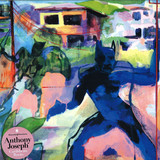
Anthony Joseph - Caribbean Roots

Strut team up for the first time with respected French label Heavenly Sweetness for the brand new album by the inspired poet, novelist and musician, Anthony Joseph.The Caribbean is an influence that runs through Joseph's discography, obliquely or headon, suggested or on full display. It resonates on each of his albums, from the furious trance of 'Bird Head Son' to the more polished 'Time'. On 'Caribbean Roots', he has now decided to turn a guiding thread and a reference point into a communications cable - a powerful bond that makes light of distance and braves the seas to link his island to that of his friends in the Caribbean arc, dancing to the strains of tumbélé and mendé only a few miles
from Port of Spain where people live it up to rapso and soca beats. Caribbean Roots' represents a return to his roots for Anthony Joseph, who has always remained true to a powerful, deep-seated sense of his Caribbean identity. Having started
out as a joint project with the outstanding percussionist Roger Raspail (Cesaria Evora, Papa Wemba, Kassav), 'Caribbean Roots' swiftly grew into a creative force incorporating
the rhythms, sounds and vibes that rock the Caribbean from San Fernando, Scarborough, Kingston and Les Abymes to Port-au-Prince and Havana. Backed by a band made up
of a blend of local musicians, the album attempts to unite the different islands into a single entity whilst ensuring that the identity of each is in no way diluted by the mix instead creating a richer and stronger alloy. The saxophones of Shabaka Hutchings (The
Heliocentrics) and Jason Yarde, the trumpet of Yvon Guillard (Magma), the bass of Mike Clinton (Salif Keita) and the trombone of Pierre Chabrèle (Creole Jazz Orchestra) all combine to form a group of Caribbean All Stars to which Andy Narrell, the master of the steel pans, brings ringing drum beats. The album features bursts of catchy rhythms and slow percussive riff progressions, as on a film soundtrack, incandescent voodoo funk and rhythmic high-speed frenzies shot through with free-jazz sax. This reunion of the Caribbean diaspora was never meant to come up with a formula divisible into eleven separate tracks - its goal was to explore and discover new sounds. And all of this under Anthony Joseph's guidance, as he spins his lyrical blend of afro-futurism and surrealism, commemorating the Caribbean people's sometimes violent resistance to colonialism. Anthony Joseph, one moment a chronicler reciting his text against a background of simple percussion, the next a storyteller possessed by the power of a hypnotic bassline, then an adventurer chanting among mangroves where the rhythm section and the brass have created an impenetrable thicket. At turns, an MC too, strutting to a fat, throbbing groove in vocal tandem with Sly Johnson or David Rudder to pay tribute to Mighty Sparrow, the undisputed and indisputable king of calypso

нет на складе

Закажите сейчас, и мы закажем товар для вас у нашего поставщика.

19,03

Последний логин: 2 г. назад
  • 1
Продуктов на странице:
N/ABPM
Vinyl