quête:kid bee rock

Genres
Tout
AESOP ROCK - NONE SHALL PASS 2x12"

Originally released in 2007, None Shall Pass was the fifth studio album by Aesop Rock. It features production by Blockhead, El-P (Run The Jewels), Rob Sonic (Hail Mary Mallon), and Aesop Rock himself. Guest features include El-P (Run The Jewels), Cage, Breeze Brewin (Juggaknots), Rob Sonic (Hail Mary Mallon), and John Darnielle (The Mountain Goats). Created over a two year period following the release of his Fast Cars, Danger, Fire & Knives EP, the album would prove to be Aesop's final release on the now defunct Def Jux label. The critically acclaimed album debuted at #50 on Billboard's Top 200 chart and #35 on their Hip-Hop and R&B charts, and includes the title track "None Shall Pass" which has proven to be one of Aesop's most popular songs to date. None Shall Pass documents the vast amounts of personal change Aesop had been experiencing at this time while still deftly depicting scenes and stories relative to all ages of life.

pas en stock

Commandez maintenant et nous commanderons l'article pour vous chez notre fournisseur.

31,89

Last In: 3 years ago
DULL - DIVE DEEP DOWN

Dull

DIVE DEEP DOWN

12inchSTAR3423121
Startracks
17.02.2023

After releasing their highly anticipated singles "This Is Going South" , "Dive Deep Down" , "The Problem"and "Bad" earlier this year,Stockholm based unit DULL.The Album contains everything the die-hard fans of early 00"s alt rock could ask for - the down strokes, theguitar melodies, the sing-along chorus and an intensity that only keeps on increasing throughout the relativelyshort track.Canan Rosén, guitar and vocals, on their new single:"This track deals with that feeling you get once you see someone for who they really are and realize what a loserthis person is and always has been. There"s too many people who claim to be something they"re not or claim todo something they can"t. Time to come down off your high horse and face reality!"The members of DULL are no strangers to the Swedish rock and punk community. Hailing from acts such as Dead Vibrations, Twin Pigs, Tiger Bell, Mary"s Kids and Boris and The Jeltsins DULL are certain not to be dull at all. DULL consists of: Canan Rosén - Guitar/vocals Max Lindén - Bass Louise Erdman - Guitar/vocals Elias Jonsson - Drums DULL manages to take an uneven combination of alternative combination of alternative rock, punk, and Indie and turn it into something that works. Works pretty damn well. Don"t be dull, enjoy music!

pré-commande17.02.2023

il devrait être publié sur 17.02.2023

19,54
Mom Jeans. - Best Buds

Mom Jeans.

Best Buds

12inchCIR010VINYL10
Counter Intuitive
03.02.2023

What Mom Jeans have proved themselves capable of in the past 2 years is nothing short of fantastic. Growing from ordinary college students to national touring artists in a matter of months, the indie rock quartet has been on a trajectory most bands could only dream of. The DIY touring route quickly had to fall by the wayside, as 200, sometimes 300, kids were showing up to house shows in basements across the country. Often, the band wouldn’t make it through more than a few songs before police had to come shut it down. Now, you can find them in venues of increasing size around the states, as one of the most sought after acts in their genre. On a constant stream of buzz, pressing after pressing of their debut hit “Best Buds” (2016) has sold out and the fans cannot get enough of the music they have been putting out. Music that takes influence from predecessors such as Modern Baseball and The Front Bottoms, but adds that new flavor that sets them into a league of their own, The Mom Jeans craze is just beginning.

pré-commande03.02.2023

il devrait être publié sur 03.02.2023

22,48
ADJ / Adrien d'Elzius - Fight for your rightz

Arkada records is excited to announce our 4th release - forthcoming split vinyl EP featuring the sounds of ADJ & Adrien d’Elzius.

We are very happy to present the first part of the EP with the unique sounds of one of the pioneering artists in the UK underground Electro scene, the label owner of Pyramid Transmissions - ADJ

ADJ originates from and is based in London. He has been playing Underground Electronic Music for over 35 years as a DJ, starting in the days of Early Electro and Hip Hop. He has also been producing and releasing music for 25 years, releasing over 200 tracks in this time on a plethora of labels including Touchin Bass,For Those That Knoe, Another Perspective, Ai, Outside, Cultivated Electronics,Yellow Machines, Crobot Muzik, Diffuse Reality, Netlabel ,Digital Distortions and more...has done remixes for Flint Kids, Scanone, LASynthesis, Carl Finlow, Fleck Esc, Arsonist Recorder , Paul Hierophant to name a few.

He has run the Pyramid Transmissions Record label with label partner Pathic for 20 years and also ran the Analogique record label for 5 years from 1995-2000 releasing Techno, Electro and Electronica as 3 Elements.
ADJ also performed his first LIVE set in a few years in March 2020 MUTABOR in Moscow.

As a DJ, he has played at many festivals including a BLOC residency, Glastonbury For BLOC, Bestival, Shambala, Infiltrate at WMC Miami. 2019 saw another tour of the US with Silicon Scally,Ben Milstein, EVAC, Ion Driver and 214. He also runs the Dodo Club and Frequency Resonate(with Errorbeauty) nights in London and Berlin aswell as playing in Lille, Kiev, Moscow, St Petersburg Berlin,Zagreb,Athens, Napoli, Brussels, Budapest, Vienna, Valencia, Sofia, Paris and many more..

Second part of our EP presents the futuristic glitched-out sounds of the one of a kind Belgium producer Adrien d’Elzius also known under his allies HosmOz.

Adrien d’Elzius was born in the gloomy south of Belgium spending his youth hanging around in a camping and listening to Hip Hop, he started his life in a mess of paradox. At 10, he learned to play drums under his punk’s brother regard, and experimented different kind of rock until 18. That’s where someone showed him a track of Aphex Twin, who blew his mind and made him believe he had finally found the music that suited him. From there, he compulsively spend hours playing around with his computer and slowly made himself a place in the very small community of underground music lover of Brussels under the nickname hosmOz after winning a contest. From his melodic and acidic drill’n’bass beginning, his sound slowed down and got darker, challenging himself to try to create something he couldn’t before. He recently re-released his Lp on Diffuse Reality that make it available on physical form and also his debut album on Burial Soil with remixes by Umwelt and Lloyd Stellar.

The masters of the release are kindly made by Thomas Dunstan. Artwork made by our amazing designer Lawrence Cli

pas en stock

Commandez maintenant et nous commanderons l'article pour vous chez notre fournisseur.

14,92

Last In: 18 months ago
Molly - Picturesque

Molly

Picturesque

12inchSCR255LP
SONIC CATHEDRAL
26.01.2023

The album’s seemingly brief tracklisting belies a work of great beauty and depth, and one which turned into a one-man crusade for singer/guitarist Lars Andersson, intertwining deeply personal stories with his love for the era of Romanticism. “Every time I go to a museum and I’m about to pass through the era of Romanticism I stop in awe,” says Lars of the enduring appeal of the 18th century artistic movement. “Whatever it is – stories, paintings, music – it triggers something deep within me, something profoundly human. It really hits a nerve, and it utterly immerses me to a point where I can’t move.” The album replicates this feeling; a gloriously over-the-top blend of Slowdive and Sigur Rós, mixed with the single-mindedness of Daniel Johnston and the noisiness of Nirvana, it’s as bold and beautiful and every bit as ornate as the art that inspired it. Unlike their acclaimed debut, 2019’s All That Ever Could Have Been, which gradually came into focus with a 15-minute opening track, Picturesque hits home from the very first note of the short and sweet opener, ‘Ballerina’. That’s not to say there aren’t epics here – ‘Metamorphosis’ is essentially a 12-minute suite of three movements; blistering closer ‘The Lot’ is 11 minutes of Swans-inspired heaviness – but everything is much more direct and focused. This isn’t an album to lose yourself in, it’s one to get swept away by. “‘More is more’ was definitely the credo when making this record,” agrees Lars. “A big inspiration were bands like Pond and the way they manage to fill their songs up with stuff to the absolute maximum. While I definitely tried to give the listener some room to breathe at certain points and while, in good old post-rock fashion, it still builds up and breaks down, it relies much more on simple melody and harmony as opposed to noisy experimentation to transport feeling.” Never more so than on the first single, ‘The Golden Age’, which is the album’s centrepiece; a soaring slice of über-shoegaze that is so stunning you can’t take your eyes or ears off it. Like all the songs on the album, it’s based around a fairy-tale from the Romantic era. In this case, it’s Heinrich von Ofterdingen by the German poet, author and philosopher Novalis (other influences are: The Steadfast Tin Soldier by Hans Christian Andersen; The Seven Ravens and Hans in Luck by the Brothers Grimm; Undine by Friedrich de la Motte Fouqué and The Golden Pot by E.T.A. Hoffmann), with Lars drawing parallels between the titular character’s mystical and romantic searchings and his own personal quest. This is apt as the album has been an overriding obsession for Lars for the past two-and-a-half years; as well as writing and recording the songs (bandmate Phillip Dornauer played drums), he also mixed and mastered them at his Alpine Audio studio and Picturesque is very much his Brian Wilson or Kevin Shields moment. MOLLY were in the middle of their European tour when Covid hit in early 2020, forcing Lars to retreat back to his home outside Innsbruck and giving him time and space to think about every detail of the record. “Well, I was on a quest I guess,” he admits. “Like everyone, I was stranded at home and at some point I just said to myself, ‘If not now, then when?’ It was an intense process. I’ve worked on music from other bands and artists before but producing and mixing your own music is an utterly different animal. It was probably the most intense thing I’ve ever done, but it was also incredibly rewarding and the feeling of it all coming together piece by piece is incomparable.” The artwork is just as effective. “I think of Radiohead’s OK Computer – what you hear on the record is what you see on the cover,” explains Lars. “We were inspired by what we call ‘wimmelbilder’ hidden pictures in German, a very specific style in art where there are a lot of little things happening. When you see it from further away, it looks organic like a lost painting from the area of Romanticism, but the closer you look the more digital it gets. It’s a nice analogy.” He’s right, it perfectly sums up the conflict between Romanticism and 21st century life. “Romanticism was basically an answer to the Industrial Revolution as well as the social and political norms of the Age Of Enlightenment,” concludes Lars. “Now, we all live in a much more industrialised, materialistic, individualistic and sterile society than any early Romanticist could have ever possibly imagined. Over 200 years later the Romanticists have lost the battle.” With the divine and downright pulchritudinous Picturesque, MOLLY begin the fightback.1.Ballerina 2.Metamorphosis 3.The Golden Age 4.Sunday Kid 5.So To Speak 6.The Lot

pas en stock

Commandez maintenant et nous commanderons l'article pour vous chez notre fournisseur.

25,84

Last In: 3 years ago
Carol Kidd - Both Sides Now

Carol Kidd

Both Sides Now

12inchIMXLP6040
IMPEX Records
Release unknown

Glasgow's First Lady of Jazz Carol Kidd, whose string of successful Linn recordings in the 1980's have made her a staple of international audiophile artists, returns with an all-new collection of delectable jazz and pop standards delivered in her inimitably smooth and heartfelt style.

Kidd has always been an artist celebrated for her cool, controlled phrasing and easy-going balladry, and her lovely new recording, BOTH SIDES NOW, is replete with her trademark inflection and warmth spread over classic songs by everyone from Rodgers & Hammerstein, Billy Joel, Joni Mitchell, and Richard Thompson. A songwriter of note, Kidd herself contributes two new tracks co-authored with Chris Anthony.

Impex's exclusive 180-gram 33 rpm LP, mastered by the superlative Kevin Gray at Cohearent Audio, features brilliantly detailed mid-tones, effortlessly stable bottom end, and crisp overtones. RTI's peerless pressing brings it all together for your listening pleasure.

Carol Kidd is an international award winning singer. She has been named 'Best Vocalist' at the British Jazz Awards on four occasions and was appointed MBE for Services to Jazz. In 2006, Carol was a winner of the prestigious Nordoff-Robbins Tartan Clef Music Award and in 2017 she received a Lifetime Achievement Award at the Scottish Jazz Awards. Renowned for her impeccable phrasing and delivery along with an unforgettable ability to breathe fresh life into any jazz standard, Carol has cut a distinctive path through the Great American Songbook throughout her career with orchestral and trio backing, as well as performing as a unique and intimate duo with guitarist Nigel Clark.

A long line of admirers has included Tony Bennett, Vic Damone and Frank Sinatra, who invited her to open for him at a stadium concert where he remarked that, "Carol Kidd is the best kept secret of British jazz." After a sensational performance at the Tribute to Johnny Mercer show at the Royal Concert Hall in Glasgow, Sir Michael Parkinson observed from the stage that "If there is a better jazz singer out there I have yet to hear them!" Luminaries who have performed alongside Carol as her guests include George Shearing, Georgie Fame, Annie Ross, Benny Carter, Joe Temperley, Bobby Watson and Martin Taylor.

Following a battle with cancer, Carol returned to the stage triumphant in the summer of 2013 to give a powerful, emotional performance at the Glasgow Jazz Festival. In the wake of this homecoming, it is impossible to deny that Kidd is one of the most remarkable artists and performers of our time.

pré-commande

Cet article n'a pas encore été publié. Vous pouvez pré-commander le produit maintenant.

66,35
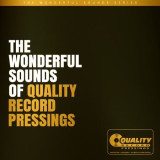
Various - The Wonderful Sounds of Quality Record Pressings (3x12")
 
27

Celebrate the technical expertise of the world's finest LP pressing plant — Quality Record Pressings — with the finest LP sampler ever assembled!

The Wonderful Sounds Of Quality Record Pressings includes music hand-picked by Acoustic Sounds CEO Chad Kassem and classical music tracks chosen by the team at Reference Recordings.

Every song meets the criteria of excellent performance, perfect recording and flawless mastering. What better way to celebrate such a monumental anniversary for one of the absolute leading brands in analog high fidelity than with this to-die-for LP sampler? Contains most genres of music — blues, jazz, classical, R&B and female vocal. From now on, you'll only need to carry one demo record around with you.

Vinyl expert Michael Fremer, of Analogue Planet and Stereophile, gives you a track-by-track tour of the history and production of the songs on this special album.

What separates our world-renowned Quality Record Pressings LPs from other manufacturers? Since Acoustic Sounds CEO Chad Kassem launched QRP in 2011, the focus has been on producing consistently virtually silent vinyl playing surfaces, as well as reproducing details that were hallmarks of vintage labels — the "deep groove" label of Blue Note LPs, for example.

The craft of pressing fine vinyl is perfected in such details. Such as plating lacquers within 24 hours of their arrival at the plant. Cut grooves are prone to change with temperature fluxuations, high humidity and time. The sooner that lacquers are plated, the better the fidelity of the final pressing. Other keys include using a proprietary silver spray formulation, made fresh daily. And incorporating computer microprocessors on our presses to precisely control press functions with absolute precision. And an imbedded temperature sensor in the dye cycles the press with just as much control. The result — more consistency in each LP, high fidelity and reduced distortion. The ultimate sonic advantage.

pré-commande30.12.2022

il devrait être publié sur 30.12.2022

147,02
THEY HATE CHANGE - FINALLY, NEW

They Hate Change

FINALLY, NEW

12inchJAGLP411C
JAGJAGUWAR
28.12.2022

If it's really a post-genre world, why does everything sound the same? The two halves of Tampa rap duo They Hate Change_Dre (he/him) and Vonne (they/them)_first came together in front of the apartment complex where they both lived as teens. Dre had just moved down from Rochester, NY; Vonne was trying to sell him bad weed. It was clear from the start that the two listen to music differently from most people_they're sonic omnivores, obsessive deep-divers, lovers of rare and radical sounds. Starting as kids trawling the internet for tracks, they've been collecting music from around the world and across the decades, amassing a shared sonic knowledge so deep that "encyclopedic" barely begins to cover it _ not just the East Coast hip-hop that Dre grew up on, or the hyperlocal bass-music variants like jook (the Gulf Coast's twerkably raunchy answer to house) and crank (think "Miami bass meets NOLA bounce"), but also drum `n' bass, Chicago footwork, post-punk, prog (they're, like, seriously into prog), grime, krautrock, emo, and basically any genre on the map. Once they graduated to DJs on the Tampa DIY scene _ which includes everything from punk rock house parties to the black "teen nights" that pop up in rec centers and ballrooms _ they figured out how to pull all these disparate sounds together into a cohesive style. More importantly, they figured out how to make it something people will actually move to. When they made the transition to rapping and making beats, they brought that pleasure-seeking approach to sonic experimentation with them. "With this album, Vonne says, "it's really like, okay, you know how you talk about the internet breaking down borders? Here's what that actually sounds like. It's not just a hip-hop record with a couple more weird sounds. You want homegrown DIY? This is a record that was written, produced, and recorded in a 150-squarefoot bedroom from the least cool city you could think of." Finally, New is what a truly post-genre musical landscape is supposed to be: building deep connections that transcend outdated distinctions between them, spilling over with the joy of exploration and possibility, and daring other artists to think broader, go deeper, take bigger risks. Let the rest of them keep playing by the old rules_They Hate Change will keep changing the game.

pas en stock

Commandez maintenant et nous commanderons l'article pour vous chez notre fournisseur.

22,06

Last In: 3 years ago
Beasts of Bourbon - Little Animals
également disponible

Red Vinyl[25,17 €]


"THE BEASTS OF BOURBON were scabby-knuckled, Australian blues-punk motherf*ckers, severely haunted, whiskey-twisted, savage, doomed, old hard-asses, ruined, fat, mean guys in filthy t-shirts... NOT yer local tattoo-shop fonzies singin' 'bout "Sin" and "Hell". These dudes weren't greasy kids, even back then. They were venomous and aching, former members of THE SCIENTISTS and HOODOO GURUS, and the talent pool of this revolving door operation remains astonishing. - Sleazegrinder Magazine Little Animals, the last album in the official canon of the Beasts of Bourbon, was originally released unexpectedly, after 9 years of total silence from the band, in 2007. What could have been a new century renaissance for the group was cut short, however, during the next decade with the death of founding member Spencer B. Jones. Over the Beasts’ decades-long career the Beasts put out six albums and managed to carve their name into the annals of Australian rock’n’roll. Little Animals is a fitting epitaph to a legend, ten tracks of vicious and dirty crash-and-burn rock’n’roll. Svart Records is proud to present an official reissue of this hard-to-find record on vinyl, the original format for rock’n’roll. Wrapped in a gatefold jacket and limited to 500 on black and 500 on red vinyl, this shines in striking hues of blood and gold.Little Animals, the last album in the official canon of the Beasts of Bourbon, was originally released unexpectedly, after 9 years of total silence from the band, in 2007. What could have been a new century renaissance for the group was cut short, however, during the next decade with the death of founding member Spencer B. Jones. Over the Beasts’ decades-long career the Beasts put out six albums and managed to carve their name into the annals of Australian rock’n’roll. Little Animals is a fitting epitaph to a legend, ten tracks of vicious and dirty crash-and-burn rock’n’roll. Svart Records is proud to present an official reissue of this hard-to-find record on vinyl, the original format for rock’n’roll. Wrapped in a gatefold jacket and limited to 500 on black and 500 on red vinyl, this piece of wax shines in striking hues of blood and gold.

pré-commande25.11.2022

il devrait être publié sur 25.11.2022

25,17
Beasts of Bourbon - Little Animals
également disponible

Black Vinyl[25,17 €]


"THE BEASTS OF BOURBON were scabby-knuckled, Australian blues-punk motherf*ckers, severely haunted, whiskey-twisted, savage, doomed, old hard-asses, ruined, fat, mean guys in filthy t-shirts... NOT yer local tattoo-shop fonzies singin' 'bout "Sin" and "Hell". These dudes weren't greasy kids, even back then. They were venomous and aching, former members of THE SCIENTISTS and HOODOO GURUS, and the talent pool of this revolving door operation remains astonishing. - Sleazegrinder Magazine Little Animals, the last album in the official canon of the Beasts of Bourbon, was originally released unexpectedly, after 9 years of total silence from the band, in 2007. What could have been a new century renaissance for the group was cut short, however, during the next decade with the death of founding member Spencer B. Jones. Over the Beasts’ decades-long career the Beasts put out six albums and managed to carve their name into the annals of Australian rock’n’roll. Little Animals is a fitting epitaph to a legend, ten tracks of vicious and dirty crash-and-burn rock’n’roll. Svart Records is proud to present an official reissue of this hard-to-find record on vinyl, the original format for rock’n’roll. Wrapped in a gatefold jacket and limited to 500 on black and 500 on red vinyl, this shines in striking hues of blood and gold.Little Animals, the last album in the official canon of the Beasts of Bourbon, was originally released unexpectedly, after 9 years of total silence from the band, in 2007. What could have been a new century renaissance for the group was cut short, however, during the next decade with the death of founding member Spencer B. Jones. Over the Beasts’ decades-long career the Beasts put out six albums and managed to carve their name into the annals of Australian rock’n’roll. Little Animals is a fitting epitaph to a legend, ten tracks of vicious and dirty crash-and-burn rock’n’roll. Svart Records is proud to present an official reissue of this hard-to-find record on vinyl, the original format for rock’n’roll. Wrapped in a gatefold jacket and limited to 500 on black and 500 on red vinyl, this piece of wax shines in striking hues of blood and gold.

pré-commande25.11.2022

il devrait être publié sur 25.11.2022

25,17
Essential Logic - Logically Yours LP 5x12"

Exclusive to INDIE STORES: Hiss and Shake Records to release ‘Logically Yours’ – a limited edition, 5 x LP boxset of 50 essential recordings from seminal post-punk icon Lora Logic including 2 classic Essential Logic albums, early single releases, EPs, B-sides, rarities, vinyl exclusives + first new Essential Logic studio album in 43 years! Includes the classic Rough Trade Records releases ‘Beat Rhythm News (Waddle Ya Play?) + ‘Pedigree Charm’ + 2 retrospective compilations of early single releases, EPs, B-sides, rarities + vinyl exclusives ‘Aerosol Burns & Other Misdemeanours’ + ‘No More Fiction’ + new studio album ‘Land of Kali’ (first in 43 years) + 20 page booklet with introduction from Celeste Bell + Lora Logic Q+A. Susan Whitby, aka Lora Logic was one of the most distinctive talents from the post-punk era known for her intoxicating, rough-around-the-edges, yet exhilarating sax playing and haywire vocal style. Her offbeat, occasionally arresting lyrics tackled alienation, sexism, poverty and urban isolation, and with a complete disregard for convention, she carved her own path not only in her short-lived music career but also personal life. She was still in her teens when she answered an ad in Melody Maker “Looking for young punks,” and in 1976, with her friend Marion Elliot (aka Poly Styrene), she formed the punk band X-Ray Spex and acquired the pseudonym, Lora Logic. The duo soon achieved notoriety with the irresistible feminist protest single, ‘Oh Bondage Up Yours’ (1977) – Logic arguably stealing the show with her thrilling punk sax. “X-Ray Spex was my first band, I happened to be accepted, It happened to work, I happened to get famous overnight. I’d been playing sax in a cupboard in my room; I thought I better do something.” However, just prior to recording 'Germ Free Adolescents' (1978), X-Ray Spex's debut album, she found herself unexpectedly ousted from the band. With abundant enthusiasm and encouragement from Geoff Travis, founding director of Rough Trade Records, she went on to form Essential Logic, creating some of the most liberating and exciting music of the early post-punk era, not only as Essential Logic, but also as a solo artist. Hiss and Shake Records are pleased to present a limited edition boxset of 50 essential recordings from the irresistibly engaging Lora Logic archive, allowing for a new generation to become aware of her incredible creative output. Across 5 LPs, ‘Logically Yours’ includes in their entirety, the classic Rough Trade Records releases ‘Beat Rhythm News (Waddle Ya Play?) (1979) – Essential Logic’s sole studio album, and Lora’s solo album, ‘Pedigree Charm’ (1982) – her last studio album before turning her back on the music business, sad and disillusioned and fighting drug addiction, which saw her turn to a Hare Krishna lifestyle, alongside Poly Styrene, embracing a fresh new chapter. This totally absorbing and definitive collection also includes two retrospective compilations; ‘Essential Logic – ‘Aerosol Burns & Other Misdemeanours’, which comprises early single releases, B-sides and oddities including the gloriously chaotic ‘Aerosol Burns’, the essential punk/disco ‘Music Is A Better Noise’, and ‘Fanfare In the Garden’, showcasing Lora at her most pop. In addition, ‘Essential Logic – ‘No More Fiction’; contains 10 vinyl exclusives, including ‘Do You Believe in Christmas?’, recorded with the Krishna Kids Choir in 1985, alongside tracks recorded circa 1997, with Martin Muscatt, Dave Farren (Bad Manners) and Gary Valentine (Blondie), forming the basis of what would have been Essential Logic’s third studio album, ‘No More Fiction’. Having recently returned to the studio refreshed and rejuvenated, ‘Logically Yours’ also includes ‘The Land of Kali’ (co-produced by Youth), the first new Essential Logic studio album in 43 years, and features the forthcoming new single ‘Prayer for Peace’, a re-imagining of the X-Ray Spex track from the tragically overlooked album, ‘Conscious Consumer’ (1995) on which Lora also played sax. “Poly Styrene and I were living in a Krishna community in Worcestershire in the early 80s. We came together for the first time musically after X-Ray Spex to record the original version of this song. In 2019, I decided to record my own take as a tribute to the special times we shared. I hope Poly likes this new version too.” Further tracks penned for release from the album include the dystopian, lockdown-inspired ‘Alien Boys’ and ‘Sky Rocket’, written with daughter Malini, about the fairground of life. Despite her short-lived career in the music business, Lora still managed to perform and appear on releases with many artists including US experimental rock band Red Crayola between 1978 and 1981, and also appeared on recordings by The Stranglers, The Raincoats, Kollaa Kestää, Dennis Bovell, Swell Maps and later, Boy George. Undoubtedly an iconic figure of the UK post-punk scene, Lora Logic’s boldness, adventurousness and sense of fun can be seen as an influence on numerous female artists today including Karen O from Yeah Yeah Yeahs, Peaches and St. Vincent among others. Tracklisting: Essential Logic ‘Beat Rhythm News (Waddle Ya Play?)’ (1979). A1 ‘Quality Crayon Wax OK’ A2 ‘The Order Form’ A3 ‘Shabby Abbott’ A4 ‘World Friction’ B1 ‘Wake Up’ B2 ‘Albert’ B3 ‘Alkaline Loaf in the Area’ B4 ‘Collecting Dust’ B5 ‘Pop Corn Boy (Waddle Ya Do?)’…… Lora Logic – ‘Pedigree Charm’ (1982). A1 ‘Brute Fury’ A2 ‘Horrible Party’ A3 ‘Stop Halt’ A4 ‘Wonderful Offer’ A5 ‘Martian Man’ B1 ‘Hiss and Shake’ B2 ‘Pedigree Charm’B3 ‘Rat Allé’ B4 ‘Crystal Gazing’…..Essential Logic – ‘Aerosol Burns & Other Misdemeanours’. A1 ‘Aerosol Burns’ (1978) – Debut single A2 ‘World Friction’ (1978) – ‘Aerosol Burns’ B-side A3 ‘Eugene’ (1981) – Single A4 ‘Tame the Neighbours’ (1981) – ‘Eugene’ B-side A5 ‘Music Is A Better Noise’ (1981) – Single A6 ‘Moontown’ (1981) – ‘Music Is A Better Noise’ B-side B1 ‘Fanfare In the Garden’ (1981) – Single B2 ‘Stereo’ (1982) – ‘Wonderful Offer’ single B-side B3 ‘Rather Than Repeat’ (1981) – ‘Wonderful Offer’ single B-side B4 ‘The Captain’ (1979) – ‘Fanfare In The Garden’ B-side B5 ‘Soul’ (1983) – Previously unreleased on vinyl B6 ‘Stay High’ – Previously unreleased on vinyl….. Essential Logic – ‘No More Fiction’. A1 ‘Essential Logic’ (1991) – Vinyl exclusive A2 ‘On The Internet’ (1998) – Vinyl exclusive A3 ‘Under The Great City’ (1997) – Vinyl exclusive A4 ‘No More Fiction’ (1998) – Vinyl exclusive A5 ‘Love Eternal’ (1997) – Vinyl exclusive B1 ‘Barbie Be Happy’ (1998) – Vinyl exclusive B2 ‘Not Me’ (1998) – Vinyl exclusive B3 ‘The Beautiful and the Damned’ (1997) – Vinyl exclusive B4 ‘Marika’ (1997) – Vinyl exclusive B5 ‘Do You Believe in Christmas?’ (1985) with the Krishna Kids Choir – Vinyl exclusive……Essential Logic – ‘Land of Kali’ (2022). A1 ‘Prayer For Peace’ A2 ‘Alien Boys’ A3 ‘Mother Earth’ A4 ‘Never Know’ A5 ‘Charming Every Cupid’ B1 ‘Sky Rocket’ B2 ‘Serious’ B3 ‘Fallible Soldiers’ B4 ‘Land of Kali’ B5 ‘Beyond’

pré-commande25.11.2022

il devrait être publié sur 25.11.2022

134,41
Black Lips - Good Bad Not Evil (Deluxe Edition) LP 2x12"
également disponible

Sky Blue Vinyl[35,25 €]


Ltd edition Double Sky Blue Vinyl, Gatefold sleeve w/ spot gloss, liner notes + DL card. Classic Double Black vinyl, Gatefold sleeve w/ spot gloss, liner notes + DL card. Bending scuzzy boundaries, ‘Good Bad Not Evil’ is a coming-of-age garage rock classic record. Full of hedonistic delinquent anthems, the fourth studio album from Atlanta punks Black Lips reaches it’s 15 year anniversary. This deluxe edition includes unearthed photos and new liner notes from Jared Swilley and King Khan. The second disc features B-sides and rarities including ‘Cruising’, ‘I Wanna Dance With You’ and ‘Leroy Faster’. ‘Good Bad Not Evil’ perfectly encapsulates the disillusionment of the mid-00s America, slammed between warehouse parties, DIY generator shows and scattered party pics, which was recorded in a little house in Atlanta that had been converted into a studio called the Living Room. Referencing Shangri-Las in the title, this is where their knack for garage gems met Motown; with bass heavy grooves (later remixed by Diplo), a certified country twang and unabashed bravado. Instant hits like ‘Veni Vidi Vici’, ‘Cold Hands’, ‘Bad Kids’ and ‘O Katrina!’ immediately became Black Lips staples. This was a band caught in the eye of the storm, the touring continued, the parties didn’t stop, this was a band bending the scuzzy boundaries of their chosen genre. The record was hailed by the likes of Pitchfork, who proclaimed, “Black Lips are a go-to band for vintage lo-fi freaks, and their raucous live shows have helped them cross over outside of crusty dive bars. ‘Good Bad Not Evil’, however, is the record where naysayers, disinterested friends and acquaintances, people on the street, and anyone else within earshot has to sit up, shut up, and listen.” …and, shut up and listen they did. “A perfect tapestry of sordid pleasure.” NME // “The same rapturous energy as the Sonics and the 13th Floor Elevators.” The Guardian // Track List: Disc One – Good Bad Not Evil. A1 I Saw A Ghost (Lean) A2 O Katrina! A3 Veni Vidi Vici A4 It Feels Alright A5 Navajo A6 Lock and Key A7 How Do You Tell a Child That Someone Has Died B1 Bad Kids B2 Step Right Up B3 Cold Hands B4 Off The Block B5 Slime and Oxygen B6 Transcendental Light… Disc Two - B-Sides & Rarities. C1 Cruising C2 Make It C3 I Wanna Dance With You D1 Best Napkin I Ever Had D2 My Trouble D3 Leroy Faster D4 Buried Alive

pré-commande25.11.2022

il devrait être publié sur 25.11.2022

31,72
Black Lips - Good Bad Not Evil (Deluxe Edition) LP 2x12"
également disponible

Black Vinyl[31,72 €]


Ltd edition Double Sky Blue Vinyl, Gatefold sleeve w/ spot gloss, liner notes + DL card. Classic Double Black vinyl, Gatefold sleeve w/ spot gloss, liner notes + DL card. Bending scuzzy boundaries, ‘Good Bad Not Evil’ is a coming-of-age garage rock classic record. Full of hedonistic delinquent anthems, the fourth studio album from Atlanta punks Black Lips reaches it’s 15 year anniversary. This deluxe edition includes unearthed photos and new liner notes from Jared Swilley and King Khan. The second disc features B-sides and rarities including ‘Cruising’, ‘I Wanna Dance With You’ and ‘Leroy Faster’. ‘Good Bad Not Evil’ perfectly encapsulates the disillusionment of the mid-00s America, slammed between warehouse parties, DIY generator shows and scattered party pics, which was recorded in a little house in Atlanta that had been converted into a studio called the Living Room. Referencing Shangri-Las in the title, this is where their knack for garage gems met Motown; with bass heavy grooves (later remixed by Diplo), a certified country twang and unabashed bravado. Instant hits like ‘Veni Vidi Vici’, ‘Cold Hands’, ‘Bad Kids’ and ‘O Katrina!’ immediately became Black Lips staples. This was a band caught in the eye of the storm, the touring continued, the parties didn’t stop, this was a band bending the scuzzy boundaries of their chosen genre. The record was hailed by the likes of Pitchfork, who proclaimed, “Black Lips are a go-to band for vintage lo-fi freaks, and their raucous live shows have helped them cross over outside of crusty dive bars. ‘Good Bad Not Evil’, however, is the record where naysayers, disinterested friends and acquaintances, people on the street, and anyone else within earshot has to sit up, shut up, and listen.” …and, shut up and listen they did. “A perfect tapestry of sordid pleasure.” NME // “The same rapturous energy as the Sonics and the 13th Floor Elevators.” The Guardian // Track List: Disc One – Good Bad Not Evil. A1 I Saw A Ghost (Lean) A2 O Katrina! A3 Veni Vidi Vici A4 It Feels Alright A5 Navajo A6 Lock and Key A7 How Do You Tell a Child That Someone Has Died B1 Bad Kids B2 Step Right Up B3 Cold Hands B4 Off The Block B5 Slime and Oxygen B6 Transcendental Light… Disc Two - B-Sides & Rarities. C1 Cruising C2 Make It C3 I Wanna Dance With You D1 Best Napkin I Ever Had D2 My Trouble D3 Leroy Faster D4 Buried Alive

pré-commande25.11.2022

il devrait être publié sur 25.11.2022

35,25
The Guy Hamper Trio feat. James Taylor - All The Poisons In The Mud

For fans of - Booker T & The MGs, James Taylor Quartet, Georgie Fame, Big Boss Man. Groovy Hammond garage rock instrumentals from Billy Childish (Thee Headcoats/CTMF etc) and featuring James Taylor (Prisoners/JTQ) We’re loving this new album by The Guy Hamper Trio! Who’s in the band sunshine? Mainly myself on guitar, Julie on bass, Wolf on drums, and of course Jamie on Hammond. A great bonus is Thee Headcoats with Bruce and Tub guest as rhythm section on a track or two. You and James Taylor go back a long way. Do you remember how you first met? The Prisoners were a young group who played with us (the Milkshakes) in the early 1980s. One day they turned up with an organ player, Jamie. Jamie used to then borrow my Selmer guitar amp to play through. You’ve revisited a few old classics on this album, and given them a true makeover. How would you describe The Guy Hamper Trio’s sound? I guess there must be a derogatory term for it but I might need some help finding it. In the very early days of The James Taylor Quartet (Wolf was their drummer back then), I was in the Natural Born Lovers (A blues group with Big Russ and Sexton Ming). We used to be the support for them. I really liked their sound and I guess The Guy Hamper Trio is not a million miles from that blues-influenced, film soundtrack vibe, man. There you made me say “man”. Next thing you know I will be saying “cool!” Let’s just say it's a wizard sound, Jamie is such a great player. Prior to this album The Guy Hamper Trio’s sole release was the ‘Polygraph Test’ 7” from 2009. Why such a big gap? It takes time for all of us to get all our solders in line. “Get on with it mush! And trifle not, your time is but short!” What inspired the album’s title track All The Poisons In the Mud? It’s actually the title of a novel I’ve been writing, and rewriting, over the past 12 years, and is taken from a quote from I Claudius by Robert Graves - a formative influence on me as a 15 year old. The sleeve art is pretty different to your other recent records, could you tell us a about that? Who designed it? I nominally designed it but the truth is that it's essentially a rip off of a Saul Bass sleeve he did for Duke Ellington. We started mining that seam back in the Milkshakes when Bruce (Brand) did the sleeve for Thee Knights of Trashe. The album closes with a storming cover of Jimi Hendrix’s “Fire”. What do you think Jimi would make of your version? I've been a fan of Jimi since my elder brother brought his records home in the '60s. Jimi was well known to “dig” others work and interpretations and would no doubt smile, narrow his smoky eyes and say “cool man!” and I would no doubt reply "wizard Jimi!" TRACKLISTING 1. All The Poisons in the Mud 2. Come Into My Life 3. Moon of the Popping Trees 4. Girl From '62 5. Full Eclipse of the Sun 6. Sally Sensation 7. 7% Solution 8. Step Out 9. Polygraph Test 10. The Kids are all Square 11. Skinwalker 12. Fire

pré-commande25.11.2022

il devrait être publié sur 25.11.2022

21,22
THEY HATE CHANGE - FINALLY, NEW

If it's really a post-genre world, why does everything sound the same? The two halves of Tampa rap duo They Hate Change_Dre (he/him) and Vonne (they/them)_first came together in front of the apartment complex where they both lived as teens. Dre had just moved down from Rochester, NY; Vonne was trying to sell him bad weed. It was clear from the start that the two listen to music differently from most people_they're sonic omnivores, obsessive deep-divers, lovers of rare and radical sounds. Starting as kids trawling the internet for tracks, they've been collecting music from around the world and across the decades, amassing a shared sonic knowledge so deep that "encyclopedic" barely begins to cover it _ not just the East Coast hip-hop that Dre grew up on, or the hyperlocal bass-music variants like jook (the Gulf Coast's twerkably raunchy answer to house) and crank (think "Miami bass meets NOLA bounce"), but also drum `n' bass, Chicago footwork, post-punk, prog (they're, like, seriously into prog), grime, krautrock, emo, and basically any genre on the map. Once they graduated to DJs on the Tampa DIY scene _ which includes everything from punk rock house parties to the black "teen nights" that pop up in rec centers and ballrooms _ they figured out how to pull all these disparate sounds together into a cohesive style. More importantly, they figured out how to make it something people will actually move to. When they made the transition to rapping and making beats, they brought that pleasure-seeking approach to sonic experimentation with them. "With this album, Vonne says, "it's really like, okay, you know how you talk about the internet breaking down borders? Here's what that actually sounds like. It's not just a hip-hop record with a couple more weird sounds. You want homegrown DIY? This is a record that was written, produced, and recorded in a 150-squarefoot bedroom from the least cool city you could think of." Finally, New is what a truly post-genre musical landscape is supposed to be: building deep connections that transcend outdated distinctions between them, spilling over with the joy of exploration and possibility, and daring other artists to think broader, go deeper, take bigger risks. Let the rest of them keep playing by the old rules_They Hate Change will keep changing the game.

pas en stock

Commandez maintenant et nous commanderons l'article pour vous chez notre fournisseur.

20,88

Last In: 3 years ago
NOISESHAPER - NOISESHAPER LP

The sound company operating under the project name "Noiseshaper" is poised to release a very special vinyl album into record shops worldwide. The band received great acclaim for their first albums, which were released on the legendary and famous Rockers Hifi label Different Drummer. They later became celebrated for their musical contribution to the US television series CSI - Miami ! The Viennese coffeetable boys Axel Hirn und Florian Fleischmann achieved cult status with their 12-inch single "The Only Redeemer", which was later released in the US by Quango (Island Records /Palm Pictures) and fast became a permanent fixture on the playlists of the best and most popular DJs in Berlin, Vienna, Tokyo, Paris, London and New York. The next dancefloor filler followed with "All A Dem A Do", sung by Juggla, which was the band"s first release to get heavy rotation on many European and US radio stations. Next up were remixes by and for heavyweights such as Sly & Robbie, Outkast, Seven Dub and Carl Douglas. Noiseshaper"s defining sound has been distilled and condensed an utterly distinctive blend of "housey downbeats with a fat reggae flavour" has brought the Noiseshapers international acclaim and popularity. The very special VINYL release is the essential of what NOISESHAPER has ever done all over the years with a special focus on HEAVY bass remixes by Adrian Sherwood & Paolo Baldini. It is another very impressive display of how a musical style has progressed. Dub as a style with all its reference points between commerce and innovation ! 8 pounding dub flavour tunes all are best for bringing the dancefloors of the dub universe to boiling point. Heavy bass for heavy dancing!

pas en stock

Commandez maintenant et nous commanderons l'article pour vous chez notre fournisseur.

22,48

Last In: 3 years ago
Low Island - Life In Miniature LP

Paving the way for independent artists with songs about love, loss and life, Low Island release their highly anticipated sophomore album, Life In Miniature, promising more ‘delicious alt pop’ (Clash) as the group follow in the footsteps of fellow ‘Oxford bands Glass Animals, Radiohead and Foals’ (Rolling Stone Germany).

It comes fresh off the back of their debut album, If You Could Have It All Again, which placed #17 in the Official UK Album Sales Chart and won them plaudits from Gigwise (‘truly engrossing’), Line of Best Fit (‘arena ready’), Double J, KCRW, Radio1, 6music and Zane Lowe, who described the bands ‘intellectual, soulful creativity.’ Their second album, Life In Miniature, sees Low Island continue to broaden the scope of their ambition, with a record that exquisitely balances stirring electronics, euphoric indie and infectious pop. It’s a record described by the band as a ‘timecapsule, a sonic photo album that captures three years of accelerated change that felt like a lifetime. Leaving home, falling in love, losing loved ones, trying to capture full complexity of emotion that all of those experiences engender.’

Setting that heartfelt lyricism against such a diverse range of sonic backdrops is something that Low Island have been devotedly fine-tuning over the years, firmly rooted in an independence that extends to everything from managing themselves and releasing their music on their own label, Emotional Interference. Its lead to an electrifying live show, which has seen them play festivals from Glastonbury to Lollapalooza Berlin, support synthpop legends Hot Chip and pack out their own shows everywhere from London to Berlin, Prague and Paris, prompting 6music’s Tom Robinson to prophesise that ‘we’ll have them rocking the Pyramid Stage yet, mark my words’.

pas en stock

Commandez maintenant et nous commanderons l'article pour vous chez notre fournisseur.

21,39

Last In: 3 years ago
Lee Tracy & Isaac Manning - Is it What You Want

As the sun sets on a quaint East Nashville house, a young man bares a piece of his soul. Facing the camera, sporting a silky suit jacket/shirt/slacks/fingerless gloves ensemble that announces "singer" before he's even opened his mouth, Lee Tracy Johnson settles onto his stage, the front yard. He sways to the dirge-like drum machine pulse of a synth-soaked slow jam, extends his arms as if gaining his balance, and croons in affecting, fragile earnest, "I need your love… oh baby…"

Dogs in the yard next door begin barking. A mysterious cardboard robot figure, beamed in from galaxies unknown and affixed to a tree, is less vocal. Lee doesn't acknowledge either's presence. He's busy feeling it, arms and hands gesticulating. His voice rises in falsetto over the now-quiet dogs, over the ambient noise from the street that seeps into the handheld camcorder's microphone, over the recording of his own voice played back from a boombox off-camera. After six minutes the single, continuous shot ends. In this intimate creative universe there are no re-takes. There are many more music videos to shoot, and as Lee later puts it, "The first time you do it is actually the best. Because you can never get that again. You expressing yourself from within."

"I Need Your Love" dates from a lost heyday. From some time in the '80s or early '90s, when Lee Tracy (as he was known in performance) and his music partner/producer/manager Isaac Manning committed hours upon hours of their sonic and visual ideas to tape. Embracing drum machines and synthesizers – electronics that made their personal futurism palpable – they recorded exclusively at home, live in a room into a simple cassette deck. Soul, funk, electro and new wave informed their songs, yet Lee and Isaac eschewed the confinement of conventional categories and genres, preferring to let experimentation guide them.

"Anytime somebody put out a new record they had the same instruments or the same sound," explains Isaac. "So I basically wanted to find something that's really gonna stand out away from all of the rest of 'em." Their ethos meant that every idea they came up with was at least worth trying: echoed out half-rapped exhortations over frantic techno-style beats, gospel synth soul, modal electro-funk, oddball pop reinterpretations, emo AOR balladry, nods to Prince and the Fat Boys, or arrangements that might collapse mid-song into a mess of arcade game-ish blips before rallying to reach the finish line. All of it conjoined by consistent tape hiss, and most vitally, Lee's chameleonic voice, which managed to wildly shape shift and still evoke something sincere – whether toggling between falsetto and tenor exalting Jesus's return, or punctuating a melismatic romantic adlib with a succinct, "We all know how it feels to be alone."

"People think we went to a studio," says Isaac derisively. "We never went to no studio. We didn't have the money to go to no studio! We did this stuff at home. I shot videos in my front yard with whatever we could to get things together." Sometimes Isaac would just put on an instrumental record, be it "Planet Rock" or "Don't Cry For Me Argentina" (from Evita), press "record," and let Lee improvise over it, yielding peculiar love songs, would-be patriotic anthems, or Elvis Presley or Marilyn Monroe tributes. Technical limitations and a lack of professional polish never dissuaded them. They believed they were onto something.

"That struggle," Isaac says, "made that sound sound good to me."

In the parlance of modern music criticism Lee and Isaac's dizzying DIY efforts would inevitably be described as "outsider." But "outsider" carries the burden of untold additional layers of meaning if you're Black and from the South, creating on a budget, and trying to get someone, anyone within the country music capital of the world to take your vision seriously. "What category should we put it in?" Isaac asks rhetorically. "I don't know. All I know is feeling. I ain't gonna name it nothing. It's music. If it grabs your soul and touch your heart that's what it basically is supposed to do."

=

Born in 1963, the baby boy of nine siblings, Lee Tracy spent his earliest years living amidst the shotgun houses on Nashville's south side. "We was poor, man!" he says, recalling the outhouse his family used for a bathroom and the blocks of ice they kept in the kitchen to chill perishables. "But I actually don't think I really realized I was in poverty until I got grown and started thinking about it." Lee's mom worked at the Holiday Inn; his dad did whatever he had to do, from selling fruit from a horse drawn cart to bootlegging. "We didn't have much," Lee continues, "but my mother and my father got us the things we needed, the clothes on our back." By the end of the decade with the city's urban renewal programs razing entire neighborhoods to accommodate construction of the Interstate, the family moved to Edgehill Projects. Lee remembers music and art as a constant source of inspiration for he and his brothers and sisters – especially after seeing the Jackson 5 perform on Ed Sullivan. "As a small child I just knew that was what I wanted to do."

His older brother Don began musically mentoring him, introducing Lee to a variety of instruments and sounds. "He would never play one particular type of music, like R&B," says Lee. "I was surrounded by jazz, hard rock and roll, easy listening, gospel, reggae, country music; I mean I was a sponge absorbing all of that." Lee taught himself to play drums by beating on cardboard boxes, gaining a rep around the way for his timekeeping, and his singing voice. Emulating his favorites, Earth Wind & Fire and Cameo, he formed groups with other kids with era-evocative band names like Concept and TNT Connection, and emerged as the leader of disciplined rehearsals. "I made them practice," says Lee. "We practiced and practiced and practiced. Because I wanted that perfection." By high school the most accomplished of these bands would take top prize in a prominent local talent show. It was a big moment for Lee, and he felt ready to take things to the next level. But his band-mates had other ideas.

"I don't know what happened," he says, still miffed at the memory. "It must have blew they mind after we won and people started showing notice, because it's like everybody quit! I was like, where the hell did everybody go?" Lee had always made a point of interrogating prospective musicians about their intentions before joining his groups: were they really serious or just looking for a way to pick up girls? Now he understood even more the importance of finding a collaborator just as committed to the music as he was.

=

Isaac Manning had spent much of his life immersed in music and the arts – singing in the church choir with his family on Nashville's north side, writing, painting, dancing, and working various gigs within the entertainment industry. After serving in the armed forces, in the early '70s he ran The Teenage Place, a music and performance venue that catered to the local youth. But he was forced out of town when word of one of his recreational routines created a stir beyond the safe haven of his bohemian circles.

"I was growing marijuana," Isaac explains. "It wasn't no business, I was smoking it myself… I would put marijuana in scrambled eggs, cornbread and stuff." His weed use originated as a form of self-medication to combat severe tooth pain. But when he began sharing it with some of the other young people he hung out with, some of who just so happened to be the kids of Nashville politicians, the cops came calling. "When I got busted," he remembers, "they were talking about how they were gonna get rid of me because they didn't want me saying nothing about they children because of the politics and stuff. So I got my family, took two raggedy cars, and left Nashville and went to Vegas."

Out in the desert, Isaac happened to meet Chubby Checker of "The Twist" fame while the singer was gigging at The Flamingo. Impressed by Isaac's zeal, Checker invited him to go on the road with him as his tour manager/roadie/valet. The experience gave Isaac a window into a part of the entertainment world he'd never encountered – a glimpse of what a true pop act's audience looked like. "Chubby Checker, none of his shows were played for Black folks," he remembers. "All his gigs were done at high-class white people areas." Returning home after a few years with Chubby, Isaac was properly motivated to make it in Music City. He began writing songs and scouting around Nashville for local talent anywhere he could find it with an expressed goal: "Find someone who can deliver your songs the way you want 'em delivered and make people feel what you want them to feel."

One day while walking through Edgehill Projects Isaac heard someone playing the drums in a way that made him stop and take notice. "The music was so tight, just the drums made me feel like, oh I'm-a find this person," he recalls. "So I circled through the projects until I found who it was.

"That's how I met him – Lee Tracy. When I found him and he started singing and stuff, I said, ohhh, this is somebody different."

=

Theirs was a true complementary partnership: young Lee possessed the raw talent, the older Isaac the belief. "He's really the only one besides my brother and my family that really seen the potential in me," says Lee. "He made me see that I could do it."

Isaac long being a night owl, his house also made for a fertile collaborative environment – a space where there always seemed to be a new piece of his visual art on display: paintings, illustrations, and dolls and figures (including an enigmatic cardboard robot). Lee and Issac would hang out together and talk, listen to music, conjure ideas, and smoke the herb Isaac had resumed growing in his yard. "It got to where I could trust him, he could trust me," Isaac says of their bond. They also worked together for hours on drawings, spreading larges rolls of paper on the walls and sketching faces with abstract patterns and imagery: alien-like beings, tri-horned horse heads, inverted Janus-like characters where one visage blurred into the other.

Soon it became apparent that they didn't need other collaborators; self-sufficiency was the natural way forward. At Isaac's behest Lee, already fed up with dealing with band musicians, began playing around with a poly-sonic Yamaha keyboard at the local music store. "It had everything on it – trumpet, bass, drums, organ," remembers Lee. "And that's when I started recording my own stuff."

The technology afforded Lee the flexibility and independence he craved, setting him on a path other bedroom musicians and producers around the world were simultaneously following through the '80s into the early '90s. Saving up money from day jobs, he eventually supplemented the Yamaha Isaac had gotten him with Roland and Casio drum machines and a Moog. Lee was living in an apartment in Hillside at that point caring for his dad, who'd been partially paralyzed since early in life. In the evenings up in his second floor room, the music put him in a zone where he could tune out everything and lose himself in his ideas.

"Oh I loved it," he recalls. "I would really experiment with the instruments and use a lot of different sound effects. I was looking for something nobody else had. I wanted something totally different. And once I found the sound I was looking for, I would just smoke me a good joint and just let it go, hit the record button." More potent a creative stimulant than even Isaac's weed was the holistic flow and spontaneity of recording. Between sessions at Isaac's place and Lee's apartment, their volume of output quickly ballooned.

"We was always recording," says Lee. "That's why we have so much music. Even when I went to Isaac's and we start creating, I get home, my mind is racing, I gotta start creating, creating, creating. I remember there were times when I took a 90-minute tape from front to back and just filled it up."

"We never practiced," says Isaac. "See, that was just so odd about the whole thing. I could relate to him, and tell him about the songs I had ideas for and everything and stuff. And then he would bring it back or whatever, and we'd get together and put it down." Once the taskmaster hell bent on rehearsing, Lee had flipped a full 180. Perfection was no longer an aspiration, but the enemy of inspiration.

"I seen where practicing and practicing got me," says Lee. "A lot of musicians you get to playing and they gotta stop, they have to analyze the music. But while you analyzing you losing a lot of the greatness of what you creating. Stop analyzing what you play, just play! And it'll all take shape."

=

"I hope you understood the beginning of the record because this was invented from a dream I had today… (You tell me, I'll tell you, we'll figure it out together)" – Lee Tracy and Isaac Manning, "Hope You Understand"

Lee lets loose a maniacal cackle when he acknowledges that the material that he and Isaac recorded was by anyone's estimation pretty out there. It's the same laugh that commences "Hope You Understand" – a chaotic transmission that encapsulates the duality at the heart of their music: a stated desire to reach people and a compulsion to go as leftfield as they saw fit.

"We just did it," says Lee. "We cut the music on and cut loose. I don't sit around and write. I do it by listening, get a feeling, play the music, and the lyrics and stuff just come out of me."

The approach proved adaptable to interpreting other artists' material. While recording a cover of Whitney Houston's pop ballad "Saving All My Love For You," Lee played Whitney's version in his headphones as he laid down his own vocals – partially following the lyrics, partially using them as a departure point. The end result is barely recognizable compared with the original, Lee and Isaac having switched up the time signature and reinvented the melody along the way towards morphing a slick mainstream radio standard into something that sounds solely their own.

"I really used that song to get me started," says Lee. "Then I said, well I need something else, something is missing. Something just came over me. That's when I came up with 'Is It What You Want.'"

The song would become the centerpiece of Lee and Isaac's repertoire. Pushed along by a percolating metronomic Rhythm King style beat somewhere between a military march and a samba, "Is It What You Want" finds Lee pleading the sincerity of his commitment to a potential love interest embellished by vocal tics and hiccups subtlely reminiscent of his childhood hero MJ. Absent chord changes, only synth riffs gliding in and out like apparitions, the song achieves a lingering lo-fi power that leaves you feeling like it's still playing, somewhere, even after the fade out.

"I don't know, it's like a real spiritual song," Lee reflects. "But it's not just spiritual. To me the more I listen to it it's like about everything that you do in your everyday life, period. Is it what you want? Do you want a car or you don't want a car? Do you want Jesus or do you want the Devil? It's basically asking you the question. Can't nobody answer the question but you yourself."

In 1989 Lee won a lawsuit stemming from injuries sustained from a fight he'd gotten into. He took part of the settlement money and with Isaac pressed up "Saving All My Love For You" b/w "Is It What You Want" as a 45 single. Isaac christened the label One Chance Records. "Because that's all we wanted," he says with a laugh, "one chance."

Isaac sent the record out to radio stations and major labels, hoping for it to make enough noise to get picked up nationally. But the response he and Lee were hoping for never materialized. According to Isaac the closest the single got to getting played on the radio is when a disk jock from a local station made a highly unusual announcement on air: "The dude said on the radio, 107.5 – 'We are not gonna play 'Is It What You Want.' We cracked up! Wow, that's deep.

"It was a whole racist thing that was going on," he reflects. "So we just looked over and kept on going. That was it. That was about the way it goes… If you were Black and you were living in Nashville and stuff, that's the way you got treated." Isaac already knew as much from all the times he'd brought he and Lee's tapes (even their cache of country music tunes) over to Music Row to try to drum up interest to no avail.

"Isaac, he really worked his ass off," says Lee. "He probably been to every record place down on Music Row." Nashville's famed recording and music business corridor wasn't but a few blocks from where Lee grew up. Close enough, he remembers, for him to ride his bike along its back alleys and stumble upon the occasional random treasure, like a discarded box of harmonicas. Getting in through the front door, however, still felt a world away.

"I just don't think at the time our music fell into a category for them," he concedes. "It was before its time."

=

Lee stopped making music some time in the latter part of the '90s, around the time his mom passed away and life became increasingly tough to manage. "When my mother died I had a nervous breakdown," he says, "So I shut down for a long time. I was in such a sadness frame of mind. That's why nobody seen me. I had just disappeared off the map." He fell out of touch with Isaac, and in an indication of just how bad things had gotten for him, lost track of all the recordings they'd made together. Music became a distant memory.

Fortunately, Isaac kept the faith. In a self-published collection of his poetry – paeans to some of his favorite entertainment and public figures entitled Friends and Dick Clark – he'd written that he believed "music has a life of its own." But his prescience and presence of mind were truly manifested in the fact that he kept an archive of he and Lee's work. As perfectly imperfect as "Is It What You Want" now sounds in a post-Personal Space world, Lee and Isaac's lone official release was in fact just a taste. The bulk of the Is It What You Want album is culled from the pair's essentially unheard home recordings – complete songs, half-realized experiments, Isaac's blue monologues and pronouncements et al – compiled, mixed and programmed in the loose and impulsive creative spirit of their regular get-togethers from decades ago. The rest of us, it seems, may have finally caught up to them.

On the prospect of at long last reaching a wider audience, Isaac says simply, "I been trying for a long time, it feels good." Ever the survivor, he adds, "The only way I know how to make it to the top is to keep climbing. If one leg break on the ladder, hey, you gotta fix it and keep on going… That's where I be at. I'll kill death to make it out there."

For Lee it all feels akin to a personal resurrection: "It's like I was in a tomb and the tomb was opened and I'm back… Man, it feels so great. I feel like I'm gonna jump out of my skin." Success at this stage of his life, he realizes, probably means something different than what it did back when he was singing and dancing in Isaac's front yard. "What I really mean by 'making it,'" he explains isn't just the music being heard but, "the story being told."

Occasionally Lee will pull up "Is It What You Want" on YouTube on his phone, put on his headphones, and listen. He remembers the first time he heard his recorded voice. How surreal it was, how he thought to himself, "Is that really me?" What would he say to that younger version of himself now?

"I would probably tell myself, hang in there, don't give up. Keep striving for the goal. And everything will work out."

Despite what's printed on the record label, sometimes you do get more than one chance.

pas en stock

Commandez maintenant et nous commanderons l'article pour vous chez notre fournisseur.

11,72

Last In: 3 years ago
B. Bravo - Vizionz EP

B. Bravo (aka Adam Mori) returns to Bastard Jazz with the long-awaited follow-up to his 2017 debut LP, "Paradise," with a fresh full-length offering: "Vizionz." Replete with his signature future funk vibes, infectiously soulful grooves, and talkbox excursions, "Vizionz" sees the multifaceted artist take the classic West Coast into outer space. If B. Bravo's last album sought to get lost in paradise - enjoying the moment here and now - "Vizionz" looks forward, feet placed firmly in an established LA vibe, while the matured eyes of a veteran producer gaze keenly to the future.

"Vizionz" arrives following a slew of diverse singles, which highlight B. Bravo's stunning versatility as a songwriter, producer, and collaborator. Last year's "Lifted (What U Waiting 4)" came first, at the end of May, 2020, pairing g-funk talk-box verses and synth lines with rich vocal harmonies and a dance-floor-ready beat. Frequent collaborator Reva DeVito (Miami Horror, Kaytranada) makes a standout vocal appearance on "Fly Bye," the second single. Here, Adam surrounds Reva's vocals with ambient pads, a Dilla-inspired beat, and an irresistible bassline, while Reva's dreamily sings about getting away from it all. The final single, "Believe," sees Chuck Inglish (of the famed duo The Cool Kids) rhyme in his distinctive baritone over a bass-heavy instrumental meant to rattle some car stereos.

The singles offer a view into the rest of the album: Solo B. Bravo joints include "Moon Bounce," a talk-box boogie jam begging for late-night drives with the top down; the largely-instrumental synth improvisation, "Midnight Rider;" the upbeat "Penelope," which showcases Adam's vocal and harmonic prowess; a bumping g-funk interlude, with "Flip Out;" as well as the laid back album opener, "Da Essence."

Further vocal assists come by way of Sally Green on the flirty "10/10," and Rojai on the slow jam ""No Regrets" . Both singers have worked on B. Bravo projects in the past, with Rojai additionally joining forces with Adam to form the duo Kool Customer, whose self-titled debut album was released on Bastard Jazz in 2018. Two more hip-hop-leaning tracks are aided by Def Sound ("Back Times Two") and Nico Fasho ("Ms. Stardust"); leaning heavy into outerspace G-Funk Hip-Hop vibes.

Taken as a whole, "Vizionz" is a much needed boost of serotonin: Uncompromisingly positive, sometimes nostalgic, sometimes aspirational, but always funky. The range of styles is a testament to Adam's indelible production chops, songwriting skill, and ability to collaborate. While it has been a long 5 years since "Paradise," "Vizionz" proves more than worth the wait.

Born and raised in California, with roots in Japan, B. Bravo's signature style of Cosmic Funk and late night synth grooves have made him a favorite among DJ's, dancers, and music lovers worldwide. A tasteful producer, sought after remixer, party rocking DJ, master of the talkbox, band leader, and alumnus of the Red Bull Music Academy, Mr. Bravo is an accomplished performer both at home and abroad.

Heavily inspired by the synthesizer-enhanced R&B grooves of the late '70s and early '80s, B. Bravo debuted in 2009 with the seven-track "Analog Starship" EP. A deeper impression was made the following year with a shorter extended play, "Computa Love," the title track of which was supported by BBC DJ Benji B months prior to release. Additional strides were made with a batch of singles and EPs that followed throughout the next few years, as Bravo toured and performed at numerous festivals around the world.

His relationship with the Brooklyn tastemaker label, Bastard Jazz Recordings, began in 2016 with the 7" single "I'm For Real / Stay The Night' (which notably featured a Mr. Carmack remix of the latter). Bravo's debut solo LP quickly followed with 2017's critically acclaimed "Paradise" - which shone a light on vocalists and frequent collaborators Reva DeVito, Trailer Limon, Kissey, and Lauren Faith - with a remix album appearing six months later.

Additional solo releases have found a home on Gilles Peterson's Brownswood Recordings and Frite Nite, while production credits have appeared on releases from the legendary Blue Note Records, HW&W, All City, Friends of Friends, and Tokyo Dawn. B. Bravo has worked on projects with the likes of Salva, Mr. Carmack, Teeko, DJ Lean Rock, Reva DeVito, Lauren Faith, and Kate Stewart.

Having toured throughout the US, Latin America, Europe and Asia, he's shared the stage with performers like Erykah Badu, Flying Lotus, DāM-FunK, Hudson Mohawke, at a world-spanning range of festivals such as Detroit Electronic Music Fest, HARD LA, Northern Nights, Laneway Singapore, Sonar in Barcelona, Snowglobe, SXSW, Basscoast, Do-Over, Low End Theory, Boiler Room, and Soulection.

B. Bravo's "Vizionz" LP is out on Brooklyn's Bastard Jazz Recordings Spring, 2022.

pas en stock

Commandez maintenant et nous commanderons l'article pour vous chez notre fournisseur.

20,97

Last In: 3 years ago
Lee Tracy & Isaac Manning - Is it What You Want LP

As the sun sets on a quaint East Nashville house, a young man bares a piece of his soul. Facing the camera, sporting a silky suit jacket/shirt/slacks/fingerless gloves ensemble that announces "singer" before he's even opened his mouth, Lee Tracy Johnson settles onto his stage, the front yard. He sways to the dirge-like drum machine pulse of a synth-soaked slow jam, extends his arms as if gaining his balance, and croons in affecting, fragile earnest, "I need your love… oh baby…"

Dogs in the yard next door begin barking. A mysterious cardboard robot figure, beamed in from galaxies unknown and affixed to a tree, is less vocal. Lee doesn't acknowledge either's presence. He's busy feeling it, arms and hands gesticulating. His voice rises in falsetto over the now-quiet dogs, over the ambient noise from the street that seeps into the handheld camcorder's microphone, over the recording of his own voice played back from a boombox off-camera. After six minutes the single, continuous shot ends. In this intimate creative universe there are no re-takes. There are many more music videos to shoot, and as Lee later puts it, "The first time you do it is actually the best. Because you can never get that again. You expressing yourself from within."

"I Need Your Love" dates from a lost heyday. From some time in the '80s or early '90s, when Lee Tracy (as he was known in performance) and his music partner/producer/manager Isaac Manning committed hours upon hours of their sonic and visual ideas to tape. Embracing drum machines and synthesizers – electronics that made their personal futurism palpable – they recorded exclusively at home, live in a room into a simple cassette deck. Soul, funk, electro and new wave informed their songs, yet Lee and Isaac eschewed the confinement of conventional categories and genres, preferring to let experimentation guide them.

"Anytime somebody put out a new record they had the same instruments or the same sound," explains Isaac. "So I basically wanted to find something that's really gonna stand out away from all of the rest of 'em." Their ethos meant that every idea they came up with was at least worth trying: echoed out half-rapped exhortations over frantic techno-style beats, gospel synth soul, modal electro-funk, oddball pop reinterpretations, emo AOR balladry, nods to Prince and the Fat Boys, or arrangements that might collapse mid-song into a mess of arcade game-ish blips before rallying to reach the finish line. All of it conjoined by consistent tape hiss, and most vitally, Lee's chameleonic voice, which managed to wildly shape shift and still evoke something sincere – whether toggling between falsetto and tenor exalting Jesus's return, or punctuating a melismatic romantic adlib with a succinct, "We all know how it feels to be alone."

"People think we went to a studio," says Isaac derisively. "We never went to no studio. We didn't have the money to go to no studio! We did this stuff at home. I shot videos in my front yard with whatever we could to get things together." Sometimes Isaac would just put on an instrumental record, be it "Planet Rock" or "Don't Cry For Me Argentina" (from Evita), press "record," and let Lee improvise over it, yielding peculiar love songs, would-be patriotic anthems, or Elvis Presley or Marilyn Monroe tributes. Technical limitations and a lack of professional polish never dissuaded them. They believed they were onto something.

"That struggle," Isaac says, "made that sound sound good to me."

In the parlance of modern music criticism Lee and Isaac's dizzying DIY efforts would inevitably be described as "outsider." But "outsider" carries the burden of untold additional layers of meaning if you're Black and from the South, creating on a budget, and trying to get someone, anyone within the country music capital of the world to take your vision seriously. "What category should we put it in?" Isaac asks rhetorically. "I don't know. All I know is feeling. I ain't gonna name it nothing. It's music. If it grabs your soul and touch your heart that's what it basically is supposed to do."

=

Born in 1963, the baby boy of nine siblings, Lee Tracy spent his earliest years living amidst the shotgun houses on Nashville's south side. "We was poor, man!" he says, recalling the outhouse his family used for a bathroom and the blocks of ice they kept in the kitchen to chill perishables. "But I actually don't think I really realized I was in poverty until I got grown and started thinking about it." Lee's mom worked at the Holiday Inn; his dad did whatever he had to do, from selling fruit from a horse drawn cart to bootlegging. "We didn't have much," Lee continues, "but my mother and my father got us the things we needed, the clothes on our back." By the end of the decade with the city's urban renewal programs razing entire neighborhoods to accommodate construction of the Interstate, the family moved to Edgehill Projects. Lee remembers music and art as a constant source of inspiration for he and his brothers and sisters – especially after seeing the Jackson 5 perform on Ed Sullivan. "As a small child I just knew that was what I wanted to do."

His older brother Don began musically mentoring him, introducing Lee to a variety of instruments and sounds. "He would never play one particular type of music, like R&B," says Lee. "I was surrounded by jazz, hard rock and roll, easy listening, gospel, reggae, country music; I mean I was a sponge absorbing all of that." Lee taught himself to play drums by beating on cardboard boxes, gaining a rep around the way for his timekeeping, and his singing voice. Emulating his favorites, Earth Wind & Fire and Cameo, he formed groups with other kids with era-evocative band names like Concept and TNT Connection, and emerged as the leader of disciplined rehearsals. "I made them practice," says Lee. "We practiced and practiced and practiced. Because I wanted that perfection." By high school the most accomplished of these bands would take top prize in a prominent local talent show. It was a big moment for Lee, and he felt ready to take things to the next level. But his band-mates had other ideas.

"I don't know what happened," he says, still miffed at the memory. "It must have blew they mind after we won and people started showing notice, because it's like everybody quit! I was like, where the hell did everybody go?" Lee had always made a point of interrogating prospective musicians about their intentions before joining his groups: were they really serious or just looking for a way to pick up girls? Now he understood even more the importance of finding a collaborator just as committed to the music as he was.

=

Isaac Manning had spent much of his life immersed in music and the arts – singing in the church choir with his family on Nashville's north side, writing, painting, dancing, and working various gigs within the entertainment industry. After serving in the armed forces, in the early '70s he ran The Teenage Place, a music and performance venue that catered to the local youth. But he was forced out of town when word of one of his recreational routines created a stir beyond the safe haven of his bohemian circles.

"I was growing marijuana," Isaac explains. "It wasn't no business, I was smoking it myself… I would put marijuana in scrambled eggs, cornbread and stuff." His weed use originated as a form of self-medication to combat severe tooth pain. But when he began sharing it with some of the other young people he hung out with, some of who just so happened to be the kids of Nashville politicians, the cops came calling. "When I got busted," he remembers, "they were talking about how they were gonna get rid of me because they didn't want me saying nothing about they children because of the politics and stuff. So I got my family, took two raggedy cars, and left Nashville and went to Vegas."

Out in the desert, Isaac happened to meet Chubby Checker of "The Twist" fame while the singer was gigging at The Flamingo. Impressed by Isaac's zeal, Checker invited him to go on the road with him as his tour manager/roadie/valet. The experience gave Isaac a window into a part of the entertainment world he'd never encountered – a glimpse of what a true pop act's audience looked like. "Chubby Checker, none of his shows were played for Black folks," he remembers. "All his gigs were done at high-class white people areas." Returning home after a few years with Chubby, Isaac was properly motivated to make it in Music City. He began writing songs and scouting around Nashville for local talent anywhere he could find it with an expressed goal: "Find someone who can deliver your songs the way you want 'em delivered and make people feel what you want them to feel."

One day while walking through Edgehill Projects Isaac heard someone playing the drums in a way that made him stop and take notice. "The music was so tight, just the drums made me feel like, oh I'm-a find this person," he recalls. "So I circled through the projects until I found who it was.

"That's how I met him – Lee Tracy. When I found him and he started singing and stuff, I said, ohhh, this is somebody different."

=

Theirs was a true complementary partnership: young Lee possessed the raw talent, the older Isaac the belief. "He's really the only one besides my brother and my family that really seen the potential in me," says Lee. "He made me see that I could do it."

Isaac long being a night owl, his house also made for a fertile collaborative environment – a space where there always seemed to be a new piece of his visual art on display: paintings, illustrations, and dolls and figures (including an enigmatic cardboard robot). Lee and Issac would hang out together and talk, listen to music, conjure ideas, and smoke the herb Isaac had resumed growing in his yard. "It got to where I could trust him, he could trust me," Isaac says of their bond. They also worked together for hours on drawings, spreading larges rolls of paper on the walls and sketching faces with abstract patterns and imagery: alien-like beings, tri-horned horse heads, inverted Janus-like characters where one visage blurred into the other.

Soon it became apparent that they didn't need other collaborators; self-sufficiency was the natural way forward. At Isaac's behest Lee, already fed up with dealing with band musicians, began playing around with a poly-sonic Yamaha keyboard at the local music store. "It had everything on it – trumpet, bass, drums, organ," remembers Lee. "And that's when I started recording my own stuff."

The technology afforded Lee the flexibility and independence he craved, setting him on a path other bedroom musicians and producers around the world were simultaneously following through the '80s into the early '90s. Saving up money from day jobs, he eventually supplemented the Yamaha Isaac had gotten him with Roland and Casio drum machines and a Moog. Lee was living in an apartment in Hillside at that point caring for his dad, who'd been partially paralyzed since early in life. In the evenings up in his second floor room, the music put him in a zone where he could tune out everything and lose himself in his ideas.

"Oh I loved it," he recalls. "I would really experiment with the instruments and use a lot of different sound effects. I was looking for something nobody else had. I wanted something totally different. And once I found the sound I was looking for, I would just smoke me a good joint and just let it go, hit the record button." More potent a creative stimulant than even Isaac's weed was the holistic flow and spontaneity of recording. Between sessions at Isaac's place and Lee's apartment, their volume of output quickly ballooned.

"We was always recording," says Lee. "That's why we have so much music. Even when I went to Isaac's and we start creating, I get home, my mind is racing, I gotta start creating, creating, creating. I remember there were times when I took a 90-minute tape from front to back and just filled it up."

"We never practiced," says Isaac. "See, that was just so odd about the whole thing. I could relate to him, and tell him about the songs I had ideas for and everything and stuff. And then he would bring it back or whatever, and we'd get together and put it down." Once the taskmaster hell bent on rehearsing, Lee had flipped a full 180. Perfection was no longer an aspiration, but the enemy of inspiration.

"I seen where practicing and practicing got me," says Lee. "A lot of musicians you get to playing and they gotta stop, they have to analyze the music. But while you analyzing you losing a lot of the greatness of what you creating. Stop analyzing what you play, just play! And it'll all take shape."

=

"I hope you understood the beginning of the record because this was invented from a dream I had today… (You tell me, I'll tell you, we'll figure it out together)" – Lee Tracy and Isaac Manning, "Hope You Understand"

Lee lets loose a maniacal cackle when he acknowledges that the material that he and Isaac recorded was by anyone's estimation pretty out there. It's the same laugh that commences "Hope You Understand" – a chaotic transmission that encapsulates the duality at the heart of their music: a stated desire to reach people and a compulsion to go as leftfield as they saw fit.

"We just did it," says Lee. "We cut the music on and cut loose. I don't sit around and write. I do it by listening, get a feeling, play the music, and the lyrics and stuff just come out of me."

The approach proved adaptable to interpreting other artists' material. While recording a cover of Whitney Houston's pop ballad "Saving All My Love For You," Lee played Whitney's version in his headphones as he laid down his own vocals – partially following the lyrics, partially using them as a departure point. The end result is barely recognizable compared with the original, Lee and Isaac having switched up the time signature and reinvented the melody along the way towards morphing a slick mainstream radio standard into something that sounds solely their own.

"I really used that song to get me started," says Lee. "Then I said, well I need something else, something is missing. Something just came over me. That's when I came up with 'Is It What You Want.'"

The song would become the centerpiece of Lee and Isaac's repertoire. Pushed along by a percolating metronomic Rhythm King style beat somewhere between a military march and a samba, "Is It What You Want" finds Lee pleading the sincerity of his commitment to a potential love interest embellished by vocal tics and hiccups subtlely reminiscent of his childhood hero MJ. Absent chord changes, only synth riffs gliding in and out like apparitions, the song achieves a lingering lo-fi power that leaves you feeling like it's still playing, somewhere, even after the fade out.

"I don't know, it's like a real spiritual song," Lee reflects. "But it's not just spiritual. To me the more I listen to it it's like about everything that you do in your everyday life, period. Is it what you want? Do you want a car or you don't want a car? Do you want Jesus or do you want the Devil? It's basically asking you the question. Can't nobody answer the question but you yourself."

In 1989 Lee won a lawsuit stemming from injuries sustained from a fight he'd gotten into. He took part of the settlement money and with Isaac pressed up "Saving All My Love For You" b/w "Is It What You Want" as a 45 single. Isaac christened the label One Chance Records. "Because that's all we wanted," he says with a laugh, "one chance."

Isaac sent the record out to radio stations and major labels, hoping for it to make enough noise to get picked up nationally. But the response he and Lee were hoping for never materialized. According to Isaac the closest the single got to getting played on the radio is when a disk jock from a local station made a highly unusual announcement on air: "The dude said on the radio, 107.5 – 'We are not gonna play 'Is It What You Want.' We cracked up! Wow, that's deep.

"It was a whole racist thing that was going on," he reflects. "So we just looked over and kept on going. That was it. That was about the way it goes… If you were Black and you were living in Nashville and stuff, that's the way you got treated." Isaac already knew as much from all the times he'd brought he and Lee's tapes (even their cache of country music tunes) over to Music Row to try to drum up interest to no avail.

"Isaac, he really worked his ass off," says Lee. "He probably been to every record place down on Music Row." Nashville's famed recording and music business corridor wasn't but a few blocks from where Lee grew up. Close enough, he remembers, for him to ride his bike along its back alleys and stumble upon the occasional random treasure, like a discarded box of harmonicas. Getting in through the front door, however, still felt a world away.

"I just don't think at the time our music fell into a category for them," he concedes. "It was before its time."

=

Lee stopped making music some time in the latter part of the '90s, around the time his mom passed away and life became increasingly tough to manage. "When my mother died I had a nervous breakdown," he says, "So I shut down for a long time. I was in such a sadness frame of mind. That's why nobody seen me. I had just disappeared off the map." He fell out of touch with Isaac, and in an indication of just how bad things had gotten for him, lost track of all the recordings they'd made together. Music became a distant memory.

Fortunately, Isaac kept the faith. In a self-published collection of his poetry – paeans to some of his favorite entertainment and public figures entitled Friends and Dick Clark – he'd written that he believed "music has a life of its own." But his prescience and presence of mind were truly manifested in the fact that he kept an archive of he and Lee's work. As perfectly imperfect as "Is It What You Want" now sounds in a post-Personal Space world, Lee and Isaac's lone official release was in fact just a taste. The bulk of the Is It What You Want album is culled from the pair's essentially unheard home recordings – complete songs, half-realized experiments, Isaac's blue monologues and pronouncements et al – compiled, mixed and programmed in the loose and impulsive creative spirit of their regular get-togethers from decades ago. The rest of us, it seems, may have finally caught up to them.

On the prospect of at long last reaching a wider audience, Isaac says simply, "I been trying for a long time, it feels good." Ever the survivor, he adds, "The only way I know how to make it to the top is to keep climbing. If one leg break on the ladder, hey, you gotta fix it and keep on going… That's where I be at. I'll kill death to make it out there."

For Lee it all feels akin to a personal resurrection: "It's like I was in a tomb and the tomb was opened and I'm back… Man, it feels so great. I feel like I'm gonna jump out of my skin." Success at this stage of his life, he realizes, probably means something different than what it did back when he was singing and dancing in Isaac's front yard. "What I really mean by 'making it,'" he explains isn't just the music being heard but, "the story being told."

Occasionally Lee will pull up "Is It What You Want" on YouTube on his phone, put on his headphones, and listen. He remembers the first time he heard his recorded voice. How surreal it was, how he thought to himself, "Is that really me?" What would he say to that younger version of himself now?

"I would probably tell myself, hang in there, don't give up. Keep striving for the goal. And everything will work out."

Despite what's printed on the record label, sometimes you do get more than one chance.

pas en stock

Commandez maintenant et nous commanderons l'article pour vous chez notre fournisseur.

23,49

Last In: 3 years ago
Articles par page:
N/ABPM
Vinyl