If you check the credits of The Rolling Stones' Goats Head Soup LP from 1973 you'll find a certain "Pascal" listed on the percussion section. That is none other than Los Angeles based artist Nicolas Pascal Raicevik (1933-1994), aka 107-34-8933, aka Head, aka Nik Pascal, aka Nik Raicevic. Besides his hitting the bongoes on the Stones album, Nik was a great artist on his own, both as a painter and as a musician. As a musician, he was a pioneer in the use of synthesizers, preceeding the Berlin school by some years when his Head LP was released on on Buddah in 1970. Buddah probably saw in Head the opportunity to cash in some money from the remains of the psychedelic scene - the three tracks on the LP are named after drugs used in the late sixties. The sounds, however, are accomplished works that show Raicevic as one of the most interesting pioneers in the use of synths. The album probably didn't do too well, since Buddah didn't renew the contract with Raicevic, who instead took his own way releasing his works on his very own Narco Records and Tapes label. Between 1968 and 1975 Narco would issue 4 LPs credited either to Nik Raicevic (Beyond The End... Eternity) or Nik Pascal (The Sixth Ear, Magnetic Web and Zero Gravity) plus one credited to 107-34-8933 (Numbers, which is in fact the same LP as Buddah's Head, albeit with different cover art). Copies of these LPs came with an ironic sticker over the shrinkwrap that read "Do not listen to this LP if you are stoned".
"Raicevic is clearly still in the early learning-curve stages," which it a key LP to understand Nik's evolution and setting the path for more evolved works to follow.
Besides his musical explorations, Nik was also an interesting painter. His paintings are auctioned from time to time, and are consciousness expanding works influenced by abstract cubism and surrealism, some kind of Salvador Dalí on drugs exploring the outter and inner space. All the artwork on the sleeves of his LPs is done by himself. Spacey landscapes and psychedelic colours that fit perfectly to the music they contain.
"Nik Raicevic's music is at the intersection of radical psycho-electronic weirdness and kraut kosmische music (in particular the scifi-hypno-minimal modules of Conrad Schnitzler in Grun, Rot and Blau). It presents mega epic & tripped out electronic improvisations.
"This is an absolute must for collectors and fans of visceral, neurotic soundscapes."
"As far as late-60s / early-70s American Bedroom' Electronic Music goes, these LPS have to be among the first transmissions from this sector, made all the more attractive when coupled with Raicevic's alien topographIes - the covers are high-color portrayals of Venusian lanes, knotted growths, & future-past architecture in a style you might equate with Vintage' sci-fi pulp-novel covers - & copious Downer' sentiment. This music is imbued with a sort of lonely, anti-social sensibility that's about as far as you can get from the Academic' Early Electronic vector. I will say that if the Steve Birchall, Cellutron & the Invisible, and/or Pythagoron™ seed your garden, this will likely do the same."
Never reissued before on vinyl format, the Wah Wah reissue features original sleeve artwork made of paintings and drawings by Nik himself and reproduction of the famous ironic "Do not listen if you are stoned" sticker. Limited edition, 500 copies only.
Поиск:kos
Все
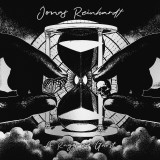
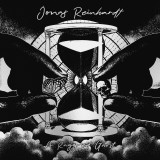
"A Ragged Ghost" is the eighth full-length album from electronic producer Jonas Reinhardt. Following albums on Kranky, Not Not Fun, Constellation Tatsu, and more, his debut release for Trouble In Mind brings together 11 new pieces that explore themes of life & death, netherworlds, and the liminal spaces in between. Taken together as a single narrative, the album offers a stirring exploration of mortality and immortality in what Reinhardt describes as 'a dance of religious syncretism, navigating spaces between the living and the dead'. "A Ragged Ghost" finds him synthesizing influences organically from familiar teutonic strains to the intense austerity of early 21st century electronic pioneers such as Biosphere and Susumu Yokota. A whisper of the Italo-disco-esque romps of Jonas' 2012's "Foam Fangs" EP & 2013's "Mask of The Maker" LP merge with his more kosmische leanings into a sinister, slightly funky, but also studious suite that at times feels like a lost sound library record from the KPM archives. Openers "Ape & The Universal Axis" and "In Lotto Commodore" decidedly sound like a selection from a lost film score while others like the bubbling "Sly Tomb" recall the works of Roedelius or Vangelis' serene soundscapes. Meanwhile, fans of the electro-ambience of Manuel Göttsching's strobe-light, proto-house (on his seminal "E2-E4") or the pulsing insistence of John Carpenter's visceral non-horror scores (i.e. "Escape From New York" or "Assault on Precinct 13") will find a lot to love about songs like "Tumb Tumb" and "Wretched Orchestra of Armistice".
The latest offering from 12th Isle collects a variety of recordings from Vasily Stepanov and Vlad Dobrovolski as part of their on-going S A D project (Udacha/Muscut). As part of their process, S A D sample and distort old de-magnetised tapes, constantly adding to and reworking their own sound-world. Layers of kosmiche synthesisers, off-kilter woodblock percussion and lysergic field recordings interplay with dense ambient textures in a true collage-style approach to music making. Across the nine tracks, multiple collaborations and aliases coalesce to present a thorough look at both artists approach to communicating the world around them. Drawing influence from nature and the outdoor concerts of Vladislav’s band Kurvenschreiber as well as late night free jazz shows and a similar ‘hauntological’ approach seen in Dobrovolski’s recent ‘Playbacks for Dreaming’, the pair express a unique genre-traversing attitude. More from the 12th Isle due very soon!
Gliding & Hiding’ presents one of post-punk’s maverick spirits at her finest: Malka Spigel sprang to prominence as bassist and vocalist with the legendary Minimal Compact. She’s also an internationally acclaimed photographer and video artist. Alongside her partner and long term collaborator Colin Newman, she’s also one half of the electro-kosmiche duo Immersion. The pair are also members of the unique art-pop quartet Githead. Yet often, Spigel’s most personal work is to be found on her solo albums.1993 debut ’Rosh Balata’ is a contemporary rock album sung in Hebrew, with 1998’s ‘My Pet Fish’ showcasing an idiosyncratic amalgam of rock and electronics, whilst 2012’s ’Every Day Is Like The First Day’ is a full blown psychedelic pop record, with guests including Johnny Marr, Alexander Balanescu and Julie Campbell (aka Lonelady).Now, ’Gliding & Hiding’ gathers together Spigel’s gorgeous 2014 ‘Gliding’ EP, with reworked tracks from the 1994 mini-album ‘Hide’. The result is a collection that ranges from sunshine pop, to minimal breakbeat techno, all the way to blissed out rock.For the ‘Gliding’ material, Spigel is joined by Newman, on guitar and keyboards, Ronald Lippok of Tarwater/To Rococo Rot on drums, and Gil Luz and Uri Frost of Mambas, on keyboards and guitar respectively, with additional guitars from Julie Campbell, and Matthew Simms of Wire. These songs began life as live recordings from a gig at London’s Lexington, but were then refined in the studio. Yet they retain the sound of a real band, bouncing off each other’s considerable talents‘Gliding & Hiding’ serves as a career overview, whilst the reworked compositions prove how utterly contemporary her sound is. If you are new to the delights of Malka Spigel, this is the perfect place to dive in..
Out of the primordial chaos of pandemic and two years since their last full-length outing SUPERSAN, those sassy purveyors of World Dance of the highest calibre return with a bang. Duo's 3rd studio album soon to be released by Boom Selectah Records promises to turn heads and perk ears of the aficionados of Afro House but also has a potential to spill out from the niche and conquer the hearts of wider audiences.The album titled 'Little Dakar' is' the labour of love of two long time collaborators from Greece, Kostas and Valantis. This time their quest for musical purity and honesty is enriched and enhanced by stirring alliances. Scattered inside the audio-tapestry of this exotic wax flower you will find the vocals from 'the voice of Senegal' Jefree, and enchanting strumming from the fret of George Koltsiou. While rich traditions of Senegali music are particularly evident (and reflected in the album title), 'Little Dakar' goes far and beyond the sounds of a steamy Dakar Disco dancefloor. Finely tuned ear is in for a treat and could easily travel the distances between Senegal, Angola, Ghana, Uganda and Mali to name but a few. But you don't have to be an expert to fall in love with this album. The multidimensional colours of African musical heritage are easily accessible to a novice too as the references to better known House and Funk traditions could be heard loud and clear throughout the record.
„Ich folge dem goldenen Strom.“ So singt es Rosa Anschütz im Titelstück ihres neuen Albums, mit kalter, klarer, entschlossener Stimme. Darunter sirren erst goldene Störgeräusche, dann setzen mächtige Elektrobeats ein, und im Refrain künden Trompetenfanfaren vom Sieg über die Elemente. „Goldener Strom“ ist zweite Album der 24-jährigen Künstlerin, die in Wien und Berlin lebt – ein erstaunliches Werk. Man kann dazu tanzen, man kann es aber auch wie ein Konzeptalbum hören; es ist ebenso voller Beats wie voller Gedanken. Rosa Anschütz spielt Klavier, Trompete und Querflöte, zu Beginn ihrer Karriere hat sie viel mit Modularsynthesizern gearbeitet. Ihr musikalisches Erweckungserlebnis war das Atonal Festival in Berlin, später hat sie auch viel im Berghain getanzt, und der Berghain-DJ Max Kobosil remixte ihren Song „Rigid“. Ihren enorm wandlungsreichen Gesang – der vom flehenden Hauchen bis zur kalten New-Wave-Sprechstimme reicht – unterlegt Rosa Anschütz denn auch mit einem entschlossen voranmarschierenden Four-to-the-Floor-Techno; doch finden sich unter diesem immer wieder polyrhythmische Abweichungen. Es scheppert und zittert, tiefe Bässe wühlen im Boden, während hoch droben schillernde Klangschleier wehen. Rosa Anschütz schließt an die Traditionen von Dark Wave und Postpunk an, aber furcht tiefe Kerben in deren Klangbild und romantische Glätte. „Goldener Strom“ ist ein großartiges Pop-Album, voller Melodien, Sentenzen und Beats, die sich sofort im Ohr verhaken. Zugleich ist es ein Manifest künstlerischer Souveränität – kostbar und klug in unseren Zeiten der stromlinienförmigen Kunst.
XFLR-7 - ein geheimes Forschungsprojekt - ist in Gefahr! Unbekannte Gangster scheinen den Diebstahl der geheimen Unterlagen zu planen, doch der einzige Zeuge, den Justus, Peter und Bob befragen können, ist ein Halsbandsittich namens Huxley. Damit die Konstruktionspläne von XFLR-7 nicht in die falschen Hände geraten, müssen die drei ??? ihr Können unter Beweis stellen. Werden die Detektive das Geheimprojekt retten?Mitwirkende: Erzähler: Axel Milberg/ Justus Jonas, Erster Detektiv: Oliver Rohrbeck/ Peter Shaw, Zweiter Detektiv: Jens Wawrczeck/Bob Andrews, Recherchen und Archiv: Andreas Fröhlich/ Kendra Bowman: Sandra Schwittau/ Huxley, der Sittich: Achim Buch/ Matt: Manfred Liptow/ Carol: Gerlinde Dillge/ Trevor: Peter Kaempfe/ Officer: Torsten Münchow/ Reginald: Malte Janßen/ Blacky: Heikedine KörtingBuch und Effekte: André Minninger/ Geräusche: Helge Halvé/ Redaktion: Maike Müller/ Regie und Produktion: Heikedine Körting/ Titelmusik: Simon Bertling & Christian Hagitte (STIL)/ Musik: Jan Friedrich Conrad, Peter Morgenstern, Constantin Stahlberg/ Coverillustration: Silvia Christoph/ Design: Atelier SchoedsackBased on characters created by Robert Arthur. Basierend auf dem gleichnamigen Buch von Hendrik Buchna, erschienen im Kosmos Verlag, Stuttgart © 2021 (P) & © EUROPA, a division of 2022 Sony Music Entertainment Germany GmbH
Fractal head rearrangement from Keith Fullerton Whitman on his first vinyl release in what feels like years, here blessing Japan’s NAKID label with a new instalment in his forever-evolving Generators project, arcing from bleeping post-Kosmische sounds into completely unexpected drum mutations in footwork and grime modes. It’s properly head melting gear that links the algorithmic mind-fukkery of Laurie Spiegel with the floor-bending rhythmic experimentation of Mark Fell, Rian Treanor or Jana Rush, and the first in a three part series that offers some of the strongest gear we’ve heard from one of the very best in the game.
Modular synth scientist, critic and historian Keith Fullerton Whitman first debuted his »Generators« set in 2009, using a modular setup to create non-repeating melodic patterns that basically came close to generating themselves. Over the course of hundreds of live shows (and a handful of releases on Root Strata, Editions Mego and other labels), Whitman glacially honed his process and allowed the concept to slither down different avenues, mutating as it picked energy from the various venues it was situated in. His rigorous method meant ‘Generators’ was never played out the same way twice, veering from psychedelic Kosmische experimentation to obliterated, off-grid Techno.
In 2019, on the tenth anniversary of the project, Whitman was invited by the GRM in Paris to set up in Studio C, where he avoided the arsenal of pristine, museum-worthy modular synthesizers and instead reprogrammed his classic ‘Generators’ patch. Recorded in a single take using luxe analog- to-digital convertors, the result is a 45-minute durational piece, split into two distinct sides for this release.“Very little manual interaction happened,” Whitman explains. The music is, as its title suggests, generative, and at this point basically sounds as if it reached its most advanced, final form. The first few minutes of the opening side mine the original theme, with clocked LFO shapes triggering oscillator blips in mind-expanding non-looping patterns. Soon, percussion enters the matrix, at first wrong-footing us with a 4/4 fake-out - possibly nodding to the piece’s 2010 Root Strata iteration - before splitting into staccato polyrhythmic abstractions of the most loose- limbed and deadly variety.
General MIDI drums can sound almost hilariously boxed-in, but handled by Whitman they show off a plastic cultural sheen to piercing effect, deployed in a way that re-draws the rhythmic bass music of someone like Jlin while nodding to Mark Fell and Rian Treanor’s quasi-generative dance explorations. These comparisons take on even more weight on the second side, where Whitman opens up his filters to allow the synth bleeps to sing even more loudly, introducing that all- important clap/hat interplay that dialogues with Atlanta and Chicago simultaneously.
Gap/ Void is the first collaborative full-length album by Automatisme (the Canadian musician and conceptual artist William Jourdain) and Swiss field recordist, ambient musician, visual artist and writer/academic Stefan Paulus. Jourdain and Paulus first met through shared projects with Mille Plateaux/Force Inc, each contributing to the Ultrablack Of Music anthology and Paulus going on to make several videos for Automatisme tracks issued by the two labels. In early 2021, Paulus approached Jourdain with a proposal based on his field recordings made during numerous mountain expeditions in the Swiss Alps, the Caucasus, and north of the Arctic Circle _ documenting stormy weather, high alpine winds, avalanches, and sounds emanating from glaciers and from the insides of crevices and caves. Paulus created ambient noisescapes from these recordings by splicing and folding them into hundreds of layers of sound: an analog to the geological strata of their geographic sources. The resulting audio mixes, compounding a multiplicity of spatio-temporal excursions, were then further encased in drones using the natural tone series (the traditional zäuerli or wordless yodels of northeastern Switzerland), the monotonic standing drone of Lamonte Young's Dream Syndicate, and the mass chords of early 1970s Kosmische Musik as points of reference. Paulus sent these extended ambient/noise pieces to Jourdain as source material for the latter's bespoke Automatisme techniques, where variable tempo and glitch systems forge more overt minimal techno/IDM works. Gap/Void leads with five rhythmic tracks (cut to 33rpm LP) that feature Automatisme's trademark interstitial digital synthesis and elastic/erratic signal processing, in combination with his own crate-digging `expeditions' through obscure 1970s-80s disco 12-inches, deconstructing their scores and structures to bring these microsamples and sensibilities back to bear on Paulus' deterritorialized sedimental source material…
Known for his work on Transient Force, Gigolo, and of course as a contributor for Fundamental's Time Capsule a.k.a. 808 Box project, -=UHU=-'s album is a selection of his best unreleased tracks. Compiled from an old folder full of tracks that have that twenty years old spirit in each of them, that futurist funk that -=UHU=- can deliver so well. ''Ezzential Electro'' is the biggest project Electro Records has done so far. It consists of 36 vinyl records produced by artists they consider essential for the current underground electro movement. The first six parts of the series come in beautiful white silkscreen printed sleeves on recycled cardboard and include a real puzzle piece on the front cover, indicating which part of the series you have in your hands.
After high rotation online, Ghent's finest dub crew finally bring 'Furious' to wax, with an exclusive dub version by Kosmo Sound's drummer Marius Couvreur on the flipside. One for the bassheads!
The instrumental sextet mix heavy bass lines and tight drums with spacy melodies into an organic trip that sets every venue on fire. They have already performed twice as the support act for dub legend Adrian Sherwood and became winners of Sound Track in 2019.
“It's a slow motion dub explosion.” - Woodburner
“As a mixture of Slimmah Sound, El Michels Afffair and Khruangbin in which deep dub basses flirt with thin desert blues guitars, jazzy drum patterns and tufts of saxophone.” - Indiestyle
“The canvas that these six musicians span as Kosmo Sound has a musical breadth that effortlessly ranges from dub over jazz to psych.” - daMusic
Etui welcomes Tim Kossmann. With Lockdown Loops the Westfalia dub techno mastermind presents a very personal EP with 3 deep, loop based tunes recorded in extreme isolation during lockdown. The situation created a feeling of lonesome remoteness and uncertainty, transcended by putting in more man hours in the studio.
The EP starts with Loop A, a dreamy dub techno riddim that has nice distant echoes and mint chords. The 2nd track Loop B has a more noisy, warped chord progression topped with atmospheric piano riffs.
Loop C on the b-side consists probably of the most heavenly sounding melancholic chord loop he has recorded so far. Expect a tune composed of atmospheric bluster combined with a banging deep mono bass and different layers of noise. It is simply an epic lofi sound anthem.
Tim Kossmann is a Germany based producer who focuses mainly on dub techno and ambient. Since 2016 he has been releasing on a constant basis on labels like Telrae, Greyscale and Superordinate Dub Waves among many others.
He loves to explore the deep side of techno, with the aim of creating deep, lush chords and soundscapes filled with echo and spaced out delays, where deeply banging bass and moving whitenoise are combined with sophisticated harmonics in order to push the boundaries of the genre.
Tsampikos Fronas aka June takes a departure from his dance orientated earlier work. Recorded between 2018 and 2020, Window of Time sees the Berlin-based producer explore sparser arrangements than his previous releases.
The record unravels like a dystopian cyberpunk novel, something akin to William Gibson’s Neuromancer. Both the title track and ‘Stratagem / Predator’ create an increasing tension that builds through repetitive sequences. The arpeggiated synths on ‘Year 2092’ evoke images of sprawling metropolitan city scapes, while the claustrophobic mood of ‘The Master of Electricity’, the first track written for the album, wouldn’t go amiss on a soundtrack to a sci-fi thriller like Blade Runner.
Created using modular synthesizers, analog sequencers and analog polyphonic synths, Window of Time eschews melody in favour of cold, pulsating rhythms. Combined with haunting choral toplines and minimalistic flourishes, such as those on album closer ‘Elegy’, June invites the listener on a free dive into their subconscious; to navigate boundless, unexplored territories.
Welcoming Joe Koshin to the Time Is Now family with a release of two halves. Time Is Now White Vol.15 takes us on a whiplash journey through the contemporary iterations of breakbeat hardcore before slowing down the pace and stationing in UKG's shadier corners.
With previous releases on Planetaria Music and Gimme A Break Records, Joe Koshin has been making some serious waves with his no-prisoner approach to breaks and jungle. Time Is Now White Vol.15sees the London producer continue in this vein with two raucous breakbeat hardcore tracks, and two dark garage tracks which boast the style's potential to be at once introspective and club-ready.
"Chunk" slams things into action. And if you thought the clattering drum breaks and growling low-ends couldn't do more to rip open a dancefloor, just wait for the switch-up. Stutters that Sully would be proud of. The title track grounds itself firmly in the genre's antecedents: breakbeat which is at once gloriously old-skool and fiercely forward-facing.
Flip to the B side and it is configurations of dark garage that take to the fore: first adorned with a hypnotic melody that floats above pitched-up vocals ("T4LK 2 M3"), and later energised by a buoyant swing which implores you to move ("Spectra Don").
Time Is Now White Vol.15 drops 29th April via Time Is Now.
On their third album »Constant Connection«, West Australian-based Erasers create hypnotic compositions of synth, guitar and voice, evoking the vast expanse of their native landscape and the shrouded emotions behind the senses. Comprising of vocalist, synth player Rebecca Orchard and Rupert Thomas on guitar and synths, Erasers have developed their earthly kosmische music into an open language based on drone, variation in repetition and minimal song structures. Based in Perth, regarded one of the most isolated cities in the world, Orchard and Thomas’s music has brewed in the city’s vibrant DIY/Outsider community and evolved into a meditation on landscape, power, the shadow-world of human emotions and stream of consciousness. »Constant Connection«, with its waves of sound and chant-like vocals evokes a trance that suggests an infinity just beyond the senses.
At the heart of each Erasers composition is the interplay between the instrumentation, played with stoic restraint and recorded directly with minimal effects and the transcendental states induced in the listener. It’s a magic that is performed in plain sight and all the more powerful for it. The recognisable vibrato of Fender Rhodes keyboards and simple drum machine loops, the subtle strands of analog synth melodies that snake in and out of the ear, above all the towering encantations of Rebecca Orchard’s undeniably Australian-accented hymns; all of this is presented with minimal ostentation and yet it instantly engenders a dream state, hints at an infinity beyond the material.
Shades of John Cale’s 70s work with Nico, early 70s German synthesists Kluster and even fellow Australians Fabulous Diamonds can be seen as stylistic touchstones for Constant Connection. Where Nico hinted at the macabre and gothic, Rebecca Orchard’s similarly gliding vocal is more zoned in to a kind of oceanic openness, with words becoming chants and spells that suggested themselves to the singer during recording sessions. It’s this hidden hand of improvisatory, automatic writing that lends a sense of expanse to the music. On opener I Understand, while the lyrics might hint at discontent the emotional spectrum it opens up is far more rich and complex, as layered as the waves of droning chords that are the bedrock of each Erasers track. The title track talks of flow, continuum and balance, the protagonist in the song seemingly weightless, gently pulled through a walking reality that borders on dream. In Erasers’ world, it seems, the borders between reality and dream, consciousness and sub-consciousness are blurred and eroded.
On Constant Connection, Erasers’ music might be deeply evocative of landscape but it’s never clear which one. The vast, open terrain that surrounds Perth is dusty, burned by the sun into desert and Constant Connection feels like the product of the heat and relative isolation, the altered states these elements can create. But it’s these altered states of mind that appear to be the real landscape described by Erasers. It’s a landscape that’s hazy, in-and-out of focus, with emotional undertows pushing and pulling you into a weightlessness. On album closer Easy To See the band dispense with percussion all together, field recordings of the water at the edge of their native city ushering in two duetting synths. Orchard’s vocal undulates with the flow, viewing both the geographical and psychological landscape from the perspective of a consciousness not bound by bodies and from a timescale measured in millennia. The album ends as it begins, with field recordings of the real world that the music seeps out from, temporarily, before regressing back into the other realm it feels like it belongs to.
Between these two recorded hints of reality, Erasers manifest a deeply sensual dreamscape that constantly feels like it’s dissolving at its seams. A desert psychedelia emanating from a real world that might not be that real in the first place.
After the 2020 album "Lieder Für Geometrische Stunden", Sankt Otten finally make us happy again with a new release at the beginning of 2022. "Symmetrie Und Wahnsinn" (Symmetry and madness) fits here skillfully, both creatively and musically, in an album series with geometric context.
The album starts unusually buoyant with "Hymne Der Melancholischen Programmierer" (Hymn for sentimental programmers). A Kraut-Pop pearl, which could go on forever with its Motorik swing and with its catchy melody the track doesn't come across as melancholic as the song title predicts. You have to listen twice to not succumb to the illusion that it was composed in Düsseldorf at the end of the seventies. Here (and on the track "Sei Symmetrisch Zu Mir"), Sankt Otten were supported in the studio by drummer friend DIRK PELLMANN.
The drum machine in rumbling funky mode. "Die Glücklichen Unglücklichen", the secret hit of the album? They bend the beat into geometric shapes, let the bass play in circles and cover the song with ghostly choirs. The echo of a spinett-like sound overlays the sound, spitting out a deceptively cuddly dream world.
The 10 minute long "Die Ordnung Des Lärms" could be called an Ambient-Kraut symphony without hesitation. An enormous swelling to ecstasy, a guitar sings distantly in the background. Silence. Synthetic strings pave the way and are supported by choirs. A crackle that suggests a rhythm until it is taken over by a drum computer in the main part of the track. Bombastic mountains of synthesizers pile up and yet a catchy melody finds its way through this mishmash of hypnotic electronics. Fourth movement - Kosmische-choirs in suspension over a bass synth and an Ebow guitar. Is this already Prog-Rock? The question doesn't arise, in the end everything merges into reverb. "Luftspiegelung Der Sentimentalitäten" begins cautiously with a gentle sequence and a discreet kick drum. The mini-Moog sounds like a guitar. Anyway. A surface floats by and returns, layers and shapes build up. At last, everything melts into perfect harmony with a plaintive-sounding synth. This track was composed as a stripped back reprise of the first track from the last album "Sentimentale Sequenzen". A hypnotic Motorik-beat of an 808 that encourages head nodding and could almost be danceable. True to style with warm analog 80s electronic sounds and a loose echo guitar. This is "Angekommen In Der letzten Reihe". Man and machine hand in hand as a homogeneous musical unit and the connection of tradition and vision.
Sankt Otten like images of infinity. In the religious sense of meditative mantras, or also in the mathematical sense of an elongated curve that eventually returns to its starting point. "Bis Das Helle Licht Uns Holt" goes exactly in this direction with its classical use of sequencers and a sound carpet of choirs. Sound worlds that, through a clever repetitiveness, barely noticeably guard the constant changes in the compositional mesh like a secret and only reveal what is to be discovered by listening closely and letting it be seen. Such a thing is probably called Berlin School?
The Osnabrück duo Sankt Otten, founded in 1999, has been releasing on Denovali since 2009. With their now 12th album they give us again a gem of timeless instrumental music. The holy trinity of Krautrock, Ambient and contemporary Electronics, but always stylistically confident and unmistakable Sankt Otten. For the mastering New York based RAFAEL ANTON IRISARRI could be won. Also with the cover layout again good taste is proven. As part two of a cover series, this extraordinary die-cut cover artwork was again created by designer DANIEL CASTREJÓN.
Get inside the gambling den.
Das Wettbüro is the new music on candomblé that will make you want to never stop playing. Toggling between love infested disco and droner Krautrock, leaning into Kosmische and Late 80s House - it is a pleasure to be surprised as their vision unfolds. These men don’t play for free. And they always win. Now bet your Money on this record
Es braucht nur ein paar Sekunden, bis die verführerisch honigsüß-rauchige Stimme von Sängerin Jillian Taylor, Johnny Scarps' satte, knackige Gitarrenriffs und Sean Hurs große, beinahe nostalgische Rockorgel auf '1000 Years', dem ersten Track von RUBY THE HATCHETs neuer EP "Live at Earthquaker" ihre Hooks fest in Herzen und Ohren versenken.
Durch die Adern von "Live at Earthquaker" pulsiert eine organische, rohe Energie, da die EP im Hauptquartier der EarthQuaker Devices in Akron, Ohio während der US-Tour mit KADAVAR komplett live aufgenommen wurde. Die drei Tracks bestehen aus zwei frühen Versionen brandneuer Songs, die auf dem für 2022 angekündigten neuen Studioalbum der Riff-Rocker in überarbeiteten, voll produzierten Fassungen erneut auftauchen werden. Mit ihrer erstmals in physischer Form erscheinenden, wilden Interpretation von URIAH HEEPs 70er-Hymne 'Easy Livin'' setzen RUBY THE HATCHET der EP das Sahnehäubchen auf.
"Live at Earthquaker" ist ein köstlicher Vorgeschmack auf die mit Spannung erwartete Rückkehr der Band aus New Jersey mit einem frischen Album und Konzertreisen im Jahr 2022.