- A1: Yasiin Gaye - Respiration (Feat Talib Kweli & Black Thought) (Flying High Mix)
- A2: J B. & The Soul Mates - I Feel Good (Feat. Busta Rhymes)
- A3: Black Star & Aretha Franklin - Young, Gifted & Black
- A4: A Common Wonder - She Wants To Be Moved
- B1: Rick James & The Soul Mates - Thank You (Feat Jay-Z & The Roots)
- B2: Black Star & Aretha Franklin - Ms Fat Booty Pt. Iii
- B3: A Common Wonder - Love Is Real
- B4: Kendrick Lamar & Marvin Gaye - The Heart Part 5
- C1: Notorious B I.g. & Edwin Starr - B.i.g. Poppa
- C2: Curtis Mayfield & Dr Dre - The Next Episode (Feat. Snoop Dogg)
- C3: Brandy & Billy Stewart - Sittin' Up In My Room
- C4: The Meters & Ludacris - Strut Your Money Maker (Feat Pharrell)
- D1: The Temptations & Beyoncé - Crazy Next To You (Feat Jay-Z)
- D2: Peter Tosh & Purple Ribbon Allstars - Legalize That Kryptonite
- D3: Yasiin Gaye - Priority (Electro-Soul Mix)
Buscar:kw
- A1: Thomas Frempong - Odo Pa
- A2: Eric Agyemang, Kokroko Band - Kokroko Special
- A3: Jewel Ackah - Maame
- B1: Thomas Frempong - Wobre
- B2: Mr Cee - Bribiara Wone Mmre
- B3: Kantata - Saturday Night
- B4: Sam Yeboah - Biribi Aye Me
- C1: Thomas Frempong - Me Nyame
- C2: Jewel Ackah - Onipa Dasa Ni
- C3: Kantata - Monsom
- C4: Sam Yeboah - Odo Mewu
- D1: Thomas Frempong - Kweku Anansi
- D2: A.k. Yeboah - Make Me Know My Position
- D3: Kantata - It's High Time Now
New album from the South African musician + creative visionary, known for her vibrant, inimitable style + affirming lyricism Full Moon is a collection of 12 songs which displays Sanelly's unique sonic fingerprint, joyous attitude, distinctive vocals + genre-bending hits. Recorded in multiple locations while on the road, Full Moon is an introspective yet kinetic display of her versatility. "I can make any genre, I have fun creating music because I'm not limited," she says. Its club- ready beats oscillate between electronic, afro-punk, edgy-pop, kwaito, + hip-hop sensibilities. Produced by Johan Hugo (Diplo, MIA, Self Esteem)
- A1: Vajolet (Feat Lukas Lauermann, Wolfgang Pfistermüller & Flip Philipp)
- A2: Autostrada Del Brennero (Feat Diggory Kenrick)
- A3: Latzfonser Kreuz (Feat Mamadou Diabate & Hamidou Koita)
- A4: Lago Di Garda (Feat Roger Robinson)
- A5: Alfa Romeo 145 (Feat Kwame Yeboah)
- A6: Feltuner Hütte (Feat Osman Murat Ertel)
- A7: Avrupa Köprüsü (Feat Osman Murat Ertel)
- A8: Europabrücke (Feat Susanna Gartmayer)
- B1: Ancient Atoll (Feat Reinhilde Gamper, Martin Mallaun & Flip Philipp)
- B2: Latemar (Feat Reinhilde Gamper & Martin Mallaun)
- B3: Brennerautobahn (Feat Taka Noda)
- B4: Echoes Part I (Feat Flip Philipp)
- B5: Echoes Part Ii (Feat Flip Philipp)
- B6: Transit Tribe (Feat Didi Kern)
- B7: Latemar (Reprise)
12"[23,49 €]
Ulrich Troyer has been producing music now solidly for over twenty years within a largely genre free framework, but whilst navigating forms such as avant-garde, techno, leftfield, field recording, electronica, glitch and ambient it is the aesthetics of dub that guide his creative direction. Not really recognisable in an orthodox form as remixed versions of roots reggae songs but in the way sonics are manipulated with space, the application and layering of delay, reverb and echo that fixes his output well within the scope of what might be called futurist dub.
The nearest comparisons to his new album TRANSIT TRIBE can only be established by a synthesis of some of the more adventurous explorations in modern music such as African Head Charge, Jon Hassell, Pole (Stefan Betke), Bill Laswell or even Miles Davis; featuring a diverse selection of artists and friends not only from Vienna and environs but also from around the world, sounds are not so much fused but allowed to float along the continuous flowing tide of warm waves of bass.
Rather than to allow the names of Ulrich Troyer's collaborators be merely listed in the album credits, what they bring to this joyful affair needs to be outlined, albeit briefly: Co-producer credits go to Osman Murat Ertel from Istanbul, who employed a variation on the old foolproof Nick Lowe method for checking out the impact quality of his own sound productions by playing tracks through his car sound system speakers!
Murat is a member of the electro-psych-folk group Baba Zula where he plays electric saz, oscillators and theremin and played a key part in the creative development of the album. Mamadou Diabate, the balafon master originally from Burkina Faso and now resident in Vienna, has developed his own unique technique of playing solos that replicate the sound of three instruments playing in unison; however the multi-talented Mamadou is engaged here on singing and playing the talking drum. From South Tyrol Reinhilde Gamper is a member of the experimental trio Greifer who are bringing the sound of the zither into the twenty-first century using new playing techniques and electronic gadgets. Susanna Gartmayer is an Austrian composer and bass clarinetist specialising in improv and multimedia sound research. Diggory Kenrick has been engaged with creating new dub fusions and also re-energising classic rocksteady and roots reggae classics, renowned for his interventions on flute. Didi Kern is an electronic dance musician and drummer from Vienna with a focus on free improvised music. Hamidou Koita, a singer and multi-instrumentalist, is from a traditional Griot family in Burkina Faso but now resident in Vienna and a regular musical partner of Mamadou Diabate playing drums and calabash. Austrian Lukas Lauermann is both a studio and live musician playing cello, also working on electronic sound design and writing string arrangements. He has recorded extensively and appeared on stage with both Mark Lanegan and Hans-Joachim Roedelius. Martin Mallaun is a Tyrol-born specialist in both the development of the zither in modern music and also as a researcher in the effects of climate change on the vegetation of Alpine ecosystems. Mystica Tribe is the musical alias of Tokyo-based dub/techno producer Taka (Takafumi) Noda. He collaborated with Vienna's own Vegetable Orchestra on 2020's "Transplants (Mystica Tribe Version)". After studying classical percussion Flip Philipp is now a jazz vibraphone player and member of the Vienna Symphony Orchestra. Wolfgang Pfistermüller is a member of the Vienna Trombone Quartet and the developer of the incredible bass-trombone Aurora with its uniquely warm and resonant sound. Roger Robinson is a renowned British poet, winner of many contemporary poetry prizes and member of the experimental music group King Midas Sound. Kwame Yeboah is a Ghanaian born UK based keyboard wizard who tours regularly with Yusuf / Cat Stevens, Ms. Dynamite and Pat Thomas.
So contained on the album is an astonishing mix of musicians and instruments: sounds of cowbells recorded in the South Tyrolean alps processed by modular synthesizers and heavy analogue bass synths combined with instruments such as zither, bass-zither, electro saz, flute, talking drum, trombone, cello, vibraphone, marimba, djembe, contra-alto clarinet, melodica, Farfisa - all bound together by organic live-drums and dub effects.
Liner notes by Steve Barker
2025 repress
Mastering by Paul Mac @ Hardgroove Mastering.
Early support by Alderaan, Charlotte de Witte, Dave Miller (Abstract Division), Dimi Angelis, Dj Almelo, Dustin Zahn, Forkowski, Gareth Wild, Gotshell, Hector Oaks, Joton, Kwartz, Kessell, Kaiser, Lewis Fautzi, Nez, Norman Nodge, Norbak, Phara, Ryuji Takeuchi, Stranger, Takaaki Itoh, Tensal.
re:lax HQ finishes off a stellar year with their third record of 2024 - WONDA. Following re:ni's head spinning debut, Laksa comes with more arsenal for the club. Sampling iconic grime hype escalation, that energy is channeled into 3 UK soundsystem techno cuts. Razor synths, drum workouts, visceral bass-weight with vocal psychedelia, this is sonic exploration and experimentation with a FWD spirit.
The record also sees Laksa delve into his first vocal collaboration, working with Nyege Nyege affiliated Phelimuncasi - all the way from South Africa. Club and Dubwise versions - take ur pick
Argentinian producer Gonzalo MD is back on Knotweed with a 4-tracker where he further develops his own style, rough, tough, rhythmic and dreamy at the same time.
2026 Update: while stock last, this coloured vinyl now comes with a coloured cover “Exploring Different Shades of Techno since 2011”
- A1: Vajolet Feat Lukas Lauermann, Wolfgang Pfistermüller & Flip Philipp
- A2: Autostrada Del Brennero Feat Diggory Kenrick
- A3: Latzfonser Kreuz Feat Mamadou Diabate & Hamidou Koita
- A4: Lago Di Garda Feat Roger Robinson
- A5: Alfa Romeo 145 Feat Kwame Yeboah
- B1: Feltuner Hütte Feat Osman Murat Ertel
- B2: Avrupa Köprüsü Feat Osman Murat Ertel
- B3: Europabrücke Feat Susanna Gartmayer
- B4: Ancient Atoll Feat Reinhilde Gamper, Martin Mallaun & Flip Philipp
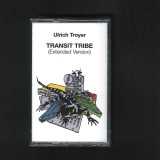
Cassette[14,92 €]
Ulrich Troyer has been producing music now solidly for over twenty years within a largely genre free framework, but whilst navigating forms such as avant-garde, techno, leftfield, field recording, electronica, glitch and ambient it is the aesthetics of dub that guide his creative direction. Not really recognisable in an orthodox form as remixed versions of roots reggae songs but in the way sonics are manipulated with space, the application and layering of delay, reverb and echo that fixes his output well within the scope of what might be called futurist dub.
The nearest comparisons to his new album TRANSIT TRIBE can only be established by a synthesis of some of the more adventurous explorations in modern music such as African Head Charge, Jon Hassell, Pole (Stefan Betke), Bill Laswell or even Miles Davis; featuring a diverse selection of artists and friends not only from Vienna and environs but also from around the world, sounds are not so much fused but allowed to float along the continuous flowing tide of warm waves of bass.
Rather than to allow the names of Ulrich Troyer's collaborators be merely listed in the album credits, what they bring to this joyful affair needs to be outlined, albeit briefly: Co-producer credits go to Osman Murat Ertel from Istanbul, who employed a variation on the old foolproof Nick Lowe method for checking out the impact quality of his own sound productions by playing tracks through his car sound system speakers!
Murat is a member of the electro-psych-folk group Baba Zula where he plays electric saz, oscillators and theremin and played a key part in the creative development of the album. Mamadou Diabate, the balafon master originally from Burkina Faso and now resident in Vienna, has developed his own unique technique of playing solos that replicate the sound of three instruments playing in unison; however the multi-talented Mamadou is engaged here on singing and playing the talking drum. From South Tyrol Reinhilde Gamper is a member of the experimental trio Greifer who are bringing the sound of the zither into the twenty-first century using new playing techniques and electronic gadgets. Susanna Gartmayer is an Austrian composer and bass clarinetist specialising in improv and multimedia sound research. Diggory Kenrick has been engaged with creating new dub fusions and also re-energising classic rocksteady and roots reggae classics, renowned for his interventions on flute. Didi Kern is an electronic dance musician and drummer from Vienna with a focus on free improvised music. Hamidou Koita, a singer and multi-instrumentalist, is from a traditional Griot family in Burkina Faso but now resident in Vienna and a regular musical partner of Mamadou Diabate playing drums and calabash. Austrian Lukas Lauermann is both a studio and live musician playing cello, also working on electronic sound design and writing string arrangements. He has recorded extensively and appeared on stage with both Mark Lanegan and Hans-Joachim Roedelius. Martin Mallaun is a Tyrol-born specialist in both the development of the zither in modern music and also as a researcher in the effects of climate change on the vegetation of Alpine ecosystems. After studying classical percussion Flip Philipp is now a jazz vibraphone player and member of the Vienna Symphony Orchestra. Wolfgang Pfistermüller is a member of the Vienna Trombone Quartet and the developer of the incredible bass-trombone Aurora with its uniquely warm and resonant sound. Roger Robinson is a renowned British poet, winner of many contemporary poetry prizes and member of the experimental music group King Midas Sound. Kwame Yeboah is a Ghanaian born UK based keyboard wizard who tours regularly with Yusuf / Cat Stevens, Ms. Dynamite and Pat Thomas.
So contained on the album is an astonishing mix of musicians and instruments: sounds of cowbells recorded in the South Tyrolean alps processed by modular synthesizers and heavy analogue bass synths combined with instruments such as zither, bass-zither, electro saz, flute, talking drum, trombone, cello, marimba, djembe, contra-alto clarinet, Farfisa - all bound together by organic live-drums and dub effects.
- A1: World Is Dog
- A2: Cctv (Feat Creature)
- A3: Yottabyte
- A4: Bad Pollen (Feat Billy Woods)
- A5: Slum Of A Disregard
- A6: Rfid
- A7: Instant Transfer (Feat Billy Woods)
- A8: Ikebana
- B1: In The Shadow Of If
- B2: Skp
- B3: Hushpuppies
- B4: 14 4 (Feat. Skech185)
- B5: Voice 2 Skull
- B6: Xolo
- B7: Zigzagzig
Black Vinyl[35,08 €]
We’re teaming up with ELUCID and Fat Possum for a limited edition of 300 copies of a Rush Hour black ice coloured edition.
E L U C I D, one half of the illustrious duo Armand Hammer, is here with the full-length follow-up to 'I Told Bessie'. Further experiments in the sonic, expanding on the 'live' side of music paired with the embracing of chaos. Something you haven't heard, or not so for a very long time. E L U C I D is here to reveal the bleakness of reality.
---------------------------------------------------------------------------------
''There is never time in the future in which we will work out our salvation. The challenge is in the moment; the time is always now.''
James Baldwin
A raw, crackling urgency runs through rapper-producer ELUCID’s new album REVELATOR like an underground power line. There is no space here for sepia-toned reminiscences or indulgent self-mythologizing. Intellectual rabbit holes have been filled in with concrete and rebar ; there is nowhere to hide and no off ramp from the audio Autobahn that ELUCID has fashioned—a renegade Robert Moses with gold fronts, bulldozing the homes of the powerful and the complicit. REVELATOR brims with the energy of now, with a refusal to look away. Carpe diem in a murder one mask.
Born in Jamaica, Queens, ELUCID has been on the cutting edge of New York’s underground scene since the mid-2000s. From the beginning, he has defied both convention and expectation. He ran with Okayplayer darlings Tanya Morgan, but his own music eschewed their throwback charm for glitchy noise experiments and bass-swamped culture jamming. His 2016 debut studio project Save Yourself (re-released in a deluxe edition last year) announced him in earnest. But in recent years, his Armand Hammer releases with partner-in-crime billy woods have received significant attention and acclaim. Serving as a followup to his last solo album—2022’s comparatively balmy I Told Bessie—ELUCID hoped to “re-distinguish” himself with REVELATOR, setting himself apart amidst the increasing attention around the music he and his friends are making together.
For ELUCID, this meant setting bold new challenges for himself. One of these was diving further into live instrumentation than ever before—”getting my Quincy Jones on,” as he puts it. The testing ground for this approach was Armand Hammer’s most recent project, 2023’s We Buy Diabetic Test Strips’ Möbius strip soundscapes, warmed with instrumental flourishes and skin-shedding beat progressions. With REVELATOR, though, ELUCID strove to create an atmosphere of chaos, embracing experimental electronics and atonal sample bursts. He worked on much of the album with co-producer Jon Nellen, who comes from a background in avant-garde and Indian classical music. “I wanted to get as freaky as I could at this moment. I wanted people to hear things, maybe for the first time, or in a way they haven’t for a long while,” the rapper explains.
ELUCID arrived at the studio with a collection of noise sources: non-referential samples, glitches and noises. Together he, Nellen, and others created forms out of them and, as ELUCID recalls, “just started playing drums with it.” Their fried, distorted sound was directly inspired by Miles Davis at his most uncompromising—specifically, the tone-clustering funk track “Rated X” from his 1974 double LP Get Up With It. At times, the pairing of rap with avant-fusion sounds also brings Emergency! from The Tony Williams Lifetime to mind, perhaps in an alternate timeline where the late drummer was listening to Ice Cube’s AmeriKKKa’s Most Wanted.
“The World is Dog,” REVELATOR’s lead single, functions as the album’s aesthetic thesis statement. Like the Davis track, the textures are punishing, the tonality is in free-fall, and the driving breakbeat of a groove cuts in and out unceremoniously. Avant-jazz bassist Luke Stewart, who appears throughout the record, holds the whole thing together just long enough for ELUCID to tightwalk over the beat. This tension is exactly where REVELATOR sets itself apart; in a time of drumless loops, and safe soul samples, this is a high-wire act with no safety net. Similarly, the song announces the themes of the album within just a few phrases, evoking the way societies accept and adjust to new levels of debasement and brutality while suffocating under the weight of history: “Can’t clock the kill, all a mystery/Forced past will eating everyone eventually/The world is dog.”
Many of the songs on REVELATOR grapple obliquely with dissolution and disenfranchisement in America and across the world—the grim realities of our domestic sociopolitical climate and our involvement in foreign conflicts. “Much of my artistic and political sensibility comes from the Black arts movement here in New York,” ELUCID explains. “Recognizing the interconnected global struggles against oppression, artists and thinkers created works and actions in solidarity with freedom movements in South Africa and Palestine.” ELUCID cites intellectuals like Amiri Baraka, Kwame Nkrumah, Audre Lorde, Sonia Sanchez, and Nikki Giovanni among his heroes. (One track on the album is specifically inspired by Lorde’s work, “SKP,” citing the scholar’s paper “Uses of the Erotic: The Erotic As Power.”) Songs like REVELATOR’s insistent closer “ZIGZAGZIG,” find ELUCID applying up-to-the-minute messaging, making explicit reference to the conflict in Gaza: “Feed a war machine…from river to sea, in lieu of peace.”
Despite ELUCID’s preference for cacophonous system overload here, the rapper also provides moments of respite. Recorded at The Alchemist’s Los Angeles studio, the laid-back, wheezing “INSTANT TRANSFER” is a collaboration with billy woods, which crystallizes their shared sense of creative determination. “With much momentum behind us and even more on the horizon, I knew a purpose, and that every step was ordered to that purpose,” ELUCID said of the experience. Meanwhile, the jittery “HUSHPUPPIES” is a playful anomaly on the track list, providing a snapshot of ELUCID watching his grandparents in the kitchen while preparing for Friday night fish fry dinners.
“Love still rules over on this side,” ELUCID says. ”I’m raising a family. We are making meaning and finding joy in the midst of all the fucked up-ness of everything around us because the alternative is cowardice and slow death. We remain rooted. We celebrate our people and our wins. Struggle is necessary.”
“IKEBANA” is one of ELUCID’s strongest statements of purpose on the record, blending the record’s heaviest themes with its most hopeful sentiments. supported by a shoutalong refrain and an urgent prog-funk groove. Breaking away from images of dissolution and crumbling societal systems that populate REVELATOR, ELUCID notes that the only way to navigate life’s bleakest landscapes is to cling to love and believe in those around you—to look forward toward something better that may or may not be possible. For the rapper, one of the album’s most trenchant lines comes during a centerpiece of a beat drop: “Being alive/I must look up.”
“The lyric ‘being alive I must look up’ is important especially in the context of this album. Much of the album imagery is harsh and reflects the actual doom some of us experience. But still I/we exist,” ELUCID explains.
Every artist is, in one way or another, the product of their time, bound by life’s leaden gravity to operate within the space of that which is already known. But there are some who are able to shake free of these ties, to shape the culture as it unfolds, to make the present their own.
Revelation, as a concept, points to the scales falling from people’s eyes—something that has been hiding in plain sight becoming clear. “The revelator relates to things that have been talked about, things that have been forecasted,” ELUCID adds. “And now they’re really here, and everyone sees it. And there’s no escaping.” REVELATOR plays out with the unmitigated power of those storms, laying waste to any genre conventions in pursuit of a certain physicality. Here, ELUCID develops a wholly distinctive musical language to explore our fractured modernity.
REVELATOR's packaging was designed by longtime Armand Hammer / Backwoodz art director, Alexander Richter.

Multi-talented, Ghana-born, UK-based sonic shaman K.O.G (Kweku of Ghana - the professional name of vocalist, composer and visionary Kweku Sackey) presents his third album on Pura Vida, the imprint of respected French label Heavenly Sweetness spearheaded by much-loved French DJ and producer GUTS.
Born and raised in Ghana, but having spent much of his adult life in the UK, for K.O.G this record can be seen as the culmination of a lifetime spent absorbing, combining and refining the diverse influences that have shaped his music and his character.
Kweku explains: This album is a very personal journey. I speak about three things: the soul of my community, where I found my inspiration. The roots, highlife, soul, going to church, being around traditional ceremonial setups. Taking people to the very origin of my voice, my soul, my impulses, my community, my culture.
And the next phase is cross-culture: living half of my life in UK and half of my life in Ghana. Putting myself at this crossroads to see the effect of the sonic consciousness, how awake I am with the music from Ghana, and also how living here, having children and family here has also influenced my music.
And thirdly, it’s mirroring my personal journey. Starting in Ghana, with my band in Ghana, and my roots, then moving up to UK, Going from Zone 6 all the way to Europe. Highlife - the syncopated fusion of local music and jazz which is at the core of Ghanaian music, and which from the 1930s spread like wildfire across anglophone West Africa - is one of the core building blocks of this album. But don’t be fooled by the catchy melodies and bright sonics. K.O.G is using it to speak about some topics that are anything but bright.
Highlife is absolutely dark. Most of the places you hear real highlife music, it’s funerals! And it’s part of the culture. Death is part of life. Seeds die for life to germinate. Art is just an emotive expression, when you can cause an emotion in somebody, and it’s not always happiness.
This theme of self-expression and vulnerability is a consistent one throughout the record. With special guests Pat Thomas, Dizraeli, Fameye, Ogunskele.
- A1: Ladema Eini
- A2: Kirya Yefeyfiya
- A3: Rak Et Koleh Eshma
- A4: Im Nin'alu
- B1: Shuvi Yefeyfiya
- B2: Ya Wald Ya Hali
- B3: Anat Alhawa
- B4: Am'at Soutak
- B5: Hil Yahil
- B6: Kweit Ruhi
- C1: Alail Ahim
- C2: Safart
- C3: Hargat Nof Alail
- C4: Ya Bnaya
- C5: Kalo Li Alnas
- D1: Ach Ya Ouma
- D2: Ya Bnat El Hoo
- D3: Saperi Tama
- D4: Hayyeh Mi Sana
- D5: Aslak Ya Hur
An anthology spanning three decades of haunting funk, soul, and disco, from the undisputed godfather of Yemenite-Israeli music, Aharon Amram.
Eine Anthologie, die drei Jahrzehnte eindringlichen Funk, Soul und Disco vom unbestrittenen Paten der jemenitisch-israelischen Musik, Aharon Amram, umfasst.
- A1: Amadou
- A2: Hip Hop Speaks
- A3: Make It All Better
- A4: Prankster Gangster
- A5: Prayer For Peace
- B1: A Plan Don't Get Up
- B2: No Laughing Matter
- B3: Break Bread
- B4: Hollow Points
- B5: Beyond Belief
- B6: Said & Done
- C1: Pleasure-Pain-&-Me
- C2: Unify
- C3: Love Supreme
- C4: Blues For Amadou
- C5: My Dna's Ok
- C6: Descended From Kings
- C7: Motha Goddess
- D1: You & I-Verse
- D2: Destiny's Finger
- D3: Black Male
- D4: Sun Drops
- D5: Tears For Amadou
- D6: Amadou's Journey
This is a 1999 album by Weldon Irvine, who gained new recognition with the rise of the hip-hop scene and the rare groove movement in the 90's and beyond, including appearances on Q-TIP and Mos Def albums! Now, for the first time ever, P-VINE is releasing this historically significant work on LP, as the original CD is hard to find.
Featuring guests such as Q-TIP, Mos Def, Talib Kweli, and other artists representing the street scene of the time, the jazzy and tight groove is a must-listen, with a crossover of 70s feeling and 90s sound!
Ten years after his first full-length effort ‘Man Is Deaf’ landed him firmly in the runnings for DJ Mag’s album of the year, prodigal son Michael Anthony Wright AKA Brassica returns to Civil Music with a deeply accomplished, painstakingly whittled LP of hydraulic electro slickness, rich synthscapes, and hooky, peak-time tearjerkers for the most discerning front-left lifers. ‘Tribeless Gathering’ is a barnstorming testament to Brassica’s stylistic and timbral deftness, touching down in the elusive epicentre of the club/home listening venn diagram with ease.
From the elastic, neon acid pointillism of opener ‘Hop Kweng’ to the mardy, miasmic plod of closing chugger ‘Changa Hill’, Brassica seamlessly segues between avenues of influence, his notoriously omnivorous musical knowledge roadmapping each turn. Raised on a diet of everything from early rave standards to metal, and schooled in avant garde sonics as a student of sound design at LCC, Brassica does a peerless job of sublimating his countless influences into a record of refined, heterogeneous, and most crucially, catchy, club moods.
Less spartan than his more recent oeuvre on Feel My Bicep, and less baroque than his technicolour experiments in postmodern synth pop with vocalist Stuart Warwick, Tribeless Gathering represents Brassica’s triumphant return to the main room, replete with rushy hooks primed for the planet’s finest soundsystems, and passages of heads-down tension bound to draw listeners right to the edge of their seats. Overall it is a concise and refined testament to Wright’s command of spectral sonics and effortless ability to pressurise a dancefloor. It is no surprise that he has also worked as a prolific mastering engineer, tuning music from a plethora of dance disciplines for maximum club impact. This work extends to his own projects (including this one), cementing them as rare expressions of complete artistry from studio to turntable.
As we delve deeper into the record, we are ushered through a series of accomplished and varied club moods, each channelling a unique cocktail of influences, but retaining a warm, ebullient analogue sensibility unique to Brassica’s work. This playful scope of influence calls to mind James T Cotton or Machinedrum’s experiments in dance music form, but Wright manages it all under one roof, wrangling everything from sashaying wub-laden two step to snarling Dillinja-esque FM damage into something inherently his.
Choice cut ‘Change Yourself’ layers an almost Cerrone-like piano refrain over radiant surges of saturated bass, dubby, strobing chords and a jagged, driving break, building to a jaw-clenching apex of dancefloor elation, while the rude, playful half-step of ‘Elevation’ breaks down the vintage speed garage formula into linear fragments, utilising a tight palette of resonant bass slugs, infectious synth leads and Papua New Guinea-style vocal strobes. The aptly named ‘Hold Tight’ fuses heart-in-mouth UK ‘ardkore pads with glissando acid disturbance and surgical snare fills in a formula which recalls the ethereal grit of Nubian Mindz’ 00s experiments in big-smoke break science, while the questing melodic arcs and arpeggiated squarewaves of ‘Pinball Marinara’ could easily have soundtracked an 80s sci-fi epic, beset with sparkling, bare-bones drum programming and hazy beds of sub sediment.
With ‘Tribeless Gathering’, Brassica both irreverently fuses and pays homage to the many unique and weird permutations of UK dance music. The short lived gathering of junglists, ravers and house hotsteppas of a similar name may have long since dissipated, along with the tribes themselves, but across these 11 tracks, he lays a blueprint for a new sound of togetherness.
Kwamé Bâ aka Fényan
Music producer, keyboardist and professional dancer based in France.
Coming from a Senegalese bloodline and growing up in Martinique (West indies), Fényan is deeply rooted in Black music. Epitome of a childhood in the West indies. A Caribbean Tale about Kreyol langage, about legacy and resilience, about turning victimhood into proactivity.
Douvan Douvan can be translated by "avant garde" in Kreyol. It is a story about People growing up and facing themselves, and their elders in order to move forward in their enlightenment.
It is your story.
CoN and KwAkE are Confucius MC and Kwake Bass. They share long and entwined histories with saxophonist and Native Rebel label owner Shabaka Hutchings, and with many of the incredible London musicians and producers who have emerged over the last decade.
Eyes In The Tower, their debut album released one year ago, was the second release on Shabaka Hutchings’ Native Rebel Recordings, where he invites friends and family to RAK Studios improvise around sketches he’s written specifically for the invited artists. A uniquely London evolution of classic hip hop, it was brewed for over a decade before being made in three days.
Two tracks from the album have now been remixed to celebrate the one year anniversary of the album: 15 Minutes gets reworked by Daisuke Tanabe and Dance In The Dark by Anja Ngozi.
Confucius MC has been embedded in UK hip hop since the early 2000s. He was the support of choice for Mos Def, and recently toured with UK hip hop stalwart Jehst.
Kwake Bass is musical director for Sampha and Kae Tempest. Behind the kit he has become the player of choice for travelling US heavyweights, playing with MF DOOM, The Roots and Joey Bada$$, as well as UK major players Lianne La Havas and Mica Levi.
Classic South African house / Kwaito album on vinyl for the first time.
Originally released on CD in 1995, this album which is associated with the birth of South African street music genre – ‘Kwaito’ and dance/dress style ‘Pantsula’ is now remastered for vinyl from the original tapes – resulting in the best sounding version of the recording to date.
Regarded as one of the earliest full length Kwaito albums, ‘Sigiya Ngengoma’ was released just one year into South Africa’s new democracy in 1995. Characterised by ‘mid-tempo’ beats, heavy bass hooks, adapted breakdancing and vocals in informal Zulu and other South African languages; ‘Sigiya Ngengoma’ would form a critical part of the South African street music movement that now has its own fashion, crews and dance style.
It helped post-democratic South Africa define its own musical identity and would pave the way for other Kwaito releases that ultimately led to the emergence of Amapiano years later.