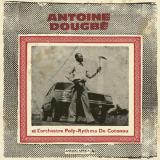
The prolific Benin-based Afrobeat legends Orchestre Poly-Rythmo de Cotonou return with a spectacular compilation alongside the enigmatic Antoine Dougbe, the self-styled 'Devil's Prime Minister.' This 12-track collection is the sound of the influential band at their peak and merging circular guitars, hypnotic synths, Afro-Cuban grooves and Cavacha rhythms into an unstoppable whirlwind of energy. Dougbe is an inventive songwriter and supplied compositions that the Poly-Rythmo arranged and performed here so they could lay down music that is fierce, mystical and rhythmically complex, as they always do. Few records convey the power of Benin's late 70s scene like this.
Suche:l orchestre poly rythmo de cotonou
- 1
- A1: A Min We Vo Nou We - Les Sympathics De Porto Novo
- A2: Asaw Fofor - Ignace De Souza & The Melody Aces
- A3: Dja Dja Dja - Stanislas Tohon
- B1: L´enfance - Elias Akadiri & Sunny Black´s Band
- B2: Mé Adomina - Picoby Band D´abomey
- B3: Nounignon Ma Klon Midji - Antoine Dougbé
- B4: Moulon Devia - Orch. Poly-Rythmo De Cotonou
- C1: Paulina - Black Santiago
- C2: Glenon Ho Akue - Lokonon André Et Les Volcans
- C3: Sadé - Sebastien Pynasco And L´orchestre Black Santiago
- C4: Baba L´oke Ba´wagbe - Super Borgou De Parakou
- D1: Gangnidodo - Cornaire Salifou Michel Et L´orchestre El Rego & Ses Commandos
- D2: How Much Love Naturally Cost - Gnonnas Pedro And His Dadjes Band
- D3: Idavi - Orchestre Poly-Rythmo De Cotonou
African Scream Contest 2
A great compilation can open the gate to another world. Who knew that some of the most exciting Afro-funk records of all time were actually made in the small West African country of Benin Once Analog Africa released the first African Scream Contest in 2008, the proof was there for all to hear, gut-busting yelps, lethally well- drilled horn sections and irresistibly insistent rhythms added up to a record that took you into its own space with the same electrifying sureness as any favourite blues or soul or funk or punk sampler you might care to mention.
Ten years on, intrepid crate-digger Samy Ben Redjeb unveils a new treasure- trove of Vodoun-inspired Afrobeat heavy funk crossover greatness. Right from the laceratingly raw guitar fanfare which kicks o Les Sympathics' pile-driving opener, it's clear that African Scream Contest II is going to be every bit as joyous a voyage of discovery as its predecessor. And just as you're trying to get o the canvas after this one-punch knock out, an irresistible Afro-ska romp with a more than subliminal echo of the Batman theme puts you right back there. Ignace De Souza and the Melody Aces' Asaw Fofor" would've been a killer instrumental but once you've factored in the improbably-rich-to-the-point-of-being-Nat-King-Cole-influenced lead vocal, it's a total revelation.
The screaming does not stop there, in fact it's only just beginning. But the
strange thing about African Scream Contest II's celebration of unfettered Beninese creativity is that it would not have been possible without the assistance of a musician who had been trained by the Russian secret services to "search and destroy" enemies of the country's (then) Marxist-Leninist president Mathieu Kerekou.
Already familiar to fans of the first African Scream Contest as a mainstay of ruthlessly disciplined military band Les Volcans de la Capitale, Lokonon André vanished in a cloud of dust at Ben Redjeb's behest with a list of names and some petrol money, only to return a few days later having miraculously tracked down every single name he'd been given. The source of this Afrobeat bounty-hunter's impressive people-finding skills - his training with the KGB - highlights the tension between encroaching authoritarian politics and fearless expressions of personal creative freedom which is the back-story of so much great African music of the 60s and 70s. Happily, in this instance, Lokonon was tracking the artists down to oer them licensing deals, rather than to arrest them.
Where some purveyors of vintage African sounds seem to be strip-mining the
continent's musical heritage with no less rapacious intent than the mining companies and colonial authorities who previously extracted its mineral wealth, Samy Ben Redjeb's determination to track this amazing music to its human sources pays huge karmic dividends.
Like every other Analog Africa release, African Scream Contest II is illuminated by meticulously researched text and eortlessly fashion-forward photography supplied by the artists themselves. Looming large - alongside Lokonon André - in the cast of biopic-worthy characters to emerge from this seductive tropical miasma is visionary space-nerd Bernard Dohounso, who laid the foundations for Benin's vinyl predominance by importing and assembling the turntables that would play the products of his Bond villain-acronymed pressing plant SATEL, a factory that would revolutionise the music industry in the whole region.
The scene documented here couldn't have been born anywhere else but in the Benin Republic , and the prime reason for that is Vodoun. It's one of the world's most complex religions, involving the worship of some 250 divinities, where each divinity has its own specific set of rhythms, and the bands introduced on the African Scream Contest series and other compilations from that country were no less diverse than that army of dierent Gods. At once restless pioneers and masters of the art of modernising their own folklore, the mystic sound of Vodoun was their prime source of inspiration.
One especially irascible Vodoun-adept was Antoine Dougbe, who styled himself The devil's prime minister' while turning ancestral rhythms into satanically alluring modern beats. As Orchestre Poly-Rythmo songwriter Pynasco has observed sagely, Evil is not elsewhere, evil extends into the house'. And African Scream Contest II is a gloriously cinematic road-trip through an undiscovered realm of music lore whose familiarity is every bit as thrilling as its otherness.
Written by Ben Thomson, March 2018
- A1: No Problem
- A2: Dangerous Bees
- A3: Pas Contente Feat Roger Damawuzan
- A4: Meva
- A5: Happiness
- B1: Ata Calling
- B2: Wrong Road
- B3: No Way To Go
- B4: Djin Ku Djin
- B5: Think Positive
Repress of the 1 st album of the fresh Afro funk sensation ! Recorded on analog equipment in Lyon in 2014 !
Peter Solo is a singer and composer born in Aného-Glidji, Togo, the birthplace of the Guin tribe and a major site of the Voodoo culture. He was raised with this tradition’s values of respect for all forms of life and the environment. With his new band, Vaudou Game, Peter Solo claims, and spreads this spiritual and musical heritage. Chants are at the heart of the Voodoo practice, but for times immemorial, harmonic instruments have never accompanied them. No balafon, no kora - only the “skins” support the singers. However, in 2012, Peter, along with his band based in Lyon, France, decided to explore and codify the musical scales that are found in sacred or profane songs of Beninese and Togolese Voodoo so they can be played easily on modern instruments. Peter composed the album Apiafo, using the two main musical scales of this tradition. The first musical scale on Apiafo leans towards raw Funk with a sound similar to the famous 70’s bands, L’Orchestre Poly Rythmo De Cotonou and El Rego. Funk, is the skeletal structure of this record, and provided the opportunity for Peter to invite his uncle, Roger Damawuzan - the famous pioneer of the 70s Soul scene - on two tracks. Their collaboration on “Pas Contente” is a highlight on this 100% analog album. Apiafo was entirely recorded, mixed and mastered with old tapes and vintage instruments. The second scale, which had never before been transposed for instruments, evokes deeper feelings and a sacred ambiance. The moving song Ata, an invocation to a supreme divinity is another highlight of this record. Even if some can recognize similarities between this scale and Ethiopian scales, they are in fact different. Peter, the only African band member, introduced the other musicians to the universal values of Voodoo and he taught them his native language. On the recording of Apiafo and during their live performances, the musicians all sing and answer Peter in the Mina language. The strive for authenticity, the analog sound and vintage looks don’t mean that Vaudou Game is looking backwards. This is Togolese funk, born in the post-colonial era but that never before explored its ancient roots so deeply and proudly.
Antoine RAJON
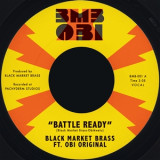
- Battle Ready
- What You Make It
'BMB x OBI' marks a new venture for the long-time instrumental powerhouse Black Market Brass. Teaming up with Obi Original, the young and visionary Minneapolis talent with a mission to share the heart of African music with the world, Black Market Brass delivers both proverbial and prophetic messages for the year to come - 'You've got to be Battle Ready!'. Inspired by the raw energy and messages of Fela Kuti and indebted to Orchestre Poly-Rythmo de Cotonou for their heavy fusion of voodoo-infused Afro-beat, Black Market Brass points in both directions towards the resurgent history of West African funk and the future of where a younger generation can lead us. These tracks are bursting at the seams with energy and force the listener to wise up and march along as soon as the drums thunder and the horns blare their first notes. The A-side, 'Battle Ready,' is what it claims: a band armed and ready to take on whatever may come. Strapped to the hilt with three drummers, this infectiously rhythmic track simmers, if not boils, under Obi's demands to mount up. The energy is high, edgy, and proves that getting nine musicians in the same room to track live captures a passion that bulldozes through anything placed in its way. The B-side, 'What You Make It,' encapsulates a musical quality that Black Market Brass has refined over its many years together, with polyrhythmic ideas you don't have to understand to know it feels good. Infused with elements of ethno-funk and classic highlife, this Ebo Taylor & Pat Thomas inspired work approaches the listener with a simple message amongst a danceable cacophony of sounds - 'Life is what you make it.' Move in 4, dance in 3, or sway in 6. Whichever you choose, choose it deliberately; the music will be there to support you.
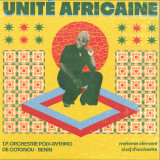
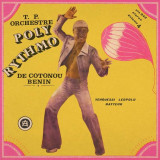
The second part in the series looking at the works of the Beninoise super group T.P. Orchestre Poly-Rythmo and the compositions of bandleader Clément Melome. The title song, "Unité Africaine" was originally released domestically in 1977 on the LP, "T.P. Orchestre Poly-Rythmo de Cotonou Benin - Melome Clement, Chef d'Orchestre" and celebrates a message of unity across the African nations.
The single focuses on the modern interpretations for which Canopy again enlists the skills of Jose Marquez & Sol Power All-Stars.
Jose Marquez builds around the core elements of "Unité Africaine", deepening the mood with characteristic production prowess. Recruiting precise musicians who add live bass, percussion and synthesizer, Jose delivers an adaptation which effortlessly compliments the original arrangement and feeling with a thoughtfully executed sensibility.
Sol Power All-Stars step up with a sincere rendition of "Unité Africaine". No strangers to the work of Orchestre Poly-Rythmo, (having released a dynamite remix EP of Orchestre Poly-Rythmo on their own imprint "Sol Power Sound"), they were a natural fit for this project. The version presented here is respectful to the original, adding live drums, light disco FX and new arrangements to gently enhance the original composition, adding just the right amount of seasoning to their mix to bring it to a joyful and tasty simmer.
- A1: Segla – Orchestre Poly-Rythmo De Cotonou-Rep. Pop Du Benin
- A2: Get The Music Now (Edit) – Ipa Boogie
- A3: E Sa F’aiye – Orchestre Black Dragons De Porto-Novo Dahomey
- B1: Aiha Ni Kpe We (Edit) – T.p. Orchestre Poly-Rythmo De Cotonou
- B2: Ego-Ibo – Les Sympathics De Porto-Novo Benin
- B3: Gbeti Ma Djro - Orchestre Poly-Rythmo De Cotonou Dahomey
- C1: Oya Ka Jojo (Edit) – Orchestre Les Volcans Du Benin
- C2: It’s A Vanity - T.p. Orchestre Poly-Rythmo
- C3: Bakassine Gabou - Orchestre Anassoua-Jazz De Parakou
- D1: Nan Man Nan - Orchestre Poly-Rythmo De Cotonou-Rep. Pop Du Benin
- D2: Gbe We Gnin Wa Bio (Edit) – Ogassa
- D3: Kpede Do Gbe Houenou - T.p. Orchestre Poly-Rythmo De Cotonou
Founded in the late 1960s by record store owner Seidou
Adissa, Albarika Store is one of the most important
independent record labels on the African continent. That
it was founded in the relatively small ex-French colony
of Benin (then still called Dahomey), is a testament to its
founder’s musical taste and vision for what the local
musical scene had to offer.
This September, Acid Jazz releases the first ever vinyl
and CD overview of the label and its music, compiled by
David Hill of The Soul Revivers and West African
musical expert Florent Mazzoleni, who also wrote the indepth notes.
The compilation provides a look into what was a
developing and then thriving post-colonial music scene.
It focuses on the label’s biggest and most prolific act
Orchestre Poly-Rhythmo and its founder Melome
Clement – who released under a variety of names often
spotlighting on the musicians’ key to their sound. It also
looks at the other established artists on the label such
as the incendiary Les Sympathics De Porto Novo and
Les Volcans. All of these artists create a unique mix of
Westernised Funk, Soul and Latin sounds crosspollinated with the traditional music of the region.
- A1: Arash & Quasar - Double Moon
- A2: Arash & Quasar - Dugai (Feat. Eres Duo)
- A3: Eolika - Ya Zabyl Tvoe Litso (Arash & Quasar Remix)
- B1: Arash & Quasar - Khoomei (Feat. Eres Duo)
- B2: Kola Beldy - Song Of Fisherman (Arash & Quasar Remix)
- B3: Orchestre Poly-Rythmo De Cotonou - Ako Ba Ho (Arash & Quasar Remix)
- B4: Super Soul - You Are Wasted In Life, Cause You Drink Too Much (Arash & Quasar Edit)
Arash & quasar is one of the weirdest projects we've ever received & we like that. They recently appeared on make italo great again & tatalo. This EP which is actually a mini album & it will be their last under this name and we can say that it's a masterstroke ! Italo, synth pop & folk music all with Tatar sauce ! If you want to wake up a dance floor, this is the right record. Absolute bangers.
2023 Repress
The third release from Canopy features the title track from a tough to catch Afro funk 7” originally released on private press in Benin in the 1980s. While information on the mesmerising Tomede Ehue remains elusive, she is backed by the Beninois powerhouse, the truly almighty, “TP Orchestre Poly-Rythmo de Cotonou”.
Electrifying cosmic voodoo disco grooves, heavy bass pulsing, blistering horns and spooky
organ riffs set the tone on this transcendental dance floor afro funk cut.
A modernised tropical disco remix from bosq & an Afro - acid version from Sam Redmore revitalise this mysterious dance floor incantation and launch it into the present day.
These tracks strike a balance between moody afro psych-funk and more punchy electronic aesthetics, while maintaining the subtleties of the original composition and performance.
The Accra-born pianist and frontman only released a few albums in small quantities, yet two of them are among the most sought-after records from 70's Africa. This was the first.
So what do we know After learning his craft in Benin and playing with the likes of Orchestre Poly-Rythmo de Cotonou, ROB returned to Accra to write his own material and find a sound.
Hooked on the driving funk and raw soul of stars such as James Brown and Otis Redding, he would often imitate his heroes on his father's piano during school holidays.
The title track sets the pace with a JBs-like rhythm, ROB almost shamanic with his sparse yet commanding vocal. The organ and wah-wah guitar spin us out before those imperious horns bring us back in.
And what better way to close this set than with 'More', swept up in a call and response between Rob and his backing singers as a 'Blow Your Head' synth flares and the brass blasts. Good times guaranteed.
As the man himself says, 'Funky music is in my blood. What you hear is the coming out of my mind.' No one sounds like Rob, because there is no one like Rob.
- A1: Orchestre Poly-Rythmo De Cotonou Dahomey - Minsato Le, Mi Dayihome
- A2: Super Eagles - Love's A Real Thing
- A3: Moussa Doumbia - Keleya
- B1: Manu Dibango - Ceddo End Title
- B2: Sorry Bamba - Porry
- B3: Orchestra Number One De Dakar - Guajira Ven
- C1: William Onyeabor - Better Change Your Mind
- C2: Ofo & The Black Company - Allah Wakbarr
- C3: Gasper Lawal - Awon-Oise-Oluwa
- D1: Bunzu Sounds - Zinabu
- D2: Tunji Oyelana & The Benders - Ifa
- D3: Orchestre Regional De Kayes - Sanjina
Back in 2005, the Luaka Bop and Stones Throw labels jointly issued World Psychedelic Classics 3: Love's A Real Thing - The Funky Fuzzy Sounds Of West Africa with the former releasing the CD edition and the latter a double LP version. As the elongated title suggests, the third edition of Luaka Bop's World Psychedelic Classic series swung the focus to West African music from the seventies and really opened people up to the psychedelic sounds of Manu Dibango, William Onyeabor, Gasper Lawal and a whole other host of artists from West Africa. Luaka Bop have evidently secured the rights for a vinyl reissue of the compilation, and anyone who indulged in their popular fifth volume focused on William Onyeabor will relish the opportunity to pick this up again.
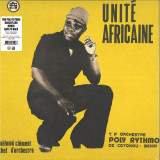
Two monumental full-side tracks from a pair of late 70s Orchestre Poly-Rythmo albums, ‘Unité Africane’ isn’t exactly a compilation, more a combination of the standouts at a time when the band was at the peak of its powers. Originally released in 1977, the title track is an infectious Afro-Latin workout that is interwoven with driving horn stabs by master trumpet player Tidiani Kone. ‘Unité Africaine’ was recorded over the Nigerian border at the state-of-the-art EMI Studios in Lagos, yielding majestic sonic results. ‘Mede Ma Gnin Messe’ is taken from the 1978 ‘Special 30 Novembre’ and this time Poly-Rythmo wore their Afro-funk hat to deliver almost sixteen minutes of dancefloor fire. Propelled by PolyRythmo’s super-tight beats and underpinned by a relentless keyboard refrain, the magic is in the stellar horn parts that take this track to another level. As with much of the Albarika catalogue, copies of the original LPs are incredibly tough to locate in anything approaching reasonable condition, so this should be a gift.
Acid Jazz Records continue their exclusive licensing agreement with Albarika Store, the legendary record label that defined the sound of Benin and influenced the entire region of West Africa and beyond.
'Kpede Do Gbe Houenou’ is a burning piece of Afro-funk from Benin’s finest, the all-conquering Orchestre Poly-Rythmo. With a killer horns line, imploring vocals and a driving groove, this has it all and is just waiting to ignite reopened dancefloors. 'Ma Wa Mon Nou Mi O’ is equally strong, if a little less intense, and features wonderful guitar work to the fore. Without question, this is essential Beninese music. Both tracks were transferred, restored and mastered from the original 1/4 inch tape.
Acid Jazz Records are proud to announce an
exclusive licensing agreement with Albarika Store,
the legendary record label that defined the sound
of Benin and influenced the entire region of West
Africa and beyond.
This is the first exhaustive trawl of the archive and
will see the label presented in a way that ensures
its historical importance is recognized.
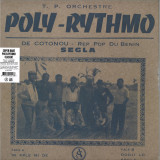
‘Segla’ is a hens’ teeth-rare Poly Rythmo album
from 1978 that was originally released without a
sleeve as ALS059. Recorded at EMI Lagos, Nigeria,
as per most of the Poly Rythmo recordings for
Albarika, the sound quality is from the tapes is
dynamic and fresh.
Transferred from the original tapes and
remastered by Grammy award-winning engineer
Frank Merritt at The Carvery, the album is
presented with beautiful artwork and packaging to
match the sonics. This is the music as it should be
heard.
Over the next few years a comprehensive reissue
campaign is planned, overseen by Florent
Mazzoleni and David Hill for Albarika Store, with
Dean Rudland as executive producer for Acid Jazz.
Acid Jazz Records continue their exclusive
licensing agreement with Albarika Store, the
legendary record label that defined the sound of
Benin and influenced the entire region of West
Africa and beyond.
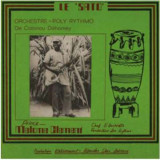
Recorded and issued in 1974, ‘Le Sato’ is one of
the earliest releases on the Albarika label and it is
also one of the deepest.
Sato is the term for the traditional rhythms that
soundtrack Vodun (Voodoo) rituals and
ceremonies in Benin. Performance of Sato is
reserved for these sacred rites, which evoke the
spirits of the dead and can last for several days
and attract hundreds of people. Sato rhythms
cannot be played outside of Vodun.
A large ceremonial Sato drum is used, which
measured over 1.5m in height. This drum is played
using wooden stick beaters, the drummer dancing
while playing. The Sato drummers are supported
by percussionists and other drummers playing
smaller drums. Together, they create unique,
layered, trance-inducing polyrhythms.
Albarika Store is home to many rare recordings, from more traditional folkloric and Sato styles, to the funk, blues and psych inspired workouts of the All Mighty Orchestre Poly Rythmo de Cotonou, as they referred to themselves. Many of the original records are sought after by DJs and collectors as prime examples of Afro-funk, Afro-Latin and Afropsych sounds.
The next in the series of reissues by Acid Jazz presents a straight reproduction of the incredibly hard to find Poly-Rythmo ‘Vol. 4’ album, originally from 1978.
For DJs and dancers this album has long been about the killer track ‘Aiha Ni Kpe We’, an incendiary Afrobeat recording which will activate any dancefloor anywhere. “Every time I listen to the Orchestre Poly Rythmo… Wow, I just discover something new in the music” - Gilles Peterson
This is the first exhaustive trawl of the archive and will see the label presented in a way that ensures its historical importance is recognized. Trips to West Africa have secured original master tapes and the process of transferring is ongoing. Over the next few years a comprehensive reissue campaign is planned.
More dancefloor dynamite from Benin's almighty Orchestre Poly-Rythmo de Cotonou Dahomey, this time in the form of 'Gbeti Ma Djro'. Confusingly described on the centre label of the 1971 original issue as ’Soul’, this is in fact a prime slice of Afro-psych-funk complete with wails and grunts over fierce drums and picked guitar. 'Angelina II’ is a much warmer affair that rides a shuffling mid-tempo pachanga groove. Both tracks were transferred, restored and mastered from the original 1/4 inch tape.
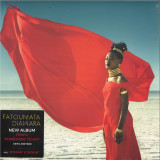
Fatoumata Diawara ist eine malische Singer/Songwriterin und Schauspielerin. Ihr Debüt "Fatou" (2011) und darauffolgende Aktivitäten machten die Künstlerin zu einer der wichtigsten Vertreterinnen moderner afrikanischer Musik. Sie sang auf Alben von Dee Dee Bridgewater ("Red Earth"), Oumou Sangaré ("Seya") und Herbie Hancock ("The Imagine Project"). Darüber hinaus kollaborierte sie mit Bobby Womack, Mulatu Astatke, Cheikh Lô, dem Orchestre Poly-Rythmo de Cotonou, Blick Bassy sowie Rocket Juice & the Moon. Diawara spielte bereits Glastonbury und andere große Festivals, trat in der Carnegie Hall auf und begab sich an Bord von Damon Albarns Africa Express, wo sie sich als Höhepunkt eine Bühne mit Paul McCartney teilte. Parallel setzte sie ihre Karriere als Schauspielerin fort, unter anderem in den Filmen "Timbuktu" (2014) und "Mali Blues" (2015). Ihr Album "Fenfo" (deutsch: "Etwas zu sagen") wurde in Mali, Burkina Faso, Paris und Barcelona aufgenommen und von Diawara selbst sowie dem französischen Superstar Matthieu Chedid alias -M- produziert. "Fenfo" geriet zu einem im besten Sinne grenzenlosen Album. Die elf Songs verbinden alte afrikanischen Saiteninstrumente wie die Kora und Ngoni mit elektrischen Gitarren sowie traditionelle Perkussion mit Kit-Drums. Diawara, die meist auf Bambara singt, wird unter anderem von -M- (Gitarre, Keyboards) dem brillanten Cellisten Vincent Ségal und dem Kora-Spieler Sidiki Diabaté begleitet.
Senthulà is one of the many aliases of musical jack of all trades José Guerrero, a long standing figure in the already rich underground scene of Valencia. In this solo excursion he explores the vast possibilities of mechanical repetition, the machine funk of dirtbag rhythms and proper boogie DIY synth music, sculpting a syncopated sound that is both modern and atavistic. Coming from a deep knowledge and ability to communicate very diverse sounds, slow jams unfold into dance music for clear eyed lounge lizards for whom sleaze comes not dizzy but focused. Whitened african rhythms beat up no wave disco pleasure points, managing the hard task of being very cool and nonchalant, but also hot and dedicated.
This closed door nightclub music will appeal to fans of the new developments in dance music that put Cabaret Voltaire, impLOG or Orchestre Poly-Rythmo de Cotonou into XXI Century basements. The record comes also with a killer remix by Tolouse Low Trax, probably our favourite producer in modern rhythmic music.
Amazones de Guinee - SambaPure vibes to start our series. Live and direct, high energy African funk with a powerful vocal, recorded live in Paris in 1983.Hailing from Guinea they were the countries first all female group, formed by members of Guinean army nonetheless. Their lead percussionist Kade Diallo was killed in a car crash just days after returning from a tour of France in the early 80's. The group did not record again until 2008, but they continue to tour now, with a new generation of fans.Taken from the sought after 1983 album 'Au Coeur De Paris', previously unreleased on 7'.Moussa Doumbia - SambaMalia born Moussa Doumbia and was a prolific saxophonist, composer and arranger, who lived in Abidjan, Ivory Coast.He fused African and Funk rhythms in his own unique style, comparable to the likes of Fela Kuti, Orchestre Poly Rythmo de Cotonou and Ebo Taylor. Moussa's voice is strongly reminiscent of the almighty James Brown. Similarly to Fela and The Shrine, Moussa played at 'Boule Noire', a club in the cosmopolitan area of his town, Treichville. Every night they would play their own styles for hours to rich businessmen and locals.'Samba' is taken from his 1980 LP 'Lassissi Presente Moussa Doumbia' released on Sacodis. Extremely hard to find.
- 1