Buscar:la mala funk

Estilos
Todo
RHOMA IRAMA - BEGADANG: SONETA GROUP BEST SONGS 1975-1980

(Limited edition to 500 copies, remastered audio, pressed and printed in Indonesia) The 13 tracks contained in this compilation “Begadang: Soneta Group Best Songs, 1975-1980” are some the most innovative music that came out of Indonesia’s music scene in the 1970s, tunes that has cemented Rhoma Irama’s status as the king of the genre.


Dangdut is the biggest musical genre in Indonesia. Dangdut, onomatopoetic name from the sound of hand drums used in this type of music, is what reggae to Jamaicans, country to Americans or skiffle to mid 20th century British people. And in this genre of dang dut, the name Rhoma Irama looms large. He is until today the undisputable king of dangdut and his role as pioneer of the music is already in the history book. In fact, there's one book documenting the outsized role of Rhoma in establishing dangdut as the father of this music. The book is aptly titled Dangdut Story, written by Pittsburgh University music professor Andrew N. Weintraub.


Among Indonesian fans of dangdut, there’s this one misconceptions that dangdut music is that it is an indigenous art form from Indonesia and that it constitutes an amalgamation of local, traditional music of this Southeast Asian nation, with Malay music being the most prominent feature in the mix.


Dangdut pioneer Rhoma Irama is among the first to reject this assertion. “Dangdut music may have originated in Deli (in North Sumatra) but then got the influences from the West and India”, he said.


Indeed, most of Rhoma’s well-known compositions may have been influenced by Indian tunes but some of his best quality works owed much to the West.


Rhoma had long found home in Western pop music. In the early 1960s, after honing his guitar playing skill, Rhoma set up his first band Gayhand to play the tunes of The Beatles, Paul Anka and Tom Jones. In 1972, Rhoma won best singer title in a Southeast Asia singing competition in Singapore playing Tom Jones “I Who Have Nothing.”


Yet, nothing changed Rhoma’s fortune in the music industry, to a point where he decided to leave pop and switched to playing Orkes Melayu (Malay Orchestra) music, first with Orkes Melayu Purnama and later with Soneta Group.


His career soon took off with Soneta, especially after he introduced what ethnomusicologist William H. Frederick considered as “theatre”, through which Rhoma borrows many elements from stage performances of British and American rock bands. These elements, kitsch and pomp, he liberally adopted and became an inseparable part of dangdut itself; tight pants, long hair, platform shoes, glitter and glamour which would not be out of place in Elton John and David Bowie stage show.


And this is actually the contradiction of Rhoma’s brand of Malay music. “One might legitimately ask how imaginative, not to say bizarre, costuming and dancing with abandon could be related to some of the objectives of Rhoma has set for himself and soneta group”, Frederick wrote on his seminal work on the singer, Rhoma Irama and the Dangdut Style: Aspects of Contemporary Indonesian Popular Culture, published in 1982.


From technical point of view, Rhoma not only replaced the acoustic elements from Melayu Music with electric instruments but also created new synthetic sounds that has never been attempted before in Indonesia’s music industry.


Detractors like to point out how much he was indebted to Deep Purple, but a closer inspection reveals how he in fact had mined his influences even deeper.


Notice how Rhoma reproduced funk, which is all the rage in early 1970s, in the song “Santai” (Relax), this album’s closer or “Credit Title (Instrumentalia)” which opens this Darah Muda (Young Blood) soundtrack. The rubbery bass lines that open both songs can easily find home in any Sly and the Family Stone’s or Isaac Hayes’ tunes from that era. Other highlights of the song is the funky guitar licks and the droning Hammond a la George Clinton that stabs deep in the record groove. In the guitar solo, you can also hear the bark of George Harrison’s licks from “Taxman”.


The 13 tracks contained in this compilation “Begadang: Soneta Group Best Songs, 1975-1980” are some the most innovative music that came out of Indonesia’s music scene in the 1970s, tunes that has cemented Rhoma Irama’s status as the king of the genre. Only 500 copies were pressed for this compilation.

Reservar28.02.2025

debe ser publicado en 28.02.2025

21,22
LAURA AGNUSDEI - FLOWERS ARE BLOOMING IN ANTARCTICA LP

Italian composer and saxophonist Laura Agnusdei returns with “Flowers Are Blooming In Antarctica” a career defining record that sees the artist diving into uncharted waters, a profound timeless meditation on our relationship with planet Earth, the eco-conflicts arising and the fascination with non human forms of life, backdropped to a vivid soundtrack of coral exotica, spiritual Jazz, fourth-world minimalism, tropical electronics, tribal futurism and contemporary elegance.

Every step of Laura Agnusdei’s path, from electroacoustic experimentation to her constant research based upon the acoustic dimension of wind instruments and their interaction with polymorphic electronic sounds, seems to have pivoted into a new sense of awareness, as if the mind and intellectual practice has finally caught up with the body, the heart and the soul, resulting in her most organic and transcendent work yet. “Flowers Are Blooming In Antarctica” is loosely inspired around a trifecta of pioneering ideas that explore unconventional reality: James Bridle’s ‘Ways Of Being’ with his radical story that mixes ecology, tech and intelligence; Luigi Serafini’s late-70s fantastical ‘Codex Seraphinianus’, an unparalleled collection of flora, fauna, anatomies metamorphosed into new fragile beings; J.G. Ballard’s climate-fiction foreshadowing sci-fi ruminations. These influences shift Agnusdei’s musical trajectory injecting doses of terrestrial malaise, the earthy sub-saharan ‘Ittiolalia’ with its wah-wah filtered sax and trance inducing groove; the rubbery playfulness of ‘Oasi Bar’; the gentle eco-system of ‘P.P.R.N’ reminiscent of Herbie Hancock’s innovative synthesis of funk, space and synthesizers; the kaleidoscopic northern lights of ‘Emperor Penguin Lullaby’, where south-east Asian echoes reach icy shores; the Jon Hassell hyper-ambience of ‘Cuttlefish REM Phase’; the post-apocalyptic march of ‘The Drowned World, a jazz standard for an artificial civilization on the brink of self-destruction. Nothing feels out of place and it’s no coincidence that one of the most powerful messages on the record is delivered on centerpiece ‘Are We Dinos?’ via an interview conducted with two preschoolers. Radical optimism or sonic liberation?

Laura Agnusdei’s tenor sax cuts deep all across “Flowers Are Blooming In Antarctica”, a laser baton raised up to the clouds, a conductor orchestrating devotional soundscapes for a three-eyed dolphin, guiding us through prismatic pastures and acidic oceans. Her tropicalized realm is pin-pointed with Miles-like sheer clarity, a bristling nakedness on the verge of exploding at any time, creating an album where ascension becomes the unifying code.

Reservar21.02.2025

debe ser publicado en 21.02.2025

30,21
Mustafa - Polygamy

Heavyweight Black Vinyl / Original glued prints on Thick Cardboard 700 gram / 2 Separated parts hand-glued / Glossy lamination / PVC outer sleeve / Insert with 10 pages Booklet 30 x 30 cm printed on Gmund Colro Felt Red Purplea d 90 Gram Favini papers with detailed interview between Tony Higgins and Mustafa's family (his sisters and children are all musicians), as well as an insight into the recording of the album with Gregory Bufford, the drummer for the session, lyrics and exclusive pictures.


Colored Vinyl Details:
Heavyweight "A side - B side solid purple + transparent blue" vinyl / Original glued prints on Thick Cardboard 700 gram / 2 Separated parts hand-glued / Glossy lamination / PVC outer sleeve / Insert with 10 pages Booklet 30 x 30 cm printed on Gmund Colro Felt Red Purplea d 90 Gram Favini papers with detailed interview between Tony Higgins and Mustafa's family (his sisters and children are all musicians), as well as an insight into the recording of the album with Gregory Bufford, the drummer for the session, lyrics and exclusive pictures.

Peronnel:
Mustafa Abdul Rahman - Tenor Saxophone, Percussion, Producer
Ahmed Abdullah - Trumpet
Malachi Thompson - Drums
Gregory Bufford - Bass
Richard Radu Williams - Piano
Rafik Abdur Rahim
Tony Smith - Guitar
Larry Banks - Synthesizer
Khalil Abdullah - Congas
Babafumi Akunyon - Percussions
Odell Grier Backing Vocals – Fred Harley, Hilda "Asia" Richbow , Linda Hall

Notes:
In the course of our deep research, we sometimes discover a hidden thread that unites musicians, songwriters, artists, and poets linked by music. Mustafa's 'Polygamy' is no exception. Apart from the music - the main reason we decided to work on this first ever re-press, a jewel at the crossroads between jazz funk, spiritual jazz and proto rap - are the many other things that make Mustafa an intriguing and fascinating character. For starters, he was a childhood friend of the Ayler brothers with whom he played in different formations. He also played with other beloved figures such as Noah Howard and Charles Tyler, on a still unreleased album recorded for Amiri Baraka's Jihad label, and worked with The Legendary Master Brotherhood and Steve Reid. This and much more will be revealed in a detailed interview between Tony Higgins and Mustafa's family (his sisters and children are all musicians), as well as an insight into the recording of the album with Gregory Bufford, the drummer for the session.

Reservar14.02.2025

debe ser publicado en 14.02.2025

34,03
Cimafunk - Pa’ Tu Cuerpa LP

Cuban music has a new global ambassador: Cimafunk. With a name and image that pays tribute to the Cimarrons – Cubans of African descent that resisted slavery – and music and showmanship that re-embodies funk legends from the last century, the medical-school student turned funk artist has developed into a musical force crafting the sonic future of the island and a global, cultural phenomenon that unites and celebrates blackness across borders, oceans and languages.

After the success of El Alimento, Cimafunk delves even further into his exploration of the intersections between funk and the sounds of the continent and gives us Pa' Tu Cuerpa (Mala Cabeza Records), his most polished and mature production to date. For this occasion, Cimafunk has summoned a constellation of extraordinary artists and musicians.

"Collaboration is something I really enjoy," he confesses. "This album has artists that I had always wanted to work with, of whom I am a fan and of whom I have a lot of influence from them." From the legendary touch of funk master George Clinton, who also appeared on Cimafunk’s last album, to the jazz mastery of top AfroCuban pianist Gonzalo Rubalcaba, through the vibe of Colombian rockstars Monsieur Periné, to the Caribbean rhythms and melodies of Haitian producer Michael Brun, and the youthfulness from Havana’s urban street scene of Cuban newcomer Wampi, each guest works like a piece of clockwork in this masterpiece.

“Cuchi Cuchi” is the track that immediately takes you to the Cimafunk of 2024. Catchy, danceable and super funky, “Cuchi Cuchi,” which is a playful way to say “hooking up,” is a Cuba meets New Orleans mashup ready to explode when performed live. “It’s really funky and you can envision me on stage with my band and feel the way I dress, dance and live life just by playing the track,” says Cimafunk. “My musical director Dr. Zapa is the producer and he’s been with me since the beginning. ‘Cuchi Cuchi’ is Cimafunk & La Tribu after a few years of exploring the world thru festivals, venues, dressing rooms and parties.”

New Orleans – Cimafunk’s new home – jumps out track-after-track on “Pa’ tu cuerpa.” The explosive flow of New Orleans bounce-icon Big Freedia on “Pretty” and the unreplicated, powerful horns of Trombone Shorty on “I don’t care” highlight Cimafunk’s affinity with and full-on embrace of New Orleans music and culture. He’s now a regular performer at the New Orleans Jazz Festival and leads an annual New Orleans – Cuba festival and cultural exchange program, Getting Funky in Havana, that has brought New Orleans top artists and musicians to Cuba to perform for the Cuban people and do work in the schools. The result is a sonic experience as innovative as it is impossible to label; Caribbean but borderless, rooted in Havana but with echoes of Detroit funk and New Orleans bass, horns and street-corner vibes.

No en stock

Haga su pedido ahora y le encargaremos el artículo en nuestro proveedor.

24,33

Ültimo hace: 16 Meses
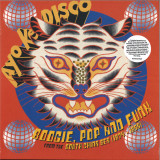
VARIOUS - Ayo Ke Disco - Boogie, Pop&Funk From The South China Sea (1974-88)

‘Ayo Ke Disco’ (meaning ‘Let’s go to the disco’ in Malay
and Indonesian) celebrates the musical identities
emerging from the newly independent countries in
South-East Asia during the 1970s and 80s.
Soundway general manager Alice Whittington, aka
Norsicaa (DJ), selects 10 deep cuts from local labels,
officially reissued on vinyl for the first time – forming a
snapshot of the vibrant discotheques and live scenes
across Indonesia, Singapore, Thailand, Malaysia, Hong
Kong and the Philippines.

The artists featured here were known for exploring
traditional sounds alongside funk, disco, city-pop and
even political psych-rock, genres that were indicative
of the exciting but often turbulent period. But despite
the post-war backdrop of instability there came
unprecedented levels of economic prosperity. With a
hopeful buzz filling the air, the music scene was helping
lead the way in reshaping the new identities of the
region.
OVERVIEW:
FOR FANS OF:
Sound of Siam compilations, Priscilla Chan, Lovin’ Mighty
Fire compilation, Tanamur City compilation

No en stock

Haga su pedido ahora y le encargaremos el artículo en nuestro proveedor.

20,59

Ültimo hace: 59 Días
Jungle By Night - Synergy LP 2x12"

Jungle By Night

Synergy LP 2x12"

2x12inchVVNL49521
V2
13.09.2024

In their musical journey spanning 15 years, Jungle by Night always knew their music isn't about individual talent, but in the blend of all elements its members bring to the table. This realization birthed the theme of their seventh album, “Synergy”. With the mantra "the whole is greater than the sum of its parts" echoing in their minds, Jungle by Night embarked on a mission to make an album that is recorded right in the moment, and as live as possible, to capture the energy between musicians. And to take it a step further, they threw open the doors of their studio in Amsterdam and invited some of Holland’s most prolific vocalists such as: Spinvis, Sef, Merol, Pitou, and Meral Polat. Each vocalist brought their unique style to the mix, infusing the tracks with depth and emotion. Recorded in their beloved studio in Amsterdam Noord, "Synergy" captures the essence of Jungle by Night's creative spirit. Here, imperfection is embraced, and spontaneity reigns supreme. It's about capturing the energy of the moment, where music comes alive in all its vibrant glory. So, dive into the world of "Synergy" and experience the crazy world Jungle by Night, and friends. It's more than just an album – it's a testament to the beauty of coming together and creating something greater than the sum of its parts. Jungle by Night are seven Dutch guys who together form a live act to be reckoned with. This Amsterdam band consists of a lot of synths, drums, bass, guitar and percussion enhanced by a trumpet and trombone. From more brass-heavy earlier albums to a stronger focus on the electronic groove on their latest, they bravely go where no band has gone before and now find themselves in the goldilocks zone between analogue dance music, nu-disco, Krautrock, 70’s funk and 80’s electro. The transfer to a more electronically driven sound might have been a small step for this merry band of highly skilled musicians, but it became a giant leap for the people on the dance floor. Their radiant and energetic live shows have become the must-see festival act that festivalgoers all over Europe include as a staple in their concert schedule. They know this won’t be a show, it’ll be a downright party. It’s like that tree in the forest. Was it really a festival if you didn’t see Jungle by Night? What constitutes this ever-present attraction is the highly danceable and addicting build up of their set, in which they take their audience by the hand and lead them into the groove. What happens when you come out on the other side? Depends. Just know you won’t be the same.

Reservar13.09.2024

debe ser publicado en 13.09.2024

26,68
Sandro Brugnolini - Overground LP

Sonor Music Editions presents this restored issue of Maestro Sandro Brugnolini's Overground. This elusive masterpiece in library music captures the most impressive work, alongside Underground (1970), of the Italian composer and alto sax player.

Sandro Brugnolini was a prominent member of the Modern Jazz Gang, a famous Italian jazz group, during the 1950s and 60s, which also included Amedeo Tommasi, Cicci Santucci, and Enzo Scoppa. The group was active from 1956 to 1965 and produced some remarkable albums such as Miles Before And After (1960) and the original soundtrack from Gli Arcangeli (1962), which featured the renowned American jazz singer, Helen Merrill. Subsequently, he recorded many of the genre's most iconic releases, including Feelings (1974), albeit uncredited, and ventured into Psychedelic Lounge Funk and Progressive Jazz Beat tunes.

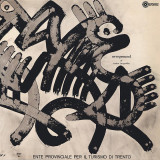
Overground was released on Sincro Edizioni Musicali in 1970 as the soundtrack to Enrico Moscatelli and Mario Rigoni's documentary Persuasione, commissioned by Ente Provinciale Per Il Turismo Di Trento, a local tourism board in Italy, with music composed by Sandro Brugnolini and Luigi Malatesta featuring some of the best musicians in Italy at the time like Angelo Baroncini and Silvano Chimento on guitars, Giorgio Carnini on piano and organ, Enzo Restuccia on drums, and Giovanni Tommaso on bass and effects. The music spans from underground Psychedelic Prog. Rock with swirling organs, trippy effects, and distorted fuzz guitars to sophisticated Lounge grooves with Avant-garde orchestrations.

The music has been transferred and remastered from the original master tapes. It has been lacquer cut in stereo by Jukka Sarapää at Timmion Cutting and packed in a thick cardboard sleeve featuring a fully restored painting by Umberto Mastroianni licensed by Centro Studi dell’Opera di Umberto Mastroianni

Reservar19.07.2024

debe ser publicado en 19.07.2024

27,69
A.R. Kane - Up home!

A.r. Kane

Up home!

12inchRGIRL134
ROCKET GIRL
24.06.2024

*REMASTERED ROUGH TRADE 4 TRACK E.P LIMITED TO JUST 500 COPIES*

Everything on “Up Home!” is bigger, richer; the guitars are huge, as though they’re being played through the clouds, massive gusts of blue-green noise that move across the stereo spectrum like weather systems. “Baby Milk Snatcher” is built around face-flattening dub bass, with glinting piano and shards of guitar ricocheting through the song. “W.O.G.S.” is delirious to the point of expiration; “One Way Mirror” is their attempt at weird, lopsided ‘anti-funk’, the song’s melody crushed by avalanches of six-string interference. And the closing “Up” is AR Kane’s masterpiece, a disembodied thud pulsing at its heart as a six-note guitar melody spirals ever onward, Ayuli’s voice lost in its own reverie, hymning escapism via references to Jamaican political activist Marcus Garvey’s ‘black star line’.
• Jon Dale, lead review in Uncut Magazine
who grew up together in Stratford, East London. From the off the pair were outsiders in the culturally mixed (cockney/Irish/West Indian/Asian) milieu of the East End, with Alex and Rudy’s folks first generation immigrants from Nigeria and Malawi, respectively. The two of them quickly developed and fostered an innate and near-telepathic mutual understanding forged in musical, literary and
artistic exploration. Like a lot of second-generation immigrants, they were ferocious autodidacts in all kinds of areas, especially around music and literature. Diving deep into the music of afro-futurist luminaries such as Sun Ra, Miles Davis, Lee Perry and Hendrix, as well as devouring the explorations of lysergic noise and feedback from contemporaries like Sonic Youth and Butthole Surfers, they also thoroughly immersed themselves in the alternate literary realities of sci-fi and ancient history (the fascination with the arcane that gave the band their name), all to feed their voracious cultural thirsts and intellectual curiosity.

It was seeing the Cocteau Twins performing on Channel 4 show the Tube that spurred A.R. Kane into being - “They had no drummer. They used tapes and technology and Liz Fraser looked completely otherworldly with those big eyes. And the noise coming out of Robin’s guitar! That was the ‘Fuck! We could do that!
The duo debuted with the astonishing ‘When You’re Sad’ single for One Little Indian in
1986. Immediately dubbed a ‘black Jesus & Mary Chain’ by a press unsure of WHERE to put a black band clearly immersed in feedback and noise, what was immediately apparent for listeners was just how much more was going on here – a tapping of dub’s stealth and guile, a resonant umbilicus back to fusion and jazz, the music less a conjuration of past highs than a re-summoning of lost spirits.

The run of singles and EPs that followed picked up increasingly rapt reviews in the press, but it was the ‘Up Home EP’ released in 1988 on their new home, Rough Trade that really suggested something immense was about to break. SimonReynolds noted the EP was: Their most concentrated slab of iridescent awesomeness and a true pinnacle of an era that abounded with astounding
landmarks of guitar-reinvention, A.R. Kane at their most elixir-like.

If anything, the remastered ‘Up Home’ is even more dazzling, even more startling than it was when it first emerged, and listening now you again wonder not just about how many bands christened ‘shoegaze’ tried to emulate it, but how all of them fell so far short of its lambent, pellucid wonder. This
remains intrinsically experimental music but with none of the frowning orthodoxy those words imply. A.R. Kane, thanks to that second generation auto-didacticism were always supremely aware about the interstices of music and magic, but at the same time gloriously free in the way they explored that connection within their own sound, fascinated always with the creation of ‘perfect mistakes’ and the possibilities inherent in informed play.

No en stock

Haga su pedido ahora y le encargaremos el artículo en nuestro proveedor.

14,24

Ültimo hace: 22 Meses
Joker - Live At Sonar 2009 (TAPE)

Joker

Live At Sonar 2009 (TAPE)

CassetteNSRTAPE007
Never Sleep
15.03.2024

Never Sleep charity tape series continues with a legendary recording from the world famous Mary Anne Hobbs stage at Sonar Festival.

UK phenomenon Joker encapsulates the era perfectly with his signature "Purple" sound and Dubstep sonics. A rowdy late night work out of his own productions, a rare dub from Skream, Bristolian funk from Gemmy and classic Mala.

Hosted by an enthralled Gaslamp Killer and beautifully captures the feeling of the infamous stage. Timeless, cutting edge and a slight hint of nostalgia for any Sonar Festival aficionados.

All proceeds go to Bristol based charity “The Cause" who help young locals in the creative arts.

Reservar15.03.2024

debe ser publicado en 15.03.2024

17,02
VARIOUS - MERENGUE TIPICO : NUEVA GENERACION ! LP

Merengue Típico: Nueva Generación! delves into the heart of Dominican merengue, a genre whose significance often eludes the spotlight. Bongo Joe's venture into unexplored terrain takes us to the Caribbean, specifically the Dominican Republic, shedding light on its musical tapestry. Curated by Xavier Daive, aka Funky Bompa, the compilation unveils rare '60s and '70s gems, providing a glimpse into a transformative period following the fall of the Trujillo regime.

With over 20 years in the Dominican Republic, Xavier Daive meticulously sources original 45s, offering a snapshot of merengue's evolution during a creatively charged era post-Trujillo. The genre's roots, dating back to the 19th-century Dominican Republic, predate salsa, establishing its unique identity with the introduction of accordions via German trade ships. The genre's classic típico configuration emerged in the mid-'60s, leaving a lasting impact on its evolution.

Focused on the explosive '60s and '70s merengue típico scene, influenced by genre pioneers like “Tatico” Henríquez and Trio Reynoso, the compilation showcases technical finesse and high-speed rhythms. Tracks like Rafaelito Román’s "Que Mala Suerte" embody the genre's infectious energy. Aristides Ramírez’s "Los Lanbones" adds a touch of humor, cautioning against pub freeloaders. Merengue Típico: Nueva Generación transcends the realms of a typical reissue; it's an immersive journey into mthe roots of Dominican merengue, expanding its narrative beyond borders to enrich the global musical landscape.

This compilation goes beyond individual tracks, providing a historical and cultural context, enriching our understanding of the genre's evolution in the Dominican Republic during a crucial period. Designed for both connoisseurs and wild dancefloors, this compilation is not only a historical and cultural exploration but also a treasure trove for DJs seeking to infuse their sets with the vibrant rhythms of merengue típico.

Reservar

El artículo no se ha publicado. Tú puedes reservar ahora el artículo y después de ser pagado se te será enviado.

21,81
Various - Le Moustache Conspiracy Lp

Born from a virtual encounter in lockdown between two Parisian neighbors, the DJ/producer Prosper and saxophonist Le Marabout, “Le Moustache Conspiracy” is a playful and deeply joyous album, pulling freely from the Afro, Funk, Disco, Hip-Hop, Oriental and Electro influences of the two artists. The iconoclastic DJ Romain “Prosper” Coolen, fervent purveyor of no holds barred euphoria on the dance floor, and the versatile saxophonist, composer and jack-of-all-trades Johann “Le Marabout” Guihard offer us a lavish, eclectic, uninhibited, coherent and furiously groovy album!

No en stock

Haga su pedido ahora y le encargaremos el artículo en nuestro proveedor.

15,34

Ültimo hace: 2 Años
VARIOUS - MERENGUE TíPICO: NUEVA GENERACIóN! LP

Merengue Típico: Nueva Generación! delves into the heart of Dominican merengue, a genre whose significance often eludes the spotlight. Bongo Joe"s venture into unexplored terrain takes us to the Caribbean, specifically the Dominican Republic, shedding light on its musical tapestry Curated by Xavier Daive, aka Funky Bompa, the compilation unveils rare "60s and "70s gems, providing a glimpse into a transformative period following the fall of the Trujillo regime.

Reservar02.02.2024

debe ser publicado en 02.02.2024

25,42
Pablo Schneider - Sobre La Hierba Virgen LP

Mega rare soundtrack to the obscure Venezuelan sexploitation film “Sobre la Hierba… Virgen” originally released in 1976 and almost impossible to find in any condition. The album includes a wide variety of music to enjoy, from thrilling psychedelic jazz-funk to spacey experimental tracks, killer drum-breaks or romantic instrumental tunes. Composer and keyboard player Schneider had an outstanding body of work for the TV/film industry and recorded with the likes of Baby Bell, Grupo Syma, Vytas Brenner as well as huge mainstream artists like José Luis Rodríguez and Pecos Kanvas. He was also producer to Phirpo Y Sus Caribes’s highly collectable only LP, a brilliant Afro-Latin funk masterpiece. His much sought-after 1975 solo album on Polydor anticipated the sounds comprised on “Sobre la Hierba… Virgen”, featuring a variety of exotic arrangements ranging from Latin mood to jazz funk to electronic psychedelic. “Sobre la Hierba… Virgen” is one of the best recordings of Pablo Schneider at the peak of his career.

Reservar29.12.2023

debe ser publicado en 29.12.2023

24,79
VARIOUS - ASIAN DISCO LP

Various

ASIAN DISCO LP

12inchABERRAN006
Aberrant Records
10.11.2023

Aberrant record label puts out cool Asian disco tunes on May 28: “Disco Divas, Funky Queens and Psych Ladies from Asia from the 70s to the early 90s"!

Exotic jewels from Thailand, Taiwan, Malaysia, Singapore, Hong Kong, Indonesia and South Korea, from Asian Funk to Psych tinged awesomeness, Disco madness and much more.

No en stock

Haga su pedido ahora y le encargaremos el artículo en nuestro proveedor.

23,32

Ültimo hace: 2 Años
Sharhabil Ahmed - The King Of Sudanese Jazz

We're super happy to announce our 13th release by Sharhabil Ahmed, the actual King of Sudanese Jazz (he actually won that title in a competition in the early 1970s). Sonically it sounds very different from what Jazz is understood to sound like outside of Sudan. It’s an incredible unique mix of rock’n’roll, funk, surf, traditional sudanese music and influences from Congolese sounds. Original copies of Sharhabil recordings are often hard to find, so we’re happy they will now be widely available. “Argos Farfish” which was featured on our last comp amassed close to 400.000 plays already.

No en stock

Haga su pedido ahora y le encargaremos el artículo en nuestro proveedor.

20,13

Ültimo hace: 13 Meses
Hamid El Shaeri - The SLAM! Years (1983-1988) LP

If you were to ask for a defining Habibi Funk track, there are a few that come to mind: from Fadoul’s “Sid Redad,” Dalton’s “Soul Brother” to Ahmed Malek’s “Omar Gatlato.” However, none are as widely connected with us at this point as Hamid Al Shaeri’s “Ayonha.” We heard the track for the first time when we were working on selecting tracks for your first compilation and we instantly loved it. We obviously had heard of Hamid El Shaeri’s music before, but only material from his Al Jeel phase when he was already the full-blown
superstar he is now.

Listening to his releases from the early 1980’s opened a whole new door for us. At the time, Hamid had just left Libya to pursue his career in Egypt via a detour in London, where he recorded his first album. Hamid’s distinct sound of the sound is quintessentially reliant on heavy synths and so it was particularly important to purchase these synths in a timely manner. “Whenever a new one synthesizer would come out, we would have to buy it immediately, otherwise someone else would get their hands on that sound.” London also played an important role for Hamid as a musical epicenter.

He fondly reminisces about the many live shows he attended there, including some of the biggest international musicians like Freddie Mercury and Michael Jackson. After returning to Cairo where he also recorded his following albums, he connected with SLAM! for the
release of his debut, laying the foundation of a collaboration that lasted for 5 albums. Luckily, we were able to connect with Hamid through our friend Youssra El Hawary, whose extensive network has opened many doors for us within the Egyptian music scene. We met Hamid for the first time probably in 2016 at his office / rehearsal studio in the outskirts Cairo. We were expecting a larger-than-life
character in-line with his status as a certified superstar, yet the actual person turned out to be very approachable and super easy to connect with. He liked the idea of an effort to amplify his early works again,
which, when originally released, were far from an economic success.

While he was down to assist with an interview and his blessing for the project he also told us that for any license we needed to speak with the original label SLAM! who released these songs, still held the rights and also remained in business over the decades though they didn’t actively release any new music. Hany Sabet had started SLAM! records in the early 1980s and focused on cassette tape releases, the
format that expedited the success of a new generation of record labels in Egypt. By the mid 1980’s, SLAM! had become one of the most successful and economically dominant record labels in Egypt, with Hamid El Shaeri being just one of their key artists, alongside Mohamed Mounir, Hanan, Hakim, Mustafa Amar and many more. Luckily, Hany Sabet turned out to be a friend of our colleague Malak Makar’s father, which probably helped to warm him to the idea of licen- sing “Ayonha” to this - in the scale of his world - tiny label
from Germany. Eventually “Ayonha” ended up becoming a widely successful release and either Hany or we brought up the idea of a full album dedicated to Hamid El Shaeri’s work on SLAM!.


"Maktoub Aleina” is the first single and will be released January 14th. Following the massive success of "Ayonha,” “Maktoub Aleina” is another mid-tempo groover with a beautiful, synth-forward melody, that brings together a lovely combination of soul, disco and Arabic pop music of the highest order, giving a taste of full album. The second single, “Yekfini Nesma Sotak” will be released January 28th and combines Hamid’s unique formula of soul and pop, held together by a catchy synth melody. “Yekfini Nesma Sotak” picks up the
pace a bit, making the uplifting mood of the track even more powerful. Third single, arriving February 11th, is “Dari Demou’ek,” one of the stand out tracks of Hamid’s early recordings done for SLAM! in the early 1980s. Dominated by a disco infused bassline, the track offers a lot of space of the funky production to shine while Hamid inserts his vocals at all the right moments. A masterpiece of disco touched by Arabic pop music.

Full album arrives February 25th. This release is dedicated to Hany Sabet, the founder of SLAM! and his wife Rosemary Jane Sabet (who
took the photos we used for the cover and the booklet), who sadly passed away during the time it took us to prepare the release.
Vinyl comes with an extensive booklet with an interview with Hamid as well as unseen photos

No en stock

Haga su pedido ahora y le encargaremos el artículo en nuestro proveedor.

21,81

Ültimo hace: 13 Meses
Hamid El Shaeri - The SLAM! Years (1983-1988) LP

If you were to ask for a defining Habibi Funk track, there are a few that come to mind: from Fadoul’s “Sid Redad,” Dalton’s “Soul Brother” to Ahmed Malek’s “Omar Gatlato.” However, none are as widely connected with us at this point as Hamid Al Shaeri’s “Ayonha.” We heard the track for the first time when we were working on selecting tracks for your first compilation and we instantly loved it. We obviously had heard of Hamid El Shaeri’s music before, but only material from his Al Jeel phase when he was already the full-blown
superstar he is now.

Listening to his releases from the early 1980’s opened a whole new door for us. At the time, Hamid had just left Libya to pursue his career in Egypt via a detour in London, where he recorded his
first album. Hamid’s distinct sound of the sound is quintessentially reliant on heavy synths and so it was particularly important to purchase these synths in a timely manner. “Whenever a new one synthesizer would come out, we would have to buy it immediately, otherwise someone else would get their hands on that sound.” London also played an important role for Hamid as a musical epicenter.

He fondly reminisces about the many live shows he attended there, including some of the biggest international musicians like Freddie Mercury and Michael Jackson. After returning to Cairo where he also recorded his following albums, he connected with SLAM! for the
release of his debut, laying the foundation of a collaboration that lasted for 5 albums. Luckily, we were able to connect with Hamid through our friend Youssra El Hawary, whose extensive network has opened many doors for us within the Egyptian music scene. We met Hamid for the first time probably in 2016 at his office / rehearsal studio in the outskirts Cairo. We were expecting a larger-than-life
character in-line with his status as a certified superstar, yet the actual person turned out to be very approachable and super easy to connect with. He liked the idea of an effort to amplify his early works again,
which, when originally released, were far from an economic success.

While he was down to assist with an interview and his blessing for the project he also told us that for any license we needed to speak with the original label SLAM! who released these songs, still held the rights and also remained in business over the decades though they didn’t actively release any new music. Hany Sabet had started SLAM! records in the early 1980s and focused on cassette tape releases, the
format that expedited the success of a new generation of record labels in Egypt. By the mid 1980’s, SLAM! had become one of the most successful and economically dominant record labels in Egypt, with Hamid El Shaeri being just one of their key artists, alongside Mohamed Mounir, Hanan, Hakim, Mustafa Amar and many more. Luckily, Hany Sabet turned out to be a friend of our colleague Malak Makar’s father, which probably helped to warm him to the idea of licen- sing “Ayonha” to this - in the scale of his world - tiny label
from Germany. Eventually “Ayonha” ended up becoming a widely successful release and either Hany or we brought up the idea of a full album dedicated to Hamid El Shaeri’s work on SLAM!.


"Maktoub Aleina” is the first single and will be released January 14th. Following the massive success of "Ayonha,” “Maktoub Aleina” is another mid-tempo groover with a beautiful, synth-forward melody, that brings together a lovely combination of soul, disco and Arabic pop music of the highest order, giving a taste of full album. The second single, “Yekfini Nesma Sotak” will be released January 28th and combines Hamid’s unique formula of soul and pop, held together by a catchy synth melody. “Yekfini Nesma Sotak” picks up the
pace a bit, making the uplifting mood of the track even more powerful. Third single, arriving February 11th, is “Dari Demou’ek,” one of the stand out tracks of Hamid’s early recordings done for SLAM! in the early 1980s. Dominated by a disco infused bassline, the track offers a lot of space of the funky production to shine while Hamid inserts his vocals at all the right moments. A masterpiece of disco touched by Arabic pop music.

Full album arrives February 25th. This release is dedicated to Hany Sabet, the founder of SLAM! and his wife Rosemary Jane Sabet (who
took the photos we used for the cover and the booklet), who sadly passed away during the time it took us to prepare the release.
Vinyl comes with an extensive booklet with an interview with Hamid as well as unseen photos

No en stock

Haga su pedido ahora y le encargaremos el artículo en nuestro proveedor.

23,24

Ültimo hace: 3 Años
A.R. Kane - A.R. Kive LP 4x12"

A.r. Kane

A.R. Kive LP 4x12"

4x12inchRGIRL133
ROCKET GIRL
08.09.2023

A.R. Kive collates the three most astonishing works from that most miraculous of duos - A.R. Kane - comprising the ‘Up Home’ EP from 1988 that signified the band’s dawning realisation of their own powers and possibilities, their legendary debut LP ‘sixty nine’ (1988) and its kaleidoscopic, prophetic double-LP follow up ‘i’ (1989).

In founder-member Rudy Tambala’s new remastering, the music on these pivotal transmissions from the birth of dream pop, have been reinvigorated and re-infused with a new power, a new depth and intimacy, a new height and immensity. Vivid, timeless and yet always timely whenever they’re recalled, these records still force any listener to realise that despite the habits of retrospective myth-making and the
safe neutering effects of ‘genre’, thirty years have in no way dimmed how resistant and dissident to critical habits of categorisation A.R. Kane always were. Never quite ‘avant-pop’ or ‘shoegaze’ or ‘post-rock’ or any of those sobriquets designed to file and categorise, A.R. Kive is a reminder that those genres had to be coined, had to be invented precisely to contain the astonishing sound of A.R. Kane, because
previous formulations couldn’t come close to their sui generis sound and suggestiveness. This is music that pointed towards futures which a whole generation of artists and sonic explorers would map out. Now beautifully repackaged, remastered and fleshed out with extensive sleeve notes and accompanying materials, ‘A.R. Kive’ reveals that 35 years on it’s still a struggle to defuse the revolutionary and inspirational possibility of A.R. Kane’s music.

A.R. Kane were formed in 1986 by Rudy Tambala and Alex Ayuli, two second-generation immigrants who grew up together in Stratford, East London. From the off the pair were outsiders in the culturally mixed (cockney/Irish/West Indian/Asian) milieu of the East End, with Alex and Rudy’s folks first generation immigrants from Nigeria and Malawi, respectively. The two of them quickly developed and fostered an innate and near-telepathic mutual understanding forged in musical, literary and artistic exploration. Like a lot of second-generation immigrants, they were ferocious autodidacts in all kinds of areas, especially around music and literature. Diving deep into the music of afro-futurist luminaries such as Sun Ra, Miles Davis, Lee Perry and
Hendrix, as well as devouring the explorations of lysergic noise and feedback from contemporaries like Sonic Youth and Butthole Surfers, they also thoroughly immersed themselves in the alternate literary realities of sci-fi and ancient history (the fascination with the arcane that gave the band their name), all to feed their voracious cultural thirsts and intellectual curiosity.

It was seeing the Cocteau Twins performing on Channel 4 show the Tube that spurred A.R. Kane into being - “They had no drummer. They used tapes and technology and Liz Fraser looked completely otherworldly with those big eyes. And the noise coming out of Robin’s guitar! That was the ‘Fuck! We could do that! We could express ourselves like that!’ moment”, recalls Tambala - and through a mix of
confidence, chutzpah, ad hoc almost-mythical live shows and sheer innocent will the duo debuted with the astonishing ‘When You’re Sad’ single for One Little Indian in 1986. Immediately dubbed a ‘black Jesus & Mary Chain’ by a press unsure of WHERE to put a black band clearly immersed in feedback and noise, what was immediately apparent for listeners was just how much more was going on here - a
tapping of dub’s stealth and guile, a resonant umbilicus back to fusion and jazz, the music less a conjuration of past highs than a re-summoning of lost spirits.
The run of singles and EPs that followed picked up increasingly rapt reviews in the press, but it was the ‘Up Home EP’ released in 1988 on their new home, Rough Trade that really suggested something immense was about to break. Simon Reynolds noted the EP was: Their most concentrated slab of iridescent awesomeness and a true pinnacle of an era that abounded with astounding landmarks of guitar-reinvention, A.R. Kane at their most elixir-like.

If anything, the remastered ‘Up Home’ that forms the first part of ‘A.R. Kive’ is even more dazzling, even more startling than it was when it first emerged, and listening now you again wonder not just about how many bands christened ‘shoegaze’ tried to emulate it, but how all of them fell so far short of its lambent, pellucid wonder. This remains intrinsically experimental music but with none of the frowning orthodoxy those words imply. A.R. Kane, thanks to that second generation auto-didacticism were always supremely aware about the interstices of music and magic, but at the same time gloriously free in the way they explored that connection within their own sound, fascinated always with the creation of ‘perfect mistakes’ and the possibilities inherent in informed play.

‘sixty nine’ the group’s debut LP that emerged in 1988 had
critics and listeners struggling to fit language around A.R. Kane’s sound. As a title it was telling - the year of ‘Bitches Brew’, the year of ‘In A Silent Way’, the erotic möbius between two lovers - and as originally coined by the band themselves, ‘dream pop’ (before it became a free-floating signifier of vague import) was entirely apposite for the music A.R. Kane were making. Crafted in a dark small basement studio in which Tambala recalls the duo had “complete freedom - We wanted to go as far out as we could, and in doing so we discovered the point where it stops being music”. There was an irresistibly dreamy, somnambulant, sensual and almost surreal flow to ‘sixty nine’s sound, but also real darkness/dankness, the ruptures of the primordial and the reverberations of the subconscious, within the grooves of remarkable songs like ‘Dizzy’ and ‘Crazy Blue’. Alex’s plangent vocals floated and surged amidst exquisite peals of refracted feedback but crucially there was BASS here, lugubrious and funky and full of dread, sonic pleasure and sonic disturbance crushed together to make music with a center so deep it felt subcutaneous, music constructed from both the accidental and the deliberate, generous enough to dance with both serendipity and chaos. ‘sixty nine’ remains - especially in this remastered iteration - ravishing, revolutionary.

The final part of this ‘A.R. Kive’ contains 1989’s astonishing double-LP ‘i’ which followed up on ‘sixty nine’s promise and saw the duo fully unleash their experimental pop sensibilities over 26 tracks, plunging the A.R. Kane sound into a dazzlingly kaleidoscopic vision of pop experiment and play. Suffused with new digital technologies and combining searingly sweet and danceable pop with perhaps the duo’s strangest and boundary-pushing compositions, the album did exactly what a great double-set should do - indulge the artists sprawling pursuit of their own imaginations but always with a concision and an ear for those moments where pop both transcends and toys with the listeners expectations. Jason Ankeny has noted that “In retrospect, ‘i’ now seems like a crystal ball prophesying virtually every major musical development of the 1990s; from the shimmering techno of ‘A Love from Outer Space’ to the liquid dub of ‘What’s All This Then?’, from the alien drone-pop of ‘Conundrum’ to the sinister shoegazer miasma of ‘Supervixens’ — it’s all here, an underground road map for countless bands to follow.” Perhaps the most overwhelmingly all-encompassing transmission from A.R. Kane, ‘i’ bookended a three year period in which the duo had made some of the most prophetic and revelatory music of the entire decade.

After ‘i’ the duo’s output became more sporadic with Tambala and Ayuli moving in different directions both geographically and musically, with only 1994’s ‘New Clear Child’ a crystalline re-fraction of future and past echoes of jazz, folk and soul, before the duo went their separate ways. Since then, A.R. Kane’s music has endured, not thanks to the usual sepia’d false memories that seem to maintain interest in so much of the musical past, but because those who hear A.R. Kane music and are changed irrevocably, have to share that universe which A.R. Kane opened up, with anyone else who will listen. Far more than other lauded documents of the late 80s it still sounds astonishingly fresh, astonishingly livid and vivid and necessary and NOW.

Reservar08.09.2023

debe ser publicado en 08.09.2023

105,84
Ruby Wilson / Queen Emily - Love Has Come / Throw Away Me

An unmissable pairing of Texan-born soul queens! Ruby Wilson was Memphis based for most of her life whilst Emily spent her formative years in Houston before relocating to Stockton, CA, to raise her family. Both were signed to Malaco Records in Jackson, MS, where these two timeless example of Southern Soul were recorded nearly 30 years apart and now appear on 7” vinyl for the first time.
Ruby Wilson first came to our attention in the mid-70s with two singles on T.K. subsidiary Glades, with Number One In Your Heart and the funkier Sky High both still sounding good today. She signed to Malaco during their most fruitful period, and her self-titled album in 1981, from which this classy below-midpaced selection comes, despite being a typically polished affair never reached the highs with the label that Jewel Bass, Fern Kinney, and of course Dorothy Moore had set over the previous few years. It remained her only outing with them, but she went on to make a further three albums in the late 80s with the Hot Cotton Jazz Band, one with the Climax Jazz Band, and finally back on her own A Song For You (2000 Cadre Ent.) and Show You A Good Time (2005 Unkut Music). She became an accomplished actress and was also known as the Queen Of Beale Street for her many club performances in Memphis. Sadly, Ruby died in 2016, but hopefully this release on Jai Alai will help us remember what a talent she really was.
Not only is Emily David an extraordinary talent, she is a remarkable woman too. Her only album Queen Emily was a direct result of her finishing as a semi-finalist of America’s Got Talent in 2008 at the tender age of 40. She was no stranger to talent shows having won a Sammy Davis Jr award in 1999, but back then, as a single-mother decided to put her singing career on hold to bring up her two daughters. One day her troubled sister arrived to stay but left without taking her two boys with her, so Emily felt she had to bring up her nephews as well. Her dreams of a musical career had evaporated but years later her daughters encouraged her to try once again.
It was almost a year after America’s Got Talent that Malaco boss Tommy Couch Jr. called out of the blue and offered her a contract without meeting her. As Queen Emily, a digital 4-track EP was released in the US, but her eponymous CD album, bizarrely released by Malaco in the UK before the US, is one of the best examples of 21st century Southern Soul, steeped with the label’s trademark live instrumentation by the Muscle Shoals Horns Rhythm Section and contains a number of polished standards such as Use Me, Angel In Your Arms, I Betcha Didn’t Know That and Going Crazy. However, it is the George Jackson-penned ballad Throw Away Me that really stands out and deservedly received critical acclaim in the UK at the time. It now gets a very welcome vinyl debut on Jai Alai and makes for a fabulous pairing.

Reservar12.05.2023

debe ser publicado en 12.05.2023

19,12
Mark Hawkins - venn Diagram 2x12"

Mark Hawkins

venn Diagram 2x12"

2x12inchAUSLP017
Aus Music
05.05.2023

Mark Hawkins readies ‘Venn Diagram’ album for Aus Music this May.
Mark Hawkins’ early releases on labels such as Djax Up Beats and Ugly Funk lit flares in the world of
underground techno, with a sense of humour and tougher-than-thou sonic palette enforced via his jacking live
sets. Across the following decades, Mark has delivered razor sharp cuts that encompass pretty much
anything that has an electronic heart - leaving his own unique trail for others to follow via his work for labels
as diverse as Dixon Avenue Basement Jams, Sonic Mind, Mistress Recordings, Houndstooth and Aus.

With his latest album, it feels like Mark has pushed ahead with a change of direction he started with 2021’s
‘The New Normal’. ‘Venn Diagram’ carries on this journey into uncharted lands; molten, distorted drum
assaults weave around glistening melodies, kitchen sink soul glides below fractured sound pools. Opener
‘Verblex Oscillos’ immediately demands your attention grabbing, with a so-happy-it’s-sad melody spiralling
around a cascade of tough-as-fuck dance floor destroying beats, along with ‘Isolated’s urgent combination of
strings, acid and chicago-tough electro beats.

Other cuts on the album share a similar approach, ‘Maladayfun Friction’s restless energy derives from a fusion
of skittering drums and deranged synths and ‘Still Have Time’s dreamy super saw pads and plaintive vocal
espouse a kind of wasted elegance, roaming the city nightlife in a Gucci dress and Doc Martin boots.
‘Nlasckhdsjk’ and ‘Frederikalstublieft’ propel forward with such a sleek and effervescent aesthetic, recalling
fast drives along picturesque European highways or heady take-offs to unknown urban territories. The
aesthetic becomes more elegant on the album’s centrepoint tracks ‘Rebula Conundrum’ and ‘Nlasckhdsjk’,
where optimistic bleeps, bass and 707 drums underpin jazzy chords and soaring leads.

Other tracks show the arc of Mark’s direction of travel, with soulful vocals that share a well of deep-rooted
optimism that was so evident on his breakthrough 2016 Social Housing album. ‘L.O.V.E.’ breaks into
post-Sophie territory with a catchy modulated vocal joyfully two-stepping across to the nightclub bar and
‘How Do I Know’ providing a heart rending torch song for 6am kicking-out-time refugees to help them find
their way back home.

No en stock

Haga su pedido ahora y le encargaremos el artículo en nuestro proveedor.

25,50

Ültimo hace: 2 Años
Artículos por página
N/ABPM
Vinyl