First time on vinyl!
Newly remastered. LP housed in a gatefold jacket.
Featuring Herbie Hancock, Martha Reeves, Alphonse Mouzon, Chuck Rainey, Patryce “Choc’let” Banks, Carlos Morales, and members of The Pointer Sisters.
In the 1970s, Betty Davis defied genre and gender by pushing her voice to extremes and embracing the erotic. She articulated a kind of pre-punk, funk-blues fusion that had yet to be normalized in mainstream music – a style that few musicians have come close to replicating. As one of the first Black women to write, arrange, and produce her own albums, Betty was a visionary who disregarded industry boundaries and constraints. Raw, unapologetic and in full control, Betty paved the way for generations of future artists who said “funk you” to the music industry and social norms.
In 1979, when Davis entered an L.A. studio to record her fifth and final album, she was reeling from a series of setbacks. Three years earlier, after recording her fourth album, Is It Love Or Desire, Davis was dropped from her label and the LP was subsequently shelved. In 1978, her beloved band Funk House went their separate ways. Looking for a fresh start, Davis relocated to Hollywood to focus on songwriting. Before long, British manager Simon Lait (Toni Basil), offered to fund her next project.
With renewed vigor, Davis reunited with former Funk House guitarist Carlos Morales and brought together industry veterans like fusion drummer Alphonse Mouzon and session bassist Chuck Rainey. Old friends Anita and Bonnie Pointer (The Pointer Sisters) and Patryce “Choc’let” Banks joined Davis on vocals, as did Motown legend Martha Reeves. The resulting album, Crashin’ From Passion, was her most musically diverse, blending elements of reggae and calypso (“I’ve Danced Before”), jazz (“Hangin’ Out in Hollywood,” “Tell Me a Few Things”), dark synth-pop (“She’s a Woman”), and even disco (“All I Do Is Think of You”). Equally exploratory are Davis’ vocals, as she trades in her signature sass and snarls for more nuanced stylings.
Among the album’s few funk tracks is “Quintessence of Hip,” in which Davis hails musicians like Bob Dylan, Billie Holiday, Stevie Wonder, and John Coltrane, while deftly integrating elements of their work. The song also offers a moment of stark vulnerability, as she sings, “Isn’t rich? Isn’t it queer? Losing my timing so late in my career.” It would prove to be a prophetic line in the months to follow.
The mixing process was mired by artistic differences and then cut short, amid the death of Davis’ beloved father. Bereft and exasperated, Davis returned home for the funeral, setting into motion her retirement from the music industry. Crashin’ From Passion, meanwhile, would be shelved for 15 years and licensed for a CD-only release, without Davis’ consent, in the ‘90s. This 2023 edition of the album, made with Davis’ full approval and cooperation, marks its first official release and first time ever on vinyl. The package was designed by GRAMMY®-winning artist, Masaki Koike, while the album cover features an incredible shot of Betty captured in London in the mid-1970s by renowned photographer Kate Simon.
Crashin’ From Passion was remastered by Dave Cooley at Elysian Masters and pressed on vinyl at Record Technology, Inc. (RTI). The accompanying booklet includes a treasure trove of rare photos from the era, plus lyrics, and new liner notes by writer, ethnomusicologist, and Betty’s close friend, Danielle Maggio, who integrates interviews that she conducted with Davis, marking her last ever interviews.
Suche:la pointe
Das dritte Album von Marina Allen mit starkem und lebendigem Songwriting, wunderschön instrumentiert, hochmelodisch und mit einer unvergleichlichen lyrischen Perspektive vorgetragen. Mit zwei gefeierten Alben hat die in Los Angeles lebende Singer-Songwriterin eine frühe Ernte eingefahren, aber ihr drittes Studioalbum birgt den bislang größten Ertrag. Verglichen mit den anschwellenden Kompositionen von Allens zweitem Album Centrifics oder der unschuldigen Ruhe von Candlepower, ist die Welt von Eight Pointed Star tiefgreifender und offener. Schimmernende Gitarren verziehren die Canyons und Staub wird von der rot vernarbten Erde aufgewirbelt. Allens Gesang ist rein und kristallin, während die Instrumentierung reichhaltig ist und vor Helligkeit nur so strotzt. Man kann hören, wie die Musik Zufriedenheit ausstrahlt und der Produktion von Chris Cohen Raum für eine volle Band bietet. Allens künstlerische Zuneigung gilt vor allem Sängern, die ihrer Meinung nach wirklich singen können, von The Roches bis Karen Dalton, Joanna Newsom und Meredith Monk. Aber diese Einflüsse verschwinden wie Gespenster auf dem Dachboden, wenn sie selbst zu singen beginnt. Allen hat eine Stimme, die es mit dem Kanon aufnehmen kann - unnachahmlich - und sie hat noch nie so entschlossen geklungen wie hier. Ein strahlender, klarsichtiger moderner Klassiker des alternativen Folk und Americana. Für Fans von Aldous Harding, Fiona Apple und Waxahatchee. Klassich schwarzes Vinyl mit DLC oder Digisleeve CD.
- I Guess I'll Have To Change My Plan
- I Could Have Told You
- Stormy Weather
- That Old Feeling
- My One And Only Love
- As Time Goes By
- Imagination
- How Deep Is The Ocean
- Here's That Rainy Day
- Where Is The One
- Day In - Day Out
- I Couldn't Sleep A Wink Last Night
- Sentimental Journey
- Somewhere Along The Way
- These Foolish Things (Remind Me Of You)
- Stardust
- Young At Heart
- Polka Dots And Moonbeams
- All The Way
- Nevertheless
- On A Little Street In Singapore
- Melancholy Mood
- That Old Black Magic
- Come Rain Or Come Shine
- Autumn Leaves
- Why Try To Change Me Now
- Full Moon And Empty Arms
- Where Are You
- What'll I Do
- That Lucky Old Sun
- I'm A Fool To Want You
- The Night We Called It A Day
Bob Dylan released “Triplicate”, his third collection of pop standards. Like Dylan’s earlier albums, “Shadows in the Night” (2015) and “Fallen Angels”(2016), most of the songs have an association with the great Frank Sinatra. This double LP presents Frank Sinatra’s versions of many of the songs Dylan sang in these three forays into The Great American Songbook. Orchestras accompanying the iconic singer are led by Nelson Riddle, Gordon Jenkins, Billy May, Alex Stordahl, and Tommy Dorsey, among others. Dylan once related this about an encounter he had with Ol’ Blue Eyes: “He was funny, we were standing out on his patio at night and he said to me, ‘You and me, pal, we got blue eyes, we’re from up there,’ and he pointed to the stars. ‘These other bums are from down here.’ I remember thinking that he might be right.”
Andrea has his roots in the independent musical scene in the first decade of the 2000s. In addition to his compositional and live experience as the first Nadàr Solo drummer, he is one half of the Turin duo Anthony Laszlo with Anthony Sasso, ex guitarist and singer of Milena Lovesick. Andrea Laszlo De Simone made his debut in 2012 when he released his first homemade album, Ecce Homo. Recorded at home by makeshift means and accompanied by the following videos: Solo un uomo, 11:43, I nostri piccoli occhi, Perdutamente.
At the beginning of 2014, he met some experienced musicians from Turin’s underground scene that later, after a few months in a rehearsal room, became his band: Damir Nefat (guitar/backing vocals), Dani C (bass guitar/backing vocals), Filippo Cornaglia (drums/backing vocals), Zevi Bordovach (keyboards/backing vocals) and Anthony Sasso (keyboards/backing vocals/percussions).
Anticipated by the individual tracks Uomo Donna, Vieni a salvarmi and La guerra dei baci on June 9, 2017 - for 42Records - Uomo Donna came out. It’s Andrea Laszlo De Simone’s first real album, a well received work by both audience and critics. It also was pointed as one of the best albums of 2017 by several national music magazines.
Uomo Donna is a complex, articulate and vital album that lives in its own time - where past, present and future coexist. It’s a time in which a sonic world takes shape blending classic and modern, Italian songs with psychedelia, Battisti and Radiohead, Modugno and Verdena, the Beatles and Tame Impala, the magical flight of Claudio Rocchi and the earthly flight of IOSONOUNCANE.
The album was self-produced and then post-produced by Andrea in collaboration with Giuseppe Lo Bue, a sound engineer from Bologna. The recordings were made between October 2014 and the end of 2016 with experimental techniques straddling digital and analogic.
After playing in some important Italian festivals as Siren Festival and TOdays -- that earned him a special mention in the live scores by Rolling Stones -- on October 28, 2017 the first Uomo Donna album tour started in the clubs of the major Italian cities.
On November 30th 2017, Andrea Laszlo De Simone presented his video, Sogno l'amore, during the Torino Film Festival as a short film, shot in Sicily and directed by Francesca Noto and Andrea Laszlo De Simone.
On March 15th 2018 the music video of Gli uomini hanno fame was released, the most political song of the album, an overlook through ferocious human emotions, an eleven and fifty minutes trip within human nature portrayed even in its most ferocious instincts. The music video was directed by Andrea Laszlo De Simone and the mysterious duo Sans. The official cycle of Uomo Donna ends on 31 December 2018 with the music video of Sparite Tutti created by the creative collective Irene&Irene.
2019 was a year of new goals for Andrea, in fact, the album Uomo Donna leaves national borders and got a special mention on social media by the famous American band The Lumineers which included Andrea Laszlo De Simone and Uomo Donna among the most interesting discoveries of the international musical underground and inserts Solo un Uomo in the Spotify playlist “Inspirations”. A few days later, Solo un Uomo was broadcasted by KEXP Radio. On November 4th Andrea and his band were chosen to open for The Lumineers’ only Italian show at Alcatraz, in Milan.
On November 8th Andrea released a brand new work, digitally and on vinyl for 42Records, Immensità, a ‘suite’ of four singles: Immensità, Conchiglie, Mistero and La Nostra Fine. Turned into a medium-length film using Immensità as the soundtrack.
Immensità was presented with four special sold out concerts in Rome, Turin, Padua and Milan. For these shows Andrea Laszlo De Simone was accompanied on stage by a mixed orchestra composed of synths, electronics, choirs, strings and woodwinds. Classic and modern instruments that are intertwined in a nine elements formation: an immersive concert, a contemporary version of chamber music.
In March 2020 Immensità was released also in France, UK, Canada, Belgium and the United States with Ekleroshock/ Hamburger Records (Roster: Benjamin Clementine, Polo & Pan, Limousine and many others). The response of the transalpine press and media, sector and not, was unexpected: major French newspapers and magazines - from Le Monde to Liberation, Vanity Fair and Les Inrockuptibles - dedicated entire pages and rave reviews to Immensità and Andrea Laszlo De Simone. The track Immensità entered, after a few days, at the fourteenth rank of Spotify’s Top viral 50 playlist and broadcasted on France Inter and Radio Nova.
“Immensità” is a complex cross media work of music and images. A project divided into four chapters (the songs) for nine tracks (each chapter has a prologue or a conclusion). A true suite, using the classic term that best describes an instrumental composition in several stages, that can be enjoyed in its entirety only by listening to vinyl or digitally in the innovative single track format, without pauses: a single symphony of 25 minutes and 6 seconds.
In September 2020, Dal giorno in cui sei nato tu was released on all italian platforms, a song dedicated to Andrea’s children, a real love letter in the form of a small speech, where he tries to give them the three keys to approaching life: fantasy, music and irony. Martino, 8 years old, replies to his father’s love letter by making the video accompanying the song, created in Super 8. It's the story of the world through the eyes of the child. It is also an homage to the new little girl in family, Lucia.
"Listen to This." As the original working title for Bitches Brew, the instruction and invitation resonates to this day as the best way to approach a record that shattered conventions, altered music history, and, more than five decades after its original release, still sounds far ahead of its time. The aural Mount Rushmore of jazz fusion, Bitches Brew is rightly ranked by virtually every significant outlet among the 100 greatest albums ever made in any genre. Sewn together with vibrant colours, voodoo textures, and ethereal moods, the 1970 landmark emerges with supreme detail on Mobile Fidelity's definitive 180g 33RPM 2LP set.
Sourced from the original master tapes and pressed on 180g vinyl at RTI, this numbered-edition version of Bitches Brew joins the audiophile ranks of other essential Miles Davis sets reissued by Mobile Fidelity. Having established new possibilities for studio-recording techniques, the record can now be experienced to maximum degree by way of a pressing that widens and deepens the soundstage, opens up separation between instruments, and broadens the dynamic range. If ever a jazz album can be said to have gone to outer space and back, this is it.
Davis conceived Bitches Brew by having the musicians stand in a semi-circle, where he pointed at them with vague directions for tempo, solos, and cues. The collective improvisation and interplay spawned a galaxy of melodies and grooves later spliced together by producer Ted Macero. On this reissue, these creations take shape with utmost realism. Compositions stretch across black backgrounds and paint abstract canvasses on par with those of Axis: Bold As Love and Abraxas. Juxtaposed percussion, loose jams, and melodic segues explode with impressionistic verve.
And "verve" defines Bitches Brew. Gathering a Hall of Fame-worthy lineup of musicians and tweaking it according to his desires, Davis follows through on his idea to "put together the greatest rock and roll band you ever heard." Central to his proposition is the presence of two (and sometimes three) drummers and two bassists, a tactical move that thrusts rhythms into central focus. Akin to the futuristic album cover art, the drum-driven suites head toward distant universes and uncharted territories. At once hypnotizing and grooving, they chart maverick adventures with quixotic rock, funk, and R&B elements.
Conceptually, Davis described Bitches Brew as "a novel without words" and "an incredible journey of pain, joy, sorrow, hate, passion, and love." The vast psychedelic expanses of warped echoes, liquid reverb, and tape loops confirm such ambitious contrasts of light and dark, fear and hope. Yet the most absolute characteristic of this watershed effort lies in how it resists definitive interpretation and encourages free thought — the very principles with which Davis conceived the everlasting beauty and fascination that remain Bitches Brew.
Before Circus Lupus landed on DC’s venerable Dischord Records, the group’s original Midwest lineup recorded a full album’s worth of songs less than a year after forming. With the demise of DC’s Ignition in the late ’80s, bass player Chris Thomson headed to Madison, WI for college. Before leaving DC, he dove headfirst into being a vocalist fronting the short-lived throwback punk / hardcore project Fury. Thomson served up pointed and profound Tony Cadena-inspired screeds about betrayal, disappointment and poseurs all set to a soundtrack of furiously primitive and chaotic music supplied by members of the DC punk band Swiz. Brief yet influential, this band marked Thomson’s switch to vocals, putting him on course to front Circus Lupus and claim a notable spot in the DC punk timeline of the late 20th century. Soon after arriving in Madison, Thomson was invited to join a new project started by friends Chris Hamley, Arika Casebolt, and Reg Shrader. Circus Lupus marked a change in direction from the familiar sounds of DC punk that Thomson had been associated with for years. The newly formed group looked to noisier Touch & Go and Homestead bands for inspiration, aligning themselves with bands from Chicago, Louisville and Milwaukee. One early supporter of the band described the new group as “profoundly familiar yet uncategorizable. Like if the Germs had gone to college and never got pulled into hard drugs and suicidal behaviors.” The original Circus Lupus lineup played a dozen shows and recorded these songs with Eli Janney at Inner Ear studios in August of 1990 while on a brief tour. Within a year, the band would decide to permanently relocate to Washington DC, where they felt they had more opportunities. Shrader opted to move to Chicago and would ultimately join the Touch and Go band Seam. Old friend Seth Lorinczi (Vile Cherubs) would become their new bass player, forming the version of the band that most listeners are familiar with. While a few of these ended up on their first single, the rest were shelved, some later to be rerecorded with Lorinczi and released on Dischord. L.G. Records is proud to have helped this notable recording see the light of day. The original tapes were recovered by Ian MacKaye and transferred by Darren Edwards. Tim Green remixed and remastered the original recordings at Louder Studios in California.
"All our dreamers lose to the light" - from "Angels Go Home" When the pandemic began, and the world shut down, so did the process of creating for Iron & Wine's Sam Beam. In its place was a domesticity that the singer hadn't felt in a long time, and although it was filled with many rewards, making music was not one of them. Reflecting on that time, Beam notes: "I feel blessed and grateful that I and most of my friends and family made it through the pandemic relatively unscathed compared to so many others, but it completely paralyzed the songwriter in me. The last thing I wanted to write about was COVID, and yet every moment I sat with my pen, it lingered around the edges and wouldn't leave. This lasted for over two years." The journey back began with a recording session in Memphis to record a handful of Lori McKenna tracks for the EP Lori with friend and producer Matt Ross-Spang. The cathartic experience reconnected Beam with his love for making music, and soon enough the paralysis had passed, and he was finishing lyrics and booking studio time for what would become Light Verse. Light Verse was recorded with engineer and mixer Dave Way at his studio Waystation high up in Laurel Canyon (with an additional session at Silent Zoo Studio with a 24-piece orchestra), with a host of talented musicians joining Beam: Tyler Chester, Sebastian Steinberg, David Garza, Griffin Goldsmith, Beth Goodfellow, Kyle Crane, and Paul Cartwright. And, Fiona Apple joined Beam on vocals for the duet "All In Good Time." Beam lyrically once again takes focus on a series of both fictional and personal insights, filled with desperate characters and wide-eyed optimists, offering promise and a dose of heartache, tears and laughter, life and love. Taking stock in the album's title, he jokes, "Light verse is a form of poetry about playful themes that often uses nonsense and wordplay, and it's my first official Iron & Wine comedy album!_. Just kidding_." While true this may be Iron & Wine's most playful record, Beam says the title mostly reflects the way the songs were born with joy after the heaviness and anxiety of the pandemic. Where recent records like Beast Epic or Weed Garden gave air to the disquiet of middle-aged frailty and brokenness, these songs trade that for the focus acceptance can bring. Moment by moment, they delight in being pointed or silly (or both) and attempt beauty over prettiness. Light Verse arrives April 26th, and it's Iron & Wine's seventh full-length overall and fifth for Sub Pop Records. Fashioned as an album that should be taken as a whole, it sounds lovingly handmade and self-assured as a secret handshake. Track by track, its equal parts elegy, kaleidoscope, truth, and dare.
Melbourne/Naarm-based musician and curator Rama Parwata, known for being the backbone drummer in bands such as Kilat, Whitehorse and Rinuwat, releases his second major solo album titled ‘Ceases’ on Cassauna/Important Records.
Parwata's gripping new electro-acoustic work is a sonic exploration within the realms of post-free-jazz and experimental electronics. At its core, ‘Ceases’ navigates the liminal spaces between rhythm and noise, structure and chaos. The album traverses a vast emotional and conceptual landscape, touching upon themes of impermanence, transformation, and the cyclical nature of existence.
At the forefront of the album is Parwata's emotive compositional and performative approach, which serves as both anchor and catalyst for the album's journey. The percussion performance is cymbal heavy accompanied by deeply meditative drones and slow moving melodies. The wash of sound touches on a spiritualism akin to Coltrane’s “A Love Supreme Part 4: Psalm”, albeit with a modern electronic vision á la Tim Hecker. With a keen sense of textural intricacy Parwata favours the emotional expression of electro-acoustic composition, weaving complex poly-textures that ebb and flow with hypnotic, prayer-like intensity. Each performative gesture creates a visceral immediacy that draws the listener deeper into the celestial, otherworldly sonic framework.
The diverse array of electronic elements, meticulously crafted and seamlessly integrated into the fabric of the album are a testament of Parwata’s capacity for acousmatic composition. From pulsating synthesizers to glitched-out samples, the electronic timbres in "Ceases" serve as both sonic embellishments and structural foundations, blurring the boundaries between organic and synthetic, acoustic and digital. Honing in on the electronics, a listener could be convinced they were hearing anything from spiritual-jazz, 90s rave, dungeon synth or doom. Through judicious composition, Parwata imbues each sound with a sense of transcendental allure and paints a soundworld that has a distinct ‘outerness’. At times the narrative is pointedly bleak but over a few passages the sonic language often bends toward rejuvenation; finding respite in cadence. The title itself suggests a sense of cessation, of endings and beginnings intertwined—a motif that reverberates throughout the album.
The nineties are often described as a hedonistic decade, a party decade when all arrows pointed upwards. In music culture, first things that comes to mind is the peak of club music, big-mouthed and drunken British rock bands, extreme Black Metal, and the high-energy "Scandi-rock" - a scene that the Euroboys members themselves were part of, in bands like Gluecifer, Team Spirit, Fair Fuck and Turbonegro. "Soft Focus" broke out from the noise after the nineties, and started introducing new vibes in the rock genre. With inspiration from the music scene that grew out of Laurel Canyon and California in the early seventies, Euroboys came up with a rock album that was soft on the edges, warm sounding with bittersweet melodies. Today, names like Fleetwood Mac, Eagles and David Crosby are of course gods on the retro sky, but it wasn't like that in 2004. This first time on vinyl reissue of "Soft Focus" has been remastered from the original tapes, and also features two bonus tracks that resurfaced in the process, mixed and released for the first time.
Returning from a period of intense and concentrated seclusion in its purest form, WRISTMEETRAZOR make their return in 2024 with their upcoming third album, Degeneration. The US metalcore outfit’s latest full length will be released via Prosthetic Records on March 29. Following the release of their 2021 sophomore effort, Replica of a Strange Love, the WRISTMEETRAZOR’s line-up went through of metamorphosis with Justin Fornhof abdicating his role on bass in favour of lead vocals - bringing Elaine Dalton (bass) and Nate Billmyer (guitar) to the fold in the process. Extensive North American touring soon followed with stints on the road among the likes of Seeyouspacecowboy, Traitors, Eighteen Visions and festival appearances at Furnace Fest and Code Orange’s Code World, respectively. Having solidified and fine-tuned the strengths of their latest incarnation onstage, the newly upgraded quintet found themselves with a renewed focus leading into Degeneration’s gestation period. During this moment of rare quiet for the group, WRISTMEETRAZOR sought the production skills of Randy Lebeouf (The Acacia Strain, Dying Wish, Kublai Khan). Ushering themselves into near total isolation in the woods of New Jersey, the writing and recording process for Degeneration was one of acute solitude, only leaving the studio’s cabin three times during the 30 day lock-in between almost non-stop 12 hour recording sessions. Degeneration’s backdrop of self-imposed seclusion bore fruit as the album’s lyrical focus began to develop. Whilst there are still traces of WRISTMEETRAZOR’s established world of Nietzchian philosophy and twisted romanticism, Fornhof found himself gravitating towards themes of misanthropy, apoplexy, and moral, political and religious hypocrisy within society. With WRISTMEETRAZOR’s ire pointed outwards rather than inwards, societal degeneration is explored through allegorical tales of mechanical decline and system failure that pull together to reveal a larger picture of the band’s disdain for humankind’s more repulsive traits. Songs such as Turn On, Tune In, Drop Dead, DogdayGod and The Greatest Love Offering in the History of the World reference intentional exits from society and sordid real life stories of assassination, against deftly woven industrial and EBM influences with groove based nu-metal flourishes at the fore. Degeneration’s post-apocalyptic production values lend a cold and methodically calculated quality to WRISTMEETRAZOR’s new skin, without losing the visceral core of their identity. Seeking to ensure a fully realised aesthetic to represent the absurdity of seeking justice in an unjust world, the cover was put together by Philadelphia, PA visual artist Alex Eckman-Lawn (END, Dim Mak, Woe).
Gary Clark Jr. releases his new studio album JPEG RAW on 22nd March 2024.
This new body of work signals a brave new world for Clark’s ever-expanding creative palette. The new music is dense and adventurous with a more cohesive synthesis of his eclectic musical universe. His samples, Thelonious Monk and Sonny Boy Williamson, decorate flourishes of African, World Music, and even Jazz while merging with rock, R&B, hip-hop and blues; familiar areas he has ventured before, this time with more unity forging a fresh new style.
Clark’s lyrics are pointed, deeply personal, outspoken and socially conscious with occasional forays into rap and spoken word from Clark himself. The sonics are immersive, verging on modern groove-oriented psychedelia with hip-hop driven beats in verses giving way to anthemic choruses, rich with power-chording and wide fuzz riffage.
JPEG RAW is Clark's first album since 2019’s critically lauded This Land, which became his third consecutive top 10 on the Billboard 200 chart and garnered three Grammy Awards, including Best Rock Song and Best Rock Performance (“This Land”) and Best Contemporary Blues Album (This Land). Clark’s first Grammy win was awarded in 2014 for Best Traditional R&B Performance (“Please Come Home”).
Mr Lee Perry who in no uncertain terms defines the words musical genius, recorded some of the most inspiring, soulful, funny and weird / wild reggae music ever put down on tape. Working through all the manifestations of reggae from Ska to Roots and Dub, where his ground breaking 1973 ‘Blackboard Jungle’ LP, set the standards, he was an innovator. If this was not enough his recordings of THE WAILERS, many believe to be their finest work. Born Rainford Hugh Perry, 28 March 1936, Hanover, Jamaica. He began his career at the grand age of 16, working for Clement ‘Coxone’ Dodd’s sound system, rising quickly to the position of record scout and organising recording sessions during his 3 year period 1963-1966. Restlessness and unsatisfied with credit he felt due to him he moved on to work with Producers J.J. Johnson and Clancy Eccles, the later of which would help him set up his ‘Upsetter’ label in 1968,which would see his first of many recordings telling the injustices done to him by previous employees. ‘The Upsetter’ track itself pointed at Mr Dodd but reflected back to Perry when he inherited it as a nick name along side many others during the coarse of his career, including ‘Scratch’, again taken from one of his recordings ‘Chicken Scratch’ recorded in 1965/1966. Perry’s work in 1968 with producer Joe Gibbs was fruitful and resulted in many successfulreleases, but again lack of credit and itchy feet, it was time to move on. But not without leaving his trademark recording summing up his feelings at the time ‘People Funny Boy’ this time aimed at Mr Gibbs. Still not having a studio of his own, Perry recorded at the various Kingston establishments of the time, Randy’s Studio 17 on North Parade, Dynamics on Bell Road and Harry J’s on Roosevelt Avenue where the bulk of the aforementioned recordings with The Wailers were carried out. During this time and the years that followed Perry has built up a vast catalogue of backing tracks / instrumentals, he had cut over a 100 releases on his ‘Upsetter’ label alone. A library of music that he has an uncanny knack of reutilising to work into something new when put against a new song / singer. This collection of rare and unreleased dubs stems from his 1971-1974 period. We can here on tracks like ‘Perry’s Jump Up’ Ska-ish up tempo chopping guitar cuts leading through to organ laden tracks like ‘Roots Rock Dub’. The sound moving to a slowed down rhythm on ‘Perry in Dub’ which would predominate his sound, when in mid 1974 he’d open his own studio at his home in the Washington Gardens district of Kingston. We hope this selection of lost treasures will add to the jigsaw that makes Mr Perry’s output now spanning over 5 decades so remarkable.
RESPECT.... JAH FLOYD.
- A1: Ale Hop - Head Transplant
- A2: Daniela Huerta - Tza Tun Tzat
- A3: Debashis Sinha - For The Waters Ever Taste The Heavens Up Parts I-V
- B1: Hexorcismos - ¿Acaso De Veras Se Vive Con Raíz En La Tierra?
- B2: Hexorcismos & El Irreal Veintiuno - Interferencias
- B3: Jessika Khazrik - Gebera
- C1: Khyam Allami - Mix V6
- C2: Kloxii Li - Anhaga
- C3: Kmru - Hidden Options
- C4: Maf - What's Heard Once Entered (Nommo)
- D1: Portrait Xo - Mutualism_151122
- D2: Simina Oprescu - Granularities
- D3: Visions Of Lizard - Barranca Del Muerto
For the last seven years, sound artist, technologist, and electronic musician Moisés Horta Valenzuela (aka Hexorcismos) has been studying artificial intelligence and generative art, wondering how these new technologies might be augmented into his musical process. Born in Tijuana and currently based in Berlin, Hexorcismos has long attempted to break down the permeable borders between musical styles and expressions, using the spaces in between to reinforce his politics and worldview. And on 'MUTALISMX - becoming sonic network', he expands his vision, inviting artists from across the globe to collaborate on work that questions the biases inherent in AI models, offering a collective alternative that could serve as a blueprint for further research.
The majority of AI art at this stage works with "big data", taking ideas from the cultural canon and muddying them with our contemporary reality. But if we accept that mass culture is always politically biased, always swaying towards historical prejudices, then there must be a counter-narrative. Hexorcismos began to develop a bottom-up approach, using "small data" to interrogate his idiosyncratic approach to art; he built a tool called SEMILLA.AI based on neural audio synthesis that could not only mimic his sonic fingerprint but transform it into another. So when he offered the synth to his network of collaborators, he gave them the option of either using only their data or sharing the signatures of each other artist involved in the project, blurring their identities into a mutual voice.
The result is a compilation that unspools with the coherence and fluidity of a single-artist album or adventurous DJ mix, genreless and boundless but unified by a singular message. Hunanese-American artist Kloxii Li for example takes rugged percussion and tense, industrial ambience, smudging her soundscape into a swirling gust of ghostly dissonance. Hexorcismos himself contributes two compositions: the lengthy, hypnotic 'Acaso de veras se vive con raíz en la Tierra', an AI-powered scramble of his pointed tribal guarachero experiments; and 'Interferencias', a collaboration with Mexican club veteran Bryan Dálvez, aka El Irreal Veintiuno that drives intense dancefloor rhythms into a dense haze of frozen drones and radio static. Elsewhere, Berlin-based Lebanese artist and writer Jessika Khazrik dissolves her voice into a mesh of obscured rhythms and dissociated whirrs, blending the organic with the artificial but retaining an overpowering sense of humanity.
Some artists were drawn to the nebulous aspects of the technology, searching for truth in a soup of different sounds, while others, such as KMRU, used Hexorcismos's synthesizer the examine their output. On 'hidden options', the Kenyan sound artist fed his immense catalog into the neural net, bringing out his mannerisms and tendencies in the process. Each track is singular but myriad, prompting both mutual respect and a sonic becoming, a feedback process between the artist and the tool, the individual and the collective. Data sets are made by people, and by engaging directly with musicians, Hexorcismos suggests a new way of utilizing a technology demonized and glorified without careful examination. Each artist owns their AI model, and alongside the album Hexorcismos will release SEMILLA.AI to the public (with custom-made models to start the process), allowing anyone to access this revolutionary technology.
Even the album's artwork reflects the political message, conceptualized by Chilean duo hypereikon, who used AI processes to develop a visual reflection of the technology and its possibilities. Operating outside of academia and capitalist enterprises, MUTUALISMX proposes an alternative future - one without borders that's not beholden to the Western canon, where independent labor can be prioritized and celebrated, and where creativity can truly flourish.
The music of Atlanta trio Omni has always swung fast and hit hard. And Souvenir, their fourth album and second for Sub Pop, packs their biggest punch yet. Inactive during the majority of the pandemic-the longest downtime in their history-they approached this recording with lots of pent-up energy. Guitarist Frankie Broyles, singer/bassist Philip Frobos, and drummer Chris Yonker converted their creative fuel into sharp, driving songs that land immediately, sporting chopping riffs, staccato beats, and wiry melodies. Why does Souvenir sound so sharp? Because each track is a compact unit that stands on its own, reflecting the time and place in which it was created. That's why Omni called the album Souvenir: it's a collection of audio objects, a stash of musical miniatures. Think of it as a family photo album, a binder of rare playing cards, a shoebox holding precious gems. Take "Plastic Pyramid," the first song Omni wrote after coming out of lockdown. Filled with twists and turns, it's a journey unto itself, charged by clanging chords, spinning rhythm, and Frobos trading lines with Izzy Glaudini of Automatic, with whom Omni toured with last fall. (Glaudini sings on two other Souvenir tracks, the first guest vocalist the band has collaborated with). Or take opener "Exacto," a slicing web of intertwined guitar and bass. Its razor-fine notes and syncopated beats perfectly match pointillist Frobos lyrics such as "Exacto, de facto, concise, quite right"-a line that could well be an Omni mantra. The precision and clarity of Souvenir comes from some new Omni developments. For one, this is their first album with Yonker as their full-time drummer, and his forceful playing adds exclamation points to every pointed moment on Souvenir. In addition, the trio worked with Atlanta-based engineer Kristofer Sampson for the first time. Sampson pushed the band to a higher degree of power, with Frobos's vocals more upfront in his pulsing mix and the rest of the music leaping out of the speakers. You might notice that Frobos' singing is a bit more emotional and even nostalgic this time around. In crafting his vocals, he was inspired by the early college radio rock of formative favorites like REM, the Cure, and Big Audio Dynamite-the kind of bands whose melodies could have been top 40 hits in an alternative universe. The lyrics on Souvenir are also by turns funny, absurd, and even cryptic. A wry humor has always coursed through Omni's songs, and this time, it comes in shades of both dark and light. In "Granite Kiss," an "astronomical" love story concludes with the hope that "we can decay together," while in "PG," a romantic walk in the park includes a rose-colored mugging. Immediacy rushes throughout every moment of Souvenir, making it the band's most powerful album to date. Omni has truly crafted a musical keepsake-a set of songs that you'll want to keep close, an aural memento you'll cherish for the rest of time.
Three years on from the desolate beauty of their debut, Quindi Records is proud to present the second album from Dead Bandit. The ghosts of their past endeavours still haunt their guitars, but on Memory Thirteen the duo's delicately dishevelled Southern gothic feels tonally distinct from their prior outing.
Dead Bandit is Ellis Swan and James Schimpl - the former a noted solo singer-songwriter from Chicago with a penchant for eerie, witching hour murder ballads and the latter an accomplished Canadian multi-instrumentalist with a bias towards heartworn, roaming soundscapes. Their instrumental collaboration has an open, lyrical quality which says as much as any spoken line, and on this album they've especially embraced the power of contrast as we're guided between scenes, sometimes within the confines of one track.
'Peel Me An Orange' is especially instructive in this regard, beginning as a blown-out paean to sonic degradation and the acute sense of hopelessness it projects, only to yield to a lilting tape loop of twanging guitar before entirely widening out in an emphatic burst of post-rock optimism.
Post-rock isn't noted for its banal cheeriness as a genre, and Dead Bandit aren't about to lay down feel-good drive-time anthems, but the sense of pulling at extremes of energy and introspection show Swan and Schimpl to be testing the emotional limits of their weatherbeaten sound. The cautiously sentimental mood of 'Blowing Kisses' hints at the hard-won light which can be encountered while pointedly driving into darkness.
Sometimes noise is a subtle device - a looming bed of unease under the forthright pluck of Swan's distinct guitar tone or the cracking round the edges of a beaten up drum machine. On 'Memory Thirteen' the distortion on the bass becomes a central figure in its haggard waltz, while 'Staircase' and 'Perfume' leave the signal wet until the delay feedback becomes the body of the riff. Either way, the sound is never left untouched as Swan and Schimpl grow more comfortable in their exchange, blurring their respective sonic languages as they expand their shared vocabulary to create an album of depth, difference and devoted distortion.
From the Dolls-meets-the-devil opening title track to the desperate Sister Lovers-adjacent finale "The Findings," The Interrogator is thirteen vibrant, crackling, scary and hilarious songs which taken together represent nothing less than a thorough and thrilling moral inventory of our decadent and depraved times. Following up and doubling down on the themes of last year's lionized cult favorite For Executive Meeting, Elizabeth Nelson has authored an album as politically potent and pointedly hilarious as antecedents like The Mekons' Rock 'n' Roll and Neil Young's on On the Beach and wed it to the sound of ZZ Top's Eliminator. As writers like Rob Sheffield and Robert Christgau have known for years Elizbeth Nelson has been one of our very best songwriters for going on a decade. On the charged anthem "Bad Day for the Group Chat" she reassesses the current state of affairs: "I have bested all my peers." “Elizabeth Nelson showcases the simultaneously fraught and giddy frequency of our weird, wired world. The Paranoid Style may be the bearer of bad news, but at least the band bears it smashingly.” NPR // “You’ll forgive them for being critic’s darlings because they’re also the goddamn life of the party.” SPIN // Features performances by Peter Holsapple of The dB’s, Continental Drifters & REM through out. Elizabeth Nelson writes for the Oxford American, N.Y. Times, Pitchfork, The Ringer and more. She has over 15,000 followers on Twitter. A
From the Dolls-meets-the-devil opening title track to the desperate Sister Lovers-adjacent finale "The Findings," The Interrogator is thirteen vibrant, crackling, scary and hilarious songs which taken together represent nothing less than a thorough and thrilling moral inventory of our decadent and depraved times. Following up and doubling down on the themes of last year's lionized cult favorite For Executive Meeting, Elizabeth Nelson has authored an album as politically potent and pointedly hilarious as antecedents like The Mekons' Rock `n' Roll and Neil Young's On the Beach and wed it to the sound of ZZ Top's Eliminator. As writers like Rob Sheffield and Robert Christgau have known for years, Elizabeth Nelson has been one of our very best songwriters for going on a decade. On the charged anthem "Bad Day for the Group Chat" she reassesses the current state of affairs: "I have bested all my peers.
Third full-length from Kentuckiana studio chiselers EQUIPMENT POINTED ANKH. Seven tracks of Great Lake inspired genre transgressions sure to make the cover of Modern Hocketing Magazine. Mono minded drumming, superstitious Clavinet, Siege style guitar, cod-turntablism, billowing Serge and Russ' crotales collide at FAO Schwartz in a rush to return the instruments before the 30 days are up. Recorded at Electrical Audio in Chicago, IL and End of an Ear in Louisville, KY Fall of 2021. Engineered & mixed by Taylor Hales at Electrical Audio. Produced by The Barney Rubble Trio. Mastered by Seth Manchester at Machines With Magnets in Providence, R
Red Vinyl[35,25 €]
The long-anticipated debut album "Infernal Fractality", set for a late 2023 release, unleashes a relentless onslaught of sonic brutality that has consumed over half a decade of tireless devotion from the band's enigmatic founder, Ødemark (known for his work with 3rd Attempt, Ovate, and Necrocave). Ødemark, an artist driven by both the fiery passion of psychedelics and a relentless pursuit of extreme metal's uncharted territories, has woven these elements into an epic, violent, and boundary-defying soundscape that delves deep into the realms of the Luciferian ideals, non-duality pointers, and the mystic principles found in his own psychedelic experiences.
THE LAST EON was formed to push the boundaries of the established but dormant industrial black metal sound pioneered by bands such Thorns and Mysticum and to its maximum exponential, with the vision of "creating the most intense music in history", objective that took 6 years of obsession, a couple burnouts, and a whole galaxy of multi-colored uppers, downers, screamers and outers, to map the depths of the psychedelic experience that would be distilled into "Infernal Fractality". With the help of drummer Jarle Byberg, Ødemark created this whole beast by himself.
After years of pushing every conceivable boundary, and breaking every possible rule and standard in composition, production and sound design, the masterpiece was ready for the crucible of Zardonic's mastering process, who consolidated the behemoth of a more than 300 track project into a time-space shattering soundscape of cosmic proportions.
Mainman Ødemark states: “I wanted to push the limits of what extreme metal can be, and materialize a vision for the future of electronic black metal that required me to rebel against every single rule in my mind of what black metal is, to create what black metal can be. This included also the theme and lyrics, spreading awareness of the mind expanding psychedelic experiences and self exploration within the black metal culture.”
Black Vinyl[35,25 €]
The long-anticipated debut album "Infernal Fractality", set for a late 2023 release, unleashes a relentless onslaught of sonic brutality that has consumed over half a decade of tireless devotion from the band's enigmatic founder, Ødemark (known for his work with 3rd Attempt, Ovate, and Necrocave). Ødemark, an artist driven by both the fiery passion of psychedelics and a relentless pursuit of extreme metal's uncharted territories, has woven these elements into an epic, violent, and boundary-defying soundscape that delves deep into the realms of the Luciferian ideals, non-duality pointers, and the mystic principles found in his own psychedelic experiences.
THE LAST EON was formed to push the boundaries of the established but dormant industrial black metal sound pioneered by bands such Thorns and Mysticum and to its maximum exponential, with the vision of "creating the most intense music in history", objective that took 6 years of obsession, a couple burnouts, and a whole galaxy of multi-colored uppers, downers, screamers and outers, to map the depths of the psychedelic experience that would be distilled into "Infernal Fractality". With the help of drummer Jarle Byberg, Ødemark created this whole beast by himself.
After years of pushing every conceivable boundary, and breaking every possible rule and standard in composition, production and sound design, the masterpiece was ready for the crucible of Zardonic's mastering process, who consolidated the behemoth of a more than 300 track project into a time-space shattering soundscape of cosmic proportions.
Mainman Ødemark states: “I wanted to push the limits of what extreme metal can be, and materialize a vision for the future of electronic black metal that required me to rebel against every single rule in my mind of what black metal is, to create what black metal can be. This included also the theme and lyrics, spreading awareness of the mind expanding psychedelic experiences and self exploration within the black metal culture.”
- A1: The Pointer Sisters - Happiness 3 58
- A2: Commodores - Girl I Think The World About You 4 33
- A3: Rufus & Chaka Khan - Once You Get Started 4 26
- A4: Johnny Hammond - Fantasy 7 24
- B1: Ramsey Lewis - Whisper Zone 3 01
- B2: Leon Ware - What's Your Name 4 11
- B3: Ashford & Simpson - Stay Free 5 22
- B4: Kleeer - Tonight's The Night 7 13
- C1: Dexter Wansel - I'll Never Forget 4 28
- C2: Sister Sledge - Pretty Baby 4 00
- C3: José Feliciano - California Dreaming 4 11
- C4: Dexter Wansel - Life On Mars 7 20
- D1: Lalo Schifrin - Theme From Enter The Dragon 2 22
- D2: Marvin Gaye - Here, My Dear 2 59
- D3: Patrice Rushen - Music Of The Earth 3 56
- D4: Brian Blessed - The White City Part 3 9 31
Late Night Tales reissues the classic and hard-to-find
‘Late Night Tales: Jamiroquai’, compiled by none other
than Jay Kay himself. The 10th edition of what is now
a classic series of compilations was originally released
20 years ago, and hasn’t been available on vinyl for
over 15 years. A blissful collection of soul, disco, jazz,
rare groove, and funk, this collection is an electrifying
journey through the aural influences of one of the UK’s
most seminal jazz bands.
Jay Kay showcases a wealth and breadth of inspiration
that wouldn’t be amiss on the late-night dancefloors
of the Loft (or Giant Steps, for that matter). From The
Pointer Sisters’ uplifting and soulful ‘Happiness’ and
jazz funk legend Johnny ‘Smith’ Hammond’s ‘Fantasy’
to the anthemic ‘Stay Free’ by Ashford & Simpson and
mellifluous ‘Music Of The Earth' by Patrice Rushen,
these two discs form a rite of passage into the creative
mind of a true musical legend.
Pink Vinyl. The title of the most recent Atmosphere album, May 2023's So Many Other Realities Exist Simultaneously, evokes the multiversal storytelling that's recently vaulted into the mainstream consciousness. With their latest effort, the irrepressible Talk Talk EP, the Minneapolis legends dart across threads of space-time to grab hold of the one where Slug and Ant became titans of the electro-rap that was foundational to their youths. By evoking acts like Kraftwerk and Egyptian Lover, Atmosphere makes visions of the future from four decades ago seem new once again, the relentless forward churn of technological optimism reimagined as an endless loop with irresistible drums. The genesis of the Talk Talk EP was the session for a song of the same name that appeared on So Many Other Realities Exist Simultaneously. A collaboration with Lifter Puller alum Bat Flower, the song "Talk Talk" exists alongside electro classics in an uncanny valley that's been warped into a sweaty nightclub, at once vaguely alien and deeply human. Enamored with the song's outcome, Slug and Ant returned for a longer exploration of the sound, to mesmeric results. The pulsing "Rotary Telephone," where the TV antennas seem tuned to a world just slightly askew from ours, thrives on the tension between Slug's careening vocals and the song's taught structure_form matched perfectly with content. And on "Hear Hear," the struggle to make human connections is revealed as a beautiful one. For all its well-documented roots in disco and R&B, rap's connection to the electronic music of the 1970s and `80s is a core part of its DNA. The Talk Talk EP is one of the clearest articulations of this truth to emerge in many years, a testament to the communal power of programmed sound. For proof, look no further than "Traveling Forever," the haunting missive that closes out the record. Images flash: of police knees on necks, of prying cameraphones, another empty hotel room indistinguishable from the last. "I never got to learn how to dance for you," Slug raps, pointedly. "I don't know whether or not that's an attribute." A chill runs down your spine but the skull at its top keeps nodding.
First time on vinyl!
Newly remastered. LP housed in a gatefold jacket.
Featuring Herbie Hancock, Martha Reeves, Alphonse Mouzon, Chuck Rainey, Patryce “Choc’let” Banks, Carlos Morales, and members of The Pointer Sisters.
In the 1970s, Betty Davis defied genre and gender by pushing her voice to extremes and embracing the erotic. She articulated a kind of pre-punk, funk-blues fusion that had yet to be normalized in mainstream music – a style that few musicians have come close to replicating. As one of the first Black women to write, arrange, and produce her own albums, Betty was a visionary who disregarded industry boundaries and constraints. Raw, unapologetic and in full control, Betty paved the way for generations of future artists who said “funk you” to the music industry and social norms.
In 1979, when Davis entered an L.A. studio to record her fifth and final album, she was reeling from a series of setbacks. Three years earlier, after recording her fourth album, Is It Love Or Desire, Davis was dropped from her label and the LP was subsequently shelved. In 1978, her beloved band Funk House went their separate ways. Looking for a fresh start, Davis relocated to Hollywood to focus on songwriting. Before long, British manager Simon Lait (Toni Basil), offered to fund her next project.
With renewed vigor, Davis reunited with former Funk House guitarist Carlos Morales and brought together industry veterans like fusion drummer Alphonse Mouzon and session bassist Chuck Rainey. Old friends Anita and Bonnie Pointer (The Pointer Sisters) and Patryce “Choc’let” Banks joined Davis on vocals, as did Motown legend Martha Reeves. The resulting album, Crashin’ From Passion, was her most musically diverse, blending elements of reggae and calypso (“I’ve Danced Before”), jazz (“Hangin’ Out in Hollywood,” “Tell Me a Few Things”), dark synth-pop (“She’s a Woman”), and even disco (“All I Do Is Think of You”). Equally exploratory are Davis’ vocals, as she trades in her signature sass and snarls for more nuanced stylings.
Among the album’s few funk tracks is “Quintessence of Hip,” in which Davis hails musicians like Bob Dylan, Billie Holiday, Stevie Wonder, and John Coltrane, while deftly integrating elements of their work. The song also offers a moment of stark vulnerability, as she sings, “Isn’t rich? Isn’t it queer? Losing my timing so late in my career.” It would prove to be a prophetic line in the months to follow.
The mixing process was mired by artistic differences and then cut short, amid the death of Davis’ beloved father. Bereft and exasperated, Davis returned home for the funeral, setting into motion her retirement from the music industry. Crashin’ From Passion, meanwhile, would be shelved for 15 years and licensed for a CD-only release, without Davis’ consent, in the ‘90s. This 2023 edition of the album, made with Davis’ full approval and cooperation, marks its first official release and first time ever on vinyl. The package was designed by GRAMMY®-winning artist, Masaki Koike, while the album cover features an incredible shot of Betty captured in London in the mid-1970s by renowned photographer Kate Simon.
Crashin’ From Passion was remastered by Dave Cooley at Elysian Masters and pressed on vinyl at Record Technology, Inc. (RTI). The accompanying booklet includes a treasure trove of rare photos from the era, plus lyrics, and new liner notes by writer, ethnomusicologist, and Betty’s close friend, Danielle Maggio, who integrates interviews that she conducted with Davis, marking her last ever interviews.
- Derived From The Trout Mask In A Tentative Manner 04:55
- The Dissolution Of Time 08:57
- Abdication 05:02
- The Alphabet Of Steps 06:23
- Les Cycles Extatiques 06:52
- The Geometry Of Rhythmics 05:26
- At The Margin Of Moments 06:37
- Through The Deserts Of Postmodernity 09:36
- Stereometry Of Moving Bodies 06:27
- Suspecting Metaphysical Symbols 07:28
After two years, Carl and Andreas present their second album, and once again, it opens up a wide associative space for us. What strikes us initially is the uncommon instrumentation: a church organ, harpsichord, glass tubes, and more. Like their first album (The Aporias of Futurism), it is mysterious and dark. But it also carries a strong touch of rebellion and adrenaline, sometimes quite pointedly. The pieces are now shorter and feature intricate yet irresistible rhythms. The impact is immediate, yet it maintains a sense of solemnity and ceremony. The Apollonian complexity of the rhythms and subtle melodic interweavings is transformed into a Dionysian, ecstatic, hypnotic, and at times tribal context. "Music for Unknown Rituals" oscillates between primitive instincts and avant-garde intrigues.
The process began in Döblitz, a small village on the Saale river in Germany, inside an old church that houses an organ built in 1886 by Johann Adolph Ibach. Carl and Andreas gained access and secluded themselves there for a few days, accompanied by the organ, an instrument made of glass tubes, and a set of modular synthesizers. After recording the basic tracks in Döblitz, the work continued in Munich and Berlin. Carl played electric guitars, harpsichord, bass, metallophone, xylophone, Indian harmonium, and various percussive instruments. Andreas added layers of electronic sounds, noises, and atmospheric drones. He also created percussive structures extracted and derived from recorded material of technical and industrial noises, which contrasted with the acoustic drums played by Carl. The antithetical approach continues with the dichotomous arrangement of the instruments, often panned hard left and right in the stereo field, creating an antiphonic communication. Some parts, especially the use of the electric guitar, evoke memories of the psychedelic sixties. However, this is anything but a nostalgic album—these musical references are merely remnants, set pieces, and fragments used from a contemporary, post-modern, post-youth-cultural, and post-romantic perspective.
Although Andreas and Carl continue on their chosen path of composing music with an almost literary narrative structure, this album is conceptually and formally completely different from their first effort. If “The Aporias of Futurism” was a revolutionary manifesto (in a pataphysical sense), "Music for Unknown Rituals" is more like the implementation in action; it is the practical application of the previous statement. To put it another way, if "The Aporias of Futurism” was the conceptual manifesto of a dark utopia of modernity, "Music for Unknown Rituals" is the staging of free will surrendering to the myths and catharsis of a Greek tragedy. And in response to this, the artwork features a leitmotif of histrionics with hands, the hands being the first and intuitive part of the body to express something: a ritual, a prayer, a defeat...
— Andreas Gerth is one half of Driftmachine, and Carl Osterhelt is part of F.S.K and collaborates with Hans-Joachim Irmler of Faust. Both became connected through their participation in the Tied & Tickled Trio.
A collection of structured piano improvisations and their surrounding sonic environments, an album in four parts: Songs From a Distant Summer | From November For Snow | Together Recorded between 2011-2013, the album was never intended to be a direct response to the seasons. The coincidence of the recordings having been made at points within the seasons was only pointed out at a later date by a friend. Alongside wishing to avoid any parallels or associations being drawn with Vivaldi’s masterpiece, the title - “The Seasons Are Not Four” - a line from a poem by Syrian poet Adonis , appeared to fit perfectly - recognising our relationship to time but also alluding to the impossibility of truly categorising it. Due to label arrangements and complications the majority of these recordings have remained unreleased for a decade. One notable exception being the piece “I Promise”, that went on to amass in excess of 24 million streams - an unfathomable prospect for a piano-less pianist recording a reunion between himself and a piano at a point of not having played one for several months. The Seasons Are Not Four serves as a sonic record of real-time responses to the character of a piano, to transient states of being and to disparate, fleeting moments in time - some will hear Summer in Winter, others- Autumn in Spring; distant conversation beyond the sounds of a hesitant human shuffling fingers against wooden keys, the ticking of a grandfather clock or the song of birds outside masking passing traffic. - ‘The Seasons Are Not Four, a week is not seven days, a year is more than it is, and less’ Adonis
Bad Wolves refuse to follow. Instead, the platinum-certified Los Angeles band — John Boecklin drums, Daniel 'DL' Laskiewicz lead vocals, Doc Coyle [lead guitar, backing vocals] and Kyle Konkiel [bass, backing vocals] — circumvent convention by stretching the boundaries of hard rock with earthquaking heaviness, enigmatic experimentation and enthralling melodies. Bulldozing boundaries is nothing new for the boys and their upcoming album, 'Die About It, maintains that narrative. With a story that emphasises the sarcastic statement pointed towards those defending their own beliefs into absurdity, wrong or right, Bad Wolves believe that if you're gonna cry about it then you might as well Die About It,
- 1: Hello
- 2: A Love From Outer Space
- 3: Crack Up
- 4: Timewind
- 5: What's All This Then?
- 6: Snow Joke
- 7: Off Into Space
- 8: And I Say
- 9: Yeti
- 10: Conundrum
- 11: Honeysuckleswallow
- 12: Long Body
- 13: In A Circle
- 14: Fast Ka
- 15: Miles Apart
- 16: Pop
- 17: Mars
- 18: Spook
- 19: Sugarwings
- 20: Back Home
- 21: Down
- 22: Supervixens
- 23: Insect Love
- 24: Sorry
- 25: Catch My Drift
- 26: Challenge
A.R. Kive collates the three most astonishing works from that most miraculous of duos - A.R. Kane - comprising the ‘Up Home’ EP from 1988 that signified the band’s dawning realisation of their own powers and possibilities, their legendary debut LP ‘sixty nine’ (1988) and its kaleidoscopic, prophetic double-LP follow up ‘i’ (1989).
In founder-member Rudy Tambala’s new remastering, the music on these pivotal transmissions from the birth of dream pop, have been reinvigorated and re-infused with a new power, a new depth and intimacy, a new height and immensity. Vivid, timeless and yet always timely whenever they’re recalled, these records still force any listener to realise that despite the habits of retrospective myth-making and the
safe neutering effects of ‘genre’, thirty years have in no way dimmed how resistant and dissident to critical habits of categorisation A.R. Kane always were. Never quite ‘avant-pop’ or ‘shoegaze’ or ‘post-rock’ or any of those sobriquets designed to file and categorise, A.R. Kive is a reminder that those genres had to be coined, had to be invented precisely to contain the astonishing sound of A.R. Kane, because
previous formulations couldn’t come close to their sui generis sound and suggestiveness. This is music that pointed towards futures which a whole generation of artists and sonic explorers would map out. Now beautifully repackaged, remastered and fleshed out with extensive sleeve notes and accompanying materials, ‘A.R. Kive’ reveals that 35 years on it’s still a struggle to defuse the revolutionary and inspirational possibility of A.R. Kane’s music.
A.R. Kane were formed in 1986 by Rudy Tambala and Alex Ayuli, two second-generation immigrants who grew up together in Stratford, East London. From the off the pair were outsiders in the culturally mixed (cockney/Irish/West Indian/Asian) milieu of the East End, with Alex and Rudy’s folks first generation immigrants from Nigeria and Malawi, respectively. The two of them quickly developed and fostered an innate and near-telepathic mutual understanding forged in musical, literary and artistic exploration. Like a lot of second-generation immigrants, they were ferocious autodidacts in all kinds of areas, especially around music and literature. Diving deep into the music of afro-futurist luminaries such as Sun Ra, Miles Davis, Lee Perry and
Hendrix, as well as devouring the explorations of lysergic noise and feedback from contemporaries like Sonic Youth and Butthole Surfers, they also thoroughly immersed themselves in the alternate literary realities of sci-fi and ancient history (the fascination with the arcane that gave the band their name), all to feed their voracious cultural thirsts and intellectual curiosity.
It was seeing the Cocteau Twins performing on Channel 4 show the Tube that spurred A.R. Kane into being - “They had no drummer. They used tapes and technology and Liz Fraser looked completely otherworldly with those big eyes. And the noise coming out of Robin’s guitar! That was the ‘Fuck! We could do that! We could express ourselves like that!’ moment”, recalls Tambala - and through a mix of
confidence, chutzpah, ad hoc almost-mythical live shows and sheer innocent will the duo debuted with the astonishing ‘When You’re Sad’ single for One Little Indian in 1986. Immediately dubbed a ‘black Jesus & Mary Chain’ by a press unsure of WHERE to put a black band clearly immersed in feedback and noise, what was immediately apparent for listeners was just how much more was going on here - a
tapping of dub’s stealth and guile, a resonant umbilicus back to fusion and jazz, the music less a conjuration of past highs than a re-summoning of lost spirits.
The run of singles and EPs that followed picked up increasingly rapt reviews in the press, but it was the ‘Up Home EP’ released in 1988 on their new home, Rough Trade that really suggested something immense was about to break. Simon Reynolds noted the EP was: Their most concentrated slab of iridescent awesomeness and a true pinnacle of an era that abounded with astounding landmarks of guitar-reinvention, A.R. Kane at their most elixir-like.
If anything, the remastered ‘Up Home’ that forms the first part of ‘A.R. Kive’ is even more dazzling, even more startling than it was when it first emerged, and listening now you again wonder not just about how many bands christened ‘shoegaze’ tried to emulate it, but how all of them fell so far short of its lambent, pellucid wonder. This remains intrinsically experimental music but with none of the frowning orthodoxy those words imply. A.R. Kane, thanks to that second generation auto-didacticism were always supremely aware about the interstices of music and magic, but at the same time gloriously free in the way they explored that connection within their own sound, fascinated always with the creation of ‘perfect mistakes’ and the possibilities inherent in informed play.
‘sixty nine’ the group’s debut LP that emerged in 1988 had
critics and listeners struggling to fit language around A.R. Kane’s sound. As a title it was telling - the year of ‘Bitches Brew’, the year of ‘In A Silent Way’, the erotic möbius between two lovers - and as originally coined by the band themselves, ‘dream pop’ (before it became a free-floating signifier of vague import) was entirely apposite for the music A.R. Kane were making. Crafted in a dark small basement studio in which Tambala recalls the duo had “complete freedom - We wanted to go as far out as we could, and in doing so we discovered the point where it stops being music”. There was an irresistibly dreamy, somnambulant, sensual and almost surreal flow to ‘sixty nine’s sound, but also real darkness/dankness, the ruptures of the primordial and the reverberations of the subconscious, within the grooves of remarkable songs like ‘Dizzy’ and ‘Crazy Blue’. Alex’s plangent vocals floated and surged amidst exquisite peals of refracted feedback but crucially there was BASS here, lugubrious and funky and full of dread, sonic pleasure and sonic disturbance crushed together to make music with a center so deep it felt subcutaneous, music constructed from both the accidental and the deliberate, generous enough to dance with both serendipity and chaos. ‘sixty nine’ remains - especially in this remastered iteration - ravishing, revolutionary.
The final part of this ‘A.R. Kive’ contains 1989’s astonishing double-LP ‘i’ which followed up on ‘sixty nine’s promise and saw the duo fully unleash their experimental pop sensibilities over 26 tracks, plunging the A.R. Kane sound into a dazzlingly kaleidoscopic vision of pop experiment and play. Suffused with new digital technologies and combining searingly sweet and danceable pop with perhaps the duo’s strangest and boundary-pushing compositions, the album did exactly what a great double-set should do - indulge the artists sprawling pursuit of their own imaginations but always with a concision and an ear for those moments where pop both transcends and toys with the listeners expectations. Jason Ankeny has noted that “In retrospect, ‘i’ now seems like a crystal ball prophesying virtually every major musical development of the 1990s; from the shimmering techno of ‘A Love from Outer Space’ to the liquid dub of ‘What’s All This Then?’, from the alien drone-pop of ‘Conundrum’ to the sinister shoegazer miasma of ‘Supervixens’ — it’s all here, an underground road map for countless bands to follow.” Perhaps the most overwhelmingly all-encompassing transmission from A.R. Kane, ‘i’ bookended a three year period in which the duo had made some of the most prophetic and revelatory music of the entire decade.
After ‘i’ the duo’s output became more sporadic with Tambala and Ayuli moving in different directions both geographically and musically, with only 1994’s ‘New Clear Child’ a crystalline re-fraction of future and past echoes of jazz, folk and soul, before the duo went their separate ways. Since then, A.R. Kane’s music has endured, not thanks to the usual sepia’d false memories that seem to maintain interest in so much of the musical past, but because those who hear A.R. Kane music and are changed irrevocably, have to share that universe which A.R. Kane opened up, with anyone else who will listen. Far more than other lauded documents of the late 80s it still sounds astonishingly fresh, astonishingly livid and vivid and necessary and NOW.
This release heralds the launch of a new 7” series from Mr Bongo. In partnership with London-based DJ and digger, Miche, the series will feature his latest discoveries, as well as choice cuts, taken from his 'With Love' compilations. For the inaugural offering, we take a trip to hazy San Francisco, California, in 1977. Smoke, Inc. were an emerging band in the Greater San Francisco Bay area and a regular fixture in the buzzing live music scene. They had a strong following and were in rotation in most of the Bay area clubs, as well as opening for numerous prestigious acts such as Sly & The Family Stone, Taj Mahal, The Pointer Sisters and Toots and The Maytals. Members of the group worked with Jimi Hendrix, Stevie Wonder, Frank Zappa, Martha Reeves & The Vandellas, and many others considered the cream of the crop of the music world.
Smoke, Inc. featured Roy Schmall on keyboards and vocals, Stan Terry on lead vocals and harmonica, Michael 'Ollie' Schotka, on bass and vocals, Keith Stafford on drums and vocals, and Archie Williams Jr on guitar. They went on to release one 12" EP and two 7" singles. One of those 7’s included 'Waitin' For Love’. It was first released in 1977 and came out on the band's own self-titled imprint. It has gone on to become their rarest and most sought-after recording, now fetching up to an astonishing £2,500 on Discogs. It is a breezy, feel-good, modern/crossover soul beauty, with an infectious sing-along chorus, floaty flute solo, and packed with pure, uplifting dancefloor energy. The B-side features a cover version of the Holland Dozier & Holland-penned classic 'It's the Same Old Song’, made famous by the Four Tops.
Miche enthuses, “I included this gem on my first ‘With Love’ compilation and knew that it deserved its own dedicated reissue complete with original artwork. I’m delighted to get the chance to make that happen for this incredible, soulful AOR glide from a band that is well due another round of appreciation. It’s very rare, and consequently very expensive, so here it is for you all to spin and add to your record collections.”
46 years since its original release, it is our privilege to help Roy and the gang’s light shine once again and let a whole new audience relish the beautiful sounds of 'Waitin' For Love'.
Rare Jazz-Funk album from 1978 by Headhunters founder.
Featuring an all-star line-up including Herbie Hancock.
Originally released in 1978 on Tobisha EMI Japan.
First vinyl reissue outside of Japan released in collab w/Totown Records. Comes with double side insert.
Paul Jackson (born in Oakland, California in 1947) needs little introduction. Paul began playing bass at the age of nine and was considered by many of his teachers to be a musical prodigy. Jackson was known as a “Musician’s Musician” and shaped a sound that launched a new direction in contemporary music: the so-called ‘Pulse Playing’, a trademark sound of close-meshed funk grooves combined with sensational rhythms. With this innovative approach, he influenced entire generations of jazz and funk musicians to come. Paul’s compositions were sampled by big acts from the likes of Prince, TLC, Mobb Deep and NWA…just to name a few.
Paul Jackson was a founding member of the Headhunters under Herbie Hancock (THE group responsible for their ground-breaking fusion and jazz-funk compositions that took the world by storm in the 70’s). The solid union between Hancock and Jackson has been especially evident in the many international tours they have made together…not to mention that he participated on most of the Headhunters albums and Herbie’s solo albums.
Paul has also worked as a producer and as a studio/live musician alongside acts such as Santana, Sonny Rollins and The Pointer Sisters. He was a frequent guest performer at renowned international festivals such as the Montreux and Newport events. Jackson’s composing has not gone without recognition and was nominated for Grammy Awards in 1974, 1975 and 1976. Like other highly talented, creatively motivated engineers of music, Paul has expanded his career to other mediums such as playing on blockbuster movie soundtracks such as “Death wish” and “Dirty Harry”.
Paul Jackson also wrote five solo albums worth listening to – including the monster of an album that is known as “Black Octopus” which is considered to be a kind of lost Headhunters album.
His debut album “Black Octopus” saw the light of day in 1978 and is a total piece of art filled with abstract sticky funky grooves, floating electric piano playing, strong thumping bass lines, raw heavy drums and amazing vocal acrobatics (Jackson himself takes vocals in 3 out of 5 songs, and his soulful singing voice strikes an emotional chord that does not go unnoticed).
On “Black Octopus” you’ll also find some of the best all-star musicians from the likes of Alphonse Mouzon (Roy Ayers, Betty Davis, Azar Lawrence)…and last but not least fellow Headhunters Bennie Maupin and Herbie Hancock himself.
With “Black Octopus” Paul Jackson wrote the book on how a jazz-funk-fusion album should sound like. The fact that the album was only distributed in Japan at the time (Jackson resided in Tokyo since the late 70’s, where he passed away in 2021) continues to increase its reputation as an album that is VERY hard to find. This is a must-have gem…not only for fans of jazz, funk and rare grooves, but also for DJs and collectors around the globe.
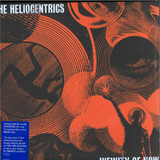
The UK’s cosmic, psychedelic-funk ensemble issue their first album on maverick producer Madlib’s label, Madlib Invazion. The Heliocentrics’ albums are all confounding pieces of work. Drawing equally from the funk universe of James Brown, the disorienting asymmetry of Sun Ra, the cinematic scope of Ennio Morricone, the sublime fusion of David Axelrod, Pierre Henry’s turned-on musique concrète, and Can’s beat-heavy Krautrock, they have – regardless of the label on which they’ve released their music - pointed the way towards a brand new kind of psychedelia, one that could only come from a band of accomplished musicians who were also obsessive music fans. Drummer Malcolm Catto and bassist Jake Ferguson are the Heliocentrics’ masterminds and producers, and they are obsessive weirdos in today’s musical climate, searching, progressive humans who are often out-of-time with current trends. They have been playing together for nearly two decades and their collective drive is to find an individual voice. The Heliocentrics search for it in an alternate galaxy where the orbits of funk, jazz, psychedelic, electronic, avant-garde and “ethnic” music all revolve around “The One.” With Madilb’s label Madlib Invazion for Infinity of Now, the Heliocentrics have returned to develop their epic vision of psychedelic funk, while exploring the possibilities created by their myriad influences, Latin, African, and more.
2024 BLACK VINYL REPRESS.
One can hardly imagine the genre-busting, culture-crossing musical magic of Outkast, Prince, Erykah Badu, Rick James, The Roots, or even the early Red Hot Chili Peppers without the influence of R&B pioneer Betty Davis. Her style of raw and revelatory punk-funk defies any notions that women can’t be visionaries in the worlds of rock and pop. In recent years, rappers from Ice Cube to Talib Kweli to Ludacris have rhymed over her intensely strong but sensual music.
There is one testimonial about Betty Davis that is universal: she was a woman ahead of her time. In our contemporary moment, this may not be as self-evident as it was thirty years ago – we live in an age that’s been profoundly changed by flamboyant flaunting of female sexuality: from Parlet to Madonna, Lil Kim to Kelis. Yet, back in 1973 when Betty Davis first showed up in her silver go-go boots, dazzling smile and towering Afro, who could you possibly have compared her to? Marva Whitney had the voice but not the independence. Labelle wouldn’t get sexy with their “Lady Marmalade” for another year while Millie Jackson wasn’t “Feelin’ Bitchy” until 1977. Even Tina Turner, the most obvious predecessor to Betty’s fierce style wasn’t completely out of Ike’s shadow until later in the decade.
Ms. Davis’s unique story, still sadly mostly unknown, is unlike any other in popular music. Betty wrote the song “Uptown” for the Chambers Brothers before marrying Miles Davis in the late ‘60s, influencing him with psychedelic rock, and introducing him to Jimi Hendrix — personally inspiring the classic album ’Bitches Brew.’
But her songwriting ability was way ahead of its time as well. Betty not only wrote every song she ever recorded and produced every album after her first, but the young woman penned the tunes that got The Commodores signed to Motown. The Detroit label soon came calling, pitching a Motown songwriting deal, which Betty turned down. Motown wanted to own everything. Heading to the UK, Marc Bolan of T. Rex urged the creative dynamo to start writing for herself. A common thread throughout Betty’s career would be her unbending Do-It-Yourself ethic, which made her quickly turn down anyone who didn’t fit with the vision. She would eventually say no to Eric Clapton as her album producer, seeing him as too banal.
In 1973, Davis would finally kick off her cosmic career with an amazingly progressive hard funk and sweet soul self-titled debut. Davis showcased her fiercely unique talent and features such gems as “If I’m In Luck I Might Get Picked Up” and “Game Is My Middle Name.” The album Betty Davis was recorded with Sly & The Family Stone’s rhythm section, sharply produced by Sly Stone drummer Greg Errico, and featured backing vocals from Sylvester and the Pointer Sisters.
- 1: I'm Not Getting Excited - Live
- 2: Great No One - Live
- 3: Whatever - Live
- 4: Mars, The God Of War - Live
- 5: Future Me Hates Me - Live
- 6: Introduction
- 7: Jump Rope Gazers - Live
- 8: Uptown Girl - Live
- 9: Bird Talk
- 10: Happy Unhappy - Live
- 11: Out Of Sight - Live
- 12: Thank You
- 13: Don't Go Away - Live
- 14: Little Death - Live
- 15: Dying To Believe - Live
- 16: River Run - Live
The anticipation is there in Elizabeth Stokes’ solo guitar riff under the opening lines of “I’m Not Getting Excited”: a frenetic, driving force daring a packed Auckland Town Hall to do exactly the opposite of what the track title suggests.
As the opener of The Beths’ Auckland, New Zealand, 2020 expands to include the full band, the crowd screeches and bellows. It’s a collective exhalation, in one of the few countries where live music is still possible.
The album title, and film of the same name, deliberately include the date and location, lead guitarist Jonathan Pearce says. “That’s the sensational part of what we actually did.” In a mid-pandemic world, playing to a heaving, enraptured home crowd feels miraculous.
In March 2020, everything seemed on track for another huge year for The Beths. Home after an 18-month northern hemisphere tour, they had just finished recording sophomore album Jump Rope Gazers and were primed for more extensive touring. But within days, New Zealand’s lockdown split the band between three separate houses. All touring was cancelled.
“It was existentially bad,” Stokes says. As well as worrying about economic survival, they lost something crucial to the band’s identity: live performance. “It's a huge part of how we see ourselves... What does it mean, if we can't play live?”
The band found an outlet through live-streaming, returning to the do-it-yourself mentality of their early days to connect with a global audience. The album and film have their genesis in that urge to share the now-rare experience of a live show, as widely as possible.
The fuzzy-round-the-edges live-streams pointed the way aesthetically. Native birds, wonkily crafted by the band from tissue paper and wire, festoon the venue’s cavernous ceiling while house plants soften and disguise the imposing pipes of an organ. The presence of the film crew isn’t disguised: much of the camerawork is handheld; full of fast zooms and pans.
With much of the material still fresh, the band was less focused on re-invention than playing “a good, fast rock show”, Pearce says. The tempo is up on crowd favourites “Whatever” and “Future Me Hates Me” (released as a live single on its third anniversary) as both band and audience feed off the mutual energy in the room.
Certain songs have taken on special resonance post-Covid. Pearce has found “Out Of Sight”, a tender rumination on long-distance relationships, hits particularly hard with live audiences.
Album closer “River Run” visibly brings Stokes to tears as a mix of achievement and relief kicks in. “You can finally relax at that point … You play the last note, breathe out a sigh and look up - and you’re in a giant room full of people happy and smiling.”
new music in nearly 30 years Includes 11 brand new songs written by the band The Cowsills will be on the road through 2023 supporting the new record Some of the best music made in the last 60 years has been delivered by musical families. Think about it . . . The Everly Brothers, The Beach Boys, Bee Gees, The Jackson 5, The Staple Singers, Pointer Sisters, Kings Of Leon, Oasis . . . and The Cowsills! Starting in 1965, The Cowsills was composed of six siblings, performing their instruments and singing those glorious harmonies as only families can. Originally starting as a regional act (from Newport, Rhode Island), the group was “founded” by Joda Records owners Danny Sims and reggae/pop singer Johnny Nash (“I Can See Clearly Now”) in the mid-’60s for whom they recorded a handful of singles before turning towards more national recognition when they were signed to MGM Records in 1967. At this point, the group’s mother Barbara and young sister Susan joined the act and they were awarded a Gold record for over one million copies sold of their very first single for MGM, the sublime, “The Rain, The Park & Other Things.” This began a series of chart records that dominated the Top 40 for the next three years. Among the classic Cowsills recordings are “We Can Fly,” “Indian Lake,” “Hair” (from the rock musical Hair), and “Love American Style” (the theme song from the popular ABC-TV show of the same name). The group also recorded and charted with five successful albums during this time period. The band and their story were even the inspiration for the popular 1970s sitcom The Partridge Family. The group was also a prosperous touring attraction up through 1972, spreading their harmonious hope and love to an adoring fan base. They even had their own comic book published in 1968. As all families do, the group went through a series of changes, disbanding in 1972. But music never left the soul of this tuneful and melodic kin. Over the years, the group, as individuals, continued to make music and even reunited in 1978 and 1993 to make historic records that are woefully out of print. Now, nearly 30 years after their last recordings as a group, The Cowsills are returning with new music for the new world! Omnivore Recordings is proud to announce the release of Rhythm Of The World. Eleven brand new songs written by the band. The ambassadors of goodwill and love will be on the road through 2023 thrilling fans with their classic hits and soon to be new favorites!
Returning to his home base, Rotterdam based electro-techno mainstay Conforce presents a heavy pack of angular, experimental approaches on his latest offering into the Delsin databank.
Boris Bunnik's accomplished machine language has traversed deep and dubby soundscapes with punchy, club-focused fare alike, since 2010's Grace EP he has found a regular home on Delsin and it's always exciting to see what he comes up with next.
Where Conforce has commonly housed Bunnik's more melancholic, introspective work, the sound palette on Sins Of Synthesis is more tipped towards darker dimensions. The shadow of braindance looms large, guiding the music towards twitchy pattern manipulation, alien textural design and dissonant harmonics.
Bunnik's signature sense of melody can still be detected around the edges, from the distant, hazy pads of 'Charlatan' to the lingering chimes of 'Fragile', but this is a pointed new direction for Conforce and it's leading somewhere very interesting...
On their first album, Me:You--a new collaboration between Mourning A
BLKstar co-founders RA Washington and LaToya Kent--presents a
simmering, enigmatic brew full of groove, distortion and haze
In contrast to the pointed lyrics and wide- ranging genre blend of Mourning
BLKstar, Me:You dunks music in a swirling brew of drum beats, guitars, bass,
synth, and tape loops, revealing an immersive world that spotlights a woman who
loves hard, with nods to punk, jazz and R&B. Along with Washington's production
and Kent's vocals, Field Tapes in Der Trash features contributions from Jah Nada
(of Obnox and Bloody Show, who released a winning collaboration with
Washington on Astral Spirits last year) and Laura B.
Easily one of the greatest roots reggae albums of all time, Soul Rebels resulted from the intensive partnership brokered by the group and maverick producer, Lee 'Scratch' Perry. It was the first Wailers 'concept' album, conceived as a long-player based on a rebellious theme, rather than a collection of isolated singles, and the presence of the Barrett brothers in the rhythm section pointed the way for greater glories to come. The Wailers first formed as an unruly five-piece in 1963, with Junior Braithwaite as lead singer and Beverley Kelso an early member, sometimes replaced by Cherry Green. During their long tenure at Studio One, Bob Marley gradually shifted to the lead vocal role and the robust core of Marley, Peter Tosh, and Neville Livingston, aka Bunny Wailer, soon emerged as the mainstays of the group. Perry was involved with the Wailers at Studio One, using their talents for backing vocals on some of his solo work, but the partnership that yielded Soul Rebels was in an entirely different league. The title track, Tosh's anguished "400 Years and "Corner Stone" are legendary for their intense power; "It's Alright" set the template for the later "Night Shift," "My Cup" was an individual barebones reading of James Brown's "I Guess I'll Have To Cry Cry Cry," while the playful "Try Me" and "No Water" are suggestive odes. Tosh's dejected "No Sympathy" and the spirited "Soul Almighty" are other winners and the "Cloud 9" revamp "Rebel's Hop" is another joy. All killer, no filler!
If Es’ debut album for Upset the Rhythm explored the “tension between intent and interpretation”, the London group’s 2023 EP, ‘Fantasy’, constructs a coda for resistance against the distorted gaze. A four-track contact-high anxiety amid fact and facsimile, the new release attempts to define a sound that still resonates in an increasingly confused public theatre, where cerebral dreams manifest in corrupt fascination.
Echoing the legendary Pylon or the later, disco-inspired releases from PIL, tracks like ‘Emergency’ and ‘Unreal’ blend the band’s established disjunctive style of gothic restlessness with brighter, poppy, and danceable tones. These stylistically unwind in transition with the increasingly claustrophobic pieces like ‘Too Late’ and ‘Swallowed Whole’, syncopating a parallel design of the frantic and the fashionable.
Paired with a lyrical intricacy which emits a desire to break the fetish of false representation, ‘Fantasy’ reminds us that worthy punk records, like any manifesto of neurotic suspicion, balance testimonial, speculative-fiction, and social critique. Indebted to the past but pointed sharply to the future, Es deconstruct our modern wreckage of personhood and self-deceit, granting a sense of solidarity inside alienation. Inside ‘Fantasy’ we visualize our own estrangement, and it is only when this mirror fades that we find the tools to fight back.
The incongruous, yet glorious, creative partnership between Nancy Sinatra and Lee Hazlewood was well underway when the two singular artists reunited to record 1972’s Nancy & Lee Again, a follow-up to their bestselling duet debut, Nancy & Lee. Nancy, the eldest daughter of Frank Sinatra, had been working with the Oklahoma-born songwriter since 1965, when she topped the pop charts with “These Boots Are Made For Walkin’.” Over the next five years, the two artists forged a prolific relationship in the studio, with Hazlewood writing and producing many of Nancy’s solo hits. Soon, the duo found success with a series of duets, including “Sand,” “Summer Wine,” and “Some Velvet Morning” – all of which appeared on their highly-influential 1968 debut.
Not long after the critical acclaim and chart success of Nancy & Lee died down, however, Hazlewood unexpectedly relocated to Sweden, leaving his musical partner in the proverbial dust. America, meanwhile, was in the midst of a cultural shift, as the Vietnam War waged on. By the turn of the decade, the musical landscape had changed significantly. “Trivial music and not profound music became unimportant,” recalls Nancy, speaking to Hunter Lea. “It was a tough time.” And yet, despite the circumstances, the stars somehow aligned for the duo to record some of their most magnificent music together.
Returning to Los Angeles for the project, Hazlewood – who reprised his role as producer – chose to take a new direction with the duo’s sophomore album. Nancy recalls, “It was more dramatic; it was more fun to do, more challenging to do…. It was more grandiose.” For the lush, orchestral arrangements, they collaborated with Larry Muhoberac (an original member of Elvis Presley’s TCB band, whose early ‘70s credits also included Barbra Streisand, Neil Diamond, and Lalo Schifrin) and Clark Gassman, who had worked on Hazlewood’s 1970 LP, Cowboy in Sweden. Backing vocals from brothers John and Tom Bahler, who remain two of the most recorded singers in history, added additional texture to several songs.
The big sound that Nancy describes above is exemplified in the album’s cinematic opener, “Arkansas Coal (Suite).” Clocking in at nearly six minutes long, the dynamic overture tells the tale of an ill-fated coal miner (sung by Hazlewood), while Nancy adjusts her vocals to sing as both the miner’s daughter and his wife. Hazlewood’s knack for vivid, nuanced storytelling shines throughout Nancy & Lee Again, particularly in “Paris Summer,” which details the conflict that a married woman faces, as she engages in a passionate affair. Another highlight is the country-inspired hit, “Did You Ever,” which was released as the album’s lead single. After it landed at No.2 on the U.K. pop charts, the song served as an alternate title track in several countries, including LP pressings in the U.K., Germany, and Canada.
One of the most emotionally-charged moments on Nancy & Lee Again is a cover of Dolly Parton’s “Down From Dover.” The heartbreaking tune tells the tale of a pregnant teenager, who has been abandoned by her lover and her family and ultimately gives birth to a stillborn baby. While Parton’s 1970 version was sung from the teenager’s point of view, Hazlewood and Sinatra transformed the country song into a duet. Hazlewood, who offers the man’s side of the story, sings in a notably deeper octave than his signature baritone.
Another poignant selection is “Congratulations,” which describes a soldier coming home from Vietnam. “His face has grown old and his eyes have grown cold/And they tell you of where he has been/Congratulations, you sure made a man out of him,” Hazlewood sings, pointedly. Nancy, who performs as the vet’s wife, argues that the song had a deeper meaning for her duet partner. “Lee started out a hawk, he was an army guy, so he was all for the war in the beginning. We didn’t talk about it, but at some point, he changed radically. ‘Congratulations’ was almost like an apology from him. I don’t want to put words in his mouth, but it was as though he was saying ‘I’m really sorry.’”
The song “Friendship Train” could also be interpreted as an apology of sorts – this time to Nancy. “You’ve been hurt and I’ve been hurt/Now we’re living pain,” the tune opens. When Hazlewood moved to Sweden without telling his longtime musical partner, Sinatra was understandably upset. “I felt pretty betrayed. I mean, who does that? Who just up and disappears like that? I’ll never understand it,” she reveals. But the uplifting duet – a slice of ‘70s pop perfection – offers reaffirming words of love between friends. “Lee felt things very deeply and tended to express his feelings in song instead of in real life,” explains Nancy.
The 10-track album closes with the stripped-down “Got It Together.” Backed by an acoustic guitar, the song is equal parts playful and candid, as the duo has an impromptu, spoken-word conversation about their lives. “I wish that we’d quit getting so old,” laments Nancy, who later shares her wish to have children (she would do so in the next few years). Hazlewood, meanwhile, attempts to remedy his past wrongdoings – this time asking his partner, “Can I go back to Sweden?” With that, Nancy gives her blessing.
This definitive reissue of Nancy & Lee Again also includes two bonus tracks. Both are stylistic departures for the duo – but fit right in with the psychedelic pop of the era. The first one, “Think I’m Coming Down,” is a harmony-filled reflection on a toxic relationship. “I think that was one of [Lee’s] drug things. I don’t mean that he used drugs; I mean that he was trying to be part of that culture. Trying to be hip,” explains Nancy, who delivers an emotive vocal performance on the solo track. Also included is “Machine Gun Kelly,” penned by a staple of the 70s singer-songwriter movement, Danny Kortchmar (James Taylor, Carole King, Linda Ronstadt). Recorded several months after the release of the album, the song found Nancy reuniting with Billy Strange, who arranged many of her solo albums, as well as Nancy & Lee. Sinatra and Hazlewood first performed “Machine Gun Kelly” during their residency at Las Vegas’ Riviera Hotel in February 1972 (later released as a concert documentary on Swedish television). While the recording has long remained a career favorite of Nancy’s, it would be decades before it was officially released.
Nancy & Lee Again remains a creative high point in the careers of Sinatra and Hazlewood and, upon its release, garnered rave reviews from Billboard, Record World, and Cash Box, among others. Yet, Nancy & Lee Again never received the spotlight it so utterly deserved. “We didn’t have label support at all in those days,” recalls Nancy. “Without the strength of a label, records die. We were old. We were old-fashioned. We were just not what was happening. It’s a very ageist kind of business.” Nevertheless, she adds, “I think it’s a very good album. I think it’s timeless.” Now, after years of being a sought-after rarity, this gem in the Sinatra-Hazlewood canon can finally get its due.
Five decades later, Nancy’s legacy only continues to grow, as new generations discover her impressive catalog (which boasts nearly 20 studio albums – her duets with Hazlewood among them – and dozens of charting singles, including the theme song to the 1967 James Bond film, You Only Live Twice). In 2020, Sinatra was recognized by her peers when “These Boots Are Made For Walkin’” was inducted into the GRAMMY® Hall of Fame. That same year, Sinatra partnered with Light in the Attic for Nancy Sinatra: Start Walkin’ 1965-1976, a definitive survey of her most prolific period. LITA has also reissued Sinatra’s classic debut, Boots, and her iconic, 1968 album with Lee Hazlewood, Nancy & Lee. The label looks forward to celebrating Nancy over the coming years with a variety of special releases, exclusive merchandise, and more.