Originally released in 2020
In a time of made up genres and increasingly entwined music, Marcoca is not even trying to put themselves in to a specific category.
Generally they consist of four individual musicians with various tastes and backgrounds, that enjoy their differences and don't worry too much about the outcome.
Inspired by the ups and downs of everyday life, they underlay their words with a soothing combination of Jazz, Surf, Funk and Psychedelic. Whatever that is supposed to mean.
Their first project resulted of highly uncoordinated recording sessions over the course of almost two years. While some of the songs had been previously arranged, some instrumental parts developed during the recording process in order to preserve the natural flow of the music. They don't try to improve the world but hope to make it bit more bearable. And they are from Germany, in case you’re dying to know…
Cerca:lag
“Irreverent and playful” MOJO // “...an utterly distinctive, mental world.” The Financial Times // “From keening ballads to haunting waltzes, Paradise has never seemed stranger” Shindig // “There’s a buoyancy to even the most lacerating lines now, a liberating relief in pressing on” Uncut // Way back when, before the pandemic, and before the release of Alex Rex’s last album Paradise escaped the confines of lockdown, Alex Neilson took a break from the road and set about putting together a record of poems extracted from the collapsed goldmine of his brain. Returning to his experimental roots, Mouthful of Earth’s cutting and oft heart-wrenching stanzas are set to music largely from underground legends Alastair Galbraith, Richard Youngs and Alex’s cult experimental drone record Belsayer Time (originally released on Time Lag Records in 2006. This is the first time that this music has ever been made available digitally). And for one track, Alex reunites with ex-Trembling Bells mucker Lavinia Blackwall for some free-form experimental jazz, reminiscent of the more psychedelically unhinged moments of Cammell/Roeg´s Performance soundtrack. To quote Stuart Maconie’s sleeve notes for the record, “One of the first things I learned about Alex’s musical imagination and modus operandi was a joy in collaboration, and Mouthful Of Earth continues in a tradition that has seen him work with many kindred spirits across many genres; Bonnie ‘Prince’ Billy, Current 93, Jandek, Kan Mikami, Shirley Collins, Six Organs of Admittance, Josephine Foster and Baby Dee. The list is disparate and stellar, the results are always interesting and alive.” Continuing in the spirit of collaboration, Mouthful of Earth’s words and music are accompanied by a digital book of drawings by Kent-based visual artist, musician and art psychotherapist, Benjamin Prosser (Insta: @benjaminprosser). These are not so much literal illustrations as reactions. The combination of poems and visuals works a suite of haunted vignettes, dense with bleak humour and hallucinatory images. “The phantom hand of a lover pressed over the mouth of your mother” / “the whole gurning universe” / “the collapsed farmhouse of my mouth”. Mouthful of Earth is both visceral and corporeal, flecked with blood, sweat and beers. Or as Alex puts it "a continuous project of describing the human spirit pushed to the point of crisis”. Mouthful of Earth finds beauty in scarring and peace in torment. It’s both an assault and a balm of sorts. Life, says Neilson “is not a golden arc / It's a bent aerial / connected to a vast and terrible machine/operated by a child”. But listen hard and you will also hear beauty… “The song of yourself, roaring like a cloud, explicable only by light”. With sleeve notes by BBC Radio presenter and author Stuart Maconie, Mouthful of Earth is released on limited edition vinyl (300 copies only) and digitally via Neolithic Recordings. Reminiscent of his early work with Trembling Bells, and again featuring Lavinia Blackwall on vox, the track is a red herring; a nod towards a lighter shade of darkness.
- A1: Solo Gemini - Koolkite
- A2: Moo Latte - Healium
- A3: Baklu - Leer
- A4: Bodziers On - Indra
- A5: Roux Spana - Munchkiny
- A6: Printempo - Alta Rapide
- A7: Moonfeeder - Pco
- A8: Pantalaimon - Hole In My Kite
- A9: Krisqu071 - Quick Glide
- A10: Tapchan - Brassiliano
- A11: Typol - Yerba Blues
- A12: Swtrppl - Summer Kite Race
- B1: Pers - Allg (Feat Dj Vazee & Odme)
- B2: Pepe - Flight
- B3: Devv - Pudding
- B4: Coachmotel - Eternal Dream/Higher
- B5: Aflo - Lagodi G
- B6: Bknd - Let Them Fly Away
- B7: Bitykradne - Clock
- B8: Spear Oh - Colorful (Feat Ninka)
- B9: Steps - Manjha
- B10: Worstcase - Duality
- B11: Szatt - Bumblebees
- B12: Brak Oczu - La Ultima Mariposa
We have two versions (two different covers) - black vinyl or multicolor, limited, hand nubered (111 copies) vinyl.
Two years after the well-received compilation "Nebula," Himalaya Collective (probably the largest team of beatmakers in Poland) returns with another release. This time the Himalayan section of 24 producers (and some exceptional guests from outside the collective) will take us on a journey into the skies. On "Latawce" (which means "Kites" in English), we will hear 24 tracks with one goal in mind - to allow a maximum two-minute flight. The premiere (not accidentally) will take place on the 1st day of summer.
The sound of each Kite has been colored thanks to the excellent mastering done by Eprom. The album's vinyl version was made in two options and with two different covers. @Eloprzemi is responsible for the design of the classic version, and the cover of the limited surprise vinyl was designed by Gbur. The limited edition is hand-numbered (111 copies), and the surprise is worth emphasizing the different colors of each vinyl! Crazy Action! Great album! The perfect soundtrack for the summer holidays 2022!
Die Death Metal-Band WITCH VOMIT mit Ihrem neuen Album „Buried Deep in a Bottomless Grave“. Es ist nach „A Scream from the Tomb Below“ (2016) das zweite Album der US-Amerikaner.
„Buried Deep in a Bottomless Grave“ wurde erneut von Evan Mersky produziert. Das Mastering lag in den Händen von Dan Randall (u.a. für TOXIC HOLOCAUST tätig), während Matt Stikker (u.a. für OUTER HEAVEN tätig) für das Cover-Artwork verantwortlich zeichnet.
Das neue Album von WITCH VOMIT wird am 30. August 2019 via 20 Buck Spin erscheinen.
- 1: Paradise (Stay Forever)
- 2: Go!Go!Style
- 3: Lady Blue
- 4: Midori Eyes
- 5: Breeze With U
- 6: The Lemegeton Bop
- 7: Knife & Crystal
- 8: Ego 24-7
- 9: Last Dance Xx
- 10: Sunset Song
- 11: To The Heart
- 12: 17.00
- 13: House Of Bliss
- 14: Headlights On The Shore
- 15: 8Th Street Rose
- 16: Leaving
- 17: End Of The World
- 18: Welcome
- 19: The Plateau
- 20: The Sarcophagus
- 21: Temple Of Tears
- 22: Idle Lands
- 23: Transit (Empyrean)
- 24: Transit (Predition)
Dritte Auflage, blutrotes Vinyl. In Zusammenarbeit mit dem britischen Entwickler-Studio Kaizen Game Works veröffentlicht das Kölner Soundtrack-Label Black Screen Records im Frühjahr 2021 Barry "Epoch" Toppings funkigen "City-Pop meets Vaporwave"-Soundtrack zu dem von der internationalen Gaming-Presse gefeierten Open World Adventure Game Paradise Killer auf Vinyl. Barrys Toppings Soundtrack erscheint auf limitiertem 180g blutrotem Vinyl und kommt in einem von 80er Animes & City Pop-Alben inspirierten Artwork der deutschen Designerin Mizucat. Zudem enthält das Vinyl ein gefaltetes A2 Poster und einen Download Code. Die Sounds des Paradieses. Die Musik eines kosmischen Traums. Tracks einer anderen Realität. Das Tempo eines Verbrechens, dass alle Verbrechen beendet. Der Beat von lange verlorenen außerirdischen Göttern. Die Playlist des "Investigation Freaks". Lass dich von der Musik ins Paradies führen. Fühle die glühend heiße Sonne auf deiner Haut. Rieche unerträglich heißen Beton. Genieße den süßen Geschmack von Verbrechen, begangen, auf einer tropischen Insel in einer alternativen Realität. Erinnerst du dich daran, wie wir am Strand getanzt haben? Neben den paradiesischen Straßen? Du hast mir dieses Mix-Tape auf dem Dach deines Apartments gemacht. Wir haben den Mond angestarrt. Du sagtest, du würdest den Mond töten. Ich glaubte dir nicht. Wie falsch ich doch lag.
The French-Hong Kong DJ and producer Romain FX, founder of Fauve Radio and Fauve Records, debuts on Cracki Records !
After having made his mark on renowned labels such as Exploited, Eskimo Recordings, Novaj 新し, LAGASTA, Fantastic Voyage, Mamie's Records or Hard Fist Records, the ultra-productive artist is about to release Le Sucre d'Adam a new EP of 4 tracks and 2 remixes with the Parisian label Cracki Records.
Mixing Italian dream house, jazz, and Italo Disco, Romain FX wanted to create with this EP a timeless record and convey a message of hope for a better world.
The first track "Zeste d'Orange" is full of joyful emotions, with a feeling of unity and sharing, strongly influenced by 80-90's pop songs like "Rise Up" by The Parachute Club, and "Send Me On My Way" by Rusted Roots.
With its melancholic keyboards, "Le Sucre d'Adam" is a pure concentrate of Italo Dream House, and it's not a coincidence that Romain FX entrusted the remix of the track to the German Lauer, specialist of the genre.
"Italominati" with its powerful bass, draws him in the field of the fairy, influenced by artists like Todd Terje or Skatebård. It is the Korean producer Shubostar, new figure of the dark disco scene, who took care of the remix for a very effective cosmic version !
Last track of the EP, "Crave Cave Rave" with its Rave UK and progressive house accents was imagined as a long DJ Set closing. Intense and heavy at the beginning, the track ends with a feeling of extreme release, closing the EP in the most beautiful way.
- A1: Second Nebula/Nebulosa Seconda
- A2: A Quiet Place In The Country (Suite)/Un Tranquillo Posto Di Campagna (Suite) (Suite)
- A3: Before The Revelation/Prima Della Rivelazione
- B1: The Infernal Trio/Il Trio Infernale
- B2: Percussively/Percussivamente
- B3: Copkiller (Symphony Of A City/Sinfonia Di Una Citta)) (Symphony Of A City/Sinfonia Di Una Citta)
- B4: Murder On The Lake/Assassinio Sul Lago
- C1: Fraction/Frazione
- C2: The City Moves/La Citta Si Muove
- C3: Thousand Times A Cry/Mille Volte Un Grido
- C4: Music For 11 Violins/Musica Per 11 Violini
- D1: The Scalpel/Il Bisturi
- D2: She Has Come From The Sea/Venuta Dal Mare
Giallo is the fourth in a series of five double vinyl releases that bring together some of Ennio Morricone’s greatest soundtrack music. Each collection centres on a different movie genre, together they allow the listener to rediscover the unmatched genius of the greatest movie composer of all time. The Maestro. This collection was announced before Ennio Morricone passed away on July 6, 2020. We’ll continue to release the series to honour this great composer.
When we think of 1960’s Italian pulp cinema, the spaghetti western is the genre that comes to mind. However, Italy was responsible for another classic cinematic exploitation movement around the same time, one that is equally as compelling, but less widely recognised. Giallo…
Giallo, meaning ‘yellow’, is the Italian term for crime fiction, it was named after the bright yellow colours of early pulp fiction paperbacks. Film audiences adopted it as the name for a peculiarly Italian sub-genre of thriller cinema that had its heyday in the 1970’s - just as the Spaghetti Western movement was waning. The Giallo can be difficult to define, but essentially it is an Italian crime film that draws from a pool of common themes: stylized murders, amateur sleuths, sleazy glamour, psychological crimes, enigmatic titles and all these themes are underpinned by creepily atmospheric Ennio Morricone music scores. Starting 70 years ago as an arranger for the piece Mamma Bianca, Ennio Morricone is the emperor of scores and soundtracks. Morricone has always been a huge influence for the likes of Hans Zimmer, Danger Mouse, Muse, Metallica and many more musicians. He was one of the most successful composers of all-time, selling over 70 million records and winning dozens of awards.
Giallo is available as a limited edition of 3000 individually numbered copies on “giallo and black marbled” (clear, yellow and black mixed) vinyl. The package includes a 4-page insert with liner notes written by Claudio Fuiano. The gatefold sleeve contains a silver foil spot varnish on the outside and images of iconic movie posters on the inside.
Beginning life in 2018 in the home of songwriter Myles McCabe experimenting with shouty, electronic bedroom pop ME REX are equipped with multitudes of “surging gargantuan hooks”, McCabe was quickly joined by longtime friends Kathryn Woods (guitar/vocals), Phoebe Cross (drums/vocals) and Rich Mandell (bass/keys/vocals). In 2021 the band released their debut album Megabear: a record built from 52 short tracks intended to be played in shuffle mode in order for the listener to create their own perfect combination of songs. In 2022 they dove headfirst into follow-up EP Pterodactyl which saw them change pace and tact throughout — constructing delicate vocal layers with luscious swathes of guitars and keys to build a bridge between their raw DIY past and a bright, creative future. Across all four songs on new EP, Plesiosaur, ME REX focus their attention on catchy choruses and snappy rhythms. With Toilet of Venus acting as an extension of Lager Door, the former track looks at present struggles as opposed to the latters inherent nostalgia, Jupiter Pluvius looks theologically at the idea of projecting strength and power onto inanimate objects, all wrapped in sharp wordplay and vibrant fuzzed out guitars and keys that are addictive as hell. Described as “nothing short of an artistic triumph” by Brooklyn Vegan— as well as seeing praise from Pitchfork, DIY, Rocksound, Line Of Best Fit, BBC 6Music, Radio X, Amazing Radio, Audiotree, The I Paper and Baby’s Alright— ME REX are showing no signs of slowing down.
- 1: Can I Sing With You? Ft. Sidi I.b
- 2: No Hay Pescado Ft. Sidi I.b., El Latigazo & Mame Samba
- 3: Neuron Landfill (Vertedero De Nueronas)
- 4: Smelk
- 5: The Light Mandem Forward Ft. Kiki Hitomi W/ Javier Afonso
- 6: Guidance & Healing Ft. Mame Samba
- 7: Monsanto Ft. Troy Harkin*
- 8: Mike Input At Loud Speakers Corner*
- 9: Bus Meter Ft. Zeeteah & Sidi I.b
- 10: Assuage No.9 Ft. Zeeteah
Helmed by Dave Watts aka D.WattsRiot (Fun-da-mental), the debut KingL Man album, ‘Headonix’ is beat-laden shout out in response to the perpetual state of war we seem to find ourselves at. Outrage and disgust, love and hate, history and presence.
Contributions come from four continents.
Fresh on the scene is Senegalese vocalist Sidi I.B., who arrived on Canarian shores with two hundred other compatriots, cold, wet and hungry after seven days at sea with nothing but his future in his hands.
Temporarily housed at the infamous migrant holding centre in Las Raíces, Tenerife, the studio environment provided an avenue of relief from the inadequate conditions at the overcrowded camp.
Also from Senegal, living in Santa Cruz de Tenerife, is rapper Ibrahima El Latigazo who delivers his lyrics in French, Wolof, Spanish, English & Sérère. Rounding up the Senegalese contingent is Mame Samba, a group that hold the spirits close when performing. Their contribution is from recording sessions they had with François R. Cambuzat & Gianna Greco (Putan Club / Ifriqiyya Electrique).
Kiki Hitomi (Waq Waq Kingdom/King Midas Sound) returns to the fold, exhaling positivity with Canarian multi-instrumentalist Javier Afonso (Grenouille). The Canarian faction also includes violinist Mónica Viñoly, Dani Garcia (Lagoss/Tupperwear) and Vakawuare. Further guests include percussionist Miroca Paris (Cesária Évora/Madonna); Hamid Mantu (TransGlobal Underground);
Ramjac (Dub Colossus), drums and percussion respectively.
Coke Bottle Clear Vinyl[21,22 €]
Ecomix Random Colour Vinyl[21,22 €]
Cassette[21,22 €]
Nika Roza Danilova, die Sängerin, Songwriterin und Produzentin, die seit 2009 unter ihrem Künstlernamen ZOLA JESUS veröffentlicht, hat eine Stimme, die die Faszien der Realität durchschneidet und den rohen Nerv der Erfahrung trifft. Auf früheren Alben hat ZOLA JESUS weitgehend die Rolle der Autorin und Alleinherrscherin gespielt und jeden Aspekt des Sounds und des Aussehens ihres Projekts akribisch für sich ausgearbeitet. Diesmal erkannte sie jedoch, dass ihr gewohntes Bedürfnis nach Kontrolle sie von ihrer Kunst abschnitt. Als die Frustration darüber, dass sie nicht in der Lage war, etwas zu erschaffen, unerträglich wurde, bat sie zum ersten Mal in der Geschichte von ZOLA JESUS um externen Input. "At some point, I had to work with other people. I needed new blood. I needed somebody else." Sie schickte ihre Demos an den Produzenten Randall Dunn, der für seine Arbeit mit Sunn O))) und an Johann Johannssons Filmmusik für "Mandy" bekannt geworden ist. Außerdem begann sie, mit dem Schlagzeuger und Perkussionisten Matt Chamberlain zusammenzuarbeiten, der bereits an Alben von FIONA APPLE, BOB DYLAN und DAVID BOWIE mitgewirkt hat. In ihrem kreativen Prozess begann Danilova, eine Beziehung mit dem Unbekannten aufzubauen...
Black Vinyl[21,22 €]
Coke Bottle Clear Vinyl[21,22 €]
Ecomix Random Colour Vinyl[21,22 €]
Nika Roza Danilova, die Sängerin, Songwriterin und Produzentin, die seit 2009 unter ihrem Künstlernamen ZOLA JESUS veröffentlicht, hat eine Stimme, die die Faszien der Realität durchschneidet und den rohen Nerv der Erfahrung trifft. Auf früheren Alben hat ZOLA JESUS weitgehend die Rolle der Autorin und Alleinherrscherin gespielt und jeden Aspekt des Sounds und des Aussehens ihres Projekts akribisch für sich ausgearbeitet. Diesmal erkannte sie jedoch, dass ihr gewohntes Bedürfnis nach Kontrolle sie von ihrer Kunst abschnitt. Als die Frustration darüber, dass sie nicht in der Lage war, etwas zu erschaffen, unerträglich wurde, bat sie zum ersten Mal in der Geschichte von ZOLA JESUS um externen Input. "At some point, I had to work with other people. I needed new blood. I needed somebody else." Sie schickte ihre Demos an den Produzenten Randall Dunn, der für seine Arbeit mit Sunn O))) und an Johann Johannssons Filmmusik für "Mandy" bekannt geworden ist. Außerdem begann sie, mit dem Schlagzeuger und Perkussionisten Matt Chamberlain zusammenzuarbeiten, der bereits an Alben von FIONA APPLE, BOB DYLAN und DAVID BOWIE mitgewirkt hat. In ihrem kreativen Prozess begann Danilova, eine Beziehung mit dem Unbekannten aufzubauen...
Entrails umfasst den Death Metal-Sound der frühen 90er Jahre in einem absolut kriminellen Ausmaß!
Dieses Album hat den klassischen schwedischen Stil des Death Metal der frühen 90er Jahre. Es ist sehr stark an die alten Entombed und Dismember angelehnt, aber sie haben ihren eigenen Sound. Die Riffs sind frisch und tödlich, ebenso wie die Energie, die diese Veröffentlichung umgibt.
Das musikalische Können ist unübertrefflich und es ist großartig, dass der schwedische Death Metal-Sound in Bands wie Entrails lebendig geblieben ist. Die Musik ist geradezu brutal, der Gesang und die Gitarrenriffs sind explosiv. Wir würden es wagen zu sagen, dass dies eine Top-Veröffentlichung für das Jahr 2011 ist.
Für eine Band, die fast 20 Jahre lang im Dornröschenschlaf lag, sind sie ziemlich stark zurückgekommen und haben einige der Wurzeln des alten Landes mitgebracht. Ist dieser Sound bereits nahezu perfekt umgesetzt worden? Ja, aber man könnte Entrails eine kleine Gnadenfrist gewähren, denn im Ernst, sie sind einfach wahnsinnig schwer und schrecklich brutal von Anfang bis Ende. Man kann sehen, wo Bands wie Bloodbath diesen elitären Sound gefunden haben. Die Produktion ist von erstklassiger Qualität und jede Note wird entsprechend geschreddert. Diese Jungs kennen ihren Death Metal.
One of the most legendary LPs from Uruguay remains a hidden treasure in the rest of the world. It is the first LP by singer Diane Denoir. Diane was a regular in the “Conciertos Beat” (“Beat Concerts”) of Montevideo's 1960s scene where she performed with Eduardo Mateo on guitar (leader of El Kinto, one of the most influential bands in "candombe beat", and the ones who coined the term), Roberto Galletti on drums and Antonio Lagarde on double bass. Diane was also Mateo's muse throughout the early years of his career, he wrote several songs for her, among them “Esa tirsteza,” “Y hoy te vi,” and the classic “Mejor me voy.” Eduardo Mateo would become one of the biggest names of all times in Uruguay's musical scene. Diane, instead, found herself outside the country when the military coup installed a non constitutional government in Urugay in 1973 and was wisely advised by friends not to go back home to avoid trouble with the new dictatorial regime. A brave defendant of Human Rights, she had been very active against torture, thus becoming a target for the dictatorial regime military intelligence. She exiled in Argentina and Venezuela, and she later settled in Europe and didn't perform in public or record again until recent years when she returned to her home country.
On her eponymous 1972 debut album, Diane fused all her influences in one solid sound through songs created by Uruguayan songwriters (Eduardo Mateo, Urbano Moraes –bassplayer for El Kinto,– Daniel Amaro, Giuso Bellanca), plus Argentinian lyricist Edgardo Lisi. She had released a couple of 7" between 1966 and 1970, but it is her debut album –which would be her only one until her 2008 comeback– that made her legend grow among future generations of music lovers.
It's hard to name artists in the same dimension as Diane Denoir for reference, but be sure that you will love this LP if you like the candombe beat scene of El Kinto, Tótem or the Fattorusso brothers (Hugo and Osvaldo) in their post Los Shakers works, but also the bossa nova sound and even artists of their own like Vainica Doble.
Very limited edition, only 500 copies made. Remastered sound. Comes in upgraded artwork, gimmick cover with printed inner sleeve.
Stefan Schwanders Repeat Orchestra presents “Infamous Lost Tracks”, an album appearing out of the blue, coming from spheres where time, space and Zeitgeist are nothing more than words.
With the Repeat Orchestra Schwander (who of course also is Harmonious Thelonious, A Rocket In Dub, Antonelli and a lot more) found a unique way of channeling deep House Music, a minimalistic setup and an idea of creating enjoyable music into amazing tracks that sound so effortless and natural. From first track "Call And Response" on it’s obvious that the main thing that this album is about is the groove, sometimes euphoric, sometimes quite unobtrusive but always irresistible, build from massive basslines, complex rhythms and the masterfully performed interplay of repetition and modulation. Warm harmonies, multilayered (at times quite unusual ("Nightdubbing")) melodies and subtle arrangements complete these Infamous Lost Tracks and their very own formular between Düsseldorf, Chicago and Lagos. There’s nothing harsh in this music, no aggression, still it’s far from being tame or tranquil: The pumping energy of "A Means To An End" or the sublime liquid shuffle of "Less Sensational" show the swing and kick inside these works that are made for delight but not to please.
And “Monks In A Club” is the most brilliant example of dancefloor understatement that you’ll ever hear in your life. Reduction, elegance and the right kind of mania concentrated into some minutes of pure club heaven. Handclaps, nonchalance & madness. An essential singularity and the swan song to the Repeat Orchestra, there will be no more of it. Get It And Smile.
For more than twelve years, Morphology have been re-writing the rules of electronics. Michael Diekmann and Matti Turunen have melted electro, IDM and techno into their own unique sound. To celebrate their achievements, FireScope has sifted through the impressive discography of this Finnish pairing to bring long out of print tracks to a life.
Twelve 1 collects music released between 2009 and 2016, a dozen works that span labels like Abstract Forms, AC Records, Cultivated Electronics, diametric., Semantica, Stilleben and Vortex Traks. Opening with the cold love affair of “Manmade Woman,” this collection brings together frosted floor funk, cerebral armchair electronics and a quality of composition that only Morphology can provide. Embedded in the album are outposts of electro menace, tracks with that extra bit of bite such as “Dementia” and “Dalek Invasion. Deep and thought-provoking pieces abound, such as the otherworldly dreamscapes of “Magellan Probe” and “Moebius Strip” which were first heard on Arne Weinberg’s diametric. An understated balance permeates the record, broad concepts are interwoven with subtle shifts to bring a timeless quality to pieces like “Spacetime Interval”, “Europa” and “Plankton.” A perfect expression of over a decade of work.
Not only does this double LP gather rare tracks never before heard together, but also each piece has been lovingly remastered to breath new life into these wonderful works. Twelve 1 celebrates the music of Morphology in all its glory, two masters of modern electronic music who continue to re-define and re-design genres.
Kenn hat es wieder getan... Es würde Sinn machen, sein vorheriges Werk "Dancing with the Past" als das neue Anacrusis-Album zu bezeichnen und das nicht nur, weil das meiste darauf enthaltene Material mit der Absicht geschrieben wurde, ein Comeback zu feiern. Acht Jahre später meldet sich Mr. Nardi mit einem weiteren Epos zurück, das zwar eine Stunde kürzer ist als der Vorgänger, aber von der Qualität her "Trauma" atmet seinen Nacken. Die epische Länge beider Alben sollte den Hörer aber nicht zurückhalten, denn das hier ist wirklich fesselndes Material von Anfang bis Ende, dunkle Progressive/Thrash-Scheiben, die nichts von dem vermissen lassen, was das Repertoire von Anacrusis zu einem der beliebtesten in der Szene gemacht hat. "Trauma" ist dynamischer und ein bisschen weniger atmosphärisch, was an der geringeren Anzahl der Balladen liegt. Hier sind es nur drei, die sich jeweils einem bestimmten Segment zuwenden aus dem balladesken Bereich, ansonsten bestimmt eine brachiale Kombination aus Progressive und Thrash die Handlung, das schnellere Material pulverisiert, vielschichtige Thrasher voller voller inbrünstiger Tempowechsel und abrupter Stimmungswechsel. Das Herzstück des Albums ist die 11-minütige Odyssee "The Orphan", eine zusammenfassende Reise durch alle Ecken und Winkel des des Anacrusis-Katalogs, ein fesselndes Epos, wie es Anacrusis bzw. Nardi noch nie versucht haben.
Wir wollen glauben, dass die Anacrusis-Fans bereitwillig ins Nardi-Lager gewechselt sind, das in nicht allzu regelmäßiger Folge deftige Genüsse verspricht. Das ist auch gut so, solange er einen ganzen Vormittag füllen kann, wird er bei allen ganz oben auf der Liste stehen.
Für Fans von: Anacrusis, Nevermore, Atheist, Voivod, Forbidden, Control Denied
- A1: Linda Guajira
- A2: Que Bueno Baila Usted
- A3: Relax & Mambo
- A4: Al Son Del Pilon
- A5: Tabu
- A6: Yo No Quiero Piedra En Mi Camino
- A7: La Mulata Rumbera
- A8: Lagrimas Negras
- A9: Dejame Recordar
- B1: Guantanamera
- B10: Saradonga
- B2: Cogele El Golpe
- B3: Dundumbanza
- B4: Magia Negra
- B5: Gandinga, Mondongo Y Sandunga
- B6: Te Di Un Beso Sin Importancia
- B7: Mambo Riff
- B8: La Rumba Me Llama
- B9: Mambo No 5
- A10: El Manisero
26 original recordings with comprehensive 12-page booklet
The music of Cuba, including its instruments, performance, and dance, comprises
a large set of unique traditions influenced mostly by West African and European
(especially Spanish) music. Cuban music is among the richest and most
influential regional music in the world.
Cuban music has contributed to the development of a wide variety of genres and
styles around the globe. Examples include the son Cubano, guarachá, danzón,
bolero, rhumba, Afro- Cuban jazz, salsa, and a wide variety of genres in Latin
America. Many of these styles are represented on this outstanding collection,
which presents 26 of Cuban music's greatest hits performed by the most
celebrated Cuban stars.
"Big Time" entstand mit einem Peitschenhieb in den seltenen, fruchtbaren Momenten, in denen sowohl frische Trauer als auch frische Liebe gleichzeitig auftreten, in denen sich Kummer und Verliebtheit gegenseitig verstärken, verkomplizieren und erklären. Verlust ist schon immer ein Thema in Olsens Songs gewesen, aber nur wenige können Elegien mit einer derart rücksichtslosen Energie schreiben, wie sie. Wenn diese aus allen Nähten platzende, bergab rasende Energie für ihre Arbeit unüberwindbar schien, beweist "Big Time", dass Olsen jetzt von einem verwurzelteren Ort der Klarheit aus schreibt. Dabei arbeitet sie mit einer elastischen Beherrschung ihrer Stimme - sowohl klanglich als auch künstlerisch. In diesen Liedern geht es nicht nur um die Transformation von Trauer, sondern auch darum, Freiheit und Freude in den Entbehrungen zu finden, die diese mit sich bringen. "Big Time" ist ein Album über die expansive Kraft der neuen Liebe, geschrieben in der Zeit, als Angel Olsen sich als queer outete und ihre ersten Erfahrungen mit queerer Liebe und Herzschmerz machte. Aber dieser Glanz und Optimismus wird durch ein tiefes und vielschichtiges Gefühl von Verlust gemildert. Während Olsens Prozess der Auseinandersetzung mit ihrem Queer-Sein und der Konfrontation mit den Traumata, die sie davon abgehalten hatten, sich selbst voll und ganz zu akzeptieren, fühlte sie, dass es an der Zeit war, sich ihren Eltern gegenüber zu outen - eine Hürde, die sie eine Zeit lang vermieden hatte. "Some experiences just make you feel as though you're five years old, no matter how wise or adult you think you are", schreibt sie über diese Zeit. Nach diesem tränenreichen, aber erleichternden Gespräch feierte sie mit ihrem/ihrer Partner*in, ihren Freund*innen, mit Austern und Wein. "Finally, at the ripe age of 34, I was free to be me." Drei Tage später starb ihr Vater, dessen Beerdigung Olsen zum Anlass nahm, den/die Partner*in ihrer Familie vorzustellen. Nur zwei Wochen später erhielt Olsen den Anruf, dass ihre Mutter in der Notaufnahme lag. Eine Zeit im Hospiz kam bald darauf, und eine zweite Beerdigung folgte kurz nach der ersten. Eine weitere Reise zurück nach St. Louis, eine weitere Trauerbewältigung, eine weitere Vertiefung und Intensivierung dieser noch jungen Liebe. Drei Wochen nach der Beerdigung ihrer Mutter war Olsen im Studio, um dieses unglaublich weise und zärtliche neue Album "Big Time" aufzunehmen. Ausgelassene Anspielungen an Tammy Wynette und Kitty Wells tauchen auf "Big Time" ebenso auf wie die komplexen Orchestrationen ihres genreübergreifenden 2019er Albums "All Mirrors". Während jenes Album voller dramatischer Veränderungen und Wendungen war, liegen die Überraschungen hier in ihrer Einfachheit - ein langsames Anschwellen der Streicher, eine Instrumentierung, die wie ein Sturm zyklisch ist, oder funkelnde Hörner in einer lichtdurchfluteten Break-up-Ballade, während kaum ein Synthesizer in Sicht ist. "Big Time" wurde zusammen mit dem Co-Produzenten Jonathan Wilson in seinen Fivestar Studios in Topanga, Kalifornien, aufgenommen und gemischt. Drew Erickson spielte Klavier, Orgel und kümmerte sich um die Streicherarrangements. Olsens langjährige Bandkollegin Emily Elhaj spielte durchgehend den Bass.
REPRESS
'the best soul album — in the real sense of the word — you'll hear this year... classic, blistering afro-beat' (Daily Telegraph); 'as tight as a pressure cooker... fierce and fun' (The Wire); 'son meilleur album... monumentale, triomphante, orgasmique' (Les Inrockuptibles); '**** utterly infectious... a triumphant return' (The Observer).
- A1: Sankofa (Hypnotic Brass Ensemble Remix)
- A2: Kilode (Carl Craig Remix)
- A3: Awa Nare (Bonde Do Role Remix)
- B1: Ernestus (Mark's Disco Dub)
- B2: Reggae Land (Wareika Hill Sounds Dub)
- B3: Tetsuya's Theme (Newham Generals Remix)
- B4: Samba (Son Palenque De Colombia)
- C1: Fuji Ouija (Diplo Remix)
- C2: One Tree (Terrence Parker Spirit Of Unity Mix)
- C3: Kilode (Wajeed Rework)
- D1: Ole (Salah Ragab Cairo Version)
- D2: Ole (Moritz Von Oswald Remix)
- A1: Rigmor Gustaffson Feat.nils Landgren - Fever
- A2: Jon Spencer - All Shook Up
- A3: Biréli Lagrène Gypsy Project - Love Me Tender
- A4: John Gill's Jazz Kings - That's All Right
- A5: Bobby Bland - Blue Moon
- A6: Amos Milburn - (Let's Have A) Party
- A7: Ace Cannon - Suspicious Minds
- B1: Larkin Poe - (You're The) Devil In Desguise
- B2: Matthieu Boré - Stuck On You
- B3: The Leiber-Stoller Big Band - Hound Dog
- B4: Lowell Fulson - Reconsider Baby
- B5: Billy Eckstine - Love Me
- B6: The Three Sounds - It's Now Or Never (O Sole Mio)
Als eine der spannendsten, neuen Stimmen im Alternative-Bereich haben Porridge Radio sich innerhalb von nur einem Jahr mit ihrem Album Every Bad (2020) von den DIY-Lieblingen hin zur Mercury Prize nominierten Band gewandelt. Mit Waterslide, Diving Board, Ladder To The Sky kündigen Porridge Radio heute ihr drittes Studioalbum für den 20. Mai via Secretly Canadian an. Während Every Bad die scharfsinnige und offenherzige Ehrlichkeit von Frontfrau Dana Margolin offenbarte, befördert Waterslide, Diving Board, Ladder To The Sky dies auf ein neues hymnisches Level. Dies ist der Sound einer Person Ende Zwanzig, die sich den Enttäuschungen der Liebe und des Lebens stellt und herausfindet, wie man in dieser Welt existiert - ohne dabei so zu tun, als wüsste sie alle Antworten. Ganz nebenbei ist das Ganze höllisch eingängig. Das Album beginnt mit "Back To The Radio" als kraftvoller Aufruf, der einen Kontrast zu Margolins Lyriks um Panik und Abgeschiedenheit zeigt ("lock all the windows and march up the stairs"), bis sich ein stürmischer Chorus aufbauscht, der einen sofort all seine Freund*innen fest umklammern lassen möchte. Waterslide, Diving Board, Ladder To The Sky ist wie ein surreales Gemälde, das teilweise durch eine Collage der Künstlerin Eileen Agar inspiriert ist und an das Unter- und Eintauchen, heikle Lagen und existentielle Lebensängste der letzten Zeit erinnert und gleichzeitig aus der Erzählung der Jakobsleiter aus dem Alten Testament schöpft, die wiederum "symbolizes the ups and downs of human life, of virtue and transgression", erklärt Margolin. Die Vorstellung, dass ein emotionaler Zustand nicht ausschließlich binär ist, ist dabei wesentlich für das neue Album. "With this album, the feelings of joy, fear and endlessness coexist together", fügt Margolin hinzu.
Back in stock !
Brian Eno hat den Begriff Ambient Music geprägt und berühmt gemacht - die Musik aber hat er nicht allein erfunden. Brüder im Geiste waren die deutschen Musiker Hans-Joachim Roedelius und Dieter Moebius (Cluster). Es ist müßig, darüber zu spekulieren, wer wen beeinflusst hat, die Idee der Ambient-Musik lag Mitte der 70er-Jahre einfach in der Luft. Fakt ist, dass Brian Eno 1975 ein Konzert von Cluster in Hamburg besuchte. Er stellte sich strategisch günstig in die erste Reihe, und erwartungsgemäß bat man ihn zu einem Jam auf die Bühne. Nach dem Konzert verabredete man ein Treffen, das dann 1977 stattfand. Drei Wochen lang waren Eno und Cluster im Studio von Conny Plank. Zwei Alben entstanden daraus: "Cluster & Eno" sowie "After The Heat". Ersteres ist ohne Übertreibung das erste in Deutschland produzierte Ambient-Album. "After The Heat" ist jedoch etwas völlig anderes. Während auf "Cluster & Eno" die Handschrift von Cluster zu lesen ist (und Enos Ambient-Konzept die Hand führt), ist "After The Heat" eher ein Eno-Album mit den Stilmerkmalen der Cluster-Musik.
‘Cinnamon Sea’ is the perfect introduction to one of the most mysterious, ever-morphing underground bands from New Zealand. The Garbage and the Flowers make their long awaited return with another psychedelic masterpiece from the band that gave us 1997's cult dreampop gem 'Eyes Rind As If Beggars'. A hybrid fusion of the Velvets, Elephant 6 and any God-fearing stoned strummers you can think of, with a nod to Charlie Manson’s bedside balladry to boot. On their return, the band hone their songcraft with tracks like ‘Eye Know Who You Are’, a tantalising piece of Mazzy Star on steroids, a spiralling sonic rumble, that reaches a miasmic high on every hummed chorus. It opens the Pandora’s box of this release, a sleight of ear collection of five songs from this cosmology-observing Australia-based outfit. Tracks like ‘Red Star’ exist in a land where sound levels are destroyed by savage birds. ‘On The Radio’ trips into an untuned lagoon. There’s a quasi-religious zeal to proceedings, a nod to Sterling Morrison’s Velvet strum elsewhere, everything that would have been key to the Elephant 6 conglomerate not so long ago, maybe, if you can even imagine, My Bloody Valentine unplugged. ‘Cinnamon Sea’ was recorded in an abandoned courthouse in Freyerstown, a ghostly village in Victoria’s Goldfields in Southeast Australia, where you’re more likely to meet giant grey kangaroos bounding on its dusty main street than tottering prospectors these days. It unravels with claustrophobic glee as we traverse the structured climes of exemplary songwriting seasoned with the salt of improvisation. This from a band who previously released an album famously dubbed ‘Stoned Rehearsal’. It closes with the track ‘Jacob B’, a melancholy tale that’s a hybrid of Manson’s troubled tunes and the psychedelic folk songs of Quicksilver’s Dino Valente. File under: outsider music for insiders. “By some measure Wellington's most brilliant pop band, The Garbage & The Flowers are classic underground rock'n'roll with a hazy ramshackle sound pockmarked by bursts of genius.” Forced Exposure
Dirty Lagoon is a sonic call-to-action, inspired by his experiences living in Ibiza and witnessing first-hand the contrasts between the island’s stunning natural beauty and the environment degradation that occurs due to human-made waste.
The title track is masterclass of kaleidoscopic techno; both colourful and jacking, it is testament to the rich array of sounds the artist has been exploring throughout the past year. An inspiring addition to his discography.
‘Dub Embassy’ is a stirring accompaniment, a beautiful tripped out record full of warm cascading dubby rhythms that begs to be played on a festival system.
Completing the trio, ‘Code is the Code’ is a pin-sharp cut that combines powerful rhythms with peak-time melodic flourishes. In both sound and name, it’s a fitting tribute to Drumcode signature sound that’s thrilling and functional in equal measures. A ‘Code is the Code’ merchandise drop will accompany the release of this track, more details TBA.
Beyer will be donating 100% of the profits from ‘Dirty Lagoon’ to Coral Vita, an award-winning company that protects eco-systems by growing diverse and resilient corals that are then out-planted into damaged reefs.
HIGHLIGHTS: 1967 descargas album by Peruvian percussionist Coco Lagos y Sus Orates, featuring Alfredo Linares, Charlie Palomares, Otto de Rojas, Mario Allison_ This album was recorded following the success of the descarga sessions released by New York label Alegre Records. It includes a version of Cal Tjader's 'Mamblues' and 'Brava pachanga', an original by the Father of Boogaloo, Joe Cuba, among many other stand-out tracks. Quality official reissue on 180g vinyl after years unavailable. Includes insert with liner notes. Details: 1966 was a prolific year for the MAG record label. The microphones were constantly on at the label's studios, recording timeless hits by Los Demonios de Corocochay, Betico Salas, Cholo Berrocal, Mario Allison, Alfredo Linares, Carlos Muñoz and Los Pacharacos, just to mention the most successful ones. The percussion playing by 29-year-old Peruvian Coco Lagos stands out on a number of these recordings. Coco continued his early career, and he played the conga drums for artists who passed through Lima, accompanying Pérez Prado, Oréfiche and Chano Scotty, among others. In the late 50s, he started working as a regular musician in the recently founded record company MAG, alongside musicians such as Ñiko Estrada, Mario Allison, Lucho Macedo...
After the Bend is the second album from Louisville based Flanger Magazine, and the follow up to FM’s 2018 debut, Breslin. Whereas Breslin was the solo creation of Christopher Bush, an album noted for “an astute synthesis of ‘library music’ and solo acoustic guitar,” and “a seamless blend into the uncluttered and airier side of classic 1970’s giallo,” After the Bend is an ensemble affair. An ecosystem, a perfect mutualism bodies forth—of strings, outdoor recordings, electronics, reeds, and percussion—featuring new FM players Anna Krippenstapel (Frekons (Freakwater + Mekons), The Other Years), Jim Marlowe (Equipment Pointed Ankh, Tropical Trash, Sapat), Eric Lanham and Benjamin Zoeller (both from Caboladies). The various combos perform with both a distinguished efficacy and unhurried Sunday drift—charged and beautiful, pulsating and pleasing. The production is subtle and tasteful. Mutating past the old saws of bounded individualism, a strange form of tentacular life accrues, cyborgian-fungral-tangles of the more-than-human variety.
Robert Beatty’s cover art of otherworldly and interconnected river-scape gradients, coupled with song titles like “Reservoir,” “Falls Fountain Removed,” and “Sympathies for the River,” cue and clue the listener toward a river as a singular multitude analogue for the album. Interstitial gaps, clearings and openings give rise and merge into an accumulated flow from the tributaries of spirited improvisational performance, palimpsestic song cycles, and high fidelity studio production. The composite sound-image of After the Bend refuses to put both oars down into any one of the eddies of the folk, sound, chamber, electronic, or jazz idioms, and instead glides along the currents found within the slipstreams between.
Gathering samples, a River Doctor Limnologist inspecting the properties of After the Bend might note the specter of Leroy Jenkin’s free-violin heat-light deepin the water’s thermal stratification. Or mortgage the late-Maestro’s time with Gruppo di Improvvisazione Nuova Consonanza to pay down the growing river heat budget. Or take one’s dirty buckets to the banks of the 19th laundromat where Walt Dickerson plays his vibraphone parts from Divine Gemini with dowsing rods. Or excavate the bedrock in the drainage basin, noting skeletal remains of a Shostakovich string quartet attempting to tune up a Kentucky Fiddle’s subsequent influence on the chemical composition of the water. Or consult the historical revisionist reenactment troupe’s episode of Fishing with John (Fahey) in which Codona, The Sea Ensemble and Nuno Canavarro guest host as their fleet of paddle boats churn river water into a regal lager, and all the fish get drunk in their quest for the leaner enamel Hosianna Mantra GPS coordinates of the Fattened Herb.
Bush and Marlowe recorded and produced the album at End of an Ear Studios, located in the Portland neighborhood, in the west end of the city of Louisville, bordering the Ohio River, between Kentucky’s Upper South and the Indiana’s Midwest, during the first year of the global pandemic, amidst the planet’s sixth great extinction event. As good a time to be alive as any other. (by Kris Abplanalp)
- 1: Can't Get It When You Want It
- 1: 2 (You're Never More Than) Seven Feet Away
- 1: 3 Crucify
- 1: 4 Nothing Left To Do But Cry
- 1: 5 Night After Night
- 1: 6 It Don't Come Cheap
- 1: 7 You Know I Do
- 1: 8 Ain't No Good (But It's Good Enough For Me)
- 1: 9 You're Bad For Me (But I'm Worse For You)
- 1: 0 Long Time No See
- 1: The Sins Of The Father
Having scooped the prestigious Record Store Day Unsigned 2020 award, her debut album 'In The Blue Corner' was released as a limited edition run on turquoise sparkle vinyl in November 2021. Now available on a full digital and physical release including a new vinyl pressing on dusk blue coloured vinyl. "Loving this. Really cool voice_ love the voice!" Craig Charles (6Music) // "The most original sound. Like Little Richard, Mark Ronson, Nina Simone and Nick Cave all got locked in a New Orleans speakeasy" Record Store Day Unsigned Panel 2020 // "Wow, I mean what's not to like about that? That is sensational! How groovy is that?! Mark Radcliffe, BBC 6Music // "What a voice!" Robert Elms, BBC London // "Her voice is stunning, powerful and unique, and her stage presence hits the back of the room at any venue she plays" DJ Anne Frankenstein, Jazz FM // Included in Craig Charles' Funk and Soul 'Ones to Watch 2022' list. From London via Lagos, charismatic chanteuse Sister Cookie will take you on an eclectic excursion into the roots & fruits of black music. Old sounds, new tricks. Sensuous, seductive and moody. As well as possessing a distinctive voice that's tender and sweet when it needs to be, she's a composer and self-taught pianist who writes honest and raw songs about pain, heartbreak, suffering - all that bad (meaning-good) stuff. A mainstay on the vintage Soul & R'n'R circuit since 2015 with slots at Wilderness, Latitude, Red Rooster, Port Elliot and more under her belt - as well as touring across Europe with her band - Sister Cookie has so far been supported by Craig Charles, Mark Radcliffe & Cerys Matthews at 6Music, Robert Elms on BBC London plus plays on Resonance, Jazz FM and Amazing Radio. Craig Charles is a big supporter on BBC 6 Music and has played current single 'Ain't No Good (But It's Good Enough For Me)' several times. Steve Lamacq and Lauren Laverne have also given the track multiple plays. The track has also been playlisted at Jazz FM. Singles from the album have been played many times across European radio stations including France Culture, Rock Radio (Greece), Radio Nova (Portugal), Mach 5 (Italy), HR Radio Sijeme (Croatia). She's performed at some of the UK's most esteemed venues including the 100 Club and Union Chapel, The Round Chapel and has enjoyed a number of stints as a guest vocalist with The Soulful Orchestra, Jim Jones & The Righteous Mind, Future Shape Of Sound & MFC Chicken. Sister Cookie Is going to be part of the judging panel for Record Store Day Unsigned competition in April, the competition she won in 2020.
- A1: Charlie Palomares Y Su Yuboney - Vives Boogaloo
- A2: Nilo Espinosa Y Orquesta - Baby Boogaloo
- A3: Los Hilton's - Hilton's Descarga
- A4: Silvestre Montez Y Sus Guantanameros - Silbando
- A5: Alfredo Linares Y Su Sonora - El Pito
- A6: Melcochita Y Karamanduka - Booga Jazz
- B1: La Sonora De Lucho Macedo - Caramelos
- B2: Mario Allison Y Su Combo - Un Regalo Para Ti
- B3: Coco Lagos Y Su Orates - Descarga Jala Jala
- B4: Tito Chicoma Y Su Orquesta - Fat Mama
- B5: Alfredo Linares Y Su Sonora - Cool
- B6: Nico Estrada Y Su Sonora - Ven Pa' Mi Casa
- C1: Mario Allison Y Su Combo - Ensueno
- C2: Charlie Palomares Y Su Yuboney - Push Push Push
- C3: Al Valdez - Que Rico Sabor
- C4: Tito Chicoma Y Su Orquesta - Clap Your Hands
- C5: Coco Lagos Y Sus Orates - Mamblues
- C6: Mario Allison Y Su Combo - Uno-Dos-Tres
- C7: La Sonora De Lucho Macedo - Guayaba
- D1: Alfredo Linares Y Su Sonora - Yo Traigo Boogaloo
- D2: Nico Estrada Y Su Sonora - Juan Jose
- D3: S Montez Y Sus Guantanameros - El Diablo
- D4: Alfredo Linares Y Su Sonora - Linares Blues
- D5: Nilo Espinosa Y Orquesta - Do The Boogaloo
- D6: La Sonora De Lucho Macedo Con Lina Panchano - Moliendo Cafe
- D7: Al Valdez - Guajira
Produziert von Jorge Elbrecht (SKY FERREIRA, JAPANESE BREAKFAST, WILD NOTHING) ist "Giving The World Away" HATCHIEs bisher ausuferndstes Werk. Mit umfangreichem Input von ihrem langjährigen Kollaborateur Joe Agius, nimmt es die himmlischen, schimmernden Shoegaze- und Pop-Sensibilitäten ihrer früheren Veröffentlichungen auf, dreht aber den Lautstärke-Regler um das Zehnfache auf. Ursprünglich wollte Harriette Pilbeam mit diesen Songs eine energischere Richtung einschlagen - sie hatte die klare Vision einer HATCHIE-Show, die sich in eine Tanzparty verwandelt und mehr Bewegung und Lebendigkeit in ihre Live-Shows bringt. Aber dann, zwischen Covid und den Lockdowns in Australien, zog sich Pilbeam mehr in sich selbst zurück, und diese Selbstbeobachtung und Selbstfindung diente als wahre Inspiration für die Platte. In "Giving The World Away" kehrt sie immer wieder zu demselben Thema zurück - verinnerlichte Scham abzubauen und Dankbarkeit und Beständigkeit zu finden, und endlich in der Lage zu sein, sich selbst zu vertrauen. Harriette Pilbeam wuchs als Jüngste in ihrer Familie auf, ein selbst bezeichnetes "großes Baby", aber sie sagt, die letzten anderthalb Jahre hätten ihr den Raum gegeben, sich selbst besser zu verstehen. Nach Jahren der emotionalen Selbstverleugnung legt sie hier ihre Ängste offen. "Giving The World Away" ist ein Album über Selbstvertrauen, über Rückgewinnung, über die seltsame Zeit im jungen Erwachsenenalter, in der man endlich in der Lage ist, sich selbst klar zu sehen. "Giving The World Away" ist der bisher klarste Blick auf Pilbeam und ein Zeugnis der Kraft und des Mutes, die daraus entstehen, wenn man sich verletzlich zeigt und sein Herz aufs Spiel setzt.
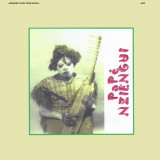
Kadi Yombo, published in 1989, is the most successful album in the quest for a fusion between tradition and modernity in Bwiti harp music of the Tsogho people of Gabon. Combining beating rattles with a layer of synthesizers, Papé Nziengui blends in a contrapuntal dialogue characteristic of harp playing: male song in appeal and female choir in response, male voice of the musical arc and rhythms of female worship. But above all it’s Tsogho ritual music and modern studio orchestration. The result is an initiatory itinerary of 10 musical pieces which are all milestones likely to be simultaneously listened to, danced, meditated on, and soon acclaimed. In the years since, Nziengui has traveled he world from Lagos to Paris, from Tokyo to Cordoba, from Brussels to Mexico City to become a true icon, the emblem of Gabonese music.
Like Bob Dylan, "electrifying" folk and Bob Marley mixing rock with reggae, some purists have criticized Nziengui for having distorted the music of harp by imposing a cross with modern instruments. They even went so far as to claim that Nziengui was just an average harpist covering his shortcomings with stunts that were only good for impressing neophytes; like playing a harp placed upside down behind his back or playing two or three harps simultaneously. Sincere convictions or venomous defamations, in any case, Nziengui never gave in to such attacks, imposing himself on the contrary to pay homage to the elders (Yves Mouenga, Jean Honoré Miabé, Vickoss Ekondo) while instructing the maximum of young people. He is thus the promoter of many young talents, the most prominent of which is certainly his nephew Jean Pierre Mingongué. In a conservative society where the sacred is confused with secrecy, exposing the mysteries of Bwiti in broad daylight can be punished by exclusion or even execution.
Papé Nziengui has always claimed that he faces such risks because he never felt enslaved to a community that governs his life, that regulates his conduct, that has a right of censorship over his activities. Like Ravi Shankar, the famous sitarist, Papé Nziengui is a man of rupture but also of openness, a transmitter of culture. As proof, he has established himself in Libreville, Gabo’s capital, as the main harpist for sessions and concerts, accompanying the greatest national artists (Akendengué, Rompavè, Annie-Flore Batchiellilys, Les Champs sur la Lowé, etc.) as well as foreign artists (Papa Wemba, Manu Dibango, Kassav', Toups Bebey, etc.). In 1988, he was the first harpist to release an album in the form of a cassette produced by the French Cultural Center (Papé Nziengui, Chants et Musiques Tsogho). At the same time, he created his own group (Bovenga), combining traditional music instruments (musical bow, drums, various percussion instruments, etc.) in the framework of a true national orchestra, which gave the first concert and the first tours of a traditional music that was both modern and dynamic, thus "democratizing" the harp, to the dismay of certain purists.
On the other hand, in modern music, dominated by the logic of profit or even commercialism, artistic creation must often be adjusted for a specific audience based on reason rather than heart. But instead of allowing himself to be distorted, Papé Nziengui has always tried to produce music that is not a caricature, worthy in its expression as in its content, of the sacredness and transcendence of the music of the Origins. This is what makes Nziengui not only the musician, but the man someone whose age hasn’t altered any of his freshness or authenticity

Kadi Yombo, published in 1989, is the most successful album in the quest for a fusion between tradition and modernity in Bwiti harp music of the Tsogho people of Gabon. Combining beating rattles with a layer of synthesizers, Papé Nziengui blends in a contrapuntal dialogue characteristic of harp playing: male song in appeal and female choir in response, male voice of the musical arc and rhythms of female worship. But above all it’s Tsogho ritual music and modern studio orchestration. The result is an initiatory itinerary of 10 musical pieces which are all milestones likely to be simultaneously listened to, danced, meditated on, and soon acclaimed. In the years since, Nziengui has traveled he world from Lagos to Paris, from Tokyo to Cordoba, from Brussels to Mexico City to become a true icon, the emblem of Gabonese music.
Like Bob Dylan, "electrifying" folk and Bob Marley mixing rock with reggae, some purists have criticized Nziengui for having distorted the music of harp by imposing a cross with modern instruments. They even went so far as to claim that Nziengui was just an average harpist covering his shortcomings with stunts that were only good for impressing neophytes; like playing a harp placed upside down behind his back or playing two or three harps simultaneously. Sincere convictions or venomous defamations, in any case, Nziengui never gave in to such attacks, imposing himself on the contrary to pay homage to the elders (Yves Mouenga, Jean Honoré Miabé, Vickoss Ekondo) while instructing the maximum of young people. He is thus the promoter of many young talents, the most prominent of which is certainly his nephew Jean Pierre Mingongué. In a conservative society where the sacred is confused with secrecy, exposing the mysteries of Bwiti in broad daylight can be punished by exclusion or even execution.
Papé Nziengui has always claimed that he faces such risks because he never felt enslaved to a community that governs his life, that regulates his conduct, that has a right of censorship over his activities. Like Ravi Shankar, the famous sitarist, Papé Nziengui is a man of rupture but also of openness, a transmitter of culture. As proof, he has established himself in Libreville, Gabo’s capital, as the main harpist for sessions and concerts, accompanying the greatest national artists (Akendengué, Rompavè, Annie-Flore Batchiellilys, Les Champs sur la Lowé, etc.) as well as foreign artists (Papa Wemba, Manu Dibango, Kassav', Toups Bebey, etc.). In 1988, he was the first harpist to release an album in the form of a cassette produced by the French Cultural Center (Papé Nziengui, Chants et Musiques Tsogho). At the same time, he created his own group (Bovenga), combining traditional music instruments (musical bow, drums, various percussion instruments, etc.) in the framework of a true national orchestra, which gave the first concert and the first tours of a traditional music that was both modern and dynamic, thus "democratizing" the harp, to the dismay of certain purists.
On the other hand, in modern music, dominated by the logic of profit or even commercialism, artistic creation must often be adjusted for a specific audience based on reason rather than heart. But instead of allowing himself to be distorted, Papé Nziengui has always tried to produce music that is not a caricature, worthy in its expression as in its content, of the sacredness and transcendence of the music of the Origins. This is what makes Nziengui not only the musician, but the man someone whose age hasn’t altered any of his freshness or authenticity
Raa spelar Pierce & von Euler ("Raa plays Pierce and von Euler") is Raa's
third studio album, following the acclaimed Skanes jarnvagar (2018) and
Ljungens lag (2019)
The A-side is comprised of two songs by Spiritualized, and the B-side contains
dub- like versions of Stockholm- based musician Henrik von Euler's piano EP,
Hemskogen. As everyone knows, four songs are rarely enough for an LP. So, it
was time to dig up a few old favourites. "I have loved Spiritualized ever since the
release of their debut album, Lazer Guided Melodies, in 1992. I'm especially fond
of the slow songs and their abysmal bass lines. "Take Your Time" is one of them,
and the idea to make something with it has followed me for a long time. "I Think
I'm in Love" is here translated into "Jag tror jag är kär". The energy of it invites
irresponsible late-night driving", says Magnus Sveningsson.
Kadi Yombo, published in 1989, is the most successful album in the quest for a fusion between tradition and modernity in Bwiti harp music of the Tsogho people of Gabon. Combining beating rattles with a layer of synthesizers, Papé Nziengui blends in a contrapuntal dialogue characteristic of harp playing: male song in appeal and female choir in response, male voice of the musical arc and rhythms of female worship. But above all it’s Tsogho ritual music and modern studio orchestration. The result is an initiatory itinerary of 10 musical pieces which are all milestones likely to be simultaneously listened to, danced, meditated on, and soon acclaimed. In the years since, Nziengui has traveled he world from Lagos to Paris, from Tokyo to Cordoba, from Brussels to Mexico City to become a true icon, the emblem of Gabonese music.
Like Bob Dylan, "electrifying" folk and Bob Marley mixing rock with reggae, some purists have criticized Nziengui for having distorted the music of harp by imposing a cross with modern instruments. They even went so far as to claim that Nziengui was just an average harpist covering his shortcomings with stunts that were only good for impressing neophytes; like playing a harp placed upside down behind his back or playing two or three harps simultaneously. Sincere convictions or venomous defamations, in any case, Nziengui never gave in to such attacks, imposing himself on the contrary to pay homage to the elders (Yves Mouenga, Jean Honoré Miabé, Vickoss Ekondo) while instructing the maximum of young people. He is thus the promoter of many young talents, the most prominent of which is certainly his nephew Jean Pierre Mingongué. In a conservative society where the sacred is confused with secrecy, exposing the mysteries of Bwiti in broad daylight can be punished by exclusion or even execution.
Papé Nziengui has always claimed that he faces such risks because he never felt enslaved to a community that governs his life, that regulates his conduct, that has a right of censorship over his activities. Like Ravi Shankar, the famous sitarist, Papé Nziengui is a man of rupture but also of openness, a transmitter of culture. As proof, he has established himself in Libreville, Gabo’s capital, as the main harpist for sessions and concerts, accompanying the greatest national artists (Akendengué, Rompavè, Annie-Flore Batchiellilys, Les Champs sur la Lowé, etc.) as well as foreign artists (Papa Wemba, Manu Dibango, Kassav', Toups Bebey, etc.). In 1988, he was the first harpist to release an album in the form of a cassette produced by the French Cultural Center (Papé Nziengui, Chants et Musiques Tsogho). At the same time, he created his own group (Bovenga), combining traditional music instruments (musical bow, drums, various percussion instruments, etc.) in the framework of a true national orchestra, which gave the first concert and the first tours of a traditional music that was both modern and dynamic, thus "democratizing" the harp, to the dismay of certain purists.
On the other hand, in modern music, dominated by the logic of profit or even commercialism, artistic creation must often be adjusted for a specific audience based on reason rather than heart. But instead of allowing himself to be distorted, Papé Nziengui has always tried to produce music that is not a caricature, worthy in its expression as in its content, of the sacredness and transcendence of the music of the Origins. This is what makes Nziengui not only the musician, but the man someone whose age hasn’t altered any of his freshness or authenticity