Comet Records presents the Tony Allen & Afrika 70 reissue series with the classic late seventies first four solo albums of Tony Allen remastered and restored: Jealousy, Progress, No Accomodation for Lagos & No Discrimination, all coming in an heavy Deluxe Tip-On Jacket.
Tony's solo album, No Discrimination, marks an important turning point in Tony Allen's musical life. Tony had recently left Fela's band, which was clearly an emotional yet necessary change as Allen sings of love and brotherhood throughout his fourth solo album. No Discrimination, both in composition and sound, is a blueprint for the future of Afrobeat, decades ahead of its time. The songs are a mixture of old and new - fusing the classic Afrobeat compositional style with modern production and ideas. Classic tunes like "No Discrimination" and "Ariya" pushed boundaries for what Afrobeat could be, which a wave of Afrobeat bands would pick up on decades later.
With No Discrimination, Tony begins to move Afrobeat into the future, which he would continue doing for the rest of his career.
Tony Allen was a musical and compositional visionary, and this album finds him beginning to explore that vision outside of Fela's immense gravitational pull. They are the start of a new era in Tony's fruitful career as a solo artist, opening the floodgates for his distinctive Afro-Funk sound and laying the foundation for the next generation of Afrobeat musicians to come.
Search:lagos
Acid Jazz Records are proud to announce an
exclusive licensing agreement with Albarika Store,
the legendary record label that defined the sound
of Benin and influenced the entire region of West
Africa and beyond.
This is the first exhaustive trawl of the archive and
will see the label presented in a way that ensures
its historical importance is recognized.
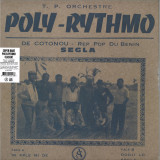
‘Segla’ is a hens’ teeth-rare Poly Rythmo album
from 1978 that was originally released without a
sleeve as ALS059. Recorded at EMI Lagos, Nigeria,
as per most of the Poly Rythmo recordings for
Albarika, the sound quality is from the tapes is
dynamic and fresh.
Transferred from the original tapes and
remastered by Grammy award-winning engineer
Frank Merritt at The Carvery, the album is
presented with beautiful artwork and packaging to
match the sonics. This is the music as it should be
heard.
Over the next few years a comprehensive reissue
campaign is planned, overseen by Florent
Mazzoleni and David Hill for Albarika Store, with
Dean Rudland as executive producer for Acid Jazz.
The DISCO REGGAE LOVERS series reaches a zenith with the first ever reissue of Dambala and their beautiful reggae roots song Lorraine. Long a diggers secret, it seemed only apt to ask the DJ who brought it to the attention of many, with a wonderful dub by label stalwart, Lexx.
Born in Lagos, Nigera but growing up in the Harrow Road area of West London, Augustus "Gus" Anyia immersed himself in the music of area during the vibrant 60s awakening of African and Caribbean cultures. Learning drums as a boy, he quickly progressed to classical guitar and would perform at school and beyond.
Jamming with guitarist Alvin Christie led to them forming Dambala in 1975. Their first releases set them on their way, produced by Jimmy Lindsey, mixed by Dennis Bovell and cut by Porky. From there more singles followed, repeatedly touring Europe and recording for a TV documentary, before pressures took hold and following a change in line up, the band recorded their sole album, Azania.
Lorraine was the stand out, a wonderful love song of youth's forlorn love, it's warm drum and bass encompassing the yearning lyric. A small masterpiece of UK roots in it's own right, this special 7" comes with a simple, but perfect dub mix from Lexx and will be followed by a comprehensive reissue of Dambala by the label.
- A1: Africa Is My Root - Osayomore Joseph And The Creative Seven
- A2: Ta Gha Hunsimwen - Akaba Man The Nigie Rokets
- A3: Popular Side - Akaba Man And The African Pride
- B1: Iranm Iran - Victor Uwaifo And His Titibitis
- B2: Sakpaide No 2 - Victor Uwaifo And His Titibitis
- B3: Ta Ghi Rare - Akaba Man The Nigie Rokets
- C1: My Name Is Money - Osayomore Joseph
- C2: Ogbov Omwan - Akaba Man The Nigie Rokets
- C3: Aibalegbe - Victor Uwaifo And His Titibitis
- D1: Who Know Man - Osayomore Joseph And The Ulele Power Sound
- D2: Obviemama - Victor Uwaifo And His Titibitis
- D3: Ororo No De Fade - Osayomore Joseph And The Ulele Power Sound
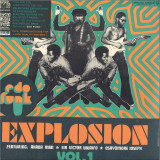
Analog Africa Presents Edo Funk Explosion Vol. 1, available on
2xLP/Gatefold LP with 20-page booklet / CD with 36-page booklet. It was
in Benin City, in the heart of Nigeria, that a new hybrid of intoxicating
highlife music known as Edo Funk was born.
It first emerged in the late 1970s when a group of musicians began to experiment with different ways of integrating elements from their native Edo culture
and fusing them with new sound effects coming from West Africa s night-clubs.
Unlike the rather polished 1980 s Nigerian disco productions coming out of the
international metropolis of Lagos Edo Funk was raw and reduced to its bare
minimum.
Someone was needed to channel this energy into a distinctive sound and Sir
Victor Uwaifo appeared like a mad professor with his Joromi studio. Uwaifo
took the skeletal structure of Edo music and relentless began fusing them with
synthesizers, electric guitars and 80 s effect racks which resulted in some of the
most outstanding Edo recordings ever made. An explosive spiced up brew with
an odd psychedelic note known as Edo Funk.
That’s the sound you’ll be discovering in the first volume of the Edo Funk Explosion series which focusses on the genre’s greatest originators; Osayomore
Joseph, Akaba Man, and Sir Victor Uwaifo: Osayomore Joseph was one of the
first musicians to bring the sound of the flute into the horn-dominated world
of highlife, and his skills as a performer made him a fixture on the Lagos scene.
When he returned to settle in Benin City in the mid 1970s - at the invitation of
the royal family - he devoted himself to the modernisation and electrification
of Edo music, using funk and Afro-beat as the building blocks for songs that
weren’t afraid to call out government corruption or confront the dark legacy of
Nigeria’s colonial past.
Akaba Man was the philosopher king of Edo funk. Less overtly political than Osayomore Joseph and less psychedelic than Victor Uwaifo, he found the perfect
medium for his message in the trance-like grooves of Edo funk. With pulsating
rhythms awash in cosmic synth-fields and lyrics that express a deep personal
vision, he found great success at the dawn of the 1980s as one of Benin City’s
most persuasive ambassadors of funky highlife.
Victor Uwaifo was already a star in Nigeria when he built the legendary Joromi
studios in his hometown of Benin City in 1978. Using his unique guitar style as
the mediating force between West-African highlife and the traditional rhythms
and melodies of Edo music, he had scored several hits in the early seventies,
but once he had his own sixteen-track facility he was able to pursue his obsession with the synesthetic possibilities of pure sound, adding squelchy synths,
swirling organs and studio effects to hypnotic basslines and raw grooves. Between his own records and his production for other musicians, he quickly established himself as the godfather of Edo funk.
What unites these diverse musicians is their ability to strip funk down to its
primal essence and use it as the foundation for their own excursions inward to
the heart of Edo culture and outward to the furthest limits of sonic alchemy.
The twelve tracks on Edo Funk Explosion Volume 1 pulse with raw inspiration,
mixing highlife horns, driving rhythms, day-glo keyboards and tripped-out guitars into a funk experience unlike any other.
Melvin Ukachi needs little introduction, the Lagos (Nigeria) based vocalist and bandleader is a living legend. Melvin is known for his fantastic solo albums, his vocals for the afrobeat star-groups M.F.B. and Ozzobia_but his biggest legacy is without a doubt him being the singer and bandleader of Ofege. Melvin formed Ofege in the early 1970s (when he and the other band members were all still a bunch of teenagers). Due to their vibrant combo of sweet harmonies, hooks & fuzz, Ofege would become one of the most legendary Nigerian groups of all time, with expressive sales and national stardom to follow. At the turn of the century (and because of tracks appearing on various compilations) Ofege would receive international acknowledgment for being the first of their kind and THE ultimate West-African psychedelic funk band! Melvin Ukachi recorded four milestone albums with Ofege: 'Try and Love' (1973) 'The Last of The Origins' (1976), 'Higher Plane Breeze' (1977) and 'How Do You Feel' (1978). When the Ofege story came to an end, Melvin recorded two astonishing solo albums: 'Evolution-Bring Back The Ofege Beat' (1981) and 'I am Ok' (1985). Both of his solo recordings have now become much sought-after holy grails for collectors and fans alike. On the album, we are presenting you today (Evolution-Bring Back The Ofege Beat) the listener is treated to the trademark Ofege sound (as the title of the record obviously suggests). Next to the rootsy and raw Ofege sound, we're shown a perfect glimpse of the late '70s afrobeat works combining soul, jazzy rhythms, William Onyeabor style synths & fluid boogie-danceability Expect some serious 'all-star' guest musicians as well_featured on the album are Chyke Madu (The Funkees) on drums, Berkley Jones (Ofege) on guitar_and many other local legends. To top things off the tracks were recorded and mixed at the legendary Abbey Road Studios in London_all slickly engineered by Rafiu Ayoade (The Apostles) and produced by the president of sound himself Odion Iruoje (known for his work with Manu Dibango, Fela Kuti_and many others). 'Evolution-Bring Back The Ofege Beat' was released on EMI Nigeria in 1981 and is a total Afro-psych-funk classic that begs for a special place in your record collection. It's tight, funky and Melvin's soulful vocals are to die for. This record is a monster! Tidal Waves Music now proudly presents the first-ever reissue (supervised by Melvin Ukachi himself) of this amazing Nigerian Afrobeat album. This RARE classic (original copies tend to go for large amounts on the secondary market) is now finally back available as a limited 180g vinyl edition (500 copies) complete with the original artwork made at Grafikad (who were responsible for designing landmark sleeves for renowned artists such as Fela Kuti).
As a musician, life is often lived on the road. Each city leaves its imprint on the artist as they develop their craft. Touring, recording, and keeping up with friends and family took Oddisee beyond his hometown of Washington DC to Australia, Europe, Asia, Africa, and South America. From cities like East Africa's Khartoum in Sudan, to cosmopolitan jaunts like Paris & Tokyo. The influence of these travels can be heard on every one of the 24 tracks included on "Traveling Man". Each track was produced while Oddisee stayed in the city it was titled after. The result is a 24 city sonic tour of the world. Listen as Oddisee guides you through his instrumental journey around the globe. Visit the lonely winter streets of Detroit, festive San Francisco, hypnotic Khartoum - or let your swagger loose with the theme music of Chicago or the bounce of South Central. Oddisee sees the world, so that you can hear it.
Funkiwala Records presents the third in the series of "Lokkhi Terra meets"albums, with the London fusionistas creating another unique sound-clash, this time with ex-Fela Kuti keyboardist and legendary UK Afro-beat ambassador Dele Sosimi, and members of his critically acclaimed Afro-beat Orchestra.
This particular collaboration has been bubbling away for a few years now, teasing audience expectations with a handful of sold out shows each year in between both bands busy schedules.
Featuring the two pianos of Kishon Khan and Dele Sosimi – Cuban percussionists/vocalists Geraldo De Armas (Yoruba Andabo), Oreste Noda (Ariwo), Javier Camilo (Ibrahim Ferrer) - a horn section led by Justin Thurgur (Bellowhead) featuring Yelfris Valdes (Sierra Maestra) and Graeme Flowers (Kyle Eastwood) to name a few – this is an All-star cast.
Kishon Khan's Lokkhi Terra have over a number of years now been quietly establishing themselves as one of London's more unusual heavyweight outfits, described as "Stunning Headliners… A majestic multi-cultural blend of sounds… effortlessly builds bridges between rolling Indian raga rhythms, Afro-Cuban grooves, Acid Jazz/funk and free flowing improvisation" (Timeout London). Included amongst the band members are London's top Cuban musicians, adding their infectious rich musical history to the city's melting pot.
When the band wanted to explore Cuban links with another of their favourite traditions, Afrobeat, who better to bring in then one of the Afrobeat originators – maestro Dele Sosimi – "Sosimi creates some of the most bewitching grooves in modern African music" E Jazz News.
Bringing together two Yoruba speaking musics - with different accents, from different sides of the Atlantic - Havana meets Lagos in London – A Cuban-Afrobeat-Experience. CUBAFROBEAT.
Lancaster had initially cut his musical teeth with the avant-garde on New York’s Lower East Side in the 1960s (famously on sessions with pianist Dave Burrell and drummer Sunny Murray) and in Paris during the ‘70s after an appearance at the Actuel festival but, throughout his career, his path was built around community engagement, positivity and “the Philly jazz sound, Germantown style.” He became an ambassador for the music of the City Of Brotherly Love, starting his own Dogtown label, helping launch the Philly Jazz imprint and campaigning tirelessly to improve the circumstances of the city’s street musicians. Lancaster’s sessions for Black Fire were planned following a gig at Caverns Jazz Club in Washington DC. “Jimmy Gray of Black Fire and I originally met during the ‘riotous blisters’ of the late Sixties there,” explained Lancaster. “We became the best of friends.” Backed by a band of Philly musicians including percussionist Keno Speller and Baba Robert Crowder (drummer for Olatunji and Art Blakey), the album also featured the Drummers From Ibadan led by Tunde Kuboye, another influential figure dedicated to community jazz with whom Lancaster had bonded while teaching in Lagos. The result was a free-flowing set of spirituality and positivity, built around full band groove workouts, solo pieces and heavy African roots. “We had big fun documenting this music,” remembered Lancaster. The message of the album remains as relevant today as ever, “I dedicate this album to all African Americans in the USA. To the youth, I ask ‘What does it profit a man to gain the whole world and lose his soul?’”
Long sought after by collectors, DJs and lovers of hard salsa and boogaloo alike, 'Yo Traigo Boogaloo' is now lovingly reissued in replica form with the original cover art, remastered from the studio tapes, reproducing that magical MAG studio sound for today's aficionados to enjoy like it was 1969 all over again. Alfredo Linares is a globetrotting pianist, composer, bandleader and producer from Peru with a long, prolific career in latin music. His long sought after by DJs and collectors of hard salsa and boogaloo alike, 'Yo Traigo Boogaloo' is now lovingly reissued in replica form with the original cover art, remastered from the studio tapes, reproducing that magical MAG studio sound for today's aficionados to enjoy like it was 1969 all over again. Details: Alfredito "Sabor" Linares is a globetrotting pianist, composer, bandleader and producer from Lima, Peru with a long, prolific career in hot Latin music spanning more than half a century. Though Linares has come to recent international fame through his work with William "Quantic" Holland, he was already quite popular and famous in his adopted countries of Colombia and Venezuela in the 1970s and 80s during the salsa boom. However, his career began in Lima, backing timbalero Ñico Estrada at age 17 in 1961, and Alfredito's first notable recording as a sideman was a few years later on the now legendary 'El Combo de Pepe' album for IEMPSA/Odeon. Subsequently Linares would advance his career by recording two fabulous records under his own capable leadership as Alfredo Linares Y Su Sonora at the end of the decade for the MAG label. These releases capitalized on recent developments in New York Latin music, namely Latin jazz, boogaloo, descarga (jam session) and what would later be marketed as "salsa" with roots in the Cuban guaguancó and guaracha genres. One can hear direct inspiration coming from Joe Cuba, Ricardo Ray, and Eddie Palmieri, especially on the first album, 'El Pito', and yet by the second record, there are plenty of original tunes as well. More importantly there is a 'swing' and assertiveness to the playing (and arrangements) that prove every bit as authentic, tough and danceable as their New York inspirations. As Linares himself recounts, "In that era, we fought against a generation that was half-blind, because the people who understood what we were doing were few. We had to fight hard for our space in Perú, that's where the swing comes from." That special 'swing' also emanated from Linares' ace backing band, which happened to be a talented stable of MAG studio musicians who all understood Cuban and jazz music: percussionists Mario Allison and Coco Lagos, bassist Joey di Roma, Kiko Fuentes and Carlos Muñoz on lead vocals and Melcochita on coro (vocal chorus). According to Linares, the studio band was "open-ended, some musicians came some days, others on other days_Nilo Espinoza on saxophone, Betico Salas and Tito Chicoma on trumpets. Otto de Rojas played piano, and so did Charlie Palomares, who played vibraphone. Another good musician was guitarist Carlos Hayre." Though the recordings were cut "live in the studio" and many were basically composed on the spot, the intrinsic strength and maturity of the performances on 'Yo Traigo Boogaloo' stand the test of time as one of Peru's most important contributions to tropical music across the decades, establishing Alfredito Linares as a master of the idiom and serving as a harbinger for great things to come for him in Colombia and Venezuela. Long sought after by collectors, DJs and lovers of hard salsa and boogaloo alike, 'Yo Traigo Boogaloo' is now lovingly reissued in replica form with the original cover art, remastered from the studio tapes, reproducing that magical MAG studio sound for today's aficionados to enjoy like it was 1969 all over again. Pablo E Yglesias DJ Bongohead of Peace & Rhythm
Comet Records presents the Tony Allen & Africa 70 reissue series with the classic late seventies first four solo albums of Tony Allen remastered and restored: Jealousy, Progress, No Accomodation for Lagos & No Discrimination, all coming in an heavy Deluxe Tip-On Jacket.
Recorded with Afrika 70 at the height of their power as Fela Kuti’s band, these are seminal recordings in the pantheon of Afrobeat history. Once again, Comet Records has the opportunity to shine a light on the sheer musicality and originality of the humble drumming giant. Tony Allen’s passing in April 2020 sent a shockwave across the world, as fans and collaborators from Lagos to Brooklyn and everywhere in between mourned the loss of a generous and powerful being, the kind of being we thought would live forever. Thankfully, we have the gift of Tony’s timeless music, starting with these four special solo albums, through which his musical voice guides our dancing feet and full hearts forever.
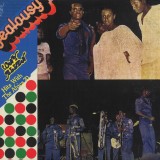
Produced by Fela Kuti in 1975, Tony Allen’s first solo album with Afrika 70, Jealousy, is like the man himself: light on its feet yet deeply settled, spacious yet bursting with magical talent. On the title track “Jealousy,” Tony is joyously in his element, conducting one of the mightiest bands in the world - he is the head chef, and the band is cooking. The second track, “Hustler,” features one of the most iconic solos in drumming history, a rare glimpse into Tony’s gift of musical phrasing - it is possibly the best example of Tony’s ability to literally
speak through his beloved drumset.
Tony Allen possessed magic within him, which he spent his entire life sharing with us through his drumming hands, tapping feet and generous heart. That magic is ever-present and strong on these formative solo albums - they are must-haves for Afrobeat fans across the globe.
2025 Repress
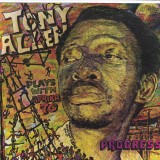
Comet Records presents the Tony Allen & Afrika 70 reissue series with the classic late seventies first four solo albums of Tony Allen remastered and restored: Jealousy, Progress, No Accomodation for Lagos & No Discrimination, all coming in an heavy Deluxe Tip-On Jacket. Recorded with Afrika 70 at the height of their power as Fela Kuti’s band, these are seminal recordings in the pantheon of Afrobeat history. Once again, Comet Records has the opportunity to shine a light on the sheer musicality and originality of the humble drumming giant. Tony Allen’s passing in April 2020 sent a shockwave across the world, as fans and collaborators from Lagos to Brooklyn and everywhere in between mourned the loss of a generous and powerful being, the kind of being we thought would live forever. Thankfully, we have the gift of Tony’s timeless music, starting with these four special solo albums, through which his musical voice guides our dancing feet and full hearts forever. Progress showcases Afrika 70 doing what they do best: digging deep and bringing the force, but always with
remarkable restraint and swagger, propelled by Tony’s steady hands and feet. The title track, “Progress” starts with a bang and never loses steam - a performance so fierce that it stands alongside Fela’s most
powerful anthems. The second track, “Afro Disco Beat” shows Tony Allen at one of his creative peaks. He tells: “What I was saying on Progress was that instead of fighting Fela for money, I was trying to progress and create on my own. Progress is what a hard worker is looking for I had to look it for myself” (Taken from Tony’s autobiography by Michael Veal). Tony Allen possessed magic within him, which he spent his entire life sharing with us through his drumming hands, tapping feet and generous heart. That magic is ever-present and strong on these formative solo albums - they are must-haves for Afrobeat fans across the globe.
Deep and wicked West African Disco ultra rarity (Recorded in Lagos, 1981) by the band of Cameroonian multi-instrumentalist, Francis Mbilong..
Don't sleep on this winner!
Born in 1952 in Yaoundé, Cameroon, Francis Mbilong, would go on to lead an exciting and diverse career all across West-Africa. From a very young age at the behest of a family friend, Francis studied harmonium, clarinet, saxophone, and many other instruments. He would eventually funnel most of his talent into the guitar, on which he would write the majority of his body of work. After releasing several recordings under myriad band names during the 1970s, Francis went on to form his longest-standing outfit, Revelation; a name under which he has released recordings as recently as 2020.
At the time of the release of Love Affairs by Revelation in 1981, Mbilong would spend most of his time gigging in a club called Phoenicia in Lagos, Nigeria. He preferred the ambiance of a luxury night club to the regular clubs in Lagos, and gigging there afforded him the privilege of sitting in on jam sessions when acts like Kool & The Gang, or Bob Marley were in town. Altogether his career was storied and multitudinous, and was made possible by his immense talent as a musician.
Love Affairs contains within its seven tracks, a heady, deep, soulful approach to boogie that is seldom tapped by other recordings of its time. Mbilong's careful and disciplined approach to songwriting sets this album in a tier elevated from the usual four-on-the-floor disco routine. Each song is more engaging than the last, and each pocket respectively deeper. Revelation serves a familiar live-off-the-floor energy with the precision and soulfulness of a group of musicians who are as comfortable with each other as they are talented. The infectious rhythms on this album are the stuff of earworms and dancing is mandatory.
Hailed by none other than Seun Kuti as "one of the best things to come out of Lagos", Nigerian trumpeter, composer and bandleader Etuk Ubong has developed an original style he calls "Earth Music". Weaving together a unique combination of not only afrobeat, highlife and jazz, but also the ritualistic drumming of Ekombi, the result is urgent and highly energetic, yet spiritual; his compositions reflecting his heritage and life philosophy of goodwill, peace and love for humanity. Ubong's music is so vibrant and propulsive that one can easily make comparisons with leading lights of the UK scene, such as the Shabaka Hutchings-led Sons of Kemet, but at the same time it is distinctly Nigerian.
Impromptu muscovite supergroup Lilipulu turn the needle neon with a quartet of unexpected killers for club cosmonauts, rainforest ravers, anxious insomniacs and giddy punks.
Unplanned, inspired and all the way live – the pin is glowing! Ever wondered why the Growing Bin releases sound so damn good? Well, it has more than a little to do with mastering magician Sergey Luginin, whose eagle-ears and technical know how have been a part of the process since GBR002. For the latest Glowing Pin powerplay, our man in Moscow joins some close friends on the other side of the console, letting the creative juices flow for ‘Four Amazing Tracks’. Luring Simple Symmetry brothers Sasha & Sergey and DJ & photographer Ivan Pustovalov into his studio with the promise of an afternoon stroll through the nearby Elk Forest, Sergey set the circuitry in motion and the quartet got lost in music. What begin with a plan for some simple edits and a woodland walk quickly became a full scale studio throw down, reimagining forgotten favourites amid a multi-instrumental stew of propulsive polyrhythms, low slung bass, cosmic synths and frazzled guitars. There’s techno-tribal hypnosis on the mind bending, brain blending A1, poetic post punk on the angular, janglier A2, outrageous Afro-cosmic on the freaky Floyd-in-Lagos B1 and languid ambience on the lysergic lullaby which closes the set. Recorded as they worked and presented in chronological order, this EP is a triumph of inspiration over perspiration - a snapshot of a moment which will last forever.
Patrick Ryder
‘Rejoice’ is a very special collaboration between Tony Allen, the legendary drummer and co-founder of Afrobeat, and Hugh Masekela, the master trumpet player of South African jazz.
Having first met in the 70's thanks to their respective close associations with Fela Kuti, the two world-renowned musicians talked for decades about making an album together. When, in 2010, their touring schedules coincided in the UK, the moment presented itself and producer Nick Gold took the opportunity to record their encounter. The unfinished sessions, consisting of all original compositions by the pair, lay in archive until after Masekela passed away in 2018.
With renewed resolution, Tony Allen and Nick Gold, with the blessing and participation of Hugh Masekela’s estate, unearthed the original tapes and finished recording the album in summer 2019 at the same London studio where the original sessions had taken place.
‘Rejoice’ can be seen as the long overdue confluence of two mighty African musical rivers – a union of two free-flowing souls for whom borders, whether physical or stylistic, are things to pass through or ignore completely. According to Allen, the album deals in “a kind of South African-Nigerian swing-jazz stew”, with it's roots firmly in Afrobeat.
Allen and Masekela are accompanied on the record by a new generation of well-respected jazz musicians including Tom Herbert (Acoustic Ladyland/The Invisible), Joe Armon-Jones (Ezra Collective), Mutale Chashi (Kokoroko) and Steve Williamson.
“Osondi owendi. What is cherished by some is despised by others. One man’s meat is another man’s poison. Different strokes for different folks. To each their own. Osondi owendi.
It’s a conventional aphorism in the Igbo language but if you utter the word “osondi owendi” in Nigeria today, the first thing that comes to anybody’s mind is the cucumber-cool highlife music maestro Chief Stephen Osita Osadebe and his legendary album that takes its name from the adage. Released in 1984, Osondi Owendi was instantly received as Osadebe’s magnum opus, the crowning event of an exalted career stretching back to the early years of highlife’s emergence as Nigeria’s predominant popular music.
Stephen Osadebe first appeared on the music scene in 1958 as a spry, twenty-two year-old vocalist in the Empire Rhythm Skies Orchestra, directed by bandleader Steven Amechi. With his dapper suits, urbane Nat King Cole-influenced vocal stylings and jaunty, uptempo, calypso-scented dance tunes, he personified the frisky spirit and anxious aspirations of a young, educated generation that had come of age in the wake of the Second World War, in a Nigeria that was rapidly shaking off British colonization and marching towards an independent future. 1959 would be the year that he truly made his mark in the business with his debut solo single “Lagos Life Na So So Enjoyment.” A giddy exhortation of the music, sex, fun and freedom availed by life in the big city, the song became a sensation and an anthem, and Stephen Osadebe became the leader of his own popular dance band, the Nigerian Sound Makers.
Osadebe would ride this wave of acclaim through most of the nineteen sixties, but a change in direction would be called for at the dawn of the seventies. As Nigeria emerged from a devastating civil war, so did a new generation of youth inspired by rock and funk, confrontational sounds reflective of a more violent, less idealistic era. All of the sudden, the idioms of the post-WWII dance orchestras that nurtured Osadebe’s cohort seemed quaint, the stuff of nostalgia. Osadebe needed to evolve to respond to the new tumultuous, turned-up times.
His response? He cooled it down.
Abetted by a new crop of fire-blooded young players, Osadebe slowed his music to a mellow, meditative tempo, brought forward the lumbering, Afro Cuban-accented bass and percussion, from the rockers he borrowed searing lead lines on the electric guitar. Over this musical bedrock, doesn’t so much as sing as he dreamily muses, coos, sighs aphorisms, words of wisdom and inspiration. “When one listens to my music, all I say appears meaningful,” Osadebe explained his lyrical approach, “at times they are in the form of proverbs which provoke much thought afterwards.” The result is a blend that is both rollicking and soothingly languid. Osadebe christened the style Oyolima—a tranquil, otherworldly state of total relaxation and pleasure. Osondi Owendi represents oyolima at its finest, and possibly Nigerian highlife in epitome.
Osondi owendi. What is cherished by some is despised by others. In some way, the album’s title constitutes a paradox. Because Osondi Owendi is a record that it’s almost impossible to imagine being despised by anybody."
- A1: Dur Dur Band - Daraadaa Muxibo
- A2: Omar Shoolil - Hab Isii
- A3: Mukhtar Ramadan Idii - Check Up My Head
- B1: Bakaka Band - Geesiyada Halgamayow
- B2: Fadumo Qassim & Waaberi Band - Waa Kaa Helaa
- B3: Iftin Band - Sirmaqabe
- C1: Mukhtar Ramadan Idii - Baayo
- C2: Ahmed Shimaali & Ahmed Sharif "Killer" - Hoobeya
- C3: Dur Dur Band - Shaleedayaa
- D1: Dur Dur Band - Ladaney
- D2: Bakaka Band - Gobonimada Jira
- D3: Iftin Band - Ii Ooy Aniga
After being blown away by a few tunes - probably just as you will be after listening to this - Samy Ben Redjeb travelled to the infamous capital city of Somalia in November of 2016, making Analog Africa the first music label to set foot in Mogadishu.
On his arrival in Somalia Samy began rifling through piles of cassettes and listening to reel-to-reel tapes in the dusty archives of Radio Mogadishu, looking for music that ‘swam against the current’.
The stars were aligned: an uncovered and unmarked pile
of discarded recordings was discovered in a cluttered corner of the building. Colonel Abshir - the senior employee and protector of Radio Mogadishu’s archives - clarified that the pile consisted mostly of music nobody had manage to identify, or music he described as being ‘mainly instrumental and strange music’.
At the words ‘strange music’ Samy was hooked, the return flight to Tunisia was cancelled. The pile turned out to be a cornucopia of different sounds: radio jingles, background music and interludes for radio programmes, television shows and theatre plays. There were also a good number of disco tunes, some had been stripped of their lyrics, the interesting parts had been recorded multiple times then cut, taped together and spliced into a long groovy instrumental loop.
Like everywhere in Africa during the 1970s, both men and women sported huge afros, bell-bottom trousers and platform shoes.
James Brown, Stevie Wonder, Marvin Gaye and The Temptations’ funk were the talk of the town. In 1977, Iftin Band were invited to perform at the Festac festival in Lagos where they represented Somalia at the Second World Black and African Festival of Arts and Culture.
Not only did they come back with an award but they also returned with Afrobeat. While Fela Kuti’s ‘Shakara’ had taken over the continent and was spreading like wildfire throughout Latin America, it was the track ‘Lady’ that would become the hit in Mogadishu.
Humans is the new album from sought after international touring band the London Afrobeat Collective. From Europe to Africa, Glastonbury to Nigeria’s annual ‘Felabration’ festival, LAC
deliver party music born of their truly global DNA. The nine-strong collective from England, Congo, Italy, France, Argentina and New Zealand combine diverse influences such as Fela, Parliament Funkadelic and Frank Zappa to create an eclectic sound drawing on funk, jazz, rock, and dub to create something addictive and unique.
Their 2015 album Food Chain, received widespread radio support on stations such as BBC 6 Music, Radio X and BBC Radio 2, as well as glowing reviews in The Sunday Times, London Evening Standard, Blues & Soul and Songlines Magazine to name just a few. The new album Humans, (featuring artwork by Ben Hito, renowned for his designs for Parliament / Funkadelic), is a collection of anthemic songs with socially conscious lyrics, set to bold brass lines and hypnotic danceable grooves. In 2015 the London Afrobeat Collective toured Nigeria, appearing several times on national TV and performing in front of ten thousand people at the New Afrika Shrine during ‘Felebration’. They are no less respected in their home town, having collaborated with the likes of Dele
Sosimi and supporting legends such as Ebo Taylor, Fred Wesley And The New JB’s, Tony Allen, and Fela’s son, Femi Kuti.
LAC are now globally recognised for what they really are: not a tribute, but an ever evolving, international band of expert musicians, continuously inspiring each other as they create distinct, sincere and powerful music. Humans is an accomplished work with international flair and cultural relevance from London to Lagos.