POST HEAVEN is Jadu Heart's 5th studio album, but marks their first album since splitting as a couple, signalling the end of one chapter opening the door to another. The romance may be over, but the band endures.
The album release precedes the band supporting Fontaines D.C. across the entirety of their US tour this April with Carlos from Fontaines describing the band as 'one of his favourites out there at the moment'. The picture of Jadu Heart’s evolving emotional landscape of the new record POST HEAVEN has come into sharper focus following the release of singles 'Mild To Moderate Pain', 'AUX' and 'U' which have been played across the BBC Radio network, the band also recently played a session for Radio 1 at Maida Vale Studios playing tracks from the album and covering the Portishead track 'Glorybox'.
This is your favourite band's favourite band and POST HEAVEN will solidify their underground cult band status.
quête:lam
- A1: Olivia Salvadori, Coby Sey, Kid Million - With All The Senses, Su Di Te M'infrango
- A2: Upsammy - Programming
- A3: Sepehr - Divooneh
- A4: Levente - Read It
- A5: Ece + Stefan - Love Street No 90
- A6: Ben Bertrand - What To Do With My Male Body
- A7: The Spy - Paradox
- A8: Filmmaker - Broken Power Gloves
- A9: Christos Chondropoulos - The Spell
- A10: Zona Utopica Garantita - Loop Kraut
- B1: Christos Chondropoulos - Love Song
- B2: Galina Ozeran - Dvizhenie
- B3: Lamusa Ii - Le Reve (Feat Vittoria Totale)
- B4: Solid Blake - Nyx
- B5: Laurel Halo - Waves Goodbye
- B6: Annavsjune - Mirrormom
- B7: Brainwaltzera - Scratch The Sir Face
- B8: Frank Rodas - Dial Up
- B9: Black Dot - The Rainbow Children
- B10: Anpanman - Adjustic High
- B11: Fluctuosa - Lamponi
In 2022, Osàre! Editions founder Elena Colombi approached artists and musicians with a prompt: Every body, everyone needs love to flourish. In her book The Will to Change, the eminent author and social activist, Bell Hooks, invites men to excavate their innermost selves, challenging the way that patriarchal society limits their capacity for intimacy, tenderness, care and emotion. As hooks lays out, feminist thought and work requires the collective participation of all genders in order to realise a liberated world. How can we imagine cross-gender solidarity through music and art? And how can we tell sonic stories that facilitate our full potential as desiring beings? These are the questions that The Male Body Will Be Next starts out from.
The title of the record draws connections between hooks' writing, a film by Rebecca Salvadori and Peter de Potter's stunning photo series of the same name. In de Potter and Salvadori's depictions, men's bodies appear as vulnerable, naked and exposed.
Divided into two parts, the first instalment of The Male Body Will Be Next hinges on colliding energies – the melding of club dance floors and haunting ambient textures, agile techno and noisy experimentation.
'The sun on my skin… it’s so warm and gentle,’ speak-sings Olivia Salvadori on ‘Su Di Te M’Infrango’, visualising utopias. Laurel Halo crafts a dreamscape spun from golden threads of synth and strings. Pensive and reflective, Ben Bertrand’s bass clarinet roams searchingly, its piercing tonality full of longing. Yet, in between these lucid, cinematic passages and spoken word, The Male Body Will Be Next finds space to dance together. Moving in fervent, rhythmic patterns, Sepehr’s ‘Divooneh’ pivots between tension and release. Filmmaker unleashes a wave of energy and The Spy delivers a potent take on vintage electro, the track title hinting at the double-bind of gendered expectations. Propelled between these eclectic styles, the record encapsulates the full spectrum of sonic expression.
- A1: Sprints – Up And Comer
- A2: English Teacher – R&B (Theo Verney Version)
- A3: Lime Garden – Clockwork
- A4: Genn – Reprise (That Girl)
- A5: Panic Shack – I Don't Really Like It
- A6: Big Joanie – Taut
- A7: Kynsy – Stereo Games
- A8: Du Blonde - Tv Star
- B1: Prima Queen – Ugly
- B2: Housewife – I Lied
- B3: Pom Pom Squad – Street Fighter
- B4: Jopy – Graveyard Romance
- B5: Lambrini Girls – Company Culture
- B6: Dream Wife – Room 341
- B7: Queen Cult – Be Better
- B8: Sunflower Bean – Teach Me To Be Bad
Pavilions neue Compilation "Break The Glass, Burn The Cage (The Sound Of Indie Punk Rock)" feiert alles, was Indie und Punk ausmacht. Die Welt der engen, verschwitzten Grassroots-Locations mit elektrisierenden Gitarrenriffs, mitreissenden Basslines und den Stimmen der Bands, die man unbedingt gehört haben muss. Mit herausragenden Tracks von Lime Garden, SPRINTS, Lambrini Girls, Sunflower Bean, English Teacher, Dream Wife, Panic Shack oder, Big Joanie kanalisiert die Compilation die rohe Energie und den rebellischen Geist, die man nur erlangen kann, wenn man sich tief um die Ungerechtigkeiten und den Hass in dieser Welt kümmert. Es ist eine Soundreise durch die Angst, Leidenschaft, den Spass und die Freiheit, die man findet, wenn man "es dem Mann zeigt".
"Break The Glass, Burn The Cage (The Sound Of Indie Punk Rock)" wird am Internationalen Frauentag 2025 als Charity-Album angekündigt, alle Tracks wurden freundlicherweise von den Bands kostenlos gespendet. Somit geht der gesamte Gewinn aus jedem Verkauf an die beiden ausgewählten Wohltätigkeitsorganisationen, die ihr Möglichstes tun, um Frauen und Mädchen aus allen Schichten und Altersgruppen zu helfen, von häuslicher Gewalt über Trauerfälle bis hin zu Obdachlosigkeit und Krieg – Brighton Women's Centre & War Child. Das Album erscheint als recyceltes Vinyl und CD in limitierten Auflagen.
Upit Sarimanah's self-titled album is here, a captivating collection of songs that reimagined what Sundanese music really means. Originally released by Mesra Records, it finally got repressed by LaMunai Records after out of circulation for decades. Born Suryamah on April 16, 1928, in Sadang, Purwakarta, Upit Sarimanah was a famous Indonesian singer, particularly known for her traditional Sundanese songs in the 1950s. She was a prominent figure at RRI Jakarta from 1950 to 1984 and also led the Gamelan Siliwangi.
- 1: Harmonoia
- 2: Trash Mountain (1Pm)
- 3: Sweepstake
- 4: Arrow
- 5: How Far Away
- 6: It Was Like You Were Coming To Wake Us Back Up
- 7: Albany
- 8: Trash Mountain (1Am)
- 9: The Fight
Trash Mountain, Lily Seabird’s new LP out April 04, 2025, via Lame-O Records, is her most searching and immediate effort to date. Over nine delicate but sturdy tracks of intimate folk rock, she pares her songwriting down to its most resonant essen- tials.
There’s not a second wasted as she sings
of loss, growing up, and finding your center when things get overwhelming. It’s an album of unwel- come exits and uncertain futures, but there’s resil- iency and hope at its core. Recorded with producer Kevin Copeland (Hannah Frances, Lightning Bug, Allegra Krieger), it’s a testament to finding joy and connection in life’s chaos and confusion.
- Don't Like You Anymore
- Consistency
- No More
- How Long Will It Take
- Here When You're Ready
- Reasons To Stay
- The Lament
- Don't Let Go
- Talk To Me Nice
- Having A Time
- Win Feat. Clerel
TRANSPARENT 7 inch VINYL[14,08 €]
Two Times Juno awards listed and 2 times Polaris price listed, Canadian Soul Star Tanika Charles unleash the new album "Reason To Stay that drops on May 16 via independent soul label Record Kicks. Reasons To Stay is Tanika Charles' fourth full-length album, and her most introspective to date. Where her songs have typically touched on romantic love and heartache, the core love and loss of this record is family focused. It has taken years for Tanika to be able to publicly reflect on the childhood trauma and family breakup that occurred during her teens. The majority of the album was composed by Tanika with the tight knit team of Scott McCannell (Lydia Persaud, Henry Nozuka), Kyla Charter (Aysanabee) and Chino de Villa (Jessie Reyez). Kelly Finnigan of the Monophonics joined in to mix the bulk of the project and apply some trademark analogue grit to Tanika's sheen. Guests include Quebec-based Soulful singer/songwriter Clerel on the last track "Win", as well as Toronto soul artists Aphrose and Claire Davis providing additional vocals. "I love this album. I love singing these songs. I love that it's made me step outside of my comfort zone. It's forced me to face the root causes of my own insecurities that I carry to this day. Why am I striving so hard to seek validation, and why take it so personally when it doesn't come? That distortion has prevented me from celebrating my own successes at times. This album is me trying to change that." "I love the conversations that have begun with these songs. It's about childhood trauma, but it's not a victim story. I'm doing well, despite the baggage I carry. I want others to be able to carry theirs too." In the last few years, Canadian Soul/R&B powerhouse Tanika Charles has transformed from an emerging solo artist to a commanding performer and bandleader, cementing her status as a staple in the Canadian soul scene. Her previous studio albums - "Soul Run" (2017), "The Gumption" (2019), and "Papillon De Nuit" (2022) - have propelled her to international acclaim, earning her two JUNO nominations, two Polaris Prize listings, and a growing global fanbase. Extensive touring across North America and Europe has further solidified her reputation, with standout performances at festivals such as Trans Musicales in France, Fusion Festival in Germany, Mostly Funk & Soul Festival and Jazz Festival in the UK, Holy Groove Festival in Switzerland, and Canarias Jazz Festival in Spain. She has also shared the stage Estelle, Mayer Hawthorne, Haitus Kayote, Lauryn Hill, Bedouin Soundclash and Macy Gray. Tanika's meteoric rise and undeniable artistry have been widely championed by outlets such as KCRW, KEXP, BBC6 Music, Exclaim!, CBC Music, Uncut Mag, PopMatters, Albumism .. further solidifying her position as a global soul sensation.
- Salvage Title
- Tree Of Heaven
- Betty Ford
- Free Association
- Hollow Skulls
- Artex
- Love Vape
- Wildwood In January
- Resident Evil
- All Over The World
- Fantasia
Ein Album zum Schlafen und Wachen, zum Gehen und Fahren, zum Jagen und Fischen, zum Herumlungern vor einer Raststätte in der verwunschenen Tundra. In Fahrstühlen okay, zum Abendessen nicht so toll. Auf Caveman Wakes Up, dem neuen Album von Friendship und ihrem zweiten für Merge Records, wird die historisch weit gefasste Definition von Country-Musik noch weiter gefasst. Shambolische Gitarren werden durch Flötenpads ausgeglichen, trübe Poesie trifft auf eine Motown-Rhythmusgruppe, ein Song über Jerry Garcia und die First Lady Betty Ford wird mit einem Schlagzeugsolo ausgeblendet, als käme Talk Talk aus einem schmuddeligen Keller in Philadelphia und würde von James Tate gespielt. Der zerklüftete Bariton des Songwriters Dan Wriggins schneidet durch elf düstere, wirbelnde Country-Rock-Songs mit tiefgründiger lyrischer Substanz und Aufrichtigkeit. Wie ein Wecker, der am Rande eines Traums eingebaut ist, gehört "Caveman Wakes Up" gleichermaßen zum bewussten und zum unterbewussten Verstand, voller Hintergründe, durchdrungen von Referenzen und Experimenten, beiläufig und als düstere Warnung vorgetragen und vor allem der kreativen Seele der Musik gewidmet. Im Laufe der Jahre hat sich diese Hingabe ausgezahlt. Friendship ist zu einer Art umgekehrter Supergroup geworden, in der die Band selbst und jedes einzelne Mitglied im Zentrum einer zunehmend prominenten Szene junger Folk- und Country-Musiker und Songwriter steht. Der Schlagzeuger Michael Cormier O'Leary leitet das Instrumentalkollektiv Hour und betreibt zusammen mit dem Bassisten Jon Samuels das Label Dear Life Records, das Freunde und Kollegen beherbergt, die Friendship zu einem wichtigen Einfluss zählen, darunter MJ Lenderman, Florry, und Fust. (Samuels spielt auch die Leadgitarre bei MJ Lenderman and the Wind). Die Band 2nd Grade des Gitarristen Peter Gill ist ebenfalls aktiv und macht zahlreiche Aufnahmen. Wriggins begann mit dem Schreiben der Songs von "Caveman Wakes Up" auf einer verstimmten klassischen Gitarre von Lenderman und beendete es auf einem kaum gestimmten Klavier in einer Wohnung, die er mit G DeGroot von Sadurn teilte. Im Sommer 2023 hatte Wriggins gerade den Iowa Writers' Workshop verlassen, wo seine Liebe zur Poesie und sein Misstrauen gegenüber der akademischen Poesiewelt gleichzeitig wuchsen. Eine Beziehung ging in die Brüche, und Wriggins übernachtete mehrere Wochen in North Carolina im Haus von Lenderman und Karly Hartzman (von Wednesday ), wo er die ersten Demos von "Resident Evil", "All Over the World" und "Love Vape" aufnahm. Wriggins kehrte nach Philadelphia zurück, und die Band machte sich an die Arbeit, um neue Ideen zu entwickeln. Schließlich nahmen sie das Album in fünf Tagen mit Tontechniker Jeff Ziegler (Mary Lattimore, War On Drugs) auf, den Gesang mit Bradford Kreiger, dem Techniker von Love the Stranger. Orgel, Geige (Jason Calhoun) und Flöte (Adelyn Strei) wurden von Lucas Knapp in einer Kirche in West Philadelphia aufgenommen. Textlich bewegt sich "Caveman Wakes Up" auf vertrautem Friendship Terrain - das Heilige wird profaniert und das Profane geheiligt. "Caveman Wakes Up" zeigt Friendships besonderes Genie für visionäre Arrangements, die über Generationen hinweg dem Folk-Rock-Kanon von Neil Young, Joni Mitchell und Emmylou Harris ebenso verpflichtet sind wie Indie-Größen wie Yo La Tengo und den Merge-Labelkollegen Lambchop oder Zeitgenossen wie Lomelda und ML Buch. Mehrere der Songs verwenden Fade-Outs, die im Text von "Love Vape" scherzhaft erwähnt werden, und es gibt andere Elemente, die von Motown und 70er-Jahre-Balladen übernommen wurden: festgefahrene Schlagzeugmuster, Bassintervalle, gefühlvolle Streicherarrangements. Jede Referenz wird über das Genre hinausgeschoben, verwirbelt und wiederholt, zu etwas Neuem, das eindeutig zum Friendship-Sound gehört. Bei "Free Association", "Artex" und "Wildwood in January" ist der Groove so festgelegt, dass andere Klänge nahtlos kommen und gehen können: Mellotron-Flächen, Klavierwirbel und -stiche und klare Gitarrenmelodien, wimmelnde Texturen, die sich als Einheit tarnen. "Caveman Wakes Up" das bisher am weitesten fortgeschrittene Werk von Friendship, ein weiterer Beweis für die Hingabe und Sorgfalt der Band.
A long-time best-seller of the MEG-AIMP collection and long out of print, this album of sanza music recorded among the Gbaya people of the Central African Republic by ethnomusicologist Vincent Dehoux was originally released on CD in 1993. It is now being reissued on vinyl and CD to coincide with the exhibition Afrosonica - Soundscapes. It features a selection of 'songs for thought': an intimate repertoire conducive to introspection, accompanied by the repetitive, meditative sound of lamellaphones.
- Almon Memela - Amapoyisa
- Cowboy Superman - Ntombi Kazipheli
- Mfongozi Guitar Players - Marabi Jazz
- Casper Shiki - Ngazula
- Elliot Gumede - Amasoka
- The Play Singer - Imitwalo
- The Play Singer - Kusile Dale
- Enoch Mahlobo And Shezi - Wenzani
- The Blind Man With His Guitar - Isoka Labaleka
- Nongomo Trio - Guga Mzimba
- The Play Singer - Nga Fika Ekaya
- Cowboy Superman - I Lele Insizwa
- Mbaqanga Guitar Trio - Come Again
- Cowboy Sweethearts - Sambamba Lomfana
- Cowboy Superman And Beauty - Kumnandi Kwazulu
- The Blind Guitar Player - Ungakhulumi
- Thoko And Almon - Mandlovu
- Zachariah And His Guitar - Abafana
- Mampondo And Sobantu - Themba Lami
- Baca Boys - Ngiyamqoma
- Dennis Khanyile - Thembile
- The Play Singer - U Ngi Cebe E Poisen
- Mike Khuzwayo And The Playboys - Zibedu
- The Blind Man And His Guitar - Unledo Wabantu
- Almon Memela - Lashona
"Amazing! Like stumbling on a treasure-trove of unheard Charlie Patton and Blind Willie McTell 78s, but imbued with the spirit of Mahlathini and Ladysmith." Joe Boyd
'But for this compilation of rescued songs masterfully restored from rare 78 rpm shellacs, few could imagine the diversely beautiful roots of Zulu Guitar Music emerging during the period 1950 – 1965. Story-tellers and master musicians appropriate outlaw personae, re-purpose country and western, Hawaiian and other styles, to stretch and challenge our notion of “the Zulu guitar”.
Twenty-five songs (18 on vinyl) plunge us into the depths of the migrant experience. Translations in the liner notes offer us glimpses of pugnacity, melancholy and heartache, all coloured by the paternalism that circumscribed the singers’ apartheid-dominated lives.
The early *mbaqanga* undertow in many of the songs subverts the wanderlust of Country and Western music into a fugitivity burdened by nostalgia. Something irretrievable has been lost, prompting a blending of ideas and cultures to make sense through thankless acts of musical divination. Inadvertently they have been thrust into the role of the antihero, where outwitting competition for lovers is as important as evading the Black Jacks (apartheid’s municipal cops) and their informants.
Considering the politically repressive period that this music emerges from, we can surmise that the specificity in the storytelling went a long way towards evading censure. But even when words are absent, there is a narrative arc suggested by the musical expression.
With most of the master tapes wilfully destroyed or lost, modern transcription and restoration techniques from the original shellac discs present the original sound most likely more clearly than ever heard before.'
Produced for reissue by Chris Albertyn and Matt Temple at Matsuli Music and Siemon Allen at Flatinternational.
Artwork design by Siemon Allen.
Liner note and translations by Kwanele Sosibo.
Audio restoration and lacquers by Frank Merritt at The Carvery and pressed at Pallas, Germany.
Original 78rpm recordings sourced from the collections of Chris Albertyn at Matsuli Music, and Siemon Allen at the Flatinternational Archive.
clear vinyl[26,85 €]
Commemorate's self-titled debut album blends swirling guitars and dreamy vocals to create a hypnotic yet weightless sound, a longing that swells and fades gently. Emerging from Kuala Lumpur's hazy musical depths, Commemorate is a 5-piece ensemble creating their own ethereal soundscapes, while taking heavy influences from shoegaze titans and infusing modern dreampop with post-rock sensibilities. Available in clear and black vinyl.
Justin Moore
The Radio Phonics Laboratory - Telecommunications, Speech Synthesis, and the Birth of Electronic Mus
The Radio Phonics Laboratory by Justin Patrick Moore is the story of how electronic music came to be, told through the lens of the telecommunications scientists and composers who helped give birth to the bleeps and blips that have captured the imagination of musicians and dedicated listeners around the world.
Featuring the likes of Leon Theremin, Hedy Lamarr, Max Matthews, Hal 9000, Robert Moog, Wendy Carlos, Claude Shannon, Halim El-Dabh, Pierre Schaeffer, Pierre Henry, Francois Bayle, Karlheinz Stockhausen, Vladimir Ussachevsky, Milton Babbitt, Daphne Oram, Delia Derbyshire, Edgar Varese & Laurie Spiegel.
Quotes
“From telegraphy to the airwaves, by way of Hedy Lamarr and Doctor Who, listening to Hal 9000 sing to us whilst a Clockwork Orange unravels the past and present, Moore spirits us on an expansive trip across the twentieth century of sonic discovery. The joys of electrical discovery are unravelled page by page.”
Robin Rimbaud aka Scanner
“Embark on an odyssey through the harmonious realms of Justin Patrick Moore’s Radio Phonics Laboratory echoing the resonances of innovation and discovery. Witness the mesmerising fusion of telecommunications and musical evolution as it weaves a sonic tapestry, a testament to the boundless creativity within the electronic realm. A compelling pilgrimage for those attuned to the avant-garde rhythms of technological alchemy.”
Nigel Ayers (Nocturnal Emissions)
“In this captivating exploration of electronic music, Justin Patrick Moore unveils its evolution as guided by telecommunication technology, spotlighting the enigmatic laboratories of early experimenters who shaped the sound of 20th century music. A must-read for electronic musicians & sound artists alike—this book will undoubtedly find a prominent place on their bookshelves.”
Kim Cascone
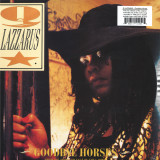
At long last, Q Lazzarus says hello to Dark Entries. Q Lazzarus is the moniker of Diane Luckey, born in New Jersey in 1960. While living in the East Village in New York City in the 1980s, Diane met songwriter Bill Garvey at a party and they recorded “Goodbye Horses” in his home studio. As the story goes, Luckey met Hollywood director Jonathan Demme when she picked him up in her taxi during a snowstorm in 1986. Demme was wowed by her demo tape, which was playing in the cab, and they ended up hanging out at a restaurant for hours talking about life and music. “He liked it so much, I gave him the tape I was listening to, he said he would call me for one of his movies, but I didn’t really take it seriously.” said Luckey. Demme would have the song “Goodbye Horses” first appear in his offbeat comedy Married to the Mob, and then again more memorably in Silence of the Lambs when Buffalo Bill changes into women’s clothing while drowning out his intended victim’s pleas with loud music. Despite the exposure, both Luckey and Garvey languished in relative obscurity. “Goodbye Horses” is the definition of a cult classic, an ethereal tearjerker driven by Garvey’s lush synth work and Luckey’s unmistakably powerful voice. Garvey says, “the song is about transcendence over those who see the world as only earthly and finite.”
Over 15 years of effort have gone into the making of this release. All five songs on this record were previously unreleased and are sourced from original master tapes. The extended version of “Goodbye Horses” was newly mixed from the original stems by Alberto Hernandez at Fantasy Studios. Instrumental and acapella versions of the song are included, which are also available for the first time. Side B opens with “Hellfire,” a brooding number about the New York BDSM nightclub of the same name, showcasing the range and force of Luckey’s voice. “Summertime” follows, with a sauntering synth-reggae spin on the 1937 George Gershwin number. Both B-side tracks are also new mixdowns and edits from the original stems. This record is released alongside Eva Aridjis Fuentes’s documentary on Q Lazzarus, Goodbye Horses: The Many Lives of Q Lazzarus, a work chronicling the life of the enigmatic Luckey. It is an opportune moment to reflect on the underrecognized artists we have lost and the undeniable brilliance of both Diane Luckey and William Garvey.
“Underground” is a relative term. One could argue that all the ‘60s San Francisco psychedelic bands were underground, because the music they made was so far removed from the pop and rock sounds that came before them. But of all the bands in the scene, Lamb was perhaps the most underground of them all. It wasn’t just that their blend of rock, folk, classical, country, blues, and gospel was as hard to classify as any of the era. It was also their vibe. Along with classically trained guitarist and songwriting partner Bob Swanson, Barbara Mauritz’s versatile vocals paced material often imbued with a haunting, mystical aura. Yet they could also be earthy and rootsy, occasionally drifting into spacey psychedelia with hints of raga-rock. Released in the early ‘70s, Lamb’s first two albums, A Sign of Change and Cross Between, did indeed offer some of the most intriguing and eclectic music of any San Francisco rock band on the psychedelic scene. But Lamb’s history predated the release of those records by a good couple of years or so. So prolific were Mauritz and Swanson that quite a few of their original compositions didn’t make it onto their albums, though these were often on par with the songs that did find official release. Unlike many bands of the time who had a bounty of surplus quality tunes, Lamb often taped these in studios and studio-like rehearsal conditions, as well as making some professional tapes of their live performances. Fortunately, many of those tapes survive, including a good number of songs that didn’t find a place on their LPs, as well as substantially different versions of some that did. The best of these from the late 1960s find release for the first time on An Extension of Now: Unreleased Recordings 1968-1969. This collection not only rounds out our picture of one of San Francisco rock’s finest underappreciated acts, but also serves as a first-class document of Lamb as they made their transition from a more standard rock outfit to a group not easily comparable to any other in the region, or indeed any other anywhere. Our black vinyl and CD (with extra tracks, limited to 500) releases feature liner notes by Richie Unterberger drawn from an interview with Bob Swanson, who has also contributed photos and memorabilia from his private archive. Produced by noted Bay Area archivist Alec Palao…if you’re a fan of late-‘60s S.F. psych, you have to hear this!
- 01: Es Ist Immer Sommer Irgendwo
- 02: Song Für Die Alu
- 03: Picknick Auf Schloss Mühlenhof
- 04: Ein Dienstag In Dur (Es Ist Frühling)
- 05: Sonniges Süd Schwabing
- 06: Wenn Du Ein Problem Hast
- 07: Ich Geh Lieber Allein
- 08: Ist Gunther Da?
- 09: Paare Vorm Kino
- 10: Hedy Lamarrs Siebter Mann
- 11: Chez Delmonico's
Black 2LP[31,05 €]
Die Liga der gewöhnlichen Gentlemen, vulgo DLDGG, 2012 aus den Ruinen der verblichenen Superpunk entstanden, bestechen auf ihren nun sieben regulären Alben (+einer Best Of) mit ihrer Version von Popmusik an der sie mit einer erfrischenden Sturheit festhalten. Beherzt setzen sie sich seitdem zwischen alle Stühle. Beseelt von der Idee des ursprünglichen Punk (Man muss kein Virtuose sein um tolle Musik zu machen), veröffentlichen sie seit Jahren großartige Popsongs, stark beeinflusst von den drei großen "M"s (Madness, Motown, Modern Lovers). Mit einer herzerfrischenden Kompromisslosigkeit Umarmen und Zementieren sie ihren Außenseiterstatus gleichermaßen. Auf Anbiederung an den Zeitgeist zwecks Erfolgsmaximierung haben sie entweder keine Lust oder, was auch sein kann, da haben sie einfach noch nicht drüber nachgedacht. Ziel der Liga war und ist es immer, dass jeder Albumtrack auch eine Single sein kann. Auf "Egg Benedict" haben sie es eigentlich geschafft. Erfrischend weit weg ist DLDGG vom zeitgenössischem Staatstheater- und Feuilletonrock welcher hierzulande so beliebt ist. Immer wenn ein neues Liga-Album erscheint ist es so, als würde in einer etwas vermufften Wohnung am ersten warmen Frühlingstag das Fenster geöffnet werden und eine herrlich leichte Brise weht herein. Toll, dass es sie gibt!
Berlin-based French-Irish multimedia artist Zoe Mc Pherson levels up on their third full-length "Pitch Blender", mangling years of experience DJing and performing live into a tight set of cybernetic soundsystem experiments that flicker between the rave and the art space.
Cast your mind back to February 2020 for a moment, when Mc Pherson released their last album "States of Fugue". The world seemed less tangled somehow, and yet Mc Pherson's precision-engineered fusion of exploratory sound design and visceral club pressure seemed to hint at a cataclysmic event none of us were really expecting. Only a few weeks after its release the world changed forever, and the majority of us were grounded - forced to consider our lives and the movement (or lack thereof) surrounding us. The philosophy of this extended time period is welded into the bones of "Pitch Blender", Mc Pherson's supple third album. They have learned plenty in the last two years, and infuse all of that anxiety and spiky emotionality into a spread of tracks that sound as powerful in headphones as they do over a well-tweaked soundsystem, soldering vocals, environmental recordings and instrumental flourishes to unpredictably pneumatic, cybernetic beats.
Anyone that's caught one of Mc Pherson's energetic live performances over the last few months will have an idea of what "Pitch Blender" is made of. They're an artist who's somehow able to match the raw energy of post-punk and no-wave music with the brain-altering potential of the best experimental club tracks, vocalizing an incongruous post-lockdown reality over beats that sound as if they're in a permanent state of flux. 'On Fire' splutters to life in a frenetic patter of drums that blur into oddly soothing hoover sounds, snaking lysergically towards a drop that's teased constantly, and never comes. We're forced to wait until 'The Spark' for that, fighting through choppy, pitch-mangled guitar and rolling beats until a gruesome kick drum forces its way through the psilocybin mists and heaving Bristol-inspired bass clonks. Backed up with just the inverted traces of recognizable breaks, this vigorous pulse lies at the heart of "Pitch Blender", the driving force that powers Mc Pherson's sound even when it's only hinted at.
'Blender' is the moment where Mc Pherson show their full hand, using crackling sound effects, ghost vocals and uneven rhythms to build a textural landscape that's so evocative you can almost taste it. Squealing modular synth effects sound like gameshow buzzers being triggered in another dimension and propel the track forward - it's club music, just about, but Mc Pherson's motivation is world-building, and their world is colorful, abstract, and dizzyingly surreal. "Obsolete user," their voice echoes over driving airlock kicks. But they take a swift left turn with 'Lamella', reducing the kinetic club rhythms to a longing simmer and letting loose with powerful vocals, intoning with robotic, gender-fluxed intensity. On 'Wait', New York City's clacking crosswalk signal - already an effective club track on its own - is transformed into a reminder to slow down, juxtaposed with booming sub-heavy kicks, acidic synths and effervescent percussion that rattles in time with the vibrations. It's foley rave, built for pure psychedelic intensity to blur the line between real life and sonic fiction.
One of the album's most galvanic tracks, 'Power Dynamics' curves a double-time rhythm around breathless HQ sound design squiggles until it hits a polyrhythmic crescendo, striking a queasy balance between rave hedonism and ritualistic hand drum energy. It all builds towards eerie closing track 'Outside' that acts as an important wind down, spotlighting Mc Pherson's ability to operate outside of the rhythmic spectrum, using cinematic scrapes and flickering neon synths to create music that's tense but never terrifying. The track feels like the end credits of a particularly bewildering movie - something between the cyberpunk dystopia of "Ghost in the Shell" and the vivid, sky-scraping beauty of "Koyaanisqatsi". Mc Pherson has managed something special with "Pitch Blender": mashing together genres with rare focus, and sharpening their engineering skills to a fine point, they've concocted an antidote to contemporary malaise - a wakeup call that's begging us to loosen our limbs and move.
- Gummy
- Etch
- Chainsaw
- Heaven's Leg
- Philadelphia Get Me Through
- Mainstage
- Snare
- Uno
- Bonehead
- Ring Size
Growing up is painful, brutal, and sometimes beautiful _ something Brooklyn-based indie-rock band Bedridden knows all too well. The band's name is even a nod to that ineffable period between childhood and the jagged edges of the real world. "When I was 21, I kind of lost my home," says frontman/guitarist Jack Riley. "I was couch-surfing. I was having a hard time.The next iteration in the band's maturation, then, is their debut, LP Moths Strapped To Eachother's Backs, 10 fuzzed-out (and sometimes gnarly) ruminations on dating, drugs, and survival out April 11 on Julia's War. The title came from a mysterious missive Riley received on astrology app Co-Star. "Last year I was way too reliant on other people _ my partner at the time, my friends," he says. "I was strapped to them in a weird way _ and flying in circles. This album is about that time."The current incarnation of Bedridden encompasses a patchwork of styles, influences, and friends Riley accumulated over the years. A Chicago native who first started making music at age five on a thrift-store guitar emblazoned with Kurt Cobain's name, Riley moved to New Orleans for college where he dabbled in punk before falling in love with shoegaze. There, he launched the first version of Bedridden. Sebastian Duzian (bass) _ a jazz musician and Pasadena native _ linked up with Riley in NOLA along with his bandmate, drummer Nick Pedroza. Pedroza, from Claremont, grew up on rock, metal, and jazz, honing his style after joining the band. Wesley Wolffe _ a guitarist fed on a steady diet of New Wave and `90s alt _ rounded out the crew just a few months back. Bedridden's previous lineup released their first EP, Amateur Heartthrob, in 2023 _ a noise-washed blend of shoegaze, DIY, and indie that Riley says is a "coming-of-age EP _ these formative stories about not having a bed, dating, being kind of a jackass. I was making fun of myself a lot." That release caught the attention of Douglas Dulgarian from Philly Label Julia's War (and TAGABOW), who signed them for Moths."Some of these songs have been around for years," says Riley, adding that they were recorded last February at Studio G Brooklyn; the album was produced by Aron Kobayashi Ritch (Momma). "As opposed to Amateur Heartthrob, we attempted to blend more clean guitars into a driving sound to capture more clarity _ one that also sounds live_ and raw," Riley says. That rawness thrums through the record, which kicks off with the thrashed "Gummy," about an incident when Riley had to gently fend off a co-worker's unwanted advances while both drunk and high on an MDMA gummy. And then there's mournful rager "Etch," which sees Riley daydreaming about beating up a meddler in his personal life _ in the minor key.The annihilating "Chainsaw" revs in next, a lightning-fast Lemonheads-inspired track that recalls Riley moving in with new roommates who were unnaturally obsessed with purchasing a lamp. "For some reason that pissed me off," he laughs; that rage is evident in the album cover, which shows said power tool demolishing a lampshade. Heavy-shredding "Heaven's Leg" showcases the band's affinity for `90s mainstays like Smashing Pumpkins while telling the tale of a gig at a local church. "The lyrics are about a pastor I had met that had lost his leg," Riley says. "The church had signs about not cussing and I had a feeling that neither of us had anything to talk about without potentially offending the other."The band's not afraid to get confrontational, though, on the anger-fueled, drum-heavy "Philadelphia, Get Me Through," which deals with a dead-end relationship and the mistaken assumption that getting drunk in the titular city would be a balm against the pain. And the nasty, brutist, and short hardcore-adjacent "MainStage"? "It's about being disrespected at a show on New Year's and how I lashed out," Riley says. "I then began to take it out on other people, which was a quality that I despise."Things get contemplative and mournful from here on out _ the emo-edged "Snare" is about bringing flowers to a hospital room where you're not welcome, while the Smiths-inspired "Uno" wrestles with self-loathing. "I guess the big finale of that song was my response to dealing with this recurring experience of feeling like I wasn't good enough by getting really into whippets," Riley says. Nu-metal bop "Bonehead," then, recalls an embarrassing dinner that turned into an argument _ the name applies both to that incident and the delicious simplicity of the guitar parts.After all that turmoil and pain, the band caps everything off with their eyes to the future on the jangle-pop "Ring Size." "All my friends are getting married _ do I follow in their footsteps? Or is it all a waste of time?" Riley says of the song. "At the end, through it all, I guess that's what I've been trying to figure out _ how to grow up, how to move on. I'm trying to navigate things as an adult and I'm not very good at it. But this is just the first record. This is just the beginning."And, hey, at least now he has a bed.
- See See Bop
- Golden Griffin
- Itta
- Bob's Your Giddy Aunt
- Lamament
- Apocalypse Slow
Seit 2011 und mit sieben Alben hat das explosive Trio immer größere Erfolge gefeiert und sich Aufmerksamkeit und Anerkennung bei Rock-Fans und Jazz-Anhänger:innen gleichermaßen erarbeitet. Der Bandname lässt eventuell auf Jazz schließen, nur dass in der Besetzung vom Hedvig Mollestad Trio Klavier, Saxophon oder Trompete nicht auftauchen. Stattdessen: Gitarre, Schlagzeug, (Kontra-) Bass und Songs, die gerne mal die Melvins beschwören (Blood Witch). Jazz ist hier also in erster Linie Rock und keine Kammermusik. Mollestad lässt ihre Gitarre dabei unablässig und vom Overdrive getrieben jaulen, tänzelt die Skalen auf und ab, rifft sich durch die halsbrecherischsten Soli und spielt dennoch geerdet mit dem satten Groove von Schlagzeug und Bass. Nach arbeitsreichenJahren (solo, mit Weejuns, Soundtracks und Auftragsarbeiten) verspürte Mollestad den starken Drang, zum Kern zurückzukehren, der immer das Trio war, mit dem alles 2011 und dem starken Debütalbum Shoot! begann. Die Aufregung war groß, als es ins Studio ging, und da ein Großteil der Musik recht kompliziert ist, mit vielen kleinen Variationen und langen Strukturen, waren die Studio-Sessions extrem fokussiert und konzentriert. Hedvig betont, dass das Hauptziel des Trios darin besteht, immer Spaß zu haben, ob im Studio oder auf der Bühne, und diese Freude mit den Zuhörern zu teilen. Beim Hören von Bees In The Bonnet wird deutlich, wie sehr das Trio es vermisst hat, gemeinsam neue Musik zu machen, und dass sie sowohl als Songschreiber als auch als Musiker sehr gut sind. Frontfrau Hedvig Mollestad präsentiert sich hier nicht nur als Riffmeisterin, sondern auch als Sologitarristin, die den bereits angestellten Vergleichen mit Tony Iommi und Jimmy Page mehr als gerecht wird.
- Ama Kora
- Je Suis Mali
- Totem (Feat Yamê)
- Bel Ami
- Il Neige À Bamako
- Je T'aime (Feat Oxmo Puccino, Amadou & Mariam)
- Ad Vitam (Feat Philippe Jarroussky)
- Moussow
- Nidibou (Feat Tiken Jah Fakoly)
- Le Peuple Qui Danse (Feat Seu Jorge, Ibrahim Maalouf, A
- Tour D'ivoire (Feat Oxmo Puccino)
- Secret Garden (Feat Patrick Watson)
Spincycle records presents the second imprint on their label – a two track split EP from Neil E & Big City Bill on 180g heavyweight vinyl.
Bill and Neil met deep in the mountains 20 years ago.
With work drying up in the mountains, they tobogganed into the city to find their calling.
For years in dim garages, they studied with diligence strange hieroglyphs projected on the wall by the reflection of fluorescent lamps through emptied vessels.
At first, none of it made sense. All they knew was that it was important.
They began posting their findings online, and after a time of thinking they may have gone crazy, they began to receive anonymous messages: “Click here to join a guild of amazing artists: link redacted.”; “Follow me, and I’ll follow you back. Let’s grow together!”; “Do you want 10k+ follows? We can help!”
This was the encouragement they had been waiting so eagerly for. And so on they went. They joined a few guilds and continued to hone their practice, mining their depths, searching for that ineffable thing, whatever it was, wherever it was locked away.
After years of deep contemplation, the breaking of sacred tools, fiddling around, and the collection of various bevelled talismans, a revelation struck.
Two fantastic thoughts struck them both simultaneously.
These are those thoughts.