Double LP in matt-laminate gatefold sleeve with silver detail. We mark a decade since we first released COIL's landmark album 'Backwards', with a special 10 year anniversary vinyl reissue. After the ground-breaking release of 1990's "Love's Secret Domain" album, Coil were not dormant; the main project was "Backwards", which was started in 1992, updated considerably between 1993 and 1995, and transferred in 1996 to New Orleans, where it was finished in the magic of the Nothing studios of Trent Reznor (Nine Inch Nails). The album saw the fruition of Jhonn Balance's recent vocal coaching, producing haunting, passionate vocals, while reaching new heights. 23 years after its initiation, these tracks have been beautifully preserved by Danny Hyde and are finally available in highest quality audio. Differing substantially from the later, remixed incarnation, "The New Backwards" (2008), "Backwards" contains the original versions of Coil's much-loved tracks; 'A Cold Cell' and 'Fire Of The Mind', which have appeared on various compilations over the years, and are now presented as originally intended. his album is the essential bridge between "LSD" and the later "Musick To Play In The Dark" series. It is an essential conduit, to understand the journey that was taken. It was to be released... it should have been released... but because of issues with grey men it wasn't. It is now, so enjoy. (Danny Hyde).
quête:lan
- 1: Flatulent
- 2: Two
- 3: Timeaftatime
- 4: Suckas
- 5: The Rapper
- 6: Papsmear
- 7: Fbi
- 8: The Archer
- 9: J-O-B
Dudley Perkins, aka Declaime, is a visionary wordsmith and sonic architect who has been a pivotal figure in the underground hip-hop scene since the mid-90s. Renowned for his introspective lyricism, intricate rhyme patterns, and innovative production techniques, he has consistently pushed the boundaries of the genre. Declaime's music is a fusion of soulful samples, jazzy undertones, and raw, unfiltered emotion.
His ability to seamlessly blend intricate beats with thought-provoking verses has earned him a dedicated following and critical acclaim. Throughout his career, Declaime has collaborated with a diverse range of artists, including Madlib, Oh No, Georgia Anne Muldrow, Flying Lotus, knxwledge, Aloe Blacc, Kankick, Saul Williams, Latoya Williams, Hudson Mohawk, Casual and many other notable names. His solo projects and collaborative efforts have left an enduring impact on the hip-hop landscape, inspiring countless artists and shaping the sound of future generations.Dudley has unveiled his latest 9-track album titled "Flatulent," set to be released on the esteemed Urbnet label. The album, produced by German beat maker and producer Der Brxwnsxn, highlights Declaime's signature blend of intricate rhythms, haunting samples, and ethereal melodies.
- Pure Comedy
- Total Entertainment Forever
- Things It Would Have Been Helpful To Know Before The Revolution
- Ballad Of The Dying Man
- Birdie
- Leaving La
- A Bigger Paper Bag
- When The God Of Love Returns There'll Be Hell To Pay
- Smoochie
- Two Wildly Different Perspectives
- The Memo
- So I'm Growing Old On Magic Mountain
- In Twenty Years Or So
Black Vinyl[34,87 €]
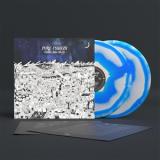
Blau-weiße Corona-Vinyl Doppel-LP im Klappcover. Ursprünglich 2017 rausgebracht und jetzt zum ersten Mal in Europa über Sub Pop erhältlich! Pure Comedy, das dritte Album von Father John Misty, ist eine komplexe, oft sarkastische und ebenso oft berührende Reflexion über die verwirrende Torheit der modernen Menschheit. Father John Misty ist das Projekt von Singer-Songwriter Josh Tillman. Wir könnten viel über Pure Comedy sagen, zum Beispiel, dass es ein mutiges, wichtiges Album in der Tradition amerikanischer Songwriting-Größen wie Harry Nilsson, Randy Newman und Leonard Cohen ist, aber wir denken, es ist am besten, wenn sein Schöpfer es selbst beschreibt. Los geht's, Mr. Tillman: Pure Comedy ist die Geschichte einer Spezies, die mit einem unvollständig entwickelten Gehirn geboren wurde. Die einzige Überlebenschance dieser Spezies, die sich auf einem grausamen, unberechenbaren Felsen wiederfindet, umgeben von anderen Spezies, die in dieser ganzen Sache viel geschickter zu sein scheinen (und für die sie eine Delikatesse sind), besteht darin, sich auf andere, etwas ältere, halb ausgebildete Gehirne zu verlassen. Diese Abhängigkeit bekommt im Laufe der Geschichte verschiedene Namen, wie ,Liebe", ,Kultur", ,Familie" usw. Mit der Zeit und da sich ihre Gehirne als bemerkenswert gut darin erweisen, Bedeutung zu erfinden, wo keine ist, wird die Spezies zum Lieferanten immer bizarrerer und raffinierterer Ironien. Diese Ironien sollen helfen, mit der abscheulichen Verletzlichkeit der Spezies fertig zu werden und zu versuchen, ihre Fantasie mit der Monotonie ihrer Existenz in Einklang zu bringen. So in etwa. Pure Comedy wurde 2016 in den legendären United Studios (Frank Sinatra, Ray Charles, Beck) in Hollywood, Kalifornien, aufgenommen. Produziert wurde es von Father John Misty und Jonathan Wilson, die Tonarbeit übernahm Mistys langjähriger Tontechniker Trevor Spencer und die Orchesterarrangements stammen vom bekannten Komponisten und Kontrabassisten Gavin Bryars (bekannt für seine umfangreichen Soloarbeiten und seine Zusammenarbeit mit Brian Eno, Tom Waits und Derek Bailey).
Mit Sexistential meldet sich Robyn mit ihrem bislang poppigsten Album zurück. Nach dem atmosphärischen Honey (2018) rückt sie wieder klar strukturierte Popsongs ins Zentrum - neun prägnante Tracks, entstanden an einem persönlichen Nullpunkt. Nach dem Ende einer langen Beziehung ordnete Robyn ihr Leben neu, entschied sich bewusst für eine alleinerziehende Mutterschaft und setzte sich intensiv mit Sexualität, Nähe, Unabhängigkeit und Identität auseinander. Die Arbeit am Album begann 2020 und wurde von der Pandemie geprägt. Aufgrund geschlossener Grenzen arbeitete Robyn ausschließlich mit schwedischen Weggefährten, allen voran Produzent Klas Âhlund. Ergänzt wird das Album durch Co-Writes mit Max Martin - die erste Zusammenarbeit seit Body Talk - sowie eine neu bearbeitete Version von Blow My Mind, ihrem Sohn gewidmet. Klanglich verbindet Sexistential klassische Popstrukturen mit einer hypermodernen Produktion. Thematisch kreist das Album um Lust, Verletzlichkeit und Kontrollverlust - und um das Spannungsfeld zwischen Emotion und Biologie. Die Single Dopamine beschreibt Verlangen zugleich als Gefühl und chemischen Prozess, geprägt von Robyns Erfahrungen mit IVF. Humor und Selbstironie durchziehen den Titeltrack, während Songs wie Sucker for Love romantische Liebe verteidigen, ohne naive Rollenbilder zu reproduzieren. Sexistential steht für künstlerische Integrität, bewusste Offenheit und einen selbstbestimmten Neubeginn - riskant, ehrlich und voller Hoffnung.
- 1: Give Me A Reason
- 2: Billie Was A Vampire
- 3: Black Box
- 4: I'm Addicted
- 5: Ist Die Liebe Tot?
- 6: Un Amor Eterno
- 7: The Language Of Love
- 8: Living Scandal
- 9: Βιτριόλι - Vitrioli
- 10: Φούξια Χαμαιλέων - Fuchsia Chameleon
- 11: Η Μοναξιά Είναι Της Μόδας - Loneliness Is In Fashion
- 12: Υστερία - Hysteria
Black / White Splatter Vinyl[25,17 €]
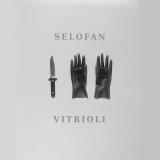
As Selofan's fifth studio album, Vitrioli, from 2018, is a testament to the tragedy of life. The Greek duo, Joanna Pavlidou and Dimitris Pavlidis, who recorded the album in the Fabrika Records home studio, continue on in their poetic, but heartbreaking, music set to a dance beat. Between languages (Greek, English, German, and Spanish), Selofan feels on the brink of mania with Vitroli. However, the madness is controlled, the songs are restrained hysterics that culminate into the alchemic perfection of the band's specific moody sound.
From synthpop to synthpunk elements, the twelve-track LP leads listeners through dark corridors and into haunted, empty beds. There is a resignation to a doomed destiny with Vitroli—a trait that connects all Selofan releases—as a bitter pain and loneliness that cannot, or will not, subside.
The album begins with "Give Me a Reason" whose lyrics feel universal in this day and age: Give me a reason, to get out of bed / I could just watch the ceiling instead. Its heartbreak is profound as bells and voice pads echo under Joanna's voice. The adjacent music video for the song was directed by Dimitris Chaz Lee, and the band describes the video as "depicting the fragile nature, conflicts, emotional demands, and vulnerability of each person in a relationship."
"Billie Was a Vampire" is a story about an undead creature who works at a nightclub followed by the urgency of "Black Box." Brass sounds moan against the fast beat and suggest a frenzied need to escape.
"I'm Addicted" became the second single for the LP. I am addicted, you are mine, Joanna demands of the lover. The music video, also directed by Dimitris Chaz Lee, depicts a clean, white photoshoot primed for the most beautiful creatures of the Athenian wave scene. Alex Macharias, from the legendary Greek band In Trance 95, acts as the photographer for the session, as the models pose and flail under the bright bulbs. The director states: "Addiction is a mental state, something inside all of us. It altered our perception and created a parallel world of avant-garde beings and flashy lights making us part of this everlasting bond."
As Selofan's fifth studio album, Vitrioli, from 2018, is a testament to the tragedy of life. The Greek duo, Joanna Pavlidou and Dimitris Pavlidis, who recorded the album in the Fabrika Records home studio, continue on in their poetic, but heartbreaking, music set to a dance beat. Between languages (Greek, English, German, and Spanish), Selofan feels on the brink of mania with Vitroli. However, the madness is controlled, the songs are restrained hysterics that culminate into the alchemic perfection of the band's specific moody sound.
From synthpop to synthpunk elements, the twelve-track LP leads listeners through dark corridors and into haunted, empty beds. There is a resignation to a doomed destiny with Vitroli—a trait that connects all Selofan releases—as a bitter pain and loneliness that cannot, or will not, subside.
The album begins with "Give Me a Reason" whose lyrics feel universal in this day and age: Give me a reason, to get out of bed / I could just watch the ceiling instead. Its heartbreak is profound as bells and voice pads echo under Joanna's voice. The adjacent music video for the song was directed by Dimitris Chaz Lee, and the band describes the video as "depicting the fragile nature, conflicts, emotional demands, and vulnerability of each person in a relationship."
"Billie Was a Vampire" is a story about an undead creature who works at a nightclub followed by the urgency of "Black Box." Brass sounds moan against the fast beat and suggest a frenzied need to escape.
"I'm Addicted" became the second single for the LP. I am addicted, you are mine, Joanna demands of the lover. The music video, also directed by Dimitris Chaz Lee, depicts a clean, white photoshoot primed for the most beautiful creatures of the Athenian wave scene. Alex Macharias, from the legendary Greek band In Trance 95, acts as the photographer for the session, as the models pose and flail under the bright bulbs. The director states: "Addiction is a mental state, something inside all of us. It altered our perception and created a parallel world of avant-garde beings and flashy lights making us part of this everlasting bond."
- You Are A Runner And I Am My Father's Son
- Modern World
- Grounds For Divorce
- We Built Another World
- Fancy Claps
- Same Ghost Every Night
- Shine A Light
- Dear Sons And Daughters Of Hungry Ghosts
- I'll Believe In Anything
- It's A Curse
- Dinner Bells
- This Heart's On Fire
Sub Pop und Wolf Parade bringen eine neue Pressung ihres legendären Albums ,Apologies to the Queen Mary" auf pinkfarbenem Vinyl raus. Diese Ausgabe lässt das lange vergriffene Album wieder in seinem ursprünglichen Single-LP-Format erscheinen, kurz nachdem die TV-Serie ,Heated Rivalry" in 2025 die Single ,I'll Believe in Anything" aus dem Album einem riesigen neuen Publikum vorgestellt hat, wodurch der Song zu einem echten Viral-Hit wurde. Wolf Parade wurde 2003 in Montreal, Quebec, gegründet. Nach zwei selbstbetitelten EPs veröffentlichte die Band - Hadji Bakara (Elektronik), Dan Boeckner (Gitarre, Gesang), Spencer Krug (Keyboard, Gesang) und Arlen Thompson (Schlagzeug) - im September 2005 ,Apologies to the Queen Mary", das auf breite Zustimmung stieß. Das Album wurde von Modest Mouse-Frontmann Isaac Brock und Toningenieur Chris Chandler bei Audible Alchemy in Portland, Oregon, aufgenommen. ,Apologies to the Queen Mary" stürmt mit voller Kraft und atemlos durch Songs, die in den ersten Jahren der Band Wolf Parade geschrieben wurden. Die eingängige, energiegeladene Dringlichkeit des Albums machte sie sofort zu einer der prägenden Kräfte des Indie-Rock der 2000er Jahre. Es wurde 2006 für den renommierten kanadischen Polaris Music Prize nominiert; The Guardian schwärmte: ,insgesamt großartig"; Pitchfork gab ihm eine Bewertung von 9,2 und meinte: ,Das wahre Talent von Wolf Parade besteht darin, das Alltägliche in etwas Beispielloses zu verwandeln." Später schloss sich Pitchfork dem Chor der Kritiker an, die es zu den besten Alben der 2000er Jahre zählten. Zwei Jahrzehnte später hat "Apologies to the Queen Mary" nichts von seiner Lebendigkeit eingebüßt und gewinnt weiterhin neue Generationen von Fans für sich.
- A1: Cities On Flame With Rock And Roll
- A2: In Thee
- A3: The Red & The Black
- A4: The Marshall Plan
- A5: Flaming Telepaths
- A6: Black Blade
- A7: Astronomy
- A8: Joan Crawford
- A9: This Ain't The Summer Of Love
- A10: Burnin' For You
- A11: (Don't Fear) The Reaper
- A12: Shooting Shark
- A13: I Love The Night
- A14: Take Me Away
- A15: Goin' Through The Motions
- A16: Godzilla
»Don't Fear The Reaper: The Best of Blue Öyster Cult« wurde im Jahr 2000 veröffentlicht und ist ein umfassendes Kompilationsalbum, das die bekanntesten Titel aus der legendären Karriere von Blue Öyster Cult präsentiert. Es umfasst ihre Anfänge in den frühen 1970er Jahren bis zu ihrem Erfolg in den 1980er Jahren und enthält Hits wie das legendäre »Don't Fear The Reaper«, das kraftvolle »Godzilla« und das eindringliche »Burnin' for You«.
Blue Öyster Cult sind bekannt für ihre Mischung aus Hardrock mit Elementen aus Metal und Psychedelic. Ihre komplexen Gitarrenriffs und geheimnisvollen Texte kommen in dieser Sammlung voll zur Geltung. Das Album unterstreicht den innovativen Sound der Band, der mit seiner einzigartigen Mischung aus schweren Riffs, komplexen Harmonien und düsteren Themen das Rockgenre mitgeprägt hat.
Sowohl für langjährige Fans als auch für neue Hörer ist »Don't Fear The Reaper: The Best of Blue Öyster Cult« ein Muss, das einen perfekten Einstieg in die einflussreichsten und zeitlosesten Titel der Band bietet.
»Don't Fear The Reaper: The Best Of Blue Öyster Cult« ist als limitierte Auflage von 2000 Exemplaren auf kristallklarem und schwarz marmoriertem Vinyl erhältlich.
- Artefact
- A New Way
- Sit For The Road
- Hollow Chapters
- You Were Gone
- Turn That Groove Around
- The Falconer
- Three Wishes
- Fingertips
- Poor Wayfaring Stranger
An album with reflection, resilience, journey, and elemental connections at its core, Hollow Chapters is a collection of original songs written and performed by the Marsh Family - Dad (Ben, 49), Mum (Danielle, 48), sons Alfie (19) and Tom (18), and daughters Ella (16) and Tess (14). Recently featured in The Observer, the multiinstrumentalist family group of six from Kent have a significant international online following passionate about their mix of folk- pop harmonies, uplifting messages, authentic imperfections, and sense of connection and heart. Hollow Chapters ranges across genres (from acoustic protest songs to funk and reggae rock), but has a vintage organic style, rooted in natural analogies, ideas of journey and lifecycle, and epic and inspirational themes. It promises to move people emotionally, whether through ballads about departed loved ones or stirring tracks designed to forge collective action and hope. The songs tell stories using the different voices of family members, drawing inspiration from poetry, landscape, and artefacts.
- 1: ) Drift
- 2: ) Niebla
- 3: ) Bending Myself
- 4: ) Something That Is There, Something Similar
- 5: ) Changing Bodies
Thomas Peter debuts on Hallow Ground with »changing bodies,« an album inspired by the resonance and reaction of objects with and to sound. The Swiss composer and sound artist has worked with sounds generated with various materials, field recordings, and an array of analogue and digital synthesizers to create five ever-shifting pieces full of twists and turns in which even silence plays a significant role. Peter composed and recorded the album over the course of four years in an inherently physical process, led by both his intuition and his perception—what you hear on »changing bodies« is an artist intently listening to the material world around him.
Peter laid the foundation for »changing bodies« by making field recordings wherever he went, whether in closed rooms, cities, or rural environments, while also recording organic-sounding material with different synthesizers as well as working with objects made of wood, stone, or metal. »I viewed all these sounds as a kind of language that I was trying to understand,« he says. »I paid close attention to differences between sounds in motion, rhythmic patterns, and dense textures.« He further describes this as an inherently corporeal endeavour, quite literally becoming all ears and internalising the different sounds.
This process of concretion led to one of abstraction when Peter translated the source material and its psycho-physical reverberations into new musical structures. He applied repetition, densification, and recombination to unlock their true potential. Across its five tracks, the album sets literally unheard-of sounds into motion, creating intricate dynamics without ever overwhelming its listeners. »changing bodies« was born out of listening intently and physically.
It is recommended to listen to it in the exact same way.
Ein legendärer 80s-Electro-Klassiker kehrt endlich zurück auf Vinyl!
Mit „Los Niños Del Parque“ landete Two Of China, das Projekt der DJ-Legende Talla 2XLC, 1986 einen der prägendsten Club-Hits der Electro- und Wave-Ära.
Jetzt erscheint dieser Meilenstein erstmals wieder als farbige 12“ Maxi Single – streng limitiert und ein echtes Sammlerstück für DJs, Vinyl-Liebhaber und Fans elektronischer Musik der 80er Jahre. Der hypnotische Sequencer-Sound, die düstere Atmosphäre und der ikonische Club-Drive machten den Track damals zu einem festen Bestandteil internationaler Tanzflächen.
Die Maxi Single enthält vier originale Mixe aus dem Jahr 1986, sorgfältig ausgewählt und in ihrer ursprünglichen Form erhalten – authentisch, druckvoll und zeitlos.
- A1: A Perfect Storm
- A2: Etyd
- A3: Against The Dying Of The Light
- A4: For Every Dusk
- A5: Sheet
- A6: Pajarito
- A7: Losing Game (Sick)
- B8: Ay Querida
- B9: U / Rawls Slöja
- B10: Gymnasten
- B11: Just A Rock
- B12: You & We
- B13: Joy (Can’t Help But Sing)
White Vinyl[28,99 €]
José González has delivered a new album, Against the Dying of the Light, a companion and further meditation on the themes of his critically acclaimed album, Local Valley. Where Local Valley turned inward toward place, language, and personal reflection, this new record widens its gaze, becoming an urgent call to preserve the light of humanity with all its flaws, at a moment when, technology increasingly shapes how we think, feel, and relate to one another.
While José has always embraced technological advancement, he questions the assumption that every new possibility must be pursued to its maximum potential, especially when progress comes at the expense of human flourishing, attention, and empathy.
Keeping in the tradition of folk music as protest, José’s new single — sharing its title with the forthcoming album — urges listeners to resist systems that dehumanize and divide: “Disconnect from every algorithm, every perverse incentive that drags you down. Let’s rebel against the replicators, against the dying of the light. Kill the codes that feed the hate, keep the codes that make you thrive, celebrate the **king fact that we’re alive.”
Across the album, González works within a deliberately minimal framework, pushing his familiar palette to new heights through subtle variation, restraint, and detail. Each song unfolds with its own distinct character, proving how much emotional and musical range can be achieved within self - imposed limitations. Written in English, Swedish, and Spanish, the record reflects his Swedish - Argentine roots and frames its humanist message as a global one rather than a purely personal or political statement.
José González is one of the most quietly influential artists of our generation. The Swedish - Argentine artist has built a singular musical world from hypnotic, minimal guitar work and his unmistakably gentle voice — a sound that has become deeply personal to millions of listeners worldwide. With billions of streams across platforms and hundreds of thousands of physical records sold, González’s songs often act as emotional landmarks. Ask almost anyone, and they can name at least one of his tracks tied to a defining moment in their lives.
Mit Sexistential meldet sich Robyn mit ihrem bislang poppigsten Album zurück. Nach dem atmosphärischen Honey (2018) rückt sie wieder klar strukturierte Popsongs ins Zentrum - neun prägnante Tracks, entstanden an einem persönlichen Nullpunkt. Nach dem Ende einer langen Beziehung ordnete Robyn ihr Leben neu, entschied sich bewusst für eine alleinerziehende Mutterschaft und setzte sich intensiv mit Sexualität, Nähe, Unabhängigkeit und Identität auseinander. Die Arbeit am Album begann 2020 und wurde von der Pandemie geprägt. Aufgrund geschlossener Grenzen arbeitete Robyn ausschließlich mit schwedischen Weggefährten, allen voran Produzent Klas Âhlund. Ergänzt wird das Album durch Co-Writes mit Max Martin - die erste Zusammenarbeit seit Body Talk - sowie eine neu bearbeitete Version von Blow My Mind, ihrem Sohn gewidmet. Klanglich verbindet Sexistential klassische Popstrukturen mit einer hypermodernen Produktion. Thematisch kreist das Album um Lust, Verletzlichkeit und Kontrollverlust - und um das Spannungsfeld zwischen Emotion und Biologie. Die Single Dopamine beschreibt Verlangen zugleich als Gefühl und chemischen Prozess, geprägt von Robyns Erfahrungen mit IVF. Humor und Selbstironie durchziehen den Titeltrack, während Songs wie Sucker for Love romantische Liebe verteidigen, ohne naive Rollenbilder zu reproduzieren. Sexistential steht für künstlerische Integrität, bewusste Offenheit und einen selbstbestimmten Neubeginn - riskant, ehrlich und voller Hoffnung.
- A1 1: It Really Never Did
- A2 2: Feeling Nothing Is Worse
- A3 3: Sorry From Now On
- A4 4: Moreoff More Off Than On
- A5 5: Falling Water (Before You)
- A6 6: I Should Have Been Listening
- A7 7: Number Girl
- A8 8: Show Me All Your Landscape Paintings
- A9 9: Dreaming About Everyone But You
- A10 10: What's One More Place?
- A11 11: Self-Reliance
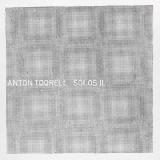
Anton Toorell’s second solo album, Solos II, deepens and intensifies the six-string language introduced on his 2022 debut, Solos. Rather than widening his scope, the Swedish guitarist, composer and producer sharpens his focus, homing in on the physical and sonic relationship between player, instrument and tuning. The result is three extended pieces of cascading tonality that feel disciplined yet light, their conceptual frameworks always secondary to the luminous sounds Toorell draws from two guitars.
Throughout Solos II, Toorell explores both the guitar’s potential for silvery, sometimes clashing textures and his own physical engagement with the instrument. Across ‘Volta’, ‘Cripta’ and ‘Scala’, he plays two guitars simultaneously: one fretted with the left hand using hammer-ons and pull-offs, while the right hand activates mostly open strings on a guitar resting in his lap. Despite the inherent complexity of this approach, the music never feels busy or demonstrative. Technique remains a quiet servant to Toorell’s compositional instincts and improvisational sensitivity.
The album leaves space for unplanned resonances and happy accidents, yet its structures are clear, resilient and finely balanced. The seventeen-minute ‘Volta’ unfolds as a shimmering continuum, its repeated figures gently reshaped through minute inflections, creating a sensation of constant motion. ‘Cripta’ spirals inward, cycling hypnotically in a way that recalls both Terry Riley’s iterative minimalism and the hallucinatory guitar loops of early Seefeel.
With the closing ‘Scala’, the recording environment comes fully into view. Captured in a 16th-century wine cellar at Palazzo Stabile in Piemonte, Italy, the room functions as a guiding presence and an implicit third instrument. Toorell tuned the guitars in response to the cellar’s reverberant character, seeking configurations that would open up the space itself.
POD & Edward Richards return with their second release on Kinetic Vision, the ‘Polar Phase’ EP, following their much lauded ‘SQZR’ EP. A landmark release for the label, ‘Polar Phase’ marks the first of a series of records to come. Set at a tempo of 100 BPM, the duo mix minimalism, broken beats, world music percussion and psychedelic synths to weave a tapestry of darkness, albeit more zen than melancholy.
The opening track ‘Mind Machine’ is propelled by a broken beat and flurry of hard hitting snares. A swirl of synths abound while a tribal incantation is whispered in the dark. The title track ‘Polar Phase’ takes us on a pulsing journey of techno hypnotism, with icy synths threatening deep underwater immersion. The B side ‘Flux Growth’ elicits an obscure playfulness with its punctuated kick and slowly building chaos. Finally the Sub Basics remix of ‘ Polar Phase’ lifts the tempo and we find ourselves in a bliss of pure dancefloor hedonism.
POD & Edward Richards have crafted a rich textural sound with slow paced hypnotic grooves, creating deep absorption for both DJ and listener alike.
Analog Fingerprints Vol. 0 is a compilation bringing together the early 2000s works of Marco Passarani under his Analog Fingerprints alias, collecting key tracks originally released on Rome’s Plasmek and Pigna labels.
For Numbers, the story starts long before the label itself. In their formative years, digging in Glasgow’s Rubadub, Passarani’s records felt like dispatches from a future city. Releases on his own Nature Records and on labels such as Generator and Interr-Ference Communications were mind blowing: rooted in Detroit techno, Chicago house and electro, yet pushing somewhere new. Much like fellow travellers Autechre, who would remix him in 2001, Passarani’s music balanced machine funk with restless experimentation.
Information was scarce, and you would hear these records first on the dancefloor or at listening stations in shops like Rubadub. Print fanzines like Ear and early web outposts such as Forcefield offered only fragments. But there was a palpable axis forming between Detroit techno and a new European wave of record labels including Skam, Rephlex, Clone, Viewlexx and Nature itself. It was the sound that defined Saturday nights at Rubadub’s ‘69’ parties in Paisley, just outside of Glasgow.
Passarani’s records, in particular, were instrumental in bringing together the future Numbers co-founders. Richard had already booked him pre-Numbers; meanwhile Calum (Spencer) and Jack (Jackmaster), then 16/17 year olds working alternate Saturdays in Rubadub, were so enamoured with the Roman sound that they travelled to Rome for the Bitz Festival in 2003 to seek out Passarani and Lory D at their source.
The first Analog Fingerprints release landed as a 12” on Plasmek in 2001, following the fractured, IDM-leaning 6 Katun material. For Passarani, the project marked a recalibration. A DJ first and foremost, he had moved into production via early computer setups, from a Commodore Amiga through primitive PC audio, Cubase and Logic, later experimenting with Ableton. The IDM scene had offered a playground for trial and error, but there was always a tension between abstraction and the dancefloor. Analog Fingerprints became the bridge: still intelligent, but with more dance than distance. After years of broken beats and complex arrangements, he wanted directness without surrendering identity.
Working closely with Francesco de Bellis and Mario Pierro in the Pigneto district, the trio formed Pigna as a vehicle for reclaiming a more accessible dance sound, deliberately steering away from the minimal wave beginning to dominate Europe. Sessions were fast, instinctive, often stretching late into the night with friends dropping by. It was a studio as social space, production as collective energy.
“In that constant search for balance, Analog Fingerprints was my way of expressing something closer to the classic dance floor. The track 'Tribute' - a tribute to my favourite early Detroit techno track of all time, 'First Bass' by Separate Minds - came after I realised I had almost lost my connection with the dance floor. The simplest step was to take inspiration from early Chicago and Detroit and twist it in our Roman ‘Pigna’ way. My goal was to create more accessible dancefloor tracks by mixing my unconscious Italo roots with my teenage love for that early US sound, ensuring the result was as far as possible from the minimal sound that was starting to dominate everywhere.” - Marco Passarani
Technically, the Analog Fingerprints tracks span a transitional era: Roland TR-909, SH-101 and Alpha Juno hardware met early software experiments. A Novation Drumstation rack stood in for the unattainable TR-808, syncing with TB-303 and TR-606. Yet the true secret weapon was Jeskola Buzz, a tracker-style modular environment that allowed step-by-step parameter control and strange melodic constructions, later exported into the audio sequencer. Even the lead on ‘Tribute’ came from an early PPG Wave-style plugin. It was hybrid thinking at a moment when digital tools still felt unstable but full of possibility for technologists like Passarani.
Behind the music sat Finalfrontier, a loose Roman collective orbiting Nature and Plasmek. Distribution and production were intertwined; importing obscure records into Italy built connections with like-minded outsiders across Europe and the US. Expensive phone bills and fax machines forged an “electronix network” that linked Rome to Clone, Viewlexx, Skam, Rephlex, Rubadub and Detroit’s Underground Resistance. There was a shared sense of survival and resistance, of operating against commercial systems.
Passarani recalls “The first time I found a sheet of paper inside an Underground Resistance 12” with info about upcoming releases... and a huge picture of Spock on the back. Imagine that: you love the music, you love Star Trek, and there’s someone on the other side of the ocean sharing those same values and sounds. It was the perfect match. We even gave our original company the suffix ‘Finalfrontier’: that says it all.”
Feedback in that era arrived physically: distributor faxes, conversations with visiting DJs, the experience of playing abroad and meeting kids who had connected with the records. Glasgow became a key node in a scattered outlier network. Passarani personally brought the first two Nature releases to Fat Cat in London, playing them in-store. Shortly after, a fax arrived from Rubadub in Glasgow requesting copies.
“I still remember that phone buzz and the fax paper slowly sliding out, with someone I didn’t know saying they wanted 75 copies of Nature 001. Or like the time we got a fax from the Rephlex crew just saying, “Hello Nature Records, Keep up the good work.” That was how we knew the message was getting through. It was a fantastic feeling; just one piece of thermal fax paper as an analog notification - the mood for the entire week would change.” - Passarani
The connection to Glasgow has since stretched across generations. As Passarani reflects, links often fracture as scenes renew themselves, but in Glasgow something different happened. New and old mixed seamlessly. There was a visible trust in what came before, and a willingness to carry it forward rather than discard it. Observed from Rome, it was deeply encouraging.
Analog Fingerprints Vol. 0 captures that moment of exchange: Rome to Glasgow, Detroit to Europe, experiment to dancefloor. It documents an artist recalibrating his sound and a network of scenes discovering one another in real time, connected by vinyl, faxes and shared intent.
One of the most innovative and ambitious albums ever made, Genioh Yamashirogumi’s Ecophony Rinne is a sonic masterpiece featuring over 200 musicians that expanded the limits of what music and sound could do.
Before Akira there was Ecophony Rinne. Originally released in 1986, Ecophony Rinne is a four-part symphony of “ecological music” by Geinoh Yamashirogumi that married ancient tradition with technological innovation, and changed the way we listen to music in the process.
Half-speed mastered at Abbey Road by Miles Showell, Time Capsule’s high-tech analogue reissue is the first to reproduce composer Ōhashi’s ground-breaking “Hypersonic Effect” theory on vinyl, cutting frequencies beyond the realm of human hearing into wax to capture the full spectrum emotional impact of this extraordinary work.
Founded by genius polymath Tsutomu Ōhashi aka Shoji Yamashiro, Geinoh Yamashirogumi is a shapeshifting collective of over a hundred members from across disciplines. Rejecting professional musicianship, Ōhashi cultivated an ethos where neuroscientists, psychologists, doctors, journalists, engineers and students could critique society through artistic expression and pursue their research in ethnomusicological performances that spanned global traditions, Eastern spirituality and Western classical form.
Ecophony Rinne represents the pinnacle of this vision - an expansive orchestral suite made with over 200 musicians that channeled Ōhashi’s thinking about mankind’s relationship with nature, and fundamental questions of life, death and rebirth.
Here pipe organ synths made from sampled Tibetan horns sit alongside field recordings from Central African forests, Buddhist mantras circle dummy head microphones, Javanese Jegog percussion ensembles pulse like verdant ecosystems, and the acoustics of temples, caves and landscapes are conveyed in the mix. Weaving together culture, nature and technology, it is a record that vibrates with the polyphony of life on Earth.
But Ecophony Rinne was not only musically innovative. Noticing the difference between vinyl and CD versions of the album where digital reproduction limited the sound, Ōhashi developed a theory of “Hypersonic Effect”, determining that ultra-high frequencies above 20khz can impact human perception even if they are inaudible. At once a physical and a psychological experience, to listen to Ecophony Rinne is to feel music differently.
The rest is history. After its release, Ōhashi was approached by director Katsuhiro Ōtomo to produce the soundtrack for Akira, the work for which Geinoh Yamashirogumi is best known. Emerging from the shadows at last, Ecophony Rinne was its transcendental blueprint, reissued in its most complete hypersonic form on vinyl for the first time.
Rather than describe nature, Ecophony Rinne embodied it. Rather than reflect culture, Ecophony Rinne defined it. Rather than explore technology, Ecophony Rinne changed it. As a work of art, it is more relevant than ever. You won’t have heard anything like it.