- A1: Axxess – Pages
- A2: Chris And Cosey – Talk To Me
- A3: Dieter Schütz – Above
- A4: Brian Eno / David Byrne – The Jezebel Spirit
- A5: Beppe Loda – Karolina
- B1: Fashion – Mutant Dance Move
- B2: C.c.c.p. – Orient Express (Pogo Mix)
- B3: Blue Vision – Vision (Instrumental)
- B4: Mc1 – Counter (Demo Version)
- C1: Dom Um Romao – Amor Em Jacuma
- C2: Ensemble Amaro De Souza / Coaty De Oliveira – Capoeira De Santana
- C3: Giulio Camarca & Trinidad – Manhã, Mandrake
- C4: Som – Berimbau
- C5: Gilberto Gil – Toda Menina
- Baiana, Bossa Seven – A6Er Batuque
- D1: Akendengué – Evogamanga
- D2: African Head Charge – Stebeni’s Theme
- D3: Babatunde Olatunji – Akiwowo
- D4: African Pop Session – African Voodoo
- D5: Aleke Kanonu – Nwanne, Nwanne, Nwanne
Suche:page 32
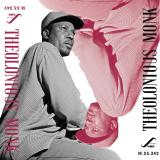
- A1: Round About Midnight 05:14
- A2: Evidence 03:04
- A3: Smoke Gets In Your Eyes 03:23
- A4: Well You Needn't 03:24
- B1: Reflections 05:01
- B2: We See 02:34
- B3: Eronel 02:32
- B4: Off Minor 02:31
It happens very rarely that you can praise a records without any reservations, this is the case here!!!
A lot of ink has flowed across the page since the Vogue/Swing release (1955) of that founding solo record. The repertoire was made up of pieces that Thelonious was playing in New York over that period, but in trio or with a quartet, here his music shows nakedness, i should say crudeness, whisch is completely overwhelming. It is a balck and white photograph of what is happening inside Monk's head; its sharpness is enthralling, as everyone has known for more than sixty years.
We enter the world of one of the most original artists. Monk, at 37, is at the peak of his art.
- A1: Running To The Nearest Body Of Water
- A2: Perfect & Learning
- A3: I Could’ve Cried
- A4: Umlaut
- A5: Windows
- A6: Seven Less Functions (Feat Chloë Lestage)
- A7: Song | 6
- A8: Luca’s Song
- A9: Signs
- A10: A Wish Slanted
- B1: Storytime
- B2: The Primate
- B3: Texas Sundial V1
- B4: Quick Before Something Drastic Happens
- B5: Better Now
- B6: Uptown Lovebug
- B7: Talk / Pleasure
- B8: Cardinal
- B9: Window Seat
- B10: +Ad
For its second anniversary, Samba Jean-Baptiste’s 2023 LP, ‘Cardinal' arrives on vinyl and CD. Two years on from its original release on Samba’s own AM Radio imprint, this physical release via Scenic Route Records celebrates an album that’s quietly built a devoted following for its intimate songwriting, cinematic arrangements, and deeply human detail.
This edition features alternative artwork by Rafi Goudy and, for CD buyers, a 32-page lyric booklet featuring images captured by Samba himself.
An intimate, richly textured record that’s grown into a modern cult classic, ‘Cardinal’ stands as a deeply personal snapshot of a singular artist - now a tactile home experience.
Schlammpeiziger, who had previously only been known to us for his top hits and T-shirts, burst upon us like a wild boar in search of affection in the middle of the coronavirus lockdown. He nested in our fully vaccinated home, drank our Eversbusch, ate from our plates, slept in our bed (wait - wrong fairy tale) and repeatedly urged us to organise egg runs with his testicles (after some contortions, we gave up trying). Childish faecal humour, far-fetched obs(t)enities, juicing, a desire to dissolve, composting of thoughts. In excesses of lack of concentration, the chains of associations curled and meandered like Jo's famous curlicue drawings. Every evening, after we had forcibly levered him out of our flat, he would ‘walk’ home to put together very unique , dreamy pieces. In the blissful brainfog of those days, for example, ‘Handicapfalter’ was created, for which the congenial °Bär° made our flat into the corresponding video. Among other quirks of the little gut-breather, we were fascinated to observe his phobia of literature and books. Just hold a printed page in front of his face for a few seconds and he writhes on the floor crying. A level of phobia that only my own laughable disgust and fear of writing myself can compete with. Jo shudders at the thought of reading sentences that build on each other in a meaningful way, and I shudder at the thought of having to write them down because I have something ‘to say’. A certain affinity cannot be denied. We are much, much more pleased by snatched-up, misunderstood or misheard snippets, hollow but unforgettable phrases, the diamond stoner humour of our ancestors. ‘From one turn/ I stop/ to walk on/ in all directions’ (as it murmurs in “Selten Gesehenes”), describes the process quite nicely. After all, Jo is ahead of me in that he can simply break off every tedious sentence and let it fade into music. Back to the essentials. It's five to 12 for the Schlammpeitzger (scientifically Misgurnus). The shy goby is under threat from climate change, so perhaps this vinyl is the last expression of life of the specimen that we have been allowed to look after sporadically since the lockdown phase of the corona epidemic. And it's turned out pretty. Even the aesthetically gutted like me and my beloved husband can THINK about sex when they see these sublime, silvery fart bubbles! It's tender as a fart. Make love!!!!!
Schamlose Dubtöse: Do you have words. Do you have sounds. Impertinently harmless piano tinkling turns into tugging zounds of increasing severity. It is not dubbed (would be unethical) but dubbed. Sounds dubby, as you can imagine. (Instrumental)
Loch ohne Licht: Possibly vaguely misogynistic. Could also be that there was simply no light in the hole. The sparse snippet of lyrics (‘du biss mir och esu e Loch ohne Licht’) sounds like one of those stroppy Cologne replicas whose anti-charm is hard to resist. Buzzing and grooving.
Selten Gesehenes: Casual. Confident. Soft. Fragrant. Thoughtful but lively.
The Arabian Vietmanese (instrumental) is probably the food we trust in the case of the munchies we get when we watch other people smoking weed. Transcendental and psychedelic states casually permeate the humdrum of everyday life. Klar Knuspermarsch: Marches and floats at the same time. Klebt Runner: Soundtrack to the cult film of the same name. Tyrrell Corporation loosens up. Ungenutzte Sätze: Stinks somehow, because there is dangerous proximity to comprehensible and then also critical statements here. Instead, the sinister electronic cheapness of Carpenter soundtracks can be heard. Parzipan: Actually, the time of origin was not so roaringly funny and simple, but for Jo it was also a gruelling, slow letting go of his brother. Here he sends him off with a gentle nudge into the vastness of a hopefully happy beyond.
Clara Drechsler
Schlammpeiziger, der uns bislang nur durch seine Top-Hits und seine T-Shirts bekannt gewesen war, brach mitten im Corona-Lockdown über uns herein wie ein wilder Eber auf der Suche nach Zuwendung. Er nistete sich in unserem durchgeimpften Zuhause ein, trank unseren Eversbusch, aß von unseren Tellerchen, schlief in unserem Bettchen (Moment - falsches Märchen) drängte uns wiederholt dazu, mit seinen Hoden Eierlauf zu veranstalten (nach Verrenkungen gaben wir den Versuch auf). Kindischer Fäkalhumor, weit hergeholte Obs(t)zönitäten, Entsaftung, Auflösungswunsch, Gedankenkompostierung. In Exzessen der Konzentrationsschwäche ringelten, kringelten und schlängelten sich die Assoziationsketten wie bei Jos berühmten Kringel-Schlängel-Zeichnungen. Jeden Abend, nachdem wir ihn gewaltsam aus unserer Wohnung gehebelt hatten, „ging“ er dann heim, um dort sehr eigene, verträumte Stücke zusammenzubasteln. Im seligen Brainfog dieser Tage entstand z.B. „Handicapfalter“, für das der kongeniale °Bär° aus unserer Wohnung das entsprechende Video machte. Neben anderen Marotten des kleinen Darmatmers beobachteten wir fasziniert seine Literatur- bzw. Bücherphobie. Halt ihm nur sekundenlang eine bedruckte Seite vors Gesicht, und er windet sich weinend am Boden. Ein Grad an Phobizität, mit dem sich nur meine eigene lachhafte Abscheu und Angst vor dem Selberschreiben messen kann. Jo schaudert beim Gedanken, sinnvoll aufeinander aufbauende Sätze lesen, mir wiederum beim Gedanken, sie hinschreiben zu müssen, weil ich irgendetwas „zu sagen“ habe. Eine gewisse Verwandtschaft ist nicht zu leugnen. Viel, viel mehr freuen uns aufgeschnappte, falsch verstandene oder misshörte Fetzen, hohle, aber unvergessliche Phrasen, der diamantene Kifferhumor unserer Vorfahren. „Aus einer Drehung/bleibe ich stehen/ um in alle Richtungen/weiter zu gehen“ (wie es in „Selten Gesehenes“ raunt), beschreibt den Prozess schon ganz schön. Immerhin hat Jo mir voraus, dass er jeden leidigen Satz einfach abbrechen und in Musik ausplempern lassen darf. Zurück zum Wesentlichen. Es ist fünf vor 12 für den Schlammpeitziger (wissenschaftlich Misgurnus). Die scheue Grundel ist von Klimawandel bedroht, vielleicht haltet ihr mit diesem Vinyl also die letzte Lebensäußerung des Exemplars in Händen, das wir seit der Lockdownphase der Corona-Epidemie sporadisch betreuen durften. Und die ist hübsch geworden. Selbst aus ästhetischer Erwägungen Entdarmte wie ich und mein geliebter Mann, können bei diesen sublimen, silberhellen Pupsbläschen DENNOCH an Sex denken! It´s zart as a fart. Make love!!!!!
Schamlose Dubtöse: Hast du Worte. Hast du Töne. Impertinent harmloses Klavierplätschern geht über in ziepende Zounds von zunehmender Strenge. Es wird nicht domptiert (wäre unethisch) sondern dubtiert. Klingt dubtig, wie ihr euch vorstellen könnt. (Instrumental)
Loch ohne Licht. Möglicherweise vage misogyn. Könnte auch sein, dass im Loch einfach kein Licht war. Das sparsame Textfetzchen („du biss mir och esu e Loch ohne Licht“) klingt nach einer jener pampigen kölschen Repliken, deren Anticharme man sich schwer entziehen kann. Schwirrt und groovt.
Selten Gesehenes: Lässig. Souverän. Softig. Duftig. Nachdenklich aber beschwingt.
Beim Arabischen Vietmanesen (Instrumental) gibt es wahrscheinlich die Speise unseres Vertrauens im Falle der Munchies, die wir kriegen, wenn wir anderen Leuten beim Kiffen zusehen. Transzendentale und psychedelische Zustände durchziehen beiläufig den schnöden Alltag. Klar Knuspermarsch: Marschiert und schwebt zugleich.
Klebt Runner: Soundtrack zum gleichnamigen Kultfilm. Tyrrell Corporation macht sich locker. Ungenutzte Sätze: Stinks irgendwie, weil hier gefährliche Nähe zu nachvollziehbarer und dann auch noch kritischer Aussage gegeben ist. Dafür klingt die sinistre elektronische Billigkeit von Carpenter-Soundtracks an.
Parzipan: Eigentlich war die Entstehungszeit gar nicht so brüllend lustig und einfach, sondern für Jo auch ein zermürbendes, langsames Loslassen des Bruders. Hier schickt er ihn mit sanftem Schubs hinaus in die Weiten eines hoffentlich schönen Jenseits.
Clara Drechsler
Downloads
- A1: What's Goin On In Brazil
- A2: The Mysterious Man
- A3: Flying Carousel
- A4: Double Trouble Theme (Bossanova)
- A5: A Guy With It's Pretty Girls
- A6: Double Trouble Theme (Jazz)
- B1: Hear It Tonight
- B2: Double Trouble Theme (Samba)
- B3: Mississipi Dream
- B4: Quica Theme
- B5: The Mysterious Man
- B6: Flute Rhythm
- B7: Double Trouble Theme
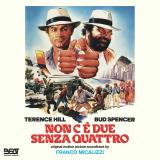
This expanded edition presents the soundtrack with previously unreleased material not included on the original vinyl release, offering a more complete overview of Micalizzi’s work. The package is further enhanced by an 8-page full-color booklet featuring original artwork, extensive liner notes on the film, direction, and score by journalist Fabio Babini, as well as a personal contribution from Franco Micalizzi himself.
Composed by Maestro Franco Micalizzi for the cult 1984 film Non C’è Due Senza Quattro, starring the iconic duo Bud Spencer & Terence Hill in a rare fourfold role, this soundtrack captures the playful spirit and global flair of the film.
Micalizzi delivers a vibrant and rhythm-driven score, infused with warm Latin influences, breezy melodies, and an unmistakable sense of lightness. The result is a richly entertaining listening experience that perfectly mirrors the film’s humor, energy, and escapist charm.
A joyful and sun-soaked addition to any collection, this release stands as both a nostalgic tribute and a testament to Micalizzi’s enduring legacy in Italian cinema soundtracks—best enjoyed, perhaps, with a well-mixed cocktail in hand.
©℗ 1984 – Beat Records Company. Reissued by Holy Basil Records under license by Beat Records.
- 1: Live From Mumbai 00:36
- 2: No Other Than 04:03
- 3: Powerman & Iron Fist (Fighting Without Fighting Version) 0:00
- 4: Sure Shot! 03:32
- 5: Fresh Like Dougie 04:42
- 6: How To Cut & Paste (Lesson 1) 04:54
- 7: Audobahn 03:56
- 8: All Out War 03:46
- 9: Break Down 03:24
- 10: Golden Crown (Feat. Oxygen) 04:52
- 11: Fashion Plate 04:13
- 12: Sister Of Phyllis Diller 04:01
- 13: Heroes Of The East (Feat. Paten Locke) 04:21
- 14: The Pack Up (Part 3) 02:44
RED & YELLOW SPLATTER Vinyl[29,20 €]
Expanded Edition Double Cassette Box Set including main album and Bonus Cassette with unique download cards
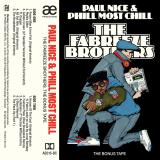
AE Productions in association with Sure Shot Recordings and In Effect Recordings are pleased to announce a 10 Year Anniversary Edition of the critically acclaimed Phill Most Chill and Paul Nice album as the Fabreeze Brothers.
The hugely successful first edition which was pressed on colour vinyl and supplied in double fold out sleeve sold out in only 2 weeks from release date and then the 2nd pressing black vinyl edition sold out a little while later but has for years been out of print but is increasingly requested by shops, via email, social media, AE Productions website back in stock requests, etc…
As it has been 10 years since original release back in 2015 at the time of proceeding with manufacturing, it was the perfect opportunity to do a 3rd pressing to mark the anniversary but we had to pull out all the stops for a 3rd run of this incredible album and also make it subtly different again in packaging design from the 1st and 2nd pressings so that each has it’s own particular feel and quality.
With help from the original designer and all-round vinyl artwork supremo Mr Krum we have found some nice adjustments for the gatefold sleeve where the detail from the insert sheet found in the original issues is incorporated into the inside panels of the sleeve. We have also tweaked the hype sticker to mark the 10th Anniversary Edition and updated the vinyl labels so as to work better with the new Splatter vinyl which follows the original red and yellow vinyl but each splattered with the opposite colour.
For something a little extra we have compiled a Limited Expanded Edition Double Cassette Box Set that includes the original album and also a ‘Bonus Tape’ which features all of the remixes, alternate versions, Original Versions of album cuts and bonus tracks found on B-sides of the array of singles and we included for good measure 2 tracks that only appeared on the promotional only LP sampler that ended up being different on the final release. This is limited to cassette just for the non-vinyl heads as all of these tracks already appear on vinyl. The outer box is A5 card in black with gold foil Fabreeze Brothers logo and comes with discography booklet.
‘The Bonus Tape’ from the box set is also available as a standalone cassette release with alternate j-card art work so that it has it’s own flavour and so that anyone that purchased one of the original run of cassettes that sold out before we could even ship any copies, did not need to purchase the main album again unnecessarily and to make it noticeable from the Expanded Edition Box Set version.
This version also has an alternate shell design in keeping with the clear shell with dark liner that was commonplace back in the 90’s and the cassette geeks may note the red text on the spine as was also a common design back then – giving this a pseudonym of ‘the 90’s tape’ during the design process.
We couldn’t stop there so we also have an extremely low quantity Limited Edition Mini Disc version which is the main album plus 8 of the bonus tracks from The Bonus Tape – only missing the 2 least significant alternate versions but clocking in at just a few seconds under 80 minutes – the absolute maximum for the format! Mini Disc???!!! You’re probably asking – yes!
While looking into the cassette duplication options we realised that the duplicator also offers Mini Disc production so we thought that it may be worth doing a very small run just because not only are professionally manufactured Mini Disc’s rare in Hip Hop, they are rare within the entire music industry as they never really took off as a medium to purchase music but ended up as the choice for home recorded Walkman and car use. Indeed, AE boss Mr Fantastic still has his main machine, portable and old discs. Amazingly also, the sleeve artwork transferred brilliantly to the Mini Disc template. They are manufactured using high quality Sony discs using ATRAC 4.5 codec.
All releases are supplied with unique free download codes on cards that are included inside the packaging but also with the Expanded Edition cassette and Mini Disc having 2 cards – 1 for the main album and a 2nd card for ‘The Bonus Tape’. The free downloads are supplied direct from Phill Most Chill’s Bandcamp page keeping it independent.
Outer packaging like a book with a hardcover 321x321 mm glossy coated
Inside 2 cardboard printed inner sleeves glued to the inside of the packaging
On the left, the inner sleeve will contain the vinyl
On the right, 4 out of 15 lobby cards (250 gr) will be inserted randomly (like pic of a movie)
A16 pages printed booklet will be included and glued inside in the center of the packaging
Limited edition numbered
- A1: Robert Pico - Le Chien Fidèle
- A2: Annie Girardot - La Femme Faux Cils
- A3: Spauv Georges - Je Suis L'état
- A4: Zoé - Zoé
- A5: Jacques Da Sylva - Fou
- A6: Valentin - Je Suis Un Vagabond
- A7: Jacques Malia - Histoire De Gitan
- A8: Bernard Jamet - Raison Legale
- B1: Jean-Pierre Lebort - Barbara Au Chapeau Rose
- B2: Les Concentrés - Fils De Dégénérés
- B3: Les Missiles - Publicité
- B4: Hegessipe - Le Credi D'hegessipe
- B5: Marechalement Votre - Ethero Disco
- B6: Mamlouk - Decollez Les
- B7: Mozaique - L'amour Nu
- B8: Jean-Marc Garrigues - Je Dis Non
- B9: Penuel - Astronef 328
The journey through French-speaking pop archives continues with this fifth volume, packed with fuzz, gimmicks, and dissent. Far from the charts, the selected tracks display a great creative freedom, often backed by corrosive humor. Welcome to the surprising, kaleidoscopic, and colorful world of the late sixties and early seventies, Wizzz!
Born in Montauban, Robert Pico stumbled into music by chance when he met René Vaneste, then artistic director at Pathé-Marconi. René brought him to Paris to record his first 45 RPM EP in 1964. A year later, Pierre Perret introduced him to Vogue, where he recorded his second album with Claude Nougaro’s orchestra. Sylvie Vartan then introduced him to RCA, where he recorded four singles, including the astonishing "Chien Fidèle," a track backed by a hair-rising fuzz guitar. Alongside his solo career, he also composed for other artists like Alain Delon (the song was recorded but remains unreleased), Magali Noël, Bourvil, and Georges Guétary. In the Paris of the sixties, he mingled with Mireille Darc, Elsa Martinelli, Marie Laforêt, France Gall, Françoise Hardy, Petula Clark, Régine, Dani, Serge Gainsbourg, Joe Dassin, Franck Fernandel, Charles Level, and Roland Vincent. Despite his efforts and winning a Grand Prix Sacem for his final record, Robert Pico didn’t achieve the expected success in show business and decided to leave Paris and return to the Southwest, where he devoted himself to writing. He is the author of 23 books (including Delon et Compagnie, Jean-Marc Savary Editions 2025, a memoir about his youth and his many encounters). Today, he is relieved to never have become a celebrity and devotes himself to his work with passion.
In 1969, the Franco-Italian movie Erotissimo was released, directed by Gérard Pirès (who later directed Taxi in 1998, written and produced by Luc Besson). This pop comedy features Annie Girardot, Jean Yanne, Francis Blanche, Serge Gainsbourg, Nicole Croisille, Jacques Martin, and Patrick Topaloff. The soundtrack was written by Michel Polnareff and William Sheller, with lyrics by Jean-Lou Dabadie. "La Femme Faux-cils," performed by Annie Girardot. It recounts the feelings of a rich CEO's wife who seeks to develop her sex appeal under the influence of advertisement and magazines. Groovy, sparkling and light, this track, with ITS lush arrangements humorously critiques consumer society and feminine beauty standards.
“Je suis l’Etat” (1967) is the flagship track of the first EP by singer-songwriter Spauv Georges, aka Georges Larriaga, better known as Jim Larriaga (1941-2022). Born into a family of bakers, the young man was initially planning to become a hairdresser when he discovered English-speaking music through Elvis Presley and the Beatles. After this revelation, he decided he would become a songwriter and gave himself five years to succeed. He recorded his first two EP’s independently for RCA under the pseudonym Spauv Georges; meaning “that poor George”, a nickname given to him by the mother of her friend Jean-Pierre Prévotat (future drummer of the Players, Triangle, or Johnny Hallyday). Portraying a depressed and eccentric young man, Spauv Georges created corrosive and amusing songs that didn’t reach a wide audience, despite a TV appearance with Jean-Christophe Averty.
Supported by his loyal friend and fellow songwriter Jean-Max Rivière, Georges Larriaga met the future singer Carlos in the early '70s, then Sylvie Vartan’s assistant. He wrote songs for Carlos, including the popular "La vie est belle," "Y’a des indiens partout," and "La cantine", which went onto become a huge hit in 1972. He also composed for Claude François (“Anne-Marie”, 1971), Charlotte Julian (“Fleur de province”, 1972), helped launch child singer Roméo (who sold 4 million records), and later wrote the hit "Pas besoin d’éducation sexuelle" (1975) for the young Julie Bataille. In 1971, Jim recorded an album for Disc'Az: “L’univers étrange et fou de Jim Larriaga”, which featured pop gems like “La maison de mon père”.
The story of the song "Zoé" began when Pierre Dorsay, artistic director at Vogue Records, asked Swiss singer and musician Pierre Alain to write a song for a new female singer. The inspiration came when he realized that Zoé (the artist's name) was also the name of France's first atomic battery, created in 1948, which consisted of uranium oxide immersed in heavy water! The lyrics reflect a bubbling energy that must be handled with caution, while the instrumentation echoes this atomic theme, notably with the use of a theremin.
Zoé’s career lasted only as long as a single 45 RPM, but it seems Christine Fontane was the vocalist behind this pseudonym, who is known for several EPs, a good "popcorn" album in 1964, and a handful of children’s singles in the '70s. Regardless, the photograph on the cover is of a different girl entirely.
Later, Pierre Alain continued his career, writing songs for himself, Marie Laforêt, Danièle Licari, Alice Dona, Arlette Zola (3rd place in Eurovision 1982), and achieving multiple gold and platinum records in Canada. Also an inventor with several patents, president of the Romande Academy, and head of the French Alliance in Geneva, he now composes atonal music, books, and poetry. Moreover, he is also the host of "Les Mardis de Pierre Alain" at "Le P'tit Music'Hohl" in Geneva.
Filled with oriental choruses and fuzz guitar, "Fou" is from Jacques Da Sylva's only EP released by Vogue in 1967. Despite the quality of this recording, all traces of this singer disappear after this first effort.
Valentin is a baroque pop singer born in Belgium. He is the songwriter and composer of most of the tracks on his three singles released in the late 60s in Canada. A legend says that he reincarnated himself as Jacky Valentin during the 1970s for a rock'n'roll revival career in Belgium, but his older brother sadly debunked this story. Valentin's first two singles were arranged by Claude Rogen, a Parisian session pianist who had come to Canada to promote the song “Mister A Gogo”, a cover of David Bowie’s “Laughing Gnome”, adapted by singer Delphine, his wife at the time. Far from his usual network, Claude Rogen arranged music for Polydor, including the arrangements for “Je suis un vagabond” in 1969, a jerk tune with string arrangements and a furious optimism.
Jacques Malia wrote, composed, and recorded his only 45 EP for Festival in 1966. “Histoire de gitan” is an incredible beat track with bohemian scat that tells the story of a gypsy musician who came to Paris to make it in the Music-Hall, to no avail. The hero of the song and its author probably shared a similar fate, as Jacques Malia faded into anonymity after this remarkable attempt.
Bernard Jamet recorded two EPs for Barclay in the late sixties and co-wrote several songs with Christine Pilzer, Pascal Danel, and prolific songwriters Michel Delancray and Mya Simile. The track “Raison Légale” (1968), his masterpiece, immerses the listener in a courtroom right when a murderer is being judged, with jerk rhythm and free arrangements. A unique, paranoid, judicial, and psychedelic oddity.
Jean-Pierre Lebrot-Millers started his career in show business in 1967 as a singer and songwriter for the Philips label. After three singles, he wrote several songs of a new kind with his friend Pierre Halioche, in the midst of the sexual liberation movement and the democratization of drugs. With provocative lyrics, “Les filles du hasard” and “Barbara au Chapeau Rose” were released on a Philips singles in 1968. The character of Barbara was inspired by a queen of Parisian nightlife during the psychedelic years: model Charlotte Martin, who dated Eric Clapton from 1965 to 1968, then Jimmy Page from 1970 to 1983. Jean-Claude Petit’s arrangements, with a table-filled intro, soul brass, and Hendrixian guitar, emphasize the flamboyance of a hedonistic and sexy character, whose dog is named Junkie because “Junkie est un nom exquis”! The track was recorded live in three takes with a full orchestra.
Upon its release, the record was censored by Europe 1 and RTL due to its references to drug use. Jean-Pierre Lebrot was then banned from the airwaves and later dismissed by his record label. He changed his artist name to Jean-Pierre Millers, while his companion Pierre Halioche became D. Dolby for a new dreamy composition, “Chilla”, which Jean-Pierre produced himself with arrangements by Jean Musy. Once again, the song was immediately censored everywhere. After this setback, he decided to stop singing and started taking on odd jobs to support his Swedish wife and their son until the day he met Jean-Pierre Martin, then production manager at Decca, who had worked with Manu Dibango. Martin offered Jean-Pierre Lebrot-Millers, then employed at Rank Xerox, the position of artistic director at Decca. He accepted and became, a year later, promotion director (radio, press, TV). He worked on Julio Iglesias’s first album for Decca, which became a massive hit and allowed him to meet Claude Carrère. The latter asked him to write new songs and find their performers, much like a “talent scout.” It’s through him that Jean-Pierre discovered Julie Pietri and Corinne Hermès. He composed “Ma Pompadour” for Ringo, Sheila’s husband, and took the microphone again for the syncope hit “Rendez-Vous” in 1982.
That same year, Jean-Pierre Lebrot-Millers tried to release a track for which he had heavily gone into debt: “Si la vie est un cadeau”. Having recorded it in London, he presented it to numerous professionals, all of whom refused to get involved. The same thing happened with Antenne 2 and the Sacem when he proposed the song as France’s entry for Eurovision. He then met Haïm Saban, who was producing cartoon soundtracks and had just launched the Goldorak theme song. Saban, having listened to the song, declared it had the potential to become a hit. He sent Jean-Pierre and Corinne Hermès to meet the CEO of the Luxembourg radio and television network. The latter received them, asked to hear a verse and chorus a cappella in his office, and immediately hired them to represent Luxembourg at Eurovision 1983. They reworked the arrangements and recorded a new version with Haïm Saban as co-producer. The song ended up winning Eurovision 1983, a great comeback for our hero. He continued producing and hung out with the band Nacash in Belgium when a couple came to introduce their daughter for an impromptu audition in a hotel room. The girl sang “Les démons de minuit” while dancing to a radio cassette. Impressed, he had her take singing lessons for a year and composed a song for her (for which he had the melody and title, but no lyrics). This required him to go on the hunt for a lyricist, who ended up being Guy Carlier. They recorded the song, which was initially a ballad, at Bernard Estardy’s CBE studio, and gave the singer a new name: Melody. They showed the song around their industry network without success. Later, Estardy called Jean-Pierre to suggest changing the rhythm and making it pop-rock. Orlando, Dalida’s brother, liked the result and decided to co-produce the track. “Y’a pas que les grands qui rêvent » became a classic hit. The song has since been covered by Juliette Armanet (as a ballad, like the original) and Valentina.
Born into an aristocratic Breton family, Hervé Mettais-Cartier worked as a DJ at Queen Kiss, a nightclub in Poitiers, where he formed the band Les Concentrés with Michel (an actor) and Christian (a radio technician). Together, they created a repertoire of whimsical songs (“Ma bique est morte”, “J’suis un salaud”, “Fils de dégénéré”...) that they performed on stage dressed in white (in homage to “concentrated milk”). They performed at Bliboquet and Olympia in 1968 for the 10th edition of the “Relais de la chanson Française” organized by L’Humanité-Dimanche and Nous les Garçons et les Filles, sponsored by Pepsi Cola. Winners in the author-composer category, alongside Danish singer Dorte, their visibility allowed them to record a 45, and appear on television in Jean-Christophe Averty’s show. The A-side of the disc features Bruno le ravageur, a casatchok dedicated to Bruno Caquatrix, the director of Olympia, nicknamed in the song “Coq Atroce” or “croque-actrices”. The B-side is dedicated to “Fils de dégénéré”, a quirky tribute to Hervé's aristocratic roots, mixing absurdity with sophisticated vocal harmonies.
After Les Concentrés, Hervé Mettais-Cartier formed the duo La Paire et sa Bêtise with his friend Olivier Robert. They performed in Parisian cabarets and toured with Pierre Vassiliu. In the late 1970s, Hervé began a solo career. He recorded two albums for the Motors label in 1978 and 1979, which did not achieve their anticipated success due to lack of promotion. In 1980, he met Bernadette, with whom he started a family and created a “Chansons à voir” (songs to see) show that he performed until his death at the end of 2024.
Publicité comes from the final EP by the Missiles (Ducretet Thomson, 1966), a disc that also includes “La (nouvelle) guerre de cent ans”, featured on Volume 4 of our Wizzz! series. Please refer to the booklet for the story of the band.
“He’s 1.82 meters tall, 28 years old, weighs 135 kg, is black and Belgian”: this is the description of singer Hegesippe on the back of his sole single (Decca, 1967). He appears on the album cover wearing a Greek toga, like a hippie gag – we are at the end of the year 1967. In “Le crédo d’Hegesippe”, this former bodyguard of Antoine and the Charlots plays the delightful card of the thick brute converted to Flower-Power and non-violence, with arrangements by Jean-Daniel Mercier, aka Paul Mille.
“Ethéro-disco” was released on a promotional record for clients of the Maréchal company (Liège, Belgium) for the New Year 1979. Over a funky rhythm, celebrity impersonations (Brigitte Bardot, Jacques Dutronc, Fernandel…) deliver an enigmatic text about pharmaceutical products like ether, bismuth, and aspartate. The track was composed by Dan Sarravah (responsible for Joanna's “Hold-up inusité” featured on Wizzz! Volume 3) and Tony Talado, who was also a singer (one 45 in 1967), songwriter (with over a dozen credits between 1964 and 1985 in various styles from surf music to disco), author (Devenez Végétarien, Dricot Editions, 1985), ad designer, and psychologist.
Décollez-les is on the A-side of Mamlouk's only single, a pseudonym for Marsel Hurten, who is known for his work on several EPs in the late sixties, as well as composing music for Hervé Vilard’s “Capri, c’est fini”, Claude Channes' “La Haine”, Annie Philippe’s “On m’a toujours dit”, and Nancy Holloway’s “Panne de Cœur”.
This strange song, with Afrobeat horns and absurd dialogues between a chef and his kitchen staff, is the result of a collaboration between Marsel Hurten and one of his neighbors, a photographer from Pavillon-sous-Bois (93), where the musician settled after returning from the Algerian War. A music video was shot to promote the record.
Marsel Hurten was born in Tourcoing (59) into a musical family. At a young age, he joined the brass band founded by his grandfather, playing the piston before studying trumpet at the conservatory, as well as teaching himself how to play the guitar. As an orchestra musician, he toured in France, Belgium, Germany, and England. He released a series of solo 45’s between 1965 and 1968 for the DMF and Az labels before stopping recording to focus on working for other artists (Gilles Olivier, Noëlle Cordier…).
“L’amour nu” (Vogue, 1971) is the work of the short-lived Belgian band Mozaïque. The track, written by singer Jacques Albin, closely resembles another of his compositions, “Carré Blanc”, which he recorded in 1969 for Disc’AZ.
Represented by the Lumi Son micro-label based in Marignane (Côte d'Azur), Jean-Marc Garrigues released two 45 RPMs in the late sixties, defending the French jerk sound. The song “Je dis Non” is a short, joyful ode to youth, pop music, and rebellion.
Songwriter and performer Jacques Penuel released three singles. The first one, “Astronef 328” (Fontana, 1969), features a dizzying series of chords punctuated by sound effects, a sci-fi story, and arrangements by Jean-Claude Vannier.
We would like to sincerely thank Pierre Alain, Moon Blaha, Marsel Hurten, Bastien Larriaga, Jean-Pierre Lebrot-Millers, Bernadette Mettais-Cartier, Robert Pico, Olivier Robert, Claude Rogen, Micky Segura.
- A1: Shake And Shout (2.44)
- A2: Going To A Go Go (2.43)
- A3: Don’t Look Down (2.37)
- A4: Lost In The Night (Mack The Knife) (3.45)
- A5: One Way World (3.18)
- A6: New Dance (4.57)
- A7: Sound Of Confusion (Highest Chart Position 45 – 1980) (2.55) Total 23:12
- B1: Time For Action (Highest Chart Position 13 – 1979) (2.31)
- B2: Let Your Heart Dance (Highest Chart Position 32 – 1979) (2.51)
- B3: My World (Highest Chart Position 16 – 1980) (5.46)
- B4: Glory Boys (3.41)
- B5: I’m Not Free (But I’m Cheap) (6.34)
- B6: When The Show Is Over (4.07) Total 25:46
- Collection 001 - 001 A 23:46
- Collection 001 - 001 B 23:48
- Collection 002 - 002 A 18:12
- Collection 002 - 002 B 20:54
- Collection 003 - 003 A 22:14
- Collection 003 - 003 B1 09:33
- Collection 003 - 003 B2 05:25
- Collection 004 - 004 A 16:11
- Collection 004 - 004 B1 07:08
- Collection 004 - 004 B2 09:52
- Collection 005 - 005 A1 08:38
- Collection 005 - 005 A2 08:54
- Collection 005 - 005 B1 07:14
- Collection 005 - 005 B2 03:53
- Collection 005 - 005 B3 03:57
- Collection 005 - 005 B4 04:03
- Collection 006 - 006 A1 17:35
- Collection 006 - 006 A2 05:12
- Collection 006 - 006 B 23:12
- Collection 007 - Merzrock B1 + Dubbing 5 11:21
- Collection 007 - Merzrock A1 + Anemic Pop 1 02:00
- Collection 007 - Merzrock A1 + Anemic Pop 2 08:32
- Collection 007 - E-Study #3-1 + Merzsolo 1 15:49
- Collection 007 - E-Study #3-1 + Merzsolo 2 05:58
- Collection 008 - Concrete Tape Ph#1~ 05:19
- Collection 008 - E8 A1 + 006 A1 06:03
- Collection 008 - Merzsolo 10/6.81 A1 10:36
- Collection 008 - E8 B2/Concrete Tape Ph#1~ 06:28
- Collection 008 - Sans Titre Merz 1 + Tape Loops 04:54
- Collection 008 E6 A3 + Concrete Tape Ph#1~ 06:46
- Collection 008 - Merzsolo 10/6.81 A5 + Violin 03:21
- Collection 009 - N.a.m.4 + E-8 06:11
- Collection 009 - Telecom 1/3 + N.a.m.5 17:32
- Collection 009 - E-3-1-1 11:24
- Collection 009 - E-3-1-2 01:50
- Collection 009 - Tape Loop + Noise 1 (Concrete Tapes) 02:39
- Collection 009 - Tape Loop + Noise 2 (Concrete Tapes) 04:25
- Collection 010 - 007 B1 + Ah Corps 11:47
- Collection 010 - E3 B2 + Ah Corps 11:28
- Collection 010 - N.a.m.6 With Radio & Tapes 22:47
Carrying on their longstanding dedication to the seminal output of Merzbow, Urashima returns with what is unquestionably their most ambitious release to date: “Collection 001-010”, a deluxe, 10 LP vinyl box set limited to 299 copies, gathering together the entirety of the project’s first ten releases, originally released in 1981. Encountering the band in its early incarnation of the duo of Masami Akita and Kiyoshi Mizutani, raw, exposed and bristling with energy, foreshadowing numerous trajectories they would follow over the coming years, these astounding full lengths - the majority of which have never been released on vinyl - come housed in a beautifully produced, deluxe wooden box, with each LP in its own individual sleeve reproducing the original artwork, and a LP-sized 32-page book containing reproductions of artworls and collages by Masami Akita, an interview conducted by Jim O'Rourke, and liner notes penned by Lasse Marhaug, Thurston Moore, and Akita himself, amounting to what is unquestionably one of the most historically significant releases we’re likely to encounter in 2025.
Deluxe Edition of 299 copies, remastered from the original analog tapes by Masami Akita, each LP comes in its individual sleeve reproducing the original artwork, also includes a LP-sized 32-page book. ** Since its founding during the late 2000s, the Italian imprint, Urashima, has become a definitive voice in the landscape of noise. Bringing forth beautiful limited edition releases, they’ve sculpted a singular vision of one of the most vibrant and revolutionary bodies of experimental sound to have graced the globe. Among the many projects that they have supported over the decades, there has been an undeniable dedication to the output of the seminal Japanese noise outfit, Merzbow, making a significant amount of the project’s out of print back catalog available across a range of formats. Now they return with what is arguably their most stunning and ambitious release dedicated to the project to date: “Collection 001-010”, gathering the entirety of Merzbow’s first ten releases, largely privately released by the band on cassette across 1981, in a deluxe, 10 LP vinyl box set. Representing what is effectively ground zero in Japanese noise and collectively amounting to some of the most sought after releases ever produced within that movement, Urashima’s truly beautiful collection comes fully remastered by Masami Akita himself from the original tapes, presenting all but a small number in their first ever vinyl pressings, with each LP housed in its own individual sleeve reproducing the original artwork, alongside a LP-sized 32-page book containing reproductions of artworks and collages by Masami Akita, an interview conducted by Jim O'Rourke, and liner notes penned by Lasse Marhaug, Thurston Moore and Akita himself. Towering with energy and groundbreaking creative vision, within the realms of noise and experimental music, releases don’t get more monumental or historically important than this!
Merzbow came roaring onto the Tokyo scene in 1979, and remains, to this day, one of the most prolific and aggressively forward-thinking projects in experimental music. Eventually becoming the solo vehicle for the efforts of Masami Akita, in its earliest incarnation the project was the duo of Akita and Kiyoshi Mizutani, taking their name from German artist Kurt Schwitters' pre-war architectural assemblage, The Cathedral of Erotic Misery or Merzbau, and quickly set out to challenge entrenched notions of what music could be. Embracing technology and the machine, even in its earliest iterations, Merzbow pushed toward new territories of the extreme, arriving at a space of pure, unadulterated sonic onslaught that has continued, for over 40 years, to set the pace for the entire genre of noise, and has remained one of the movement’s most important, definitive voices, continuously laying the groundwork for countless artists who have followed in its wake.
When dealing with historical gestures, there’s an invertible aura surrounding original line-ups and early statements, and rightfully so. It is often within a band’s debut that we catch the purest glimpse of the raw energy and creative ferment that made them what they are. This is certainly the case when regarding the coveted early releases of Merzbow, capturing the emergence of the project in its form as the duo of Masami Akita and Kiyoshi Mizutani as they helped set the blue print from the then emerging movement of Japanese noise. Over the course of its nearly five decades of activity, Merzbow has always been noted for how prolific and ambitious the project is. This was no less the case in the very beginning. While they were active for roughly two years prior, in 1981 alone they issued ten self-released cassettes numerically titled “Collection 001-010”, albums which have both individually and collectively become holy grails in the realms of noise, with only two - “Collection 007” and “Collection 009” - ever receiving vinyl reissues prior to now.
As Lasse Marhaug deftly articulates in the newly commissioned liner notes for “Collection 001-010”, despite having been recorded in different location across a span of time, the sum total of Merzbow’s first ten releases might be best regarded as a single release to be listened to in the same, durational sitting, with the material standing well apart from what most came to expect from Merzbow, while foreshadowing numerous trajectories the project would take over the coming years. Not only do these recordings feature a vast array of instrumentation - tapes, acoustic and electric guitar, violin, drums, voice, recorder, organ, found sounds, clarinet, homemade and prepared instruments, a vast arsenal of effects and electronics, and piano, to only begin to scratch the surface - the majority of which would disappear from the project’s active sources of sound generation over the subsequent years, but there is a slow pacing and raw sense of openness and exposure that reveals strong connections to the avant-garde improvisations of groups like AMM, Musica Elettronica Viva, and Gruppo di Improvvisazione Nuova Consonanza, the psychedelia of groups like Taj Mahal Travellers and Flower Traveling band (both of whom Akita mentions having seen in youth within his interview with Jim O’Rourke), and rock in general - albeit in fully abstracted forms - unspooling as brittle, pointillistic, textural, raw and abrasive forms, that occasionally flirts with unexpected tonal sensibilities. As Marhaug describes it in his excellent liner notes: «Sonically, “Collection” sounds more sparse and stripped. It’s dry sounding, up-front, no reverb, and there’s less heavy low-end grime and thin on the signature frequency sweeps. Viewed in a 1981 context, musically, it’s more akin to what the LAFMS (Los Angeles Free Music Society) pool of artists were doing at that time than what was happening in industrial music... There’s a strong playfulness throughout, like the sound objects are being explored for the first time, without neither restraint nor hurry. Events are allowed to be fully examined before the music moves on, or simply cuts off. To a large degree, the music on “Collection” feels acoustic in nature, although a Electro-Harmonix ring-modulator features prominently throughout.»
Easily described as a rarely encountered revelation into the original and earlier documented studio sound of Merzbow, “Collection 001-010” collectively amounts to an engrossing sonic journey in its own right, while also allowing for important, often overlooked connections drawn from numerous other creative wellsprings, notably free jazz, underground rock, the output of European and Japanese avant-garde music, as well as Dada, Fluxus, and Mail Art, much of which, beyond the illumination made possible by the sounds, Jim O’Rourke’s fantastic interview with Akita, published in the booklet, further explores, offering great insights into the origins of Merzbow and the thinking behind the project, as well as aspects of the earliest days of Japanese noise.
A comprehensive overview of soul music from the great state of Illinois, this 732-page, two volume set chronicles over 3200 artists, 1200 record companies, and 10,000 individual releases between the years of 1960 and 1990. From Chicago to Cairo, East St. Louis to Kankakee, from The Accents to Ze-Majestiks, Soul Music Of Illinois serves as discography, field manual, atlas, telephone directory, and coffee table book, all presented in glorious full-color and wrapped in handsome woven linen. Product dimensions: H - 11.25” / L - 10.25” / W - 2.6” / Weight - 10lb 3oz.
- A1: Amor Verdadero
- A2: Alto Songo
- B1: Habana Del Este
- B2: A Toda Cuba Le Gusta
- C1: Fiesta De La Rumba
- C2: Los Sito' Asere
- C3: Pío Mentroso
- D1: María Caracoles
- D2: Clasiqueando Con Rubén
- D3: Elube Changó
'A Toda Cuba le Gusta', the classic debut album by the Afro-Cuban All Stars. The frst in a trilogy of extraordinary albums recorded by World Circuit in a single two-week session
at Havana's EGREM studios, 1996. The other albums, which share many of the same personnel, were 'Buena Vista Social Club' and 'Introducing Rubén González'. Remastered by Bernie Grundman from the original analogue tapes and now available
for the frst tme on double 180gm heavyweight vinyl, housed in a gatefold sleeve and presented alongside a 32 page booklet as part of World Circuit's classic album series. Plays at 45rpm.
The first-ever vinyl reissue of 1988’s I Wanna Have Some Fun, perennial pop icon and pin-up Samantha Fox’s third album. The only British female solo artist to score three Top Ten hits on both sides of the Atlantic in the 1980s, Samantha made her name as the nation’s favourite Page Three girl before launching an enviable music career.
I Wanna Have Some Fun features Sam’s irresistible Stock/Aitken/Waterman-produced cover of Dusty Springfield’s ‘I Only Wanna Be With You’ (#16 UK, #31 US) the gold-certified, Full Force-helmed title track (#8 US) and the acidinflected club favourite ‘Love House’ (#32 UK). Samantha’s most danceable, transatlantic and eclectic set so far, I Wanna Have Some Fun reached #46 in the UK and #37 in the US, giving her a third consecutive gold certification. Pressed on striking transparent red vinyl with black and yellow splatters to complement the original aesthetic, this edition boasts painstakingly rebuilt artwork and a newly designed inner bag featuring full lyrics.
A strictly limitededition picture disc is also available. I Wanna Have Some Fun is reissued alongside Samantha’s 1986 debut, Touch Me, and her eponymous 1987 sophomore album.
- A1: I Wanna Have Some Fun
- A2: Love House
- A3: Your House Or My House
- A4: Next To Me
- A5: Ready For This Love
- A6: Confession
- B1: I Only Wanna Be With You
- B2: You Started Something
- B3: One In A Million
- B4: Walking On Air
- B5: Hot For You
- B6: Out Of Our Hands
Picture Disc[29,87 €]
The first-ever vinyl reissue of 1988’s I Wanna Have Some Fun, perennial pop icon and pin-up Samantha Fox’s third album. The only British female solo artist to score three Top Ten hits on both sides of the Atlantic in the 1980s, Samantha made her name as the nation’s favourite Page Three girl before launching an enviable music career.
I Wanna Have Some Fun features Sam’s irresistible Stock/Aitken/Waterman-produced cover of Dusty Springfield’s ‘I Only Wanna Be With You’ (#16 UK, #31 US) the gold-certified, Full Force-helmed title track (#8 US) and the acidinflected club favourite ‘Love House’ (#32 UK). Samantha’s most danceable, transatlantic and eclectic set so far, I Wanna Have Some Fun reached #46 in the UK and #37 in the US, giving her a third consecutive gold certification. Pressed on striking transparent red vinyl with black and yellow splatters to complement the original aesthetic, this edition boasts painstakingly rebuilt artwork and a newly designed inner bag featuring full lyrics.
A strictly limitededition picture disc is also available. I Wanna Have Some Fun is reissued alongside Samantha’s 1986 debut, Touch Me, and her eponymous 1987 sophomore album.
- 1: Prologue
- 1: 2 The Sweet
- 1: 3 Music Box - Philip Glass
- 1: 4 Row Houses
- 1: 5 Graffiti
- 1: 6 Rows And Towers
- 1: 7 What's Candyman?
- 1: 8 I Thought We Could/The Turn
- 1: 9 Joke Summoning
- 1: 0 End Of Clive And Jerrica
- 1: Brianna Finds Bodies
- 1: 2 Brianna's Mirror Dream
- 1: 3 The Library
- 1: 4 The Elevator
- 1: 5 Frantic Painting
- 1: 6 You Should Say It
- 1: 7 End Of Finley
- 1: 8 Frantic Cycles
- 1: 9 The Story Of Daniel Robitaille
- 1: 20 Brianna In The Studio
- 1: 2 The End Of The Kids
- 1: 22 Anthony's Arm
- 1: 23 Got Taken
- 1: 24 Called To Row Houses
- 1: 29 End Of Burke
- 1: 30 Brianna Says His Name
- 1: 3 Music Box (Reprised) - Philip Glass
- 1: 32 Cabrini Walk (Bonus Track)
- 1: 33 Cabrini Walk Ii (Bonus Track)
- 1: 34 The Bridge (Bonus Track)
- 1: 25 The Laundromat
- 1: 26 Young William
- 1: 27 Leaves A Stain
- 1: 28 William Chases Brianna
The Complete Film Music Composed by Robert Aiki Aubrey Lowe - 2xLP 180 Gram Colored Vinyl - Old-Style Tip-On Gatefold Jackets with Satin Coating and a Built-In Booklet Page - Composer Liner Notes - 12 Page Art Gallery Exhibit Catalogue // In partnership with Universal Pictures, Metro Goldwyn Mayer (MGM) and Monkeypaw Productions, Waxwork Records is thrilled to present CANDYMAN Original Motion Picture Soundtrack by Robert Aiki Aubrey Lowe. Directed by Nia DaCosta (next year's The Marvels) from a screenplay by Oscarr winner Jordan Peele, Win Rosenfeld and DaCosta, Candyman, currently in theaters nationwide, is a fresh take on the blood-chilling urban legend and a contemporary incarnation of the 1992 cult horror classic. About Robert Aiki Aubrey Lowe: Robert Aiki Aubrey Lowe (b.1975) is an artist, curator and composer who works primarily with, but not limited to, voice and modular synthesizer for sound in the realm of spontaneous music. Along with analog video synthesis works, he has brought forth an A/V proposal that has been a focus of live performance and installation / exhibition. The marriage of synthesis and the voice has allowed for a heightened physicality in the way of ecstatic music, both in a live setting and recorded. The sensitivity of analogue modular synthesis echoes the organic nature of vocal expression, which in this case is meant to put forth a trancelike state. Lowe's works on paper tend towards human relations to the natural/magical world and the repetition of motifs. The deluxe 2xLP vinyl release features 180-gram colored vinyl, old-style tip-on gatefold jackets with satin coating and a built-in booklet page, liner notes by composer Robert Aiki Aubrey Lowe, a 12-page art gallery exhibition catalogue, artwork by Sherwin Ovid and Julian Williams and puppetry art by Manual Cinema.
- Follow Me Down
- Going To Hell
- Heaven Knows
- House On A Hill
- Sweet Things
- Dear Sister
- Absolution
- Blame Me
- Burn
- Why'd You Bring A Shotgun To The Party
- Fucked Up World
- Waiting For A Friend
White & Purple Marbled Vinyl[23,95 €]
Celebrate a decade of Going To Hell with this exclusive 10th-anniversary collector"s item. Features include material-wrapped cover with a debossed logo, a stunning 32-page spread of rare behind-the-scenes photos capturing one of the decade"s most iconic album covers, and the album in the UK and Europe-exclusive Gold and Purple Marble Vinyl. Going To Hell is the second album from New York City rock band The Pretty Reckless. It went straight into number 5 on the Billboard 200 upon release, as well as #8 on the Official UK Albums Chart, becoming the band"s first Top 10 album in the US and UK. This collector"s piece merges the visual and sonic essence of The Pretty Reckless designed for those who live and breathe rock & roll.
- 1: Wheels On The Bus
- 2: Class Fight
- 3: The Principal
- 4: Show & Tell
- 5: Nurse's Office
- 6: Drama Club
- 7: Strawberry Shortcake
- 8: Lunchbox Friends
- 9: Orange Juice
- 10: Detention
- 11: Teacher's Pet
- 12: High School Sweethearts
- 13: Recess
Following her incredible ‘Trilogy’ tour comes a repress of the 5 year old ‘K-12’ album – released on Half Baby Pink & Half Milky Clear Vinyl and in a Gatefold sleeve with 32 page 12x12 booklet.
The Trilogy Tour visited the US, Europe and UK and saw Melanie Martinez bring her unique theatrical visually daring 3 hour show to Arenas and saw her playing to over 50,000 people in the UK alone.
K-12 is a Gold selling album in the UK having originally charted in the UK Top 10 albums chart and includes the tracks ‘Teacher’s Pet’ and ‘High School Sweethearts’ which have over half a billion combined streams on Spotify alone.
- A1: Joanna Brouk - The Space Between
- A2: Laraaji - Bethlehem
- A3: David Naegele - Eternal Sanctuary
- A4: David Casper - Carmel Valley Sunset
- B1: Don Slepian - Sea Of Bliss
- B2: Vernal Equinox - Silent Dream - The Real Dream
- B3: Steven Cooper - Soulmate Suite Part 1
- B4: Peter Davison - Control
- C1: David Storrs - Night In The Vortex
- C2: Iasos - The Angels Of Comfort
- C3: Robert Slap & Suzanne Ghiglia - Ocean Echoes
- C4: Upper Astral - Crystal Cave (Back To Atlantis)
- C5: Alex Johnson - Music For Earth Orbit
- D1: Georges Boutz - After The Storm
- D2: Dervish - Somebodies
- D3: Peter Nothnagle - New Snow
- D4: Jordan De La Sierra - Music For Gymnastics
- D5: Master Wilburn Burchette - Eternal Light
Black Vinyl[28,78 €]
The Numero Group guide to private issue new age. Featuring Laraaji, Iasos, Joanna Brouk, Don Slepian, Peter Davison, Master Wilburn Burchette, Jordan De La Sierra, David Casper, Robert Slap and 9 other pioneers of the Perrier underground. Adorned with Marcus Uzilevsky's Linear Landscapes, this 2xLP compilation is housed in a sturdy tip-on jacket and is accompanied by a 32-page booklet. The fourth world awaits.
- A1: Joanna Brouk - The Space Between
- A2: Laraaji - Bethlehem
- A3: David Naegele - Eternal Sanctuary
- A4: David Casper - Carmel Valley Sunset
- B1: Don Slepian - Sea Of Bliss
- B2: Vernal Equinox - Silent Dream - The Real Dream
- B3: Steven Cooper - Soulmate Suite Part 1
- B4: Peter Davison - Control
- C1: David Storrs - Night In The Vortex
- C2: Iasos - The Angels Of Comfort
- C3: Robert Slap & Suzanne Ghiglia - Ocean Echoes
- C4: Upper Astral - Crystal Cave (Back To Atlantis)
- C5: Alex Johnson - Music For Earth Orbit
- D1: Georges Boutz - After The Storm
- D2: Dervish - Somebodies
- D3: Peter Nothnagle - New Snow
- D4: Jordan De La Sierra - Music For Gymnastics
- D5: Master Wilburn Burchette - Eternal Light
Clear Vinyl[31,05 €]
The Numero Group guide to private issue new age. Featuring Laraaji, Iasos, Joanna Brouk, Don Slepian, Peter Davison, Master Wilburn Burchette, Jordan De La Sierra, David Casper, Robert Slap and 9 other pioneers of the Perrier underground. Adorned with Marcus Uzilevsky's Linear Landscapes, this 2xLP compilation is housed in a sturdy tip-on jacket and is accompanied by a 32-page booklet. The fourth world awaits.
- A1: Los Agentes Secretos - Loco Poco A Poco
- A2: Interface - Terregator
- A3: Casino Shanghai - Cuerpos Huecos
- A4: Duda Mata - Se, Soy
- A5: Ford Proco - Central De Datos
- B1: Voces Múltiples - Que No Se Pare El Tiempo
- B2: Neo Danza - La Reina Blanca
- B3: María Bonita - Rezo El Rosario
- B4: El Escuadrón Del Ritmo - Hielo Congelado
- B5: Las Flores Del Mal - El Ojo Del Gato
Dark Entries returns to Mexico with Back Up Dos: Mexican Tecno Pop 1982-1989. Following 2021’s Back Up compilation, Back Up Dos delivers 10 more tracks of synth-pop and New Beat, 7 of which have never before appeared on vinyl. From mutant drum machine beats to irresistible synthesizer hooks, fans of the fringes of the 80s will find songs to stir their cold, dark hearts. But Back Up Dos does more than mine retro kitsch; it documents the development of a rich DIY music scene that is still underexplored. As affordable samplers and digital synths spread throughout the decade, post-punk and new wave gave way to more aggressive EBM and cyberpunk sounds. The scene also developed in opposition to the political climate of the times: the rise of the drug cartels and a reactionary turn in national politics. Using home recording techniques, these bands took cues from the electronic wizardry of the Human League and Wax Trax Records while reflecting the vibrant and chaotic Mexican cultural landscape of the era. On Back Up Dos, impeccable pop anthems from Casino Shanghai and Los Agentes Secretos sit alongside gnarled obscurities from Ford Proco and María Bonita, showcasing a decade of sly deviance and enthusiastic experimentation. This album comes housed in an 80s-inflected neon sleeve designed by Gwenael Rattke and includes a 12-page booklet with photographs, lyrics, and notes. Back Up Dos compiles synthetic music produced in Mexico at the crossroads from Tecno Pop to Post-Industrial, nourished by culture shock and stories of dystopian worlds.