Load ist das sechste Studioalbum von Metallica, das ursprünglich im Juni 1996 veröffentlicht wurde und mit einer Laufzeit von 79 Minuten das längste Studioalbum der Band ist. Als Nachfolger des „Black Album“ erreichte es in vielen Ländern der Welt Platz 1 der Albumcharts, darunter Großbritannien, Deutschland, Frankreich, Dänemark, Schweden, Norwegen, Finnland, Österreich, die Schweiz, Portugal, Australien und Neuseeland - und enthält die Singles „Until It Sleeps“, „Hero of the Day“, „Mama Said“ und „King Nothing“.
Search:lang en
Load ist das sechste Studioalbum von Metallica, das ursprünglich im Juni 1996 veröffentlicht wurde und mit einer Laufzeit von 79 Minuten das längste Studioalbum der Band ist. Als Nachfolger des „Black Album“ erreichte es in vielen Ländern der Welt Platz 1 der Albumcharts, darunter Großbritannien, Deutschland, Frankreich, Dänemark, Schweden, Norwegen, Finnland, Österreich, die Schweiz, Portugal, Australien und Neuseeland - und enthält die Singles „Until It Sleeps“, „Hero of the Day“, „Mama Said“ und „King Nothing“.
- Same Ol’ Situation (S.o.s.)
- T.n.t (Terror ’N Tinseltown)
- Dr. Feelgood
- Sticky Sweet
- She Goes Down
- Slice Of Your Pie
- Rattlesnake Shake
- Don’t Go Away Mad (Just Go Away)
- Time For Change Kickstart My Heart
- Without You
35. Jubiläumsfeier von MÖTLEY CRÜEs Nr. 1 in den Billboard Top 200 und 6-fach Platin-Album. Enthält die Hit-Singles „Kickstart My Heart“, „Dr. Feelgood“, „Don’t Go Away Mad (Just Go Away)“, „Without You“ und „Same Ol’ Situation (S.O.S.).
Mit fünf riesigen Hit-Singles, die die Wunsch-Hotlines von Radio und MTV überlasteten, war MÖTLEY CRÜE auf der Dr. Feelgood World Tour über 2 Jahre lang mit ihrem eigenen Privatjet unterwegs und in der Luft. Die erste Single „Dr. Feelgood“ mit ihrem sofort einprägsamen Anfang, dem eingängigen Refrain und dem düsteren Musikvideo gab den Ton an und erreichte die Top 10 der US Hot 100 Single-Charts. „Kickstart My Heart“ war bei seiner Veröffentlichung ursprünglich ein Top-30-Hit und entwickelte sich zu MÖTLEY CRÜEs beliebtestem Meilenstein. Von der Kreissägen-Einleitung über den Cheating-Death-Text bis hin zum Musikvideo, das bei einer seltenen Rückkehr zu einer Clubshow im weltberühmten Whisky-ago-go in Hollywood gedreht wurde, hat es mittlerweile weit über 1,5 Milliarden Streams verzeichnet und ist fast täglich in Filmen, Werbespots, Videospielen und Sportveranstaltungen auf der ganzen Welt zu hören!
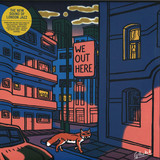
Repress of 2018’s classic compilation from Brownswood.
A primer on London’s bright-burning young jazz scene, this new compilation brings together a collection of some of its sharpest talents. A set of nine newly-recorded tracks, We Out Here captures a moment where genre markers matter less than raw, focused energy. Looking at the album’s running order, it could easily serve as a name-checking exercise for some of London’s most-tipped and hardworking bands of the past couple of years. Recorded across three long, fruitful days in a North West London studio, the crossover between each of the groups speaks to the close-knit circles which make up the scene.
Surveying the way that London’s jazz-influenced music had spread outside of its usual spaces in recent years, this album bottles up some of the vital ideas emanating from that burgeoning movement. Giving a platform to a scene where mutual cooperation and a DIY spirit are second-nature, it’s a window into the wide-eyed future of London’s musical underground.
Ubiquitous, much-lauded saxophonist Shabaka Hutchings is the project’s musical director. His own recent projects span from South Africa-connected, spiritually-minded jazz players Shabaka and the Ancestors to Sons of Kemet, who match diasporically-connected compositions with viscerally-direct live shows. His entry on the album, ‘Black Skin, Black Masks’, is typically difficult-to-define: with an off-kilter, shifting rhythmic backbone, repeated phrases – mirrored between clarinet and bass clarinet – shape the track with an alluring hue. His input ties together a deft, genre-agnostic sensibility that’s shared through all the players on the record.
Theon Cross – who’s also part of Sons of Kemet with Hutchings – starts his track, ‘Brockley’, with the solo, distinctive low rumble of his tuba. Winding and mesmeric, it sees tuba and sax lines winding together in rhythmic and melodic parallels. Ezra Collective – whose drummer and bandleader Femi Koleoso has toured with Pharaohe Monch – run a tight, Afrobeat-tipped rhythm on ‘Pure Shade’, with the final third changing gear into a melodic, momentous closing stretch.
Joe Armon-Jones, whose ludicrous chops on the piano have seen him touring with the likes of Ata Kak, showcases earworm-like, insistent motifs on ‘Go See’, balanced with a playful, improvisatory approach with room for ad-libbing and solos a-plenty. Taking a softer tact than many of the other entries, Kokoroko – whose guitarist Oscar Jerome has been making waves with his solo material – spin a lyrical, steady-paced meditation on ‘Abusey Junction’, matching chanted vocals with gently-played guitar.
Nodding to spiritual jazz influences, Maisha’s ‘Inside The Acorn’ is a wandering, explorative rumination, balancing delicate washes of piano and percussion with sharp interplay between flute and bass clarinet. In contrast, Nubya Garcia’s ‘Once’ is taut and carefully-poised, her tenor sax guiding a carefully-built energy to an explosive conclusion. And finally, Triforce’s ‘Walls’ is a performance in two parts: starting with Mansur Brown’s languorous, lyrical guitar, the second half switches up to a low-slung, g-funk-tipped groove.
- A1: Watch My Hands
- A2: Sugar Water (Feat. Quelle Chris And Anjimile)
- A3: Crooked Stick (Feat. Ghais Guevera And Alfred.)
- A4: Recitatif (Feat. Teller Bank$)
- A5: Run, Run, Run Pt. Ii
- A6: We're Outside, Rejoice!
- B1: All The Loved Ones (What Would We Do???) (Feat. Icecoldbishop And Pink Siifu)
- B2: F.f.o.l. (Feat. Teller Bank$)
- B3: Listen Gentle
- B4: Magic, Alive!
- B5: Could've Been Different
McKinley Dixon’s Durchbruch begann in 2021 mit dem vielgeliebten "For My Mama and Anyone Who Look Like Her" und setzte sich 2023 mit "Beloved! Paradise! Jazz!“ fort, beides instrumentenreiche Glanzleistungen im Geschichten erzählen, die sich mit dem Trauma und der Trauer über den Verlust eines jungen Freundes befassen.
Das neue nicht weniger bedeutungsvolle Album "Magic, Alive!“ setzt in vielerlei Hinsicht die Arbeit seiner Vorgänger fort: Es ist die Geschichte von drei Kindern, die ihren besten Freund verlieren sowie eine umfassende Betrachtung dessen, was Magie im Leben ausmacht. Kann Magie der Glaube an etwas sein, das wir nicht sehen können, genauso wie das Vertrauen in Wunder, Zaubersprüche und Portale für etwas, das jenseits unserer eigenen Erfahrung liegt? "Magic, Alive!" wurde ins Leben gerufen, als Dixon eine unerwartete E-Mail vom englischen Produzenten Sam Yamaha erhielt. Dixons frühe Beats hatten Yamahas eigene Arbeit inspiriert. Es dauerte nicht lange, und Dixon traf sich mit ihm in London und wühlte sich durch sein Archiv, um eine Fülle von Beats zu finden, die mit seinem eigenen Ansatz und dem aufkeimenden Konzept für "Magic, Alive!" übereinstimmten. Im Juli 2024 kehrte Dixon in seine Heimatstadt Richmond im US-Bundesstaat Virginia zurück und brachte eine Reihe von Sounds von Sam Yamaha und Koff mit, mit dem er bereits zusammengearbeitet hatte. Zusammen mit einer Reihe von Gästen und Freund*innen, von der Sängerin Anjimile und dem einfallsreichen Alabama-Emcee Pink Siifu bis hin zu Posaunist Reggie Pace und Harfenist Eli Owens, hat Dixon diese Beats weit aufgespalten und mit Hooks, Bläsersätzen und Gastauftritten versehen. Außerdem hat er mehrere Songs aneinandergereiht, so dass sich "Magic, Alive!" wie ein Traum bewegt oder zumindest wie eine alternative Realität, in der neue Regeln herrschen.
Carrying on from recent archival releases from masters of Indian classical tradition such as Kamalesh Maitra and the Dagar Brothers, Black Truffle is pleased to present a previously unheard recording of a concert by Pakistani vocalist Salamat Ali Khan. Born to a musician family in Hoshiarpur in the northwestern state of Punjab, Khan moved with his family to Lahore in Pakistan after the 1947 partition of India, becoming a child musical prodigy. Khan was a master of the kyhal form of Hindustani classical vocal music, a style integrating influences from Middle Eastern musical traditions that gives the singer a great deal of improvisational freedom. Travelling widely across the globe from the 1960s until his death in 2001, Khan approached ragas performed in the kyhal style as expressive forums for risk-taking improvisation, enlivened by ceaseless ornamental invention.
This remarkable recording was captured by Michael Hönig (of krautrock legends Agitation Free) in concert at Berlin’s Neue Nationalgalerie as part of the MetaMusik festival in 1974 (which also featured Nico, Tangerine Dream, and Roberto Laneri’s Prima Materia, among many others). Khan, who is also heard accompanying himself on a specially tuned alpine zither (in place of the traditional swarmandal, an Indian style of zither), is joined by Shaukat Hussein Khan on tabla and Hussein Bux Khan on harmonium. The lack of a familiar underlying tanpura drone gives this performance a weightless, floating quality, with all three of the musicians playing masterfully with the interaction between silence and the pulse propelling each section of the raag.
As Khan explains in his opening remarks, this performance of the rainy season Raag Megh is divided into three parts, each with its own tempo and rhythmic scheme (tala). The opening vilambit, in a twelve-beat tala, stretches out for over twenty minutes, lingering for a long time in a space of meditative calm, Khan lightly strumming the zither while exploring the lower end of his range in languorously extended notes. Virtuoso tabla interjections at first barely state the tempo, and the interplay between musicians is so spacious that we hear scraps of audience noise and the squeak of the harmonium’s mechanism in between the notes. Gradually picking up rhythmic definition and melodic complexity, after around fifteen minutes the music builds dramatically, with Khan letting out emotive yelps and swooping scalar shapes ranging across his full vocal range. This flows seamlessly into the following jhaptal, at a faster tempo in ten beats, which then makes way for the concluding teental, very fast in sixteen beats, which becomes a frantic improvisational exchange of daring rhythmic disruptions from the tabla, flowing harmonium melodies, and a stunning variety of vocal approaches from Khan, ranging from rapid-fire staccato consonants to guttural growls.
Accompanied by stunning black and white concert photographs, the LP also contains a moving and entertaining recollection from acclaimed German musicologist Peter Pannke, looking back on his experience assisting Khan and his musicians in Berlin at the Metamusik festival (including a mouth-watering description of a feast cooked by the maestro himself). As Pannke describes in his account of attending the concert, the beauty and spiritual intensity of this music leaves the listener speechless.
- 1: Ekmah
- 2: Elss
- 3: Dzoi
- 4: Nums
- 5: Teha
- 6: Waahrz
- 7: Duhl
- 8: Tsai !
- 9: Ohst
- 10: Zahrr
- 11: Les Hommes Sont Venus
Félicité Thösz is the eleventh studio album by French band Magma, and was originally released on the 3th of July 2012.
The album was Magma’s first studio release in 27 years to contain new material written after the band’s reformation in 1996.
“Félicité Thösz” was written during 2001-02 by Christian Vander, but only played live by the band from 2009. “Les hommes sont venus”
was written and performed in 1992 by Les Voix De Magma, and again in 1995 for the band’s 25th anniversary, then called “Tous Ensemble”.
Félicité Thösz is sung almost entirely in Magma’s constructed language Kobaïan, apart from a passage in
French named “Seule une fleur est venue au fond des bois en mon cœur (âme)”.
Félicité Thösz is now available as a remastered LP in a 3mm sleeve and contains an insert.
The record is cut at 45rpm for the ultimate audio experience.
- A1: Concerning Celestial Hierarchy. 3:50
- A2: The Day The Angels Cried 4:22
- A3: The First Language 4:22
- A4: She Burns In Devotion, Her Virtue Sweet Like Honey 4:12
- B1: There Is No Answer 3:52
- B2: To Those Who Mourn 8:17
- B3: Concerning The Law Of Angels 4.19
Acclaimed director and musician Jim Jarmusch and experimental lute player and composer Jozef van Wissem met nearly 20 years ago, forming a close bond after they ran into each other on the streets of New York City. In 2011, they began performing and producing records together. The follow up to “American Landscapes “ entitled “ The Day The Angels Cried” releases June 6 and coincides with a world tour. The duo weaves an intricate Lute and guitar string tapestry of droning, minimal free-folk compositions destined to captivate listeners with their dark hypnosis. This time vocals and electronics are added as well. Van Wissem’s work comes from a tradition of avant-garde minimalism and lends itself well to the director’s stark cinematic works. Jarmusch has played guitar in bands on and off since the late ‘70s. Van Wissem’s compositional style involves hypnotic circular musical phrases that allow for a lot of contemplative space between the notes. Their first live performance was in Issue Project Room in Brooklyn in October 2011, where they appeared together for a Van Wissem curated concert program called “New Music for Early Instruments.” The idea for their first album, Concerning the Entrance Into Eternity (Important Records) developed from their live performance. Jarmusch has said that he considers these songs as Van Wissem’s compositions, and sees himself as someone filling in the background to Jozef ’s foreground, like the “scenic” on a film shoot, the one who paints the backdrops. “The sound of the lute is as bright as the sun, a beautiful red color and my stuff sounds sort of like the moon, more like blue, like mercury.” .According to Van Wissem: We started with layers of instrumental parts.. Jim recorded a otherworldly Passerelle bridge guitar part to which we added vocals. This became the title track " The Day The Angels Cried" The lyrics for this song came to me during a vision I had in a dream. It was much like a vision Swedenborg writes about. In it he converses with angels. In my vision the angel looked down from the heavens upon the earth engulfed in flames. Recent events in Los Angeles and other parts of the world, have led me to believe that this dream was a premonition. “The Day The Angels Cried” ( Inc 040/41) releases June 6th on Incunabulum Records, right before the duo start their World tour. releases June 6, 2025 Jozef Van Wissem Voice, Baroque And Renaissance Lutes, 12 String Electric Guitar, Slide Guitar, Electronics, Found Recordings Jim Jarmusch Voice, Electric Guitars, Acoustic Guitars, Passerelle Bridge Guitar, Electronics, Found Recordings
- Through The Arches
- Arrangements
- Forever Now
- The Sprig And The Birch
- Fragment Ii
- Ascension
- Dog Years
- Make Of Your Heart A Stone
- Ceremonial
Das neue Studioalbum des schwedischen Quartetts GÖSTA BERLINGS SAGA. Furchtlos experimentell, köstlich respektlos und seit 25 Jahren der Kategorisierung trotzend - Gösta Berlings Saga aus Stockholm präsentieren ihr mit Spannung erwartetes siebtes Studioalbum Forever Now. Eine meisterhafte Kollision von komplexem Songwriting, roher Rockspontaneität und der charakteristischen Missachtung aller Genregrenzen - Forever Now ruht sich nicht auf seinen Lorbeeren aus. Vielmehr treibt es die musikalische Reise entschlossen voran und deutet darauf hin, dass das Beste der Band auch nach mehr als zwei Jahrzehnten noch vor uns liegt. Das Werk besteht aus 10 Tracks voller handgemachtem Chaos, die die ganze Brillanz von Gösta Berlings Sagas 25 Jahren respektloser Innovation in sich tragen. Das Album wurde zum ersten Mal komplett von der Band geschrieben, aufgenommen, produziert und abgemischt. Synthesizer und arpeggierte Gitarren schrauben sich immer höher und kollidieren auf dem Weg dorthin mit hektischer Percussion und pulsierendem Schlagzeug, während das angeborene Vertrauen der Band ineinander und in ihre Musik den treibenden Kern eines immerwährenden Energiemotors bildet, an dem fünf Jahre lang gearbeitet wurde. Für Fans von King Crimson, Magma, Yes, Focus, Captain Beefheart, This Heat und The Mars Volta. CD und/oder LP.
Das viel gesuchte klassische Orchester-Breakcore-Album "Rossz Csillag Allat Született" von Venetian Snares aus dem Jahr 2005 wird anlässlich seines 20-jährigen Jubiläums auf schwarzem Vinyl neu aufgelegt. Was wäre, wenn wir beide nur einen Tag lang Tauben sein könnten? Manchmal kann ein Moment in der Zeit eine so große Bedeutung erlangen, dass er zu einer endlosen Welt für sich wird und alles außerhalb dieses Moments, vergangene und zukünftige Zeitpunkte, zur Folklore dieser Welt werden. Was wäre, wenn wir beide die Királyi Palota überfliegen und sie so sehen könnten wie diese Tauben? Eine schöne Kultur von ungleichen Winkeln als Eselsengel über dieser Stadt. Aber auch in der Welt des unendlichen Augenblicks können wir uns die Feder unseres Vogels nicht aussuchen, und die Taube mag sich danach sehnen, die Gans zu sein, der Esel die Taube und so weiter. Und während unsere Welt aus diesem einen Tick in der Zeit erblüht, ist sie für die eine Taube eine wirbelnde romantische Flut euphorischer Möglichkeiten und Faszination, für die andere ein minderwertiges Leben, in dem sie auf jeden vom Himmel aus scheißt, unbeholfen und beschämt, und sich damit abfindet, die elende Plage zu sein, als die sie von denen, auf die sie scheißen, dargestellt wird. So schnell wie unsere Welt blüht, so schnell ist sie auch wieder im Unfrieden und unsere Tauben sind verwundet, und wenn unsere Welt stirbt, sterben auch wir, und wir sind ausgestorben. Wenn wir uns doch nur immer wieder umbringen könnten, bis wir es richtig machen. So wie ein ganzes Musikgenre aus einem einzigen beschleunigten Zehn-Sekunden-Breakbeat geboren werden kann, so kann ein komplettes Symphonieorchester in harmonischem Einklang zusammenkommen, um diesen perfekten Moment in der Zeit zu erschaffen, so kann jeder Moment eine völlig neue Welt hervorbringen, und jede Welt kann den perfekten Moment beherbergen, und so wie dieser Breakbeat bis zur Unkenntlichkeit gebrochen werden kann, so kann sich das Orchester zusammenschließen, um ein dissonantes Sperrfeuer kolossalen Kummers hervorzubringen, und so löst der Moment seine Welt auf, und diese Welt erstickt den Moment unter ihrem Zusammenbruch.
- Devils Are Awake
- Time Will Heal
- Better Be Fueled Than Tamed
- By A Monster’s Hand
- Acid Rain
- At The End Of The Sirens
- Demonic Depression
- Lonely Fields
- In The Barn Of The Goat Giving Birth To Satan’s Spawn In A Dying World Of Doom
- Enlighten The Disorder (By A Monster’s Hand Part 2)
Mystery Color Vinyl[27,77 €]
Die dänischen Rock-Giganten VOLBEAT – Michael Poulsen (Gesang, Gitarre), Jon Larsen (Schlagzeug) und Kaspar Boye Larsen (Bass) – melden sich mit ihrem neunten Studioalbum „God Of Angels Trust“ zurück, das am 06. Juni erscheinen wird. Und passend zum neuen Album wird die Band auf ausgedehnte Welttournee gehen.
Mit „God Of Angels Trust“ wirft die Band alle songwriterischen Regeln über Bord. Volbeat, die als nichtamerikanische Band einen Rekord von zehn Nummer-1-Hits in den Billboard Mainstream Rock Charts halten, haben sich bewusst von Konventionen gelöst und neue kreative Wege beschritten. Die Begeisterung der Band, Konventionen zu durchbrechen, ist in „God Of Angels Trust“ spürbar, einem druckvollen, knackigen Album, das unbestreitbar Volbeat ist – mit der gewohnten powervollen Mischung aus eingängigen Melodien und frischer, metallischer Energie.
Dass Volbeat ein komplettes Album in gerade einmal fünf Wochen geschrieben und aufgenommen haben, ist beeindruckend. Doch was „God Of Angels Trust“ wirklich außergewöhnlich macht, ist die Tiefe, Vielseitigkeit und Fülle, die man sonst nur von Alben kennt, die zehnmal so lange in der Mache waren. Ein solcher kreativer Kraftakt erfordert absolute Konzentration, einen unerschütterlichen Flow und das Vertrauen, dem eigenen Instinkt zu folgen.
Ab Juni kehren Volbeat auf die Bühne zurück und gehen mit ihrer ”Greatest Of All Tours Worldwide” auf große Reise durch Kanada, die USA, Europa und Großbritannien.
- Dead End
- Killer Joe
- Love And Peace
- Walking In Space
- I Never Told You
- Oh, Happy Day
Zum 92. Geburtstag der kürzlich verstorbenen Musiklegende erscheinen vier seiner Kultalben als limitierte audiophile 180g-LPs in Deluxe-Sleeves.
Die Alben „Walking In Space” (1969), “Smackwater Jack” (1971), „You’ve Got It Bad Girl” (1973) und “Body Heat“ (1974) zeigen Quincy Jones als Künstler zwischen Jazz und Black Music und gelten längst als Meisterwerke ihrer Ära.
Die Deluxe-LPs wurden in 180g bei Vantiva (USA) gepresst und stecken in gefütterten weißen Innenhüllen. Alle Alben bis auf „You’ve Got It Bad Girl” stecken in Gatefold-Sleeves. „Smackwater Jack“ wird durch einen Prägedruck auf dem Cover veredelt, „Walking In Space“, „You’ve Got It Bad Girl“ und „Body Heat“ durch einen Foliendruck.
Die dänischen Rock-Giganten VOLBEAT – Michael Poulsen (Gesang, Gitarre), Jon Larsen (Schlagzeug) und Kaspar Boye Larsen (Bass) – melden sich mit ihrem neunten Studioalbum „God Of Angels Trust“ zurück, das am 06. Juni erscheinen wird. Und passend zum neuen Album wird die Band auf ausgedehnte Welttournee gehen.
Mit „God Of Angels Trust“ wirft die Band alle songwriterischen Regeln über Bord. Volbeat, die als nichtamerikanische Band einen Rekord von zehn Nummer-1-Hits in den Billboard Mainstream Rock Charts halten, haben sich bewusst von Konventionen gelöst und neue kreative Wege beschritten. Die Begeisterung der Band, Konventionen zu durchbrechen, ist in „God Of Angels Trust“ spürbar, einem druckvollen, knackigen Album, das unbestreitbar Volbeat ist – mit der gewohnten powervollen Mischung aus eingängigen Melodien und frischer, metallischer Energie.
Dass Volbeat ein komplettes Album in gerade einmal fünf Wochen geschrieben und aufgenommen haben, ist beeindruckend. Doch was „God Of Angels Trust“ wirklich außergewöhnlich macht, ist die Tiefe, Vielseitigkeit und Fülle, die man sonst nur von Alben kennt, die zehnmal so lange in der Mache waren. Ein solcher kreativer Kraftakt erfordert absolute Konzentration, einen unerschütterlichen Flow und das Vertrauen, dem eigenen Instinkt zu folgen.
Ab Juni kehren Volbeat auf die Bühne zurück und gehen mit ihrer ”Greatest Of All Tours Worldwide” auf große Reise durch Kanada, die USA, Europa und Großbritannien.
"Max Knouse’s voice feels like laughter that follows a well-loved joke. Only afterward, it dawns on you that you don’t fully understand the punchline. Or for that matter the set up. In fact, you’re not even sure what language the joke was told in. What to make of such a laugh—inexplicable, delightful, surprising, seemingly nonsensical? And what to make his voice, at once comforting, beguiling, and just beyond the bounds, like a blues moan or a Mingus lick or some ancient guttural holler? It’s the kind of haunt that lingers long after the record fades, echoing back in your imagination, laden with cryptic possibilities and occulted meanings.
Chipmunk’d Away is his third album. Known for his sessions and live shows with artists like Califone, Jolie Holland, Adan Jodorowsky, Psychic Temple, Simon Joyner, Alex Dupree, and others, Knouse has established himself as an essential factor in the West Coast indie pop underground, brandishing guitar chops that mirror the rawness of his voice; he treats his instrument like a divining rod of spiritual tension and joyful racket, pushing and pulling on it with affection and sometimes something darker.
From the swelling cosmic folk of “Mint and Tobacco,” which features Knouse intoning apocalyptically over engineer Michael Krassner’s washing guitars, “Your breathing ain’t so deep,” to the jazz standard swooner-meets-West Coast psych-pop title track, to the nightmare-scape blues of “Clumsy Hunter,” to the concluding audio collage sway of “Banana, Orange, and Something Else,” Chipmunk’d presents the range and scope of Knouse’s style: bold, adventurous, frightening, and then frequently, when you least expect it, heartbreakingly lovely, like a joke that clarifies your feelings before you could actually verbalize what those feelings even are. They had been hidden from you, chipmunk’d away, but now Max Knouse has revealed them."
HARMONY019—Night Out is the third collaborative EP by Alfred Czital and Ayū, dedicated to high-energy dance music and inspired by their nightlife experiences.
The A-side opens with Alfred Czital’s transcendental solo track, “Universal Language,” a composition infused with punchy beats and sonic whispers. It’s followed by Ayū’s “Magnetic,” a fast-paced, progressive bubbler featuring ultra-sensual vocals.
The B-side delivers a soundscape of grooves and scattering melodies. It begins with “Physical,” a collaboration between Alfred Czital and Ayū inspired by early 2000s trance anthems, uplifting sounds, and hazy vocals. “Love Letter from Montevideo” closes the record with a memoir inspired by Uruguayan rolling electronica.
The stunning debut album by Peki Momés is back in store after selling out the first edition in a few weeks! This 2nd pressing has a different label design. Featuring twelve outstanding original tunes. Turkish psychedelic, global disco and outernational!
Peki Momés is a Turkish artist living in Germany - who only started to record music by accident in 2024. Blessed with style and intuition rather than formal education, her fresh and uncompromisingly authentic approach to music took hearts and ears by storm.
Ever since her debut 45 on Mocambo Records, Peki Momés has become a little sensation in and outside the organic groove scene: turntablist DJ Koco played doubles of "Göc Mevsimi" in his set, Iggy Pop announced "Rüya" on his "Iggy Confidential" show on BBC and the second vinyl single surprised everyone with a mesmerizing cover of Marco Valle's much loved "Estrelar" in the turkish language. Both records sold out quickly and are in the bags of tastemakers like Coco Maria.
Peki Momés' music is an eclectic mix of sounds from the global underground, tastefully crafted by producer Dustin Braun and a troupe of ridiculously talented jazz musicians. Dirty disco, fuzzy funk, anatolian rare grooves, experimental synth, library music and japanese city pop all blend naturally with her distinct vocals to create a unique ethereal outernational sound that is all her own.
Once dubbed as 'turkish discodelic', Peki's songs have a dreamlike, enchanted and psychedelic quality and instantly take the listener on a journey. In a poetic way, she approaches topics like "dreams and a naive fear of losing or not fulfilling them" or expresses "worries about our weary world and call for solidarity from all" - always with an outlook of hope. You do not have to speak turkish to understand - the message is transported by a universal language.
With her debut album, Peki Momés is now telling her full story. Displaying a young Peki on the cover, the artwork hints at the freshness and enthusiasm of the project. We should consider ourselves lucky that Peki chose to disrespect rules in favor of self-empowerment and made this wonderful longplayer that you never knew you needed.
- A1: Patina Shift
- A2: Blistex
- A3: Rust Halo
- A4-: Lesio
- B1: Sightjacker Ft. Visio
- B2: Here Used To Be A Star
- B3: Spume (Formerly An Icefield)
- B4: Hypnoxia
- C1: Astral Trepidation Ft Jiyoung Wi
- C2: Spotshadowsphere
- C3: Cable Eater
- C4: Velvet Myst Ft. Heith
- D1: Nerveghost
- D2: Relaxus
- D3: L’ Inaperçu Nous Traverse Ft. Bernardino Femminielli And Habib Bardi
Corrosiv, the sophomore album from Orchestroll, reveals the duo at their most mature and vulnerable. Originally conceived as a reflection on hybridity and bastardization, the album deploys New Age and ambient compositional tropes as a launchpad, exposing their trite sanctity to the realities of corrosion. Having come of age in the 1970s and 1980s, the New Age movement perdures today as a domain of contradictions; its promise of transcendence riddled with the very commercialized dogma from which its adherents claim to flee. Healing modalities such as reiki, crystal therapy, and sound baths are simultaneously pathways to solace and sites of exploitation; their sonic counterparts—ethereal synth pads, shimmering textures, celestial drones—claim to facilitate meditation and enlightenment while devolving into empty signifiers of vitality. With Corrosiv, Orchestroll displays neither reverence nor disdain toward New Age: they exhume it instead, revealing the saccharine effervescence and commodified murk undergirding its aesthetics. The result is intoxicating—disquieting.
Born from a two-week residency at EMS Studios and expanded through a performance at MUTEK Montreal’s 25th anniversary, Corrosiv has since outgrown its original conceptual nucleus, taking on a broader scope. Its inquiry into New Age ideology’s voided rhetoric and aesthetic mysticism now informs a broader interrogation of cultural mediocrity, anti-authoritarianism, gatekeeping, music industry toxicity, and the crumbling edifice of late capitalism and techno-feudalism—all the mechanisms by which meaning is stripped from ceremony, and once-potent forms of knowledge are subsumed into the machinery of economic extraction, severed from their original essence, and transformed into hollow simulacra. Corrosiv distills these themes through a loose narrative: a soul, fixated on wellness as dictated by cosmetic economism, becomes ensnared in an endless afterlife, unable to transcend and shed its dilapidated consciousness.
Framed as an act of audio dissolution, the album thus engages in an alchemical process, whereby complex waveshaping, morphing synthesis, and distortion enact a ritual of fragmentation. There is also friction: between the rigid, mechanical imposition of systematized order and the untamed, chaotic force of organic metamorphosis. Here corrosion and confinement are not solely conceptual motifs; they are enacted in real time, sculpting the album’s terrain. Scraping, tarnishing, degradation—the languid wear of form and substance—become instruments in their own right: buffing as abrasion, entrapment as transformation, corrosion as a means of reconfiguration. The ‘protagonist,’ if there must be one, is the listener, caught within the throes of structural determinism and the potential for emancipation, unable to pass into something greater as the specters of collapsed futures accumulate in the margins.
Corrosiv extends its reach through collaborations with familiar voices: Heith (PAN), VISIO (Haunter), Femminielli (Drowned by Locals), Habib Bardi (Interzone), and Jiyoung Wi (Enmossed, Psychic Liberation, Doyenne) each leave their imprint on its sprawling landscape. At 1h16m, it is a procession, dense with earworms that burrow into the listener’s unconscious.
Misshapen, broken-down metals leach copper into blood, acid reflux burning through the core. Psyche disaggregates into cosmic turmoil, drifting between planes—tongue on rustline, gullet laced with solvent hymns, molars unlatching, bitcrushed to marrowspill. A spasm of brine, ferrous scripture, venomtext blooming in leaden rivulets, cartilage smoldering in phosphor decomposition, synapses drowning in a quicksilver choir. Crest of bile, churning ore, breath clotting into arsenic mist, vein-thread cinched, a corrosive gospel, limb by limb, oxidized to silence.
Ultimately, as the music exhales its final breath, its residue refuses to dissipate—and stillness alone remains. There are no conclusions here—no resolution, no collapse—only the slow drift outward of a vessel unmoored, lost in the sea of symbolic souring. Corrosiv sings the song of a world barren of prophecy, littered with aesthetic detritus. Whether this magic has been transfigured or simply worn away is unclear: the last breath dissipates, but the oxidation does not stop. The silence, too, will decay.
Conceptualized, composed, performed, recorded, mixed, engineered and produced by Jesse Osborne-Lanthier, and Asaël Richard-Robitaille in 2023 and 2024 at Elektron Musik Studion (EMS) - Stockholm, Sweden and Landsc8pe Studio - Montréal, QC, Canada.
Artwork by Jesse Osborne-Lanthier.
Mastered by Stephan Mathieu @ Schwebung Mastering.
- Key Puncher
- Hug Me It's Gonna Be Ok
- I Still Blame Myself For Things I Couldn't Control
- Japanese Rockbands
- Riddles Seite
- I've Come A Long Way To Wave Goodbye
- Whore
- Cat
- A Corpse Is Lying In My Bed
Keine 400 Songs später und nach etlichen Konzerten geht das Solo Projekt des 19 jährigen Ennio De Caro namens AIN'T UR ENN den nächsten Schritt.Das Album LANGUISH erscheint am 30. Mai 2025 auf Tomatenplatten. Aufgenommen wurde im heimischen Schlafzimmer in Luzern. Das Tonstudio heisst Garage Band. Die erste Trennung wird in Musik gegossen. Ennio De Caro schreibt die Songs, spielt alle Instrumente und singt. Die Drums sind programmiert. Die Emotion ist direkt. Krankhaft traurig, desillusioniert und überbordend energetische klingen die Lieder, die im Frühsommer erscheinen. Das Album heisst LANGUISH. Die Musik ist nicht einzuordnen - Herzzerreißender Bedroom-Pop trifft auf Japanese influenced Hyper-Indie-Pop-Rock. Y2K - Cybercore-Ästhetik trifft auf Emo. Rock and Roll trifft auf Autotune a la Julian Casablanca. Ist das dann Nintendo-Rock? Oder Alex G. auf Crack?
- A1: (Petri Alanko) - Vertical Reflections
- A2: Slaughtering A Nightingale
- A3: Driving To The Spot
- A4: Manuscript Page
- A5: Saga
- A6: Rose
- A7: Bathtub
- A8: Evil Is Contagious
- A9: The Attack, A Ceiling Fan And Lots Of Blood
- B1: (Petri Alanko) - Fbc Arrives
- B2: Wake Shoots Wake, Scratch Scores An Escape
- B3: Wake Shoots Casey
- B4: Into The Static
- B5: The End(S)?
- B6: End Credits - Welcome Again To Bright Falls
- B7: End Credits - Awash Unknown
- C1: This Road (The Dark Chamber) – Poe
- C2: Herald Of Darkness – Old Gods Of Asgard
- C3: The Poet And The Muse – Old Gods Of Asgard
- C4: Yötön Yö – Petri Alanko Feat. Martti Suosalo
- D1: (Chapter Songs By Fried Music & Nordic Music Partners) - Follow You Into The Dark – Rakel
- D2: Wide Awake – Jaimes
- D3: Superhero – Mougleta
- D4: Lost At Sea – Jean Castel
- D5: Dark, Twisted And Cruel – Paleface
- D6: No One Left To Love – Roos + Berg
Remedy Entertainment und Laced Records präsentieren die wegweisende, unvergessliche Musik des preisgekrönten Videospiels 'Alan Wake 2' auf Vinyl.
Remedy und sein Creative Director Sam Lake sind wohl unübertroffen in ihrem Engagement für die Musik in ihren Spielen. Für den Soundtrack verfolgten sie vier kreative Hauptstränge: Der langjährige Mitarbeiter Petri Alanko (Alan Wake, Quantum Break, Control) kehrte als leitender Komponist zurück und lieferte einen bissigen und doch gefühlvollen dramatischen Horror-Score sowie die bei den Fans beliebte Hausmeister-Ballade „Yötön Yö“, gesungen von Martti Suosalo (Ahti).
Der Musikkünstler POE und Sam Lake haben sich zusammengetan, um vier Teile des spiralförmigen, melancholischen Epos „This Road“ zu schaffen, das das Ende von Wakes Reise durch den Dark Place darstellt.
Die Poets of the Fall schlüpften erneut in die Rolle der alten Götter von Asgard und schufen mehrere Prog-Opera, darunter das monumentale „Herald of Darkness“ mit dem Gesang von Matthew Porretta (Alan Wake) und David Harewood (Mr. Door).
Schließlich versammelte die Musikproduktionsfirma Fried Music in Zusammenarbeit mit Nordic Music Partners eine kleine Armee außergewöhnlicher Songwriter-Talente, um die vielseitigen, atmosphärischen und im Universum angesiedelten „Chapter Songs“ zu komponieren.
Spectral Bounce’s fifth instalment comes courtesy of L.A.’s rave archivist and dancefloor operative Dreams, A.K.A. Jesse Pimenta. Throughout his decade-long career the California native has inspected, dissected and concocted all manner of dance musics, leaving his mark with drops on Apron Records, Pinkman, BANK NYC and his own imprint Dance Data. On SPEC05 — Dangerous When Wet — he hijacks the synapses with 4 accomplished productions, plotting a high BPM course through manifold styles using the raw aesthetic that characterises his output.
“Losing Control” is a frenetic dancefloor invitation, immediately locking into a pacing groove. Beneath wild hand drums, Dreams plays with an insistent 303 bassline alternating between rasping buzz and oily squelch, while stern vocals are layered on top of breaks that have been processed to a viscerally satisfying end.
Taking things from delirious dance circle to underwater biosphere, the EP’s eponymous track explores a submerged 1980s Miami. Weighty & enveloping, “Dangerous When Wet” is pure aquatic pop-n-lock — hydraulic electro for a drowned world. Ocean floor caustics are transmuted into auditory form: arpeggios bubble up; drones shimmer mystically; hi-hats hiss like air from an open valve. Amongst the sonar bleeps, a barrage of pummeling low-end is sure to give subwoofers a workout.
“XTC Messenger” delivers an infectious paranoid dispatch, astutely balancing the sensual with the deranged. A slow-mo dial tone unfolds languidly, running counter to nervously twitching high frequencies. Its punchy percussion is tuned for maximum dopamine release; the track’s abrupt vocal chops and mechanical kick-snare pulsation evoke the leather jackets and jagged edges of 1980s industrial discotheque.
“Pressure Points” closes the EP on a heady and mesmerising polymetric trip. The parting track is a lithe yet spacious number, propelled by a rattling break. Here Dreams follows from track 2, creating an immersive environment in which sounds tightly twist and twirl. Shifting oscillators call out like tiny creatures as the bass throbs and wriggles further into your brain, long after the needle hits the runout groove.