New week, new heat from Monsieur Van Pratt, an ever-reliable edit master who this time brings his signature style to a trio of Spanish-language cuts. He tackles two classic disco anthems that are familiar yet completely revitalised in EspaNol as 'Caliente' kicks off with stomping disco energy and catchy riffs, then 'Toca Mi Campana' is a more funky and playful number with low-slung bass. They are joined by a deeper, lesser-known gem, 'Americana ', which is reimagined into a powerful dancefloor weapon with gritty, analogue textures and a deep respect for groove that will heat up any 'floor.
quête:lang fr
- Garage Super Stars
- Hey Man
- Contact Tokyo
- Super Sexy Razor Happy Girls
- Stick Around Jo
- Heart Attack
- Super Honda
- Armageddon
- Never Gonna Push Me Around
- Underwear
- Love Factor Five
- Snake And Crane
- Magic Boots (Livish Version)
- Sweet Peach
- Don't Say
- Yellow Danger Babies (Livish Version)
Mikabomb wurde 1997 gegründet, nachdem Frontfrau Mika ihren langweiligen Bürojob in Japan gekündigt hatte und nach London abgehauen war, um eine Band zu gründen und sich dem Rock'n`Roll hinzugeben. Nur wenige Wochen nach ihrer Ankunft in England traf Mika auf eine 16-jährige Punk-Göre namens Agi, die aus ähnlichen Gründen wie Mika ihre Heimatstadt Peking verlassen hatte. Es dauerte natürlich nicht lange, bis Mika und Agi anfingen, ihre eigenen trashigen Pop-Punk-Songs zu schreiben. Mit Ergi, Mika Bass und Tomoko, die die Band vervollständigten, fingen sie an, regelmäßig aufzutreten und sich durch ihre immer ausgelassenen Live-Shows einen furchteinflößenden Ruf aufzubauen. Sie begeisterten nicht nur Konzertbesucher im ganzen Land, sondern wurden auch vom NME als ,die neuen Ramones" bezeichnet, vom Melody Maker als ,fantastisch" beschrieben und von Steve Lamacq von Radio One als ,die beste Band, die Japan je hervorgebracht hat" bezeichnet. So wurden auch viele Plattenfirmen auf Mikabomb aufmerksam, darunter Grand Royal, das Label der Beastie Boys, das im Jahr 2000 zwei limitierte Singles mit den Titeln ,Super Sexy Razor Happy Girls" und ,Heart Attack" veröffentlichte. Ihr fantastisches Debütalbum ,The Fake Fake Sound of Mikabomb" mit 15 Titeln kam ursprünglich am 2. Juli 2001 raus. Da es auf Vinyl schon lange vergriffen ist, bringen wir es jetzt wieder raus, weil Mikabomb wieder aktiv ist und in UK gibt.
Boxset[137,40 €]
Das ursprünglich im Juni 1985 veröffentlichte dritte Studioalbum „Theatre of Pain“ von Mötley Crüe
läutete einen kühnen neuen Sound und Look ein, behielt aber gleichzeitig die für die Band charakteristische
Hardrock-Intensität bei. Dieses trendsetzende Album prägte den Stil und die Musik vieler nachfolgender
Bands, während die Crüe selbst ihren Look und Sound mit jedem Album weiterentwickelten.
Theatre Of Pain war das erste Album der Crüe, das es in die US-Top-10 schaffte und auf Platz 6 landete.
Es war auch ein echter weltweiter Hit und erreichte Platz 7 in Australien, Platz 7 in Schweden, Platz 5 in
Finnland, Platz 11 in Kanada und war ihr erstes Album in den britischen Top 40 (Platz 36). Das Album
ist derzeit in den USA mit 4-fach Platin und in Kanada mit 3-fach Platin von der RIAA zertifiziert.
Die Tour führte sie um die ganze Welt: Japan, USA, Kanada, Deutschland, Frankreich, Schweden, Finnland,
Norwegen und Dänemark. Das bahnbrechende Video zu ihrem Kult-Track „Home Sweet Home“ war über
90 Tage lang die meistgewünschte Nummer 1 und veranlasste MTV dazu, die „Crüe Rule“ einzuführen,
wonach ein Video nur 30 Tage lang für die Wunschliste zugelassen war!
Black Vinyl[24,58 €]
Das ursprünglich im Juni 1985 veröffentlichte dritte Studioalbum „Theatre of Pain“ von Mötley Crüe
läutete einen kühnen neuen Sound und Look ein, behielt aber gleichzeitig die für die Band charakteristische
Hardrock-Intensität bei. Dieses trendsetzende Album prägte den Stil und die Musik vieler nachfolgender
Bands, während die Crüe selbst ihren Look und Sound mit jedem Album weiterentwickelten.
Theatre Of Pain war das erste Album der Crüe, das es in die US-Top-10 schaffte und auf Platz 6 landete.
Es war auch ein echter weltweiter Hit und erreichte Platz 7 in Australien, Platz 7 in Schweden, Platz 5 in
Finnland, Platz 11 in Kanada und war ihr erstes Album in den britischen Top 40 (Platz 36). Das Album
ist derzeit in den USA mit 4-fach Platin und in Kanada mit 3-fach Platin von der RIAA zertifiziert.
Die Tour führte sie um die ganze Welt: Japan, USA, Kanada, Deutschland, Frankreich, Schweden, Finnland,
Norwegen und Dänemark. Das bahnbrechende Video zu ihrem Kult-Track „Home Sweet Home“ war über
90 Tage lang die meistgewünschte Nummer 1 und veranlasste MTV dazu, die „Crüe Rule“ einzuführen,
wonach ein Video nur 30 Tage lang für die Wunschliste zugelassen war!
- Specimen 1.1
- Specimen 2.1
- Specimen 3.1
- Specimen 4.1
- Specimen 5.1
- Specimen 6.1
- Specimen 7.1
- Specimen 8.1
- Specimen 9.1
- Specimen 0.1
After screaming to the world You Don't Know What Chiptune Is, arottenbit returns with an even more radical and collective statement: You Don't Know What A Rework Is. Ten tracks, completely deconstructed and rebuilt by twenty Italian bands, each in their own sonic language. From drone swallowing the void to the most savage death metal, from visceral punk to a fearless flamenco twist, every track becomes an uncharted territory, a journey where arotttenbit's identity dissolves and multiplies into twenty new forms. Most of the recordings were captured by Otto himself with his mobile studio, during a tour across Italy that took him into basements, rehearsal rooms, and underground spaces, harnessing raw and direct energy from the bands in their natural environment. Mixing and mastering then came to life at Otto Engineering Labs, his personal sound-space where everything was stitched together and transformed into a single living organism.
[a] SPECIMEN 1.1.[FLC:011-015] (FEAT. FULCI)
[b] SPECIMEN 2.1.[ISK:006-008] (FEAT. JASON DAHLKE)
[c] SPECIMEN 3.1.[FSG:005-007] (FEAT. FOSGENE)
[d] SPECIMEN 4.1.[OVO:004-007] (FEAT. OVO)
[e] SPECIMEN 5.1.[UND:008-010] (FEAT. UNDERTAKERS)
[f] SPECIMEN 6.1.[HWF:007-009] (FEAT. HYPERWÜLFF)
[g] SPECIMEN 7.1.[3ST:009-010] (FEAT. THREESTEPSTOTHEOCEAN)
[h] SPECIMEN 8.1.[MBR:006-007] (FEAT. MASTER BOOT RECORD)
[i] SPECIMEN 9.1.[LXN:010-011] (FEAT. LESLIEXNIELSEN)
[j] SPECIMEN 0.1.[8NE:006-008] (FEAT. OTTONE PESANTE)
Songs for Nothing was written upon Olan Monk’s return to the west coast of Ireland. The album is imbued with the influence of sean-nós singing, Irish language songs in the “old style” that often proclaim tales of love, loss and landscape; and also heavily indebted to the late Sinéad O’Connor’s confessional songwriting. Reconstructing these influences through their unique perspective has resulted in a fragmentary album veering between collaged pop, machinic rock and slow airs, “dedicated to Conamara and all who have called it home”. The western, Atlantic-facing edge of Ireland has a particular feeling and energy, one that permeates the release: the granite pulsates, the ocean and sky reflect intensities, seaweed rots on shingle shores, plants bloom, ancient trees come up for air from the drowned forest in Galway Bay, the sun splinters through the low clouds.
All songs written and arranged by Olan Monk
Vocals, guitars, piano and tin whistle performed by Olan Monk
Drum programming by Olan Monk featuring recordings of percussion performed by Michael Speers
Vocals on ‘Down 3’ and ‘Fate (Reprise)’ performed by Maria Somerville
Cello on ‘Blank Page’, ‘Oatmilk’, ‘Pomegranate’ and ‘Fate (Reprise)’ performed by Risteárd Ó’hAodha
Violin on ‘Corp’, ‘Down 3’ and ‘Drón Feadóige’ and accordion on ‘Amhrán Mhaínse’ performed by Peadar Tom Mercier
Bodhrán on ‘Corp’ and ‘Drón Feadóige’ performed by Aindriú De Buitléir
Harp on ‘10 Days’ performed by Róisín Berkeley
Flute on ‘10 Days’ performed by Dylan Kerr
Accordion on ‘Blank Page’ performed by Olan Monk
Recorded and mixed by Olan Monk
Additional mixing on ‘Can’t Wait’ by Patrick Burniston
Mastered by Noel Summerville
Photography by Charlie Joe Doherty
Artwork by Nicola Tirabasso
Thanks to Nic Tasker
With love to friends and family for their support in making this record
Dedicated to Conamara and all who have called it home
Black Vinyl[22,27 €]
Changes In Air ist ein wunderschönes, langsam fließendes Stück in fünf Teilen für elektronische Orgel, Klavier und modulare Synthese. Es ist das dritte und letzte Album der kanadischen Komponistin Kara-Lis Coverdale aus dem Jahr 2025, nach From Where You Came (Frühling) und A Series of Actions in a Sphere of Forever (Sommer), und vervollständigt eine exquisite Trilogie von Werken, die ihre lang erwartete Rückkehr zur Musikaufzeichnung feiern.
- Part I
- Part Ii
In einer mutigen, hypnotischen Hommage an Detroits ursprüngliche Avantgarde-Rock-Wurzeln verwandeln Schlagzeuger Larry Mullins (alias Toby Dammit) und der legendäre Bassist Mike Watt das eindringliche Mantra ,We Will Fall" von The Stooges in ein fast 40-minütiges Ritual aus Wiederholungen, Zurückhaltung und roher Atmosphäre. Mullins und Watt greifen den unheimlichen Puls und den narkotischen Drone des Original-Tracks von 1969 auf und treiben dessen tranceartigen Kern in unbekanntes Terrain. Mullins, bekannt für seine Arbeit mit Iggy Pop, Swans und Nick Cave, baut mit seiner Shruti-Box, Moog-Elektronik, Tabla und Gongs eine minimalistische Landschaft auf. Watts charakteristisches Low-End-Dröhnen verwandelt sich von einem subtilen Herzschlag zu einer Ganzkörperhalluzination. Das Ergebnis ist keine Coverversion, sondern eine erweiterte Beschwörung. Teils Séance, teils Trauergesang, teils freie Erkundung von Stimmung und Geist. Es ist ein langsames Brennen klanglicher Hingabe, das den Geist der Stooges ehrt und gleichzeitig die Tür zu etwas völlig Neuem öffnet: ein tiefes Eintauchen in das Heilige und Fremde. Dieses meditative und bedrohliche Stück ist auf zwei Seiten der LP aufgeteilt, die exklusiv für den Record Store Day Black Friday 2025 erhältlich ist. Die Hälfte der Pressung erscheint auf goldenem Vinyl, die andere Hälfte auf schwarzem, die Auswahl erfolgt nach dem Zufallsprinzip.
Aufgenommen live im Village Gate in New York City am 26. und 27. November 1963 mit den Pianisten Horace Parlan, Melvin Rhyne und Jane Getz sowie dem Bassisten Henry Grimes und dem Schlagzeuger Sonny Brown. Die Musik wurde ursprünglich für einen Dokumentarfilm aufgenommen. Die Bänder lagen 62 Jahre lang im Archiv, bis sie nun veröffentlicht wurden. Restauriert und gemastert von Matthew Lutthans im Mastering Lab anhand der Originalbänder. Die Deluxe-CD-Edition enthält ein umfangreiches Booklet mit seltenen Fotos und Liner Notes von Jan Persson, Tom Copi, Raymond Ross und anderen, neu in Auftrag gegebene Liner Notes der Autoren John Kruth und May Cobb sowie Interviews und Testimonials von Jane Getz, den Saxophon-Ikonen James Carter und Chico Freeman, dem Posaunisten Steve Turre, Adam Dorn – Sohn des langjährigen Kirk-Produzenten und -Förderers Joel Dorn – und anderen.
Nie zuvor veröffentlichte Live-Aufnahme aus dem Penthouse Jazz Club in Seattle vom 12. und 19. August 1967 mit dem Pianisten Rahn Burton, dem Bassisten Steve Novosel und dem Schlagzeuger Jimmy Hopps. Diese mitreißende Musik wurde ursprünglich vom Radio-DJ Jim Wilke für den Radiosender KING-FM aufgenommen. Übertragen von den Originalbändern, restauriert und gemastert von Matthew Lutthans im The Mastering Lab. Die limitierte Deluxe-Edition mit 2 CDs enthält ein umfangreiches Booklet mit seltenen Fotos und Liner Notes von Jan Persson, Tom Copi, Rolf Ambor und anderen, neu in Auftrag gegebene Liner Notes der Autoren John Kruth und May Cobb sowie Interviews und Testimonials von Saxophon-Ikonen wie James Carter und Chico Freeman, dem Posaunisten Steve Turre, Dorthaan Kirk, Adam Dorn – Sohn des langjährigen Kirk-Produzenten und -Förderers Joel Dorn – und anderen.
- Empires (Sometimes We Fall)
- Break Away
- Judas
- Vikings
- Bruises
- Gasoline
- The Key
- Resurrection Day
- Carnivore (Long March Through The Jazz Age)
- Will You Still Be There
Das letzte von Chris Bailey mit The Saints eingespielte Material! "Long March Through the Jazz Age" ist das letzte Album von Chris Bailey und The Saints. Es ist ein bewegender Abschied - ein Zeugnis eines rastlosen, kompromisslosen Künstlers, der immer vorwärts ging, einer der großen Texter und doch unglücklicher Musiker. Aufgenommen Ende 2018 in den Church Street Studios in Sydney, flogen Bailey und der langjährige Saints-Schlagzeuger Pete Wilkinson aus Europa ein, um sich mit Gitarrist/Toningenieur Sean Carey, der zuvor mit der Band getourt und aufgenommen hatte, gemeinsam an dieses letzte Kapitel von Bailey's Saints zu begegeben . Zu ihnen gesellten sich Davey Lane (You Am I) an der Gitarre sowie ein handverlesenes Ensemble junger Musiker*innen Sydneys. Aus Baileys groben Demos entwickelte sich "Long March Through the Jazz Age" zu einer zutiefst menschlichen Momentaufnahme mit Strahlkraft."Empires (Sometimes We Fall)" ist der hymnische Opener des Albums, getragen von Gitarren und untermalt von Baileys schmerzhaften Texten: ,Sometimes we rise, sometimes we fall". Es ist der perfekte Auftakt für ein Album, das Baileys angeborenen Punk-Spirit versprüht und gleichzeitig frei in einer großzügigen Produktion fließt. Eine 12-saitige Gitarre verleiht dem streicherlastigen "Judas" Harmonie und Wärme, es ist ein herrlich melancholisches Stück, "Gasoline" erinnert an den Country-Sound der Stones auf Exile On Main Street, während "Bruises" eine ehrliche Erinnerung daran ist, wie dieser gefeierte Troubadour dorthin gekommen ist, wo er heute steht. Es gibt Momente von Dylan-artiger Erhabenheit, wenn klangvolle Gitarren und Streicher das Panorama erweitern, während der Titelsong eine eindringliche, poetische Intensität vermittelt, dessen trauriger Trompetenbreak so erschauern lässt wie kaum etwas anderes. Long March Through the Jazz Age markiert das Ende der bemerkenswerten Reise von Chris Bailey und The Saints - die üblichen Wege ignorierend, über vier Jahrzehnte Musik gelebt. Limitiertes blaues Vinyl mit Glanzlack-Cover, Linernotes & DLC oder Digisleeve CD. "One of the most sporadically brilliant, frustratingly uneven and most undeniably important bands Australia has ever produced" - The Guardian
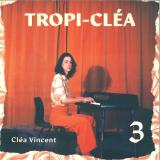
As early as her first album, Retiens mon désir (2016), Cléa Vincent brought us her fresh new pop sound, and succeeded in speaking a universal language through her music – an achievement that she accomplished again in Nuits sans sommeil (2019). Tropi-Cléa 3, which concludes the trilogy with a tropical excursion begun in 2017, represents a new – and bright – demonstration of this.
A souvenir record from her tour in Central America, it draws its inspiration from latin music, from the jazz that makes up Cléa’s roots. Surrounded by her live musicians who participated this time with her in the songwriting, she plunges us into into an exotica à la française, in the legacy of the French Riviera of the sixties, where Cléa’s admiration for Nougaro, Sébastien Tellier, le Gotan Project, Baden Powell, Tito Puente, and Gilberto Gil shines through. As though in mockery of the quarantine, Tropi-Cléa 3 opens a door for us to a festive and salvational escape.
- A1: In The Time It Takes To Drown 6 45
- A2: John The Baptist Was A Creature Of Habit 7 40
- A3: Under The Mariana Trench 3 35
- A4: The Double Life Of A Seahorse 5 25
- B1: Lamenting The Colours Of Melting Ice 4 27
- B2: If A River Runs Through It 7 09
- B3: Clouds Over The Rain In Spain 6 05
- B4: Blind To The Last Of Its Kind 5 55
Zwei Meister-Improvisatoren, die ihre wortlosen Gemälde aus dem Nichts komponieren, erforschen weiter den tiefen Raum der Zukunft/Vergangenheit. Ihre kollaborativen Kräfte sind noch lange nicht auf dem Höhepunkt, und diese Reise führt sie weiter ins Unerforschte. Diese Stücke entfalten sich als offenkundige Geistesblüten. Sie schaffen einen Baldachin aus Klangformen, in dem sie die seltene Sprache der Welterschaffung sprechen. Dies ist nicht einfach nur Musik, es ist eine Reise ohne Karten, Inside. Diese neue LP führt Nelson & Kramer tief unter die Meere der Erde und zieht den Hörer an ihrer Seite hinab, während sie die unbekannten Strömungen erforschen, die die menschliche Vorstellungskraft beflügeln, flüssig, immer in Bewegung und immer im Wandel. Es ist ein Ausflug in die tiefsten Tiefen der Ambient-Musik und ein Neuanfang an dem Ort, an dem das Leben selbst begann. Der Grund des Ozeans hat einen neuen Klang, und er ist atemberaubend schön. ENG Further explorations into the deep space of the future/past by two master-improvisors who compose their wordless paintings out of thin air. Their collaborative powers are nowhere near their peak and this voyage takes them further into the Uncharted. These pieces unfold as revelatory mind blooms. Creating a canopy of sound forms inside which they speak the rarified language of world creating. This isn't just music, it's a journey without maps, Inside. This new LP takes Nelson & Kramer deep under the earth's seas, pulling the listener down beside them as they explore the uncharted currents that fuel the human imagination, fl uid, always moving, and always changing. It is an excursion into the lowest depths of Ambient Music, and a new beginning from the very place where life itself began. The floor of the ocean has a new sound, and it is breathtakingly beautiful.
“In a concert, I show something with a beginning, a middle and an end. But, there is no end. Of course, there is no end. Because I am the music, and I am still here.” - Sophie Agnel
‘Learning’ - Sophie Agnel’s first solo LP, feels like the dark, physical inversion of her excellent ‘Song’ which came out on Relative Pitch earlier this year. Sinking her unique sound into vinyl for the first time, the LP arrives as Agnel recovers from a brain tumour - a shocking discovery that will require Agnel to start again with the piano. It’s a terrifying prospect, but Agnel has been here before, having reorientated herself almost entirely away from her early classical training over the last 4 decades of her work.
‘When I was young I had very good ears, oriole absolute. Then later I began to make strange sounds with my piano, to do different kinds of music. I was more interested in the sounds than the melody, for example. I remember once I sat down in a shop to try to read the scores of Schubert and there was a light emitting a very strong bzzzzzzz. And I couldn't listen to my oriole internal - I couldn't read the score. I was entirely subjugated by the sound of the light. And I understood that something had changed. Ten years before I could read and not hear the light. Now I understood that my ears were completely different. I was more open to the sounds of life.”
Born in Paris in the 60’s and playing her parents piano as soon as she could stand up, Agnel quickly grew tired of the classical world. What frustrated her was the strange disconnect between the frame of the piano and its keyboard - a weird boundary that seemed to form some hushed code of etiquette. “The first thing I put inside the piano was a plastic goblet. I’d seen a few pianists do it: Fred Van Hove, for example, put rubber balls inside his. But what didn’t appeal to me was that there seemed to be no link between the pianos outside and inside.”If you see Agnel play now, the body of her piano is littered with fish tins, ping pong balls, wooden blocks - not that you’d recognize their sounds. Having absorbed the language of the European avant-garde, Agnel is known for pulling the piano’s interior outside of itself by tipping her handbag into it. But these ‘strange sounds’ don’t just come from Cage - they also share the poetic force of Cecil Taylor and ‘Learning’ demonstrates that Agnel’s work on the piano's keyboard is just as important as what she’s littered on its strings. The record lets loose her ability to unleash a formidable sound mass and then rope it back to one single, clarifying note. With one hand, Agnel plays 88 tuned drums and on the other an enormous guitar - with the LP rotating through oncoming trains, and blues harmonica and feedback. It’s single minded stuff, borne out of a dedication to a wholly personal language of gesture, accumulation and deft reduction. “Maybe when I’m 80 I will not need anything,” Agnel says in a recent film made at her home. “I will do the same but with one note, and one finger. Maybe it's enough.”
‘Learning’ arrives in a reverse board sleeve designed by Jereon Wille. Recorded live at Cafe OTO by Billy Steiger on 6th June 2023 and 4th June 2024. Mixed by James Dunn and Benjamin Pagier. Side B edited by Benjamin Pagier. Mastered and cut by Loop-O. Front photograph by Aimé Agnel. Typography and layout by Jeroen Wille.
- 1: The Harder They Come (Live At Madstock 992)
- 2: Lovestruck
- 3: Johnny The Horse
- 4: Drip Fed Fred (The Conspiracy Mix)
- 5: Shame And Scandal
- 6: Girl Why Don’t You
- 7: Sorry (Radio Edit)
- 8: Nw5 (Radio Edit)
- 9: Dust Devil (Radio Edit)
- 10: Sugar And Spice (Radio Edit)
- 11: Forever Young (Melt Music Radio Edit)
- 12: My Girl 2 (Radio Edit)
- 13: Never Knew Your Name
- 14: How Can I Tell You (Radio Edit)
- 15: Misery
- 16: La Luna
- 17: Mr.apples (Toerag Mix)
- 18: Can't Touch Us Now
- 19: Bullingdon Boys
- 20: C'est La Vie
- 21: Baby Burglar
- 22: Round We Go (Single Version)
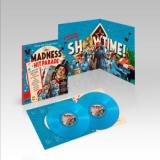
Experience the modern era of Madness with 'Hit Parade Vol. 2 1992-2024'. This 22-track 2LP set relives the more modern, contemporary years of Madness; containing a selection of hit singles, fan favourites and much-loved tunes. Including 'NW5', 'Shame and Scandal', 'Sorry', 'Drip Fed Fred', 'Mr Apples' and the Top 10 single 'Lovestruck'.
Beautifully packaged in a deluxe, gatefold sleeve, this 2LP collection is pressed on translucent blue vinyl. The fully illustrated inner sleeves contain new liner notes with various band members and long-time producers Clive Langer and Alan Winstanley, in conversation with renowned author and journalist Paul Sexton.
Firmly established as national treasures and as one of the UK’s most cherished and beloved bands, Madness are adored by their loyal and huge following. Their consistently sold-out shows illustrate their enduring qualities resulting in their popularity continuing to grow and grow.
- A1: Whole World In My Town 03 05
- A2: Welt In Einer Stadt (2025 Version) 03 59
- A3: Morgen 02 27
- A4: Lilac 03 01
- A5: Gaze Aus Staub 02 29
- A6: Autumn In Paris 04 44
- B1: Gentle Giants 03 42
- B2: Alles Vor Augen 03 47
- B3: Nothing Heavy 03 41
- B4: Ich Sehe Den Blumen Beim Sterben Zu (2025 Version) 04 40
- B5: No More Roses 03 50
»Lilac« is the first Donna Regina album since 2019’s »Transient.« The world has changed considerably since then, which has also left its mark on the Berlin indie pop duo. The songs released as part of the 2021 single »Welt in einer Stadt« (»World in a City«) for Karaoke Kalk had already dealt with the pandemic-induced standstill and its effects on urban space, and also the rest of the album shows that Günther and Regina Janssen have been influenced by recent social and political developments. »In ›Lilac,‹ I imagine good ol’ Earth as a big ol’ bear shaking us off because it can’t stand us anymore,« says Regina Janssen. It has become a serious album, Günther affirms, but he is also adamant that it is not a sad one. Musically, Donna Regina have remained true to the spirit of their early work, recently re-released by Karaoke Kalk: their arrangements are as minimalist as they are emotionally rich.
»The music is always there,« says Regina Janssen about the creation of the tracks on »Lilac.« As always, the two record their music »track by track and without computers,« as Günther notes. Samples play a smaller role this time than on earlier albums, with analogue instruments such as a monophonic synthesiser and, above all, guitars coming to the fore again. This frames lyrics that are being delivered by Regina in German, English, or in both languages. They delve even further into the intricacies of urban life. »Cities are underrated! What a civilisational achievement it is to have so many people living under one sky,« says Regina. »They constantly put you in touch with the unfamiliar. Sometimes they’ll be overwhelming, and they are always alive.« This ambivalence shapes the tone of the album that ponders on the state of the world today.
Starting with the ominous sounds of »Whole World In My Town,« through the dreamscapes of »Autumn In Paris,« to the elegiac conclusion of »No More Roses,« Regina and Günther Janssen move through different timbres and styles with a few select means. Their preference for minimalist electronics becomes evident at times, while elsewhere the pieces open up to balladic arrangements in which the guitar plays a leading role. This turns »Lilac« into a city by itself, the songs forming its soundscape: every neighbourhood looks different, every street has its own character.
- Advance
- Extended Field
- Suspension
- Impulse Array
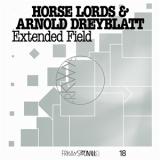
Extended Field vereint Horse Lords und Arnold Dreyblatt für die achtzehnte Ausgabe von FRKWYS, einer generationsübergreifenden Zusammenarbeit abenteuerlustiger Musiker, die sich von der klanglich strahlenden Welt der reinen Stimmung angezogen fühlen - einem alten Stimmungssystem, bei dem die Tonintervalle aus ganzzahligen Verhältnissen abgeleitet werden. Dreyblatt tauchte erstmals in den 1970er Jahren in New York in diesen Ansatz ein, während Horse Lords fast vier Jahrzehnte später begannen, dessen Möglichkeiten zu erforschen und anzuwenden. Gemeinsam schaffen sie eine lebendige harmonische Umgebung, die von ihrer gemeinsamen Leidenschaft für Rhythmus angetrieben wird und eine Verbindung von diskreter, aber verwandter Ästhetik für die Ewigkeit herstellt. Dreyblatt ist ein Pionier des psychoakustischen Phänomens und war von 1975 bis 1977 Assistent von La Monte Young, bevor er bei dem legendären Alvin Lucier an der Wesleyan University studierte. Er entdeckte die klangliche Kraft angeregter Saiten, rüstete einen Kontrabass mit Klaviersaiten nach und schlug mit schnellen Schlägen darauf, um einhüllende Wolken metallischer Obertöne zu erzeugen. Dreyblatts Album Nodal Excitation aus dem Jahr 1982 legte einen klanglichen Entwurf fest, der bis heute das Herzstück seiner pulsierenden Musik bildet. Schließlich zog er nach Berlin und leitete im Laufe der Jahre verschiedene Ensembles, die das kompositorische Gerüst, das er um seine klingenden Töne herum aufgebaut hatte, verstärkten und interpretierten. Im Gegensatz zu Dreyblatts hyperfokussierter Praxis haben Horse Lords einen ganz eigenen ekstatischen, hybriden Sound entwickelt: Hard-Driving-Rhythmen unterstützen eine Kollision aus traditioneller Ritualmusik, Free Jazz und spektral brillanten elektronischen Schauern psychoakustischer Klänge. Nachdem sie sich mit ihrem 2020 erschienenen Album ,The Common Task" eine treue Fangemeinde aufgebaut hatten, zog der Großteil der Band 2021 nach Deutschland, wobei sich Gitarrist Owen Gardner und Bassist Max Eilbacher in Berlin niederließen und Saxophonist Andrew Bernstein nur wenige Stunden entfernt in Bayern. Schlagzeuger Sam Haberman blieb in Baltimore, trifft sich aber weiterhin mit der Band für Albumaufnahmen, darunter das 2023 erscheinende Album ,Comradely Objects", und ausgedehnte Tourneen. Ohne es zu wissen, teilten beide Seiten ein gegenseitiges Interesse an der Musik des anderen. Anfang 2017 schlug Dreyblatts langjähriger Kollege und Freund Werner Durand ihm vor, sich die Band anzuhören. Er erinnert sich: ,Nachdem ich sie gehört hatte, antwortete ich schnell: ,Klingt großartig! Ein bisschen wie meine Musik. Ich habe noch nie von ihnen gehört!` Ich schickte ihnen eine Nachricht über ihre Bandcamp-Seite, und sie antworteten: ,Hallo! Danke für die Nachricht, wir sind große Fans deiner Musik!` Aber erst als Dreyblatt die Band im Oktober 2021 in Berlin sah, kreuzten sich ihre Wege endlich. Einige Tage später schlug Bernstein eine Zusammenarbeit vor. Dieser Prozess verlief langsam, aber sicher; beide Seiten waren sehr beschäftigt, und als die Musiker schließlich zusammenkamen, mussten sie unterschiedliche harmonische Vorstellungen miteinander in Einklang bringen und brauchten jemanden, der Haberman am Schlagzeug ersetzte. Dreyblatt schlug Andrea Belfi vor, einen angesehenen italienischen Schlagzeuger und Komponisten, der in Berlin lebt. In den folgenden Kompositionssitzungen lernten Horse Lords und Dreyblatt die Feinheiten der harmonischen Vorlieben des jeweils anderen kennen und fanden Wege, diese zu einem einheitlichen Klang zu verschmelzen. ,Andrew und Owen schlugen Strukturen für die Navigation durch meine Tonsysteme vor", erklärt Dreyblatt, ,während Max in SuperCollider gewichtete algorithmische Frequenzmuster entwickelte." Viele Bewohner des Stimmungsuniversums haben hartnäckige Überzeugungen darüber, was richtig und was falsch ist, daher ist die Geduld und Offenheit beider Seiten ziemlich ungewöhnlich, wobei die Partnerschaft faszinierende Akzente und Veränderungen hervorbringt. ,Als Fans von eingeschränkter/algorithmischer Kunst (nicht der schlechten Art!) haben wir beschlossen, diese Matrix in den Mittelpunkt unserer Entscheidungsfindung zu stellen, um uns sowohl eine nicht willkürliche Möglichkeit zu geben, die ansonsten unendlichen Möglichkeiten zu begrenzen, mit denen man bei der Komposition mit Zahlen konfrontiert ist, als auch einen Ausweg aus festgefahrenen Gewohnheiten", schreibt Gardner über die Schaffung von Grenzen für ihre harmonischen Welten. Anstatt den Prozess einzuschränken, zwang diese Entscheidung die Musiker, ihre Komfortzone zu verlassen, und erforderte mehr Einfallsreichtum und Bedachtsamkeit bei ihren Entscheidungen. Das Endergebnis ist weit mehr als die Summe seiner Teile, da beide Parteien sich auf die Ideen des anderen einlassen, ohne die Vorrangstellung ihrer eigenen Ideen zu opfern. Der galoppierende polyrhythmische Antrieb, der ein charakteristisches Merkmal der Musik von Horse Lords ist, bleibt allgegenwärtig, und ein Stück wie ,Extended Field" nutzt die numerische Matrix von Dreyblatts System sowohl harmonisch als auch rhythmisch. In dem sich endlos wandelnden Drone-Stück ,Suspension" umschmeicheln Horse Lords Dreyblatts gestreifte Bogenstriche mit ihren eigenen pulsierenden Tönen. Obwohl ihre Rolle in den jeweiligen Werken unterschiedlich ist und sie im Verhältnis zu anderen Elementen in unterschiedlichen Anteilen vorkommen, ist die harmonische Erforschung das Herzstück dieser atemberaubenden Zusammenarbeit. Wie man im Schlussstück ,Impulse Array" erkennen kann, führt das Stöbern der Horse Lords in Dreyblatts Matrix zu den klanglichen Entdeckungen, für die sie leben. Wie Gardner bemerkt: ,Jede Wendung offenbart einen überraschenden, aber irgendwie unvermeidlichen neuen Akkord, dessen Verlauf seltsamerweise an einen Bach-Choral erinnert, der sowohl sehr zielgerichtet als auch ohne Ziel ist."
With Processing Music, Dutch composer and electronic musician Casimir Geelhoed offers a compelling meditation on sound transformation as a metaphor for psychological and emotional processing. Operating at the intersection of overstimulation, introspection and fragility, the album unfolds as a deeply immersive and personal exploration — one that invites the listener to inhabit a space of their own projection, memory and reflection.
Rather than imposing a fixed compositional structure, Processing Music follows a bottom-up approach, allowing form to emerge organically from the interaction of sonic materials. Digital signal processing is not used here as a mere technical tool, but as a poetic device: transformation as narrative, delay as memory, distortion as tension. Through slowly eroding loops, gently collapsing textures and shifting layers of timbre and space, Geelhoed crafts a delicate sound world that is charged with friction.
What may at first seem abstract gradually reveals an emotional core. The album evokes the suspended time of a largo, the layering of memory like an excavation, the psychological tension of perceived spatial expansion. These are not literal themes, but associative keys to a music that operates in a distinctly human sonic language.
Emerging from a series of live performances, Processing Music retains a performative sensibility: the music breathes, transforms, and invites attention to nuance. It slowly unfolds a landscape shaped by the subtle interplay between structure and dissolution.
Casimir Geelhoed has presented performances and installations at festivals such as CTM, Sonic Acts, Rewire, Fiber, SPATIAL, and Aural Spaces. He studied computer science, composition, music technology, and sonology in Amsterdam, The Hague, and Utrecht.
Moving Pressure marks its fifth release, and the first one to stretch across a double vinyl with full sleeve artwork. It isn't framed as an album, yet its sequencing carries a narrative weight that lingers between immediacy and introspection.
MP05 welcomes on board Australian producer Connor Wall, whose work fuses tightly wound rhythm and immersive atmosphere, balancing precision with a sense of openness. His sound is rooted in the physical pull of the dancefloor, yet drawn toward zones of suspension and elusion. And Moving Pressure 05 captures that duality very clearly. Momentum sets the tone from the outset - taut drum programming, metallic accents, and structures that build energy in decisive bursts. There's a sense of propulsion that feels engineered for peak hours, exuding a tightening grip on the floor. Gradually, tension loosens up, stretching patterns into spirals, layering vaporous pads and resonant low-end that opens a more interior space.
Together, the two arcs trace Wall's range with clarity: body and mind, force and dissolve. Rather than presenting opposites, they reveal different angles of the same language. An exploration of density, atmosphere, and the subtle thresholds between the two.
Sonetos del Amor Oscuro is an ode performed by four enchanted souls who have intertwined their hearts and conjured harmonies and rhythms that wander endlessly among the spellbinding words of a poet from Granada... Federico García Lorca;
He wrung, pushed and vibrated words like tectonic plates, transforming plains into poetic mountain landscapes. He then covered them with a Moorish carpet of snow crystals and had them reflected by the dark locks of hair of a gypsy girl from Albaicín who, with a voice forged in gold and silver, sings her little sister to sleep with a soothing lullaby.
Helena Casella – vocals
Myrddin De Cauter – flamenco guitar
Stijn Kuppens – cello
Stefan Bracaval – flute, bass flute
Helena Casella, the Belgian-Brazilian vocalist with a deep, soft and warm voice, translates her multicultural background and personal thoughts into music in a passionate, soulful and refined way. With her roots in an exceptionally musical family, her music exudes this unique heritage. She effortlessly interweaves genres such as R&B, soul, hip hop and modern jazz, while remaining true to the vibrant sounds of Brazil, an essential part of her roots.
Her debut album was released earlier this year on W.E.R.F. records.
Myrddin De Cauter's music is deeply moving, complex, passionately rhythmic and deeply emotional. He has mastered the compás of flamenco, which gives him the freedom to converse with elements from jazz or classical music. His speed sometimes seems otherworldly, but those who take the time to listen closely to his music will quickly discover an immense world of pure emotion, beauty and tranquillity. After six albums and countless concerts, Myrddin proves that great virtuosos do not necessarily have to come from Spain. At the tender age of eleven, his father taught him to play the clarinet in jazz and gypsy swing style; he became part of the family orchestra and gained his first experiences on stage. A classical melody composed on the guitar prompted him to ask his father to teach him the basics of flamenco guitar. Soon after, Myrddin seemed ready for the real thing and went to Andalusia to learn from Manolo Sanlucar and Gerardo Núñez. This inspired him to compose in his own unique language, deeply rooted in the pure flamenco tradition but enriched by boundless creativity.
Stijn Kuppens is a cellist, composer and producer. In his own genre, which he describes as non-classical cello, he uses the cello in his own unique way. His profound knowledge of the complex history and techniques of the style is clearly audible: Kuppens' mastery of classical music is evident in every note he plays, whether he is performing solo or collaborating with other musicians. His skill as a musician and ambition to explore the boundaries of conventional classical music is evident in his ability to seamlessly blend different genres.
Stefan Bracaval is a classically trained flutist who graduated from the Royal Conservatory of Antwerp. His fascination with the expressive potential of improvisation led him to jazz, where he became a self-taught jazz flutist. Bracaval has collaborated on projects with prominent jazz figures such as Charles Loos, Bert Joris and the Brussels Jazz Orchestra. In addition, he worked as a soloist and arranger with the VRT Radio Choir in 2016. Bracaval leads the Stefan Bracaval QU4RTET, which emphasises the flute as a central jazz instrument and brings new repertoire rooted in jazz traditions.
Live
31/10/2025 – Café Silverio, Gent (BE)
15/01/2026 – Kloosterkapel Diepenbeek (BE)
16/01/2026 – ‘t Ey, Belsele (BE)
17/01/2026 – Sint-Luciakerk (kerkconcerten Merode), Engsbergen (BE)
23/01/2026 – Muziekcentrum Dranouter (BE)