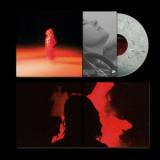
Music From Memory is thrilled to present ‘Aquáticos’, a captivating new record from Los Angeles producer Eddie Ruscha and Brazilian guitarist Fabiano Do Nascimento. Blending Nascimento’s expressive, Afro-samba and choro-inflected guitar with Ruscha’s cosmic, groove-driven sound, ‘Aquáticos’ marks the start of a vibrant musical partnership—an organic, free-spirited collaboration full of interplay and vitality.
Conceived during the early 2020’s, ‘Aquáticos’ grew from a series of recording sessions in which the music unfolded naturally, in a state of effortless flow. Album opener ‘Nascer,’ the very first piece they recorded, captures such a moment perfectly: Nascimento’s 7- and 10-string nylon guitars weave seamlessly with Ruscha’s modular synths, drum machines, and vintage keyboards. Like much of Ruscha’s work under Secret Circuit and E Ruscha V, it is rich in lush, rhythmic textures—pulsing and bubbling with vibrant energy.
The initial session that produced the opening track set the tone for the record, establishing a template of intuitive interplay and musical freedom. Each subsequent session built upon the last, gradually shaping ‘Aquáticos’ across nine tracks, all characterized by melodic richness, rhythmic depth, and an unshakable sense of spontaneity.
‘Aquáticos’ pulls the listener gently into a celebration of musical conversation — a radiant, immersive journey where Ruscha and Nascimento’s instruments breathe together, echoing the joy, curiosity, and playful spirit that define their collaboration.
Sleeve art and design by Michael Willis.
Buscar:las
- First Light
- Cantata
- Hands N Feet (Feat. Estee Nack)
- Make Me Wise
- Coonspeak
- Equiano (Feat. Shabaka Hutchings)
- The Lorax (Feat. Billy Woods)
- Fainting Goats (Feat. Breeze Brewin)
- I Say Self
- Visitation Place
- Alive Herbals
- Parental Advisory
Cassette[19,75 €]
Zwei Plattenspieler und ein Mikrofon. In der Klarheit dieser einfachen Schlussformel liegt eine Wahrheit - eine Wahrheit, die zugleich erahnen lässt, wie groß die Möglichkeiten innerhalb dieser Grenzen sind. Manchmal muss man daran erinnert werden.I Guess U Had To Be There, das neue Album des New Yorker Rappers ELUCID und des erfahrenen Produzenten Sebb Bash, ist genau so ein Fall. So frisch, als wäre es morgen entstanden - und doch kann man darauf wetten, dass man es auch 1989 hätte auflegen können und sofort alle Köpfe mitgenickt hätten.Es gibt Momente in der Musik, in denen Meister ihres Fachs sich auf dem Höhepunkt ihrer jeweiligen Schaffenskraft begegnen - Alben wie Madvillainy, Liquid Swords, Dr. Octagonecologyst oder Hell Hath No Fury -, bei denen das Ergebnis mehr ist als die Summe seiner Teile. ELUCID und Sebb Bash bewegen sich auf I Guess U Had To Be There genau in dieser berauschenden, scheinbar mühelosen Sphäre.Alles wirkt zugleich vertraut und bahnbrechend. Die Beats verschieben und wenden sich unter ELUCIDs Füßen, doch er balanciert sie wie auf einem Drahtseil - seine Performance so beweglich wie die einer Bergziege, Produzent und Rapper in perfekter Synchronität. Einige leuchtende Stars haben unvergessliche Gastauftritte: billy woods, Breezly Brewin, Estee Nack und Shabaka Hutchings. Doch im Kern ist dies eine Zwei-Mann-Show, und das Duo hält den Fokus genau dort, wo er hingehört.I Guess U Had To Be There ist ein fesselndes, konventionssprengendes Hörerlebnis und ein neuer Höhepunkt im Schaffen zweier der besten Künstler dieses Genres.
The Venetian Orchestra strikes again, this time with "Señora" on the A side, an extended new take on Victor “Il Pirulli’s” rendition of “Señora”, kept in secret for years, but a track that few lucky ones might have already heard on certain DJ Harvey sets over the last recent years. Skilfully encapsulating the Balearic juices of the original while still giving it a playful full bodied new sound, sitting somewhere in between the categories of a remix and cover version with a newly made instrumentation, pure drama!
B side shifts the listener into a slower gear with a Gypsy Kings downtempo classic “Caminando”, stretching it out into dreamy mediterranean bliss, a chuggy dub atmospheric re-work of a Flamenco love anthem. Limited quantities, buy on sight.
- 1: Truest Sentece
- 2: West Coast Palm
- 3: Don't Let Go
- 4: Cinnamon
- 5: Punk Broke
- 6: Gingerman
- 7: Three Jewels
- 8: High Entertainment
Die Ende der 90er Jahre gegründete Band Unwed Sailor aus Tulsa macht einen einzigartigen Bass-lastigen Instrumental-Pop mit Post-Rock-Elementen, der zwischen knallharter Härte und luftiger Melodik schwankt. Seit sie 2019 nach einer zehnjährigen Pause zurück sind, haben sie mit ihrer kreativen Energie und dem Mischen von Genres ihre bisher besten Werke rausgebracht, darunter "Mute The Charm" (2023), "Underwater Over There" (2024) und "Cruel Entertainment" (2025). Für ihr elftes Album, "High Remembrance", brachte Gründungsmitglied Johnathon Ford eine Reihe von zu Hause aufgenommenen Entwürfen, Demos und Hooks ins Studio, wo sie unter der Leitung der langjährigen Mitstreiter Matt Putman (Schlagzeug) und David Swatzell (Gitarre) unter dem Motto Nostalgie und dem bittersüßen Trost der Erinnerung zum Leben erweckt wurden. Auf den acht Tracks des Albums gibt's Anklänge an den alternativen Rock der Blütezeit, die AM-Radio-Attitüde der späten 70er Jahre und die ekstatische Unbekümmertheit der New Wave, neben anderen Einflüssen, die sich einer einfachen Kategorisierung entziehen. Die Lead-Single ,West Coast Prism" verbindet einen unvergesslichen melodischen Hook mit optimistischen Drums und einem klirrenden Arrangement, das sich in einen treibenden, farbenfrohen Refrain verwandelt. Getreu seinem Titel erinnert der Song an weißes Licht, das sich in ein Spektrum aufspaltet, während weitläufige Synthesizer und sanfte Backing Vocals eine Aura melancholischer Glückseligkeit schaffen. Ford nennt treffend ,eine tiefe Vorliebe für das Meer, das Surfen, die Redwoods und die felsige Küste von Oregon" als spirituellen Hintergrund für seine Umgebung. Inspiriert von der Art und Weise, wie Erinnerungen die persönliche Identität prägen, könnte ,Don't Let Go" mit seinem straffen Tempo, seinem knackigen Ton und seinen schwindelerregenden Gitarren ein verlorener Alternative-Radio-Ohrwurm sein, während die täuschend einfache Rhythmusgruppe und seine glitchige Elektronik ,The Longest Day" fest in der Gegenwart verankern. ,Cinnamon" stellt wunderschön arrangierte Akustikgitarren-Gegenmelodien in den Vordergrund, zusammen mit Schichten subtiler Details, Chorstimmen und entspannten, hohen Bassgitarrenklängen. Laut Ford ist der Song ,eine Hommage an die Country-Musik der 70er und 80er Jahre, die die Familienausflüge in die Wüste begleitete, als ich ein Kind war", wobei Townes Van Zandts ,Pancho and Lefty" ein besonders bedeutender Ankerpunkt ist. An diesem Punkt in der bewegten Karriere von Unwed Sailor findet Ford einige seiner stärksten Inspirationen darin, darüber nachzudenken, wo das Projekt begonnen hat, während er es ständig mit neuen Ideen, Arrangements und Genre-Einflüssen vorantreibt. ,Es geht darum, an den Dingen festzuhalten, die man am meisten liebt", sagt er, ,einschließlich sich selbst." Sein akkordbetontes Bassspiel zieht sich wie ein roter Faden durch die Alben der Band und verleiht jeder neuen Sammlung eine vertraute Ernsthaftigkeit und Wärme.
Soft Echoes presents the first physical edition of ‘In a Few Places Along the River’ by Abul Mogard as a limited run of 500 vinyl copies. Originally released digitally in 2022, the album now appears in its intended form, marking the label’s second release.
Three long pieces, composed between 2019 and 2022, emerged from Mogard’s meticulous experimentation with analogue and digital instruments. Slowly evolving harmonic fields of layered drones and spectral textures drift across the record. They are enhanced by reverb from Scotland’s Inchindown oil tanks, which hold the longest reverberation of any man-made structure, giving the music a haunting resonance and a sense of suspended space.
‘Against a White Cloud’ and ‘In True Contemplation’ open the album with their nocturnal tones that gradually intensify into dense, immersive waves of sound. Side B is devoted to the 21-minute elegiacal piece ‘Along the River’, which flows between weight and silence, unfolding with reflective depth and moments of subtle transcendence. As one listener observed, “His music doesn't break the wilful suspension of disbelief: you stay in its trance.”
“Recording for this album began in 2019, when I was still living in London,” Mogard explains. “The first version of ‘Along the River’ was created at my studio near Brick Lane. It started with experimenting around a chord progression inspired by a classical piece I had once been recommended, though, strangely enough, I no longer recall what it was. Early in 2022, I revealed the identity behind Abul Mogard and wanted to mark this new period, so I decided to release it quickly, by myself, as digital-only.”
After returning to Rome, Mogard created the other two pieces, working with new digital instruments alongside his modular synthesiser, and integrated recordings from the London sessions. The music reveals a patient attention to texture and space, defining his usual restraint. Mogard adds, “I was trying to explore very subtle changes in the spectral characteristics of the music using extremely slow, intertwined tones.”
Described by critics as one of Mogard’s most melancholic and absorbing releases, the album maintains an austere beauty and contemplative weight, leaving a lingering impression that lasts far beyond the final note.
The music has extended beyond the album itself, with tracks appearing in films and contemporary artworks. Most notably, Swedish artist Peder Bjurman’s ‘Slow Walker’ audiovisual installation and French filmmaker Fleuryfontaine’s politically charged animated film ‘Soixante-sept millisecondes’.
Mastered by Rafael Anton Irisarri and cut to vinyl by Lupo, the record emphasises the clarity and depth of Mogard’s frequencies, with each layer precisely balanced. The cover artwork and design are by Marja de Sanctis, who has collaborated with Abul since his first cassette release in 2012.
- A1: Orchestral Manoeuvres In The Dark– Telegraph
- A2: Blancmange– That's Love, That It Is
- A3: China Crisis– Tragedy And Mystery
- A4: Adam Ant– Strip
- A5: Divine– Love Reaction
- A6: Yello – I Love You
- A7: Talk Talk– My Foolish Friend
- A8: Japan– Canton (Live)
- B1: Fun Boy Three– The More I See (The Less I Believe)
- B2: Tracie*– Give It Some Emotion
- B3: The Teardrop Explodes– You Disappear From View
- B4: Xtc– Love On A Farmboy's Wages
- B5: The Stranglers– Midnight Summer Dream
- B6: The Kinks– Don't Forget To Dance
- B7: Mari Wilson– Cry Me A River
- C1: Bauhaus– Lagartija Nick
- C2: Marc And The Mambas– Black Heart
- C3: The Glove– Like An Animal
- C4: Freur– Doot Doot
- C5: The B-52'S– Song For A Future Generation
- C6: Wall Of Voodoo– Mexican Radio
- C7: Joe Jackson– Breaking Us In Two
- D1: Oliver Cheatham– Get Down Saturday Night
- D2: Rockers Revenge– The Harder They Come
- D3: Freeez– Pop Goes My Love
- D4: Malcolm Mclaren– Soweto
- D5: Culture Club– I'll Tumble 4 Ya
- D6: The Belle Stars– Indian Summer
- D7: Level 42– Out Of Sight Out Of Mind
- D8: Daryl Hall & John Oates– One On One
- E1: Sparks & Jane Wiedlin– Cool Places
- E2: The Romantics– Talking In Your Sleep
- E3: The Fixx– Saved By Zero
- E4: The Motels– Suddenly Last Summer
- E5: Modern English– I Melt With You
- E6: Missing Persons– Walking In L A
- E7: Naked Eyes– Always Something There To Remind Me
- E8: Taco– Puttin' On The Ritz
- F1: Electric Light Orchestra– Secret Messages
- F2: Men At Work– Overkill
- F3: Pat Benatar– Little Too Late
- F4: Journey– Separate Ways (Worlds Apart)
- F5: Styx– Mr Roboto
- F6: Giorgio Moroder & Joe Esposito– Lady, Lady
- F7: Stephen Bishop– It Might Be You
Celebrating the first year of ‘NOW That’s What I Call Music’ – 1983. ‘Now Yearbook’ presents a stellar selection of 1983’s biggest and best hits… 80 huge chart hits from the year, alongside enduring and well-loved classics on 4 CDs. 1983 saw British artists achieving unprecedented success across the world with ‘Every Breath You Take’ from The Police being the year’s biggest seller in the U.S., and ‘Karma Chameleon’ from Culture Club being the top seller in the U.K. Breakthrough acts, achieving their first big hits – all here – include a staggering line-up of future superstars: U2, Eurythmics, Wham!, Paul Young, The Style Council, Marillion and Thompson Twins, to name a few..' Released on a LTD 4CD SET: This will be a limited run of 5000 4CD units housed in ‘hard-back book’ packaging and featuring a 28-page booklet that includes an overview of the chart music of 1983, a track by track guide including chart stats and fun facts, a selection of original picture sleeves and a quiz. 2CD Standard set and also a limited edition of 3000 units, pressed on 3LP translucent red vinyl...
- A1: Thelonious
- A2: Ugly Beauty
- A3: Raise Four
- A4: Boo Boo's Birthday
- B1: Easy Street
- B2: Green Chimneys
- B3: In Walked Bud
Thelonious Monk, considered one of the greatest Jazz pianists of all time, recorded Underground in '67-'68. It's the last recording with the Thelonious Monk Quartet (Larry Gales on bass, Charlie Rouse on tenor sax, and Ben Riley on drums) and one of the last album he made for Columbia.
What makes Underground special is that unlike his other Columbia recordings, four out of the seven songs were newly composed and recorded. The album cover depicts Monk as a member of the French Resistance and is meant as an homage to Pannonica "Nica" de Koenigswarter. She was a member of the aristocratic Rothschild family and became a patron of leading jazz musicians, hosting jam sessions, driving them to gigs and sometimes even help out with paying the rent. In 1969 the cover won a Grammy for Best Recording Package.
Underground is available as a limited edition of 2000 individually numbered copies on orange vinyl and comes in a deluxe, heavy duty sleeve.
Berlin-based producer Red Rooms launches his new imprint ROT with a debut EP called Endurance that captures the full spectrum of his techno vision. From hypnotic minimalism to peak-time drive and closing-time euphoria, ROT001 delivers versatile tools for every moment of the night.
The record opens with Znakva, a mesmerizing ambient piece that sets the tone with atmospheric depth and introspection. Septima, Not Gonna Last Forever, and Disturbance bring the raw energy: pounding low-end pressure, whipping hi-hats, trippy synth lines, and gritty textures designed to ignite the floor. Closing the EP, Endurance lifts the mood with an emotive, uplifting finale -balancing intensity with a sense of release.
A statement debut, ROT001 introduces ROT as a label committed to deep, hypnotic, and dancefloor-focused techno.
- 1: Private Symphony (Feat. Stuart Murdoch)
- 2: The Cold Collar (Feat. Gruff Rhys)
- 3: Love Is A Life That Lasts Forever (Feat. Molly Linen)
- 4: First Moonbeams Of Adulthood
- 5: Road To The Amber Room
- 6: Hachi No Su (Feat. Saya From Tenniscoats)
- 7: In Portmanteau (Feat. Field Music)
- 8: Irreparable Parables
- 9: Spectators In The Absence Of God (Feat. Kathryn Joseph)
- 10: Soul Enters The Ocean Sun Climbs Out The Sea
White Vinyl[26,26 €]
Very limited numbers, orders will need to be confirmed.
For his new album, Irreparable Parables, Andrew Wasylyk felt a strong desire to write a set of songs featuring an element hitherto rare in his work: the human voice. Equally strong was the conviction that he did not want to sing them himself.
The Scottish multi-instrumentalist and composer set about assembling a group of guest singers, sending out the songs to wherever they were in the world. The vocals were recorded remotely and then, like migrating birds, winged their way back to Scotland. The result is an album of great beauty which, perhaps preeminently in Wasylyk’s work, expresses the vulnerability and resilience of the human spirit.
Six singers appear on the record, represented by six songbirds illustrated on the sleeve by Clay Pipe Music’s Frances Castle. The cuckoo is a nod to Belle and Sebastian’s 2004 single ‘I’m A Cuckoo’, that band’s Stuart Murdoch being the first voice you hear on the new album. When the vocal for ‘Private Symphony #2’ arrived, says Wasylyk, “it was everything that I was looking for and more. But this is Stuart Murdoch. Of course he’s going to make something incredibly beautiful and thoughtful.”
The song lyrics were, for the most part, written by the singers. The music is Wasylyk’s creation. He navigates a sound world that lies somewhere beyond the borders of classical and jazz, ambient and abstract. It is difficult to describe, but easy to understand, which is to say to feel. That is the way Wasylyk’s work is experienced: as a feeling. It takes you back to childhood, perhaps, to feelings of comfort and safety, or to memories of walks at sunrise and sunset, or to the way a shadow falls on a particular field in a particular place at a particular time in your life. This is consoling music. That is why, though pretty, it is not merely pretty. These are songs to shore up the soul.
Wasylyk writes in a room, in his native Dundee, full of “half broken” instruments. He picks these up, plays a little, seeking an idea, a feeling, a door that lies ajar. The musical palette of Irreparable Parables includes brass and woodwind, a six-piece string section, guitar, bass, drums, vibraphone, Mellotron, Fender Rhodes, tape loops, synthesisers and percussion. The strings were arranged by the cellist Pete Harvey, a long-term collaborator.
Among the other guest vocalists are Gruff Rhys of the Super Furry Animals, Saya Ueno from Japan’s Tenniscoats and Peter Brewis from Field Music. Wasylyk himself takes the lead vocal on the title track, though a throat infection and touch of pitch-shifting have altered his singing in a way that even he, having fallen out of love with his own voice, finds acceptable.
The heart of the record can, arguably, be found in two tracks, ‘Love Is A Life That Lasts Forever’ and ‘Spectators In The Absence of God’, sung respectively by Molly Linen and Kathryn Joseph. The former, bright with trumpets, was inspired by the writing of Derek Jarman. “I was feeling deeply upset about the world and wanted to try and write some- thing that was obviously hopeful,” Wasylyk says.
‘Spectators …’ offers an emotional counterpoint. It is an “apocalyptic hymn” that seems to grapple with watching human suffering from afar, too distant to be at physical risk, but experiencing the psychological wounding, and feelings of helplessness, even complicity, that come with constant awareness of other people’s pain. “Kathryn’s a pal, I love her dearly, and she’s a brilliant artist who really feels what she writes,” Wasylyk says. “The cracked tenderness of her voice is spellbinding.”
The album closes with an instrumental piece, ‘Soul Enters The Ocean Sun Climbs Out Of The Sea’, all piano and strings, that offers a sense of resolution and ascension. A good moment, too, for Wasylyk to reflect upon the artistic companionship that he enjoyed while making this record – the songbirds that answered his call: “These humans are incredible at what they do. I’m deeply grateful and feel so lucky. It blows my mind.”
- Side A. Gypsy Song
- Side B. Never Land
After traveling through Mexico, Miami, the Bahamas, and New Orleans, Nishioka recorded his fourth album South American Journey in Los Angeles,
released in 1979. From this album, two of his most celebrated tracks—“GYPSY SONG”, a fan favorite with numerous cover versions, and “NEVER LAND”,
featuring the distinctive sound of steel pans and a Japanese reggae vibe are now being pressed on 7-inch vinyl for the first time in a limited edition!
The recording features members of the So What Review band, including Junshi Yamagishi (guitar) and Osamu Ishida (guitar), along with renowned steel pan
player Robert Greenidge, known for collaborations with Van Dyke Parks and Taj Mahal.
(FLATT THE LAIDBACK)
Kyozo Nishioka Profile
(Born May 7, 1948 – Died April 3, 1999)
Singer songwriter from the Shima Peninsula in Mie Prefecture, affectionately nicknamed “Zo-san”.
After enrolling at Kinki University and moving to Osaka, Nishioka became a regular at the folk cafe Dylan in Namba, opened in August 1969 by Masaji Otsuka
and Yoko Ishimura. Dylan was a gathering spot for folk music enthusiasts from all over Japan.
Nishioka formed the folk group The Dylan with Masaji Otsuka and You Nagai, performing at folk camps and the Nakatsugawa Folk Jamboree. In 1971, Nishioka
left the group, and Otsuka and Nagai continued as The Dylan II. Nishioka wrote and composed the song “Puka Puka” under the pen name Zokyozo, which became
one of his signature works. The song was first released in July 1971 as the B-side of The Dylan II’s single “Otoko rashii tte Wakarukai” on URC Records.
Nishioka began his solo career, releasing his debut album “Dylan nite” in July 1972, produced by Kinji Yoshino on Bellwood Records, which included his own
version of “Puka Puka”. In September 1973, he appeared at the farewell concert of Happy End titled CITY – LAST TIME AROUND at Bunkyo Public Hall in Tokyo.
His 1974 album “Machiyuki Murayuki” was produced by Haruomi Hosono, and his 1975 album “Rokka My Baby” featured support from Shigeru Suzuki’s band
HUCKLE BACK. Nishioka recorded three albums under Hosono’s production, deepening their friendship.
Together with his wife and lyricist KURO, Nishioka wrote songs for artists such as Eikichi Yazawa. The couple traveled the world, recording overseas albums such
as “Nanbei Ryoko” (1977), “Yoh-Sollo” (1979), and “New York to Jamaica” (1981), incorporating reggae, calypso, and other global sounds. In the 1980s, he released
works under the duo name KYOZO & BUN with Yoshifumi Okajima, and in the 1990s returned to solo projects with albums like “START” (1993) and “Farewell
Song” (1997).
After KURO’s passing in 1997, Nishioka continued his musical activities until his own death in 1999 at the age of 50. His music transcended the boundaries of folk,
blending jazz and tropical elements to create a unique world view, leaving an indelible mark on Japanese music history.
- Ntr1
- Ntr2
- Drg5
- Drn9
- Drg10
- SL12:
- Drg14
- Drg15
- Prn2#16
- Otr
- Prn2_9Ofm15Tb
- Prn2_9Ofm15Ta
- Prn2_M15T
- Prn2_M15T_Selforg_Tapecut
NYZ (David Burraston) presents this collection of generative music pieces carefully extracted from a PreenFM2 gifted to him by Aphex Twin. PRN2_M15t is being released at the same time as an LP titled Stria from Dr. John Chowning who invented the original FM synthesis algorithms which were sold to Yamaha and used in the creation of the DX series of keyboards. An interview with Chowning, conducted by David Burraston, will be published at the same time.
David Burraston is an award winning artist/scientist working in the areas of technology and electronic music, operating Noyzelab as an independent art/science music studio since 1981. Numerous research publications include a 2006 PhD thesis Generative Music & Cellular Automata, which developed and applied fundamental new concepts from generative music practice to a key problem in complex systems theory.
His experimental arts practice encompasses field recording, landscape-scale sound art, chaos/complexity, practice-based research, sound synthesis and electronic music. He performs, lectures, conducts workshops and creates art installations in Regional NSW and around the world. David also designs and builds sound synthesizers based on his theories of chaos/complexity science. He was recently interviewed by Bandcamp Daily and The Wire Magazine.
David has worked with many diverse collaborators such as Aphex Twin, Chris Watson, Doug Quin, Russell Haswell, Robin Fox, Oren Ambarchi, Sarah Last, Cat Hope, Garry Bradbury, William Barton, Alan Lamb, MIT Media Lab and the Australian Broadcasting Corporation. In 2014 he independently published the legendary "SYROBONKERS!", the most technical and in-depth interview ever given by Aphex Twin.
LTD. TRANSPARENT YELLOW DELUXE VINYL[14,08 €]
'Pretty (Ugly Before)' b/w 'A Distorted Reality Is Now A Necessity To Be Free' holds the distinction of being the last recording by Elliott Smith to be released while he was still alive. Originally released as a single in August 2003, the songs were a part of the recording sessions that would ultimately yield the acclaimed posthumous album From A Basement On The Hill. The two songs serve as a powerful reminder of why Smith became the voice for a dejected generation.
- Matches
- Frightening Machines
- Sirius
- Hurricane
- Madeleine
- Atlas
- A Matter Of Time
- Table Four
- I'm Always Willing
- Could This Be Enough?
RED SMOKE COLORED VINYL[23,11 €]
The new record follows Priddy"s sophomore LP "The Pendulum Swing" which firmly established her as one of the most exciting artists on the contemporary British music scene. Produced by Rob Ellis (PJ Harvey, Anna Calvi, Bat for Lashes), "These Frightening Machines" was written over the course of a year as Priddy made the transition from her 20s to her 30s. The most sonically varied of her career, the songs span a full spectrum of emotions from anger and despair to hope, longing and lust, from reclaiming the voices of women silenced by history, to expressing solidarity and love, to confronting illness, disconnection, the vulnerability and importance of relationships, and the general ache of growing older and not always wiser. They explore what it means to keep going when things fall apart, to hold onto connections in a world that sometimes divides, and to figure out where we fit into the machines and systems we find ourselves a part of.
- The Set Up Part 1
- Can You Get Me Out Of Phoenix?
- Jumping Off In Madras
- Dilaudid Diane
- Keep The Shades Down
- Getting Out Of The Ward
- The Set Up Part 2
- The Reckless Life
- Walking With His Sleeves Down
- The Meter Keeps Ticking
- The Set Up Part 3
- The Last Time I Saw Her
The Delines were finishing the "Mr. Luck & Ms. Doom" sessions when Willy brought in a tune called "Walking With His Sleeves Down". Vocalist Amy Boone learned it on piano and the Band recorded it live. The take was stunning but the song didn"t quite fit the record so they set it aside along with "The Reckless Life", "Dilaudid Diane" (featured in their recent encores) and "Jumping off in Madras". The song worked sonically but again didn"t feel quite right lyrically and when they finished the record Willy couldn"t stop writing songs for it. The US opioid epidemic with thousands of young people rattled with addiction and living in tents and on the streets and in old cars and RVs, influenced "Luck and Doom" but even more so with The Set Up. Their stalwart producer, John Morgan Askew, was at the helm again and he"s the king of building atmospheric worlds. You can really feel it on this one. By the time we finished they realized "The Set Up" was the wayward, misguided, and lonely sister to "Mr. Luck & Ms. Doom". More ragged and undone but all CinemaScope Delines.
- A1: Prologue
- A2: Shion -Kako No Kioku
- A3: Battle & Sentô Suru Kos-Mos & Sentô Shûry?
- A4: Fuan
- B1: Life Or Death
- B2: Gnosis
- B3: Kanashimi
- B4: Kokoro O Tozashita Shôjo
- C1: Kookai Foundation
- C2: Nephilim
- C3: Nukumori
- C4: World To Be Born
- C5: Albedo
- D1: Kyomu No Hamabe
- D2: Last Battle
- D3: Pain
- D4: Kokoro
Released in February 2002 on PlayStation 2, Xenosaga Episode I marked the beginning of an unforgettable video game saga created by Tetsuya Takahashi, accompanied by a majestic soundtrack composed by Yasunori Mitsuda.
The latter is still considered an essential milestone in video game music. We wanted to pay tribute to these cult classics with Across the Kosmos ~ Xenosaga Piano Collection and Jazz in Kosmos, two albums of officially licensed arrangements featuring the best tracks from the game.
This album was created in collaboration with some of the most talented figures in Japanese video game music. It includes 17 piano tracks arranged by Mariam Abounnasr, Akio Noguchi, Hiroyuki Nakayama, and Benyamin Nuss, carefully recorded on a Steinway D Grand Piano.
- A1: Brut Thoughts Theme
- A2: Swordfight In A Chicken Shop
- A3: Putting On A Party
- A4: Rna
- A5: Generation Left On Read (Feat. Konopinksy)
- A6: Friends And Family (Interlude)
- A7: Brut Pop (Feat. Meme Gold)
- B1: Running Outta Road (Feat. Trainee)
- B2: Mortgage Guy (Interlude)
- B3: One 4 Me & U
- B4: Money Isn't Real (Feat. Kiddus)
- B5: Brut Thoughts Reprise
- B6: How To Subtly Disappear (Feat. Lauren Auder)
One of the UK’s most singular voices, Murkage Dave has spent the last decade crafting a body of work that refuses to fit neatly into any genre box. His music, loosely pop but informed by indie, outsider art, and an instinct for storytelling, is built on honesty, empathy, and fearless social commentary. Across his career, he has earned a cult following and praise from Pharrel Williams, Iggy Pop, BBC Radio 6 Music, The Guardian, Rolling Stone, Pitchfork, Clash, Complex, Highsnobiety, and Vogue. His debut album Murkage Dave Changed My Life (2018) amassed over 12 million Spotify streams, while follow-up The City Needs A Hero (2022) reached #10 on the UK iTunes Chart and #15 on the UK Independent Chart.
- The Beginning And The End
- Seventh Degraded Hymn
- Memorial Environment #4
- Eighth Degraded Hymn
- Memorial Environment #5
- Ninth Degraded Hymn
- Memorial Environment #6
- Tenth Degraded Hymn
- The End Of Life In Sound
Der postklassische Komponist, Klangkünstler und Kurator Matthew Patton ist mit seinem zweiten Album als Those Who Walk Away zurück. "Afterlife Requiem" ist eine Elegie für seinen Freund und Kollegen Jóhann Jóhannsson. Drones, Elektroakustik und fast vollständige Stille, extrahiert aus unvollendeten Aufnahmen auf Jóhannssons Festplatten, bilden die Grundlage für zwei Streichquintette - Ghost Orchestra (Reykjavík) und Possible Orchestra (Winnipeg) -, die in einem traurigen, langatmigen Werk verarbeitet und ausgelöscht werden. Patton hat auch wieder mit Andy Rudolph (Guy Maddin) und Paul Corley (Sigur Rós, Ben Frost) an der Koproduktion und dem Sounddesign gearbeitet, um eine brodelnde Körperlichkeit zu schaffen, die brodelnde Tiefen mit eindringlichen Bewegungen gespenstischer Streicher kontrastiert. ,Alles, was ich je geschrieben habe, ist ein Requiem. Alles ist ein Ende. Der Tod ist überall in dieser Musik präsent. In meinen Werken geht es um das Verschwinden - der Gegenwart, der Vergangenheit, von allem. Afterlife Requiem wird im Laufe seiner Dauer immer langsamer, es ist ein einziges großes Ritardando, die Zeit verlangsamt sich nicht nur, sie verschwindet. Ohne dass ich darüber nachgedacht hätte, ereigneten sich zwei miteinander verbundene Tragödien, die während des Schreibens, Aufnehmens und Arbeitens organisch an die Oberfläche kamen: der Tod meiner Mutter und der Tod des Komponisten und Freundes Jóhann Jóhannsson. Wenn ich mit dem Schreiben anfange, denke ich an nichts Bestimmtes, ich schreibe einfach, komponiere, nehme auf und höre zu ... aber irgendwas macht sich immer auf unvorhergesehene Weise bemerkbar oder drängt sich in den Vordergrund. Nach dem medizinisch assistierten Tod meiner Mutter wurde mir beim Ausräumen ihrer Wohnung klar, dass ich auch die physische Manifestation ihrer Welt auslöschte - und dass ich genau dasselbe mit der Musik tat, die ich schrieb und aufnahm. Während dieser Zeit wurde mir auch Jóhanns Tod immer wieder bewusst. Für Afterlife Requiem habe ich kurze, verlassene Fragmente aus Jóhann Jóhannssons Festplatten genommen und diese körperlosen Audio-Geister abwechselnd in meine eigene Musik eingebaut, wobei ich sie unrein gelassen habe - und dabei die Grenze zwischen Schaffen und Zerstören verwischt habe. Nach seinem Tod hatte ich diese Festplatten aus Jóhannssons Berliner Studio zum Anhören bekommen. Diese Musik war aufgegeben worden, in verschiedenen Stadien der Entstehung und Auflösung: ein Verzeichnis zerfallener und toter Erinnerungen, vergessen und jetzt nur noch in einer Reihe ineinandergreifender mechanischer Teile vorhanden, die mit der Zeit selbst versagen und verschwinden werden, wie alles andere auch. Monatelang hörte ich mir diese Überreste von Jóhanns Musik obsessiv an und versuchte, Hinweise auf Jóhann vor seinem Tod zu finden. Oft stellte ich fest, dass er das Aufnahmegerät noch lange nach Ende der aufgenommenen Musik laufen gelassen hatte. Er schien nicht zu bemerken, dass die Musik aufgehört hatte, oder registrierte nicht, dass dies das Ende der Musik war, oder vielleicht war er durch etwas anderes abgelenkt. Aber ich fand diese langen Stillephasen zutiefst emotional und berührend. Die verschwindenden Elegien von Afterlife Requiem sind weniger Musik als vielmehr Überreste von Musik. Auf diese Weise arbeite ich immer auf die Subtraktion von Bedeutung hin. Die Musik ist fern und verschwommen, beschädigt, geisterhaft und gespenstisch und deutet nur wie eine halb vergessene Erinnerung an das, was einmal existierte, eine verdichtete Darstellung von Verfall und Auslöschung. Ich habe dieses neue Stück von Anfang bis Ende mit diesen körperlosen Stillephasen aus Jóhanns eigenem Werk, Raum und Zeit unterlegt. Jetzt für immer verschwunden, bleibt seine aufgezeichnete Stille zurück; eine monumentale Leere, die der Welt verloren gegangen ist. Im gesamten Stück, insbesondere in den Abschnitten ,Memorial Environment", habe ich auch unzählige Geräusche aus der Natur integriert, von vulkanischer Lava über Lastenaufzüge bis hin zum menschlichen Blutfluss, dem Zischen von Turbinen und Selbstmordinjektionen. Der Künstler Robert Smithson sagte vor Jahrzehnten: ,Es ist die Dimension der Abwesenheit, die es noch zu finden gilt." Für mich misst diese Musik auch, wie die Zeit abläuft. Tatsächlich ist die Zeit bereits abgelaufen. Die Ewigkeit hat bereits begonnen." - Matthew Patton (Those Who Walk Away)
- Dust On Trial
- Concrete
- One Rizla
- The Lick
- Tasteless
- Donk
- Gold Hole
- Friction
- Lampoon
- Angie
In der Heimat der Wettbüros wird zurzeit ein Name groß gehandelt: SHAME. Die Band lebt von Konfrontation. Sei es die brodelnde Intensität, die auf ihrem Debüt ,Songs of Praise" knistert, oder das Adrenalin-pumpende Chaos, das sich bei ihren aufregenden von großen Emotionen angetriebenen Shows entfaltet. Bestehend aus dem Sänger Charlie Steen, den Gitarristen Sean Coyle-Smith und Eddie Green, dem Bassisten John Finerty und dem Schlagzeuger Charlie Forbes, begann das in London lebende Quintett bereits im Schuljungenalter. Mit einem gesunden DIY-Ethos als Grundlage und mit The Fall und Wire als musikalische Einflüsse schafften sich SHAME eine Nische in der Musikszene Südlondons und entwickelten furchtlos ihren aufrichtigen, eckigen, peitschenden Post-Punk. Die zehn Songs von ,Songs of Praise" lassen keine Fragen offen. Ob "Gold Hole", ein augenzwinkernder Takedown von Rock-Narzissmus, oder die Single "Concrete", die den überwältigenden Moment der Erkenntnis einer zum Scheitern verurteilten Beziehung beschreibt, oder das frustrierte "Tasteless", das die Monotonie des Alltags beschreibt. ,Songs of Praise" bietet keine Atempause.