"This is the time that we, who have benefitted from the Last Poets shouldbe able to say, 'it's the Last Poets. It's them we should be honouring, because we did not honour them for so many years_"
KRS One wasn't just addressing the hip hop fraternity when he uttered
those words by way of introducing the video for Invocation - a poem
written thirty years ago, around the time of the Last Poets' last significant comeback. He was speaking to everyone who's been affected by the word, sound and power issuing from the most revolutionary poetry ever witnessed, and that the Last Poets had introduced to the world outside of Harlem at the dawn of the seventies.
In 2018 the two remaining Last Poets, Abiodun Oyewole and Umar Bin
Hassan, embarked on another memorable return with an album -
Understand What Black Is - that earned favourable comparison with theirseminal works of the past, whilst showcasing their undimmed passion andlyrical brilliance in an entirely new setting - that of reggae music. Trackslike Rain Of Terror ("America is a terrorist") and How Many Bullets demonstrated that they'd lost none of their fire or anger, and their essential raison d'etre remained the same.
"The Last Poets' mission was to pull the people out of the rubble o f their lives," wrote their biographer Kim Green. "They knew, deep down that poetry could save the people - that if black people could see and hear themselves and their struggles through the spoken word, they would be moved to change."
Several years later and the follow-up is now with us. The project started when Tony Allen, the Nigerian master drummer whose unique polyrhythms had driven much of Fela Kuti's best work, dropped by Prince Fatty's Brighton studio and laid down a selection of drum patterns to die for. That was back in 2019, but then the pandemic struck. Once it had passed, the label booked a studio in Brooklyn, where the two Poets voiced four tracks apiece and breathed fresh energy, fire and outrage into some of the most enduring landmarks of their career. Abiodun, who was one of the original Last Poets who'd gathered in East Harlem's Mount Morris Park to celebrate Malcolm X's birthday in May 1968, chose four poems that first appeared on the group's 1970 debut album, called simply The Last Poets. He'd written When The Revolution Comes aged twenty, whilst living in Jamaica, Queens. "We were getting ready for a revolution," he told Green. "There wasn't any question about whether there was going to be one or not. The truth was many of us still saw ourselves as "niggers" and slaves. This was a mindset that had to change if there was ever to be Black Power." He and writer Amiri Baraka were deep in conversation one day when Baraka became distracted by a pretty girl walking by. "You're a gash man," Abiodun told him. The poem inspired by that incident, Gash Man, is revisited on the new album, and exposes the heartless nature of sexual acts shorn of intimacy or affection. "Instead of the vagina being the entrance to heaven," he says, "it too often becomes a gash, an injury, a wound_" Two Little Boys meanwhile, was inspired after seeing two young boys aged around 11 or 12 "stuffing chicken and cornbread down their tasteless mouths, trying to revive shrinking lungs and a wasted mind." They'd walked into Sylvia's soul food restaurant in Harlem, ordered big meals, then bolted them down and run out the door. No one chased after them, knowing that they probably hadn't eaten in days. Fifty years later and children are still going hungry in major cities across America and elsewhere. Abiodun's poem hasn't lost any relevance at all, and neither has New York, New York, The Big Apple. "Although this was written in 1968, New York hasn't changed a bit," he admits, except "today, people just mistake her sickness for fashion." Umar is originally from Akron, Ohio, but had arrived in Harlem in early 1969 after seeing Abiodun and the other Last Poets at a Black Arts Festival in Cleveland. That's where he first witnessed what Amiri Baraka once called "the rhythmic animation of word, poem, image as word- music" - a creative force that redefined the concept of performance poetry and stripped it bare until it became a howl of rage, hurt and anger, saved from destruction by mockery and love for humanity. When Umar's father, who was a musician, was jailed for armed robbery he took to the streets from an early age where he shined shoes and raised whatever money he could to help feed his eight brothers and sisters. By the time he saw the Last Poets he'd joined the Black United Front and was ready to join the struggle. Once in Harlem, Abiodun asked him what he'd learnt in the few weeks since he'd got there. "Niggers are scared of revolution," Umar replied. "Write it down" urged Abiodun. That poem still gives off searing heat more than fifty years later. In Umar's own words, "it became a prayer, a call to arms, a spiritual pond to bathe and cleanse in because niggers are not just vile and disgusting and shiftless. Niggers are human beings lost in someone else's system of values and morals." And there you have it. It's not just race or religion that hold us back, but an economic system that keeps millions in poverty and living in fear - a system born from political choice and that's now become so entrenched, so bloated on its own success that it's put mankind in mortal danger. It was many black people's acceptance of the status quo that inspired Just Because, which like Niggers Are Scared Of Revolution, was included on that seminal first album. Along with their revolutionary rhetoric, it was the Last Poets' use of the "n word" that proved so shocking, but it would be wrong to suggest that they reclaimed it, since it never belonged to black people in the first place. There's never any hiding place when it comes to the Last Poets. They use words like weapons, and that force all who listen to decide who they are and where they stand. Umar's two remaining tracks find him revisiting poems first unleashed on the Poets' second album This Is Madness! Abiodun had left for North Carolina by then where he became more deeply enmeshed in revolutionary activities and spent almost four years in jail for armed robbery after attempting to seize funds related to the Klu Klux Klan. Meanwhile, the 21 year old Umar was squatting in Brooklyn and had developed close ties with the Dar-ul Islam Movement. A longing for purity and time-honoured spiritual values underpins Related to What, whilst This Is Madness is a call for freedom "by any means necessary," and that paints a feverish landscape peopled by prominent black leaders but that quickly descends into chaos. "All my dreams have been turned into psychedelic nightmares," he wails, over a groove now powered by Tony Allen's ferocious drumming. Those sessions lasted just two days, and we can only imagine the atmosphere in that room as the hip hop godfathers exchanged the conga drums of Harlem for the explosive sounds of authentic Afrobeat. Once they'd finished, the recordings and momentum returned to Prince Fatty's studio, since relocated from Brighton to SE London. This was stage three of the project, and who better to fill out the rhythm tracks than two key musicians from Seun Anikulapo Kuti's band Egypt 80? Enter guitarist Akinola Adio Oyebola and bassist Kunle Justice, who upon hearing Allen's trademark grooves exclaimed, "oh, the Father_ we are home!" Such joy and enthusiasm resulted in the perfect fusion of Nigerian Afrobeat and revolutionary poetry, but the vision for the album wasn't yet complete. He wanted to create a new kind of soundscape - one that reunited the Poets with the progressive jazz movement they'd once shared with musicians like Sun Ra and Pharoah Sanders. It was at that point they recruited exciting jazz talents based in the UK like Joe Armon Jones from Mercury Prize winners Ezra Collective, also widely acclaimed producer/remixer and keyboard player Kaidi Tatham, who's been likened to Herbie Hancock, and British jazz legend Courtney Pine, whose genius on the saxophone and influence on the UK's now vibrant jazz scene is beyond question. The instrumental tracks on Africanism are in many ways as revelatory and exciting as the Last Poets' own. It's important to remember that the kaleidoscope of styles and influences we're presented with here aren't the result of sampling but were played "live" by musicians responding to sounds made by other musicians. That's where the magic comes from, aided by Prince Fatty's peerless mixing which allows us to hear everything with such clarity. Music fans today have grown accustomed to listening to all kinds of different genres. Their tastes have never been so broad or all- encompassing, and so the music on this new Last Poets' album is as groundbreaking as their lyrics, and perfectly suited to the era that we're now living in. John Masouri
Cerca:last poets
Release date Jan 9th 2023
This incredible trio of poets, were not only musicians but Civil Rights Activists, rising up in the early 1960’s. They formed the group whilst in prison where they began performing the “spoken word” to rhythm and percussion. The last poets where born! None of this prolific music has been issued as a 7” before, great music for all good music lovers
A - “It’s a trip” - Vocal ACID JAZZ / dance gem!
Killer Track. Percussive vocals; addictive and funky. Acid jazz club classic. Dare you to keep up. Once you start, you can’t stop dancing. Such vibes. Environmental and racism-alerts messages chorused as early as 1977. You gotta listen to the words. Zeitgeist extraordinaire.
B - “Blessed are those who struggle” - Exclusive 7” cut for this vinyl release. The super funky drums of Mr Bernard Purdie, one of the best drummers in the World, if I may say so myself. Stunning.
This incredible trio of poets, were not only musicians but Civil Rights Activists, rising up in the early 1960’s. They formed the group whilst in prison where they began performing the “spoken word” to rhythm and percussion. The last poets where born! None of this prolific music has been issued as a 7” before, great music for all good music lovers
A - “It’s a trip” - Vocal ACID JAZZ / dance gem!
Killer Track. Percussive vocals; addictive and funky. Acid jazz club classic. Dare you to keep up. Once you start, you can’t stop dancing. Such vibes. Environmental and racism-alerts messages chorused as early as 1977. You gotta listen to the words. Zeitgeist extraordinaire.
B - “Blessed are those who struggle” - Exclusive 7” cut for this vinyl release. The super funky drums of Mr Bernard Purdie, one of the best drummers in the World, if I may say so myself. Stunning.
- A1: Rain Of Terror (Prince Fatty Dub)
- A2: We Must Be Sacred (Prince Fatty Dub)
- A3: How Many Bullets (Prince Fatty Dub)
- A4: Certain Images (Prince Fatty Dub)
- B1: The Music (Prince Fatty Dub)
- B2: Understand What Black Is (Prince Fatty Dub)
- B3: What I Want To See (Prince Fatty Dub)
- B4: North, East, West, South (Prince Fatty Dub)
Last year saw The Last Poets celebrate their 50-year anniversary with the righteous, politically-charged poetic record, "Understand What Black Is". Now to continue the party, Brighton production-maestro Prince Fatty has reworked the album with a fresh twist and blend of smooth, dub-delights. Set to land on the 29th March, the revolution marches on - this is "Understand What Dub Is".
After Prince Fatty's involvement in the production of the original project, he was the perfect person to help update the record with five decades of experience for a new audience to enjoy. The ten tracks of "Understand What Black Is" depict a relevant, historical philosophy of identity and race that has followed The Poets over the last 50 years. Since the origins of the civil rights movements back in the late 60's, Abiodun Oyewole and Umar Bin Hassan (two of the longest-standing group members) have provided social commentaries and a voice to African-American consciousness that has now been heard on a global scale.
Their raps, exploitations and insights quickly evolved into the origins of hip-hop in Harlem, New York back in 1968, and now in 2019 they continue to voice their dedication to the cause with the backing of slick rock-steady infused beats to keep things moving. Having had their work sampled by the likes of NWA, Dr Dre, Kanye West, Snoop Dogg and countless others is just a testament to the timeless sounds and prophecy they have created, and now Prince Fatty has stepped up to put his stamp on it.
Prince Fatty's ever-reliable work gives "Understand What Black Is" another lease of life as he maintains an undeniably slick groove throughout. Both therapeutic and warm, the soulful rhythms of "Understand What Dub Is" provide the perfect platform for The Last Poets to delve into everything from Trump's inauguration, nods to Biggie Smalls and respect to Prince. The calm, collective and downright thought-provoking words go hand-in-hand with the roots-driven reggae medleys with ease - this is dub in its rawest form.
Not only do these songs explore personal struggles and individual endeavours, they also represent a collective of deprived aspects of humanity and socialism, that perhaps now need to be pointed out more than ever. Although there is a variation of sound, the overlying topics remain a constant - it is time to "Understand What Black Is" once more.
Standard Edition[27,69 €]
On The 50th Anniversary Of The Band's Inception At An Event In Harlem, Ny To Commemorate Malcolm X's Birthday On 19 May 1968, Influential Spoken Word Artists, Poets And Commentators The Last Poets Are Set To Make A Glorious And Relevant Return With Their First Album In Over 20 Years, 'understand What Black Is'.
Produced By Ben Lamdin (nostaglia 77) And Brighton Legend Prince Fatty, Whose Speciality Is Traditional Reggae And Dub Production's, 'understand What Black Is' Is A Ten-track Album Which Speaks Of A Revolutionary Struggle Defined By Both Race And Identity, That Has Never Sounded More Relevant. Released On Studio Rockers, There Will Also Be An Accompanying Single Featuring Remixes Of The Title Track "understand What Black Is" By Mala (south London Collective Digital Mystikz) And Uk Dance Music Innovators Dego And Kaidi.
Since The Initial Line-up Of Dahveed Nelson, Gylan Kain And Felipe Luciano Formed In East Harlem's Marcus Garvey Park, The Last Poets Have Produced Under Various Guises Over The Subsequent Years. However, It Was Their Seminal Output, Namely 1970's 'the Last Poets' Under Both Umar Bin Hassan And Abiodun Oyewole That Secured Their Legacy, Becoming One Of The Most Important Influences In Early Hip Hop.
Throughout The Last 20 Years, The Band Have Remained Largely On Hiatus. But Their Influence Could Still Be Felt With Their Tracks Being Sampled By The Notorious B.i.g, Nwa, A Tribe Called Quest, Dr.dre And Snoop Dogg. Umar Has Recorded Various Solo Albums And Featured On Common And Kanye West's Grammy Nominated 'the Corner'. Abiodun Appeared On The Red Hot Organization's Album, Stolen Moments Which Was Named "album Of The Year" By Time. He Also Conducts Weekly Open House Poetry Readings, Where He Constructively Critiques Upcoming Poets, Helping To Nurture Them. He Has Also Conducted Classes At Columbia University, Where He Teaches Creative Writing.
The Inauguration Of Donald Trump As Us President In 2016 Inspired Hassan And Oyewole To Resurrect The Group To Create A Brand New Record, Modern And Edgy, And Deeply Relevant And Reflective Of Our Times.
Tracks On 'understand What Black Is' Include 'how Many Bullets', Which Bridles With Defiance As Oyewole Works Through A Litany Of Injustices Suffered By Black People In The Us: " You've Tried
To Blow My Brains Out With Bigotry, Chopped Off My Wings, So I Couldn't Fly Free, And Dared Me To Be Me, Took My Drum, Broke My Hands, Yanked My Roots Right Up Out Of The Land, And Riddled My Soul With Jesus" 'what I Want To See' Describes A Utopia - A Refuge From Hurt And Those Who'd Make "our Vision Blurred, And Our Faith Obscure", Whilst The Title Track 'understand What Black Is' Aims To Transcend Ethnicity: "understand What Black Is....it's The Source From Which All Things Come...black Is A Hero, Not A Villain."
The Album Even Takes Reference From Prince's 2003 Album Of Instrumentals, 'news', Which Hassan Drew Comparisons From With His Own Childhood Experiences: "that Poem Took Me About A Year To Write....i Just Kept Writing And Writing But Not Getting Too Far And Then I Heard That Album And The Musicianship Was Amazing. I Was Left Wondering If It Was Jazz, Classical, Rock Or Maybe Something New But All Those Images That I Write About Came To Me From Listening To That Album. I Loved Prince In That Movie Purple Rain Because My Father Was A Talented Musician But He Was Into Brutalising Mama At Times And In The Movie There's A Jerome And My Name Is Jerome, So It Was Like He Was Telling My Life Story As Well."
The Album Acts As A Body Of Work Between Individual Members Each Speaking Of Their Own Personal Journeys, But Feeding Into The Much Larger Narrative Of Struggle And Oppression, Alongside A Fervent Hunger For Social Change. These Are Struggles And Tests Of Personal Resolve That Have Directly Shaped And Moulded The Bands' Unique Sound Over The Course Of An Impressive 50 Years, And Their Powerful And Influential Commentary Remains As Relevant As Ever.
Limited edition 8 track double 12" featuring some of the best tracks from now out of print MEMBERS ONLY 12" singles plus some tracks never released on vinyl previously. Tracks compiled from cassettes and overdubbed by ANNE CLARK, FGTH, BANANARAMA, LAST POETS and more. Hand stamped white labels.
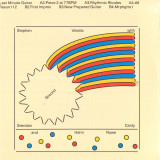
When you’re running a label, a demo occasionally comes across your desk that makes you reconsider everything you thought your label was all about. For Balmat, such was the case with this stunning album from Stephen Vitiello, Brendan Canty, and Hahn Rowe. It sounds like nothing we’ve released so far—and that very otherness opened up a whole new world of possibilities for us.
Fans of ambient, experimental electronic music, and sound art will be familiar with Vitiello, a New York native, long based in Virginia, who has collaborated with a cross-generational list of greats: Taylor Deupree, Steve Roden, Lawrence English, Tetsu Inoue, Nam June Paik, Ryuichi Sakamoto, Pauline Oliveros, and many more. On labels like 12k, Room40, and Sub Rosa, he has explored a wide range of minimalism, microsound, lowercase, ambient, improv, and other styles. But this album is something different. It may begin in ambient-adjacent territory, but it quickly veers off, and it just keeps zigzagging, taking on elements of krautrock, post-punk, dub, and the groove-heavy interplay of groups like Natural Information Society and 75 Dollar Bill.
This stylistic turn is thanks in large part to Vitiello’s choice of collaborators. “We’re coming from three different schools,” Vitiello says: “sound art, art rock, and punk rock.”
Active since the early 1980s, Rowe—a violinist, guitarist, and producer/engineer—has played with, or manned the boards for, a frankly jaw-dropping list of musicians: Herbie Hancock, Gil Scott-Heron, the Last Poets, Roy Ayers, John Zorn, Glenn Branca, Swans, Live Skull, Brian Eno, David Byrne, Anohni, R.E.M., Yoko Ono, and many more. But he might be most closely associated with Hugo Largo, a one-of-a-kind New York quartet—two basses, vocals, and Rowe’s violin—that in the late 1980s helped lay the groundwork for what would eventually become known as post-rock.
Canty, of course, is the legendary drummer of Fugazi, the visionary DC post-hardcore group, as well as Rites of Spring before them, and, currently, the Messthetics, a Dischord-signed instrumental trio with guitarist Anthony Pirog and Fugazi bassist Joe Lally.
Vitiello’s trio first collaborated on First, a 17-minute piece released on the Longform Editions label in 2023. Second picks up where the freeform drift of First left off, channeling the trio’s exploratory energies into more intentionally structured tracks and—in a real first for Balmat—some almost shockingly muscular grooves. “Sometimes my projects are more conceptually driven,” Vitiello says, “but I think this was more musically geared. I just wanted to open up the references and bring in an incredible drummer, bring in some melodies, and I’m sort of the center.” But his collaborators, he stresses, are “vastly creative in making anything I might suggest better.”
Like its predecessor, Second took shape in phases, shifting between improvisation and collage. Vitiello laid down the skeleton of the music at home, sketching out initial ideas on Rhodes keyboard and acoustic and electric guitar; he then fed the parts through samplers and his modular system, recording 10- or 20-minute jams. Once he had edited them into more structured forms, he hit the studio with Canty, who added not just drums but also bass and piano; finally, Vitiello took the results of those sessions to Rowe, who played violin, viola, electric bass, and 12-string acoustic and bowed electric guitar, and assisted in some of the final structuring and mixdown.
A few more surprises along the way: Reanimator’s Don Godwin, the studio engineer where Vitiello recorded with Canty, contributed what he calls “resonant dustpan”; and none other than Animal Collective’s Geologist, who just happened to be in the studio that day, sits in on hurdy gurdy on “Mrphgtrs1,” the album’s gorgeous, stunningly atmospheric drone closer. “I love these chance encounters,” Vitiello says. “Somebody I admire, a group I admire—that was an unexpected gift.”
An unexpected gift is a great way of describing Second as a whole: three veteran musicians venturing outside their usual zones and finding a new collaborative language together. The results can’t be neatly slotted into any given genre; they belong not to any given category, but to the spirit of conversation itself.
DLR drops his first album since starting Sofa Sound Bristol - ‘Money Till I Got None’.
The album is a tongue in cheek reflection on modern life, society, politics and of course MONEY. The never ending thirst and need for it; the stress and freedom it can bring; its power, its illusion and all its contradictions.
Drawing on life experiences from a relatively privileged position, but also from travelling and meeting many types of people across the UK and worldwide, the album explores different perspectives about money from varying sections of society.
In the 7 years since his last album, DLR has been through highs and lows, played big shows, struggled, released classic tracks and spent, spent, spent, spent. 'Money Till I Got None' is his journey of frustration and realisation and his first fully solo album in terms of production, but with a stellar lineup of vocalists and musicians to bring invaluable perspectives and experiences to the project.
Established poets, story tellers and MCs such as Fox, Rider Shafique, Jakes and Gusto bring unique insight, upcomers Freddy B & Kathryn Brenna add crucial flavours and we welcome Hal (Snazzback) on keys plus additional musical direction, with further instrumentation from Abbey Neave & Joe Bradford.
This is Mulatu Astatke’s protege and Ethiopian saxophonist and composer Jorga Mesfin’s debut album. It’s a long foray into Ethio-jazz that takes this courageous syncretism further by fusing spiritual experimentation with bits from all kinds of situations in Ethiopian music, jazz music, and specifically Ethiopian jazz music that precedes it.
Jorga Mesfin is widely regarded as one of the most talented contemporary musicians and composers in Ethiopia. He started his professional career at the young age of 17 and has since collaborated with numerous renowned artists, including Tsegaye Gebremedhin, Carolyn Beard Withlow, The Last Poets, Vijay Iyer, Wayna Wondossen, Kirk Whalum, Takana Miyamoto, Gizze Reggae band, Dionne Farris, Aster Aweke, Mahmoud Ahmed, and Mulatu Astatke. Additionally, Mesfin was a resident at Astatke's legendary African Jazz Village in Addis Ababa every Thursday.
Jorga Mesfin is the founder of the Ethio-jazz group called Wudasse. He composed the music for the epic Ethiopian film "Teza" directed by Haile Gerima. His work on the film earned him the Best Music Award at the 22nd Carthage Film Festival and Best Composition at the 5th Dubai International Film Festival.
Muzikawi is a record label, music publisher, studio, artist management, and event organizer based in Addis Ababa and Stockholm. With extensive experience in curating and representing artists from all regions, Muzikawi has a deep understanding and appreciation of Ethiopia's culture.
4/5 REVIEW IN SHINDIG! ''Incorporating afrobeat and a more spiritual sound in amongst its heavy beats and super-tight musicianship''
As pioneers in the burgeoning modern funk scene of the '90s The Poets of Rhythm created new standards, transcending the parameters lesser groups were defined by. With Discern / Define the Poets took their brand of classic funk to the next level by blending elements of rock, psychedelia, afro-beat, jazz and heavy, heavy drums to create a wholly original brand of transcendent, funky soul.
Anyone who has tried to cop an OG in the last twenty years knows how difficult of a task that has proven to be - not necessarily due to rarity, but more to the fact that people simply DO NOT get rid of this album. It's a testament to the fact that Discern / Define has no shelf life. It's a bonafide classic that any discerning funk and soul fan must have in their collection. Now sporting a deluxe gatefold jacket with reimagined artwork, it is an honor to get these back on the shelves of a record shop near you. Cop one today!
"They have the unique power of being able to depart from tradition in order to bring advancement music and unsuspecting listeners, yet still please the purists with home-cooked "Funk-of-Ages" values"
- Lyrics Born
Repressed for the first time in 2 years, Note price change. Sermonizing Black Nationalism, Pan-Africanism and the benefits of a healthy and just lifestyle during the height of the Bad Boy/Roc-AFella era of nihilistic excess in the late 90's, Dead Prez also signed to a major label (Loud/Columbia) despite leaning much more towards the burgeoning indie aesthetics of the day. But this was a good thing – using major label muscle to wake up righteous hip-hop fans who might have fallen asleep at the wheel. The group itself – consisting of MCs stic.man and M-1, who produced or co-produced most of the duo’s music – was formed in Tallahassee, Florida in the early 1990's.
By later that decade, the duo had started making significant waves, having their music heard on the soundtracks to “Soul In The Hole” and “Slam,” as well as appearing on albums by Big Pun and The Beatnuts. By 1998, they released their first official single, the serious, stark “Police State,” on Loud, appropriately brought to the label by Lord Jamar of Brand Nubian. After building a solid rep over the next two years with fiery live performances, in 2000 they unleashed their debut album, Let’s Get Free.
The album was a welcome return to provocative and often radically political rhetoric that hearkened back to hip-hop forebears including The Coup, Public Enemy and KRS-One (as well as poetic descendants like the Last Poets and Watts Prophets). Let’s Get Free was critically acclaimed and benefited from multiple singles, including the infectious, thick analog drive of “Hip-Hop” “It’s Bigger Than Hip-Hop,” with a remix co-produced by a young Kanye West; “Mind Sex” (with Abiodun Oyewole of the Last Poets); and the poignant “I’m An African.”
But the singles weren’t the only worthy songs, as just about every cut here has deeper meaning than most full albums by their early 2000's peers. Highlights: the thought-provoking, anti-drug album opener “Wolves”; “We Want Freedom” “They Schools” and “Propaganda” . All in all, this is one of the more underrated and possibly Top 5 fully-realized political hip-hop albums of all time.
- A1: Of One Skin
- A2: Open Sound
- A3: Confusion
- A4: Night And Day
- A5: Tv Stars
- A6: Dossier Of Fallibility
- A7: Hope And Glory
- B1: Six Times
- B2: The Saints Are Coming
- B3: Summer
- B4: Hang On To The Shadows
- B5: Zit
- C1: Walk On The Wildside
- C2: War Poets
- C3: Withdrawal Symptoms
- C4: Hymns From A Haunted Ballroom
- C5: Masquerade
- D1: Filming In Africa
- D2: An Incident In Algiers
- D3: Circus Games
- D4: Snakes And Ladders (Instrumental)
- D5: All The Young Dudes
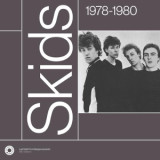
In early 2025 the Skids complete BBC Sessions are compiled onto CD by Scottish label Last Night From Glasgow - The double album features the five sessions the Skids recorded for John Peel with the BBC between 1978 and 1980 - The release includes the BBC session recordings of fan favourites The Saints Are Coming, Masquerade and Circus Games - The legendary Scottish punk band remain as influential as ever, even 45 years on. Legendary punk and new wave band Skids formed in Dunfermline in 1977. They rose to fame with 1979 single Into The Valley and 1980 album The Absolute Game. With almost 50 years under their belt the group, led by Richard Jobson, remain as thrilling as ever, as evident with their latest album Destination Dusseldorf in 2023. The Skids continue to boast over 80,000 monthly Spotify listeners and have been featured extensively across media and press throughout their career. In recent years they have partnered with label Last Night From Glasgow to reissue on vinyl albums Scared To Dance and Days In Europa, and release new album Destination Dusseldorf.
- A1: Of One Skin
- A2: Open Sound
- A3: Confusion
- A4: Night And Day
- A5: Tv Stars
- A6: Dossier Of Fallibility
- A7: Hope And Glory
- B1: Six Times
- B2: The Saints Are Coming
- B3: Summer
- B4: Hang On To The Shadows
- B5: Zit
- C1: Walk On The Wildside
- C2: War Poets
- C3: Withdrawal Symptoms
- C4: Hymns From A Haunted Ballroom
- C5: Masquerade
- D1: Filming In Africa
- D2: An Incident In Algiers
- D3: Circus Games
- D4: Snakes And Ladders (Instrumental)
- D5: All The Young Dudes
China Crisis BBC Sessions have been compiled onto vinyl by Scottish label Last Night From Glasgow, released in early 2025. The release features the band's two John Peel sessions recorded with the BBC in March 1982 and January 1983, now remastered and available on vinyl and CD. The album includes the BBC session recording of hit single Wishful Thinking. The Complete Sessions follows on from recent album China Greatness released in May 2024, a collection of the band's best tracks now newly arranged and mixed. China Crisis remain one of the UK's most beloved pop bands. Formed in Merseyside in 1979, the core duo of Gary Daly and Eddie Lundon remains unchanged 45 years on. They rose to fame in the early 80s with chart success single Christian and single Wishful Thinking, album Difficult Shapes & Passive Rhythms reached No.21 in the UK album charts in 1982. China Crisis continue to tour extensively and boast over 325,000 monthly listeners on Spotify.
Gatefold Sleeve and on sea blue 180 GSM vinyl. Recorded as an instrumental by Tractor in Rochdale in 1971 and originally released on LP in 1972 “Shubunkin” has now been sampled by LA band Broken Bells (Danger Mouse/ Brian Burton and James Mercer, the lead vocalist and guitarist for the indie rock band The Shins) as the basis of their track “To Anyone a Ghost”. Julian Cope writes about the Tractor track “Shubunkin” : ...“Then, one night in mid 1972, John Peel played a track that was more mysterious than almost anything I had ever heard. It was the music I thereafter wanted played at my funeral and was most certainly the sound of a soul approaching the canopy of heaven as it left the earth for the last time.” ..“without the proper printed Dandelion label there to guide me, I left a blob of marker pen on the side that began with ‘Shubunkin’ and that became the ultimate beginning to any LP in my collection.” Originally Issued in late 2019 as a vinyl LP as a protest against Rochdale Boroughwide Housing’s plans to knock down four of the Seven Sisters/College Bank Flats- these blocks of flats were home to Tractor’s drummer in the 1970s as well as their manager Chris Hewitt and Andy and Liz Kershaws’ dad and a whole host of poets, musicians, tv producers etc. Many Tractor numbers were worked out in these flats prior to recording at various studios around Rochdale and Heywood. All songs written by Jim Milne and Steve Clayton. Jim Milne -vocals guitar (and bass most tracks), Steve Clayton -Drums and Percussion, Dave Addison- bass on Northern City. The album now starts the way Julian Cope always wanted to run.
- Let The Night Begin
- Firefly
- Etude No. 1
- Silhouette
- Livin' The Dream
- Rendezvous
- Neon Highways
- Green Fields
- Midnight Fun
- The Blue One
- Sleek Machine
Silver coloured double vinyl. Guitarist Olli Tukiainen, known as Ollie T, will release his solo album Lost Within the Fire on December 13. Composing and releasing instrumental music has been a long time aspiration for the internationally successful guitarist. With Poets of the Fall on a brief break, the opportunity finally arose. "When I released my first single in 2017, I knew I wanted to release a full album of songs someday. During Poets of the Fall's short break in 2024, I had the chance to work full-time on my own music. Some of the oldest tracks date back to the '90s, while the newest were composed during last year's tour," Ollie T explains.
Camelot, the legendary seat of King Arthur's court in Early Middle Ages Britain, was probably not a real place. A corruption of the name of a real Romano-Briton city, the word "Camelot" accumulated symbolic, mythic resonances over centuries, until achieving its present usage as a near-synonym of "utopia." In the mid-20th century alone, Camelot inspired an explosion of representations and appropriations, among them the violent, affectless Arthurian court of Robert Bresson's 1974 film Lancelot du Lac and the absurdist iteration of Monty Python's 1975 Holy Grail, both of which feature armored knights erupting into fountains of blood; the mystical Welsh world of novelist John Cowper Powys's profoundly weird 1951 novel Porius, with its Roman cults, wizards and witches, and wanton giants; and the nationalist nostalgia of President John F. Kennedy's White House. Unsurprisingly there are fewer Camelots in more recent memory. Camelot, Canadian songwriter Jennifer Castle's extraordinary, moving 2024 chronicle of the artist in early middle age, charts a realer, more rooted, and more metaphorical place than the fabled Camelot of the Early Middle Ages (or its myriad depictions), but it too is a space more psychic than physical. In Castle's Camelot, the fantastic interpenetrates the mundane, and the Grail, if there is one, distills everyday experience into art and art into faith, subliming terrestrial concerns into sublime celestial prayers to Mother Nature, and to the unfolding process of perfecting imperfection in one's own nature. Co-produced by Jennifer and longtime collaborator Jeff McMurrich, her seventh record is at once her most monumental and unguarded to date, demonstrating a mastery of rendering her verse and melodies alike with crisply poignant economy. For all their pointedly plainspoken lyrical detail and exhilarating full-band musical flourishes, these songs sound inevitable, eternal as morning devotions. "Back in Camelot," she sings on the lilting, vulnerable title track, "I really learned a lot / circles in the crops and / sky-high geometry." The album opens with a candid admission of sleeping "in the unfinished basement," an embarrassing joke that comes true. But the dreamer is redeemed by dreaming, setting sail in her airborne bed above "sirens and desert deities." If she questions her own agency_whether she is "wishing stones were standing" or just "pissing in the wind"_it does not diminish the ineffable existential jolt of such signs and wonders. This abiding tension between belief and doubt, magic and pragmatism, self and other, sacred and profane, and even, arguably, paganism and monotheism, suffuses these ten songs, which limn an interior landscape shot through with sunstriped shadows of "multi-felt dimensions" both mystical and quotidian. The epic scale and transport of "Camelot," with its swooning strings, gives way dramatically to "Some Friends," an acoustic-guitar-and-vocals meditation in miniature on Janus-faced friends and the lunar and solar temperatures of their promises_"bright and beaming verses" versus hot curses_which recalls her minimalist last album, 2020's achingly intimate Monarch Season. (In a symmetrical sequencing gesture, the penultimate track, the incantatory "Earthsong," bookends the central six with a similarly spare solo performance and coiled chord progression, this time an ambiguous appeal to _ a wounded lover? a wounded saint? our wounded planet?) Those whom "Trust" accuses of treacherous oaths spit through "gilded and golden tooth"_cynics, critics, hypocrites, gurus, scientists, doctors, lovers, government, the so-called entertainment industry_sow uncertainty that can infect the artist, as in "Louis": "What's that dance / and can it be done? What's that song / and can it be sung?" Answering affirmatively are "Lucky #8," an irrepressible ode to dancing as a bulwark against the "tidal pools of pain" and the "theory of collapse," and "Full Moon in Leo," which finds the narrator dancing around the house with a broom, wearing nothing but her underwear and "big hair." But the central question remains: who can we trust, and at what cost faith, in art or angels or otherwise? Castle's confidence in her collaborators is the cornerstone of Camelot. Carl Didur (piano and keys), Evan Cartwright (drums and percussion), and steadfast sideman Mike Smith (bass) comprise a rhythm section of exquisite delicacy and depth. This fundamental trio anchors the airiness of regular backing vocalists Victoria Cheong and Isla Craig and frames the guitars of Castle, McMurrich, and Paul Mortimer (and on "Lucky #8," special guest Cass McCombs). Reprising his decennial role on Castle's beloved 2014 Pink City, Owen Pallett arranged the strings for Estonia's FAMES Skopje Studio Orchestra. On the ravishing country-soul ballad "Blowing Kisses"_Pallett's crowning achievement here, which can be heard in its entirety in the penultimate episode of the third season of FX's The Bear_Jennifer contemplates time and presence, love and prayer_and how songwriting and poetry both manifest and limit all four dimensions: "No words to fumble with / I'm not a beggar to language any longer." Such rare moments of speechlessness_"I'm so fucking honoured," she bluntly proclaims_suggest a state "only a god could come up with." (If Camelot affirms Castle as one of the great song-poets of her generation, she is not immune to the despairing linguistic beggary that plagues all writers.) Camelot evinces a thoroughgoing faith not only in the natural world_including human bodies, which can, miraculously, dance and swim and bleed and embrace and birth_but also in our interpretations of and interventions in it: the "charts and diagrams" of "Lucky #8," a daydreamt billboard on Fairfax Ave. in LA in "Full Moon in Leo," the bloody invocations of the organ-stained "Mary Miracle," and all manner of water worship, rivers in particular. (Notably, Jennifer has worked as a farmer and a doula.) The album ends with "Fractal Canyon"'s repeated, exalted insistence that she's "not alone here." But where is here? The word "utopia" itself constitutes a pun, indicating in its ambiguous first syllable both the Greek "eutopia," or "good-place"_the facet most remembered today_and "outopia," or "no-place," a negative, impossible geography of the mind. Utopia, like its metonym Camelot, is imaginary. Or as fellow Canadian songwriter Neil Young once sang, "Everyone knows this is nowhere." "Can you see how I'd be tempted," Castle asks out of nowhere, held in the mystery, "to pretend I'm not alone and let the memory bend?"
. For Fans Of: The Weather Station, Weyes Blood, Adrianne Lenker, Phoebe Bridgers, Joan Shelley, Lana Del Rey, Cass McCombs, Angel Olsen & Neil Young. Camelot, the legendary seat of King Arthur’s court in Early Middle Ages Britain, was probably not a real place. A corruption of the name of a real Romano-Briton city, the word “Camelot” accumulated symbolic, mythic resonances over centuries, until achieving its present usage as a near-synonym of “utopia.” In the mid-20th century alone, Camelot inspired an explosion of representations and appropriations, among them the violent, affectless Arthurian court of Robert Bresson’s 1974 film Lancelot du Lac and the absurdist iteration of Monty Python’s 1975 Holy Grail, both of which feature armoured knights erupting into fountains of blood; the mystical Welsh world of novelist John Cowper Powys’s profoundly weird 1951 novel Porius, with its Roman cults, wizards and witches, and wanton giants; and the nationalist nostalgia of President John F. Kennedy’s White House. Unsurprisingly there are fewer Camelots in more recent memory. Camelot, Canadian songwriter Jennifer Castle’s extraordinary, moving 2024 chronicle of the artist in early middle age, charts a realer, more rooted, and more metaphorical place than the fabled Camelot of the Early Middle Ages (or its myriad depictions), but it too is a space more psychic than physical. In Castle’s Camelot, the fantastic interpenetrates the mundane, and the Grail, if there is one, distills everyday experience into art and art into faith, subliming terrestrial concerns into sublime celestial prayers to Mother Nature, and to the unfolding process of perfecting imperfection in one’s own nature. Co-produced by Jennifer and longtime collaborator Jeff McMurrich, her seventh record is at once her most monumental and unguarded to date, demonstrating a mastery of rendering her verse and melodies alike with crisply poignant economy. For all their pointedly plainspoken lyrical detail and exhilarating full-band musical flourishes, these songs sound inevitable, eternal as morning devotions. “Back in Camelot,” she sings on the lilting, vulnerable title track, “I really learned a lot / circles in the crops and / sky-high geometry.” The album opens with a candid admission of sleeping “in the unfinished basement,” an embarrassing joke that comes true. But the dreamer is redeemed by dreaming, setting sail in her airborne bed above “sirens and desert deities.” If she questions her own agency whether she is “wishing stones were standing” or just “pissing in the wind” it does not diminish the ineffable existential jolt of such signs and wonders. This abiding tension between belief and doubt, magic and pragmatism, self and other, sacred and profane, and even, arguably, paganism and monotheism, suffuses these ten songs, which limn an interior landscape shot through with sunstriped shadows of “multi-felt dimensions” both mystical and quotidian. The epic scale and transport of “Camelot,” with its swooning strings, gives way dramatically to “Some Friends,” an acoustic-guitar-and-vocals meditation in miniature on Janus-faced friends and the lunar and solar temperatures of their promises—“bright and beaming verses” versus hot curses which recalls her minimalist last album, 2020’s achingly intimate Monarch Season. (In a symmetrical sequencing gesture, the penultimate track, the incantatory “Earthsong,” bookends the central six with a similarly spare solo performance and coiled chord progression, this time an ambiguous appeal to … a wounded lover? a wounded saint? our wounded planet?). Those whom “Trust” accuses of treacherous oaths spit through “gilded and golden tooth” cynics, critics, hypocrites, gurus, scientists, doctors, lovers, government, the so-called entertainment industry sow uncertainty that can infect the artist, as in “Louis”: “What’s that dance / and can it be done? What’s that song / and can it be sung?” Answering affirmatively are “Lucky #8,” an irrepressible ode to dancing as a bulwark against the “tidal pools of pain” and the “theory of collapse,” and “Full Moon in Leo,” which finds the narrator dancing around the house with a broom, wearing nothing but her underwear and “big hair.” But the central question remains: who can we trust, and at what cost faith, in art or angels or otherwise? Castle’s confidence in her collaborators is the cornerstone of Camelot. Carl Didur (piano and keys), Evan Cartwright (drums and percussion), and steadfast sideman Mike Smith (bass) comprise a rhythm section of exquisite delicacy and depth. This fundamental trio anchors the airiness of regular backing vocalists Victoria Cheong and Isla Craig and frames the guitars of Castle, McMurrich, and Paul Mortimer (and on “Lucky #8,” special guest Cass McCombs). Reprising his decennial role on Castle’s beloved 2014 Pink City, Owen Pallett arranged the strings for Estonia’s FAMES Skopje Studio Orchestra. On the ravishing country-soul ballad “Blowing Kisses” Pallett’s crowning achievement here, which can be heard in its entirety in the penultimate episode of the third season of FX’s The Bear Jennifer contemplates time and presence, love and prayer and how songwriting and poetry both manifest and limit all four dimensions: “No words to fumble with / I’m not a beggar to language any longer.” Such rare moments of speechlessness “I’m so fucking honoured,” she bluntly proclaims suggest a state “only a god could come up with.” (If Camelot affirms Castle as one of the great song-poets of her generation, she is not immune to the despairing linguistic beggary that plagues all writers.) Camelot evinces a thoroughgoing faith not only in the natural world including human bodies, which can, miraculously, dance and swim and bleed and embrace and birth but also in our interpretations of and interventions in it: the “charts and diagrams” of “Lucky #8,” a daydreamt billboard on Fairfax Ave. in LA in “Full Moon in Leo,” the bloody invocations of the organ-stained “Mary Miracle,” and all manner of water worship, rivers in particular. (Notably, Jennifer has worked as a farmer and a doula.) The album ends with “Fractal Canyon”s repeated, exalted insistence that she’s “not alone here.” But where is here? The word “utopia” itself constitutes a pun, indicating in its ambiguous first syllable both the Greek “eutopia,” or “good-place” the facet most remembered today and “outopia,” or “no-place,” a negative, impossible geography of the mind. Utopia, like its metonym Camelot, is imaginary
Yellow vinyl. Ten years ago, the album, Jealous Gods, made a lasting impact on the international music scene. Now, in celebration of its anniversary, this classic is being reissued on vinyl! This special edition is not only a tribute to the band's incredible fans, or the album itself, but also includes an exclusive bonus track: a studio-live version of one of the Poets' most beloved songs, Daze. Get your copy and join us in celebrating a decade of this soulful, unforgettable music.
- A1: Brownswood Rockers / Golden Shovel (Somebody Else’s Idea)
- A2: Dancin' Your Own Time
- A3: Limebike Getaway
- A4: General Rubbish Vs The Sportswear Mystics
- A5: Tottenham
- B1: Crow Foot Hustling
- B2: Numbers Click
- B3: Circles Going Round The Sun
- B4: Golden Shovel 2 (Somebody Else's Idea)
- C1: Jazz
- C2: Halfway Somewhere
- C3: Of Peace
- C4: Move As One
- C5: In The Brakes
- D1: 57Th Min / Power And Glory
- D2: Kingsland Road
- D3: Cabin Fever Dub
- D4: Euston Warehouse
- D5: Pleasure, Joy & Happiness
Original 2LP[30,88 €]
Almost three decades on from their last release, Acid Jazz forefathers Galliano are back with news of their new LP ‘Halfway Somewhere’ which is being released on Gilles Peterson’s Brownswood Recordings on 30 August.
Born out of London’s underground clubs and warehouse parties of the mid to late eighties, with the debut single on the Acid Jazz label in 1988, Galliano came out of a culture that spanned music, dance, fashion, art, design, and the written word.
When they arrived as the first act on Gilles Peterson’s Talkin’ Loud label in 1990 with ‘Welcome to the Story’ (produced by Chris Bangs who invented the term Acid Jazz) dressed in Gabicci sweaters, beads and skullcaps they captured a scene built on re-invention. “We were all playing around with what we could get our hands on whether that was a seventies book on Jamaican style or old Last Poets and Watts Prophets records,” says Gallagher. “We’d been recycling things for a few years but suddenly everything had coalesced and you’ve got an amalgam that seemed quite solid.”
For their first album since 1997, Rob Gallagher and his partner, vocalist Valerie Etienne, are joined by Galliano stalwarts Ernie McKone on bass, Crispin Taylor on drums, and Ski Oakenfull on keys (with guests including saxophonist Jason Yarde and percussionist Crispin ‘Spry’ Robinson).
Where the old Galliano recycled records they heard at clubs, today they are responding to the kaleidoscopic global jazz scene - from Total Refreshment Centre in London to International Anthem in Chicago. More than forty years since they came together, Galliano are still only ‘Halfway Somewhere’, but listening to the album they are obviously having fun getting there. “I think the stars have to be aligned when you redo things,” says Gallagher. “Coming at it from this door is very different to the door we came into back then. But once it's existing it is something. But I’m still not sure what that something is.”