Search:later youth

Styles
All
Various - Yebo! Rare Mzansi Party Beats from Apartheid's Dying Years compiled by John Armstrong 3x12"

The apartheid boycott In the 80s, the world – rightly - stepped up its boycott against South Africa’s apartheid government. But this had unexpected and sometimes adverse consequences for South Africa’s music professionals and consumers. Musicians still needed to work live shows both at home and abroad, and to make and sell records. The youth still aspired to clubbing and partying at the weekend after hard, poorly paid jobs under the thumb of an oppressive government. Music was their sanctuary: specifically, African- American inspired soul, jazz, boogie, disco and funk. Unique diversity Producing musical excellence was nothing new for South Africa, even in the 80s: both traditional and jazz music of various genres had been performed, showcased and recorded for decades with the assistance of some of the most skilled and ingenious sound-engineers and producers in the world, the jazz players rivalling their American peers in many cases. But what makes Mzansi 80s popular music unique is that it had to – and for the most part, did- appeal to a multi-ethnic, multilingual population almost like no other in the world, for its geographical size. There may have been many tribal and political differences between Zulu, Sotho, Xhosa, Tsonga and others day-to-day, but when it came to the weekend, those differences often melted away for a while on the dancefloor. Paul Ndlovu had kwaZulu fans as well as Shangaan followers; Black Moses and the Soul Brothers had followers and fans with everyone..and so on. And everyone- detractors and lovers alike- were content to settle on the monicker ‘Bubblegum’ as a general description. Mzansi took disco- and slowed it down a bit.. ..exactly as 90s and early 2000s South African DJs and mixers took House- and slowed it down a bit to develop Kwaito, Gqom and – later – Amapiano. The Roland TR-707 sampler came along in 1985- at just the right time for the flowering of Mzansi disco and boogie. And in the artful hands of arrangers, engineers and producers such as Peter “Hitman’ Moticoe, whose work figures on several of the tracks here, it became something unique to South Africa. 'Yebo! Rare Mzansi Party Beats from Apartheid's Dying Years' compiled by John Armstrong is out BBE Music on x3 vinyl set in a gatefold sleeve, CD, and across digital platforms for download and streaming.

pre-order now30.06.2023

expected to be published on 30.06.2023

44,12 €
CFCF - Memoryland LP 2x12"

Cfcf

Memoryland LP 2x12"

2x12inchBGM003
BGM Solutions
28.06.2023

Repress!

Montreal’s eclectic producer CFCF (aka Mike Silver) follows 2019’s effusive corporate jungle opus Liquid Colours with a kaleidoscopic capital-E Electronica album that takes a range of styles from his earliest formative listening years (1997-2000) and throws them in a blender. Elements of jungle, house, UK garage, trance, pop and post-grunge are blended to form a glossy picture of restless youth in an
identity crisis: memoryland.

Inspired as much by Sonic Youth and Smashing Pumpkins as the Chemical Brothers and Basement Jaxx; as much by films like Millennium Mambo, Demonlover, Morvern Callar, Safe and Perfect Blue as late 90’s Prada — CFCF jumps across genres as a means of portraying a breadth of overlapping milieus and identities in this hyperactive Y2K period-piece that both explores and criticizes our own nostalgic impulses. From the opening intro’s announcement of arrival to the final credits, it’s an album as film as RPG, with the listener as its protagonist.

Opener “welcome.WAV” functions as a start-up sound file for the journey ahead: from “Life is Perfecto”, a propulsive breakbeat-dreampop hybrid, to a grotesquely-remixed ultra-French-house version of previously released single “Self Service”, and the recursive, metaphysical garage of “After the After”. Two guest vocalists lend their talents: Montreal neo-shoegaze icons No Joy, fresh off their own genre-defying Y2K exploration Motherhood, laconically lists off advice for aspiring fashion ingenues with bite in the alt-rock-IDM “Model Castings”, while Kero Kero Bonito’s Sarah Bonito sweetly delivers the penultimate “Heaven”, grunge-pop paean to the myth of Icarus.

In CFCF’s words:
“I was feeling fatigued by an overabundance of ‘calming’, productivity-oriented music, and wanted to explore something angsty, messy, and dark, while also applying a pop sheen. I see a loose narrative across the album: your early 20’s, a new city, new people, new temptations and new traps. Losing your sense of self to the whims of your surroundings and trends in music and fashion; the wrong people, and trying to dig yourself out of that hole. There’s a hope of moving forward that glimmers in the last quarter of the album, but it’s out of reach and seems to come at a price. And then the looking back on it later with perspective; or the looking forward to it before with anticipation. As a kid I couldn’t wait to be in my 20’s; in my 30’s it’s bittersweet to look back. That’s the core of memoryland: the gulf between the fantasy, the reality, and the memory, and how we live inside each of those at different points.”

out of Stock

Order now and we will order the item for you at our supplier.

Last In: 3 years ago
24,33 €
Rupie Dan - My Black Race

Rupie Dan

My Black Race

12inch333004
333
12.06.2023

Death Is Not The End's 333 sub-label drops a much needed reissue of Rupie Dan's My Black Race 12" from 1982. A huge Shaka selection featuring one of the heaviest dubs available from this era of UK roots production. Originally written and produced by Rupie for his Flag Records label, with engineering from Tony Addis (later of Addis Posse and the Warriors Dance label).

"The lyrical idea for My Black Race came about during the 1980/81 social/racial revolution that took place in several cities all over England, including London, Liverpool, Birmingham, Leeds etc. I was living in Bradford, West Yorkshire at the time and was a DJ/Sound System operator on Jah Scorcher International Sound. I also co-hosted a Reggae show on an independent radio station Called Pennine Radio 235. In my regular job I was a youth and community leader with the Bradford education council. I was fully connected and in touch the community.

Seeing how the media used the events of the social uprising as a weapon to further discriminate against the African & Caribbean community committed me to say and do something to elevate the minds of especially young people who were already demoralised by the rhetoric that brought about the so called "riots" of the time. It was during this time that the lyrical foundation of "My Black Race" was laid. The rhythm came later after hearing Barry Brown's "No Wicked Shall Enter the Kingdom of Zion". In the summer of 1982 I entered into the Addis Ababa recording studio on Harrow Road, Paddington and recorded the song having moved to London the previous year. Musicians featured included Victor Cross on bass and Mark Wright on drums (both from the Ariwa band), Rizzo on guitar, Tan Tan and Bami on Horns (all 3 from Aswad band), Bubblers on Piano/Organ (Undivided Roots/Ruff Cutt Band). Lead vocals were provided by myself, with backing vocals Jenifah Gad and Niomi who was working with David Bowie at the time. The engineers were Bubblers and Tony Addis (later of Addis Posse & the Warriors Dance label).

Jah Shaka was in the studio during the entire recording session. I was aquatinted with him as I was previously involved in a 3 way soundclash with Shaka, Quaker City and my sound at the time Jah Scorcher. Some years later I was in Terry's Dub studio in North Acton cutting some dubs when King Jammys and Bunny Lee walked in and heard the song. Bunny was responsible for the production of Barry Brown's "No Wicked Shall Enter the Kingdom of Zion". Thankfully they were both impressed by the track which delighted me as a young up-and-coming artist/producer. The rest is history as we know it. Jah Shaka was mystically constant hence his attachment and love for the song. Jah bless and guide him."

out of Stock

Order now and we will order the item for you at our supplier.

Last In: 3 years ago
17,02 €
Marcel King - Reach For Love - Singles 1983-88
  • A1: Reach For Love
  • A2: Hollywood Nights
  • A3: Love To Shine
  • A4: Keep On Dancin’
  • B1: Reach For Love (Mark Kamins NY Remix)
  • B2: Hollywood Knights (Instrumental)
  • B3: Reach For Love (Dub)

Factory Benelux presents a limited edition 180gm vinyl singles collection by Marcel King, best known for his sparkling 1984 dance single ‘Reach For Love’ on Factory Records, as well as the youthful vocalist on ‘SadSweet Dreamer’ by Sweet Sensation, a UK number one back in 1974 Limited to just 1000 copies, Reach For Love: Singles 1983-88 features both sides of the infectious electro single co-produced by Bernard Sumner (New Order) and Donald Johnson (A Certain Ratio) and released as Fac 92 in April 1984, as well as a previously unreleased demo for ‘Love To Shine’, the planned follow-up single on Factory produced by Tony Henry of 52nd Street. (NON-RETURNABLE).

The album also features ‘Hollywood Nights’, a later single cut by Marcel with Gee Bello of Light of the World, along with a rare US remix of ‘Reach For Love’ by noted New York DJ Mark Kamins, and extended dub and instrumental versions.

King was invited to record for Factory in 1983 by Joy Division/New Order manager Rob Gretton, a devotee of soul and black music, and prime mover behind the famous Hacienda nightclub. ‘Rob was a massive fan of Marcel and thought he was as good a singer as Michael Jackson,’ explains Tony Henry. Not just a gifted and
plaintive soul singer, King also wrote both sides of his Factory single, ‘Reach For Love’ and ‘Keep On Dancin’, both paeans to perseverance and enduring Hacienda classics.
A classic video clip for the single, filmed at The Hacienda with local breakdancing crews, is available in.

Alas ‘Reach For Love’ was destined to remain an underground hit rather than a chart topper. Rob Gretton blamed Factory’s disdain for conventional promotion. ‘At Factory we still basically believe that you don’t have to hype a group in any way, and that a record should success on its own. But it’s getting increasingly difficult.
We put a record out by Marcel King and it’s hardly sold at all. The charts are wide open to hyping and marketing.’

Adds Bernard Sumner: ‘Marcel was an incredibly talented guy, but a tragic figure. He used to sleep in a car in Moss Side and was a bad heroin addict.’ A troubled but pioneering artist, Marcel sadly passed away in 1995 after suffering a brain haemorrhage.
1000 copies only of FBN 47 will be available on Record Store Day on 22 April 2023, pressed on 180gm black vinyl. The sleeve is based on original artwork for the Factory single and also includes a press interview with Marcel from 1984.

pre-order now02.06.2023

expected to be published on 02.06.2023

23,49 €
Una Luz Y El Zigui - Buenos Días Juventud

First time reissue of mega rare 1972 psych-folk album from Venezuela.
180g LP.
One of the most obscure records ever released in Venezuela that was originally distributed in tiny quantities as a promo-only album.

A magic blend of protest songwriting, with a strong environmentalist statement, and folky pop with psych ingredients —such as the use of sitar sounds— recorded by the collective of artists “Una Luz”, and “El Zigui” who was once described as the local Bob Dylan.

The late ‘60s was a short period of time, long enough to turn the world upside down.

Music, paying attention to the ancient Greeks who said that changes in society are also reflected in it, also undergoes violent transformations in its structure. The turbulent joy of rock and roll and twist gives way to the meditative sounds of the waves of the sea contained in surf to finally welcome music of soft and delicate harmonies with songs full of references in their lyrics to the state of society and their relationships with the environment.

On the other hand, in Venezuela, although the expansive wave of May 68 had not reached it, a certain degree of dissatisfaction began to be perceived, especially through the music of a singer-songwriter from the countryside of Venezuela known as Ali Primera, El Cantor del Pueblo. Thanks to a scholarship from the German government, he studied for a few years in that country, and it was there that he recorded his first album, with songs whose lyrics reflect the essence of authors such as Bob Dylan and Atahualpa Yupanqui. And Ali Primera becomes one of the greatest influences of our artist: El Zigui.

Guillermo Sánchez Corao —known as El Zigui for some strange reason— was born in the Venezuelan city of Maracay, capital of the State of Aragua, on January 13, 1948. From a very young age he began to study guitar playing and, already in his teens, we can find him as part of the duo El Zigui & Franklin together with Franklin Laudelino Mejías, another young man with a great musical pedigree.

It is during his bohemian phase as a troubadour, in the surroundings of the Ateneo de Caracas, when his music caught the attention of producer Mario Tepedino, the most important youth music producer at the time. Mario takes him to his TV show “2001 Juvenil”. With the incorporation of other musicians such as Rubén "Micho" Correa —who would later become a great arranger and record producer— he created the group El Zigui y Una Luz, which would later be joined by musicians such as Carlos "Nene" Quintero and Alfredo Padilla, members of the amazing Grupo Pan. Later on, another outstanding singer would also join Una Luz: Guillermo Carrasco.

With this formation they made it into a recording studio in 1972 where they managed to record, in just 30 hours, a long-playing album of which only 60 copies were pressed and has therefore gained cult status among collectors. As expected, the strong content of the lyrics was not supported by the media, making the promotion of the album impossible to accomplish. However, it was with the help of Mario Tepedino that they made it to television, with appearances on “2001 Juvenil” and “Antesala Lunar”, a show that was especially produced for the broadcast of the arrival of man on the Moon.

That was probably one of the main reasons for El Zigui to move to Canada and then France until 1978 when he returns to Venezuela. He would then join bands like Xabañón, Fogón and De Vuelta al Futuro, a 12-member super group. The former members of Una Luz had become well known musicians in the country, especially Guillermo Carrasco who was one of the greatest ballad artists in the ‘80s and targeted by the biggest record companies at the time. El Zigui died in a traffic accident on June 22, 1999. If he had lived through these crazy times... where would he have gone?

pre-order now31.05.2023

expected to be published on 31.05.2023

24,79 €
Swamp Children - Taste What's Rhythm

Swamp Children

Taste What's Rhythm

12inchBEWITH019TWELVE
Be With Records
19.05.2023

Manchester's Avant-Jazzy-Funk outfit Swamp Children were enviably eclectic and Taste What's Rhythm is their mini masterpiece. Flitting gracefully through a feast of genres with consummate ease, the band were almost indefinable and, accordingly, nigh-on impossible to market. So whilst this cult EP, originally out in 1982 on Factory Benelux, remains in demand for those in the know, it has also glided under the radar of many otherwise clued-up heads for over 40 years. If you don't know, get to know...

The Taste Whats Rhythm EP was originally released in 1982 on Factory Benelux (an informal partnership between the legendary Manchester-based Factory Records and Belgium-based Les Disques du Crépuscule). With it's kaleidoscopic brightness, silky panache and superb execution, it remains one of the most startling documents of a remarkable time and place.

The EP opens with the oh-so-Balearic title track. "Taste Whats Rhythm" gently unfolds with a Spanish guitar, hazy, drifting vocals and sun-bleached Latin percussion. After this most sumptuous of intros, the tempo is raised, the rhythms grow in complexity as horns jostle amidst the restrained chaos quite wonderfully. And then it winds down again. Proper fluctuating rhythms and tempos throughout. I guess that was the point - taste the variety!

“You’ve Got Me Beat” is a *perfect* piece of post-punk pop-jazz. A mysterious, after dark jazz-dancer, the aching vocals serve as a touching, tender resignation to love. A guitar hook which seems to elegantly reference The Blackbyrds' "Rock Creek Park" and a flowing pulse from New York's No Wave scene. It still sounds so fresh all the years later.

Closing out this most perfect of EPs, the twisted synths and nimble rhythms of bass-heavy roller "Softly Saying Goodbye" combine to create a super-slinky gem; Brit-Funk of the highest order.

Swamp Children formed in Manchester in 1980, around core members Ann Quigley (vocals), Tony Quigley (bass, metalaphone, percussion), John Kirkham (electric & acoustic guitars, metalaphone, percussion), Ceri Evans (keyboards, bass, percussion, background vocals), Cliff Saffer (saxaphone, clarine) and Martin Moscrop (drums, percussion, trumpet). They initially practised at a rehearsal space shared with fellow post-punk funkers A Certain Ratio and Joy Division/New Order. Young and relatively inexperienced upon getting together, the ages of Swamp Children's members ranged from just 16 to 19. Talk about the brilliance of youth.

From the outset, Swamp Children shared DNA with A Certain Ratio. Martin Moscrop was a founder member of Ratio, while Ann provided artwork for them. Although the close association with ACR led some to assume that Swamp Children were simply a splinter group, the new band pursued a more overt latin and jazz tinged direction, at the same time adopting a post-punk attitude towards making music, influenced by the records they were listening to at the time: Miles Davis, Brazilian jazz fusion and heavy funk dancefloor sides.

The band made their live debut at Manchester's infamous Beach Club in May 1980. Thanks to a double-booking blunder another support band turned up and were turned away, having travelled all the way from Dublin for a string of British dates. The name of the unlucky band was U2...

With arrangements that emphasised Tony Quigley’s darkly-coloured basslines (and Ann Quigley’s impressionistic vocals as another instrument in the mix) Swamp Children possessed an easygoing grace and a bubbling energy which indicated that the band's true strength was as an ensemble. The band’s musical sophistication (a fusion of funk, jazz, and bossa nova) would prove to be a strong influence on later UK acts like Sade. Indeed, Swamp Children themselves later mutated into the more known and acclaimed latin jazz outfit Kalima.

Working directly with James Nice, custodian of Factory Benelux, means that the audio for this re-issue of the classic EP comes from the original tapes. Cut at 45 RPM and released in the house Be With disco sleeve, we’ve made sure this record is well up to the job of having a permanent place in every DJ’s bag. As far as we’re concerned, this is essential stuff.

out of Stock

Order now and we will order the item for you at our supplier.

Last In: 2 years ago
16,43 €
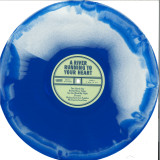
FRUIT BATS - A RIVER RUNNING TO YOUR HEART

Eric D. Johnson rarely lingers at one location too long. As a kid growing up in the Midwest, Johnson's family moved around a lot, but it wasn't until he became a touring musician years later that motion became a central part of his identity. That transient lifestyle stoked an enduring reverence for the world he watched pass by through a van window. A sense of place is a unifying theme he's revisited with Fruit Bats throughout its many lives. From the project's origins in the late '90s as a vehicle for Johnson's lo-fi tinkering to the more sonically ambitious work of recent years, Fruit Bats has often showcased love songs where people and locations meld into one. It's a loose song structure that navigates what he calls "the geography of the heart." "The songs exist in a world that you can sort of travel from one to another," says Johnson. "There are roads and rivers between these songs." Those pathways extend straight through the newest Fruit Bats album, aptly titled A River Running to Your Heart . Self-produced by Johnson_a first for Fruit Bats_with Jeremy Harris at Panoramic House just north of San Francisco, it's Fruit Bats' tenth full-length release and one that finds the project in the middle of a creative resurgence. After two decades of making music, hard-earned emotional maturity has seeped into Johnson's songs, resulting in a more complex sound that's connected with audiences like no other previous version of Fruit Bats. A River Running to Your Heart represents the fullest realization of that creative vision to date. It's a sonically diverse effort that largely explores the importance of what it means to be home, both physically and spiritually. And while that might seem like a peculiar focus for an artist who's constantly in motion, for Fruit Bats, home can take many forms_from the obvious to the obscure. Lead single "Rushin' River Valley" is a self-propelled love song written about Johnson's wife that clings to the borrowed imagery of the place where she grew up in northern California. Then, there's the gentle and unfussy acoustic ballad "We Used to Live Here," which looks back to a time of youthful promise and cheap rent. But the wistful "It All Comes Back" is perhaps the most stunning and surprising track on the album, Johnson's production skills on full display. Built upon intricate layers of synths, keyboards, and guitars, it's a pitch-perfect blend of tone and lyricism that taps into our shared apprehensions and hopes for a post-pandemic life. "We lost some time / But we can make it back / Let's take it easy on ourselves, okay?" sings a world-weary but ultimately reassuring Johnson in the song's opening lines. It's the kind of performance that makes you hope Fruit Bats stays in this one place, at least for a little while longer.

pre-order now14.04.2023

expected to be published on 14.04.2023

22,06 €
FRUIT BATS - A RIVER RUNNING TO YOUR HEART

BLUE & BONE VINYL

Eric D. Johnson rarely lingers at one location too long. As a kid growing up in the Midwest, Johnson's family moved around a lot, but it wasn't until he became a touring musician years later that motion became a central part of his identity. That transient lifestyle stoked an enduring reverence for the world he watched pass by through a van window. A sense of place is a unifying theme he's revisited with Fruit Bats throughout its many lives. From the project's origins in the late '90s as a vehicle for Johnson's lo-fi tinkering to the more sonically ambitious work of recent years, Fruit Bats has often showcased love songs where people and locations meld into one. It's a loose song structure that navigates what he calls "the geography of the heart." "The songs exist in a world that you can sort of travel from one to another," says Johnson. "There are roads and rivers between these songs." Those pathways extend straight through the newest Fruit Bats album, aptly titled A River Running to Your Heart . Self-produced by Johnson_a first for Fruit Bats_with Jeremy Harris at Panoramic House just north of San Francisco, it's Fruit Bats' tenth full-length release and one that finds the project in the middle of a creative resurgence. After two decades of making music, hard-earned emotional maturity has seeped into Johnson's songs, resulting in a more complex sound that's connected with audiences like no other previous version of Fruit Bats. A River Running to Your Heart represents the fullest realization of that creative vision to date. It's a sonically diverse effort that largely explores the importance of what it means to be home, both physically and spiritually. And while that might seem like a peculiar focus for an artist who's constantly in motion, for Fruit Bats, home can take many forms_from the obvious to the obscure. Lead single "Rushin' River Valley" is a self-propelled love song written about Johnson's wife that clings to the borrowed imagery of the place where she grew up in northern California. Then, there's the gentle and unfussy acoustic ballad "We Used to Live Here," which looks back to a time of youthful promise and cheap rent. But the wistful "It All Comes Back" is perhaps the most stunning and surprising track on the album, Johnson's production skills on full display. Built upon intricate layers of synths, keyboards, and guitars, it's a pitch-perfect blend of tone and lyricism that taps into our shared apprehensions and hopes for a post-pandemic life. "We lost some time / But we can make it back / Let's take it easy on ourselves, okay?" sings a world-weary but ultimately reassuring Johnson in the song's opening lines. It's the kind of performance that makes you hope Fruit Bats stays in this one place, at least for a little while longer.

out of Stock

Order now and we will order the item for you at our supplier.

Last In: 3 years ago
21,22 €
LE CRI DU CAIRE - Le Cri du Caire LP

Cairo, late 2013. In a city in turmoil, where the curfew had just been lifted after a second coup d'état, where the walls were still covered in dreams and revolt, where even the clubs of the city-centre echoed with anti-Islamist and anti-army slogans, I was deeply touched by the voice of Abdullah Miniawy at the 100Copies music studio, a stone's throw from Tahrir Square. A singer, writer, poet, poetry-slammer and student from the El-Fayoum oasis, this spokesman for Egyptian youth was shaking up the music scene and social networks with his hypnotic voice and unique blend of electro, sufism and jazz music, both punk and psychedelic, secular and avant-garde. Three months later, Abdullah's first on-stage revelations took place at the La Voix est Libre festival in Cairo with the "Jimi Hendrix of oud", Mehdi Haddab, followed by his first meeting with composer and saxophonist Peter Corser at the D-CAF festival (Downtown Contemporary Art Festival), created in the aftermath of the revolution by leading figure in theater Ahmed El-Attar. After three years of administrative battles, while censorship was making a comeback in Egyptian artistic circles, Abdullah finally arrived in Paris where he recorded an initial version of Purple Feathers with Peter Corser, which was broadcast on Soundcloud.

In 2017, gripped from the very first seconds by these soaring vocal and instrumental performances, Erik Truffaz accepted our invitation to become involved with Peter's hypnotic loops and Abdullah's electric vocals, and was soon joined by the visceral strings of cellist Karsten Hochapfel. Five years later, Le Cri du Caire is still turning heads, and often moving audiences to tears. Both free and spiritual, sensitive and elusive, their music elevates the soul to giddy heights and flies towards what may well be one of the shortest paths from zero to infinity.

out of Stock

Order now and we will order the item for you at our supplier.

Last In: 22 months ago
20,88 €
Maral - Ground Groove

Maral

Ground Groove

12inchLR232
Leaving Records
17.03.2023

Ground Groove, the third full-length release from the LA-based, Iranian-American producer and DJ, Maral, begins with an invocation: the sprawling, achingly heavy Feedback Jam opens the floodgates of history. Conventional (linear) spacetime collapses, crushed beneath the track’s lumbering 4/4 heartbeat and successive waves of distortion. As each wave recedes, samples trickle forward in the mix — seeking, perhaps, to fill the void. Voices and instruments rise and fall in uncanny reverse. Overlapping, implied melodies flicker into focus, then flit away. Feedback Jam is at once an initiation ritual, and a thesis statement for the record that follows.

Drawing upon a vast personal archive of Iranian folk, classical, and pop recordings (some sourced from mixtapes made by her parents in the eighties/nineties), Maral presents, on Ground Groove, a further refinement of the signature “folk club” sound she developed as a live DJ— a sound she would later codify on Mahur Club (2019) and Push (2020). By collecting, dissecting, and re/presenting sonic fragments from Iran, Maral practices a kind of dance-floor ethnomusicology. The subject of her inquiry: Iranian


culture and contexts, throughout history and in the present. But, crucially, this inquiry is instantiated within and throughout the body of the listener, whether this listener is dancing in the club, or riding the train, nodding along with headphones on.

Maral speaks of being in collaboration with her samples, treating each as a distinct bandmate, often consulting with an artist’s catalog (or even a single recording) as one would a trusted creative partner. In so-doing, Maral claims to seek to transcend the self. In this regard, her output neatly triangulates contemporary dance and heavy music with much of the traditional religious music that she samples. Broadly speaking, each of these idioms addresses a desire —shared by audience and performer alike—to transcend the self through volume, repetition, and movement.

Having, in her youth, studied the Setar under Nader Majd (the founder of Virginia’s Center for Persian Classical Music), Maral cycled through various genres (ex: punk, emo, dub) in her adolescence and early twenties, all the while expanding her knowledge of, and appreciation for, Iran’s diverse musical traditions during regular summer trips to Tehran. In college, Maral taught herself to make beats with a ripped copy of Ableton (which remains her DAW of choice), eventually transitioning to playing and hosting various club nights. Forever abiding by an autodidactic, DIY impulse to create art and foster community, Maral relocated to Los Angeles in 2013, where she quickly immersed herself in the city’s numerous overlapping music scenes.

Collaboration (beyond sampling) has proven an important component of her process, with notable spoken word contributions from the likes of Lee Scratch Perry and Penny Rimbaud, as well as a 2021 Panda Bear collab track (On Your Way), which the Animal Collective founder co-produced. Maral is equally attentive to the visual components of her records (album art, music videos, etc.), drawing upon the work of peers and friends for inspiration.

Indeed, the genesis of Ground Groove can be traced back to an audio-visual collaboration between Maral and the artist Brenna Murphy, originally commissioned for the 2021 Rewire Festival — a project that would eventually serve as the album’s foundation. Tracks eight through eleven on Ground Groove comprise Maral’s half of this installation, with tracks one through seven composed afterwards, inspired by the fruits of Maral and Murphy’s collaboration. Murphy’s visuals will be released alongside Ground Groove as a visual accompaniment. Additionally, Murphy designed the album’s art, directed the video for the lead single (the aforementioned Feedback Jam), and is featured on track six, Shy Night.

Composed largely on Ableton, Ground Groove features more frequent and more prominent live recordings from Maral (guitar, bass, and vocals) than either Push or Mahar Club. The cult favorite Roland MC-909 groovebox rears its head on Mari’s Groove. Mixed by Trayer Tryon (Hundred Waters) and mastered by Daddy Kev, the attention to sonic quality on Ground Groove constitutes another significant step in Maral’s development as a studio artist.

Ground Groove’s eleven tracks are “grooves” in the obvious sense, in that they are each driven by a persistent, propulsive rhythm, but the album’s title may just as well suggest the glacial passage of time—the scope of human history, in which individual voices, like streams, carve paths (impossibly) through earth and stone, winding their way to the vast sea of the present.

pre-order now17.03.2023

expected to be published on 17.03.2023

20,80 €
Aboriginal Voices - Instant Music

For a quarter of an hour, Zürich was the navel of the world. Let's look back: at New York's CBGB's, pre-punks were shredding away, Malcolm McLaren, as a man with a fine-tuned taste for the hip, imported the sound to London, where his sweetheart Vivienne Westwood dressed the test-tube band The Sex Pistols. A few pop magazines later (we are in an analog world!) punk bands sprouted everywhere, like shiny pimples on poorly fed teenagers. Contrary to legend, even back then, it was often those with a musical background who were the most successful. One such example, Henrich "Wüste" Zwahlen, who had learned the violin, attended a jazz school and went into prog-rock before joining the Nasal Boys, one of the first punk bands in Zürich. The scene included the female band Kleenex (cover: Fischli of art heroes Fischli/Weiss), whose minimalism was praised by the London music press, while the world's most important rock theorist, Greil Marcus, wrote an ode highlighting Zürich's role as the birthplace of Dadaism. A fertile ground for the militant youth movement that exploded in 1980 and stirred up the city of banks, protestantism and boredom with raw wit and expressive violence. Gathering at concerts of local bands and fueled by endogenous and artificial substances - they paid homage to exuberance and self-indulgence.
The mantra of "everything-is-possible" was driven forward on the musical front by progress in terms of means of production: analog electronic instruments were no longer reserved for hippie nerds, who sat in front of large plug-in boards like autistic-psychedelic switchboard operators connecting cables for their sound carpets. Now snazzy stage personnel elicited fast-paced sounds from handy devices often made in Japan. Kraftwerk was fashionable, the Zurich duo Yello experimented with new synthetic sounds, and the groundbreaking album "Alles Ist Gut" by the Düsseldorf based duo D.A.F. (Deutsch Amerikanische Freundschaft) was released, which chanted its program of provocation times danceability with lines such as "Tanz den Jesus Christus, tanz the Mussolini, tanz the Adolf Hitler." In England meanwhile, electronically backed New Romantic bands were replacing New Wave. The Human League, Heaven 17, Duran Duran, OMD, Depeche Mode or Visage stormed the charts.
In Zürich's underground, the duo Aboriginal Voices caused a stir at that time. A couple, good-looking, styled, looking cool into the cold neon light, with a danceable beat and sequenced electro sounds, to which Micheline gave a very unique touch when she sang in French and English. Micheline had a classical piano education, had left home early, worked as a lighting technician in a strip joint and at Booster, the hottest boutique in town (one of the relicts that still exists). Voilà: a musician who was as stylish as she was tough. She was already playing with Wüste in the band "Doobie Doos", a band where everyone played an instrument they didn't master. In 1980 the Aboriginal Voices were formed, initially with vocalist Magda Vogel (of later UnknownmiX fame), who was trained as a classical singer.

Frustrated by organizational friction and constant hassles with band lineups, Wüste and Misch decided to do everything as a twosome: self-mixed, self-styled, self-produced. With the top-of-the-line Linn drum machine clocking the beat, Wüste's guitar and Micheline on the Yamaha synthesizer created a unique sound of danceable electronic music. Whereby the Aboriginal Voices acted as a kind of proto-influencer, receiving the latest equipment to try out, especially since they made it a point not to work with tapes, but to design everything for live shows. They had an interface built for the legendary Roland MC-4B, who sequenced the modular Roland System 100M but where one output controlled a light show synchronized with the sound. A pioneering act that fit well into the DIY spirit of punk, with its self-distributed tapes and fuck-you attitude towards the cretins of the music industry. Consequently only two cassettes and an EP were released. There was something futuristic about the sound, the vestiary style and the electronics, while the attitude remained rebellious. Of course something so deeped in the Zeitgeist wasn't meant to last. Wüste moved to New York, Micheline stayed in Zurich, both still active in the music scene to this day.

Sven Regener, head of the band Element of Crime and one of Germany's most successful pop writer said a few years ago when asked if he knew of any Swiss music: "Of course! In 1983, a Swiss band called Aboriginal Voices played with us at a festival in Zurich. Great, avant-garde electro-pop. That was my first encounter."

If you ever saw them live, you never forgot them, and so over the years you belonged to a teeny-tiny circle of insiders, happy to be joined after all these years by new aficionados who appreciate the sound of that quarter-hour, when Zurich was ravishing, creative and exciting.

- Thomas Haemmerli

out of Stock

Order now and we will order the item for you at our supplier.

Last In: 3 years ago
21,47 €
Takeshi Terauchi - Eleki Bushi 1966-1974 LP

Japan's guitar hero Takeshi Terauchi reworks traditional songs and lets everything go wild with his magnificent and frenzied guitar sound. Enter the electrifying world of Eleki!

Gatefold 180g heavy vinyl LP, reverse board print. Comes with extensive liner notes by Japanese pop culture writer Julien Seveon (Cinexploitation)

All tracks licensed by King Record Co., Ltd., Tokyo, Japan.

Mastering and lacquer cut by Jukka Sarapää at Timmion Cutting Lab, Helsinki, Finland.

Artwork by Nker

The aftermath of World War II gave rise to a global phenomenon that saw new generations of young people rise up determined to forge new paths from their elders – culturally, politically, and musically. Japan was no exception and the recent past made the local youth angrier, hungrier and even more determined to fully experience something different from their parents. The country caught on to the early rock & roll craze almost in tandem as it was happening in the States. Teenager Chiemi Eri singing "Rock Around The Clock" and Kazuya Kosaka with "Heartbreak Hotel" were among the first to make what would soon be called Rokabiri accessible to a large audience. Teacher and parent associations showed concern regarding this new music when teenagers started missing school to attend afternoon shows – one of which most notably being the Nichigeki Western Carnival where all the top names of Rokabiri played to sold out audiences. But by the end of the 1950s, the youth of Japan had moved on to something else entirely: Eleki.

The 50s and 60s were a time of rapid change that saw trends come and go. Japan, like all other industrial countries, saw its youth move from one musical sensation to the next. And in the early 60s, there was one band in particular that created a distinct new flavor: The Ventures. Leaving behind vocals and focusing strictly on the impact of the sound of the electric guitar, The Ventures drove kids crazy all over the world. Other bands followed, most notably The Shadows, but in Japan, no other instrumental rock band managed to leave such an impact. The sound of The Ventures helped boost guitar sales in Japan and soon hundreds of cover bands were popping up all over the country. The Eleki Bumu (electric boom) was now in full effect with Takeshi Terauchi emerging as its first and greatest guitar hero.

Terauchi was born January 1939 in the prefecture of Tochigi, north of Tokyo. His mother taught music and played the shamisen – a traditional Japanese stringed instrument – while his father ran, among other things, an electronics shop. Their respective professions were to be decisive in the path that Terauchi would later take. Serendipitously, at the age of five, Takeshi was given his first instrument – a guitar. His destiny sealed, he quickly began experimenting with different tools from his father's shop to give his instrument a stronger sound. The technological approach came from his father, the technique from his mother. Terauchi's signature playing style owes a lot to his mother's instrument of choice, as he attacks the notes on his guitar as one plucks the strings of a shamisen.

This exceptional compilation you are holding in your hands explores some of the best works by Takeshi Terauchi, recorded between 1966 and 1974, where the guitar hero looks inwards to Japan for inspiration. A meeting between traditional folk songs and the unique way Terauchi and his band play: the content is explosive, inspired, and highly addictive! The 60s and 70s were undoubtedly Terauchi's finest hours, and in the late 60s, one Japanese critic said that Terauchi was not only the best guitarist in Japan, but also in the world. You can now find out why.

out of Stock

Order now and we will order the item for you at our supplier.

Last In: 3 years ago
30,21 €
Various - Black Solidarity Version Excursion
  • 1: A Letter To Dub
  • 2: Champian Dub
  • 3: Up and Down Dub
  • 4: A Spliffing Dub
  • 5: Crucial Dub
  • 6: Dance Inna Dub Style
  • 7: Aarafat Version
  • 8: No Funny Dub
  • 9: Next To version
  • 10: Live Good Dub

At the beginning of the eighties reggae music became increasingly in tune with what was happening in Kingston’s dance halls… probably more so than at any time since the sound system operators had started to make their own shuffle and boogie recordings in the late fifties. The international audience and the critics were too busy looking for a new Bob Marley to appreciate what was happening downtown and failed to acknowledge that this was a return to the real, raw roots of the music. Brash, confident, young record producers who were totally in tune with the youth audience stepped forward and seized the moment…

Oswald ‘Ossie’ Thomas began his apprenticeship in the music business at the age of
fourteen and served his time as a record salesman for Bunny ‘Striker’ Lee and Winston ‘Niney The Observer’ Holness before moving on to Miss Sonia Pottinger’s Tip Top Records.

“I ended up working in three record stores on Orange Street from 1976 to 1981… Yeah man! Me deh ‘pon me bicycle till I buy my motorcycle! Them days records were coming out left, right and centre… every day!” Ossie Thomas.

It was during his time with Miss Pottinger that Ossie began to produce records for
himself and in 1979 Ossie and Phillip Morgan began the Black Solidarity label based deep in the Kingston ghetto on Delamere Avenue. Phillip initially inspired Ossie to start the label and soon Triston Palma, Phillip Frazer and “a youth named Gary Robertson” joined in although Gary later left for Canada.

The Soul Syndicate rehearsed in the Delamere Avenue area and Tony Chin gave Ossie a cut of a rhythm that he used for Triston Palma’s ‘A Class Girl’… the label’s inaugural release. The record was a sizeable success and paved the way for hit after hit after hit on Black Solidarity. Ossie worked with just about everybody who was anybody during this critical period of the music’s development including vocalists Robert Ffrench, Little John, Sugar Minott, Frankie Paul and most notably Triston Palma.

For this release we have compiled some of the version sides to those releases. Dub still being an integral part of the Reggae Sound System Sound. So sit back and listen to what Black Solidarity, one of the most important and often overlooked labels were bringing to the dance, dubwise, back in those heady 1980’s times.

With grateful thanks to: Paul Coote, Nick Hodgson & Hasse Huss

pre-order now24.02.2023

expected to be published on 24.02.2023

13,82 €
Sluggy Ranks / Bondie - Here We Are / What Is Going On 7"

American dancehall vocalist Sluggy Ranks was part of a growing dancehall movement in the '90s which emphasized cultural roots and positive messages instead of "slack" artists' obsessions with sex and violence. Ranks was born in Kingston and grew up in its Ray Town section, attending the same primary school as Wayne Wonder. Ranks began his singing career in the mid- to late '80s, coming to the U.S. to record the beginning of a series of Jamaican hit singles that included "95% Black 5% White" and his signature song, "Ghetto Youth Bust." Ranks later re-recorded both songs for his full-length 1994 album, Ghetto Youth Bust, which was produced by King Jammy and issued in the U.S. on Profile Records. While the majority of Ranks' most significant output through the '90s was largely issued on singles (and thus not very accessible to most American listeners), he also cut albums like Just Call Sluggy and 1999's My Time.

pre-order now10.02.2023

expected to be published on 10.02.2023

10,04 €
William Doyle - Slowly Arranged: 2016-2019 (4x12")

We have a very limited amount of these available now for stores. 4LP boxset - white vinyl - edition of 300 - includes: The Dream Derealised LP, Lightnesses I & II LPs, Near Future Residence LP. It’s nearing a decade since William Doyle released his Mercury Music Prize nominated debut album, Total Strife Forever, as East India Youth in 2014. A year later, he had toured the world and was releasing his second album, Culture of Volume, but it would be another four years before Doyle returned with his third full album, and the first official release under his own name. The dizzyingly ambitious Your Wilderness Revisited arrived in 2019 and was followed last year by the artpop masterpiece, Great Spans of Muddy Time. In the years between leaving the old project behind and re-emerging under his own name, Doyle self-released a string of ambient-leaning albums, The Dream Derealised, Lightnesses Vol I & II and Near Future Residence, which are now to receive a first vinyl pressing via Tough Love as both a highly limited four LP box set, titled ‘Slowly Arranged: 2016-19’, and as separate albums. The Dream Derealised is a collection of nine abstract, lo-fi pieces that were recorded during the summer of 2016, when focusing on creating them helped guide Doyle through a “difficult period of anxiety, panic and a regular dissociative feeling called derealisation.” At the time, doing something creative in a quick and immediate fashion felt vital to Doyle, carrying him to a new place: “I’m releasing them now as a cathartic measure, and as a message for others who may be going through difficult times themselves. What I told myself at the time, what I can tell you now: You are not in danger. You are not going insane. You are not alone.” Lightnesses Vol. I & II sees Doyle create what we might understand as true ambient music – that is, music intended for the background that wasn’t composed as such, but allowed to blossom out of the setting of some rules and parameters, played by sounds he created and then resampled. The deceptively simple, droning pieces are unlike anything Doyle has made before or since. “During their creation I’d often take photographs of the light coming in through the windows of the two houses I lived in during their creation. I’d post these on social media and they became quite popular parts of my output. This music was intended to accompany those visuals. The first volume’s photo is a double exposure of the sun shining in on my notebook and my hand, whereas the photo for the second volume was taken in Joshua Tree Park, California as I saw our tail lights illuminate one of the trees.” Near Future Residence is music for an imagined place based on real ideas; the soundtrack for an ecologically sustainable housing development somewhere in a not-too-distant future Britain. The eleven instrumental pieces here come from a place of optimism, imagining a future that is based on cooperation, community and ecological urbanism. It's music intended to sit in this imagined environment rather than impose upon it, similar in principle to the function of Kankyō Ongaku (Japanese environmental music). The ideas contained on Near Future Residence laid the groundwork for - and can be seen as a companion piece to - the album Your Wilderness Revisited, released to critical acclaim in 2019. Doyle explains how the pieces “were composed in entirely generative ways using samples of instruments, synthesisers and field recordings I've collected and developed throughout 2018. In generative composition, rules are set and parameters are chosen and then put into motion, the results constantly changing and surprising.”

pre-order now10.01.2023

expected to be published on 10.01.2023

36,35 €
Essential Logic - Logically Yours LP 5x12"

Exclusive to INDIE STORES: Hiss and Shake Records to release ‘Logically Yours’ – a limited edition, 5 x LP boxset of 50 essential recordings from seminal post-punk icon Lora Logic including 2 classic Essential Logic albums, early single releases, EPs, B-sides, rarities, vinyl exclusives + first new Essential Logic studio album in 43 years! Includes the classic Rough Trade Records releases ‘Beat Rhythm News (Waddle Ya Play?) + ‘Pedigree Charm’ + 2 retrospective compilations of early single releases, EPs, B-sides, rarities + vinyl exclusives ‘Aerosol Burns & Other Misdemeanours’ + ‘No More Fiction’ + new studio album ‘Land of Kali’ (first in 43 years) + 20 page booklet with introduction from Celeste Bell + Lora Logic Q+A. Susan Whitby, aka Lora Logic was one of the most distinctive talents from the post-punk era known for her intoxicating, rough-around-the-edges, yet exhilarating sax playing and haywire vocal style. Her offbeat, occasionally arresting lyrics tackled alienation, sexism, poverty and urban isolation, and with a complete disregard for convention, she carved her own path not only in her short-lived music career but also personal life. She was still in her teens when she answered an ad in Melody Maker “Looking for young punks,” and in 1976, with her friend Marion Elliot (aka Poly Styrene), she formed the punk band X-Ray Spex and acquired the pseudonym, Lora Logic. The duo soon achieved notoriety with the irresistible feminist protest single, ‘Oh Bondage Up Yours’ (1977) – Logic arguably stealing the show with her thrilling punk sax. “X-Ray Spex was my first band, I happened to be accepted, It happened to work, I happened to get famous overnight. I’d been playing sax in a cupboard in my room; I thought I better do something.” However, just prior to recording 'Germ Free Adolescents' (1978), X-Ray Spex's debut album, she found herself unexpectedly ousted from the band. With abundant enthusiasm and encouragement from Geoff Travis, founding director of Rough Trade Records, she went on to form Essential Logic, creating some of the most liberating and exciting music of the early post-punk era, not only as Essential Logic, but also as a solo artist. Hiss and Shake Records are pleased to present a limited edition boxset of 50 essential recordings from the irresistibly engaging Lora Logic archive, allowing for a new generation to become aware of her incredible creative output. Across 5 LPs, ‘Logically Yours’ includes in their entirety, the classic Rough Trade Records releases ‘Beat Rhythm News (Waddle Ya Play?) (1979) – Essential Logic’s sole studio album, and Lora’s solo album, ‘Pedigree Charm’ (1982) – her last studio album before turning her back on the music business, sad and disillusioned and fighting drug addiction, which saw her turn to a Hare Krishna lifestyle, alongside Poly Styrene, embracing a fresh new chapter. This totally absorbing and definitive collection also includes two retrospective compilations; ‘Essential Logic – ‘Aerosol Burns & Other Misdemeanours’, which comprises early single releases, B-sides and oddities including the gloriously chaotic ‘Aerosol Burns’, the essential punk/disco ‘Music Is A Better Noise’, and ‘Fanfare In the Garden’, showcasing Lora at her most pop. In addition, ‘Essential Logic – ‘No More Fiction’; contains 10 vinyl exclusives, including ‘Do You Believe in Christmas?’, recorded with the Krishna Kids Choir in 1985, alongside tracks recorded circa 1997, with Martin Muscatt, Dave Farren (Bad Manners) and Gary Valentine (Blondie), forming the basis of what would have been Essential Logic’s third studio album, ‘No More Fiction’. Having recently returned to the studio refreshed and rejuvenated, ‘Logically Yours’ also includes ‘The Land of Kali’ (co-produced by Youth), the first new Essential Logic studio album in 43 years, and features the forthcoming new single ‘Prayer for Peace’, a re-imagining of the X-Ray Spex track from the tragically overlooked album, ‘Conscious Consumer’ (1995) on which Lora also played sax. “Poly Styrene and I were living in a Krishna community in Worcestershire in the early 80s. We came together for the first time musically after X-Ray Spex to record the original version of this song. In 2019, I decided to record my own take as a tribute to the special times we shared. I hope Poly likes this new version too.” Further tracks penned for release from the album include the dystopian, lockdown-inspired ‘Alien Boys’ and ‘Sky Rocket’, written with daughter Malini, about the fairground of life. Despite her short-lived career in the music business, Lora still managed to perform and appear on releases with many artists including US experimental rock band Red Crayola between 1978 and 1981, and also appeared on recordings by The Stranglers, The Raincoats, Kollaa Kestää, Dennis Bovell, Swell Maps and later, Boy George. Undoubtedly an iconic figure of the UK post-punk scene, Lora Logic’s boldness, adventurousness and sense of fun can be seen as an influence on numerous female artists today including Karen O from Yeah Yeah Yeahs, Peaches and St. Vincent among others. Tracklisting: Essential Logic ‘Beat Rhythm News (Waddle Ya Play?)’ (1979). A1 ‘Quality Crayon Wax OK’ A2 ‘The Order Form’ A3 ‘Shabby Abbott’ A4 ‘World Friction’ B1 ‘Wake Up’ B2 ‘Albert’ B3 ‘Alkaline Loaf in the Area’ B4 ‘Collecting Dust’ B5 ‘Pop Corn Boy (Waddle Ya Do?)’…… Lora Logic – ‘Pedigree Charm’ (1982). A1 ‘Brute Fury’ A2 ‘Horrible Party’ A3 ‘Stop Halt’ A4 ‘Wonderful Offer’ A5 ‘Martian Man’ B1 ‘Hiss and Shake’ B2 ‘Pedigree Charm’B3 ‘Rat Allé’ B4 ‘Crystal Gazing’…..Essential Logic – ‘Aerosol Burns & Other Misdemeanours’. A1 ‘Aerosol Burns’ (1978) – Debut single A2 ‘World Friction’ (1978) – ‘Aerosol Burns’ B-side A3 ‘Eugene’ (1981) – Single A4 ‘Tame the Neighbours’ (1981) – ‘Eugene’ B-side A5 ‘Music Is A Better Noise’ (1981) – Single A6 ‘Moontown’ (1981) – ‘Music Is A Better Noise’ B-side B1 ‘Fanfare In the Garden’ (1981) – Single B2 ‘Stereo’ (1982) – ‘Wonderful Offer’ single B-side B3 ‘Rather Than Repeat’ (1981) – ‘Wonderful Offer’ single B-side B4 ‘The Captain’ (1979) – ‘Fanfare In The Garden’ B-side B5 ‘Soul’ (1983) – Previously unreleased on vinyl B6 ‘Stay High’ – Previously unreleased on vinyl….. Essential Logic – ‘No More Fiction’. A1 ‘Essential Logic’ (1991) – Vinyl exclusive A2 ‘On The Internet’ (1998) – Vinyl exclusive A3 ‘Under The Great City’ (1997) – Vinyl exclusive A4 ‘No More Fiction’ (1998) – Vinyl exclusive A5 ‘Love Eternal’ (1997) – Vinyl exclusive B1 ‘Barbie Be Happy’ (1998) – Vinyl exclusive B2 ‘Not Me’ (1998) – Vinyl exclusive B3 ‘The Beautiful and the Damned’ (1997) – Vinyl exclusive B4 ‘Marika’ (1997) – Vinyl exclusive B5 ‘Do You Believe in Christmas?’ (1985) with the Krishna Kids Choir – Vinyl exclusive……Essential Logic – ‘Land of Kali’ (2022). A1 ‘Prayer For Peace’ A2 ‘Alien Boys’ A3 ‘Mother Earth’ A4 ‘Never Know’ A5 ‘Charming Every Cupid’ B1 ‘Sky Rocket’ B2 ‘Serious’ B3 ‘Fallible Soldiers’ B4 ‘Land of Kali’ B5 ‘Beyond’

pre-order now25.11.2022

expected to be published on 25.11.2022

134,41 €
TV On The Radio - Young Liars

Repress in soon, note new price. Young Liars is the first major release by the New York City band TV on the Radio. Released in 2003 on Touch & Go Records, the EP helped establish the band's distinctive blending of electronica, doo wop, post-rock, and avant-garde styles. The release featured the single "Staring at the Sun," which would later be remixed and reissued in their full-length album Desperate Youth, Blood Thirsty Babes. It contains an a cappella version of "Mr. Grieves," which was originally a rock song by Pixies, from the album Doolittle. Tracks: A1 Satellite A2 Staring At The Sun A3 Blind B1 Young Liars B2 Mister Grieves.

pre-order now18.11.2022

expected to be published on 18.11.2022

20,97 €
Zulu Warriors - Warrior Dub

Zulu Warriors

Warrior Dub

12inchPRTLLP017
Partial Records
04.11.2022

* A classic set from 1989, regarded as one of the dub albums that helped kick-start the UK dub revival along the likes of Sound Iration / Manasseh, Mad Prfoessor, Jah Shaka and Alpha and Omega.
* Produced by Steve M, who would later be known as Jah Warrior
* Originally released on Youth and Alex Paterson’s WAU! Mr Modo label.
* Recorded at an array of London studios, featuring a crop of players who were all prevalent in the dub scene at the time.
* Limited to 500 copies only.

out of Stock

Order now and we will order the item for you at our supplier.

Last In: 2 years ago
18,91 €
Kalevala - People No Names LP

50th Anniversary Reissue! With the original gatefold layout plus all lyrics, new liner notes plus an interview with vocalist Harri Saksala. The album has been remastered for vinyl by Finland's premier progressive rock specialist Pauli Saastamoinen at Finnvox. Kalevala and especially their debut album People No Names is a prime example of a record that should've been big, sold only a handful and only later on was reappraised as the masterful progressive rock epic that it is. Originally released 50 years ago on Finnlevy, then one of the largest labels in Finland, and not marketed at all, there were not more than 500 copies of the album pressed. When people finally realised the quality of the music on this piece of wax, prices for original copies on the second hand market went blasting through the roof and eventually into four figures. Kalevala's story began at the turn of the new decade in 1970, and they played Cream-style hard rock with a power trio lineup. The band's founding member Remu Aaltonen was kicked out the following year, and a renewed lineup immersed themselves in progressive rock. People No Names was released in 1972, and eventually Finnlevy had no idea what to do with this kind of difficult new youth music. This 50th Anniversary reissue is put together with the approval of original vocalist Harri Saksala The album is remastered for vinyl by Pauli Saastamoinen at Finnvox.

pre-order now04.11.2022

expected to be published on 04.11.2022

24,58 €
Ecka Mordecai - Promise & Illusion

Promise & Illusion is the first LP from Ecka Mordecai, following the release of her solo Critique + Prosper on Takuroku in 2020. Cello, voice, horsehair harp, violin and field recordings combine to spin narrative melody, rich intimacy and melancholic landscapes. Composed around an exploration of la charnière (from the French ‘hinge’), Promise & Illusion begins with the sound of footsteps and a door opening and closing repeatedly, unsure whether to let us into the mysterious interior beyond. We are reminded of the house of Penny Slinger in An Exorcism, an abandoned mansion of gothic hallways and inky corridors. “woe are we” twists violin and voice together into the sort of tension and high drama heard in “The Executioner” - Henning Christiansen’s soundtracks made for the films of his partner Ursula Reuter Christiansen in the 1970’s. Then things begin to soften, almost despite themselves. Distortion on ‘a unit has no unity’ can’t quite smother a rising tune on warped harp. The cello on ‘indigos’ - its voice pizzicato with a velvety sustain - brings comfort and clarity. Mordecai hums a line, feeling out the edges of a song in an intimate release of tension. We are across the threshold - into a romantic sort of nocturnal gloom that feels somewhat out of place in London’s experimental music scene. Trained on viola da gamba as part of a renaissance youth group in the historic midland town of Stafford, Mordecai went on to study performance art in Brighton, later graduating in sound art in London. She performed with David Toop and Rie Nakajima as part of Allan Kaprow’s Yard at the Hepworth Gallery, as well as performing scores by Yoko Ono and George Brecht solo at White Cube Gallery as part of Christian Marclay’s Liquids exhibition. Later, various moves across the north of England found her working with Andrew Chalk and Tom James Scott (forming the trio CIRCÆA), Miles Whittaker (of Demdike Stare) and performing alongside free improvisers. A myriad of influences have crossed her path, her work slowly taking shape across music concrète, improvisation and performance art. A more recent recording with Valerio Tricoli as ‘Mordecoli’ made during the development of Promise & Illusion found its final form as a cassette - a collage of sustained tones, ominous atmospheres and brief 4th wall dissolving vocal interaction. With both CIRCÆA and Mordecoli, Mordecai deals with landscapes - playing with the imaginary over the real and using improvisation as a useful way to dream. On Promise & Illusion, Mordecai sharpens her focus and pivots toward the interior over the exterior - the landscape becoming a personal, psychological one - both comforting and strange. Tracks 4, 5, 7 & 10 recorded and mixed by Adam Matschulat in December 2020. All others recorded and mixed by Ecka Mordecai. Mastered by Shaun Crook at Lockdown Studios, London. Artwork by Ecka Mordecai. Layout by Zofia Sobota.

Track list: 1 la charnière I 2 woe are we 3 a unit has no unity 4 indigos 5 study of a flame 6 la charnière II 7 promise & illusion 8 hush now you say 9 tempera 10 mistakes & continue

pre-order now31.10.2022

expected to be published on 31.10.2022

24,33 €
Various - Tangos From Buenos Aires

Various

Tangos From Buenos Aires

12inch5054197180729
Warner UK
28.10.2022

Daniel Barenboim will turn 80 on November 15th. Warner Classics are celebrating the great musician, who has had tremendous success since the ‘60s both at the piano or conducting, with an album made in the mid-90s that is close to his heart and Argentinian origins, though aside of the classical repertoire. Tangos Among Friends - Mi Buenos Aires Querido (named after a tango by Carlos Gardel) proves again all the talent and swing Daniel Barenboim has, and has been a huge success since released by Teldec on CD in 1996.

“I spent the first nine years of my life in Argentina and only in Argentina. The rest of the world was far away. Everything Argentinian was close to my heart. The concepts of cosmopolitan existence or international thinking were not yet awakened. The air that I breathed was Buenos Aires, the language that I spoke was Spanish porteño and the rhythm to which I danced (figuratively speaking…) was the tango! My idol was Carlos Gardel. Nearly half a century later I came back not only to Argentina, not only to my childhood but especially to my Buenos Aires querido and many other wonderful melodies that make up this sentimental record.”
Daniel Barenboim – from album booklet


In an interview made in the 90s, Daniel Barenboim added: “In Argentina during the late 1940s there was no chasm between classical music and the tango, in the way there was a chasm between classical music and jazz. The tango is a basic part of Argentine popular culture; when you went to a restaurant or a party, that was the music you would hear. (…) Already as a child I was crazy about the tango. I still am.”

“The young Daniel found himself drawn to the bittersweet tales of passion, tragedy and nostalgia sung by Gardel, the tango singer and songwriter who exerted a major influence in popularizing the tango throughout the Western hemisphere and Europe. (…) Over the following decades Barenboim would regale friends at home or at parties with piano arrangements of tangos he heard in his youth. (…) Barenboim never thought of sharing his passion for tangos with the public until last year when he had returned to Buenos Aires for concerts with his Berlin Staatskapelle orchestra. At a reception he found himself talking tangos with a young Argentine. Learning of Barenboim’s interest in performing them, he offered to drum up a few local musicians with whom Barenboim could play tangos at home. That’s how he met Mederos and Console. “The first day we just played for fun,” Barenboim says. “Then we decided to make a recording. So we rehearsed for two days and made the record in one afternoon.” (…) Once he, Mederos and Console set out to record their tango program, Barenboim was surprised at how much of the characteristic tango rubato – a subtle alteration of rhythmic weight and accent – he still had at his fingertips, more than four decades after leaving Buenos Aires. That said, he insists on sharing credit for the success of the disc with his Argentine colleagues. “What they gave me was a pure sense of the tango, especially in the melodic freedom over a very strict rhythmic foundation. Performing tangos, you are constantly anticipating the downbeat or coming after it; this is part of the tradition. What I gave them was the necessity to rethink certain aspects – say, the volume and transparency of sound – so that playing tangos didn’t sound routine.”
– The Chicago Tribune, Oct. 1996

pre-order now28.10.2022

expected to be published on 28.10.2022

31,05 €
The Orielles - ‘Tableau’

The Orielles

‘Tableau’

12inchHVNLP207
Heavenly
07.10.2022

 The Orielles have created their first genuinely
contemporary record - an experimental double
album self-produced in collaboration with producer
Joel Anthony Patchett (King Krule, Tim Burgess).
 In doing so, The Orielles have utilised holistic jazz
practices, oblique 21st Century electronica,
experimental 1960s tape loop methods,
otherworldly Auto-Tuned vocal sounds, the downer
dub of Burial, Sonic Youth’s focus on improvisation
and feedback, and Brian Eno’s legendary Oblique
Strategy cards.

pre-order now07.10.2022

expected to be published on 07.10.2022

31,72 €
Blu & Exile - Below The Heavens LP (2x12")

Repress!

Blu is the leader of West Coast Hip Hop. Since the days of Pharcyde, Freestyle Fellowship, and Jurassic 5, there have been few wordsmiths that have grasped the attention of listeners worldwide. Introduced to NWA and Public Enemy by his father, Blu later was captivated by the likes of Black Star, The Roots, and Common, creating a unique balance that is displayed in Blu’s personality and music. Blu’s first full length LP, “Below the Heavens” pairs Blu with producer Exile on the Sound in Color imprint. His first single, “Narrow Path” has rocked stages across the world, as fans begin to feel the impact of Blu’s music. His delivery flows flawlessly, while the content reflects the joy and pain of working class youth everywhere. Since the release of “Narrow Path,” Blu has performed alongside Slum Village, X-Clan, Platinum Pied Pipers, Lyrics Born, DJ Houseshoes, and many others, while participating in 3 high-profile nationwide tours alongside musical family members: Ta’Raach, Aloe Blacc, and Exile. The buzz has fans salivating for new music. Worldwide, people are looking to put hope into the ‘next’ emcee that will give them the same feeling when they first heard Black Thought, Common, or Slum Village. Blu fulfills this need, but maintains something that is entirely new, while not recycled.

pre-order now16.09.2022

expected to be published on 16.09.2022

37,19 €
Colorado - Colorado / Para Ti

"Matasuna Records" returns to Mexico for a third time to dig for rare treasures. They got their hands on a special gem - two obscure Latin/Jazzfunk tunes by a band called "Colorado" from "Mexico City". The songs were released in 1976 on the Mexican label Peerless and the super rare original 7inch is virtually unavailable. Fortunately, the release is finally available for the first time as an official reissue in a remastered edition. An unjustly under-the-radar Latin jazzfunk highlight!

The song "Colorado", named after the band, opens the "A-side" of the single. The hypnotic fender rhodes puts the listener in the right mood right from the start, before the drums and percussion set the rhythm. The horns also add depth and melodiousness before the song takes a turn and reveals its funky side with guitars, synths and bass. A nice guitar solo also reveals the affinity for rock music without losing sight of the vibe of the song or tipping it a different direction. Definitely a fabulous song that comes up with a lot of ideas and inspirations, offering an unexpected richness in the under 3-minute running time.

The "B-side" also continues musically energetic in the same way with "Para Ti". Here, too, you can feel and hear the playfulness and experimentation of these extraordinary musicians. Atmospherically dense passages alternate with quieter phases and solo parts, before the tension rises again and literally explodes. As in the song "Colorado", rhodes, brass, guitars & bass offer a great and varied interplay. The secret highlight, however, might be the drum and percussion parts in the middle of the track, which will surely enchant not only the B-Boys and B-Girls.

Artist info:

The internet, a source of almost endless knowledge, offers no information about the band Colorado. All the more fortunate that one of the band's founding members, "Emilio Espinosa Becerra", provides detailed info for the reissue.

In 1968 the three brothers "Luis", "Francisco" and "Emilio Espinosa Becerra" from Mexico City started to rehearse together to play wellknown rock & pop songs at friends or family parties. At first, they played on Japanese guitars and a Teisco bass borrowed from a school friend. They saved up money to then buy guitar & bass amps and a microphone, which they always had to rent until then. However, the budget was only enough for Mexican replicas of the legendary Fender Bassman and the Fender Super Reverb. Original equipment was simply unaffordable.

Shortly thereafter, more members joined the band. Three musicians from the school band "Tepeyac": "Marco Nieto Bermudez" (trumpet), "Raymundo Mier Garza" (tenor saxophone) and "Alfonso Romero" (trombone). Another classmate named "Carlos Mauricio Fernández Ordóñez", who studied piano, also joined the group. His father had a chemical factory in the United States and helped bring equipment (amplifiers and a Farfisa Fast 5 organ) - hidden in the back of a truck - to Mexico. In the time that followed, more instruments were acquired, including bass and guitars (from Gibson, Rickenbacher and Fender) and microphones (from Shure) for vocals and horns.

With a larger band and new equipment, they played many parties in their district of "Lindavista" in "Mexico City" and neighboring areas from 1970 to 1973, as well as gigs at various festivals and school events. The group's band name at the time was "Sound Core Brass". However, more and more often people with turntables and speakers showed up at parties, which were also able to heat up. The so-called "Sonideros", a sound system culture that was emerging in the 1960s, charged less than a multi-piece live band, so the band's performances declined.

During those years, three other "Espinosa Becerra" family members joined the band: "Jorge Rafael" (trombone), "Sergio Alejandro" (tenor saxophone) and "Felipe de Jesus" (drums and percussion).

A brother of the musicians, "Carlos Espinosa Becerra", studied electrical engineering at the University. Together with another fellow student, he designed and built a 10-channel console with a variety of functions and features that far surpassed the devices available at the time. They also went to the US again to buy JBL speakers & tweeters to build their own sound system. On another trip to Los Angeles, they bought Phase Linear amplifiers, which offered enormous power by the standards of the time and had an extremely low distortion factor. With this equipment they could turn up the volume really loud and noise-free.

This was also the time when they stopped playing music from English bands & youth groups and changed their repertoire completely. They played mambos, chachachas, pasodobles and tangos on special occasions in big ballrooms and halls. Also, every now and then they hired a string quartet of well-known Mexican violinists to provide the musical entertainment at dinner events.

During those years, classmate "Pablo Rached Diaz" joined the band, playing tenor saxophone. Pablo was very active and organized many parties. He was also the one who helped the band to record on the Mexican label "Peerless". So in 1975 they were asked by Peerles Records to record their own songs. They had recorded a total of 12 songs - six of these songs were released on three vinyl singles (45rpm). Most of the songs were composed by "Gustavo Ruiz de Chavez Sr.". The band was asked to adopt a more commercial name, and so they had chosen the band name "Colorado". In the course of the releases, the band made some promotional tours and appeared in shows on "Televisa", the most important television station in Mexico in those years.

Later, several members of "Colorado" graduated and began to pursue regular professions. They didn't stop playing at events, but priority was given to more formal duties and the band was no longer as active as it had been in its heyday.

About 8 years ago, the band got back together to play again. The next generation of musicians also joined the band: two sons, a nephew and a brother-in-law of the original band members. Currently, they are back playing at friends' parties and family gatherings in Mexico City.

out of Stock

Order now and we will order the item for you at our supplier.

Last In: 3 years ago
10,71 €
First Hate - Cotton Candy

First Hate

Cotton Candy

12inchESC163
Escho
09.09.2022

Opening with the buzz of a smartphone on vibrate, First Hate’s sophomore album Cotton Candy launches to life with “Someone New,” a synth-driven statement of intent. The Danish duo’s charged songs are rooted in a recognizable universe, but traverse a wide array of genre experiments and pop detours. Cotton Candy follows the quest of its protagonist stumbling through a crumbling world, winning and losing lovers, swinging from extreme highs to hopeless lows. The title alludes to transience and ecstasy, the surge of a sugar rush before nausea sets in, the way cotton candy dissolves into nothingness leaving only sticky fingers. Throughout, the productions glitter with synthetic detail and hypermodern finesse, effervescent but elusive. “Life is a rollercoaster and we’ve ridden the ups and downs.” During the recording sessions, a collage of Copenhagen musicians flowed through the studio. First Hate is a fixture of the city’s creative community, but ultimately exists in their own sphere, carving a niche as parallel universe pop stars, embracing sweet and bitter, risk and reward: “Sometimes the ones who love you most are the ones who hold you back.” Anton and Joakim grew up in Copenhagen and met when they were 15 through common friends on the street where they lived. “I didn’t enjoy being home so I used to stay at my friend Jakob's basement in an old church on Willemoesgade street,” says Wei. “His mom was the priest. She baptized Anton at age eight during his Jesus phase when he demanded a late baptism from his atheist parents. Jakob was friends with Elias who lived up in Anton’s end and they introduced us to each other. One summer my parents finally married after 20 years of dating. Joakim moved in for two weeks and we accidentally trashed the apartment while they were on their honeymoon. Later on Jakob, Elias, and two other friends, Dan and Johan, formed the band Iceage. Watching our friends’ growing success was a catalyst in creating our own project. At that point everybody in our friend group was making punk music, so the most punk thing we could think to do was start a pop duo.” The First Hate catalog comprises more than nine years of work, including their 2017 cult classic, A Prayer For The Unemployed, a collaborative album Dittes Bog, two EPs and several singles. All of the recordings are self-produced, until they are ready to be finished in the studio. “We have sort of a twin alliance. Like couples finishing each other’s spaghetti at restaurants, we finish each other’s music. Having people enter this sacred mix has been such a pleasure.” On stage Anton and Joakim embody the contrasting yet complimentary energies of yin and yang: Joakim pushing buttons, steering the ship, working synths and samplers with harmonious calm, while Anton’s body bullets around the stage, pounding out his kinetic dance moves. The name Anton means fragile flower, an apt metaphor for his stage presence. A fragile flower shooting through concrete. To behold a performer who consistently delivers such intense live performances is a rare pleasure. “Live means love. When everything is right. When we meet the audience heart to heart. Then the planet spins even faster.” First Hate has performed over a hundred shows across Europe, Asia, the U.S., and Russia, both as headliners and alongside fellow Copenhagen acts Iceage, Lust For Youth, Communions, Soho Rezanejad, Trentemøller and Grand Prix. “We are on a quest of love, yes it’s as cheesy as that.”

pre-order now09.09.2022

expected to be published on 09.09.2022

27,06 €
William Doyle - The Dream Derealised

It’s nearing a decade since William Doyle released his Mercury Music Prize nominated debut album, Total Strife Forever, as East India Youth in 2014. A year later, he had toured the world and was releasing his second album, Culture of Volume, but it would be another four years before Doyle returned with his third full album, and the first official release under his own name. The dizzyingly ambitious Your Wilderness Revisited arrived in 2019 and was followed last year by the artpop masterpiece, Great Spans of Muddy Time. In the years between leaving the old project behind and re-emerging under his own name, Doyle self-released a string of ambient-leaning albums, The Dream Derealised, Lightnesses Vol I & II and Near Future Residence, which are now to receive a first vinyl pressing via Tough Love. The Dream Derealised is a collection of nine abstract, lo-fi pieces that were recorded during the summer of 2016, when focusing on creating them helped guide Doyle through a “difficult period of anxiety, panic and a regular dissociative feeling called derealisation.” At the time, doing something creative in a quick and immediate fashion felt vital to Doyle, carrying him to a new place: “I’m releasing them now as a cathartic measure, and as a message for others who may be going through difficult times themselves. What I told myself at the time, what I can tell you now: You are not in danger. You are not going insane. You are not alone.”

pre-order now07.09.2022

expected to be published on 07.09.2022

13,66 €
Oneida - Success

Oneida

Success

12inchJNR408LP
Joyful Noise Recordings
07.09.2022

LP on Black Vinyl. First new album 2018’s Romance. Mastered by Alan Douches. Recommended If You Like: Can, Tortoise, OOIOO, Sonic Youth, Ty Segall, King Gizzard & the Lizard Wizard, Bitchin Bajas, The Cars, Liars. Experimental psych-punk institution Onedia returns with Success, the band’s most guitar-centric, rocking album in decades. Long straddling the gray area between the NYC punk/psych/rock community and the art/experimental world, the music of Oneida is celebrated for its mix of abstract, atmospheric sounds and pulsing, hammering anthems. Success finds the band getting to the core of what makes minimal rock music so good - songs pared back to beat and melody with a limited number of guitar chords. If a song or two gets ripped in half later by a corrosive guitar solo, well, what did you expect? This is Oneida. “Oneida are the rare experimentalists who can hammer away at a riff or idea incessantly and somehow make it really last.”

pre-order now07.09.2022

expected to be published on 07.09.2022

27,10 €
Oneida - Success

Oneida

Success

CassetteJNR408CS
Joyful Noise Recordings
07.09.2022

LP on Black Vinyl. First new album 2018’s Romance. Mastered by Alan Douches. Recommended If You Like: Can, Tortoise, OOIOO, Sonic Youth, Ty Segall, King Gizzard & the Lizard Wizard, Bitchin Bajas, The Cars, Liars. Experimental psych-punk institution Onedia returns with Success, the band’s most guitar-centric, rocking album in decades. Long straddling the gray area between the NYC punk/psych/rock community and the art/experimental world, the music of Oneida is celebrated for its mix of abstract, atmospheric sounds and pulsing, hammering anthems. Success finds the band getting to the core of what makes minimal rock music so good - songs pared back to beat and melody with a limited number of guitar chords. If a song or two gets ripped in half later by a corrosive guitar solo, well, what did you expect? This is Oneida. “Oneida are the rare experimentalists who can hammer away at a riff or idea incessantly and somehow make it really last.”

pre-order now07.09.2022

expected to be published on 07.09.2022

27,10 €
JOIHN ONDOLO - HYPNOTIC GUITAR OF JOHN ONDOLO LP

John Ondolo spent his life traveling between Tanzania, where he was born, and Kenya, where he recorded a string of singles for independent labels in the late 1950s and early 60s. Unlike most guitarists from the region, Ondolo used open tuning (a favorite of American blues guitarists), creating a hypnotic drone over which he laid down endless rhythmic variations on his main themes. Inspired by the exploding pop music scene in Nairobi, the newest rock and roll imports from the US, and the Abakuria tribal music of his youth, Ondolo transposed traditional instruments and rhythms to his guitar, playing it more like a traditional harp at times, and inventing a sound totally unique in the recorded history of African guitar. This album brings together John Ondolo's rare early 78rpm recordings in the first-ever overview of this innovative but overlooked artist. The music traces Ondolo's creative output, from the resonant acoustic guitar masterpiece Tumshukuru Mungu to the relentless guitar and flute (!) interplay of Kenya Style to his later electric guitar, bass, and drum recordings with the Jolly Trio, all tied together by Ondolo's unique rhythmic sense and vocal style. The breadth and variety of Ondolo's recordings may be a result of his sporadic recording history. Unlike more famous artists, Ondolo wasn't sucked into the Nairobi nightlife scene of the early 60s, instead traveling from his farm in the foothills of Kilimanjaro on occasion to record. An outsider and devout Catholic whose music was sometimes at odds with the style of the times, he later left music entirely, shifting to film and driving a mobile cinema van for the Tanzanian government, introducing socialist and Pan-African films to the countryside. An accident in his mobile cinema led to the loss of his left arm, though he continued his travels. He died in 2008 in Dar Es Salaam, leaving behind two wives and 11 children. Over a decade in the works, Hypnotic Guitar of_ includes an insert with lyrics and translations, as well as notes by Tanzanian musician and historian John Kitime. Expertly restored and mastered by Michael Keiffer and pressed on 160gm black vinyl at Smashed Plastic in Chicago. Licensed from the Ondolo family in Tanzania.

pre-order now05.08.2022

expected to be published on 05.08.2022

19,96 €
JUICY - MOBILE LP

Juicy

MOBILE LP

12inchCAPLP34
CAPITANE RECORDS
05.08.2022

JUICY is a Brussels duo uniting Sasha Vovk (vocals / keyboards / guitar) and Julie Rens (vocals / keyboards / electronic drums). The group defines their music as a mixture of hip-hop r'n'b with jazz and soul influences. - In this first album proper, Julie Rens and Sasha Vovk reveal their musical identity and all the influences that constitute it. To do this, they sought the perfect symbiosis between analog and acoustic instruments. A string orchestra and many instrumentalists participated in the recording to flesh out the electronic production. We will find classical and jazz sounds mixed with a current and energetic production. The themes addressed remain societal and engaged. And everything will be wrapped in a set of strong visuals, imagined by the GOGOLPLEX collective. - JUICY released their first EP "Cast a spell" in March 2018 and their second, "Crumbs", a year later in March 2019. The duo sold out twice for the release party of their first EP at ANCIENNE BELGIQUE and BEURSSCHOUWBURG in Brussels. Two release parties were organized for the second EP at FGO Barbara in Paris and at VK in Brussels (sold out). The duo has performed on the many stages of major festivals such as DOUR, COULEUR CAFE, MARSATAC ... and has opened for many artists such as ANGELE, IBEYI or even TRIXIE WHITLEY.

pre-order now05.08.2022

expected to be published on 05.08.2022

21,22 €
Disappears, Steve Shelley - White / Light

Very few copies in on this. Limited to 350 2LP’s pressed at 45RPM Black vinyl, pressed at Kindercore in Athens, GA, housed in “bootleg-style” hand-stamped and numbered LP jacket. Lacquers cut by Bob Weston at Chicago Mastering Service. Mixed by John Congleton w/ Jeremy Lemos and Steve Shelley." In the summer of 2009, Sonic Youth drummer Steve Shelley and the band’s long time sound engineer, Jeremy Lemos, invited Lemos’ White/Light bandmate Matt Clark and Chicago spacepunx Disappears to come over to Lemos’ Semaphore Recording studio and jam. Their one-afternoon, two-drummers, three-guitarists, no-rules jam evolved into a productive and glorious multi-day freakout, which resulted in the recording of these eight songs. Producer John Congleton (St. Vincent, Angel Olsen) later mixed the marathon session with Steve and Jeremy at Echo Canyon West in Hoboken, NJ.

pre-order now27.07.2022

expected to be published on 27.07.2022

53,99 €
Dave & Omar / Destiny II feat. Aria Lyric - Starlight / I’m Here For This

Dave Lee teamed up with Omar. A gifted, prolific artist, Omar learned his craft classically, playing the trumpet, piano, bass guitar and percussion. A former principal percussionist of the Kent Youth Orchestra and later a graduate of the Guildhall School Of Music, Omar was awarded an MBE in 2012 for services to music.

'Starlight' is a gorgeous, mid-tempo dance record, with Omar’s silky vocals backed up with rich production: soaring live strings, groove-laden clav and a warm bassline creating a heady, inviting atmosphere. Almost viscerally life-affirming and unashamedly positive. This is an exclusive 7” version.

On the B side, Destiny II featuring Aria Lyric - I'm Here For This. An uptempo boogie synth filled track in the spirit of Leroy Burgess’s 80’s offerings. Written by Dave Lee, Audrey Martells & broken beat don Kaidi Tatham. An exclusive new track not part of the album Produced with Love II.

out of Stock

Order now and we will order the item for you at our supplier.

Last In: 2 years ago
13,40 €
Decapitated - Cancer Culture

Decapitated

Cancer Culture

12inch4065629605285
Nuclear Blast
27.05.2022

Across eight studio albums, DECAPITATED grew from the adolescent dream of teenagers from a small Central European town to one of the leaders of the metal genre. Each successive album further expands the band’s sound with genre-bending authenticity and integrity. As Metal Injection rightfully observed, “any self-respecting death metalhead knows the name well.”

DECAPITATED’s music is a weapon forged by four young men from a historic medieval-fortified town in Poland, which catapulted them to the top of a worldwide subculture. Like a rose in the devil’s garden, the DECAPITATED story builds triumph from tragedy. The gleeful grotesquery of extreme metal imagery and rifftastic bludgeoning beckons listeners to uncover broader truths.Upon the release of 2017’s Anticult, Metal Hammer declared DECAPITATED “a serious successor to the likes of Pantera and Lamb Of God – a band who can draw new legions into the metal world as its new champions.” Their diverse follow-up, 2022’s Cancer Culture, delivers on that promise.

Instantly recognizable devastation and deceptively sinister hooks abound. Freshly minted DECAPITATED anthems like “Last Supper,” “Hello Death,” “Just Cigarette,” “No Cure,” “Iconoclast,” and “Cancer Culture” shimmer with sonically sharp production and unrelenting bombast. There’s also a newly increased emphasis on melody, even venturing into darkly romantic territory. Wacław "Vogg" Kiełtyka (guitar), Rafał "Rasta" Piotrowski (vocals), Paweł Pasek (bass), and James Stewart (drums) are at the top of their game, delivering the goods at peak performance. Jinjer vocalist Tatiana Shmayluk and Machine Head frontman Robb Flynn make guest appearances.

Set on the descending plains of a mountain range amid a dense forest, Krosno boasts a 14th-century Gothic church, a Subcarpathian museum, and stunning artisan glassware. In this Polish town, teenage music student Wacław "Vogg" Kiełtyka discovered records from bands like Morbid Angel, Cannibal Corpse, Metallica, and Machine Head. The guitarist and his younger brother, drummer Witold “Vitek” Kiełtyka, cofounded DECAPITATED in 1996, inspired by a wide range of technical death, blackened thrash, and local heroes, like KAT and the world-renowned Vader. Death and black metal reigned supreme in the Polish scene of the 1990s, where Behemoth originated as well. In fact, a Vader song called “Decapitated Saints” inspired the band’s moniker.
The organic musical chemistry between the Kiełtykas was akin to the brotherly connectivity and vibe driving Pantera, Gojira, and the classic era of Sepultura. In 2006, Kerrang! praised the first three DECAPITATED albums - Winds of Creation (2000), Nihility (2002), and The Negation (2004) – as “superbly conceived and executed eruptions of technical brilliance and razor-sharp songwriting that turned these youthful Poles into one of the genre’s most widely respected bands.” That year’s Organic Hallucinosis further perfected Vogg’s penchant for blending extremity with catchy hooks.

The rule-breaking ferocity and invention of the first four albums reinvigorated death metal, as DECAPITATED inspired a new generation of bands who followed suit. Sadly, this era came to a shocking end in late 2007. While touring Russia, the band’s bus collided with a large truck near the border with Belarus. Both Vitak and then-singer Adrian “Covan” Kowanek sustained severe head injuries. Tragically, Vitak passed away in a Russian hospital a few days later. He was just 23.Vogg summoned the courage to continue, in honor of his brother and what they created, and returned with a new incarnation of DECAPITATED and the fiercely adventurous comeback album, Carnival is Forever (2011) featuring new vocalist Rafał "Rasta" Piotrowski. Blood Mantra (2014) introduced bassist, Paweł Pasek. Blabbermouth declared it “perhaps the most poised and gutsy” DECAPITATED album, adding “its courageous bends make it a turbulent but pleasurable ride.”

Cancer Culture sounds brilliant, modern, and tasty. “There is no place for any fake, plastic, bullshit drum machine or anything like that,” Vogg insists. “It’s all organic, pure, and clear, showing the true face of the band. Vogg and company entrusted the Cancer Culture mix to David Castillo at Sweden’s Fascination Street Studios / Studio Gröndahl (Sepultura, Carcass, Opeth, Katatonia), and legendary American producer Ted Jensen (Metallica, Slipknot, Pantera, Machine Head, Korn).
The devoted supporters who traveled to see DECAPITATED on international tours with the likes of Lamb Of God, Meshuggah, Soulfly, Fear Factory, and Suffocation over the years will recognize the ever-present pummeling backbone. Longtime fans and newcomers alike will connect to the variety of atmospheric depth throughout Cancer Culture’s ten boundlessly energetic and creative tracks.
“If you told me 25 years ago, in my neighborhood in the South of Poland, that I would be in Machine Head, sharing riffs with Robb Flynn,” Vogg marvels. “It’s simply incredible. It means that everything is possible in your life. That gives me the faith to believe that I can achieve even more in my career. The dreams we have when we are kids, things we can barely imagine, can happen.” Flynn contributes a hauntingly beautiful vocal to the Cancer Culture track “Iconoclast.” “Clean vocal singing is a really new thing in DECAPITATED,” Vogg notes. “It’s really unique and amazing.”

Driven by Vogg’s passion and integrity, the dual emphasis on creative invention and technical prowess maintains DECAPITATED’s stature as genre-leaders in 2022 and beyond. The band’s supporters continually demonstrate confidence and absolute certainty DECAPITATED will deliver.

pre-order now27.05.2022

expected to be published on 27.05.2022

30,88 €
Decapitated - Cancer Culture

Across eight studio albums, DECAPITATED grew from the adolescent dream of teenagers from a small Central European town to one of the leaders of the metal genre. Each successive album further expands the band’s sound with genre-bending authenticity and integrity. As Metal Injection rightfully observed, “any self-respecting death metalhead knows the name well.”

DECAPITATED’s music is a weapon forged by four young men from a historic medieval-fortified town in Poland, which catapulted them to the top of a worldwide subculture. Like a rose in the devil’s garden, the DECAPITATED story builds triumph from tragedy. The gleeful grotesquery of extreme metal imagery and rifftastic bludgeoning beckons listeners to uncover broader truths.Upon the release of 2017’s Anticult, Metal Hammer declared DECAPITATED “a serious successor to the likes of Pantera and Lamb Of God – a band who can draw new legions into the metal world as its new champions.” Their diverse follow-up, 2022’s Cancer Culture, delivers on that promise.

Instantly recognizable devastation and deceptively sinister hooks abound. Freshly minted DECAPITATED anthems like “Last Supper,” “Hello Death,” “Just Cigarette,” “No Cure,” “Iconoclast,” and “Cancer Culture” shimmer with sonically sharp production and unrelenting bombast. There’s also a newly increased emphasis on melody, even venturing into darkly romantic territory. Wacław "Vogg" Kiełtyka (guitar), Rafał "Rasta" Piotrowski (vocals), Paweł Pasek (bass), and James Stewart (drums) are at the top of their game, delivering the goods at peak performance. Jinjer vocalist Tatiana Shmayluk and Machine Head frontman Robb Flynn make guest appearances.

Set on the descending plains of a mountain range amid a dense forest, Krosno boasts a 14th-century Gothic church, a Subcarpathian museum, and stunning artisan glassware. In this Polish town, teenage music student Wacław "Vogg" Kiełtyka discovered records from bands like Morbid Angel, Cannibal Corpse, Metallica, and Machine Head. The guitarist and his younger brother, drummer Witold “Vitek” Kiełtyka, cofounded DECAPITATED in 1996, inspired by a wide range of technical death, blackened thrash, and local heroes, like KAT and the world-renowned Vader. Death and black metal reigned supreme in the Polish scene of the 1990s, where Behemoth originated as well. In fact, a Vader song called “Decapitated Saints” inspired the band’s moniker.
The organic musical chemistry between the Kiełtykas was akin to the brotherly connectivity and vibe driving Pantera, Gojira, and the classic era of Sepultura. In 2006, Kerrang! praised the first three DECAPITATED albums - Winds of Creation (2000), Nihility (2002), and The Negation (2004) – as “superbly conceived and executed eruptions of technical brilliance and razor-sharp songwriting that turned these youthful Poles into one of the genre’s most widely respected bands.” That year’s Organic Hallucinosis further perfected Vogg’s penchant for blending extremity with catchy hooks.

The rule-breaking ferocity and invention of the first four albums reinvigorated death metal, as DECAPITATED inspired a new generation of bands who followed suit. Sadly, this era came to a shocking end in late 2007. While touring Russia, the band’s bus collided with a large truck near the border with Belarus. Both Vitak and then-singer Adrian “Covan” Kowanek sustained severe head injuries. Tragically, Vitak passed away in a Russian hospital a few days later. He was just 23.Vogg summoned the courage to continue, in honor of his brother and what they created, and returned with a new incarnation of DECAPITATED and the fiercely adventurous comeback album, Carnival is Forever (2011) featuring new vocalist Rafał "Rasta" Piotrowski. Blood Mantra (2014) introduced bassist, Paweł Pasek. Blabbermouth declared it “perhaps the most poised and gutsy” DECAPITATED album, adding “its courageous bends make it a turbulent but pleasurable ride.”

Cancer Culture sounds brilliant, modern, and tasty. “There is no place for any fake, plastic, bullshit drum machine or anything like that,” Vogg insists. “It’s all organic, pure, and clear, showing the true face of the band. Vogg and company entrusted the Cancer Culture mix to David Castillo at Sweden’s Fascination Street Studios / Studio Gröndahl (Sepultura, Carcass, Opeth, Katatonia), and legendary American producer Ted Jensen (Metallica, Slipknot, Pantera, Machine Head, Korn).
The devoted supporters who traveled to see DECAPITATED on international tours with the likes of Lamb Of God, Meshuggah, Soulfly, Fear Factory, and Suffocation over the years will recognize the ever-present pummeling backbone. Longtime fans and newcomers alike will connect to the variety of atmospheric depth throughout Cancer Culture’s ten boundlessly energetic and creative tracks.
“If you told me 25 years ago, in my neighborhood in the South of Poland, that I would be in Machine Head, sharing riffs with Robb Flynn,” Vogg marvels. “It’s simply incredible. It means that everything is possible in your life. That gives me the faith to believe that I can achieve even more in my career. The dreams we have when we are kids, things we can barely imagine, can happen.” Flynn contributes a hauntingly beautiful vocal to the Cancer Culture track “Iconoclast.” “Clean vocal singing is a really new thing in DECAPITATED,” Vogg notes. “It’s really unique and amazing.”

Driven by Vogg’s passion and integrity, the dual emphasis on creative invention and technical prowess maintains DECAPITATED’s stature as genre-leaders in 2022 and beyond. The band’s supporters continually demonstrate confidence and absolute certainty DECAPITATED will deliver.

pre-order now27.05.2022

expected to be published on 27.05.2022

29,03 €
TOMOKAWA, KAZUKI - FINALLY, HIS FIRST ALBUM LP

At the tender age of twenty-five, while he was working part-time at an Italian restaurant in Tokyo's Kamata district, Kazuki Tomokawa released his debut record, fittingly titled Finally, His First Album. While he had already penned hundreds of songs, including his first single "Try Saying You're Alive!," written on a long train ride past fields and rice paddies, it was this recording that introduced Japan to one of its most unique musicians of the postwar era. Each track, as record label exec Kiichi Takahara writes in the LP's liner notes (here translated for the first time), is not a song but a "flesh-and-blood human being," birthed by the singer-songwriter and the raw, guttural cries that would become a hallmark of his incomparable sound. 1970s Japan was a time and place marked by a profound desire for authenticity amidst the onset of television and media saturation. Tomokawa arrived on the scene as a musician with "the personality of a hydrogen bomb," to borrow a phrase from his frequent collaborator Toshi Ishizuka. In an unwieldy interview included here, members of the notorious leftist band Zun? Keisatsu (Brain Police) put it bluntly: here was a man surrounded by the "disingenuous," the "wishy-washy," and the "superficial," who was delivering "real life, unvarnished." These songs are lullabies for the lost, staring not into the void but-as the fourth track declares-from inside it. Finally, His First Album is the first of three Tomokawa records to be reissued by Blank Forms Editions in conjunction with the US release of Tomokawa's memoir, Try Saying You're Alive!, the first-ever English translation of his writing. This debut captures the self-assured trademarks that Tomokawa would hone over the course of decades. Multiple tracks are performed in his native Akita dialect, a distinct and highly regional vernacular of northern Japan seldom heard outside the prefecture-and even more rarely heard in music. Tomokawa's lyrics locate profound interiority in the rituals of everyday life, and are sung against sparse folk arrangements of tender, lilting chords-a prelude to the rock and electronic stylings to come in later years. A self-proclaimed "living corpse," Tomokawa wallows, whispers, shouts, and cries, yet still, through his existential doubt, asks to be heard.

pre-order now13.05.2022

expected to be published on 13.05.2022

25,17 €
LOS STREAKS - REACCION SICOTICA EP

First time reissue of the holy grail of Colombian garage music, originally released in 1967. Includes two wonderful covers of the Californian band Count Five: 'Psychotic Reaction' and 'They're Gonna Get You', as well as the stellar original 'Cosmos 901'. DESCRIPTION In the mid-sixties, when the temperature of modern youth music was at its highest, Colombian label Codiscos placed its bet on some of the emerging figures of Colombian pop and two exciting wild bands: Los Flippers and Los Streaks. After the fleeting brilliance of the so-called "new wave", the 4-song EPs released by the label -mainly for promotional use- lay forgotten on the shelves of radio stations or stored in the musty trunks of the fans who managed to buy the few copies that were distributed by the record label. Today it's incredibly difficult to find any of these EPs released by Codiscos between 1965 and 1967 in mint condition, with the original sleeve. Los Streaks didn't just come out of nowhere, it was the brainchild of the radio DJ, manager and promoter Édgar Restrepo Caro. Towards the end of 1966, while working as the manager of Los Flippers, Caro became fascinated with the idea of creating a group made up of some of the most talented musicians on the Bogota rock circuit. On January 20, 1967, Los Streaks made their debut at the discotheque El Diábolo as a warm-up act. The following weeks were crazy: they appeared on national television, starred at matinee sessions at two major venues in Bogota, and headlined at the concert organized by the music magazine Juventud a Go 67. During this short period, they established a powerful stage presence, combining exquisite musicianship and a sharp sense of humor. Their repertoire was also bold, encompassing Giuseppe Verdi, The Beatles, Pérez Prado, The Ventures or Mitch Ryder and The Detroit Wheels. The band's solid sound was perfectly aligned to Codiscos' interests. After some enthusiastic promotion by their manager, Humberto Moreno met them, and they signed a contract to release two LPs. In mid-1967 they traveled to Medellín and recorded eleven tracks that would shape the first of these albums. One of these songs was kept back for "El disco de oro a Go-Go" (LDZ-20331), while the rest were included in "OPERAción A Go-Go" (LDZ-20343), released on August 12 of the same year. It included four songs that the label had released on an EP, which decades later has become the holy grail of Colombian garage music. The stunning "Reacción sicótica" EP includes the stellar 'Cosmos 901' composed by Manuel Jiménez, the sparkling 'Escápate mi amor' (a cover of the classic 'Get Away' by Georgie Fame that they most probably heard in the version recorded by the Spanish band Los Angeles) and two wonderful covers of the Californian garage band Count Five: 'Psychotic Reaction' and 'They're Gonna Get You': 'Reacción sicótica' and 'Soy así_ y qué?'. Four hits that shook things up memorably.

out of Stock

Order now and we will order the item for you at our supplier.

Last In: 4 years ago
12,56 €
VALENTINA GONCHAROVA - RECORDINGS 1987-1991, VOL. 1

Historically informed violin player, prize-winning street musician, new age experimentalist, chamber ensemble performer and conservatoire deviant. The career of Valentina Goncharova (b. Kyiv 1953) shares parallels with those associated with the broader new music movement of the 20th century and the dissemination of home recording technologies.

Valentina’s was a youth spent immersed in the world of classical music study under soviet rule, first in Kyiv- later in Leningrad & now St. Petersburg, from the age of 16. With the supervision of professors M. Vayman and B. Gutnikov she learned concert violin and developed alternate playing styles alongside skilled pianists. A student of the Leningrad conservatoire during the years 1969 - 1983, her repertoire included music for violin and later expanded to contemporary music composition.

The improvisatory nature of free jazz and then-budding experimental rock circles also intrigued Valentina during this period in Leningrad. Departing from the rules of the conservatoire, she briefly performed in underground rock clubs alongside future members of the industrial group Pop- Mechanika (Popular Mechanics). This perpetual state of flux is central to the variety found within ‘Recordings Vol. 1’, though as opposed to any degree of uncertainty Valentina’s practice is one
in flux by way of earnest curiosity.

Pushing further into an exploration of solo electro-acoustic sounds, she took to home taping on a modified Olimp reel to reel recorder. Intrigued by the manipulability of dubbing and the fresh sounds of DIY effects chains, Goncharova developed pickups alongside her husband Igor Zubkov. Her infatuation with the music of Stockhausen, Xenakis, Ganelin Trio and Pierre Boulez channels through considerations of space and erratic sound design, the 3 movements of ‘Metamorphoses’ embodying this textural approach to musique concrete.

The compositional skills developed in Leningrad unfold in the romantic gestures of ‘Higher Frequencies’, whilst manipulated cello combines with synthesise keys across ‘Passageway To Eternity’.
The slow, pulsating drone soundscapes recall the likes of Robert Rutman’s US Steel Cello Ensemble or even deep listening pioneer Pauline Oliveros.

The juxtaposition of written notation and improvisatory flare is central to Goncharova’s sound world. This period of home recording documents a confluence of minimalism, free form and flirtations
with new age tropes (inc. bell chimes and cavernous vocal mantras).

Experimenting with unusual performance techniques, such as shouting into amplified cello strings, Valentina’s home studio functioned as a place to foster full artistic and creative freedom
away from any academic strictures.

Relocating to Estonia in 1984, and in parallel to the deeply personal music of ‘Recordings Vol. 1’, Valentina performed at jazz festivals and gave classical concerts across Eastern Europe. In a sense, the recordings on these discs offer only a glimpse into her lifelong body of work. Over the past few decades she has taught at Tallinn Music College, expanded and updated post- Soviet popular music repertoire, collaborated with the Russian Philharmonic Society of Estonia and given concerts and charity events alongside the Catholic Church.

Hers is a life dedicated to the exploration of sound, a career forged through careful study and ceaseless intrigue. In a time where technological interconnectedness has allowed for music of the pas
to be continually mined and evaluated through new lenses, Shukai present an artist whose tendency for private home-taping had allowed recordings to go unheard for thirty years.

out of Stock

Order now and we will order the item for you at our supplier.

Last In: 5 years ago
23,74 €
Seabear - In Another Life

Seabear

In Another Life

12inchMORR173-LP
Morr Music
08.04.2022

Seabear return with a new album. After a hiatus of 12 years - the bands most 'recent' LP dates back to 2010 - the much loved Icelandic collective presents »In Another Life«, a mesmerizing collection of songs, oscillating between indie pop and classic singer-songwriter material.

Sometimes, a long break is all it takes. Seabear, the band featuring the talents of Guðbjörg Hlín Guðmundsdóttir, Halldór Ragnarsson, Kjartan Bragi Bjarnason, Örn Ingi Ágústsson, Sindri Már Sigfússon (aka Sin Fang) and Sóley Stefánsdóttir (aka Sóley), did exactly that. Producing an album takes up a lot of energy. You do promotion, you tour quite a bit and afterwards you... well, you just do different things. "We had all focussed on other projects", Kjartan Bragi explains. "Solo careers, playing with other projects, other forms of art, working 'normal' jobs to make a living etc. It's nice to finally come together again with old friends and make music." During the break, music has been an integral part of the members’ daily lives. Sóley started a remarkable solo career (she just released her fourth solo-album), as did Sindri, under the name of Sin Fang, while Guðbjörg worked with Sigur Rós. However, all this was made possible by the disarming folk music of their 2007 debut LP »The Ghost That Carried Us Away«.

"We stayed in touch all along", adds Sindri. "During dinners etc. one question came up again and again: What would Seabear sound like today? After accomplishing so much together, we were indeed thinking a lot about the past, how it all began. This is what sparked the reunion and is also reflected in the lyrics, resurrecting our youth, hopes and dreams."

Now, in 2022, the band is ready to set a mark in the musical landscape once again – with 11 new songs coming straight from the heart, aimed at all who value emotions, the warmth and intimacy of songwriting, big yet subtle soundscapes, capturing the smallest tones and feelings.

"We have all matured on our different paths apart. It's exciting to make something new", says Kjartan. "We are 6 friends coming together again 10 years later to make songs and have fun doing it. We are now in a more relaxed environment to compose the music."

The songs on »In Another Life« sound and come across like a musical diary of sorts. A diary found by accident, split across 11 records, without any further info and all details scratched out. There is just the music to speak for itself. Even if you are familiar with Seabear's previous music: the opener »Parade« will make you wonder who came up with this wonderful tune, full of assuring harmonies, delicate melodies and compositional surprises. Seabear once more are delivering the perfect soundtrack for all kinds of emotional states. With driving yet subtle drums, intimate, yet fleeting vocals and lyrics, an orchestral sense of production, emphasizing small details rather than counting on the big "studio bang". An approach which came naturally: "The album reflects our relaxed attitude when it comes to recording and exchanging ideas."

»In Another Life« indeed feels like the start of a new chapter. Full of hope. And hopefully, all Seabear fans won't have to wait as long anymore in the future.

out of Stock

Order now and we will order the item for you at our supplier.

Last In: 4 years ago
21,64 €
Various - Aloha Got Soul LP 2x12"

Various

Aloha Got Soul LP 2x12"

2x12inchSTRUT133LPC
STRUT
30.03.2022

‘Aloha Got Soul’ encompasses a vibrant era of contemporary music made in Hawai’i during the 1970s to the mid-1980s as jazz, rock, funk, disco and R&B co-existed alongside Hawaiian folk music. Hawai’i’s identity had undergone huge change: statehood into America in ‘59 and the Vietnam War were the backdrop as Hawai’i’s youth found inspiration in a new wave of international music led initially by The Beatles and Stones and, later, by US R&B bands like Earth Wind & Fire and Tower Of Power. Garage bands flourished during the ‘60s and, by the ‘70s, live music was at its peak. Waikiki was filled with clubs: The Point After, Infinity’s, Hawaiian Hut, Spats and more.
For the ‘70s generation of artists, some came through the talent contest ‘Home Grown’ and its accompanying compilation LP. In 1978, Hawaiian was made the official state language and a huge movement arose to revive hula and traditional music. Steve & Teresa’s ‘Kaho’olawe Song’ longs for an island long gone: the US military had used Kaho’olawe as a bombing range since Pearl Harbor. Nohelani Cypriano sang about the once sleepy town of Kailua, now a popular tourist destination: “Kailua needs no high-rise with her blue skies, not for our eyes. Can you realize?” Leading Hawaiian artists like Aura, Mike Lundy and keyboardist Kirk Thompson’s Lemuria took time in high quality facilities like Broad Recording Studio to make albums. Others grabbed studio time when they could: Tender Leaf’s Murray Compoc worked for the city bus by day and recorded an album during night sessions. Other albums were spontaneous. In 1983, Steve Maii & Teresa Bright recorded an acoustic set in just 3 hours after being invited to a studio following a gig.

For the artists of the ‘70s, the climate for music changed rapidly during the mid-‘80s as DJ culture grew and live venues shut down. Hawai’i’s R&B era shone brightly and relatively briefly but, despite brilliant musicians, regular gigs and LP releases, most of the music barely made it to the mainland. Thanks largely to Aloha Got Soul’s Roger Bong, a new interest in this fertile era of Hawaiian music has grown, culminating in this compilation of overlooked gems. ‘Aloha Got Soul’ is compiled and annotated by Bong and features rare photos and original artwork.

out of Stock

Order now and we will order the item for you at our supplier.

Last In: 2 years ago
27,10 €
Various - BLACK SOLIDARITY PRESENTS : STRING UP THE SOUND SYSTEM

At the beginning of the eighties reggae music became increasingly in tune with what was happening in Kingston’s dance halls… probably more so than at any time since the sound system operators had started to make their own shuffle and boogie recordings in the late fifties. The international audience and the critics were too busy looking for a new Bob Marley to appreciate what was happening downtown and failed to acknowledge that this was a return to the real, raw roots of the music. Brash, confident, young record producers who were totally in tune with the youth audience stepped forward and seized the moment…

Oswald ‘Ossie’ Thomas began his apprenticeship in the music business at the age of fourteen and served his time as a record salesman for Bunny ‘Striker’ Lee and Winston ‘Niney The Observer’ Holness before moving on to Miss Sonia Pottinger’s Tip Top Records.

“I ended up working in three record stores on Orange Street from 1976 to 1981… Yeah man! Me deh ‘pon me bicycle till I buy my motorcycle! Them days records were coming out left, right and centre… every day!” Ossie Thomas

It was during his time with Miss Pottinger that Ossie began to produce records for himself and in 1979 Ossie and Phillip Morgan began the Black Solidarity label based deep in the Kingston ghetto on Delamere Avenue. Phillip initially inspired Ossie to start the label and soon Triston Palma, Phillip Frazer and “a youth named Gary Robertson” joined in although Gary later left for Canada.

The Soul Syndicate rehearsed in the Delamere Avenue area and Tony Chin gave Ossie a cut of a rhythm that he used for Triston Palma’s ‘A Class Girl’… the label’s inaugural release. The record was a sizeable success and paved the way for hit after hit after hit on Black Solidarity. Ossie worked with just about everybody who was anybody during this critical period of the music’s development including vocalists Robert Ffrench, Little John, Sugar Minott, Frankie Paul and most notably Triston Palma.

“But Delamere must be considered as a music street sheltering as it does such artists as Junior Byles, Don Angelo, Triston Palma, Phillip Frazer and producer Ossie of the Black Solidarity label…” Beth Lesser
And the man who had made his name in the business selling other people’s records now became one of the most important and influential record producers of the era.
With grateful thanks to: Paul Coote, Nick Hodgson & Hasse Huss

out of Stock

Order now and we will order the item for you at our supplier.

Last In: 4 years ago
13,66 €
Items per Page:

Language