Recorded during a residency in Tenerife powered by Keroxen Festival and Discrepant back in 2020 - amidst the pandemic, no less -, the duo of Carlos Godinho and Mestre André return after their 'Mãe D'Água' debut on Sucata Tapes and an entry on Keroxen's Aquapelago Series through a split with tropical druids Lagoss. Mostly captured in performance through a quadraphonic system placed inside a huge disused fuel tank, with a few tracks recorded out in the open throughout the island, 'Lava Love' evokes the tectonic shifts and motions inherent in their title in 13 tracks.
Based around Godinho's percussive arsenal, from found objects to instruments from all sorts of cartographies, and André's electronic processing, each of these expositions is a point in a map that is created between the island's concrete and fictional existence, discarding any superficial overdubs and crescendos, to focus on the balming and transporting properties of sound itself. From stripped down vignettes like 'Bajamar I' & 'II', 'Chacho' or 'Tangana I' to hypnotic tapestries that confuse the real and imagined like 'Haha No!' or 'La Gomera', Banha da Cobra conjure a collective dream of the island.
All tracks performed and recorded by Banha da Cobra in a quadraphonic system inside an enormous fuel tank (Espacio Cultural El Tanque, Santa Cruz de Tenerife),except Bajamar I and II (recorded outdoors at cantonera de Bajamar, with Lagoss), Taganana I and II (recorded outdoors at Playa de Almáciga) and El Guachinche de Los Realejos (recorded outdoors at Playa de Castro, with Lagoss).
Cerca:le car
Two records came out in 1988 that forever changed the perception of "experimental" or "serious" music produced in Portugal. These were "Plux Quba" by Nuno Canavarro and "Música de Baixa Fidelidade" by Tózé (António) Ferreira. Both were released by the same label - Ama Romanta -, an influential independent imprint closely linked to avantgarde pop band Pop Dell'Arte. Because those records appeared in what could be perceived as an "alternative pop" framework, they rescued this difficult music from Academia. It helps that Canavarro played in a successful new wave pop band (Street Kids) during the period 1980-83. By association, being a friend since 1976, António was in close contact with many of the musicians and bands that were part of the equally celebrated and detested Portuguese Rock Boom (roughly 79-82).
He was not a musician then but through his friendship with Canavarro, who had the means to acquire electronic equipment, António became involved with that equipment and shared Canavarro's passion for experimentation and curiosity for knowledge. They tried to get hold of as many technical magazines as possible and learn while testing ideas. In 1983, Street Kids were about to break up, young lives drafted into the Army and maybe, in Canavarro's case, a whole new passion for challenging music similar to his bandmate Nuno Rebelo, by then in the process of discovering a wide range of "other" music mainly through Jorge Lima Barreto. Barreto, who had started Telectu with Vítor Rua, possessed a huge book and record collection and, like Rua before them, Canavarro, Rebelo and Ferreira became fascinated by the pool of knowledge they now had access to by frequenting Barreto's house in Lisbon. He was roughly a decade older, had published several books and other writings throughout the 1970s, cultivated an anarchic stance and a penchant for cultural indoctrination. Rebelo was the first to be introduced via his contact with Rua (who had invited him to play in his other band GNR).
Overwhelmed, he felt the need to share his enthusiasm with friends and eventually took a few to the house in true pilgrimage fashion. To see the Light. Among the few he led there was even João Peste, founder of Ama Romanta. Canavarro and Ferreira preceded him.
Ferreira recalls an exciting learning process added to his experiments with Canavarro's array of synths such as the Korg Ms 20, Korg polysix, ARP Axxe, Roland SH-01, the Ensoniq Mirage sampler... He read in a magazine article about someone who had studied at the Institute of Sonology (then in Utrecht, Netherlands) and went there during a vacation trip in the Summer of 1983. He became excited by the prospect of studying at the Institute but money was a problem. Canavarro, on the other hand, was admitted there in the following year. Back in Portugal, Ferreira eventually abandoned his Chemical Engineering studies in Lisbon's Technical Institute in favour of a more focused music practice. He collaborated with Telectu during 1984 and 85 as a sort of technical engineer, implementing some recording solutions and background tapes and went to work at a thermoelectric power plant in Sines, hoping to make enough money to fund his musical studies. He did and proceeded with the paperwork for admission at the Institute of Sonology, now based in The Hague. António studied there in 1986-87 and the present album includes two compositions developed at the Institute: "More Adult Music" and "This Is Music, As It Was Expected", both featuring the voice of Rodney Waschka II. Among other activities and talents, Rodney is an expert in computer music and to António his voice sounded similar to Robert Ashley's, whose work he admired.
What happened at the Institute was a systematization of António's self-taught practice. Computer software, Musique Concrète, noise and silence, organisation of abstract ideas and sounds. The original notes on the back sleeve of the LP give some indication of process and thinking, but a more detailed account was given by António in the liner notes of the CD reissue in 2002, which are also included in this 2025 LP reissue.
The music sounds deep and detailed, despite the fact of António calling it low-fi ("Baixa Fidelidade"). It flows like an improvised performance where several musicians might be responding to each other, respectful of their mutual space. Drama occurs, as a natural emotional connection is sought by the listener. Piano, bells, drone, processed voices, even the clear narrative of Rodney Waschka II, contribute to create a sort of alternative perceptual reality. The sounds are almost tangible, more a part of the physical world than ethereal manifestations and thus it would not be correct to invoke "ambient music" as a selling point. But although "physical" and distinct, this music is still alien, more so in Portugal's 1988 environment. In March, helped by Canavarro, António set up a home studio and there he recorded the remaining material for this album: "Algumas Pessoas Olharam O Sul E Viram Deserto", "Um Som, Seguido De Uma Cena Negra E Malva" and "O Verão Nasceu Da Paixão De 1921".
"Música de Baixa Fidelidade" stands not only as a proof of great resilience but as one of those magnificent works of art coming from someone who balanced technical inclination and emotional sensibility. Because of that, Tózé Ferreira is able to decode the phantom world of sound for anyone who cares to experience the sensation of inhabiting a version of the Future. First ever vinyl reissue, reproduction of the original artwork with an additional insert. Made in collaboration with the artist and the support of Paulo Menezes (Plancton Music), who provided valuable assistance. Remastered by Taylor Deupree.
- A1: (If You Think You're) Groovy
- A2: The First Cut Is The Deepest
- A3: Angel Of The Morning
- A4: To Love Somebody
- A5: A Likely Piece Of Work
- A6: Medicated Goo
- A7: Bury Me Down By The River
- B1: Will You Love Me Tomorrow - Andy Gibb With P.p. Arnold
- B2: Belle The Sleeping Car - Andrew Lloyd Webber, “Starlight Express” Original Cast, P.p. Arnold
- B3: A Little Pain
- B4: Supergrass
- B5: Electric Dreams
- B6: Burn It Up (7-Inch Edit) - The Beatmasters With P.p. Arnold
- C1: Perfect Sense Part 1 - Roger Waters Feat. P.p. Arnold
- C2: I Believe
- C3: Well Well Well - Steve Howe With P.p. Arnold
- C4: Salobreña - P.p. Arnold With Chaz Jankel
- C5: It's A Beautiful Thing (Radio Edit) - Ocean Colour Scene With P.p. Arnold
- C6: I'm Only Dreaming (Demo) - P.p Arnold With Steve Cradock
- D1: Satellite - Dr. Robert & P.p. Arnold
- D2: Like An Old Fashioned Waltz (Live, May 2012)
- D3: The Love Is Gone - The Mixture With P.p. Arnold
- D4: Different Drum
- D5: When I Was Part Of Your Picture
- D6: Soul Survivor
The very first (and long overdue) career-spanning retrospective from Soul music legend P.P. Arnold • A 57 song 3CD set, or 25 song 2LP set featuring singles, album tracks, demos, and previously unreleased songs • A stylishly packaged collection with new sleeve notes by author Jude Rogers • A companion piece to P.P. Arnold's critically acclaimed autobiography Soul Survivor The term "well-established" might be appropriate for some artists but it barely begins to cover the career of the phenomenal P.P. Arnold, whose records and performances are now in their seventh decade.
Her consistently excellent music covers multiple genres, her high-profile admirers and collaborators are plentiful, and yet 'Soul Survivor - A Life In Song' is the first collection dedicated to this extraordinary body of work. Compiled by the artist, 'Soul Survivor - A Life In Song' is being released on a 57 song 3CD set, and 25 song 2LP set, both formats housed in an eye-catching sleeve created by photographer (and close friend) Gered Mankowitz, with extensive new sleeve notes by author Jude Rogers.
Alongside key singles and album tracks it includes previously unreleased recordings, demo versions, live performances, and some rare mixes that are being reissued for the very first time. From her early days at Andrew Loog Oldham's Immediate label (where she "became one of us", according to Andrew) her allies, associates, and working partners have included the Small Faces, Cat Stevens, Mick Jagger, Barry Gibb, Eric Clapton, Andrew Lloyd Webber, The Blockheads' Chaz Jankel, Roger Waters, Ocean Colour Scene, The Blow Monkeys' Dr. Robert, and Paul Weller. In 2022 P.P. Arnold told her extraordinary life story in her critically acclaimed autobiography Soul Survivor (Mojo magazine called it "a jaw-dropping memoir"); now that book has the soundtrack that it deserves.
- Aries - The Charismatic
- Taurus - The Tenacious
- Gemini - The Curious
- Cancer - The Caregiver
- Leo - The Fierce
- Virgo - The Perfectionist
- Libra - The Flirtatious
- Scorpio - The Mysterious
- Sagittarius - The Optimist
- Capricorn - The Ambitious
- Aquarius - The Explorer
- Pisces - The Artist
Reaching yet another creative high watermark, piano virtuoso, multiplatinum songwriter, and social media sensation Tony Ann announces the pre-order of his anxiously awaited full-length sophomore album, 360°, on February 21, 2025.
Once again, Tony advances creatively on 360°. Each song functions as a meditation on a different horoscope, encompassing 12 keys at different meters and tempos. It plunges listeners into a living and breathing musical ecosystem punctuated by bliss and catharsis. He employs the full range of the piano to evoke the singularity of these respective astrological signs. The entire suite revolves around his virtuosic chops, melodic empathy, and electrifying energy. Once again, he redefines the neoclassical space.
- Me And My Shadow
- Gotta Be This Or That
- How Are Ya Fixed For Love
- Lonesome Man Blues
- Moonlight In Vermont: I May Be Wrong
- Nice Work If You Can Get It
- Exactly Like You
- Cherry Pies Ought To Be You
- A Little Learnin Is A Dangerous Thing 1 & 2
- Can T We Be Friends?
- The One I Love Belong To Someone Else
- Peachtree Street
- You, My Love
- The Birth Of The Blues
- You Brought A New Kind Of Love To Me
- Well Did You Evah?
- Witchcraft; Love Me Tender
- Nothing In Common
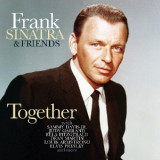
- Together
"This album is a superb collection of Frank and friends from a part of Frank’s career that’s long been underrated. Here, Sinatra scales the jazz summit with Louis Armstrong on “Birth Of The Blues” and does three electrifying collaborations with one of his favorites, Ella Fitzgerald. Ella’s voice is at her best in each. Rival Elvis Presley gets the Chairman’s respect on a wonderfully playful meeting-of-the-icons medley of “Witchcraft”/”Love Me Tender.” The tunes are bright and lively and many benefit from Nelson Riddle’s arranging genius. Frank and Dean are great, improvising and playing off one another as always. But wait until you hear “Together” in which Bing joins Dino and Frank for a happy, hilarious threesome.
- Whatever Makes You Happy
- Last Forever
Color Vinyl[10,04 €]
Patchwork Inc. is a multi genre music collective based in Chicago. Inspired by the intricate and repetitive patterns on a quilt, deep grooves are stitched together with vibrant threads of analog synths, fat bass, Fender Rhodes, and a plethora of percussion to form a uniquely personal piece of art. "Whatever Makes You Happy," comes on like one of those unseasonably warm days in late fall. Flute, synth, and congas flutter like a cool breeze before giving way to a sunny and sultry hook. North Carolina native Taylor Williams brings a D'angeloesque vocal to a Roy Ayers style instrumental resulting in a mosaic of neo-soul and jazz-funk. The record's flipside evokes more of an idyllic fall day. The kind of day where you can throw on your favorite jacket and endlessly stroll down a tree-lined path as amber leaves fall to the ground. Chicago journeyman and musical prodigy Wyatt Waddell effortlessly layers his voice over the backbeat of "Last Forever," resulting in a medium-fidelity banger that could be confused for a I Want You-era Marvin demo.
- Hello !
- Back 2 Ya
- This Is Me Now
- Care
- Animal
- Chew U Up
- Say Less !
- Losing Me
- This Love S Gonna Go Nowhere
- To Be A Man
- Good God You Ve Gotta Try !
"‘man oh man !’ is the sophomore 11 track album from indie singer-songwriter Martin Luke Brown.
Marking a significant new era in both his personal and musical life, Martin tackles a myriad of themes; self-awareness and personal growth, treasured friendships, swept-off-your-feet romance and gut wrenching heartbreak - all with a laidback, indie singer-songwriter sound that naturally shapes the album into three linear phases: the end of a relationship, new beginnings and the consequential feeling of accepting change.
Described by Martin as a ‘time capsule’, each track on the album was written and recorded in one day, making for a raw and honest snapshot of Martin’s life experiences at the time. Instrumentation is simple and recorded with producer and friend Matt Zara using almost exclusively analog technology – tape machines and vintage mics, a messiness that the duo embraced from the get go.
Martin has released over 100 songs as either a co-writer or a producer, with BTS, Dylan, Jacob Banks, Gavin James, Sam Tompkins,James Smith, Sody andJack Kane. He has also seen a wealth of success as part of pop supergroup FIZZ alongside Orla Gartland, dodie, and Greta Isaac, earning widespread praise from the likes of Rolling Stone UK, Dork, DIY, Clash & more."
Donizetti: Lieder Vol. 4 - Marie-Nicole Lemieux
Gaetano Donizetti – die meisten Musikbegeisterten verbinden seinen Namen mit italienischem Belcanto und Opern wie Der Liebestrank oder Maria Stuarda. Dabei verfasste der Komponist rund 200 Kunstlieder, viele von ihnen nur selten aufgeführt und nicht wenige sogar vollkommen unbekannt. Musikwissenschaftler Roger Parker und Carlo Rizzi, Künstlerischer Leiter von Opera Rara, machten es sich zur Aufgabe, Donizettis vollständiges Kunstlied-Œuvre in einer auf acht Alben angelegten Reihe zu veröffentlichen. Auf jedem Album singt ein anderer namhafter Interpret. Album Nr. 4 präsentiert die Sopranistin Marie-Nicole Lemieux, Gewinnerin des Liedpreises der renommierten Queen Elisabeth Competition.
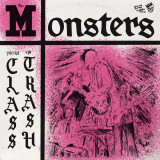
Dies ist die zweite Auflage von The Monsters "You're Class, I'm Trash", dem noch aktuellem Monsters-Album aus dem Jahre 2021 (erste Auflage war gelb und mit einer 7" Bonus-Single). Diese zweite Auflage hat ein neues pinkfarbendes Sleeve-Design, kommt als 180g Vinyl und mit einem zweiseitig bedrucktem Insert. HI-SPEED-BOOGIE-FUZZ-GARAGE-TRASH-ROCK-N-ROLL FROM LEGENDARY BERNESE GARAGE PUNKS PLAYED WITH A CHAINSAW-ON-STEEL 13 SPLATTER HITS INCLUDING SMALL HORROR OPERA BY SWISS FILM COMPOSER MARIO BATKOVIC The Monsters wurden 1986 in Bern der Schweiz gegründet, als Alternative zur damaligen populären Musik (z. B. Disco, Pop, Top 40 Rock). Sie nannten dies "Teenage Primitive Rock n' Roll Chainsaw Massacre Garage Trash Mix up Rockabilly mit Punkrock und Garage" und haben sich zu einer gefragten Garagen-Punkrockband gemausert, die auf Festivals, in Klubs und großen Hallen so weit gen Osten wie Japan, gen Süden wie Brasilien und gen Norden zu den Skandinavier resit und dort audspielt. Sogar im so Wilden Westen wie New York City in Amerika. Und dann öffnet 2020 die Türen, YAHOO!!! Die Welt wurde komplett abgeschottet und die Pläne aller änderten sich! Da es in naher Zukunft keine Tourneen gäbe, war es jetzt an der Zeit, ein neues Album zu machen. So widmete sich die Band zwei Wochen, um ihren Proberaum aufzuräumen und neue Musik zu schreiben, und 3 Tage im Berner Shirt Off Studio um diese aufzunehmen. Voila! Hier hast du Rosemary's Baby den Knüppel aus dem Sack: 13 raue, laute und spritzig klingende Tracks, die live ohne Overdubs (nur der Gesang/das Geschrei') aufgenommen wurden. Textlich ist das Album eine komplette Katastrophe mit nicht viel mehr als 120 Wörtern, welche aneinandergereiht meistenfalls keinen Sinn ergeben! Es ist eigentlich völliger Quatsch, aber THE MONSTERS lieben es! Das Cover stammt übrigens vom Berner Surrealisten Jerry Haenggli.
The second release on Between Stations (proceeding the «rst BETWEENTAPES release by DOOM TV), sees label head Cowper kicking off the «rst in the BETWEENEDITS series. Possessing atom-splitting heft at a tectonic pace, A1 writhes around on a French Kiss theme, tantalising FX swirls and thundering bass before sensual pads slowly begin to caress the central nervous system, taking us off into hypnotic revelry.
B1 grasps onto a swirling and mesmerising, opiated version of Larry Heard. A spine-tingling concoction of elements and drifting echoes transporting us to a blissful ocean, ebbing with the sonic currents in a suspended state of glee. B2 pulls on the space cord, bringing us back from our temporary drift with a slow and steady hand. This one lets the machines do the talking whilst we concentrate on keeping stable as the «nal remnants of euphoria are squeezed from our serotonin glands.
Named after a Kate Bush deep-cut, James And The Cold Gun are dubbed "South Wales' Loudest" group from Cardiff, Wales UK. Earlier this year, Loosegroove Records (a Seattle-based label owned by Stone Gossard (Pearl Jam) discovered the band on KEXP Seattle w/Kevin Cole and immediately signed them. Their most recent single Chewing Glass was met with rave reviews from NME, Apple Music's Rockstars of 2023 Predictions, a recent sync in Rookie:Feds on ABC, and dozens of DSP playlist features across Spotify, Amazon, Apple, Deezer, and more.
‘4th DIMENSION’ is the last and probably greatest album ever recorded by Italian piano Maestro Mario Rusca. This monumental music produc"on features tracks in Nonet, Quintet and Trio. Along with the faithful rhythm sec"on composed by Riccardo Fioravan" on bass and Maxx Furian on drums, on this slamming cinema"c jazz album Mario Rusca teamed up with two extraordinary wind players: legendary Flavio Boltro (of Michel Petrucciani Quintet fame) on trumpet and Gabriele Comeglio on sax alto.
As far as the choruses are concerned, Nicole4a Tiberini, Mar"na Rossi and Alice Macchi, from Maestro Rusca’s ensemble music courses at the Civica di Jazz School, provide inspired and swinging backing vocals. The cherry on the cake, the element that gives to ‘4th DIMENSION’ a pulsa"ng and swinging’ drive, is the par"cipa"on on the album of Marco Fadda, one of Italy’s leading percussion players.
This heterogeneous ensemble has shaped, during 5 days of intense studio recordings, an absolute masterpiece full of swinging rhythms along with a few magical in"mate moments. In his 65 years career, Italian piano legend Mario Rusca has shared the stage and recording studios with luminaries such as Chet Baker, Cur"s Fuller, Gerry Mulligan, Lou Donaldson, Art Farmer, Lee Konitz, Dusko Gojkovic, Enrico Rava, Tullio De Piscopo, Kenny Clarke, Stan Getz, Toots Thielemans, Gianni Basso, Pepper Adams, Steve Lacy and Tony Sco4 (with whom he formed an indissoluble partnership).
Being accompanied in this album by extraordinary musicians, Rusca chooses to flow in a repertoire that, like in his most recent records for Mono Jazz, bridges between original pieces and revisited standards from the American Jazz Songbook, approached with unprecedented sensi"vity and depth.
The journey of ‘4th DIMENSION’ is an extraordinary cinema"c musical voyage across various styles ranging from Bop, Hard Bop, Cool, Funk and La"n Jazz. ‘4th DIMENSION’ is a perfect follow up to the interna"onally acclaimed Easy Tempo legacy! In these 13 tracks, “il Maestro” embraces and enhances a ‘cinema"c’ component in his music - an a4ribute he has long cul"vated through original soundtracks and library albums recorded for diverse cult Italian labels.
This, as we were saying, is achieved through the addi"on of percussionist Marco Fadda, who introduces a series of rhythmic nuances across several tracks, and of the extraordinary female vocal trio reminiscent of I Cantori Moderni of Alessandro Alessandroni & Edda Dell'Orso, used in the tradi"on of Italian composers of ‘60s and ‘70s film music.
This natural progression reflects Italy's history, where jazz musicians have long been involved in soundtracks and film scoring since the late ‘50s. Italian jazz has integrated this approach into its composi"on and arranging styles, as demonstrated in the first 10 volumes of the Easy Tempo series. A spirit and tradi"on that Rusca's ‘4th DIMENSION’ record con"nues. Listening to some of the tracks on the record evokes the legendary works created for cinema by Piero Umiliani, Piero Piccioni, Lelio Lu4azzi, Armando Trovajoli, Gianni Ferrio and others.
In a trajectory full of about-faces, Music for Four Guitars splices the formal innovations of Bill Orcutt's software-based music into the lobe-frying, blown-out Fender hyperdrive of his most frenetic workouts with Corsano or Hoyos. And while the guitar tone here is resolutely treble-kicked—or, as Orcutt puts it, 'a bridge pickup rather than a neck pickup record'—it still wades the same melodic streams as his previous LPs (yet, as Heraclitus taught us, that stream is utterly different the second time around). Although it's a true left-field listen, Music for Four Guitars is bizarrely meditative, a Bill Orcutt Buddha Machine, a glimpse of the world of icy beauty haunting the latitudes high above the Delta (down where the climate suits your clothes)..."—Tom Carter
Second VHF solo LP from the Pelt/Black Twigs mainstay, following 2022’s acclaimed “Evening Measures.” “April is Passing” builds on the striking solo Hardanger-style fiddle performances on the previous LP to take the music even further out, with deep drones and extended techniques defining a vocabulary that is Americana-adjacent, but a unique and special sound that Mike is pursuing almost alone. Joined on selected tracks by Cara Gangloff’s Sruti and Kaily Shenker’s sonorous Cello, the all-original, all-live performances are resonant with both overt melody and a cloud of thick string overtones, whether on the more upbeat tunes like “Ironto Dancer” or the epic 11+ minute LP closer “Helen’s Song.” “September Air” is a mournful slow build, the fiddle embroidering a minor-key melody over the drone of the Surti box and a low cello counter point. “A Fallen Palace of Snowville” is a solo performance where the additional sympathetic strings of the hardanger fiddle are strongly heard as a ghostly accompaniment, as Mike’s elegant melody switches back and forth from minor to major. “Helen’s Song” closes side 2 with a complex, ever-changing swirl of melodic and harmonic invention, with Mike’s keening, languorous bowing leading the way through multiple moods and sounds.
As part of the 60th anniversary celebrations of iconic series Doctor Who, one of the show’s most renowned tales underwent an out of this world update as it received an artistic colourisation.
Originally transmitted in December 1963 to February 1964, The Daleks were introduced to audiences and soon became one of the Doctor’s most formidable and enduring foes.
The story follows the very first crew of the TARDIS as they land in a petrified forest on an alien planet. Determined to explore, the Doctor (William Hartnell) leads his
companions into the metal city, where they discover danger at every corner and what will become his deadliest enemy, the mutant Daleks.
These seven original 25-minute episodes have been colourised and weaved together into a 75-minute blockbuster.
With brand new sound, a brand-new soundtrack - created by Mark Ayres utilising elements of Tristram Cary’s original music with newly recorded score –
The Daleks has been updated, whilst ensuring the original classic story remains as thrilling as it was when it began in 1963.
Album features and was co-produced by Joseph Shabason. String arrangements by Owen Pallett. Thom Gill has written songs for Chaka Khan, in addition to contributing to albums by The Mountain Goats, Owen Pallett, Joseph Shabason, Bernice, and many others. Way Through is a collaborative album by Toronto musicians Chris Cummings, Joseph Shabason, and Thom Gill (as Cici Arthur). Inspired by moments of discovery in familiar places, the album's title reflects the feeling of uncovering hidden paths in life. Musically, it blends mid-century influences like Jobim and Sinatra, with producer-instrumentalists Shabason and Gill crafting lush, expansive soundscapes. Featuring a 30-piece orchestra led by Owen Pallett, the album brings a grand scale to Cummings' intimate, reflective lyrics. The project began in 2020 when Cummings lost his job and turned to full-time music for the first time in his life. His collaborators tailored the arrangements to showcase his understated vocal delivery against sweeping orchestral backdrops. Songs like 'Cartwheels for Coins' and 'Prior Times' explore themes of regret and emotional complexity, contrasting the grandeur of the music with Cummings' quiet introspection. Tracks like 'Damaged Goods' provide upbeat moments with doo-wop harmonies, while the cinematic closer 'No Fight Or Flight' emphasizes the filmic quality of the album. Through its orchestral richness and deeply personal lyrics, Way Through captures the tension between ambition and realism, offering a poignant reflection on life's unpredictable journey
A special ‘Submerge” 12” EP featuring a bunch of reworks of this pivotal track from Apta's forthcoming ‘The Pool’ album on Castles in Space.
Kicking things off, Apta's own rework of the original sees the shadowy textures and droning wall-of-sound backdrop turned into a static-strewn dreamland of a piece, underpinned by a flickering guitar riff, cracked snare drums and fuzzed-out Odyssey strokes before launching into the euphoric half-time vocal refrain.
The follow-up sees Clay Pipe boss, illustrator and musician step into her Hardy Tree guise for a beautifully hypnotic waft of wistful folk-tinged electronics and shimmering ambient textures. It's warmly nostalgic, and packed full of all the feel of a lovely Clay Pipe release.
Following on from that, modular wizard Polypores takes pieces of the original and stretches them into an organic swell of texture and movement, warping the low basses and flickering modular plinks (and / or plonks) into a beautiful, undulating wall.
Flip over and It's none other than the brilliant Pye Corner Audio, providing an organically blooming suite of saturated percussion and woozy drifting oscillators, in peak PCA fashion. There are few artists that can do as much as with little as Martin Jenkins can, and hearing his audio sunshine underpinning the vocal line is breathtaking.
It's good to get the ears nice and soothed too before the aural assault and hypnotic spirit-cleansing heft of the legendary Gnod. Dubby throbbing bass and cavernous reverb tear the original into shards and piece it together as a churning, industrial powerhouse before shooting the rest into the endless reaches of space.
Closing things out on a space theme is the ideal way to do things too, with Field Lines Cartographer's remix taking things waaay into the outer reaches. Grounding bass churns and stellar synth sweeps float below the modulated vocal line, resulting in a perfectly crafted drone, rich in melody but untethered to the earth.
Apple Cores is the latest full-length album from New York tenor saxophonist James Brandon Lewis, "one of the fiercest sounds in jazz today" (The Guardian) with a "penchant for unbound exploration" (Pitchfork). Informed by the rhythms and textures of hip-hop and funk while remaining rooted in jazz, Apple Cores was recorded with Chad Taylor (drums/mbira) and Josh Werner (bass/guitar) over the course of two intense, entirely improvised sessions. The album takes its name and intention from the column that poet and jazz theorist Amiri Baraka wrote for DownBeat in the 1960s. In addition to Baraka, the influence of another jazz giant looms mightily over Apple Cores: trumpeter and multi-instrumentalist, Don Cherry. In a testament to Cherry"s influence over the music that the trio is playing, Lewis designed each song title as a cryptogram of sorts, making subtle references to Cherry"s life and music. Apple Cores further cements Lewis as one of the provocative and prolific musical voices of his generation. It follows his breakthrough with JazzTimes" Album of the Year Jesup Wagon (2021), a dreamlike mosaic of gospel, folk-blues, and catcalling brass bands inspired by inventor George Washington Carver, and Eye Of I (2023), his joyous and exploratory debut for ANTI-.
Einige nannten Studio, das Projekt der schwedischen Musiker Dan Lissvik und Rasmus Hägg, "das fehlende Glied zwischen The Cure und Lindstrom", Pitchfork hörte Durutti Column und Can, als das Duo sich als Teil einer sich locker entwickelnden Szene entfaltete - zunächst neben dem Label Service (Jens Lekman, The Whitest Boy Alive) und später Sincerely Yours (The Tough Alliance, jj) - und den Boom der 2010er Jahre an der Schnittstelle von elektronischer und psychedelischer Musik, angeführt von Indie-Größen wie Caribou, Four Tet und Darkside, vorwegnahm. "West Coast, ihr bahnbrechendes Debüt aus dem Jahr 2006, fängt eine ferne Romantik der Balearen ein, die auf Krautrock, Disco, Dub und Afrobeat trifft, mit Pop-Lyrik aus dem New Wave, modernisiert von zwei Göteborger Kunsthochschulabsolventen. Sie zitieren DJ Screw, J Dilla und Joy Division sowie fühe 80s Live-DJ-Sets von Beppe Loda, DJ Mozart und Baldelli. Damals auf Vinyl gepresst in limitierter Auflage über ihr eigenes Information-Label und bis heute auf den meisten Streaming-Diensten nicht zu finden. Im Nachglühen des Albums im Jahr 2007 verschwanden Studio hinter einem Berg von Remix-Anfragen (darunter ein Remix für Kylie Minogue, der veröffentlicht wurde) und der Bürokratie des Labels. Eine erweiterte Version des Albums erschien unter dem Titel "Yearbook 1" auf CD und erreichte Platz 23 der Pitchfork-Jahresliste der Top-Alben des Jahres 2007. "West Coast" landete schließlich auf Platz 57 auf der "Best Albums of the Decade"-Liste von FACT Magazine.
Tradition shapes your work. For saxophonist and bandleader Shabaka Hutchings, that's something he's long understood. After years spent in the orbit of London's jazz circuit, he examines and reimagines his influences with a dexterity that's unique. Drawing out the vision underlying his new album, he says, I see energy as being a form of wisdom to be passed down through the ages.'
Unpicking the album's title, he continues, "When we study the music, the lives, the words of our master musicians we obtain a glimpse of that artist's essential energy source. This is the core vitality of the individual which leads them to utilise the musical specifics of their chosen genre in a way that mirrors their inner source of power. This is an intuited wisdom that's handed to us from the legacies of our elders.
The album is a document of sessions combining Hutchings with a group of South African jazz musicians he's long admired. His connection to the group was Mandla Mlangeni (bandleader of the Amandla Freedom Ensemble), whom he'd flown there to play with over the past few years. Recorded across just one day, the group drew on their South African lineage - heroes like Zim Ngquwana and Bheki Mseleku - to bring their own slant to the American jazz lineage which is reconfigured in Hutchings' compositions themselves.
Going beyond the jazz greats Hutchings cites, influences are drawn from plenty of other sources: Caribbean calypso, central African song structures and Southern African Nguni music all play a part. Bringing together those ideas with the contributions of his bandmates is, he explains, crucial to what he sees in the role of an album artist. Even though I wrote all the music, for me, the leader of the project isn't the person who writes all the music but the one who has a vision for how certain musical elements will be combined."
A regular sight on stages around London and beyond, playing - and often leading - groups like The Comet Is Coming, Sons of Kemet and Melt Yourself Down, he's part of a generation whose idea of jazz is pointedly unrefined. That's to say, Wisdom of the Elders comes from an artist interested in the indefinable gaps more than fitting into boxes.