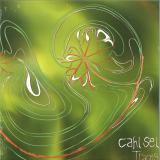
Reflective Records releases Cahl Sel’s first full-length album, “Traces”. While rooted in beat-driven production, this 2xLP unfolds as a more introspective work, weaving between techno and ambient compositions, a style typically reserved for his hardware-based live sets. Now distilled in the studio, these recordings display refinement of delivery, checking into the ambient-techno stratosphere and resonating in the deep recesses of the chillout zone.
Search:le
C.A.R. (Choosing Acronyms Randomly) is the musical project of Chloé Raunet, a Canadian-born, London-based artist known for her icy synths, warm vocals, and left-field pop sensibility. Drawing from post-punk, electro, and experimental songwriting, she creates music that’s both emotionally charged and sonically adventurous.
Following a five-year hiatus, C.A.R. returns with Shyana, the first single from her long-awaited fourth album, Dance at Oscar’s. Produced by Nathan Ridley, the release marks a creative rebirth: a new label, a new live formation with Joni Green, and a sound pulsing with revitalised energy. After a pandemic-induced break to focus on filmmaking — and a period of burnout and disillusionment — Raunet was ready to walk away from music altogether. But a pair of carried-over festival dates and an impromptu onstage reunion with longtime friend Joni Green unexpectedly reignited the spark. What was meant to be a farewell became the start of something new.
Shyana is a shimmering slice of machine-funk — a warped and groovy tribute to Paul Anka, filtered through C.A.R.’s surreal pop lens. A meditation on teen hysteria, pop manufacture, and the strange alchemy of early fame, the track pulses with wonky elegance and strutting confidence. One of the most playful cuts from Dance at Oscar’s, it showcases Nathan Ridley’s tight, swaggering production while capturing the album’s embrace of movement, humour, and the weirdness of cultural nostalgia.
On the B-side, Cecilia Road offers a more reflective counterpoint — a nostalgic, synth-drenched ballad built around a call-and-response vocal, throbbing melodies, and emotional tension. Intimate yet expansive, it hints at vulnerability without losing the pulse.
Artwork by Chloé Raunet, Craig Richards and Oliver Hupfau.
With their musical roots deeply immersed in the fertile soil of Afro-American music, the Buttshakers have found a new direction for their nostalgia-heavy soul music. With Lessons In Love, their third album on Underdog Records, their early heartaches and furies have faded in favor of a more composed harmony – a sound enveloped in love and soaked in the blues. Guided by their singer Ciara Thompson, the Buttshakers have taken a more intimate path, whose compass, in the chaos of emotions and the modern world, points only in one direction: the light.
Seen from the sky, the view appears limitless. Accentuated by the sun, the ochre and sandy hues of the open road only reinforce this feeling of immensity. The sky stretches and the green stands out in striking contrast. In lighter tones, a road is drawn -- without bends or contours. This is the worn and weary road of soul music, which The Buttshakers explore on each album in new and unique ways. Soul music – a rare place to find a French band.
Vast, the musical direction could have taken them to lighter pastures. Yet the Buttshakers chose to evolve in a different way; to take a heavier load. Two paths – one sparked by social unrest, the other purely sentimental, Lessons In Love explores the deep roots of soul music, in the steps of Curtis Mayfield or Al Green. It is here that the heart and mind cross paths, merge, and become one. A weary road -- that brings together the agitation of a world where good intentions never rise above the level of digital outrage, and a faith in love which, however it manifests and expresses itself, remains the only truth that never loses its power.
Less rage and more compassion, it is through the haunting words and now tempered inflection of Ciara Thompson's voice, which opens to distinct emotions and perspectives, that the listener is guided. With its gaze fixed on the horizon, the acoustic guitar of Gotta Believe invites us on an intimate stroll through the open plains, while Dream On carries us away with a clavinet riff and a possessed saxophone; reconnecting the electric heat and neurosis of a city full of dreams. The senses are moved by the conjuring potion of the guitar which distills throughout Troubled Waters; the body is brought back into a visceral dance by the keys and brass section that are put to the test by Sure As Sin and its irrepressible rhythm. Passing through clouds of dust and sand has left a bluesy imprint on their groove: the miles travelled became hundreds, then thousands.
All of this leaves the listener bewitched by the halo of resilience that now surrounds Ciara's performance, as the ten tracks let the light fade. But certainly not hope in a better day. Like the sunflower that always lifts its head towards the sun’s rays, the Buttshakers continue to resource their sounds in the deep roots of soul music. Into the rich layers of African-American music of the 60s and 70s, The Buttshakers capture the spirit as much as the musical aesthetics of the epoch. A sound that reaches into the meanderings of the soul, bringing light to dark places and hope for all. A sound for the most parched of hearts, living in a damaged world, Lessons In Love confirms that even the tiniest beam of light can illuminate one’s path.
Platipus 30 Years – Volume 7 is finally set to drop, continuing the acclaimed anniversary vinyl series that celebrates the legacy of one of the UK’s most iconic electronic music labels. This latest edition brings together a collection of timeless and highly sought-after tracks from the legendary Platipus catalogue, including Union Jack’s unforgettable “Red Herring” (Original Mix), Art of Trance’s hypnotic “Kaleidoscope” (Oliver Lieb Remix), Simon Berry’s powerful “Maelström” (Torsten Fassbender Remix), and Moogwai’s classic “5 Wishes” (Original Mix). A must-have for collectors and fans alike, Volume 7 delivers a perfect blend of history and timeless trance energy.
Anfang 2021 standen die Bandmitglieder von Lankum hoch über Dublin, den Winden der irischen Ostküste zugewandt, mit einem wundervollen Blick auf die Stadt, in der sie über 10 Jahre lang gemeinsam Musik gemacht hatten und dennoch spürten sie ein Gefühl der Unverbundenheit. Sie hatten die Stadt noch nie aus diesem Blickwinkel betrachtet, da sie immer fest in ihr verwurzelt waren und die Schönheit von Dublin immer aus dem Blickwinkel ihres Alltags sahen. Der kleine Perspektivwechsel half der Band bei den Aufnahmen in den Hellfire-Studios, wo sie nach der langen Stille der Pandemie begierig mit den Aufnahmen zu ihrem vierten Studioalbum "False Lankum" begannen. Wer jemals bei einem Lankum-Gig war, kennt die Energie, die diese Band erzeugen kann. Der unverwechselbare Drone-Sound, der sich durch ihre Arbeit zieht, wie bei ihren bekanntesten Stücken "The Wild Rover" (von "The Livelong Day", 2019) und "What Will We Do When We Have No Money" ("Between the Earth and Sky", 2017) hat die Kraft, einem den Boden unter den Füssen wegzuziehen und erzeugt dabei einen einmaligen Klang. "The Livelong Day" war das Album, mit dem Lankum aus der Schublade der "irisch traditionellen" oder "Folk"-Musik herausbrachen. Es ebnete ihnen den Weg zu medialem wie kommerziellem Erfolg, der ihnen 2019 den RTE Choice Music Prize einbrachte und dazu führte, dass sich ihre Shows in der traditionsreichen Konzerthalle Vicar Street in Dublin in nur 20 Minuten ausverkauften. Die neue Musik bringt auch neue Stimmen und so ist es das erste Mal, dass Cormac Dermody einen kompletten Song auf einem Lankum-Album singt. In Kombination mit seiner besonderen Tonlage erzeugt er eine poetische Kraft, die den Sound von Lankum bereichert. Mit "False Lankum" bewegt sich die Bands ins Unbekannte, ein Album getrieben von der wilden und oftmals seltsamen Schönheit des Schmerzes und der Freude, von Himmel und Hölle. Es ist gleichermaßen ein Album der Widersprüche und des Einklangs und sicherlich eine der spannendsten Produktionen, die in letzter Zeit aus Irland kamen. Nur wer mutig wagt, wird Herzen gewinnen - "False Lankum" ist der Schlüssel dazu.
Original released in 1961
It's been over 60 years since the original recording, and now, this classic masterpiece is back in a monaural version with fantastic sound.
Hideo Shiraki, a key figure in Japanese jazz, left his mark with unique music and a strong presence. One of his standout works is "Matsuri no Gensou," recorded in 1961. This incredible piece takes a Japanese melody and transforms it into a cool jazz style, using a special arrangement with the koto. The collection also features exciting tracks like "Just One Or Eight" and the dynamic "Cherokee" with an amazing solo. Contributions from experts like Hidehiko Matsumoto and Yuzuru Sera add to the greatness. Even after 60 years, the music still feels fresh and passionate. Now reissued in monaural for the first time, this work stands as a timeless masterpiece that continues to captivate audiences worldwide. Enjoy the overwhelming sound of this significant piece in Japanese jazz history.
- A1: Tous Les Garçons Et Les Filles
- A2: Ça A Raté
- A3: La Fille Avec Toi
- A4: Oh Oh Chéri
- A5: Le Temps De L'amour
- A6: Il Est Tout Pour Moi
- A7: Quelli Della Mia Età
- A8: L'età Dell'amore Side
- B1: On Se Plait
- B2: Ton Meilleur Ami
- B3: J'ai Jeté Mon Coeur
- B4: Il Est Parti Un Jour
- B5: J'suis D'accord
- B6: C'est A L'amour Auquel Je Pense
- B7: Ci Stó
- B8: E All'amore Che Penso
One of the most popular French TV extracts of all time is the black and white image of a young and extremely nervous-looking Françoise Hardy being given a firm dressing-down by Mireille Hartush (the famous music teacher who ran La Petite Conservatoire de la Chanson in the 1960s). Presented here is her debut studio album Françoise Hardy (issued as The Yeh-Yeh Girl from Paris! in the USA). It was released in France in December 1962 by Disques Vogue with the catalogue number LD 600-30. Originally issued with no title, except for her name on the cover, the album has therefore colloquially become known by the title of its most successful song, Tous les garçons et les filles, and later reissues added this title. This sensational album compiles the twelve original French versions from her first three EPs released by Vogue during 1962. Hardy would also record versions of songs from the album in Italian (1962, four tracks released on singles have been added here as a bonus), English (1964) and German (1965). The iconic LP combines rockabilly, folk, jazz and blues, and has been noted for its simplicity, featuring a minimalist jazz percussion, bass, and both acoustic and electric guitar. 180 GRAM - GATEFOLD COVER - LIMITED EDITION
The sixth release on Les Enfants Records marks a collaboration between two established names in the house music landscape: Djebali and Miroloja.
The record opens with "Vista", a track built around crisp percussion and a steady, evolving groove. On A2, Voigtmann delivers a remix that reinterprets the original with a tighter, more angular approach, adding a new dimension while respecting its core energy.
On the B-side, "Dance With Me" brings a warm, dynamic flow aimed at the dancefloor, followed by "Leather", a deep, percussive closer with weight and restraint.
A solid addition to the Les Enfants catalogue.
This single gets together two rare and important tracks from legendary producer Lee “Scratch” Perry with singer Neville Grant.
SICK AND TIRED, the great vocal version of RETURN OF THE DJANGO, was released in 1973 on Downtown (DT.509) whilst
BLACK MAN’S TIME was released in 1972 on the Upsetter label.
These two outstanding tracks are in our opinion the best of Neville Grant’s recordings and among Lee Perry’s very best productions of this era.
As such, they were featured on several top compilations but are both quite rare as singles and highly collectable today…
SCALER are the electrifying Bristol-based band hailed as the city’s “next national breakthrough” thanks to their pulverising live show and meticulous, mind-warping sound. Now they’re back with ‘Endlessly’, a sublime and stylistically expansive new album. 10 potent tracks written and recorded more collaboratively than ever before, as SCALER explore what it means to make music with no ceiling.
Building on what they know and taking it in new directions has been a constant throughout the three-year journey behind ‘Endlessly’, which came together in the studio beneath Bristol’s legendary The Louisiana. Inspired by time apart, the album finds them reconnecting with their diverse sonic touchpoints – many tangled in their city’s much-mused-on musical heritage – and the creative energy of collaborators around them. Close friends and long-admired peers, including Akiko Haruna, Art School Girlfriend, Tlya X An, Shadow Stevie, Thomas Ridley and Cold Light’s ELDON add colour to SCALER’s darkened palette and point to the left-turns they’re leaning into. The intense softens into introspection. The blistering becomes a balm.
‘Endlessly’ is the second album from SCALER, a.k.a. Alex Hill, Isaac Jones, James Rushforth and Nick Berthoud, alongside visual artist Jason Baker. The record follows 2022’s acclaimed ‘Void’ and marks their debut for Bristol’s revered Black Acre, a longtime champion of genre-defying electronic music.
At daybreak, as sunlight travels through the atmosphere and begins to reach Earth’s surface, daylight gradually emerges. This marks the transition from night to the beginning of a brand-new day. As the temperature rises—especially after clear, calm nights—relative humidity decreases, and mist, formed of tiny suspended droplets, begins to evaporate. Warm air rises and cool air sinks, creating an interplay of temperature, humidity and sunlight that gives way to a soft, diffuse glow. The sea breeze slowly clears the morning mist, setting life in motion once again as the world wakes up.
‘Daybreak’ is Sven Wunder’s fifth full-length album, seamlessly continuing the progression of his musical oeuvre. It takes the listener on a vivid maritime expedition, beginning the moment the first rays of light break the darkness of the night and embarking on a lush journey through the early hours of the day and far beyond, until the light slowly fades and night falls once again. True to Wunder’s now-distinctive artistry, ‘Daybreak’ is marked by elaborately crafted compositions and elegant pop-jazz arrangements for flute, percussion, brass and strings—supported by a decisive rhythm section, all of which add depth and build on his body of work, continuing to unfold his creative path.
- A1: Tafese Tesfaye - The Dove &Amp; The Pigeon
- A2: Yetemwork Mulat - Heathen &Amp; Earth
- A3: Alemu Aga - The World Is But A Place Of Survival
- B1: Sosena Gebre Eyesus - Save Us From Our Death
- B2: Abiy Seyoum - The Last Judgement
- B3: Tafese Tesfaye - You Who Take Good Care Of Me
- C1: Sosena Gebre Eyesus - When I Say Your Name
- C2: Akalu Yossef - Who Can Doubt
- C3: Abiy Seyoum - We Are All Mortals
- D1: Yetemwork Mulat - The Second Coming Of Christ
- D2: Akalu Yossef - Our Father
- D3: Alemu Aga - Song Of Praise Played With A Plectrum
Cassette[16,18 €]
The begena is a large ten-stringed lyre which is part of the traditional Amharic heritage of Ethiopia. The Amharas, who have long formed the politically and culturally dominant people of Ethiopia, mainly inhabit the central and northern part of the country. In the majority, they follow the monophysite Orthodox Tewahido Church established in the early fourth century AD.
Music plays a very important part in the life of the church. Most of the liturgy is sung and, contrary to secular music, it is accompanied by percussion instruments only. The begena occupies a special place because it is the one melodic instrument exclusively dedicated to the spiritual repertory. Because of its mythical origin, it is highly respected. Tradition holds that the begena was given to king David by God, and brought to Ethiopia by Menelik I, together with the Ark of the Covenant. It has always been the instrument of kings and nobles. Played by pious men and women of letters, it never became widespread. But it never disappeared either, not even under the Derg regime (1974-1991) which had banned the instrument.
Among Amhara string instruments, the begena is the most carefully crafted, especially with regard to the ornately sculpted crossbar. Its ten gut strings are cleaned and twisted several times. The characteristic buzzing timbre equalled by no other Amhara instrument is due to the enzirotch, that is, small bits of leather placed between each string and the bridge. This plays an important part in the sound production by creating a brief contact between the string and the upper rim of the bridge, thus modifying the vibrating properties of the string. In this manner, the spectrum of the sound is considerably enhanced (up to over 10 kHz).
The begena is a very powerful instrument, it keeps the devil thirty steps away, and its presence in the home wards off malicious spirits. Priests and preachers recommend its presence, especially during Lent (Fassika Tsom) when the Orthodox Amharas ponder their sins and repent. Because of its spiritual import, the begena generates intense emotion. According to some musicians, playing the begena brings them into direct contact with God or the Virgin Mary. The religious role of the begena is underscored by the shape of the instrument, each part symbolises an important element of the faith. The crossbar for instance, which reaches across the entire width of the instrument, represents God who is above all things. The belly which "gives birth" to the sound represents the Virgin Mary, and the ten strings recall the Ten Commandments.
Recorded by Stéphanie Weisser in Addis Ababa, Ethiopia, March 2002-December 2005.
Mastered by Renaud Millet-Lacombe.
Issued under license from VDE-Gallo, Switzerland.
Slippery1 caused quite the ruckus on the floor and here, arch slippery customer Harri Pierson returns, along with some equally slick sidekicks...
So, four more eclectic, leftfield dance chops for your turntables.
Assembled with care and an eye for the esoteric - one limited press. This 12" has been mastered with love by the Grammy award-winning Frank at the Carvery for maximum dancefloor punch.
VINYL ONLY !
Unleash the groove with this rare jam – a Street Funk remix of a legendary track from one of hip-hop’s most iconic voices and his powerhouse Flipmode Squad. Known for delivering countless hits and unforgettable anthems, this collective has once again blessed the decks with something truly special. Previously unreleased on 7” vinyl, this DJ-friendly edit is a treasure for any serious DJ and collector.
The pressing quality is simply mesmerizing, built with clubs and dancefloors in mind. From bouncing beats to fluid basslines, from uplifting keyboard chords to soulful vocals and razor-sharp rap verses – it’s got all the ingredients of a certified smash. Whether you're setting the tone or saving a set, this 7” is a go-to weapon for DJs worldwide. There’s not a problem this squad can’t fix and for sure this 7” will save a DJs life every night…
Eddie shows up to this game alone, wielding, as ever, a deft and unbeatable trigger finger on the sampler...
Reprising those beloved 7 Inches Of Pleasure and early Red Motorbike vibes on some deadly Madlib style downtempo cuts, and quick Cut 'n Paste workouts
LJ Simon, who collaborated on those killer recent Sandy B releases lends a hand too, it's a joyous Disco-House affair that reminds us of those old Tony Senghore jams from the 90's
Fruitful and fully juiced up joints for the Disko Universal !
For its sixth release, Rio de Janeiro’s Onda Boa label sees founder Joutro Mundo, step up once again - this time reviving and re-vibing Netinho’s independent 1980s bop, “Du Du Du Domingo”.
Netinho first made his mark in the 1960s as the drummer for Brazilian beat icons Os Incríveis, then again in the 1970s with the heavier, lysergic sounds of Casa das Máquinas. By the 1980s, he had turned toward a new vision, inspired by the spiritual group Amor e Caridade. Released on his own imprint, Manancial do Amor, 1982’s Apartamento 97 – Projeto Amor & Caridade Vol. 2 brought together heavyweights Zé Rodrix, Faísca, and Manito to expand on this funky, pop-rock chapter first introduced with 1980’s Amor & Caridade Vol. 1.
According to Netinho, a year passed in search of inspiration for the follow-up LP before he began receiving notes and poems through his medium, dictated to her by his “protector.” Following that divine intervention, the album’s songs were completed in just two days—including the standout track, “Du Du Du Domingo,” an ode to the beauty of a Sunday afternoon after the toils of the workweek.
Side A presents the original track, lovingly remastered, in all its stripped-down, idiosyncratic glory. A bubbling synth bass paired with a nimble electric bass line set the stage for the plunky synth melody that defines this anomalous yet infectious gem—before giving way to a samba break and a wafting crowd noise that instantly transports you to a sunny Sunday by the sea.
On the B-side, Joutro Mundo injects a new vitality into the track with crisp hi-hats, a thumping kick, and other subtle studio magic. The samba break is brought forward, while the electric bass line—previously bubbling beneath the surface—rises to center stage around the three-minute mark. True to form, Joutro Mundo avoids the obvious, drawing on his deep crates and production sorcery to conjure up yet another gem for the balearic heads and other lovers of left-field dancefloor deviance.