Blue Valentine Vinyl. Sometime in 2005, a lone box of master tapes escaped an estate sale and made its way through a network of collectors, record dealers, and "junkers" into the hands of leading Ohio soul expert Dante Carfagna, who linked them to Columbus, Ohio's mysterious Prix label (See: Eccentric Soul: The Prix Label). A bit of research turned up Prix proprietor George Beter, who identified most of the unlabeled material. All it took was an endless series of phone calls and letters and two fields trips in Columbus. But one complete mystery wended its way onto our final Prix compilation. "You and Me," a simple but irrepressible demo credited only to Penny & the Quarters, was found tacked onto a mixed studio reel. Our survey of every willing lifer left on the Columbus soul scene, including retired DJs, producers, and important local artists, produced not so much as a glimmer of recognition at the name Penny & the Quarters. Though we loved the song from the first play, it may've ended up a bit buried on our original compilation, as #18 of 19 tracks.Four years later, Eccentric Soul: The Prix Label hadn't exactly become a huge seller, although listeners had repeatedly told us that the unfiltered studio demos that fill out the record's back half were true diamonds in the rough. But neither Penny nor her Quarters had appeared to claim credit for their efforts. Then, completely out of left field, we heard from respected screen actor and avowed Numero fan Ryan Gosling that Penny's piercing bit of stripped down doo-wop was being considered for inclusion in Derek Cianfrance's indie-weeper film Blue Valentine. What we didn't know was that "You and Me" had won a major role in what became an indie circuit hit, and that Penny & the Quarters would instantly assume the role of world's most famous unknown doo-wop group.Every week is a slow news week in Columbus, Ohio, and early January 2011 found the city recovering from the thrill of elevating Ted Williams_the formerly homeless guy with the awesome voice for radio_into a national news sensation. But both major daily newspapers in town, as well as the city's alternative weekly, also ran stories about how a lost and unknown Columbus soul group had become the musical centerpiece of a film already garnering Oscar buzz. That mainstream spotlight aimed at Blue Valentine and Penny & the Quarters did the trick: we finally made contact with the widow of Jay Robinson, lead Quarters' singer and songwriter. Robinson, it turned out, had also been the leader of Columbus doo-wop pioneers The Supremes (later known as "The Columbus Supremes," for reasons which should be obvious). Jay Robinson never did give up on the dream of writing a hit record; even so, the posthumous realization of his dream is cold comfort for his widow and daughter. With their blessings, we returned to those estate sale masters and pulled down another neglected track ("You Are Giving Me Some Other Love") from the still-unknown Penny and her now-partly-known Quarters. "You and Me" is a song that could not be suppressed: not when Prix failed to release it; not when Penny & the Quarters were forgotten; not when Numero stuck it at the bitter end of a much overlooked compilation. Its evolution from estate sale trash to silver-screen gold has finally returned it to big-hole 45, where it probably should have lived all along.
quête:leader of down
Recorded at A & R Studios in New York City on July 1, 1970, Pharoah Sanders' album Deaf Dumb Blind (in Arabic "Summun Bukmun Umyun"), was released on Impulse! Records that same year. It features the leader along with fellow stars Woody Shaw, Gary Bartz and Lonnie Liston Smith.
The album received a **** rating on AllMusic, with reviewer Thom Jurek stating that this is "a stunningly beautiful and contemplative work that showcases how intrinsic melodic phrasing and drones were to Sanders at the time. This album is a joyful noise made in the direction of the divine, and we can feel it through the speakers, down in the place that scares us."
- A1: Mona Lisa
- A2: Let There Be Love
- A3: Got A Penny
- A4: When I Fall In Love
- A5: Love Letters
- A6: Too Young
- B1: Unforgettable
- B2: It's All In The Game
- B3: Sweet Lorraine
- B4: For All We Know
- B5: To The Ends Of The Earth
- B6: Ramblin' Rose
- C1: Let's Face The Music And Dance
- C2: I'm Gonna Sit Right Down And Write Myself A Letter
- C3: Love Me As Though There Were No Tomorrow
- C4: Get Your Kicks On Route 66
- C5: Tenderly
- C6: These Foolish Things (Remind Me Of You)
- C7: Ain't Misbehavin
- D1: The Very Thought Of You
- D2: Papa Loves Mambo
- D3: The More I See You
- D4: At Last
- D5: When Sunny Gets Blue
- D6: Those Lazy Hazy Crazy Days Of Summer
Nat King Cole was born Nathaniel Adams on the 17th March 1917 in Montgomery, Alabama, USA. His family held a key position in the local black community with his father being pastor of the local Baptist church.
His first professional break came touring with the Broadway show “shuffle along” which eventually found its way to Los Angeles. Where Nat ended up playing at the century club on Santa Monica boulevard. This was an in-place for musicians and Nat’s already developed and incredible piano playing became a great attraction eventually forming a trio with Oscar Moore on guitar and Wesley Price on bass. With Nat’s great voice and add libs the trio were a great success in 1939/40.
In 1943 Cole signed to the infant Capitol records and began his enormous string of hits for that label and eventual amazing career partnership with the great arranger and orchestra leader Nelson Riddle. This was at the time of popular music already pioneered by Bing Crosby and latterly Frank Sinatra and something Nat would become a master of, with his by now incredible, highly developed and unique voice which we all instantly recognise.
Right up until his untimely and tragic death on 15th February 1965, Nat made a string of successful records for capitol, a string of film appearances, and the first black presenter of his own tv show, which ran for many years and introduced a whole host of new and old artists to the television screens. As is so often with people so talented, Nat’s life was short but extremely successful. He was a well loved and admired person with his vibrant and kind personality with many great friends and colleagues and made an enormous contribution to the music industry, civil rights and the world in general.
As a singer and pianist, he was exceptionally talented, and his voice will live on in immortality. His ability to express and sing any song was quite extraordinary to say the least and these recordings are a fine example of that ability. A must have for all music lovers!
Red[23,95 €]
Knox Chandler’s career has spanned for over four decades, including performing, recording, arranging and producing, with such acts as REM, Depeche Mode, Grace Jones, Marianne Faithful, Natalie Merchant, Tricky, The Creatures, Dave Gahan Paper Monsters and The Golden Palominos etc. His long stints as a member of The Psychedelic Furs, Siouxsie and the Banshees and Cyndi Lauper’s band; has given Knox the experience of a worldwide recording and touring musician. For the past ten years Knox was residing in Berlin Germany, deepening his exploration of sonic soundscapes (Sound Ribbons), and applying it to different genres and mediums.
Bobby Previte is a drummer, composer and bandleader whose work explores the nexus between notated and improvised music. One of the seminal figures of the 1980s New York ‘Downtown’ scene, Previte has received multiple awards for music composition including the 2015 Greenfield Prize for Music and a 2012 Guggenheim Fellowship. His original compositions have been recorded and released on Sony, Elektra, Rykodisc, New World, Cantaloupe and Rarenoise. Leading a plethora of diverse ensembles from the drums, he has collaborated with an array of leading lights in and beyond the music world, including master composer John Adams, pianist Terry Adams of NRBQ, pantheon filmmaker Robert Altman, fellow Doom Jazzer Jamie Saft (recording released by Subsound), country music star Jessi Colter, blues great Johnny Copeland, composer and visionary Lukas Foss, computer music pioneer Lejaren Hiller, seven-string guitar wizard Charlie Hunter, re-discovered genius Julius Eastman, Rock author and ambassador Lenny Kaye, Lounge Lizards leader John Lurie, jazz/noise shredder Sonny Sharrock, folk hero Victoria Williams, maestro Michael Tilson-Thomas, the legendary Tom Waits, and, most recently, rock icon Iggy Pop.
Black[20,38 €]
Knox Chandler’s career has spanned for over four decades, including performing, recording, arranging and producing, with such acts as REM, Depeche Mode, Grace Jones, Marianne Faithful, Natalie Merchant, Tricky, The Creatures, Dave Gahan Paper Monsters and The Golden Palominos etc. His long stints as a member of The Psychedelic Furs, Siouxsie and the Banshees and Cyndi Lauper’s band; has given Knox the experience of a worldwide recording and touring musician. For the past ten years Knox was residing in Berlin Germany, deepening his exploration of sonic soundscapes (Sound Ribbons), and applying it to different genres and mediums.
Bobby Previte is a drummer, composer and bandleader whose work explores the nexus between notated and improvised music. One of the seminal figures of the 1980s New York ‘Downtown’ scene, Previte has received multiple awards for music composition including the 2015 Greenfield Prize for Music and a 2012 Guggenheim Fellowship. His original compositions have been recorded and released on Sony, Elektra, Rykodisc, New World, Cantaloupe and Rarenoise. Leading a plethora of diverse ensembles from the drums, he has collaborated with an array of leading lights in and beyond the music world, including master composer John Adams, pianist Terry Adams of NRBQ, pantheon filmmaker Robert Altman, fellow Doom Jazzer Jamie Saft (recording released by Subsound), country music star Jessi Colter, blues great Johnny Copeland, composer and visionary Lukas Foss, computer music pioneer Lejaren Hiller, seven-string guitar wizard Charlie Hunter, re-discovered genius Julius Eastman, Rock author and ambassador Lenny Kaye, Lounge Lizards leader John Lurie, jazz/noise shredder Sonny Sharrock, folk hero Victoria Williams, maestro Michael Tilson-Thomas, the legendary Tom Waits, and, most recently, rock icon Iggy Pop.
- A1: El León
- A2: Don't Mention It (Feat. Sadat X)
- A3: Lion Vs Panther
- A4: Hunting Methods
- A5: Melana Dorada (Feat. Rlx)
- A6: Fumemos
- B1: Camino Solitario
- B2: Vida Mantequilla
- B3: Paw Prints In The Sand
- B4: Quanto Te Quiero
- B5: Bulevar
Prepare to embark on a sonic odyssey as CRIMEAPPLE and PRESERVATION unveil the inaugural chapter of their groundbreaking trilogy with "EL LEÓN”. The album's title, a nod to the undisputed king of the jungle, serves as a meta-phorical beacon for the unyielding hunger that the lyrical predator has always shown.
On this audio hunting expedition, CRIMEAPPLE, the lyrical monarch, roars with an intensity that mirrors the lion's fe-rocity over a wild musical tapestry provided by PRESERVATION, with each track being a testament to the insatiable appetite and predatory instincts needed to navigate the wilderness of today’s music industry, a game that both artists have never bowed down to but always dominated from the outside in.
CRIMEAPPLE has always proven to be a leader of the pride, with the non-stop grind he’s been putting into his MAN-TECA imprint and with legendary collaborations with producers such as DJ Muggs and DJ Skizz carving his name as one of the prominent stars in the game today.
On the production side, PRESERVATION’s musical journey, whether with long-time collaborator Yasiin Bey (fka Mos Def), or as one half of Dr. Yen Lo with Brooklyn emcee Ka, or through legendary collaborations with the likes of billy woods, MF DOOM, Roc Marci, RZA, Sean Price, Raekwon and countless others, have made him an iconic name in musical alchemy.
As the trilogy begins, "EL LEÓN" stands as the beginning of a new hunting season for the two, where CRIMEAPPLE and PRESERVATION are sure to transcend boundaries and reign supreme.
Wunderhorse is the alias of British musician Jacob Slater Jacob fronted The Dead Pretties, a London band who arrived in a haze of hedonism and hype, bowing out before the dust had time to settle. Blink and you'd have missed them. Time- stamped yet timeless. If there's any justice, he'll soon be played out live in sticky basement rooms up and down the country, limbs everywhere, sweat dripping from the walls. An absolute mess, but what a beautiful one.
"This is the time that we, who have benefitted from the Last Poets shouldbe able to say, 'it's the Last Poets. It's them we should be honouring, because we did not honour them for so many years_"
KRS One wasn't just addressing the hip hop fraternity when he uttered
those words by way of introducing the video for Invocation - a poem
written thirty years ago, around the time of the Last Poets' last significant comeback. He was speaking to everyone who's been affected by the word, sound and power issuing from the most revolutionary poetry ever witnessed, and that the Last Poets had introduced to the world outside of Harlem at the dawn of the seventies.
In 2018 the two remaining Last Poets, Abiodun Oyewole and Umar Bin
Hassan, embarked on another memorable return with an album -
Understand What Black Is - that earned favourable comparison with theirseminal works of the past, whilst showcasing their undimmed passion andlyrical brilliance in an entirely new setting - that of reggae music. Trackslike Rain Of Terror ("America is a terrorist") and How Many Bullets demonstrated that they'd lost none of their fire or anger, and their essential raison d'etre remained the same.
"The Last Poets' mission was to pull the people out of the rubble o f their lives," wrote their biographer Kim Green. "They knew, deep down that poetry could save the people - that if black people could see and hear themselves and their struggles through the spoken word, they would be moved to change."
Several years later and the follow-up is now with us. The project started when Tony Allen, the Nigerian master drummer whose unique polyrhythms had driven much of Fela Kuti's best work, dropped by Prince Fatty's Brighton studio and laid down a selection of drum patterns to die for. That was back in 2019, but then the pandemic struck. Once it had passed, the label booked a studio in Brooklyn, where the two Poets voiced four tracks apiece and breathed fresh energy, fire and outrage into some of the most enduring landmarks of their career. Abiodun, who was one of the original Last Poets who'd gathered in East Harlem's Mount Morris Park to celebrate Malcolm X's birthday in May 1968, chose four poems that first appeared on the group's 1970 debut album, called simply The Last Poets. He'd written When The Revolution Comes aged twenty, whilst living in Jamaica, Queens. "We were getting ready for a revolution," he told Green. "There wasn't any question about whether there was going to be one or not. The truth was many of us still saw ourselves as "niggers" and slaves. This was a mindset that had to change if there was ever to be Black Power." He and writer Amiri Baraka were deep in conversation one day when Baraka became distracted by a pretty girl walking by. "You're a gash man," Abiodun told him. The poem inspired by that incident, Gash Man, is revisited on the new album, and exposes the heartless nature of sexual acts shorn of intimacy or affection. "Instead of the vagina being the entrance to heaven," he says, "it too often becomes a gash, an injury, a wound_" Two Little Boys meanwhile, was inspired after seeing two young boys aged around 11 or 12 "stuffing chicken and cornbread down their tasteless mouths, trying to revive shrinking lungs and a wasted mind." They'd walked into Sylvia's soul food restaurant in Harlem, ordered big meals, then bolted them down and run out the door. No one chased after them, knowing that they probably hadn't eaten in days. Fifty years later and children are still going hungry in major cities across America and elsewhere. Abiodun's poem hasn't lost any relevance at all, and neither has New York, New York, The Big Apple. "Although this was written in 1968, New York hasn't changed a bit," he admits, except "today, people just mistake her sickness for fashion." Umar is originally from Akron, Ohio, but had arrived in Harlem in early 1969 after seeing Abiodun and the other Last Poets at a Black Arts Festival in Cleveland. That's where he first witnessed what Amiri Baraka once called "the rhythmic animation of word, poem, image as word- music" - a creative force that redefined the concept of performance poetry and stripped it bare until it became a howl of rage, hurt and anger, saved from destruction by mockery and love for humanity. When Umar's father, who was a musician, was jailed for armed robbery he took to the streets from an early age where he shined shoes and raised whatever money he could to help feed his eight brothers and sisters. By the time he saw the Last Poets he'd joined the Black United Front and was ready to join the struggle. Once in Harlem, Abiodun asked him what he'd learnt in the few weeks since he'd got there. "Niggers are scared of revolution," Umar replied. "Write it down" urged Abiodun. That poem still gives off searing heat more than fifty years later. In Umar's own words, "it became a prayer, a call to arms, a spiritual pond to bathe and cleanse in because niggers are not just vile and disgusting and shiftless. Niggers are human beings lost in someone else's system of values and morals." And there you have it. It's not just race or religion that hold us back, but an economic system that keeps millions in poverty and living in fear - a system born from political choice and that's now become so entrenched, so bloated on its own success that it's put mankind in mortal danger. It was many black people's acceptance of the status quo that inspired Just Because, which like Niggers Are Scared Of Revolution, was included on that seminal first album. Along with their revolutionary rhetoric, it was the Last Poets' use of the "n word" that proved so shocking, but it would be wrong to suggest that they reclaimed it, since it never belonged to black people in the first place. There's never any hiding place when it comes to the Last Poets. They use words like weapons, and that force all who listen to decide who they are and where they stand. Umar's two remaining tracks find him revisiting poems first unleashed on the Poets' second album This Is Madness! Abiodun had left for North Carolina by then where he became more deeply enmeshed in revolutionary activities and spent almost four years in jail for armed robbery after attempting to seize funds related to the Klu Klux Klan. Meanwhile, the 21 year old Umar was squatting in Brooklyn and had developed close ties with the Dar-ul Islam Movement. A longing for purity and time-honoured spiritual values underpins Related to What, whilst This Is Madness is a call for freedom "by any means necessary," and that paints a feverish landscape peopled by prominent black leaders but that quickly descends into chaos. "All my dreams have been turned into psychedelic nightmares," he wails, over a groove now powered by Tony Allen's ferocious drumming. Those sessions lasted just two days, and we can only imagine the atmosphere in that room as the hip hop godfathers exchanged the conga drums of Harlem for the explosive sounds of authentic Afrobeat. Once they'd finished, the recordings and momentum returned to Prince Fatty's studio, since relocated from Brighton to SE London. This was stage three of the project, and who better to fill out the rhythm tracks than two key musicians from Seun Anikulapo Kuti's band Egypt 80? Enter guitarist Akinola Adio Oyebola and bassist Kunle Justice, who upon hearing Allen's trademark grooves exclaimed, "oh, the Father_ we are home!" Such joy and enthusiasm resulted in the perfect fusion of Nigerian Afrobeat and revolutionary poetry, but the vision for the album wasn't yet complete. He wanted to create a new kind of soundscape - one that reunited the Poets with the progressive jazz movement they'd once shared with musicians like Sun Ra and Pharoah Sanders. It was at that point they recruited exciting jazz talents based in the UK like Joe Armon Jones from Mercury Prize winners Ezra Collective, also widely acclaimed producer/remixer and keyboard player Kaidi Tatham, who's been likened to Herbie Hancock, and British jazz legend Courtney Pine, whose genius on the saxophone and influence on the UK's now vibrant jazz scene is beyond question. The instrumental tracks on Africanism are in many ways as revelatory and exciting as the Last Poets' own. It's important to remember that the kaleidoscope of styles and influences we're presented with here aren't the result of sampling but were played "live" by musicians responding to sounds made by other musicians. That's where the magic comes from, aided by Prince Fatty's peerless mixing which allows us to hear everything with such clarity. Music fans today have grown accustomed to listening to all kinds of different genres. Their tastes have never been so broad or all- encompassing, and so the music on this new Last Poets' album is as groundbreaking as their lyrics, and perfectly suited to the era that we're now living in. John Masouri
Dalton was a band from Tunis, the capital of Tunisia. They came together as a band around 1968 when most of the members studied together at the University of Tunis. The band had five members. Faouzi Chekili on guitar, piano and vocals, Ridha Kouhen on bass guitar, Mustapha Rehouma and sax and percussion, Sadok Gharbi on trumpet and vocals and Skaner Alim on drums and vocals. They were active in the local scene, playing music that was heavily influenced by American soul and funk and at the same time regional musical traditions. In the early 70s the band got a regular gig at a beach hotel called Sahara Beach Resort on the coastline of Tunisia. They had six month contracts for a couple of years in the early 70s and during that time they would play every single night of the tourist season. While the hotel gig required the band to play sets leaning towards tourist entertainment, the regular work helped put some money into the band's accounts. Using those funds the band was able to travel to Rome to record their one and only 7' single release "Alech" around 1971/1972. The band eventually dismantled in the mid 70s and returned briefly as a new group with new members in the late 1970s under the name Carthago but that is a different story.
"That "Soul Brother" is my jam.... !!!!" Lefto
The single itself impressed us heavily when we first stumbled upon it through French collector Victor Kiswell. While the b-side "Soul Brother' sounds like a Tunisian version of modern soul / AOR with it's English lyrics and lush arrangements, the title track "Alech' is the one that will get every party started. An infectious 3/4 rhythm, a great horn arrangement and brillantly layered vocals that made us think of Brazillian music or the Georgian groove band Gaya. Luckily Faouzi Chekili, the former band leader and composer uses social media communication so he was easy to track down. He is still active as a renowned musician in the Tunisian jazz scene and remains active recording and playing concerts both in Tunisia and internationally.
Black vinyl 180g made only in 100 numbered copies.
This record is different. It is different from what might be expected of Jan Emil Mlynarski by those who know him, from sold-out shows and platinum albums of his bands – Jazz Band Młynarski – Masecki and Warsaw Dance Combo, as an old-timer, curator and reenactor of pre-World War II Warsaw's plush dancehalls and backyards folklore. Quite likely they may not recognize him until the last song, when he removes his shaman mask and bows down: Yeah, that's really me, folks, your good ol' Jan Emil, the entertainer. They might not have even known that he ever played drums because in his flagship bands, clad in a white tux in the former or in a Peaky Blinder hat in the latter, he sings and plays mandolin banjo. In fact, Młynarski has been a drummer for a lot longer than a singer. He stands clear of the jazz mainstream but is active on the progressive scene. A record he contributed to, trumpeter Tomasz Dąbrowski's 2022 release The Individual Beings, was recognized by Downbeat magazine as "excellent" and awarded the highest rating of five stars.
However, this is the first instrumental record to bear his name. As an album by a drummer, it stands out from other records, especially as it features drums as the principal content rather than the performance by a band with a drummer as the leader. It's all about drums, there is neither an articulate melody – because the melodies that are there are only micro-linesencased in ostinato modules – nor is harmony as an intentional chord progression – because whatever harmony-wise there is, is rather a product of the counterpoint of overlapping voices. All sounds other than the drums make only a riverbed through which runs a raging stream of rhythms. And indeed, this record took off just with this stream. At first all the drums were recorded live onto an analog tape, all at once, without overdubs or editing. After that, synthesizer riffs were added, and the record was ultimately assembled on tape without the use of computers or complex postproduction, which sets it apart from most releases today.
Młynarski the drummer acknowledges that he follows the trail beaten by Art Blakey, Max Roach, Roy Haynes, and Billy Higgins, but he walks it in his own strides. He treats the jazz drumming with specific reversed engineering by decompiling the jazz drum kit originally compiled by the pioneer jazz drummers from an array of instruments that had made their way from a jungle to New Orleans, first to Congo Square and then to street brass bands.
This takes him back to the jungle, his drums don't sound like jazz drums, the snare is rare, and the hi-hat and ride aren't there at all. Instead, there are drums and bells from Nigeria, Ghana, Burkina Faso, and Côte d'Ivoire. He doesn't sound like a jazz drummer either, but like a gang of drummers, each playing their own rhythm, and it's hard to believe that all this is the work of one man.
Not only his drumware comes from the jungle, but also the software – his approach to rhythm and time. Its essence is polyrhythm and ostinato. The polyrhythmic matters were unveiled to Młynarski and Piotr Zabrodzki, his creative partner in many projects and co-composer/producer of this album, by the legendary eccentric veteran-drummer Władysław Jagiełło, who introduced them, aged thirteen, to his concept and practice of "17 Latino rhythms at once". Ostinato, an obstinate repetition of a phrase or rhythm, "arrests" time, turning its linear course into cyclical in-place rotations. This is specific not only to African music but also to cultural music of other regions and differs from Western artistic music in that it does not "run" to fulfil an aesthetic intention but "stays" to provide the framework for recurrent routines of communal proceedings.
So, this record is different. And, if you are different too, this is the record for you.
- A1: ?1 – §2
- B1: ?3 – §4
- C1: ?5 – §6
- D1: ?7 – A Story Never Told
Opeth are one of the biggest acts in the Prog Metal genre with numerous top 10 albums worldwide, ”The Last Will and Testament” is their new album set for release November 22. Guest vocals by Joey Tempest (Europe), and guest flute by Ian Anderson (Jethro Tull). “A restless musical journey in a way mirroring my own relationship with music as a consumer of it," narrates band leader Mikael Åkerfeldt. "I pick up something here, dismiss something there. I worship and I hate music at the same time. This ambivalence leads me down some type of creative path of my own and then, all of a sudden, a collection of songs has been written. Best case scenario, these songs are good enough to impress the band. Good enough for the ”powers that be” in terms of the industry. Good enough for ”you”?! I love this record. I have to say it (write it). Maybe I’m proud even? There are some familiar ingredients in there I suppose. Most of our music has sprung from the same source, so I guess it’s not much of a shocker if it’s going to sound like ”us”. I’m a bit in awe of what we did with ”The Last Will and Testament”. It feels like a dream. There is some ”coherence" and ” songwriting skills” I hope, but what do I know? I tend to favour the ”strange” over the ”obvious”, but I feel like I’m in the minority, and that’s fine. So…fair warning! Don’t expect an instant rush (as per usual), but if you do ”get it” (have you got it yet?) right away, that’s ok too!"
Esteemed US musician Mike Viola is bringing his new album Rock Of Boston to our shores with a handful of shows in November, forming a special pick-up band with members of The Zutons and The La’s for the tour. Mike Viola is a producer, musician, songwriter and singer best known for his work with Panic! at the Disco, Andrew Bird, Dawes, Ryan Adams and Jenny Lewis. However his solo career stands on its own, starting with a number of acclaimed records as the leader of New York based cult favourite Candy Butchers and 8 critically adored solo records. His original music has been featured on soundtracks for movies such as That Thing You Do!, Walk Hard: The Dewey Cox Story and Get Him to the Greek. Rock Of Boston was recorded over the winter of 2023 on 8 track ½” tape at Barebones, Viola’s home studio in Los Angeles. Once again joined by his friends Jake Sinclair (Weezer, Sia, Panic! at the Disco) on bass and Brendon Urie (Panic! At The Disco) on drums. For UK shows Mike has roped in Sean Payne (The Zutons) and Jay Lewis (The La's, Cast) to join Jake Sinclair and himself on the road. Viola says, “I’m always writing songs, or pieces of songs, or riffs. My writing process changes every song, so I never get trapped in a method. I let the song lead me. While I was on a world tour playing guitar for Panic at The Disco, I wrote the bulk of this record on the bus between soundcheck and showtime. On the days off, I’d find a recording studio wherever we were and I’d book studio time to sneak away to lay down a few ideas. When the tour finished, Jake and Brendon came home to LA and we never stopped playing music together. We just switched from touring with Panic! to recording Rock Of Boston pretty seamlessly without a break. Maybe that’s why the riffs seem bigger on this record, we had spent all those months in hockey arenas around the world playing big music.”
For Caleb Klauder & Reeb Willms, country music is soul music. Just as soul music resonates the mind, body, and spirit with powerful rhythms and expressive vocals, so too does the reflective storytelling and crooning country music on their latest record, Gold In Your Pocket. Blending classic country, bluegrass, old-time, and Cajun influences, Caleb & Reeb offer a refreshing departure from the often sorrowful themes found in traditional music. In fact, love–particularly remembering, giving, and receiving it–is the thematic glue connecting all 13 tracks. Celebrated for their charismatic performances and deeply-rooted musical style, the duo’s pared-down approach is supplemented by pedal steel and electric guitar, channeling classic country duos of old. Legendary Cajun musician and engineer Joel Savoy, along with Nashville session savant Chris Scruggs, added tasteful performances to Gold In Your Pocket at sessions in Louisiana and Nashville. As a vocally-led band, Caleb & Reeb focus on the art of harmony, capturing listeners with the joy of telling a universal story through song. Their creations also honor the communal side of country and honky-tonk music. These longtime leaders of the vibrant Pacific Northwest underground country scene prove that getting us to dance and sing together is more important than ever.
The Outer Edge is excited to announce the release of an intense and previously undiscovered funk rap / boogie single, featuring two tracks recorded in 1986.
While researching for his book on 80s funk music in Germany, DJ Scientist explored bands from Bavaria that collaborated with GIs. One of these bands is Grand Slam, a group that remains active to this day. The band’s leader, Toby Mayerl, lived near a US Army base in Amberg, where he fell in love with funk after hearing Roger Troutman and Zapp. He soon became part of two groups: Total Control and Grand Slam.
Originally led by guitarist Harry Zawrel, Grand Slam had a “European” funk sound similar to Talking Heads or Level 42. However, in 1985, Mayerl took over the band and merged it with Total Control, a mixed group that included African-American soldiers. From that point on, they shifted towards a heavier funk and soul sound, continuing to work with musicians from the GI community. By late 1986, they had enough material to record their debut album, Make My Day. Although published by the independent label Kerston, the album was only available on cassette, primarily sold at their concerts in early 1987.
DJ Scientist managed to track down an original copy of this ultra-rare tape in the MUZ archive in Nuremberg. "What I heard blew my mind," he said. "The cassette featured seven raw, well-produced funk and soul jams with fantastic arrangements and vocals." As an old-school funk and disco rap collector, he was immediately captivated by the track "Goin' Out," which features GI rapper Calvin E. Flagg. This song evokes the energy of early recorded rap singles from labels like Enjoy or Sugar Hill Records.
On Side B, the second track from the unheard debut album, ‘Don’t Let You Down,’ offers another glimpse of what we've been missing. This uptempo boogie-funk track features lead vocals by Aletha Mcbryde, Calvin E. Flagg, and Oliver Allwardt, along with thrilling synths and a lively brass section - perfect for turning up the volume.
Both tracks have been remastered from the original master tapes, which Toby Mayerl fortunately still had in his archive. The artwork for the release is inspired by original band posters, with the Grand Slam logo taking cues from Bootsy's Rubber Band’s Body Slam! cover from 1982. This limited vinyl pressing is capped at just 350 copies.
Upper Space is the new album from beloved Hip Hop DJ/Producer/turntablist, Rude One. Upper Space was sparked when Rude suffered a serious burn out from his day job in NYC's ultra high-end interior design world. Moonwalking out of that life, and away from a $250k income, he retreated to a small apartment in downtown Cincinnati where he attended every Cincinnati Reds home game for a full baseball season. The remainder of his time was spent utilizing hallucinogens, running long distances, talking to his cats, writing short stories, and making beats that would ultimately pave the foundation for this project. Upper Space is comprised of 9 songs featuring Rude's hand-crafted production specifically tailored for a select list of collaborators such as Valee, Stove God Cooks, Jeremiah Jae, Roc Marciano, RXKNephew, YNOT DUSABLE and more. Upper Space is the official follow-up to Rude’s 2016 LP, ONEderful, which featured Your Old Droog, Westside Gunn, Roc Marciano, and Conway The Machine ahead of their stints as leaders of a stylistic shift in Hip Hop. Upper Space will be out via Closed Sessions on October 18th, 2024.
- A1: Lowlife
- A2: Face Down In The Dirt
- A3: Devastation
- A4: Messiah
- A5: Victims Of A Bomb Raid
- A6: Night Of Pain
- A7: War's No Fairytale
- A8: Conform
- A9: Master
- B1: Fire Death Fate
- B2: Riot Of Violence
- B3: Game Of The Arseholes
- B4: Clangor Of War
- B5: Dope Fiend
- B6: I'm Tired
- B7: Troops Of Doom
- B8: Bedtime Story
- B9: Blind Justice
- B10: Hate, Fear And Power
Gold Vinyl[39,45 €]
Napalm Death's "Leaders Not Followers: Part 2" is a ferocious tribute to the band's roots
and influences, released in 2004. This album is a follow-up to their 1999 EP "Leaders Not
Followers" and features Napalm Death scouring the underground with this all-out max
distortion covers treatment.
It comprises 19 tracks that pay homage to punk, hardcore, and metal acts that shaped their
sound and the extreme music landscape.
- A1: Lowlife
- A2: Face Down In The Dirt
- A3: Devastation
- A4: Messiah
- A5: Victims Of A Bomb Raid
- A6: Night Of Pain
- A7: War's No Fairytale
- A8: Conform
- A9: Master
- B1: Fire Death Fate
- B2: Riot Of Violence
- B3: Game Of The Arseholes
- B4: Clangor Of War
- B5: Dope Fiend
- B6: I'm Tired
- B7: Troops Of Doom
- B8: Bedtime Story
- B9: Blind Justice
- B10: Hate, Fear And Power
Black Vinyl[35,25 €]
Napalm Death's "Leaders Not Followers: Part 2" is a ferocious tribute to the band's roots and influences, released in 2004. This album is a follow-up to their 1999 EP "Leaders Not Followers" and features Napalm Death scouring the underground with this all-out max
distortion covers treatment. It comprises 19 tracks that pay homage to punk, hardcore, and metal acts that shaped their sound and the extreme music landscape.
On March 24, 2023 Rob Mazurek assembled his endlessly psychedelic and explorative large ensemble Exploding Star Orchestra under the dome of Chicago’s Adler Planetarium to perform material from their recently released album Lightning Dreamers along with a number of new pieces.
A digital projection flashed an ever-changing stream of vividly colored, abstract shapes derived from Mazurek’s paintings and animations over the audience’s heads, while the Orchestra, which on this night numbered eight musicians besides its leader, transformed the stylistically disparate pieces from Lightning Dreamers into an enveloping maelstrom. Electric pianists Angelica Sanchez and Craig Taborn pushed layers of plush texture back and forth over the intricate, tripartite grooves of bassist Ingebrigt Håker Flaten and two drummers, Chad Taylor and Gerald Cleaver. Mazurek’s trumpets and wordless cries, Tomeka Reid’s cello and Nicole Mitchell’s flute and voice periodically surfaced out of the flow, issuing sharp, energetic statements, while Damon Locks’ proclamations flickered in and out of the mix like an erratic signal from some interstellar radio announcer. Together, they reimagined the brooding sound of Miles Davis’ Bitches Brew as a force for transcendent uplift.
At one point, Mitchell put down her flute, spoke into Mazurek’s ear and pointed up to toward the dome. As he looked up, his own horn came down, and for a moment, the two of them gazed with undisguised awe at the spectacle that the Orchestra had unleashed. In a time when so many forces conspire to bring people down, this concert was an invitation to look up and out past the horizon.
- The Death Of R.m.f
- Sweet Dreams (Are Made Of This) Eurythmics, Annie Lennox, Dave Stewart
- Hotel Cheval
- Hymn Matia Ponos Stoma Fthonos
- How Deep Is Your Love Margaret Qualley
- R.m.f. Is Flying
- Le Marteau
- Maritime Achievement Awards
- Kindness (Dream)
- Hymn Matia Vlemma Stoma Psema
- Rainbow In The Dark Dio
- R.m.f. Eats A Sandwich
- Dream (Pool)
- The Little One
- Kindness (Pool)
- Hymn Me Skotosan Oloi Oi Chori
- Brand New Bitch Cobrah
- King Lear (Demo) Jerskin Fendrix
"In partnership with Milan Records, Waxwork Records is proud to release KINDS OF KINDNESS (ORIGINAL MOTION PICTURE SOUNDTRACK) with music by multi-instrumentalist, producer, and Oscar®-nominated composer JERSKIN FENDRIX. The album reunites Fendrix with director Yorgos Lanthimos following the breakout success of Poor Things, which earned the first-time composer an Oscar® nomination and marked Lanthimos’ first-ever collaboration with a composer. For Kinds of Kindness, Fendrix has crafted a soundscape rooted in solo piano and choral music, peppering the 22-track collection with hymnals throughout. Rounding out the soundtrack album are pop tracks like Cobrah’s “Brand New Bitch” and Eurythmics’ “Sweet Dreams (Are Made of This),” both of which were featured in the film’s trailers, plus a cover of “How Deep Is Your Love” by film star Margaret Qualley as well as a demo from Fendrix’s personal discography. Searchlight Pictures’ Kinds of Kindness is available in theaters now.
Similar to Poor Things, Fendrix began working on Kinds of Kindness with relatively few materials, utilizing only the film’s script, black and white photographs from set, and conversations with Lanthimos as a guide. This time around, however, Lanthimos provided Fendrix with specific guidance on instrumentation, instructing the composer to craft a soundscape rooted in piano and choral music.
“I love working with Jerskin, and I guess he’s the reason why I am now working with a composer – I’ve found someone that works for me,” says director Yorgos Lanthimos, continuing, “Jerskin worked on this in the same way he worked on Poor Things, which is before even seeing a frame of the film. I gave him the script and started sending him black and white pictures that I shot on set. Our agreement in the beginning was, ‘This time, I want to use piano and choir, and go down that direction,’ which was very different to Poor Things. When I went into the edit, he had this library of music that he created to work with, and it turned out great.”
Also helpful to Fendrix at the start of the project was a conversation with Kinds of Kindness star Jesse Plemons, who helped the composer wrap his mind around the complexity of Lanthimos’ triptych story.
“I was very lucky to go on set at the very beginning of filming, and I asked Jesse about the emotions because I was struggling to understand where so many of these characters were coming from,” composer Jerskin Fendrix confesses. “He spoke to me about his interpretation, and how he planned to embody his characters, which was great. I ended up thinking about the abstract space between the emotions and whether that space was empty or noisy. From there, I utilized the piano and choir to explore those spaces.”
Waxwork Records is thrilled to release KINDS OF KINDNESS as a picture disc featuring artwork and design by Vasilis Marmatakis housed in a crystal clear poly-bag.
ABOUT KINDS OF KINDNESS
KINDS OF KINDNESS is a triptych fable, following a man without choice who tries to take control of his own life; a policeman who is alarmed that his wife who was missing-at-sea has returned and seems a different person; and a woman determined to find a specific someone with a special ability, who is destined to become a prodigious spiritual leader."
"A Singular Blend of Dynamic Post-Pop & Electronic Production Featuring The Vibraphonist’s Remarkable Quartet Special Guests Gerald Clayton and Marquis Hill Named One Of Downbeat's 25 For The Future
“His music is fresh, it speaks to everyone. Never heard anyone play vibes like that before.” -Herbie Hancock
“Best vibes player I’ve heard...” -Quincy Jones
In discussing Elements of Light, his fifth album as a leader, the vibraphonist-composer Simon Moullier often returns to a specific term: unfolding.
“This is an important word — the unfolding of a song,” says Moullier, who was born in France and lives in New York. “It’s something I’m very attached to, and something I’m always working on.” As he explains, many of his essential influences —Wayne Shorter, Milton Nascimento, Toninho Horta, Radiohead’s Thom Yorke, Ravel, — have been masterful unfolders in their writing. Moullier admires the movement and design in their music and harmony, the way one section of a tune leads into the next, everything flowing in a natural, beautiful, inviting way. Even the most serious intellectual musical concepts are rendered with a directness, a simplicity that can captivate a general audience. “For me, no matter how complex an idea can get,” he says, “clarity is always key.”
That’s a mature, evolved outlook for a millennial jazz musician to embrace, and it’s shared among Moullier’s youthful quartet featuring pianist Lex Korten, bassist Rick Rosato and drummer Jongkuk “JK” Kim. What’s more, these musicians of astonishing technical facility interact with the selflessness and good taste that Moullier’s song-focused music requires; to say it another way, they use their virtuosity to make the bandleader’s compositions sound as human and affecting as possible — never to preen."
Right for the 30th anniversary of his Electro project Electro Nation, Thomas P. Heckmann returns with a brand new album on his mates label Activities Records from Brussels with a stunning album artwork by Elzo Durt ! Slave To The Machine is a full story throughout the album about an ordinary life that is down to all things being controlled by machines, internet and digits, just to escape and meet the machine at he end... And the end is obviously open."
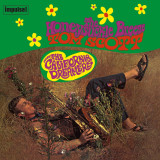
Repress! Before he developed into a star composer and arranger, Tom Scott was an ambitious 19 year-old saxophonist looking for his big break in 1967. The opportunity came when legendary jazz label Impulse paired Scott with 9-piece vocal group The California Dreamers and allowed the young musician to take the helm as a band leader, with The Honeysuckle Breeze as the spectacular result. This rare and long out-of-print album features Scott leading a stellar lineup of sessions players—Bill Plummer (sitar), Glen Campbell (guitar) and Carol Kaye (bass) among them—through warm, smooth versions of songs by The Beatles (“She’s Leaving Home”), Donovan (“Mellow Yellow”), Joan Baez (“North”) and Jefferson Airplane (“Today”), which many will recognize from it’s sampling in the Pete Rock & CL Smooth classic “T.R.O.Y.” Resurrected, refurbished and remastered by the talented folks at Get On Down, Scott’s debut record sparkles with a high quality digital audio transfer from the original master tapes and is packaged in a gatefold paste-on case with a dust sleeve and obi strip. Don’t let this “Breeze” pass you by.
- A1: Wise Man
- A2: Skylarka
- A3: Wild Man Street
- A4: Cow Town Skank
- A5: Northern Sound
- A6: Convention
- A7: The Joker From La Boka
- B1: Legs Man
- B2: Greenwich Farm
- B3: Girls Town
- B4: Tip Toe
- B5: Gold Coast
- B6: Boys Town
repress !
If one band could be cited for the emergence of Ska music, that band would be the Skatalites.
Formed around June 1965 and built around the many musicians that had honed their craft at the Alpha Boys School in Kingston, Jamaica. The early line up consisted of Don Drummond (Trombone), Roland Alphonso (Tenor Saxophone), Tommy McCook (Tenor Saxophone), Johnny ’Dizzy’ Moore (Trumpet), Lester Sterling (Alto Saxophone), Jerome ’Jah Jerry’ Hines (Guitar), Jackie Mittoo (Piano), Llyod Brevett (Bass) and Llyod Knibbs (Drums).
Named originally The Satellites after the big news of the day, the Soviet space satellite. They became The Skatalites when band member Tommy McCook introduced a play on the characteristic ‘Ska’ sound, made by the guitar when following the’ after beat’ of the music.The group had already cut its musical teeth by playing under various guises around the Jamaican island in numerous ‘hotel bands’. When the big Sound System operators Sir Coxsane Dodd, Duke Reid and King Edwards needed new material to play out with and their usual source of the material, American R & B records were drying up. They turned to this pool of musicians to back up their main singers of the day. Delroy Wilson, Alton Ellis and Lord Creator to name but a few. Also to cut the many instrumental tracks they needed usually under the tutor ledge of Don Drummond, official band leader and main musical director. Their knowledge of the old mento tunes and an understanding of Jazz and R&B music somehow blended to make this musical sound that was to dominate the island from the early 60’s up until around 1966 when the sound would slow down to what we now know as Rocksteady.
The time span of the Skatalites career considering their output of litually 100’s of sides of music, was a relatively short one of just over two years. We have delved into the vaults of Wirl Records and have selected some tunes that show the dexterity of the band and what great sounds this group of musicians were capable of producing and the high quality they maintained. They recorded before they were named as a collective The Skatalites, when personal and financial problems became an issue the band split into two halves. Jackie Mittoo and Roland Alfonso going on to form The Soul Brothers band for Coxsone Dodd. Tommy McCook moving over to work with Duke Reid as musical director. Sadly, Don Drummond suffering for years from depression would see his career cut short ending in Belle Vue hospital in 1969.
But while together they cut some of the finest Ska Sounds to be found on record. We hope you enjoy this set as much as we have in putting it together.
So, stand Up, Listen Hard and do the Ska……
"Music On Vinyl proudly presents the first installment of the acclaimed Miles Davis Bootleg series on pristine 180 gram vinyl!
The explosive transformation of Miles Davis' 'second great Quintet' with Wayne Shorter (tenor sax), Herbie Hancock (piano), Ron Carter (bass), and Tony Williams (drums) is laid bare on Live In Europe 1967: The Bootleg Series Vol. 1.
Culled from original state-owned television and radio sources in Belgium, Denmark, and France, this 5 LP box set spans three northern European festival performances over the course of nine days in October-November 1967. The audio shows consist entirely of previously unreleased or previously only bootlegged material. Miles' Quintet lineup of 1965 to '68 is acknowledged as one of the high reference points in 20th century jazz, and its influence continues to reverberate in small group jazz today, and it was the quintet's live performances, as they evolved into Miles' ideal of a ""leaderless"" jamming ensemble, that truly immortalized them.
Live In Europe 1967: The Bootleg Series Vol. 1 is the best historical album of 2012, according to the Downbeat Critics Poll 2012. "
- October 28, 1967, Koningin Elizabethzaal Antwerp, Belgium
- A1: Agitation
- A2: Footprints
- A3: ‘Round Midnight
- October 28, 1967, Koningin Elizabethzaal Antwerp, Belgium
- B1: No Blues
- B2: Riot
- B3: On Green Dolphin Street
- October 28, 1967, Koningin Elizabethzaal Antwerp, Belgium
- C1: Masqualero
- C2: Gingerbread Boy
- C3: Theme
- November 2, 1967, Tivoli Konsertsal Copenhagen, Denmark
- D1: Agitation
- D2: Footprints
- D3: ‘Round Midnight
- November 2, 1967, Tivoli Konsertsal Copenhagen, Denmark
- E1: No Blues
- E2: Masqualero
- November 6, 1967, Salle Pleyel Paris, France
- F1: Agitation
- F2: Footprints
- November 6, 1967, Salle Pleyel Paris, France
- G1: ‘Round Midnight
- H1: Masqualero
- H2: I Fall In Love Too Easily
- November 6, 1967, Salle Pleyel Paris, France
- I1: Riot
- I2: Walkin’
- November 6, 1967, Salle Pleyel Paris, France
- J1: On Green Dolphin Street
- J2: The Theme
- G2: No Blues
- November 6, 1967, Salle Pleyel Paris, France
Live In Europe 1967 - The Bootleg Series Vol. 1 showcases the ex- plosive transformation of Miles Davis’ “second great quintet” with Wayne Shorter (tenor sax), Herbie Hancock (piano), Ron Carter (bass), and Tony Williams (drums). Miles’ Quintet lineup during that time is acknowledged as one of the high reference points in 20th century jazz, and its influence continues to reverberate in small group jazz today. It was the quintet’s live performances, as they evolved into Miles’ ideal of a “leaderless” jamming ensemble, that truly immortalized them.
Culled from original state-owned television and radio sources in Belgium, Denmark, and France, this set contains three northern European performances over the course of nine days in October and November 1967. Live In Europe 1967 - The Bootleg Series Vol. 1 is the best historical album of 2012, according to the Downbeat Critics Poll 2012.
Live In Europe 1967 – The Bootleg Series Vol. 1 is available as a deluxe 5LP boxset, housed in a lift-off box. The set includes printed inner sleeves and a 16-page booklet with exclusive photos and liner notes by jazz-historian Ashley Kahn.
goat (JP) are renowned for two albums released in 2013 and 2015 that took Kraftwerk’s man-machine concept back to its roots with swingeing, inch-tight drums, bass and guitar patterns that needed to be heard to be believed. For their long-in-the-making new album ‘Joy In Fear’, band leader Koshiro Hino (YPY, KAKUHAN) describes the process as “90 percent pain” - and we can well believe it - few other records we can think of transmute DAW-composed rhythmic precision into such an expressive instrumental performance. It really is a feat of determination, skill and execution that seems to defy human dexterity.
Make no mistake - an academic exercise it ain’t - in the most visceral sense, goat (JP) make BODY music, for dancing, flailing, for losing yourself in completely. As usual, Hino plays guitar, backed by bassist Atsumi Tagami, while Akihiko Ando joins on saxophone, while Takafumi Okada and Rai Tateishi step in to handle percussion, with the latter moonlighting on flute. Every sound is sculpted into a fragment of cadence: guitar and bass prangs alternately echo and dance between the drums, and Ando's sax is mutated into a respiratory slobber of guttural smacks and phantom breaths.
In some respects, it's tempting to label it jazz, but the kind of jazz that Miles Davis spearheaded on the game-changing 'On The Corner', the blueprint for so much post-punk, electronic music and avant rock. goat (JP) take that raw alloy and sharpen it like a blade, mangling the template with the knotty metrics of Autechre or Ryoji Ikeda. The accuracy is galvanic; it's almost impossible to comprehend each player keeping a mental note of the mathematical time signatures, and yet they floss them out with trills and icy stutters that seem to evaporate around the thick, taiko-like thuds.
They practically get our teeth gnashing with the bruxist rictus chatter of ‘III I IIII III’ , before ‘Cold Heat’ introduces subtly harmonised, new aspects to their sound with slivers of Hassellian flute and ringing overtones of their percussion, while the winding sensuality of ‘Warped’ slips down very nicely. Their links to OG no-wavers like Glenn Branca & Wharton Tiers’ Theoretical Girls - is manifest in the 8 mins of chipping stop/start pulse and parry to ‘Modal Flower’, while a total left turn into Mark Fell-meets-Ligeti-esque messed up metronomics in ‘GMF’ ties it off with a properly beguiling flourish.
For fans of - Darko, Bad Omens, Deftones, Alice In Chains On tour in the US April- May 2024 w/ Attila + Born Of Osiris Band names go a long way in helping paint a figurative picture in the listeners mind of what to expect before one ever hits “play.” When it comes to Extortionist, you think crime—you think gritty, raw, merciless and unsavory and maybe, just maybe, a little sprinkling of suaveness. When it comes to the Pacific Northwest’s resident moshslingers, those premonitions from their name are exactly what you get. As a band who have proven themselves exemplary at styles of heavy music ranging from downtempo deathcore to grunge- tinted metal, Extortionist are more than just a jack-of-all-trades; they’re masters. Utilizing bold, roaring guitars overtop crushing, steamrolling percussion and vocals that run the gamut from guttural to grating, pitched singing and topped off with—you guessed it—a now-infamous dodgeball-smack snare, Extortionist have proven that not only are they incredible at what they do, they’re a band that the heavy scene just can’t go without.
Repress!
Formed in 1968, Jazz Sabbath was considered by many to be at the forefront of the new jazz movement coming out of England at the time. The eagerly awaited debut album, scheduled for release on Friday 13th February 1970, was cancelled when news broke that founding member and pianist Milton Keanes was hospitalised with a massive heart attack which left him fighting for his life.
The record company shelved the album and cancelled the scheduled release out of financial uncertainty of releasing a debut album from a band without its musical leader. When Milton was released from hospital in September 1970, he found out that a band from Birmingham, conveniently called ‘Black Sabbath’, had since released two albums containing metal versions of what he claims were his songs.
All recalled Jazz Sabbath albums had been destroyed when the warehouse burned down in June 1970; which turned out to be a case of insurance fraud by the label owner, leaving only a few bootleg tapes of Jazz Sabbath’s live performances as proof of existence.
The album masters were said to be lost in the fire, but were actually misplaced and gathered dust in the basement vaults of the recording studio. These tapes have now been remixed and, half a decade later, will finally be heard; proving that the heavy metal band worshipped by millions around the world are in fact nothing more than musical charlatans, thieving the music from a bedridden, hospitalised genius.
Repress!
Formed in 1968, Jazz Sabbath was considered by many to be at the forefront of the new jazz movement coming out of England at the time. The eagerly awaited debut album, scheduled for release on Friday 13th February 1970, was cancelled when news broke that founding member and pianist Milton Keanes was hospitalised with a massive heart attack which left him fighting for his life.
The record company shelved the album and cancelled the scheduled release out of financial uncertainty of releasing a debut album from a band without its musical leader. When Milton was released from hospital in September 1970, he found out that a band from Birmingham, conveniently called ‘Black Sabbath’, had since released two albums containing metal versions of what he claims were his songs.
All recalled Jazz Sabbath albums had been destroyed when the warehouse burned down in June 1970; which turned out to be a case of insurance fraud by the label owner, leaving only a few bootleg tapes of Jazz Sabbath’s live performances as proof of existence.
The album masters were said to be lost in the fire, but were actually misplaced and gathered dust in the basement vaults of the recording studio. These tapes have now been remixed and, half a decade later, will finally be heard; proving that the heavy metal band worshipped by millions around the world are in fact nothing more than musical charlatans, thieving the music from a bedridden, hospitalised genius.
- A1: Mother
- A2: You Gotta Have Freedom
- A3: Conversations
- A4: Pure Imagination Tortoise And The Hare
- B1: Opening Acknowledgement
- B2: Our Cry For Peace
- B3: John Coltrane
- B4: Welcome
- C1: What The World Needs Now
- C2: Build An Ark Theme
- C3: Door Of The Cosmos
- D1: Healing Song
- D2: Dawn
- D3: River Run
- D4: When Ancestors Speak
- D5: This Prayer (Yaakov Levy Mix)
- E1: Sunflowers In My Garden
- E2: In The Park
- E3: World Peace Now
- F1: World Music
- F2: Ginger
- F3: Love Sweet Like Sugar Cane
Triple edition, packaged in thick PVC cover with a foldable double sided poster and download card.
Celebrating the 20 year anniversary of highly revered Jazz collective, Build An Ark from Los Angeles, California. Formed in 2003 and releasing albums between 2004 and 2010, the Carlos Niño co-ordinated project included contributions from luminaries such Phil Ranelin, Big Black, Miguel Atwood-Ferguson, Adam Rudolph, Derf Reklaw (R.I.P.), Dexter Story, Dwight Trible, Gaby Hernandez, Mia Doi Todd, Munyungo Jackson, Nate Morgan (R.I.P.) Waberi Jordan, Avotcja & many more.
This set was compiled by band leader Carlos Niño with recordings from 2001 to 2008 that have previously been released on Kindred Spirits.
Gilles Peterson says "It's a beauty!"
SABÏRE has now returned in 2024 with a 15 track epic, self-styled "half-concept" album, "Jätt", 5 years in the making. SABÏRE began at the tail end of 2010 as an idea to have a band that played simply what came naturally on guitar to Scarlett Monastyrski with no set genre or category. Simply the natural music. Shortly thereafter, the concept grew to accompany that sound with a big show and distinctive stylisation. The biting and sharp sound production, along with their personal lyrics, birthed for them a label for their music: ACID METAL. Not to be confused with the mind altering substance, Acid Metal took its name from the concentrated corrosive fluid not unlike the blood of the Xenomorph in the Alien films. The instruments are awash with acidic modulation, "like a drop of acid in the dark." The lyrics all hold a tinge of biting realism that once realised by the listener, stings them like a droplet of acid resting upon their skin. To take their metaphor further, their distinctive production style let's stand apart from the rest of the "modern" sound that degrades the potentcy of many new bands. They call it "brick culture," because it all sounds the same. Concentrated acid burns all the way through anything solid leaving a hot trail behind it, like the band continues to do so with garnering the attention of the world of heavy music. Band leader Scarlett Monastyrski comments : " 'Jätt' is meant to be THE sound of SABÏRE. A monolith to what we stand for artistically. We wanted this album to be its own art piece rather than simply a collection of arbitrary songs, a really 'blue' coloured sound. The physical copies hold beautifully styled texts detailing the concept for those chosen songs, as well as small epistles to accompany each track," says . “ 'Jätt' is a “blue” sounding album; the colour. You may understand that more when listening to the album yourself. The cover of 'Jätt', “Dante and Virgil in the Ninth Circle of Hell” - Gustav Doré, 1861, could be seen through a symbolic lense in which the listener is symbolised as Dante, the artist as Virgil, and the bodies locked within the ice of frozen lake as the music surrounding them; we as the artist are shepherding the listener through the mire. This could be perceived like this, or you may just see it as an attractive album cover. “ "We put our heart and soul into this one and can't wait to give our Wild Ones and Acid Fiends what they've been so patiently waiting for
PARTY CANNON are BACK with their HEAVIEST, SLAMMINGEST and DUMBEST album yet; an overwhelming helping of the henchest and most nauseating Party Slam. The band have doubled down on their signature Party Slam style to bring you an experience so IQ lowering, so soul crushing, so life expectancy reducing that we recommend you wear a helmet while listening for your own safety.
UK jazz ensemble The Jazz Defenders release their third album "Memory In Motion" in April on Haggis Records (home of The Haggis Horns and Malcolm Strachan). The Bristol jazz boppers deliver another quality release of original material that takes in their usual diverse mix of influences and genres, from timeless acoustic jazz referencing the classic sounds of Blue Note Records, to a more contemporary fusion where jazz meets soul, funk and hip-hop.
Although they love to mix things up, their roots are in the classic acoustic jazz quintet sound of the late 1950s/early 1960s, back when hard bop and modal jazz ruled. They have already explored this musical path well on their previous albums but they still deliver a couple of classic inspired jazz cuts here. "Chasing Fantasies" and "Fuffle Kerfuffle" both give the band some space to cut loose on solos over swing jazz beats that will keep their original jazz audience happy. The latter bubbles away with a jazz shuffle beat that would make drum legend Art Blakey smile.
"Meanderthal" and "Snakebite Playfight" bring soul to this jazz party. Exactly like jazz legends Lee Morgan/Herbie Hancock/Freddie Hubbard etc did back in the early-mid 1960s. The first is a feel-good, toe-tapping gem that's heavy on the backbeat and short and snappy on the solos, the exact reasons that made it the perfect opening single from the album. "Snakebite Playfight" comes with a jaunty New Orleans shuffle before transforming into a heavy psychedelic soul jazz burner, flipping back with ease to the NOLA shuffle for the Mardi Gras meets bebop piano solo by band leader George Cooper.
"Rolling On A High" is a hip-hop/jazz banger that sees the band continue their collaborations with UK rapper Doc Brown, a perfect combination that began on their second album "King Phoenix''. This time, the Doc spits some old-school block party-style bars over a bouncy uptempo funky beat with the band cooking up some soul stew behind him. Definitely dancefloor material.
Another uptempo jam is the heavy jazz fusion jam "Net Zero". It kicks off with some live broken beat kit playing and piano/bass staccato vamping before taking off into Headhunters territory on the solos, sounding both contemporary and classic at the same time. This is The Jazz Defenders at their fiercest and toughest and delivering a track that will have jazz dancers worldwide in an utter frenzy.
It's not all uptempo numbers or dancefloor-oriented compositions on this album. Two tracks take the musical dynamics right down to give a temporary break from the high-energy numbers. "Take A Minute" has a rolling double bass line locked into the groove while the horns play a lazy and laid-back theme with vibes embellishment, sounding like some trippy independent film soundtrack. Another recurring musical reference point for this band over the years.
The album finishes on a poignant and introspective note with a beautiful piano and double bass feature for George Cooper and bassist Will Harris. It's called "Enigma", it was recorded live in Paris and it closes the album on a peaceful note evoking the music and playing of Bill Evans. The perfect way to close this brilliant third album from The Jazz Defenders.
With Memory In Motion, pianist George Cooper and his band undoubtedly pay great homage to a golden era of jazz music that they love, but also elaborate on this influence with a wealth of modern musical experience, to create their own raw and vibrant compositions. The result is an enthrallingly unique sound that is as danceable as it is listenable.
- A1: Magic Momentum
- A2: Rockets To Mars
- A3: The News These Days
- A4: Life (Skit)
- A5: Love Vibration
- B1: Original Flow
- B2: Hold On
- B3: Surviver (Skit)
- B4: Tatamaka Pt.1
- B5: Tatamaka Pt.2
- C1: Time (Skit)
- C2: Time
- C3: Jinja (Skit)
- C4: Kochirakoso
- C5: Our Tactus
- C6: Nah Personal
- D1: No Chains
- D2: Push Comes To Shove
- D3: We No Let Y'all In
- D4: Mexico (Skit)
- D5: Future For Our Children
We Release JAZZ is very happy to announce an exciting new body of work by Joseph Deenmamode aka Mo Kolours. The singular musical spirit’s new 21-track album Original Flow is available as a double LP housed in a heavy 350gsm sleeve with original artwork by Mo Kolours himself and the classic WRJ obi strip, as well as in digipack CD and digital formats.
A catalog of critically acclaimed records, including his self-titled debut (2014), ‘Texture Like Like Sun’ (2015), 2018 album ‘Inner Symbols’ and three companion EPs, established Deenmamode as a prodigious musician and vocalist. Pitchfork extolled his “hypnotic, tribal-infused dance grooves”, DJ Mag appreciated the “colourful celebration of soundsystem culture”, and Resident Advisor advocated that “no one sounds quite like Mo Kolours”. Musical analogies were drawn by The Guardian as “The best album Curtis Mayfield never made with A Tribe Called Quest and Lee Perry” and Mojo as “like Marvin Gaye produced by J Dilla”.
Five years ago, Deenmamode moved to the Japanese countryside. Far away from familiarity, he contemplated his place and further questioned his identity. “I had none of my ‘own’ people around. I had time to really find what makes me tick musically. Japan has helped me go back to those subconscious leanings, really go deep, and reflect the aspects that make up my story”.
The tracks on ‘Original Flow’ have been constructed from sessions, improvisations and soundbites captured around the world during this time; collecting contributions from musicians including Deenamode’s brothers Reginald Omas Mamode and Jeen Bassa plus Andrew Ashong, Charles Bullen, Dwaye Kilvington, Eddie Hick, Stefan Asanovic, Myele Manzanza, Ross Hughes, and Tom Dreissler. Deenamode says “I’m proud of this album’s creative process. Coming from a tradition of scouring through hours of records, I wanted to create my own samples, to find that perfect loop that no other producer could put their hands on. I decided to invite a group of friends and acquaintances, who also happen to be incredible musicians, to a studio in Crystal Palace to improvise based on some loose ideas I had. We spent all day, and recorded everything”.
‘Original Flow’ is an album of UK street-soul nouveau, future indigenous jazz fusion, Rasta Segga, Nyahbinghi jazz, Malagasy Hebrew hip hop. While retaining a spirit of exploration and improvisation, it sees Deenmamode grow and flex beyond beat tape brevity, expanding composition and stretching his musical muscle to play live with other musicians. Themes of empowerment, overcoming adversity, and mental liberation coexist with notes from ancient history, futurism, and science, as well as musings on family and togetherness.
‘Magik Momentum’ springs from a discussion that features at the start of the song, an inspiring mentor answering a question from Deenmamode about improvisation and what role it plays in life when planning and manifesting the future. ‘Rockets to Mars’ questions the lack of care for the billions of people with nothing, while governments plan to explore space. “This sparked a comparison in my mind to a Sonny Okuson song that I would reference when performing. Okuson’s song talked of the lack of resources in many communities in the world, while governments go to the moon”.
He says the music behind ‘The News These Days’ is “possibly my favourite on the album”. Looped like he would a late sixty jazz-fusion sample, there was nothing added and the track was complete within a matter of minutes. “It was the first and best moment from the entire Crystal Palace session”, he adds. The album’s contrasting title track with minimal instrumentation played solo by Deenamode. While frustratingly searching for gems in past recordings, he thought in a burst of ego, “I don’t need no-one else to make a dope beat!” picked up his ravanne, (the traditional frame drum of his fathers home-land of Mauritius), pressed record, and started to play. He says, “In my thoughts were the rhythms of the Nubians in Upper-Egypt and Sudan, the swing of the huge drums played by Mauritanian women, of-course the Sega beat of Mauritius, and the ever inspiring beat of James Yancey”.
Driven by UK broken beat, Cuban congas, Nigerian and Mauritian inflections, ‘Love Vibration’ follows the concept that all emotions carry a vibratory frequency and pays homage to the frequency of creation and the power of love. The two part ‘Tatamaka’ tells of the history of Deenmamode’s ancestors, the maroons of Mauritius. “We are people who managed to run from our oppressors and find refuge in a corner of the island called ‘Le Morne’ where they could not reach us. One bloody day they came in numbers to re-capture, to revenge. Many of us chose to jump to our deaths, rather than be taken back into subjugation. The poem by Creole Richard Sedley Assonne says; “there were hundreds of them, but my people, the maroons chose the kiss of death over the chains of slavery”. Tatamaka was the name of a famed maroon leader who was murdered for claiming his, and our people’s freedom. The song is the imagined journey of escape and freedom by an ancestor of the maroons of Le Morne”.
Born in the west midlands and raised on the traditional sega music of his father’s Indian Ocean homeland of Mauritius alongside records by the likes of Jimi Hendrix, Santana and Michael Jackson; his influences expanded with late 90s jungle and drum and bass nights in Bristol, experiments at art college in Camberwell, and the rich culture of Peckham, “at the time we called it the Afro Quarters of London” says Deenmamode, adding hip hop, dub, soul and soundsystem styles to his individual sound.
He explains, “I love drum music, from hand-drums to 808s. I love music from the ancient past, heritage music, indigenous music, traditional music passed down from the beginning of time. Music from the body, hand claps, grunts and foot stomps. Music with audible depth, busy, bustling, highly charged. Music from the soul, the music from beyond. I love music from the islands and the mountains. The music of the streets, hustle music, alleyway beats. Club music”.
He describes the creative process as thinking in images. “The visual world and the world of sound seem to intermingle in my thought process. When I play the drum with my eyes closed, a world of imagery dances and moves with beat. Improvised drumming feels like I am listening to what I want to hear, rather than trying to play what I want to hear. Following the rhythm and finding new pathways to walk within the patterns is what I experience. In this way I often feel I am just a listener, instead of the player”.
Original Flow is pressed on biovinyl, a sustainable alternative to traditional vinyl. Biovinyl replaces petroleum in S-PVC by recycling used cooking oil or industrial waste gases, resulting in 100% CO2 savings in bio-based S-PVC production. Furthermore, it is 100% recyclable and reusable, embracing the circular economy ideology.
With $10 Cowboy, Charley Crockett didn’t set out to make a themed record. He had released a concept album in 2022, the critically acclaimed Man From Waco, propelling Crockett to new heights and establishing him as one of the leaders of a sparkling revival of traditional country and folk music. For the follow up album, Crockett wrote freely, over a two-month period, as he wound his way across the United States on the back of a tour bus. The resulting songs—raw, personal, vivid portraits of a country in transition—ended up being connected after all. “This material is written at truck stops, it’s written at casinos, it’s written in the alleys behind the venues, it’s written in my truck parked up on South Congress in Austin,” explains Crockett. “A ramblin’ man like me, a genuine transient, is in a pretty damn good position to have something to say about America.” As the album unfolds, you begin to understand that a $10 Cowboy is anyone who has hustled to get by, who didn’t fit in, who has slept on other people’s couches, or the street, who has fallen down, gotten up, and ventured from home chasing a paying gig, or a new start. “Being out on the road gives you a first-hand experience of how different kinds of Americans see themselves as going through some kind of great struggle,” Crockett says. “The roughneck working the oil and natural gas fields in West Texas. The single mother raising kids by herself. The young man working a street corner because he thinks it's his only option. I would be dishonest if I said I couldn’t see the thread. Each of ‘em feel invisible. I am struck by the battles they are fighting internally, and the ways they have been entrapped by what America says they are.” The album was recorded at Arlyn Studios in Austin, produced by Crockett and his long-time collaborator Billy Horton. It was recorded live to tape, with anywhere from 6-12 musicians and backup singers on each track, giving the songs the feel of a live performance. It’s a sound Crockett has been after for years. “Reason I cut it on tape is because when you got the right people in the room, and the great players rise to the occasion when that red light is on and the tape is rolling, you get the magic of a great performance.” It's exactly what he achieved with $10 Cowboy. Regular bandmates Fox, Nathan Fleming, and Mayo Valdez are joined by some of the genre’s most talented players—Rich Brotherton, Kevin Smith, Dave LeRoy Biller, T. Jarrod Bonta and others, including a string quartet. Lauren Cervantes and Angela Miller sing on the album. While the musicianship and accompaniment are exquisite, they are also subtle, placed joyously, yet judiciously across the album. No, Crockett didn’t set out to write a themed record. Or, through his studied eye, to find America. But with $10 Cowboy, he might have done both.
Released on the Verve label in 1968, Giblet Gravy marked jazz/soul guitarist George Benson's fourth album as a leader. It features Benson backed by an all-star group arranged and conducted by Tom Mcintosh, that includes such jazz luminaries as Ernie Royal, Pepper Adams, Johnny Pacheco, Billy Cobham, Ron Carter, and Herbie Hancock. According to AllMusic reviewer Richard S. Ginell, the label's "immediate goal was to groom Benson as the next Wes Montgomery (who was about to leave Verve) - and so he covers hit tunes of the day, playing either with a big band plus voices or a neat quintet anchored by Herbie Hancock, and the sound is contoured to give his guitar a warm mellow ambience. But the eclectic Benson is his own man, as his infectious repeated-interval rhythm trademark tells us on his self-composed title track. George's work is always tasty and irresistibly melodic."
Original released in 1979
Passion and perspective permeate the sound of this legendary record! Ryusei Tomoyose, a famous tenor saxophonist from Okinawa, pours his whole life into this, the only leader's work.
Ryusei Tomoyose is a tenor saxophonist from Okinawa. At the end of the 1960s, he studied under Sadao Watanabe in Tokyo, and after returning home, he devoted himself to nurturing young musicians and became a leader in the Okinawa jazz world. This work, recorded in 1979, is Tomoyose's first and only leader work. The title "Dana" is an exclamation in the Okinawan dialect that has the meanings of "ah" and "finally." Tomoyose was 43 years old at the time of recording, and had already had a career spanning more than 20 years. He is captivated by the vivid and lustrous tenor saxophone in songs such as the vibrant "Movement," the dignified exoticism of "Kirisame," and the motif of the sandy beaches of Yoron Island in "Merabi Samba." It is a valuable record of Okinawan jazz and a masterpiece that shows the depth of Japanese jazz.
SOYUZ (СОЮЗ) stole our hearts back in 2022 when we released their album Force Of The Wind to critical acclaim. Here we proudly present the predecessor to that LP, the band’s sophomore long player from 2019 that was previously only available digitally. It captures a pivotal evolving period in the band's career, the recordings giving a snapshot of what would become their sound on Force Of The Wind, yet with echoes of avant-psychedelic-pop footprints from yester years.
Produced at a time when band leader Alex Chumak had moved from Minsk to Kyiv, torn between the need to try something new and the homesickness it brought about. Travelling back to Minsk almost weekly, Alex joined fellow band members Mikita Arlou and Stanislav Murashko to lay down II at Studio 42. The album captures these transient feelings, contextualised through the broad scope of influences the band were nourished by. From MPB to Ethio-Jazz and the Italian library soundtracks of Piero Piccioni and Piero Umiliani, the album shines with touches of joy from across the globe.
The opening track 'Verocai' is a tribute to the Brazilian maestro and 'Mirouze', whilst being named after a French favourite of the band, Jean-Pierre Mirouze, pays clear homage to Milton Nascimento and Lô Borges. A ghostly sample and invisible connection to music made miles away in a different era that has influenced and become part of the band’s lives. This is further reinforced in the album's enchanting closer, the aptly titled 'Nascimento', another nod to the great Brazilian musician and singer.
The beginnings of the cinematic, soul-laden jazz SOYUZ are now known for, are on display across the likes of ‘Lyric’ and 'Motive I'. The latter an orchestrated jazz instrumental with sensuous string sections, all of which were recorded on the warmth of a Studer reel-to-reel and waltzing Rhodes keys.
SOYUZ’s wide-ranging palate is further demonstrated in tracks like ‘Business Partners’ with its Krauty, kosmische, new wave production featuring Inturist, and the oh-too-short Anatolian-influenced interlude 'Corrida'. Elsewhere, 'Tezeta' and ‘ES-2 Jazz’ hint at the psychedelic haze of soul-funk, with the former featuring verses from Serbian rapper Petar Martic.
For this new physical and digital release, the whole album was mixed from scratch by Ryan Power before Joker worked his magic on the remaster. More excellence is to come from SOYUZ, but in the meantime, we are thrilled to present this essential recording from the band’s foundational years, mixed to a level that does it the justice it deserves.
Dire Straits never made a big to-do about its final run. In classic understated British fashion, the band simply let its music speak for itself. And how. Originally released in September 1991, On Every Street became the group's swan song – a lasting testament to the influence, musicianship, and integrity of an ensemble whose merit has never been tainted by cash-grab reunions or farewell treks. It remains an essential part of the Dire Straits catalog and a blueprint of the distinctive U.K. roots rock the collective played for its 15-year career.
Sourced from the original master tapes, housed in gatefold packaging, and pressed at RTI, Mobile Fidelity's 180g 45RPM 2LP set of On Every Street presents the album like it has always been meant to be experienced: in reference-grade audiophile sound. Recorded at AIR Studios in London and produced by Dire Straits leader Mark Knopfler, it features all of the band's sonic hallmarks – wide instrumental separation, visceral textures, seemingly limitless air, broad soundstages, atmospherics that you can almost reach out and feel. Each element is made more vibrant, physical, and lifelike on this collectible reissue, which marks the first time this 60-minute work has been available at 45RPM speed.
Afforded generous groove space and black backgrounds, the songs from On Every Street burst with nuanced details and vibrant colors. Dire Straits' playing appears to float, their intricate performances organized amid hypnotic, fluid, three-dimensional arrangements. Mobile Fidelity's definitive-sounding set also brings into transparent view Knopfler's finely sculpted guitar lines, expressive tones, and laid-back vocals – as well as the balanced accompaniment from his band mates. Here's a record on which you can hear the full blossom and decay of individual notes, and imagine the size and shape of the studio. It is in every regard a demonstration disc. And it happens to be filled with timeless fare.
Remarkably, On Every Street almost never came to light. Dire Straits initially dissolved in September 1988 after touring behind its blockbuster Brothers in Arms and suffering the departure of two members. At the time, Knopfler professed his desire to work on solo material; bassist John Illsley also explored side projects. But Knopfler's decision in 1989 to form the country-leaning Notting Hillbillies reignited a spark to reconvene his primary band and craft a fresh batch of songs. Six years removed from Brothers in Arms, Knopfler, Illsley, keyboardist Alan Clark, and keyboardist Guy Fletcher teamed with A-list session pros – steel guitarist Paul Franklin, percussionist Danny Cummings, saxophonist Chris White, guitarist Phil Palmer included – to create what still stands as an unforgettable farewell.
The platinum record brings the band full circle in that it returns Dire Straits to a quartet formation; finds the group refreshingly out of step with the era's prevailing trends; and sees Knopfler and Co. knocking out song after song with the deceptive ease of a punter tossing back a pint at a pub. That subtle cool, clever poise, and innate control – signature traits that no other band ever matched – dominate On Every Street. Knopfler's clean, virtuosic six-string escapades unfurl with dizzying melodicism and economical efficiency. Led by his winding fills and focused solos, Dire Straits traverse a hybrid landscape of rock, jazz, country, boogie, blues, and pop strains with near-faultless prowess.
More than any other entry in the group's oeuvre, On Every Street welcomes quick detours down back alleys and into the depths of human souls. What makes it more brilliant is its staunch refusal to cater to commercial expectations or take advantage of prior successes; every passage feels true, every measure echoed in the service of song. It's evident in the humorous satire of "Heavy Fuel," closeted desperation of the witty "Calling Elvis," and shake-and-bake bounce of "The Bug." It pours from the album's darker corners, as on the high-and-lonesome melancholy of the title track and bruised emotionalism of "When It Comes to You."
Hinting at the open-minded approaches and boundless curiosity he'd embrace as a solo artist, Knopfler doesn't limit himself when it comes to style or subject matter. Look no further than "You and Your Friend," a shuffle whose all-inclusive lyrics encourage an array of interpretative meanings. Another of the album's deep cuts, "Iron Hand," comes on as one of the band's most memorable moments – the narrative addressing the abuses of power at the 1984 Battle of Orgreave during the U.K. miners' strike. Given cinematic heft by the expert production, the true-fiction account puts into perspective the richness, poetry, and depth of On Every Street.
"Every victory has a taste that's bittersweet," sings Knopfler on the title track. At least that bittersweetness seldom sounded so damn good on record.
Pittsburgh Downtempo hits its pinnacle with the 7th full length from THE LAST TEN SECONDS OF LIFE. Over the past decade, TLTSOL have cemented themselves as the undisputed kings of the Downtempo/Deathcore crossover movement. NO NAME GRAVES is the first full length to show the true power of the line up we saw in 2022's 'Disquisition On an Execution' EP, which featured new members Tyler Beam (vocals), Andrew Petway (Bass) and Dylan Potts (drums). Featuring production by Grant McFarland & Carson Slovak (Rivers of Nihil, Signs of The Swarm) and artwork by Caelan Stokkermans (The Acacia Strain, Lorna Shore) & guest vocal appearances by Ricky Myers of Suffocation, Ben Mason of Bound in Fear and Devin Swank of Sanguisugabogg,