In a Word, the sixteenth installment of the intergenerational collaboration series FRKWYS, brings together postminimalist composer Daniel Lentz with vocalist and sound artist Ian William Craig for an album that embraces erosion and the fertility of the loam left behind. A document of shared transformation, Lentz's elegant piano figures and Craig's trembling tenor are wilted, warbled, and looped through manipulated tape machines in a real time composition that evokes a strange warmth and layered beauty.
quête:lentz
- 1
- A1: Lentz 1 Mg (Viersen / D)
- A2: Grossenhainer Eu (Grossenhain/ D)
- A3: C.a.roscher Bo (Oberlausitz / D)
- A4: Henry Livesey Bo (Blackburn / Gb)
- A5: Lentz 2 Mg (Viersen / D
- A6: Saurer Mg ( Aarbon Ch)
- A7: Ruti / Łódź / Pl, 1892 Rec M.w
- A8: Saurer 400 Bo (Aarbon Ch & F)
- A9: Günne (Irmscher) Bo
- A10: Bändchen Mg (Jacquard F? Unbekannt)
- A11: Dornier Mg (Lindau / D)
- A12: Transmission / Bo
- A13: Elitex Jet Mg. (Cz)
- A14: Robert Hall Mg Solo (Bury / Gb)
- A15: Fred Greenwood Mechanical Works / (Łódź / Pl 1889) Rec M.w
- A16: Kleiner C.a.roscher Bo (Oberlausitz / D)
- A17: Jean Güsgen Bo (Dülken / D)
- A18: Grossenhainer Eu / Lower Floor (Grossenhain/ D)
- A19: Grossenhainer Eu (Grossenhain / D)
- A20: Grossenhainer Eu Lower Floor / Variation1 (Grossenhain/ D)
- A21: Looms/ Group* Łódź, Pl / Rec M.w
Editions Mego is proud to present the latest addition to the compelling discography of Thomas Brinkmann. Throughout his career Brinkmann has focussed on the human operating amongst industry alongside rhythms that manifest as a result of technological advancement. With this new release Brinkmann makes a u-turn, looking back to the early industrial age. Comprised of recordings of various looms, Raupenbahn investigates the sonic properties and consequences of the first automatic loom as constructed by Jacques de Vaucanson in 1745. Thomas Brinkmann once again adheres to his tendency for clarity and simplicity whilst further investigating not only the sound and rhythms of the machines (looms) but also what role they serve in society and what consequences they have on the environment. Raupenbahn presents 21 tracks in total, 11 feature on the vinyl, the remaining 10 as digital bonus tracks. The majority of recordings were undertaken by Brinkmann in 2017 with a Neumann KM 184 stereo set. Additional recordings were sourced with permission from Monika W. recs. from 2014 Central Museum of Textiles Łódź, Poland. Each piece presents a diversity of material which borders on the breathtaking and beautiful in richness and complexity. The various looms unravel rhythms and patterns unexpected from machines of the early industrial age.
The loom holds a significant role in shaping our world being the catalyst for Charles Babbage's Analytical Engine which, alongside the subsequent work of Byron's daughter Ada Lovelace, paved the way for modern computing. There is a linage of the loom that fits succinctly in Brinkmann's overall argument. Here we encounter a parallel between machine driven economies and the music that rose from such places, consider the Sheffield steel industries, the Manchester weaving industry or the Rhineland / Düsseldorf loom and machine industry. Is it a coincidence that the practice of such machines in the environment gave rise to today's predilection for electronic dance music, in pop, soundtracks, etc.
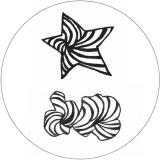
Raupenbahn features no treatment or processing and explicitly displays varying tempo and timbres which ascertain a wide range of acoustic structures. The artwork features Ingrid Wiener, Rosemarie Trockel and Alexandra Bircken, three different generations who would with ideas of fabric weaving, loming and the like. This exceptional release works on a number of levels alongside it's striking sonic palette.
i 9 Günne (Irmscher) BO Möhnesee / D
This record is meant to be enjoyed like a seascape. It offers a Mediterranean journey, one that Ulysses, Aeneas, and Jason with his Argonauts charted first and Valencian artist, Pep Llopis, retraced and retread — from the islands of Menorca to Santorini. All of his experiences are aboard this vessel of sound: no format in mind, no course but the chasm within self. While Poiemusia La Nau Dels Argonautes materializes at this moment as an album, another object suits Pep's project: Lewis Carroll's Map of the Ocean' from his The Hunting of the Snark. It's a simple illustration: the thin outline of a blank rectangle that represents the sea with no trace of land. Carroll offers this empty space as an object that all can understand, a container for possibility. Likewise, Poiemusia offers a musical language that any listener can understand. Untethered to the meaning of words, one is set adrift and free in minimalist sound and traditional music. Llopis, who often composed for dance, originally wrote Poiemusia for a performance at the Poiemusia festival (the Greek contraction of poetry and music). Peer composers, Carles Santos and Wim Mertens, also participated in the festival, which took place over several days at the Teatro Princesa in Valencia. Llopis paired his newly formed avant-garde compositions with the poems of fellow Valencian, Salvador Jàfer.
In the studio presentation of Poiemusia, voices softly converse, only to evaporate. The poetry is incanted by the poet himself. Jàfer enunciates at the verge of song, drawing dimension from his Mediterranean travels. He is accompanied by Montse Anfruns' vaporous voice. She extends the roll of her r's and the hiss of each s as if casting a spell of Salacia. Pep bathes their conversational performance in slight delays and reverb, allowing their voices to dissolve into an ocean of sound.
Llopis was influenced by minimal American composers like Steve Reich and La Monte Young. He embraces the melodic sides of these masters in the winds of El Vell Rei De La Serp' and the tender piano on Nits de cristall.' You will find yourself submerged in tonality on tracks like Jardins Aquàtics' and La Nau Dels Argonautes' which have a kinship to Philip Glass or Daniel Lentz. Each piece extends from 5 to almost 14 minutes. The music gently laps against listening skin— sometimes placid, sometimes shimmering. Ripples of sound swell and quicken. Flutes like schools of fish. The spray of chimes. Taught strings break like the shore. Tingling, undulating synths. The record cover acts as a map, tracing the forms of the original art and providing the poems in Catalana and Spanish. Once bathed in these sounds one will emerge like Carroll's map: a perfect and absolute blank.' Poiemusia La Nau Dels Argonaute emerges in vinyl and digital formats on May 19, 2017 through Freedom To Spend.
- 1