Search:less j

Styles
All
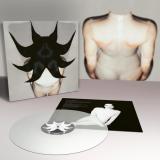
Donald Beaman - Fog On Mirror Glass LP
  • 1: Glass Bottom Boat
  • 2: Paper Screen
  • 3: Awhile
  • 4: Fog On Mirror Glass
  • 5: Old Universe
  • 6: Makeshift Room
  • 7: Your Dreaming Eyes
  • 8: Valley Floor
  • 9: Usual Phantom
  • 10: Bamboo

Fog On Mirror Glass introduces a new aesthetic amongst Donald Beaman albums. After four albums of varied full-band arrangements, this album emerged as an idea to present solo performances in conversation with full-band work. The bulk of the songs were recorded in the same place they were written: Beaman’s living room. Long time bandmate and producer Kirt Lind set up a makeshift studio at Beaman’s house to record the guitar parts in the same room where they were written, using the same guitars on which they were first played.

Unfurling with a measured pace, the resulting album combines elegiac lyrics with elemental arrangements played with an almost jazz-like reverential expressiveness, calling to mind the works of Cass McCombs, Will Oldham, and Jake Xerxes Fussell. Album opener “Glass Bottom Boat” sets the tone for the album with just Beaman and his guitar – written during the final months of a decade-long stay in New York City, the song was finished upon his arrival back in California. Meanwhile the title track, long a staple in live sets, lands near the middle of the album to recalibrate the mood, featuring the ghostly guitar work of longtime collaborator Ken Lovgren. “Old Universe” lifts things up a bit, propelled by the brushwork of drummer Michael Nalin and the jaunty bass playing of Kirt Lind. Finally, the album ends much the way it began, with Beaman and his guitar on album closer “Bamboo”.

“The dictionary definition of less is more.” - ---- Mojo
“His ability to carve universal empathy from mundane domesticity is remarkable.” - ---- RNR Magazine
“...a collection of evocative scenes and vivid emotions sung to sparse musical arrangements in Beaman’s distinctive sonorous tones” - Americana UK
“...pure and simmering, like a tattoo dedicated to a long lost friend, slightly fading from years in the sun, a memory that will always bring a tear in those quiet reflective moments.” - Psychedelic Baby Magazine

pre-order now24.04.2026

expected to be published on 24.04.2026

23,49
Mike Zito - Outside Or the Eastside 2x12
  • 1: Outside Or The Eastside
  • 2: Don't Take Advantage Of Me
  • 3: Kiss You All Over
  • 4: Downtown At Midnight
  • 5: Grand Avenue
  • 6: Too Broke To Spend The Night
  • 7: Just Like I Treat You
  • 8: Don't Bother Me
  • 9: Do I Move You
  • 10: Close To You
  • 11: The Blues Lover

A personal record for Mike shaped by memory, places, and renewal. Walking the streets of his birthplace, St. Louis, Zito reconnects with the sounds, stories, and hard lessons that forged his signature blend of soul-driven blues and fearless storytelling. Thirteen years after Gone to Texas, this album feels like a defining moment, marking a new chapter for Mike, his family, and a life reclaimed in the city that started it all. The songs paint vivid snapshots of city life and personal reckoning, from late- night regret and self-awareness to raw portraits of neighbourhood survival and street-level truth. Tracks like "Downtown at Midnight" and "Grand Avenue" capture the grit, temptation, and consequences of the past with unflinching honesty, grounding the album in lived experience and emotional weight . Zito's writing is direct and cinematic, pairing tough reflection with compassion and hard-earned wisdom.

At its heart, Outside Or The Eastside is a celebration of second chances, an album dedicated to better days, family, friendship, love, and joy found in everyday moments. Life's unpredictable paths open doors you never expect, and for Mike Zito, this record embraces that truth with warmth, humour, and swagger. It's a record about choosing connection over chaos and moving forward with gratitude, purpose, and the volume turned up

pre-order now24.04.2026

expected to be published on 24.04.2026

30,46
Dale Watson - Unwanted LP
  • Willie, Waylon And Whiskey
  • She Was My Baby
  • If You Really Love Me (Outlive Me)
  • Gotta Try Harder
  • What The Hell Happened To The Cadillac
  • You've Got My Heart
  • Don't Let Honky Tonks Go
  • Just Yesterday
  • Life Is Like A Song
  • Never Mend The Broke Spoke
  • If I Can
  • Unwanted

With Texas- sized defiance and drive, he's spent four decades flying the flag for his own brand of honky-tonk, outlaw country, western swing, and rockabilly. That signature sound has a name -- "Ameripolitan" -- and its originator is Watson himself: a singer, songwriter, guitarist, producer, actor, cultural architect, and rulebreaking traditionalist for the modern world, championing the traditions that fly in the face of the homogenous mainstream. With Unwanted, he fires another doublebarreled shotgun blast of country twang and honky- tonk bang fueled by the heartaches, hard- won lessons, and high- speed thrills of a life largely logged on the road. Singing with a booming voice that could cut through the chaos of a packed dancehall, Watson runs the show like a roots-rock ringleader. He salutes his vices on the galloping "Willie Waylon and Whiskey," reflects upon a lifetime of loss with the gorgeous ballad "If You Really Loved Me (Outlive Me)," and gets wistfully contemplative on "Life is Like a Song." Entirely written and produced by Watson, Unwanted is the sound of an Ameripolitan diehard with plenty of life left in the tank, speeding toward a horizon of his own making.

pre-order now24.04.2026

expected to be published on 24.04.2026

28,15
Miss Grit - Under My Umbrella LP

Miss Grit

Under My Umbrella LP

12inchSTUMM523
Mute
24.04.2026
  • A1: Tourist Mind
  • A2: Mind Disaster
  • A3: Won’t Count On You
  • A4: It Feels Like
  • B1: Where Is My Head
  • B2: Stranger
  • B3: You Will Change
  • B4: Overflow
  • B5: Waste Me

For their second full-length album, Under My Umbrella, Miss Grit has lifted the lid on their internal world, lasering in on the anxieties and heartbreak of the past two years, following their acclaimed debut Follow the Cyborg.

On this album, Margaret Sohn – aka Miss Grit (they/she) – channels the noirish atmosphere of classic trip-hop bands, while adding a hefty dose of maximalism and a dream-pop sensibility. The title is a nod to the iconic Rihanna song and embraces Sohn “…letting people in more on this record and trying not to shy away from that. I’m leaving the cyborg behind, I’m letting it all out.”

This record started to take shape when Sohn returned from an intense touring schedule where they’d driven themself around North America totally alone. When they returned home, Sohn found themselves yearning to capture that specific, less restrained energy of playing live.

Under My Umbrella not only presents Sohn’s gift for complex production, but also the boldness of finding your voice, and ultimately is about coming to terms with yourself, your imperfections, and your complex interior world.

pre-order now24.04.2026

expected to be published on 24.04.2026

24,33
Various - NOW Yearbook – THE VAULT: 1983
  • Orchestral | Manoeuvres In The Dark - Telegraph
  • Blancmange | - That’s Love, That It Is
  • China | Crisis - Tragedy And Mystery
  • Adam | Ant - Strip
  • Divine | - Love Reaction
  • Yello | - I Love You
  • Talk | Talk - My Foolish Friend
  • Japan | - Canton
  • Fun | Boy Three – The More I See (The Less I Believe)
  • Tracie | – Give It Some Emotion
  • The | Teardrop Explodes - You Disappear From View
  • Xtc | - Love On A Farmboy's Wages
  • The | Stranglers - Midnight Summer Dream
  • The | Kinks - Don’t Forget To Dance
  • Mari | Wilson - Cry Me A Rive
  • Bauhaus | - Lagartija Nick
  • Marc | And The Mambas - Black Heart
  • The | Glove - Like An Animal
  • Freur | - Doot Doot
  • The | B-52'S - Song For A Future Generation
  • Wall | Of Voodoo - Mexican Radio
  • Joe | Jackson - Breaking Us In Two
  • Oliver | Cheatham - Get Down Saturday Night
  • Rockers | Revenge - The Harder They Come
  • Freeez | - Pop Goes My Love
  • Malcolm | Mclaren - Soweto
  • Culture | Club - I'll Tumble 4 Ya
  • The | Belle Stars - Indian Summer
  • Level | 42 - Out Of Sight Out Of Mind
  • Daryl | Hall & John Oates - One On One
  • Sparks | & Jane Wiedlin - Cool Places
  • The | Romantics - Talking In Your Sleep
  • The | Fixx - Saved By Zero
  • The | Motels - Suddenly Last Summer
  • Modern | English - I Melt With You
  • Missing | Persons - Walking In L A
  • Naked | Eyes - Always Something There To Remind Me
  • Taco | – Puttin On The Ritz
  • Electric | Light Orchestra - Secret Messages
  • Men | At Work - Overkill
  • Pat | Benatar - Little Too Late
  • Journey | - Separate Ways (Worlds Apart)
  • Styx | - Mr Roboto
  • Giorgio | Moroder & Joe Esposito - Lady, Lady
  • Stephen | Bishop - It Might Be You
also available

The Vault: 1984[24,16 €]


The year that NOW’s story began, and where we started our ‘Yearbook’ series back in 2021. An incredible year in Pop music, and a fabulous selection of the years’ hits have featured on that first ‘Yearbook’, and on the ‘80-84 Final’ as part of our appreciation of 1983. Those tracks were generally the bigger hits of the year, with their Chart achievement a factor in their inclusion. However, that’s not the whole story, and our celebration of 1983 wouldn’t be complete without shining a light on some of the year’s singles that have been compiled much less frequently over the past 40 years. Welcome to the THE VAULT for 1983…Some of the tracks were Top 40 hits, some missed the Chart completely, and some were huge in the U.S. and not in the U.K. – but all are part of the wonderful Pop story of 1983. Released as 80 tracks across 4-CDs, available as a standard 4CD and as a a special edition 4CD in ‘hardback book’ packaging featuring a 28-page track by track guide, original singles artwork and a quiz and 45 tracks across 3-LPs, pressed on stunning translucent red vinyl -

out of Stock

Order now and we will order the item for you at our supplier.

24,16

Last In: 21 days ago
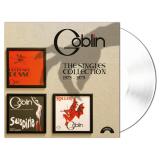
GOBLIN - The Singles Collection 1975-1979 LP
  • Profondo Rosso
  • Death Dies
  • Roller
  • Chi? - Parte Uno
  • Chi? - Parte Due
  • Suspiria
  • Blind Concert
  • Un Ragazzo D’argento
  • Opera Magnifica
  • Yell
  • Amo Non Amo
  • Funky Top

FOLLOWING THE SUCCESS OF “THE OTHER HELL”, GOBLIN ARE BACK FOR RECORD STORE DAY 2026 WITH AN EXCLUSIVE COMPILATION OF SINGLES RELEASED BETWEEN 1975 AND 1979!

For the very first time on vinyl, this compilation gathers together all the singles released by Goblin during their golden era between 1975 and 1979, a journey that begins with the explosive, legendary debut Profondo Rosso, a true chart phenomenon of its time, and reaches the rare Amo Non Amo, passing through unforgettable milestones of Italian film music and progressive rock.

The collection opens with Profondo Rosso and Death Dies, taken from the soundtrack of Dario Argento’s masterpiece that catapulted Goblin to fame, blending dark atmospheres, virtuosity, and a unique sense of cinematic tension. It continues with Roller and Snip Snap, drawn from the instrumental album Roller (1976), a record not tied to any film, yet considered a cult cornerstone of Italian progressive music for its intricate structures and expressive power.

Chi? and Chi? - Parte Seconda follow; two tracks originally composed as the theme for a 1976 RAI television show, which saw Goblin bring their unmistakable sound to a different medium, experimenting within a shorter, punchier format.

Next comes Suspiria with its haunting counterpart Blind Concert, from the soundtrack of Argento’s 1977 horror classic. This remains one of Goblin’s most iconic and unsettling works, where music becomes an active narrative force: hypnotic, percussive, and filled with eerie vocal layers that made it a cornerstone of horror soundtracks worldwide.

From Il Fantastico Viaggio del Bagarozzo Mark (1978) come Un Ragazzo d’Argento and Opera Magnifica, two tracks that highlight the band’s more conceptual and visionary side, a move away from cinema toward a self-contained narrative and progressive experimentation.

The single Yell stands as another late-decade gem. Originally composed as the opening theme for the RAI television series “Sette storie per non dormire” (1978), it captures Goblin’s ability to merge rock energy with electronic pulse, proving their versatility far beyond the horror realm.

The compilation closes with Amo Non Amo and Funky Top, taken from the soundtrack of the 1979 film Amo Non Amo, one of the group’s lesser-known but fascinating cinematic works.

Far more than a simple anthology, The Singles Collection 1975–1979 maps the evolution of Goblin’s sound, from the worldwide success of Profondo Rosso to their most mature and experimental phase. It finally restores to vinyl a body of work that had long been scattered across rare 45 rpm releases, offering fans and collectors a complete, vivid portrait of one of Italy’s most inventive and influential musical ensembles.

pre-order now18.04.2026

expected to be published on 18.04.2026

36,93
Various - Tchic Tchic: French Bossa Nova 1963-1974  Colored Edition LP 2x12"
  • A1: Les Masques - Il Faut Tenir (1969)
  • A2: Isabelle Aubret - Casa Forte (1971)
  • A3: Christianne Legrand - Hlm Et Ciné Roman (1972)
  • A4: Jean Constantin - Pas Tant D'chichi Ponpon (1972)
  • A5: Billy Nencioli & Baden Powell - Si Rien Ne Va (1969)
  • B1-: Marpessa Dawn - Le Petit Cuica (1963)
  • B2: Jean-Pierre Sabar - Vai Vai (1974)
  • B3: Sophia Loren - De Jour En Jour (1963)
  • B4: Isabelle - Jusqu’à La Tombée Du Jour (1969)
  • B5: Sylvia Fels - Corto Maltesse (1974)
  • C1: Frank Gérard - Comme Une Samba (1972)
  • C2: Ann Sorel - La Poupée Des Favellas (1971)
  • C3: Charles Level - Un Enfant Café Au Lait (1971)
  • C4: Andrea Parisy - Les Mains Qui Font Du Bien (1970)
  • C5: Audrey Arno - Quand Jean-Paul Rentrera (1969)
  • C6: Aldo Frank - T’as Vu Ce Printemps (1970)
  • D1: Christianne Legrand - Cent Mille Poissons Dans Ton Filet (1972)
  • D2: Clarinha - Lemenja (1970)
  • D3: Hit Parade Des Enfants - Aquarela (1976)
  • D4: Jean-Pierre Lang - Tendresse (1965)
  • D5: Magalie Noël - Une Énorme Samba (1970)
  • D6: Françoise Legrand - La Lune

Ever since the late 1950s bossa-nova revolution, Brazil’s influence on French music has been undeniable. Pierre Barouh, Georges Moustaki and a vast array of lesser known artists, all made the Musica Popular Brasileira (MPB) an axis of promotion at the service of a cool and metaphysical, modern and mixed Brazilian lifestyle. Some were seduced by the poetic languors of the bossa, some were looking for fun, and others just loved the American hybridization of jazz-bossa, jazz-samba.


What is bossa nova? One of its creators, Joao Gilberto said: "Its style, cadence, everything is samba. At the very start, we didn't call it bossa nova, we sang a little samba made up of a single note - Samba de uma nota so .... The discussion around the origins of bossa nova is therefore useless”. It is nevertheless useful to remember that these magnificent Brazilian songs, which the guitarist describes as samba, were shifted and balanced around improbable chords. "I like things that lean, the in-betweens that limp with grace," said Pierre Barrouh, quoting Jean Cocteau.


With emotion, arrangements for violin and supple guitar licks, bossa nova rapidly changed. A transformation that can be heard in the Tchic, tchic, French Bossa Nova 1963-1974 compilation, the result of a cultural reappropriation, which traveled through the United States and supplemented itself in France.

A musical revolution that has remained significant, bossa nova was born in Rio. From 1956 to 1961, Brazil lived through its golden years. In five years, the country had invented its modernist style. Elected president in 1956, Juscelino Kubitschek de Oliveira, an elegant man with a broad forehead, brandished a promising slogan: "Fifty years of progress in five years". He quickly got to work. Not worried about increasing debt, he launched the project for a new federal capital, Brasilia, designed by the communist architect Oscar Niemeyer. Volkswagen opened state-of-the-art factories and created the “fusquinha”, the Beetle. In Rio, the Vespa made its first appearance. The Arpoador Surf Club crew run into the “girl” from Ipanema, Helô Pinheiro - the tanned garota ("chick"), between a flower and mermaid, who at 17 walked by the Veloso bar, where the fiery author and composer, Tom Jobim and Vinicius de Moraes, were getting drunk on whiskey. From then on, bossa symbolized cool.

In 1958, Joao Gilberto recorded Chega de Saudade, which the directors of Philips denied, calling it "music for fagots". The marketing director, who believed in it, secretly pressed 3000 78-inch vinyls and distributed them at schools around Rio, creating a tidal wave.

American jazzmen then took over. In particular, trumpeter Dizzy Gillespie and guitarist Charlie Byrd. In November 1962, the Brazilian Ministry of Foreign Affairs funded a "Bossa-Nova" concert at Carnegie Hall in New York, inviting the genre’s pioneers. Unprepared, the show soon turned to disaster. But the troupe was invited to the White House by Jackie Kennedy. The first lady loved "the new beat" and in particular Maria Ninguem, a song by Carlos Lyra, later covered by Brigitte Bardot.

In Brazil, the 1964 military coup quickly ended this euphoria. The destructive atmosphere that ensued pushed many Brazilian musicians to leave, if not to exile. Thus, Tom Jobim, Sergio Mendes and Joao Gilberto arrived to the United States. In New York, Joao Gilberto met saxophonist Stan Getz. At the time, he was married to the Bahianese Astrud Weinert Gilberto, who had a German father. She had never sung before, but she knew how to speak English. Getz therefore asked her to replace her husband on The Girl From Ipanema. The Getz/Gilberto record with Tom Jobim on piano, was released in March 1964. Phil Ramone, the "pope of pop" was in charge of sound.

Bossa nova arrived in Paris through the classic “guitar-voice” channel (Pierre Barouh, Baden Powell, Moustaki…) But France loved jazz and Paris had already welcomed its American contributors. All these good people were to pass through Saint-Germain-des-Prés. The cabaret l'Escale became the Mecca of Latin American sound where one could find Pierre Barrouh and his friends, such as the Camara Trio, samba-jazz aces, whose only record was published by the Saravah label. With a band strangely called Les Masques (a band that included Nicole Croisille and Pierre Vassiliu, among others), the Camara Trio recorded an interesting Brazilian Sound, including the track Il faut tenir which is present on this tasty compilation of rarities.

Other enlightened musicians can also be found on the compilation, such as Jean-Pierre Sabar (songwriter for Hardy, Auffray, Leforestier ...) and the French pop rock organist Balthazar. In 1975, Sabar recorded Aurinkoinen Musiikkimatka on a Finnish label, which featured the crazy Vai, Vai, included on this record. We are now following the footsteps of Brazilian electronic musicians such as Sergio Mendes, Eumir Deodato or Marcos Valle who created funk and disco sounds on their keyboards and synthesizers. A style that influenced Véronique Sanson when she wrote Jusqu’à la Tombée de la nuit in 1969 for Isabelle de Funès, the niece of Louis and a great friend of Michel Berger - Sanson did end up singing this track on her 1992 Sans Regret record.


The pinnacle of exoticism and travel, Sylvia Fels’ Corto Maltese includes bongos, sea mist and ocean sounds. The title was taken from Jacky Chalard’s concept album written in 1974, Je suis vivant, mais j’ai peur (I am alive, but I am scared), based on Gilbert Deflez’s science fiction novel.


However, bossa nova extended the scope of popularity. "In the 1970s, I was a fan of Sergio Mendes, Getz / Gilberto. I fell in love with this music that I knew because I had been an orchestral singer, " explained Isabelle Aubret, who in 1971 delivered a composite record of covers by the very funky Jorge Ben, Orfeu Negro, Tom Jobim, Vinicius de Morais and Jean Ferrat. "I recorded this album for Meys Records in Paris, far from Brazil, with wonderful musicians, François Raubert, Roland Vincent, Alain Goraguer...". The latter wrote the arrangements for Casa Forte, a very percussive title borrowed from Edu Lobo, one of the initiators of the bossa who spent time in California. "Jazz and bossa came together and produced very rhythmic music. I love singing, it allows me to dream, to have fun, to feel a high on stage, and these songs brought me joy, made me swing, my singing felt like a dance.”


The world tours of French singers and their desire for the tropics, often brought them to Rio with its hills, forests, caipirinhas and tanned bodies. There are surprises though, like this Iemenja (Iemenja is the goddess of the sea in the Afro-Brazilian candomblé religion). Not unlike the composer and musician Jean-Pierre Lang, based in Sao Paulo, Claire Chevalier taught Brazil to Brazil. In 1970, the singer and painter published a 45-inch vinyl, Mon mari et mes amants (My husband and my lovers), under the improbable pseudonym of Clarinha (little Claire). She was then living in Rio, with her husband, Joël Leibovitz, who founded a band called Azimuth, and who owned a record label specialized in "sambas enredos" songs for samba school parades.


For its B side, she asked Pierre Perret to come up with lyrics for a song composed by Carlos Imperial: "Oh goddess of the sea, o goddess Iemenja, I bring a white rose to adorn your long hair ..." . "Perret came to see us, and we had fun, remembers Joël Leibovitz. We wrote Lemenja for fun, we recorded it at the Havaí studio, behind the Central do Brasil the central station. Erlon Chaves, the arranger who worked with Elis Regina, joined us" adding his share of Afro-Brazilian percussions and funky brass to the mix.

There is a common misunderstanding in Franco-Brazilian history: that bossa, admittedly hedonistic, is perceived as funny, even though the poets who wrote the texts are often philosophizing on the human condition. Its French interpreters pull it towards a carnival inspired universe, far removed from its fundamental essence. Thus, Jean Constantin covered the famous Samba da minha terra, an ode to the art of samba written by the classic Bahian composer Dorival Caymmi, renaming it with the enticing title of Pas tant de tchi tchi pompon: "On your pier there is no tchi tchi / when you arch your back, you know everything is alright ”(lyrics by Gérard Calvi). This expedited bossa aims for the absurd, but retains a certain elegance.

Indeed, Jean Constantin was not an idiot, the rather large man had a huge mustache and liked fantasy, (Les pantoufles à papa, Le pacha, inspired by cha-cha-cha-cha, salsa and jazz) but he was also the lyricist of Mon manège à moi interpreted by Edith Piaf, the composer of Mon Truc en plume by Zizi Jeanmaire and the soundtrack of François Truffaut’s 400 Blows. Le Poulpe, published in 1970, from which this bossa is extract, was arranged by Jean-Claude Vannier, an accomplice of Serge Gainsbourg’s Melody Nelson. In short: "There is enough of samba / By looking at the parasol / Because my poor cabeza / Is going to die in the sun".

Even the American actress Marpessa Down, who was at the heart of the bossa nova revolution with her role as Euridyce in Marcel Camus’ film Orfeu Negro, winner of the 1959 Cannes Palme d'or, fed the clichée with Je voudrais parler au petit cuica - "Tell me how you manage to always make people want to dance / It's true, I must admit that I cannot resist your magic" - in consequence, once can hear the cuica, a little drum inherited from the Bantu.


But bossa nova had many angles. Societal, of course, pushing actresses who were symbols of women's liberation like Brigitte Bardot, Jeanne Moreau, or Sophia Loren to engage in the exercise of accelerated bossa. In February of 1963, Sophia Loren made a record in French in Rome, Je ne t'aime plus, featuring the song De jour en jour, a bossa written by two Italians, Armando Trovajoli and Tino Fornai, which was released a little later by Barclay. Bossa accompanied the 1960s, a decade of moral liberation. Ann Sorel, who interpreted La Poupée des favellas, caused a sensation with L’amour à plusieurs, a provocative song written by Frédéric Bottom and Jean-Claude Vannier. As for the actress Andrea Parisy, she displayed her bourgeois cheekiness in Marcel Carné's Les Tricheurs before interpreting Les mains qui font du bien. And Magalie Noël, the friend of Boris Vian, who sung Johnny fais-moi mal, was hired to sing Une énorme Samba, composed by Alain Goraguer (arranger to Gainsbourg, Bobby Lapointe and Jean Ferrat) with lyrics by Frédéric Botton.

But in the end, of what wood is bossa nova made of? The answer is given by Christianne Legrand, daughter of Raymond the conductor, and sister to Michel the composer: "With me, with jà" - jà means "immediately" in Portuguese. In 1972, the singer, an expert in vocal jazz and a member of the Double Six, published Le Brésil de Christianne Legrand. Two songs included on the Tchic Tchic compilation that demonstrate how bossa, jazz, funk, rock, etc. work like a swiss army knife: the music is used to denounce broken systems, or miracles, HLM et ciné roman, Cent mille poissons dans ton filet, two songs from the O Cafona soundtrack, a successful telenovela broadcast, at the time in black and white, on TV Globo. The first was adapted in French by the fighter and friend of the Legrand tribe, Agnès Varda. The second is content with a play on words, jostling them into a summer fun.


Véronique Mortaigne

pre-order now17.04.2026

expected to be published on 17.04.2026

27,31
Cousin Feo & Dre Mendoza - Provoleta - 5th Anniversary’ LP

BLUE & WHITE COLOUR IN COLOUR VINYL

In the culinary arts, it’s easy to overcomplicate the final product. Theme, presentation, texture…they’re important but should work to complement the raison d'etre of any food. At the end of cooking a dish, it should taste good and feed people. Some dishes, like barbeque or provoleta, resist the tendency towards hollow showmanship. One of their expressions can be more or less aesthetic, but the first purpose is to be simple and tasteful. Argentinian provoleta goes so far as to blur the line between ingredient and dish. It relies on the inherent flavor of provolone being heated at the right speed for the perfect amount of time. You can add garlic or chives or red pepper to the slice, but ultimately they serve to bring out an essence that’s already there.

Los Angeles’ Cousin Feo has developed his rapping acumen in the five years since releasing Provoleta, but returning to the project today shows that he always had the penmanship, grit and delivery that christens an emcee worthy of remembrance. Like the bubbles rising up in the appetizer that is the album’s namesake, Feo showed that true profundity is found in the simple gestures.

Since dropping the project in 2019, Cousin Feo has expanded his vision of a world where hip-hop and football, two proletarian art forms, mingle in creative and compelling ways. He has collaborated across multiple continents, chronicled football histories, aided in canonizing legends, kept the flames high in age-old rivalries and constantly forced his audience to search for the last time they heard bars this hard. In anyone else’s hands it would be too great a task.

The maturity he showed on Provoleta wasn’t nascent, it was an inherent quality forcing itself to the surface. The songs refract his experience as a working class Angeleno through the archetypes of Argentinian football legends. The kernel that unites the two worlds is hustle. When Feo was coming up, missteps had greater consequences than crashing out in the group stage and street deals had the weight of a Boca-River Plate match.

Each track uses slightly different ingredients to let Feo’s underlying talent shine. “Maradona” feels salvific, fitting for a football legend canonized from the Andes to the Alps and a Los Angeles rapper looking to inspire similar hope in the neighborhoods that raised him. On “Di Stefano” Feo massages the instrumental with the same composure of the late forward, until he pierces through the headphones like one of Di Stefano’s arrows. It’s also refreshing to hear a song celebrating Messi before his meme-ification, focusing on the universal truths contained in his footballing talent instead of using number 10 as a stand-in to make a point in a fruitless argument. And he still finds space to show deference to Batistuta, Kempes and other members of the Argentinian pantheon who’ve been erased from the popular imagination by the national team's contemporary success.

Real ones know that true players, true rappers, and true artists will always stand the attacks of time and consensus. In Provoleta’s first verse, Cousin Feo says he moves with the hand of God. Maybe one day he’ll tell the whole truth and let us know how he was able to wrestle the pen away too. Limited edition of 300 hand-numbered copies.

pre-order now17.04.2026

expected to be published on 17.04.2026

30,67
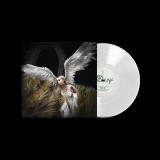
Erin LeCount - I Am Digital, I Am Divine

Erin LeCount

I Am Digital, I Am Divine

12inch5026854264202
Atlantic
17.04.2026
  • I Am Digital, I Am Divine
  • Marble Arch
  • Sweet Fruit
  • Godspeed
  • Silver Spoon

To celebrate the year anniversary of its first release, Erin LeCount launches a limited edition transparent vinyl of her 2025 EP I Am Digital, I Am Divine. The tracklist includes viral hit Silver Spoon which amassed 300K Soundcloud streams before it had even been released, since amassing 21M streams in less than 12 months.

Available for pre-order on the 24th March and set for release on the 17th April 2026.
Erin LeCount is a 23-year-old self-taught artist and producer. A visionary sonic architect and the sole writer and producer of her music, her sound ranges from luscious baroque-pop arrangements to alluring gothic-pop.

At the foreground of her music are diaristic lyrics and captivating synths which offer an enchanting interplay of vulnerability and power. The themes within her music explore everything from identity to relationships and the meaning of life. Erin’s influences include Fiona Apple, Kate Bush, Lorde, Imogen Heap, Charli xcx, and Sampha.

In May 2026, Erin LeCount will embark on her biggest run of shows to date with her new UK tour, entitled the ‘PAREIDOLIA Tour’, which will see her play dates in Manchester, Glasgow, Bristol, and London, the latter of which will take place at the Roundhouse in what is Erin’s largest headline show so far.

This month, Erin was also announced on the line-up for Lorde’s All Points East date on Saturday 22nd August.

pre-order now17.04.2026

expected to be published on 17.04.2026

21,81
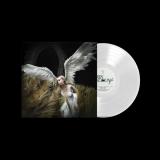
Erin LeCount - I Am Digital, I Am Divine
  • 1: I Am Digital, I Am Divine
  • 2: Marble Arch
  • 3: Sweet Fruit
  • 4: Godspeed
  • 5: Silver Spoon

To celebrate the year anniversary of its first release, Erin LeCount launches a limited edition transparent vinyl of her 2025 EP I Am Digital, I Am Divine. The tracklist includes viral hit Silver Spoon which amassed 300K Soundcloud streams before it had even been released, since amassing 21M streams in less than 12 months.
Available for pre-order on the 24th March and set for release on the 17th April 2026.
Erin LeCount is a 23-year-old self-taught artist and producer. A visionary sonic architect and the sole writer and producer of her music, her sound ranges from luscious baroque-pop arrangements to alluring gothic-pop. At the foreground of her music are diaristic lyrics and captivating synths which offer an enchanting interplay of vulnerability and power. The themes within her music explore everything from identity to relationships and the meaning of life. Erin’s influences include Fiona Apple, Kate Bush, Lorde, Imogen Heap, Charli xcx, and Sampha.
In May 2026, Erin LeCount will embark on her biggest run of shows to date with her new UK tour, entitled the ‘PAREIDOLIA Tour’, which will see her play dates in Manchester, Glasgow, Bristol, and London, the latter of which will take place at the Roundhouse in what is Erin’s largest headline show so far. This month, Erin was also announced on the line-up for Lorde’s All Points East date on Saturday 22nd August.

pre-order now17.04.2026

expected to be published on 17.04.2026

21,81
Annihilator - Carnival Diablos (2x12")

Annihilator

Carnival Diablos (2x12")

2x12inch4029759175254
Ear Music
17.04.2026
  • A1: Denied
  • A2: Battered
  • A3: Hunter Killer
  • A4: Time Bomb
  • A5: Carnival Diablos
  • B1: The Perfect Virus
  • B2: The Rush
  • B3: Insomniac
  • B4: Epic Of War
  • B5: Liquid Oval
  • B6: Shallow Grave
  • B7: Chicken And Corn (Hidden Track)

Carnival Diablos is an album of red-blooded metal that connected Annihilator’s legacy to their present-day and re-established Jeff Waters’ place in the thrash pantheon. From the frenzied call-and-response of album opener ‘Denied’ to the progressively-edged mid-tempo sway of the title track, Carnival Diablos is a wholly satisfying offering of steak and potatoes heavy metal thrash – more heavy metal, less thrash, but 100% Annihilator at one of their many peaks.

pre-order now17.04.2026

expected to be published on 17.04.2026

25,59
Flaer - Translations

Flaer

Translations

12inchODA06M
ODDA Recordings
16.04.2026

Artist and multi-instrumentalist Flaer embraces the search for quiet miracles on first full-length LP Translations.

In 2023, Realf Heygate - who makes music as Flaer - released his debut mini-album Preludes, composed on his mother’s piano and his childhood cello.Returning to ODDA for his debut full-length album, Heygate is now looking in another direction. A record that embraces transition and movement, Translations is in many ways more internal, less rooted to a single place and reflective of the process of laying new foundations in Cornwall.

Like Preludes, Translations is coloured with found sounds and field recordings, from the starlings which can be heard singing through the open window of his studio, to the brittle recordings of his mother, who was a linguist, learning Spanish on a set of language tapes. In both cases, Heygate embraced the translations and memories inherent to the sounds.

“When I digitised my mother’s tapes, they warped and stuttered in a very similar way to the starling’s song,” he explains. “They had this uncanny rhythm and pulse that I couldn’t quite decode, but was saying something." These decayed transmissions hint at loss, resisting clarity in favour of the ineffable.

Translations is also a record of ambiguities and in-betweens, suggested by the double meaning of the album’s opening track ‘Entre’. At once intricate and expansive, threaded with birdsong and acoustic guitar motifs, this and ‘Starling Descends’ (a reference to Vaughan Williams’ ‘The Lark Ascending’) act as a bridge away from the pastoral themes of Preludes towards a more assertive sound. At times intimate in its textured instrumentation and at others more overtly grand in orchestration, reflecting awider palette of influences.

“Flaer began in many ways when I picked up my mother’s instruments, seeking a form of reconnection. Where words evaded me, they became the tools through which I found a language for grief – and above all, for love.”

Recorded between 2023 and 2025 – what Heygate calls “A gradual process of sowing and harvesting ideas rather than a single intense creative period” - each track follows a rhythm similar to the small maquettes and sculptures he has been working on in his visual practice, whereby structures and melodies form intuitively in moments that are as rare as they are fleeting.

“It's that feeling of searching that I really enjoy,” Heygate continues. “I never know what the destination of the composition is going to be, and I never really find what it is."

Translations is released on limited edition off-white vinyl LP (500 copies worldwide) with one of five signed and numbered handmade risograph prints. It's also available as standard black vinyl LP and digitally.

out of Stock

Order now and we will order the item for you at our supplier.

22,65

Last In: 26 days ago
Guilty Razors - Complete Recordings 1977 - 1978

UILTY RAZORS, BONA FIDE PUNKS.


Writings on the topic that go off in all directions, mind-numbing lectures given by academics, and testimonies, most of them heavily doctored, from those who “lived through that era”: so many people today fantasize about the early days of punk in our country… This blessed moment when no one had yet thought of flaunting a ridiculous green mohawk, taking Sid Vicious as a hero, or – even worse – making the so-called alternative scene both festive and boorish. There was no such thing in 1976 or 1977, when it wasn’t easy to get hold of the first 45s by the Pistols or the Clash. Few people were aware of what was happening on the fringes of the fringes at the time. Malcolm McLaren was virtually unknown, and having short hair made you seem strange. Who knew then that rock music, which had taken a very bad turn since the early 1970s, would once again become an essential element of liberation? That, thanks to short and fast songs, it would once again rediscover that primitive, social side that was so hated by older generations? Who knew that, besides a few loners who read the music press (it was even better if they read it in English) and frequented the right record stores? Many of these formed bands, because it was impossible to do otherwise. We quickly went from listening to the Velvet Underground to trying to play the Stooges’ intros. It’s a somewhat collective story, even though there weren’t many people to start it.
The Guilty Razors were among those who took part in this initial upheaval in Paris. They were far from being the worst. They had something special and even released a single that was well above the national average. They also had enough songs to fill an album, the one you’re holding. In everyone’s opinion, they were definitely not among the punk impostors that followed in their wake. They were, at least, genuine and credible.

Guilty Razors, Parisian punk band (1975-1978). To understand something about their somewhat linear but very energetic sound, we might need to talk about the context in which it was born and, more broadly, recall the boredom (a theme that would become capital in punk songs) coupled with the desire to blow everything off, which were the basis for the formation of bands playing a rejuvenated rock music ; about the passion for a few records by the Kinks or the early Who, by the Stooges, by the Velvet mostly, which set you apart from the crowd.
And of course, we should remember this new wave, which was promoted by a few articles in the specialized press and some cutting-edge record stores, coming from New York or London, whose small but powerful influence could be felt in Paris and in a handful of isolated places in the provinces, lulled to sleep by so many appalling things, from Tangerine Dream to President Giscard d’Estaing...
In 1975-76, French music was, as almost always, in a sorry state ; it was still dominated by Johnny Hallyday and Sylvie Vartan. Local rock music was also rather bleak, apart from Bijou and Little Bob who tried to revive this small scene with poorly sound-engineered gigs played to almost no one.
In the working class suburbs at the time, it was mainly hard rock music played to 11 that helped people forget about their gruelling shifts at the factory. Here and there, on the outskirts of major cities, you still could find a few rockers with sideburns wearing black armbands since the death of Gene Vincent, but it wasn’t a proper mass movement, just a source of real danger to anyone they came across who wasn't like them. In August 1976, a festival unlike any other took place in Mont-de-Marsan – the First European Punk Festival as the poster said – with almost as many people on stage as in the audience. Yet, on that day, a quasi historical event happened, when, under the blazing afternoon sun, a band of unknowns called The Damned made an unprecedented noise in the arena, reminiscent of the chaotic Stooges in their early adolescence. They were the first genuine punk band to perform in our country: from then on, anything was possible, almost anything seemed permissible.

It makes sense that the four+1 members of Guilty Razors, who initially amplified acoustic guitars with crappy tape recorder microphones, would adopt punk music (pronounced paink in French) naturally and instinctively, since it combines liberating noise with speed of execution and – crucially – a very healthy sense of rebellion (the protesters of May 1968 proclaimed, and it was even a slogan, that they weren’t against old people, but against what had made them grow old. In the mid-1970s, it seemed normal and obvious that old people should now ALSO be targeted!!!).
At the time, the desire to fight back, and break down authority and apathy, was either red or black, often taking the form of leafleting, tumultuous general assemblies in the schoolyard, and massive or shabby demonstrations, most of the time overflowing with an exciting vitality that sometimes turned into fights with the riot police. Indeed, soon after the end of the Vietnam War and following Pinochet’s coup in Chile, all over France, Trotskyist and anarcho-libertarian fervour was firmly entrenched among parts of the educated youth population, who were equally rebellious and troublemakers whenever they had the chance. It should also be noted that when the single "Anarchy in the UK" was first heard, even though not many of us had access to it, both the title and its explosive sound immediately resonated with some of those troublemakers crying out for ANARCHY!!! Meanwhile, the left-wing majority still equated punks with reckless young neo-Nazis. Of course, the widely circulated photos in the mainstream press of Siouxsie Sioux with her swastikas didn’t necessarily help to win over the theorists of the Great Revolution. It took Joe Strummer to introduce The Clash as an anti-racist, anti-fascist and anti-ignorance band for the rejection of old-school revolutionaries to fade a little.

The Lycée Jean-Baptiste Say at Porte d’Auteuil, despite being located in the very posh and very exclusive 16th arrondissement of Paris, didn’t escape these "committed" upheavals, which doubled as the perfect outlet for the less timid members of this generation.
“Back then, politics were fun,” says Tristam Nada, who studied there and went on to become Guilty Razors’ frontman. “Jean-Baptiste was the leftist high-school in the neighbourhood. When the far right guys from the GUD came down there, the Communist League guys from elsewhere helped us fight them off.”
Anything that could challenge authority was fair game and of course, strikes for just about any reason would lead to increasingly frequent truancy (with a definitive farewell to education that would soon follow). Tristam Nada spent his 10th and 11th unfinished grades with José Perez, who had come from Spain, where his father, a janitor, had been sentenced to death by Franco. “José steered my tastes towards solid acts such as The Who. Like most teenagers, I had previously absorbed just about everything that came my way, from Yes to Led Zeppelin to Genesis. I was exploring… And then one day, he told me that he and his brother Carlos wanted to start a rock band.” The Perez brothers already played guitar. “Of course, they were Spanish!”, jokes their singer. “Then, somewhat reluctantly, José took up the bass and we were soon joined by Jano – who called himself Jano Homicid – who took up the rhythm guitar.” Several drummers would later join this core of not easily intimidated young guys who didn’t let adversity get the better of them.

The first rehearsals of the newly named Guilty Razors took place in the bedroom of a Perez aunt. There, the three rookies tried to cover a few standards, songs that often were an integral part of their lives. During a first, short gig, in front of a bewildered audience of tough old-school rockers, they launched into a clunky version of the Velvet Underground's “Heroin”. Challenge or recklessness? A bit of both, probably… And then, step by step, their limited repertoire expanded as they decided to write their own songs, sung in a not always very accurate or academic English, but who cared about proper grammar or the right vocabulary, since what truly mattered was to make the words sound as good as possible while playing very, very fast music? And spitting out those words in a language that left no doubt as to what it conveyed mattered as well.
Trying their hand a the kind of rock music disliked by most of the neighbourhood, making noise, being fiercely provocative: they still belonged to a tiny clique who, at this very moment, had chosen to impose this difference. And there were very few places in France or elsewhere, where one could witness the first stirrings of something that wasn’t a trend yet, let alone a movement.

In the provinces, in late 1976 or early 1977, there couldn’t be more than thirty record stores that were a bit more discerning than average, where you could hear this new kind of short-haired rock music called “punk”. The old clientele, who previously had no problem coming in to buy the latest McCartney or Aerosmith LP, now felt a little less comfortable there…
In Paris, these enlightened places were quite rare and often located nex to what would become the Forum des Halles, a big shopping mall. Between three aging sex workers, a couple of second-hand clothes shops, sellers of hippie paraphernalia and small fashion designers, the good word was loudly spread in two pioneering places – propagators of what was still only a new underground movement. Historically, the first one was the Open Market, a kind of poorly, but tastefully stocked cave. Speakers blasted out the sound of sixties garage bands from the Nuggets compilation (a crucial reference for José Perez) or the badly dressed English kids of Eddie and the Hot Rods. This black-painted den was opened a few years earlier by Marc Zermati, a character who wasn’t always in a sunny disposition, but always quite radical in his (good) choices and his opinions. He founded the independent label Skydog and was one of the promoters of the Mont-de-Marsan punk festivals. Not far from there was Harry Cover, another store more in tune with the new New York scene, which was amply covered in the house fanzine, Rock News (even though it was in it that the photos of the Sex Pistols were first published in France).
It was a favorite hang-out of the Perez brothers and Tristam Nada, as the latter explained. “It’s at Harry Cover’s that we first heard the Pistols and Clash’s 45s, and after that, we decided to start writing our first songs. If they could do it, so could we!”
The sonic shocks that were “Anarchy in the UK”, “White Riot” or the Buzzcocks’s EP, “Spiral Scratch” – which Guilty Razors' sound is reminiscent of – were soon to be amplified by an unparalleled visual shock. In April 1977, right after the release of their first LP, The Clash performed at the Palais des Glaces in Paris, during a punk night organised by Marc Zermati. For many who were there, it was the gig of a lifetime…
Of course, Guilty Razors and Tristam were in the audience: “That concert was fabulous… We Parisian punks were almost all dressed in black and white, with white shirts, skinny leather ties, bikers jackets or light jackets, etc. The Clash, on the other hand, wore colourful clothes. Well, the next day, at the Gibus, you’d spot everyone who had been at this concert, but they weren’t wearing anything black, they were all wearing colours.”

It makes sense to mention the Gibus club, as Guilty Razors often played there (sometimes in front of a hostile audience). It was also the only place in Paris that regularly scheduled new Parisian or Anglo-Saxon acts, such as Generation X, Siouxsie and the Banshees, the Slits, and Johnny Thunders who would become a kind of messed-up mascot for the venue. A little later, in 1978, the Rose Bonbon – formerly the Nashville – also attracted nightly owls in search of electric thrills… In 1977, the iconic but not necessarily excellent Asphalt Jungle often played at the Gibus, sometimes sharing the bill with Metal Urbain, the only band whose aura would later transcend the French borders (“I saw them as the French Sex Pistols,” said Geoff Travis, head of their British label Rough Trade). Already established in this small scene, Metal Urbain helped the young and restless Guilty Razors who had just arrived. Guitarist for Metal Urbain Hermann Schwartz remembers it: “They were younger than us, we were a bit like their mentors even if it’s too strong a word… At least they were credible. We thought they were good, and they had good songs which reminded of the Buzzcocks that I liked a lot. But at some point, they started hanging out with the Hells Angels. That’s when we stopped following them.”

The break-up was mutual, since, Guilty Razors, for their part, were shocked when they saw a fringe element of the audience at Metal Urbain concerts who repeatedly shouted “Sieg Heil” and gave Nazi salutes. These provocations, even still minor (the bulk of the skinhead crowd would later make their presence felt during concerts), weren’t really to the liking of the Perez brothers, whose anti-fascist convictions were firmly rooted. Some things are non-negotiable.
A few months earlier (in July 1978), Guilty Razors had nevertheless opened very successfully for Metal Urbain at the Bus Palladium, a more traditonally old-school rock night-club. But, as was sometimes the case back then, the night turned into a mass brawl when suburban rockers came to “beat up punks”.

Back then, Parisian nights weren’t always sweet and serene.

So, after opening as best as they could for The Jam (their sound having been ruined by the PA system), our local heroes were – once again – met outside by a horde of greasers out to get them. “Thankfully,” says Tristam, “we were with our roadies, motorless bikers who acted as a protective barrier. We were chased in the neighbouring streets and the whole thing ended in front of a bar, with the owner coming out with a rifle…”
Although Tristam and the Perez brothers narrowly escaped various, potentially bloody, incidents, they weren’t completely innocent of wrongdoing either. They still find amusing their mugging of two strangers in the street for example (“We were broke and we simply wanted to buy tickets for the Heartbreakers concert that night,” says Tristam). It so happened that their victims were two key figures in the rock business at the time: radio presenter Alain Manneval and music publisher Philippe Constantin. They filed a complaint and sought monetary compensation, but somehow the band’s manager, the skilful but very controversial Alexis, managed to get the complaint withdrawn and Guilty Razors ended up signing with Constantin with a substantial advance.

They also signed with Polydor and the label released in 1978 their only three-track 45, featuring “I Don't Wanna be A Rich”, “Hurts and Noises” and “Provocate” (songs that exuded perpetual rebellion and an unquenchable desire for “class” confrontation). It was a very good record, but due to a lack of promotion (radio stations didn’t play French artists singing in English), it didn’t sell very well. Only 800 copies were allegedly sold and the rest of the stock was pulped… Initially, the three tracks were to be included on a LP that never came to be, since they were dropped by Polydor (“Let’s say we sometimes caused a ruckus in their offices!” laughs Tristam.) In order to perfect the long-awaited LP, the band recorded demos of other tracks. There was a cover of Pink Floyd's “Lucifer Sam” from the Syd Barrett era – proof of an enduring love for the sixties’ greats –, “Wake Up” a hangover tale and “Bad Heart” about the Baader-Meinhof gang, whose actions had a profound impact on the era and on a generation seeking extreme dissent... On the album you’re now discovering, you can also hear five previously unreleased tracks recorded a bit later during an extended and freezing stay in Madrid, in a makeshift studio with the invaluable help of a drummer also acting as sound engineer. He was both an enthusiastic old hippie and a proper whizz at sound engineering. Here too, certain influences from the fifties and sixties (Link Wray, the Troggs) are more than obvious in the band’s music.

Shortly after a final stormy and rather barbaric (on the audience’s side) “Punk night” at the Olympia in June 1978, Tristam left the band ; his bandmates continued without him for a short while.

But like most pioneering punk bands of the era, Guilty Razors eventually split up for good after three years (besides once in Spain, they’d only played in Paris). The reason for ceasing business activities were more or less the same for everyone: there were no venues outside one’s small circuit to play this kind of rock music, which was still frightening, unknown, or of little interest to most people. The chances of recording an LP were virtually null, since major labels were only signing unoriginal but reassuring sub-Téléphone clones, and the smaller ones were only interested in progressive rock or French chanson for youth clubs. And what about self-production? No one in our small safety-pinned world had thought about it yet. There wasn’t enough money to embark on that sort of venture anyway.

So yes, the early days of punk in France were truly No Future!

out of Stock

Order now and we will order the item for you at our supplier.

21,43

Last In: 32 days ago
Aziz Balouch - Spanish Cante Jondo And It's Origin In Sindhi Music (BOOK)

66 pages, 175 x 129mm paperback w/ litho printed cover & french flaps.

The second outing for our short run book publishing imprint, The End books, takes the form of a reprint of Spanish Cante Jondo and Its Origin in Sindhi Music, originally published in Spanish in 1955 under the name Cante Jondo: Su Origen y Evolución and later in this English translation.

Aziz Balouch here presents his theory on the roots of flamenco's 'deep song' in modern-day Pakistan, a cultural journey that mimics the routes of his own life, having been brought up among the Islamic mysticism and devotional songs of Sindh before travelling to Gibraltar in the early 1930s and becoming transfixed with the cante jondo across the border in southern Spain. Positing this concept through personal accounts rather than solid theoretical backing, this text provides a valuable account of an extraordinary existence that crossed remarkable geographical, musical, and spiritual boundaries. Issued here with a new introduction from anthropologist of sound, the senses and Islam, Stefan Williamson Fa.

"It would be easy to place Balouch on the fringes, as an eccentric footnote in flamenco history. But that misses the shape of his life and work. He was a figure who moved intuitively across boundaries that our present categories of nation, genre, discipline tend to fix in place. His work predates the founding of the academic discipline of ethnomusicology, the global circuits of world music, and the marketplace logic of fusion projects by decades. He was not an ethnographer or a proto–world musician, but someone for whom the deep song of Andalusia and the devotional song of the subcontinent resonated along the same fault lines of feeling, and who spent his life trying to trace them.

This book is one of the few surviving traces of that attempt. To read it now is to encounter a perspective that resists tidy narratives of influence or origin, despite its title and what he claims to do. It stands instead as evidence of an idiosyncratic musical imagination, one that relied less on proof than on listening, and on the belief that certain echoes carry farther than history can easily explain."

— Stefan Williamson Fa

pre-order now10.04.2026

expected to be published on 10.04.2026

19,12
HYPER GAL - Our Hyper LP

HYPER GAL

Our Hyper LP

12inchLPGRA169C
Skin Graft
10.04.2026

HYPER GAL are restless. Since 2019, Kansai’s minimalist duo has been in persistent, perpetual motion.

In January of 2024, SKiN GRAFT Records introduced HYPER GAL to western audiences, giving the previously self-released album “Pure” a worldwide release. It was followed by “After Image”; a new full-length record; in September of that same year. In short order HYPER GAL left Japan to embark on a month-long European tour, performing at festivals such as Left of the Dial in Rotterdam and Le Guess Who? in Utrecht.

Consisting of Koharu Ishida (vocals) and Kurumi Kadoya (drums), HYPER GAL craft a sound all their own, characterized by avant-garde rhythms, looping landscapes, and hypnotic vocals. Their music resists traditional genre boundaries to carve out a truly singular sonic space.

With their fourth album “Our Hyper”, HYPER GAL thrust their sound into a deeper, harder core. Songs unfold into surprising shapes, embracing shadowy turns emboldened by a heavier low-end, while unearthing sharp takes on Japan’s harsh noise roots. The drums have grown even more acrobatic and unorthodox, while the vocals take on new colors, shifting from mesmerizing repetition to melodic, pop-tinged expression.

The album’s artwork is no less adventurous and features masks created by contemporary artist Tokiyoshi Akina and photographed in the band’s own hands, signaling resistance to the performative dualities of social media and a commitment to authenticity.
Despite the lean, unadorned two-piece setup, HYPER GAL’s music attains an intense and unmistakable presence - an unwavering momentum driven by an unrelenting intent. “Our Hyper” is HYPER GAL amplified.

"With each release they appear as mirage sculptors, using simple tools (drums, keyboards, vocals) in craft of multi-genre spanning work which only becomes more captivating the simpler their execution becomes...”
– MYSTIFICATION

pre-order now10.04.2026

expected to be published on 10.04.2026

25,17
Trummor & Orgel - Graceful degradation LP

Trummor & Orgel

Graceful degradation LP

12inchLPINTROS26002
INTROSPECTION
10.04.2026

The sibling duo behind the music on Graceful Degradation — organ and drums, nothing more, nothing less — carve out a sound that feels unmistakably organic in a world drifting steadily toward the synthetic. Their interplay is entirely live, subtle in its details yet dynamic in its momentum, built on the kind of instinctive communication only brothers can share.
The music is fully instrumental, unfolding in a borderland where dreamy retro pop dissolves into the hazy textures of shoegaze and the unruly pulse of noisy, electronic leaning jazz. It’s a sonic world that feels both familiar and elusive, nostalgic yet inherently restless. Melodies shimmer and blur, rhythms swell and contract, and the space between the notes becomes as expressive as the notes themselves.
What emerges is a sound that resists easy categorization: warm but unpredictable, intimate yet expansive, grounded in the physicality of two musicians performing in real time. The organ breathes like a living organism, shifting from soft focus ambience to swirling, saturated harmonics, while the drums move with a fluid, human elasticity — sometimes whisper quiet, sometimes erupting with raw, kinetic force.
In this in between terrain, the duo has always found its identity and its freedom. Their music doesn’t chase perfection; it chases presence. It embraces imperfection, celebrates spontaneity, and insists on staying alive in a landscape where so much is becoming weightless and automated.
This is instrumental music with a pulse: subtle, dynamic, and unmistakably human.

pre-order now10.04.2026

expected to be published on 10.04.2026

28,36
Various - Hospitality In The Park
  • A1: Jam
  • A2: Stuxnet
  • A3: Like What
  • A4: Honour
  • B1: Fatso Vip
  • B2: Shine Like The Sun
  • B3: (Nu Logic Remix)

The 10,000 strong party drew together DJs, fans, listeners, singers, live acts and MCs together to showcase every shade and style encompassing a 174 heartbeat. As the Finsbury Park fun continues and round two promising even bigger stage takeovers and a myriad of artist weaponry, we present an equally bursting drum & bass double disc, the 'Hospitality In The Park 2017' LP. In the same vein as our all- day summer special, this huge 70 track mash- up spans across a full 360' perspective of the genre; representing the established, up and coming, soulful, obscure, liquid, innovative, dark, techy, neuro, jungle style and everything in between.

Included are over 25 brand new exclusives from reputable drum & bass titans Danny Byrd, S.P.Y, Makoto and Keeno, there are VIPs from Metrik and Nu:Logic, remixes from Hugh Hardie, Total science, Camo & Krooked and Calibre, and a 'Bullet Proof' banger from Krakota. Across two mixed CDs we've drawn for this year's surefire summer weapons with Fred V & Grafix, The Prototypes, 1991, High Contrast, The Upbeats, Breakage in the mix. With this year's Incubator stage pulling artists that are rising through the ranks, up and comers' Whiney, Unglued, GLXY and Kyrist bring exciting new offerings to the compilation.

Both fans and artists came together from all over the globe last year and we expect no less in 2017. Equally, this compilation gives an international perspective covering all corners of the globe from Japan's Mountain, the USA's Flite and Ownglow, the Netherlands Black Sun Empire and New Zealand's Shapeshifter. Drum & bass is stronger than ever and it's here to stay. See you at the park!

out of Stock

Order now and we will order the item for you at our supplier.

12,82

Last In: 14 days ago
Lebanon Hanover - Besides The Abyss

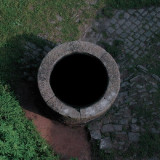
The album opens with the ominous guitar-driven Hollow Sky, accompanied by its haunting music video's verdant vistas. The song, with Iceglass ghostly vocals, shimmers with that sounds like an Omnichord flittering like sonic firefly lights and brooding bass. This perfectly scores the less traveled wanderings through the dark wooden path of Dante's perdition, leading to the titular well that graces the album cover. The Crater opens with an unsettling riff and bass, with low, repetitive frequencies on the synth create a sense of unease. Here, Iceglass recounts a fatalistic requiem for the king of romance that is cataclysmic and leaves a scar upon the earth. With Fall Industrial Wall, once again, Iceglass channels a silky and Nico-like emotive deadpan; against a dirgelike melody backed by minimal synth, bass, and drum. Almost medieval and plaintive, with its folk droning horns, deep and shallow in their resonance. This song is anachronistic, setting the scene of ruins centuries-old with crumbling edifices strewn about like memories lost in time. With the poetic lyrics of The Chamber do we find the eponymous abyss. Here, dualities are laid bare; besides love, there is heartbreak, and without this sorrow, what meaning would there be to love if one knows not what it is to lose? This song encapsulates the idea that love is heartbreak, and love lost is reaching the deepest chamber of the heart. This is carried through a sombre horn, minimalist drum machine, and deliberate bassline overlaid with Iceglass german and english lyrics. The Well is led in with a softly distorted bassline overlaid with eerie banshee howls give way to Iceglass otherworld vocal refrain, echoing through time as if emanating from a hole in the ground, and encircling that hole is a garden of woe and despair. The sinfully seductive song The Moor features a captivating SAX SOLO courtesy of Perseas; a welcome shift in tone, juxtaposed well with the intensity of Iceglass tenebrous vocal purr. This hitherto unexplored foray into dark sensuality takes the song into sordid mid 80s territory, bringing to mind a dusky drive along a serpentine road, with equally haunting instrumentations straddling time with icy fire. Broken Characters is an acoustic folk interlude featuring Selofan's Dimitris Pavlidis on guitar. Here we find a more gentle approach with its earnest and romantic lyrics. The song's melodic hook is a soft caress along with the forlorn horn elements highlighting Iceglass at her most Nico-sounding vocal yet, singing the sorrowful truth that most artists are indeed broken characters. Chimerical opens with dirgelike synth organs. The chill of winter has befallen the lamentations sung by Iceglass carried by haunting chord progressions and minimal percussion, plaintively beseeching the song's subject to remain elusive, idealistic, and a dreamer. After an album highlighting more Jill than Jack, our male protagonist finally makes his ascent in the sonorous and breathtaking Dark Hill, a masterful march of sweeping synth horns, and trepidatious drum machine with William Maybelline's bellowing voice cracking like thunder, rattling the atmosphere like his heart against his ribs. Spirals swirls in a cautionary knell of cathedral-esque droning synth dirge, with Icarian lyrics shining like a sombre ray of hope; like the sun's rays creeping into the darkest of places. The song, minimalist in its tight percussion, echoes with the solace of Larissa Iceglass vocal litany; invoking elements of the supernatural, almost like a Casio preset sequenced to the beating of an angel's wings.

pre-order now03.04.2026

expected to be published on 03.04.2026

21,43
Babes Of Enola Grey/artist] - Krieg und Wohlstand

[artist]Babes Of Enola Grey/artist]

Krieg und Wohlstand

12inchCRAVE011
Crave Tapes
03.04.2026

Crave Tapes is thrilled to announce the first vinyl release on the label which will be the second album from Frankfurt's underground post-punk/dark wave band Babes of Enola Grey, Krieg und Wohlstand.
Krieg und Wohlstand sees Babes of Enola Grey follow the path of their 2021 debut, Anfang vom Ende, and take a step further into the realm of melancholic and disillusioned soundscapes. While keeping a certain retro character to the songs, Deborah Vision, Salvador Islero and Fabian van Castorp focus on quite contemporary themes, which some might call the most German obsessions:
War and prosperity.
But this is not the only reference to the band's heritage. Sometimes more, sometimes less, there are musical allusions to various German influences and contributions to (modern) music and music history. While Doppelt Frei is a nod to EBM and bands like DAF or the early Die Krupps and Wie auf Schienen as well as Die Heuschrecken pay homage to German düster punk bands like Fliehende Stürme or EA80, Panik and the title track Krieg und Wohlstand refer to the romantic German art song tradition of the 19th century (not to mention the obvious hint at a certain successful German Schlager in Die Kugeln und das Herz).
This makes Krieg und Wohlstand not only a worthy epigone of the band's debut, but also takes the album and the artistic approach to another level.
Commenting on the chosen format (12" vinyl), the band members said: "It was clear to us that we wanted to release this album on vinyl. When you look atGerman history, war and prosperity have to be seen as two sides of the same medal, or in this case of a record".

pre-order now03.04.2026

expected to be published on 03.04.2026

17,61
Stacey Kent - A Time For love LP
  • 1: Lucky To Be Me (Leonard Bernstein)
  • 2: God Only Knows (Brian Wilson)
  • 3: The Shadow Of Your Smile (Johnny Mandel)
  • 4: La Javanaise (Serge Gainsbourg)
  • 5: As (Stevie Wonder)
  • 6: A Time For Love (Johnny Mandel)
  • 7: Trains And Boats And Planes (Burt Bacharach)
  • 8: What Goodbye Is For (Jim Tomlinson)
  • 9: Carinhoso (Alfredo Da Rocha Vianna Filho /Pixinguinha)
  • 10: E La Chiamono Estate (Bruno Martino)

Stacey Kent is an American jazz singer in the mould of the greats, with a legion of fans, a host of honors and awards including a Grammy nomination, album sales in excess of 2 million and more than one billion streams, and Platinum, Double-Gold and Gold-selling albums that have reached a series of chart-topping positions.

Stacey, a comparative literature graduate with a passion for music, travelled to Europe to further her studies after receiving her degree from Sarah Lawrence College in NY. Through a series of twists of fate, she found herself in London where she enrolled in a graduate music program at the Guildhall School of Music and Drama, where she met her future husband and musical partner, Jim Tomlinson.

Kent's musical journey began with childhood piano lessons. A keen ear and true voice lead her to search out opportunities to express her love of music. However, nothing suggested the shift from the academic path to the one that propelled her to international recognition as one of the foremost jazz singers of her generation. With a catalogue of 13 studio albums, including the Platinum selling, Grammy-nominated Breakfast On The Morning Tram (Blue Note/EMI 2007) and an impressive list of collaborations, Stacey has graced the stages of nearly 60 countries over the course of her career.

Her worldwide fan base is testimony to her ability to express the emotional heart of her songs with delicately nuanced interpretations that transcend borders and defy categorization. Her unique multi-lingual repertoire includes standards, chanson, Bossa Nova, and originals written by Jim Tomlinson, her saxophonist/producer/composer/arranger husband in collaboration with the Nobel Prize-winning author, Kazuo Ishiguro with whom they have worked since 2006. She has also recorded with Brazilian legends, Marcos Valle, Roberto Menescal and Danilo Caymmi, and the celebrated French string quartet, the Quatuor Ébène.

Stacey's last studio album, Summer Me, Winter Me, was released in November 2023 on Naïve Records. A collection of fans' requests from her as yet unrecorded concert repertoire, Summer Me, Winter Me entered the French jazz charts at number 1 and has quickly established itself as a new highlight in her discography. She now returns with A Time For Love.

pre-order now03.04.2026

expected to be published on 03.04.2026

25,63
Items per Page:
N/ABPM
Vinyl