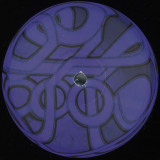
The first and most independent of all independent producers, Joe Meek needs little introduction. He was the first to chart in both the UK and the USA with an independently produced song -which was actually recorded in his home’s kitchen- when The Tornados' Telstar took the world in 1962. Meek was, of course, one of the most in vogue producers of the first half of the 1960s, providing the soundtrack to the evolution of UK Rock’n'Roll to Swinging London, scoring hits with actors like John Leyton (Johnny Remember Me), showmen like Screaming Lord Sutch and bands like The Outlaws and The Tornados. He also produced a wide stream of R&B and freakbeat 45s that are nowadays hardly sought after by the collectors with the biggest bank accounts.
Joe Meek experimented with all kinds of recording techniques in his home studio, his tricks and gimmicks won his productions chart placement and critical and public acclaim, but none of his projects was so advanced and way out as the avantgarde experimentation showed in his I Hear a New World electronic symphony from 1960. Aided by The Blue Men formed by Rod Freeman (group leader, guitar, vocals), Ken Harvey (tenor sax, vocals), Roger Fiola (Hawaiian Guitar), Chris White (guitar), Doug Collins (bass), Dave Golding (drums) -also known as Rodd-Ken and The Cavaliers- who provided a tight base to his electronically produced sounds, Meek came up with what he envisioned as the soundtrack of the future, the sounds he envisioned were to be heard in outer space. It was too way out for its time, certainly. To the point that of all the opus, only four tracks saw the light of day on a 7" EP released on Triumph, Meeks very own label. It wouldn’t be until 1991 that the whole recordings from the I Hear a New World sessions would see the light of day on a CD issued by the RPM label.
Wah Wah offers a new reissue of this now classic early electronics masterpiece, housed in a beautiful front-laminated back-flapped sleeve and offered as a limited 400 copies only black vinyl version and an ultra-limited 100 copies only transparent purple vinyl. Get yours before they fly!
RIYL : Delia Derbyshire and The BBC Radiophonic Workshop, Louis and Bebe Barron’s soundtrack to Forbidden Planet, Raymond Scott, Tom Dissevelt & Kid Baltan, Morton Subotnick…
Search:light up
For many all-time-great rock bands in the ascendant, the fourth album is often the point where youthful years of febrile creativity and progressive momentum culminate in a masterwork for the ages, setting the seal on an early signature sound while opening it up to future possibilities. From enchanting 2016 debut Prelude, through 2018's assured II: Sojourn, to 2020's wizardly III: Pentecost, each Wytch Hazel album has embodied that old-fashioned notion of unstoppable progress, and the glittering treasure chest that is IV: Sacrament proves eminently worthy of rising to the toughest challenge. Not just the Lancashire quartet's most classically beautiful production, but their strongest yet front-to-back collection of affecting hooks and ageless melodies.
Unreleased electronic / jazz / madness from two titans of jazz and experimentation: JOHN SURMAN and KARIN KROG.
I could now write a load of blown up puffery about how amazing this is, but everyone does that, and a lot of the time it’s all a load of bollocks. But basically this was sent to me by Karin / John when I asked if they had anything hanging about that had not been released. This came through and blew my tiny mind. Like something from prime Annette Peacock “Pony” period. Here is what John Surman said…
John Surman writes:
Back in 2012/13 there had been some talk about a big futuristic open air urban dance/theatre production for about 80/100 actors/dancers with lasers and all kinds of lighting effects on different stages. I was invited to get involved and, together with Ben and Karin, we eventually decided to get to work on some ideas. I think that the original plan was that in performance there would be a mixture of live music and electronica.
Not altogether surprisingly, bearing in mind the complexity of the project, it never moved forward and developed into anything more than an interesting idea. It was probably over ambitious & I guess the funding never came through.
The only information I that I can find relating to the production refers to two silent movies made in 1927/1928 by the filmmaker Eugene Deslaw, entitled `La Marche Des Machines´ and `Les Nuits Électriques.These were clearly intended to act as inspiration for the project.
After months turned into years it became obvious that the project was going nowhere, and so the recorded music laid around gathering dust until Johnny Trunk asked Karin if she had any interesting music that he might be interested in releasing. One thing led to another and so, finally, Electric Element found a home!
For anyone interested in the equipment used this will have to be an approximation since the memory might be playing tricks. Karin was probably using a Yamaha Rex50 f/x unit, a Roland VT-3 Voice Transformer and an Oberheim Ring Modulator. I was playing Bass Clarinet and Contrabass Clarinet through various f/x units together with a Yamaha WX5 wind synth. All the instruments and voice were also processed through Ben´s equipment. After writing this I asked Ben for his recollections and he came up with the following:
John, Karin and I created this music in 2 or 3 days in the winter of 2013 at their studio in Oslo, Norway. I followed up with another 2 or 3 days of mixing, editing and post-processing . We kept a collaborative, improvisational and free-form approach to the sessions. I grew up immersed in music such as Cloudline Blue, the 1979 duo album of Krog/Surman, and this felt like a similar approach. I have mixed sound for many of their live duo concerts and I would use effects and electronics as an
accompaniment and counterpoint to the performed music. The relation of organic and artificial sound sources in music has always fascinated. In this case, I used some contemporary digital signal processing to introduce my own aesthetic into the conversation, in particular using granular synthesis to recombine small 'clouds' of sound into alternate forms. Some of the software tools I used included Ableton Live, Max/MSP and Reaktor.
Markantonio returns to vinyl with Radici, a bold statement that dives deep into his origins, both in name and sonic identity. This four-track EP marks a pivotal moment in his artistic journey, bridging the raw energy of early techno with his signature funky groove-driven approach.
A vital force in shaping the Neapolitan techno identity since 2001, AnalyticTrail now takes a new step in its evolution with the release of Radici. Markantonio, the label's founder and one of Italy's most influential techno figures, makes a striking return to the forefront. This release doesn't just mark his comeback to vinyl, it reflects a renewed connection to his roots and a forward-thinking vision that continues to drive the underground movement.
Opening with Welcome to Disco, the A-side sets the tone with an infectious rhythm, pulsating basslines, and shimmering synths that light up the floor with hypnotic flair. Rising Dutch talent Isaiah delivers a bold reinterpretation with his Rework, injecting a darker, more driving edge layered with brooding atmospheres and relentless percussion. On the B-side, the title track Radici dives deeper into tribal-infused territory, blending hypnotic loops with raw percussive energy, while Groover rounds out the EP with a stripped-back, minimalist roller designed for late-night momentum.
A must-have for techno lovers, Radici captures the essence of where it all began and where it's headed next.
- A1: Rockstar Guest – Richie Sambora
- A2: World On Fire
- A3: Every Breath You Take
- A4: Open Arms
- B1: Magic Man
- B2: Long As I Can See The Light
- B3: Either Or
- B4: I Want You Back
- C1: What Has Rock And Roll Ever Done For You Featuring – Stevie Nicks Guest – Waddy Wachtel
- C2: Purple Rain
- C3: Baby, I Love You Way Featuring – Peter Frampton
- D1: I Hate Myself For Loving You Featuring – Joan Jett & The Blackhearts
- D2: Night Moves Featuring – Chris Stapleton
- D3: Wrecking Ball Featuring – Miley Cyrus
- D4: (I Can't Get No) Satisfaction Featuring – Brandi Carlile, P!Nk
- E1: Keep On Loving You Featuring – Kevin Cronin
- E2: Heart Of Glass
- E3: Don't Let The Sun Go Down On Me Featuring – Elton John
- E4: Tried To Rock And Roll Me Featuring – Melissa Etheridge
- F1: Stairway To Heaven Featuring – Lizzo, Sasha Flute
- F2: We Are The Champions
- F3: Bygones Featuring – Rob Halford Guest – John 5, Nikki Stixx
- F4: My Blue Tears Featuring – Simon Le Bon
- G1: What’s Up? Featuring – Linda Perry
- G2: You’re No Good Featuring – Emmylou Harris, Sheryl Crow
- G3: Heartbreaker Featuring – Neil Giraldo, Pat Benatar
- G4: Bittersweet Featuring – Michael Mcdonald
- G5: I Dreamed About Elvis Featuring – Ronnie Mcdowell Guest – The Jordanaires
- H1: Let It Be Featuring – Paul Mccartney, Ringo Starr Guest – Mick Fleetwood, Peter Frampton
- H2: Free Bird Featuring – Ronnie Van Zant Guest – Artimus Pyle (2), Artimus Pyle Band, Gary Rossington
- A1: East At Easter
- A2: Up On The Catwalk
- A3: Book Of Brilliant Things
- B1: Glittering Prize
- B2: King Is White & In The Crowd
- B3: Speed Your Love To Me/'C' Moon Cry Like A Baby
- C1: Someone Somwhere In Summertime
- C2: Promised You A Miracle
- C3: Big Sleep
- D1: Waterfront
- D2: New Gold Dream (81-82-83-84)/Take Me To The River/Light My Fire
Civilistjävel! x Mayssa Jallad’s ‘Marjaa: The Battle of the Hotels (Versions)’ is a radical response to Mayssa Jallad’s 2023 original LP, a lyrical account of epochal events in Beirut at the dawn of Lebanon's civil war. ‘…(Versions)’ sees Civilistjävel! (aka Swedish producer Tomas Bodén) apply a stripped, dub methodology to Mayssa's rich stems, refracting the Arabic source through the hazy prism of Northern European electronica. Retaining ‘Marjaa…’s deep spatial framing and vaporous, shifting nature, traces are lifted and set down in a new landscape: a ghost of a ghost. Informed by Tomas' singular strand of ambient, minimalist, dub techno, ‘… (Versions)’ recalls the reductive, shimmering pulse of pioneering Berlin-based practitioners Basic Channel/Chain Reaction, but with the parameters stretched into the ether. Where versions typically focus on a rhythm, here the anchor is the tone and texture of Mayssa’s voice, around which a new world has been constructed. Disembodied and liminal, it conjures an eerie panorama that feels like a postscript to the original, further emphasizing the geopolitical events that have had such devastating effect in Mayssa’s homeland of Lebanon since that record’s release. ‘Marjaa…’ (tr. ‘reference’) combined Mayssa Jallad’s two main vocations: music and urban research/architectural history. The album was co-written with Fadi Tabbal and based on Mayssa's Historic Preservation master's thesis (‘Beirut’s Civil War Hotel District: Preserving the World’s First High-Rise Urban Battlefield’). The thesis examined a 5-month conflict that took place within Beirut's skyscraper-laden luxury hotel district of Minet El Husn near the start of the Lebanese Civil War. Addressing a post-war generation who have never been taught this difficult history, ‘Marjaa…’ was an attempt to process trauma, and “a call to protest for the renewal, rather than the recycling of the political class that once destroyed the country and holds us, to this day, hostage of its violence.” Often perceived as a mysterious, shadowy presence, Civilistjävel! has come increasingly to the fore in recent years through a consistently dazzling stream of records, released both anonymously and via Fergus Jones’ FELT imprint, often appearing with scant information and tracks for the most part untitled. Having featured tracks from ‘Marjaa…’ on mixes, and included the album in his picks of 2023, in early 2024 Tomas asked Mayssa to provide vocals for a track on his album ‘Brödföda’. Mayssa remembers, “Tomas asked me to choose one of the tracks he was working on. I was in Boston at the time, so I took a walk and chose a track. I wrote the lyrics at the public park, wondering if I was the only one around that was losing sleep over the genocide in Palestine and the war in South Lebanon. I went back to the apartment and recorded the vocals on my phone, while listening to the track on headphones. Tomas reworked it with the voice and sent it back. I liked it immediately.” Despite the geographical distance from Beirut to Uppsala, Sweden, where Tomas resides, Mayssa’s contribution sounds very much at home in Civilistjävel!’s atmospheric, contemplative sound-world. Tomas’ request was reciprocated by Mayssa soon after, resulting in the spectral, glassy ambience of ‘Etel, Kharita (Version)’. This was followed by an invitation to work on more tracks, which Tomas immediately embraced, intensively jamming out versions live to two-track tape in downtime between travelling. If not entirely dissimilar to his regular working practice, the immediacy of it was unusual. Much was improvised live with just a keyboard (not tethered to a grid), and a restricted set-up that largely forbade later edits - only the rhythm tracks are programmed. A sharp conceptual thinker and composer, Tomas takes creative liberties with Mayssa’s songs in a way that is deeply felt and sympathetically aligned, whilst unashamedly outside of the original context of the record. The voice is leaned into as an instrument, without the clear, specific details of language, and this axis provides an uncertain, amorphous footing - structure is often suggested or hinted at, before disappearing or collapsing into fog, and folding back into the message within the song. A somewhat unprecedented source for an album of versions, even those familiar with ‘Marjaa: The Battle of the Hotels’ may at points struggle to hear the songs these versions are rebuilt from, despite the vocal narratives remaining virtually intact. The light has shifted; eroded buildings are foregrounded; fragments of memories appear in chiaroscuro. Signs and signifiers have been replaced. Shorn of the original's warm guitar, ‘Baynana (Version)’ feels like an ominous visitation, the sun no longer visible. ‘Holiday Inn (March 21 to 29) (Version)’ is a molten, clattering invocation. The beat-less tracks nod towards the cold, otherworldly sound-scaping of late '90s isolationism. More propulsive and embodied, ‘Holiday Inn (January to March) (Version)’ and ‘Kharita (Dub)’ are strobing, iridescent techno - lithe, shifting and mutating with almost implausible finesse. A stunning addition to Civilistjävel!’s growing catalogue, ‘…(Versions)’ is a luminous counterpoint to ‘Marjaa…’, and a welcome reminder of how incredible that record remains.
Sub Basics's Temple Of Sound is back with new music from Henry Greenleaf who appears under his new moniker, Greenteeth. It is a project he is clearly using to cook up smart back room minimal sounds going off this evidence: 'Loxton' is a slow motion and prowling groove but one with deep, menacing bass and nice louche percussion. 'Jungle Love' is another subversive sound with a snaking rhythm and dubby low ends, dusty hi hats and late night mischief. Last of, 'On & On & On' plays out over all of the flipside with shuffling drums that are light and airy and topped with wispy drones. It's delightfully hypnotic.
- Sauna Motif I
- Päiväkahvit
- Afternoon Springs
- Go North
- They Came In Through The Front Door (Fadi Tabbal Rework)
- Tropic Movements (Amulets Rework)
- Bottles + Birds
- Sauna Motif Ii
- The Vala River (Чудья Жени – Post-Dukes Rework)
- Badminton On The Shore
- Miten Aloittaa
- A Pale View Of Dem Hills (Jeremy Young Rework)
- Veden Yli
When the trio of Sontag Shogun gathered at Laura Naukkarinen's home on the Finnish island of Kimitoön in the summer of 2019, they had not the slightest inkling that the world was about to change irretrievably with the onset of a long-predicted pandemic the following year. By the time their collaborative album, Valo Siroutuu ("The Light Scatters"), was released nearly two years later, the intimate and reflective nature of the work they had created together had taken on new meaning, resonating powerfully (and quietly) with a world in which the proverbial cracks in the wall only seem to be widening.
Päiväkahvit completes the story that began with Valo Siroutuu, featuring 9 songs from the original sessions as well as 4 interpretive reworks courtesy of Amulets, Fadi Tabbal, Post-Dukes, and Jeremy Young. Available digitally and in a one-time vinyl pressing of 300 copies, the album flows seamlessly from beginning to end, incorporating field recordings, tape, sublime vocal melodies, and a host of acoustic and electronic instruments. Richly textured and immersive, Päiväkahvit positively crackles with warmth and a sense of creative embrace.
"We invite the listener into the sauna, out to the garden and onto the trampoline, to sit by the water’s edge and to take a coffee in the waning afternoon light, and to stay as long as they like." – Jesse Perlstein
Lau Nau, aka Laura Naukkarinen, is a Finnish composer whose music is imbued with an idiosyncratic, finely honed sound world. Her palette consists of acoustic instruments, singing voice, modular synthesisers, reel-to-reel tape recorders and field recordings. To date Lau Nau has released ten albums on record labels in Europe, the USA and Japan and a large number of collaborative releases. Lau Nau is known for her music to films and multi channel sound installations. She was awarded the Finnish State Prize for the Performing Arts 2021 as a sound designer. She has toured abroad for over 20 years, playing in venues such as Super Deluxe in Tokyo, the Lab & Castro Theatre in San Francisco and Blank Forms & Issue Project Room in New York.
Sontag Shogun is a collaborative trio that makes use of analog sound treatments and nostalgic solo piano compositions in harmony to depict abstract places in our memory. Textures built from organic materials such as sand, slate, boiling water, brush and dried leaves, both produced live in performance and recorded to weathered 1/4" tape warm up the space between lush piano themes. All of which is abstracted coolly in the reflective digital space of treated vocals and a live-processed feed from the piano. Bringing us back, like a faded passing scent or any natural emotive trigger, but to where? The wordless journey there will inevitably be more revealing than the destination itself.
- Madre Cumbia
- Cumbia Moderna
- Pa Mi Muneca
- Esta Como Mango
- Recordando A Santa Marta
- Porrito Choco
- Lucerito
- Cumbia De Recuerdo
- Oreju
- Cumbia Suave
- Cumbia De Santa Marta
- Isla De Providencia
In 1966, Oscar Agudelo recorded this elusive and lesser-known collector's gem called "Pa' mi muñeca" for Discos Fuentes. It is a rarity where the artist took an unexpected musical turn and performed several porros, paseaitos, gaitas, and cumbias, evoking the swaying motion and rolling waves of Colombia's Caribbean sound. It resonates with the echoes of a romantic minstrel laced with an unexpected richness of nuance, a hallmark of the cumbia sound. It's exactly the kind of music that lights up a tambó or a fandango circle on carnival night. A dozen tracks, none of them new, but suffused with a consciousness that can be understood within the context of their time and with the personality of the artist bold enough to bring them to life. 'Madre cumbia' opens the album with a festive, nostalgic mood, infused with the simple beauty and the electrifying beat of the tropics that immediately makes you want to get up and dance. It's a fantastic example of how to perform a song with passion and make the listener fall instantly in love with an album. 'Pa' mi muñeca', the title track, is a fast-paced paseaito that explores new paths that took a shortcut to the dance halls. A showstopper on the dance floor. 'Está como mango' is a porro-cumbia that charms with a rich tapestry of compliments, the calling card of many old-school tropical songs. 'Cumbia de recuerdo', 'Cumbia suave', 'Cumbia de Santa Marta', are back-to-back cumbias. This is an album devoted to recreating the strength of a musical genre that's been the soundtrack of Colombian life for decades. It's a record dedicated to capturing good times, filled with simple dreams, steeped in joyful energy, and shining with the uninhibited flair, or better said, the quality of the sixties. This album represents a milestone on the route cumbia had taken, both for Discos Fuentes and maestro Agudelo. First time reissue. Includes liner notes by genre expert Don Alirio.
- 1: Expressions Of Regret (Feat. Remo Helfenstein) – Live At B-Sides 2024
- 2: Where We Broke Off – Live At B-Sides 04
- 3: Unsung – Live At B-Sides 2024
- 4: As Bright As A Burning Star – Live At B-Sides 202
- 5: About Atonement – Live At B-Sides 2024
Grown through collaboration, Samuel Savenberg’s EP As Bright as a Burning Star stands for a music that evolves and becomes newly tangible in the very moment of performance.
The live EP captures a concert by Savenberg and his band, recorded at the 2024 B-Sides Festival on Sonnenberg near Lucerne. In this setting, the concert with his close musical companions takes on a life distinct from the studio recordings it draws upon, casting the music in a new light: more immediate, vibrant, and warmer.
As Bright as a Burning Star features newly interpreted pieces from Unsung—Savenberg’s 2023 album released via Präsens Editionen—alongside two new songs. The title track had existed in a similar form since 2016 but had never been released—until it was rediscovered by chance during preparations for the concert. The second new piece, "Expressions of Regret", features vocals by Remo Helfenstein, a longtime friend and fellow Präsens Editionen artist.
As Bright as a Burning Star is a labor of love—shaped by shared musical histories and lasting friendships. It is available on cassette tape, for streaming and as a digital release via Präsens Editionen.
Samuel Savenberg is a composer and producer based between Lucerne and Berlin. Following the release of Unsung in 2023, he has presented selected remixes and live performances—the latter mostly in a band setup—and collaborated with other artists, taking on a variety of roles.
Founded in 2011 in the process of launching zweikommasieben, Switzerland-based publishing house and music label Präsens Editionen has released music on vinyl, cassette, CD, and digital formats—alongside magazines, books, and other printed matter. Audio releases include works by Anna Homler, Robert Turman, Belia Winnewisser, Samuel Reinhard, Martina Lussi, and Magda Drozd & Nicola Genovese’s Sopraterra.
* Edition of 66 professionally dubbed cassette tapes (colored)
* Special artwork by Denise Haeberli at INTR in custom snapbox
* Free DL
- A1: Private Property
- A2: Wrack My Brain
- A3: Drumming Is My Madness
- A4: Attention
- A5: Stop And Take Time To Smell The Roses
- B1: Dead Giveaway
- B2: You Belong To Me
- B3: Sure To Fall (In Love With You)
- B4: Nice Way
- B5: Back Off Boogaloo
- C1: Wake Up
- C2: Red And Black Blues
- C3: Brandy
- D1: Stop And Take Time To Smell The Roses (Original Vocal Version)
- D2: You Can't Fight Lightning
- D3: Hand Gun Promos
The first and last Inga Copeland album"
The 2013 album, pressed in a limited qty. Features: Scratcha DVA / Scratchclart .
Premium material from the artist now recording as LOLINA. Big TIP!!!
- A1: The Light 5:13
- A2: Pavane 5:08
- A3: Maiden Voyage 6:21
- B1: On The Road 9:55
- B2: The Sword 5:33
- C1: Dragon Song 4:34
- C2: I Wanna Take You Higher 5:50
- D1: Oblivion Express 8:37
- D2: Listen Her 4:53
Recorded on October 17th, 1970, just months after his previous group Brian Auger, Julie Driscoll and The Trinity had split up, this the first ever live Oblivion Express recording, captured on tape a year before this influential group released their first album. The set list includes early versions of their debut album’s tracks and amazing covers, including Herbie Hancock’s ‘Maiden Voyage,' Gabriel Fauré’s ‘Pavane,’ and Brian’s take on Sly and The Family Stone’s ‘I Wanna Take You Higher,’. The 12-page booklet features the band’s history from its formation, with Brian Auger recalling how festival organiser Claude Nobs gave the group this early opportunity.
Sneaker Social Club welcome a veritable supergroup of bass heavyweights in the form of Legion. Made up of Trends, Boylan, P Jam and D.O.K., this four strong collective first came to light with the We Are Many 12" on Artikal Music in 2021, and now they regroup for another four-strong payload of soundsystem pressure that embraces the darkness in devastating fashion.
The Sister Abigail EP leads with 'Rastaman', an ice-cold half-step drop that summons the spirit of early dubstep in its raw minimalism, eerie atmospherics and snarling low-end wobble. Without an ounce of fat, it's a lean workout of drums and bass that finds catharsis in simplicity without compromising on high definition detail. 'Souls' locks into a jerky groove to set the dance off at acute angles, nudging the textures up a notch without disturbing the spartan mood of the release. 'Sister Abigail' pushes the underlying malevolence of the Legion sound to the forefront with dissonant sheet-metal tones while packing the rhythm section into a tight, vicious formation of gnashing, chrome-plated teeth. 'Play That Vibe' seals the deal on the EP with a hard-thumping, propulsive groove that calls to mind the techy development of dubstep in the 2010s — a taut, tracky throwdown to keep the intensity on a rolling boil.
Drawing on the grounding principles of OG dubstep with a sharp line in crisp, modernist production and a ruthless economy of arrangement on display, Legion prove many cooks can still result in a potent, brutally focused broth.
- A1: Space Drift
- A2: Memory Loss
- A3: Siren-Call
- A4: Harmonisers Of The Spheres
- A5: Telepathy Beyond Time
- A6: Older Than Time
- A7: Congestion Hoe-Down
- A8: Shadowland
- A9: Celandine & Columbine
- A10: The Dying Of The Light
- A11: Cloud
- A12: Darkness At Noon
- A13: Future Perfect
- A14: The Killing Skies
- B1: Into The Depths She Calls
- B2: Lazy Summer Afternoons
- B3: Insects Revolt
- B4: Blood Runs Cold
- B5: Post Apocalypse Fog
- B6: Fish Don’t Cry
- B7: Ghost In The Abbey
- B8: Insects Dance
- B9: Dreams Of Magic & Cornfields
- B10: Devil’s Lightening
- B11: Danger Hurts
- B12: Why Me?
First ever release of pioneering radiophonic / experimental / electronic / soundtrack composer you may never have heard of but really should have by now. 26 tracks in all.
As we began the mammoth task of whittling down material for this album Elizabeth recalled the time she met Delia Derbyshire. It was during a party for existing and former Radiophonic Workshop composers at BBC Maida Vale in the early 1980s. Delia introduced herself with typical energy and exuberance proclaiming "It's up to you now - I'm passing the baton. Show these men how we get things done". That must have been quite an honour and responsibility for a young, female composer establishing herself within the male-dominated environs at Delaware Road.
Looking back over a musical career spanning almost five decades, it's clear Elizabeth rose to the challenge and made her mark. She was consistently in demand with television and radio producers, composing for an array of ground-breaking, critically acclaimed and popular BBC projects. Whilst Delia's legacy has achieved mythical status with her position as an innovator and feminist icon secured, the majority of Elizabeth's recorded work remains unavailable so her contribution to the output of the Workshop and evolution of British electronic music is somewhat under-appreciated.
Perhaps this record will help start to remedy the situation. Included are early tape experiments, home demos and non-BBC commissions from the early 1970's to the late 2000s. Having listened to 260+ digital audio tapes from Elizabeth's personal archive we have barely scratched the surface but hope to provide an indication of the breadth of her compositional and sound design skills.
Classically trained in cello and piano, Elizabeth graduated from the University of East Anglia with a degree in Music in 1973. She was mentored by Tristram Cary who helped her to become UEA's first recipient of a Masters in Electronic Music and later awarded an Honorary Doctorate by Staffordshire University. Joining the BBC as a studio manager in 1975, Elizabeth transferred to the Radiophonic Workshop in 1978. One of her first tasks was to create special sound effects for Blake's 7 using tape loops, the EMS 100 and trusted VCS3.
Her celebrated score for The Living Planet in 1982 featured early use of the PPG synthesizer and earned an Emmy nomination. Over the following years studio technology evolved rapidly, but Elizabeth transitioned from analogue recording techniques to newer digital platforms with relative ease, using samplers, midi sequencing and computer controlled workstations.
With an incredible 1,400 commissions to her name, she created special sound for The Day Of The Triffids, Lord Of The Rings, countless radio dramas including Iris Murdoch's The Sea, The Sea, Harold Pinter's Moonlight, all of Howard Barker's plays, productions of King Lear, Wordsworth's Prelude and The Pallisers. The success of The Living Planet led to further work for the BBC Natural History Unit followed by numerous commissions for The Natural World. At one point in the late 1980's at least five of her signature tunes were being broadcast every week including Points Of View, Horizon, Doctors To Be and Everyman.
After the closure of the Workshop in 1996 Elizabeth became freelance, arranging Faure's Pavane for the BBC World Cup '98 coverage (reaching no. 9 in the UK singles chart). She wrote additional music for Monty Python's Holy Grail DVD, scored Michael Palin's Full Circle and Sahara TV series, The Lost Gardens Of Heligan and The Human Body with Robert Winston.
Retiring from the music industry in the late 2000's, Elizabeth recently returned to her East Anglian roots and now lives near the coast. She walks daily, listening to all kinds of music, new and old, on her beloved air-pods.
- A1: Original
- B1: Instrumental
First single from the Smith Brothers’ upcoming second full-length album, Street Light Moon, released on Ubiquity. Recorded in Austin, Texas, and produced by Adrian Quesada (Black Pumas) at his Electric Deluxe studio.
- Kyrie Ii
- Semblance Of Dualism
- Low Of Solipsism Ii
- Death Note Theme ~Intrumental~
- Tactics Of The Absolute
- Kyrie For Ochestra
- Air
- Light Lights Up Light For Piano
- Dark Light
- L’s Barrier
- Throbbing
- Uneasiness
- Air Of Tension
- Higuchi
- Shiver B
- Conference Room Of Yotsuba Murders
- Anger
- The World Of Death Gods B
- L’s Friend
- Misa’s Theme A
- Misa’s Theme B
- Intro
- Sakura Tv
- The Reasoning
- The Secret
- The Sound Of Hands On The Clock
- Suspicious
- Yotsuba Group
volume III[34,66 €]
Light Yagami, a gifted young student, one day picks up the "Death Note", a notebook previously kept by a shinigami (God of death), Ryuk, who apparently was bored in his world. Just write the name of a person in this notebook, and this one dies (according to certain conditions that the shinigami will explain to Light during their meeting). Thus, with the "Death Note" in hand, Light decides to rid the planet of all criminals to make it a just world, a perfect world. However, who is he to judge people? He therefore becomes the worst wanted criminal on the whole planet.. Two composers and arrangers composed for this work: Hideki TANIUCHI (HAJIME NO IPPO, NANA) and Yoshihisa HIRANO (FINAL FANTASY, HUNTER X HUNTER).
- A1: Death Image
- A2: L
- A3: L’s Past
- A4: Near’s Theme
- A5: Mello
- A6: Mello 2
- A7: Action
- B1: L’s Ideology
- B2: Mello’s Theme
- B3: Confronting
- B4: Near
- B5: Misa
- B6: Misa’s Video
- B7: Misa’s Loneliness
- C1: Light Has Returned
- C2: Doubt
- C3: Tactics
- C4: Near 2
- C5: Light’s Performance
- C6: Misa’s Feelings
- C7: Father’s Death
- D1: Misa’s Song (Orchestra Version)
- D2: Mikami Concertino
- D3: Trifling Stuff
- D6: Misa’s Song
- D7: Coda – Death Note
- D4: Toward The Climax
- D5: Misa’s Song (Piano Solo)
volume II[35,50 €]
Light Yagami, a gifted young student, one day picks up the "Death Note", a notebook previously kept by a shinigami (God of death), Ryuk, who apparently was bored in his world. Just write the name of a person in this notebook, and this one dies (according to certain conditions that the shinigami will explain to Light during their meeting). Thus, with the "Death Note" in hand, Light decides to rid the planet of all criminals to make it a just world, a perfect world. However, who is he to judge people? He therefore becomes the worst wanted criminal on the whole planet.. Two composers and arrangers composed for this work: Hideki TANIUCHI (HAJIME NO IPPO, NANA) and Yoshihisa HIRANO (FINAL FANTASY, HUNTER X HUNTER).