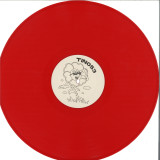
Considered an underground classic by many, XL Middleton's “Tap Water” was released at the height of the fervor over 'modern funk' music, brought to life by Dam Funk & carried on by a small but dedicated cadre of artists including Middleton. Always in demand, “Tap Water” has become scarce in the aftermarket and demands collector-level prices when it does sell; thus a reissue was inevitable.
Mentions in LA Weekly, The Wire (UK), Washington Post
DJ support from: - J Rocc
- Soul Clap
- Dam Funk
- Walla P (Voyage Funktastique)
- Tim Zawada (Star Creature, Numero Group)
- WeFunk Radio
XL Middleton has continuously toured the US and internationally throughout Europe, as well as Japan, China, & Canada.
Поиск:like a tim
Все
Sun Yellow LP[21,22 €]
Clear Vinyl
Blue Lake is the musical moniker of American born, Copenhagen based multidisciplinary artist and musician Jason Dungan, who signs to the Tonal Union imprint for the release of his new longform album ‘Sun Arcs’. It follows 2022’s release ‘Stikling’, earning a nomination for ‘Album of the Year’ at the Danish Music Awards plus warm praise from The Hum blog and musicians and DJs alike including Jack Rollo (Time is Away/NTS) and Carla dal Forno. A self taught player, Dungan began freely experimenting with self-built multi-string instruments, preferring to build his own hybrid 48-string zither and working in the realms of left-field ambient music, off kilter folk and improvised acoustic minimalism.
The starting point of ‘Sun Arcs’ saw Jason travel for a week alone to Andersabo, a cabin set in the idyllic Swedish woods just outside of Unnaryd, known also as the music project, festival and residency space which has been run by Dungan since 2016, hosting artists like Sofie Birch, Johan Carøe and Ellen Arkbro. Whilst writing 1-2 pieces per day, a conscious decision was made to leave behind everyday distractions and shut out the outside world to instead focus on the natural passage of time as Dungan recalls: “My only sense of time came from these daily walks out in the woods with my dog, and an awareness of the sun’s path as it moved across the sky each day.”
The album’s immersive world unfolds with the opener ‘Dallas’, an ode to his home state and a musical synthesis of these two disparate spaces (Texas and Denmark), the touchstones of Dungan’s life. A folk-esque single acoustic builds to a flowing arrangement of clarinets, organ and cello drones coupled with percussion. ‘Green-Yellow Field’ chimes in as the first of two solo oriented zither recordings twinned with the dreamlike title track ‘Sun Arcs’, both densely rich as cascading and overlapping harmonic tones resound. ‘Bloom’ emerges with a krautrock psyche before an eruption of cello drones, slide guitar and free-ranging zither playing, ushering in the anticipation of spring. With half of the recordings conceived in Andersabo, Jason returned to Copenhagen to form the album's centre piece ‘Rain Cycle’ which features a tempered Roland drum machine alongside shifting zither improvisations. ‘Writing’ explores the shimmering harp-like qualities of sweeping playing figurations with Dungan mapping out adjusted tuning “zones” on the zither for unconventional but creatively liberating effects. ‘Fur’ captures the feeling of openness and the momentum of time, seeing Dungan perform waves of solo clarinet, often in one takes and embellished with textural drones, a zither solo, and layers of guitar. ‘Wavelength’ the album's closer is fondly inspired by the film works of Michael Snow and Don Cherry’s seminal live album ‘Blue Lake’ (1974), as it builds out from a drone-generated zither chord and features an alto recorder solo. Dungan found a deep connection to Cherry’s stripped back performance ethos, focusing on the core beauty of minimal instrumentation creating a genre-less meeting between folk and jazz. A dialogue is formed between the solo and the bandlike performances, interlinked in a geographical duality with all finding a sense of commonplace as musical sketches of visited landscapes. The bountiful instrumentation ebbs and flows as further layers emerge with Dungan constructing his material much like an artist would, recording and reviewing, adding and subtracting.
Musically it portrays a form of double life led by an American-identifying person living in Scandinavia, and a new found presence in Denmark, seeking out underdeveloped marshlands and barren stretches of beach adrift from other rhythms and distractions. Highlighting their individual and potent importance Dungan concludes: “Both places feel like “me”, I think on some level the music is always some kind of self-portrait.” ‘Sun Arcs’ depicts the intricate balance of nature’s cycles and the paths outlined by the seasons, from a winter dormancy to a warm sun drenched scene. The album scales new glorying heights and further defines Dungan’s musical narrative, inhabiting a unique space in left-field, improvised and experimental music, borning his most accomplished compositions to date. A singular and visionary expression, drawing on an array of instruments and sound worlds with a renewed sense of joy and discovery.
The album's rich tapestry was mixed by Jeff Zeigler (Laraaji, Mary Lattimore, Kurt Vile /Steve Gunn) and mastered by Stephan Mathieu (Kali Malone, KMRU, Félicia Atkinson).
White vinyl, limited to 500 copies. Liam Cromby, known for his work as the lead singer and songwriter of We Are The Ocean until 2017, has today announced his forthcoming debut solo album What Can I Trust, If I Can't Trust True Love, due for release on December 1st 2023, also sharing the title track, available to stream/download worldwide now. "Drawing from my own experiences, this song is a testament to those early, fragile moments of a relationship_where every misstep feels like a fall and every kind gesture feels like flying," he explains. "Choosing to name the album after this song was instinctive, given that it was among the final tracks to be crafted. Even though it came later in the creative journey, it perfectly embodies the central theme of the album." Since revealing the first taste of new music in March, with the release of `Here I Am' - accompanied only by a contemplative, artful film featuring an elaborate dance between two performers - followed by `Breakdown', and last month, `At This Table', this new phase of his career is already off to an impressive start. With early airplay from BBC Introducing and Absolute Radio Country among others, an appearance at The Great Escape festival and sold-out headline shows across the country, Cromby was invited to play at the prestigious Black Deer Festival of Americana, and along with a full-band set, joined Brandy Clark, Drake White, Elles Bailey and Bella White for a Songwriter Session. Although recorded in a matter of days, the project was at least five years in the making.
From the Dolls-meets-the-devil opening title track to the desperate Sister Lovers-adjacent finale "The Findings," The Interrogator is thirteen vibrant, crackling, scary and hilarious songs which taken together represent nothing less than a thorough and thrilling moral inventory of our decadent and depraved times. Following up and doubling down on the themes of last year's lionized cult favorite For Executive Meeting, Elizabeth Nelson has authored an album as politically potent and pointedly hilarious as antecedents like The Mekons' Rock 'n' Roll and Neil Young's on On the Beach and wed it to the sound of ZZ Top's Eliminator. As writers like Rob Sheffield and Robert Christgau have known for years Elizbeth Nelson has been one of our very best songwriters for going on a decade. On the charged anthem "Bad Day for the Group Chat" she reassesses the current state of affairs: "I have bested all my peers." “Elizabeth Nelson showcases the simultaneously fraught and giddy frequency of our weird, wired world. The Paranoid Style may be the bearer of bad news, but at least the band bears it smashingly.” NPR // “You’ll forgive them for being critic’s darlings because they’re also the goddamn life of the party.” SPIN // Features performances by Peter Holsapple of The dB’s, Continental Drifters & REM through out. Elizabeth Nelson writes for the Oxford American, N.Y. Times, Pitchfork, The Ringer and more. She has over 15,000 followers on Twitter. A
repressed !
Say what you wanna say, but you have to give Strahil Velchev this: the man's a powerhouse. Recording and playing live under the KiNK alias, he went on to become one of finest purveyor's of funk in techno and house. What it is, by definition, ain't exactly clear. And that is the beauty of it.
KiNK's music is unifying in the best possible way. Channeling the spirit and feeling of a time where it didn't really matter who the faces behind the music were, KiNK plays with the elements of genres and sub-genres as if the future of it all is still wide-open. At the same time it could be accused of retro-fetishism, as much as the Pope himself is infallible.
The pure need to recreate moments, feelings and experience - rather than carbon copies of existing designs - was what started KiNK's production work. Hailing from Bulgaria, it was nearly impossible to get your hands on all the records and music that fed into a system of raves, clubs and record shops that seemed far away from Sofia, and financially it might as well have meant another galaxy. Wanting to DJ without having access to the tracks that spun the carousel meant that you had to create them yourselves. So, here we go with a private bootlegger gone public mastermind and one of the loudest voices in house, techno and beyond.
From KiNK's early productions with Neville Watson to his smash-hit for Ovum, a cerebral album for Macro, tons of remixes & tracks and his mind-bending live act, Playground seems to take all that into a blender. Simultaneously a sound-summary, the harvest of a field of ideas, and the exhibition of an artist in his prime, it also works as a sort of KiNK dictionary: avant-garde soundscapes stand next to boisterous bangers, classic club tracks and peak time emotions find their idiosyncratic and contemplative counterparts - all of it coming down like a torrent in a drought.
Warehouse find!
While the German producer Martin Matiske averages a new release under his given name every few years, there was a long stretch of time in which sightings of his Blackploid alias were much more rare. After dropping an EP for Frustrated Funk in 2006, fans found further material hard to come by over the next decade or so. However, Matiske has reinvigorated Blackploid in recent times, with the project making a few compilation appearances and dropping a couple of EPs across 2020.
That run now culminates inCosmic Traveler, a four-track affair which marks Matiske's debut appearance on Sheffield's Central Processing Unit. Given the long wait, it's great just to see Blackploid back among the fray once again. But for the project's CPU curtain-raiser to be an EP of such high-quality techno jams? Now that really is spoiling us.
Cosmic Traveler's title nods towards the sort of stargazing aesthetics one finds in classic Detroit techno. However, while there are undoubtedly ties to the Motor City in this music, the record ultimately steers less towards spacious atmospherics and more towards the taut, lean machine-funk of seminal practitioners like Dopplereffekt.
Matiske sets his stall out from the off. Opener 'Electric Engine' begins with a run of stiff-necked 808 kicks before hissing hi-hats, a grizzly bassline and all manner of futuristic sounds enter to warp the tune into hyperspace. Following cut 'Night Drive' repeats the trick of 'Electric Engine' but adds a pleasingly dinky synth lead in order to nudge itself slightly towards bleep-techno territory.
The two cuts on Cosmic Traveler's B-side are pure late-night goodness, a pair of mid-set heaters primed for dark basements. 'Pleasure Activism' delivers on the promise of its title and then some, pushing the Kraftwerk template to extremes by bringing a load of gnarly synth lines into play over a wobbling acidic chug. Finally, EP closer 'The Race' is reminiscent of both the twisted machine-funk of Gerald Donald's Japanese Telecom project and the playful modern evolutions of artists like fellow CPU high-flyer Jensen Interceptor.
The resurgence of Martin Matiske's Blackploid project continues withCosmic Traveller, an EP of timeless electro-funk and techno.
FFO: Dopplereffekt, Japanese Telecom, Jensen Interceptor, Cardopusher
The organic minimalism of composer and producer Kirk Barley is collected on his new studio album Marionette, released via Odda Recordings.
Whether drawing from field recordings, found sound, instrumental improvisations or synthetic processes, Barley’s compositions evoke unfolding sound worlds, as simple ideas or motifs are layered and developed into complex set-pieces that reveal themselves over time.
Marionette showcases the breadth and variety of the Yorkshire-born artist’s sound, weaving together familiar and uncanny moods of rural England and its Victorian architecture, as suggested by the gated garden print of the album’s cover. Unfurling between physical textures – the patina of vinyl crackle or gentle rain – and the hyper-real spaces that his music inhabits, Barley describes the compositions as “landscape or static scene paintings,” with many of the album’s tracks taking nature’s rhythms as their compositional cue.
On ‘Seafarer’, this manifests in the repeated synth swells of a boat on rough waters, while title track ‘Marionette’ imagines an eerie scene, were shadows flicker by an open fire. Similarly,‘Lake of Gold’ layers plucked strings at different scales and velocities to create what Barley calls the “rain-like quality” of the rhythm.
Drawing from jazz, minimalism and techno, Barley focuses on the detailed qualities of sound, experimenting with time signatures, temporals and tuning systems. His esoteric alter-ego Bambooman (2013-2018) found a home on Matthew Herbert’s Accidental imprint, releasing the album Whispers in 2017.
In contrast, under the pseudonym Church Andrews (most notably in collaboration with drummer Matt Davies), he produces synthetic, often beat-focused music, using digital synthesis and algorithmic composition techniques, with the live drum performances triggering and modulating Barley’s synths. The duo has recently performed at festivals such as Rewire and Waking Life, filmed sessions for Fact Magazine and Slate & Ash, and recently had their music played out by Aphex Twin.
Under his own name, Barley released his debut album Landscapes in 2019 on 33-33 Records and received support from the likes of NTS Radio and BBC 6 Music. Barley has performed at events across the UK and Europe alongside the likes of Andy Stott, Beatrice Dillon, Jan Jelinek, MF DOOM and Madlib. He has also completed commissioned work for the British Art Show, Camden Arts Centre, MSCTY and the Open Music Archive.
During the Tang dynasty (around the 9th Century CE), traveling intellectual Li Yuanming would routinely leave home to write and debate poetry with likeminded scholars across China, isolating his wife Cifu for sometimes weeks on end.
Frustrated, she found comfort in the arms of a widowed neighbor, but when Li remained at home for an unexpected stretch of time, Cifu was prompted to develop a method to signal her lover it was safe to approach. She stitched a special green hat that she handed to her husband as he was about to leave town; when Li was wearing the hat, it worked like a traffic signal - green meant go.
But this didn't last for long, during one trip Li returned home early and caught Cifu and their neighbor together, and when the local community caught wind of the story, the green hat became an enduring symbol of infidelity.
On Tzusing's sophomore album the Malaysian-born artist, who lives between Shanghai and Taipei, meditates on China's complicated history of patriarchal heteronormativity, and how these archaic double standards continue to dominate the culture in pervasive, often invisible ways.
When Paul Murphy released his critically acclaimed debut solo album, Claremont 56, in 2006, many thought it would be the first of many. In a way, it was, as in the years since he’s released a string of collaborative sets alongside Benjamin J Smith (as Smith & Mudd), and as part of underground ‘supergroups’ Paqua, Bison and Hillside. But that second solo album? Well, it just had to wait. In early 2023, Murphy finally decided to scratch that itch, roping in some of his most trusted collaborators (keyboardist and bassist Michele Chiavarini, percussionist Patrick Dawes, guitarist Dave Noble and HF International’s Kashif included) to lay down a sumptuous set of tracks that not only showcases his now familiar (bit hard to pigeonhole) neo-Balearic sound, but also proves how much he has matured as a writer and producer since 2006.
In The Garden of Mindfulness is richly musically detailed, expertly arranged and full to bursting with fluid instrumental solos, with Murphy and his collaborators serving up tracks that brilliantly blur the boundaries between languid jazz-funk, downtempo, vintage synth-laden krautrock, dubby grooves and sun-splashed soundscapes. It simply sparkles from the moment that opener ‘Eighty Three’ slowly rises like the morning sun, with gentle, undulating synth sounds ushering in a slow-motion jazz-funk excursion rich in twinkling electronics, spacey pads and warming bass. Recent single ‘Katanaboy’, a lusciously layered dub disco-infused dancefloor excursion in Murphy’s familiar style, raises the temperature a touch, before ‘Bonne Anse’ and the sublime ‘Unka Paw’ (whose combination of evocative fretless bass, extended electric piano solos, Clavinet licks and acoustic guitars is genuinely spellbinding) invite a combination of wavy shuffling and flat-on-the-back, eyes-closed appreciation.
And so it continues, with gorgeous title track ‘In The Garden of Mindfulness’ making way for the boogie-influenced, Japanese-British brilliance of ‘Hangsang’ (check the jaunty pianos, yearning breakdown and exotic melodies). Murphy’s long held love of warm, weighty bass, hypnotic disco grooves, colourful analogue synth sounds and jazzy guitars once again comes to the fore on ‘Way Of The Hollow’ before the album reaches a fittingly triumphant conclusion with ‘Late In March’.
A neat sonic summary of all that makes the set such a rewarding and entertaining experience, repeat listens reveals a wealth of musical details, from off-kilter triple-time drums and surprise bass guitar solos, to impeccable piano solos (provided by the immensely talented Chiavarini), fizzing jazz-funk synth doodles and stirring synth-strings. It’s a breathlessly brilliant way to end an album that was genuinely worth waiting for.
For their first album, Seth Troxler and Phil Moffa joined forces and became multidimensional creative dissidents Lost Souls Of Saturn. This time, even further into the vortex, they’ve metamorphosed into sci-fi AR comic characters John and Frank who’ve explored the galaxy and returned with this perception-melting new LP.
Although ‘Reality’ still possesses the wigged-out conceptual brilliance which garnered installations and performances at Saatchi Gallery (London), Fondation Beyeler (Basel), The Metropolitan Museum of Art (NYC), and Museum of Contemporary Art Detroit, plus live sets at Field Day, Glastonbury and Kappa Futur, as its title might suggest, there’s vividness amidst the mind-bending. Where its predecessor was a murky exploration of weird and dark cerebral passageways, this album – though still fathoms deep – has a dazzling clarity of sound, as if listeners are beginning to crack the arcane codes, and reach for enlightenment.
A prime example of these newfound beams of light guiding participants through the maze is their recent single; the chugging cosmic techno synth pop of ‘Mirage’, featuring the voice of Adam Ohr. Also guesting on the album is Lvv Gvn, whose honeyed Billie-Holiday-meets-Rickie-Lee-Jones tones adorn the tranquil pixelated broken beat of ‘Click’, Greg Paulus’s trumpet sessions on ‘Zorg Arrival’ and ‘Scram City’, and Protomartyr’s vocalist Joe Casey and guitarist Greg Ahee, who grace the liminal drifting celestial plane of ‘Lilac Chasers’. Sitarist Rishab Sharma, the last disciple of guru Ravi Shankar, also shreds on ‘Scram City’.
Elsewhere, across the LP’s immensely inventive instrumental passages techno, dub, house, jazz, psych and ambient are vapourised into an expansive yet pleasingly concise series of morphing dream states. Fans of Air Liquide, Ravi Shankar, Ray Manzarek, Carl Craig, Pole, The Orb and ‘Son Of A Lung’ era FSOL should find much to like.
“I like to work with a variety of instruments and set ups,” says Mark Van Hoen, sometimes known as Locust or Autocreation but here working under his own name on the excellent Plan For A Miracle, his first physical release of solo music since 2018’s Invisible Threads. ”Sometimes it’s literally in my studio, with all the hardware electronics available. Sometimes the laptop, using software instruments. Some of the tracks on this record were recorded in the desert (Joshua Tree) using a 4-track tape machine and small modular synthesiser set up. Each track was recorded in different location using different instruments, which accounts for the distinction between each piece. It’s also about my own reaction to my environment, and what’s going on in my life at the time.”
The Croydon-born Van Hoen started musical life in the early 1990s, signing for R&S records in 1993 but developing his own, myriad and distinctive style across a range of releases on Touch, Editions Mego and other labels, using a battery of instruments, including analogue synthesizers and taking a number of different approaches to recording, rather than ploughing a single sonic furrow. He has worked on a number of collaborations, including with Nick Holton and Neil Halstead of Slowdive, under the moniker of Black Hearted Brother - their Stars Are Our Home was released in 2013. “I have known Neil Halstead since 1992,” says Van Hoen. “He shared a house with me for a couple of years, and the music I was making and listening to along with clubs I was attending had an influence particularly on Pygmalion, the final Slowdive album on Creation.”
Each track on Plan For A Miracle does indeed sound like a world unto itself, a mini-environment, a weather condition, an ecosystem created for the moment. It’s a collection of tracks recorded over the past few years, released on Bandcamp - despite his apparent absence, Van Hoen works constantly. Opener “Climates”, in its exquisite limpidity, feels like a homage to Brian Eno, one of his most formative influences in his teen years, commencing with Music For Films, which he bought in 1979. “This Is For Them”, feels like a ghostlike throwback to early drum & bass or electronica, reminiscent of his own, earliest outings. “There have been a number of requests from labels to make some more music like my very early releases on R&S,” says Van Hoen. “This is part of ‘letting go’ and realising that there’s nothing less creative about going back to those styles again.”
“Pencil Of Spheres” is something else again, a magnificent, imaginary glass structure, shimmering, refracting, without visible means of suspension, a thing of impossible beauty. “Electric Lights” evokes an abandoned fairground, its lights still pulsating, its music lingering. “The Underpass”, meanwhile, insofar as it reminds of anything at all, is faintly reminiscent of Cluster or Neu’s! West German ambience, the urban mundane rendered magical, the sodium lights, the whitewashed walls. The reverberant, faintly oriental chimes of “Insight” transport us yet again, burgeoning and intensifying.
The landscapes, the skyscapes rendered on Plan For A Miracle feel unpopulated as a rule - but when he does introduce vocal elements, Van Hoen has a history of doing so to spectacular effect - think of “Real Love” from 1998’s Playing With Time, the seductive intonation of its title recurring throughout like a series of massive holograms, echoing, stuttering, breaking up, surging. Here, there are just the faintest of vocals, barely distinct, disquieting. “There’s been a bit of a game changer in recent times,” explains Van Hoen. “AI software that enables you to extract vocals and instrument parts from virtually any recording. That means sampling individual parts from existing sources is no longer limited to the original mix exposing certain parts soloed. The vocal parts I use are from multiple sources and often pitch shifted altered rhythmically and melodically.“ There’s further vocal chatter on “I Really Do”, proceeding at a faster pace as if giving chase, or being pursued - distant, enigmatic. “The Music”, meanwhile, its beat tolling, lost in its own fog of static, features a curious intonation, like the ghost of a lost Walker Brother.
Sadly, the album’s title is in reference to a personal tragedy on Van Hoen’s part - the loss of his wife. Titles such as “I Won’t Give Up”, which faintly reminds of another Eno masterpiece, Another Green World, in its nautical hurly-bury, or the pastoral strains of “Mrs Who”, heavily clouded with sadness, seem to allude to this. “In fact the record was recorded entirely before she passed away,” says Van Hoen, “most of it before she even became very ill. The title was given to the album when it started to look like she wasn’t going to make it beyond a few months. It was something Osho said - “plan for a miracle” - so it was a statement of hope. Unfortunately it was not to be.” Although the album is non-thematic, non-specific in its atmospheres, sound paintings, elegant structures it most certainly stands as a magnificent monument to Osho’s memory.
-David Stubbs.
Meltheads have been spreading wildfire on stages in Belgium and The Netherlands for a good while now, driven by the metronomically tight rhythm section of Tim Pensaert (bass) and Simon de Geus (drums), and fuelled by the razor-sharp and skilful guitar of Yunas de Proost. And then there’s frontman Sietse Willems, a man born to be on stage, like Morrison, Plant and Iggy Pop in one brutal and gnarly package. On 9 February they will be releasing the long-awaited debut album ‘Decent Sex’. The album kicks off with the title track, linking Stooges to The Doors, and not beating about the bush: it’s going to be at breakneck speed, and it’s going to be loud. Just 30 minutes later, once the final notes of fever dream Melvin have died out, ‘Decent Sex’ leaves you knocked out on the floor after an insane trip along blaring post punk, visceral noise, sweeping psych and good old rock ‘n’ roll. Part of the world is already turning its head, as renowned radio stations like KEXP and Radio X Manchester are picking up songs like I Want It All and Theodore, and fellow Antwerp based rock legends dEUS took them on tour, even as far as London’s Electric Brixton. Influential music magazines like Visions (DE), Clash and DIY (UK) dug up superlatives – and comparisons to The Birthday Party – for Theodore, a song about looking for (self) love, but also about the mess drug use can lead to. All not very uplifting, and most themes return in several songs, like the dark side to relationships and sex (White Lies, Decent Sex), or toxic masculinity (Vegan Leather Boots, Theodore again) and even politics (No One Is Innocent, Arbeit). Pretty heavy stuff, but wrapped in the highly infectious and piercing guitar rock Meltheads are serving, it’s going like a bomb. Decent Sex is out on 9 February, followed by release shows in Belgium, The Netherlands and Paris. At the end of January, Meltheads will vigorously kick off the year with a show at the highly influential ESNS showcase festival, where the part of the world that is still in blissful ignorance will get to know the brute force of Meltheads.
Decent Sex by Meltheads, released 9 February 2024, includes the following tracks: "Vegan Leather Boots ", "White Lies ", "No One Is Innocent ", "Gear " and more.
Specimen Records will kick off with "Zero Plague" January 2024 after a long hiatus from 2022 through to 2024. Specimen are now proud to present such a prolific artist as MANASYt whose level production has reached so many labels, along with extensive Dj work throughout Europe.
Zero Plague - another neurovision broadcast by replicant agent MANASYt. The opener - is a dystopian death march anthem, guided by a rolling snare, thick kick and throbbing bass. Arpeggios sounding like wasps on acid hover in the background, adding to the atmosphere of imminent danger!
Angellust - a hectic breathless industrial electro monster. Fuzzy distorted bass is driving us through a dark desolate territory. Complete with chaotic claps, minor synth stabs, a siren-like clinical pad and Petar's hopeless vocals (reminiscent of his days fronting metal bands).
Next is the Pestilent Mix for SNS Sensation new wave masterpiece "Mirror Radio". Sebastian is also the voice of UK duo Heartbreak (with synth wizard Ali Renault). Petar says : "It's a very impulsive work that sounds nothing like the original! Blending two different beats, mangled voices and psychotic off-kilter leads. Total madness."
First on the flip is the Novichok Mix for Poladroid. Petar and Vadim go way back to Roulette Rekordz in 2003, so this colab is natural, to say the least. It's the only time where the tempo slows down a bit on this EP. Bubbling worm-like bass, metallic percussion, cold windy pads and a classic electro lead take you on a journey to a soulless barren planet.
At last "In Deep Tongues". A heady schizophrenic exercise. A commanding beat, a grotesque polka bass followed by a paranoid synth lead pull you through a darkened maze with no exit. Underwater gurgles and fearsome corroded effects fill the air, no escape!
After 20 years, MANASYt hasn't slowed down or mellowed his intense immoderate sound one bit! And "Zero Plague" is undoubtedly a true testament to that!
He is an artist who couldn't care less about trends or hype, and whose main driving forces authenticate passion for this genre. Some of his tunes resemble future horror movie soundtrack, others a visit to a mental clinic, but most sound like what hostile aliens would listen to while attacking Earth.
Bulgarian dark mastermind Petar Tassev Manayst has been rocking his brand of Nuroelktro since 2003. He is responsible for a vast array of menacing titles on labels such as Touching' Bass, Kommando 6, Musar, and the infamous Bunker, along with 40 others.
MANASYt is currently based in Xiamen, China.
Creeping through an imaginary border, sidesteppin’ through the night like cyber phantoms eavesdropping on early morning machinery shifts, an industrial solstice for pagan mystics. After five years Torino’s mysterious SabaSaba are back with ‘Unknown City’ an imaginary soundtrack for a dystopian city: digital raga, horror Exotica, half-speed techno, metallic dub and organic electronics.
The duo of Andrea Marini (synth, guitar, electronics, tapes) and Gabriele Maggiorotto (drums, percussion, effects, programming) return with their most political manifesto yet, an intricate musical essay inspired by China Miéville’s novel ‘The City And The City’, examining border control, repression, an unknown city where people move like ghosts without personality and without communicating, monitored on sight by the authorities. SabaSaba’s personal OST is a whirlwind of analog and digital instruments colliding, textured samples, syncopated drums and spiritual synth sweeps often heightened by Ambra Chiara Michelangeli’s eerie viola playing, an ancestral force resisting under a cement tower, modulars gasping for air, endlessly reverberating into noir-soul and gray landscapes.
Like Miéville’s two imaginary cities Ul Qoma e Besźel, SabaSaba’s journey is cavernous, claustrophobic at times, but a clear sense of evasion and resistance breaks through, small flickers of light, like a cyborg calibrating himself - the hypnotic dub ambient of ‘False Speech’ - for an ecstatic liberation - the trance inducing ‘Wrists Free’ featuring UK industrial techno duo Jerome. ‘Ul Qoma’ unites
The latest release on An’archives, Suikyō, documents a first-time meeting between three Japanese improvisers: Takashi Masubuchi on guitar and harmonica; Ayami Suzuki on voice and electronics; and Tomo on hurdy-gurdy. Recorded at Permian on the 29th of January, 2023, it’s a stunning, forty-minute long improvisation of rare artistic sympathy. Notably, it was the first time the trio had performed together, though Masubuchi and Suzuki have prior form as a duo; on the evening itself, the trio performance was preceded by solo sets from Suzuki and Tomo, which served as a kind of introduction, of sorts, to the broader aesthetic visions of two of the musicians on Suikyō.
Masubuchi, Suzuki and Tomo make for a fascinating trio, not only due to the shared musical sympathy that’s clear from their performance, but also due to their histories, and the way these dovetail on the music you hear on Suikyō. Masubuchi has recorded a number of stunning solo albums for guitar and has also improvised with a number of musicians: you can hear his responsiveness and thoughtful playing on albums alongside Suzuki, Taku Sugimoto, Straytone, Shizuo Uchida, Takahiro Kawaguchi, and more. Suzuki’s work for voice has been documented on several solo cassette releases, and in consort with Tetuzi Akiyama, Rob Noyes, Leo Okagawa, Aidan Baker and Tobias Humble. And Tomo’s music can be heard on a small clutch of solo CDs, as a member of Tetragrammaton and Archeus, and in collaboration with Junzo Suzuki.
The way their instrumental voices meld together on Suikyō, though, is evidence of a capacity both to draw from these histories, and to take these collective knowledges to new places. And sometimes, unexpectedly old places: Masubuchi notes that his guitar on this set took him back to the rock and blues he used to play, perhaps in earlier groups like Pelktopia, which he suggests contributes to “the psychedelic mood” of Suikyō. Tomo’s hurdy gurdy matches this by pulling drones out of the air or allowing melodies to slowly morph and envelop the listener – their development, at times, reminds me of troubadour music from Occitanie.
Suzuki’s presence is equally compelling and curious. Her voice is an eternally flexible instrument, and whether it sits unadorned within the soundworld magic’d into space by Masubuchi and Tomo, or slips between the cracks thanks to subtle use of electronic effects, it has a quality about it that is both otherworldly – at times, the voice soars and pirouettes – and thoroughly, deeply grounded, of this earth, a most human and intimate encounter. There is a lovely consort between Suzuki and Tomo, the voice and hurdy-gurdy shadowing each other: as Tomo notes, “the hurdy gurdy has been an instrument played to accompany singing since the Middle Ages.” For Suzuki, the performance was “psychedelic and hedonistic in a good way,” but it wasn’t simply given in to that experience: “we were at the same time looking at it from an objective point of view.”
That feels like the right way to approach Suikyō: as a performance that both sets the mind and ears spinning, but with a careful, thoughtful, and considerate objectivity to its moment-by-moment development. It’s also incredibly gorgeous. As a first encounter, it’s surprising in both its comfort and its challenge: and as Masubuchi says, the playing together feels just the way it had to be: “instinctive, unintentional, and inevitable.”
Culled from three 1985 gigs in the UK during a transitional and transcendent time in the band’s story, Sonic Youth’s The Walls Have Ears appeared / disappeared as a 2LP set in 1986, not just a live album but an artful tapestry full of live experimentation with songs, between-song tape segues, darkness, humor and audio verité. It’s now issued for the first time officially under the band’s auspices.
The ’85 shows were the second time the band appeared on UK soil, Brits now getting juiced to the mythos of the emerging guitar-slinging American independent underground; an art / punk band from NYC sporting casual attitudes and tees sporting Bruce Springsteen, Madonna, and Prince made some good press copy on top of their bludgeoning stage appearance. Paul Smith of the newly-founded Blast First label acted as an overseas diplomatic envoy for Sonic Youth through their SST years as well as issuing their classic 1988 Daydream Nation outside the USA. However the Smith-produced ‘bootleg’ of their ’85 UK gigs surfaced much to everyone’s surprise, just before EVOL was to be released. It turned out to be a marker of the group’s dissatisfaction that ultimately led to the release’s deletion, and the band and Smith parting ways after Daydream.
In this 2LP set brimming with primitive classics like ‘The Burning Spear,’ ‘Death Valley 69,’ and ‘I’m Insane’ (uncredited on sleeve), segues and live guitar changes ooze together threaded by Madonna tapes and vocal loops off the board (somewhat a necessity for distraction until the band had a full fledged stage crew to prepare guitars). The first two sides of Walls are massive, cavernous, with newly-drafted drummer Steve Shelley. SY tear it up especially on one trash-fi excerpt of ‘Blood On Brighton Beach’ (actually ‘Making The Nature Scene’) from a legendary outdoor gig November 8th where Thurston Moore, Kim Gordon and Lee Ranaldo’s guitars treble-blast dissonant shockwaves over the black-stoned beach of Quadrophenia fame.
The record’s second slab spotlights an April 1985 at London’s Hammersmith Palais and was one of the final appearances live of Bob Bert on drums, again featuring some molten takes on ‘Brother James,’ ‘Flower’ (listed as ‘The Word (E.V.O.L.)’), and others. This document remains an essential representation of some lean and mean years of the quartet’s throttling march out into the world. (by Brian Turner)
Culled from three 1985 gigs in the UK during a transitional and transcendent time in the band’s story, Sonic Youth’s The Walls Have Ears appeared / disappeared as a 2LP set in 1986, not just a live album but an artful tapestry full of live experimentation with songs, between-song tape segues, darkness, humor and audio verité. It’s now issued for the first time officially under the band’s auspices.
The ’85 shows were the second time the band appeared on UK soil, Brits now getting juiced to the mythos of the emerging guitar-slinging American independent underground; an art / punk band from NYC sporting casual attitudes and tees sporting Bruce Springsteen, Madonna, and Prince made some good press copy on top of their bludgeoning stage appearance. Paul Smith of the newly-founded Blast First label acted as an overseas diplomatic envoy for Sonic Youth through their SST years as well as issuing their classic 1988 Daydream Nation outside the USA. However the Smith-produced ‘bootleg’ of their ’85 UK gigs surfaced much to everyone’s surprise, just before EVOL was to be released. It turned out to be a marker of the group’s dissatisfaction that ultimately led to the release’s deletion, and the band and Smith parting ways after Daydream.
In this 2LP set brimming with primitive classics like ‘The Burning Spear,’ ‘Death Valley 69,’ and ‘I’m Insane’ (uncredited on sleeve), segues and live guitar changes ooze together threaded by Madonna tapes and vocal loops off the board (somewhat a necessity for distraction until the band had a full fledged stage crew to prepare guitars). The first two sides of Walls are massive, cavernous, with newly-drafted drummer Steve Shelley. SY tear it up especially on one trash-fi excerpt of ‘Blood On Brighton Beach’ (actually ‘Making The Nature Scene’) from a legendary outdoor gig November 8th where Thurston Moore, Kim Gordon and Lee Ranaldo’s guitars treble-blast dissonant shockwaves over the black-stoned beach of Quadrophenia fame.
The record’s second slab spotlights an April 1985 at London’s Hammersmith Palais and was one of the final appearances live of Bob Bert on drums, again featuring some molten takes on ‘Brother James,’ ‘Flower’ (listed as ‘The Word (E.V.O.L.)’), and others. This document remains an essential representation of some lean and mean years of the quartet’s throttling march out into the world. (by Brian Turner)
- A1: George Michael - "Praying For Time" (4 34)
- A2: Elton John - "Sacrifice" (4 55)
- A3: The B-52'S - "Love Shack" (4 13)
- A4: Belinda Carlisle - "(We Want) The Same Thing" (4 09)
- A5: Kylie Minogue - "Better The Devil You Know" (3 45)
- A6: Kim Appleby - "Don't Worry" (3 25)
- A7: Roxette - "It Must Be Love" (4 10)
- B1: The Klf - "What Time Is Love" (Live) (3 47)
- B2: New Order - "World In Motion" (4 21)
- B3: Duran Duran - "Violence Of Summer (Love's Taking Over)" (3 23)
- B4: Halo James - "Could Have Told You So" (3 38)
- B5: Julee Cruise - "Falling" (4 02)
- B6: Chris Isaak - "Wicked Game" (4 41)
- B7: Pet Shop Boys - "Being Boring" (4 43)
- C1: Deee-Lite - "Groove Is In The Heart" (3 50)
- C2: Snap! - "The Power" (3 44)
- C3: Whitney Houston - "I'm Your Baby Tonight" (4 04)
- C4: Dusty Springfield - "Reputation" (4 08)
- C5: Go West - "The King Of Wishful Thinking" (3 52)
- C6: Paul Simon - "The Obvious Child" (3 59)
- C7: Sting - "Englishman In New York" (The Ben Liebrand Mix) (4 22)
- D1: Adamaski & Seal - "Killer" (3 41)
- D2: Bass-O-Matic - "Fascinating Rhythm" (4 01)
- D3: Happy Mondays - "Step On" (4 14)
- E4: Lonnie Gordon - "Happenin' All Over Again" (Hip Hop Radio Mix) (3 15)
- E5: Adventures Of Stevie V - "Dirty Cash (Money Talks)" (3 51)
- E6: Blue Pearl - "Naked In The Rain" (3 46)
- E7: Dna & Suzanne Vega - "Tom's Diner" (3 41)
- E8: Vanilla Ice - "Ice Ice Baby" (3 36)
- F1: Sinead O'connor - "Nothing Compares 2 U" (4 54)
- F2: Jon Bon Jovi - "Blaze Of Glory" (5 24)
- F3: Tina Turner - "Steamy Windows" (3 53)
- F4: Alannah Myles - "Black Velvet" (3 54)
- F5: Cher - "Just Like Jesse James" (3 58)
- F6: Maria Mckee - "Show Me Heaven" (3 43)
- F7: Deacon Blue - "I'll Never Fall In Love Again" (2 42)
- D4: The Stone Roses - "One Love" (3 22)
- D5: The Charlatans - "The Only One I Know" (3 53)
- D6: Candy Flip - "Strawberry Fields Forever" (4 04)
- D7: They Might Be Giants - "Birdhouse In Your Soul" (3 13)
- D8: The Beautiful South - "A Little Time" (2 51)
- E1: Pet Shop Boys - "So Hard" (3 56)
- E2: Jimmy Somerville - "You Make Me Feel (Mighty Real)" (3 48)
- E3: Kylie Minogue - "Step Back In Time" (3 00)
NOW Music is proud to present the next instalment in our ongoing ‘Yearbook’ series – and the second to celebrate the ‘90s, NOW – Yearbook 1990; 79 tracks from a fantastic year in Pop! Available on 4CD deluxe book format with 79 tracks , 4CD std digi with 79 tracks and 44 tracks from a fantastic year in Pop, pressed on gorgeous translucent triple orange vinyl. Disc One includes #1s from New Order, New Kids On The Block, Steve Miller Band, and The Beautiful South, as well as Pop smashes from The KLF, The B-52’s, Kylie Minogue, Whitney Houston Kim Appleby, and concluding with the theme from Twin Peaks, Julee Cruise’s ‘Falling’, Chris Isaak with ‘Wicked Game’ and Pet Shop Boys defining ‘Being Boring’. Dance floor-fillers kick off Disc 2 from Deee-Lite with ‘Groove Is In The Heart’, #1s from SNAP!, and from Adamski & Seal plus club classics from Bass-O-Matic and Adventures Of Stevie V with ‘Dirty Cash (Money Talks)’, plus the unexpected collaboration between DNA & Suzanne Vega. Disc 3 opens with the still-breathtaking interpretation of Prince’s ‘Nothing Compares 2 U’ from Sinéad O'Connor. Up next are film related hits; Maria McKee’s ‘Show Me Heaven’, from the ‘Days Of Thunder’ soundtrack, and the ‘Young Guns II’ track ‘Blaze Of Glory’ from Jon Bon Jovi
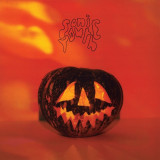
The debut album by one of the originators of American Nu Metal. Originally released in 1997, this album features the hit single "Loco". The album been certified gold by the RIAA in the US. It also features fan favorites like "Big Truck" and "Sway". This is first time on vinyl in a long while, coinciding with the band reuniting for several festivals and a bill with Mudvayne. There is also an autobiography coming out from the amazing lead singer Dez Fafara. Dez has continued as an artist and manager during Coal Chamber's hiatus most notably with the rocking DevilDriver. The album is on Kerrang's list of Greatest Nu-Metal Albums of All Time. It is also on Revolver's list of 20 Essential Nu-Metal Albums.