Source 02 is the second release from the Uruguayan label New Source. We are pleased to have the debut of Lorenzo Batlle, Uruguayan producer and DJ.
Track A1 - IDRIS:
Opening the EP, IDRIS invites you to a disorderly dance through time, weaving dub influences, atmospheric acid lines, and fragmented vocals creating an eclectic sonic landscape.
Track A2 - MEDEA:
MEDEA emerges with a soft and hypnotic embrace, drenched in hypnotic bells and delayed acid lines.
Track B1 - SIRIUS:
Inspired by Cyrus, woods, and '80s shades, SIRIUS is a blended journey guided by a pulsating baseline—an invitation to move forward on the dancefloor.
Track B2 - God works in mysterious ways:
Closing the EP, God works in mysterious ways leaves a moody imprint, resonating with house vibes and playful synths bringing joy to the dancefloor.
Suche:lin
ora’s most innovative modern exponent bathes in communion with a re-imagined classical guitar, unveiling a new and previously unsuspected musical universe. In a meeting between instruments, not traditions, these maestros emerge from quite different and distant musical worlds. Ballaké Sissoko’s kora tradition and lineage traverse the once powerful West African empire known as Kaabu. South African Derek Gripper’s roots are in European classical guitar but infused with a unique jeli music mastery that takes guitar’s modern history in a captivating new direction.
But we are not hearing these traditions in dialogue: these masters meet on the sonic groundings of the kora, instrument of the griots, resonant vessel of the sacred and profane, sound carrier of history and wisdom. Through two decades of commitment and study, it is to this terrain that Gripper brings his guitar to meet its multi-stringed cousin.
The two men do not share a spoken language, but if it is true that music speaks universally, then they were already involved in profound dialogue long before they met for the series of London concerts which yielded this recording session – a session which matches deep communion with sparkling improvisation, which pushes a living tradition into brand new sonic spaces, and opens a live and direct channel of communication between kora and guitar. In the complex web of theme and variations spun by Sissoko’s twenty-two strings and Gripper’s six, a new African string theory is elaborated.
“Musically we tested each other,” says Sissoko, explaining that the most magical aspect of their encounters are spontaneity. “We have the mastery of our instruments, the technique and a good ear. Derek is very curious, that’s very important.”
“He’s just such a good listener,” says Gripper about Sissoko. “It’s not what he plays, it’s how he plays it. He’s an amazing interpreter, the prime master of timbre.”
Recording by Taylor Pollock at Platoon Studios, London.
Mixed, edited and produced by Derek Gripper.
Mastered by Murray Anderson at Milestone Studios, Cape Town.
Produced for vinyl by Chris Albertyn and Matt Temple at Matsuli Music.
Mastered for vinyl and lacquers cut by Frank Merritt at The Carvery, London.
Vinyl pressed at Pallas GmbH, Germany.
Sleeve notes by Francis Gooding, French translation by Paulo Goncalves.
Cover design by Toby Attwell at Twoshoes, Cape Town.
"Recorded and produced by friend and frequent collaborator Mo Troper, Who’s A Good Boy is equal parts scrappy and starry-eyed in its sonic makeup. Album opener “The Flake” sets the stage with fuzzy guitars crashing in and Ramirez’s relaxed vocals placed front and center, as a result, the track feels like throwing on a warm blanket. And look no further than the album’s charming lead single “We Both Won,” a jangly earworm with the hypnotic refrain of “Don’t worry about me” lingering long after the track ends, serving as further proof that Bory has found the recipe for the perfect pop song and knows how to deliver it in two minutes flat. At every twist and turn of Who’s A Good Boy there’s something new to be discovered, making it one of the most exciting debuts you're likely to hear in a long time.
"Warm but guarded, intricate and muted, reminiscent of the Shins and David Bazan and especially Elliott Smith." -Pitchfork
"Whether it's the pastoral "Feel The Burn" or the splendid, reverb-drenched "Five-Course Meal", Who's A Good Boy debut full-length project shows some major potential for Bory to earn the title of Next Big Thing in the genre." - UPROXX
Auch im deutschsprachigen Raum spätestens seit dem massiven ESC-Hit "Calm After The Storm" (mit The Common Linnets) vor exakt 10 Jahren eine feste Größe, verbindet die niederländische Singer-Songwriterin Ilse DeLange ihre Country-Wurzeln fürs neue Kapitel mit einer massiven Dosis zeitgenössischem Pop und druckvollem Rock , um zwischendurch auch Eighties-, Indie- und Electro-Elemente aufblitzen zu lassen.
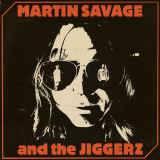
Who said rock'n'roll is dead?! Maybe Dr Frankenstein's made a rock 'n' roll monster cuz it sure seems alive to me. We introduce to you the debut LP of MARTIN SAVAGE AND THE JIGGERZ! All three gentlemen in this power trio have a solid background in the rock 'n' roll business which we won't bore you with here. The band has already released a slew of solid 7" records which we won't bore you with here either. Get on the internet ya lazy sods! Anyway, back to this here album: recorded by Ed Deegan at the esteemed Gizzard Recording Studio up in Fish Island, East London, on magnetic tape it delivers 12 solid senders of pure heart-on-the-sleeve rock 'n' roll action! From the blastin' drumroll of opener 'Between the Lines', a staple in the band's live set, via punk ballad anthem 'Down the Line' leading up to another live favourite called 'Boomerang'. There are covers of should-have-been-legends with bad-ass names like the Backstabbers or the Stripes. There are songs about shitty jobs, troublesome relationships, life on the high and life on the low. It's got everything you need really. Whether ya dig Boston 1976, Medway 1986 or Memphis 1996 there's something for you here. You can call it punk, pub rock, garage, glam or any other label you like but we just call it good ole rock 'n' roll. Hope ya dig!
Blue Vinyl[21,64 €]
180GM BLACK VINYL : 500 PRESSED WORLDWIDE.
Furthermore, Billy Mahonie now have their own label, Whistling Sam Projects, an almost sold-out London launch show at The Lexington on May 4th, and they are confirmed to play Portals Festival Saturday May 25th in East London. After nearly quarter of a century, Billy Mahonie are very much back.
Formed in the first wave of British post-rock alongside the likes of Mogwai in the late 90s, John Peel favourites Billy Mahonie are set to return with the first new music from their original line-up in some twenty-four years. Whilst their debut album ‘The Big Dig’, released in 1999 on Too Pure Records, is considered a classic of the post rock genre, Billy Mahonie always crafted their intricate music with memorable hooks and melodies and performed it with energy and gusto. Theirs was not an aimless, meandering sound, instead the songs and attitude were rooted in punk rock, and still are. Billy Mahonie put the rock into post-rock.
Set for release this coming May 24th via Whistling Sam Projects, ‘Field Of Heads’ sees the band returning with their classic original line-up of Gavin Baker (guitar), Howard Monk (drums), Hywell Dinsdale (bass and guitar) and Kevin Penney (bass and guitar). Whilst this line-up has been semi active for a few years, no new material came to fruition. After their last gig in 2017, however, the band decided it was time to get back into the studio, but with two members living abroad new challenges were faced, but ideas were shared, old ones were resurrected and finally in October of 2019, Billy Mahonie were back in the studio.
Recorded over two long weekends on either side of the Covid 19 lockdowns, the band tracked at The Church studios, owned by their former collaborator and front of house engineer Paul Epworth, with senior engineer Luke Pickering at the controls, allowing ‘Field Of Heads’ to quickly take shape.
New single ‘Kaiju’ gives the music world the first taste of ‘Field Of Heads’ and right from the off, it’s classic Billy Mahonie. Immediately bursting into life with the energy and melody that is so unique to their sound, Howard’s driving drums thrust the music ahead as the guitars and synths weave their way around them. Intricate and shifting, but never at the expense of a tune that sticks in your head.
“This one came from a chord progression myself and Gav first tried out jamming in 2010,” explains drummer Howard. “Needless to say, when Hywell and Kev got their hands on it, it became something no-one ever envisaged. Kev's great title is, of course, the Japanese name for the subgenre of monster-based science fiction. A frenetic riff opens the song and for a counter guitar part only two options remain, play in the minimal gaps or find an overarching theme. We chose both. Kaiju films influence the additional Synths, echoes of those early Japanese movie themes. Some people we have played this to in advance have suggested this track is one we should lead with, as it is kind of where we left off. We agree. It rocks pretty hard. And is a bit funky too. What’s not to like?!”
Furthermore, Billy Mahonie now have their own label, Whistling Sam Projects, set up for global distribution through SRD, an almost sold-out London launch show at The Lexington on May 4th, and they are confirmed to play Portals Festival Saturday May 25th in East London. After nearly quarter of a century, Billy Mahonie are very much back.
Splatter is a new vinyl and digital underground techno label from Austrian artists Luca Tresque, Joe Haensn and Rotary Motion.
'Exceed Limits' follows their special prequel EP and launches the label catalogue in style.
Florian Meindl is a Berlin-based artist who runs the FLASH record label and who has appeared outside of his own imprint on labels like Stephan Bodzin's Herzblut to Oliver Koletzki's Stil vor Talent. "Gridlock" is a true jackin' cut with a multitude of mechanical elements and raw analogue energy.
Linear System is a Spanish artist who has released music on esteemed labels like Edit Select, Ben Sims' Symbolism and Dynamic Reflection. "Taurinom" is a moody, rolling groove with gripping suspense and haunting touches from gothic effects and an eerie atmosphere.
Leipzig is the home of JANEIN, a respected artist known for releasing on Index Marcel Fengler, Slam's Soma, Fiedel's Fiedeltwo, Exos' Planet X and Electric Rescue's Skryptom. "Neowise" is punchy and percussive track with a metallic, siren-like hook and infectious energy.
Daniel Heinrich is also from Berlin, and shows himself to be a top talent following his EP's on Elektrotribe to Inherit with remixes by Arnaud Le Texier an Hadone. "Close Your Eyes" has a pacey style with superb stabbing chords that create an old-school feel alongside vocal chants for extra impact.
Stuttgart-based Egotot runs the Schimmer label and also lists BCCO, OECUS and Ketch's SYXT in his quality back catalogue. "Name It As You Want" has a quirky, bouncing beat with Detroit-style stabs and a light-hearted vibe ready for the dance floor.
Black Truffle is pleased to announce the first vinyl reissue of Trancedance, a wild slice of Swedish Afro-fusion from Christer Bothén, originally released in 1984. A major figure in Swedish jazz and improvised music since the 1970s, often heard on bass clarinet and tenor sax, Bothen studied doso n’koni (the large six-stringed ‘hunter’s harp’ of the Wasulu) in Mali in 1971-2 before turning to the guinbri (the three-stringed lute of the Gnawa/Gnauoua) in Marakesh later in the decade. In between, he performed extensively with Don Cherry during his Organic Music Society period and taught Cherry the doso n’koni. In the later 70s and 80s he worked with the most important figures in the distinctive Swedish jazz-rock-world fusion scene, joining Archimedes Badkar for their African-influenced Tre and participating in Bengt Berger’s legendary Bitter Funeral Beer Band. Many of the musicians who played on the Bitter Funeral Beer Band’s ECM LP (including Berger on drums, Anita Livstrand on voice and percussion and Tord Bengstsson on piano, violin and guitar) joined Bothén for one of the sessions that produced Trancedance, the first release under his own name, dedicated to his compositions. The other session introduced his seven-piece group Bolon Bata, heard on the second track of each side. The title track opens the album with the rubbery buzzing strings of the doso n’goni playing a hypnotic ten beat pattern, soon joined by bass and piano before the entire nine-piece group kicks in with a rollicking Afro-jazz workout, Berger’s drums driving an intricate, winding melodic line played by the horns with Mattias Helden’s cello throwing in pizzicato slides and smears. Bothén then takes centre stage on tenor sax, soloing with a wide, vibrating tone and moving seamlessly from soaring melodies to guttural stutters. After a return to the composed horn lines and a solo from Elsie Petrén on alto sax, the piece builds to an ecstatic conclusion of yelping voices and handclaps, gradually simmering down to return to the solo doso n’koni where it began.
The hypnotic sounds of the hunter’s harp carries over to ‘Mimouna’, where it is joined by Bothen’s overdubbed guinbri. The piece develops into a haunting whispered and sung invocation, gradually building momentum until the organic textures of strings, voices, and hand percussion are ruptured by Lennart Söderlund’s distorted guitar, which brings an unmistakable touch of 1984 to the otherwise timeless sound. Joined by chicken scratch guitar and increasingly dominated by the insistent clang of three of Bolon Bata’s members on karqab (a kind of cast-iron castanet), the grove develops frenetically.
The B side opens with the multi-part epic ‘9+10 Moving Pictures for the Ear’, at over 16 minutes the record’s longest piece. Though Bothen is heard only on horns on this piece, the hypnotic repeating bass line carries on the first side’s link to African musical traditions. Using an expanded 16-piece ensemble, the music balances untethered improvisation with carefully arranged passages of knotty ensemble playing that at points suggest Mingus, Moacir Santos or some of the ambitious post-free work being done in the same years by figures like David Murray or Henry Threadgill. The piece ends with a triumphant passage of looping unison melody reminiscent of the Scandinavian folk explorations of Arbete och Fritid (whose Kjell Westling is heard on bass clarinet and soprano sax here). The sound of Bjorn Lundqvist’s fretless bass introduces the odd left turn made by the record’s final track, a spaced-out expedition into bluesy horn lines and distant guitar atmospherics set to a semi-reggae beat, perfumed by the core Bolon Bata group and bearing the appropriate title of ‘The Horizon Stroller’. A must for fans of the Swedish scene around groups like Arbete och Fritid and Archimedes Badkar, as well as any listener who has been seduced by Louis Moholo’s Spirits Rejoice!, The Brotherhood of Breath, or, more recently, the guinbri grooves of Natural Information Society, Trancedance is a lost classic ripe for rediscovery.
Pål Waaktaar-Savoy has explained that much of the atmosphere and the lyrical themes of Savoy’s seventh album “Under” are drawn from his move with his fellow songwriter and wife Lauren Savoy to Los Angeles, where they found themselves surrounded by loneliness.
Waaktaar-Savoy is one of the most prolific and impressive songwriters of the twentieth century and beyond, and having been working at the very top of the music industry for as long as he has, it is no surprise that the record is well-crafted. The production is good, with careful arrangements and instrumentation. Every instrument’s voice is given room and there is space in the mix. Only occasionally does this slip over into over-production, as with the treated strings on the opening track “Lonely Surfer” or the treatment of Lauren’s vocals, which sound overly processed.
It is also true that the record exhibits a fair measure of melancholy. The chords and melody lines are dark in places, and there is a hint of sadness in the lyrics, many of which have a retrospective quality, describing moments in the past. However, beyond this, the understated feel of the record is just that – understated. Many of songs feel a few RPM too slow and the delivery of the vocal lines too underplayed to give them any emotional authority. At times, it also seems like the arrangement has to step in to bolster the songwriting or lyrics, by filling space with strings or brass, or the counterpoint of the instrumentation on “Camden Palace Chronicles” which distracts from some fairly mediocre words. It is important to emphasise that this is a joint songwriting exercise for Pål and Lauren, so we should not compare the output to the work of a-ha, but still, the themes lean in the direction of suburban banality, far from Pål’s more oblique or allegorical writing.
There are other moments of real quality beyond the production and arrangement. The title track has an excellent Bowie-esque chorus (and there are echoes of his work and sound throughout, along with Beatles and Beck), “The Life and Times of a Wannabe” has some first-rate guitar work on it, edgy riffs and some good textures. Likewise, “Coming Down”, which also exemplifies Frode Unneland’s drumming on the record, which is generally prominent in the mix, and with good reason, as it carries the record along well.
Pål Waaktaar-Savoy has explained that much of the atmosphere and the lyrical themes of Savoy’s seventh album “Under” are drawn from his move with his fellow songwriter and wife Lauren Savoy to Los Angeles, where they found themselves surrounded by loneliness.
Waaktaar-Savoy is one of the most prolific and impressive songwriters of the twentieth century and beyond, and having been working at the very top of the music industry for as long as he has, it is no surprise that the record is well-crafted. The production is good, with careful arrangements and instrumentation. Every instrument’s voice is given room and there is space in the mix. Only occasionally does this slip over into over-production, as with the treated strings on the opening track “Lonely Surfer” or the treatment of Lauren’s vocals, which sound overly processed.
It is also true that the record exhibits a fair measure of melancholy. The chords and melody lines are dark in places, and there is a hint of sadness in the lyrics, many of which have a retrospective quality, describing moments in the past. However, beyond this, the understated feel of the record is just that – understated. Many of songs feel a few RPM too slow and the delivery of the vocal lines too underplayed to give them any emotional authority. At times, it also seems like the arrangement has to step in to bolster the songwriting or lyrics, by filling space with strings or brass, or the counterpoint of the instrumentation on “Camden Palace Chronicles” which distracts from some fairly mediocre words. It is important to emphasise that this is a joint songwriting exercise for Pål and Lauren, so we should not compare the output to the work of a-ha, but still, the themes lean in the direction of suburban banality, far from Pål’s more oblique or allegorical writing.
There are other moments of real quality beyond the production and arrangement. The title track has an excellent Bowie-esque chorus (and there are echoes of his work and sound throughout, along with Beatles and Beck), “The Life and Times of a Wannabe” has some first-rate guitar work on it, edgy riffs and some good textures. Likewise, “Coming Down”, which also exemplifies Frode Unneland’s drumming on the record, which is generally prominent in the mix, and with good reason, as it carries the record along well.
Liebe zum Detail, Raum für Improvisationen, keinerlei Genregrenzen. Das ist die musikalische Philosophie hinter Orbit Kid Society. Kreativer Kopf des Ensembles ist die Berliner Sängerin und Komponistin Sophie Lindmüller. Statt in musikalische Beliebigkeit abzugleiten, präsentiert Lindmüller mit ihren hochkarätigen Bandkolleginnen und-Kollegen ein dramaturgisch geschlossenes, in jeder Hinsicht fesselndes Album. In ihrem Klanguniversum treffen freischwebende, im Moment entstehende Klänge auf auskomponierte Linien, blechernen Grooves und elektronische Samples.
2024 reissue of Thomas Bückers debut album as Bersarin Quartett, originally released in 2008 on Lidar.
With some albums, you realize within a few seconds that here you have come across something really special. It is music that touches you straight away. Music that is important, that has a story to tell – and that manages to do so without even a single line of lyrics.
Wonderful orchestral pieces full of longing and melancholy. It is that certain kind of melancholy that seizes you when you are moved while following the final credits of an emotionally touching movie, remembering special moments that have faded in the course of many years and linger hazily in your memory, when you are somewhat wistfully contemplating old, worn photographs from days passed by … not a feeling of failure or hopelessness, but a bittersweet reflection.
Orchestral cinemascope sounds provide the emotionally moving fundament, wrap the tracks up in a warm coating. Graceful strings pile up, creating big moments and repeatedly ending inmelodies that are simply heart-rending, cinematic and tragic. But the Bersarin Quartett does not merely rely on these ingredients. The songs are also repeatedly interspersed with suspenseful and surprising elements, be it frail electronica, hypnotic soundscapes, drums or reverbed guitars. Rarely has amelange sounded as convincing and natural as this, and rarely has it sounded so well produced.
Thomas himself calls his music “imaginary fictional filmscores“. And it is hardly possible to come up with a more apt term. 10 tracks for 10 movies that have yet to be shot. Music that radiates such an enormous and authentic passion in every single minute, that one can’t help but completely abandon oneself to it. And honestly: Can there be anything more wonderful that can be achieved through music?
The RIOT DJ-BACKPACK II is a compact and midsized model of the RIOT PACK line. It was especially designed for digital-DJs travelling with a basic DVS setup such as 15” laptop, Timecode records and accessories or small controllers.
The clever interior layout of the main compartment includes one padded, removable divider and multiple internal storage pouches for clear organization of your equipment. The featured “Zip-Around-Expansion-System” doubles the main compartment’s capacity, providing useful extra space for even more gear or clothing for overnight trips.
+ FITS
Laptop up to 15"
12“ Vinyl
Accessories
+ BASICS
Crafted from durable and 100% waterproof PVC Tarpaulin
PVC-coated (waterproof zippers)
Soft-fleece lining
Lockable zippers on main and laptop compartment
Rubber corner protectors and rubber feet
Main compartment includes one padded, removable divider
Clear organisation Layout and multiple Pockets
The “Zip-Around-Expansion-System” doubles the main compartment’s capacity, providing useful extra space for even more gear or clothing for overnight trips.
Separate side entry compartment provides quick access to your 15,4’’ laptop
One internal hanging mesh accessory pocket comfortably fill out the upper area of the backpack
Large front pocket with internal pouches and organizers
Padded back panel with airflow system, ergonomic backpack straps and chest straps
Detachable trolley sling
Hand luggage compatible
+ SPECS
+ Outer dimensions: (H/B/T): 53 x 33 x 16-22 cm
+ Inner dimensions: : 40 x 31 x 12-16 cm
+ Weight: 2,2 kg
- Satan Mamage
- The Mould
- Everything To Die For
- Donna Like Parasites
- The Rules Of What An Earthling Can Be
- Please Be Okay (Feat. Miss Grit)
- Telephone Congee Ii
- Speak Up, Sponge
- What's The Password Baby Bird?
- Hopefulness, Hopefulness
- Telephone Congee Ii
- Sparky (Feat. Lei, E)
- In The Dot (Feat. Pickle Darling)
- Cool As A Cucumber
- ?????
As mui zyu, Hong Kong British artist Eva Liu searches for a portal, wandering between nothing and everything in her pursuit of peace. On her second full-length album nothing or something to die for she looks outward, embracing the chaos with each tentative step. mui zyu's debut album Rotten Bun for an Eggless Century saw her explore her heritage, as she dived inward to find acceptance and healing. Now, instead of searching for answers from the inside, Liu raises her head to look at the world around her. As she attempts to understand the complexities and significance of human existence, she observes apathy alongside overwhelming chaos; the technological advancements of connection with the lack of meaningful bonds and the frustrations of upholding standards set by others. nothing or something to die for tries to decipher these juxtaposing truths, holding both the weight of those trying to destroy the world with the utter futility of it all. Working with co-producer and fellow Dama Scout band member Luciano Rossi, the sonic world of nothing or something to die for encapsulates both the fleeting tranquility of serenity and the dissonance in chasing it. After all, our reality can change in an instant. Like the psychedelic tones of Ryuichi Sakamoto's Thousand Knives, the urgent techno-pop of Miharu Koshis Parallelisme or the eerie wanderings of Angelo Badalamenti's work for Twin Peaks, nothing or something to die for expertly toes the line between disorder and clarity
Black Uhuru wurde Mitte der 70er Jahre gegründet und stürmte in den frühen 80er Jahren wirklich in die Reggae-Szene, als Sly & Robbie die künstlerische Leitung übernahmen und wichtige Alben wie Showcase, Sinsemilla, Red, Chill Out und Anthem produzierten (beachten Sie, dass es sich um eine großartige Sammlung ihrer Alben handelt). Singles für Sly & Robbies TAXI-Label sind auf TAXI TRAXX erhältlich und wurden letztes Jahr von TABOU1 veröffentlicht.
Die Alben waren nicht nur künstlerisch bahnbrechend, auch die Live-Shows waren großartig. Eine Lawine aus kraftvollem Drum and Bass, ergänzt durch grenzwertige Metal-Rock-Gitarren des verstorbenen Darryl Thompson, lieferte ein Fundament aus Rhythmus und Energie für Michael Roses Lead-Gesang und Duckie Simpsons und Puma Jones‘ Backing-Gesang.
Die erste US-Tournee von Black Uhuru fand 1982 statt. Damals steckte Reggae in den USA noch in den Kinderschuhen und es gab nur drei Reggae-Radiosendungen in Kalifornien: Doug Wendt in San Francisco, Roger Steffens in LA und Lance Linares in Santa Cruz. Lance leitete nicht nur seine Radiosendung bei KUSP, sondern buchte auch Künstler in Santa Cruz und arbeitete mit dem Soledad-Gefängnis zusammen, um Insassen dabei zu helfen, berufliche Fähigkeiten zu erwerben, die sie nach ihrer Entlassung aus dem Gefängnis nutzen könnten. Lance kontaktierte die Organisation Black Uhuru und bot an, ein Konzert im Gefängnis selbst zu organisieren. Zu seiner Überraschung wurde seine Idee begeistert angenommen und die Gruppe trat vor vollem Haus im Soledad-Gefängnis auf.
Was wir auf dieser Doppel-LP hören, ist das gesamte Konzert, das live auf KUSP übertragen wurde. Seine historische Bedeutung ist enorm und kann mit dem Reggae-Äquivalent der legendären Live-Aufnahme der amerikanischen Legende Johnny Cash in Folsom verglichen werden. Außerdem wurde das Konzert per Video aufgezeichnet. Wir haben das Video mit modernster Technologie restauriert und Schlüsselmomente des Konzerts kuratiert. Jedes dieser Videos kann mit der Artivive-Anwendung auf ein Smartphone gestreamt werden. Sobald die App installiert ist, können Benutzer die Videos ansehen, indem sie ihr Telefon auf die Fotos auf dem Plattencover (von Bruno Tilley) richten, die mit dem Artivive-Logo gekennzeichnet sind. TABOU1 ist stolz darauf, das erste Plattenlabel zu sein, das diese Augmented Reality-Funktion anbietet.
Not God is the new album from Chicago's beloved two-headed monster, Finom (fka Ohmme). You can ask them to go into more detail about the boring reasons why they changed their name, but for now, the answer is going to be polite refusal. No. Co-fronted by Sima Cunningham and Macie Stewart, Finom's influences run vast and varied, and they put a premium on change. Produced by Jeff Tweedy in the Wilco Loft, Not God is a marvel of growth, a progression from the roots of this collaborative band whose history can be traced back to its improvised conception. This is owed in no small part to their hometown of Chicago, the life raft to so many persisters in musical adventurosity. That energy combined with Finom's dramatic vocal and musical gifts puts them in the peripheries of the legacies cemented by The Roches, Roxy Music, the B52s, Kate Bush, Cate Le Bon, and Wilco. Cunningham and Stewart are brilliant harmonizers, but harmony doesn't equate to a utopia. In Finom's maws harmony can also be a fight, holding the line until the volcano erupts. This realistic depiction of a creative relationship jolts throughout the songs of Not God, and brings the whole damn thing to life. Finom are more than one person with more than one dream. But still, they grow together, harnessed by their shared love of pop songwriting, control, chaos, and being generally freaky-deaky. Freaky in that way that is only really fun when you're doing it with a friend. As the globe spins and advancements advance, it can feel essential to return to relationships that make us feel whole, that generate energy of strength and relief. Which puts double the weight on the reality that Sima and Macie continue to pledge allegiance to each other, at the base of the volcano, in the front seat of the car as it pulls off the highway.