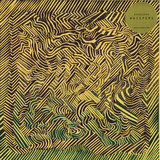
Hailed as "one of the great, overlooked records of 1998," by the new york times, this worldwide debut of the angolan artist waldemar bastos was recorded and produced by arto lindsay and david byrne in new york. Its title, which means "blacklight" in portuguese, is a hint to the powerful sorrow the music holds: pretaluz is an elegiac response to the angolan civil war, drawing on influences near and far like the fado, semba, zouk, and morna, to create indelible songs. "with his dramatic pauses and dynamic vibrato rising above subtle rhythms picked out on nylon-string guitars, everything mr. bastos sings emerges as a lament of enormous sadness," wrote the times. now on vinyl for the very first time, this limited 25th anniversary edition of pretaluz is a contender for the best-sounding record on luaka bop.
Cerca:lin
- A1: Keep On Dancing Feat Marvin Gaye
- A2: Josephine Feat Anduze
- A3: Heavens Radio Feat Y'akoto
- A4: She Ain't Got No Money Feat Lukas Graham
- B1: All Night
- B2: Catgroove
- B3: The Phantom
- C1: Libella Swing
- C2: The Mojo Radio Gang (Radio Version)
- C3: Love (Remix)
- D1: Milla's Dream
- D2: Matilda (Radio Edit)
- D3: Shine Feat Lilja Bloom
- D4: Jimmy's Gang (Radio Edit)
Mit “The Art of Sampling” legte der österreichische DJ und Produzent Parov Stelar 2013 ein Album vor, das mit einer ersten Werkschau seines Schaffens der vergangenen zehn Jahre vergleichbar ist. Wir sprechen hier allerdings keinesfalls von einem klassischen Best Of, denn der gebürtige Linzer ließ es sich damals nicht nehmen, auch mit neuem Material ein Zeugnis seines unermüdlichen Schaffensdrangs abzulegen.
Alle 14 Songs hatten dabei eine Sache gemein, angedeutet im Albumtitel: Sie vereinen die Praxis des Samplings in Parov Stelars Arbeit – will heißen: Das gefühlvolle Zusammenfügen ausgewählter Elemente zu neuen Kompositionen. Besonders erwähnenswert hierbei war unter anderem die enge Zusammenarbeit mit anderen Künstlern und deren Werken, wie bei der ersten Single-Auskopplung “Keep On Dancing” feat. Marvin Gaye. Gearbeitet wurde hier mit Tonspuren aus Marvin Gayes funkigem Disco Nummer−1-Hit “Got To Give It Up” aus dem Jahr 1977.
Neben diesem Hit warteten auf “The Art Of Sampling” außerdem Feature-Gäste wie Anduze, Y’akoto, Lukas Graham, Odette Di Maio und Lilja Bloom. Anlässlich des 10-jährigen Jubiläums dieses besonderen Albums, erscheint “The Art Of Sampling” für alle Vinyl-Liebhaber nun als limitierte 2LP Sonder-Edition in wunderschönem blauen Design
Known for his viral video series Sexta dos Crias, Ramon Sucesso is a virtuosic DJ who crushes, reimagines, and rearranges songs to such a degree that the original tracks become virtually unrecognisable. He has turned his controller into a particle accelerator, creating firework-like bursts of classic funk carioca samples, his own productions, mainstream tracks, nonsense TikTok sound bites, and tons of his trademark beat bolha. All contained within an unparalleled, mischievously non-linear rhythmic flow.
‘Ramon’s social network profiles are as outrageously unpredictable as his mixes. He posts interactive emoji games, bountiful fast-food feasts with his family, comments about the Flamengo football team, and videos of him playing FIFA. He has a prolifically restless mind, constantly riffing and improvising; he does whatever it takes to get by, to navigate the reality of life in Brazil and overcome the daunting challenges of the music industry.
‘Sexta dos Crias is the culmination of Ramon’s DJ work. A LP that embodies the newest in funk carioca, a faithful transposition of the bailes to vinyl. Ramon has unpretentiously ushered in a new age of experimentation for the genre – making a daring and unprecedented foray into a territory where extreme and radical sounds abound.’
Amazing garage punk cult band featured on the "Brazilian Nuggets" Vol 1 and Vol 2 compilations. Recorded in 1968, this EP is almost impossible to find and has never been sold on Discogs. It comes with a 12-page booklet with liner notes, photos and memorabilia. This release is a collaboration between Discos Nada, Fatiado and Munster Records. The Beggers were formed in the industrial ABC Paulista region, the birthplace of the Brazilian punk rock scene. But many years before that, The Beggers were already a kind of proto-punk act, as can be heard on the first track of this 7" record, 'Estes Homens Farrapos', a rather unusual social commentary song in those flower power days. Considered a protest song, it ended up being censored. However, the most psychedelic and experimental track is 'We're Going, to Aid You', a song about a fictional alien invasion. The creepy effects created by the group in the studio can be compared to those by the greatest international bands of the time. The Beggers only had three original compositions and a fourth one was missing to complete the EP. This was how 'We're Going, to Aid You' was eventually created as an experiment in the studio, just to complete the record. With "Metamorfose" banned from the shops, the members of The Beggers were running out of money, and without any gigs they had no other choice but to break up the band shortly after the release of their mighty EP. Bento Araujo (author of the book series Lindo Sonho Delirante) An amazing example of genuine teenage garage rock from 60s Brazil reissued for the first time, as result of a collaboration between Discos Nada, Fatiado and Munster Records.
- A1: The Rock Island Line 2:08
- A2: I Heard That Lonesome Whistle 2:21
- A3: Country Boy 1:48
- A4: If The Good Lord's Willing 1:37
- A5: Don't Make Me Go 2:25
- A6: Remember Me 1:56
- A7: Big River
- B1: Give My Rose To Rose 2:33
- B2: I Was There When It Happened 2:13
- B3: Next In Line 2:42
- B4: Wreck Of Old ´97 1:42
- B5: Belshazzar 2:47
- B6: Doin' My Time 2:33
Black Vinyl[16,60 €]
Coloured Vinyl[20,80 €]
Marble Vinyl[25,00 €]
Orange/Black Splatter Vinyl[26,68 €]
The iconic baritone country singer Johnny Cash sold over 90 million records, an incredible achievement for one who endured terrible hardship in the Great Depression, picking cotton with his sharecropper family from the age of five. After a spell in the Air Force, Cash settled in Memphis and with guitarist Luther Perkins and bassist Marshall Grant, known as the ‘Tennessee Two,’ Cash pitched up at Sun Records just as Carl Perkins and Elvis were trying their luck, Cash’s brilliant debut With His Hot And Blue Guitar containing all-time anthems like ‘Folsom Prison Blues’ and his perky cut of ‘Rock Island Line’. A must for all Cash fans.
- A1: The Rock Island Line 2:08
- A2: I Heard That Lonesome Whistle 2:21
- A3: Country Boy 1:48
- A4: If The Good Lord's Willing 1:37
- A5: Don't Make Me Go 2:25
- A6: Remember Me 1:56
- A7: Big River
- B1: Give My Rose To Rose 2:33
- B2: I Was There When It Happened 2:13
- B3: Next In Line 2:42
- B4: Wreck Of Old ´97 1:42
- B5: Belshazzar 2:47
- B6: Doin' My Time 2:33
Clear Vinyl[19,12 €]
Coloured Vinyl[20,80 €]
Marble Vinyl[25,00 €]
Orange/Black Splatter Vinyl[26,68 €]
The iconic baritone country singer Johnny Cash sold over 90 million records, an incredible achievement for one who endured terrible hardship in the Great Depression, picking cotton with his sharecropper family from the age of five. After a spell in the Air Force, Cash settled in Memphis and with guitarist Luther Perkins and bassist Marshall Grant, known as the ‘Tennessee Two,’ Cash pitched up at Sun Records just as Carl Perkins and Elvis were trying their luck, Cash’s brilliant debut With His Hot And Blue Guitar containing all-time anthems like ‘Folsom Prison Blues’ and his perky cut of ‘Rock Island Line’. A must for all Cash fans.
- A1: The Rock Island Line 2:08
- A2: I Heard That Lonesome Whistle 2:21
- A3: Country Boy 1:48
- A4: If The Good Lord's Willing 1:37
- A5: Don't Make Me Go 2:25
- A6: Remember Me 1:56
- A7: Big River
- B1: Give My Rose To Rose 2:33
- B2: I Was There When It Happened 2:13
- B3: Next In Line 2:42
- B4: Wreck Of Old ´97 1:42
- B5: Belshazzar 2:47
- B6: Doin' My Time 2:33
Clear Vinyl[19,12 €]
Black Vinyl[16,60 €]
Marble Vinyl[25,00 €]
Orange/Black Splatter Vinyl[26,68 €]
The iconic baritone country singer Johnny Cash sold over 90 million records, an incredible achievement for one who endured terrible hardship in the Great Depression, picking cotton with his sharecropper family from the age of five. After a spell in the Air Force, Cash settled in Memphis and with guitarist Luther Perkins and bassist Marshall Grant, known as the ‘Tennessee Two,’ Cash pitched up at Sun Records just as Carl Perkins and Elvis were trying their luck, Cash’s brilliant debut With His Hot And Blue Guitar containing all-time anthems like ‘Folsom Prison Blues’ and his perky cut of ‘Rock Island Line’. A must for all Cash fans.
- A1: The Rock Island Line 2:08
- A2: I Heard That Lonesome Whistle 2:21
- A3: Country Boy 1:48
- A4: If The Good Lord's Willing 1:37
- A5: Don't Make Me Go 2:25
- A6: Remember Me 1:56
- A7: Big River
- B1: Give My Rose To Rose 2:33
- B2: I Was There When It Happened 2:13
- B3: Next In Line 2:42
- B4: Wreck Of Old ´97 1:42
- B5: Belshazzar 2:47
- B6: Doin' My Time 2:33
Clear Vinyl[19,12 €]
Black Vinyl[16,60 €]
Coloured Vinyl[20,80 €]
Orange/Black Splatter Vinyl[26,68 €]
The iconic baritone country singer Johnny Cash sold over 90 million records, an incredible achievement for one who endured terrible hardship in the Great Depression, picking cotton with his sharecropper family from the age of five. After a spell in the Air Force, Cash settled in Memphis and with guitarist Luther Perkins and bassist Marshall Grant, known as the ‘Tennessee Two,’ Cash pitched up at Sun Records just as Carl Perkins and Elvis were trying their luck, Cash’s brilliant debut With His Hot And Blue Guitar containing all-time anthems like ‘Folsom Prison Blues’ and his perky cut of ‘Rock Island Line’. A must for all Cash fans.
- A1: The Rock Island Line 2:08
- A2: I Heard That Lonesome Whistle 2:21
- A3: Country Boy 1:48
- A4: If The Good Lord's Willing 1:37
- A5: Don't Make Me Go 2:25
- A6: Remember Me 1:56
- A7: Big River
- B1: Give My Rose To Rose 2:33
- B2: I Was There When It Happened 2:13
- B3: Next In Line 2:42
- B4: Wreck Of Old ´97 1:42
- B5: Belshazzar 2:47
- B6: Doin' My Time 2:33
Clear Vinyl[19,12 €]
Black Vinyl[16,60 €]
Coloured Vinyl[20,80 €]
Marble Vinyl[25,00 €]
The iconic baritone country singer Johnny Cash sold over 90 million records, an incredible achievement for one who endured terrible hardship in the Great Depression, picking cotton with his sharecropper family from the age of five. After a spell in the Air Force, Cash settled in Memphis and with guitarist Luther Perkins and bassist Marshall Grant, known as the ‘Tennessee Two,’ Cash pitched up at Sun Records just as Carl Perkins and Elvis were trying their luck, Cash’s brilliant debut With His Hot And Blue Guitar containing all-time anthems like ‘Folsom Prison Blues’ and his perky cut of ‘Rock Island Line’. A must for all Cash fans.
Lyra Valenza set the tone for their first full-length album ‘Low Gear No Pressure’ with an idyllic ambience, which then tumbles into feisty, heartfelt dance workouts. Across eight tracks, the Danish duo explore the pixellated euphoria of their previous ‘Scan, Deliver’ and ‘Nightshade Edition’ EPs with a more focused sensitivity. At the start of 2020, Lyra Valenza had been freshly nominated by music platform SHAPE. With the pandemic in hand, however, plans changed: instead of playing a slew of festivals, the duo spent weeks in a summer house in rural Sjælland, right at Denmark’s North Eastern coast, making early versions of the tracks in this album. ‘Low Gear No Pressure’ refers to the unusual calmness of that time, away from music industry stress and burnout; inspired by friendship. More than previous EPs, the album is shaped by the duo’s live set, which they’ve been performing in Denmark and Europe for many years now. The album breezes through different modes with confidence and ease, tracks morphing fluidly into one another to create a cohesive listening experience. A cool, expansive breakbeat on track two, ‘True Computer’, hints at the psychoactive journey to follow. ‘Truthwork’ plays with arps over a half time groove: subtle synths which reach their final form in ‘Joy Divided’. These agile swells and drops recall peers-in-precision Minor Science and 96 Back. On the flip, ‘Gameshow’ looks back over one shoulder to eurodance, while ‘Life on the Line’ goes out to the soulful junglists, but with a touches of trance in the samplework. On ‘Who Might Win’, the album’s ecstatic hyperactiveness melts into a slo-mo heartbeat, reminding us there’s a chillout room somewhere in the building. And just when we think it’s time to go home, the album gifts us with “one more tune”, and the soaring pop vocals of featured artist Saltmother on ‘Stretch Your Arms’.
Repress!
For those who know, Bambooman is one of the most sought-after, probing, and distinctive voices in UK electronic music right now.
The Yorkshire-born producer's catalogue builds into an aural mosaic, comprising everything from scrunched up hip-hop to techno deviance, all delivered with an impish sense of individuality.
'Whispers' certainly resonates. It's a lengthy, bucolic work, an album of great breadth but also one of sustained mood – think those hazy summer evenings when shadows stretch out across the road, and autumn lingers around the corner.
This new album has a dusty, organic, and decidedly personal feel, much more at home with Jon Hassel's 'fourth world' aesthetic than the club.
The results are also imbued with an incredible sense of mystery, with Bambooman's productions frequently being shot through with a hallucinatory sense of the uncanny. Entirely self-composed, 'Whispers' utilises "lots of field recordings that I've collected over the last few years, while within the tracks you can find lots of the instruments, percussion, bells and whistles that have been gathered throughout my life."
In certain ways 'Whispers' is entirely autobiographical: Bambooman reaches back to his varied alter egos, to the ambient releases, art commissions, and soundtrack projects that litter his discography. The cover art was even pieced together by Oliver Pitt – of Glasgow group Golden Teacher – who was an early ally in the producer's sonic quest.
Stylistically 'Whispers' veers from avant hip-hop of Flying Lotus to the theoried composition of Terry Riley, from the future-forward percussive energy of Battles to the ever-evolving electronics of Mark Pritchard. It's a record marks by a fiercely independent spirit, but also by a close-knit cast of collaborators.
King Kashmere takes a starring turn, following the pair's collision on the recent 'SUPERGOD' EP.
Each vocal is recorded, chopped up and then spliced across the album, with Elsa Hewitt also making a number of appearances and re-appearances.
credits
Classic Miles Davis LP pressed on 180 gram vinyl, with a bonus CD digipack included containing the complete album ‘Birth Of The Cool’ album plus 11 bonus tracks and updated liner notes.
“The virtuosity led to relaxing, stylish mood music as the end result - the very thing that came to define West Coast or ‘cool’ jazz - but this music is so inventive, it remains alluring even after its influence has been thoroughly absorbed into the mainstream.” - **** AllMusic (Stephen Thomas Erlewine)
Classic Miles Davis LP pressed on 180 gram vinyl, with a bonus CD digipack included containing the complete album ‘Birth Of The Cool’ album plus 11 bonus tracks and updated liner notes.
“The virtuosity led to relaxing, stylish mood music as the end result - the very thing that came to define West Coast or ‘cool’ jazz - but this music is so inventive, it remains alluring even after its influence has been thoroughly absorbed into the mainstream.” - **** AllMusic (Stephen Thomas Erlewine)
- A1: Sick Of Myself
- A2: Not When I Need It
- A3: We're The Same
- A4: Giving It Back
- A5: Everything Changes
- A6: Lost My Mind
- B1: Come To Love
- B2: Walk Out
- B3: I Almost Forgot
- B4: Super Baby
- B5: Get Older
- B6: Smog Moon
- C1: Sense Of Adventure
- C2: Slowly
- C3: Breaks My Heart
- D1: Walk Out (Alternate Mix)
- D2: Never Said Goodbye
- D3: You
- D4: Our Song
1995's 100% Fun is the third leg of Matthew Sweet's Holy Trinity of Power Pop! Produced by Brendan O'Brien, it's a densely-layered production full of grinding guitars, heavy bass lines and BIG drum sounds.
Intervention's 19-track Expanded Edition 2x LP set is the defining presentation of this great album! While the original repertoire's 12 tracks are bigger and better than ever, the 7 Bonus Tracks are on their own 12" 45 RPM 180-gram LP!
100% Fun's album art was lovingly restored by Intervention's Art Director Tom Vadakan, and printed as a gorgeous "Old Style" gatefold by Stoughton printing in LA. It's printed on heavy stock and film-laminated for superior coluor depth, beauty and durability. The center labels are printed by Dorado.
Mastering Notes
100% Fun is 100% Analog Mastered from the Original Master Tapes by Ryan K. Smith at Sterling Sound. The Master Tapes are 30ips 1/2" analogue reels, and the seven bonus tracks are on their own reel. Intervention's cut is big, punchy and dynamic with plenty of producer Brendan O'Brien signature crunch completely intact. Matthew's amazing vocals really shine here amid the layered densities of O'Brien's mix. A big, bold improvement over the 1990s original LP, and so much better than the CD as to make that comparison a total farce.
Charles Mingus brought together an amazing lineup spanning the totality of the nation's jazz scene with such luminaries as Eric Dolphy, Buddy Collette, Clark Terry, Zoot Sims, Pepper Adams, Jaki Byard, Grady Tate, and more. Brought together to perform new Mingus compositions for the first time in public, the recording was initially considered weak due to limited rehearsal time but the years have been kind to this recording and it's a fantastic set of Mingus compositions, including the powerful "Freedom" which rivals the works on Mingus Ah-Um (1959) for its strength of purpose and message, in a similar vein to Max Roach's legendary We Insist! album (1960). Mingus is one of the most important figures in 20th century music and this live recording documents his compositional and arranging process as well as sheer swinging joy.
#40 ON ROLLING STONE'S 500 GREATEST ALBUMS OF ALL TIME: ANTICIPATES LATE 1960S TURBULENCE VIA PROPHETIC SONGS AND DARK THEMES
1/4" / 15 IPS analogue master to DSD 256 to analogue console to lathe
Any discussion about the finest psychedelic rock record ever recorded is incomplete if it doesn't grant consideration to Love's Forever Changes. Ranked by Rolling Stone as the 40th greatest album ever made, and named by Mojo the second-greatest psychedelic set in history, the effort is an internationally recognized seminal work of art. Transcending language and convention, its magnitude and magnificence need to be heard again and again. For here is an effort whose mind-boggling acoustic complexities and kaleidoscopic nuances are tailored for high-fidelity playback.
Nearly unlimited headroom, vast instrumental separation, transparent clarity, artifact-free atmospherics, and faithful balances appear out of jet-black backgrounds. Turn it up as loud as you want; the sole limitation will be your system's potential.
Commercially ignored upon release in November 1967, Forever Changes confronts the alienation, paranoia, violence, and strife that would soon plague the countercultural movement and send the Summer of Love into a tailspin. Apart from its lyrical themes and prescient malaise, the record's enduring nature equally owes to intertwined arrangements sewn together with Latin guitar-picked lines, finessed folk harmonies, mariachi-inspired horn charts, and subdued strings.
The seemingly opposing combination – ominous, dark reflections situated amidst lush, light melodic beds – affords Forever Changes a distinguished tension of claustrophobia and openness, dourness and ecstasy, ugliness and elegance enjoyed by no other record in the rock canon. Much of the contrast owes to leader Arthur Lee's mental state and pertinent observations. Lee, whose suppressed romanticism often surfaces even amidst the blackest shadows and most cynical moments, believed he would soon die, and hence channeled everything from lasting hopes to acid-addled decay to the chilling testimony of a Vietnam veteran in his narratives.
Alternatively sad and beautiful, the album-opening and flamenco-inspired "Alone Again Or" establishes the mood for what follows. Vocals overlap and soar; tempos rise and fall; surrealism trades places with reality.Forever Changes thrives both because of and in spite of a surfeit of labyrinthine chords and difficult notes that never repeat. Its ambitious construction almost forced the already fractured band to cede responsibilities to session musicians, which appear on two tracks. The quintet's resolve to not only complete the album, but to do so with such poignancy and curiosity, further enhances Forever Changes' standing.
No wonder that, in the twilight of his troubled career, Lee performed the record in its entirely during concerts met with overwhelming critical acclaim. It was, and will always be, a personal manifesto of timeless relevance and appeal.
SOURCED FROM THE ORIGINAL MASTER TAPES: 2LP SET PRESENTS 1991 ALBUM IN 45RPM SPEED FOR FIRST TIME.
PCM Digital Master to Analog Console to Lathe.
Dire Straits never made a big to-do about its final run. In classic understated British fashion, the band simply let its music speak for itself. And how. Originally released in September 1991, On Every Street became the group’s swan song – a lasting testament to the influence, musicianship, and integrity of an ensemble whose merit has never been tainted by cash-grab reunions or farewell treks. It remains an essential part of the Dire Straits catalog and a blueprint of the distinctive U.K. roots rock the collective played for its 15-year career.
Sourced from the original master tapes, housed in gatefold packaging, and pressed at RTI, Mobile Fidelity’s 180g 45RPM 2LP set of On Every Street presents the album like it has always been meant to be experienced: in reference-grade audiophile sound. Recorded at AIR Studios in London and produced by Dire Straits leader Mark Knopfler, it features all of the band’s sonic hallmarks – wide instrumental separation, visceral textures, seemingly limitless air, broad soundstages, atmospherics that you can almost reach out and feel. Each element is made more vibrant, physical, and lifelike on this collectible reissue, which marks the first time this 60-minute work has been available at 45RPM speed.
Afforded generous groove space and black backgrounds, the songs from On Every Street burst with nuanced details and vibrant colors. Dire Straits’ playing appears to float, their intricate performances organized amid hypnotic, fluid, three-dimensional arrangements. Mobile Fidelity’s definitive-sounding set also brings into transparent view Knopfler’s finely sculpted guitar lines, expressive tones, and laid-back vocals – as well as the balanced accompaniment from his band mates. Here’s a record on which you can hear the full blossom and decay of individual notes, and imagine the size and shape of the studio. It is in every regard a demonstration disc. And it happens to be filled with timeless fare.
Remarkably, On Every Street almost never came to light. Dire Straits initially dissolved in September 1988 after touring behind its blockbuster Brothers in Arms and suffering the departure of two members. At the time, Knopfler professed his desire to work on solo material; bassist John Illsley also explored side projects. But Knopfler’s decision in 1989 to form the country-leaning Notting Hillbillies reignited a spark to reconvene his primary band and craft a fresh batch of songs. Six years removed from Brothers in Arms, Knopfler, Illsley, keyboardist Alan Clark, and keyboardist Guy Fletcher teamed with A-list session pros – steel guitarist Paul Franklin, percussionist Danny Cummings, saxophonist Chris White, guitarist Phil Palmer included – to create what still stands as an unforgettable farewell.
The platinum record brings the band full circle in that it returns Dire Straits to a quartet formation; finds the group refreshingly out of step with the era’s prevailing trends; and sees Knopfler and Co. knocking out song after song with the deceptive ease of a punter tossing back a pint at a pub. That subtle cool, clever poise, and innate control – signature traits that no other band ever matched – dominate On Every Street. Knopfler’s clean, virtuosic six-string escapades unfurl with dizzying melodicism and economical efficiency. Led by his winding fills and focused solos, Dire Straits traverse a hybrid landscape of rock, jazz, country, boogie, blues, and pop strains with near-faultless prowess.
More than any other entry in the group’s oeuvre, On Every Street welcomes quick detours down back alleys and into the depths of human souls. What makes it more brilliant is its staunch refusal to cater to commercial expectations or take advantage of prior successes; every passage feels true, every measure echoed in the service of song. It’s evident in the humorous satire of “Heavy Fuel,” closeted desperation of the witty “Calling Elvis,” and shake-and-bake bounce of “The Bug.” It pours from the album’s darker corners, as on the high-and-lonesome melancholy of the title track and bruised emotionalism of “When It Comes to You.”
Hinting at the open-minded approaches and boundless curiosity he’d embrace as a solo artist, Knopfler doesn’t limit himself when it comes to style or subject matter. Look no further than “You and Your Friend,” a shuffle whose all-inclusive lyrics encourage an array of interpretative meanings. Another of the album’s deep cuts, “Iron Hand,” comes on as one of the band’s most memorable moments – the narrative addressing the abuses of power at the 1984 Battle of Orgreave during the U.K. miners’ strike. Given cinematic heft by the expert production, the true-fiction account puts into perspective the richness, poetry, and depth of On Every Street.
“Every victory has a taste that’s bittersweet,” sings Knopfler on the title track. At least that bittersweetness seldom sounded so damn good on record.
Trailblazing instrumental synth pop experiments created to soundtrack Japan’s booming 1980s cartoon and comic industries. The brightly futuristic instrumentals on this collection reflect the mindset of composers and musicians who believed in a technological future where everything was possible.
In the late 1980s Japan experienced a brief but heady period where societal changes combined with new-found wealth to open up a world of possibilities. A huge influx of cash - artificially created by slashed interest rates after an agreement with the US to weaken the dollar relative to the yen - resulted in the inflation of real estate and stock market at a rapid pace. While the economic bubble it created was unprecedented and impossible to sustain, for a while money was in plentiful supply.
The musical genre City Pop reflected the aspirations of the country’s booming leisure class. Video games flourished with Nintendo's 1983 launch of their Family Computer (or FamiCom). Studio Ghibli was founded 1985 to later became one of the most famous and respected animation studios in the world, and Anime and Manga were established as major forms of entertainment for all generations of the Japanese public.
Music was no mere footnote to the anime and manga boom: the two forms of media often went hand in hand, and not simply through the presence of background melodies. With generous budgets available, even two-dimensional static manga comics could be released with an accompanying soundtrack of original music known as an ‘Image Album’.
Composer and arranger Kazuhiko Izu was one such beneficiary of this open budget approach. Written to accompany artist Katsuhiro Otomo’s manga comic Domu, the composer and arranger took advantage of the world-leading (and wallet-busting) Japanese synthesiser technology available at King Records’ fully equipped studio. Featured on this compilation, A3: Act 2 Scene 26 reflected the story’s sci fi themes with a blazingly futuristic yet warmly funky slice of synth pop that presents a joyful celebration of synthesisers and their seemingly endless possibilities.
Kan Ogasawara was another composer who made early mastery of the litany of synthesisers, drum machines and sequencers that had become available. Two tracks written to accompany the 1985 period manga Yume No Ishibumi are featured here; Honowo’s experimental electronic textures add spice to a jaunty electro pop melody that recalls the Rah band’s 1983 hit Messages From Stars; the jazz-tinged Utage rounds out Ogasawara’s shimmering synth textures with beautifully crafted backing from legendary musicians Yuji Toriyama (guitar), Pecker (percussion) and Jun Fukamachi (piano).
Before becoming one of the pioneers of Japanese Kankyo Ongaku (Ambient Music), Takashi Kokubo worked on the proto techno track Kiki (Jungle At Night). It was put together for the 1984 anime film Shonen Keniya (Kenya Boy) using some of the most expensive music technologies available at the time. This Africa-Inspired dance track offers a contemporary parallel to the early techno music that young Detroit based producers were then creating using cheap Japanese Roland drum machines and synthesisers.
This is the first compilation of Japanese anime and manga soundtracks curated by Kay Suzuki and Rintaro Sekizuka from Vinyl Delivery Service (a Tokyo based online record shop which also operates in East London's renowned wine and hifi shop Idle Moments). With a cover by artist Kazuki Takakura and two pages of liner notes, this vinyl only compilation of music never before released outside of Japan, captures a vital aural snapshot of an era whose forward-thinking sounds went hand in hand with cutting edge technology.
- Cherokee/Koko (Ray
- Noble, Charlie Parker)
- Summertime (George & Ira
- Gershwin, Dubose Heyward)
- Scrapple From The
- Apple/Ah Leu Cha (Charlie Parker / Arr. By John Beasley)
- I´ll Remember April (Gene Paul, Don Raye / Arr. By John Beasley)
- Confirmation (Charlie Parker)
- Donna Lee (Charlie Parker) Laura (David Raksin)
- Overture To Bird (Charlie Parker, Barry Harris, David
- Raksin, George Gershwin, Gene Depaul / Arr. By Magnus Lindgren)