Lobster Theremin ambient sub-label Lobster Sleep Sequence announce their double LP + 7” album from Dutch producer nthng - featuring a limited run of copies on deep green vinyl. Themed around events in the artist's life, Unfinished is a deeply personal journey, yet there’s something very relatable to the world he has conjured. Lockdown has forced us to look inward, explore realities within ourselves and the fragility of our forgotten world. The album is a series of peaks and troughs - hopeful words, ominous tones and other-worldly soundscapes, giving way to a journey in no way linear - but a true reflection of our times. The title track sets the scene perfectly, while Son features deep bass notes, dreamy keys and spoken word - creating a visceral and unsettling scene. Subnautica resides in the fringes of ambient and techno - as tribalistic drums are suspended in our new rendered reality.
The marching bass and howling synths of Wrath of the Demon lull conspicuously in a vacuum, while the hauntingly beautiful vocals featured on Disappeared But Not Forgotten evoke a poignant, powerful reaction across the record’s B-side - “Everything stopped, you just disappeared...”
At its most tranquil Our Time offers a sense of rest - a space to appreciate, as we leave the window open, peer outside and feel the gentle breeze brush across our face. Saafe continues this theme, and feels like a warm embrace - “She saved my life in a matter of speaking, when she gave me back the power to believe.”
Ending Theme is beautifully organic as you hear the sound of the piano pedal touch the floor, tones are introspective and vulnerable - while the looming presence of uncertainty subtly takes form in thinly layered pads.
The album also sees the release of a digi only bonus track Only a Flash of Light and invites you outside while the stars are at their brightest.
Listen Here
Поиск:linear b
Все
You Can Can is an echoed affirmation, an album which traces song forms around silence, field recordings, and degraded analog memories. This is folk music transmogrified and mutated, as if recorded and reconstructed in Pierre Schaffer’s GRM studio.
Not your typical Mariposa folk duo, the group is comprised of Toronto avant-music scene stalwarts, vocalist Felicity Williams (Bernice, Bahamas) and bricolage artist and synthesist Andrew Zukerman (Fleshtone Aura, Badge Epoch). The album feels like a somnambulant conversation, fragmented and half-remembered with Williams’ vocals traveling through a landscape of field recordings and Zukerman’s saturated concrète topographies. It is an electro-acoustic assemblage, both analog and digital, comprised of air, electricity, minerals, wood, and water. Although the album nods towards traditional forms of folk and musique concrète (if at this point it can be called a traditional form), it is outwardly and inwardly contemporary; non-linear, citational, opaque, and sui generis. In a way it feels like a sonic index of the narrative experiments found on the infamous Language school-related publisher The Figures, in the work of Lyn Hejinian, Clark Coolidge, and Lydia Davis. In the musical continuum, the album picks up where Linda Perhacs left off in the early 70’s—explored by Gastr Del Sol in the ‘90s—a convergence of rural acoustic idioms and urban avant-electronics. This is country music for the discerning cosmopolitan citizen of the 21st Century.
RIYL: Luc Ferrari, Brannten Schnüre, William Basinski, Oval, Eric Chenaux, Emmanuelle Parrenin About Everything In Time and Failure Figures, Felicity Williams says:
Everything In Time is indebted to the language of Brazilian author Clarice Lispector (as translated by Alison Entrekin). Drawing on insights from psychoanalysis, we trace the roots of melancholy to render them available to consciousness; words from the ghostly realm of the transpersonal filter through dreams and shine a beam of light onto a lone trillium in a forest at night. Other influences include the experience of not knowing, of being subject to a gestation outside of one’s control. This is an ode to the power of naming to obliterate, to set free.
Failure Figures is a meditation on the radical contingency of reality and the vicissitudes of the will. With Slavoj Zizek as my guide (think: “Hegel for dummies” - I’m the dummy in this scenario), I wander through the valley of the shadow of death, and take heart. The last verse refers to an experience I had recording at a studio in Brussels. I was singing in French, with which I have some fluency, and the producer was complaining to the artist whose song it was that my delivery was not convincing. Thinking I was out of ear shot, he said in French, “c’est comme elle n'est pas là”; I was pronouncing the words correctly, but I failed to express anything. So what or whom is responsible for conveying meaning, if not the form of the word itself? And if the connection between meaning and form is broken, how do we fix it?
Gratitude to Thom Gill (guitar) and Daniel Fortin (bass) who joined us on the recording of Failure Figures. Thanks as well to my old roommate Christopher Willes, who unwittingly left behind his hand bells deep in the hall closet. We unearthed them by accident, and the bells became an important sound element. Thanks to other past roomies Robin Dann and Claire Harvie, whose childhood piano and guitar respectively still reside with us, and were used in the recording. Field recordings were made in Toronto, Canada and Celestún, Mexico in 2020.
recut and repress !
Charlotte de Witte, without doubt one of Belgium's fastest rising talents in the techno circuit, and known from two strong EP's on Tiga's Turbo label, makes her debut on OFF.
The EP starts off with 'Trip', aptly name due to its cinematic sound design and arrangement. Charlotte's trademark use of vocals ooze character, and haunting synths complemented by a laidback but steady drum-foundation are the ingredients of this track.
Sweden's Techno-legend Cari Lekebusch delivers the first remix, a functional and linear interpretation, which is sure to be heard on festival dancefloors during the late summer.
TWR72 of Amsterdam, themselves very much what you would call a 'current breakthrough act', are responsible for remix number two, a contemporary interpretation based on syncopated rhythms.
The EP is completed with 'Repeat', a reduced drum-tool built around a repetitive vocal hook.
Altogether a strong statement of a promising young artist and another proof of the ongoing evolution of OFF Recordings.
Music expression leads to the opening of massive portals, so sound waves generate connection to other dimensions within time and space. When the vortex unlocks, we are transported into the realm of sensation and freedom.
This Chilean Duo, Etro Hahn & Herman Saiz architect the alchemy of sounds to dissolve the limits of the linear mind.
Raising this release to another level is Romania’s finest talent, Herck, infusing his unique sound with his remix for Stargate.
Andromeda label boss VID brings his Romanian minimal house vibes for the pristine remix for Looking Glass.
2022 Repress
Dear Friends,
25 years of KOMPAKT is no reason to get hysterical. Then again, it's a nice occasion to have a laid back look at the situation in electronic music today. Minimal techno in all it's varieties is now established as the worlds best dance music, as you may know. So far, so good. What's next Nothing. Dance on!
I've gain two essential insights with the passage of time. First off, that music which over the years only knew 'faster, better, stronger' and 'forwards ever - backwards never' can constantly repeat, quote and loop itself without killing itself. A music that suspends the meaning of time and eventually can set a parallel, better universe of fantasy against the twisted grimaces of reality. Again and again.
And secondly, that getting older living in/with this music is a quite relative term to which ideally a serenity of age can ring a bell. This shows that 25 years after 1993 so many protagonists, enthusiasts, DJs, musicians, relentlessly rave fighters - with all personal advancement - are still there and still celebrate, play or produce this/theirs music; and compete themselves and their music just with that.
Two such heroes of the neat and tidy bass drum culture are with no doubt T.RAUMSCHMIERE aka MARCO HAAS and REINHARD VOIGT. From day one, those two figureheads have given live-techno the glam of stage-diving rock 'n' roll, long before vodka and beer prevailed as alternative lube for ecstatic dancefloors.
Even better they both now raise the glass at the longest techno-bar in the world named KOMPAKT EXTRA/SPEICHER. With DREI MILLIONEN KO¨LSCH, Reinhard Voigt continues to establish his savvy 'way into sound', which he's pursued for a few years now on his many releases. He's turning genre cliche´s into a very personal take with his defiant mix of the deepness of a lonesome cowboy and his implicit faith in the dancefloor and gives the music a very personal touch of ennnoblement of the faith in itself. Technos dignity shall be inviolable.
For me, AUGEN ZU by T.RAUMSCHMIERE is one of the most beautiful masterpieces of bass-heavy 'Umta Umta' techno. A few strikingly brilliant vocal lines from the master himself, put through the machines and combined with a relentlessly sequencer that says it all. This cheers my heart and we will always need such tracks to remind us of ourselves. And to forget about ourselves. Smash hits of unreason! Or the prettiest declaration of love to a music which gets its magical moments from what's happening between the bass drum-beats. But only by this when the bassdrum remains linear and will do so forever. Both Marco Haas and Reinhard Voigt know that. Because after techno comes always techno.
Wolfgang Voigt - May, 2018 Wolfgang Voigt - May, 2018
25 Jahre KOMPAKT sind kein Grund sich aufzuregen. Aber dennoch ein schöner Anlass, einen gelassenen Blick auf die Lage der elektronischen Musik zu werfen. Denn der globale Minimal-Techno, in seinen unterschiedlichen Spielarten, hat sich bekanntlich längst als beste Tanzmusik der Welt etabliert. Recht so. Was nun Gar nichts. Weitertanzen.
Zwei essentielle Erkenntnisse haben sich bei mir im Laufe der Zeit durchgesetzt: Erstens - dass eine Musik, die über Jahre nur ein »Höher, Schneller, Weiter« oder ein »Forwards Ever - Backwards Never« kannte, sich ständig wiederholen, selbst zitieren und loopen kann, ohne daran zu ersticken. Die Bedeutung von Zeit und Vergänglichkeit im besten Sinne außer Kraft setzen und der hässlichen Fratze der Realität eine parallele, bessere Welt der Fantasie entgegensetzen kann. Immer wieder.
Und zweitens: dass »Altern in/mit dieser Musik« ein sehr relativer Begriff ist, dem bestenfalls Altersgelassenheit etwas sagt, Alter. Das zeigt sich immer wieder im schönsten Sinne, wenn 25 Jahre nach 1993 so viele Akteure, Enthusiasten, DJs, Musikanten, unkaputtbare Kampfraver, bei aller persönlichen Weiterentwicklung, immer noch da sind und immer noch diese/ihre Musik abfeiern, auflegen oder eben produzieren und sich und ihr Tun auch nur daran messen lassen müssen.
Zwei solche Recken der gepflegten Bassdrumkultur sind zweifelsohne T.RAUMSCHMIERE aka MARCO HAAS und REINHARD VOIGT. Zwei Rampensäue der ersten Stunde, die Live-Techno den Glam des Rock'n'Roll Stagedivings gegeben haben, lange bevor Vodka und Bier sich als alternative Gleitmittel eines ektatischen Dancefloors in der Breite durchgesetzt hatten.
Umso schöner, dass sich eben diese Beiden mal wieder an der längsten Techno-Theke der Welt, genannt KOMPAKT EXTRA/SPEICHER über die beiden Seiten einer Schallplatte hinweg musikalisch zuprosten. Mit dem Track DREI MILLIONEN KÖLSCH setzt REINHARD VOIGT seinen smarten »way into sound« fort, den er schon seit ein paar Jahren auf diversen Veröffentlichungen konsequent verfolgt. Mit einer trotzigen Mischung aus lonesome cowboyhafter Deepness und dem unbedingten Bekenntnis zum Dancefloor schafft er es, den Klischees des Techno eine sehr persönliche Note der Veredelung des Glaubens an sich selbst zu geben. Die Würde des Techno ist unantastbar.
Der Track AUGEN ZU von T.RAUMSCHMIERE ist für mich eines der schönsten Meisterstücke in der Tradition des oktavbassgeschwängerten Umta-Umta Techno. Einige wenige markant brilliante Textzeilen, vom Meister selbst in deutscher Sprache durch die Maschinen geschickt, gepaart mit einem Sequenzer der keine Gefangenen macht, lassen keine Fragen offen. Da geht mir Herz und Rucksack auf. Solche Tracks werden wir immer brauchen, um uns an uns selbst zu erinnern. Um uns immer wieder selbst zu vergessen. Smash-Hits der Unvernunft! Oder die schönste Liebeserklärung an eine Musik, die ihre magischsten Momente immer aus dem gezogen hat, was zwischen den Bassdrumschlägen passiert. Das funktioniert aber nur, wenn die Bassdrum gerade ist und es für immer bleibt. Und Marco Haas und Reinhard Voigt wissen das. Denn nach Techno kommt immer noch Techno.
Wolfgang Voigt, Mai 2018
Edinburgh based DJ and producer Filthy Rich, head honcho at independent techno label ‘Zimp Recordings’, is a deliciously slippery artist with an engorged techno sack who’s always at the ready to spurt his computer generated juicy tit bits all over your proverbial techno flaps.
This release sees him pulling off as much energetic samba and animated conga as it’s possible for one to technically muster. The vinyl is literally rammed chock full of staccato vocals, modulating metallic chords, big percussion, whistles and shouting, all over thumping tribal African beats. Along-with the first two original trax there’s a full on analogue synth growling breakz remix by Kris Breaks of a third, a beautifully produced pounding clinical banger of a techno remix from Duellist & Kenny Campbell, a precisely linear, chanting and hypnotic mix from Polly Ambergris and a stunning debut track from Tom K McCarthy, commonly known by his DJ alias of Toxocologist, that’s a veritable bass driven atmospheric stomper overlaid with trippy melodies and vocals. Utterly outrageous dance floor fodder of the highest order if ever there was some.
Piano, synthesizer enthusiast, composer, and arranger, Eric Borders aka Captain Supernova, makes first release under new moniker, E. Lundquist. Pushing the boundaries of funk fusion, it’s as much 70s library music, as it is Pink Floyd and The Flaming Lips at times. It often feels as if the planet is going to unfold.
Borders, born and raised on the westside of Los Angeles, is known for his cinematic and cosmic compositions that push jazz into a different time and space. ‘Multiple Images’, the debut release as E. Lundquist, is the composer's first attempt at making a Library Style record. A genre that lends itself well to the Sci-Fi and Jazz Fusion vibes that Borders has been known for in the past. The music often plays as if it is the soundtrack to something happening both simultaneously in and out of this universe.
“As we finished the record it sort of evolved from a library piece into a full fledged album with a mix of different inspirations from blaxploitation, 70s funk, soundtrack, themes, cinematic, and contemporary jazz-funk. It only felt right to break away from the fictional character and give this music a composer name as if you read it on the back of a KPM record. Then E. Lundquist was born.”
The new name pays homage to old family bloodlines, and is the last name of his biological grandfather. While Eric Borders was his given name, Borders has no actual blood relation to his family, it was the name his father had adopted from his Step-grandfather. The name of the album “Multiple Images” is an ode to one of Lundquist’s favorite Library tracks by Brian Bennett “Images”.
The second installment of Synkroniq meticulously crafted by Vlad Caia, presents us with two distinct cuts. On the A side we find "Linear Movement", a rolling track with a deep bassline and a tech housey vibe. "Source of Certainty" builds nicely on the B side with its calming introduction and flavorful build-up, completing this well rounded release.
In these turbulent times we have managed to release six pieces of wax to date.This is something to be proud of, and of course we are.
For this sixth slice of plastic we have Kalter Ende on board and it’s a real pleasure. From his bunker hidden somewhere in the middle of the peninsula, he runs his label Concerns Music and his mastering studio Reborn.
On the production side he has lately gone into modular, and you can clearly feel the machines in his productions and in his amazing live act.
For this release he has cooked up five cuts of modern and complex techno, carefully crafted, nothing easy or predictable. Mujo, the opening track, is a clear example.
Jōshahissui follows slow paced grooves, crispy analogue percussion, linear hypnotic sequences and a wise and dynamic arrangement. You can feel the circuits singing in this one.
Sengoku introduces distortion and harshness, a diffused kick drum and processed synth lines running together from the beginning until flanged sequences come on top, a weird marriage of overdrive and deepness.
Closing the release, Senran explores the profound side of techno, clear synthetic drums, liquid synths, elastic bleeps, again on a complex and wise arrangement.
As digital bonus we include the track Ran, again a precise electronic workout made of continuous synth lines and sharp rhythms.
Five timeless pieces of danceable electronic music, away from trends, far from the easiness, done by professionals for professionals. Touchable, collectable and physical as every piece of vinyl is.
We bring Patrik Carrera to our team, starting our relationship with this "Inevitable Decay EP". The Australian born, Berlin based producer, offers four slices of modern techno, balancing aggression with hypnosis along four cuts.
"Standing Fog" uses a mega distorted kick and resonant hypnotic bleeps on top, reminding the old X 102 feeling. No remorse in this track, straight to the point madness.
"Altered Form" relies on a complex groove, with asymmetrical components and is heavily texturized, the main synth line goes on forever while different elements go back and forth. The rhythm grows in intensity on the final moments, adding distortion and dirtiness.
"Liquid Toil" goes hyperspace, abstract sinusoidal sequences float over an opaque groove that is soon filled with shuffled 909 hats and sci-fi textures. Jeff Mills will love this one.
"Influx" puts the eye in old Birmingham tools, with a reverberated repetitive sequence over a shuffled beat, things move just a bit, keeping the pace linear and obsessive making a superb mixing tool.
A diverse EP with a personal approach to intelligent dance territories, music that could be from 10 years after today, from the future.
Four years on since the landing of his immersive debut full-length "Marianne Brandt", Noorden main operator Alex Ketzer returns with his second studio album, "OTC"!
Perpetuating the non-linear narrative arc initiated by its forerunner, all the while establishing further club-functional bridges over the course of its eleven tracks, "OTC" weaves a fine tissue of lushly textured electronica, downtempo elegies and spacious tech-mospheres and old-school rave motifs through intricate combinations of sorts, marrying the entrancing primal power of the beat with a pastel-coloured palette of Rephlex-nostalgic electronics.
True to his genre-busting, non-formulaic standards of composition, Ketzer once again opted for the fragmentary rather than the straightforward, putting on a collection of variedly contemplative, dark, energetic and motion-inducing cuts in exploded-view.
Mannequin's 100th - a comp looking forward featuring an international and serious cast... BIG TIP!
The modern synthwave scene would be significantly poorer without the keen ear and tireless efforts of the Mannequin label run by Alessandro Adriani. Geographically situated within the nerve centers of Rome and Berlin, yet with a musical spirit that easily transcends these boundary lines, Mannequin's back catalog has been an important component in the modular assemblage that makes up electronics-based independent music in the 21st century, and an important reference point for those who need to defend against the lazy accusations that this such is purely retro' in its form and content. Recent accolades and accomplishments - being named Resident Advisor's label of the month' for May of this year, starting the 'Death of the Machines' 12' series, and being given the 'green light' for bi-monthly parties at the Säule room in Berghain - have been earned through Mannequin's unflagging commitment to sonic diversity and Adriani's own realization that the anxious and sharp-edged sounds associated with, say, the Cold War of the 1980s can convey a completely different message today. Adriani says it best when claiming that there is no such thing as 'old' or 'new' music...only the music of now'. With this cogent statement of intent, Mannequin continues to go on exploratory missions to find the best and most relevant aspects of genres like acid, industrial, EBM, post-punk, coldwave and still more.
Which brings us to Mannequin's newest project and 100th release overall: the Waves of the Future double LP compilation, which itself is not a conventional retrospective collection. Case in point - none of the artists appearing on this collection have put out their own releases on Mannequin yet, despite acting as Mannequin's unofficial ambassadors (via DJ sets and other means). This makes the set even more compelling rather than less so, since it shows how Mannequin fits into a larger picture that includes other scene leaders and label owners including Beau Wanzer, Willie Burns (WT Records), Silent Servant (Jealous God) and Ron Morelli (L.I.E.S.). Of equal importance is how Waves of the Future projects a sense of aesthetic resilience and continuity, showcasing just how well the current artists allied with Mannequin employ and re-interpret the sonic lexicon that appears on that label's reissues of 'classic' acts such as Nocturnal Emissions, Bourbonese Qualk, Din A Testbild and Doris Norton.
However, none of this would matter as much if the music itself didn't have strong potential for lighting a blaze in the dark corners of the human imagination, and of course for forcing bodies into motion. Each track here pivots around a couple of key sound elements that seem to set the stage for the next track to come: see the sputtering / chopped ghost voices on Morelli's Charges Won't Stick,' which easily informs the slicing drone and authoritarian beat of Shawn O' Sullivan's Ill Fit,' which then lays down the emotional foundation for the sequencer-powered With You' from An-I & Adriani or the glassy landscape of Illum Sphere's Exhaustion'. Elsewhere, the wired mischief of Not Waving intersects easily with the spherical electro-funk and coded commands of Beau Wanzer. When all the disparate parts of Waves of the Future are soldered together, it perfectly illustrates Mannequin's non-linear philosophy and Adriani's suggestion that Mannequin listeners directly engage with the music rather than trying too hard to analyze or dissect it.
UILTY RAZORS, BONA FIDE PUNKS.
Writings on the topic that go off in all directions, mind-numbing lectures given by academics, and testimonies, most of them heavily doctored, from those who “lived through that era”: so many people today fantasize about the early days of punk in our country… This blessed moment when no one had yet thought of flaunting a ridiculous green mohawk, taking Sid Vicious as a hero, or – even worse – making the so-called alternative scene both festive and boorish. There was no such thing in 1976 or 1977, when it wasn’t easy to get hold of the first 45s by the Pistols or the Clash. Few people were aware of what was happening on the fringes of the fringes at the time. Malcolm McLaren was virtually unknown, and having short hair made you seem strange. Who knew then that rock music, which had taken a very bad turn since the early 1970s, would once again become an essential element of liberation? That, thanks to short and fast songs, it would once again rediscover that primitive, social side that was so hated by older generations? Who knew that, besides a few loners who read the music press (it was even better if they read it in English) and frequented the right record stores? Many of these formed bands, because it was impossible to do otherwise. We quickly went from listening to the Velvet Underground to trying to play the Stooges’ intros. It’s a somewhat collective story, even though there weren’t many people to start it.
The Guilty Razors were among those who took part in this initial upheaval in Paris. They were far from being the worst. They had something special and even released a single that was well above the national average. They also had enough songs to fill an album, the one you’re holding. In everyone’s opinion, they were definitely not among the punk impostors that followed in their wake. They were, at least, genuine and credible.
Guilty Razors, Parisian punk band (1975-1978). To understand something about their somewhat linear but very energetic sound, we might need to talk about the context in which it was born and, more broadly, recall the boredom (a theme that would become capital in punk songs) coupled with the desire to blow everything off, which were the basis for the formation of bands playing a rejuvenated rock music ; about the passion for a few records by the Kinks or the early Who, by the Stooges, by the Velvet mostly, which set you apart from the crowd.
And of course, we should remember this new wave, which was promoted by a few articles in the specialized press and some cutting-edge record stores, coming from New York or London, whose small but powerful influence could be felt in Paris and in a handful of isolated places in the provinces, lulled to sleep by so many appalling things, from Tangerine Dream to President Giscard d’Estaing...
In 1975-76, French music was, as almost always, in a sorry state ; it was still dominated by Johnny Hallyday and Sylvie Vartan. Local rock music was also rather bleak, apart from Bijou and Little Bob who tried to revive this small scene with poorly sound-engineered gigs played to almost no one.
In the working class suburbs at the time, it was mainly hard rock music played to 11 that helped people forget about their gruelling shifts at the factory. Here and there, on the outskirts of major cities, you still could find a few rockers with sideburns wearing black armbands since the death of Gene Vincent, but it wasn’t a proper mass movement, just a source of real danger to anyone they came across who wasn't like them. In August 1976, a festival unlike any other took place in Mont-de-Marsan – the First European Punk Festival as the poster said – with almost as many people on stage as in the audience. Yet, on that day, a quasi historical event happened, when, under the blazing afternoon sun, a band of unknowns called The Damned made an unprecedented noise in the arena, reminiscent of the chaotic Stooges in their early adolescence. They were the first genuine punk band to perform in our country: from then on, anything was possible, almost anything seemed permissible.
It makes sense that the four+1 members of Guilty Razors, who initially amplified acoustic guitars with crappy tape recorder microphones, would adopt punk music (pronounced paink in French) naturally and instinctively, since it combines liberating noise with speed of execution and – crucially – a very healthy sense of rebellion (the protesters of May 1968 proclaimed, and it was even a slogan, that they weren’t against old people, but against what had made them grow old. In the mid-1970s, it seemed normal and obvious that old people should now ALSO be targeted!!!).
At the time, the desire to fight back, and break down authority and apathy, was either red or black, often taking the form of leafleting, tumultuous general assemblies in the schoolyard, and massive or shabby demonstrations, most of the time overflowing with an exciting vitality that sometimes turned into fights with the riot police. Indeed, soon after the end of the Vietnam War and following Pinochet’s coup in Chile, all over France, Trotskyist and anarcho-libertarian fervour was firmly entrenched among parts of the educated youth population, who were equally rebellious and troublemakers whenever they had the chance. It should also be noted that when the single "Anarchy in the UK" was first heard, even though not many of us had access to it, both the title and its explosive sound immediately resonated with some of those troublemakers crying out for ANARCHY!!! Meanwhile, the left-wing majority still equated punks with reckless young neo-Nazis. Of course, the widely circulated photos in the mainstream press of Siouxsie Sioux with her swastikas didn’t necessarily help to win over the theorists of the Great Revolution. It took Joe Strummer to introduce The Clash as an anti-racist, anti-fascist and anti-ignorance band for the rejection of old-school revolutionaries to fade a little.
The Lycée Jean-Baptiste Say at Porte d’Auteuil, despite being located in the very posh and very exclusive 16th arrondissement of Paris, didn’t escape these "committed" upheavals, which doubled as the perfect outlet for the less timid members of this generation.
“Back then, politics were fun,” says Tristam Nada, who studied there and went on to become Guilty Razors’ frontman. “Jean-Baptiste was the leftist high-school in the neighbourhood. When the far right guys from the GUD came down there, the Communist League guys from elsewhere helped us fight them off.”
Anything that could challenge authority was fair game and of course, strikes for just about any reason would lead to increasingly frequent truancy (with a definitive farewell to education that would soon follow). Tristam Nada spent his 10th and 11th unfinished grades with José Perez, who had come from Spain, where his father, a janitor, had been sentenced to death by Franco. “José steered my tastes towards solid acts such as The Who. Like most teenagers, I had previously absorbed just about everything that came my way, from Yes to Led Zeppelin to Genesis. I was exploring… And then one day, he told me that he and his brother Carlos wanted to start a rock band.” The Perez brothers already played guitar. “Of course, they were Spanish!”, jokes their singer. “Then, somewhat reluctantly, José took up the bass and we were soon joined by Jano – who called himself Jano Homicid – who took up the rhythm guitar.” Several drummers would later join this core of not easily intimidated young guys who didn’t let adversity get the better of them.
The first rehearsals of the newly named Guilty Razors took place in the bedroom of a Perez aunt. There, the three rookies tried to cover a few standards, songs that often were an integral part of their lives. During a first, short gig, in front of a bewildered audience of tough old-school rockers, they launched into a clunky version of the Velvet Underground's “Heroin”. Challenge or recklessness? A bit of both, probably… And then, step by step, their limited repertoire expanded as they decided to write their own songs, sung in a not always very accurate or academic English, but who cared about proper grammar or the right vocabulary, since what truly mattered was to make the words sound as good as possible while playing very, very fast music? And spitting out those words in a language that left no doubt as to what it conveyed mattered as well.
Trying their hand a the kind of rock music disliked by most of the neighbourhood, making noise, being fiercely provocative: they still belonged to a tiny clique who, at this very moment, had chosen to impose this difference. And there were very few places in France or elsewhere, where one could witness the first stirrings of something that wasn’t a trend yet, let alone a movement.
In the provinces, in late 1976 or early 1977, there couldn’t be more than thirty record stores that were a bit more discerning than average, where you could hear this new kind of short-haired rock music called “punk”. The old clientele, who previously had no problem coming in to buy the latest McCartney or Aerosmith LP, now felt a little less comfortable there…
In Paris, these enlightened places were quite rare and often located nex to what would become the Forum des Halles, a big shopping mall. Between three aging sex workers, a couple of second-hand clothes shops, sellers of hippie paraphernalia and small fashion designers, the good word was loudly spread in two pioneering places – propagators of what was still only a new underground movement. Historically, the first one was the Open Market, a kind of poorly, but tastefully stocked cave. Speakers blasted out the sound of sixties garage bands from the Nuggets compilation (a crucial reference for José Perez) or the badly dressed English kids of Eddie and the Hot Rods. This black-painted den was opened a few years earlier by Marc Zermati, a character who wasn’t always in a sunny disposition, but always quite radical in his (good) choices and his opinions. He founded the independent label Skydog and was one of the promoters of the Mont-de-Marsan punk festivals. Not far from there was Harry Cover, another store more in tune with the new New York scene, which was amply covered in the house fanzine, Rock News (even though it was in it that the photos of the Sex Pistols were first published in France).
It was a favorite hang-out of the Perez brothers and Tristam Nada, as the latter explained. “It’s at Harry Cover’s that we first heard the Pistols and Clash’s 45s, and after that, we decided to start writing our first songs. If they could do it, so could we!”
The sonic shocks that were “Anarchy in the UK”, “White Riot” or the Buzzcocks’s EP, “Spiral Scratch” – which Guilty Razors' sound is reminiscent of – were soon to be amplified by an unparalleled visual shock. In April 1977, right after the release of their first LP, The Clash performed at the Palais des Glaces in Paris, during a punk night organised by Marc Zermati. For many who were there, it was the gig of a lifetime…
Of course, Guilty Razors and Tristam were in the audience: “That concert was fabulous… We Parisian punks were almost all dressed in black and white, with white shirts, skinny leather ties, bikers jackets or light jackets, etc. The Clash, on the other hand, wore colourful clothes. Well, the next day, at the Gibus, you’d spot everyone who had been at this concert, but they weren’t wearing anything black, they were all wearing colours.”
It makes sense to mention the Gibus club, as Guilty Razors often played there (sometimes in front of a hostile audience). It was also the only place in Paris that regularly scheduled new Parisian or Anglo-Saxon acts, such as Generation X, Siouxsie and the Banshees, the Slits, and Johnny Thunders who would become a kind of messed-up mascot for the venue. A little later, in 1978, the Rose Bonbon – formerly the Nashville – also attracted nightly owls in search of electric thrills… In 1977, the iconic but not necessarily excellent Asphalt Jungle often played at the Gibus, sometimes sharing the bill with Metal Urbain, the only band whose aura would later transcend the French borders (“I saw them as the French Sex Pistols,” said Geoff Travis, head of their British label Rough Trade). Already established in this small scene, Metal Urbain helped the young and restless Guilty Razors who had just arrived. Guitarist for Metal Urbain Hermann Schwartz remembers it: “They were younger than us, we were a bit like their mentors even if it’s too strong a word… At least they were credible. We thought they were good, and they had good songs which reminded of the Buzzcocks that I liked a lot. But at some point, they started hanging out with the Hells Angels. That’s when we stopped following them.”
The break-up was mutual, since, Guilty Razors, for their part, were shocked when they saw a fringe element of the audience at Metal Urbain concerts who repeatedly shouted “Sieg Heil” and gave Nazi salutes. These provocations, even still minor (the bulk of the skinhead crowd would later make their presence felt during concerts), weren’t really to the liking of the Perez brothers, whose anti-fascist convictions were firmly rooted. Some things are non-negotiable.
A few months earlier (in July 1978), Guilty Razors had nevertheless opened very successfully for Metal Urbain at the Bus Palladium, a more traditonally old-school rock night-club. But, as was sometimes the case back then, the night turned into a mass brawl when suburban rockers came to “beat up punks”.
Back then, Parisian nights weren’t always sweet and serene.
So, after opening as best as they could for The Jam (their sound having been ruined by the PA system), our local heroes were – once again – met outside by a horde of greasers out to get them. “Thankfully,” says Tristam, “we were with our roadies, motorless bikers who acted as a protective barrier. We were chased in the neighbouring streets and the whole thing ended in front of a bar, with the owner coming out with a rifle…”
Although Tristam and the Perez brothers narrowly escaped various, potentially bloody, incidents, they weren’t completely innocent of wrongdoing either. They still find amusing their mugging of two strangers in the street for example (“We were broke and we simply wanted to buy tickets for the Heartbreakers concert that night,” says Tristam). It so happened that their victims were two key figures in the rock business at the time: radio presenter Alain Manneval and music publisher Philippe Constantin. They filed a complaint and sought monetary compensation, but somehow the band’s manager, the skilful but very controversial Alexis, managed to get the complaint withdrawn and Guilty Razors ended up signing with Constantin with a substantial advance.
They also signed with Polydor and the label released in 1978 their only three-track 45, featuring “I Don't Wanna be A Rich”, “Hurts and Noises” and “Provocate” (songs that exuded perpetual rebellion and an unquenchable desire for “class” confrontation). It was a very good record, but due to a lack of promotion (radio stations didn’t play French artists singing in English), it didn’t sell very well. Only 800 copies were allegedly sold and the rest of the stock was pulped… Initially, the three tracks were to be included on a LP that never came to be, since they were dropped by Polydor (“Let’s say we sometimes caused a ruckus in their offices!” laughs Tristam.) In order to perfect the long-awaited LP, the band recorded demos of other tracks. There was a cover of Pink Floyd's “Lucifer Sam” from the Syd Barrett era – proof of an enduring love for the sixties’ greats –, “Wake Up” a hangover tale and “Bad Heart” about the Baader-Meinhof gang, whose actions had a profound impact on the era and on a generation seeking extreme dissent... On the album you’re now discovering, you can also hear five previously unreleased tracks recorded a bit later during an extended and freezing stay in Madrid, in a makeshift studio with the invaluable help of a drummer also acting as sound engineer. He was both an enthusiastic old hippie and a proper whizz at sound engineering. Here too, certain influences from the fifties and sixties (Link Wray, the Troggs) are more than obvious in the band’s music.
Shortly after a final stormy and rather barbaric (on the audience’s side) “Punk night” at the Olympia in June 1978, Tristam left the band ; his bandmates continued without him for a short while.
But like most pioneering punk bands of the era, Guilty Razors eventually split up for good after three years (besides once in Spain, they’d only played in Paris). The reason for ceasing business activities were more or less the same for everyone: there were no venues outside one’s small circuit to play this kind of rock music, which was still frightening, unknown, or of little interest to most people. The chances of recording an LP were virtually null, since major labels were only signing unoriginal but reassuring sub-Téléphone clones, and the smaller ones were only interested in progressive rock or French chanson for youth clubs. And what about self-production? No one in our small safety-pinned world had thought about it yet. There wasn’t enough money to embark on that sort of venture anyway.
So yes, the early days of punk in France were truly No Future!

Between flesh and silicon. “Under My Skin” (2026) is the first album by IADI, released by Neo Life. A record like few
others, highly conceptual, cover art included. Its essence lies in the folds of the increasingly ambiguous relationship
between man and machine, where the former designs the latter and, perhaps without fully realizing it, is gradually
destined to adapt and be reprogrammed by it. Each track of “Under My Skin” is, in fact, a sort of interface, connector, or
any other imaginative point of contact between two creative phases, amid emotional impulses and binary calculations.
The sonic architecture oscillates between analog warmth and algorithmic coldness, constructing landscapes in which
pulsating synthesizers and mechanical rhythms seem to question each other. There's no linear narrative, but rather a
progressive immersion in a zone of near-friction, where the comfort of technology coexists with more than a faint
musical uneasiness, like a background noise that never ceases to remind you who's truly in charge. In “Under My Skin”,
the machine is neither an enemy nor a simple instrument: it's a real presence, intimate, even tactile, amplifying desires,
fears, and dreams of dawns beyond the digital realm. Intelligent dance music. Less noise, more sensations. Electronic,
but profoundly human.
The final result, then, is a music project that speaks to the present, yet sounds like an X-ray of the future, capturing that
fragile moment when humanity and technology stop observing each other from afar and begin to merge, track after
track. It's no coincidence that IADI's album opens with “Impulse”, an immediate expression of an electrical impulse, for
both humans and machines, which is also the language of the nervous system, as fast as it is vital—pure energy and
rhythm, a track as intense as it is irregular. And after this introduction, it's the turn of the equally erratic “Axon”, whose
title describes the neuron that transmits the signal over distance, telling the listener to sit back and relax for a new
journey through the notes toward the more melodic “Cortex”. The cerebral cortex, the ultimate seat of thought and
memory, becomes the source from which the musical flow of the first part of the work is drawn.
Then, suddenly, an automatic, or instinctive, response to the constant succession of impulses: “Reflex”, or zerotemperature techno, with a fragmented pace, featuring vocal samples, breaks, and restarts. In the producer's
imagination, the subsequent, and conversely placid, “Neuron” represents the emotional core of the second part of the
work, providing a kind of respite from the seething vibrations. While the neuron is the basic unit of the nervous system,
the synapse is the functional connection point between one neuron and another effector cell, essential for the
transmission of nerve impulses and communication in the nervous system, enabling functions such as learning and
movement. Likewise, a track like “Synapse” once again illuminates the path traced by IADI. The more experimental and
streamlined “Static” instead suggests true ordered chaos. “Dreamstate” is the conclusion suspended in the void, relating
to that dreamlike state between waking and sleeping, where consciousness fades toward infinity and visions begin. Pure
fading into the subconscious. Eternal return to where it all began. Dancing is a form of consciousness. Every beat is a
question. IADI, however, holds all the answers you need.
Formed in Taipei in 2013, Scattered Purgatory (破地獄) has occupied a liminal space between drone, ambient, psychedelic folk and ritualistic kosmiche experimentation. Their early work, including ‘Lost Ethnography of the Miscanthus Ocean’ (2014) and ‘God of Silver Grass’ (2016), blended dense instrumental drones, improvisational guitar, and ambient textures rooted in the heat, humidity, and urban pulse of Taiwan. Over the years, the duo-turned-band has drawn on Krautrock, minimalist electronic music, and heavy drone traditions while remaining firmly grounded in Taiwanese geography and culture.
‘Post Purgatory’ emerges after a three-year hiatus following the pandemic, a period the band describes as pivotal to the album’s conception. “The feeling of loss and uncertainty has later become the inspiration of this record, and ‘time’ is the main theme – it can heal or it can destroy,” they explain. Musically and lyrically, the record traverses Taiwanese, traditional Chinese, and English, reflecting the multilingual fabric of Taipei life. While there isn’t a linear storyline, metaphor and poetry imbue the lyrics with reflections on love, loss, and the human experience, interlaced with influences of Hokkien and Mando pop and traces of trip-hop.
Recorded half in their home and half at the studio where they composed their first album, ‘Post Purgatory' integrates precision, clarity, and digital production techniques. Guest contributions—from White Wu’s dynamic drumming to Minyen Hsieh’s tenor saxophone and dotzio’s sci-fi-infused vocals—expand the band’s sonic palette, creating a doom metal record shaped by electronic sensibilities.
‘Post Purgatory’ is a statement of loss and re-empowerment, a bridge between their past and present. Through it, Scattered Purgatory reclaim their distinctive voice, presenting a sound that is at once rooted in Taiwan, informed by global musical traditions, and unflinchingly forward-looking.
credits
»Low Tide, Hi Grypus!« is the new live-iteration of JC Leisure as JC Leisure Group. Documenting an encounter and a communication between human improvisers and atlantic grey seals. The record presents responsive improvisation as a form of cross-species collaboration.
The project began on Porthdinllaen, Wales, where Leisure recorded seal vocalisations from a local colony at low tide. Back in their Liverpool studio, Leisure developed a performance system that translates human musical gestures – pitch, timbre, rhythm, density, presence - into triggers for these seal expressions. The resulting system is dual-active, as in it simultaneously acts and is acted upon in the horizontal instance. It creates a new-music non-linear threshold that cannot be replicated.
»Low Tide, Hi Grypus!« was recorded live at 1210 Berlin and captures one instance of this concept. Local improvisers were invited to encounter the performance system. Recorded in one take, pedal-steel, woodwinds, strings, piano, organ, and electronics gradually learn to listen and respond to the marine voices. This interspecific group moves from intimate duets (that's human, seal) into full ensemble works (humans, seals) over the course of one night.
Rather than treating field recordings as static material, the extensive seal archive functions as an active collaborator: shaping form, pacing, and interaction in real-time. Now that’s marine biology meets human communication!
JC Leisure has previously released work on Sun Ark, Warm Winters Ltd, Not Not Fun and collaboratively with Dialect as Raft of Trash. He has composed a radio play commissioned and broadcast by BBC Radio.
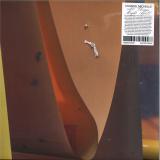
Für Chantal Michelle ist das Komponieren von Musik wie eine Art Choreografie. In surrealen Klangwelten verbinden sich verschiedene Töne miteinander - sie bewegen sich zusammen und entfernen sich dann wieder voneinander - in einem Prozess, der sich ständig im Hörfeld wiederholt. Diese sich ständig verändernde Konstellation zeigt, wie zerbrechlich und veränderlich Wahrnehmung sein kann, ein Thema, das in Michelles Arbeit immer wieder auftaucht. Michelle, die schon früh eine Tanzausbildung absolvierte, bringt eine ausgeprägte räumliche Sensibilität in ihre Arbeit ein: ein intuitives Verständnis dafür, wie Formen koexistieren und sich durch drei Dimensionen bewegen, sowie eine Wertschätzung für die Schönheit, die sich in ungewöhnlichen Gegenüberstellungen von Materialien und Ideen findet. Seit sie 2021 ihre Solokarriere gestartet hat, hat sie internationale Anerkennung für ihre geduldigen, akribischen Aufnahmen bekommen, die oft zusammen mit Installationen, Mehrkanalkompositionen und Klangskulpturen entstehen. Innerhalb dieser subtil verwirrenden Klangarchitekturen können neue Beziehungen entstehen, neue Grenzen gezogen werden, und die Zuhörer werden zu einer Erfahrung von Zeit eingeladen, die sich der Linearität widersetzt. All Things Might Spill, Michelles erstes Album für Shelter Press, ist eine Auseinandersetzung mit anhaltender Spannung und der mysteriösen Erfahrung der Zeitdehnung in den Momenten kurz vor einem Bruch oder Zusammenbruch. Die Musik bewegt sich in einem Raum der Instabilität, und obwohl sie durchgehende Töne und definierte melodische Phrasen verwendet, herrscht eine Atmosphäre der Unentschlossenheit - wie ein Moment der Unruhe, der auf unbestimmte Zeit in der Schwebe bleibt. Ein Großteil des Albums wurde in den Wintermonaten 2024 in Berlin aufgenommen, wobei viele frühe Morgenstunden in einem Raum subtiler Unruhe verbracht wurden. Man sagt, dass Licht in die Dunkelheit eindringt, und diese Übergangszeit, die von Erwartungen geprägt ist, ist in der Musik zu hören. In ,Presence of Border" winden und verflechten sich nebulöse Stimmen, während sie über mehrdeutigen Harmonien schweben, die sich in unendliche Ferne zu erstrecken scheinen. Die beiden kurzen Stücke ,Magnetic Field I" und ,Magnetic Field II" enthalten bearbeitete Aufnahmen einer Tromba Marina, gespielt von der argentinischen Klangkünstlerin Alma Laprida. Die Gegenüberstellung von kratzigen Tönen und hauchzarten Obertönen erzeugt tamburaähnliche Drones, die den Zuhörer in einen schwer fassbaren Mittelpunkt ziehen. Später auf dem Album gibt es in ,Drying of Frozen Soils" modale Klarinettenlinien von Severin Black, die anfangs in dem nebligen, synthetischen Hintergrund fast nicht zu hören sind, bevor sie sich zu einem gespenstischen Kontrapunkt entwickeln. Eine ähnliche Struktur aus Unklarheit und Klarheit prägt den Titeltrack, in dem wortlose Gesänge eine laute Feldaufnahme durchdringen, die auf einer Fähre aufgenommen wurde, die den East River von Brooklyn nach Manhattan überquert. Das ist Musik mit einem weitläufigen Terrain und einer dichten Atmosphäre. Veränderungen sind langsam, aber dramatisch, jede Verschiebung ist sorgfältig geplant, um Gefühle des Staunens und der Vorfreude zu wecken und gleichzeitig eine erhabene Sensibilität dafür zu bewahren, wie einzelne Klänge mit der Bewegung ihrer Umgebung in Beziehung stehen. Michelle verzichtet meisterhaft auf Narrative und komponiert in drei Dimensionen. Wir bleiben mit der Mehrdeutigkeit des Wortes ,might" zurück - der anhaltenden Möglichkeit des energetischen Ansturms des Bruchs, des Ausbrechens, mal am Horizont, mal unmittelbar bevorstehend, irgendwie beides gleichzeitig.
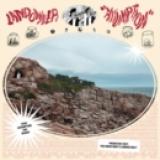
"Western Massachusetts band Landowner play abrasively-clean minimalist punk. Singer Dan Shaw started Landowner in 2016, writing and recording the project's debut Impressive Almanac with a practice amp and a laptop drum machine. Shaw's initial concept was a made-up genre called “weak d-beat”, meant to sound intentionally absurd “as if Antelope were reading the sheet music of Discharge”. When Shaw joined with his current bandmates in 2017, they translated these early experiments in restraint, minimalism, and caricatured hardcore as a live band. This provided Landowner with its own unique set of blueprints: the guitars “slap hard” without using any distortion or effects, the rhythm section is tight, fast, and repetitious, and the song structures make space for lyrics that reflect on the global systems and dark absurdities our lives are tangled in. Comparisons could be made to The Fall, Lungfish, or Uranium Club, but across their five albums, they make it clear: Landowner just sound like Landowner.
Assumption is the band's fifth album. Sonically, it captures the vibrancy and intensity of their live performances. The album title “Assumption” encapsulates the album's multi-layered themes. We make assumptions, taking in information online through an overload of decontextualized snippets and headlines, and then quickly form conclusions, or we allow artificial intelligence to do the thinking for us. Assumption is the sound of a band that established its own musical identity and has reached a place of tightness with an ease gained from years of playing together, sounding mechanically precise and at the same time fully human. It may be the band's most cohesive and fully realized work to date."
Malena Zavala is an Argentinian-born, London-based artist, producer, and filmmaker, known for crafting ethereal, genre-blending music that navigates the space between her Latin heritage and her British upbringing. With the forthcoming album If This Life Could Start Again set for release on 30 January 2026 on Paraná Records, Zavala presents her most intimate, cohesive, and accomplished work to date, marking a significant evolution in her artistic journey.
With her new album, Malena creates an atmospheric dream pop world, weaving singer-songwriter intimacy with synth pop, Argentine folk, indiepop, rock and experimental music, threaded together by her blissful vocals and dreamy guitar work. Gorgeously warm and vivid, If This Life Could Start Again charts the journey from pain to acceptance, mapping out the non-linear nature of healing through a sonic landscape. Each song embodies a distinct emotion within that journey, from grief and chaos to feeling lost, seeking refuge, finding confidence, and finally acceptance and letting go. Drawing on her Argentinian roots, Malena uses the Andes mountains as both a visual and thematic anchor – the difficult climb towards higher ground becomes a metaphor for healing, whilst being lost at rock bottom reflects the darkest moments of the journey.
Completely composed and performed by Malena herself, the album was recorded in Girona’s L’Empordà countryside in Spain with producer Luke Smith. As a professional producer and audio engineer, this was Malena’s first time relinquishing production control – an intimate creative shift that allowed their shared vision to shape the album’s rich, enveloping sound.
However, Zavala’s career to date has been a testament to self-sufficient artistry. Her critically acclaimed debut, Aliso (2018), was written, recorded, and produced alone in her parents’ garage, which honed her dreamy bedroom pop sound. The album, praised by The Guardian for its “gently warped and beguilingly melancholy guitar pop,” ****, immediately catapulted her from DIY beginnings to prestigious stages, supporting acts like Lord Huron at London’s Roundhouse and Men I Trust at Village Underground and subsequently continuing on their UK/EU tours. Later with standout performances at Latitude, Green Man, and All Points East. Her consistent radio support from key influencers including BBC Radio 6 Music, BBC Radio 1's Huw Stephens, and Steve Lamacq has solidified her presence on the airwaves.
Her second album, La Yarará (2020), saw Zavala delve deeper into her roots, exploring Latin traditions like Cumbia and Bolero. This exploration of identity continues powerfully on the new album, but with a newfound lyrical depth and sonic confidence. The new album, If This Life Could Start Again, is a raw and transformative eight-track journey that maps the emotional landscape of healing. Written after a period of personal upheaval, the album traverses themes of grief, hereditary trauma, and self-discovery. The record’s narrative is structured like a mountain ascent. A challenging climb through varied emotional terrain, posing the central question: “Will you join the journey?” Sonically, this journey mirrors the non-linear path to acceptance, evolving from acoustic folk and synth-pop to funk-infused rhythms and rock anthems.
As a formidable live performer, Zavala has built a robust touring profile across the UK and Europe. She will embark on an extensive tour in February and March 2026 to support the album, with dates spanning major cities from London and Glasgow to Berlin, Paris, and Barcelona.
With If This Life Could Start Again, Malena Zavala fully realizes her artistic vision as a self-taught producer to an autonomous artist commanding her career through Paraná Records whilst reflecting the vast landscapes of her heritage and affirming her place as a compelling and evolving voice in contemporary music.
There is a breaking point where the mind yields and the body takes command. This is precisely the territory of Frenetic Habits EP.
Asymetric80 lands at INDUSTRIAS MEKANIKAS with an unapologetic statement: a direct immersion into the aesthetics of collapse and extreme habits. The work places you in the center of a post-apocalyptic scenario, where survival no longer relies on calm, but on your ability to endure mechanical tension.
The sound is built upon solidity and saturation. You won’t find fragility here, but rather an architecture of EBM, New Beat, and Industrial Techno designed to dominate any sound system that dares to play it.
Side A establishes the hierarchy with Frenetic Habits. Far from linear, the track unfolds a broken, demolishing rhythm, generating a devastating sonic pressure that completely envelops you. It is a piece of constant drive, an armored machine advancing over the very ground you stand on. It is followed by Exile and Unmasked, which shifts the strategy towards depth: a hypnotic immersion where industrial textures densify, creating a dark atmosphere that traps you with no escape.
On Side B, Bleak materializes the heaviness of the environment. A slow-burning, corrosive track with deep bass, which you can feel advancing with the force of concrete. To close, Dementia releases the accumulated tension with overflowing kinetic energy; a final outburst of controlled aggression that closes the cycle with maximum intensity.
Frenetic Habits EP is a record of ironclad textures and terminal atmosphere. A work that documents not defeat, but the brute force needed to remain standing when everything around has come crashing down.