Two lost Disco classics appearing for the first time on a single 12” featuring soul legend Leon Ware and Jo Ann Harris, a little known backing singer for Bob Dylan throughout the 80s.
Both songs originally appeared on the ‘20 Minute Workout’ Video and LP released in 1983 by Canadian label Ronco, ‘What Does It Take’ providing an uptempo crescendo to the third part of the workout and ‘Never Gonna Give You Up’ the final warm down track. Licensed from producer Ira Newborn, Hollywood soundtrack royalty who composed the scores for an incredible run of films including The Blues Brothers, Ferris Bueller’s Day Off, The Naked Gun trilogy, Weird Science, Ace Ventura and Uncle Buck. Ira’s lawyer persuaded him to get involved in the project for Ronco and it was Ira who hand picked Leon Ware and Jo Ann Harris to add vocals to two tracks to aid the commercial potential of the album.
There are two original versions backed with extended instrumentals sourced from a rare Lazer Disc Version of the album. It feels right to shine a light on one of Leon Ware’s lesser known performances, whilst the Jo Ann Harris cut has a distinct Balearic air featuring sultry keys and sax at a tempo of 98 BPM.
Cerca:little brothe
- A1: Intro
- A2: The Magic Number
- A3: Change In Speak
- A4: Cool Breeze On The Rocks (The Melted Version)
- A5: Can U Keep A Secret
- A6: Jenifa Taught Me (Derwin’s Revenge)
- A7: Ghetto Thang
- A8: Transmitting Live From Mars
- A9: Eye Know
- A10: Take It Off
- A11: A Little Bit Of Soap
- B1: Tread Water
- B2: Potholes In My Lawn
- B3: Say No Go
- B4: Do As De La Does
- B5: Plug Tunin’ (Last Chance To Comprehend)
- B6: De La Orgee
- B7: Buddy (With Jungle Brothers And Q-Tip From A Tribe Called Quest)
- B8: Description
- B9: Me Myself And I
- B10: This Is A Recording 4 Living In A Full Time Era (L I.f.e.)
- B11: I Can Do Anything (Delacratic)
- B12: D A.i.s.y. Age
2X12 VINYL[35,25 €]
Orange Version[18,28 €]
Yellow VINYL[35,50 €]
Magenta version[35,50 €]
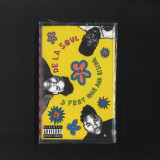
Finally back on tape, officially reissued. Must have! 3 Feet High and Rising is the debut studio album by hip hop trio De La Soul and was released on March 3, 1989 It marked the first of three full- length collaborations with producer Prince Paul, which would become the critical and commercial peak of both parties. Critically, as well as commercially, the album was a success. It contains the singles, "Me Myself and I", "The Magic Number", "Buddy", and "Eye Know". The album title came from the Johnny Cash song "Five Feet High and Rising". It is listed on Rolling Stone's 200 Essential Rock Records and The Source's 100 Best Rap Albums. When Village Voice held its annual Pazz & Jop Critics Poll for 1989, 3 Feet High and Rising was ranked #1. It was also listed on the Rolling Stone's The 500 Greatest Albums of All Time. Released amid the 1989 boom in gangsta rap, which gravitated towards hardcore, confrontational, violent lyrics, De La Soul's uniquely positive style made them an oddity beginning with the first single, "Me, Myself and I". Their positivity meant many observers labeled them a 'hippie' group, based on their declaration of the 'D.A.I.S.Y. Age' (Da. Inner. Soul. Yall). Sampling artists as diverse as Hall & Oates, Steely Dan and The Turtles, 3 Feet High and Rising is often viewed as the stylistic beginning of 1990s alternative hip hop (and especially jazz rap).
- A1: Intro
- A2: The Magic Number
- A3: Change In Speak
- A4: Cool Breeze On The Rocks (The Melted Version)
- A5: Can U Keep A Secret
- A6: Jenifa Taught Me (Derwin's Revenge) (Derwin's Revenge)
- A7: Ghetto Thang
- A8: Transmitting Live From Mars
- A9: Eye Know
- A10: Take It Off
- A11: A Little Bit Of Soap
- A12: Tread Water
- A13: Potholes In My Lawn
- B1: Say No Go
- B10: Daisy Age
- B2: Do As De La Does
- B3: Plug Tunin' (Last Chance To Comprehend) (Last Chance To Comprehend)
- B4: De La Orgee
- B5: Buddy (With Jungle Brothers & Q-Tip From A Tribe Called Quest)
- B6: Description
- B7: Me Myself & I
- B8: This Is A Recording 4 Living In A Full Time Era (Life) (Life)
- B9: I Can Do Anything (Delacratic) (Delacratic)
2X12 VINYL[35,25 €]
Blue Version[18,28 €]
Yellow VINYL[35,50 €]
Magenta version[35,50 €]
Finally back on tape, officially reissued. Must have! 3 Feet High and Rising is the debut studio album by hip hop trio De La Soul and was released on March 3, 1989 It marked the first of three full- length collaborations with producer Prince Paul, which would become the critical and commercial peak of both parties. Critically, as well as commercially, the album was a success. It contains the singles, "Me Myself and I", "The Magic Number", "Buddy", and "Eye Know". The album title came from the Johnny Cash song "Five Feet High and Rising". It is listed on Rolling Stone's 200 Essential Rock Records and The Source's 100 Best Rap Albums. When Village Voice held its annual Pazz & Jop Critics Poll for 1989, 3 Feet High and Rising was ranked #1. It was also listed on the Rolling Stone's The 500 Greatest Albums of All Time. Released amid the 1989 boom in gangsta rap, which gravitated towards hardcore, confrontational, violent lyrics, De La Soul's uniquely positive style made them an oddity beginning with the first single, "Me, Myself and I". Their positivity meant many observers labeled them a 'hippie' group, based on their declaration of the 'D.A.I.S.Y. Age' (Da. Inner. Soul. Yall). Sampling artists as diverse as Hall & Oates, Steely Dan and The Turtles, 3 Feet High and Rising is often viewed as the stylistic beginning of 1990s alternative hip hop (and especially jazz rap).
In 1975, under the oppressive air of military dictatorship in Brazil, brothers Lelo and Zé Eduardo Nazario invited bassist Zeca Assumpção to join their musical experiments in a basement under Sao Paulo’s Teodoro Sampaio Street. As teenagers, the trio had already been playing together in Hermeto Pascoal’s Grupo, alongside guitarist Toninho Horta and saxophonist Nivaldo Ornelas, and it was while working together under Hermeto’s direction that the Paulista rhythm section (as they were then known) began to realise their own potential.
With many nightclubs and venues closed in the mid-70s and government censors dictating the output of radio, TV and art galleries, many Brazilian artists fled during the years of dictatorship. But underground, Grupo Um were fusing avant garde ideals with contemporary jazz and Afro Brazilian rhythm; making phenomenally free and expressive music - in stark contrast to the sterile, conservative conditions being imposed above ground.
Just like Hermeto Pascoal’s Viajando Com O Som from the following year, Starting Point was recorded over two days at Vice-Versa Studios, by revered engineer Renato Viola. The studio was one of the best in Sao Paulo and musicians communicated with engineers through cameras and a monitor, allowing the group complete immersion in the process. They also made use of the studio’s hemispherical tiled room, which served as an acoustic reverberation chamber.
The album begins with Zé Eduardo Nazario’s thunderous drum solo on “Porão da Teodoro”, before clearing the clouds with the lone Berimbau which opens “Onze Por Oito”. Built around a hypnotic electric bass line, heady Fender Rhodes improvisations, and more rip-roaring drums, it’s a rapturous, electrifying freak-jam in 11/8.
Like some invertebrate deep-sea curiosity, the free-form “Organica” is made up of Lelo Nazario’s playfully eerie prepared piano, with Zé Eduardo’s percussion flurries darting around Assumpçao’s double bass. The equally non-conformist, percussion-only piece “Jardim Candida” features many of Zé Eduardo’s home-made instruments, including a long saw blade played with vibraphone sticks and violin bow. While working with Hermeto, Zé Eduardo famously built his own all-in-one percussion set-up known as the “Barraca de Percussão” (Percussion Tent) - the first of its kind in Brazil, which he would also use on Hermeto Pascoal’s Viajando Com O Som and throughout his career.
“Suite Orquidea Negra'' (Black Orchid Suite) was written by Lelo Nazario as the score for an imaginary movie - the story of a rare, black orchid which produced a substance meant to cure all diseases, but which had mysteriously disappeared from the laboratory… “As a screenplay it’s not very good” reflects Lelo in jest, “but the music ended up being very interesting, the way its parts are chained to one another carries a little of the mystery I imagined for the movie.”
The album closes with the triumphant “Cortejo dos Reis Negros” (Procession of Black Kings) - a groovy variation on the Maracatu rhythm, with a two-note bassline underpinning piano improvisations, exultant wordless vocals, cuicas, slide-whistles and a very special guest appearance from Zé’s dog Bolinha.
Starting Point was to mark the inception of one of Brazil’s most daring instrumental groups. Their debut now sits in the lofty echelon of otherworldly 70s Brazilian music, alongside the likes of Marcos Resende & Index’s self-titled debut, Cesar Mariano & Cia’s Sao Paulo Brasil, Azymuth’s debut and indeed Hermeto Pascoal’s Viajando Com O Som. But just like all of those titles, which were either shelved or largely ignored at the time, Grupo Um - so radically ahead of their time - struggled to find a label to release their debut album. So Lelo kept the tapes safe in his archives, which is where they sat for almost half a century. Finally, almost fifty years later, this mesmerising piece of history is here, and it was only the beginning...
Grupo Um’s Starting Point will be released by Far Out Recordings, on vinyl LP, with an insert featuring unseen photos and liner notes by the Nazario brothers, as well as a CD on 17th February 2023.
An aura of mystery is hidden on this magnificent album released on EMI Nigeria in 1974 and today a collector’s cult object was the only one named Moonrakers Band.
Steve Black tells: “We were the original members of The Moonrakers and were based in Zaria, then in 1972 we left band management and started The Elcados. The original management of The Moonrakers sold the name to his elder brother who had a club in Kano and they brought Prince Bola Agbana to get other musicians to continue The Moonrakers while we moved in as The Elcados.”
Moonrakers Band and Elcados were the two bands that inflamed northern Nigeria in the early 70s with a more rocking and virtuoso sound, and especially with tons of rare grooves, then everything else around it.
Coming to the album content tracks like Wait For Me, Cut Your Coat According To You Size, Yara Manyan Gobe, but also Enia Sa Pele and Move on, will make floating camels appear on the dancefloor, or in your house.
Home is a powerful concept with an abstract definition. This solo album takes those subjective ideas and unifies them under one roof. Evolving from Jerve’s #dailypiano posts in 2019, ‘The Soundtrack of My Home’ relays thoughts and improvisations that trace his journey from childhood home to adult and now, father. Nurturing a mood or feeling, each song begets a sonorous story of someone close to him, expressed through the language of piano playing.
Jerve makes use of his hands as a human step sequencer, often programming two or more motifs of varying lengths in a polymetric fashion. These melodic patterns and arpeggios evolve at varying rates but grow around clear progressions with standard 8-bar forms.
The first track - ‘Kjetil’ enters with an earnest, gentle and endearing character - like a young river near its source. As with such a river, it will grow to varied sizes throughout the album but must begin as a humble expression from the source. The following titles sketch his interpretations of the people that have made up his home.
There is a theme across the album that unites the songs, so much so that differentiating tracks can at times be difficult. Though, Jerve punctuates this overarching mood with a few distinct structures, as found in tracks ‘Karoline’ (wife), ‘Espen’ (brother) and ‘Sven’ (father). ‘Turid’ (daughter) and ‘Jon Eirik’ (brother) seem less directive and welcome more intrigue, reminiscent of a curious child wandering through the dappled light of a forest.
‘Iben’ (daughter) and ‘Eivor’ (daughter) have a hypnotic, three-pointed melodic structure that leaves the listener suspended; transfixed - while ‘Sussi’ (cat) carries unique momentum and suitably feline autonomy. ‘Mette’ (mother) has a mood of ascending, like that of a child's upward gaze at their maternal carer. Utterly nuanced in structure, Jerve leaves ample space for subjective interpretation and allows the listener to weave their own life into the tones.
As expected from the founder of Dugnad rec - this album signifies a deeply personal sentiment. Sometimes we are forced to confront the music and other times, we are left to wonder. Here, we find a balance and unity that allows little thoughts and worries to drift away, bringing us warmly to rest in the present. The LP edition's bonus track features producer/performer extraordinaire Stian Balducci, drawing a line to the next chapter of piano-based music from Dugnad rec: TOKYO TAPES: PIANO RECYCLE.
From playing chaotic house parties in their home city of Oxford to becoming major festival headliners across Europe, Foals' trajectory has been remarkable. They've earned critical acclaim (NME and Q Award wins, plus Mercury Prize, Ivor Novello and BRIT Award nominations) and fan devotion (1.7 million sales of their four Gold-certified albums) in equal measure. And while the majority of contemporaries have fallen by the wayside, Foals continue to hit new peaks.
After more than a decade in the game, Foals again embrace that love for the unconventional with the bravest and most ambitious project of their career: not one, but two astonishing new albums: 'Everything Not Saved Will Be Lost'. A pair of releases, separate but related, they share a title, themes and artwork. 'Part 1' will be released on March 8th, with 'Part 2' following later in the year.
'They're two halves of the same locket,' frontman Yannis Philippakis explains. 'They can be listened to and appreciated individually, but fundamentally, they are companion pieces.
Fundamentally tethered but possessing their own personalities, the two bodies capture the most compelling, ambitious and cohesive creations they've ever produced. Eager to break the traditional pop song structure which they felt they were becoming increasingly tapered to, the 20 tracks defy expectation. There are exploratory, progressive-tinged tracks alongside atmospheric segues which make the music an experience rather than a mere collection of songs. Yet the band's renowned ability to wield relentless grooves with striking power and skyscraper hooks also reaches new heights.
The album's lead single 'Exits' is a case in point, featuring Philippakis conjuring the image of a disorienting world via a contagious vocal melody. It's a fresh anthem for Foals' formidable arsenal, but also an ominous forecast.
'There's a definite idea about the world being no longer habitable in the way that it was,' says Yannis. 'A kind of perilousness lack of predictability and a feeling of being overwhelmed by the magnitudes of the problems we face. What's the response And what's the purpose of any response that one individual can have'
'Exits' signposts what to expect thematically from both instalments of 'Everything Not Saved Will Be Lost'. The title is a warning that anything - from the tiniest fleeting moment of inspiration through to the planet's own biological diversity - can be under threat of being irrevocably erased.
It's a theme that permeates throughout the album's material, as Foal mirror the public neuroses that have been provoked by our current cultural climate. Paranoia of state surveillance Fear of environmental collapse Anxiety over Trump's next potentially cataclysmic move It's all there in these apocalyptic songs.
'Lyrically, there are resonances with what's going on in the world at the moment,' summarises Yannis. 'I just feel like, what's the utility of being a musician these days, if you can't engage with at least some of this stuff These songs are white flags, or they're SOSs, or they're cries for help... each in a different way.'
The new albums' journeys began as the 'What Went Down' era ended. Founding bassist Walter Gervers departed on amicable terms after playing the Festival Paredes de Coura in Portugal in August 2017. Foals felt that he couldn't be replaced - a decision that ushered in a period of recalibration, reorganisation and, ultimately, rejuvenation.
After taking a little time out, Foals - completed by Jimmy Smith (guitar), Jack Bevan (drums) and Edwin Congreave (keys) reconvened - with Yannis on production duties, who, together with Edwin, also covered the bass parts. They began by writing in a rehearsal space before exporting those sketches into the recording phase at 123 Studios, Peckham, with the assistance of engineer Brett Shaw. They'd repeat the cycle between the two spaces, effectively creating an ongoing feedback loop as they sought to push every new idea to the finish line.
1 x 12" black vinyl 180gsm
- label 4/c
- discobag on reverse board with matt varnish
- gatefold on reverse board with matt varnish
- shrinkwrap
Office Recordings continues to surprise us. After Baaz' Techno-/Ambient-hybrid on Office 011 the label from Berlin comes up with a stunning new and anonymous project called 'One Day' featuring four also unnamed tracks. The A-side of the record starts off with a with a superb Deep Techno track which tempts us with very emotional pads and a strong kick and bass fundament - an irresistible combination. A2 goes in the same direction but feels like the slightly mellower and softer brother of its predecessor - a little bit moody but still straightforward at the same time. The flip side is dedicated to two freestyle electronic tracks standing in the tradition of the best Warp offerings from their heyday in the 90s. We're talking charming melodies and sparse but elaborate rhythmic patterns. The record comes in a hand stamped and with a lovely artwork also hand made by Office art director Super Quiet. All tracks have been mastered and cut by sound engineering proficient Pole at Scape Mastering.
Gap Mangione's monumentally influential Diana In The Autumn Wind. AKA BEWITH200LP. And, without question, Be With's White Whale.
They said it could never be done. And with good reason.
We've spent the past 12 years trying to license this legendary 1968 recording from Gap and, after much work, it's finally here. Remarkably, this is the first ever vinyl reissue of Gap Mangione's Diana In The Autumn Wind, produced with the full and extensive participation of Gap. An exceedingly rare album, it's been coveted by funk, soul, jazz and hip-hop sample fiends for decades.
It's unarguably *the* most sought after album for J Dilla / Madlib sample collectors. It has also been brilliantly sampled by A Tribe Called Quest, Large Professor, Ghostface Killah, Kendrick Lamar and Talib Kweli.
But this record is so much more than a sample-spotters curio. It's solid gold throughout. Bursting with killer funky-jazz grooves and tracks adorned with warm electric piano, the release is notable for featuring some extremely significant players at the very outset of their careers; Tony Levin, at 21, whose superb playing on both acoustic and electric bass was the harmonic mainstay of the trio and Steve Gadd, at 23, one of the greatest drummers of his generation.
With acceptable copies of this holy grail changing hands for $400, to call this reissue "much-needed" underplays just how vital it is. Gap's story is told in his words alongside rare photos across a sumptuously designed 2-page insert and, to augment this deluxe edition further, its all wrapped up in a beautiful, no-expense-spared luxury tip-on sleeve, as per the original hens-teeth release. And, while we're talking packaging, just take a look at that cover - a work of art in and of itself.
The tracks are short but complex, with that extraordinary rhythm section backing the beautiful piano, organ and electric piano work of Gap. It's like the best ever library funk breaks record you never heard - but all your favourite golden age rap producers were all over it, long ago. It's a stunning blend of the vibrant, driving music of the Gap Mangione Trio coupled with the sensitive composition and superb orchestration of Gap's legendary brother, Chuck Mangione, who helmed an amalgam of seemingly disparate elements – rock, big band jazz, solo improvisation and "classical" music - into a spectacularly cohesive whole that has aged wonderfully well. As Gap himself notes in the liners, "with this group I was able to explore and add new and exciting elements from rock, Brazilian and then-current pop music."
Opener "Boy With Toys" triumphantly swaggers out the gate, all big band horns, flutes and dextrous organ work. The synthesis of everything going on is nothing short of stunning. When one wise YouTube commentator called this tune "old school superhero music", Gap agreed. Rap luminaries did, too, amongst them Talib Kweli, who rapped over DJ Scratch's chopped up intro for "Shock Body" on his Quality album back in 2002.
You've barely recovered from that incredibly affecting opener when you get hit over the head with the exquisite title-track. And now you see how two of the greatest beats of all time emerged from one single track produced nearly 50 years earlier. Unforgettably utilised by Dilla for Slum Village's heartbreakingly good "Fall In Love" and then Madlib for his "Official" beat for Dilla to rap over, on the Jaylib record. Regardless of the records it went on to spawn, this is just a staggering tune in its own right. Be beguiled by the flutes and the flutter tonguing, the counter-melody from the trombones, the soprano sax solo. All of it. Simply beautiful.
The questing organ and horn workout "Long Hair Soulful" deserves a lot more attention, overshadowed somewhat by the opening two monsters but no less fantastic. It swings, it grooves and Gadd and Levin truly cook. Up next, Gap's wonderfully percussive, mellifluously piano-heavy cover of "Yesterday" by some fellas called The Beatles. It's a subtly arresting gem. "The XIth Commandment" is damn fine, with thick, gorgeous electric piano and snappy drum work underpinning chaotic soundtracky horns. To close out the side, "St. Thomas" showcases the "fourth" member of the Gap Mangione Trio, conga drummer Dhui Mandingo. Having performed with the Trio since 1965, Dhui‘s African-based and jazz-latin-influenced style amazed listeners and its way to hear why.
Opening the B-Side, standard "You're Nobody Till Somebody Loves You" breezes along in the late-night jazz club fashion before things get super deep with the outstanding and - up to now - un-sampled "Pond With Swans". It's simply heavenly, and how its moody, melancholic intro has yet to be pilfered is anybody's guess. It oscillates between gentle, sombre movements and bombastic grooves, equally hypnotic and joyous. The rendition of "You Are My Sunshine" is yet another showcase for Gap's virtuoso playing and Gadd's mastery of the pocket. Indeed Gadd's drumming on "Free Again" is nothing short of neck-SNAPPING! Ghostface took it for not one but two "Iron's Theme" tracks across his seminal Supreme Clientele. It's got that Galt MacDermot "Coffee Cold" feel. Suuuuuper cool. The frantic "Dream On Little Dreamer" hurtles along and must've surely had the whole room absolutely swinging from the chandeliers back in Rochester in the late 60s. The album closes with the magnificent Graduate Medley, featuring memorable renditions of "Scarborough Fair", "The Sounds of Silence" and "Mrs. Robinson". The warm electric piano lines of the former were sampled by The Ummah (Dilla again!) for Tribe's "Pad & Pen" from their reappraised final album, The Love Movement, as well as by Large Professor on his much-loved "The LP (For My People)".
Under the watchful eye - and extremely attentive ears - of Gap Mangione himself, the audio for Diana In The Autumn Wind has been carefully remastered by Be With regular Simon Francis, with a few much needed tweaks here and there, according to the artist's wishes. At the prestigious Abbey Road Studios, Cicely Balston's expert skills have made sure nothing is lost in the cut whilst the records have been pressed to the highest possible standard at the always stellar Record Industry in Holland. The artwork restoration has taken place here at Be With HQ and has that drop-dead gorgeous cover artwork popping like new. Buy on sight!
- A1: Al Green – Let's Stay Together
- A2: Marvin Gaye - What's Going On
- A3: Diana Ross - Ain't No Mountain High Enough (Single Version)
- A4: Stevie Wonder - Signed, Sealed, Delivered (I'm Yours)
- A5: Commodores - Easy (Album Version)
- A6: Bill Withers - Ain't No Sunshine
- A7: The Stylistics - You Make Me Feel Brand New (Let's Put It All Together Version)
- A8: Rose Royce – Wishing On A Star
- B1: Jackson 5 - I Want You Back (Single Version)
- B2: Smokey Robinson & The Miracles - The Tears Of A Clown (Single Version / Mono)
- B3: The Supremes - Nathan Jones
- B4: Frankie Valli And The Four Seasons - The Night (1972 Album Version)
- B5: Chairmen Of The Board – Give Me Just A Little More Time
- B6: The Trammps - Hold Back The Night
- B7: The O'jays - Love Train
- B8: The Blackbyrds – Walking In Rhythm
- B9: Heatwave - Always And Forever (Single Version)
- C1: The Temptations - Papa Was A Rollin' Stone (Edited)
- C2: Isaac Hayes - Theme From "Shaft" (Remastered 1991 Album Version)
- C3: Ike & Tina Turner - Proud Mary
- C4: James Brown - Get Up I Feel Like Being A Sex Machine
- C5: Edwin Starr - War
- C6: Sly & The Family Stone - Family Affair (Single Version)
- C7: The Delfonics - Didn't I (Blow Your Mind This Time)
- C8: Billy Paul - Me And Mrs Jones (Single Version)
- D1: The Floaters - Float On (Single Version)
- D2: Minnie Riperton - Lovin' You
- D3: The Isley Brothers - Summer Breeze, Pt 1
- D4: William Devaughn - Be Thankful For What You Got (Part I)
- D5: Detroit Emeralds – Feel The Need In Me
- D6: The Moments - Jack In The Box
- D7: Raydio - Jack And Jill
- D8: The Tymes - Ms Grace
- E1: Barry White - Can't Get Enough Of Your Love, Babe
- E2: Aretha Franklin – Until You Come Back To Me (That's What I'm Gonna Do)
- E3: Al Green – Tired Of Being Alone
- E4: Gladys Knight & The Pips - Midnight Train To Georgia
- E5: Timmy Thomas – Why Can’t We Live Together (7" Glades Version) (2013 Remaster)
- E6: George Benson – The Greatest Love Of All
- E7: Diana Ross - Theme From Mahogany (Do You Know Where You're Going To) (Single Version)
- E8: Jackson 5 - I'll Be There
- F1: Freda Payne – Band Of Gold
- F2: Ann Peebles - I Can't Stand The Rain
- F3: Marvin Gaye - Let's Get It On (Single Version)
- F4: Harold Melvin & The Blue Notes Featuring Teddy Pendergrass - If You Don't Know Me By Now
- F5: The Stylistics - Can't Give You Anything (But My Love)
- F6: The Three Degrees - When Will I See You Again (Single Version)
- F7: Deniece Williams - Free (Single Version)
- F8: Earth, Wind & Fire - After The Love Has Gone (Single Version)
- F9: Commodores - Three Times A Lady (Single Version)
NOW That’s What I Call 70s Soul brings together 50 era-defining tracks from one of the most powerful decades in soul music, featuring classics from Motown legends, Philly Soul pioneers, smooth balladeers and funk innovators – all pressed across 3LPs on beautiful blue vinyl… Out April 24th!
LP1 opens with one of the decade’s most recognisable love songs: Al Green’s ‘Let’s Stay Together’, a US #1 and UK Top 10 hit that became his signature recording. It’s followed by Marvin Gaye’s ‘What’s Going On’, the socially conscious masterpiece and title track from his landmark 1971 album, and Diana Ross’ Ain’t No Mountain High Enough’, which topped the US chart and became her first solo #1. Stevie Wonder’s ‘Signed, Sealed, Delivered (I’m Yours)’ remains one of Motown’s most joyful recordings and comes before Commodores’ ‘Easy’ introducing Lionel Richie’s smooth ballad vocals. The side also includes Bill Withers’ timeless ‘Ain’t No Sunshine’, a Grammy-winning classic, and The Stylistics’ lush ballad ‘You Make Me Feel Brand New’, a UK Top 3 smash, before closing with Rose Royce’s beautiful ‘Wishing On A Star’, one of the most loved soul ballads of the era.
Flip the LP over and The Jackson 5’s ‘I Want You Back’ – the group’s explosive debut single opens the side. Smokey Robinson & The Miracles’ ‘The Tears Of A Clown’ became a UK #1 and is followed by The Supremes’ Nathan Jones’ showcasing the group’s evolving psychedelic-soul sound. Northern Soul classics from Frankie Valli & The Four Seasons with ‘The Night’, Chairmen Of The Board’s Top 3 smash ‘Give Me Just A Little More Time’ and The Trammps’ ‘Hold Back The Night’. The O’Jays’ joyous ‘Love Train’ leads to The Blackbyrds’ Walking In Rhythm’, before the side closes with the romantic classic ‘Always And Forever’ from Heatwave.
LP2 opens with The Temptations’ epic ‘Papa Was A Rollin’ Stone’, a Grammy-winning US #1 remains one of the most stunning recordings from the Motown catalogue, is followed by Isaac Hayes’ ‘Theme From “Shaft”’, an Academy Award-winner and a US #1 smash. More funk follows from Ike & Tina Turner, James Brown with one of his key tracks ‘Get Up (I Feel Like Being A) Sex Machine’, Edwin Starr’s powerful anti-Vietnam protest song ‘War’, and Sly & The Family Stone’s hugely influential ‘Family Affair’. The Delfonics’ sublime ‘Didn’t I (Blow Your Mind This Time)’ comes ahead of Billy Paul’s timeless ‘Me And Mrs. Jones’ which closes the side…the other side begins with the 1977 #1 from The Floaters with ‘Float On’, before the breathtaking vocals of Minnie Riperton on ‘Lovin’ You’. The Isley Brothers’ Summer Breeze’ and William DeVaughn’s ‘Be Thankful For What You Got’ have become enduring classics and are followed by a run of ‘80s pop-chart crossover hits completing LP2 from Detroit Emeralds, The Moments Raydio and The Tymes’ #1 ‘Ms. Grace’.
LP3 opens with the unmistakable voice of Barry White and his US #1 hit ‘Can’t Get Enough Of Your Love, Babe’, before Aretha Franklin’s ‘Until You Come Back To Me (That’s What I’m Gonna Do)’, delivers one of her smoothest performances. Al Green’s ‘Tired Of Being Alone’ and Gladys Knight & The Pips’ ‘Midnight Train To Georgia’ are followed by minimalist soul classic ‘Why Can’t We Live Together’ from Timmy Thomas, and the side closes with a trio of defining ballads:- George Benson’s ‘The Greatest Love Of All’ Diana Ross’ ‘Theme From Mahogany (Do You Know Where You’re Going To)’ and The Jackson 5’s ‘I’ll Be There’, their biggest hit…while over on the final side…Freda Payne’s #1 ‘Band Of Gold’, opens alongside Ann Peebles’ influential and much covered ‘I Can’t Stand The Rain’.Marvin Gaye’s sensual ‘Let’s Get It On’ became another US #1, while Harold Melvin & The Blue Notes featuring Teddy Pendergrass deliver the contemporary standard ‘If You Don’t Know Me By Now’. Three massive UK #1s are next…The Stylistics with ‘Can’t Give You Anything (But My Love)’, The Three Degrees’ peerless ‘When Will I See You Again’ and Deniece Williams’ ‘Free’. This amazing collection closes with two timeless ballads: Earth, Wind & Fire’s ‘After The Love Has Gone’, a Grammy-winning classic, along with ‘Three Times A Lady’, a huge worldwide #1 for the Commodores.
NOW That’s What I Call 70s Soul, 50 defining tracks from one of music’s greatest decades. Out April 24th.
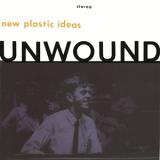
An album Maximum Rock 'N' Roll deemed not punk enough to review, Unwound's 1994 sophomore effort was a lethal depth charge aimed at major label grunge and independent hardcore alike. From the off-kilter, vertiginous rhythm of "Entirely Different Matters" to the neck-snapping velocity of "What Was Wound" to the relentless pounding at the end of "All Souls Day," New Plastic Ideas is the Sonic Youth-loving older sister to Fake Train's postpunk- obsessed little brother.
- 1: No Secret Destination
- 2: Show Me
- 3: Eye Of The Storm
- 4: I Remember Your Face
- 5: In The Hall Of The Mountain King
- 6: Bolero
- 7: Checkmate
- 8: Our Little Secret
- 9: Turn Into Love
- 10: Up All Night
- 11: The Angel Song
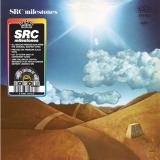
SRC were no strangers to the Detroit Grande Ballroom live scene (that also featured The Stooges, MC5 & Alice Cooper), but SRC’s anglophile-leaning compositions made their records stand out from that pack. Beloved and championed by GENESIS' PETER GABRIEL & DJ JOHN PEEL, SRC were a band that sonically was a cross-section of the UK pop of The Zombies and the inventive, garage rock leanings of The Pretty Things (with a healthy dose of Blue Cheer thrown in!). For their second album, Milestones, SRC added new, ambitious sonic elements, creating a high-wire act that now encompassed funk, prog, and heavy rock. Anchored, as always, by the stun-ray lead guitar playing of Gary Quackenbush and keyboards of his brother Glenn, the band finds themselves still able to crush the listener with unforgettable hooks, but now with an added healthy side of sonic theatrics. This new re-issue joins our trio of other late 60s Capitol re-issues, including the original SRC S/T LP, the reverb-drenched debut masterpiece from Gandalf, and Europhia’s Abbey Road-produced genre-hopping A Gift From Euphoria. Now reissued from the original analog master tapes with the original cover artwork, exclusively for RSD 2026.
- 1: Gypsy Woman
- 2: Little Anna Mae
- 3: I Can't Be Satisfied
- 4: I Feel Like Going Home
- 5: Train Fare Home
- 6: Sittin' Here And Drinkin
- 7: You're Gonna Miss Me (When I'm Dead And Gone)
- 8: Mean Red Spider
- 9: Streamline Woman
- 10: Muddy Jumps One
- 11: Little Geneva
- 12: Canary Bird
- 13: Screamin' And Cryin
- 14: Where's My Woman Been
- 15: Rollin' And Tumblin' Part 1
- 16: Rollin' And Tumblin' Part 2
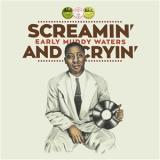
The Definitive Origins of the Chicago Electric Blues. Witness the birth of a legend. This essential collection captures Muddy Waters at the most pivotal moment of his career: the transition from a Mississippi Delta traveler to the "King of Chicago Blues." Muddy Waters was an ambitious young man who saw little future in Mississippi. In 1943, he headed for the bright lights, big city of Chicago, where he soon connected with blues giant Big Bill Broonzy, who began featuring Muddy as an opening act at his club dates. Within a year, Muddy had switched to electric guitar and formed his first blues combo, quickly becoming an established figure on Chicago's club scene. In 1947, Muddy came to the attention of the fledgling Aristocrat Records, just as Leonard Chess-then running a nightclub called the Macomba Lounge-invested in the company. Working frequently with pianist Sunnyland Slim, Muddy recorded a split session with him for Aristocrat in December 1947. This collection begins there: eight Aristocrat 78 rpm releases (sixteen sides), recorded between 1948 and 1950 and presented here in chronological order of release. Just three years later, Leonard and his brother Phil Chess would buy out Aristocrat's remaining partners and rename the label Chess Records-ushering in a new era of Chicago blues that would reverberate around the world. Includes extensive liner notes by Muddy Waters expert Fred Rothwell.
UILTY RAZORS, BONA FIDE PUNKS.
Writings on the topic that go off in all directions, mind-numbing lectures given by academics, and testimonies, most of them heavily doctored, from those who “lived through that era”: so many people today fantasize about the early days of punk in our country… This blessed moment when no one had yet thought of flaunting a ridiculous green mohawk, taking Sid Vicious as a hero, or – even worse – making the so-called alternative scene both festive and boorish. There was no such thing in 1976 or 1977, when it wasn’t easy to get hold of the first 45s by the Pistols or the Clash. Few people were aware of what was happening on the fringes of the fringes at the time. Malcolm McLaren was virtually unknown, and having short hair made you seem strange. Who knew then that rock music, which had taken a very bad turn since the early 1970s, would once again become an essential element of liberation? That, thanks to short and fast songs, it would once again rediscover that primitive, social side that was so hated by older generations? Who knew that, besides a few loners who read the music press (it was even better if they read it in English) and frequented the right record stores? Many of these formed bands, because it was impossible to do otherwise. We quickly went from listening to the Velvet Underground to trying to play the Stooges’ intros. It’s a somewhat collective story, even though there weren’t many people to start it.
The Guilty Razors were among those who took part in this initial upheaval in Paris. They were far from being the worst. They had something special and even released a single that was well above the national average. They also had enough songs to fill an album, the one you’re holding. In everyone’s opinion, they were definitely not among the punk impostors that followed in their wake. They were, at least, genuine and credible.
Guilty Razors, Parisian punk band (1975-1978). To understand something about their somewhat linear but very energetic sound, we might need to talk about the context in which it was born and, more broadly, recall the boredom (a theme that would become capital in punk songs) coupled with the desire to blow everything off, which were the basis for the formation of bands playing a rejuvenated rock music ; about the passion for a few records by the Kinks or the early Who, by the Stooges, by the Velvet mostly, which set you apart from the crowd.
And of course, we should remember this new wave, which was promoted by a few articles in the specialized press and some cutting-edge record stores, coming from New York or London, whose small but powerful influence could be felt in Paris and in a handful of isolated places in the provinces, lulled to sleep by so many appalling things, from Tangerine Dream to President Giscard d’Estaing...
In 1975-76, French music was, as almost always, in a sorry state ; it was still dominated by Johnny Hallyday and Sylvie Vartan. Local rock music was also rather bleak, apart from Bijou and Little Bob who tried to revive this small scene with poorly sound-engineered gigs played to almost no one.
In the working class suburbs at the time, it was mainly hard rock music played to 11 that helped people forget about their gruelling shifts at the factory. Here and there, on the outskirts of major cities, you still could find a few rockers with sideburns wearing black armbands since the death of Gene Vincent, but it wasn’t a proper mass movement, just a source of real danger to anyone they came across who wasn't like them. In August 1976, a festival unlike any other took place in Mont-de-Marsan – the First European Punk Festival as the poster said – with almost as many people on stage as in the audience. Yet, on that day, a quasi historical event happened, when, under the blazing afternoon sun, a band of unknowns called The Damned made an unprecedented noise in the arena, reminiscent of the chaotic Stooges in their early adolescence. They were the first genuine punk band to perform in our country: from then on, anything was possible, almost anything seemed permissible.
It makes sense that the four+1 members of Guilty Razors, who initially amplified acoustic guitars with crappy tape recorder microphones, would adopt punk music (pronounced paink in French) naturally and instinctively, since it combines liberating noise with speed of execution and – crucially – a very healthy sense of rebellion (the protesters of May 1968 proclaimed, and it was even a slogan, that they weren’t against old people, but against what had made them grow old. In the mid-1970s, it seemed normal and obvious that old people should now ALSO be targeted!!!).
At the time, the desire to fight back, and break down authority and apathy, was either red or black, often taking the form of leafleting, tumultuous general assemblies in the schoolyard, and massive or shabby demonstrations, most of the time overflowing with an exciting vitality that sometimes turned into fights with the riot police. Indeed, soon after the end of the Vietnam War and following Pinochet’s coup in Chile, all over France, Trotskyist and anarcho-libertarian fervour was firmly entrenched among parts of the educated youth population, who were equally rebellious and troublemakers whenever they had the chance. It should also be noted that when the single "Anarchy in the UK" was first heard, even though not many of us had access to it, both the title and its explosive sound immediately resonated with some of those troublemakers crying out for ANARCHY!!! Meanwhile, the left-wing majority still equated punks with reckless young neo-Nazis. Of course, the widely circulated photos in the mainstream press of Siouxsie Sioux with her swastikas didn’t necessarily help to win over the theorists of the Great Revolution. It took Joe Strummer to introduce The Clash as an anti-racist, anti-fascist and anti-ignorance band for the rejection of old-school revolutionaries to fade a little.
The Lycée Jean-Baptiste Say at Porte d’Auteuil, despite being located in the very posh and very exclusive 16th arrondissement of Paris, didn’t escape these "committed" upheavals, which doubled as the perfect outlet for the less timid members of this generation.
“Back then, politics were fun,” says Tristam Nada, who studied there and went on to become Guilty Razors’ frontman. “Jean-Baptiste was the leftist high-school in the neighbourhood. When the far right guys from the GUD came down there, the Communist League guys from elsewhere helped us fight them off.”
Anything that could challenge authority was fair game and of course, strikes for just about any reason would lead to increasingly frequent truancy (with a definitive farewell to education that would soon follow). Tristam Nada spent his 10th and 11th unfinished grades with José Perez, who had come from Spain, where his father, a janitor, had been sentenced to death by Franco. “José steered my tastes towards solid acts such as The Who. Like most teenagers, I had previously absorbed just about everything that came my way, from Yes to Led Zeppelin to Genesis. I was exploring… And then one day, he told me that he and his brother Carlos wanted to start a rock band.” The Perez brothers already played guitar. “Of course, they were Spanish!”, jokes their singer. “Then, somewhat reluctantly, José took up the bass and we were soon joined by Jano – who called himself Jano Homicid – who took up the rhythm guitar.” Several drummers would later join this core of not easily intimidated young guys who didn’t let adversity get the better of them.
The first rehearsals of the newly named Guilty Razors took place in the bedroom of a Perez aunt. There, the three rookies tried to cover a few standards, songs that often were an integral part of their lives. During a first, short gig, in front of a bewildered audience of tough old-school rockers, they launched into a clunky version of the Velvet Underground's “Heroin”. Challenge or recklessness? A bit of both, probably… And then, step by step, their limited repertoire expanded as they decided to write their own songs, sung in a not always very accurate or academic English, but who cared about proper grammar or the right vocabulary, since what truly mattered was to make the words sound as good as possible while playing very, very fast music? And spitting out those words in a language that left no doubt as to what it conveyed mattered as well.
Trying their hand a the kind of rock music disliked by most of the neighbourhood, making noise, being fiercely provocative: they still belonged to a tiny clique who, at this very moment, had chosen to impose this difference. And there were very few places in France or elsewhere, where one could witness the first stirrings of something that wasn’t a trend yet, let alone a movement.
In the provinces, in late 1976 or early 1977, there couldn’t be more than thirty record stores that were a bit more discerning than average, where you could hear this new kind of short-haired rock music called “punk”. The old clientele, who previously had no problem coming in to buy the latest McCartney or Aerosmith LP, now felt a little less comfortable there…
In Paris, these enlightened places were quite rare and often located nex to what would become the Forum des Halles, a big shopping mall. Between three aging sex workers, a couple of second-hand clothes shops, sellers of hippie paraphernalia and small fashion designers, the good word was loudly spread in two pioneering places – propagators of what was still only a new underground movement. Historically, the first one was the Open Market, a kind of poorly, but tastefully stocked cave. Speakers blasted out the sound of sixties garage bands from the Nuggets compilation (a crucial reference for José Perez) or the badly dressed English kids of Eddie and the Hot Rods. This black-painted den was opened a few years earlier by Marc Zermati, a character who wasn’t always in a sunny disposition, but always quite radical in his (good) choices and his opinions. He founded the independent label Skydog and was one of the promoters of the Mont-de-Marsan punk festivals. Not far from there was Harry Cover, another store more in tune with the new New York scene, which was amply covered in the house fanzine, Rock News (even though it was in it that the photos of the Sex Pistols were first published in France).
It was a favorite hang-out of the Perez brothers and Tristam Nada, as the latter explained. “It’s at Harry Cover’s that we first heard the Pistols and Clash’s 45s, and after that, we decided to start writing our first songs. If they could do it, so could we!”
The sonic shocks that were “Anarchy in the UK”, “White Riot” or the Buzzcocks’s EP, “Spiral Scratch” – which Guilty Razors' sound is reminiscent of – were soon to be amplified by an unparalleled visual shock. In April 1977, right after the release of their first LP, The Clash performed at the Palais des Glaces in Paris, during a punk night organised by Marc Zermati. For many who were there, it was the gig of a lifetime…
Of course, Guilty Razors and Tristam were in the audience: “That concert was fabulous… We Parisian punks were almost all dressed in black and white, with white shirts, skinny leather ties, bikers jackets or light jackets, etc. The Clash, on the other hand, wore colourful clothes. Well, the next day, at the Gibus, you’d spot everyone who had been at this concert, but they weren’t wearing anything black, they were all wearing colours.”
It makes sense to mention the Gibus club, as Guilty Razors often played there (sometimes in front of a hostile audience). It was also the only place in Paris that regularly scheduled new Parisian or Anglo-Saxon acts, such as Generation X, Siouxsie and the Banshees, the Slits, and Johnny Thunders who would become a kind of messed-up mascot for the venue. A little later, in 1978, the Rose Bonbon – formerly the Nashville – also attracted nightly owls in search of electric thrills… In 1977, the iconic but not necessarily excellent Asphalt Jungle often played at the Gibus, sometimes sharing the bill with Metal Urbain, the only band whose aura would later transcend the French borders (“I saw them as the French Sex Pistols,” said Geoff Travis, head of their British label Rough Trade). Already established in this small scene, Metal Urbain helped the young and restless Guilty Razors who had just arrived. Guitarist for Metal Urbain Hermann Schwartz remembers it: “They were younger than us, we were a bit like their mentors even if it’s too strong a word… At least they were credible. We thought they were good, and they had good songs which reminded of the Buzzcocks that I liked a lot. But at some point, they started hanging out with the Hells Angels. That’s when we stopped following them.”
The break-up was mutual, since, Guilty Razors, for their part, were shocked when they saw a fringe element of the audience at Metal Urbain concerts who repeatedly shouted “Sieg Heil” and gave Nazi salutes. These provocations, even still minor (the bulk of the skinhead crowd would later make their presence felt during concerts), weren’t really to the liking of the Perez brothers, whose anti-fascist convictions were firmly rooted. Some things are non-negotiable.
A few months earlier (in July 1978), Guilty Razors had nevertheless opened very successfully for Metal Urbain at the Bus Palladium, a more traditonally old-school rock night-club. But, as was sometimes the case back then, the night turned into a mass brawl when suburban rockers came to “beat up punks”.
Back then, Parisian nights weren’t always sweet and serene.
So, after opening as best as they could for The Jam (their sound having been ruined by the PA system), our local heroes were – once again – met outside by a horde of greasers out to get them. “Thankfully,” says Tristam, “we were with our roadies, motorless bikers who acted as a protective barrier. We were chased in the neighbouring streets and the whole thing ended in front of a bar, with the owner coming out with a rifle…”
Although Tristam and the Perez brothers narrowly escaped various, potentially bloody, incidents, they weren’t completely innocent of wrongdoing either. They still find amusing their mugging of two strangers in the street for example (“We were broke and we simply wanted to buy tickets for the Heartbreakers concert that night,” says Tristam). It so happened that their victims were two key figures in the rock business at the time: radio presenter Alain Manneval and music publisher Philippe Constantin. They filed a complaint and sought monetary compensation, but somehow the band’s manager, the skilful but very controversial Alexis, managed to get the complaint withdrawn and Guilty Razors ended up signing with Constantin with a substantial advance.
They also signed with Polydor and the label released in 1978 their only three-track 45, featuring “I Don't Wanna be A Rich”, “Hurts and Noises” and “Provocate” (songs that exuded perpetual rebellion and an unquenchable desire for “class” confrontation). It was a very good record, but due to a lack of promotion (radio stations didn’t play French artists singing in English), it didn’t sell very well. Only 800 copies were allegedly sold and the rest of the stock was pulped… Initially, the three tracks were to be included on a LP that never came to be, since they were dropped by Polydor (“Let’s say we sometimes caused a ruckus in their offices!” laughs Tristam.) In order to perfect the long-awaited LP, the band recorded demos of other tracks. There was a cover of Pink Floyd's “Lucifer Sam” from the Syd Barrett era – proof of an enduring love for the sixties’ greats –, “Wake Up” a hangover tale and “Bad Heart” about the Baader-Meinhof gang, whose actions had a profound impact on the era and on a generation seeking extreme dissent... On the album you’re now discovering, you can also hear five previously unreleased tracks recorded a bit later during an extended and freezing stay in Madrid, in a makeshift studio with the invaluable help of a drummer also acting as sound engineer. He was both an enthusiastic old hippie and a proper whizz at sound engineering. Here too, certain influences from the fifties and sixties (Link Wray, the Troggs) are more than obvious in the band’s music.
Shortly after a final stormy and rather barbaric (on the audience’s side) “Punk night” at the Olympia in June 1978, Tristam left the band ; his bandmates continued without him for a short while.
But like most pioneering punk bands of the era, Guilty Razors eventually split up for good after three years (besides once in Spain, they’d only played in Paris). The reason for ceasing business activities were more or less the same for everyone: there were no venues outside one’s small circuit to play this kind of rock music, which was still frightening, unknown, or of little interest to most people. The chances of recording an LP were virtually null, since major labels were only signing unoriginal but reassuring sub-Téléphone clones, and the smaller ones were only interested in progressive rock or French chanson for youth clubs. And what about self-production? No one in our small safety-pinned world had thought about it yet. There wasn’t enough money to embark on that sort of venture anyway.
So yes, the early days of punk in France were truly No Future!
Phonica welcomes Mattias El Mansouri, a Swedish-born DJ and producer of Moroccan/Chilean descent who has been behind some of our favourite releases over the past few years on labels such as Aniara and Nous'klaer.
On the 'Sense Data' 12", El Mansouri expands on his atmospheric House and Techno explorations with three deep yet dancefloor primed pieces that hold personal resonance for him.
El Mansouri, who holds a degree in Theoretical Philosophy, explains:
"'Sense Data' are the immediate elements of perception; what is directly given to the senses before any judgment or interpretation. In vision, these appear as colored, shaped patches; in other senses, as sounds, tastes, smells, or tactile qualities. For example, seeing a brown table with a white coaster involves sense data of a brown patch and a white roundish patch, from which one infers the presence of a table and coaster."
On the record's flip, we have the beautiful "Cielo Vacío' and 'Ouzo Hallon' dub version of 'Sense Data'. El Mansouri continues:
"Cielo Vacío translates to “empty sky” in Spanish. The track serves as a eulogy for my brother, who passed away in December 2023. I chose this title because it resonates with the sonic and emotional atmosphere of the piece. Its ambiguity is intentional, carrying both the weight of grief that lingers after losing someone you love, and a strange, fragile peace you extend toward the departed. It reflects the hope that, wherever they are, whether or not one believes in an afterlife, they have found rest.
Ouzo Hallon translates to Ouzo (the Greek liquor)+Hallon (Raspberry). It’s a long drink that my (Greek) ex came up with last summer, mixing ouzo, raspberry syrup/raspberry juice and ice. It became a thing in our little friend group, consisting of mostly Greeks, and every time we all hang out we would all just drink ouzo hallon until we couldn’t stand straight. I always wanted to name a track Ouzo Hallon, just for the fun of it, and what better way to get the chance than now!"
- A1: Talkin' Like You (Two Tall Mountains)
- A2: Johnny's Brother
- A3: Roving Woman
- A4: Down This Road
- A5: The Clover Saloon
- A6: John Brady
- A7: We Lived Alone
- A8: Playboy Of The Western World
- A9: Unknown (A Little Louder, Love)
- B1: One By One
- B2: Father Neptune
- B3: Man In The Sky
- B4: Empty Pocket Waltz
- B5: Honeybee
- B6: There Is A Vine
- B7: How Sad, How Lovely
- B8: Trouble
- B9: I Have Considered The Lillies
- A1: House
- B1: Playboy Of The Western World (The Online Parades Mix)
Die Wiederveröffentlichung von Connie Converses How Sad, How Lovely auf Third Man Records erscheint fast 51 Jahre nach dem Verschwinden der Singer-Songwriterin und ist damit die erste Neuauflage dieses Albums seit beinahe zehn Jahren - und das in jedwedem Format. Die Veröffentlichung umfasst 20 Tracks (darunter eine Bonus-7"-Single mit dem bislang unveröffentlichten Stück ,House" sowie einem neuen Remix von ,Playboy of the Western World", beigesteuert von Dirick Cummins), die nichts von ihrer Eindringlichkeit und Kraft verloren haben. Sie präsentieren eine Künstlerin, die ihrer Zeit um Lichtjahre voraus war.
Far Out Recordings proudly presents Ladeiras De Santa Teresa, the debut collaboration between Rio-jazz maverick Antonio Neves and carioca percussion master Thiaguinho Silva. In what could well be the first ever Brazilian jazz album centered around two drummers, Ladeiras De Santa Teresa is an uncompromisingly groove-rich recording, steeped in trad-samba roots and brass power.
Since his acclaimed 2021 album A Pegada Agora E Esssa Antonio Neves has remained a mainstay of the international facing Brazilian scene, performing both as a trombonist and drummer. His instrumental contributions to contemporary classics like Ana Frango Eletrico’s Little Electric Chicken Heart, Bruno Berle’s No Reino Dos Afetos 2, and Bala Desejo’s Sim Sim Sim will be marveled upon by future generations. His partner in crime Thiaguinho Silva happens to be the son of percussion icon Robertinho Silva, who has played on more or less every canonical Brazilian record, Arthur Verocai (1972), Clube Da Esquina (Milton Nascimento and Lo Borges, 1972), and India (Gal Costa, 1973) to name barely a few. Thiaguinho himself has worked with Marcelo D2, Gal Costa, Liniker and Alice Caymmi, and upon listening to Ladeiras De Santa Teresa, it’s clear that Thiaguinho is more than a worthy successor to carry the Silva family torch.
Some listeners may already be familiar with “Das Neves,” which appeared on Mr Bongo’s Rio De Janeiro-focused Hidden Waters compilation in 2023. The track showcases the profoundly skilled Neves brothers brass section (Antonio alongside brother Edu, who has performed with Hermeto Pascoal), the fiery elegance of pianist Luiz Otávio (Dora Morelenbaum), and Thiaguinho’s pulsating samba breaks. This synergised combo continues across the album, notably on “Fendas Vocais” with Neves doubling up on drums, exhibiting his inventive and fearless skill as an arranger. The album also features street-artist, musician and rapper Joca, adding vocalised dynamism and swagger to an otherwise entirely instrumental record on “Viagem de Trem”.
The album’s title Ladeiras De Santa Teresa (The hills of Santa Teresa) is named in tribute to Rio De Janeiro’s famed Santa Teresa neighborhood, a bohemian enclave with scenic views of the iconic cityscape. The spirit of Santa Teresa with its expansive city views and bustling energy is embodied in the album which encapsulates the jazz and samba histories felt within the neighborhood’s windy alleyways and cobbled streets.
Ladeiras De Santa Teresa by Neves E Silva is out on vinyl, CD and digital on Friday 20th March 2026.
- 1: Live From Mumbai 00:36
- 2: No Other Than 04:03
- 3: Powerman & Iron Fist (Fighting Without Fighting Version) 0:00
- 4: Sure Shot! 03:32
- 5: Fresh Like Dougie 04:42
- 6: How To Cut & Paste (Lesson 1) 04:54
- 7: Audobahn 03:56
- 8: All Out War 03:46
- 9: Break Down 03:24
- 10: Golden Crown (Feat. Oxygen) 04:52
- 11: Fashion Plate 04:13
- 12: Sister Of Phyllis Diller 04:01
- 13: Heroes Of The East (Feat. Paten Locke) 04:21
- 14: The Pack Up (Part 3) 02:44
RED & YELLOW SPLATTER Vinyl[29,20 €]
Expanded Edition Double Cassette Box Set including main album and Bonus Cassette with unique download cards
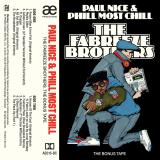
AE Productions in association with Sure Shot Recordings and In Effect Recordings are pleased to announce a 10 Year Anniversary Edition of the critically acclaimed Phill Most Chill and Paul Nice album as the Fabreeze Brothers.
The hugely successful first edition which was pressed on colour vinyl and supplied in double fold out sleeve sold out in only 2 weeks from release date and then the 2nd pressing black vinyl edition sold out a little while later but has for years been out of print but is increasingly requested by shops, via email, social media, AE Productions website back in stock requests, etc…
As it has been 10 years since original release back in 2015 at the time of proceeding with manufacturing, it was the perfect opportunity to do a 3rd pressing to mark the anniversary but we had to pull out all the stops for a 3rd run of this incredible album and also make it subtly different again in packaging design from the 1st and 2nd pressings so that each has it’s own particular feel and quality.
With help from the original designer and all-round vinyl artwork supremo Mr Krum we have found some nice adjustments for the gatefold sleeve where the detail from the insert sheet found in the original issues is incorporated into the inside panels of the sleeve. We have also tweaked the hype sticker to mark the 10th Anniversary Edition and updated the vinyl labels so as to work better with the new Splatter vinyl which follows the original red and yellow vinyl but each splattered with the opposite colour.
For something a little extra we have compiled a Limited Expanded Edition Double Cassette Box Set that includes the original album and also a ‘Bonus Tape’ which features all of the remixes, alternate versions, Original Versions of album cuts and bonus tracks found on B-sides of the array of singles and we included for good measure 2 tracks that only appeared on the promotional only LP sampler that ended up being different on the final release. This is limited to cassette just for the non-vinyl heads as all of these tracks already appear on vinyl. The outer box is A5 card in black with gold foil Fabreeze Brothers logo and comes with discography booklet.
‘The Bonus Tape’ from the box set is also available as a standalone cassette release with alternate j-card art work so that it has it’s own flavour and so that anyone that purchased one of the original run of cassettes that sold out before we could even ship any copies, did not need to purchase the main album again unnecessarily and to make it noticeable from the Expanded Edition Box Set version.
This version also has an alternate shell design in keeping with the clear shell with dark liner that was commonplace back in the 90’s and the cassette geeks may note the red text on the spine as was also a common design back then – giving this a pseudonym of ‘the 90’s tape’ during the design process.
We couldn’t stop there so we also have an extremely low quantity Limited Edition Mini Disc version which is the main album plus 8 of the bonus tracks from The Bonus Tape – only missing the 2 least significant alternate versions but clocking in at just a few seconds under 80 minutes – the absolute maximum for the format! Mini Disc???!!! You’re probably asking – yes!
While looking into the cassette duplication options we realised that the duplicator also offers Mini Disc production so we thought that it may be worth doing a very small run just because not only are professionally manufactured Mini Disc’s rare in Hip Hop, they are rare within the entire music industry as they never really took off as a medium to purchase music but ended up as the choice for home recorded Walkman and car use. Indeed, AE boss Mr Fantastic still has his main machine, portable and old discs. Amazingly also, the sleeve artwork transferred brilliantly to the Mini Disc template. They are manufactured using high quality Sony discs using ATRAC 4.5 codec.
All releases are supplied with unique free download codes on cards that are included inside the packaging but also with the Expanded Edition cassette and Mini Disc having 2 cards – 1 for the main album and a 2nd card for ‘The Bonus Tape’. The free downloads are supplied direct from Phill Most Chill’s Bandcamp page keeping it independent.
- Talkin' Like You (Two Tall Mountains)
- Johnny's Brother
- Roving Woman
- Down This Road
- The Clover Saloon
- John Brady
- We Lived Alone
- Playboy Of The Western World
- Unknown (A Little Louder, Love)
- One By One
- Father Neptune
- Man In The Sky
- Empty Pocket Waltz
- Honeybee
- There Is A Vine
- How Sad, How Lovely
- Trouble
- I Have Considered The Lillies
- House
- Playboy Of The Western World (The Online Parades Mix)
Die Wiederveröffentlichung von Connie Converses How Sad, How Lovely auf Third Man Records erscheint fast 51 Jahre nach dem Verschwinden der Singer-Songwriterin und ist damit die erste Neuauflage dieses Albums seit beinahe zehn Jahren - und das in jedwedem Format. Die Veröffentlichung umfasst 20 Tracks (darunter eine Bonus-7"-Single mit dem bislang unveröffentlichten Stück ,House" sowie einem neuen Remix von ,Playboy of the Western World", beigesteuert von Dirick Cummins), die nichts von ihrer Eindringlichkeit und Kraft verloren haben. Sie präsentieren eine Künstlerin, die ihrer Zeit um Lichtjahre voraus war.
- Talkin' Like You (Two Tall Mountains)
- Johnny's Brother
- Roving Woman
- Down This Road
- The Clover Saloon
- John Brady
- We Lived Alone
- Playboy Of The Western World
- Unknown (A Little Louder, Love)
- One By One
- Father Neptune
- Man In The Sky
- Empty Pocket Waltz
- Honeybee
- There Is A Vine
- How Sad, How Lovely
- Trouble
- I Have Considered The Lillies
- House
- Playboy Of The Western World (The Online Parades Mix)
Die Wiederveröffentlichung von Connie Converses How Sad, How Lovely auf Third Man Records erscheint fast 51 Jahre nach dem Verschwinden der Singer-Songwriterin und ist damit die erste Neuauflage dieses Albums seit beinahe zehn Jahren - und das in jedwedem Format. Die Veröffentlichung umfasst 20 Tracks (darunter eine Bonus-7"-Single mit dem bislang unveröffentlichten Stück ,House" sowie einem neuen Remix von ,Playboy of the Western World", beigesteuert von Dirick Cummins), die nichts von ihrer Eindringlichkeit und Kraft verloren haben. Sie präsentieren eine Künstlerin, die ihrer Zeit um Lichtjahre voraus war.