The second full-length LP from Jungle Brown, ‘Full Circle’, drops on Mr Bongo in September 2019. Featuring collaborations with Sampa The Great, Fliptrix (High Focus) and Terri Walker amongst other super-talents.
The trio – Ric Flo, MAEAR & Tony Bones – have spent the last two years redefining soulful hip-hop – the sound is bigger, more thought-provoking, and it has matured with a rich soulful underpinning. They have also entered territories fans are yet to hear from them as they glide effortlessly over Tony Bones’ productions that introduce trap and house into their repertoire. The
project is an eclectic array of their influences, twisted and blended together to create a ground-breaking release for UK music.
Jungle Brown’s debut album ‘Flight 314’ has achieved more than a million streams without any budget for marketing or promotion. They spent much of 2016 in Apple Music’s ‘Best of 2016 category, featuring on Spotify and SB.TV, were requested to curate an exclusive playlist for Tidal and attracted attention from New York with Beats 1’s very own, Ebro.
They’ve shared the stage with the likes of De La Soul, Ghostface Killah, Lowkey, Akala and Donaeo, played major festivals including Glastonbury, Boomtown and Lovebox as well as a huge number of clubs shows across the UK.
Поиск:lo budget
Все
In the last few years since their previous record on Low Budget Family, the Lipsky Brothers have been very busy, releasing plenty of proven dance weapons written or remixed by them, touring around the world from Ibiza to local underground parties and just living their life in the Moscow rush.NAR ('fire' in Arabic) is a simple yet crazy effective club tool, which has regularly been played at Denis Simachev Bar, home to the label and their very own parties, that is untimely gone. While original is quite housey with an irresistible bassline , Autarkic serves a more trippy take with some unexpected harmonic shifts and finally, the Inigo Vontier version offers a percussive big stage tribal killer.
Standing tall above his peers, multi instrumentalist Guy Bartell AKA Bronnt Industries Kapital has left an impressive mark on cinematic electronica, having spent the last decade being commissioned to soundtrack everything from legendary silent film Haxan: Witchcraft Through The Ages to 1930s Soviet documentary Turksib, Bronnt has been there long before the 3rd wave of Italian Library Fetishists and long before this thing called Horror Disco even had a name. Force The Line sees a group soaked in the soundtracks of a thousand low-budget-straight-to-video action-slashers, the sound of heavily dubbed Martial Art imports where vampires jump and acid-laced revenge thrillers invented on demoscene message boards. Bronnt’s first studio album since the 2009 Get Physical LP ‘Hard For Justice’ is all that we might ever want from this underground legend, dance floor heavy, krautrock zombie epics for the past present and future. Miss this at your peril.
Black Vinyl[14,50 €]
Released on CD by Aurora Borealis back in 2010, we're overjoyed to finally see this on vinyl.
- limited edition of 300 copies - 180g black vinyl - reverse board heavyweight sleeve - includes download code and printed insert - mastered for vinyl by James Plotkin - cut at The Carvery, London
An ode to the Lovecraftian lore of Shub Niggurath, 'Black Goat of the Woods' was conceived as "the soundtrack from some lost low budget horror movie, rediscovered on an old and faded VHS cassette found mouldering in a deserted house in the depths of the woods".
The one man project of J.R Moore, Black Mountain Transmitter has released several albums, all to great critical acclaim, and the quality of his work speaks volumes. The original AB 'Black Goat of The Woods' CD version was the first official release and a reissue of the long sold out and much sought after limited CDr.
On describing the recording, Moore said: "The music was certainly very much influenced by that certain breed of 70s horror films. Things like the soundtrack to the original "Texas Chainsaw Massacre", Giuliano Sorgini's atmospheres in "Living Dead At The Manchester Morgue"; Carl Zittrer's soundscapes in "Deranged", "Children Shouldn't Play With Dead Things" and "Dead Of Night", and of course people like Fabio Frizzi in Italian horror and the BBCs Radiophonic Workshop's electronic sounds in something like "The Stone Tape" and countless creepy old TV productions..."
An excellent, macabre and psychedelic release that spans electronica, soundtracks and experimental genres in its 40 minute playing time, 'Black Goat of the Woods' pays perfect homage to the dark denizen of the nocturnal glades, and is a true paean to backwoods horror.
Smoke Vinly[16,77 €]
Released on CD by Aurora Borealis back in 2010, we're overjoyed to finally see this on vinyl.
- limited edition of 300 copies - 180g black vinyl - reverse board heavyweight sleeve - includes download code and printed insert - mastered for vinyl by James Plotkin - cut at The Carvery, London
An ode to the Lovecraftian lore of Shub Niggurath, 'Black Goat of the Woods' was conceived as "the soundtrack from some lost low budget horror movie, rediscovered on an old and faded VHS cassette found mouldering in a deserted house in the depths of the woods".
The one man project of J.R Moore, Black Mountain Transmitter has released several albums, all to great critical acclaim, and the quality of his work speaks volumes. The original AB 'Black Goat of The Woods' CD version was the first official release and a reissue of the long sold out and much sought after limited CDr.
On describing the recording, Moore said: "The music was certainly very much influenced by that certain breed of 70s horror films. Things like the soundtrack to the original "Texas Chainsaw Massacre", Giuliano Sorgini's atmospheres in "Living Dead At The Manchester Morgue"; Carl Zittrer's soundscapes in "Deranged", "Children Shouldn't Play With Dead Things" and "Dead Of Night", and of course people like Fabio Frizzi in Italian horror and the BBCs Radiophonic Workshop's electronic sounds in something like "The Stone Tape" and countless creepy old TV productions..."
An excellent, macabre and psychedelic release that spans electronica, soundtracks and experimental genres in its 40 minute playing time, 'Black Goat of the Woods' pays perfect homage to the dark denizen of the nocturnal glades, and is a true paean to backwoods horror.
- A1: Theme From The Conversation (3:33)
- A2: The End Of The Day (1:37)
- A3: No More Questions / Phoning The Director (2:18)
- A4: Blues For Harry (Combo) (2:39)
- A5: To The Office / The Elevator (2:40)
- A6: Whatever Was Arranged (2:09)
- A7: The Confessional (2:21)
- B1: Amy's Theme (2:51)
- B2: Dream Sequence (2:35)
- B3: Plumbing Problem (2:54)
- B4: Harry Carried (2:47)
- B5: The Girl In The Limo (2:25)
- B6: Finale And End Credits (3:54)
- B7: Theme From 'The Conversation' (Ensemble) (2:31)
THIS IS NOT A REISSUE. THIS IS THE FIRST TIME THIS AMAZING MINIMAL SCORE HAS BEEN ISSUED ON VINYL
This is the first time the complete score to The Conversation has been released on vinyl. The film itself was originally released in 1974 and a 7' demo of the theme was sent out as promotional material by Paramount (PAA-0305), but a USA stock edition was never issued. In Japan the same music was also issued on a 7' at about the same time (JET-2273), with a picture sleeve, but until now nothing else has ever been pressed on vinyl.
Jonny Trunk's little obsession with this music began after I'd caught the film, late night, sometime in the mid 1990s. Musically it's an exceptional example of the 'new minimalism' in film music of the period, marking a departure (for some) from big scores to smaller, more economic ensemble sounds.
The film was written, produced and directed by Francis Ford Coppola and is still a thrilling journey into sound, mind and murder. Heavily influenced by Antonioni's Blow-Up (and not, as some thought, by Watergate), Coppola wanted to fuse the concept of Blow-Up with 'the world of audio surveillance'. The story centres around Harry Caul (Gene Hackman), a mac-wearing professional wire-tapper and clandestine bugger who gets unusually consumed by a conversation he's been paid to record. Caul is a loner, an obsessive-compulsive character with numerous neuroses that play out brilliantly throughout the film. And as he slowly pieces together the conversation fragments and forms his own story around it, his world falls apart.
Sonically this movie - all about sound - is groundbreaking in many ways, with actual 'sound Design' Provided By The Legendary Walter Murch - The Man Who Actually Invented The Term In The First Place.
For The Music, Coppola Wisely Chose A Young David Shire, His Brother In Law. Shire's Deceptively Simple Piano Theme (composed Because Of No Budget For Big Orchestra) Is One Of Tragic Beauty, Brilliantly Capturing Caul's Loneliness, His Slightly Disturbed Nature And This Trip Into Darkness. The Melody Has Both Sweet And Sour Tones, Feeling A Little Like A Slow Ragtime, Which Both Develops And Retreats Throughout The Film; There Are Even Trips Into Avant-garde Territory With Electro-acoustic Flourishes And Concrète. The Solo, Agitated Figure Of Caul, Wearing His Distinctive Transparent Mac, Is Made All The More Raw And Poignant By The Score - The Sparse And Curiously Emotional Compositions Are Unlike Any Others I Can Think Of From The Period.
The Soundtrack For The Conversation Proved To Be A Major Break For Shire, His Career Really Taking Off From This Musical Point. His Next Score Was To Be The Underground Classic Taking Of Pelham 123, Followed Up Later Ironically By All The Presidents Men - A Thriller About The Watergate Scandal.
The Conversation Went On To Win Several Awards And Nominations, And Has Become A Classic Of The 'new Hollywood' Movement. Hopefully Now This Music May Become Part Of The Renewed Interest In Old Film Soundtracks.
Black Vinyl[27,69 €]
When the new Halloween movie hits theaters in October 2018, it will have the distinction of being the first film in the series with creator John Carpenter's direct involvement since 1982's Halloween III: Season of the Witch. Carpenter serves on the new David Gordon Green-directed installment as an executive producer, a creative consultant, and, thrillingly, as a soundtrack composer, alongside his collaborators from his three recent solo albums, Cody Carpenter and Daniel Davies.
The new soundtrack pays homage to the classic Halloween score that Carpenter composed and recorded in 1978, when he forever changed the course of horror cinema and synthesizer music with his low-budget masterpiece. Several new versions of the iconic main theme serve as the pulse of Green's film, its familiar 5/4 refrain stabbing through the soundtrack like the Shape's knife. The rest of the soundtrack is just as enthralling, incorporating everything from atmospheric synth whooshes to eerie piano-driven pieces to skittering electronic percussion. While the new score was made with a few more resources than Carpenter's famously shoestring original, its musical spirit was preserved.
- A1: Intro
- A2: Halloween Theme
- A3: Laurieas Theme
- A4: Prison Montage
- A5: Michael Kills
- A6: Michael Kills Again
- A7: The Shape Returns
- A8: The Bogeyman
- A9: The Shape Kills
- A10: Laurie Sees The Shape
- A11: Wrought Iron Fence
- A12: The Shape Hunts Allyson
- A13: Allyson Discovered
- B1: Say Something
- B2: Ray's Goodbye
- B3: The Shape Is Monumental
- B4: The Shape & Laurie Fight
- B5: The Grind
- B6: Trap The Shape
- B7: The Shape Burns
- B8: Halloween Triumphant
Blood Knife Coloured Vinyl[27,69 €]
When the new Halloween movie hits theaters in October 2018, it will have the distinction of being the first film in the series with creator John Carpenter's direct involvement since 1982's Halloween III: Season of the Witch. Carpenter serves on the new David Gordon Green-directed installment as an executive producer, a creative consultant, and, thrillingly, as a soundtrack composer, alongside his collaborators from his three recent solo albums, Cody Carpenter and Daniel Davies.
The new soundtrack pays homage to the classic Halloween score that Carpenter composed and recorded in 1978, when he forever changed the course of horror cinema and synthesizer music with his low-budget masterpiece. Several new versions of the iconic main theme serve as the pulse of Green's film, its familiar 5/4 refrain stabbing through the soundtrack like the Shape's knife. The rest of the soundtrack is just as enthralling, incorporating everything from atmospheric synth whooshes to eerie piano-driven pieces to skittering electronic percussion. While the new score was made with a few more resources than Carpenter's famously shoestring original, its musical spirit was preserved.
- Direct from Spain and totally lost in time the orchestra Enterprise was a great blend of the ''Disco Orchestral'' and ''Space Disco'' styles.
- Amazing project, wisely conducted by Josep Llobell Oliver, a Spanish keyboard player, composer, engineer and producer.
- Enterprise was the perfect soundtrack to your space trip, that dancing hidden treasure you always wanted to discover.
- Remastered reissue includes pictures and linernotes by Dr. Vinilo (Madmua Records).
#funk #soul #spacedisco #cosmicdisco #josepllobell #oliversplanet #spanishgrooves
In 1975 he was commissioned by the label's artistic director to produce a studio album with a hefty budget. It was his first company and he named it after the intergalactic ship Enterprise. He assigned the bands logo (inspired by the musical group Chicago) to a friend-musician and selected the tracks: Barry White, Chick Corea, the everlasting Beatles, sonidos calientes and other well-known hits, all played by Llobell along with the labels other musicians, all on payroll thanks to Belter. Javier Cubedo, Enrique Tudela, Gabriel Martinez, Kitflus, Ricard Roda, etc. all gave their best on a magnificent first album that would be followed by 3 more, one per year, all including original compositions by the group along with international hits that are currently part of our countries wonderful music library, even though they still haven't received all the recognition they deserve, Garcia Segura, Santisteban, Calderón, Pepe Nieto, José Solà, Manolo Gas, Adolfo Waitzman and Algueró, Ramón Farrán, Miguel Ramos, Albert Peter, Jaume Cristau, Josep Llobell and many others, published albums in the 70's.
Josep has been inexhaustible, for many years he has influenced the career of soloists and bands, modernizing their sound, Manolo Escobar, Peret, Junco, arrangements and productions for Marfil, Bachelli, Ana Reverte, even great artists from 'La Movida' and rock music like Burning or El Último de la Fila.
- A1: The Hell Raisers - Syd Dale
- A2: The Eyelash - Johnny Hawksworth
- A3: Walk In A Nightmare - Syd Dale
- A4: Beat Street - Johnny Hawksworth
- A5: Walk And Talk - Syd Dale
- A6: Big Bass Guitar - Bill Martin / Phil Coulter
- A7: Mr. Chestertons Dog - Bill Martin / Phil Coulter
- A8: Mods & Rockers - Bill Martin / Phil Coulter
- A9: L.s.d. - Bill Martin / Phil Coulter
- B1: Stand By - David Lindup
- B2: Take A Goosie Gander - Syd Dale
- B3: Juggernaut - David Lindup
- B4: Grand Prix - Johnny Pearson
- B5: Veiled Threat - David Lindup
- B6: Sixth Sense - David Lindup
- B7: Funky Flight - Keith Mansfield
- B8: Raver - Alan Hawkshaw
- B9: The Washington Affair - Syd Dale
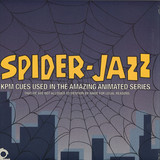
Way back in 1967, an animated superhero cartoon was released into the world. It was created by Grantray-Lawrence Animation and was based on a web-spinning, crime fighting blue and red dressed character that had originated in1962, in Marvel Comics by Stan Lee and Steve Ditko. This amazing series (that we're not allowed to mention the name of for legal reasons) ran on ABC TV in the USA, then Canada, then a few years later started to spread its web further, running here in the UK throughout summer holidays, after school and possibly early mornings at weekends in the late 1970s. The series then got released on VHS video (and probably Betamax too) in the mid 1980s and still continues to spin its animated magic around the world through further broadcasts, YouTube and DVDs.
The series was notoriously low budget, with animated errors everywhere and numerous scenes, sequences and backgrounds being re-used all the time, often across the same episode. Even a certain spider logo on a costume would appear with six legs, then eight legs later on, then back to six again in the same show.
Series One opened with a newly written spider theme, a classic, hooky song all about doing whatever spiders can, and had, as Big George (RIP) once pointed out to me, a set of session singers falling slightly out of time with the backing track after the first verse. Series One also featured background music by jobbing composers Bob Harris and Ray Ellis but these cues and master tapes are now believed to be lost.
After Series One the company Grantray-Lawrence went bankrupt, so the amazing spider series (that we're not allowed to mention for legal reasons) was taken on by producer Steve Krantz. He brought in new talent, including animation director Ralph Bakshi who later went on to turn a Robert Crumb strip cartoon into the feature Fritz The Cat. Krantz also slashed the already cripplingly small spider budget, and brought in the idea of using economic library music. Here, thanks possibly to an independent sync agent (it has been suggested that a company called Music Sound Track Services may have been the one) production turned to the KPM catalogue. This was one of the few really established library catalogues around at the time with a modern edge, it was full of fabulous, modern dramatic music tracks - often all on the same LP. But more importantly all the tracks were far longer than the one minute musical cuts that many of the fledgling USA library companies were issuing at the time. Not only would this KPM music be efficient, affordable and very easy to use, it would also mean syndication worldwide would not be held up by any future musical issues. Krantz produced two amazing spider series (that we're not allowed to mention for legal reasons), and both were smothered with KPM music. In fact barely a spider second goes by without music playing in either the background or foreground.
For many years I - and many nostalgic others - have been thinking about putting this vinyl album together. For many enthusiasts this really is formative music - a junior foray into hip swinging crime jazz and esoteric musical grooviness. I've also read on line accounts by DJs from WFMU on the trail of original spider master tapes, and there's even a whole forum dedicated to Spidey-Jazz'. Then recently I was looking at an old spider tracklist and realized that several of my favourite KPM cues were there including Syd Dale's Hell Raisers' and Walk And Talk', both from one of the most elusive and desirable KPM albums of all time (yes, you just try and find yourself a copy of KPM 1002 right now), so I decided to push on and get the album made.
So, what features on this Spider-Jazz Lp Well it's music from the amazing TV series we are not allowed to mention for legal reasons, BUT, not music from Series One. No, but it is all from Series Two and Series Three. From looking at archival cue sheets, over 50 tracks from various early KPM 1000 series albums were used across episodes. I've distilled this down into one exciting and enthralling LP, and if this works a further Spider Jazz album may well swing in to production. If you're interested (and I'm sure you may well be) cues here came from KPM1001, KPM1002, KPM1015, KPM1017, KPM1018 and KPM1043 and were composed by master library composers of the era - Dale, Hawkshaw, Hawksworth, Mansfield etc.
And if you are listening over there in the USA, you may well recognize many of the cues here not just from the amazing TV series (that we're not allowed to mention for legal reasons) but also from classic 1960s and 1970s NFL highlight shows that we are allowed to mention.
Molten Moods releases another finely curated various artists record with tracks by Skee Mask, Kessel Vale, Jonas Yamer and Konrad Wehrmeister. Kessel Vales opening track Voguing Geisha' is an unconventional breakbeat masterpiece following his sense of harmony and rhythm already shown through previous releases on Tanstaafl Records and Rhythm Nation. As the track unfolds it reveals musical storytelling by integrating a technoid polyrhythmic loop structure into melodic synth figures, slowly deconstructing in the end. Skee Mask collaborated with Molten Moods labelhead and Carl Gari member Jonas Yamer on Fanta Ocean', it being the first release ever outside of his Ilian Tape homebase. The outcome is a moody IDM piece with cinematic qualities, complex but soothing. The B-Side begins with Xenomorph' by Konrad Wehrmeister, who is known by his releases on Public Possession and SVS Records. This trancy yet distorted and detailed electro banger surely takes on the role of the records dancefloor highlight. The closing track Insgeheim' is delivered by Molten Moods head honcho Jonas Yamer. Here groovy kicks, distorted chords and a psychedelic pad are woven into one compelling 10 am techno track. The common thread of Molten Moods 4 is four young Munich artists going on a joint trip into idiosyncratic electronic music. The resulting tracks intertwine as one modern and diverse techno record. Out on 12 vinyl and wav by the end of March 2018. In the tradition of Molten Moods' cost-conscious design strategies by Paul Bernhard, the record comes with a xeroxed low budget sticker set.
Mastered by Manmade.
REVENGE NEVER SWEETER". 3 rare disco tracks edited by the same guy behind last week's LO-FIEDIT's STONED 12" (LOFIEDITS006). More dirty disco business. Tracks: "IT'S A WONDER NIGHT", "JZ'S REVENGE", and "JZ'S REVENGE REVERSE". Warehouse find! Limited stock on this release. HOUSE DISCO EDIT
Ernie Hawks' debut album "Scorpio Man" is nearly here, and about to be released during the first quarter of 2018. The way will be paved with a fresh 7" single that lifts the gritty jazz funk of "Scorpio Walk" from the album on the A side and pairs it up with the mystic groover "Message of Love", a non-LP track only available on this release.
As the track to start up the upcoming album, "Scorpio Walk" rushes on like a manic villain from an art house spy film. A groove made of a murmuring fuzz bass and a surf guitar is suddenly released into heavenly choruses, where the man of the hour lifts the ambiance with a series of lyrical flute solos.
"Message of Love" sounds like an homage to the gently pulsing library music funk from the mid 1970's. Ernie's flute lead is accompanied by bubbling Fender Rhodes, which carries the track forwards like a shy cousin of Michel Sardaby's "Welcome New Warmth". Seductive male vocal wailing haunts in the background, while the track proceeds without haste in its realm of lost budget X-rated movie soundtracks.
Super deluxe lo fi 7" grape-colored vinyl housed in DIY low-budget sleeve, + includes "I love my VCR Sticker"
WRWTFWW Records is thrilled to announce the release of the long anticipated, always delayed, 30-years-in-the-making PSYCHOS IN LOVE Original Soundtrack, available at last and for the first time ever in a super deluxe low fidelity _7" grape-colored vinyl edition, housed in a DIY no-budget sleeve, and loaded with extras, including words from film director Gorman Bechard, lyrics of the theme song, a promotional postcard with a picture of the cast, a poster of a woman attacked in a bathroom, and the infamous as-seen-in-the-movie "I LOVE MY VCR" bumper sticker!
Filled with sleazy funk, macabre synths, homemade electronic kitsch, anti-grape propaganda, and rewind-worthy dialogue excerpts, Psychos In Love is the ultimate lo-fi horror-romcom soundtrack adventure with a theme song so memorable you'll find yourself humming it every morning. In Gorman Bechard's words, "For the Psychos In Love theme I purposefully wrote what I hoped were the worst lyrics of all time, giving them to Carmine Capobianco with one note, 'use them to write the worst song of all time.'"
The movie Psychos In Love (1986) is a trenchant, laugh-out-loud indictment of slasher films, romantic comedies, and grapes (that's right, pal, grapes), a true genre-defying post-modern cult classic that will wind its way into your heart as its characters work _their way through vats of gore. Packed tight with sly homages to - and parodies of the work of such cinema legends as Alfred Hitchcock, Woody Allen, Roger Corman, Groucho Marx, and Gerard Damiano, Psychos In Love foreshadows the grand guignol culinary delights of Silence of the Lambs, served up with a healthy portion of wry wit and all-American t&a.
The Doors had one of the most extraordinary debut years in music history in 1967, releasing a string of hit singles and two platinum albums, beginning in January with the band's self-titled debut, followed by Strange Days in September. The latter peaked at #3 on the Billboard album chart and featured classics like Love Me Two Times,' When The Music's Over,' and the title track Strange Days.'
STRANGE DAYS (50TH ANNIVERSARY DELUXE EDITION) was produced by the album's original engineer Bruce Botnick. It includes the original stereo mix of the album on CD for the first time in a decade, with sound that's been remastered for the first time in 30 years. The second disc features the album's original mono mix, which has been remastered for this set and is making its CD debut. Accompanying the set are liner notes by music journalist David Fricke, as well as a selection of rare and previously unseen photographs.
Having a larger budget for Strange Days allowed the band to spend more time experimenting in the studio. They used an eight-track recorder for the first time, which resulted in some memorable overdubs like Krieger's double-tracked guitar on When The Music's Over.' Surprisingly, the trippy keyboard sound heard on the album's title track is actually one of the earliest appearances of a Moog synthesizer in a rock song.
Strange Days mixed new songs written on the road with some written before the band's 1967 debut. In fact, the band performed Strange Days' during its 1966 residency at the London Fog in L.A., while My Eyes Have Seen You' dates back to 1965. Another early track is Moonlight Drive,' which was one of the very first songs that the band practiced together, and where the band heard Krieger's haunting bottleneck guitar playing for the first time. It's also the song Morrison sang to Manzarek at Venice Beach in 1965 when the two former UCLA film students reconnected and decided to start the Doors.