`La Camita’ is an incredible Latin funk nugget –recorded in Peru by Traffic Sound and later on by funk pioneers Black Sugar, comprising all the right ingredients to shake dance floors worldwide. Both takes on the song were released on records that today are extremely difficult to find in any condition. Latin party music in all its glory! Peru enjoyed a thriving and exciting music scene since the mid-1960s. Bands such as Los Saicos, Los Shain’s and Los York’s, to name just a few, released a number of brilliant records that drove young fans crazy and set an example for many to follow. The end of the decade brought about an evolution in sound and new music genres, as Peruvian bands kept an eye on the groundbreaking British and US artists. One of them was Traffic Sound, founded in Lima in 1967. Over a very short period of time the band managed to successfully develop their career. In 1971 Traffic Sound recorded ‘La Camita’ where their Latin influences overpowered the psychedelic prog vibe of their previous records. The song became a local hit and several versions were recorded by different Peruvian artists. On the other side of this single we find Black Sugar, a Peruvian band considered to be a pioneer group in Latin America in mixing funk influences with rock and Latin rhythms. In 1976, following their gig at Coliseo Amauta in Lima, opening the night for the legendary Spanish band Barrabás, they started to show a growing interest in disco music, resulting in some line up changes with members leaving the project due to their lack of interest in the new sound and new ones joining in. Their own take on ‘La Camita’ was released in 1978 and adds a modern twist to the original song, becoming decades later a winner spin at the most discerning dance floors worldwide. Latin party music in all its glory!
Cerca:local group
All & Nothing has become one of the icons of Spanish underground rock of the 70s and their records are among the most sought-after pieces by collectors. With a short discography consisting of just two singles - one of them was even released in Argentina with an alternative cover- the band All & Nothing has become one of the icons of Spanish underground rock of the 70s and their records are among the most sought-after pieces by collectors. The group was really nothing more than a studio project, put together by journalist and record producer José Luis Alvarez, who never performed in public. Their goal was to record songs in the same style that the emerging Andalusian rock scene was already doing in the south of Spain under the influence of the latest international rock trends -imported through the US military bases- and the local musical idiosyncrasy. Although most of the recorded songs - some of whom remained unreleased for years- succeeded in reflecting the original goal, for this first single of All & Nothing their producer instructed the band to record something similar to Iron Butterfly's classic 'In-a-gadda-da-vida', and 'Underground Vibrations nº 2' seems to be a very accomplished effort. The record has become a very sought-after item for those collecting the lesser-known side of 70s Spanish underground rock. The stunning rhythm section on both sides of the single plus the overwhelming organ solos and firing wah-wah and fuzz guitars explain the high interest on this elusive 45, a must in the top DJs record boxes. We are happy to reissue this amazing All & Nothing debut 7" for the first time, remastered from the original tapes and featuring the 1970 sleeve artwork.
Bristolian producer Claude Cooper returns with hot new single ‘Stay A While’, inspired by the vinyl discoveries made from months of digging and cataloguing the bulging inventory of Bedminster’s Friendly Records record shop.
‘Stay A While’ introduces some delightful twists to Cooper’s psychedelic-funk sound. Blurring the lines between sampling and performance, lush string flourishes are sliced with 6Ts girl-group vocals and rollicking piano chords resulting in a dreamy, end of night, lights up anthem in-the-making. The track is backed with the insistent ‘Dance Tonight’, a ragged bass-boogie surf-rocker that doesn’t take no for an answer.
Cooper’s irrepressible debut album ‘Myriad Sounds' (Jan ‘22) caught the attention of the UK's press and radio alike. Mojo's four star review described it as “Bristol’s beat scene backdrops late night jams”, Uncut enjoyed the "rugged psych-funk romp" and Louder than War declared "it’s vital and vibrant and exactly what we need to kick start the year”. BBC radio DJs including Cerys Matthews, Gideon Coe, Huw Stephens, Jamie Cullum, Lauren Laverne, Stuart Maconie, Tom Ravenscroft rinsed the singles, with Huey Morgan inviting Cooper to contribute a Block Party Mix for his show.
Bonus round 'More Myriad Sounds' (Apr ‘23) added Brooklyn vocalist Brain Fog to the melange with a bounty of pyretic vocal performances. DJ Mag called it “A fierce, kaleidoscopic trip” while Bandcamp Daily said “This album of cross-genre influences is as likely to get it included in any number of best-of columns, with the theme of serious fun as their common element”.
Behind the release is Friendly Records, the best little record shop in Bristol and now a burgeoning record label. Opened by Tom Friend on North Street in 2016, it’s gone on to become a hub of the local musical community. As well as Claude Cooper, the label has reissued two of Alison Cotton’s albums, 'The Twenty-Three Views' by outernational ambient jazz project Floating World Pictures, and Christian Madden & The Enemy Chorus’s organ heavy ‘The Extra Weight’.
Claude Cooper will return with a new album on Friendly Recordings this year.
***After birthing Street Riffs, their hi-definition, hi-energy, statement from 2020, CCR Headcleaner turned inward. The retreat from the pro-studio to the home studio was partially by design and partially decided by global events. Cleaner is very much a pandemic album, more of a homespun head trip than its predecessors. At the same time guitarist, songwriter and spiritual center of the group, Lacey Emmanuel, left the Bay for the shores of Lake Michigan. By most accounts an apocalyptic live-band became by and large a home recording animal. This is most apparent when Headcleaner turns up the balladry. “Don’t Feel the End” is a proto-metal campfire anthem, and “Everyday” hovers somewhere between keyboard misfit John Bender and the White Album. Make no mistake, the record will still be filed under “Punk” at your local record shop. It kicks off with “the brining pt. 2” the hottest slice of Funhouse free-rock that the band has committed to record. “Too Much” gives us its jail abolition rap over a two chord hardcore stomp. In a town (San Francisco) that is experiencing something of a DIY pop renaissance, Headcleaner has always fought to establish the fact that they have actual songs. This is no 70s throwback, but instead an attempt to up the ante. Without all the rock histrionics, technical arrogance and misogyny can the rock riff deliver on its ultimate promise: heavy music for total liberation. All tracks were mixed and lovingly fucked with by none other than Eric Bauer at his Bauer Mansion (RIP) Chinatown SF.
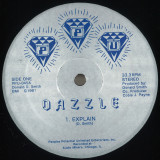
Dazzle rolled deep. Very deep. In the 1980s, it wasn't unusual for the Milwaukee-based group to show up at various Midwest night clubs in a caravan of 30-40 cars and vans. Their live following was hard won over a career that spanned 20+ years, many line up changes, and a handful of project names. Friends, family, and fans made the journey with them weekend after weekend, a testimony to both the musical prowess of the group and the tight-knit community that they emerged from.
Donald Smith, band leader, was there the whole time - joined by many of his siblings and friends - first as founder of the Ghetto Players, a early 70's nine-piece which also included siblings Michael, Ronald, and Charles. They played hard funk in the style of early Kool and the Gang, and although they sadly left no recordings, the strength of their live act managed to catch the eye of local Milwaukee R&B music entrepreneur Cobie Joe Payne. Cobie had made a couple of records locally in the early/mid 70s as a singer, including the impossibly weird and amazing rare afro-blues-funk 45 "Sweet Thing", but had never enjoyed national success. When the Ghetto Players disbanded in the early-mid 70s, Donald soon put together a new group, C on the Funk (the 'C' referring to lead vocalist and sibling Charles), under Payne's tutelage. Sister Lorrie Smith came in as the drummer, the line-up being fleshed out by brothers David and Melvin Johnson, and friend Robert Mitchell. After a few years as a strictly live attraction, they drove to Chicago and produced a single, "In the Disco" / "A Place" for Payne's small record label Sweet Thang Records in 1980. Lacking the financial backing needed to supply the local R&B disk jockey's "promotional fees" , this single sadly languished in obscurity, gathering dust inside the local tavern jukeboxes and manilla promo envelopes that comprised Payne's DIY distribution network.
C on the Funk were traveling the Mid West extensively at this point, and making some important friends on the road. Ike Wiley Jr. of the Dazz Band/Kinsman Dazz took particular interest and the band was re-christened Dazzle, partially as a tie-in with Dazz, partially to embrace the new sounds that would distinguish the 70s disco scene from what record collectors and DJs would now refer to as the "Boogie" era. There no doubt was a stigma attached to the word "Disco" as the eighties began, and as we see in this collection C On the Funk's "In the Disco" is remixed and transformed into the psychedelic synth instrumental of Dazzle's "Disco's Out", a title which embodies both the next-step approach Smith and company were pushing for, and humorously comments on the state of black dance music in the early 1980s. The Dazzle recording, done in Chicago in 1982, updated the sound and featured an expanded line up, most notably a second synth player (Charles Washington), and a percussionist/second lead vocalist (Greg McDonald). The added synth textures and deep percussive grooves give the Dazzle recordings an elegant late night vibe that resonate just as well in a good pair of headphones as they do on the dance floor. The trance inducing cough syrup-warble of "Explain" may best exemplify this here. Sadly, a pressing flaw in the 12" halted production and promotion, and the EP and the songs within were lost to the ages. The group, having done a much better line in the live music business, followed that path instead all the way to the early 90s. --bio provided by andy noble
“Challenge” was released in 1981 on Bootleg, a record label born inside a record store in Pavia with the same name. “Challenge” keeps the original and uncompromising punk attitude alive. 3 groups: No Suicide (from the Udine province), Mercenary God (from Gemona), No Submission (from Treviso), all sick children of the industrious, rich and Christian Democratic north-eastern part of Italy. I read about them in “New Fahrenheit” (a controversial article about local rivalries, common backgrounds and eventually separate roads.) but I don’t know their music. Something tells me that “Challenge” is the record I was looking for, perhaps because of its very powerful cover with no slogans, and a circled “A”. I send the money in a sealed envelope and wait. When the package arrives, I open it, I put the record on the turntable and let the needle go. The first listen is enough to realize that this is a crucial release, a real “challenge”.
The challenge is against an indifferent market. The instrument is a sound that is already changing skin. No Suicide, Mercenary God and No Submission have nothing to do with Great Complotto, they are the other face of the northeastern underground. Punk is their background, (read “hardcore” for No Suicide) but for all of them there is a progressive detachment from the original material, including a common attitude towards the caustic sound coming from the harshest side of British wave. A classic example of “work in progress” able to generate great songs like “The Degraded Men” by No Submission (the band that later evolved into Wax Heroes), one of the peaks of Italian post-punk. Mercenary God will give birth to The Sex, while No Suicide with their tight hypnotic hardcore will disbanded soon. It’s 1981 when the rain clouds on the “Challenge” front cover seem to remind us that the wind is going to change soon.
3 bands, 11 songs, an unearthed piece of history 43 years after its first release. Thanks to this reissue, “Challenge” is now back on track. A different disc, today as then. (Luca Frazzi)
nehan is a Japanese free improvisation & avant-garde rock quintet formed in August 2022. Their performances are initiated by a 9hz brain wave emitted from a testee who has been brought into a deep meditative state via either hypnosis or acupuncture - a very relaxed but very alert state. nehan doesn"t begin until the testee has gotten into the state of "nothingness." It is only then that the improvisation can begin. The role of improvisation has been key to all the musical projects of Masaki Batoh. In 2010, as Batoh was winding down the activity of his long-standing "heavy chamber folk" group, Ghost, he became involved in the design of a machine to generate sonic data based on brain waves. An acupuncturist as well as a musician by trade, his interest was spurred by the rhythms of the body and the brain, and a desire to access the "pulses" of brain waves to initiate improvisations. Following the release of Brain Pulse Music, Batoh toured Japan, the US and Europe, making demonstrations of his process using a local volunteer and guest performers, when available. Today, nehan arrive at their performance space prepared with a Brain Pulse testee, bringing a wide array of instruments including gongs, timpani, tabla and other drums and percussion, Crumhorn, bagpipes, mellotron, oscillators and additional sound effects. Their performance is a transformative electro-acoustic display that passes through the prism of music styles, from east to west, from traditional folk and classical to rock, jazz, and avant electronic. While nehan"s performance presentation invokes a sense of ritual, they understand their process as being far removed from any type of spiritual endeavor - it has nothing to do with eastern thinking or any kind of religious ceremony - this is an action of improvisation, occurring in reality between the five musicians on stage, in response to the brain waves of an individual. For the personnel of nehan, Masaki Batoh asked players with whom he had good previous experiences in improvisation: Futoshi Okano (Ghost, Acid Mothers Temple, The Silence), Haruo Kondo (Espvall & Batoh) and Junzo Tateiwa (Ghost), along with female Brain Pulse testee Gozen on oscillators. The performance here, recorded live in August of 2022 at GOK SOUND in Tokyo, demonstrates their communal dedication to the improvisation. The players act as listeners and musicians simultaneously, inspired to make extended pieces of music out of the "nothingness" of brain waves. The possibilities of nehans"s chosen approach are almost infinite; an evening with nehan is only the beginning of their journey.
The Vampisoul chicas are back. And for the third time. And, although collectors and connoisseurs have never stopped playing the songs by these Spanish female singers, here they are again, sounding as vibrant as they did half a century ago. Because these children of their times, the musical decades of the 60s and 70s covered by this compilation, boldly ventured into the limited spaces of freedom open to female artists back then. And they did so with attitude, in search of the right repertoire, proudly presenting new, daring personal projects often breaking away from the demure tone adopted by mainstream local female singers. And they were canny about it too. Realizing that the censors working back would just listen to the song that the record company flagged up as the listening target on the A side and not bother to flip the single over, they recorded many of their racier songs on the B side. That exciting dark side of singles, which have long tempted collectors. Lacking the freedom and visibility enjoyed today, these daring records by these female singers went as far as they could and a few managed to go beyond. The songs on this compilation tell everyday stories, narrating small socio-musical conquests revolving round the enduring theme of young love. Sass, sex, boy-girl rivalry, the defense of liberating women's fashion and, saying what women think loud and clear, all characterize these grooves. Performed in a variety of musical styles ranging from ye-yé, twist, disco, beat, popcorn, flamenco pop to Northern Soul, and, even more surprisingly, sung in an everyday, natural and self-assured tone that must have ruffled some feathers. As in previous volumes of "¡Chicas!", this third compilation includes female singers from outside Spain but whose career, their decision to sing in Spanish or their long tours and local stays, and occasionally permanent residence, meant their albums were created, recorded or produced here in Spain. It's a winning proposition for everyone. Take the band Los Bravos, four of the singers that passed through the ranks of this quintessentially Spanish group were foreigners. It's part of our open-door policy. Spain is different. In every sense. But let's get down to the serious stuff and the ritual: vinyl on the turntable and needle poised ready to play. Third volume of Vampis' ¡Chicas! series, an irresistible collection of ye-yé, twist, disco, beat, popcorn, flamenco pop and even Northern Soul! From the early 60s and in the middle of a difficult political and social context, Spanish female singers - and those who moved to Spain - disregarded conventions and overcame all barriers to be part of a music movement that shook the Spanish society of the period. Many of the 24 tracks are reissued for the first time, including very hard-to-find records. It includes extensive notes by Vicente Fabuel featuring all the original record sleeves and artist photos.
The Zeros is a pioneer punk rock band formed in 1976 in Chula Vista, California. Comparisons with The Ramones are often made when describing the energetic and fierce guitar driven sound of the group. This is their second single, released in 1978 on Greg Shaw's very own Bomp! Records (after the fantastic 1977 "Don't Push Me Around" single). 'Beat Your Heart Out'/'Wild Weekend' is another boss one by Javier Escovedo and it also has Robert Lopez's fantastic 'Beat Your Heart Out' on the flip. These first singles recorded by the band instantly catapulted The Zeros into a top draw on the local scene and have become legendary. First time reissue! incl. artwork replica on retro style record sleeves.
The Zeros is a pioneer punk rock band formed in 1976 in Chula Vista, California. Comparisons with The Ramones are often made when describing the energetic and fierce guitar driven sound of the group. First time single reissue in almost four decades! Incl. artwork replica on retro style record sleeves. This is their debut single, released in 1977 on Greg Shaw's very own Bomp! Records. 'Don't Push Me Around' and 'Wimp' are among the greatest punk rock songs of all time, written by Javier Escovedo. It was followed by another single in 1978, "Beat Your Heart Out"/"Wild Weekend". These first singles recorded by the band instantly catapulted The Zeros into a top draw on the local scene and have become legendary.
- A1: I Really Love You (Full Length Studio Version) 4 38
- A2: Your Love Is Smokin' (Previously Unissued) 4 40
- A3: What's That Sound (Full Length Studio Version) 4 48
- A4: Free To Be Me (Previously Unissued) 5 28
- B1: You Changed Me (Part 1 & 2) (Full Length Studio Version) 7 10
- B2: Nice Beat (Easy To Dance To) (Previously Unissued) 5 28
- B3: Get The Funk Off My Back 3 20
- B4: Get It From The Bottom (Previously Unissued) 4 02
Impulse’ was a band of Milwaukee, Wisconsin musicians whose members included Michael Reese (Rhodes Piano and background vocals), Cedrick Rupert (Lead and Rhythm guitar), Jeffrey Williamson (Drums and background vocals) and Robin Gregory (Bass and background vocals). They would become a group in their own right with the eventual addition of another local artist John Gee, who joined them as their lead singer. The Impulse musicians formed the backing/touring band for another Milwaukee outfit, a vocal quartet, The Quadraphonics who recorded the solitary 45 single “Betcha If You Check It Out/Prove My Love To You” for the Carl Davis/E. Rodney Jones owned ‘Innovation II’ Record label during 1974. This release would later be nationally distributed by the major Warner Brothers label. With import copies of “Innovation II” single finding their way into the UK the record became popular with the devotees of Blackpool Mecca’s Highland Room.
During 1976 the members of Impulse migrated to Oakland California, they had hoped that, The ‘Quadraphonics’ would join them but instead The Quadraphonics chose to remain in Milwaukee and eventually broke up. It was fellow Brewtown producer/recording artist Harvey Scales who was responsible for inviting ‘Impulse’ to the west coast. Under the auspice of Scales, Impulse recorded their self-titled debut album project at Wally Heider’s Studio in San Francisco. The album was initially offered to Casablanca Records but no firm interest was to materialise, a subsequent approach to Jerry “The Ice Man” Butlers newly formed Chicago label, Fountain Records again failed to secure a release of the album, sadly leaving the project unreleased in the can. In the ensuing years, the former group members have continued with their respective careers, the late John Gee embarked on a solo career, recording the 1980 release “Not Enough Love Makin’/ you Are That Man (Why Don’t You Be That Man)” for Leroy Smith’s Oakland C.A, Pashlo label followed by his 1985 modern favourite “So Good To Me/Just Get On” recorded under the artist name of Jon Pierre Gee on his own newly formed Kandi Inc, Record label. Later Kandi projects included the 1995 Jon Pierre Gee & Touch album and the 2005 Ah’VantSoul cd album project, which featured Jon’s business and real-life partner, Kathryn Hannemann (a.k.a the performing artist Kat Webb).Throughout all the aforementioned projects Jon continued to use and enjoy performing with his former fellow ‘Impulse’ musicians of which the two surviving members Robin Gregory and Michael Reese can still be found jamming to this day in the renowned Milwaukee Restaurant/Coffee House by the name of ‘Coffee Makes You Black’. Sadly, drummer Jeffrey Williamson passed away during 2015 with Coley Jackson coming in to pick up the sticks! Lead and Rhythm guitarist Cedrick Rupert left the group in the 1970’s moving to Lake Charles, LA, sadly, he too passed away in 2020.
The Impulse album project having lain dormant since the 1970’s was resurrected during 2018 when Jon Pierre Gee in conjunction with Stephen Chin of Nice Choice Records (USA) and Soul Junction Records (UK) breathed new life into the project. Beginning with the release of the first of two ‘Impulse’ 45 singles on Jon’s Kandi imprint. Firstly “What’s that Sound/You Changed Me” followed in 2020 by a second 45 “I Really Love You/Get The Funk Off my Back” with all four soul and funk tracks receiving worldwide acclaim. Initial plans for the release of the whole album project had been set in place but we’re unfortunately brought to an unexpected halt with the passing of Jon Pierre in November 2020.
Undetered Soul Junction have finally been able to bring this amazing ‘Impulse’ project to life as a limited vinyl press I’m sure once heard, the old adage of “Good Things Come To Those Who Wait” will certainly ring true, enjoy.
There are two versions of the vinyl - classic black and triple-color limited Indie Shop edition.
Both have special insert inside with the bands bio and photos.
Generacja JAZZ is a project showing a fragment of the new wave of Polish jazz, treading its own path, creating, touring and jamming across Europe. Borders don't exist - especially musical - the new generation is engaging with nightclubs, festivals and playlists. The time has now come to show its broader perspective. We created a project which involves a handful of groups that have already racked up debut albums and festival wins, as they set out on their musical odyssey. The groups also have other things in common, like their passion, originality and, for the needs of the project, age - all the artists during the recording of this album were under 30 years old. This is the new generation - the Jazz Generation.
For the Jazz Generation record we invited five bands who had already released debut albums: Immortal Onion, Klawo, Rejoin, Twoosty Mayonez and USO 9001. We also reserved two spots on the compilation for the winners of our open call competition, whereby on the basis of the jury's choice (jury: Monika Borzym, Paulina Przybysz, Envee, Wojtek Mazolewski i Marcin Groh Grośkiewicz) we met the winning bands: Kosmos and quietet.
The sleeve artist is Kornelia Nowak, who won our open call for young designers and graphic artists. Here once again we could rely on the opinion of a prestigious jury comprised of: Beata Śliwińska Barrakuz, Bovska, Maciej Animisiewasz Grochot, Grzegorz Forin Piwnicki i Marcin Groh Grośkiewicz.
Generacja JAZZ LP is also a start of the new imprint - U JAZZ ME, which will be focused on jazz from Poland.
And here are the bands from the album:
1. Immortal Onion - A band from the Tri-City playing a broad spectrum of instrumental music.
Band members: Wojtek Warmijak (percussion), Tomir Śpiołek (piano, synths), Ziemowit Klimek (Upright Bass, synths).
The band Immortal Onion has already established itself as one of the most interesting projects of the new wave of Polish jazz, and is consistently being labelled as such abroad. After two well received albums ("Ocelot of Salvation" (2017) and"XD Experience Design" (2020) U Know Me Records) they released their third album "Screens" in 2022, which was recorded with the well known Tri-City composer and saxophonist - Michał Jan Ciesielski.
The inspiration behind the band's formation were such artists as: Esbjörn Svensson, Hiromi Uehara, Tigran Hamasyan and Tosin Abasi.
The group's guiding principle from the very beginning was the fusion of often disparate musical styles, which bore "post instrumental aggressive gay pop". Despite the stylistic discrepancies, between which they swim, the group has forged its own identifiable language, characterised by complicated rhythmical structures, energetic riffs and trance beats with lyrical melodies.
The trio has performed its original material at many venues and festivals around Europe and Asia.
2. Klawo - seven adventurous adventurers from Gdańsk, who were brought together by their love for music, halvah and throwing Frisbee. Their self-named début album, released in 2022 on the local label Coastline Northern Cuts, is an amalgam of the inspirations of each of the team members and played backwards contains tips on how to reach the Kashubian pyramids. After a win at the international competition Jazz in the Park, held in Cluj-Napoca in Romania, the band began work on their second album. Meanwhile, they were also travelling the length and breadth of Poland on a mission to infect people with the idea of Baltic Funk.
3. Kosmos is a Łódż based jazz quintet. It was formed in 2020 by Pianist Stanisław Szmigero, Saxophonist Iwo Tylman and Trumpeter Jan Ostalski. However, it wasn't until 2022 that Kosmos found its true form when Kamil Gużniczak (Upright bass) and Kacper Kuta (Percussion) joined the line-up.
Their compositions are influenced by Polish yass bands, electronic music and hip-hop. Kosmos music is a mix of lyricism, space, intensity and elements of experiment.
The band members are all eccentric characters possessing different means of musical expression - looking at them, one could even argue they are a group of oddballs. Despite this, for reasons unbeknownst to themselves, the members of Kosmos complement each other on stage and form a unified artistic vision of the world around them.
Kosmos officially released their début single "Ja" in June 2023. They regularly play concerts across Poland and recently were selected as distinguished artists at JAZZiNSPIRACJE (JAZZiNSPIRATION) - a competition held during the 13th Lublin Jazz Festival.
4. Quietet (formed at the beginning of 2023) is the result of meetings between five talented musicians with a deep passion for musical creation. Its sound is a unique blend of Jazz and classical music with a hint of hard rock. The band is inspired by the Scandinavian approach to making music, which brings a characteristic atmosphere and melodies to their work. Their music captivates listeners with its originality, refined improvisations and flawless technique. Both classical and modern musical trends feed their inspiration when creating passionate and emotional compositions.
Their works are full of sound experimentation, which equally surprise and expose new musical horizons. Through their compositions, "Quietet" aims to share their emotions evoked during performances, creating a musical journey that affects and inspires.
5. Connecting jazz with electronic music in fresh interpretations, six young musicians make up the group Rejoin. The group re-formed in 2020 after a four-year break, playing their debut concert at Lotos Jazz Festival Bielska Zadymka Jazzowa. The musicians in Rejoin have performed alongside such artists as: Urszula Dudziak, Krystyna Prońko, Marcin Masecki, Szczyl, Kuba Więcek and Paulina Przybysz.
Most of the members of Rejoin are students from the Katowice Music Academy, where they also develop their own projects. Rejoin was a recipient of the Fabryki Norblin Music Masterclass Foundation scholarship.
6. Twoosty Mayonez is something your grandad would listen to with his younger sister. The non-standard approach to jazz alongside a pursuit of strange sounds, culminated in the conceptual album entitled "Carmin". The material was created by Bartosz Wolerta (percussion) and Dominik Kaniewski (bass guitar/synths). "Triceradiplodocus" tells the story of a mechanical dinosaur that lives on the yet undiscovered planet Carmin.
The official new edition from this rare and great Afrobeat & Soukous masterpiece from Nigeria !
"Vibro Success Intercontinental Orchestra was an extraordinary group from the Central African Republic, founded by the sax player Rodolphe 'Beckers' Bekpa, also known as Master Békers, in the late 60's. The band achieved surprising domestic success after Beckers introduced the first drums to the Congolese Rumba rhythm. His innovation proved to be wildly popular so they were hired as the resident band of “ciel d’Afrique au Km5”, a night club in Bangui. The club was renowned as the temple of the Olympic Réal football team's fans and that visibility propelled them into becoming the official national orchestra.
1970 marked beginning of the band's international fame . Their fame spread beyond national borders until they became so popular that invitations began to arrive from nearby countries like Cameroon and Chad, the former of which the band would then tour that same year. The success of their performances prompted a further tour in 1972. According to Rodolphe Bépka, the audience enthusiasm Vibro encountered was bewildering. "We filled the old military stadium in Yaoundé in 1970, in 1972 the new Amadou Haïdjo stadium ... We are running with great success in the cities.” Their popularity was also growing in Chad, where they would tour several times through the early and mid 70's.
Towards the end of 1976, Vibro Success decided to take their music global and introduce Central African music to listeners worldwide. It worked. The turning point came in Nigeria. There the group achieved extraordinary success, with live performances followed by contracts with local labels like Scottie and Ben/Clover resulting in hit releases. Most of their LP's were originally released on this later label, Ben Limited, owned by Ben Okonkwo.
Ben, also known as Clover Sounds, brought a great number of the biggest bands from the country to market, bands like The Apostles, Akwassa,The Doves, Aktion, The Visitors, Mansion, Folk 77 and many others. Nearly all those groups started their recording careers in the label's studios based in the commercial heart of Aba, Abia State, one of Southeastern Nigeria’s largest cities. Aba at that time was a flourishing city, an important crossroads of people and culture with an intensive and active and cutting edge live music and nightlife.
But after that golden era the group began to lose its popularity. In the 1980's they returned to Bangui and resumed their old-time gigs in dance halls there - only to realize that their music didn't have the appeal it used to. Making matters worse, the domestic economic downturn accelerated, forcing the orchestra to slowly end its activities . Vibro Succès Intercontinental Orchestra disappeared at the end of the 80s and most of its members died in the 90s.
We discovered this LP during our first trip to Nigeria in 2016. While traveling in the east to meet up with a musician, we stopped for a night in a village. As often happens in Nigeria, information has a way of traveling fast. The news that a couple of white guys looking for records had arrived in the village the day before spread like light. When we awoke, we found a couple of elderly music lovers in the hall of our hotel with a little pile of records for sale. The nice cover of the “Drunkard” album was right on top!
At first we thought it was just another really good soukous album made by Vibro Success but after we heard “Drunkard” - we knew we had stumbled onto something very special. That was the “easy” part. Soon after, we had the idea of reissuing this LP and that was a bit harder. There were no credits on the cover and not much information about Vibro Succès. We started to ask to our friends to ask around, see if somebody knew them or the producer. That's when sadly we discovered that Ben Okonkwo had passed. So with no leads to follow and seemingly without any possibility of making progress on the matter, we "gave up" and returned to Italy.
A couple years later, in the summer of 2019, we found ourselves again in Aba. This time we had the chance to meet Nnamdi Okonkwo, the eldest son of the late Ben Okonkwo. After Nnamdi's mother and family agreed, he was glad to cooperate with us for the re-release of this special album."
Straight from the heart of downtown Bruxelles comes Instructor, a band that formed out of a group of friends who have been working hard to grow a local DIY scene centred around the Cobra Jaune Club. The CJ might as well be a time warp back to the CBGBs of the 80s, a truly raw punk affair where all freaks are welcome. Anyone who’s anyone on the hardcore punk tour circuit in the past 5 years will tell you playing the Cobra Jaune is what dreams are made of, bringing together punks and skins, together as one. Very much catching this vibe musically as well, Instructor sound like they got together in an alleyway and made some instruments out of garbage cans to play Breakdown’s ‘87 Demo and Kickback’s Cornered LP. As hardcore gets more and more polished, the truly meat-and-potatoes variety is becoming a rare sight, but that’s exactly what you get with Instructor, with bucketloads of attitude and energy from people living and breathing the life. Vocalist Dario sounds like he has smoked 2 million cigarettes, whilst guitarist Bert whips out some wild solos only a mother, and punk enthusiasts, could love. And that’s the point. Recorded at Spector Studio, a DIY space where analog equipment is crafted on-site, and with artwork by the infamous hardcore artists Spoiler and ‘Diamond’ Dave Decat, this is a snapshot of all things great from Belgium
A real soul gem from 1970 on the James Brown affiliated Deluxe label, the first and only album by this mysterious singer: Marie Queenie Lyons.
It is perhaps apropos that Queenie Marie Lyons’s best known song is titled ‘See And Don’t See.’ For all the acclaim that song has accrued, and all the times it has been compiled, reissued and, yes, bootlegged — for all the times it has been seen — Queenie herself has somehow remained unseen. How did a singer from Ashtabula, Ohio record one of the great female-led soul albums and then simply fall off the map, never to record or perform again? Queenie was a natural performer and a gifted singer. At the age of fifteen, she was doing three shows a week at a local venue. In early 1962, Queenie moved to Queens and was soon playing gigs across the city — an early engagement was with Gene Krupa at the famous Metropole Café in Times Square — as well as touring with established acts like Fats Domino and Ray Charles. The following year, Queenie made her debut recording, for a subsidiary of RCA called Groove, credited to an entirely fictitious “Shelley Shoop and the Shakers.” It remained Queenie’s only presence on wax until early 1968, when a Nashville-based label called Sims gave her her first accurately attributed single, “A Minute Of His Goodtime / Good Soul Lovin’.” Although the 45 is now a highly collectible part of the Northern Soul and Lowrider Oldies pantheons, it made no impact at the time, as Sims was focused on more typical Nashville sounds. A few months later Queenie was back in New York City, performing R&B and pop covers with her band when a man passed her his business card at a performance. The card read James Brown Enterprises. James Brown “was my idol,” she says, and someone whose business acumen and stage presence she strove to emulate. Although Queenie ended up on tour with James Brown for only a month or so, when the group reached Cincinnati in mid-’68 she entered the King Records studio there to record what would become the
album you hold in your hands. The songs were a combination of covers, some of which she’d been doing in her live shows, like ‘Fever’ and ‘Try Me,’ and originals written by producer Henry Glover and pianist Don Pullen, who was the bandleader on the session. The album opener, ‘See And Don’t See,’ was also recorded by the veteran R&B singer Maxine Brown, but Queenie’s version blows hers away. “Soul Fever” is a supremely funky and soulful affair, with Queenie’s powerful and captivating voice magnetically attractive, with an urgency that is impossible to ignore. ‘Your Thing Ain’t No Good Without My Thing,’ ‘Your Key Don’t Fit It Anymore,’ and ‘I Don’t Want Nobody To Have It But You’ are as funky and soulful as the best of Tina Turner and Aretha — a statement not to be made lightly!
The album was critically acclaimed — the October 10, 1970, issue of Billboard listed it as their sole “four star” pick in the Soul category — but perhaps due to the tumult at Starday-King, whose stewardship had turned over several times in only a few years, it never seemed to be able to break through to a larger audience.
Kallaikoi is the term used to refer to all the Celtic clans settled in ancient Gallaecia (northwest of the Iberian Peninsula). They were skilled in metallurgy and the production of tools and weapons, and worshiped a variety of deities, some of them related to nature
and war. Although they disappeared as an ethnic group in antiquity due to Romanization and subsequent consequences, their cultural legacy and Celtic influence in Galicia persist until today. Somehow, that ancestral legacy lingers between the grooves of this
release you have in your hands.
The double EP opens with The Transhumans: Techno, syncopated bass drums and industrial nuances appear in 'Ánima'. Ian Axide proposes robust and percussive Techno in 'Antro', while Obseth lets arpeggios fly in 'Pink Pills'. These tracks are indebted to that
Techno reminiscent of the late 90s golden years monolithic sound.
Side B opens with the local heroine and co-founder of Archaic, Proyecto Inopia, who opts for resounding rhythms and synth sequences sharp like shark teeth, seemingly paying homage to earlier decades in 'Hécate'. Mist Gasp also follows a metallic monotrax line in 'Standarte'. And the first 12” closes with Brai’s '75', where he unleashes Techno meets New and Synth Wave with a nod to the 80s.
The second EP lowers the intensity and tempo, opening with the calm and nostalgic Electro from Synth Alien in 'Pakhum'. Local artist Lefrenk raises the tempo and intensity in arpeggios in a propulsive Electro-Techno wave in 'Fenix'. And also from A Coruña, Roi controls the beats in an electro base that advances later towards obsessive and lacerating synths in 'Melusa'.
The last side of the double album is opened by David Karro with 'Ionosphere', a track with unsettling synths that doesn't need beats to shape its hypnotic and nebulous character. 27 003 delves into the sounds of classic Electro drum machines in 'Sweet', also with clear IDM and dreamy evocations. Corrosivo continues in that vein, with marked Sheffieldier echoes in 'Fast Food'. The EP is closed by Death Whistle with one of his usual opuses where darkness, beauty and epic coexist.
Indie pop quartet Melenas hail from Pamplona, Spain, a picturesque region nestled just south of the Pyrenees. Such beauty can't help but inform the band's songwriting, but Melenas aren't content to just sit placidly & take in the scenery. Since they burst onto the scene in 2016, the band has hit the ground running, playing incessantly both locally & on the stages at national festivals like Primavera Sound & Eurosonic as well as releasing a debut full length (2018's "s/t" album) and a 7-inch single both triple-released on local labels Elsa, Nebula & Snap! Clap! Club. Trouble In Mind is honored to be releasing their new album Dias Raros and is the first label outside of Spain to release Melenas music to the world.Dias Raros hums right from the get-go, peppering their garage-pop punch with elements of lysergic dream pop, melancholic indie rock and strident guitar jangle. The album title translates to "Strange Days" an acknowledgement - according to the band - of "...those days where you spend more time inside than outside. Inside your own self, inside your bedroom and your own universe thinking about your wishes, dreams, memories, obsessions or fears." The lyrics - sung entirely in their native Spanish - reference "those interior dialogues where sometimes you fight to escape from a situation, you wonder what another person will be thinking about or feeling, you gotta say goodbye, or you just enjoy the time by yourself. Days that, for different reasons, you're feeling different, they are strange". Opener "Primer tiempo" buzzes with an urgent organ drone, unfolding into a yearning ballad of modern guitar-pop bolstered by the group's lush harmonies & sets the tone for the rest of Dias Raros. Songs like "No puedo pensar" "3 Segundos" and "Despertar" follow suit, with the rhythm section galloping headlong into an insistent guitar strum, while ballads like the tender "El Tiempo ha Padsado" rely on the band's melodious voices bolstered by a lilting guitar riff and gentle organ swells. Elsewhere mid tempo rockers like the stomping "Los alemanes", the simmering "Ciencia Ficción" and "Ya no es Verano"s insistent jangle recall underground greats like The Pastels, R.E.M. and Shop Assistants. "Vals" ("Waltz") closes the album in 3/4 time, named for the ballroom dance as well as the last name of a close friend - a dedication to her. Its dreamy sway alluding to classic Brill Building songwriting; dusted with melancholy, but lifted by cascading voices, and organ and guitar waves and guitars that twinkle and shimmer over a cracking backbeat. Dias Raros is the perfect introduction to a band bursting with promise, confidently inhabiting their own space built upon the foundation of their influences both geographically and culturally, as well as musically.
Building on the styles showcased on the first “Beatbox Studios” LP, Hi-Tek was clearly developing his own personal style on the studio’s in-house Akai MPC 60II sampler. The drums were swinging more; the grooves were deeper; the bass thumped harder. Even when choosing familiar samples, he was chopping them in fresh and unexpected ways, which would eventually help shape his signature sound.
As his reputation was becoming cemented in the local Cincinnati scene, his relationship with the rap group Mood was helping to catalyze more regular visits to New York City. The beats collected for “Beatbox Studios 2” were the ones that would stick in the auto-reverse tape deck for those road trips, as were the demo tapes he crafted with Mood, which would eventually earn them a record deal with Blunt Records in 1996—the same label and year where he would land his first major placement on Royal Flush’s “Ghetto Millionaire” album. It was also on one of those 1996 journeys to NYC that he would meet a young Brooklyn emcee named Talib Kweli—with whom he would form one of the most iconic duos of the indie-rap boom of the late-nineties.
“Beatbox Studios 2 (1996 MPC 60II)” showcases Hi-Tek as a hungry young talent on the rise, and his continued elevation would lead him to a career as one of the few producers who can claim to have worked with such a broad range of legendary artists; from superstars like Dr. Dre, Snoop Dogg, 50 Cent, and Anderson .Paak, to underground heroes like Mos Def, Common, and J Dilla.
Leatherette’s 2022 debut album Fiesta offered an intense, inspired and individualist take on post-punk, their caustic riffs, fevered saxophone blasts and impassioned vocals revealing the five-piece skilled purveyors of the form.
The group's second album Small Talk, however, is clearly the work of a group ready to take flight in a new direction all their own. As they toured Fiesta across Italy and Europe, Leatherette grew tired of the genre's constrictions and yearned to spread their wings. Small Talk transcends all the group have done before and coins a voice uniquely their own, driven by the same furies that propelled Fiesta, but finding fresh new forms for expression.
The album boasts some of Leatherette's most unabashed pop-songs to date – albeit pop that's deftly twisted, pointedly perverse and ready to explode when you least expect it.
It also contains some of the group's most challenging and uncompromising noise yet, the violent swinging back-and-forth between ugly din and nagging tunefulness a (molotov) cocktail that grows only more addictive with each listen. Where Fiesta saw the group enter the studio with a batch of anthems they'd honed on the road, their approach for Small Talk was very different, leaving the sessions open to moments of on-the-fly invention and sparks of mad genius. The interplay between the five musicians is so much stronger this time around, the group say, a result of the months of touring the band put in following the release of Fiesta.
Living out of rucksacks and spending hours on the motorway in a tour van might not be everyone's idea of a good time, but that's what Leatherette credit with sharpening their intra-group bond, their almost telepathic feel for the sounds that will complement what their bandmates are playing. “We were more free to play and to rearrange, because we knew each other better now,” says guitarist Andrea Gerardi, “and the interplay is more focused on this album as a result.” The sessions for Fiesta were frustrating, Andrea says, because “we were playing the same songs over and over”.
Their approach was radically different for Small Talk, however, which saw the group file into Bronson, a local club where they've often played before, and record the album on the premises. After the sessions, the album was mixed in Bristol by Chris Fullard (Idles) and mastered in Portland at the legendary Telegraph Audio Mastering by Adam Gonsalves. "We recorded live, all playing together at the same time, rather than overdubbing the instruments," says Michele. The process, he says, "made us more coherent, and the songs more spontaneous." "Our strength is live performance," adds Andrea, "so we tried to capture that interplay. Sometimes we made errors, but we didn't care, because it sounded great. This music is our lives - it doesn't need correction. We were free for the two weeks we recorded the album, and the ideas soared in the most amazing way." Indeed they did. The album's see-saw between angular noise and pop coherence is very much its strength, and very much the sonic identity of this singular group
‘Demos/sketches/interludes from the hinterland between records. Drum machines and single take vocal sketches tied together with downtime synth experiments and recordings of local disappearing areas.’ True as it is, Jabu’s strap-line is a somewhat understated take on what also proved to be a transformative experience for them. The follow-up record to their 2020 sophomore LP ‘Sweet Company’ (and the ensuing ‘Versions’), ‘Boiling Wells’ weaves a smudged, group -mind spell. Originally released earlier this year without fanfare as a digital-only release, it now receives the proper release attention it deserves, issued in a neatly packaged vinyl edition of 300 copies. Dreamlike, woozy, raw and in dub, the album documents a blossoming process, and encapsulates a fragment in time - holed up in the country, soaking up the atmosphere in collective isolation, creatively embracing the limitations of a small recording set-up, and finding a new way to work as a band. “My mum had gone away so we’d decided to take the mixing desk and a couple of drum machines out to her house and set it up in the front room. We did it a couple of times to get the bulk of the tunes on 'Boiling Wells' done, one in summer and one boozy one around Christmas. I think we all immediately enjoyed working that way, sat around all together, more of an immediate thing. Jas started to play a lot more guitar, her and Al would write lyrics on the fly or be programming a drum beat in or something. We were all switching around and getting ideas down really quickly, not worrying too much if they were good or not. The music was limited by the stuff we had there, I didn’t bring a big desk so we only had six channels or so, and everything was basically just recorded in as a stereo take so we were more or less stuck with it after we’d laid it down - which was nice too. I don’t think we would’ve changed them anyway; it was the sound of the room and of us doing it together in the moment that was really important.” There has always been a collaborative heart to Jabu, though its nature has shifted and morphed over time. In their earliest incarnation, in after-school jams, Alex Rendall would rap over Amos Childs’ beats, but by the time they began releasing music in 2012, Al had found his singing voice – a sweet, soulful counterpoint to Amos’ increasingly dub-wise, experimental backing. Both are founder members of Bristol’s Young Echo, a collective of friends and musicians first operating loosely together on radio shows, artistic collaborations and events, and later on, running a record label. As expansive as their original remit was, Young Echo has steadily evolved since featuring in The Wire’s 2013 cover feature on Bristol’s new school of post-dubstep bass music. Of late, Seb (aka Vessel) has been working with violinist Rakhi Singh on string arrangements for Jabu, and the upcoming residency at Bermondsey’s MOT will showcase relative newcomers Birthmark and Intel Mercenary alongside the regular crew. Jabu’s debut album proper, ‘Sleep Heavy’, arrived in 2017 courtesy of Blackest Ever Black. A sublime, focused meditation on grief and loss written largely by Amos and Al, it marked the debut of Jasmine Butt (aka Guest), adding a further layer of vocal texture to their palette. ‘Sweet Company’, their first album written as a trio (released via their own do you have peace? label), drifted into lighter, more ethereal introspection. Featuring guest appearances by Sunun and Daniela Dyson, remixes by Equiknoxx’s Time Cow and Young Echo ‘s Ossia teased out the inherent pop and dub sensibilities respectively. Recent times have also seen remixes by kindred spirits Seekers International and Jay Glass Dubs, and a collaboration with the renowned T.S. Eliot Prize-winning dub Poet and musician Roger Robinson on a pair of plaintive, aching 7” singles. Jabu’s broad raft of inspirations can be experienced first -hand on their monthly NTS Radio show ‘Music 4 Lovers’, co -hosted by long-time friend and soul afficionado Andy Payback. A celebration of the endless tapestry of interrelated musical connections, it runs parallel to Jabu’s own reinterpretation of their influences. For ‘Boiling Wells’, Amos remembers a diet of “A.R. Kane, Cocteau Twins, DJ Screw, Southern/Memphis rap mixtapes, early 90’s jungle, Karen Dalton, Sybille Baier, Vashti Bunyan, Svitlana Nianio, a lot of soul, Armand Hammer & Alchemist, Grouper, Bobby Caldwell. Jazz was a constant, Japanese, Polish, Latin, American…”. And from those diverse strands, something new and singular has formed, to line up alongside them. ‘Boiling Wells (Demos ‘19-’22)’ is released by UK newcomer Six of Swords in a limited vinyl edition of 300 copies, pressed on black vinyl housed in full colour 270 gsm matt varnish sleeve and black paper inner, with full download coupon
Tenor saxophonist Ben Webster (born Kansas City, 1909) needs little introduction, Webster is regarded as one of the three foremost swing era tenor saxophonists - the two others being Coleman Hawkins and Lester Young. His ballad playing and sound inspired such later fellow saxophonists as Archie Shepp, Sonny Rollins and John Coltrane. Webster became famous for his unique sound, quick tempos, his solos that contained great virile rhythmic momentum, a rasping timbre and an almost brutal aggressiveness filled with growl, while his ballad playing was breathy, tender and sensual. The list of his collaborations is long, Ben Webster worked, recorded and played with legends from the likes of Art Tatum, Count Basie, Cab Calloway, Roy Eldridge and Dexter Gordon_but a dream came true when he was offered a permanent job in Duke Ellington's orchestra where his personal style matured. Webster stayed with Ellington until 1943, after which he formed his own groups and played with other small ensembles. From 1952 on he spent his time between Los Angeles and New York playing, freelancing and recording with a variety of soloists, among them high-profile singers like Billie Holiday, Ella Fitzgerald, Carmen McRae and Frank Sinatra. Despite excellent reviews of his albums, it was difficult for Webster to find steady work in the US during the early 1960's, and when in 1964 he got offered to play for a month in London he accepted and sailed to England. Webster never returned to the United States. In Europe he found plenty of work, playing residences in Scandinavia, settled in Amsterdam (1966-69) and then in Copenhagen (where he even has a street named after him). He toured frequently, playing in clubs and at big festivals with local bands or with visiting American musicians. Ben Webster suffered a stroke in Amsterdam in September 1973 following a performance in Leiden and died on September 20. Even when his health started to decline during his last years, his playing never did. To the last day Webster played with passion and intensity, delivering weight on every note. Webster is the subject of two renowned documentaries and two extensive biographies have been published about his legacy. Responsible for a plethora of excellent recordings he remains THE best-selling tenor saxophonist in jazz. Ben Webster was one of those unique jazz musicians whose presence came through on every recording (He recorded for prestigious labels including Verve, Impulse!, Prestige, Reprise, Blue Note_and countless others. On the album we are proudly presenting you today (Wayfaring Stranger recorded in 1970 by the NPS Radio network in The Netherlands) you will find mind-blowing high-quality Dutch sessions that were left dormant on a shelf and weren't commercially released for over 30 years! On 'Wayfaring Stranger' the listener is treated to no less than nine sublime tracks that document Webster's trademark relaxed-swinging but imaginative playing style that never gets boring. The album features an all-star line-up from the likes of Rob Langereis (Toots Thielemans), John Engels (Chet Baker, Dizzy Gillespie) and Cees Slinger (Dexter Gordon, Slide Hampton). Expect a 61-year-old Ben Webster in excellent form giving a warm, dusky, gritty yet funky performance where he delivers everything from up-tempo material, 12-bar blues jams to soulful expressive ballads. Webster's quartet is in constant musical dialog with each other, creating a unique back and forth between musicians at the top of their game. Tidal Waves Music now proudly presents the FIRST EVER vinyl release of this fantastic album (originally released as a limited Compact Disc edition back in 2000). This unique record comes as a deluxe 180g DOUBLE vinyl edition (strictly limited to 1000 copies) with obi strip.
The last twelve months have been a whirlwind for Henry Counsell and Louis Curran, the men who make up Joy (Anonymous). Having established themselves during the Covid-19 era by playing impromptu meet-ups on London’s South Bank, they have graduated to bigger venues, travelled to far-flung locales and recorded their second album, Cult Classics, while maintaining the spontaneous energy and irrepressible joy that made their name. Their music revels in the euphoria of being alive and all the feelings, good or bad, that come with it. It invites us into a community, draws us close and promises the night of our lives.
Recorded over the course of a year, the blueprint for Cult Classics was laid down over a two-week span at Imogen Heap’s Round House in east London. Joy (Anonymous) invited friends old and new to visit - they’d record live instruments in jam sessions upstairs and then retreat to a second room to flip and loop and generally mess with the sounds, moulding them into sizzling dance tracks. “Loads of people were coming up to me like ‘I thought this was going to be a dance record?’” Louis says, remembering the quietly beautiful music they’d be recording. “I’d be like, don’t worry about that, just keep playing.” He’d send it back to people later and they’d be floored - “That was my bit and you’ve made it... jungle!”
It was an organic and creatively fulfilling approach, one that didn’t allow any of the music to get stale or stagnate. As they built the tracks from the sounds they’d collected, Joy (Anonymous) would weave the new songs into their famously improvised live sets, testing them, refining them, taking note of the audiences’ reactions. In a year punctuated by a lot of travel, they’d also incorporate the voices of people they met along the way - “Beazley’s Poem”, which opens the record, features the words of a man who was working security at a Fred Again show at New York’s Terminal Five. “He was basically doing the opposite of his job and being a hype man, climbing on the fence and ramping up the crowd - we ended up hanging out with him - like, who’s this legend?” Louis explains. “He just speaks really amazingly about his life, all these amazing thoughts and opinions - he started jumping on the mic when we were playing, preaching these amazing messages to the crowd, like that we all need to be nicer to each other. The first time we played the record in its entirety, he introduced us and that’s the recording we’ve used.”
Joy (Anonymous) remain dedicated to the spirit of spontaneity. They shut a street down with a surprise waterside party in New York. On a trip to Copenhagen they played an impromptu set in a cafe, which turned into a house party and a night-long good time. In Lithuania, they ended up playing in a decommissioned prison. It’s harder, perhaps, to keep that spirit alive now that they are operating more within the confines of the music industry but they will keep lugging their kit to wherever the party calls for as long as they can. “I think if we lose that, we’ve kind of lost what makes us us,” Henry says.
Bursting with multi-genre reference points and disparate influences, Cult Classics is very much a dance album. The samples we made ourselves or we took from music that is quite different to dance music, but we definitely wanted to shout out a lot of the dance influences that we love,” Henry says. They listened to a lot of Daft Punk and Basement Jaxx as well as The Prodigy (“more rage stuff”), taking songwriting tips from their dance forebears, but also recording bits that felt more like jazz and motown (see: A Place I Belong and the lovely album closer, You’re In Or You’re Out). Emir Taha’s gentle classical guitar runs like a thread throughout Cult Classics, washing into the undertones of the record, tying it all together.
The album follows the beat of a night out, from frenetic, sweaty movement to the gentler winding down as the dawn breaks. At times it is euphoric, celebratory and pure, whirling fun, at others it seeks the joy in the darker emotions that life throws our way. 404 is designed to encapsulate everything about the Joy (Anonymous) journey so far. Skittering beats and ghostly vocals give way to vibrating house chords: sirens blare as we approach a dubstep drop. It’s dramatic and wild, ratcheting up, seeming to settle then hitting you with an intense and frantic breakdown before the ghostly vocal returns to lull us back into the world. It has the feel of a hungry cat playing with a mouse, toying with it before letting it get away.
What sounds like someone playing the spoons on playful, housey How We End Up Here is actually Louis’ restless habit of clicking his rings on everything, one of a myriad of calling cards and easter eggs that day one fans will recognise. They rework Miley Cyrus and Swae Lee’s Party Up The Street into a French-electro-inspired future classic, adding a note of melancholy to a tune that you can imagine hearing blaring from every car on a summer drive. The lyrics on Cult Classic are generally reassuring, inspirational, originally drawn from Henry in stream-of-consciousness freestyles. You’re fine the way you are, they seem to say - the repeated “No need to try” of A Place I Belong, the assurance that “It’s in me all the time” on In Me All The Time. Even the summery but regretful Did You Wrong hints at the growth that is possible from less than ideal behaviour. For Joy (Anonymous), joy isn’t about just being “happy” all the time - it’s about relishing every element of your being.
The name ‘Joy (Anonymous)’ is taken from the work Henry did with Alcoholics Anonymous groups: it is a way to build a community around sharing joy. Their impromptu live sets are known as ‘meetings’; they encourage fans to share moments of joy to their website. They care deeply about the scene they’ve come up in and are determined not to leave it behind. Every show is another chance to reach out and connect with people who love to come together and revel in music as loud as it can go.
Support slots for Fred Again and The Streets, wild B2Bs with Fred and Skrillex, and a set at Four Tet’s Finsbury Park all-dayer this summer have given the duo the opportunity to live out childhood dreams and introduced their infectious live shows to new audiences at huge venues.
With an album as assured and joyful as Cult Classics on the horizon (and a killer collab with The Blessed Madonna coming up), they’re only going to reach higher heights. But the essence of Joy (Anonymous) remains on the South Bank. Between shows at Ally Pally in September, they dragged their camping chairs and gear back down to the banks of the Thames: and it just felt right.
Nicht nur in der aktuellen Hardrock/Metal-Szene beziehen sich immer mehr junge Bands, darunter auch viele deutsche Acts (als Beispiel seien Wucan genannt), auf die heute wesentlich mehr gewürdigten Jahre des Krautrock. Natürlich handelt es sich bei dem Begriff nicht direkt um einen Stil, denn von Hardrock bis Jazz/Fusion wurde einst fast alles in diesen Topf geworfen.
Neben Elektronikpionieren wie Can, Tangerine Dream oder Kraftwerk gab es eben auch die Gruppen, die man im Rock verorten kann: Jane, Birth Control oder Lucifer´s Friend sind nur drei Beispiele. Auf „German Rock“ findet man in der Tat auch eine der frühen Bands: Floh De Cologne, die schon Anfang der Siebziger Rock mit deutscher Sprache geboten haben. Die Hardrocker Mass aus Regensburg, lieferten ihr Debütalbum, welches auf „German Rock“ ebenso gewürdigt wird, im Jahr 1977 ab.
Der Rest der ungewöhnlichen Compilation, welche es nur auf Vinyl gibt, befasst sich mit späten Gruppen, die Anfang der 80er noch einen Sound geliefert haben, der durchaus ein paar Jahre früher seinen Ursprung hätte haben können. Und in der Tat wurden auch mindestens zwei Songs nach Ende der 70er geschrieben, allerdings kam der Plattenvertrag oder das Kapital für eine Eigenpressung „zu spät“. Viele dieser spannenden Bands wie Iris, Cannock oder Sphinx waren bei Erscheinen nicht mehr dem Zeitgeist entsprechend, so dass
sie nur wenige, oder nur lokale Chancen hatten. Heute suchen Fans und Neugierige eben nach solchen unbekannten Acts, die eine vergangene Zeit neu zum Leben erwecken. Handgemachte Musik, und das nicht nur live, sondern eben auch noch im Tonstudio. Das Material der Frühachtziger-Gruppen auf dieser Compilation erinnert den einen oder anderen vielleicht auch an die regionalen Helden, wie man sie in den 80ern noch in lokalen Sporthallen erleben konnte…
Nostalgie ist aber nicht das Hauptanliegen dieser LP, sondern der Erhalt wertvoller Musik, die damals nicht bei den großen Majorlabels
erschienen ist.
Not only in the current hard rock/metal scene more and more young bands, among them also many German acts (as an example Wucan may be mentioned), refer to the nowadays much more appreciated years of Krautrock. Of course, the term is not directly a style, because from hard rock to jazz / fusion was once almost assigned to this style.
Besides electronic pioneers like Can, Tangerine Dream or Kraftwerk, there were also the groups that can be categorized as rock: Jane, Birth Control or Lucifer‘s Friend are just three examples.
On „German Rock“ you can indeed also find one of the early bands: Floh De Cologne, who already offered rock with German language at the beginning of the seventies. The hard rockers Mass from Regensburg delivered their debut album, which is also honored on „German Rock“, in 1977.
The rest of the unusual compilation, which is only available on vinyl, deals with late groups that still delivered a sound in the early eighties that could well have originated a few years earlier. And indeed, at least two songs were written in the late seventies, but the record deal or the capital for a selfpressing came „too late“. Many of these exciting bands like Iris, Cannock or Sphinx were no longer in line with the zeitgeist when they appeared, so they had few or only local chances.
Today, dedicated fans and the curious are looking for just such unknown acts that bring a bygone era back to life. Handmade music, and not only live, but also in the recording studio.
The stuff of the early eighties groups on this compilation may remind some of the regional heroes, as you could still experience them in the eighties in local gyms... Nostalgia is not the main concern of this LP, but the preservation of valuable music, which was not released by the big major labels at that time.
'I heard about Seif Abu Bakr and The Scorpions maybe 3-4 years ago. Their album 'Jazz, Jazz Jazz' ended up on my radar because of an eBay auction with the bids eventually rising daily up to a staggering 1000$. The music is a unique combination of incredible horn arrangements powerfully performed, a vigorous drummer contributing a funky backbone and Seif's vocals uniting those elements. The results range from instrumental tracks awaking memories of 1970s crime thriller soundtracks to more Sudanese-rooted tracks, a lot of them modernized versions traditional rhythms of the diverse regions of Sudan and even an excursion into Colgolese Soukouss.
I went for my second trip to Sudan in December 2018 and after doing some research on the first trip my local colleagues Larissa and Yassir had managed to reach Amir, The Scorpions band leader and he was happy to meet. We got together with him in a Cafe right at the Nile in Omdurman. It was a happy occasion for everyone. He told us stories about him meeting Jimmy Cliff and Lewis Armstrong when they visited Sudan and how he and his band mates from The Scorpions played extensively in Kuwait, both in club residencies as well as for television. Amir brought tons of incredible photos illustrating not only the bands history but the vivid cultural live in the many music clubs in Khartoum of the 1970s. During this decade up until 1983 the capital was home to a huge number of clubs, bards and concert halls. This scene started to perish after president Nimeiry's turn away from his socialist policies, that he was widely associated with in the first decade of his rule, towards the implementation of Sharia law in 1983. During the first decade of his rule he had actively supported various artists of the Jazz scene, taking some of them on trips throughout Africa. The 1989 coup of Bashir and his generals then caused the final blow to a once thriving scene. Both of these political events within 6 years lead to significant drawbacks for the Sudanese jazz scene resulting into hardly no gig opportunities left and parties and concerts being critically observed. A number of musicians faced prosecution, most of the time for their political views; some left Sudan for good. Music never completely vanished from public life and even the regime kept selected artists close, but for a majority of those bands affiliated to the jazz scene life and making ends became a lot harder. The Scorpions dissolved as a group around the same time.
The re-release was produced with a clean copy of the vinyl version as a source. The original reel tape of the album stayed with Saif Abu Bakr along with another reel with other recordings that were never released. Unfortunately it was lost when Saif Abu Bakr had to flee to Kuwait temporarily during the second gulf war when Iraq raided Kuwait. Vinyl version comes with extensive booklets with photos, interviews, liner notes. The vinyl version also has a DLL code.
King Tree & the Earthmothers is Henry James, Adam Ditt & Derek Eglit
Guitarist/singer Henry James (Robert Jon & The Wreck) and bassist
Adam Ditt (Balto, Gethen Jenkins) met in high school and were always
performing around and touring with different bands
There was a lot of chaos and inconsistency, but the constant would be after
school improvised jam sessions which would inspire the name and core concept
of the project. There was a certain freedom involved in performing as a trio that
always seemed to spark inspiration. Over the years James would find himself
working on psychedelic and progressive rock-influenced bedroom demos. Some
of these can be heard on 2020's "King Tree & The Earthmothers", an effort
performed, produced and recorded entirely by Henry James.
There were various incarnations of King Tree as a live band (as far back as 2016),
but the full potential of the group would not be realized until the addition of
drummer Derek Eglit (Painted Wives, Pinkly Smooth) in 2021. With an undeniable
and explosive chemistry, the trio became locally known in Southern California for
eclectic and virtuosic live performances. They brought a collection of songs to
the studio as a band in 2022 and are now preparing to release their true debut
album in 2023 and hit stages across Europe for the first time in October and
November.
King Tree & the Earthmothers is the "other" band for Henry James, guitarist for
Robert Jon & The Wreck - They will be touring Europe in October/November 2023
The first track of Godcaster's fervid self-titled album, Diamond's Shining Face, is a reentry, a display of a band metamorphosed into a harder, more devastating form.
Their previous releases and euphoric live demonstrations have established Godcaster as an unstoppable Promethean force, always moving towards their next conquest. For their self- titled second full- length, they have set out, armed with a new certainty, to communicate the feeling of overwhelming light they experience while performing "a brightness that moves beyond its common properties of health and guidance to become a force that burns and ravages.
There is a clear maturation from the group on Godcaster. Many of the brighter, bouncier elements fiercely executed on Long Haired Locusts and the Saltergasp EP have been all but buried and traded in for something heavier. The angular sass and joviality in the troupe's past have been stripped of frivolity, rounded out, dirtied, and stretched to create a more expansive, full-bodied practice.
Each of the songs are emotional, narrative vignettes showcasing a more deliberate and sincere lyrical and sonic turn. Nowhere is Godcaster's newfound immensity better demonstrated than on the album's two anchoring, ten- plus minute epics "the relentless Didactic Flashing Antidote, and the kinetic Draw Breath Cry Out.
The shorter pieces further demonstrate the dynamism and versatility of the group, with equally hypnotic and roaring pieces (Vivian Heck and Death's Head Eyed Hawkmoth), alongside gentle, welcome respites (Albino Venus and Pluto Shoots His Gaze).
It requires significant confidence in the work to release an eponymous album.
Trust that Godcaster is an immense declaration of self- actualization by the magnificent juggernaut known by the same name.
The Capitols were an American, Detroit, Michigan-based soul trio, widely known in 1966 for their Billboard hit single "Cool Jerk". After playing predominantly small gigs, they were discovered by former Ann Arbor radio DJ Ollie McLaughlin after performing at a local dance.
The mid-1960s saw many dance crazes; one of the most popular ones was a dance called "the jerk". Seeking to capitalize on the popularity of the dance, and dance songs in general, The Capitols member Donald Storball wrote the song "Cool Jerk", which was later recorded in Detroit with Motown house band The Funk Brothers. The single was released late March 1966 and became a hit, reaching number 7 on the Billboard Hot 100. Ever since, it has been used in many movie soundtracks, including More American Graffiti, Home Alone 2: Lost in New York, and Madagascar 3. The group released eight additional singles after "Cool Jerk".
So, let's crank up the stereo and Dance The Cool Jerk!
Dance The Cool Jerk is available as a limited edition of 750 individually numbered copies on red coloured vinyl.
2023 Repress
First time on vinyl. 'Environments' is generally regarded as 'the great lost album' by The Future Sound Of London. It has taken on almost mythical status with the group's fan base. 'Environments' was due for release much sooner after the 1993 release of the UK Top 10 album hit 'Lifeforms', and only now is it being released - back on the group's original home, Jumpin' and Pumpin' Records.
This release also comes after the recent success of the Archive series which has so far sold over 20,000 units across the different volumes and still climbing.
To re-cap, Brian Dougans and Garry Cobain began their musical partnership and friendship in Manchester, England in the mid 1980s whilst the two were studying at Manchester University. Dougans had already been making electronic music for some time when they first began working in various local clubs. In 1988, Brian embarked on a project for the Stakker graphics company. The result was Stakker Humanoid.
In the following three years the pair produced music under a variety of aliases, followed by the breakthrough classic ambient dub track Papua New Guinea in 1992, which was also the first release under the Future Sound of London moniker.
Catatonic Suns is Patrick Shields (guitar, vocals) , Jakob Christman (bass) and Caleb Strobl (drums) Catatonic Suns new album sees them blend the underground psychedelia of the late 80s / early 90s Pacific Northwest with the shimmering shoegazery of Britain from the same time. Heavy and soft guitars, songs that soar, these new recordings verge on the epic. For fans of The Verve (early), Screaming Trees, Truly, Ride, Slowdive, Alice In Chains. Pennsylvanian threepiece Catatonic Suns release their brand new album via Agitated records this autumn (Fall if you reside in the US), Patrick and Jake have known each other since birth, obsessing on punk rock, but the band actually formed in 2019. Vocalist / guitarist Patrick and fellow guitarist Llambro Llaguri began creating homemade psychedelic psychedelic 4 track cassette demos during the Winter of 2015, taking heavy inspiration from an eclectic mix of acts ranging from Ween to R.E.M. As these early songs were created, the duo sought other like minded individuals in their hometown of Allentown, PA to take these primitive demos to the next level. It was then that Patrick recruited another childhood friend, Jakob Christman, to fill the role of bass along with another mutual friend Caleb Strobl completing the rhythm section of Catatonic Suns. In 2019, the group put out their first release, the Catatonic Suns demo, a collection of lo-fi recordings made by Patrick over the years. During this period, the band began to make a name for itself by playing shows across eastern Pennsylvania including the Lehigh Valley where local garage rock heroes Original Sins hailed from. During the months of August and September of the same year, Catatonic Sun's reputation for wall of sound psych-grunge was really brought to life when the group teamed up with local record producer guru Matt Molchany of Shards Recording Studio to track their debut studio venture “Aphelion” (more an extended EP). Self -Released in the December, the album found an audience beyond the local music circuit of Pennsylvania, even reaching countries such as the U.K.,Germany and Japan. The band continued to play shows growing their fanbase and honing their skills as a cohesive unit resulting in radio airplay across the country and a feature on the compilation “Pedal Worship” by Bummer Recordings. During this same period, Matt Molchany once again helped the band carve their next album (a full length) “Saudade” along with mastering engineer Matt Poirier (War On Drugs), which was also self released, in February 2022. They played plenty more gigs, and ventured to the west coast for some shows in LA with local friends Laurel Canyon, one especially wild night was with both bands supporting Strawberry Alarm Clock at the Whiskey A Go Go. Now a three piece and into 2023 the band record the 7 original songs and one Original Sins cover for this new release.. Recorded early 2023 at Shards Recording Studio, Bethelem, PA with tracking and mixing once again by Matt Molchany. Mastered by Mikey Young. Agitated/ Catatonic Suns intend to remaster/ reissue Saudade on LP / CD formats in 2024, to coincide with debut UK shows.
Rare Jazz-Soul-Funk Fusion From Milwaukee.
Originally released as a private pressing in 1982.
First Ever Vinyl Reissue.
Released in collaboration with the Numero Group.
180g BLACK vinyl limited to 500 copies w/obi strip. Non-Returnable.
James Dallas is a talented producer, songwriter and saxophonist from Milwaukee. He started playing the clarinet in Junior High School at the age of thirteen, during this time public schools would loan students an instrument who could not afford their own. James originally requested an alto saxophone but none of those were available. In 1967 he got his hands on a baritone saxophone…and it became his main instrument for the next 15 years.
Dallas decided to pursue a career in entertainment (influenced by his parents who allowed him to play in a professional R&B band at the age of 14) and was possessed by an exceptional drive to excel in music. James wanting to showcase his talents as a multi-instrumentalist led him to his pursuit in playing the flute, various forms of the piano…and of course all the saxes & clarinets.
Soon he started playing with local bands and solo artists in the jazz & blues scene, he even participated on several recordings (mostly as part of the horn section)…but things really started to take of when James (together with his brother Chris and his cousin Kevin) started the outfit Heavy Weather. Most of the other bandmembers where his friends and would later become regular players on Dallas’ two solo albums ‘Life Forms’ (1982) and ‘Here And Now’ (1984).
The album we are proudly presenting you today: Life Forms (1982) was James Dallas debut album. Recorded at Mauer Brothers’ Studio and completely self-funded with the help and encouragement of his peers and family. Dallas paid for all the recording time and the privately pressed 1000 copies of the album…back then he could not have imagined that decades later it would become a much sought-after collectible that fetches high prices.
On Life Forms James Dallas is joined by a top cast of musicians such as Earl Thompson on percussion, Myron McClain and Noland Clark on drums, Rick Lacey and Robert Walls Jr. on guitar, Jake Simmons and Kevin Whitehead on bass. Kevin Whitehead (who is James’ cousin and known for his work with Ben Webster, Ella Fitzgerald, Miles Davis, Sun Ra and Pharoah Sanders) also wrote a track for the album. The whole venture truly is a family affair because James’ brother Christopher can also be heard on keyboards and the album design was handled by his other brother Calvin.
James Dallas surely deserves the title of ‘multi-instrumentalist’ because not only did he compose the majority of the songs (and produced the whole album) but next to his trademark soprano saxophone work, he also took care of playing the electric piano, flute, vocoder and keyboards.
The six songs on the fantastic Life Forms album are a heavy mix of mind-blowing funk, fusion and Vocoder/Odyssey synth extravaganza. If you are a serious collector or a smooth jazz underground enthusiast, then this is the thing for you! Also included is the magnificent ‘Sidetrack’ song that was included on the Numero compilation ‘NuLeaf’ released in 2020.
Pops Smash: Better Never Than Late! Almighty Jahwell enters the 21st Century as Pops Smash : The Dynamite Alter Ego Of Raploitation! Born in the 60's, rhymed in the 70's and style from the 80s as a card founding member of the legendary Son Of Bazerk Crew, this cat is beyond ready for 2020. His debut album "Pops Gotta Brand Old Smash" emerges with a local bar and tavern jukebox style of CurbFunk and OG wit, put down on wax, cassettes, 8tracks and all that new jive, too. All fresh on The SpitSlam Record Label Group. Produced by C-Doc. Vinyl edition features an exclusive bonus remix.
• It was standard practice in the 1960s for British beat groups to pepper their repertoires with American R&B songs. Formed by five music-loving schools from Blackpool, the Missfits were no exception. Although they group released no records during their time together, for two brief years they were the toast of Blackpool clubland. They played at the same veues as local bands such as the Rockin’ Vickers, including some gigs at the famous Oasis Club in Manchester and at the short-lived Blackpool branch of the Twisted Wheel.
• In February 1964, they won a recording test in a talent competition and travelled to London that summer to commit some of their favourite songs to tape. The tape reel was soon forgotten and thought lost but Janet had thankfully kept it safe, enabling the appearance of the four tracks on this 60s-style vinyl EP. Drummer Janet Baily provides lead vocals on their version of John Lee Hooker’s ‘Dimples’, and bass player Pauline Moran sang lead on Bo Diddley’s ‘You Can’t Judge A Book By The Cover’, Chuck Berry’s ‘I’m Talking About You’ and Ray Charles’ ‘What’d I Say’, with guitarists Andrea Hine, Carola Daish and Liz Hall joining in on backing vocals.
Clear Vinyl[52,90 €]
**AVAILABLE ON BLACK VINYL AND COKE CLEAR INDIE EXCLUSIVE**Detroit has a long tradition of being the farm team for the Big Apple jazz big leagues, but just as important is the acknowledgement of local legends who left their mark on the city by staying put and releasing amazing music right in Detroit. Kenny Cox and the Contemporary Jazz Quintet is one such group that could have and definitely should have had a wider audience in their day, but their recorded legacy continues to grow in estimation. Truly a comprehensive group with no weak links, the compositions and playing on this record show the incredible talent and innovation that was brewing in Detroit before, during and after Motown locked its doors in the Motor City. Of note is group member Charles Moore, an important figure in the jazz and arts scene in Detroit and founding member of an underground art and music co-operative called the Detroit Artist Workshop. A talented musician and composer in his own right, Moore and group leader Cox composed all the material on Multidirection. Cox described it as “more of an orchestral-type effort than just a combo per se.” in the original release liner notes by Nat Hentoff. Both were integral in the future DIY jazz universe by co-founding the highly influential Strata Records. But before embarking on that journey, his group recorded two timeless classics for Blue Note Records. Like many of the greatest musical albums, this work shines brightest as a whole with new dimensions to discover with each listen. This new and exciting re-issue is certain to provide the listening experience with the best possible platform.
Black Vinyl[49,54 €]
**AVAILABLE ON BLACK VINYL AND COKE CLEAR INDIE EXCLUSIVE**Detroit has a long tradition of being the farm team for the Big Apple jazz big leagues, but just as important is the acknowledgement of local legends who left their mark on the city by staying put and releasing amazing music right in Detroit. Kenny Cox and the Contemporary Jazz Quintet is one such group that could have and definitely should have had a wider audience in their day, but their recorded legacy continues to grow in estimation. Truly a comprehensive group with no weak links, the compositions and playing on this record show the incredible talent and innovation that was brewing in Detroit before, during and after Motown locked its doors in the Motor City. Of note is group member Charles Moore, an important figure in the jazz and arts scene in Detroit and founding member of an underground art and music co-operative called the Detroit Artist Workshop. A talented musician and composer in his own right, Moore and group leader Cox composed all the material on Multidirection. Cox described it as “more of an orchestral-type effort than just a combo per se.” in the original release liner notes by Nat Hentoff. Both were integral in the future DIY jazz universe by co-founding the highly influential Strata Records. But before embarking on that journey, his group recorded two timeless classics for Blue Note Records. Like many of the greatest musical albums, this work shines brightest as a whole with new dimensions to discover with each listen. This new and exciting re-issue is certain to provide the listening experience with the best possible platform.
Millia, real name Akeem Asani, was born and raised in the Midwest and is now based in the Windy City. With his dancefloor-ready solo project seeing releases on Sweat Equity, Knightwerk, and a string of self-released singles online, Millia has received support from NTS regulars Re:ni & Laksa, Bradley Zero, and Otologic, as well as club and festival plays from Nick León, Tammo Hesselink, Gramrcy, LCY, and Shanti Celeste.
For his latest offering, Millia readies two rich organic and dub-influenced tracks for Roy Mills’ Local Knowledge imprint. ‘ACAB Break’ combines psychedelic samples with tripped out breaks, deep subs, and dense, spacey atmospheres. On the flip, ‘Trip Dub’ delves further into dubwise territory, delivering a tense percussive affair of cavernous soundscapes and weighty drums that stretch effortlessly across the B-side.
Elsewhere, with Kindtree and Concave Reflection, Akeem is part of the downtempo super-group Purelink, who enjoyed acclaim with their ‘Bliss / Swivel’ 12” and followed with their debut EP on UwU Dustbath and a performance at New York festival Sustain/Release. Akeem picked up Resident Advisor’s ‘Mix Of The Day’ for his Motion Ward mix in 2022, and has featured DJ mixes with Animalia, Knekelhuis, Warning and c-.
Pressed On Clear Vinyl! To celebrate the 25th Anniversary of UGK's first album, Get On Down goes the extra mile, presenting it for the first time ever on vinyl. AND 2LP clear vinyl at that, giving the strutting, funky grooves the chance to really stretch out on your system. Back in 1992, Southern hip-hop was still proving to the world that it could sustain a fan base that was chiefly raised on rap from New York and LA. The Geto Boys and 2 Live Crew had made strong cases by the earliest '90s, and Pimp C and Bun B were ready to make their own. Most of the trunk-bumping bass comes from drum programs and basic sampling on these tunes - in later years they would build their sound into something even fuller and deeper. Self-produced with additional work from Houston locals Bernie Bismark and Shetoro Henderson, the tracks here are minimal, slow and menacing, which matched their lyrical approach quite nicely. You can hear the beginnings of the group's true greatness in these early lyrical workouts - several taken from the regional cassette-only EP The Southern Way that got them signed to Jive - with tales of street hustles, relationships and self-reliance in a world stacked against them. They may have been done early-on, but that doesn't mean they aren't crucial to UGK's legacy - cases in point being the three singles: Something Good', a charismatic update to Bill Withers' Use Me Up', and Pocket Full Of Stones' (the latter featured on the Menace II Society soundtrack). Beyond the singles, deeper cuts like I'm So Bad,' Feels Like I'm The One Who's Doin' Dope' and Cramping My Style' made it clear to the world that this crew had the attitude and charisma to make even bigger waves in the years to come.
The story of the invention of the term, 'deepfunk' is probably only known among fans and practitioners of this niche-genre. In short, it all started in the 1990s when DJs like Keb Darge, Mark 'Snowboy' Cotgrove and others began spinning obscure and feral Funk 45 RPM singles from local American bands, ostensibly generating another sub-category branch off of the mighty Northern Soul tree. The dance-club phenomenon inevitably spilled over to contemporary groups on the funk scene which immediately tried to record their music the way their idols did. The 'rare groove' and 'acid jazz' movements had run their course and there was a concerted effort to reinstate primitive idiomatic styles and techniques into the music, most notably by 90s funk collective The Poets of Rhythm. As more years passed by the number of bands steadily increased (although in tiny numbers, compared to the mainstream market). Almost every country had a representative with the majority of them coming from the United Kingdom. The deepfunk sound was still a niche, however a very few bands made it onto the mainstream charts, most notably Sharon Jones & the Dap Kings.
At the height of the retro-soul movement a questionable development took place. As more bands arrived on the scene, the production became more and more polished and pop-ish. Some of that squeaky-clean tidiness began to creep into the recordings, encouraged in part by the signature sounds of the digital recording technology available at that time. Some bands even tried to jump onto the possibility of promoting their music as 'deepfunk' although they were actually playing slick, funky pop music. This way some people who thought they were listening to raw, energetic funk actually felt quite ambushed when hit with real deepfunk. In fact, a certain percentage of funk music produced within the past 20 years does not deserve to be described as 'deepfunk' at all. Fortunately there were (and are) some pleasant exceptions which did not just imitate but actually rendered amazing funk music just like some of the finest funk combos of the 1960s and 70s.
One of those creative minds is without a doubt Joel Ricci aka Lucky Brown. Originally from Seattle, Washington, USA, he has enriched the deepfunk community since the mid-2000s with his stellar abilities. He is not only an amazing musician playing multiple instruments, but also a brilliant composer, arranger, and producer too. But for us here at Tramp he is much more, a close friend and remarkable human being. Whenever we were struggling, whether with the label or in private life, Joel and his musical work helped us to overcome everything and to keep going our path.
So here we are in 2023. The songs you are listening to right now are the complete Space Dream collection, split into two parts, representing the two living-room recording sessions from which his 2011 Tramp Records debut was compiled. Each fully remastered album contains unreleased material and comes with brand new, beautifully reimagined artwork by Ricci himself, housed in an authentic 1960s tip-on cover. A first class product from a first class musician for the discerning funk enthusiast.
The story of the invention of the term, 'deepfunk' is probably only known among fans and practitioners of this niche-genre. In short, it all started in the 1990s when DJs like Keb Darge, Mark 'Snowboy' Cotgrove and others began spinning obscure and feral Funk 45 RPM singles from local American bands, ostensibly generating another sub-category branch off of the mighty Northern Soul tree. The dance-club phenomenon inevitably spilled over to contemporary groups on the funk scene which immediately tried to record their music the way their idols did. The 'rare groove' and 'acid jazz' movements had run their course and there was a concerted effort to reinstate primitive idiomatic styles and techniques into the music, most notably by 90s funk collective The Poets of Rhythm. As more years passed by the number of bands steadily increased (although in tiny numbers, compared to the mainstream market). Almost every country had a representative with the majority of them coming from the United Kingdom. The deepfunk sound was still a niche, however a very few bands made it onto the mainstream charts, most notably Sharon Jones & the Dap Kings.
At the height of the retro-soul movement a questionable development took place. As more bands arrived on the scene, the production became more and more polished and pop-ish. Some of that squeaky-clean tidiness began to creep into the recordings, encouraged in part by the signature sounds of the digital recording technology available at that time. Some bands even tried to jump onto the possibility of promoting their music as 'deepfunk' although they were actually playing slick, funky pop music. This way some people who thought they were listening to raw, energetic funk actually felt quite ambushed when hit with real deepfunk. In fact, a certain percentage of funk music produced within the past 20 years does not deserve to be described as 'deepfunk' at all. Fortunately there were (and are) some pleasant exceptions which did not just imitate but actually rendered amazing funk music just like some of the finest funk combos of the 1960s and 70s.
One of those creative minds is without a doubt Joel Ricci aka Lucky Brown. Originally from Seattle, Washington, USA, he has enriched the deepfunk community since the mid-2000s with his stellar abilities. He is not only an amazing musician playing multiple instruments, but also a brilliant composer, arranger, and producer too. But for us here at Tramp he is much more, a close friend and remarkable human being. Whenever we were struggling, whether with the label or in private life, Joel and his musical work helped us to overcome everything and to keep going our path.
So here we are in 2023. The songs you are listening to right now are the complete Space Dream collection, split into two parts, representing the two living-room recording sessions from which his 2011 Tramp Records debut was compiled. Each fully remastered album contains unreleased material and comes with brand new, beautifully reimagined artwork by Ricci himself, housed in an authentic 1960s tip-on cover. A first class product from a first class musician for the discerning funk enthusiast.
Reissue of Veik's `From Madness To Nomadness' EP out now. Limited to 300 copies on 10" black in clear vinyl. Originally released on cassette in 2016, `From Madness to Nomadness' is the debut EP from Caen, France-based group Veik and is now being reissued on vinyl for the first time, with a limited 10" release courtesy of Fuzz Club Records. Introducing listeners to the trio's motorik, synthesised post-punk, the EP is a compilation of four tracks taken from a two-day recording session in the summer of 2016, recorded and mixed by Hugo Lamy of fellow Caen experimental duo Glass. The cover and the title of the EP are openly inspired by the `Telepathic Music' works by the French conceptual artist Robert Filiou, outlining the band's multi-disciplinary approach to music from the off. At the time drummer/vocalist Boris Collet told a local media outlet that "we wish to assume links with other artistic disciplines like photography". Concerning the reference to Robert Filiou, he added: "It is not so much the visual aspect that is important as the philosophy and the vision of the economy that he develops. The result should not be pompous or falsely intellectualizing. It is just that it seems relevant to build bridges between different fields (artistic or not). Bringing a bit of philosophy, architecture, images, sociology or geography into music can't hurt. It's not pretending to be anything else than what it is, it's still music, but I think there is a gesture and an intention to assume, no matter how you qualify it (creative, political, reflective). You have to allow yourself to do it."
Wewantsounds Is Pursuing Its Ambitious Akiko Yano Reissue Program With The Release Of "japanese Girl", Her Landmark Debut Album From 1976. Backed By Little Feat With Lowell George And By The Cream Of Japanese Musicians (including Haruomi Hosono), Japanese Girl Is One Of The Most Important Japanese Albums Of The 70s, Mixing Pop, Rock, Japanese Folk Together With Little Feat's Superb Classic Sound. This Is The Very First Time The Album Is Released Internationally. The Deluxe Lp Edition Includes Remastered Sound, Tip-on Lp Sleeve, Download Card Plus The Original 4-page Insert With Lyrics And Full Line-up!
When Akiko Suzuki Left Her Home Town Of Aomori For Tokyo In The Early 70s Aged Just 15 To Become A Professional Musician, She Quickly Started Making Waves On The Local Music Scene Performing At The Jazz Club Rob Roy. In 1973 She Released A 7" With The Group Zariba And Caught The Attention Of A&r Man Koki Miura. She Then Recorded One Song, "oinaru Shiino-ki" With Haruomi Hosono On Bass And Drummer Tatsuo Hayashi (who Features On Many Hosono Albums And Also Hiroshi Sato's 1979 Album Orient) With A Full Album In Mind.
After A Marriage With Musician/producer Makoto Yano And The Birth Of Her Son (named Fuuta), Yano And Her Team Resumed The Recording Of The Album And Decided To Pitch Little Feat For A Collaboration As She Loved The Group. Against All Odds They Said Yes And Yano Left Tokyo For Los Angeles In March 1976 To Record A Full Side With Them. The Legend Has It They Found It So Difficult To Keep Up With Yano's Compositions They Returned Some Of Their Fee. The Session Was Nevertheless Stunning And Lowell George Even Compared Yano To Stevie Wonder. The Little Feat Blend Of New Orleans Groove Matched Yano's Melodies Perfectly, As Witnessed On "funamachi-uta Part 2." Originally A Traditional Song From The Nebuta Festival In Her Hometown Of Aomori (part I On Side 2 Gives A Good Idea Of What The Original Form Sounds Like), The Little Feat Version Is A Formidable Slow-funk Workout Not Dissimilar To Their Classic, "spanish Moon", Serving Yano's Beautiful Vocals And Sense Of Groove To Perfection. The Whole Side Is A Match Made In Heaven, Showcasing The Classic Little Feat Line Up At Their Funkiest With Yano's Unique Japanese Twist.
The Japanese Side On The Album Gives A Great Snapshot Of The Tokyo Music Scene Of The 70s With Many Musicians Gravitating Around Haruomi Hosono (and Present On His 1973 Classic Album 'hosono House' Including Sound Engineer Kinji Yoshino) And Also Several Musicians From Japanese Band, The Moonriders.
Recorded At The Legendary Onkyo Haus Studio In Tokyo, The Sessions Mix Singer-songwriter Sensitivity And Pop With Traditional Japanese Sounds And Instruments Like The Shinobue Transverse Flute, The Koto String Instrument Or The Tsuzumi Hand Drum As Played On "hekoriputaa" By The Legendary Percussionist Kisaku Katada Who Was Appointed Living National Treasure By The Japanese State In 1999; Together They Create A Beautiful East-meets-west Mix Masterfully Driven By Yano's Creativity And Unique Talent.
A Breathtaking Debut Album That Made Akiko Yano One Of The Most Important Artists To Emerge From The 70s, Japanese Girl Has Since Become A Milestone In Japanese Music With A Recent Documentary On Nhk Tv Telling The Whole Story Behind This Classic. Wewantsounds Is Now Proud To Present This Essential Album To The Rest Of The World.