Die Sängerin und Songwriterin aus Grantham veröffentlichte erstmals am 24.10.2022 ihre Doppel-EP „Can You Afford To Lose Me?‘‘ digital.
Auf der EP vereint sie vergangene Projekte aus „Falling Asleep At The Wheel’’ (2020) und „The Walls Are Way Too Thin’’ (2021), die die Entwicklung und den Status Quo ihrer Kunst repräsentieren.
Die Musikerin zeigt auf Albumlänge mit ihrer Stimmenbeherrschung und gekonnten Mix aus Pop, Synth-Pop, Indie Rock, Alternative und Pop-Rock einmal mehr zutiefst ehrliche Einblicke in ihre gescheiterten Beziehungen, emotionalen Kämpfe und Sorgen der Seele, die sie beschäftigen.
Diese Selbstexpression in Form von Musik brachte ihr nicht zuletzt vor Artists wie Central Cee, PinkPantheress, BERWYN und FKA twigs den „BandLab NME Award 2022‘‘ für das beste Mixtape 2022 ein.
Fans dürfen sich freuen:
Am 24.02. erscheint die Doppel-EP auf Vinyl!
Search:los van van
Tricky is back. Back with a new studio album, False Idols, and his own label (also bearing the False Idols name), but also back in a personal sense. I was lost for ages, he says. I was trying to prove something to people, trying to do something to please other people and also myself at the same time, which is never going to work. To be honest with you, Ive been floating around since Chris Blackwell and Island. My last two albums, I thought they were good, but I realise now they werent. This album is about me finding myself again.
It opens with a cover of a Van Morrison song, Somebodys Sins, which sees Tricky and vocalist Francesca Belmonte whispering Jesus died for somebodys sins, but not mine over a sparse groaning bass. The lead single Parenthesis, which features a vocals from Peter Silberman of The Antlers, has more rhythmic grunt, which gives a different dimension to the dark gothic atmosphere that pervades the record. No-one does this kind of thing better.
The resemblance to Maxinquaye is undeniable, though the material on False Idols is gentler; more mature. Many of the songs feature artists signed to Trickys new label, including 24-year Londoner Francesca Belmonte and Fifi Rong. The album also includes collaborations with Nigeria's new global star Nneka, the afore-mentioned Peter Silberman. In the months before the albums release, False Idols will also release an EP "Matter of Time" showcasing the labels roster on new non-album material produced by Tricky.
Why the name False Idols Because theres so much bollocks going on at the moment mate, Tricky fires back. People follow celebrities and read every little thing they do. Its living vicariously through someone else. Get your own life. All this stuff is false idols. In this new album Ill stand behind every track, Tricky says. I dont care whether people like it. Im doing what I want to do, which is what I did with my first record. Thats what made me who I was in the beginning. If people dont like it, it dont matter to me because Im back where I was.
- A1: Andrzej Marko - Dhamma (3:33)
- A2: Andre Mikola - Circulation (3:30)
- A3: Andrzej Marko - Magic Scenery (5:12)
- A4: Andre Mikola - Longing For Tomorrow (3:35)
- A5: Andre Mikola - Nocturnal Flowers (3:39)
- B1: Andre Mikola - Fly Me To The Sun (3:46)
- B2: Andre Mikola - Birth Of A Butterfly (3:44)
- B3: Andre Mikola - Riding On A Sunbeam (3:52)
- B4: Andre Mikola - Osmosis (4:33)
- B5: Andre Mikola - Solar Heating (3:36)
Fly Me To The Sun is a breathtaking German library gem from the hallowed Coloursound label. Originally out in 1983 it features two Polish composers, Andrzej Marko and André Mikola. If outré synth-funk is your thing, you need this record.
Almost blindingly luminous with positive vibes and radiant optimism, Fly Me to the Sun is a collection of funky, sun-dappled compositions for synthesizer and live instruments like drums, bass and guitar. A dope blend of beatbox driven future jazz and electro pop.
The wonderfully sleaze-adjacent opener "Dhamma" includes some grandiose piano chords amid floating ambient sounds a la Steve Hillage with slick drums entering the fray at a languid pace. "Circulation" sounds like Bowie ran into Chaz Jankel during an extended stay in Los Angeles, the Thin White Duke emerging out of a studio at 6am, bleary-eyed and clutching this filthy, bleepy instrumental of sonic smut. "Magic Scenery" is as delicate and astounding as the title suggests, a deep ambient movement conjuring halcyon images of rolling fields with abundant fauna and flora; acid-tinged visions of intense colour and natural beauty. Cool, slo-mo breaks adorn the strutting melancholy of “Longing for Tomorrow” and “Nocturnal Flowers” to close out Side A.
Skip the title track, which opens up Side B, and head straight to “Birth of a Butterfly” for a slice of creeping digi-dub-soul niceness. This should've been front and centre of that Personal Space compilation a decade ago. Raising both the tempo and the temperature, “Riding on a Sunbeam” continues in the mesmerising cosmic funk style before "Osmosis", one of the clear stand-outs, presents a fine vintage synth solo over a mellow funky rubberband beat. The closing track, "Solar Heating", warms things up with slapped bass and bold drum machine beats and the synth lends Sci-Fi vibes to the dark dub-funk-reggae rhythm.
As David Hollander, in Unusual Sounds: The Hidden History of Library Music, states, Coloursound was "founded in 1979 by composer, music lawyer, and vibraphonist Gunter Greffenius. A Munich-based library with a reputation for releasing innovative and ambitious music, it catered largely to the market for experimental sounds, its first release was 1980’s Biomechanoid, an abstract synthesizer excursion by Joel Vandroogenbroeck, of the pioneering kosmische band Brainticket. The record — complete with imposing, anonymous title and unearthly H.R. Giger cover art — set the tone for the label’s progressive leanings. The label’s catalogue stands as a tribute to the unfettered creative license that libraries were able to provide to forward-thinking musicians who, frustrated by the whims and constraints of the commercial scene, found complete freedom in the world of production music."
As with all our library music re-issues, the audio for Fly Me To The Sun comes from the original analogue tapes and has been remastered for vinyl by Be With regular Simon Francis. Richard Robinson has brought the original Coloursound sleeve back to life in all its metallic silver glory.
- A1: Your God
- A2: Lost Inside You
- A3: This Is Me
- A4: Behind The Sun
- A5: Nobody Else
- B1: No, Nothing
- B2: Not Alone
- B3: Heart And Soul
- B4: Deadman
- B5: This Is The World
- C1: Frozen
- C2: Do You Believe It
- C3: Dead End Street
- C4: Everything Is Fine
- C5: Lost Horizon
- D1: Command Him
- D2: Insanity
- D3: Lies In Your Eyes
- D4: Under Attack
- D5: Poison Kiss
Re-release for the first time on vinyl for this album originally from 2004 on Daft Records. “Behind The Sun” marked the return of Dirk Ivens after five years focused on other projects (The Klinik and Sonar). This time in collaboration with the Spanish musician Rafael M. Espinosa (Geistform) and with production skills of Eric van Wonterghem (Monolith, Insekt). All gained experience by Dirk shapes this album in a perfect way and the Dive-typical sobriety is not long in coming on every track with a sense of electronic menace, shown through a blaze of squeaks, hisses and subliminal aggressiveness. “Behind The Sun” is a first class work and Mr. Ivens once again confirms his exceptional position in the EBM-industrial scene.
Limited edition of 500 numbered copies on double orange vinyl record, gatefold and printed inner sleeves. Includes all original album tracks plus a bunch of extras taken from the “Frozen” EP recorded together with Diskonnekted, the complete “Lies In Your Eyes” EP and the rare song “Lost Horizon”.
- A1: Logic System - Unit
- A2: Kraftwerk - Computerwelt (2009 Remastered
- B1: Whodini - Magic's Wand
- B2: Rocker's Revenger - Walking On Sunshine (Feat Donnie Calvin
- C1: Klein & Mbo - Dirty Talk (European Connection
- D1: Liaisons Dangereuses - Los Niños Del Parque
- D2: Yello - Bostich
- E1: The The - Giant
- F1: The Residents - Kaw-Liga
- G1: Clan Of Xymox - Stranger
- G2: A Split - Second - Flesh
- H1: Severed Heads - Dead Eyes Opened
- H2: The Weathermen - Poison!
- I1: New Order - Blue Monday
- J1: Anne Clark - Our Darkness
- J2: 16 Bit - Where Are You?
- K1: Phuture - We Are Phuture
- K2: Model 500 - No Ufo's (Vocal
- L1: Frankie Knuckles Feat Jamie Principle - Your Love
- L2: Quest - Mind Games (Street Mix
- M1: Jasper Van't Hof - Pili Pili
- N1: Guem Et Zaka Percussion - Le Serpent
- N2: Hugh Masekela - Don't Go Lose It Baby
- O1: Sly & Robbie - Make 'Em Move
- Q1: The Ecstasy Club - Jesus Loves The Acid
- R1: Foremost Poets - Reason To Be Dismal?
- S1: Lhasa - The Attic
- S2: A Guy Called Gerald - Voodoo Ray
- T1: M/A/R/R/S - Pump Up The Volume - Usa 12" Mix
- T2: Bobby Konders - Nervous Acid
- U1: Meat Beat Manifesto - Helter Skelter
- V1: Raze - Break 4 Love
- W1: Sueño Latino With Manuel Goettsching Performing E2-E4 - Sueño Latino (Paradise Version
- X1: Off - Electrica Salsa
- O2: Brian Eno - David Byrne - Help Me Somebody
- P1: Primal Scream - Loaded (Andy Weatherall Mix
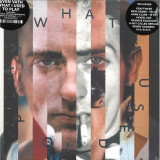
For this uniquely personal retrospective spread over twelve vinyl discs, Sven Väth takes us back to the early days of his DJ career. On What I Used To Play we meet great pioneers of electronic music, gifted percussionists, obscure wave bands, and innovative producers of a bygone 'new electronic' era. Rough beats and irresistible grooves from the identification stage of house, techno, and acid remind us not just how far electronic music has evolved over the past four decades, but how great it was to dance to EBM, techno, and house for the very first time.
If there is one protagonist of the electronic music scene who has remained curious, innovative and at the very cutting edge of music for over four decades, it's Sven Väth. His multi-layered artist albums and Sound of the Season mix compilations have been defining the genre for over two decades, and even today, he is constantly on the lookout for the next top tune to add to the highlights of his next set. At least, that's the case when he's not producing them himself as an artist or remixer. "Actually, it's always been part of my DNA to think ahead," and nothing had been further from his mind than looking back at his past, but when in spring of 2020 the international DJ circuit had to be scaled down to virtually zero, the 'restless traveler' suddenly had time. Time to stop and reflect on "how it actually was back then, at the very beginning of my career..."
"It was a great trip and with every track, beautiful memories came flooding back".
In the London apartment, he had just moved into, Sven has set up a "little music room", where he cocooned himself for several days, "to look way back for the first time and review my musical journey through the eighties, so to speak."
The interim result was six thematically oriented playlists with a grand total of 120 tracks from 'early 80s' to 'Balearic late 80s', together with excursions into afrobeat, European new wave, and EBM sounds and a few epochal techno/house tracks from the USA in between. From these 'Best of Sven Väth's favorites', the project What I Used To Play crystallized. Sven remembers how the Cocoon team reacted to his proposal: "They found the idea of making a compilation out of it MEGA from the beginning and everyone said 'Sven, go for it', but then, of course, the work really started, namely, to clear the rights and to get clean sounding masters of the up to 40-year-old tracks. There was also disappointment, of course. We couldn't clear certain titles because the rights holders in the USA had fallen out with each other or simply disappeared from the scene. In short, it wasn't easy, but now I can safely say we got the most important tracks."
Finally, after two years of research, curation, design, and administrative fine-tuning, the "little retrospective" from 1981 to 1990 is available. The exquisitely packaged, and three-kilo heavy box set is not only physically impressive, WIUTP is also the definitive record of Sven Väth's musical development. On each of the twenty-four sides of vinyl, you can trace track by track, what influenced him during which phase, and how he took off as a DJ from his parents' Queen's Pub straight into the spotlight at Dorian Gray. There and at Vogue (later OMEN), Sven became the style-defining player in the DJ booth that he still is today.
1981 - 1990: Future Sounds of Now
In the early eighties, the crowd in clubs like Vogue and Dorian Gray danced to what nowadays we call 'dance classics' - mainly disco, funk, soul, and chart pop. It was up to a new generation of DJs, including Sven Väth, the youngest protagonist in the Rhine-Main area at the time, to create their own club-ready music mix. Good new tracks and potential floor-fillers were rarities that had to be sought out and found, in order to prove oneself worthy.
Without MP3s, internet streaming, or other digital download possibilities, music didn't just gravitate to the DJ, instead, it had to be tracked down. In well-stocked record stores in Frankfurt and Wiesbaden or even in Amsterdam, London, or New York, Sven and friends sourced the material for countless magical nights. On WIUTP we can follow Sven's very personal journey through this wild, innovative era in which synth-pop, funk, hip-hop, and disco were successively replaced as 'club music' by house, techno, acid, and breakbeat. By the end of the decade, it was clear to see that these once exotic 'fringe' phenomena would soon become 'mass' phenomena.
Early 80s
Dirty Talk by the Italian-American duo Klein & M.B.O. represents the most innovative phase of the Italo-disco genre in the early eighties like no other track. Mario Boncaldo (I) and Tony Carrasco relied entirely on the original synthetic drum and percussion sounds of the Roland TR-808, coupled with the raunchy vocals of Rossana Casale and guitar accents of Davide Piatto. Of course, other tracks from this period were also influential in style, most notably Unit by Logic System, which worked as the perfect soundtrack to the laser lighting system at the legendary Dorian Gray club. With stomping beats and robotic rap interludes, Bostich by Yello also belongs on Sven's eternal playlist - after all, it caught the attention of Afrikaa Bambaataa, who invited the Swiss duo to perform at the Roxy in New York in 1983.
EBM Wave - Mid 80s
From today's point of view, the almost ten-minute-long, downtempo track Giant by Matt Johnson's band project The The, would probably not be considered an obvious club classic. However, a closer (re)listen reveals the rhythmic intricacies of the percussion overdubs by JG Thirlwell (aka Foetus) on Johnson's composition, and it becomes clear why this exceptional piece of music is one of Sven's absolute favorites. Other classics from this phase include Kaw-Liga by the mysterious The Residents, the hypnotic-synthetic Our Darkness by Anne Clark (and David Harrow), and last but not least, the somber, monotonous anthem Where Are You? by 16Bit, one of Sven Väth's projects together with Michael Münzing, Luca Anzilotti from 1986.
US House - Late 80s
You certainly can't talk about Chicago house without mentioning Frankie Knuckles. The resident DJ at the Warehouse not only gave the name to an entire genre, but also produced epochal floor fillers on the Trax label like the timeless Your Love, sung (and moaned) by Jamie Principle. Acid house protagonists Phuture also hail from Chicago, and on We Are Phuture (also released on Trax) we hear the chirping acid sounds of the legendary Roland TB-303 in full effect. Another featured classic is No UFO's by Detroit's Model 500 aka Juan Atkins, who is rightly considered the 'Godfather of Techno' even if the genre-defining track from 1985 still breathes with the spirit of hip-hop and electro from the first breakdance era.
Afrobeat
Le Serpent, by Algerian-born Abdelmadjid Guemguem, is a track that sounds completely different from everything else on WIUTP. Made in 1978, it's a monumental, rousing groove created without bass or synths, just with five congas! Even though Guem sadly passed away in 2021, his immortal, acoustic beats are understood all over the world and will continue to enrich many thousands of DJ sets for years to come. Another classic that not only Sven appreciates beyond measure is Hugh Masekela's Don't Go Lose it, Baby. In addition to being one of the most important jazz pioneers, the trumpeter and freedom fighter from Johannesburg was very experimental, integrating electronic sounds into his music in later years, in a similar vein to Miles Davis and Herbie Hancock. Dutch jazz pianist Jasper van't Hof's afrobeat project Pili Pili has also aged well. The trance-like, almost sixteen-minute-long track of the same name, manages to fill a whole side on the seventh of twelve vinyl discs in the WIUTP box.
UK-US-Euro - Late 80s
Time for a change of scene, in the truest sense of the word, and from a musical perspective, this section is like landing on another planet. First up is Andrew Weatherall's classic remix of Primal Scream's Loaded, featuring the iconic Peter Fonda sample (lifted from the 1966 biker film Wild Angels) that came to personify the mood triggered by the British Second Summer of Love in the late eighties: "We wanna be free to do what we wanna do, and we wanna get loaded...". This period also saw the emergence of M/A/R/R/S whose only single, 1987's Pump Up The Volume, became a club classic with support from DJ legend CJ Mackintosh. In this most eclectic of sections, we also encounter New York house and reggae producer Bobby Konders and his seminal Nervous Acid.
Balearic - Late 80s
Those who know him, know that Sven had already lost his heart to the 'magic island' of Ibiza as a teenager, so with that in mind, the WIUTP project couldn't end without a Balearic chapter. Inspired by Manuel Göttsching's E2-E4, the immortal, eponymously titled Sueño Latino belongs in there without question. Equally popular on the island was, and still is Break 4 Love by Raze, which thinking about it, would also fit perfectly into the house chapter. Last, but not least, there's an overdue reunion with Sven Väth himself, in his role as frontman of the successful Frankfurt trio OFF. Together with Michael Münzing and Luca Anzilotti (later of Snap!) this 'Organization For Fun' created the off-the-wall club hit Electric Salsa in 1986 which incidentally turned into an international chart smash, putting Sven in the enviable position of having to decide between pop stardom and a DJ career. Well, we all know how that decision turned out and the rest, as they say, is history. A not insignificant part of his story is What I Used To Play. Enjoy!
Meg Baird’s songs are rarely made up of tidy stories. In fact, for Meg, mystery itself is often the
medium. With ‘Furling’, Meg’s fourth album under her own name, she explores the breadth of
her musical fascinations and the environments around them - the edges of memory,
daydreams spanning years, loose ends, loss, divergent paths, and secret conversations under
stars. ‘Furling’ moves through these varied spaces with the slippery, misty cohesiveness of a
dream - guided by an ageless, stirring voice that remains singular and unmistakable.
Since co-founding the beguiling and beautiful Espers in the mid-aughts amid Philadelphia’s
fertile underground music community, Meg’s solo recordings have constituted just a fraction of
her work.
Her first solo LP, the disarmingly out-of-time ‘Dear Companion’ (2007), saw her carve a quiet,
sunlit space away from the flickering swirl of Espers. Since her last solo releases, ‘Seasons on
Earth’ (2011) and ‘Don’t Weigh Down the Light’ (2015), Meg has lent thunderous drumming,
lead vocal, and poetry to Heron Oblivion (Sub Pop) on an album that garnered praise from the
New York Times and made Mojo’s Top Ten Albums Of 2016 list. She collaborated with harpist
Mary Lattimore on the mesmerizingly hazy ‘Ghost Forests’ (2018). She’s played drums with
Philadelphia scuzz-punks Watery Love (In The Red, Richie Records) and explored her deep
familial folk roots in the Baird Sisters (Grapefruit Records). She also contributed her vocal
arrangements to albums from Sharon Van Etten, Kurt Vile, Will Oldham and Steve Gunn, and
toured with Angel Olson, Dinosaur Jr., Bill Callahan, Thurston Moore and Bert Jansch, among
others.
Yet ‘Furling’ is the album that most irreverently explores the span of her work and musical
touchstones. It showcases her natural tether to 1960s English folk traditions. But it also reveals
her deep love for soul balladry, the solitary musings of Flying Saucer Attack and Neil Young
shackled to his piano deep in the foggy pre-dawn, dubby Bristol atmospherics, the melancholy
memory collage of DJ Shadow’s ‘Endtroducing’, and the delicious, Saturday night promise of
St. Etienne.
‘Furling’ was primarily recorded at Louder Studios by Tim Green (Bikini Kill, Nation of Ulysses,
Melvins, Wooden Shjips). Additional piano and vocal recording were captured at Panoramic
Studios in Stinson Beach, CA with Jason Quever (Papercuts). It was mastered in Brooklyn by
Heba Kadry, who mixed Bjork’s ‘Utopia’ and mastered albums for Slowdive, Cass McCombs
and Beach House.
For all its adornments, ‘Furling’ remains deeply intimate. The entire album was performed by
Meg and her long-time collaborator, partner, and Heron Oblivion bandmate Charlie Saufley.
While her prior solo work hinted at more expansive horizons, ‘Furling’ explores the idea of Meg
Baird as a band much more freely. Venturing beyond the musical confines of fingerstyle guitar,
she plays drums, mellotron, organs, synths, and vibraphone over her piano and guitar
foundations. Her distinctive, simultaneously elegiac and uplifting vocals, meanwhile, connect
surreal dream montages, graft sunshine sonics to swooning mediations on romantic solidarity
in trying times, and weave odes to the simple gestures of friendship - and the loss of family and
friends.
This rich sound world makes the songs a varied bunch: ‘Twelve Saints’ mates Pacific sunset
ambience and Pink Floyd pastoral to a meditation on mortality and escape. The infectious and
kinetic ‘Will You Follow Me Home’ contemplates hope and longing through the looking glass of
a Jimmy Miller-era-Stones strut. And in the closing piece, ‘Wreathing Days’, language
disintegrates over tone clusters that feel somewhere between falling and flying.
‘Wreathing Days’ also reveals much about Meg’s mastery of contrast - situating the dear and
delicate adjacent to chaos. And while it’s true that some songs on ‘Furling’ grapple with
humanity’s existential unknowns in stark terms, they primarily revel in the mysteries that hide in
nature and humanity at their most ordinary. ‘Furling’ lives in the notion that whole universes of
experience, enlightenment, elation and ecstasy can bloom in these corners.
Charly Records presents GLADYS KNIGHT & THE PIPS This highly collectable 1965 original album portrays Gladys Knight & The Pips at their very best, just one year before signing to the mighty Motown Records. The recordings that Gladys Knight and the Pips made for Larry Maxwell’s Maxx label were some of the least successful – sales wise – with just one Top 10 R&B hit over a two-year period. BUT, they were the important first steps in the second phase of their career that took them to Motown and confirmed them as international superstars. Nearly sixty years later these wonderful recordings form an astounding collection of classic soul music, that showcases Gladys, The Pips and world class arranger Van McCoy, working at the very top of their game. Despite disapointing sales in 1965, time has testified that these songs are some of the very best, in a career that produced some of the greatest soul music ever laid to tape. This fabulous first ever reissue of this most sought after album completes our Gladys Knight & The Pips legacy collection and is also available as an expanded double-CD special edition. Curated and annotated by Dean Rudland, Acid Jazz • First ever reissue of this sought-after album from 1965 • Includes the #6 Billboard R&B Hit “Giving Up” and the Northern Soul classic “Stop & Get A Hold Of Myself”
Since 2013 Jail Job Eve has become an indispensable part of the German
rockstages - Whether festival stage, live club or rustic rockmusic venue -
for more than eight years now the five musicians from Osnabrueck,
Germany, have been playing their way across the country
After their first release "Bird of Passage" in 2015, the band signed a contract with
MiG - music in 2018, the label that, among other things, distributes the legendary
"Rockpalast" recordings of the German TV- and radio-station WDR and with bands
such as Siena Root, Br selmaschine and Wucan, the label has signed in the field
of retro rock under contract.Jail Job Eve's album "The Misson" received
recommended reviews in the music press throughout Europe, and the band thus
earned the reputation: "the hope of the national blues rock scene" (eclipsed
Magazine, Germany).With their upcoming release "Wildfire", Jail Job Eve is once
again setting new standards. The album, recorded entirely live, confirms the band
as a finely balanced rock machinery. The music is much harder, more
experimental and coarser, while the lyrics deal offensively and aggressively with
the most important ideological issues of our time, such as climate change,
sexism, LGBTQ + rights or the responsibility of art and culture as a mirror of
society and an instrument of peaceful protest. For example, the first single "Lost"
is a song about female empowerment and therefore an energetic, feminist
statement to sing along to.The band's audible role models include Rival Sons,
Blues Pills, Greta Van Fleet, but also the classic rockers of Deep Purple or the
omnipresent ubiquitous instance Led Zeppelin. The clearest fist in the face of the
listeners still is Victoria Semel, who virtuously puts her heart and soul into her
singing. Benedikt Schlereth, who plays his way through the album with his
distinctive guitar sound coined by the grand repertoire of rock history, Jens
Niemann, who lets his Hammond wobble sonorously and suffer shriekingly, as
well as Tim Beckers on bass and Josef R hner on drums, who create fulminant,
cast-iron floors under their bandmates
Check point Catherine
“In the afternoon we performed in a rather austere theatre in East Berlin. Then I remember we crossed Checkpoint Charlie that evening to play in a club in West Berlin. The atmosphere was completely different. I felt as though we were living in a black and white spy movie.” Nicolas Fiszman recalls that chaotic day of 13 June 1982. Two outstanding guitarists, Philip Catherine and Nicolas Fiszman, who at the time was only seventeen years old, were taken from one side of Berlin to the other in pouring rain to perform to unlikely audiences. At both concerts, they played the same programme of seven pieces written by Philip, with the exception of “Crystal Bells”, composed by Charlie Mariano. The pair were not master and student. Rather, Philip remembers Nicolas like a young brother he might have taken to the beach. After the 1960s, Philip became a major figure on the jazz scene, working with the greatest: Charles Mingus, Chet Baker, Stéphane Grapelli, Dexter Gordon, to name only a few. Nicolas has played with Charles Aznavour, Vanessa Paradis, Francis Cabrel and Eric Serra, and travels the world with Sting.
On that gloomy afternoon, the two guitarists, alone on stage, decided to brighten up the morosity that reigned. The pieces they played bore titles such as “Janet”, “Babel” and “Petit Nicolas”. It is hard to believe that this varied, well-constructed, polyphonic music was not entirely written down on paper. Philip says, “Nothing is written from beginning to end. I compose the themes and some harmonic bridges. Then we have a chord chart … and that’s it.” The foundations are written; inspiration, taste, fantasy and friendship do the rest. We feel as though we are taking a nonchalant walk through Rio or Miami. The concert is punctuated by thunderous applause.
For these brief minutes in that year 1982, the East Berliners were able to fly over their tightly closed borders.
We are privileged to have unearthed this unique concert where two outstanding artists bring together two cultures to create an intense blaze of happiness.
Philip Catherine, Guitar
Nicolas Fiszman, Guitar & Bass
With the kind authorization of the Artists
Singer-songwriter Amos Lee draws inspiration from soul music, contemporary jazz and 1970s folk artists such as James Taylor. The Philadelphia native honed his song writing skills while waiting tables and bartending after graduating from the University of South Carolina with a degree in English. He eventually landed some high-profile gigs as an opening act, including an extended tour with pianist/vocalist Norah Jones, whose bassist, Lee Alexander, agreed to produce Lee's first album.
With Alexander's help, Amos Lee released his self-titled debut on Blue Note in 2005. The album won Lee a small following for his blend of acoustic funk, folk, and light jazz. Norah Jones herself plays the piano on two tracks; "Keep It Loose, Keep It Tight" and "Colors."
A notable debut like Amos Lee deserves the Analogue Productions reissue treatment. This beauty was cut by Bernie Grundman in Los Angeles from the master tape, and is now pressed at 45 RPM on two glorious sides of 180-gram vinyl by Quality Record Pressings, makers of the world's finest-sounding LPs. QRP is noted for deep-black backgrounds and pristine clarity. If you're already familiar with Amos Lee, get ready — you've never experienced it with such lifelike sonics and premium richness. This is how all vinyl should sound.
The songs on the album incorporate themes of folk, soul, gospel and jazz. Amos's style is a mix of Bill Withers, Arthur Lee, and James Taylor. Amos has recently toured with Bob Dylan, Paul Simon, Elvis Costello, Van Morrison, Adele, Dave Matthews and many others.
Following their debut Glastonbury Festival performance, Broadside Hacks in collaboration with British Underground today announce the UK premiere of The Broadside Hack; a new documentary telling the story of the young vanguard of UK artists sharing radical interpretations, proto-feminist narratives and queer histories through the lens of British traditional folk song. An accompanying live album of the songs performed in the film will also be released in December on LP and digitally. Having enjoyed its US premiere at SXSW in March, The Broadside Hack is a short music documentary produced by British Underground, created with the aid of a grant from Arts Council England and PRS Foundation. Directed by Crispin Parry and filmed by The Northern Cowboys, It explores the influence of traditional folk songs on a new generation of musicians, filmed just as the UK was emerging from the dark days of the pandemic. The documentary was made in collaboration with music collective Broadside Hacks and features influential artists and groups from the new folk scene, including Rough Trade signees caroline, former Goat Girl bassist Naima Bock, whose acclaimed album Giant Palm was released on Sub Pop earlier this year, Shovel Dance Collective, Thyrsis, Broadside Hacks and Boss Morris. Discovering a fresh vitality in the tunes and new histories in the stories they tell, the film includes conversations, dances and intimate performances filmed at Peter Gabriel’s Real World Studios in Box, Wiltshire between 17th and 19th August 2021. The live concert and screening of The Broadside Hack arguably marks the close of the first chapter in the story of the UK’s new folk scene; a story in which Broadside Hacks has been central. Initially formed as a folk night, the pandemic forced it to change its shape, morphing into a collective of young, like-minded musicians who met to play folk music in South London. “An adventurous exploration of traditional music by the young and folk curious” - The Times // “All your favourite players in one Sunday League team” - Loud And Quiet // "The band play old folk songs, those so old their authors have been lost in time, and inject in them such life, depth and emotion that it's extremely affecting" - The Quietus // Side 1 A1 Boss Morris - Up The Hill A2 Interview Shovel Dance Collective - ‘A Collective Authoring of History’ A3 Shovel Dance Collective - The Bold Fisherman / My Husband Has No Courage In Him A4 [Interview] Thyrsis - ‘Collaboration Across Space and Time’ A5 Thyrsis - Single Sailor A6 [Interview] Naima Bock (Broadside Hacks) - ‘Retracing Beginnings’ A7 Broadside Hacks - Gently Johnny. Side 2 B1 Shovel Dance Collective - Merrily Kissed the Quaker B2 [Interview] Shovel Dance Collective - ‘Queering Folk Songs of the Past’ B3 Thyrsis - Godstow Bridge B4 [Interview] Naima Bock (Broadside Hacks) - ‘The Broadside Hacks Folk Club’ B5 Broadside Hacks - Rain and Snow B6 Boss Morris - Young Collins
2022 Repress
A sense of fear floods my body,
my broken knees due to the crazy run just concluded
I'm stuck, with a lost gaze,
In the memory of yesterday, I do not have in the thought of tomorrow, I do not get
I let fall myself on a side, stunned
Hoping in a vane improvement,
I got drag, in a thoughts' tunnel
and even more confused, I close the eyes, scared.
I do not understand what is happening to me, I feel sweaty, suddenly I yell
is already the late daytime, I realize,
that I spent another night in the oblivion.
Another day I've lost,
And in this charm, I will stay chained
-Utopian Soul-
Many Worlds Interpretation is a collection of cosmic Americana for electronics, guitar, and percussion culled from Jon Iverson’s extensive home-studio archive. 1984, Los Osos, California. In a small cinderblock cottage, hand-painted with bright psychedelic flora, Jon Iverson created vibrant new worlds. He spent long days and nights immersed in sound, perfecting home recording on his 8-track reel-to-reel, combining his love for kosmische and Berlin School electronics with an infatuation with ethnographic sounds and expansive guitar music. In a duo with fellow sonic traveler Thomas Walters, Iverson released missives from the studio on a self-titled LP released on country legend Guthrie Thomas’ Eagle Records. That release featured
three electro-acoustic compositions (“Naningo”, “River Fen”, and “Fox Tales”) as well as a gathering of guitar duo tapestries. Many Worlds Interpretation re-imagines those interplanetary works alongside several unreleased compositions that also feature synthesizer, guitar, and percussion, creating a re-visioned album which leans into Iverson’s electronic studio wizardry.
All songs have been carefully transferred from analog tape to high resolution digital, retaining their vintage studio warmth, but mixed and mastered for modern ears and audio systems. The album is pressed at 45rpm, further enhancing the audiophile experience.
Artist Statement
I worked in a Harley Davidson parts warehouse in the summer of 1976 in the San Francisco Bay Area. The goal was to save enough money to buy transportation for college and a Teac 4 track 1/4" reel to reel tape machine. By September there was a rusting monkey-vomit green car in the driveway and shiny new Teac with a Sony condenser microphone in the bedroom. At this point I had been playing guitar for a dozen years and like most children of the sixties, dreamed of joining
a band.
Went to college instead to study business.
But all was not lost. 1978-1979 was spent as Weird Al Yankovic's roommate and we recorded and created enough songs to play shows around San Luis Obispo, California, where we were attending college. Many of those recordings have yet to be heard by the public, including the first performances of My Bologna and many other parodies of pop songs of the day. We sent tapes to Dr. Demento, we auditioned for The Gong Show and were barred from playing at the local college after one memorable performance. Wild times.
I, however, was more intent on working on "serious" music, with albums from Vangelis, Tangerine Dream and Jean Michel Jarre providing inspiration. DJing at the local college radio station and then public radio outlet provided exposure to an endless stream of obscure albums (Sky Records from Germany was a particular favourite). Most of them would never make it to the air, but my buddies and I would pass them around like exotic treasure.
Fast forward a couple more years and I had picked up a Mini-Moog and eventually a Prophet V synthesizer as well as starting a collection of instruments from around the world. The Teac and synths formed the basis for a growing DIY studio that had taken over a modest-size garage (pictured on the cover) that had been converted into a two room cottage in Los Osos, California.
The Teac was eventually joined by a rented Otari 1/2" 8-track and then finally a vintage MCI JH-100 2" 16-track. The compositions on this album were recorded on these three machines between 1982 and 1989. At some point an Apple II computer with Alpha Syntauri sound card and keyboard were added and then later the first personal computer sampling hardware/software kit, the Decillionix DX-1. The DX-1 forms the rhythm track for “Fox Tales” and the Alpha Syntauri was programmed to create the pulsing synth for “Naningo”. “River Fen” was tracked with both the Alpha Syntauri and the Prophet V.
I knew this music wasn't commercial, but didn't care. It was inspiring working with the first computer-based synths and semi-pro gear. Home studios were still rare in the early 80s until the Tascam Portastudio blew the DIY door wide-open. But I was more interested in sound quality so stuck with reels of tape instead of lower fidelity cassettes.
During the time these songs were recorded, I was also collaborating with my good friend and mandolinist, Tom Walters. “River Fen”, “Naningo” and “Fox Tales”, were solo recordings that also ended up on the first Iverson & Walters album, First Collection. The other four pieces on this new LP were never fully finished or released until now.
— Jon Iverson, September 2022
Los Angeles Free Music Society (LAFMS) formed in the mid-1970s as a loose-knit experimental music collective and multimedia publishing vehicle. Founded by teenage Le Forte Four members Chip Chapman, Joe Potts and Rick Potts and soon joined by Tom Recchion of Doo-Dooettes, LAFMS incorporated free improvisation, modular synthesizers, tape music, sampling, musique concrète, homemade instruments, noise, mail art and avant-rock in permissive and anarchic sessions at the Raymond Building and Poo-Bah Record Shop in old Pasadena. Inspired by The Residents, LAFMS self-released records and periodicals, organized performances and connected with fellow outsiders via post in the years before punk. Their uninhibited, egalitarian ideal of music-making and DIY distribution would influence generations of underground musicians.
In 1977, LAFMS released Blorp Esette, one of several compilations tracking the collective's growth and wild-eyed experimentation. Ace Farren Ford, an early LAFMS recruit from the Poo-Bah circle, produced the album and solicited cover artwork by Don Van Vliet (Captain Beefheart). Ford appears in various configurations alongside members of Smegma, Le Forte Four and "unknown artist" (as the credit for more than one piece reads). The Residents, showing their affinity with LAFMS, contributed "Whoopy Snorp" for their first non-Ralph Records release. Blorp Esette shows the artists grasping for new, non-idiomatic voicings and collaborative modes, anticipating LAFMS affiliates and offshoots such as Airway, Human Hands and Monitor. A second volume would come out in 1980, featuring Ford's punk band The Child Molesters. If you're looking for the missing link between mid-'70s art practice and outsider music, then look no further.
This first-time vinyl reissue is limited to 500 numbered copies. Comes with inserts.
On El Ten Eleven’s These Promises Are Being Videotaped (2008) the Los Angeles post-rock duo pays tribute to bassist Kristian Dunn’s obsession with his hometown’s underground dance scene. Eight songs of electronic glitching (“Jumping Frenchmen of Maine”), explosive drum soloing (“Fat Gym Riot”), and blistering rhythms (“K10”). Back in print on Amber Vinyl. Track Listing: Jumping Frenchmen of Maine / I Like Van Halen Because My Sister / Says They Are Cool / Fat Gym Riot / Adam and Nathan Totally Kick Ass / K10 Paranoid Android / Chino / Numb Tooth
- A1: Robert Miles - Children (Dream Version)
- A2: Amine Edge & Dance Vs Blaze (Kevin Hedge) - Lovelee Dae
- B1: Armin Van Buuren - Blah Blah Blah
- B2: The Chemical Brothers - Hey Boy Hey Girl
- B3: Martin Solveig & Gta - Intoxicated
- C1: Riton X Nightcrawlers Feat. Mufasa & Hypeman - Friday (Dopamine Re-Edit)
- C2: Green Velvet - Flash
- D1: Bicep - Opal (Four Tet Remix)
- D2: The Subs - Kiss My Trance
- E1: Tocadisco Feat. Meral Al-Mer - Streetgirls (Tocadisco's Club Remix)
- E2: Winx - Don't Laugh (Live Raw Mix)
- F1: Lemon8 - Model8
- F2: Camelphat & Elderbrook - Cola
- G1: Didier Sinclair - Lovely Flight
- G2: Pat Krimson - Es Cubells (Pirate Mix)
- H1: Chab Feat. Jd Davis - Closer To Me (Renaissance Mix)
- H2: Klangkarussell - Sonnentanz
- I1: Adam Beyer & Bart Skils - Your Mind
- I2: Dj Licious - Calling
- J1: Duke Dumont - The Giver
- J2: The Sunclub - Fiesta De Los Tamborileros
BOXSET 3[79,79 €]
After 31 years, the Serious Beats compilation era comes to an end. The very last edition, Serious Beats 100, arrives as 3 Vinyl Box Sets (including 5 vinyls per box).
Some of the most legendary club tracks of the past decades have made the cut, and are now bundled into a true collector's item for everyone who's heart is beating to the rhythm of house music.
Die 1984 gegründete Band Sepultura ist der wohl größte
brasilianische Musikexport und feierte im Laufe ihrer
Karriere weltweit große Erfolge. In dieser Zeit haben sie
fünfzehn Studioalben veröffentlicht und weltweit über 20
Millionen Einheiten verkauft. "A-Lex", ursprünglich 2006
veröffentlicht, ist das 11. Studioalbum der Band und
basiert auf dem 1982 erschienenen Roman "A Clockwork
Orange" von Anthony Burgess.
A joint release between Discos Nada & Litoral. One of the first independently released Brazilian records, Alcides Neves’ debut LP ‚Tempo de Fratura’ is reissued for the first time on vinyl, alongside his second release ‚Des (Trambelhar) Ou Não‘.
Hailing from the Brazilian North East, Alcides Neves released his debut album a few years after moving to São Paulo, in 1979. The LP’s release coincided with the emergence of the city’s seminal Vanguarda Paulista movement, which led some researchers to locate Alcides within the movement. As the artist himself affirms; however, he did not fit into any established musical movements, and while it is perhaps possible to identify some influences, it is not possible to consider his music as belonging to a specific lineage either.
Alcides’ singularity and experimental disposition is on full display on his opening album, which revels in its own disformity and lack of external interference, made possible by releasing the LP independently.
The album translates to ‚Time of Fracture‘, a fitting moniker for the context in the final years of the Brazilian military dictatorship. The eleven songs that comprise the album are proof that the album was not named randomly, showcasing a broad range of both experimental and folk influences, while also including lyrics that originally did not get past federal censors.
Carefully remastered by Paulo Torres with updated original artwork, the record is reissued in a gatefold sleeve including a promotional image from the time of release. This LP furthermore includes an insert with a text written by the journalist and researcher Bento Araujo, editor of the bimonthly publication ‚Poeira Zine‘ and author of the ‚Lindo Sonho Delirante‘ series of books.
A rich musical journey comprising eleven songs, Madrid channels the chaotic charms of the Spanish capital where Nev has recently relocated.
"I love the way life works here. It's organised chaos. Walking
the neighbourhoods of Lavapiez and La Latina you begin to see how everything is perfectly balanced...how to eat, how to party and then how to relax! It's perfection. When it all gets too much I run away to
the English countryside"
Side A cut 'The Ring' calls to mind Cowboy In Sweden era Hazlewood while that Mustang bass, scratchy guitars and cool 60's drum fills invoke Serge and Vannier for ' Silver Screen' and title track 'Madrid'. Scott 4 is obviously a touchstone and Nev has never been one to hide his reverence for one of the greatest albums of all time. Seven minute wonder 'Under The Skin' channels Walker's