The impact Belfast born duo Bicep have had on Irish music is unmeasurable, capturing the hearts and minds of the next-gen with their future-facing sonics. The pairing started their FMB label in 2012, going on to support a plethora of Irish artists in the process, from Cromby and Hammer to Brassica and Brame & Hamo.
The label's latest record comes from yet another Irish artist. Swoose, a name that should be familiar to any Irish electronic lover, began his career handing out flyers for legendary club Stiff Kitten. From here Swoose went on to become a resident of Shine and AVA Festival, and has released a string of killer records on Shall Not Fade and Lost Palms. Now residing in London, his record on FMB brings the OG Belfast dance music community back together for a fittingly euphoric release.
Title track ‘Breathe’ produces poignant undertones and contemplative thought, meditative breaks channeling the producer's fascination with wild flora and fauna. The track's interior begins to distort our sense of time and self, liquid textures forming over celestial harmonies like psilocybin. ‘Hyphae’ takes a 4/4 approach, while keeping the EP’s emotional personality present. Its pulsating bassline is balanced by far-reaching syths and dancing hi-hats, resting in a unified space of motion and colour.
Rotterdam via Belfast based artist Kessler has been on the tip of everyone's tongue since the return of clubbing. He has released music on Sherelle’s BEAUTIFUL black and LGBTQ+ label and his debut Shall Not Fade release was one of the most celebrated EPs of 2021. Kesslers knackt to create beautiful, other-wordly soundscapes that are both functional and edge on the side of melancholy are unmatched. His flip of title track ‘Breathe’ swaps gentler tones for his signature UK-sound inspired drums and crowd-evaporating atmospherics. The arrangements gentle ebb and flow, maintaining that signature blend of pace and etherealness.
Toronto’s Peach is on hand for the second remix – ‘Hyphae – a stripped-back early-morning groover that mixes psychedelia with flexible percussion. The track gives off a subtly uplifting vibe that blends heads-down club with minimal, punchy aesthetic. Just when you thought it was time to go home too...
Suche:lost in time
The recordings on this album constitute the material from a June 20th, 1968 studio session recorded by Hans Georg Brunner-Schwer (HGBS) and Joachim-Ernst Brendt in Germany's Black Forest. This is no ordinary recording. This enthralling Bill Evans session was recorded five days after a famous performance at the 1968 Montreux jazz festival by Evans, bassist Eddie Gomez and drummer Jack DeJohnette. Verve's Montreux live recording won a Grammy, but this studio session has been in the vaults ever since.
For the first time this album was mastered in all analogue (AAA), from the original analog master. Mastered by René Laflamme at 2xHD Mastering lab and cut at Bernie Grundman at 45 RPM.
The 2xHD Fusion Mastering System is an innovation in audio restoration for a virtual audio reality. In the constant evolution of its proprietary mastering process, 2xHD has progressed to a new phase called 2xHD Fusion, integrating the finest state-of-the-art analog Nagra-T tape recorder modified with high-end tube playback technology, wired with OCC silver cable for better transparency and 3D imaging. 2xHD Vinyl are sourced from first generation analog recordings without any digital corruption. The cutting is done at Bernie Grundman Mastering Lab on tube cutting equipment.
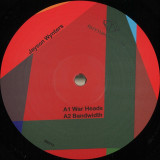
Rhythm Nation is back on vinyl, with a master of the deeper side of UK house and Detroit-inflected techno, Jayson Wynters.
Following up his 'Exit Wound' digital-only release of last year, which also featured remixes from Phantasy Sound's James Welsh, Jayson drops two brand new tracks as well as a physical pressing of those two originals from the previous release.
'War Heads' is a true late-night wormhole of a track, embarking on a journey of percussion and atmosphere, leading inexorably to the emergence of the warmest pads and the deepest bass.
'Bandwidth' flips the switch to a fresh take on classic electro, maintaining the signature Hayson Wynters sound of drum machines and classic synths that seem to hit just slightly left of where the listener expects.
Orginally released digitally in 2022, 'Exit Wound' and 'Lost City' offer a similar contrast - the former is a bassline-driven peak-time stomper, while the latter takes things deep into real electro with an infectious groove and evergreen textures.
Rhythm Nation is part of the Hotflush Recordings label group, curated by Paul Rose aka Scuba, celebrating 20 years in 2023.
Never Sleep present Paula Temple 'Live from the Mill".
Recorded live in the UK's oldest rave capital Preston in the beautiful summer of 1995.
One of Paula Temple's earliest gigs, this mix was recorded at a rave in Preston 27 years ago when she was 18 years old.
Vinyl only at the time, this mixtape embodies the style she is consistently known for, a mix of raw relentless techno and rave.
In 1995 making mixtapes was the only way to go, so Paula would make mixtapes to give to her friends at clubs around the North of England such as Bugged Out (Manchester), The Orbit (Morley) and Voodoo (Liverpool).
Paula submitted this mixtape to MUZIK magazine to spend a day with techno artist Dave Angel.
Triumphantly she spent the day with Dave in his studio, was featured in the magazine and was just a young girl chasing her dream.
When we asked for this possible collaboration she dug deep and found a forgotten tape from long ago that had been lost but recently found, Archivio has brought it back to life for you to hear the younger Paula Temple's passion for the underground.
All proceeds go the amazing Womenonweb charity which supports women rights across the globe and provides abortion care for the most in need.
We are truly honored to put out a small testament in time and help those in the future.
The last album of Dead Cat In a Bag on vinyl! 180g + downloadcode.
"Do you know it? Ennio Morricone, Nick Cave, Mark Lanegan, Tom Waits and Zach Condon walk into the bar, and there are all the seats occupied by the Dead Cat In A Bag musicians. Really." - this is how Jarek Szubrycht started the review of the last album of the Italian group Dead Cat In Bag in Gazeta Wyborcza. And he was right. Really.
Yes! Dead Cat In A Bag is back! They are back with a new album "We've Been Through".
After exploring several so called Neo-Folk regions, flirting with Folk Noir, mostly with Traditional Folk in a modern perspective, for example Americana to Tex-Mex and Balkan Music to Alternative Country, on this third record the ensemble drifts to a cinematic landscape, focusing on the theme of overcoming.
We've Been Through puts together World Music elements incorporating an almost soundtrack experience for a journey into both Day and Night, Hope and Disillusionment and telling stories of broken romances and shipwrecks.
Utilizing banjo and theatrical vocal delivery, together with with classic and odd instruments, the band remap the original charts but still set sail the desired destinations. And if, about the previous records, critics were prone to recall the prowess of Waits, Cave, Lanegan, Cash and Tindersticks, this time it will be harder to name the grandfathers.
Now there is a Morricone (or was it Badalamenti?) guiding spirit and a dreamlike universe full of memories, from the dry electric blues of a stream of consciousness duet in Duet For Nothing to the unexpected crooning vocals provided by Liam McKahey (CousetauX) in Lost Friends (a banjo droven dirge dealing with electronics and a bassoon, with steal percussions and a music saw for a frame), from the rendition of the traditional Wayfaring Stranger, balancing between electric guitars and Bluegrass, to the intimate cover of Leonard Cohen's Hunter's Lullaby, from the rock-(swamp)blues of The Cat Is Dead (enriched by Italian bass hero Gianni Maroccolo, from Litfiba and C.S.I.) to the soft meloncholy of the string quartet in Between Day And Night, from the dark cabaret of Fiddler, The Ship Is Sinking to the soft porch song, between Willard Grant Conspiracy and Kris Kristofferson, of the final title track.
You can hear a shrawn and a blues harp, whispers and choirs, love and dudgeon as the record goes. This is the sound of an orchestra playing on a sinking ship: what else could a fiddler do? And what can we do, in the end?
Thee Headcoats and CTMF go head-to-head! Two Billy Childish bands battle it out with versions of the same song! Thee Headcoats version is taken from their forthcoming new studio album "Irregularis: The Great Hiatus". The CTMF version is exclusive to this release. Q: Two versions of the same song by different bands. Has each band heard the other version? If so, did they pass judgement? A: No, neither group heard the other version. I had forgotten how the CTMF version went - even though it was only a few weeks past. As with all the LPs there's no rehearsal. I play the track - we do a run through and then press record. I don't remember how either version goes now. Q: There's a famous saying - "Talent borrows; genius steals". Are you a borrower? A stealer? Or something else entirely? A: As I've said before, I follow strict music industry guidelines and only plagiarise 50 percent of my material. Kurt Cobain put it better - he said people thought he was original because he didn't let on what he was ripping off. Though we know he got the riff to his most famous song from The Daggermen, a local group Wolf (our drummer) played in. Q: What was it like recording with Bruce and Johnny after such a long time? A: We met up in the studio in the morning, had a cuppa, a chat, plugged in and recorded the LP (in two days.) It was the first time we'd all been together in about 30 years, and it felt like yesterday - just laughing and joking about how rubbish we were and generally having fun. It was like no time had passed at all. Q: Love the sleeve picture for this 7"! A lot of people miss the humour in your work, does that frustrate you? A: I'm not frustrated but surprised that the British seem to have lost their sense of humour somewhat - they've been pretty po-faced since 1978, I think. I was brought up on Pete and Dud when I was a kid. Interestingly a lot of comedians seem to like what we do. Stewart Lee has always been a fan and he said there are others of his ilk. If something can't be mocked or laughed at, I'm not that interested in it.
1000 black vinyl LPs. London-based ‘indie-supergroup’ SUEP announce their long-awaited debut mini-album Shop, a collection of 6 oddball, car-boot-sale pop songs with a sprinkling of theatrical storytelling. Led by Georgie Stott (of Porridge Radio, Garden Centre) and Josh Harvey, SUEP was born out of a near-decade of playing in sheds and barns with like minded personnel, holding a mutual love for Paul McCartney, Jona Lewie, the B-52s, Devo and other performative freaks enjoying themselves. Following a move to London from Brighton, the pair added George Nicholls (The GN Band, Joanna Gruesome, The Tubs), Will William Deacon (PC World, Garden Centre), and Ollie Chapman (Boil King) to the line-up. The 5 piece take turns writing songs and taking the lead vocal duties in a wonderfully playful but coherent collaboration, with their debut being a kaleidoscopic off kilter pop ride, taking the listener through haunted castles, deprived encounters, days lost to the imagination in bed, and through the integral friendships that give SUEP the energy to keep dancing to their own beat. The album was arranged and recorded in the Red Lion Boys Club, an ex-youth centre in which Georgie and Josh both lived. Using equipment collected by Josh in his travels as a bootsale and market trader, the sports hall was transformed into a makeshift studio for a few days, with sessions conducted by producer Matthew Green (Sniffany & The Nits, The Tubs, etc.) Mark Riley (BBC 6 Music) described SUEP’s debut single and album opener, ‘Domesticated Dream’ (2021) as “perfect pop music.” The joyfully kitsch track brims with a 70s Yamaha disco beat, deep bass, nostalgic drum machines, and hooky melodies. Possibly the most psychedelic and infectious track born out of lockdown, it tackles homelife, drinking too much, and making big plans that never come to fruition, but with a big technicoloured positivity for the future of the human-race, with the chorus’ refrain, “the psychedelic 4000s,” predicting the return of the psychedelic Age of Aquarius in a couple of millennia time. The following single ‘Misery’ (2021) is pure cosmic swing-pop wizardry in part inspired by spy music and The Supremes. Ollie, The track’s baritone vocalist, describes it as “A love song disguised as a song about loss. It's about cherishing the things that matter but it’s also about having the courage to say goodbye,” with each line of the song a small story about a different character. Whilst latest Shop taster ‘In Good Health’ is darkly euphoric like a pleasantly strange meeting of Siouxsie Sioux and Jona Lewie. It’s a playfully discombobulating mix of 80s jangly guitar, chirpy keyboard and moody post-punk tackling mental health, drug addiction, and the power of friendship, written after the song’s vocalist Georgie came out of hospital following a mental health crisis. “I wanted to write a song that encapsulated how important my relationships with my friends and boyfriend were at that time” she explains “…and one that also felt dark like I did at the time. I couldn’t go outside due to anxiety surrounding my health so I stayed inside for weeks. People would visit and watch films with me or let me tattoo them or make music with me. My community helped me recover.” Elsewhere on Shop is ‘Just The Job’ fronted by Harvey and described by him as “About the relief of accepting a menial existence, and allowing life to be boring - but (within that) how the small things are the important ones, how pulling a sicky or extra long lunch break are important things to do for yourself. It’s an anthem for working people who’ve had enough - and a crowd favourite at SUEP gigs. The darker undertones and post-punk angles of the Georgie-fronted ‘Onions’ is inspired by the crapness of cliques, with the band calling the song “A cry of welcome to all;” and finally the hooky ‘Friend of Mine,’ described as “A love letter to all the people that come and go throughout your life no matter how long you know them”. SUEP have received coverage in Independent & Clash, (among many others), with big support from Mark Riley and Steve Lamacq (BBC 6 Music) for early singles.
Limited Loser edition on dark green vinyl. There are times in our life when we feel magic in the air. When new love arrives, or we find ourselves lost in a moment of creation with others who share our vision. A sense that: this is who I want to be. This is what I want to share. It's a fleeting feeling and one that Kyle Thomas, the singer-songwriter who records and performs as King Tuff, found himself longing for in the spring of 2020. But knowing he couldn't simply recreate this time in his life at will, Thomas-who hails from Brattleboro, Vermont-set out to write a love letter to those cherished moments of inspiration and to the small town that formed him. The one where he first nurtured his songwriting impulses, bouncing ideas off other like-minded artists. The kind of place where the changing of the seasons always delivered a sense of perspective and fresh artistic inspiration. Where he felt a deeper connection with nature and sense of community that had once been so close at hand. And so, Thomas seized upon his memories, creating what he calls "an album about love and nature and youth." The result is Smalltown Stardust, a spiritual, tender and ultimately joyous record that might come as a shock to those with only a passing knowledge of the artist's back catalog. On Smalltown Stardust, Thomas takes us on his journey to a place where past and present collide, where he can be a dreamer in love with all that he sees. References to his Brattleboro upbringing abound, but at the core of Smalltown Stardust is Thomas's desire to commune with nature on a spiritual level. Images of the natural world, from blizzards to green mountains to cloudy days, fill the songs. "I consider nature to be my religion," he explains, and Smalltown Stardust is nothing if not a spiritual exploration. While so much of Smalltown Stardust invokes idealized traces and places of Thomas's past, the album's recording process made his communal vision a reality. Thomas's Los Angeles home in 2020 formed a micro-scene of sorts, with housemates Meg Duffy (Hand Habits) and Sasami Ashworth recording their own heralded albums (2021's Fun House and 2022's Squeeze, respectively) at the same time. A shared spirit dominated an era spent largely on the premises, with Thomas serving as engineer and contributor to both records, and Ashworth working as co-producer on Smalltown Stardust. Ashworth's contributions are vital to the album: she co-wrote a majority of the record and contributed vocals, arrangements, and instrumentation to each song. In the end, Smalltown Stardust is not merely a nostalgia trip. Thomas not only conjured a special time in his life, he found new inspiration, surrounded by collaborators and a sense of love and wonder for nature. If the first King Tuff record was content to merely state Thomas was no longer dead, Smalltown Stardust is a paean to what that life means. A statement of belief and a hymnal to the magic still to behold all around us.
There are times in our life when we feel magic in the air. When new love arrives, or we find ourselves lost in a moment of creation with others who share our vision. A sense that: this is who I want to be. This is what I want to share. It's a fleeting feeling and one that Kyle Thomas, the singer-songwriter who records and performs as King Tuff, found himself longing for in the spring of 2020. But knowing he couldn't simply recreate this time in his life at will, Thomas-who hails from Brattleboro, Vermont-set out to write a love letter to those cherished moments of inspiration and to the small town that formed him. The one where he first nurtured his songwriting impulses, bouncing ideas off other like-minded artists. The kind of place where the changing of the seasons always delivered a sense of perspective and fresh artistic inspiration. Where he felt a deeper connection with nature and sense of community that had once been so close at hand. And so, Thomas seized upon his memories, creating what he calls "an album about love and nature and youth." The result is Smalltown Stardust, a spiritual, tender and ultimately joyous record that might come as a shock to those with only a passing knowledge of the artist's back catalog. On Smalltown Stardust, Thomas takes us on his journey to a place where past and present collide, where he can be a dreamer in love with all that he sees. References to his Brattleboro upbringing abound, but at the core of Smalltown Stardust is Thomas's desire to commune with nature on a spiritual level. Images of the natural world, from blizzards to green mountains to cloudy days, fill the songs. "I consider nature to be my religion," he explains, and Smalltown Stardust is nothing if not a spiritual exploration. While so much of Smalltown Stardust invokes idealized traces and places of Thomas's past, the album's recording process made his communal vision a reality. Thomas's Los Angeles home in 2020 formed a micro-scene of sorts, with housemates Meg Duffy (Hand Habits) and Sasami Ashworth recording their own heralded albums (2021's Fun House and 2022's Squeeze, respectively) at the same time. A shared spirit dominated an era spent largely on the premises, with Thomas serving as engineer and contributor to both records, and Ashworth working as co-producer on Smalltown Stardust. Ashworth's contributions are vital to the album: she co-wrote a majority of the record and contributed vocals, arrangements, and instrumentation to each song. In the end, Smalltown Stardust is not merely a nostalgia trip. Thomas not only conjured a special time in his life, he found new inspiration, surrounded by collaborators and a sense of love and wonder for nature. If the first King Tuff record was content to merely state Thomas was no longer dead, Smalltown Stardust is a paean to what that life means. A statement of belief and a hymnal to the magic still to behold all around us.
Tape
There are times in our life when we feel magic in the air. When new love arrives, or we find ourselves lost in a moment of creation with others who share our vision. A sense that: this is who I want to be. This is what I want to share. It's a fleeting feeling and one that Kyle Thomas, the singer-songwriter who records and performs as King Tuff, found himself longing for in the spring of 2020. But knowing he couldn't simply recreate this time in his life at will, Thomas-who hails from Brattleboro, Vermont-set out to write a love letter to those cherished moments of inspiration and to the small town that formed him. The one where he first nurtured his songwriting impulses, bouncing ideas off other like-minded artists. The kind of place where the changing of the seasons always delivered a sense of perspective and fresh artistic inspiration. Where he felt a deeper connection with nature and sense of community that had once been so close at hand. And so, Thomas seized upon his memories, creating what he calls "an album about love and nature and youth." The result is Smalltown Stardust, a spiritual, tender and ultimately joyous record that might come as a shock to those with only a passing knowledge of the artist's back catalog. On Smalltown Stardust, Thomas takes us on his journey to a place where past and present collide, where he can be a dreamer in love with all that he sees. References to his Brattleboro upbringing abound, but at the core of Smalltown Stardust is Thomas's desire to commune with nature on a spiritual level. Images of the natural world, from blizzards to green mountains to cloudy days, fill the songs. "I consider nature to be my religion," he explains, and Smalltown Stardust is nothing if not a spiritual exploration. While so much of Smalltown Stardust invokes idealized traces and places of Thomas's past, the album's recording process made his communal vision a reality. Thomas's Los Angeles home in 2020 formed a micro-scene of sorts, with housemates Meg Duffy (Hand Habits) and Sasami Ashworth recording their own heralded albums (2021's Fun House and 2022's Squeeze, respectively) at the same time. A shared spirit dominated an era spent largely on the premises, with Thomas serving as engineer and contributor to both records, and Ashworth working as co-producer on Smalltown Stardust. Ashworth's contributions are vital to the album: she co-wrote a majority of the record and contributed vocals, arrangements, and instrumentation to each song. In the end, Smalltown Stardust is not merely a nostalgia trip. Thomas not only conjured a special time in his life, he found new inspiration, surrounded by collaborators and a sense of love and wonder for nature. If the first King Tuff record was content to merely state Thomas was no longer dead, Smalltown Stardust is a paean to what that life means. A statement of belief and a hymnal to the magic still to behold all around us.
With One Day, Fucked Up have delivered one of the most energizing and intricate albums of their career, a massive-sounding record that arrives in deceptively small confines. The Canadian hardcore legends have been known for their epic scale in the past, so it might be a surprise that Fucked Up’s sixth studio album is their shortest to date, written and recorded in the confines of one literal day (hence the title). Don’t mistake size for substance, though: The band’s sound has only gotten bigger, more hard-charging, with even denser thickets of melody. “I wanted to see what I could record in literally one day.” That singular idea came to mind for guitarist Mike Haliechuk in the closing months of 2019. Haliechuk got himself into a studio and proceeded to write and record the record’s ten tracks over three eight-hour sessions, reconnecting with the core the band’s songwriting essence in the process. Initially, Fucked Up vocalist Damian Abraham was also set to complete his vocals in similar fashion—that is, before the lockdowns of 2020 took place. As it turns out, the isolation yielded creative dividends, as Abraham returned to contributing lyrics as well for the first time since 2014’s Glass Boys. “It almost felt like it might be the last time I’d ever get to record vocals for anything,” Abraham says of the stakes he felt while putting his part to tape, before reflecting on how he approached the lyrical process: “What do I want to say to friends who aren’t here anymore? What do I want to say to myself?” Over swarms of tuneful noise that evoke Sonic Youth circa Daydream Nation, Abraham lets loose on gentrification in “Lords of Kensington,” which was inspired by an “incredible” Toronto neighborhood that was regularly subject to life-ruining police surveillance and structural violence. “The police chief during that era he just opened a cannabis store,” Abraham explains. “It’s so cynical and gross, what society has come to but by being in a band, we’re culpable in changing the neighborhood, too, since the punk spaces and cool happenings that pop up are part of gentrification. Are you building a culture? Or are you ruining something that’s already been there?” Then there’s the dusky burn of “Cicada,” a sonic cousin to Dose Your Dreams’ excellent standout “The One I Want Will Come for Me” that features Haliechuk taking lead-vocal duty. The song is dedicated to lost friends, and in his words, it’s about “what life is like after you lose people, and our responsibility to carry them forward into the future, using the things they taught us as a light. I like to imagine the sound of cicadas as a metaphor for our strange life in the subculture we all just live these weird little hidden lives under the dirt, and then once in a generation, one of us gets to bust out of the dirt and intone their song so loud that it can be heard all over.” One Day is an undeniable work of confidence from a band that continues to operate at the top of their game, making music that’s guaranteed to last a lifetime and beyond.
‘Living Rooms’ is a full-blooded debut of rich, playful, experimental pop from the artist Fe Salomon – full of unabashedly big songs and sumptuously big sounds. Fe’s soulful and arresting lead vocals weave amongst soaring strings and big band brass sections; clattering percussion and disjunctive rhythms; dirty electro synth and butchered guitar. A collaboration with producer and contemporary classical composer Johnny Parry, ‘Living Rooms’ is a true pop album with a distinct, exuberant and deeply generous sound.
Born in Northampton, Fe moved to London at 18 for a place at Theatre College; but soon left to concentrate on music and songwriting, falling quickly into the Camden music scene, and earning her a prolific career as a singer. Building on her diverse musical background and honing her unusual sonic style, this album has been percolating at the back of Fe’s mind for a long time. The perfect storm of personal and external factors thus created the moment to make it. ‘Living Rooms’ tells stories of multiple lives lived and lost
in the city, of friendships that meant everything and the characters you’ll never meet again, of transience and loneliness, and of getting by and moving on.
At the forefront of the album is an organic and fiercely honest lead vocal performance. However, Fe permits her voice to be twisted and distorted into the fabric of the instrumentation. The un-doctored lead vocals are frequently haunted by angels and demons, created through Fe’s uninhibited willingness to this manipulation, and capturing the more visceral emotions within the expression of the human voice.
‘Living Rooms’ navigates a wide spectrum of sounds and emotions. Take album opener “Polka Dot”, a track that mixes emotive vocals with an avant-garde alt/pop production to conjure a cut as stylish as it is shrouded in shadowy mystique. A track “about mourning innocence, and the darkness that’s picked up along the way, with an ‘up yours’ sarcastic tone, and not wanting to grow old”, it sets the scene for a twisting collection that up-ends expectations at every opportunity.
Elsewhere, the chunky hooks of “Super Human”, the sci-fi/country/big band of “Wired of Caffeine”, or the intimately sung vocals and Vaughan-Williams-esque string sections of “Taxicabs”, all contribute to an album that evolves like a rich and constantly surprising tapestry.
Although the conception of the album was a frenzy of wild experimentation. The album is faithful too, and celebratory of many joyous pop traditions; but searches for ways to reinterpret the familiar. And no less so than on the off-kilter centre-piece “Quintessential England”. Through wry lyricism and vivid imagination, the track paints a lucid, if lonely, depiction of a life lived out in the sticks; one that ultimately arrives at the conclusion that perhaps “the grass isn’t always greener”.
Gifted with the kind of superpowers that have blessed Alison Goldfrapp with her unwavering glam-pop allure and Stevie Nicks with that invincible soul, Fe Salomon’s empowering first release will prove she’s cut from the same cloth and ready to be your newest musical hero.
The album’s seemingly brief tracklisting belies a work of great beauty and depth, and one which turned into a one-man crusade for singer/guitarist Lars Andersson, intertwining deeply personal stories with his love for the era of Romanticism. “Every time I go to a museum and I’m about to pass through the era of Romanticism I stop in awe,” says Lars of the enduring appeal of the 18th century artistic movement. “Whatever it is – stories, paintings, music – it triggers something deep within me, something profoundly human. It really hits a nerve, and it utterly immerses me to a point where I can’t move.” The album replicates this feeling; a gloriously over-the-top blend of Slowdive and Sigur Rós, mixed with the single-mindedness of Daniel Johnston and the noisiness of Nirvana, it’s as bold and beautiful and every bit as ornate as the art that inspired it. Unlike their acclaimed debut, 2019’s All That Ever Could Have Been, which gradually came into focus with a 15-minute opening track, Picturesque hits home from the very first note of the short and sweet opener, ‘Ballerina’. That’s not to say there aren’t epics here – ‘Metamorphosis’ is essentially a 12-minute suite of three movements; blistering closer ‘The Lot’ is 11 minutes of Swans-inspired heaviness – but everything is much more direct and focused. This isn’t an album to lose yourself in, it’s one to get swept away by. “‘More is more’ was definitely the credo when making this record,” agrees Lars. “A big inspiration were bands like Pond and the way they manage to fill their songs up with stuff to the absolute maximum. While I definitely tried to give the listener some room to breathe at certain points and while, in good old post-rock fashion, it still builds up and breaks down, it relies much more on simple melody and harmony as opposed to noisy experimentation to transport feeling.” Never more so than on the first single, ‘The Golden Age’, which is the album’s centrepiece; a soaring slice of über-shoegaze that is so stunning you can’t take your eyes or ears off it. Like all the songs on the album, it’s based around a fairy-tale from the Romantic era. In this case, it’s Heinrich von Ofterdingen by the German poet, author and philosopher Novalis (other influences are: The Steadfast Tin Soldier by Hans Christian Andersen; The Seven Ravens and Hans in Luck by the Brothers Grimm; Undine by Friedrich de la Motte Fouqué and The Golden Pot by E.T.A. Hoffmann), with Lars drawing parallels between the titular character’s mystical and romantic searchings and his own personal quest. This is apt as the album has been an overriding obsession for Lars for the past two-and-a-half years; as well as writing and recording the songs (bandmate Phillip Dornauer played drums), he also mixed and mastered them at his Alpine Audio studio and Picturesque is very much his Brian Wilson or Kevin Shields moment. MOLLY were in the middle of their European tour when Covid hit in early 2020, forcing Lars to retreat back to his home outside Innsbruck and giving him time and space to think about every detail of the record. “Well, I was on a quest I guess,” he admits. “Like everyone, I was stranded at home and at some point I just said to myself, ‘If not now, then when?’ It was an intense process. I’ve worked on music from other bands and artists before but producing and mixing your own music is an utterly different animal. It was probably the most intense thing I’ve ever done, but it was also incredibly rewarding and the feeling of it all coming together piece by piece is incomparable.” The artwork is just as effective. “I think of Radiohead’s OK Computer – what you hear on the record is what you see on the cover,” explains Lars. “We were inspired by what we call ‘wimmelbilder’ hidden pictures in German, a very specific style in art where there are a lot of little things happening. When you see it from further away, it looks organic like a lost painting from the area of Romanticism, but the closer you look the more digital it gets. It’s a nice analogy.” He’s right, it perfectly sums up the conflict between Romanticism and 21st century life. “Romanticism was basically an answer to the Industrial Revolution as well as the social and political norms of the Age Of Enlightenment,” concludes Lars. “Now, we all live in a much more industrialised, materialistic, individualistic and sterile society than any early Romanticist could have ever possibly imagined. Over 200 years later the Romanticists have lost the battle.” With the divine and downright pulchritudinous Picturesque, MOLLY begin the fightback.1.Ballerina 2.Metamorphosis 3.The Golden Age 4.Sunday Kid 5.So To Speak 6.The Lot
Does Spring Hide Its Joy is an immersive piece by composer Kali Malone featuring Stephen O’Malley on electric guitar, Lucy Railton on cello, and Malone herself on tuned sine wave oscillators. The music is a study in harmonics and non-linear composition with a heightened focus on just intonation and beating interference patterns. Malone’s experience with pipe organ tuning, harmonic theory, and long durational composition provide prominent points of departure for this work. Her nuanced minimalism unfolds an astonishing depth of focus and opens up contemplative spaces in the listener’s attention. Does Spring Hide Its Joy follows Malone’s critically acclaimed records The Sacrificial Code Ideal Recordings, 2019 & Living Torch [Portraits GRM, 2022]. Her collaborative approach expands from her previous work to closely include the musicians Stephen O’Malley & Lucy Railton in the creation and development of the piece. While the music is distinctly Malone’s sonic palette, she composed specifically for the unique styles and techniques of O’Malley & Railton, presenting a framework for subjective interpretation and non-hierarchical movement throughout the music. Does Spring Hide Its Joy is a durational experience of variable length that follows slowly evolving harmony and timbre between cello, sine waves, and electric guitar. As a listener, the transition between these junctures can be difficult to pinpoint. There’s obscurity and unity in the instrumentation and identities of the players; the electric guitar’s saturation timbre blends with the cello’s rich periodicity, while shifting overtone feedback develops interference patterns against the precise sine waves. The gradual yet ever-occurring changes in harmony challenge the listener’s perception of stasis and movement. The moment you grasp the music, a slight shift in perspective guides your attention forward into a new and unfolding harmonic experience. Does Spring Hide Its Joy was created between March and May of 2020. During this unsettling period of the pandemic, Malone found herself in Berlin with a great deal of time and conceptual space to consider new compositional methods. With a few interns left on-site, Malone was invited to the Berlin Funkhaus & MONOM to develop and record new music within the empty concert halls. She took this opportunity to form a small ensemble with her close friends and collaborators Lucy Railton & Stephen O’Malley to explore these new structural ideas within those various acoustic spaces. Hence, the foundation was laid for Does Spring Hide Its Joy. In Kali’s own words: “Like most of the world, my perception of time went through a significant transformation during the pandemic confinements of spring 2020. Unmarked by the familiar milestones of life, the days and months dripped by, instinctively blending with no end in sight. Time stood still until subtle shifts in the environment suggested there had been a passing. Memories blurred non-sequentially, the fabric of reality deteriorated, unforeseen kinships formed and disappeared, and all the while, the seasons changed and moved on without the ones we lost. Playing this music for hours on end was a profound way to digest the countless life transitions and hold time together.” Ideologic Organ is pleased to present Kali Malone’s Does Spring Hide Its Joy as a triple LP set of around two-hours duration. Mastered by Stephen Mathieu and cut at Schnittstelle Mastering, the record is pressed in perfect sound quality by Optimal in Germany. The album is packaged in a heavyweight laminated jacket with full-color printed inner sleeves, and also available as a three-hour triple CD. Kali Malone’s album “The Sacrificial Code” (2019) has sold over 6000 copies in vinyl and CD format. Kali Malone’s album “Living Torch” (June 2022) has sold over 4000 copies in vinyl and CD format.
- 1: Cavity - First Communion
- 1: 2 Figurative Theatre
- 1: 3 Burnt Offerings
- 1: 4 Mysterium Iniquitatis
- 1: 5 Dream For Mother
- 1: 6 Stairs - Uncertain Journey
- 1: 7 Spiritual Cramp
- 1: 8 Romeo's Distress
- 1: 9 Resurrection - Sixth Communion
- 1: 0 Prayer
- 2: 1 Dogs
- 2: Romeo's Distress (Demo)
- 2: 3 Deathwish (Demo)
- 2: 4 Desperate Hell (Demo)
- 2: 5 Spiritual Cramp (Demo)
- 2: 6 Cavity - First Communion (Demo)
- 2: 7 Sleepwalk (198 Frontier Demo)
- 2: 8 Invocation (198 Frontier Demo)
- 2: 9 Cavity - First Communion (Alternate Version)
- 2: 10 Lord's Prayer (Alternate Version)
CHRISTIAN DEATH was formed by Rozz Williams in Los Angeles, California in 1979. Williams was eventually joined by guitarist/songwriter Rikk Agnew of ADOLESCENTS, James McGearty on bass and George Belanger on drums. This CHRISTIAN DEATH line-up was responsible for recording the band's iconic 1982 debut, ONLY THEATRE OF PAIN, widely regarded as the #1 American goth album of all-time. This exclusive double-LP version of OTOP commemorates its 40th anniversary- the first disc is the digitally remastered, original version of the album while the second disc is comprised of "Dogs" from HELL COMES TO YOUR HOUSE, four pre-Frontier demos, two studio demos made for a second Frontier Records' LP that never happened and two alternate studio mixes from OTOP. The gatefold LP jacket is printed in its original its black and metallic gold, includes a Colver collage poster and a hardcover copy of the photo book, ONLY THEATRE OF PAIN and all come in a hard slipcase. The oversized 12" x 12" book features rare and never-before-seen photos of CHRISTIAN DEATH as well as new interviews with photographer Edward C. Colver, the surviving band members, Frontier's Lisa Fancher and others. Colver befriended the band and followed them around in late 1981 and early 1982 at more than a dozen concerts as well as photo shoots in Rozz Williams' family home (used on the back cover and insert of ONLY THEATRE OF PAIN) and a session of now famous images at a Pomona CA cemetery. Info: Just as the theatrically-minded LA punk scene was beginning to give rise to such morbidly themed outfits as 45 Grave and the Flesh Eaters, an androgynous teenaged street performer named Rozz Williams (né Roger Painter) founded CHRISTIAN DEATH, one of the most prolific, enduring, and beloved gothic acts of all time. Williams' otherworldly groan can make "Only Theatre of Pain" difficult going for those that aren't the gothic faithful, but the loud/not-too-fast music (courtesy of ex-ADOLESCENTS guitarist Rikk Agnew and the walking-dead rhythm section of bassist James McGearty and drummer George Belanger) is appropriately doom 'n' gloomy, with inventive arrangements and clear sound - thanks to Frontier Records' go-to punk production legend, Thom Wilson- capturing the mood in full B-movie fidelity. The lyrics sacriligiously address horror topics and religion: they're overwrought (the backwards masking of 'Mysterium Iniquitatis' being one clever exception) but easy to overlook in the wash of inspired rock noise. The original lineup's recorded debut is a gem. Artists inspired by CHRISTIAN DEATH include Danzig, Craddle of Filth, Paradise Lost, Korn, Type O Negative, Nine Inch Nails, Marilyn Manson and Jane's Addiction. Press: "A depraved masterpiece, this was punk rock made poetic, subversive, and gracefully savage."- AV Club "The Gothic album to out-gothic all others" - Melody Maker "Only Theatre of Pain's influence should not be underestimated" - Record Collector Limited availability!
When the 60’s turned into the 70’s there was a musical crossroads. The American blues had had it’s run with teens on both sides of the Atlantic long enough so that the blues-offspring named rock’n’roll had to expand or die. It did not die, it expanded in all kinds of directions! And right there in the crossroads between blues-based rock and all the world’s other sub-genres of rock, something happened to the blues. The format got experimented with, expanded and almost made unrecognizable. But at the same time the roots to the original ’real’ blues was never lost. Where Peter Green left Fleetwood Mac in 1970 with the track «Green Manalishi», where Johnny Winter stretched his musical legs, where ZZ Top bought Marshall full stacks and shot from the hip, and last but not least where the legend himself, Muddy Waters, stretched the limits of that was ’legal’ with the album «Electric Mud». And not to forget Jimi Hendrix, Free, Canned Heat and the rest of the gang from the Woodstock-era. The result was a highly electric musical revolution, where e.g. the newly born genre hard rock walked hand in hand with traditional delta blues. It is out from this musical mud The Devil and the Almighty Blues have found their inspiration. Formed in 2010, their music is slow, heavy, melodic and raw, all without losing the almighty blues out of sight. Filled with a profound love for the old heroes of the blues walking hand in hand with rock, metal, country and last but not least punk.
In recent years, there has been a resurgence of interest in the incomparable 90’s band known as Brainiac. This is in part due to a 2019 full feature documentary about the band (Transmissions After Zero) plus the reemergence of surviving band members to celebrate their music in the last several years. In addition, a substantial pair of archival releases (Attic Tapes 2xLP, From Dayton Ohio 2xLP) were unearthed for release on Record Store Day 2021 by Touch and Go Records. Now, in 2023, comes the latest missive of the archive, harkening back to the band’s latter era - and their most prolific and confident period. The Predator Nominate EP is a celebration of what was to come before the tragic exit of ringleader/singer Timmy Taylor. Listen to these realized demos and imagine what only could have been the confident seed of what the group might be capable of in this future century versus the last one. The world will never truly know. BIO: Brainiac began in 1992 as the basement experiments of Dayton, OH natives Tim Taylor (vocals, synth), and Juan Monasterio (bass), who first met playing cello in fifth grade. Upon completing the lineup with Michelle Bodine (guitar) and Tyler Trent (drums), they released two full-lengths and toured vigorously, establishing themselves as the latest peg in Ohio’s diverse musical timeline. In 1994, Michelle left the band and was replaced by John Schmersal. In 1996, the band made their full-length debut on Touch and Go Records with the album Hissing Prigs in Static Couture. On May 23, 1997, only weeks after the release of Electroshock for President EP and the band’s return from a European tour supporting Beck, Tim lost his life in a car accident.
Barely heard in his lifetime (1961-2002) but hailed as an outsider hero of ur-punk since 2009’s ‘Cosmic Lightning’ compilation, J.T. IV strikes back!
15 unheard-of tracks found on an obscure cassette tape make the schizo split in his music - rabid rock & roll fantasy and cold-eyed acoustic introspection - an epic. ‘The Future’ is J.T. IV’s mad magnum opus.
The 2009 comp LP, ‘Cosmic Lightning’, cast his tragic silhouette up on the big screen
for all to see: the lost boy, alone in the world, standing before the mic and releasing
his inner star with glee and vengeance, his antisocial visions flying high atop a raging
funnel of distorted guitars and blunt rhythms. Or couched, childlike, within a heart
breaking billow of acoustic guitars - a schizophrenic split that only magnifies the
display of his deep emotions.
‘The Future’ goes even further, excavating fifteen recordings from a previously
unheard-of cassette entitled ‘The Best Of Johnny Zhivago Retrospective 1979–1993’,
and adding four more uncollected tracks from his slim (and impossible to find
anyway) discography.
Of these nineteen tracks, eight are covers - and J.T. IV’s picks, from Velvets to Mott
the Hoople, Roxy Music, Lee Hazlewood, The Kinks, Eno and Stephen Sondheim,
sharpen our image of the misfit adrift; on the outside looking in, but maybe just a few
steps away from his goal.
‘The Future’ unfolds like an epic, as both sides of J.T.’s persona - the street-smart,
damaged rocker and the heart struck poet of the scene - live on together in the best
performances of his short career.
A punk of the old order, John Henry Timmis IV was born in 1961 into a dysfunctional,
abusive and eventually broken family. By the mid-70s, he was desperate to get out,
running away from his mother’s home several times while still a teenager living in the
greater Chicagoland area. At wit’s end, she had him committed to the Menninger
Clinic for a year or so. Released on his own reconnaissance, he began his meteoric
ascent to the mythic level of self-aggrandizement in which he appears here. Inspired
by the underground, proto-punk sounds in the air (the likes of which any sharp-eyed
young thing might chance upon in the back pages of Creem, Crawdaddy, Trouser
Press, etc.) and desperate to be heard himself, J.T. presented like the scabby
younger brother of Bangs and Laughner: born only to rock, his musical conception a
rabid personality crisis of proselyte elitism and nihilist excess.
Now, 20 years on from his passing, ‘The Future’ is ever farther away from the world
in which he struggled so mightily - but his stinging iconoclasm, whether screamed
from Marshall amps or mic-ed up close, feels ever more powerfully infused with his
unique breadth of illness and essence.
These songs represent the two sides of J.T. - and while they emanate from the 80s,
they find themselves potently renewed in the polarized world of today, making ‘The
Future’ a worthwhile destination for everyone who ever had a heart touched by the
transgression and freedom promised by rock & roll.
Cassette[13,87 €]
Formed in 2014 in Chicago by partners Joshua Condon
and Eliza Weber, Glyders have kept busy, lighting up
shows around town and country ever since then with their
mystery sound, on the road when and where they could
from here to Europe, taking time also to self-release a
couple of EPs (‘DIM’ and ‘Lend a Hand’).
Fuelled by Josh’s spectral vocals and the liquidity created
by his guitar and Eliza’s bass, Glyders’ mazy spacecraft
takes to the air from the empty parking lot out back of the
roadhouse and finds in its arc an anodyne of the trippy and
the wiggy / ghostly places lost and found. Glyders have it
both ways, rocking the white line with fervour but also
stopping to soak up the fragrance of the purple sage and
the queen of the night by the side of the road.
They’ve cut their records at home, with Josh delving deep
in the pleasures of analogue recording, finding the
embodiment of their subterranean fascinations with twists
and turns of the dial in a space they’ve dubbed the Juicy
Lagoon. Steeped in the pop and psychedelic enigmas of
rock and roll yore, the buzzing of tubes and transients and
uncontainable rumble, Glyders make it shake and live in
front of the tape machine and real audiences alike with a
flexible, expansive palette of sounds and a tight bunch of
songs.
For their first vinyl full-length, the watchword, as ever, is
‘maximal minimal’. These kids are up around the bend and
in it for the long haul. After a few line-up shifts over the
years, they’re settled down with drummer Joe Seger and
are fixing their sights on the far horizons. If you see
Glyders choogling down the track, pull up and get set for
‘Maria’s Hunt’.