Search:lot

Styles
All
HISS GOLDEN MESSENGER - JUMP FOR JOY LP

Indie exclusive Peak Edition on Orange & Black Swirl Vinyl, in a gatefold cover + poster.


It's spring of 2023 in the North Carolina Piedmont, and songwriter and singer M.C. Taylor - leader of the band Hiss Golden Messenger - is feeling alive. Joyful. Eternal, he might say. For the Grammy-nominated musician, whose albums have traced an internal path through adulthood, fatherhood, spirituality, and depression for well over a decade, this is something new. "The tunes on Jump for Joy were composed in free moments throughout 2022, a year during which Hiss was on the road more or less constantly," explains Taylor. "And perhaps because the post-pandemic energy out in the world felt so chaotic and uncertain, I found myself thinking a lot about the role that music has played in my life and how exactly I ended up in the rarefied position of leading a band and crew all over the globe through dingy graffiti-scrawled green rooms, venerated music halls, dust-blown roadside motels.

Sometimes playing in front of 5,000; sometimes 200. Sleeping sitting up. Laughing until my stomach hurts. Not being able to fall asleep at 3 a.m. in some anonymous bed because my mind is spinning with anxiety or depression or adrenaline, or because my ears are still ringing. Robbing Peter to pay Paul, then robbing Paul to pay Peter back. Over and over again. It's an outlaw life but one, I'm coming to realize, that makes me happy." The songs that make up Jump for Joy - the sharpest and most autobiographical that Taylor has written under the Hiss name - read as a sort of epistolary, postcards between the present-day songwriter and his alias Michael Crow, a teenaged dreamer very much like Taylor himself, who trips his way through the 14 tunes that make up the record. In this way, Jump for Joy is a meditation on a life lived with art, and the ways that our hopes and dreams and decisions bump up against_ and, with a little bit of luck, occasionally merge with real life. "Creating this character became the way that I could explore these vulnerable, tender moments that were so decisive in my life, even if I didn't know it at the time," explains Taylor.

Produced by Taylor and engineered by longtime Hiss compatriot Scott Hirsch over two weeks in the late fall of 2022 at the fabled Sonic Ranch studio in Tornillo, TX, just a short walk from the Mexican border, Jump for Joy dances with joyful, spontaneous energy that feels like a fresh chapter in the Hiss Golden Messenger oeuvre. Taylor is accompanied throughout the album by his crack live band: guitarist Chris Boerner, bassist Alex Bingham, keyboardist Sam Fribush, and drummer Nick Falk, a collection of musicians that have helped make Hiss Golden Messenger's live performances legendary affairs

out of Stock

Order now and we will order the item for you at our supplier.

22,27

Last In: 7 months ago
Star Feminine Band - Jusqu'au Bout Du Monde

Star Feminine Band

Jusqu'au Bout Du Monde

12inchBBLP185
Born Bad Records
12.09.2025

Star Feminine Band, hardest working women in Beninese show business, are releasing their third album on Born Bad, who went all out for their first. Some get malaria at the sight of that sticky world label : rest assured, the world is all they deserve after nine years of hard work. These eight young women, from a village that even Beninese can't quite place, started out in hard mode.

They had to convince themselves that it was worth a shot, but also their family, their village and an entire continent.

André Balaguemon, composer, manager and lyricist, does a lot, while remaining in the background. He put the group together, included his three daughters, houses everyone with his wife Edwige who also manages dances and costumes. He gave them a musical training, and created the framework for them to continue school while rehearsing hard. From local heroes to UNICEF ambassadors, the group has made it. The very existence of this new album is a testament to the perseverance of Grâce, Anne, Urrice, Bénie, Angélique, Sandrine, Julienne and Ashley. The personnel of this family affair has changed a bit : two new women have joined the group, which conquered bigger stages (Glastonbury in the summer, the X-mas BBC special).


This new album brings simple joys : watching them grow from Benin's first girl band to a band in its own right. And never forgetting why they took to the stage in the first place. Star Feminine Band makes straightforward music, taking no detours to express what's missing in the country. When Grâce advocates for kids getting a chance to get to school it's because there's nothing else more important to say that day. Teachers, don’t leave the kids alone, after all.


As they said on their first album, « music is our job », let them be that : musicians having a lot of fun on this album. It wanders through the vast territory of the countless West African styles. They even make a quick foray into reggae to talk about marriage (with a little rap thrown in), and interweave their voices in multiple languages (Waama, Ditamari, Bariba, Fon, Yoruba). And boy do they have hits. To each is own, but “L'enfant c'est un don de Dieu » (Child is god’s gift) is a mighty steamroller, methodically smoothing out the ground for dancing together to its final chorus, singing « debout-les-en-fants / get up, kids ! » along.


Smoother than the first two albums, supported by fine arrangements, ambitious keyboard parts and more complex vocal harmonies without losing any of their spontaneity, this third opus quietly adds to Benin's musical heritage. As they make clear in « Jusqu'au bout du monde », clever little number that we can already hear swelling up on stage: « oui, c’est Star Feminine Band qui a gagné - o / Star Feminine Band won».

pre-order now12.09.2025

expected to be published on 12.09.2025

21,43
STEF KAMIL CARLENS - BO WHO YOU WANNA BE LP

STEF KAMIL CARLENS

BO WHO YOU WANNA BE LP

12inchSMR449
STARMAN Records
12.09.2025

The song sets the tone of this album. A simple structure, over which a web of rhythm is woven using an instrumentation of old drum machines in dialogue with live drums and percussion. Lots of sax, tenor and baritone! A pumping bass. A frisky pizzicato violin. And some classic keyboards: the Fender Rhodes, the Hohner Clavinette D6, the L-100 Hammond organ. And lots of analogue synthesisers: a rippling Juno-106 marks the path to follow, which is crossed with phrases from other museum pieces: Crumar's Stratus, Farfisa's Synthorchestra, Sequential's Prophet-10. Or still the Casio Club M-100, which is basically a toy, but has been subtly colouring SKC's songs for years!

SKC has often dived deep into the repertoire of artists he holds in high esteem, looking for pearls, forgotten or not, to work on. Likewise on this album with versions of songs by Prince, Dez Mona, Alain Bashung…

pre-order now12.09.2025

expected to be published on 12.09.2025

23,95
Marillion - Misplaced Childhood (40th Anniversary) (LP)
  • A1: Pseudo Silk Kimono (2017 Remaster)
  • A2: Kayleigh (2017 Remaster)
  • A3: Lavender (2017 Remaster)
  • A4: Bitter Suite: Brief Encounter / Lost Weekend / Blue Angel / Misplaced Rendezvous / Windswept Thumb (2017 Remaster)
  • A5: Heart Of Lothian (2017 Remaster)
  • B1: Waterhole (Expresso Bongo) (2017 Remaster)
  • B2: Lords Of The Backstage (2017 Remaster)
  • B3: Blind Curve: Vocal Under A Bloodlight / Passing Strangers / Mylo / Perimeter Walk / Threshold (2017 Remaster)
  • B4: Childhood's End? (2017 Remaster)
  • B5: White Feather (2017 Remaster)

Released in 1985, Misplaced Childhood includes the hit single ‘Kayleigh’, hit #1 in the UK and stayed in the charts for 41 weeks. As the band’s first concept album, Misplaced Childhood explores themes of lost love, sudden success, acceptance and the fading innocence of youth.

pre-order now12.09.2025

expected to be published on 12.09.2025

29,83
C&CF - No Fool Love

C&CF

No Fool Love

12inchART06
Artysta Records
12.09.2025

Berlin artists CRYME and Christoph Faust get together under their new name C&CF to present their creative take on modern house music with classic touches with the release "No Fool Love"
.
This one's for the summer, for the lovers - packed with vocals, good energy, lush sound design and a lot of chord stabs.

out of Stock

Order now and we will order the item for you at our supplier.

12,56

Last In: 6 months ago
Raz & Afla - Windowlicker / Going Back To My Roots

Wah Wah 45s present two very special cover versions from our beloved Afro-electronic duo, Raz & Afla, available on 12" vinyl for the very first time! Having recently released their sophomore LP, Echoes Of Resistance, to great acclaim and support ranging from Nick Grimshaw on BBC 6 Music to Tash LC on BBC Radio 1, and the follow up remix project Remixes Of Resistance, the pair offer up their unique takes on two very different slices of club culture on twelve inches of wax.

First up, the pair tackle Aphex Twin's sleazy and sinister turn-of-the-century dance floor bomb Windowlicker and take it somewhere completely unexpected, as Raz explains:

"We wanted to go to a different place from our influences for this one. When we told people we will cover this tune everyone said 'but how?!' In Raz & Afla style. We had an idea of what elements to recreate from the original and how we can reference it within our spectrum of sounds. It was so much fun to do and really kicks off at our live shows."

It's a heavily percussive reinterpretation, replete with spooky wordless vocals, funky guitars and spine tingling synths that builds into something of a future Afro-house anthem, whilst respecting the genius of the original recording.

On the flip, Going Back To My Roots has become a mainstay in Raz & Afla's live sets, and means a lot to them personally, as Raz once again explains:

"We love this song. The lyrics resonate with us, talking about the meaning of connection to a land and its people. The history of this song is also fascinating, from Hugh Masekela and Orlando Julius through Odyssey and Richie Havens. We wanted to give it our own flavour. You can't choose your heritage and where you are born. It is always a part of you and we like to celebrate that."

Written and first recorded by Lamont Dozier in 1977, Going Back To My Roots was famously covered by Richie Havens in 1980 before becoming a huge crossover hit when interpreted by disco outfit Odyssey in 1981. Raz & Afla very much give their version their own unique dance floor feeling. It's one which has received much support on BBC 6 Music.

out of Stock

Order now and we will order the item for you at our supplier.

14,50

Last In: 6 months ago
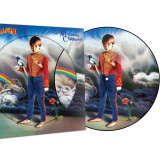
Marillion - Misplaced Childhood(40th Anniversary Picture Disc)

Marillion

Misplaced Childhood(40th Anniversary Picture Disc)

Pict-Vinyl5021732758101
PLG Uk
12.09.2025

Ursprünglich 1985 veröffentlicht, ist „Misplaced Childhood“ das dritte Studioalbum von Marillion – ein Konzeptalbum, das lose auf der Kindheit des Sängers Fish basiert. Mit den Singles „Kayleigh“, „Lavender“ und „Heart of Lothian“ erreichte das Album Platz 1 in Großbritannien und schaffte es in Deutschland, der Schweiz, den Niederlanden und Norwegen in die Top 10. Es wurde seitdem im Vereinigten Königreich und in Deutschland mit Platin und in der Schweiz mit Gold ausgezeichnet.

pre-order now12.09.2025

expected to be published on 12.09.2025

30,88
David Homes - Black Bag

David Homes

Black Bag

12inch0810155841171
MUTANT
12.09.2025

Mutant, in partnership with Back Lot Music and Focus Features are proud to present the premiere physical release of David Holmes masterful score to Steven Soderbergh's latest thriller BLACK BAG. Ever since their first collaboration on OUT OF SIGHT, and throughout their OCEANS-trilogy, Holmes and Soderberg create an energy and verve with their productions. BLACK BAG is no outlier; percussive and inventive, and vibey throughout, this score is equal parts pulse-pounding and seductive. Playfully underscoring spy-tropes with kitchy 60's intrigue instrumentation and modern electronic sensibilities, Holmes has crafted something truly unique.

pre-order now12.09.2025

expected to be published on 12.09.2025

26,26
THE KIDS - FLABBERGASTED LIVE AT AB 2001
  • A1: Intro 1’06”
  • A2: City Is Dead 1’58”
  • A3: Bloody Belgium ’1”22
  • A4: Do You Wanna Now 2’55”
  • A5: For The Fret 2’35”
  • A6: I’ll Get You 1’18”
  • A7: Rock Over Belgium 1’41”
  • A8: Fascist Cops 2’41
  • A9: I Wanna Get A Job In The City 3’33”
  • A10: I Feel Allright 1’41”
  • A11: No Monarchy 2’35
  • B1: Sex Queen 1’47”
  • B2: Baby That’s Alright 1’48”
  • B3: Dead Industry 2’48”
  • B4: Razor Blades For Sale 1’46”
  • B5: This Is Rock And Roll 2’21”
  • B6: Do You Love The Nazis 3’39”
  • B7: If The Kids Are United 4’47
  • B8: Blitzkrieg Bop 2’00”
  • B9: 12Xu 3’52”

The Belgian leading punk band The Kids, founded by Ludo Mariman, made their debut in 1978 with their landmark titleless album, surely deserving to be part of the global top list of great seventies punk albums. After another four studio albums, the band called it a day... only to resurface a good ten years later, at the end of the 1990s. Since then, The Kids have become an international cult punk band, much in demand in Belgium and abroad (USA, Germany, France, Italy, Japan…), mainly focusing on their initial seventies punk repertoire, with many classic songs that have effortlessly survived the ravages of time.

The Kids are still the most angry Belgian band, which says a lot about the eagerness and sharpness of Ludo Mariman and his mates. The Kids, for sure, still are an absolute top band!

"Flabbergasted" was recorded early 2001 at the AB Club in Brussels and released the following year on CD, which sold out quickly. Starman Records issued the album in 2015, making it available on vinyl for the very first time, with restored audio and entirely new artwork. Sold out long ago, it was followed by a second print run in 2023 on limited colored vinyl. An album you can’t miss—sharp as a razor blade and containing many of The Kids' classics, along with a couple of contemporary punk covers. The band still tours actively and will celebrate, in 2026, their 50th anniversary.

pre-order now12.09.2025

expected to be published on 12.09.2025

23,95
STANLEY BRINKS - Happy New Year
  • 1: Happy New Year
  • 1: 2That's The World To Me
  • 1: 3Take Heart
  • 1: 4Humdrum
  • 1: 5Only With You
  • 1: 6To Play
  • 1: 7Everyone You Know Is Asleep
  • 1: 8Play With My Heart
  • 1: 9They Are Coming For Me
  • 1: 0Out Of My Heart

Singer-songwriter and cult anti-folk troubadour Stanley Brinks returns with Happy New Year, a 10-song collection of lo-fi gems recorded in Berlin. Happy New Year is a warm and celebratory record. Over simple rhythms and minimalist arrangements, Brinks delivers lyrics that oscillate between surreal humour, earnest wisdom, and playful melancholy. Happy New Year features contributions from longtime collaborator Clemence Freschard, plus appearances from Jyoti Sekhawat, Monica Kremidi, Rachel Lipson, Irma Ignataviciute, and Elisa Aseva, weaving together voices from across Brinks' musical community. Their harmonies lend the songs a communal intimacy. Stanley Brinks is renowned for his unique anti-folk style: both playful and suggestive, insightful and entertaining. Brinks was born in Paris, France, in 1973. He studied a bit of biology and worked as a nurse for a while. Half Swedish, half Moroccan, strongly inclined to travel the world, he soon began spending most of his life on the road and developed a strong relationship with New York. By the late 90s he'd become a full time singer-songwriter - Andre' Herman Düne - as part of three piece indie-rock band, Herman Düne. Several albums and Peel sessions later and after a decade of touring Europe, mostly with American songwriters such as Jeffrey Lewis, Calvin Johnson and early Arcade Fire he settled in Berlin. The early carnival music of Trinidad became a passion, and in the early 21st century he became the unquestioned master of European calypso, changing his name to Stanley Brinks. Under this moniker he has recorded considerably more than 100 albums, collaborated with the New York Antifolk scene on several occasions, recorded and toured with traditional Norwegian musicians, and played a lot with The Wave Pictures. The vinyl is of silvery color.

pre-order now12.09.2025

expected to be published on 12.09.2025

30,46
Vital Disorders & Kotoa - Zombie (7")

Vital Disorders & Kotoa

Zombie (7")

7"-VinylWAH7065
Wah Wah 45s
11.09.2025
  • A1: Vital Disorders - Zombie
  • B1: Kotoa - Zombie

Wah Wah 45s present a unique moment from 1982 where New Wave and Post Punk collided with Afrobeat in the shape of Norwich DIY outfit Vital Disorders and their subversive yet instantly memorable version of the Fela Kuti classic, Zombie.

Band member Suzy Cox explains more:

"The song came to the band through our vocalist Lenneka Van Gilst who was in the group between January 1980 and December 1981. Lenneka grew up in Nigeria and had the original track on vinyl. When she moved to Trowse House, Norwich, the flat under Chris, the VD's bass player, he heard the vibes floating through the floorboards. One thing led to another and it was in our set for ages. Lenneka had left the band to travel to Mexico by the time we recorded the track. We did well to choose it as the song has really stood the test of time. Lenneka had a lot of African Beat which was a big influence on us."

The track came to label boss Dom Servini's attention having been unearthed by BBC 6 Music DJ Gilles Peterson in late 2024, and a vinyl reissue of this rare and one-off gem was the obvious choice. Rather than pairing it with its original punky B-side though, Dom enlisted new signings to the label - young Afro-dub outfit Kotoa - to record their take on the Kuti classic. The quintet delivered what is a three minute, intense take on the Afrobeat genre, complete with youthful voices of protest echoing those of over 30 years ago.

The 7-inch vinyl only release of Zombie comes with re-worked art courtesy of our award winning designer Animisiewasz, taking the home-made look of the original cover and updating it respectfully for 2025.

out of Stock

Order now and we will order the item for you at our supplier.

18,07

Last In: 34 days ago
Various - Dolores: Salsa & Guaracha From 70's French West Indies

In Guadeloupe, many people think that jazz and ka music are like a ring and a finger. To some extent, the same could be said about so called Latin music and the music played in the French West Indies.

Both aesthetics were born in the Caribbean and bear so many connections that they can easily be considered cousins. In constant dialogue, there are lots of examples of their fruitful alliance and have been for a while. The English country dance that used to be practiced in European lounges came to be called kadrille in Martinique and contradanza in Cuba. They both featured additional percussion instruments inherited from the transatlantic deportation. Drawing from shared feelings about the same traumatized identity – later to be creolized – it would be hard not to assume that they were meant to inspire each other. The golden age of the orchestras that graced the Pigalle nights during the interwar period further proves the point. As soon as the 1930s, Havana-born Don Barreto naturally mixed danzón and biguine music in a combo based at Melody's Bar. In the following decade, Félix Valvert, a conductor who was born and raised in Basse-Terre in Guadelupe, also worked wonders in Montparnasse with La Coupole, which was an orchestra made up of eclectic musicians. Afro- Caribbean performers of various origins were often hired on rhythm and brass sections in jazz bands, which used to enliven the typical French balls of the capital. In the 1930s and onwards, Rico’s Creole Band was one of them.


Martinican violinist-clarinettist Ernest Léardée, who would become the king of biguine music as well as the main figure of French Uncle Ben's TV commercials (a dark stigma of post-colonial stereotypes), had musicians from the whole Caribbean sphere play at his Bal Blomet – and they all enchanted "ces Zazous-là" (according the words of Léardée's biguine-calypso piece). In les Antilles (French for French West Indies), music history started to speed up in the 1950s, when trade expanded and radio stations grew bigger. The Guadelupean and Martiniquais youth tuned in their old galena radio sets to South American and Caribbean music. As for the women traders, les pacotilleuses, they bought and sold goods across different islands (the "passing of items through various hands" was thought to be most pleasurable) and brought back countless sounds in their luggage. Such was the case of Madame Balthazar, who once returned from Puerto Rico with the first 45rpm and 33rpm to ever enter Martinique.

Out of this adventure was created the famous Martinican label La Maison des Merengues, a music business she opened and undertook with her husband and which proved to be a major landmark. At the end of the 1950s, in Puerto Rico, Marius Cultier competed in the Piano International Contest playing a version of Monk's Round 'Midnight. He won the first prize and this distinction foreshadowed everything that was to come. Cultier, the heretic Monk of jazz, was quickly praised for writing superb melodies, always tinged with a twist that conferred a unique sound to his music. It didn't take long for the gifted self-taught musician to get to play with Los Cubanos, making a name for himself thanks to his impressive maestria on merengues.

The rest is history. Besides, in the late 1950s, Frantz Charles-Denis, born into the upper middle class in Saint-Pierre and better known by his first name Francisco, went back home after working at La Cabane Cubaine – a club located rue Fontaine where he had caught the Latin fever. Francisco's music was therefore heavily marked by his Cuban cousins' influence, which gave the combos he led a specific style and also led to renewal. Things were swinging hard in La Savane, located in the main square in Fort-de-France. He set up the Shango club close by and tested out the biguine lélé there, a new music formula spiced up with Latin rhythms. Soon afterwards, fate had him fly to Puerto Rico and Venezuela.

As for percussionist Henri Guédon (percussions were only a part of his many talents), he was born in Fort-de-France in May 22nd 1944, the day marking the celebration of the abolition of slavery. As an old man, he could remember that in " his father's Teppaz, a lot of hectic 6/8 music was constantly playing...". In the opening lines of his Lettre à Dizzy, a small illustrated collection of writings published by Del Arco, he highlighted the huge impact that cubop had on him as a teenage boy, around 1960. He eventually turned out to be the lider maximo in La Contesta, a big band steeped in Latin jazz. He was also the one who originated the word zouk to describe music which brought the sound of the New York barrio to Paris. It was the culmination of a journey that started in Sainte-Marie: "a mythical place for bélé, the equivalent of Cuban guaguancó". In the early 1960s, the tertiary economy developed to the detriment of agriculture. Yet rural life was where roots music emerged in Martinique and in Guadeloupe.

Record companies played a major part in the process of Latin versions sweeping across the islands – before reaching everywhere else. Producer Célini, boss of the great Aux Ondes label, and Marcel Mavounzy, both the head of Émeraude records - a firm which was founded in 1953 - as well as the brother of famous saxophonist Robert Mavounzy, were big names to bear in mind. Although there were many of them - all of whom are featured on this record - Henri Debs was definitely the major figure in the recording adventure. He proved to be so influential that he even got compared to Berry Gordy. In the mid 1950s, when he acquired his first Teppaz, he worked on his first compositions: a bolero and a chachacha. Then, he became the one man who made people discover Caribbean music, from calypso to merengue. He was among the first ones to rush out to San Juan, Puerto Rico, to buy records and distribute them through a store run by one of his brothers in Fort-de-France. He had members of the Fania All Star come and perform there, which he was madly proud about. He was also the first one to pay attention to Haitian music, such as compas direct and various other rhythms which would soon flood the market. As a result, many of the combos hitting his legendary studio would end up boosted by widespread "Afro-Latin" rhythms. However, he never denied his identity: gwo ka drums were given a major role, although they were instruments which had long been banned from the "official" music spheres. The present selection bears witness to such a creative swarming. Here are fourteen tracks of untimely yet unprecedented cross-fertilization: all types of music rooted in the Creole archipelago have found their way, whatsoever, to the tracklisting. Whether originating from the city or being more rural, they all go back to what Edouard Glissant, in an interview about the place of West Indian music in the Afro-American scope, called "the trace of singing, the one which got erased by slavery." "It is so in jazz, but also in reggae, calypso, biguine, salsa... This trace also manifests through the drums, whether Guadelupean, Dominican, Jamaican or Cuban... None of them being quite the same. They all point to the idea of a trace, seeking it out and connecting to each other through it. This is the hallmark of the African diaspora: its ability to create something new, in relation to itself, out of a trace. It may be the memory of a rhythm, the crafting of a drum, a means of expression which doesn't resort to an old language but to the modalities of it." The opening track features one of the emblematic orchestras of this aesthetic identity, criscrossing many music types from the archipelago. The 1974 Ray Barretto guajira – Ray Barretto was a major New York drummer influenced by Charlie Parker and Chano Pozzo – is magnificently performed by Malavoi, a legendary Fayolais group (i.e from Fort-de-France). Additionally, the compilation ends on a piece by Los Martiniqueños de Francisco. It symbolically closes the circle as it is a genuine potomitan of Martinique culture which also functions as a tireless campaigner for Afro-Caribbean music. Practicing the danmyé rounds (a kind of capoeiria) to the rhythm of the bèlè drum, it delivers a terrific Caterete, a kind of champeta of Afro- Colombian obedience which was originally composed by Colombian Fabián Ramón Veloz Fernández for the group Wgenda Kenya. The icing on the cake is Brazilian Marku Ribas, who found refuge in Martinique in the early 1970s, bringing his singing to the last trance-inducing track. These two "versions" convey the whole tone of a selection composed of rarities and classics of the tropicalized genre, swarming with tonic accents and convoluted rhythms. It is the sort of cocktail that the West Indians never failed to spice up with their own ingredients. For instance, the Los Caraïbes cover of Dónde, a famous Cuban theme composed by producer Ernesto Duarte Brito, has a typical violin and features renowned Martinique singer Joby Valente and his piquant voice.


The track used to be – or so we think – their only existing 45rpm. The meaningful Amor en chachachá by L'Ensemble Tropicana, a band which included Haitian musicians among whom was composer and leader Michel Desgrotte, also recalls how Latin music was pervasive in the tropics in the mid-1960s. They were the ones keeping people dancing at Le Cocoteraie in Guadelupe and La Bananeraie in Martinique. Around the same time, another "foreign" band, Congolese Freddy Mars N'Kounkou's Ryco Jazz, achieved some success on both islands by covering Latin jazz classics – such as their adaptation of Wachi Wara, a "soul sauce" by Dizzy Gillespie and Chano Pozo whose interweaving of strings and percussions can have anyone hit the dancefloor. How can you resist Dap Pinian indeed, a powerful guaguancó by Eugene Balthazar, performed by the Tropicana Orchestra and published by the Martinique-founded La Maison des Merengues? It also acts as a symbol of the maelstrom at work. Going by the name Paco et L'orchestre Cachunga, Roger Jaffory used to play guaguancó too: his Fania-inspired Oye mi consejo is one example of his style. Baila!!!!! Dancing was also one of the Kings' focus points. Oriza is a Puerto Rican bomba and a "classic" originally composed by Nuevayorquino trumpeter Ernie Agosto, which reserves major space for brasses, giving it a special sheen.

Emerging from the New York barrios crucible was also La Perfecta, a Martinique group originating from Trinidad, whose name directly references the totemic Eddie Palmieri figure as well as his own band, also called La Perfecta. Here they borrow Toumbadora from Colombian producer and composer Efraín Lancheros and interpret it by emphasizing percussions, which set fire to the track even more than the wind instruments. The same goes for Martinique's Super Jaguars, who use Tatalibaba – a composition by Cuban guitarist Florencio "Picolo" Santana which was made famous by Celia Cruz & La Sonora Matencera – as a pretext for sending their cadences into a frenzy. In a more typically salsa vein, the Super Combo, a famous Guadelupean orchestra from Pointe-Noire that was formed around the Desplan family and had Roger Plonquitte and Elie Bianay on board, adapt Serana, a theme by Roberto Angleró Pepín, a Puerto Rican composer, singer and musician also known for his song Soy Boricua. Here again, their vision comes close to surpassing the original. In the 1970s, L'Ensemble Abricot provided a handful of tracks of different syles, hence reaching the pinnacle of the art of achieving variety and giving pleasure. They played boleros, biguines, compas direct, guaguancó and even a good old boogaloo - the type they wanted to keep close to their hearts for ever, "pour toujours", as they sang along together in one of their songs. Léon Bertide's Martinican ensemble excelled at the boogaloo which had been composed by Puerto Rican saxophonist Hector Santos for the legendary El Gran Combo.


Three years later, in 1972, Henri Guédon, with the help of Paul Rosine on the vibraphone, tackled the Bilongo made famous by Eddie Palmieri. Such a classic!!!!! And so were the Aiglons, the band from Guadelupe: choosing to execute Pensando en tí, a composition by Dominican Aniceto Batista, on a cooler tempo than the original, they noticeably used a wonderfully (un)tuned keyboard in place of the accordion. On the high-value collectible single – the first one released by Les Aiglons under the Duli Disc label – there is a sticker classifying the track under the generic name "Afro". Now that is what we call a symbol. Jacques Denis

out of Stock

Order now and we will order the item for you at our supplier.

21,43

Last In: 35 days ago
Greg Freeman - Burnover

Greg Freeman

Burnover

12inchTRANS880X
Transgressive
08.09.2025
  • 1: Point And Shoot
  • 2: Salesman
  • 3: Rome, Ny
  • 4: Gallic Shrug
  • 5: Burnover
  • 6: Gulch
  • 7: Curtain
  • 8: Gone (Can Mean A Lot Of Things)
  • 9: Sawmill
  • 10: Wolf Pine
pre-order now08.09.2025

expected to be published on 08.09.2025

27,69
Junior Brother - The End

Junior Brother

The End

12inchSOLP023
Strap Originals
08.09.2025
  • 1: Welcome To My Mountain
  • 2: Small Violence
  • 3: A Lot Of Love
  • 4: Week End
  • 5: Take Guilt
  • 6: Start Digging
  • 7: The Kerry Polka
  • 8: Old Bell
  • 9: Today My Uncle Told Me
  • 10: Plague Medal
  • 11: New Road
pre-order now08.09.2025

expected to be published on 08.09.2025

30,46
Adrian Sherwood - The Collapse Of Everything (LP)

Adrian Sherwood

The Collapse Of Everything (LP)

12inchONULP165C
ON-U SOUND
05.09.2025

LTD Clear Vinyl
Nach der limitierten EP "The Grand Designer" im Juni 2025, präsentiert Adrian Sherwood nun mit "The Collapse Of Everything" sein brandneues Werk, gleichzeitig sein erstes Soloalbum seit 13 Jahren und das vierte seiner langen Karriere. Auf diesem sorgfältig konzipierten Album lotet der Meisterproduzent und Mixologe mit seinem stets experimentierfreudigen Sound neue Grenzen aus. Obwohl die Musik auf "The Collapse Of Everything" von einem natürlichen Gespür für Dub geprägt ist, überschreitet sie fliessend Genregrenzen und vereint nahtlos verschiedenste Einflüsse, die Sherword in seinem Leben gehört und produziert hat. An den Aufnahmen beteiligt waren einige seiner langjährigen Mitstreiter wie Doug Wimbish (Living Color, The Sugar Hill Gang, Tackhead), Mark Bandola (The Lucy Show), Ivan "Celloman" Hussey, Alex White (Primal Scream, Fat White Family) und Chris Joyce (The Mothmen). Desweiteren flossen Beiträge der jüngst verstorbenen On-U-Legenden Keith LeBlanc (Sugarhill Gang, Tackhead) und Mark Stewart (Pop Group) ein.

Adrian Sherwood war in den letzten Jahren sehr beschäftigt mit Kollaborationen mit anderen Künstlern, von Remixarbeiten für Popkünstler wie Halsey, über von der Kritik gefeierten Full-Length-Dub-Rekonstruktionen für die Indierock-Titanen Spoon und Panda Bear & Sonic Boom, bis zur Produktion gefeierter Alben für die Reggae-Ikonen Lee "Scratch" Perry und Horace Andy am Ende ihrer Karriere ("Midnight Rocker" wurde vom Guardian zum weltweiten Album Nr. 1 des Jahres 2022 gekürt). Was bedeutet, dass Sherwood seit "Survival & Resistance", das fast auf den Tag genau vor 13 Jahren erschien, kein Album mehr als Solokünstler herausgebracht hat.

out of Stock

Order now and we will order the item for you at our supplier.

30,04

Last In: 4 months ago
Don Cherry - Complete Communion

Don Cherry

Complete Communion

12inch5827008
CM BLUE NOTE
05.09.2025

Der Kornettist Don Cherry erlangte ab 1958 als Mitglied der revolutionären Bands von Ornette Coleman weltweite Bekanntheit in der Free-Jazz-Szene. Als eigenständiger Bandleader präsentierte sich Cherry
jedoch erst 1965 auf seinem Blue-Note-Debütalbum “Complete Communion”. Mit einem aus Free-Jazzerprobten Musikern bestehenden Quartett lotete der Kornettist zwei suitenähnliche Kompositionen aus, die
sich jeweils über eine ganze Plattenseite erstreckten und seinen Mitspielern reichlich Raum gaben, sich
ebenfalls solistisch einzubringen.

pre-order now05.09.2025

expected to be published on 05.09.2025

34,03
WHY THE EYE - INSPIREX

Why The Eye

INSPIREX

12inchXAGLP56
Exag Records
05.09.2025
  • Jnsp
  • Le Retour Du Courant
  • La Machine
  • Mystère Court
  • Où Cours-Je
  • Inspirex
  • Martien Certain
  • Prairies
  • Allô Conseillé
  • Animal
  • Erreur 499 Et Demi

Why the Eye is an experimental masked quartet from Brussels that propels bodies into trance during its live performances. All instruments are DIY and played in real time, without loops or sequencers. Fans of The Residents, Société Étrange, Autechre, Boards Of Canada, The Meridian Brothers and Fulu Miziki could easily relate to their sound. On the recording of 'Inspirex', Damien Magnette who produced the album says, "The album is live music based on energy. It has a chaotic side. How do you convey the chaotic, wild, animal energy of live music on record? My point of view is that to achieve this energy, you have to do exactly the opposite in the studio. A lot of layering. Lots of overdubs that we can't do live. It's all these elements that give the album its wildness."

pre-order now05.09.2025

expected to be published on 05.09.2025

24,79
Bendik Giske - Remixed

Bendik Giske

Remixed

12inchSTSLJN444LP
SMALLTOWN SUPERSOUND
05.09.2025

Bendik Giske’s Beatrice Dillon-produced 2023 album gets an addendum with reworks from Carmen Villain, aya, Hanne Lippard, Hieroglyphic Being, Wacław Zimpel and Dillon herself.

Giske’s clearly got his ear to the ground; his last remix record was an invitation for Laurel Halo to put her stamp on »Cruising«, while 2018’s »Adjust EP« roped in Deathprod, Total Freedom, Lotic, and Rezzett. Now comes this new LP of remixes and it’s one of the best we’ve heard in aeons. Carmen Villain boots things off with a remix of »Slipping«, following her excellent (and way, way too underrated) »Nutrition EP« with a giddy, subtle roller that sounds as if it’s been constructed using only Giske’s raw stems. His breaths and leathery key presses – already amped up by Dillon’s detailed recording – are magicked into a dubby concrète groove that’s enhanced with the sparest melodic elements: echoing rainforest-at-night horn blasts, and lopped off decay trails that help fuel the momentum.

aya’s revision of the same track takes a different approach, forming forceful overlapping polyrhythms from Giske’s clanks, using the gamelan-like arpeggios for melodic weight and repetition. The result is a constantly shifting, hypnotic trancer that’s achingly organic – more Raja Kirik than Paul Van Dyke. Polish clarinetist and producer Wacław Zimpel, meanwhile, supplements his trippy recent collaboration with James Holden on a similarly levitational wrinkle of »Slipping« that twists Giske’s quivering sequences with microtonal synth prangs, and gusty echoes. But it’s Jamal Moss who plays fastest and loosest with Giske’s source material, calling back to April’s psy-house stunner »Dance Music 4 Bad People« with a powdery, sexualised banger that buries the breathy »Start« stems underneath neon synths, and brittle drum loops.

»I’m a digital nomad,« Lippard deadpans over Giske’s »Not Yet«. »I’m addicted you know that.« It’s a typically dry treatment from the conceptual artist that unexpectedly amps up the hypnotic qualities of Giske’s original, adding her circuitous charm to his concertina-ing sax sequences. And to tie things up perfectly, Beatrice Dillon returns with her diaphanous remix of »Rise and Fall«, built to emphasise the radically different approaches of each artist.

pre-order now05.09.2025

expected to be published on 05.09.2025

24,79
Items per Page:
N/ABPM
Vinyl