The original soundtrack for “Il Casanova di Federico Fellini” (1976) sees Nino Rota putting into music Federico Fellini’s opus on the legendary Venetian icon and “tombeur des femmes” Giacomo Casanova.
Winner of an Oscar for Best Costumes in 1977, the film is one of Fellini's finest, a grotesque and hyperbolic take on the life of Casanova that is matched by Rota’s compositions.
“Il Casanova di Federico Fellini” possibly is one of Rota’s most eerie and enigmatic scores, as if the Maestro had finally poured into a soundtrack all of his love for esotericism.
The music wraps you up like the Venetian mist. The compositions are constantly on the edge of classical music with playful nuances and the use of instruments like viola and cello. Vocals become a cornerstone, echoing the tradition of 18th century Italian opera. However, Rota also leaves room for more experimental and estranging vibes that make the soundtrack a one-of-a-kind voyage into the creativity of the Maestro.
Search:love 80 s
- A1: Tell Me Something I Don't Know
- A2: Whatever Happened To Corey Haim?
- A3: Faded Beauty Queens
- A4: Saturday Night
- A5: Not For All The Love In The World
- B1: Our Wasted Lives
- B2: You Can't Fool Old Friends With Limousines
- B3: Found My Rosebud
- B4: The Curse Of Comfort
- B5: The Irish Keep Gate-Crashing
- C1: A City Of Long Nights
- D1: The Irish Keep Gate-Crashing (Reprise)
- A1: Reputation
- A2: Cooped Up Feat. Roddy Ricch
- A3: Lemon Tree
- B1: Wrapped Around Your Finger
- B2: I Like You (A Happier Song) Feat. Doja Cat
- B3: I Cannot Be (A Sadder Song) Feat. Gunna
- B4: Insane
- C1: Love/Hate Letter To Alcohol Feat. Fleet Foxes
- C2: Wasting Angels Feat. The Kid Laroi
- C3: Euthanasia
- C4: When I’m Alone
- D1: Waiting For A Miracle
- D2: One Right Now Feat. The Weeknd
- D3: New Recording 12, Jan 3, 2020
Das neue Album „Twelve Carat Toothache” des Superstars Post Malone ist nun erhältlich!
Das vierte Studioalbum beinhaltet unter anderem Features von The Weeknd, Doja Cat, Roddy Ricch und The Kid LAROI!
Wie für das Multitalent üblich, definiert er durch s eine Musik Genre-Grenzen neu und zeigt auf, was für ein vielseitiger Künstler er ist.
Schon seine Debütsingle „White Iverson“ (2015) schaffte es mit Anhieb auf Platz 14 der Billboard 100 und wurde mit Vierfach-Platin ausgezeichnet. Doch dabei blieb es nicht - sein erstes Studioalbum „Stoney“ debütierte auf Platz 6 und wurde mit Fünffach-Platin ausgezeichnet, ebenso wie sein zweites Studioalbum „Beerbongs & Bentleys“. Das letzte Studioalbum des in Dallas aufgewachsenen Musikers, „Hollywood’s Bleeding“, peakte auf Platz 1 der US-Albumcharts, wurde mit Dreifachplatin ausgezeichnet und stellt mit
fast 80 Millionen Streams in nur 24 Stunden einen neuen Spotify-Rekord auf.
2022 heralded the arrival of his fourth full-length offering and the summer’s most-anticipated record, Twelve Carat Toothache, that arrived on CD June 3, 2022. It is his first full-length in three years since the triple-platinum Hollywood’s Bleeding crashed the Billboard Top 200 at #1.
Canada's foremost robot returns to his higher bpm electro-form with "Thaw EP". Four analog heavy tracks of melancholic system-100 and 808 workouts combined with icy strings and the catchy synth work he's known for. Includes a previously unreleased version of the much-lauded "8_Op" (original released on Satamile Records NYC, 2006) to ensure things heat and melt accordingly. A whirlwind of emotion, right on the cusp of bliss and melancholia. Artwork comes from Geometric Love / UK. Fire.
- A1: Reputation
- A2: Cooped Up Feat. Roddy Ricch
- A3: Lemon Tree
- B1: Wrapped Around Your Finger
- B2: I Like You (A Happier Song) Feat. Doja Cat
- B3: I Cannot Be (A Sadder Song) Feat. Gunna
- B4: Insane
- C1: Love/Hate Letter To Alcohol Feat. Fleet Foxes
- C2: Wasting Angels Feat. The Kid Laroi
- C3: Euthanasia
- C4: When I’m Alone
- D1: Waiting For A Miracle
- D2: One Right Now Feat. The Weeknd
- D3: New Recording 12, Jan 3, 2020
Das neue Album „Twelve Carat Toothache” des Superstars Post Malone ist nun erhältlich!
Das vierte Studioalbum beinhaltet unter anderem Features von The Weeknd, Doja Cat, Roddy Ricch und The Kid LAROI!
Wie für das Multitalent üblich, definiert er durch s eine Musik Genre-Grenzen neu und zeigt auf, was für ein vielseitiger Künstler er ist.
Schon seine Debütsingle „White Iverson“ (2015) schaffte es mit Anhieb auf Platz 14 der Billboard 100 und wurde mit Vierfach-Platin ausgezeichnet. Doch dabei blieb es nicht - sein erstes Studioalbum „Stoney“ debütierte auf Platz 6 und wurde mit Fünffach-Platin ausgezeichnet, ebenso wie sein zweites Studioalbum „Beerbongs & Bentleys“. Das letzte Studioalbum des in Dallas aufgewachsenen Musikers, „Hollywood’s Bleeding“, peakte auf Platz 1 der US-Albumcharts, wurde mit Dreifachplatin ausgezeichnet und stellt mit
fast 80 Millionen Streams in nur 24 Stunden einen neuen Spotify-Rekord auf.
2022 heralded the arrival of his fourth full-length offering and the summer’s most-anticipated record, Twelve Carat Toothache, that arrived on CD June 3, 2022. It is his first full-length in three years since the triple-platinum Hollywood’s Bleeding crashed the Billboard Top 200 at #1.
- A1: Logic System - Unit
- A2: Kraftwerk - Computerwelt (2009 Remastered
- B1: Whodini - Magic's Wand
- B2: Rocker's Revenger - Walking On Sunshine (Feat Donnie Calvin
- C1: Klein & Mbo - Dirty Talk (European Connection
- D1: Liaisons Dangereuses - Los Niños Del Parque
- D2: Yello - Bostich
- E1: The The - Giant
- F1: The Residents - Kaw-Liga
- G1: Clan Of Xymox - Stranger
- G2: A Split - Second - Flesh
- H1: Severed Heads - Dead Eyes Opened
- H2: The Weathermen - Poison!
- I1: New Order - Blue Monday
- J1: Anne Clark - Our Darkness
- J2: 16 Bit - Where Are You?
- K1: Phuture - We Are Phuture
- K2: Model 500 - No Ufo's (Vocal
- L1: Frankie Knuckles Feat Jamie Principle - Your Love
- L2: Quest - Mind Games (Street Mix
- M1: Jasper Van't Hof - Pili Pili
- N1: Guem Et Zaka Percussion - Le Serpent
- N2: Hugh Masekela - Don't Go Lose It Baby
- O1: Sly & Robbie - Make 'Em Move
- Q1: The Ecstasy Club - Jesus Loves The Acid
- R1: Foremost Poets - Reason To Be Dismal?
- S1: Lhasa - The Attic
- S2: A Guy Called Gerald - Voodoo Ray
- T1: M/A/R/R/S - Pump Up The Volume - Usa 12" Mix
- T2: Bobby Konders - Nervous Acid
- U1: Meat Beat Manifesto - Helter Skelter
- V1: Raze - Break 4 Love
- W1: Sueño Latino With Manuel Goettsching Performing E2-E4 - Sueño Latino (Paradise Version
- X1: Off - Electrica Salsa
- O2: Brian Eno - David Byrne - Help Me Somebody
- P1: Primal Scream - Loaded (Andy Weatherall Mix
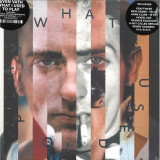
For this uniquely personal retrospective spread over twelve vinyl discs, Sven Väth takes us back to the early days of his DJ career. On What I Used To Play we meet great pioneers of electronic music, gifted percussionists, obscure wave bands, and innovative producers of a bygone 'new electronic' era. Rough beats and irresistible grooves from the identification stage of house, techno, and acid remind us not just how far electronic music has evolved over the past four decades, but how great it was to dance to EBM, techno, and house for the very first time.
If there is one protagonist of the electronic music scene who has remained curious, innovative and at the very cutting edge of music for over four decades, it's Sven Väth. His multi-layered artist albums and Sound of the Season mix compilations have been defining the genre for over two decades, and even today, he is constantly on the lookout for the next top tune to add to the highlights of his next set. At least, that's the case when he's not producing them himself as an artist or remixer. "Actually, it's always been part of my DNA to think ahead," and nothing had been further from his mind than looking back at his past, but when in spring of 2020 the international DJ circuit had to be scaled down to virtually zero, the 'restless traveler' suddenly had time. Time to stop and reflect on "how it actually was back then, at the very beginning of my career..."
"It was a great trip and with every track, beautiful memories came flooding back".
In the London apartment, he had just moved into, Sven has set up a "little music room", where he cocooned himself for several days, "to look way back for the first time and review my musical journey through the eighties, so to speak."
The interim result was six thematically oriented playlists with a grand total of 120 tracks from 'early 80s' to 'Balearic late 80s', together with excursions into afrobeat, European new wave, and EBM sounds and a few epochal techno/house tracks from the USA in between. From these 'Best of Sven Väth's favorites', the project What I Used To Play crystallized. Sven remembers how the Cocoon team reacted to his proposal: "They found the idea of making a compilation out of it MEGA from the beginning and everyone said 'Sven, go for it', but then, of course, the work really started, namely, to clear the rights and to get clean sounding masters of the up to 40-year-old tracks. There was also disappointment, of course. We couldn't clear certain titles because the rights holders in the USA had fallen out with each other or simply disappeared from the scene. In short, it wasn't easy, but now I can safely say we got the most important tracks."
Finally, after two years of research, curation, design, and administrative fine-tuning, the "little retrospective" from 1981 to 1990 is available. The exquisitely packaged, and three-kilo heavy box set is not only physically impressive, WIUTP is also the definitive record of Sven Väth's musical development. On each of the twenty-four sides of vinyl, you can trace track by track, what influenced him during which phase, and how he took off as a DJ from his parents' Queen's Pub straight into the spotlight at Dorian Gray. There and at Vogue (later OMEN), Sven became the style-defining player in the DJ booth that he still is today.
1981 - 1990: Future Sounds of Now
In the early eighties, the crowd in clubs like Vogue and Dorian Gray danced to what nowadays we call 'dance classics' - mainly disco, funk, soul, and chart pop. It was up to a new generation of DJs, including Sven Väth, the youngest protagonist in the Rhine-Main area at the time, to create their own club-ready music mix. Good new tracks and potential floor-fillers were rarities that had to be sought out and found, in order to prove oneself worthy.
Without MP3s, internet streaming, or other digital download possibilities, music didn't just gravitate to the DJ, instead, it had to be tracked down. In well-stocked record stores in Frankfurt and Wiesbaden or even in Amsterdam, London, or New York, Sven and friends sourced the material for countless magical nights. On WIUTP we can follow Sven's very personal journey through this wild, innovative era in which synth-pop, funk, hip-hop, and disco were successively replaced as 'club music' by house, techno, acid, and breakbeat. By the end of the decade, it was clear to see that these once exotic 'fringe' phenomena would soon become 'mass' phenomena.
Early 80s
Dirty Talk by the Italian-American duo Klein & M.B.O. represents the most innovative phase of the Italo-disco genre in the early eighties like no other track. Mario Boncaldo (I) and Tony Carrasco relied entirely on the original synthetic drum and percussion sounds of the Roland TR-808, coupled with the raunchy vocals of Rossana Casale and guitar accents of Davide Piatto. Of course, other tracks from this period were also influential in style, most notably Unit by Logic System, which worked as the perfect soundtrack to the laser lighting system at the legendary Dorian Gray club. With stomping beats and robotic rap interludes, Bostich by Yello also belongs on Sven's eternal playlist - after all, it caught the attention of Afrikaa Bambaataa, who invited the Swiss duo to perform at the Roxy in New York in 1983.
EBM Wave - Mid 80s
From today's point of view, the almost ten-minute-long, downtempo track Giant by Matt Johnson's band project The The, would probably not be considered an obvious club classic. However, a closer (re)listen reveals the rhythmic intricacies of the percussion overdubs by JG Thirlwell (aka Foetus) on Johnson's composition, and it becomes clear why this exceptional piece of music is one of Sven's absolute favorites. Other classics from this phase include Kaw-Liga by the mysterious The Residents, the hypnotic-synthetic Our Darkness by Anne Clark (and David Harrow), and last but not least, the somber, monotonous anthem Where Are You? by 16Bit, one of Sven Väth's projects together with Michael Münzing, Luca Anzilotti from 1986.
US House - Late 80s
You certainly can't talk about Chicago house without mentioning Frankie Knuckles. The resident DJ at the Warehouse not only gave the name to an entire genre, but also produced epochal floor fillers on the Trax label like the timeless Your Love, sung (and moaned) by Jamie Principle. Acid house protagonists Phuture also hail from Chicago, and on We Are Phuture (also released on Trax) we hear the chirping acid sounds of the legendary Roland TB-303 in full effect. Another featured classic is No UFO's by Detroit's Model 500 aka Juan Atkins, who is rightly considered the 'Godfather of Techno' even if the genre-defining track from 1985 still breathes with the spirit of hip-hop and electro from the first breakdance era.
Afrobeat
Le Serpent, by Algerian-born Abdelmadjid Guemguem, is a track that sounds completely different from everything else on WIUTP. Made in 1978, it's a monumental, rousing groove created without bass or synths, just with five congas! Even though Guem sadly passed away in 2021, his immortal, acoustic beats are understood all over the world and will continue to enrich many thousands of DJ sets for years to come. Another classic that not only Sven appreciates beyond measure is Hugh Masekela's Don't Go Lose it, Baby. In addition to being one of the most important jazz pioneers, the trumpeter and freedom fighter from Johannesburg was very experimental, integrating electronic sounds into his music in later years, in a similar vein to Miles Davis and Herbie Hancock. Dutch jazz pianist Jasper van't Hof's afrobeat project Pili Pili has also aged well. The trance-like, almost sixteen-minute-long track of the same name, manages to fill a whole side on the seventh of twelve vinyl discs in the WIUTP box.
UK-US-Euro - Late 80s
Time for a change of scene, in the truest sense of the word, and from a musical perspective, this section is like landing on another planet. First up is Andrew Weatherall's classic remix of Primal Scream's Loaded, featuring the iconic Peter Fonda sample (lifted from the 1966 biker film Wild Angels) that came to personify the mood triggered by the British Second Summer of Love in the late eighties: "We wanna be free to do what we wanna do, and we wanna get loaded...". This period also saw the emergence of M/A/R/R/S whose only single, 1987's Pump Up The Volume, became a club classic with support from DJ legend CJ Mackintosh. In this most eclectic of sections, we also encounter New York house and reggae producer Bobby Konders and his seminal Nervous Acid.
Balearic - Late 80s
Those who know him, know that Sven had already lost his heart to the 'magic island' of Ibiza as a teenager, so with that in mind, the WIUTP project couldn't end without a Balearic chapter. Inspired by Manuel Göttsching's E2-E4, the immortal, eponymously titled Sueño Latino belongs in there without question. Equally popular on the island was, and still is Break 4 Love by Raze, which thinking about it, would also fit perfectly into the house chapter. Last, but not least, there's an overdue reunion with Sven Väth himself, in his role as frontman of the successful Frankfurt trio OFF. Together with Michael Münzing and Luca Anzilotti (later of Snap!) this 'Organization For Fun' created the off-the-wall club hit Electric Salsa in 1986 which incidentally turned into an international chart smash, putting Sven in the enviable position of having to decide between pop stardom and a DJ career. Well, we all know how that decision turned out and the rest, as they say, is history. A not insignificant part of his story is What I Used To Play. Enjoy!

Carolina’ is the Brazilian virtuoso Seu Jorge's debut full-length album from 2002. Originally released under the title ‘Samba Esporte Fino’, its release and subsequent international acclaim dovetailed with Seu Jorge’s ascent into movie stardom. He is probably best known outside of Brazil for his work on Wes Anderson’s 2004 film 'The Life Aquatic with Steve Zissou’, in which he played a starring role and his Portuguese covers of David Bowie records were a highlight of the soundtrack. Having initially found fame thanks to his standout performance as Knockout Ned in the revered movie ‘City of God’. ‘Carolina’ would cement his global fame and launch an illustrious musical career that has earnt him a Grammy nomination.
Co-produced by Mario Caldatto of Beastie Boys and Planet Hemp fame, the album presented a vibrant, contemporary combination of samba and funk, backed by guitar, bass, drums, percussion, and horns. It kicks off with one of Seu's most loved tracks 'Carolina', an anthemic feel-good classic with timeless energy, ending in a sing-along crescendo. Other highlights included the Brazilian-Funk of 'Mangueira' reminiscent in places of Tim Maia with its 80s inspired vibe, and the catchy jazzy-samba of 'Tu Queria' which always ignites the dance floor.
- A1: Kimiko Kasai - Use Me
- A2: Eric & The Vikings - Get Off The Street Y'all
- A3: Junior Mance - Don't Cha Hear Me Calling To Ya
- A4: Leroy Winegar - Damn! Somebody Stole My Pants
- B1: Hammer - Tuane
- B2: Mystic Moods - Honey Trippin
- B3: Estelle Levitt - All I Dream
- B4: Jimmie & Vella Cameron - Chica Boom
- B5: Little Feat - Spanish Moon
- C1: The Young Rascals - It's Love
- C2: John Fitch - Romantic Attitude
- C3: Nino Tempo & April Stevens - Land Of 1000 Dances
- C4: Vincent Geminiani - Insidieusement Les Elfes
- C5: Piet Van Meren - Cool Echo
- D1: Experience - Pink Movement
- D2: Syd Dale - Disco Tek
- D3: Les Mccann - Shamading
- D4: Johnny Harris - Stepping Stones
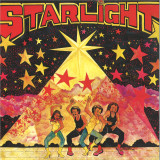
South African production duo of Emil Zoghby and John Galanakis were responsible for a string of high-quality disco singles in the early 80s, typically cover versions of international hits — Klein & MBO’s ‘The Big Apple’, Sly & the Family Stone’s ‘Family Affair’ & David Joseph’s ‘You Can’t Hide (Your Love From Me)’ — backed with their own compositions. When Starlight hit the market with an album in 1983, it featured only one cover, the local hit ‘Picnic’, along with five of the duo’s original compositions, including their similarly styled response, ‘Picnicing’, which replaces the original’s sax with spaced-out synth stabs. Then there’s ‘Jah Jah Love’, an ecstatic disco sermon of dancefloor dynamite weighing in at over eight and a half minutes. Other tracks on this landmark album — ‘Let’s Go Dancing (Boogie Boogie)’, ‘Keep On Moving’ and an eponymous instrumental — offer a similar fusion of classic disco with newer Italo and proto-house influences: machine music with a human touch! Remastered from the original master tapes and reissued for the first time, Starlight will be available on vinyl and digital platforms from early 2023 (40 years after its initial release) via Afrosynth Records.
- A1: Perez Prado - Arrivederci Roma (Chunga)
- A2: Helen Merril - Nessuno Al Mondo (Feat Armando Trovajoli E La Sua Orchestra)
- A3: Paul Anka - Ogni Giorno (Love Me Warm And Tender)
- A4: Chet Baker - Il Mio Domani (Feat Ennio Morricone E La Sua Orchestra)
- A5: Neil Sedaka - Esagerata (Little Devil)
- A6: Antonio Prieto - Papà
- B1: Paul Anka - Voglio Sapere (I&Apos;D Like To Know)
- B2: Antonio Prieto - Baciami
- B3: Neil Sedaka - Un Giorno Inutile (I Must Be Dreaming)
- B4: Helen Merrill - Estate (Feat Armando Trovajoli E La Sua Orchestra)
- B5: Chet Baker - So Che Ti Perderò (Feat Ennio Morricone E La Sua Orchestra)
- B6: Perez Prado - Guaglione
First time officially reissue, sourced from the original master tapes in a new edition, the Milan based imprint Dialogo, returns with this compilation published in Italy by RCA Victor in 1962 - a precious historical document of some important international jazz and pop artists who came to Italy and left their marks, influencing the generations of those golden years.
It contains
***Chet Baker with Ennio Morricone's Orchestra, with "Il Mio Domani" (My Tomorrow) and "So Che Ti Perderò" (I Know That I'll Loose You) two recordings of works composed and sung for the first time in Italian by one of the most important worldwide trumpet "Golden Trumpet" and singer "Voice Of Angel" jazz artist. ***Helen Merrill with "Estate" (Summer) and "Nessuno Al Mondo" (Noboby In The World), two recordings sung for the first time in Italian. She agreed to record two 'light' songs because the Orchestra that performed them was conducted by Armando Trovajoli, a qualified exponent of Italian jazz and an extreme modernist. ***Paul Anka with Ray Ellis Orchestra, Perez Prado and His Orchestra, Neil Sedaka and Stan Applebaum Orchestra
c 03: Paul Anka - Ogni Giorno (Love Me Warm And Tender) feat. Ray Ellis Orchestra
e 05: Neil Sedaka - Esagerata (Little Devil) feat. Stan Applebaum E La Sua Orchestra
g 07: Paul Anka - Voglio Sapere (I'd Like To Know) feat. Ray Ellis Orchestra
i 09: Neil Sedaka - Un Giorno Inutile (I Must Be Dreaming) [feat. Stan Applebaum E La Sua Orchestra]
Lady in Satin was released in 1958 on Columbia Records, catalogue CL 1157 in mono and CS 8048 in stereo. It is legendary singer Billie Holiday's penultimate album completed by the singer and released in her lifetime (her final album, Billie Holiday, being recorded in March 1959 and released just after her death).
AllMusic says: "The feeling and tension she manages to put into almost every track set this album as one of her finest achievements. 'You've Changed' and 'I Get Along Without You Very Well' are high art performances from the singer who saw life from the bottom up."
The song material for Lady in Satin derived from the usual sources for Holiday in her three-decade career, that of the Great American Songbook of classic pop. Unlike the bulk of Holiday's recordings, rather than in the setting of a jazz combo Holiday returns to the backdrop of full orchestral arrangements as done during her Decca years, this time in the contemporary vein of Frank Sinatra or Ella Fitzgerald on her Song Books series. The album consists of songs Holiday had never recorded before.
Bandleader Ray Ellis used a 40-piece orchestra, complete with horns, strings, reeds and even a three-piece choir. It would turn out to be Holiday's most expensive music production. Soloists on the album included Mel Davis, Urbie Green, and bebop trombone pioneer J. J. Johnson.
Now with our 45 RPM release, mastered from the original analogue tape by Bernie Grundman, and pressed by our own Quality Record Pressings, the best-sounding version of this historic album gives listeners an even richer sonic experience. The dead-quiet double-LP, with the music spread over four sides of vinyl, reduces distortion and high frequency loss as the wider-spaced grooves let your stereo cartridge track more accurately.
Original album produced by Irving Townsend, and engineered by Fred Plaut.
1000 black vinyl LPs. London-based ‘indie-supergroup’ SUEP announce their long-awaited debut mini-album Shop, a collection of 6 oddball, car-boot-sale pop songs with a sprinkling of theatrical storytelling. Led by Georgie Stott (of Porridge Radio, Garden Centre) and Josh Harvey, SUEP was born out of a near-decade of playing in sheds and barns with like minded personnel, holding a mutual love for Paul McCartney, Jona Lewie, the B-52s, Devo and other performative freaks enjoying themselves. Following a move to London from Brighton, the pair added George Nicholls (The GN Band, Joanna Gruesome, The Tubs), Will William Deacon (PC World, Garden Centre), and Ollie Chapman (Boil King) to the line-up. The 5 piece take turns writing songs and taking the lead vocal duties in a wonderfully playful but coherent collaboration, with their debut being a kaleidoscopic off kilter pop ride, taking the listener through haunted castles, deprived encounters, days lost to the imagination in bed, and through the integral friendships that give SUEP the energy to keep dancing to their own beat. The album was arranged and recorded in the Red Lion Boys Club, an ex-youth centre in which Georgie and Josh both lived. Using equipment collected by Josh in his travels as a bootsale and market trader, the sports hall was transformed into a makeshift studio for a few days, with sessions conducted by producer Matthew Green (Sniffany & The Nits, The Tubs, etc.) Mark Riley (BBC 6 Music) described SUEP’s debut single and album opener, ‘Domesticated Dream’ (2021) as “perfect pop music.” The joyfully kitsch track brims with a 70s Yamaha disco beat, deep bass, nostalgic drum machines, and hooky melodies. Possibly the most psychedelic and infectious track born out of lockdown, it tackles homelife, drinking too much, and making big plans that never come to fruition, but with a big technicoloured positivity for the future of the human-race, with the chorus’ refrain, “the psychedelic 4000s,” predicting the return of the psychedelic Age of Aquarius in a couple of millennia time. The following single ‘Misery’ (2021) is pure cosmic swing-pop wizardry in part inspired by spy music and The Supremes. Ollie, The track’s baritone vocalist, describes it as “A love song disguised as a song about loss. It's about cherishing the things that matter but it’s also about having the courage to say goodbye,” with each line of the song a small story about a different character. Whilst latest Shop taster ‘In Good Health’ is darkly euphoric like a pleasantly strange meeting of Siouxsie Sioux and Jona Lewie. It’s a playfully discombobulating mix of 80s jangly guitar, chirpy keyboard and moody post-punk tackling mental health, drug addiction, and the power of friendship, written after the song’s vocalist Georgie came out of hospital following a mental health crisis. “I wanted to write a song that encapsulated how important my relationships with my friends and boyfriend were at that time” she explains “…and one that also felt dark like I did at the time. I couldn’t go outside due to anxiety surrounding my health so I stayed inside for weeks. People would visit and watch films with me or let me tattoo them or make music with me. My community helped me recover.” Elsewhere on Shop is ‘Just The Job’ fronted by Harvey and described by him as “About the relief of accepting a menial existence, and allowing life to be boring - but (within that) how the small things are the important ones, how pulling a sicky or extra long lunch break are important things to do for yourself. It’s an anthem for working people who’ve had enough - and a crowd favourite at SUEP gigs. The darker undertones and post-punk angles of the Georgie-fronted ‘Onions’ is inspired by the crapness of cliques, with the band calling the song “A cry of welcome to all;” and finally the hooky ‘Friend of Mine,’ described as “A love letter to all the people that come and go throughout your life no matter how long you know them”. SUEP have received coverage in Independent & Clash, (among many others), with big support from Mark Riley and Steve Lamacq (BBC 6 Music) for early singles.
If naming is a form of claiming, of being claimed, how is one tethered to both the physical landscape that surrounds us, as well as our own internal emotional landscape_at times calm, at times turbulent, and ever changing? H.C. McEntire's new album Every Acre grapples with those themes_themes that encompass grief, loss, and links to land and loved ones. And naming_claiming land, claiming self, being claimed by ancestry and heritage_permeates the hauntingly beautiful landscape that is this poignant collection of songs. The songs straddle the line between music and poetry. In "New View," McEntire cites poets "Day, Ada, and Laux, Berry, and Olds"_fixtures in the world of writing, whose works are beacons of light over bleak horizons. The beginning of the song is backed by soft guitar plucks that fall on the downbeat and spangle like stars, and, throughout, guitar, bass, and drums swell together gently, mimicking ebbing and flowing tides under the moon. McEntire's voice (at once tender and fierce) intones the truth of both giving and taking, releasing and claiming: "Bend me, break me, split me right in two. Mend me, make me_I'll take more of you." Permeated by heartbeat-like drums, "Shadows" develops quiet ruminations on surrender and loss_reminiscing, moving on. This ponderous, dreamlike song asks the question of how "to make room." How does one make room, for self and for renewal and surrender, when it is so difficult to leave what you know behind? Playing with slivers of descending chromatics, along with the occasional downward-stepping bass, here McEntire yearns for home, and for nesting. Perhaps one of the more grief-stricken songs, "Rows of Clover" is a lamentation, one that touches on the loss of a "steadfast hound." The lone piano in the beginning of the song is rhythmically hymn-like. The stark verse arrangement gradually leads to a chorus that reads like a moody exhale, swollen with lush guitar strums and a Bill Withers-esque understated soul groove. But what stands out the most is an image of being "down on your knees, clawing at the garden"_the only explicit mention of a person in the song. "It ain't the easy kind of healing," sings McEntire, seemingly from further and further away as her voice echoes; and healing ta;kes time, time takes time_truths that linger painfully. "Dovetail" is a song that tells of various women. The song moves back and forth between solo piano and the addition of bass and drums under vocals. McEntire's gentle, trembling vibrato_harmonized in thirds in a celebratory manner_calls to mind a rejoicing psalm and shines through these images, leaving the listener cuttingly fraught with emotions_such as wonder, sadness, nostalgia_that can only arise with these juxtapositions. Gracious (and graceful) with its lilting melodies and lush harmonies, Every Acre ex - plores the acres of our physical and emotional homes. These songs are reaching for the kind of home that we all seek: one where we can rest and lay down (or tuck away) our burdens of loss. And maybe, moving through every acre of a world that often tries to tear our sense of identity and heritage down, McEntire sheds light on what it is to be human in this life_both stingy and gracious, both hurtful and kind.
What on earth has happened to gothic rock? This was the thought burning in Joakim Knutsson’s mind, and he felt that something needed to be done to save the much-loved genre from going down the drain. He embarked on this mission with the aim to create something special but also something faithful to the original ideals of the 80’s gothic genre. “I wanted a band that would be an occult mix of The Lords Of The New Church, Adam and the Ants, John Carpenter and Billy Idol”, says Knutsson, “The end result turned out heavier, bloodier and darker than that, but that was probably our destiny anyway.” With a little help from prominent members of the Swedish metal and punk community the idea recently took a solid form. Today the band together sums more than 250 years of knowledge in music and pop culture - knowledge they shamelessly put to use in their own creation. Here they are: die Oberherren. The Gothic rock band the world has been waiting for since the golden age of the 80s. Kept strictly under wraps until now, die Oberherren feature members of the rock and metal royalty in Sweden, with past or current membership in bands such as The Coffinshakers, Ghost, The Mobile Mob Freakshow, Gehennah and many more. The band snatched their ominous-sounding moniker from the intellectual group that operated at the turn of the 20th century, by whom their lyrics are also heavily influenced. “Anarchistic, occult and apocalyptic imagery with prophets of war, armageddon, decadence and love – these themes and ideas are even more actual today than the original ‘overlords’ could ever dream of over a hundred years ago”, comments Knutsson. The debut album Die By My Hand, set for release on January 27th 2023 on Svart Records, is a collection of eight songs that are adorned with infectious hooks and laced with vintage darkness. The apocalyptic celebration will commence this Friday, Sept 7th, with the release of the first single off the album titled The Horned One Stabs.
If naming is a form of claiming, of being claimed, how is one tethered to both the physical landscape that surrounds us, as well as our own internal emotional landscape at times calm, at times turbulent, and ever changing? H.C. McEntire’s new album Every Acre grapples with those themes that encompass grief, loss, and links to land and loved ones. And naming claiming land, claiming self, being claimed by ancestry and heritage permeates the hauntingly beautiful landscape that is this poignant collection of songs. The songs straddle the line between music and poetry. In “New View,” McEntire cites poets “Day, Ada, and Laux, Berry, and Olds” fixtures in the world of writing, whose works are beacons of light over bleak horizons. The beginning of the song is backed by soft guitar plucks that fall on the downbeat and spangle like stars, and, throughout, guitar, bass, and drums swell together gently, mimicking ebbing and flowing tides under the moon. McEntire’s voice (at once tender and fierce) intones the truth of both giving and taking, releasing and claiming: “Bend me, break me, split me right in two. Mend me, make me I’ll take more of you.” Permeated by heartbeat-like drums, “Shadows” develops quiet ruminations on surrender and loss reminiscing, moving on. This ponderous, dreamlike song asks the question of how “to make room.” How does one make room, for self and for renewal and surrender, when it is so difficult to leave what you know behind? Playing with slivers of descending chromatics, along with the occasional downward-stepping bass, here McEntire yearns for home, and for nesting. Perhaps one of the more grief-stricken songs, “Rows of Clover” is a lamentation, one that touches on the loss of a “steadfast hound.” The lone piano in the beginning of the song is rhythmically hymn-like. The stark verse arrangement gradually leads to a chorus that reads like a moody exhale, swollen with lush guitar strums and a Bill Withers–esque understated soul groove. But what stands out the most is an image of being “down on your knees, clawing at the garden” the only explicit mention of a person in the song. “It ain’t the easy kind of healing,” sings McEntire, seemingly from further and further away as her voice echoes; and healing takes time, time takes time truths that linger painfully. “Dovetail” is a song that tells of various women. The song moves back and forth between solo piano and the addition of bass and drums under vocals. McEntire’s gentle, trembling vibrato harmonized in thirds in a celebratory manner calls to mind a rejoicing psalm and shines through these images, leaving the listener cuttingly fraught with emotions such as wonder, sadness, nostalgia that can only arise with these juxtapositions. Gracious (and graceful) with its lilting melodies and lush harmonies, Every Acre explores the acres of our physical and emotional homes. These songs are reaching for the kind of home that we all seek: one where we can rest and lay down (or tuck away) our burdens of loss. And maybe, moving through every acre of a world that often tries to tear our sense of identity and heritage down, McEntire sheds light on what it is to be human in this life both stingy and gracious, both hurtful and kind.
- A1: Louise Freeman - Mirage
- A2: Mark - Dreamland
- B1: Loukas Thanos - Jazzburger
- B2: Galvanica - Nightlights In Japan
- B3: Santoro - Lover Message
- C1: Jet Set - Love Break
- C2: Silvia Dheve - Night Ranger
- C3: Isamar & Compañia - No Estas
- D1: Robert Sandrini - Occhi Su Di Me
- D2: Tom Hooker - Talk With Your Body (Instrumental)
- D3: I M S. - An English '93
* 2022 Repress ** Profondo Nero compiled by Cinema Royale
Profondo Nero narrates a storyline that goes beyond the borders of Italy’s musical legacy. Cutting across the face of Italo disco’s leftfield musicians between the early and late ‘80s, Profondo Nero champions a multi-faceted sound that nods to the blueprint of Italo disco but tries to dig deeper. The music is unmistakably Italo disco but moves away from the familiar classic sound. Amsterdam based collector Cinema Royale stitches together eleven tracks from 1983 – 1989, celebrating a sound he fittingly describes as ‘leftfield Italo’.
The compilation connects the dots between soulful disco (Louise Freeman – Mirage), synth-pop (Mark – Dreamland), electro-rap (Loukas Thanos – Jazzburger), breaks (Santoro – Lover Message), 80s dub disco (Jet Set – Love Break), Balearic (Isamar & Compañia - No Estas), boogie (Tom Hooker – Talk With Your Body) and proto-house (International Music System - An English ’93).
Profondo Nero’s title salutes the legendary oeuvre of Italian horror director Dario Argento. His Profondo Rosso (1975) is a classic example of exquisite cinematic storytelling, boasting courageous colors, expressionist camera angles and an unforgettable Goblin score forming the ingredients for an intriguing piece of art. Profondo Rosso’s music, created the spark for a new Dekmantel Records endeavor led by Amsterdam based experimental film score connoisseur, record collector and DJ Cinema Royale.
For those in the know of underground Amsterdam music culture, Arne Visser aka Cinema Royale is among the city’s longest standing record collectors. Born to an Italian mother and Dutch father, Arne was brought up on a diet of Italo disco in the 80s. Cinema Royale explains: ‘For Profondo Nero I took a plunge into the lesser known fringes of Italo disco. From there I tried to connect, among others, San Francisco boogie, Balearic, Japanese late era Italo-electro and synth-pop funk. I hope you can hear what I had in mind: an infectious showcase of my take on traditional Italo disco that will hopefully get a lot of listeners itching for a spin. It’s fair to say that lately this particular sound has seen a reappraisal and renewed interest.
As a party-starting collection for entry-level connoisseurs or suave but lazy types, I hope Profondo Nero can be an education. I’m not claiming I’m the first DJ or collector to do so, but I did try do present something special by digging deep.’ It wasn’t my goal to unearth the most obscure tracks, instead I wanted to compose a compilation that takes you on a journey.
‘In my opinion the best DJs create something extraordinary out of illogical selections by combining music against all odds and showing different kind of moods along the way. There’s a certain amount of arrogance involved: you take the music out of its original context. But by doing so in a very conscious way, you might be able to enhance the power of the individual records. Hopefully each song on Profondo Nero provides an intimate and memorable experience.’
Dies ist das erste Mal seit 40 Jahren, dass „Physical“ neu gemastert wurde. Produziert wurde das Album von Grammy Award®-Gewinner John Farrar, Olivias langjährigem Freund, Songwriter, Musiker und der
kreativen Kraft hinter „Physical“. „Physical“ wurde nicht nur Teil der Popkultur und trug dazu bei, den Aerobic- und Modewahn der 80er Jahre auszulösen (letzteres dank Newton-Johns langjähriger Kostümbildnerin Fleur Thiemeyer), sondern wurde auch zum größten Hit der 1980er Jahre und hielt sich länger in den Billboard-Charts als jeder andere Song des Jahrzehnts mit 10 rekordverdächtigen Wochen an der Spitze der Billboard Hot 100-Singles und mehr als 2 Millionen verkauften Einheiten. Die Deluxe-Edition zum 40-jährigen Jubiläum ist in vier Formaten erhältlich: als CD- und DVD-Set, als 180-Gramm-Vinyl-LP, als digitaler Download und per Streaming.