As the always-man-behind and mainly jack-of-all-trades he influenced a lot of art and style. For many of us he is like one of the greatest hidden icons on the spot. Scandinavian man of mystery, Jasper Frederik, is now doing it again musically.
After his acclaimed debut 'Beautiful' on A CLEAN CUT (e.g. #40 in Deutsche Club Charts DCC), he shows his prowess on his next song outing 'Universe', a kind of eclectic hypnosis as a never-ending track.
Years ago by leaving the causal circuit of Scandinavia after uncountable art & acting projects, collaborations, affections and residencies he started to reach his real destiny via stops in Germany, United Kingdom and the Bahamas: New York City.
The universe could be a better place, but, hey, there are a lot of things to do here on this planet, our world. Universe is here. Art is here. Love is here.
'Universe' is spotlighted with stunning and killer remixes by two highly influential artists and producers: Man-of-the-moment Captain Mustache (Bedrock, Permanent Vacation, Kompakt, Return To Disorder) and living legend DMX Krew (Rephlex, Breakin' Records). What a blast.
And directed by Clemens Wittkowski/bauhouse with I AM JOHANNES a touching video about inner feelings, the human universe, completes this really powerful package.
Поиск:love thing
Все
We Jazz Records presents the second volume of their reworks albums dealing with source material from the Helsinki-based label's catalog. This time around, it's Carl Stone's turn to tackle the source albums at hand and filter the label's output through his musical lens.
We Jazz Reworks is an idea that repurposes some of the label's output 10 albums at a time. That is, the label invites producers whose music they love on board, and one by one, they tackle 10 albums worth of source material, of which they are free to use as much or as little as they choose. The series evolves chronologically, so this volume being number two, the source material is pulled from We Jazz LPs numbers 11 through 20. The artist has complete freedom.
Volume 2 in the series happens with Carl Stone, a legendary figure in creative music. His career spans decades of unlimited musical innovation. Stone's recent output on Unseen Worlds, the label who has also been instrumental in issuing some of his remarkable earlier work, ranks among the most original art of our time and renders notions such as "genre" virtually meaningless.
Here, We Jazz originals by Terkel Nørgaard, OK:KO, Jonah Parzen-Johnson and more are met here with a fresh sense of discovery, spun around and delivered ready for the turntable once again.
Carl Stone says:
"It was wonderful that We Jazz gave me carte blanche to work with any materials from the set of ten releases in its catalog. This freedom to work with everything could have been a mixed blessing though, as it could be a challenge to try to deal with so much musical information. In the end I did what I almost always do: Let my intuition be my guide and to seize upon any musical items that seemed to fit into an overall approach."
"To make a new piece I usually start with an extended period of what really is just playing, the way a child plays with toys. Experimentation without necessary expectation, leading to (hopefully) discovery of things of musical interest, then figuring out a way to craft and shape these into a structured piece of music. Each track uses a different approach, which I found along the way during this play period."
This conceptual approach becomes complete with the design, in which album graphics are treated in a similar fashion, reworking what's there. This time around, the artwork is reinvented by Tuomo Parikka, a regular cover collage contributor for the We Jazz Magazine.
CURACAO BLUE TRANSPARENT VINYL, INSIDE OUT SLEEVE, OBI W/ LINER NOTES, PRINTED INNER SLEEVE WITH SOURCE ALBUM DESIGN REFLECTIONS.
Several things happened before a warm day when I met the four members of Frankie Cosmos in a Brooklyn studio to begin making their album. Greta Kline spent a few years living with her family and writing a mere 100 songs, turning her empathy anywhere from the navel to the moon, rendering it all warm, close and reflexively humorous. In music, everyone loves a teen sensation, but Kline has never been more fascinating than now, a decade into being one of the most prolific songwriters of her generation. She's lodged in my mind amongst authors, other observational alchemists like Rachel Cusk or Sheila Heti, but she's funnier, which is a charm endemic to musicians. Meanwhile Frankie Cosmos, a rare, dwindling democratic entity called a band, had been on pandemic hiatus with no idea if they'd continue. In the openness of that uncertainty they met up, planning to hang out and play music together for the first time in nearly 500 days. There, whittling down the multitude of music to work with, they created Inner World Peace, a collection of Greta's songs changed and sculpted by their time together. While Kline's musical taste at the time was leaning toward aughts indie rock she'd loved as a teenager, keyboardist Lauren Martin and drummer Luke Pyenson cite "droning, meditation, repetition, clarity and intentionality," as well as "'70s folk and pop" as a reference for how they approached their parts. Bassist/guitarist Alex Bailey says that at the time he referred to it as their "ambient" or "psych" album. Somewhere between those textural elements and Kline's penchant for concise pop, Inner World Peace finds its balance. The first order of business upon setting up camp in Brooklyn's Figure 8 studios was to project giant colorful slides the band had made for each track. Co-producing with Nate Mendelsohn, my Shitty Hits Recording partner, we aimed for FC's aesthetic idiosyncrasies to shine. The mood board for "Magnetic Personality" has a neon green and black checkerboard, a screen capture of the game Street Fighter with "K.O." in fat red letters, and a cover of Mad Magazine that says "Spy Vs. Spy! The Top Secret Files." On tracks like "F.O.O.F." (Freak Out On Friday), "Fragments" and "Aftershook," the group are at their most psychedelic and playful, interjecting fuzz solos, bits of percussion, and other sonically adventurous ear candy. An internal logic strengthens everything, and in their proggiest moments, Frankie Cosmos are simply a one-take band who don't miss. When on Inner World Peace they sound wildly, freshly different, it may just be that they're coming deeper into their own. Inner World Peace excels in passing on the emotions it holds. When in the towering "Empty Head" Kline sings of wanting to let thoughts slide away, her voice is buoyed on a bed of synths and harmonium as tranquility abounds. When her thoughts become hurried and full of desire, so does the band, and she leaps from word to word as if unable to contain them all. As a group, they carry it all deftly, and with constant regard for Kline's point of view. Says Greta, "To me, the album is about perception. It's about the question of "who am I?" and whether or not the answer matters. It's about quantum time, the possibilities of invisible worlds. The album is about finding myself floating in a new context. A teenager again, living with my parents. An adult, choosing to live with my family in an act of love. Time propelled us forward, aged us, and also froze. If you don't leave the house, who are you to the world? Can you take the person you discover there out with you?" - Katie Von Schleicher
Nicole Wray aus Virginia hat alles, was eine großartige Musikerin ausmacht: einen ansteckenden Groove wie ein Mitglied der Jackson 5 und ein Stimmvolumen wie Aretha. Nicoles Kindheit in Gospelchören hat ihrer Stimme einen klaren, fast schmerzlindernden Klang verliehen, der ihr Missy Elliot als Mentorin beschert hat. Danach folgte eine Odyssee: Kämpfe mit dem Musikgeschäft, mit Labels und Bandkollegen. Doch diese Kämpfe haben die Künstlerin am Ende stärker gemacht. Aus dieser Stärke heraus veröffentlicht sie jetzt ihr ultimatives künstlerisches Statement. Über ,Queen Alone", ihr Solo-Album von 2016, sagte Nicole: "Die Platte ist ein Spiegel meiner Seele. Sie zeigt die Person, die ich heute bin". Das stimmt: Auf dem Album singt sie selbst geschriebene Songs über ihr Leben.
- A1: Rock This Mother
- A2: Talk To Me Girl
- A3: You Can Find Me
- A4: Check This Out
- A5: Jesus Going To Clean House
- A6: Hope You Understood
- A7: Is It What You Want
- A8: Love Is Everlasting
- A9: This Is Hip-Hop Art
- A10: Opposite Of Love
- A11: Do You Know What I Mean
- B1: Saving All My Love For You
- B2: Look Out Here I Come
- B3: Girl You Always Talking
- B4: Have A Great Day
- B5: Take My Hand
- B6: I Need Your Love
- B7: Your Town
- B8: Talk Around Town
- B9: Booty Head/Take A Little Walk
- B10: I Love My Mama
- B11: I Never Found Anyone Like You
Vinyl LP[23,49 €]
As the sun sets on a quaint East Nashville house, a young man bares a piece of his soul. Facing the camera, sporting a silky suit jacket/shirt/slacks/fingerless gloves ensemble that announces "singer" before he's even opened his mouth, Lee Tracy Johnson settles onto his stage, the front yard. He sways to the dirge-like drum machine pulse of a synth-soaked slow jam, extends his arms as if gaining his balance, and croons in affecting, fragile earnest, "I need your love… oh baby…"
Dogs in the yard next door begin barking. A mysterious cardboard robot figure, beamed in from galaxies unknown and affixed to a tree, is less vocal. Lee doesn't acknowledge either's presence. He's busy feeling it, arms and hands gesticulating. His voice rises in falsetto over the now-quiet dogs, over the ambient noise from the street that seeps into the handheld camcorder's microphone, over the recording of his own voice played back from a boombox off-camera. After six minutes the single, continuous shot ends. In this intimate creative universe there are no re-takes. There are many more music videos to shoot, and as Lee later puts it, "The first time you do it is actually the best. Because you can never get that again. You expressing yourself from within."
"I Need Your Love" dates from a lost heyday. From some time in the '80s or early '90s, when Lee Tracy (as he was known in performance) and his music partner/producer/manager Isaac Manning committed hours upon hours of their sonic and visual ideas to tape. Embracing drum machines and synthesizers – electronics that made their personal futurism palpable – they recorded exclusively at home, live in a room into a simple cassette deck. Soul, funk, electro and new wave informed their songs, yet Lee and Isaac eschewed the confinement of conventional categories and genres, preferring to let experimentation guide them.
"Anytime somebody put out a new record they had the same instruments or the same sound," explains Isaac. "So I basically wanted to find something that's really gonna stand out away from all of the rest of 'em." Their ethos meant that every idea they came up with was at least worth trying: echoed out half-rapped exhortations over frantic techno-style beats, gospel synth soul, modal electro-funk, oddball pop reinterpretations, emo AOR balladry, nods to Prince and the Fat Boys, or arrangements that might collapse mid-song into a mess of arcade game-ish blips before rallying to reach the finish line. All of it conjoined by consistent tape hiss, and most vitally, Lee's chameleonic voice, which managed to wildly shape shift and still evoke something sincere – whether toggling between falsetto and tenor exalting Jesus's return, or punctuating a melismatic romantic adlib with a succinct, "We all know how it feels to be alone."
"People think we went to a studio," says Isaac derisively. "We never went to no studio. We didn't have the money to go to no studio! We did this stuff at home. I shot videos in my front yard with whatever we could to get things together." Sometimes Isaac would just put on an instrumental record, be it "Planet Rock" or "Don't Cry For Me Argentina" (from Evita), press "record," and let Lee improvise over it, yielding peculiar love songs, would-be patriotic anthems, or Elvis Presley or Marilyn Monroe tributes. Technical limitations and a lack of professional polish never dissuaded them. They believed they were onto something.
"That struggle," Isaac says, "made that sound sound good to me."
In the parlance of modern music criticism Lee and Isaac's dizzying DIY efforts would inevitably be described as "outsider." But "outsider" carries the burden of untold additional layers of meaning if you're Black and from the South, creating on a budget, and trying to get someone, anyone within the country music capital of the world to take your vision seriously. "What category should we put it in?" Isaac asks rhetorically. "I don't know. All I know is feeling. I ain't gonna name it nothing. It's music. If it grabs your soul and touch your heart that's what it basically is supposed to do."
=
Born in 1963, the baby boy of nine siblings, Lee Tracy spent his earliest years living amidst the shotgun houses on Nashville's south side. "We was poor, man!" he says, recalling the outhouse his family used for a bathroom and the blocks of ice they kept in the kitchen to chill perishables. "But I actually don't think I really realized I was in poverty until I got grown and started thinking about it." Lee's mom worked at the Holiday Inn; his dad did whatever he had to do, from selling fruit from a horse drawn cart to bootlegging. "We didn't have much," Lee continues, "but my mother and my father got us the things we needed, the clothes on our back." By the end of the decade with the city's urban renewal programs razing entire neighborhoods to accommodate construction of the Interstate, the family moved to Edgehill Projects. Lee remembers music and art as a constant source of inspiration for he and his brothers and sisters – especially after seeing the Jackson 5 perform on Ed Sullivan. "As a small child I just knew that was what I wanted to do."
His older brother Don began musically mentoring him, introducing Lee to a variety of instruments and sounds. "He would never play one particular type of music, like R&B," says Lee. "I was surrounded by jazz, hard rock and roll, easy listening, gospel, reggae, country music; I mean I was a sponge absorbing all of that." Lee taught himself to play drums by beating on cardboard boxes, gaining a rep around the way for his timekeeping, and his singing voice. Emulating his favorites, Earth Wind & Fire and Cameo, he formed groups with other kids with era-evocative band names like Concept and TNT Connection, and emerged as the leader of disciplined rehearsals. "I made them practice," says Lee. "We practiced and practiced and practiced. Because I wanted that perfection." By high school the most accomplished of these bands would take top prize in a prominent local talent show. It was a big moment for Lee, and he felt ready to take things to the next level. But his band-mates had other ideas.
"I don't know what happened," he says, still miffed at the memory. "It must have blew they mind after we won and people started showing notice, because it's like everybody quit! I was like, where the hell did everybody go?" Lee had always made a point of interrogating prospective musicians about their intentions before joining his groups: were they really serious or just looking for a way to pick up girls? Now he understood even more the importance of finding a collaborator just as committed to the music as he was.
=
Isaac Manning had spent much of his life immersed in music and the arts – singing in the church choir with his family on Nashville's north side, writing, painting, dancing, and working various gigs within the entertainment industry. After serving in the armed forces, in the early '70s he ran The Teenage Place, a music and performance venue that catered to the local youth. But he was forced out of town when word of one of his recreational routines created a stir beyond the safe haven of his bohemian circles.
"I was growing marijuana," Isaac explains. "It wasn't no business, I was smoking it myself… I would put marijuana in scrambled eggs, cornbread and stuff." His weed use originated as a form of self-medication to combat severe tooth pain. But when he began sharing it with some of the other young people he hung out with, some of who just so happened to be the kids of Nashville politicians, the cops came calling. "When I got busted," he remembers, "they were talking about how they were gonna get rid of me because they didn't want me saying nothing about they children because of the politics and stuff. So I got my family, took two raggedy cars, and left Nashville and went to Vegas."
Out in the desert, Isaac happened to meet Chubby Checker of "The Twist" fame while the singer was gigging at The Flamingo. Impressed by Isaac's zeal, Checker invited him to go on the road with him as his tour manager/roadie/valet. The experience gave Isaac a window into a part of the entertainment world he'd never encountered – a glimpse of what a true pop act's audience looked like. "Chubby Checker, none of his shows were played for Black folks," he remembers. "All his gigs were done at high-class white people areas." Returning home after a few years with Chubby, Isaac was properly motivated to make it in Music City. He began writing songs and scouting around Nashville for local talent anywhere he could find it with an expressed goal: "Find someone who can deliver your songs the way you want 'em delivered and make people feel what you want them to feel."
One day while walking through Edgehill Projects Isaac heard someone playing the drums in a way that made him stop and take notice. "The music was so tight, just the drums made me feel like, oh I'm-a find this person," he recalls. "So I circled through the projects until I found who it was.
"That's how I met him – Lee Tracy. When I found him and he started singing and stuff, I said, ohhh, this is somebody different."
=
Theirs was a true complementary partnership: young Lee possessed the raw talent, the older Isaac the belief. "He's really the only one besides my brother and my family that really seen the potential in me," says Lee. "He made me see that I could do it."
Isaac long being a night owl, his house also made for a fertile collaborative environment – a space where there always seemed to be a new piece of his visual art on display: paintings, illustrations, and dolls and figures (including an enigmatic cardboard robot). Lee and Issac would hang out together and talk, listen to music, conjure ideas, and smoke the herb Isaac had resumed growing in his yard. "It got to where I could trust him, he could trust me," Isaac says of their bond. They also worked together for hours on drawings, spreading larges rolls of paper on the walls and sketching faces with abstract patterns and imagery: alien-like beings, tri-horned horse heads, inverted Janus-like characters where one visage blurred into the other.
Soon it became apparent that they didn't need other collaborators; self-sufficiency was the natural way forward. At Isaac's behest Lee, already fed up with dealing with band musicians, began playing around with a poly-sonic Yamaha keyboard at the local music store. "It had everything on it – trumpet, bass, drums, organ," remembers Lee. "And that's when I started recording my own stuff."
The technology afforded Lee the flexibility and independence he craved, setting him on a path other bedroom musicians and producers around the world were simultaneously following through the '80s into the early '90s. Saving up money from day jobs, he eventually supplemented the Yamaha Isaac had gotten him with Roland and Casio drum machines and a Moog. Lee was living in an apartment in Hillside at that point caring for his dad, who'd been partially paralyzed since early in life. In the evenings up in his second floor room, the music put him in a zone where he could tune out everything and lose himself in his ideas.
"Oh I loved it," he recalls. "I would really experiment with the instruments and use a lot of different sound effects. I was looking for something nobody else had. I wanted something totally different. And once I found the sound I was looking for, I would just smoke me a good joint and just let it go, hit the record button." More potent a creative stimulant than even Isaac's weed was the holistic flow and spontaneity of recording. Between sessions at Isaac's place and Lee's apartment, their volume of output quickly ballooned.
"We was always recording," says Lee. "That's why we have so much music. Even when I went to Isaac's and we start creating, I get home, my mind is racing, I gotta start creating, creating, creating. I remember there were times when I took a 90-minute tape from front to back and just filled it up."
"We never practiced," says Isaac. "See, that was just so odd about the whole thing. I could relate to him, and tell him about the songs I had ideas for and everything and stuff. And then he would bring it back or whatever, and we'd get together and put it down." Once the taskmaster hell bent on rehearsing, Lee had flipped a full 180. Perfection was no longer an aspiration, but the enemy of inspiration.
"I seen where practicing and practicing got me," says Lee. "A lot of musicians you get to playing and they gotta stop, they have to analyze the music. But while you analyzing you losing a lot of the greatness of what you creating. Stop analyzing what you play, just play! And it'll all take shape."
=
"I hope you understood the beginning of the record because this was invented from a dream I had today… (You tell me, I'll tell you, we'll figure it out together)" – Lee Tracy and Isaac Manning, "Hope You Understand"
Lee lets loose a maniacal cackle when he acknowledges that the material that he and Isaac recorded was by anyone's estimation pretty out there. It's the same laugh that commences "Hope You Understand" – a chaotic transmission that encapsulates the duality at the heart of their music: a stated desire to reach people and a compulsion to go as leftfield as they saw fit.
"We just did it," says Lee. "We cut the music on and cut loose. I don't sit around and write. I do it by listening, get a feeling, play the music, and the lyrics and stuff just come out of me."
The approach proved adaptable to interpreting other artists' material. While recording a cover of Whitney Houston's pop ballad "Saving All My Love For You," Lee played Whitney's version in his headphones as he laid down his own vocals – partially following the lyrics, partially using them as a departure point. The end result is barely recognizable compared with the original, Lee and Isaac having switched up the time signature and reinvented the melody along the way towards morphing a slick mainstream radio standard into something that sounds solely their own.
"I really used that song to get me started," says Lee. "Then I said, well I need something else, something is missing. Something just came over me. That's when I came up with 'Is It What You Want.'"
The song would become the centerpiece of Lee and Isaac's repertoire. Pushed along by a percolating metronomic Rhythm King style beat somewhere between a military march and a samba, "Is It What You Want" finds Lee pleading the sincerity of his commitment to a potential love interest embellished by vocal tics and hiccups subtlely reminiscent of his childhood hero MJ. Absent chord changes, only synth riffs gliding in and out like apparitions, the song achieves a lingering lo-fi power that leaves you feeling like it's still playing, somewhere, even after the fade out.
"I don't know, it's like a real spiritual song," Lee reflects. "But it's not just spiritual. To me the more I listen to it it's like about everything that you do in your everyday life, period. Is it what you want? Do you want a car or you don't want a car? Do you want Jesus or do you want the Devil? It's basically asking you the question. Can't nobody answer the question but you yourself."
In 1989 Lee won a lawsuit stemming from injuries sustained from a fight he'd gotten into. He took part of the settlement money and with Isaac pressed up "Saving All My Love For You" b/w "Is It What You Want" as a 45 single. Isaac christened the label One Chance Records. "Because that's all we wanted," he says with a laugh, "one chance."
Isaac sent the record out to radio stations and major labels, hoping for it to make enough noise to get picked up nationally. But the response he and Lee were hoping for never materialized. According to Isaac the closest the single got to getting played on the radio is when a disk jock from a local station made a highly unusual announcement on air: "The dude said on the radio, 107.5 – 'We are not gonna play 'Is It What You Want.' We cracked up! Wow, that's deep.
"It was a whole racist thing that was going on," he reflects. "So we just looked over and kept on going. That was it. That was about the way it goes… If you were Black and you were living in Nashville and stuff, that's the way you got treated." Isaac already knew as much from all the times he'd brought he and Lee's tapes (even their cache of country music tunes) over to Music Row to try to drum up interest to no avail.
"Isaac, he really worked his ass off," says Lee. "He probably been to every record place down on Music Row." Nashville's famed recording and music business corridor wasn't but a few blocks from where Lee grew up. Close enough, he remembers, for him to ride his bike along its back alleys and stumble upon the occasional random treasure, like a discarded box of harmonicas. Getting in through the front door, however, still felt a world away.
"I just don't think at the time our music fell into a category for them," he concedes. "It was before its time."
=
Lee stopped making music some time in the latter part of the '90s, around the time his mom passed away and life became increasingly tough to manage. "When my mother died I had a nervous breakdown," he says, "So I shut down for a long time. I was in such a sadness frame of mind. That's why nobody seen me. I had just disappeared off the map." He fell out of touch with Isaac, and in an indication of just how bad things had gotten for him, lost track of all the recordings they'd made together. Music became a distant memory.
Fortunately, Isaac kept the faith. In a self-published collection of his poetry – paeans to some of his favorite entertainment and public figures entitled Friends and Dick Clark – he'd written that he believed "music has a life of its own." But his prescience and presence of mind were truly manifested in the fact that he kept an archive of he and Lee's work. As perfectly imperfect as "Is It What You Want" now sounds in a post-Personal Space world, Lee and Isaac's lone official release was in fact just a taste. The bulk of the Is It What You Want album is culled from the pair's essentially unheard home recordings – complete songs, half-realized experiments, Isaac's blue monologues and pronouncements et al – compiled, mixed and programmed in the loose and impulsive creative spirit of their regular get-togethers from decades ago. The rest of us, it seems, may have finally caught up to them.
On the prospect of at long last reaching a wider audience, Isaac says simply, "I been trying for a long time, it feels good." Ever the survivor, he adds, "The only way I know how to make it to the top is to keep climbing. If one leg break on the ladder, hey, you gotta fix it and keep on going… That's where I be at. I'll kill death to make it out there."
For Lee it all feels akin to a personal resurrection: "It's like I was in a tomb and the tomb was opened and I'm back… Man, it feels so great. I feel like I'm gonna jump out of my skin." Success at this stage of his life, he realizes, probably means something different than what it did back when he was singing and dancing in Isaac's front yard. "What I really mean by 'making it,'" he explains isn't just the music being heard but, "the story being told."
Occasionally Lee will pull up "Is It What You Want" on YouTube on his phone, put on his headphones, and listen. He remembers the first time he heard his recorded voice. How surreal it was, how he thought to himself, "Is that really me?" What would he say to that younger version of himself now?
"I would probably tell myself, hang in there, don't give up. Keep striving for the goal. And everything will work out."
Despite what's printed on the record label, sometimes you do get more than one chance.
- A1: Isn't It Romantic?
- A2: The Lamp Is Low (Aka Pavane For A Dead Princess)
- A3: This Time The Dream's On Me
- A4: Maid In Mexico
- A5: Russ Job
- A6: Imagination
- A7: Long Ago & Far Away (Bonus Track)
- B1: Carson Cirty Stage (Bonus Track)
- B2: Easy To Love
- B3: Batter Up
- B4: No Ties (Bonus Track)
- B5: All The Things You Are (Bonus Track)
- B6: The Thrill Is Gone (Bonus Track)
- B7: Band Aid (Bonus Track)
Following the recent flurry of newly remastered releases from Ampoule records, most notably Pubs timeless ‘Summer EP’ & classic albums ' Do You Ever Regret Pantomime?’ & ‘Single’ besides releasing ‘Cheeky Speaker’ under his alter ego ‘Lucky & Easy’ last year.
Pub ‘Autumn EP’ sees his return to Ampoule with four brand new tracks that merge his love of all things Black Dog and Chain Reaction with a healthy dose of shoegaze and freaked out folk.
Field Maneuvers residents LMajor and Corporeal Face - who together make up Local Group - follow up a sold out Laser Domes EP, a Secret Race 4 appearance and an XL Recordings inspired release Fresh Rhythms EP with a rave and hardcore inspired 4-tracker for mysterious imprint 1O PILLS MATE.
Heavily inspired by the UK sounds of garage, jungle and breakbeat, the duo's first outing on the label encapsulates everything you might hear in a Local Group set. 'Rhythmic Trip' is an emotional, breaksy number; meandering out of dark tones and patterns and into large vocal samples and uplifting odes to classic hardcore. Netil Radio resident Angel D'lites Dolphins Have Sex For Pleasure release on Banoffee Pie Records last year has already gone down as something of a contemporary classic, and here she continues in typically high velocity fashion with a wicked 150bpm lovecore remix of the Local Group original.
'Watch This Beat' nods to the right side of happy hardcore - its chipmunk vocals, ravey piano stabs and snappy breakbeats providing plenty of gun-finger induced, rush-in-the-rave moments - before 'Work That Thing' closes the door with a scratch-sampled cut of electro that sounds like it was taken from the middle of a Jerome Hill set.
Three cassettes from The Koreatown Oddity: two maxisingles (‘Aggro Crag’ and ‘MISOPHONIA LOVE’) and a
custom edition of Ktown’s latest album, ‘ISTHISFORREAL?’.
Cassettes designed by Ktown and his close circle -
collaborators Mark Bijasa and Skyler Dufelmeier.
All three cassettes are exclusive to the UK. Aggro Crag sold
out within a day when it first dropped in the US.
Dominique Purdy, aka The Koreatown Oddity, is a Los
Angeles MC / producer who is also a rapper, producer,
filmmaker, writer and humourist.
‘Aggro Crag’ contains three oddball singles which were
inspired by making art on a shoestring. Transparent green
cassette.
‘ISTHISFORREAL?’ is a sketch show / mockumentary
concept album about realising that the things you thought
were real are actually different. Clear cassette.
‘MISOPHONIA LOVE’ contains a remix of the title track
which is a tongue-in-cheek love song about him and his girl
who has misophonia. The tracks on this cassette are all
exclusive to tape. Transparent pink cassette.
For fans of Danny Brown, Quelle Chris, Knxwledge, Reggie
Watts.
Ktown has collaborated with artists such as Benny Sings,
Ras G, Quakers, J Rocc and many more.
Press - Reviews & features in The Line of Best Fit, Loud & Quiet, Clash,
Earmilk, The Needle Drop.
Radio - 6 Music (Album Of The Week), 2SER, RTR.
Meet Me at the Gloaming is the long-awaited second album from Los Angeles indie artist A.O. Gerber. Following-on from her acclaimed 2020 album Another Place To Need, which enjoyed support from the likes of Gorilla vs Bear, NPR and The Line Of Best Fit, who gave the record a glowing 9/10 review, the new LP showcases Gerber's knack for subtly infectious indie-pop, crunching, atmospheric alternative-rock and classic acoustic songwriting. Across Meet Me at the Gloaming, A.O. Gerber carefully grapples with the constraints she was taught as a child to reach for the flourishing that comes when we look past the black and white, and into the grey gauze of the in-between. “I was thinking about how damaging it can be to exist in that binary space of good and evil,” Gerber explains. “When we see everything in either/or’s, we lose the nuance and complexity that make life rich enough to be worth living.” By interlocking memory and imagination, Gerber crafts a gleaming future, where the light and the dark don’t just coexist - they create a new colour entirely.
Finnish Disco and Electronic Music from Private Pressings and Unreleased Tapes 1980–1991
Hot on the sold-out heels of the three previous Svart-issued early 80’s synth pop and underground electronic music compilations (Satan in Love, Dance For Your Life, Cold War On The Rocks comes the last part of the quadrilogy: Black Hole, that reaches the final frontier of collectable cult synth disco music: privately released and completely unreleased music from 40 years ago. Black Hole has been again compiled by Mikko Mattlar, whose encyclopedic knowledge in the field of Finnish electronic music produces 20 cuts of electro-cult has helped him dig up 20 cuts of rare groove from obscure regional compilation records, seven inches of which only a test pressing exists, demo tapes and privately financed singles. Stylistically the compilation moves from 1979 disco funk as performed by Peak Funktion on their unreleased record to homebrewed synth visions by late 80’s bedroom wizards. Interesting curiosities among the 20 tracks include the riveting dance number by Jarkko Väljä, who received some fame back in the day as a Michael Jackson impersonator, and released one 7” single, that has become an expensive rarity. Another thing you wouldn’t believe existed at all if it wasn’t included here is “Israel Is Real” by We, a short-lived gospel vocal quartet, accompanied here by a drum machine and a synthesizer, which makes for an unforgettable and surprisingly catchy four minute piece of underground gospel disco from 1983. The compilation Black Hole – Finnish Disco and Electronic Music From Private Pressings and Unreleased Tapes 1979-1991 will be released by Svart Records on double vinyl and CD on October 14th.
180g vinyl audiophile pressing, this album is appearing on vinyl for the
first time
Joe Locke recorded ‘But Beautifu’l in 1991, when his name as a new vibraphonist
was gaining serious momentum on the NY scene. Following his highly acclaimed
debut album ‘Present Tense’ and the ensuing ‘Longing’ from SteepleChase this
third album showcases Locke’s lyricism in a ballad collection accompanied by the
master Kenny Barron.“If your mood of the moment is to surround yourself with
something soft and lovely, Locke and Barron will make things beautiful.” -
Cadence
In 1978 five of America's finest jazz musicians, Michael Brecker, Mike Manieri, Don Grolnick, Eddie Gomez and Steve Gadd, decided
to take a break from their lucrative session careers and do the thing they loved best. The result was Steps, an acoustic jazz
supergroup in the time of fusion supergroups. Now legendary the ensemble offered melodic jazz with cutting edge solos and a
rhythm section like no other. For this performance they were joined by the astonishing Japanese guitarist Kazumi Watanabe.
Already a well-known figure at home and soon to be touring under his own name and guesting with The Brecker Brothers band and
Jaco Pastorius’ Word of Mouth ensemble.
Performed at Yubin Chokin Hall in Tokyo on December 6th 1980, broadcast by NHK-FM. Pressed on 180g Black Vinyl and presented
in a gatefold sleeve sealed with Japanese obi strip. With extensive liner notes and archival photos.
Michael Brecker - tenor sax; Don Grolnick - piano; Mike Mainieri - vibes; Eddie Gomez - bass; Steve Gadd - drums; Special guest
Kazumi Watanabe - guitar.
Not content with a double 12” of acid drenched delinquency, Schrödinger’s Box have drafted in four 303 addicts to bring their own acrid fire to Hard Ton’s Bigger is Better.
To get the bitter ball rolling, Larionov opens. Known for his dark electro and EBM leanings, this reinterpretation of “Transcend Your Body” is a bruiser of throbbing pulses, lancing lines and stabbing synths to pierce the fog and strobe. Rude 66 follows with his beloved vocoder doing battle with Massimo Bastasi’s original vocals. The result is a duel of distant rhythms and shimmering wordplay. The flip sees Nightwave on the attack. Brawny beats elbow lyrics in this driving audio onslaught. Bulging rusted basslines crush speaker cones as a blistering remake takes hold, blasts of body bending brutalism turning Hard Ton’s original into an even sweatier brute. An artist born and raised on analogue squawk and squelch finishes. Posthuman, one of the infamous figures behind the I Love Acid nights, takes the tongue-in-cheek Brit Pop flashback of “Girls and Boys” and contorts it into a grimy Chicago jam.
- A1: State Of The Nation
- A2: 3030
- A3: The Fantabulous Rap Extravaganza
- A4: Things You Can Do
- B1: Positive Contact
- B2: St Catherine St
- B3: Virus
- B4: Upgrade (A Baymar College Course)
- B5: New Coke
- C1: Mastermind
- C2: National Movie Review
- C3: Madness
- C4: Meet Cleofis Randolph The Patriarch
- C5: Time Keeps On Slipping
- C6: The News (A Wholly Owned Subidiary Of Microsoft Inc)
- D1: Turbulence (Remix)
- D2: The Fantabulous Rap Extravaganza (Part Ii)
- D3: Battlesong
- D4: Love Story
- D5: Memory Loss
- D6: The Assman A+O Speaks
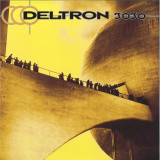
The super group Deltron 3030 is composed of producer Dan the Automator, rapper Del tha Funkee Homosapien and DJ Kid Koala and sometimes features guest artists who also take on varying futuristic pseudonyms. Originally released in 2000 on the now-defunct 75ARK record label, this hip hop concept album was released the same year as the Gorillaz' first 12" and is on a similar plane. Following the release of Deltron 3030, all three members participated in the Gorillaz' self-titled debut album. With Del aka Deltron Zero on vocals, Dan the Automator aka The Cantankerous Captain Aptos on production, and Kid Koala aka Skiznoid the Boy Wonder on turntables, this album takes the listener on a paranoid journey set in a dystopian year 3030 dealing with viruses, the apocalypse, an oppressive government, and a war waged against a huge company called the Corporate Bank of Time that rules the universe, all to the well-crafted and consistent musical backing of the Automator. Appearances by Damon Albarn (The Gorillaz, Blur), Prince Paul, Peanut Butter Wolf, DJ Money Mark, Paul Barman, Mark Bell (Bjork, production), Sean Lennon, and Mr. Lif compliment Del's vocal style and add the right amount of flavor to this classic period piece.
- A1: Return Of The Ghetto Fly Feat Neco Redd
- A2: Superficial
- A3: Slippin' On Ya Pimpin' Feat Dames Brown
- B1: Got It Feat Alena
- B2: Soul Fly (Part 1) Feat Alena
- B3: Soul Fly (Part 2) Feat Dames Brown
- C1: 1960 What Ft London House Cats Choir
- C2: Steppin' Feat Dames Brown
- C3: Your Love Is All I Need
- D1: Funk Is Here To Stay
- D2: Send A Message
- D3: Superficial (Live Version)
1 x Purple 1 x Pink Vinyl[22,23 €]
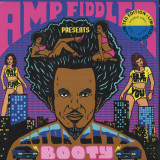
South Street delve into the The Sound Of Detroit from one of its unsung heroes, reissuing Amp Fiddler's 'Motor City Booty' LP on Yellow & Blue vinyl respectively. Coming straight off the D Funk assembly line, it's a full on dance floor affair from Motown to P-Funk, Techno and Neo Soul.
This 12 track album produced by Amp Fiddler & Yam Who? includes the massive 'Soul Fly' sounding like a Mark Ronson production had he been hanging out with George Clinton's Parlet followed by the bonafide P-Funk anthem 'Steppin' both featuring the stunning vocals by the Dames Brown girls.
Amp Fiddler is credited for taking both a young J Dilla and also Q-Tip under his wing teaching them his Akai MPC techniques, setting the path for some of Hip Hop's finest recordings which have defined the shape of things to come.
His musical collaborations & current duties include: Moodymann's musical maestro, keyboard wizard for Theo Parrish's live band, a longstanding Funkadelic member, co-writer for Sly & Robbie, Prince, Maxwell, Jamiroquai & Seal to name a few.
Longtime Daptone Hammond ace, Adam Scone was seduced when his travelling performances brought him from Brooklyn, New York to Brooklin, Brasil, where he found a trove of new love and music. Produced by Bosco Mann, and featuring Jimmy James (True-Loves, Delvon Lamarr Organ Trio) on guitar and Neal Sugarman (Sugarman 3, Sharon Jones and the Dap-Kings) on tenor sax the group took this newfound inspiration into the studio and tracked some of the freshest soulful music we've heard in some time.
With help from his intergalactic choir, the opening track, "Cold 40's", leaps out of the speakers with the screaming organ sound that has put Scone on the short list of goto organ players. The Hammond then gives way to a dreamy, funky groove that's perfectly seasoned with ethereal background vocals that will transport you to a place where summer is on repeat. "Brooklyn to Brooklin” brings you deep into a fever-dream of tropical rhythms and seductive flourishes of psychedelia, sure to delight dancers and dreamers alike. Come take a trip!
Tracklisting
White Vinyl
To celebrate the 30 year anniversary of Shakespears Sister’s seminal album ‘Hormonally Yours’,London Records have announced special edition releases across multiple formats.
A double platinum and top 3 UK album ‘Hormonally Yours’ secured Siobhan Fahey and Marcella Detroit a place in British pop history, spawning the single Stay - which spent a staggering eight consecutive weeks at the top of the UK charts - and winning the duo an Ivor Novello Award for Outstanding Contemporary Song Collection.
‘Hormonally Yours’ also features singles ‘Goodbye Cruel World’ and ‘I Don’t Care’, tackles friendships gone wrong on ‘My Sixteenth Apology’, powerful, dangerous attraction on ‘Emotional Thing’ and documents a friend’s coming out on ‘Are We In Love Yet?’ Fan favourite ‘The Trouble With Andre’, the full-throttle glam-blues of ‘Cat Woman and glorious finale ‘Hello (Turn Your Radio On) is the album’s glorious finale: an exhalation; a glorious, earth-shuddering moment that recalls the epic melancholy of David Bowie’s ‘Five Years’ and The Beatles’ ‘A Day In The Life’.
Shakespears Sisters second LP, Hormonally Yours, provided the perfect encapsulation of Shakespears Sister’s musical ying and yang; a deftly delivered balance of pop melody with a spikey alternative darkness
“I think it’s a mistake to equate ‘perfection’ with flawlessness. To be human is to be perfectly flawed,” Johanna Warren observes while describing the joys of analog recording. Her new LP Lessons for Mutants was tracked live with a band to two inch tape—a revelatory new way of working for Warren. “Tape forces you to commit to a performance, eccentricities and all. The little glitches and anomalies that we’re tempted to ‘correct’ are often what make a thing magical.”
Lessons for Mutants is the prolific songwriter’s sixth solo LP and her second for Wax Nine/Carpark Records. The album’s running theme of metamorphosis (the title of the closing track, “Involvulus,” is Latin for “caterpillar”) reflects major changes in Warren’s personal life: after a decade of relentless touring, as the world was closing its borders, the American multi-instrumentalist unexpectedly found herself quarantining in rural Wales, where she’s now permanently homesteading.
Though tracking for the new album began in New York in 2018 in tandem with the sessions for 2020’s Chaotic Good, the majority of Lessons for Mutants was recorded in the UK surrounded by sheep, cows and a forager’s paradise of wild edible plants—a far cry from the urban jungle of LA that Warren had most recently called home. The body of work that emerged from this dramatic about-face is Warren’s most dynamic to date, shapeshifting seamlessly from searing punk screams to sparkly psych-folk soundscapes, from the bootleg ambivalence of Dylan’s Basement Tapes to cosmic stoner grooves reminiscent of Black Sabbath’s acoustic moments.
“Sometimes I can relate to myself/ I disassociate more than I’d like to, but what can you do?” Warren croons in “Tooth for a Tooth,” a wistful piano ballad that conjures the grainy romance of some smoke-filled 1940s jazz club. This kind of to-the-bone lyrical honesty has always been one of Warren’s strong suits, but these latest reflections are especially unflinching. Being forced to stop touring brought no shortage of self-examination for Warren, who quickly came to view her history on the road as an addiction from which she’s been detoxing. This sentiment dances through opening track “I’d Be Orange,” a drum-driven indie rock number replete with Beatles-esque male backing vocals: “Thirst for power, hunger for fame/ Always was a junkie for pain,” Warren confesses. This exploration of masochistic ambition and artistic martyrdom overflows into grunge anthem “Piscean Lover”: “It’s alright, we’re not ok/ We burn out not to fade away.”
“There’s this unspoken rule in modern music—modern life, really—that everything needs to be Auto-Tuned and ‘on the grid,’” Warren concludes. “This record is an act of resistance against that. There’s beauty and power in our aberrations, if we can embrace them.”