As the siren’s song echoes out of systems worldwide, perhaps we are (re)turning to the liquid age of dance; with natural ephemera such as moss, sentiments for ecology such as swamps, and mercurial aspects of water all absorbing the aesthetic forefront. A return to nature, a deep dive under the lily pads. Here Marijn with her debut EP guides our plunge, a trip previously taken via her podcasts on Kulture Lab, where you can also find her previously released music.
Whispers from the ethereal plane drift around the headspace, a rumble in the distance of sound traversing the water, voices to guide and to keep you from floating too far from the line. Audio hallucinations are aplenty when submerged, a serenity of space, yet distant growls assure that peace is not always 2 be found. The melancholia within the daydream, the pang of loss caught in reflections, internal and from the water, with the lily pads floating above as a guiding entity, an anchor, something to hold. Under the lily pads we rumble.
On the flip everyone’s fav casual breaks n rave hooligan Luca Lozano asks the recurring thought within dance music, a question we quest, yet rarely want the answer. Abstraction via squeaks and tweaks, you better bop your bleepin’ head to this 1.
‘Leave A Message’ leaves the tranquil waters disturbed and rippling to the outer edges, providing jumps for the lily pads to ride on the incoming tide, with the ebb and flow making way for a storm surge. Aka big beats are the best, a notion the directly honest final track ‘Made (Drums)’ follows, bringing a twisted jack attack logic to a deranged assembly of samples, a manic orchestra of tumbling drums who have conspired to freak out, albeit with cute bubbles underneath to revel in the allure of sonic mania.
quête:luca g
'Malombo music is an indigenous kind of music. If you listen to it, you can feel that it can heal you, if you’ve got something wrong. It’s healing music.'
Lucky Ranku
"Lucas ‘Lucky’ Madumetja Ranku (1941-2016) was one of the greatest African guitarists of his generation. He first made his name with the Malombo Jazz Makers – the successor group to the legendary Malombo Jazzmen, formed in Mamelodi township by guitarist Philip Tabane, drummer Julian Bahula and flautist Abbey Cindi. When Tabane left the Jazzmen in 1965, Bahula and Cindi called on Lucky to replace him, and the Malombo Jazz Makers were born. Building on the popularity and success of the original Malombo Jazzmen, the Malombo Jazz Makers become immensely popular, touring widely, winning numerous jazz competitions, and recording two successful albums for the Gallo label.
The deep and hypnotic Down Lucky’s Way was their third album. Recorded in 1969, it was the first Malombo Jazz Makers album to feature additional instruments, and the first to feature Abbey Cindi on soprano saxophone as well as flute. But more than anything else, Down Lucky’s Way is a transfixing showcase for Lucky Ranku’s sui generis guitar virtuosity. Quite different from their previous recordings, the album shifted the Jazz Makers’ sound toward hypnotic, extended compositions, layered by organ bass and guitar overdubs. Of all the Malombo Jazz Makers recordings, Down Lucky’s Way is the deepest of mood, and the richest of vision.
However, through one of the erasures that are ubiquitous in South African musical history under apartheid, it seems that the record may not ever have been properly issued. Original copies are outrageously rare – only a few are known among collectors. When we asked Lucky about the album, he was unaware it had ever been released, and had never seen a copy. Perhaps it was pulled; perhaps it was pulped; perhaps Gallo simply took their eye off the ball. Nobody knows, but it is not impossible that the apartheid authorities were involved, for by 1969, the Malombo Jazz Makers were well known to them.
Julian Bahula’s introduction of malopo drums to the music of the original Malombo Jazzmen was a moment of crucial political and cultural radicalism for South African jazz. Traditionally used by BaPedi people for healing, the malopo drums of Malombo music re-centered jazz
around indigenous sounds and culture, and over the next decade, the Malombo Jazz Makers became deeply involved in political opposition to apartheid. Their recovery of indigenous sounds made them the musical standard bearer for the Black Consciousness movement, and they toured South Africa clandestinely with the writer and anti-apartheid activist Steve Biko. They also broke apartheid laws by playing with the white rock group Freedom’s Children, sometimes appearing on stage in masks or made up with UV paint to avoid detection by the authorities; they appeared regularly at the rule-bending Free People’s Concerts organized by David Marks, where Marks’ clever exploitation of a loophole – mixed audiences were prohibited from attending ticketed concerts where anyone was being paid, but the law said nothing about private functions played by artists for free – meant people could come together in defiance of apartheid laws. The notorious Special Branch would raid their concerts; Lucky remembered police storming an auditorium, throwing smoke bombs.
Eventually the political situation became too dangerous, and the band were being actively sought by the police. Though Abbey Cindi remained in South Africa, both Julian Bahula and Lucky Ranku went into political exile in the UK, where Bahula founded the group Jabula with Lucky and former members of Cymande, Steve Scipio and Michael ‘Bami’ Rose. With Jabula, Julian and Lucky worked tirelessly for the anti-apartheid movement, raising funds and awareness all over Europe and in the US. They played with Dudu Pukwana’s Spear in the joint formation Jabula-Spear, and worked together in Bahula’s Jazz Afrika formation, and Bahula organized the first Concert for Mandela in 1984 (it was Jabula that supplied the chorus for The Special A.K.A.’s hit single ‘Nelson Mandela’). Lucky also played and recorded with Chris McGregor’s South African Exiles Thunderbolt group. After the fall of apartheid, they both remained living and working in the UK. In 2012 the South African government awarded Julian Bahula the Gold Order of Ikhamanga for his cultural work during the struggle against apartheid.
Until his death in 2016, Lucky continued to play with countless groups and musicians. putting together the band Township Express with Pinise Saul, and leading his own African Jazz Allstars. The influence of his playing on the international perception of South African township music was immense, and he was held in the highest regard by his peers – ‘Lucky was a guitarist who could bring any house down’, said Michael ‘Bami’ Rose.
But despite his continuous presence on the UK live circuit over four decades, Lucky Ranku never recorded an album as leader. And so as well as restoring an important lost piece of South African musical heritage, Down Lucky’s Way is a precious opportunity to hear one of Africa’s foremost guitarists stretching out, in focus and in his element."
First issue since 1969 of the Malombo Jazz Maker’s unknown third album.
Liner notes featuring interviews with Julian Bahula and Lucky Ranku.
Fully licensed from Julian Bahula.
Formed in Mamelodi township near Pretoria, the group started out as Malombo Jazz Men with Julian Bahula on malombo drums, Abbey Cindi on flute and Philip Tabane on guitar Fusing traditional and improvised rhythms with jazz, Malombo became renowned as one of the first South African bands to fully connect jazz with the African traditions. Despite his undoubted genius, Tabane became erratic on tour and Bahula brought in another Mamelodi-based talent, guitarist Lucas “Lucky” Ranku, renaming the band Malombo Jazz Makers. The group played stadiums and festivals and were soon signed to Gallo. Recording at a studio in Pretoria, the trio debuted with the album ‘Malompo Jazz’ in 1966, showcasing the simple, spacious beauty of the Malombo sound and Abbey Cindi’s compositions, with Mahotella Queens’ Hilda Tloubatla on guest vocals. The partner follow-up album ‘Malombo Jazz Makers Vol. 2’ was recorded a year later, continuing the earthy flow of Malombo’s music. The two albums have since been recognised as unique landmarks of South African jazz through popular tracks like ‘Sibathathu’, ‘Jikeleza’ and ‘Emakhaya’. Alongside full original artwork, the albums feature a new interview with Julian Bahula.
Memory Lane Lying in Pain is the debut Ep by Evil Saint Francis, the latest incarnation of Francesco Mele, a known figure in the Italian indie/darkwave scene. Penned at the height of lockdown to exorcise his demons, these songs were produced by Jacopo Bigagli. The Memory Lane Ep is a darkwave / synthpop / shoegaze’s threesome with a very dark bystander who resemble rowland s howard. LVCA aka Luca Cazal steps up on remix duties, drawing from his synth pop and new wave influences of his former years as a musician, delivering an acid tinged rendition of the main track.
The first vinyl EP by Apogee Music is a must-have for all techno music enthusiasts. It features four tracks by the talented artist Folual, and includes remixes by T78 and Tiger Stripes. Each track offers a powerful techno sound that will make you move on the dancefloor. The sound quality of the vinyl is exceptional, making it a great addition to any collection. Don't miss the opportunity to experience
this impressive release by Folual and Apogee. All tracks are arranged, recorded, and mixed by Alessandro Bianchi and Luca Antolini at Apogee Music Studio, and produced by Folual.
For the first time LTJ Xperience (Luca Trevisi) and Papik (Nerio Poggi) present together this collaboration with the American singer Anduze.
Anduze had already collaborated with both producers, with LTJ Xperience with the song Bad Side and Infiltrator: with Papik with the songs Get One and Justice or Conspiracy.
In particular, the song with LTJ Xperience 'Bad Side' is still a huge success today and has been synchronized with the Playstation game GTA and included in the soundtrack of the film And Just Like That, sequel to the television series Sex And The City.
This new song Best Life is in the classic Funky Groove style of LTJ Xperience productions, played and produced by Nerio Poggi together with Peter De Girolamo, his closest collaborator, with an original Soul vocal by Anduze that recalls the greatest interpreters of the genre , from Marvin Gaye to Stevie Wonder
- A1: Hasta La Cumbia
- A2: Carnaval Arco Iris (Feat Veronica Ferriani)
- A3: Vem Desacatar (Feat Lucas Santtana)
- A4: Cade Renan
- A5: Eu Te Conheco (Feat Suzana Salles)
- A6: Cheia De Manias
- B1: O Capitao Do Sax (Feat Jucara Marcal)
- B2: Cara Do Apetite (Feat Tulipa Ruiz)
- B3: Shabab'la
- B4: O Trombonista
- B5: Hino Da Charanguinha (Feat Veronica Ferriani)
- B6: Nao Para (Don't Stop'till You Get Enough) (Don't Stop'till You Get Enough)
- B7: Oba Ina
São Paulo-based carnival collective and brass band combine retro horns with cumbia, baile funk, jazz, Michael Jackson & more
A Espetacular Charanga do França started as a political act, part of a recent movement which has seen the people of São Paulo reclaim their streets, turning their city into a revelation of Brazilian carnival. The group takes equal inspiration from the powerful charanga horn and percussion bands that stir the crowds at Brazilian football matches, and the expertly-arranged sounds of 60s
samba, finding that sweet spot between musicianship and music that makes you lose your shit. And they do it with humour, clear as day in their covers of Michael Jackson and pagode pop hits, and the baile funk and Balkan rhythms that sneak their way in to the tunes.
Since forming in 2013 the group have become an iconic staple of São Paulo’s revived carnival, generating crowds 15,000 strong. Though COVID-19 put a stop to them hitting the streets this year, in 2020 they made their way to carnival with over 60 brass players and 30 percussionists, declaring their bloco an anti-fascist zone, their reply to a political climate in Brazil that is suffocating human rights, culture and any hope for equality.
“I like to think that Charanga is an oasis in the middle of all the shit that we live, where you don't have to be worried about who you are, what are your preferences, whether you can be comfortable. If you want to parade with us wearing a tea towel you can, you won't be harassed. And it's also about music, it's about listening to music. We do this thing the whole year, we rehearse all year, we do too much so that people can just get crazy and not care about the music.” Thiago França
The group is the brainchild of saxophonist Thiago França, best known as a founding member of Afro-punk explorers Metá-Metá, and one of São Paulo’s most in-demand horn men, with credits on influential albums by Criolo, Elza Soares, Céu and Lucas Santtana. A
Are you ready to embark on a wild ride through the sonic wonderland of ‚Life Of Phoroma‘? This isn‘t your average V/A extended player compilation – it‘s a pulse-pounding journey through chaos, confusion, and pure eclecticism that‘ll take you beyond just dancing.
Terra Magica Rec. sixth release is a passionate ode to the fusion of EBM and psychedelic, perfectly blending lightning-fast new age and tribal hypnotic soundscapes with 1980s synth atmospheres high on Trance.
It’s Electronic Disco gone Techno gone HiNRG gone wrong folks! Enjoy. The SH-101‘s aggressive cuts, the Sequential Circuits‘ mesmerizing melodies, and the heavily processed Neumann TLM 193 vocals seamlessly weave in and out of acid-ish and electro breakbeat grooves, „Why am I suddenly standing at Tokyo Teleport Station? What happend to my last week?“ Welcome to relaxed Rave-basslines and lo-fi rhythms that will intoxicate your senses.
Get loose and fall into your next portal of unexpected spiritual flows. Catch your six unique tracks for a highly eclectic journey through mysterious and magical moments. So strap in and become one with the sound, because ‚Life Of Phoroma‘ is your roller coaster ride to unforgettable sonic adventures.
smokey vinyl / 180 grams /
For the second release, the Swiss Label present a classic Dub techno track produced by AudioChain (A duo composed by the Label owner Brenno Della Vecchia and his friend Luca Gaggetti). A timeless track with a deeper groove born directly from the Alps!
The remix otherwise, is a faster interpretation remixed by the Dub techno producer from S. Francisco, Federsen. A wonderful relaxed track full of details able to bring you inside Kelly's rhythm.
Limited to 300 copies, only on vinyl!
RED VINYL EDITION On the 15th anniversary of its original release, Mais Um revisit a lost classic fromthe catalogue of one of Brazil's most regarded and influential contemporarysongwriters, Lucas Santtana. Presented on vinyl and on streaming platforms forthe first time ever (remastered by German dub shaman, Stefan Betke/Pole) andfeaturing Tom Zé and manguebeat pioneer, Gilmar Bola 8, Lucas Santtana's 3Sessions In A Greenhouse fused psyched-out samba and baile funk with originalBlack Ark-style studio distortion and spiritual dub dread, laying the foundationsfor his seminal Sem Nostalgia LP five years later, and in the process,establishing Santtana as an elemental force of Brazil's current new wave.
Tom Zé and Faust collide in Domenico Lancellotti's "machine samba"
Domenico Lancellotti's SRAMBA reaches back to the roots of samba whilst completely revamping its blueprint, indoctrinating guitar and percussion-led rhythms with analogue synthesisers, courtesy of album producer Ricardo Dias Gomes.
The majority of SRAMBA was recorded over two months in The Cave - Domenico's home studio in Lisbon, the city both Brazilian ex-pats reside in, where the arrival of a couple of Russian-designed synths purchased by Ricardo influenced the direction of their initial experimentation: "Ricardo had these instruments, modular machines" remembers Domenico, "and I had my guitar, some percussion instruments. On the first day we started making sounds and recording them, and songs started to appear, sambas started to appear."
The son of a renowned samba songwriter, at home Domenico would watch his father play and compose. At parties, the adults would hand his father a tamborim (a small tambourine) and ask him to play along. "I grew up inside samba, it's my roots", he says. "For me, everything is samba, I bring it into whatever style of music I am making".
Domenico and Ricardo instantly saw how the synthesisers were not at odds with the sambas they were playing, instead they had a similar sound to its typical percussion instruments (ganza, repinique, surdo, tarol). What's more, they saw a connection with roots samba, the samba that existed before bossa nova and samba jazz came along. This was rhythmic samba, with grooves that could go on ad infinitum. "It's samba de clave, geometrically structured" says Domenico. "It's ostinato samba", adds Ricardo.
"Diga" is a great example of what their proposal is capable of, as what begins as a glitchy machine whirring into action soon turns into a glorious samba in which the gurgles and scratchy beats coming from the analogue equipment only add to the arrangement. Likewise, on "Tá Brabo" it's an aching melody from one of the synths that gives the guitar rhythm its needed counterpoint, and shows how the duo's greatest accomplishment is not in invention alone, but in creating a great samba album. It's an album that can go from the opening track "Ere" with its reverberant bass thud, mantra-like vocals and staccato rhythms to the string-accompanied "Nada Sera de Outra Maneira", a swooning samba that pays tribute to the Brazilian ensemble Tamba Trio, who along with Tom Zé's Estudando O Samba, Domenico names as the biggest influence on their treatment of samba.
Other important reference points are made clear on "Um Abraço No Faust". One of three instrumentals on the album its title riffs off a JoãoGilberto song, "Um Abraço no Bonfá", but whereas JoãoGilberto was giving a hug (um abraço) to bossa nova guitarist Luiz Bonfá, Domenico and Ricardo are giving theirs to the German avant-gardists Faust. "Quem Samba", with its horn section and dramatic melody give a whiff of Domenico's Italian ancestry, while "Descomunal" is devoid of rhythm whatsoever, guest vocalist Tori singing over a bed of electronic drums, cello and swirling synths, that highlights the duo's unwillingness to stick to a particular formula.
Both Domenico Lancellotti and Ricardo Dias Gomes are revered names within Brazilian music over the past 20 years. As a member of the +2's, with Moreno Veloso and Kassin, Domenico released a trio of albums on Luaka Bop in the early 00s that pioneered a new Rio samba sound with elements of funk and psychedelia. With Veloso and Kassin he would later form Orquestra Imperial, a big band intent on reviving ballroom (gafieira) samba, and that has worked with guest vocalists such as Seu Jorge, Elza Soares and Ed Motta. SRAMBA is his fourth solo album. Multi-instrumentalist Ricardo Dias Gomes first came to notice as a member of Caetano Veloso's band Cê which helped reinvigorate Caetano's career with a sound influenced by British new wave. As well as collaborations with Lucas Santtana, Negro Leo and Thiago Nassif, and work with his own group Do Amor, he has released a series of acclaimed solo albums that reveal a restless music-maker.
SRAMBA is a glorious showcase of the duo's style, uniting Domenico's playful lyrics and rhythmic, samba-rooted songs with with Ricardo's assured accompaniment of unorthodox textures and instrumentations. It may be a new language for samba, machine samba (samba de máquina), but as Domenico says, "samba da máquina is samba".
First release on the new french label Disques de la Spirale, featuring an experimental motorik-kraut-dub infused, semi-improvised live act built by Tamara Goukassova, Axel Larsen & Théo Delaunay (Panoptique, Succhiamo, Violent Quand on Aime, Radiante Pourpre..) from Simple Music Experience ; featuring Maoupa Mazzocchetti, Fiesta en el Vacío, Ventre de Biche, Kyle Knapp (Deliluh) …
For fans of Faust, Tomaga, Tony Conrad...
French non-jazz trio overflowed by Simple Music Experience’s funders Tamara Goukassova, Théo Delaunay & Alexandre Larcier, offering a 40mn of non-simple music madness, and navigating between a dozen of etiquettes from undecided space rock to motorik-infused-dub, medieval folk, cartoon trance; everything under the seal of psychedelia and half-improvisation.
Built from drums, violin, springs, samples, reiterations, overdubs, trumpets, synths, distortions; and the appearances of L. Cedrón (Fiesta en el Vacío), L. Retraite (Ventre de Biche), K. Knapp (Deliluh), F. Mazzocchetti (Maoupa Mazzocchetti).
Chimera embraced by three members of the Simple Music Experience label, also (co-) liable at one point for the acts of Axel Larsen, (The) Simplists, Violent Quand On Aime, Constance Chlore, T. Goukassova, Radiante Pourpre, Succhiamo or Panoptique; Parasite Jazz emerged in 2016 in the smoke of a suspicious performance on Simple Music TV. An improvised and protean artifact at birth, the project settled down at the end of 2020 as a trio (Axel Larsen, Constance Chlore, Tamara Goukassova) in Marseille, then as a sextet during the Illusio festival in the summer of 2021. A series of concerts with a shifting line-up followed - Kyle Knapp, Luca Retraite and Luna Cedrón sometimes appeared and with them, spontaneous incandescences. This first series of collective hallucinations took the form of an album during a perilous recording at Grrrnd Zero (Lyon) in October 2021, and is completed by live recordings gleaned over the course of the summer episodes.
All tracks are composed and performed by Parasite Jazz:
Alexandre Larcier: bands, FX, springs
Tamara Goukassova: violin
Théo Delaunay: drums, percussion, synthesizer, tapes
Florent Mazzocchetti: trumpet on "Carton Jazz" and "Alarm Twist" (sampled)
Luca Retraite: bass on “Terciopelo” and guitar on “Alarm Twist”
Luna Cedron: vocals on “Terciopelo”
Kyle Knapp: lap steel on “Terciopelo” and “Untitled live at Gigors”
Around Function: Sketches, band lettering
Recorded and mixed by Théo Delaunay at Grrrnd Zero (Lyon) and l'Embobineuse (Marseille) except "Terciopelo" recorded at Illusio (Pradelles) and "Untitled live at Gigors" at La Sye Electric (Gigors-et-Lozeron).
Mastering: Rupert Clerveaux
Cover: Diane Malatesta
Design: Alan Briand
Parasite Jazz thanks: Quentin Mosko, the Groovedge/Illusio crew, Théo & Clyde, Maoupa Mazzocchetti, the 3 jokers Luna Luca and Kyle, Grrrnd & the Embobineuse.
Seems our favourite light-fingered Norwegian Cut-N-Paste maestro has been busy of late !
With his Cosmic Oslo debut about to land, we're treated here to a SUPER Limited 4-way of secret weapons from the cupboard of delights...
As ever with Rune, we're going off-piste, but into nevertheless inviting dancefloor territory.
A 70's cheeser hides in plain sight until the last minute pay off alongside a slick, mid-Eighties Japanese gem on the A.
On the B, another Japanese favourite is reworked for maximum dancefloor derangement while an Iberian throbber finishes us off in fine style !
Be quick !
- A1: Lars La Ville Feat Gauvey-Kern - Twist (La Ville Extended Italo Remix)
- A2: Sauvage - Do You Want Me (Also Playable Mono Zyx Edit)
- A3: Diego - Walk In The Night (Flemming Dalum Remix)
- A4: Love Kills - Touch Me (Special Remix)
- B1: Stockholm Nihgtlife Feat Helly - Back Together Again He Day
- B2: Soulya Id - The Day You‘ll Get Somebody (Extended Mix)
- B3: Marc Fruttero & Alex Papale - What You Want (Anton Orlov Remix)
- B4: Valerie Dore - Get Closer (Luca Debonaire Extended Mix)
ZYX Italo Disco New Generation Vinyl Edition 6 presents 8 selected Italo Disco songs.
Look forward to songs by
Sauvage
Lars La Ville feat. Gauvey-Kern
Diego
Love Kills
Stockholm Nightlife feat. Helly
Soulya ID
Marc Fruttero & Alex Papale
Valerie Dore
Vinyl lovers, be invited to enjoy almost 50 minutes of iconic analog sound quality!
Former Granville Sessions frontmen and current Moose Funk Squad members have returned.
MNSR Frites, Archetype and Luca Brazi finally join forces for Mustard Tiger, their full-length debut
as a trio.
Having already written and performed nationally together for over a decade, this long overdue LP
showcases the effortless chemistry these respective artists have honed during their time as touring
band members and established solo acts.
Archetype is an audio craftsman, capable of both intricate rhyme schemes and a dynamic vocal
ability to boot. MNSR Frites has flows for days, with unpredictable and complex wordplay that
results in stunning verses. Luca Brazi always delivers hard hitting bars and punchline haymakers,
while providing the stylistic sample based production to formulate the beast that is Mustard Tiger.
UK Hip Hop regulars Lasagna Baghdad (Luca Brazi), Paolo Pumpernickel (Benny Diction) and
Bald Daniels (MNSR Frites) combine forces as their alter-egos for an introspective take on getting
older in rap and an appreciation for the finer things. Expect tales of borderline mid-life crises told
over a background of fast cars and seafood
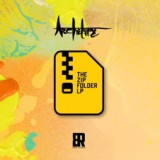
Archetype is known to many as one of the frontmen from cult classic Granville Sessions, plus a
founding Moose Funk Squad member. Now, after 5 years in the making his debut album, The Zip
Folder LP is ready for release.
Archetype called upon Granville Sessions MPC don Giuseppe 'Zippo' Falcone for a selection of
samples. After some deliberation and delay these were then fully recreated with live instrumentation, played largely by Ed Koral (another Granville alumnus and multi-instrumentalist); plus the help
of Berlin-based sax and trumpet players Christoph and Yannick.
Limousine has returned to this experimental ground where simplicity of composition, haunting loops and a sense of release are combined, but now voices come to dress their tracks and propel the vehicle into a new dimension.
Vocals in Limousine: a revolution for a quartet whose concept was precisely to do without them, so much so that they have often defined themselves as a band for singers who don't exist. From then on, the mission was to find that these singers, or singers, exist.
A cast that alternates iconoclastic figures and young hopefuls for a certified Grand Tourism trip: Malik Djoudi, Amber Burgoyne, Lucas Santtana, Victor Solf and Akhenaton take part in this new adventure. Rappers, singers or vocalists, these five performers slip naturally into Limousine's saps, as if each of the tracks had been specially cut for them.
Tropical stroll for the Brazilian Lucas Santtana, hip hop aside with AKH, soulful and intimate nocturne with the revelation from Brighton Amber Burgoyne or melancholic wandering with Malik Djoudi, Limousine purposely gathers a beautiful international French style.
For the rest, the quartet keeps its iconoclastic line and confirms its ability to create weightless themes.
In the end, Hula Hoop is an authentic Limousine album, whose elegance it perpetuates while constituting its expanded version.