Cotenius X is an exploratory improvisational project of the Ukrainian sound artist Daria Redkina and the Russian experimental vocalist Varya Pavlova aka Lisokot. Improvising together since 2017 they incorporate folk, electronic and musique concrète elements into their spontaneous compositions. “Plastic Bag” is a testament to collaboration - an archival reflection of the time the duo spent experimenting together. Their theatrical performances involve impersonation or adoption of different characters and are informed by social, political, historical, and site-specific narratives. The duo has been compared to The Residents and see themselves carrying the psychedelic absurdity of the US group forward by giving it a feminine twist.
Cerca:m p sound project
Little Beat More is proud to present you a two-track EP by Turist, a Vienna based psychedelic Dembow project, founded to combine the energy of a live band with the tightness of an overdub session. ?Turist made it their mission to revive handmade music from the 60's and 70's aiming for the dancefloors of today!
The two tracks demonstrate how they interlace heavy basslines, colorfully echoing guitars and driving drums, drawing inspirations spanning from Ghanian highlife to Peruvian cumbia.
“Skeet”, on Side A, is the band’s manifesto with their special blend of Caribbean dance rhythms and Californian surf music psychedelia. Side B's "Ez Up" is a straightforward champeta song, the Afro-Colombian style that fuses sweet soukous guitar lines with uplifting soca rhythms, making you want to immediately look for the nearest Pico Soundsystem.
Set off on a rhythmic journey following Turist in their musical nomadism with us!
Kee Avil's music is both adventurous and intimate, intellectually challenging and emotionally resonant. The Montréal guitarist and producer's 2022 debut LP Crease garnered plaudits from outlets like The Wire, The Quietus, Mojo and Foxy Digitalis, picking up a Canadian Juno Award nomination and Bandcamp Album Of The Day and Albums Of The Year along the way. Its intricate construction, unnerving atmospheres, and knife-edge take on avant-pop prompted comparisons to early PJ Harvey, This Heat, and Gazelle Twin. A remix EP with work by claire rousay, Ami Dang, Cecile Believe, and Pelada brought collaborative perspectives to four Crease tracks, offering new pathways within those songs. With Spine, Kee Avil strips back her heavily textured compositions, opening up a much rawer sound. She calls it folk—and while traditionalists might scoff, this is urgent music that reflects the precarity of modern life, as well as the jarring mixture of electronic and real-world interactions that have become the fabric of our day-to-day experiences. There's a hypnotic post-punk somnambulance to it all, using the repetition and fracturing of melodic phrases interwoven with delicate electronics to create curious and persistent hooks. While not a concept album, themes of time's passage, remembrance, and decay crop up across multiple tracks. Each track intentionally only has four elements—guitar, electronics, and two other instruments, with Kee's voice and guitar pushed to the front. Within this minimalist framework, the juxtaposition of beauty and discomfort that is key to the Kee Avil sound stands out in skin-prickling relief. "We're shaped by many versions of ourselves," says Avil. "I was looking back at these versions of myself and what could have been, what didn't end up being and what did end up being, and going back like that through time. Seeing the future, the past." Spine was written in Kee Avil's home studio after a lapse in writing while touring Crease and working on other projects. She is a well-known and respected member of the Montréal experimental scene, and formerly ran Concrete Sound Studio with Zach Scholes, who continues to work with her as a producer on Spine. Compared to the three years that went into making her debut, Spine emerged in a matter of months—a process that may also be a factor in its intensity and sharpness: "This record was much harder, like it was really discovering everything from scratch." In her desire to not simply replicate or extend the sound of Crease, she felt she had to rip up the rule book, write in a different way, and pare back songs against her usual instincts. Sometimes, when we work against our ingrained habits, we get to the core of who we really are. Spine is an exercise in that process. Without over-intellectualizing or being didactic, it hits immediately and emotionally, especially if you are a person who has spent much time in the process of self-examination. Kee's voice hisses, whispers, and chants; her guitar bends and rings; electronics skitter and crackle; violin creaks like a door in the wind. There is something so evocative about the atmospheres she creates that it's easy to overlay one's own feelings onto her work, but to do that wholly would be to overlook one of the most important things about Spine: Kee Avil's clear and thoughtful vision. This isn't just the next step forward in her artistic trajectory; it's a stunner of a record that stands on its own, a bracing and thrilling listen that has much to reveal about the contradictions inherent in being human. — jj skolnik.
‘Står op med solen’ (Rising with the sun) is the second album by Amalie Dahl’s Dafnie. With this album, the band continues the exploration of their collective sound. We hear influences from both old school free jazz, and contemporary Scandinavian jazz like Fire! Orchestra and Christian Wallumrød Ensemble, as well as clear connection to the Trondheim milieu, where the group was founded in 2020.
The energetic and expressive band explores their more subtle side with this record. ‘Står op med solen’ is an album longing for humans to be one with nature. The music comments on the world’s ultra-capitalistic power structures of today. The band navigates like one organism through parts of organic free jazz, strict structures and composed cells.
They start out where their first record ended, in the familiar free jazz sound with riffs and melodies, and take us safely on their onward journey. Amalie Dahl’s Dafnie brings together five well-known names from the Norwegian jazz scene, also known from other projects like Kongle Trio, Bliss Quintet, I like to sleep, Veslemøy Narvesen, Galumphing Duo, Treen and Trondheim Jazz Orchestra, among others.
The band has already been touring in Scandinavia, Poland and Germany during the past 3 years, and is well known for their playful and close chemistry. Their first record ‘Dafnie’ (Sonic Transmissions Records, 2022) received excellent reviews in The Wire, The Quietus among others. To celebrate the new album Amalie Dahl’s Dafnie will do 11 concerts in Europe between April 22nd and May 5th.
A leading Norwegian bassist for over 30 years, ECM legend Arild Andersen forges promising relation-ships with two rising stars - Daniel Sommer (drums) and Rob Luft (guitar) in an expansive, playful exploration of song and collective improvisation. As Time Passes " is set to release on April 26th on April Records. Led by Sommer, the release signifies the first chapter of the drummers much much-anticipated Nordic trilogy on April Records, aiming to capture and document Nordic improvisation and composition across three carefully curated ensembles. Bassist Arild Andersens storied career stretches back to the 1970"s as one of ECM s first recording artists, collaborating with household names of the genre including Jan Garbarek, Don Cherry, Bill Frisell, John Taylor, Sonny Rollins, Chick Corea, and the list goes on. Welcoming the opportunity to work with and nurture younger artists, the ensemble was born when Daniel Sommer selected Andersen for a project during his studies at the Danish National Academy of Music. Later, impressed by Luft s performances in Ireland and Norway, Andersen suggested expanding the pair into a trio. A transcendent musical voyage, As Time Passes " blurs the lines of conventional trio roles, and celebrates the evolution of jazz as a fluid, versatile form of expression. By providing each musician the freedom of becoming a key contributor in the melodic discourse, the trio channels the spirit of jazz veterans such as the Bill Evans Trio and free free-jazz ensemble Air, while echoing the sounds and innovations of pan pan-European contemporary jazz. Mixing pensive rubato ambience with energetic grooves, instrumental dexterity, a modern ECM ECM-esque sound and folk undertones, the record s compositional clarity combined with the spontaneity of a live performance flows across and between genres, borders and generations alike. Luft s intricately over-dubbed layers of acoustic guitars, vast reverbs, and contrapuntal melodies expand the sound of the three piece into an immersive world of textures. Rendered in the stark beauty of Andersen"s bass lines, the nuanced strokes of Sommer"s drums, and capped with the lush, expansive timbres of Luft"s guitar, "As Time Passes" is a testament to enduring and ever ever-evolving wonder of Jazz.
2024 Repress
Mannequin Records is proud to present a full length by the Philly minimal-synth princess Void Vision.
Void Vision is a Philadelphia-based electronic project helmed by Shari Vari. It began around 2009 at a time when a wave of synth-revivalists were materializing, but the quality of the songwriting and intense vocals set the band apart from the pack. In a rare instance, Void Vision has managed to combine vintage dance elements with melodic structures, haunting melancholy, and lyrics that have a palpable soul. The songs themselves are dynamic, referencing a cross-section of the last 30 years of electronic music, while simultaneously retaining a uniqueness all their own.
The infamous Wierd Records weekly club night in New York, which showcased a variety of talented electronic and coldwave artists, served as an incubator for Void Vision in it's early stages. After a standout debut performance at the club, they immediately caught the attention of Blind Prophet Records, who consequently released their first 7" single, 'In 20 Years', which received excellent reviews.
Vari has continued performing and recording steadily over the last few years, releasing songs on compilations for various labels, including Rough Trade, and in 2012 the song 'Everything is Fine' was selected for Artforum magazine's 'Best of 2012' issue. In 2013, Void Vision toured the West Coast and later that year released a split 12" with Portland-based band, Vice Device. The first official full-length album, entitled 'Sub Rosa' is set to debut on Berlin-based Mannequin Records, followed by a European tour in 2015.
Shari Vari formed Void Vision in 2009 originally as a duo, during the explosion of the new minimal synth and cold wave scene in United States. Sharing the same scene of the Wierd Records associates like Led Er Est, Martial Canterel, Xeno & Oaklander, Automelodi, in 2010 VV released 'In Twenty Years' on Blind Prophet (Sean Ragon's Cult Of Youth record label), receiving also the attention of the Rough Trade dudes, who asked to put out a track for one of their synth wave compilations.
After other split vinyls, tapes and compilations, Mannequin approached Shari with the intention to continue what Wierd Records started, giving a proper shape to her beautiful and youthful dark electronic sound. The result is 10 hypnotic cold analog tracks dominated by the warm and fragile Shari's voice, some more 'pop orientated' some others belonging to the original 'cold wave' atmosphere.
"Sub Rosa" is an edition of 400 copies on 160 gram black vinyl and 100 copies on 160 gram white vinyl.
Ice Cream Vinyl
Since the release of their debut studio album Do Hollywood (on 4AD) in 2016, The Lemon Twigs_the New York City rock band fronted by brothers Brian (27) and Michael D'Addario (25)_have waved the same revivalist torch as Alex Chilton and his Big Star crew, working to prove that archaic music from the `60s and `70s can still be relevant in digital world. Alongside peers like Foxygen and Drugdealer, The Lemon Twigs have explicitly documented a synchronistic blend of contemporary narrative motifs, old-school recording techniques, and flawless, consistent attitudes collaged from various crucial stages of rock 'n' roll. After a whirlwind 2023, the D'Addarios are continuing the momentum of their own evolving vision and voice, distilling a history lesson of baroque and power pop into A Dream Is All We Know (out May 3 on Captured Tracks). Garnering the top-to-bottom critical acclaim the brothers have long deserved, their 2023 LP Everything Harmony was spearheaded by an impressive string of singles, including "Corner Of My Eye" and "Any Time of Day." It was the kind of record that put all of Brian and Michael's talents on display, be it the former's multi-instrumentalist gifts or the latter's boyish, explosive pop-rock charisma and eye for engineering and vocal layering. But A Dream Is All We Know is not the acoustic, nylon string-based project that Everything Harmony was. Instead, it's a return to the form the Lemon Twigs first introduced on Do Hollywood_an electric guitar-centric, anthemic assemblage of, really, everything the band does great. These two companion records are an immediate example of a band capitalizing on their fire-in-the-belly appetite to make tunes that boast ubiquitous chemistry. A Dream Is All We Know is grandiose yet grounded; meticulous, yet wild and glowing. Made with analog precision, the album was finished in the immediate months after the band completed Everything Harmony during a vibrant, prolific period split between three studios on separate coasts. A Dream Is All We Know is a profoundly dense and charged album, rife with string arrangements and a sonic thesis statement that has quaked through phases of glam, conceptualism, baroque, and Mustang-loud, stone-cold rock `n' roll for more than half-a-century. A Dream Is All We Know sounds like it's lived a thousand lives already.
Introducing 'Planet SP1200' by KLIM. KLIM, the producer and beatmaker based in Kyiv, draws inspiration from classic hip-hop, chill music, and boombap to craft music that combines fresh soulful vibes with a hard-knocking style. With over 4 million streams across various platforms, including lo-fi beat staples such as 'Night Café' and 'Butterfly,' KLIM returns with fifteen tracks created using the EMU SP-1200 and Akai S900 samplers, infusing a '90s vibe throughout the project.
Influenced by artists like Pete Rock, Lord Finesse, Jay Dee, George Fields, and Mr. Brown, KLIM's music is a reflection of the magic found in everyday moments that surround him. It's a product of the emotions that stir within him, where the world serves as his artistic canvas, and each sound and melody is a heartfelt attempt to capture his experiences and thoughts. In his words, "My music is a bridge between my soul and the world, and I hope it can touch the hearts of others, just as it touches mine". Join KLIM on this musical journey, where the past and present harmonize in a symphony of emotions and experiences.
Red Vinyl[26,26 €]
Deluxe edition Tan and Black Marble Vinyl[28,36 €]
Cassette[14,50 €]
It's been a decade since John Carpenter recorded the material that would become Lost Themes, his debut album of non-film music and the opening salvo in one of Hollywood's great second acts. Those vibrant, synth-driven songs, made in collaboration with his son Cody Carpenter and godson Daniel Davies, kickstarted a musical renaissance for the pioneering composer and director. In the years since, Carpenter, Carpenter, and Davies have released close to a dozen musical projects, including a growing library of studio albums and the scores for David Gordon Green's trilogy of Halloween reboots. With Lost Themes IV: Noir, they've struck gold again, this time mining the rich history of the film noir genre for inspiration. Since the first Lost Themes, John has referred to these compositions as "soundtracks for the movies in your mind." On the fourth installment in the series, those movies are noirs. Like the film genre they were influenced by, what makes these songs "noirish" is sometimes slippery and hard to define, and not merely reducible to a collection of tropes. The scores for the great American noir pictures were largely orchestral, while the Carpenters and Davies work off a sturdy synth-and-guitar backbone. The noir quality, then, is something you understand instinctively when you hear it, as in connected in an emotional way. The trio's free-flowing chemistry means Lost Themes IV: Noir runs like a well-oiled machine_the 1951 Jaguar XK120 Roadster from Kiss Me Deadly, perhaps, or the 1958 Plymouth Fury from John's own Christine. It's a chemistry that's helped power one of the most productive stretches of John's creative life, and Noir proves that it's nowhere near done yielding brilliant results.
Black Vinyl[24,79 €]
Deluxe edition Tan and Black Marble Vinyl[28,36 €]
Cassette[14,50 €]
It's been a decade since John Carpenter recorded the material that would become Lost Themes, his debut album of non-film music and the opening salvo in one of Hollywood's great second acts. Those vibrant, synth-driven songs, made in collaboration with his son Cody Carpenter and godson Daniel Davies, kickstarted a musical renaissance for the pioneering composer and director. In the years since, Carpenter, Carpenter, and Davies have released close to a dozen musical projects, including a growing library of studio albums and the scores for David Gordon Green's trilogy of Halloween reboots. With Lost Themes IV: Noir, they've struck gold again, this time mining the rich history of the film noir genre for inspiration. Since the first Lost Themes, John has referred to these compositions as "soundtracks for the movies in your mind." On the fourth installment in the series, those movies are noirs. Like the film genre they were influenced by, what makes these songs "noirish" is sometimes slippery and hard to define, and not merely reducible to a collection of tropes. The scores for the great American noir pictures were largely orchestral, while the Carpenters and Davies work off a sturdy synth-and-guitar backbone. The noir quality, then, is something you understand instinctively when you hear it, as in connected in an emotional way. The trio's free-flowing chemistry means Lost Themes IV: Noir runs like a well-oiled machine_the 1951 Jaguar XK120 Roadster from Kiss Me Deadly, perhaps, or the 1958 Plymouth Fury from John's own Christine. It's a chemistry that's helped power one of the most productive stretches of John's creative life, and Noir proves that it's nowhere near done yielding brilliant results.
A continuation of a sound and sentiment from the mind of Pete Woosh (DiY Soundystem)
Love is the Most Important thing captures a unique moment in time with a meeting of spiritual, uplifting and healing sounds that ring true to Pete’s spirit. This first EP sees the debut of several lesser-known artists from Nottingham. Allow yourself to drift through a varied soundscape; from cosmic loops and gentle pads to uplifting mantras and rolling breakbeats.
RIP Pete Woosh aka The Peaceful Ones – 1965 - 2020
It was the summer of 1996 in London. Rat Scabies had his studio 'The Arch' underneath Kew Bridge, in which various projects were recorded. At some point, Rat (The Damned), Derwood Andrews (Generation X) and Glen Matlock (Sex Pistols) drifted in to rehearse and write songs to record an album. Pretty soon they were ready to start recording, but they didn't have a singer. They called upon an old friend Gary Twinn (20 Flight Rockers), who flew in on the red eye from Los Angeles and immediately started recording. It may have been a good idea to give Gary time to get over the jet lag, and write some more songs. But Gary's lyrics were working well and it was sounding so good they started laying down the tracks. A day or so later, Martin Lee Stephenson, a young hot mixer came down to the Arches and mixed the seven tracks that were recorded. The plan was to do a few more songs and have a finished album. Gary went back to the west coast and started booking shows. It was all looking good, and it was fun. Then Glen called to say the Pistols had offered him to reform with a world tour called Filthy Lucre, and he'd be doing that for the next six months at least. So, Dead Horse was truly dead, and the whole idea was abandoned. These tapes have been on the shelf for almost 30 years. These tapes are being released in the interest of music history, and the fact that they were never quite finished shouldn't matter to anyone. The quality of the people involved shines through.
The Path is the latest album from Belbury Poly (aka Ghost Box records founder Jim Jupp). This time round Jupp has recruited a full band roster to expand his own unique electronica. He is joined by occasional Belbury Poly collaborator Christopher Budd on Bass and Guitar, Jesse Chandler (of Midlake, Mercury Rev & Pneumatic Tubes) on flute, clarinet and keyboards, Max Saidi on drums plus narration from author and poet, Justin Hopper.
Musically it takes as its starting point a particular moment of early 1970s British film soundtracks by the likes of Roy Budd and Roger Webb; a soundworld of easy-going jazz and funky rhythms gently coloured with pastoral strings and flutes. The Path, however, is unmoored from time or place thanks to Hopper’s narrative style, Chandler’s rustic flutes and keys, Budd’s soulful psychedelic guitars and Jupp’s production and electronics. The co-writers were all chosen for their unique abilities and an
intuitive understanding of the ongoing Belbury Poly project. The spoken word elements form a loose, open-ended narrative; very much an album with spoken word rather than a spoken word album.
The Band and Album Recording:
Christopher Budd: Electric Bass, Double Bass, Guitars, Electric Sitar
Jesse Chandler: Piano, Synths, Mellotron, Flute, Clarinet
Justin Hopper: Narration
Jim Jupp: Electric Piano, Synths, Mellotron, Percussion, Sound Effects
Max Saidi: Drums, Percussion
The project came together over two years, beginning with a conversation between Hopper and Jupp during a walk on the Sussex South Downs. Originally, it was to tell the tale of an American academic unravelling while adrift in an alienating English landscape. From the beginning, the pair wanted on a narration integrated lyrically into the piece, rather than dropped on top. The words gradually became more film-noir and open to interpretation; occasionally a little tongue-in-cheek. The final
texts explore a folklore of alienation; the way we impact the landscape and it impacts us.
Belbury Poly:
Jim Jupp has released EPs, singles and seven albums on Ghost Box as Belbury Poly. It’s generally a solo project, but he calls on a floating roster of like-minded musicians to extend the sound beyond studio based electronica. He is also one half of The Belbury Circle along with Cate Brooks (of The Advisory Circle) - occasional collaborators with John Foxx. He has recorded library tracks for KPM, BMG and Lo-Editions. He’s remixed tracks for several artists including Beautify Junkyards,
John Foxx and Bill Ryder-Jones (The Coral) and co-written a song with Paul Weller for his 2020 album On Sunset.
Emptyset present ash — a new collection of sound experiments developed over the last three years and assembled in Bristol during summer 2023.
The work draws on the project's roots in structural percussion and physical sonics, employing spatialised recording techniques and an array of analogue hardware,evoking the transformative and sculptural properties of sound.
The release marks a return for the collaborative duo of James Ginzburg and Paul Purgas, following Ginzburg's work within the exploratory performance group Osmium and Purgas' extensive research into the history of India's first electronic music studio. It brings them back to Bristol where the project first began, channeling the echoes of the city's sound system culture and resonant musical continuum, anchoring their sound within its formative origins.
Launching on October 20th through Subtext Recordings as the 50th release for the label, there will be a series of live shows including Berlin Atonal on September 16th and London's Village Underground on November 5th, their first live show in the city in over a decade. Emptyset will also be bringing together a special day of sound and performance across multiple venues in Bristol planned for Spring 2024.
Introducing De Mond's debut LP, 'Glow.' Stijn Wybouw (also known as Kramp) and Arno de Bock (who provided drums for Hermann among other projects) throw you into a maelstrom of bold sounds and rhythms. From squiggly synth bursts to kaleidoscopic loops, they push the outer parameters of 21st-century musical art.
Four years and one pandemic after his latest Dreams Of A Dark Building EP, the herald of dungeon synth pop is finally back from his shallow grave.
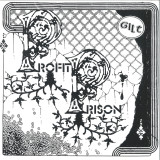
Life has not been gentle with Seattle-based solo producer Parker Lautenschlager over the past few years, imposing its unpredictability and forcing him to channel all the feelings that come with it into Profit Prison’s music.
It’s no surprise that his first full-length album Gilt marks one futher step towards the dark corners of italo / hi-nrg body music. Typical Profit Prison’s vocals and melodies, reminiscent of OG synth masters Kraftwerk, Giorgio Moroder and Orchestral Manoeuvres in the Dark, are still here, buried in the mix and waiting to haunt the listeners and drag them down in one sulfurous dancing spiral.
Lead single Sophia juxtaposes some weirdly camouflaged vocals with one heavenly chorus that seems willing to revive your fortunes while instead it literally sings “But I lost it all”. A Matter Of Tact displays pop escapism over some throbbing minimal synth tension, Seven Words sounds like a throwback to 70’s italo filtered through the eyes of a 21st century punk rocker. Katalina has a rampant synth à la Carpenter climbing over a story of loss and Katalina, An Ascetic is a solo ramble reaching for the inner light on a carpet of cold keys.
What’s more, tracks got longer in Parker’s recent songwriting, with most of the songs being now five minute long and reaching peaks of seven minutes with the closing, almost progressive disco jam of A.R.P. (Amphetamine Research Project), nothing short of a lucid dream on the floor of Studio 54.
Last but not least, the artwork by French artist Robin Roche delivers medieval-yet-punk graphic vibes to match just perfectly the sounds on this record.
Four years and one pandemic after his latest Dreams Of A Dark Building EP, the herald of dungeon synth pop is finally back from his shallow grave.
Life has not been gentle with Seattle-based solo producer Parker Lautenschlager over the past few years, imposing its unpredictability and forcing him to channel all the feelings that come with it into Profit Prison’s music.
It’s no surprise that his first full-length album Gilt marks one futher step towards the dark corners of italo / hi-nrg body music. Typical Profit Prison’s vocals and melodies, reminiscent of OG synth masters Kraftwerk, Giorgio Moroder and Orchestral Manoeuvres in the Dark, are still here, buried in the mix and waiting to haunt the listeners and drag them down in one sulfurous dancing spiral.
Lead single Sophia juxtaposes some weirdly camouflaged vocals with one heavenly chorus that seems willing to revive your fortunes while instead it literally sings “But I lost it all”. A Matter Of Tact displays pop escapism over some throbbing minimal synth tension, Seven Words sounds like a throwback to 70’s italo filtered through the eyes of a 21st century punk rocker. Katalina has a rampant synth à la Carpenter climbing over a story of loss and Katalina, An Ascetic is a solo ramble reaching for the inner light on a carpet of cold keys.
What’s more, tracks got longer in Parker’s recent songwriting, with most of the songs being now five minute long and reaching peaks of seven minutes with the closing, almost progressive disco jam of A.R.P. (Amphetamine Research Project), nothing short of a lucid dream on the floor of Studio 54.
Last but not least, the artwork by French artist Robin Roche delivers medieval-yet-punk graphic vibes to match just perfectly the sounds on this record.
Before Circus Lupus landed on DC’s venerable Dischord Records, the group’s original Midwest lineup recorded a full album’s worth of songs less than a year after forming. With the demise of DC’s Ignition in the late ’80s, bass player Chris Thomson headed to Madison, WI for college. Before leaving DC, he dove headfirst into being a vocalist fronting the short-lived throwback punk / hardcore project Fury. Thomson served up pointed and profound Tony Cadena-inspired screeds about betrayal, disappointment and poseurs all set to a soundtrack of furiously primitive and chaotic music supplied by members of the DC punk band Swiz. Brief yet influential, this band marked Thomson’s switch to vocals, putting him on course to front Circus Lupus and claim a notable spot in the DC punk timeline of the late 20th century. Soon after arriving in Madison, Thomson was invited to join a new project started by friends Chris Hamley, Arika Casebolt, and Reg Shrader. Circus Lupus marked a change in direction from the familiar sounds of DC punk that Thomson had been associated with for years. The newly formed group looked to noisier Touch & Go and Homestead bands for inspiration, aligning themselves with bands from Chicago, Louisville and Milwaukee. One early supporter of the band described the new group as “profoundly familiar yet uncategorizable. Like if the Germs had gone to college and never got pulled into hard drugs and suicidal behaviors.” The original Circus Lupus lineup played a dozen shows and recorded these songs with Eli Janney at Inner Ear studios in August of 1990 while on a brief tour. Within a year, the band would decide to permanently relocate to Washington DC, where they felt they had more opportunities. Shrader opted to move to Chicago and would ultimately join the Touch and Go band Seam. Old friend Seth Lorinczi (Vile Cherubs) would become their new bass player, forming the version of the band that most listeners are familiar with. While a few of these ended up on their first single, the rest were shelved, some later to be rerecorded with Lorinczi and released on Dischord. L.G. Records is proud to have helped this notable recording see the light of day. The original tapes were recovered by Ian MacKaye and transferred by Darren Edwards. Tim Green remixed and remastered the original recordings at Louder Studios in California.