The forthcoming latest edition of the popular compilation series featuring long-lost vintage 60s-70s proto-metal and stoner rock singles, Brown Acid: The Thirteenth Trip will be available on Halloween 2021. Check out the first single "Run Run", released in 1970 by Montreal hard rockers Max is available to hear & share via Metal Injection HERE. (And, direct YouTube and Bandcamp)
The Brown Acid series is curated by L.A. label RidingEasy Records and retailer/label Permanent Records. Read interviews with the series curators via Paste Magazine HERE and LA Weekly HERE.
About The Thirteenth Trip:
Max, from Montreal, QC — originally known as Dawn, before Tony Orlando & Dawn forced a name change — kick things off with “Run Run” from their lone 1970 single. It’s a hard-hitting rocker with scale climbing crunching guitars and powerful Bonham-esque drumming. Sadly, the band didn’t last long due to poor management and various other factors, so this is the only surviving document according to guitarist Gerry Markman. And what a document it is, paired with the A-side “The Flying Dutchman.”
You might remember Ralph Williams and the Wright Brothers from their track “Never Again” on Brown Acid: The Tenth Trip. Here they make their return to the series with the A-side of their 1972 Hour Glass Records 45, which sounds like Blue Cheer mangling Roy Orbison’s “Pretty Woman” (that’s right, several years before Van Halen actually did so.) Alas, Ralph and these Wright Brothers soon disappeared from terrestrial airspace.
“Feelin’ Dead” is extremely heavy blues from this also extremely rare 1974 single by Detroit, MI’s Master Danse, which was only released as a promo 45. Think Led Zeppelin’s “Since I’ve Been Loving You” and you’re on the right track. A little dose of Hendrix acid blues and a heartfelt groove, and you’ll wonder why this single never even made it to official release. The unavoidable tell in the lyric, “help me get this damn thing out of my arm” hints at the post-Vietnam heroin epidemic as a potential clue why we never heard more from Master Danse.
Folks, Gary Del Vecchio is “Buzzin’” hard on this one, and from what sounds like an in-studio party of yelps and chatter at the start of the song, it seems that the whole band was in on the festivities. The funky blues riff, reminiscent of Led Zeppelin’s “Heartbreaker” and rollicking rhythmic changes certainly keep the buzz a rollin’.The recording is technically credited as Gary Del Vecchio with Max, though not the same band as the one that kicks off this Trip.
John Kitko’s 1973 heavy psychedelic rager “Indecision” is the only recording known to exist by the mysterious artist. The Twin Record Productions release features a different artist, Tom Poff on the B-side, which is truly a shame, considering the smoldering ashes Kitko leaves of the turntable by song’s end. It starts out more like a late 60s Acid Rock jam before leaping into a blazing double-time gallop, whipped into a frenzy by wailing, neck-pickup guitar squeals and Kitko’s barely audible howls.
Tampa, FL’s Bacchus made their Brown Acid debut way back on the very first Trip with “Carry My Load.” This 1972 B-side, “Hope” is a huge sounding swinging rocker replete with roadhouse piano bolstering the chunky riffs and confident vocals. After relocating to Southern California a few years later, the band morphed into Fortress, an 80s melodic metal act whose Hands In The Till album of Pomp Rock on Atlantic Records still draws chatter today.
Orchid’s “Go Big Red” is perhaps the most garage-y sounding offering here, with loose rhythms and straightforward stop-and-start riffing. Nonetheless, the stomping energy and fried-amp guitar tone make this one a charming skull thwack. The band’s 1973 single on American records, backed with a cover of Johnny Russell and Voni Morrison’s “Act Naturally” (popularized by Buck Owens and the Buckaroos) is their only release, so the world never did see this Orchid fully blossom.
By the title alone of Dry Ice’s “Don’t Munkey with the Funky Skunky” you know you’re in for a good time. The 1974 barnstormer seems aimed to the novelty tunes crowd, with its kooky lyrics and silly-voiced spoken catchphrase break, “peeyew, you’ll be sorry if you do.” But, the Ohio band’s maniacal drumming, crunching guitars and, of course, drug euphemistic lyrics make it a shoo-in for the Brown Acid series of erudite rock’n’roll.
Good Humore’s swaggering 1976 rocker “Detroit” is a slick and smooth paen to the Motor City. It most likely doesn’t predate “Detroit Rock City” by Kiss, also released in 1976, and it has more rock’n’roll swing, but it could fit comfortably alongside the era’s arena anthems. Not much else is known about the one-off release on P.V. Records, but songwriter Mike Moats is noted to also have been a recording engineer in later years and this well produced track sounds like a labor of love.
Поиск:m street
Все
The forthcoming latest edition of the popular compilation series featuring long-lost vintage 60s-70s proto-metal and stoner rock singles, Brown Acid: The Thirteenth Trip will be available on Halloween 2021. Check out the first single "Run Run", released in 1970 by Montreal hard rockers Max is available to hear & share via Metal Injection HERE. (And, direct YouTube and Bandcamp)
The Brown Acid series is curated by L.A. label RidingEasy Records and retailer/label Permanent Records. Read interviews with the series curators via Paste Magazine HERE and LA Weekly HERE.
About The Thirteenth Trip:
Max, from Montreal, QC — originally known as Dawn, before Tony Orlando & Dawn forced a name change — kick things off with “Run Run” from their lone 1970 single. It’s a hard-hitting rocker with scale climbing crunching guitars and powerful Bonham-esque drumming. Sadly, the band didn’t last long due to poor management and various other factors, so this is the only surviving document according to guitarist Gerry Markman. And what a document it is, paired with the A-side “The Flying Dutchman.”
You might remember Ralph Williams and the Wright Brothers from their track “Never Again” on Brown Acid: The Tenth Trip. Here they make their return to the series with the A-side of their 1972 Hour Glass Records 45, which sounds like Blue Cheer mangling Roy Orbison’s “Pretty Woman” (that’s right, several years before Van Halen actually did so.) Alas, Ralph and these Wright Brothers soon disappeared from terrestrial airspace.
“Feelin’ Dead” is extremely heavy blues from this also extremely rare 1974 single by Detroit, MI’s Master Danse, which was only released as a promo 45. Think Led Zeppelin’s “Since I’ve Been Loving You” and you’re on the right track. A little dose of Hendrix acid blues and a heartfelt groove, and you’ll wonder why this single never even made it to official release. The unavoidable tell in the lyric, “help me get this damn thing out of my arm” hints at the post-Vietnam heroin epidemic as a potential clue why we never heard more from Master Danse.
Folks, Gary Del Vecchio is “Buzzin’” hard on this one, and from what sounds like an in-studio party of yelps and chatter at the start of the song, it seems that the whole band was in on the festivities. The funky blues riff, reminiscent of Led Zeppelin’s “Heartbreaker” and rollicking rhythmic changes certainly keep the buzz a rollin’.The recording is technically credited as Gary Del Vecchio with Max, though not the same band as the one that kicks off this Trip.
John Kitko’s 1973 heavy psychedelic rager “Indecision” is the only recording known to exist by the mysterious artist. The Twin Record Productions release features a different artist, Tom Poff on the B-side, which is truly a shame, considering the smoldering ashes Kitko leaves of the turntable by song’s end. It starts out more like a late 60s Acid Rock jam before leaping into a blazing double-time gallop, whipped into a frenzy by wailing, neck-pickup guitar squeals and Kitko’s barely audible howls.
Tampa, FL’s Bacchus made their Brown Acid debut way back on the very first Trip with “Carry My Load.” This 1972 B-side, “Hope” is a huge sounding swinging rocker replete with roadhouse piano bolstering the chunky riffs and confident vocals. After relocating to Southern California a few years later, the band morphed into Fortress, an 80s melodic metal act whose Hands In The Till album of Pomp Rock on Atlantic Records still draws chatter today.
Orchid’s “Go Big Red” is perhaps the most garage-y sounding offering here, with loose rhythms and straightforward stop-and-start riffing. Nonetheless, the stomping energy and fried-amp guitar tone make this one a charming skull thwack. The band’s 1973 single on American records, backed with a cover of Johnny Russell and Voni Morrison’s “Act Naturally” (popularized by Buck Owens and the Buckaroos) is their only release, so the world never did see this Orchid fully blossom.
By the title alone of Dry Ice’s “Don’t Munkey with the Funky Skunky” you know you’re in for a good time. The 1974 barnstormer seems aimed to the novelty tunes crowd, with its kooky lyrics and silly-voiced spoken catchphrase break, “peeyew, you’ll be sorry if you do.” But, the Ohio band’s maniacal drumming, crunching guitars and, of course, drug euphemistic lyrics make it a shoo-in for the Brown Acid series of erudite rock’n’roll.
Good Humore’s swaggering 1976 rocker “Detroit” is a slick and smooth paen to the Motor City. It most likely doesn’t predate “Detroit Rock City” by Kiss, also released in 1976, and it has more rock’n’roll swing, but it could fit comfortably alongside the era’s arena anthems. Not much else is known about the one-off release on P.V. Records, but songwriter Mike Moats is noted to also have been a recording engineer in later years and this well produced track sounds like a labor of love.
t’s September 1981 and it’s matter of weeks away from the release of ‘I’M A RAINBOW’, the second album
Donna Summer had recorded for Geffen Records, which had also been produced by Giorgio Moroder and
Pete Bellotte.
• At the time that the album was being recorded, the musical landscape had changed and production
techniques were developing further. Geffen also wanted a more R&B-influenced album, despite the album
having a more R&B feel than ‘The Wanderer’ had done. The songs and their lyrical content were very strong
and Donna’s voice had never sounded better, which was always a tough comparison against previous
albums.
• A decision was taken by the label to withdraw ‘I’M A RAINBOW’ just prior to its release. David Geffen then
brought-in Quincy Jones to produce the next new album; 1982’s ‘Donna Summer’.
a a1. I'm A Rainbow Junior’s Shiny Rainbow Edit
[b] a2. I Believe (In You) (duet with Joe “Bean” Esposito) [Figo Sound Version]
[c] a3. Back Where You Belong [Jean Tonique Remix]
[d] a4. You To Me [Oliver Nelson Remix]
[e] a5. Don't Cry For Me Argentina [Ladies On Mars ‘Buenos Aires’ Remix]
[f] b1. Sweet Emotion [Le Flex Remix]
[g] b2. Brooklyn [Ladies On Mars ‘Child Of Rhythm’ Remix]
[h] b3. Romeo [Ladies On Mars ‘Luv-NRG’ Remix]
[i] b4. Highway Runner [Ladies On Mars ‘Street Race’ Remix]
[Ladies On Mars ‘Independence’ Remix]
On Fast Idol, LA-based Black Marble reaches back through time to connect with the forgotten bedroom kids of the analogue era, the halcyon days of icy hooks and warbly synths. Harmonies are piped in across the expanse of space, and lyrics capture conversations that seem to come from another room, repeat an accusation overheard, or speak as if in sleep of interpersonal struggles distilled down to one subconscious phrase. At the same time, percussive elements feel forward and cut through the mix with toms counting off the measures like a lost tribe broadcasting through the bass and tops of a basement club soundsystem.
- A1: Gimme Danger (Bowie Mix)
- A2: I Wanna Be Your Dog (Remastered)
- A3: Loose
- A4: No Fun (2016 Remaster)
- A5: Asthma Attack
- B1: I Got A Right (Outtake From Early Aborted "Raw Power" Session)
- B2: Down On The Street
- B3: Lost In The Future (Take 1)
- B4: I'm Sick Of You (Outtake From Early Aborted "Raw Power" Session
- B5: 1969 (2016 Remaster)
The Stooges are widely considered one of the greatest rock bands of all time and this comes across loud and clear on director Jim Jarmusch’s critically acclaimed documentary film ‘Gimme Danger’. GIMME DANGER: MUSIC FROM THE MOTION PICTURE is a 14-track collection curated by Jarmusch and Stooges frontman Iggy Pop, with a focus on the group’s first three albums. It includes The Stooges’ classics ‘I Wanna Be Your Dog,’ ‘1969,’ and ‘Loose,’ along with rarities ‘I Got A Right,’ ‘I’m Sick of You’ and ‘Asthma Attack,’ and songs by MC5, Iggy Pop’s pre-Stooges combo The Iguanas, & more. It’s one of those rare soundtracks that appeals both to the most discerning fan and also as an introductory to those less familiar.
UMC are proud to present two reissues of certified multi-platinum albums from DMX. Nominated for Best Rap Album at the 2001 Grammys, '...And Then There Was X' is the third studio album from DMX. Featuring the hits "What's My Name" and "Party Up (Up In Here)". Released in 2001, 'The Great Depression' was the fourth album by the American rapper. Featuring the singles "We Right Here", "Who We Be" and "I Miss You". Both packages presented as 2LPs on 180g vinyl.
Die Erstauflage der LP erscheint auf umweltfreundlichen recyceltem Vinyl in "Mystery Colour"! Mehr als drei Jahre nach dem Release ihres gefeierten letzten Albums "Floating Features" und einer wunderbaren Soloplatte von Sängerin Shana Cleveland meldet sich die US-amerikanische Indie-Rockband LA LUZ zurück. Auf dem selbstbetitelten vierten Longplayer des Trios aus Los Angeles tauschen Shana Cleveland (Gitarre + Songwriting), Lena Simon (Bass) und Alice Sandahl (Tasten) ihren ausgelassen Surf-Noir-Sound gegen ein erdverbundeneres Songwriting mit psychedelischem Einschlag aus. Inspiriert von Clevelands Umzug ins ländliche Nordkalifornien spiegeln Tracks wie die bereits veröffentlichten Vorab-Single "In The Country" oder "Here On Earth" die neu entfachte Landlust der Bandmitglieder wieder. Das Album wurde im Linear Labs Studio in Los Angeles aufgenommen und von Adrian Younge (Kendrick Lamar, Talib Kweli, Jay-Z) produziert, der den Songs ein wunderbares warmes wie psychedelisches Soundbild verpasst hat.
- A1: Converted
- A2: Speed Of The Sound Of Loneliness
- A3: Woke Up This Morning
- B1: U Don't Dans 2 Tekno
- B2: Bourgeoisie Blues
- B3: Aint Goin' To Goa
- C1: Mao Tse Tung Said
- C2: Hypo Full Of Love (The 12-Step Plan)
- C3: Old Purple Tin (9% Of Pure Heaven)
- D1: The Night We Nearly Got Busted
- D2: Sister Rosetta
- D3: Peace In The Valley
They have been called, amongst other things, "the best live band in Britain." Their music has graced everything from The Sopranos to The Simpsons, and celebrity fans include Irvine Welsh and the world's biggest selling author, Stephen King. They are undoubtedly the greatest American act the UK ever did produce, and their heady combination of techno and C&W, alongside a proclivity for rock 'n' roll decadence and an acute social conscience means that they are effectively a unique entity in modern music. Exile on Coldharbour Lane is the debut album by Alabama 3, originally released in 1997. The name and cover are references to Exile on Main St. by The Rolling Stones and Coldharbour Lane a major street in Brixton, South London best known for containing several after-hours clubs. Upon its release, the album received favourable reviews, including an 8.9 review from Pitchfork Media. The song "Sister Rosetta" was featured in the film "Barnyard". "Woke Up This Morning" is best known as the opening theme music for the television series, The Sopranos, which used the "Chosen One Mix" of that song.
COLOURED vinyl[45,42 €]
Over nearly 20 years, Howlin Rain may have become the quintessential independent American rock ’n roll band: a steam-spitting Hydra of cranked guitars, kicking asphalt dust through a kaleidoscoping travelogue of desert motels and dives, volleying forth transmissions of sci-fi poetry from the blacktop veins of this cracked and aching country.
Now, in America 2021, capping these strangest and sorest of times, the band returns with The Dharma Wheel, a six-track, 52-minute dive into a joyous fantasy realm of exaggerated present.
“I wanted The Dharma Wheel to be a portal from our everyday world, the one from which you stand on hard ground and hold the album in your hands and peer into the artwork, and into another universe,” says songwriter, guitarist and vocalist, Ethan Miller. “You enter into that universe with your eyes and ears and mind and take a ride through free-form meditation on these ideas — from big, fundamental concepts about our existence right down to the grease that rolls down the arm of a pulp novel killer as he eats a gas station hot dog in an old Dodge in an alleyway.”
Lyrically, Miller has completed his evolution into a mushroom-plucking Whitman of the West, singing outlandish tales in a topographic blend of Humbead’s Revised Map of the World and an inverted U.S. where downtrodden bodhisattvas roam the back streets and moonless country roads.
“Down in Florida swamps, run by nature’s law, standing in the water, Eden gone. Two men loading rifles, beasts making time, they shot a boy from an orange tree and watched the colored birds take flight, watch the colors as they soar and dive.” — ‘Under the Wheels.’
The band, Jeff McElroy (bass, backing vocals), Justin Smith (drums/percussion, backing vocals) and Dan Cervantes (guitar, backing vocals), again sounds hardwired into Miller’s vision, building tracks that swagger and sway in response to his verse. Lending a hand this time around is the legendary Scarlet Rivera (Bob Dylan’s Rolling Thunder Revue) on violin, and the endlessly inventive Adam MacDougall (Chris Robinson Brotherhood, Circles Around the Sun) on keys.
Songs were shaped via the blast furnace of endless gigs, then recorded often mere hours after the band slipped the stage.
“The captured sonic fact about this record is that it’s the sound of a band that rehearsed this material a lot and put a ton of work into its construction and was on the road a lot and recorded on days off in the tour schedule,” Miller says. “In some cases we were on stage on Saturday night playing these songs at quarter-to-2 in the morning and by Noon the next day we were sipping coffee in the studio playing them for the machine.”
Rivera’s violin is the first sound heard as the album dawns on the instrumental “Prelude.” Soon, the band joins, twirling the theme into a psychedelicized awakening. “Don’t Let the Tears” brings the boogie, with MacDougall’s madcap synth work and wah-wah guitars showering 70’s glitter upon a parquet dance floor of the mind. “Under the Wheels” and “Rotoscope” center the album with taut, compositional epics populated by murdering drifters and fuzz pedal explosions. The blue hour comedown of “Annabelle” meditates upon the weariness of lost love, with Rivera again amping the heartache via her violin strings.
“In the evening the trains go by, and shake the dust from dirty walls, sometimes I feel like a spider in an old mason jar, who threatens only convex light from down the hall. I’ve been lost to the world since the photos of the black hole, landed on my desktop screaming, perhaps the all and nothing all-in-one is just too much to take, for particles and matter that never found their way.” — ‘Annabelle’
The record closes with the 16-minute title track, a multi-movement suite which cycles from Crazy Horse-meets-Traffic jams through colossal, mass-moving funk stomp, eventually cresting and washing into a sing-along gospel lament.
The Dharma Wheel is an album of great depth, and one steeped in good vibes: a rich, glistening world of the ultra-vivid. As illustrated in Arik Roper’s cover art, the grand dharmachakra has been set in motion, churning off the California coast.
“We were trying to build a world big enough that the imagination won’t go soft on you after just a few listens and where our love for this music, and music in general — along with a good dose of audacity — create a magic carpet ride through the world of The Dharma Wheel,” Miller continues. “In pursuing that I think we also managed to make a record that has a lot of joy in it: the joy of playing music, the joy of experiencing music, the joy of storytelling and poetry, the kind of singular joy and extended ecstatic moment that only a real ‘band’ can express in just that way.”
And it’s this joy, this exuberance and dedication to the lines of cosmic expression — all centered in the exalted art of the everyday — that constructs the heart of the record. At its core, The Dharma Wheel is the triumph of a working band, a transmission from a never-paused before arriving for our strange, bruised, spectacular now.”
Black vinyl[39,37 €]
Over nearly 20 years, Howlin Rain may have become the quintessential independent American rock ’n roll band: a steam-spitting Hydra of cranked guitars, kicking asphalt dust through a kaleidoscoping travelogue of desert motels and dives, volleying forth transmissions of sci-fi poetry from the blacktop veins of this cracked and aching country.
Now, in America 2021, capping these strangest and sorest of times, the band returns with The Dharma Wheel, a six-track, 52-minute dive into a joyous fantasy realm of exaggerated present.
“I wanted The Dharma Wheel to be a portal from our everyday world, the one from which you stand on hard ground and hold the album in your hands and peer into the artwork, and into another universe,” says songwriter, guitarist and vocalist, Ethan Miller. “You enter into that universe with your eyes and ears and mind and take a ride through free-form meditation on these ideas — from big, fundamental concepts about our existence right down to the grease that rolls down the arm of a pulp novel killer as he eats a gas station hot dog in an old Dodge in an alleyway.”
Lyrically, Miller has completed his evolution into a mushroom-plucking Whitman of the West, singing outlandish tales in a topographic blend of Humbead’s Revised Map of the World and an inverted U.S. where downtrodden bodhisattvas roam the back streets and moonless country roads.
“Down in Florida swamps, run by nature’s law, standing in the water, Eden gone. Two men loading rifles, beasts making time, they shot a boy from an orange tree and watched the colored birds take flight, watch the colors as they soar and dive.” — ‘Under the Wheels.’
The band, Jeff McElroy (bass, backing vocals), Justin Smith (drums/percussion, backing vocals) and Dan Cervantes (guitar, backing vocals), again sounds hardwired into Miller’s vision, building tracks that swagger and sway in response to his verse. Lending a hand this time around is the legendary Scarlet Rivera (Bob Dylan’s Rolling Thunder Revue) on violin, and the endlessly inventive Adam MacDougall (Chris Robinson Brotherhood, Circles Around the Sun) on keys.
Songs were shaped via the blast furnace of endless gigs, then recorded often mere hours after the band slipped the stage.
“The captured sonic fact about this record is that it’s the sound of a band that rehearsed this material a lot and put a ton of work into its construction and was on the road a lot and recorded on days off in the tour schedule,” Miller says. “In some cases we were on stage on Saturday night playing these songs at quarter-to-2 in the morning and by Noon the next day we were sipping coffee in the studio playing them for the machine.”
Rivera’s violin is the first sound heard as the album dawns on the instrumental “Prelude.” Soon, the band joins, twirling the theme into a psychedelicized awakening. “Don’t Let the Tears” brings the boogie, with MacDougall’s madcap synth work and wah-wah guitars showering 70’s glitter upon a parquet dance floor of the mind. “Under the Wheels” and “Rotoscope” center the album with taut, compositional epics populated by murdering drifters and fuzz pedal explosions. The blue hour comedown of “Annabelle” meditates upon the weariness of lost love, with Rivera again amping the heartache via her violin strings.
“In the evening the trains go by, and shake the dust from dirty walls, sometimes I feel like a spider in an old mason jar, who threatens only convex light from down the hall. I’ve been lost to the world since the photos of the black hole, landed on my desktop screaming, perhaps the all and nothing all-in-one is just too much to take, for particles and matter that never found their way.” — ‘Annabelle’
The record closes with the 16-minute title track, a multi-movement suite which cycles from Crazy Horse-meets-Traffic jams through colossal, mass-moving funk stomp, eventually cresting and washing into a sing-along gospel lament.
The Dharma Wheel is an album of great depth, and one steeped in good vibes: a rich, glistening world of the ultra-vivid. As illustrated in Arik Roper’s cover art, the grand dharmachakra has been set in motion, churning off the California coast.
“We were trying to build a world big enough that the imagination won’t go soft on you after just a few listens and where our love for this music, and music in general — along with a good dose of audacity — create a magic carpet ride through the world of The Dharma Wheel,” Miller continues. “In pursuing that I think we also managed to make a record that has a lot of joy in it: the joy of playing music, the joy of experiencing music, the joy of storytelling and poetry, the kind of singular joy and extended ecstatic moment that only a real ‘band’ can express in just that way.”
And it’s this joy, this exuberance and dedication to the lines of cosmic expression — all centered in the exalted art of the everyday — that constructs the heart of the record. At its core, The Dharma Wheel is the triumph of a working band, a transmission from a never-paused before arriving for our strange, bruised, spectacular now.”
Part of the Optic Sevens 3.0 Reissue Series.
“Take the Skinheads Bowling” The signature song of Camper Van Beethoven. Taken from their 1985 album Telephone Free Landslide Victory.
Their classic debut single became an indie top 10 hit and featured in John Peel's festive 50. On it’s release it picked up substantial airplay and is still played frequently on radio shows across the globe.
Later covered by Teenage Fanclub & Manic Street Preachers and featured in the Michael Moore film ‘Bowling For Columbine’
- A1: Quiet Force - Listen To The Music
- A2: Barry Coates - Hovercraft
- A3: Andrew Gordon - Walking The Lonely Streets
- A4: Steve Bach - Rain Dance
- B1: Angelo Vanotti - Sketches Of Anderland
- B2: Slap & Powell - Sex Drive
- B3: Jordan De La Sierra - Nimbu-Pani The Lemon-Water Song
- B4: Jessie Allen Cooper - In My Heart
As escapism from corporate banality turned the corner in the `90s, a new generation of vibrant, software generated soundscapes emerged. Communal access to the internet propagated the new hive mind of ideas online, giving way to smoother, stress-free textures. The PC revolution opened the gateway to ray-traced playgrounds of color and light, allowing for visions of utopic proportions to manifest themselves on screensavers far and wide. Boot up your machine, load the software on this floppy diskette, and drop out of a reality bounded by the physical laws of the universe. Numero 95 is the soundtrack to the screen saver fever dream we're all trying to climb back into. Eight droplets of proto-vaporwave, synthesized in vinyl (or digital) form, fresh from Numero's archive of forgotten sounds. Are you looking for that half way point between smooth jazz and new age? Mac and PC? Quantum Leap and the X-Files? This software is for you. Housed in a replica floppy diskette, Numero 95 explores an early computer music unbound by scene or region. Eight solo pioneers vibing out at home in their headphones, traveling as far as the sound card would allow. This is music that barely escaped the hard drive and yet percolates at the edges of the algorithm 30 years later. Welcome to Numero 95.
Limited edition 180g blue coloured vinyl + 1 bonus track.
“January 4, 1956: Clifford Brown, Max Roach, Sonny Rollins, Richie Powell and
George Morrow met up in a New York studio to record At Basin Street, which
would be the group’s final album. That summer, Clifford Brown and Richie Powell died in a tragic car accident. This final testimony is one of the most exciting
records from a quintet which was like very few others.” - Jazz Magazine
“Each arrangement is worked to a point that actually propels the soloists, gives
them - and Brown particularly - maximum lift. These are classics of modern
jazz.” - Penguin Guide To Jazz
“Clifford Brown and Max Roach at Basin Street reemphasizes the loss jazz suffered when Clifford and Richie Powell died. Energetic, full-bodied jazz. Thoroughly recommended.” - John A. Tynan, DownBeat”
Originally released in 1979 and long-out-of-print, Nick Lowe’s Labour of
Lust album has been remastered to its original glory and now includes both
the U.K.-only track “Endless Grey Ribbon” and the U.S.-only track
“American Squirm,” along with the bonus B-Side “Basing Street.”
Hailed by Trouser Press as “a brilliant piss-taker that pairs sprightly pop and
savage lyrical wit” and by Rolling Stone as “...a hookfest full of barbed wit,”
the album features Nick’s worldwide mega-hit “Cruel to Be Kind” and is being
released on Pink Vinyl for a limited time!
Lo! Soul’ is the fifth solo album from Roddy Woomble, following on from
his acclaimed debut, ‘My Secret Is My Silence’ (2006), ‘The Impossible Song
& Other Songs’ (2011), ‘Listen To Keep’ (2013) and ‘The Deluder’ (2017).
The record sees Woomble continue his unique and restless trajectory, gently
stepping away from his previous acoustic/folk intentions in favour of a more
explorative light, prevalent on 2020’s ‘Everyday Sun’ EP, which featured largely
spoken word pieces over an ambient, mediative soundtrack.
Produced and mixed by collaborator and Idlewild bandmate Andrew Mitchell (aka Andrew Wasylyk), ‘Lo! Soul’ was recorded remotely between Roddy’s
home in the Hebrides and Andrew’s studio in Dundee throughout 2020 while
Scotland was locked-down.
Roddy explains: “Andrew describes moments of the album as ‘Dystopian-pop’
which I think is as good a description as any. Lockdown gave me the sense of
a collective melancholy, a shared remoteness and isolation - that has been a
guiding influence throughout all the songs. It is the most unusual record I have
made, and made in the most unusual way.”
Across his twenty-five year career, ‘Lo! Soul’ may well be Woomble’s most inventive, creative album to date. From undulating synths and ambient soundscapes in the abstract narratives of ‘Atlantic Photography’ and ‘Secret Show’,
the sun-tinged horns of ‘Architecture in LA’, a mellifluous Mellotron or perhaps
a piano chime. Here, the path is embedded with Roddy’s words delicately unearthing the known and never known.
- 1: A Smile-And Perhaps, A Tear
- 2: His Morning Promenade
- 3: At Home With The Infant
- 4: Five Years Later
- 5: Working The Streets
- 6: A Star Of Great Prominence / Breakfast
- 7: The Fight
- 8: The Country Doctor
- 9: The Orphan Asylum / Rooftop Chase
- 10: Night / $00 Reward / Dawn
- 11: Dreamland / The End
- 12: Love Song (Unreleased Bonus)
- 13: The Kid Intermission And Exit Music (Unreleased Bonus)
- 14: Charlie Chaplin Composing Music For The Kid (Unreleased Bonus)
In 2019, we celebrated the 130th Anniversary of
the birth of Charlie Chaplin. In 2020, we celebrated
the 80th Anniversary of the film ‘The Great
Dictator’. This year, we celebrate the 100th
anniversary of the movie ‘The Kid’.
To celebrate these 100 years, Le Chant du Monde
present a deluxe 180g vinyl LP (full mono
remastered version) in luxurious casebound book
packaging.
The release brings together the entire music of the
film, as well as many bonuses completely
unreleased to date, accompanied by a large format
24-page booklet including unpublished texts and
photos.
An edition that will delight Chaplin lovers and vinyl
collectors alike
After his debut LP ‘Temmuz’, released at the beginning of last year, Houschyar is back on Macadam Mambo with his new album: a less danceable but more personal opus. Being locked up on the rooftops of Istanbul, Houschyar repurposed a satellite dish, making use of its perfectly round and concave shape to create strange metallic-sounding percussive loops which he painted with sonic atmospheres that contained diverse shades of blue. ‘Mavi’ is an introspective pallet of emotions condensed into 7 hybrid compositions highly improvised which divagate into a very jazzy modern state of mind, jamming with pianos, electronic organs and rhythm boxes to produce another type of spiritual music that sounds absolutely timeless. In a very prolific year - with his release with DJ Sofa and Okay Temiz on Music from Memory and the initial EP of Raphael Kosmos’ newborn label Späti Records -, Marius Houschyar leaves no doubt about the level of his talent and him being part of a new generation of artists to keep a close eye on. To discover as soon as possible!
After a first album released in 2019 on the labels Stereophonk (France) and P-Vine Records (Japan), The Selenites Band are back with a new recording, Behind The Mask.
The Selenites Band is a French music group created in 2018 around the artist and musician Obi Riddim. Drawing the sources of its music from the Ethiopian music of “Swinging Addis”, Ethio-jazz, but also rock, Afro-jazz or psychedelic grooves.
After playing the “classics” of Mulatu Astatke or Girma Bèyènè, the band offers us nine new songs. Original compositions where we find the melodies and rhythms of the Ethiopian music of “Swinging Addis” mixed with their kraütrock influences, psychedelic music and afro jazz. An atmosphere of trance on bewitching Ethiopian scales, tracks that invite you to travel and explore.
Recorded during the pandemic, between two confinements and successive curfews, in a vital impetus, this album sounds like the big need to create.
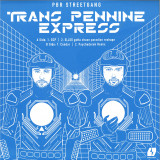
We're heading deep into the bowels of the cosmic basements with our latest vinyl release which is headed up by those 2 lovely souls from Leeds, PBR Streetgang.
From rocking it all over the globe to releasing a plethora of absolute yesmate bangers & a long player too, we're pretty thrilled that they have joined our family of music makers with their double A side E.P. 'Transpennine Express'.
GCP gets the party started and instantly takes you to 4am at Barbarellas Discotheque with stacks of throbbing-ness & pumping, laser reaching vibes whilst the boys take you down a wormhole of electronic music pleasure.
Condor jumps ships from Barbarellas & hot foots it over to Berlin to sweat it out in basement with only a smoke machine for company and tons of ravers. Pulsating synth surfs across a chubby bass with some slick as heck cosmic stabs making this a multitude of all that is good in proper dance music.
If the originals are on the dance floor then we made sure to go full on weirded-out on the remixes and crikey they don't disappoint!
ELLES totally flips the script on GCP and turns in a hazy, broken beat style electro groover with a full vocal giving it the sound of a lost track by A Certain Ratio.
Psychederek takes the 'make sure to go really wonky!' advice we gave when sending the parts to Condor and matches ELLES with his full on acid tinged psych wig-out rework. The beat sure is broken, the bass guitar punches, the old school piano thumps and the whole thing sounds like an amazing Andrew Weatherall remix from the mid 90's you never knew existed.
Something for everyone.from clubs to shebeens to after parties & beyond...
Mal Waldron's first tribute to Billie Holiday, titled Left Alone, was recorded in 1959, mere months before the singer's death. He returned to salute the legendary vocalist on several occasions since then, with this recording likely being his final tribute, recorded less than a year before his own death. Waldron, who worked with Holiday during her last years, is intimately familiar with her takes of the six standards heard on this disc, along with her own "Lady Sings the Blues." Archie Shepp's often gritty tenor sax is reminiscent of the texture of Holiday's voice, yet he perfectly complements Waldron's lush piano. They also pack a punch with their stark performance of "Left Alone" (Shepp's occasional reed squeaks seem deliberate, as if to imitate breaks in her voice). Waldron also recites Holiday's lyrics set to his composition at the conclusion of the LP. Shepp switches to soprano sax for an emotional take of "Everything Happens to Me" and "I Only Have Eyes for You," with the latter song sounding as if the unheard singer is being ignored by her love interest. Shepp's "Blues for 52nd Street" is both sassy and swinging. This instrumental salute to Billie Holiday is one of the best albums ever to honour her memory. by Ken Dryden/AMG