
5
In Stock
On Stock and ready to ship
Last In: 9 days ago
10,88 €
On Stock and ready to ship
![Daniel[i] - Escapist](https://www.deejay.de/images/l/5/3/1243153.jpg)
With its second release, Fleur Sauvage stays true to its opening premise: no calculated moves, no outside logic, only work that could not reasonably exist anywhere else. Danieli has been part of the La Nature and NoName fabric for years, as co-curator, resident, and crew, one of those people whose presence shapes a space long before a set begins. This album is the natural continuation of that relationship, extended now into a more permanent form.
Where FS001 captured the charge of a live moment, FS002 turns inward. Seven studio compositions, built at a remove from the dance floor, without urgency or performance. The kind of record that needed time to be what it is.
Daniel
The B-side loosens further. Reverie does exactly what the word promises, without apology. Anew carries a quiet kind of relief, not triumphant but settled. Heavenly closes the record differently: a long, unhurried progression, organic sounds swelling and receding in waves, building toward something that never quite resolves, and doesn't need to.
Throughout, the sound is precise without being cold, textured without ornament. Ambient in the truest sense, music that holds a room, and asks nothing back.
The Item is out of Stock. We will send You an Email as soon as it´s available again if you click on "in Stock Mail"

Introducing Fleur Sauvage: A New Chapter Rooted in Emotion and Community
The idea for Fleur Sauvage first took shape in 2022, quietly evolving and shared only with a select few. It began with a desire to give new life to the spellbinding improvisations experienced at La Nature—those rare, unrepeatable instants that move us deeply and stay with us long after the sound has faded.
In the spirit of that beginning, the label will open space for a variety of releases: expect intimate solo works, carefully curated compilations, and other sonic offerings from artists close to our he(art).
More than just adding a new label to the world, our purpose is to grow with our community. Community is everything. At the end of the day, what matters most to us are the relationships we cultivate—with artists, supporters, collaborators, and the many spirited souls who help us create these rare and radiant gatherings.
Katatonic Silentio – Live at La Nature 2023
Captured in the immersive cocoon of the Hypnose Room during the 2023 edition of La Nature, this debut release on Fleur Sauvage is a raw transmission of Katatonic Silentio’s improvisational live ritual.
Split into four parts across two 12” records, this work moves between experimental abstraction, textured noise, and cinematic ambient. Tension runs like a thread through each piece—sometimes humming beneath the surface, sometimes rupturing into visceral sonic peaks that leave you breathless. Deep low-end pulses and granular ruptures twist through fleeting moments of stillness, creating a sense of instability that is both electrifying and intimate.
The recording documents more than a performance—it holds space for something elemental, unpredictable, and deeply embodied. As always with Katatonic Silentio, the sound is not just heard—it is inhabited.
On Stock and ready to ship

Order now and we will order the item for you at our supplier.

L'estasi Dell'oro returns with 'Back From the Woodshed,' a 12" EP that showcases a finely-tuned sound and improved groove, marking this comeback on Danza Tribale. The opening track, 'The Best Yet,' features the vocals of Crystal Boyd-a familiar voice for those in the know, as she made her debut appearance with L'estasi on Voodoo Down 001 in 2012. Sadie LaPierre Ernst, known for her lyrical contributions on Field Records and Macro Recordings since 2015, lends her voice once again on this release.
Label owner Adiel offers a high-speed remix that complements Sadie's words with a steady gallop. The overall aesthetic of this record is beautifully encapsulated in 'The Marsh Flower, a Sad Human Head,' drawing inspiration from Odilon Redon's original illustration from 1885. The EP concludes with a beatless edit of 'The Best Yet' under L'estasi's resurrected Penalune alias-a project that debuted over a decade ago with two albums released on Something Records by STL, followed by a collection for TvO's Broken20 label.
On Stock and ready to ship

Colombian Drone Mafia's second album is a story of collective becoming: SueNo en Flor distils a year-long residency at London's Space Talk into music that moves like organic matter as field recordings, abstracted rhythms and distant infrastructures intertwine seamlessly. Where their debut Memoria confronted, this expands and transforms with a sound that is quieter, more patient, and more profound. Contributions from DJ Python, Ayu, Tristan Arp, Maria Velez Gallo and Gibrana Cervantes all add up to a porous, fluid whole that shifts through blurry pads, painterly synths and hazy textures designed for mental catharisis and full body submersion. The accompanying 24-page publication with texts from Philip Sherburne, Raime and Felicia Atkinson, among others, makes this an even classier release.
Order now and we will order the item for you at our supplier.

Contemplating the role of the album format in an attention-deficient society, Speedy J presents Walkman -- a constantly shifting, 90-minute soundtrack to a journey of your choice. Jochem Paap's first solo album in over 20 years is a freewheeling, 20-track testament to his decades-deep studio skill and sonic versatility, running from skewed rhythmic rabbit holes to exploratory tonal abandon. For Paap, the traditional idea of the album had become obscured by listening habits and the non-stop information barrage of our digital lives. Having moved on from his breakthrough years releasing LPs and touring off the back of them, he was more inspired to develop his many-sided STOOR project and feed into a bigger artistic body of work than the temporary shelf-life of a single release. As is natural for any artist, his perspective shifted over time and he found himself drawn back to the idea of an album, realising he connected best with longer releases while he was on a walk, out for a run or generally in transit one way or another. With an endearing call back to the humble Walkman, he selected an hour and a half of material created during studio sessions at the beginning of 2025, perfectly sized to fit on two 45-minute sides of a cassette tape. As has long been the case for his studio practice, there were no fixed intentions when sitting down in the STOOR lab to start making noise -- just a wealth of experience and an expansive set of tools to start exploring with. From hours of jams Paap pulled together standout moments and moulded them into a mixtape-like narrative ranging from two-minute beat nuggets to full-tilt techno workouts and immersive ambient drops. Every sound is intentional, but the overall delivery is instinctive and curious, showing multiple new dimensions to Paap's sound and offering unpredictability at every turn. 'Arp Amp Chasm' opens the album up in a thick blanket of humming, harmonic waves with an electric emotional charge, while 'Ctrssalms17 (Cold Render)' journeys through evocative blooms of melancholic, gritty pads and rugged, half-submerged tech funk. 'Modern Birds (Origin Edit)' reaches skywards with grand sweeps of dynamic, brilliantly rendered synthesis. From the dexterous drum science of 'Drift Vector' to 'Osc Hop (Slow Collapse)'s lurching, beatless swamp of synths, on Walkman even the briefest snapshots leave an impression that lasts beyond the quick-scan cycle of the modern music experience. With his return to the album format, Paap's message is clear --put your headphones on, get outside and lose yourself in the sound of an artist constantly committed to moving forwards.
The Item is out of Stock. We will send You an Email as soon as it´s available again if you click on "in Stock Mail"

Originally released on Umor Rex on cassette a year ago, “El Sol de los Muertos” deeply shaped the evolution and vision of Mexican producer Concepción Huerta’s sonic work, becoming a reference point for a kind of experimental sound deeply connected to Latin American critical thought. This is the second album in a series of four special, limited reissues to be released in 2026 to mark the 20th anniversary of Umor Rex.
Crafted entirely through subharmonic structures and tape manipulation, “El Sol de los Muertos” stands as Concepción Huerta’s most abrasive and emotionally charged work to date, rooted in drone, musique concrète, and visceral textures. The album reflects on dispossession, extraction, and colonialism, while connecting deeply with Latin American critical thought and Indigenous resistance across the region. Inspired in part by Eduardo Galeano’s work, it is not a manifesto, but an invitation to reflection, memory, and vigilance against the enduring forms of fascism and colonialism.
Recorded by Concepción Huerta in 2024 between Berlin, The Hague, and Mexico City. Original master and remastered for vinyl by Rafael Anton Irisarri at Black Knoll Studio, New York. Volcano photography by Magaly Ugarte. Design by Daniel Castrejón in Mexico City.
expected to be published on 19.06.2026

2026 repress
The clergy is pleased to introduce you to a new initiate: Birds ov Paradise. This highly anticipated Hypnus debut comes split into three separate EP's which will be released one each full moon starting October.
Some of you may be acquainted with the music of Birds ov Paradise already as he's put out two stellar records on Jens and Aniara Recordings in 2016-2017, as well as making a contribution to our podcast series The Memoir where his sound was put on a grand display. Those of you who are new to the fantastic dream world of this very talented artist will quickly get lost in the flowing rhythms that drives his magical deep techno sound.
Early support from Etapp Kyle, Ness, Slam, Iori, Refracted, Svreca, Cio D'Or and Dorisburg to name a few.
Order now and we will order the item for you at our supplier.

2023 Repress
Hypnus starts the year by sharing Feral's third, and soon also fourth, solo record as Climbing Himalaya comes delivered in two parts. The first part is a grand display of his essence; a cavernous setting flooded by deep tribal beats and psychedelic ambiance that surely will get most bodies moving. From start to finish we dance upwards along the cliffs, ascending effortlessly like the wind toward the peak.
On Stock and ready to ship

On Stock and ready to ship

Order now and we will order the item for you at our supplier.

On Stock and ready to ship

Finnish multi-instrumentalist Simo Hakalisto makes mosaic music of strings, bowls, bells, reeds, wind, water, and obscure electronics, threaded in subtle currents of color and texture. The title of his latest, Toinen Luonto (Finnish for “second nature”), alludes equally to Shakali’s earthen, tactile soundworld and Hakalisto’s deepening comfort with his craft.
The album’s eight songs feel coaxed as much as composed, a web of resonances set in motion and allowed to simmer, build, or billow. Vibrations and silences unspool and intertwine, alternately pointillist and diffuse, attuned to some hidden harmony of the spheres. In addition to his own repertoire of rare instruments (including a 36-string kantele, built by Hakalisto’s grand-uncle), several notable collaborators contributed to Toinen Luonto: saxophonist Julian Overall; Hakalisto’s partner in the duo Lunar Horns, Timo Juntunen, playing udu and percussion; American experimentalist Roy Werner; and Belgian ambient flute samplist Les Halles.
expected to be published on 10.07.2026

Shape of the Moon is the California based duo of Benjamin Burke and Bear Glass that explores existential headspaces beyond mundane frames of thought. Following streams of consciousness that contemplate the stardust that forms us to the very first human sound that reverberated through a cave, Shape of the Moon intertwines language and music into ambient dream-weaving narratives.
When the land is laid bare forms a collection of recordings composed of Burke reciting his introspective poems and Glass improvising gripping modular synth and string patterns. Burke brings a wealth of experience working between an impressively vast range of written and visual mediums to Glass’s live electronics and acoustic instrumentation mirroring the spoken word. The pieces on the album consist of excerpts from live outdoor performances under the night sky in the Mojave desert as well as sessions in Glass’s off-grid solar powered studio. Burke drapes vivid vocal narration over deeply immersive textures and melodies conjured up by Glass on Buchla, bass and sitar, painting peaks and valleys that live score the storytelling. The duo tread their own path fusing poetry with undulating electroacoustic instrumentals, arriving at meditative and ASMR territories that draw inspiration from ambient and electronica. Often joined on stage by guest musicians playing anything from Rhodes, percussion, jaw harp and saxophone, the recordings edge towards blues and spiritual jazz.
Benjamin Burke is a poet, writer, performer, and visual artist who spends his time lending a hand to unusual artistic expeditions around the world. Most recently, he helped to launch Dhun and Dhun School, a humanist eco-township and progressive education center on a 500 acre biopreserve in Rajasthan, India. He has written and performed countless unusual shows, experimenting widely and, through that, witnessing firsthand what makes ideas resonate for his audiences. This work evolved over time into an approach he refers to as Applied Poetics which he employs to help communities set intentions, scientists present their findings, and humanitarian organizations find their footing.
Bear Glass is a sound artist, multi-instrumentalist, music teacher, live sound engineer, and founding member of Mobius Acoustics who build innovative sound systems and host events on the West Coast (utilizing a quadraphonic setup for live performances and immersive drone bath sessions). Glass is involved in various collaborative projects with a couple of releases under different pseudonyms as well as a solo tape featuring a track with prolific producer Carlos Niño. For most of the year, Glass lives sustainably off-grid with his family on a plot of land outside Joshua Tree, a mini utopia infamous for his well curated private campouts and artist residencies. Wide skies, magnificent climates, and being surrounded by the love of family and friends inform Bear’s musical output and artistic practice.
Shape of the Moon present their debut album for Marionette’s 30th title, channeling an inquisitive yet playful state of mind that marvels at the mysteries of the universe.
expected to be published on 05.06.2026
Order now and we will order the item for you at our supplier.

Systema Naturae is the first compilation of 012. It is inspired by and takes the name of one of the major works of the Swedish botanist, zoologist and physician Carl Linnaeus, dating back to 1735, which broadly describes the hierarchical classification of the natural world. The series consists of three parts, each containing four tracks, where several artists are invited to recreate, with sounds, a deep reconnection with nature. Original artworks by Ciredz.
Order now and we will order the item for you at our supplier.
Washington's Slow Dancing Society aka Drew Sullivan has gone long here: Do We Become Sky? is a deeply immersive 86-minute work that very much rewards being listed to in one sitting. It is "a spiritual successor" to his 2008 album Priest Lake that draws upon feelings of loss, mostly using the tonality of the Korg Wavestation as a foundational instrument through the work. It features well-balanced boiling of tension with subtle moments of release, swelling harmonies, plucked guitars and evocative synth progressions that always keep things moving both physically and emotionally.
On Stock and ready to ship

The new 012 series opens with “Waveform Studies”, a project that brings together fresh talents on the platform, merging their visions of bleep and hypnotic techno through an interplay of deep and raw frequencies. To launch the EP, label head Claudio PRC sets the tone with “Pulse”, a deep and immersive techno journey, followed by the haunting and mesmerizing soundscapes of “Vacuum” by French DJ and producer Eman. Next, Italian artist Riccardo De Polo contributes “Aseptic”, a raw, hypnotic, and minimalistic techno banger, which seamlessly leads into the spacey and dreamy textures of “Voluta” by Venezuelan-born, Berlin-based DJ and producer Isabel Soto. Finally, emerging artist Leo Cologna closes the release with “Sinus”, a digital bonus that fully embodies the spirit of this compilation. The graphic design and visual aesthetics is curated by the Berlin artist Medas, adopting the light drawing technique, reflecting the rigor and abstraction of the sound and emphasizing the essence of the musical content.
All tracks are written and produced by the respective artists. Artwork by Medas. Mastered at Incidence Studio.
Order now and we will order the item for you at our supplier.
On Stock and ready to ship

Drawn from the wider Microliths and Momentary Drifts project, this EP finds zak�, Ossa and ASC working in miniature form with signature restraint but real emotional resonance. Each piece functions as a fleeting vignette where tone and texture carry more weight than the structures. ‘Microlith 1’ opens with soft, cascading keys, while ‘Microlith 2’ drifts further into distant, spectral territory. By the time ‘Microlith 8’ arrives, its gentle fade into static leaves a quiet sense of unresolved possibility. It is a concise, thoughtful collection that will have you keen to hear the whole LP.
On Stock and ready to ship
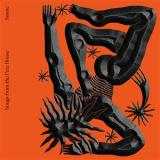
In the world of Smote, going further out means going inward. Less a metaphysical journey into inner space, more a physical journey into the ground itself, converging with its roots and vibrations. What's more, a journey right to the heart of its principal architect's daily experience. Smote's fifth release for Rocket Recordings, and their deepest, most fully realised to date. Forged from repetition and mantric intensity and possessed of formidable psychic fortitude, this album prove that the only retro-chic Smote indulge in is liable to go back several centuries. The megalithic monomania of last year's A Grand Stream set a formidable precedent, and Smote's live shows in its wake have gradually built a reputation as visionary seers building audial monuments by cranked amplification and atmospheric intensity alike. Yet these five gnostic serenades offer portals and paradigms anew. Continuing Smote's exploratory mission into heaviness in all its forms. Songs From The Free House sees Foggin exploring a variety of new avenues. Therefore, whilst listeners might align the pantheistic forays into drone-based abandon with previous travellers like Earth and Om, the influence of folk songs and legends, as well as electronic music make their presence felt. "I've been listening to heavy electronic stuff like Puce Mary and The Body" adds Daniel, "Stereotypically guitars are often seen as the instrument for "heavy" music, but the sheer force that's available from electronics is something that will crumble most guitar centred music." Elsewhere a more melodic vocal based structure is writ large amidst these rites and revelations, particularly on The Linton Wyrm, which proceeds from devotional chant to a potent conclusion, also inspired by Foggin's everyday surroundings. Wrought from the earth, transposed to the ether, and now shared with the world at large, this album marks a transcendental journey where Smote render ancient and modern indivisible. Just as traditional music is passed down through generations, Songs from the Free House is where the primal collides with the eternal.
expected to be published on 29.05.2026

Refracted's "In Veil" materialises as the third emission in the Titrate series. A gradual unfolding across six passages, each step a study in the dissolution of boundaries.
Here, time becomes elastic - synthetic textures breathe alongside captured moments of reality, neither demanding prominence nor seeking refuge in the background. Percussion appears as memory rather than rhythm, while drones hover like fog over unknown lands.
Cut to 180g vinyl and embraced by 350gsm reverse board, "In Veil" doesn't announce its presence but rather seeps into awareness.
On Stock and ready to ship

On Stock and ready to ship
"Nusa" is the last part of a trilogy started in 2020 with Masao Yamamoto and Akira Uchida. A project that began with light (“Sasanami”, 2020), moved through darkness (“Kurayami”, 2023), and returned to the ambivalence of the two (“Nusa”, 2026), which ultimately sustain and complement one another in all their variations and complementarities. Both in terms of tones and in the humanity that runs through us in these times of such stark contrast.
For this last part of the trilogy, Masao Yamamoto and Akira Uchida travelled to the island of Hokkaido at the beginning of 2026 to supplement the project with photographs and audio recordings of the ice and the surrounding landscapes.
Graduated in saxophone from Senzoku Gakuen College of Music, Akira Uchida explores sound through tuning, medieval music, and acoustics, supporting jazz pianists as a piano tuner. After training under instrument maker Masahiro Adachi, he became an independent clavichord builder. In 2020, he created an instrument for Ryuichi Sakamoto. In 2021, he crafted one using reclaimed wood from Kiyomizu-dera Temple (FEEL KIYOMIZUDERA). His work focuses on making, tuning, and performing instruments.
expected to be published on 05.06.2026
Bristol innovator Addison Groove has long been reshaping footwork and bass music, but now steps into an entirely new world as Astel. Shards is an album in which he explores ambient frontiers with a sense of space, emotion and hints of nostalgia on Biofield Records, a new label from Darwin designed for deeper listening. There is a weightlessness to the music, with 'Cosmic Affinity' casting you adrift in the deep unknown with smeared pads and gentle flutters of hope way off in the distance. 'Starlight Shards' is all shifting tones and feathery lines, while 'Astral Radiance' has a sandy texture as well as long, sweeping synth arcs. It's an escapist world that provides plenty of prompts for your own endlessly deep reflection.
expected to be published on 23.10.2026

Born Hovhannes Sargsyan, D.zúk (”dzook” = fish) is a Yerevan-based producer influenced by the delicate qualities of nature, juxtaposed against the concrete imprint of human existence. His debut, Ishkhan (“eesh-khan” = prince; also refers to an endemic trout found in Lake Sevan) is a pensive journey through ethereal, underwater landscapes. He calls his music “fishwave”; a swinging mélange of dub, house, bass and ambient sounds. “Ishkhan to me is at its strongest when it gets deepest into its reveries and abstractions... Wobbly electronic weirdness collides with duduks and whatnot - and maybe reach maximum fish-ness with ”Poghpatits Sarer”. Reserved grooves strolling astride plenty of great musicianship. As a debut, it shows great promise of things to come, too, and I hope creator D.zúk continues to plumb to watery depths soon.” - Peter Kirn for CDM.link
TRACKLIST: 1. Mutq 2. Impulse 3. Punge 4. Reverse 5. Anush 6. Nane 7. Tses 8. Sa 9. Poghpatits Sarer 10. Elq
Order now and we will order the item for you at our supplier.
Originally released in 2012. A long-in-the-making soundtrack to acclaimed filmmaker Grant Gee's documentary about German writer WG Sebald. »Patience (After Sebald)« is a multi-layered film essay on landscape, art, history, life and loss - an exploration of the work and influence of German writer WG Sebald (1944-2001), told via a long walk through coastal East Anglia tracking his most famous book »The Rings Of Saturn«. Much like The Caretaker's oeuvre, Sebald's works are particularly focused on themes of memory, both personal and collective, making Kirby the ideal candidate for this score.
Grant tasked him with soundtracking responsibilities, but rather than thrift shop shellac, the source material for »Patience« was sourced from Franz Schubert's 1827 piece 'Winterreise' and subjected to his perplexing processes, smudging and rubbing isolated fragments into a dust-caked haze of plangent keys, strangely resolved loops and de-pitched vocals which recede from view as eerily as they appear. Mastered by Lupo at D&M, the album is adorned with another specially commissioned painting by Ivan Seal.
Order now and we will order the item for you at our supplier.

Repress!
Biosphere is the main recording name of Geir Jenssen (born 30 May 1962), a Norwegian musician who has released a notable catalogue of ambient electronic music. He is well known for his works on ambient techno and arctic themed pieces, his use of music loops, and peculiar samples from sci-fi sources. His 1997 album Substrata was voted by the users of the Hyperreal website in 2001 as the best all-time classic ambient album.
Cirque - originally released in 2000 - was Biosphere's first album for the UK label Touch. This new re-issue comes with a 6-track bonus album and new artwork.
Mojo (UK): Fourth full album from ambient pioneer. Coming to prominence with 1992's Microgravity - which along with the first couple of Aphex/Polygon Window CDs, defined the genre ambient - Geir Jenssen as Biosphere has made three of the '90s' best albums, culminating with last year's near beatless Substrata. The idea - as it always was thanks to Eno's On Land - is music as environment (reflecting, creating): working from his base in Tromso, Arctic Norway, Jenssen offers a polar, Apollonian exploration of the human psyche. Cirque is a perfectly constructed 47-minute sequence: cold clarity up against real depth of field, synth cycles dissolving into sudden moments of sonic revelation that sound like a waking dream - try the first 20 seconds of Black Lamb and Grey Falcon. (And if you think that's pretentious - your loss). Inspired by the story of a young American, Chris McCandless, who walked alone into the Alaskan wilderness and perished, Cirque balances the tightrope between warmth and unease, resolving into a moon melody that leaves you a peace. What a good record! Jon Savage.
Order now and we will order the item for you at our supplier.

2026 Repress
Feral, one of the leading artists of Swedish label, Hypnus Records, has some new releases lined up - this time on his new imprint.
Aube Rouge embodies sounds reminiscent of old, creaky amusement parks amongst the mysterious chimes of fortune telling machines and roaring rollercoasters.
The four tracks of the imprint's first record, L'Aube Rouge, are a journey through the evolution of Feral's sound design.
On Stock and ready to ship
Aquainted through their shared love of music technology, and now a friendship, this is the second-time pairing between German artist Arovane and American artist Taylor Deupree after their first release together in November 2022: »Skal_Ghost« on 12k.
This new release explores once more an organic journey built around loops and layers or processed and re-processed sounds giving this particular color to a must-have album.
expected to be published on 22.05.2026

"Remnants" is an album marked by the ambiguity of presence and absence. The pieces, recorded using minimal equipment in what Suzuki describes as a ritual-like atmosphere, began as a way of processing the loss of her father in 2019. But beyond this, they also come to speak to the ways in which loss changes our relationship with someone, and our experiences of the world. Indeed, the experience of loss is not marked merely by a single event, but is instead a process that unfolds over time. Despite the other's absence, a particular location, the smell of a certain brand of tobacco, a look on a friend's face - traces such as these are enough to bring about a renewed presence.
It is through these subtle traces and remnants, encountered over time, that we come to understand loss as not only the acceptance of absence, but the recognition of a continued presence. As Suzuki says, "this is not a solo album." Its creation was instead shaped by an ongoing dialogue, the continued elaboration of a complex and ambivalent relationship. At once melancholic, warm, and embracing, it is this ambiguity, these subtle traces, that Suzuki’s compositions speak to. These are not merely the sounds of mourning, but instead have been shaped by the evolving dialectic of presence and absence into something far more subtle and haunting. (Zefan Sramek, 2026)
expected to be published on 05.06.2026
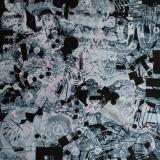
New album by FLOCKS, the duo of drone specialist WERNER DURAND and percussionist ULI HOHMANN. Musical landscapes that move between traditional as well as experimental sounds with influences from Krautrock and JON HASSELL's "fourth world" aesthetics.
WERNER DURAND has made himself a name with various projects with Dhrupad singer AMELIA CHRISTIANSEN, DAVID CHRISTER HENNIX, as the co-founder of THE 13th TRIBE, ARMCHAIR TRAVELLER and TONALIENS (with ROBIN HAYWARD and HILARY JEFFERY) plus numerous solo albums, released on labels like Black Truffle, Unseen Worlds or Edition Telemark. Having studied saxophone as well as Indian / Persian flutes, the Berlin based DURAND is a highly reputated protagonist in the drone scene, famous for his self-built wind instruments like buzz-clarinets or his PVC neys & horns.
His partner in FLOCKS (and longtime personal friend) is ULI HOHMANN whose early encounters with music from Asia, India and Africa led to studies with the Ghanaian master drummer MUSTAPHA TETTEY ADDY and later Tombak and Daf with NEMAD DARMAN (Iran). HOHMANN played in a couple of projects that explored the language of classical Persian music, and started building his own stringed instruments (being an educated carpenter). In 2014 he joined DURAND and AMELIA CUNI for the album "Clearing", and 2018 DURAND and HOHMANN decided to con- tinue as a duo: FLOCKS was born.
On “Lagoon”, the duo further explores the aesthetics it has crafted on its selftitled debut (2023, on the now defunct ZEHRA imprint): DURAND and HOHMANN shape drone-y soundscapes based on their self-built wind- & stringed instruments, Persian percussion and subtle electronics, drawing ad- ditional inspiration from Krautrock (listen to the irresistible, hypnotique, ever-changing rhythmic pattern of the title track) as well as JON
On Stock and ready to ship
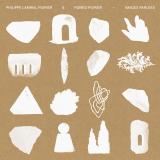
Besides his work as a painter, filmmaker and set designer, Philippe Lamiral Poirier (1951-2025) played guitar and saxophone in the group Kat Onoma, which he co-founded with Rodolphe Burger.
His fifth studio album combines his written texts with music composed by his son, Roméo Poirier, whom he considered to be cut from the same musical cloth as he was. It also confirms what has emerged from his previous albums, namely songs more spoken than sung and whose words evoke images, thus the album’s title – Images parlées.
A book of his paintings, Images traversées, will be published simultaneously with the album.
In this continual back and forth movement between text and image, music has always been present – sensitive and abstract, expressing nothing other than itself. It hollows out a place to tell us where we are. It is life without delay.
Roméo Poirier is working in the field of electronic music, focusing on heavy processing of samples and digital collage. He released albums on the London based record label Kit Records (Plage Arrière), the mancunian record label Sferic (Hotel Nota), and Jan Jelinek’s own imprint Faitiche (Living Room and Off The Record).
Order now and we will order the item for you at our supplier.
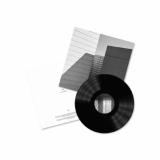
zake has long mastered the art of go-slow pacing with gradual changes in the density and timbre of his synths. Here, four extended ambient pieces unfold through slow-moving synth layers and sustained tonal clusters shaped by hospital room stillness on this new one from the ever present ambient don, zake. 'Hh I' opens with low-frequency drones and faint harmonic shifts that hover without a rhythmic anchor. 'Hh II' introduces higher tones with subtle detuning, creating tension. 'Hh III' darkens through thicker layering and reduced harmonic movement while 'Hh IV' thins the texture with long decay tails. Another immersive gem.
expected to be published on 15.05.2026
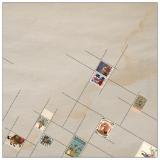
The concept for this one is as wonderfully odd as we have ever heard: Argentinian Federico Durand draws on his collection of Cinderella stamps and looks to translate their modest scale into sparse arrangements and carefully spaced notes. Small motifs drift across analogue synth tones, all shaped with tape hiss and soft saturation. Pieces move slowly, often built from repeating figures that shift in pitch and melody, feel tentative, sometimes dissolving into low drones or faint harmonic clouds. There is little percussion, with rhythm implied through looping patterns and subtle timing changes. Tracks favour brevity and minimalism and the result leans into a darker mood than his earlier work, with a muted, slightly worn character that makes it all the more real.
expected to be published on 18.05.2026

Night Sea is honoured to present their first LP to the Silent Season family. The album is the culmination of a two-year journey playing with the relationship between sound, repetition, and impermanence. The slowly evolving musical landscapes of Still are an invitation to slow down and explore the ever-changing facets of one's experience.
The Item is out of Stock. We will send You an Email as soon as it´s available again if you click on "in Stock Mail"

Building on the foundation of his two EPs for Samurai Music, we proudly present Urmah, the first LP exploring the 170 tempo from acclaimed Techno/Electronic producer Juan Rico aka Reeko, aka Architectural.
Reeko has now become an integral part of the overall Samurai Music sound. His work resonates deeply within the label's ethos, and Urmah exemplifies this synergy, highlighting his ability to enrich and expand Samurai Music's vision and push the boundaries of his own artistic expression.
For Urmah, Reeko delves even further into sound and psyche with a richer, more enveloping exploration into his distinct interpretation of the tempo. Reeko's production prowess shines brightly on Urmah with the warmth and weight of each track leaving an indelible impression.
Urmah focuses on heady fathomless grooves that tease shards of breakbeats like delicious icing, binding themselves to a gentle psychedelia with celestial textures. This is dexterous, meditative journey music from a producer who has an intimate relationship with groove creation.
As one of the most respected Techno producers in the genres long history, Reeko's influence and mastery are undeniable. With Urmah, he further showcases his expertise, expanding his palette to display a refined command of the 170 BPM tempo. The LP is a testament to his ability to innovate and redefine, solidifying his reputation as a pioneering force in electronic music.
The Item is out of Stock. We will send You an Email as soon as it´s available again if you click on "in Stock Mail"
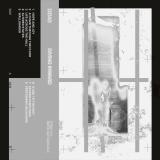
With Diving Inward, the first release under the alias Dziad, Aleksander Filipiak melds the frigid indifference of synthesised textures with exploratory re-imaginations of his first instrument as an industrial buzz saw of unpredictable metallic fluctuations. The sonic landscape is a tribute to a multiplicity of (once) cutting edge, experimental techniques from the golden age of electroacoustic composition, combined with the composer’s enduring love for organic and unpredictable textures, transportive folk motifs and hypnotic pads.
Recorded in the winter 2022, this amalgam of the tangible and imaginary, shudders and re-lives a sombre season of isolation and loneliness. The pieces stand as an ode to the optimistic acts of play and creativity; an antidote to a reality which, at times, feels tolerable at its best. With this release, Filipiak encapsulates emotions that are overdue to be left behind. Shelve them for another day.
expected to be published on 01.05.2026
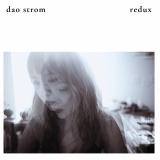
Redux, an ambient-folk album from Portland, Oregon musician, poet, and multimedia artist Dao Strom, is a collection of nine resurrected pieces. Reimagining songs she initially composed as a member of the Austin, Texas alt-country and singer-songwriter scenes of the early 2000s, Strom reworks these lost songs into ambient-folk mini-epics—part grounded and earthly, part ethereal and otherworldly. Drawing on an intimate yet spacious palette of folk, ambient, and experimental textures, woven through with a poetics of vulnerability and quiet emotion, Redux explores song as gently reverberant fields of layered vocals over finger-picked guitars with touches of electronics and sampling. Strom’s musical journey initially began in a roots and acoustic vein, simultaneously with her career as a fiction writer. In the years since, she has moved from Austin, Texas to Juneau, Alaska to Portland, Oregon; her work too has expanded across genres into more experimental formats of poetry, music, and multidisciplinary art. In returning to these earlier songs, Strom reclaims and revives them, exploring her relationships to time, voice, and the continuances of emotion and memory. The word redux means “brought back; revived”; a sense of something restored—earlier renditions of some of the Redux songs were recorded with Austin-based collaborators and producers; some songs were written in that time period but never recorded. Produced, performed, and recorded by Strom alone in her home studio, Redux is a return and reemergence of the artist to her own most personal, intuitive structures and atmospheres of voice, sound, and song. Released on cassette by Antiquated Future Records, and reissued on vinyl in 2026 by Disasters By Choice.
Dao Strom is an artist who works with three “voices”—written, sung, visual—to explore hybridity and contemplate the intersection of personal and collective histories. Her music releases move between “song-poem” cycles and ambient-folk albums. She is the author/composer of several hybrid projects that blend poetry, music, and visual art into unique multimodal experiences, including Tender Revolutions/Yellow Songs, a song-cycle with set of four chapbooks, jointly released by Beacon Sound, Antiquated Future Records, and The 3rd Thing Press (2025), and Instrument/Traveler’s Ode, a poetry-art collection and song-cycle released by Fonograf Editions and Antiquated Future Records (2020). Born in Vietnam and based in Portland, Oregon, Strom began her musical journey in the early 2000s, when she first began infusing into the context of “Americana” folk/roots music her own diasporic Vietnamese experience and stories. Her music has since moved in more experimental directions, resisting easy categorization, yet still maintaining tendrils of folk ethos. She also writes songs about the ineffable nuances of emotion, memory, and connection, as captured on the album, Redux, which gathers songs from across her songwriting years into an ambient-folk setting, self-produced and recorded by Strom, released on cassette in 2022 by Antiquated Future Records, and reissued on vinyl in 2026 by Disasters By Choice. As a multidisciplinary artist, Strom has presented performance and installations at venues such as the Time Based Art Festival (Portland Institute for Contemporary Art) and Moving Poets Novilla in Berlin, Germany, and has received awards from the Creative Capital Foundation, Spark Artist Award, and others. Strom is also a founding member of She Who Has No Master(s), a collective of Vietnamese women writers and artists making polyvocal poetry-art works as a means of reaching across borders.
expected to be published on 08.05.2026