Scandinavian jawbreakers Harmagedon offer up a nightmare future on their debut album Dystopian Dreams, with a refreshingly modern concoction of melodic death metal and crust punk. Three piece riff machine from Stockholm Sweden, Harmagedon is a raw festering carcass of dynamic grind and roll. Featuring members of Martyrdöd and Freedom raising hell once again, Harmagedon’s debut record Dystopian Dreams is a fusion of heaviness that is difficult to pin down but makes all the damn sense in the world! With focus on primal minimalism but maximum animalism, Dystopian Dreams is the ground zero of an explosive power trio summoning raw energy into being. With no frills and no gimmicks, just relentless heaviness, Harmagedon is a matured brew of “crust punk” or “d-beat” (“kängpunk” for the diehards) infused with ravishing death-metal. Dystopian Dreams is made by adepts of distortion and grime to be imbibed by connoisseurs of rage and chord-fury. Recorded live at their own studio, Dystopian Dreams was conjured with the help of Fred Forsberg of Mass Worship at the controls, capturing Harmagedon’s wildfire and blending this dense stew together. With the addition of Magnus Lindberg of Cult of Luna mastering it, Dystopian Dreams has that exceptional flavour of a future classic, where all the cogs and wheels of this merciless weapon fire on all cylinders. Black Sabbath, Entombed, Neurosis & High on Fire spring to mind, as the calibre of Harmadgedon’s riff whirlwind is of the finest quality, the antithesis of royalty but epic and majestic in delivery. Dystopian Dreams’ hulking magnetism leads you expertly to headbang and worship at the altar of timeless metal, without the slightest remnant of doubt. Songs like Reptilian and Controlled Chaos groove and churn, but pack a hell of a concrete punch, with nihilistic, gravelled guitars and spewing vocals of molten brimstone. Guitarist and vocalist Tim Rosenquist says: “Controlled Chaos is about propaganda actions and distractions but Reptilian is about how hard work makes you into this emotionless beast of a being. That song is best served blasting on the factory floor or in the car on your way to the office! Reptilian’s themes are at the core of what Harmagedon is about”. Look to the masters to deliver true heavyweight metal when the current scene lacks enough muscle and teeth. From a band made up of underground titans, Harmagedon is drawn from the well of eternal heaviness, living in death forever, what nightmares are made of. Harmagedon is: Tim Rosenquist - Guitars & Vocals Magnus Berglund - Bass Jens Bäckelin - Drums
Buscar:mach 2
25th anniversary limited edition yellow 2LP, download card included. Praise for What Burns Never Returns after its original 1998 release: As the purveyor of brainy, muscular instrumental rock, Don Caballero spent most of its early years labelled the “Geeks from Pittsburgh who don’t sing.” Now that the rest of the indie-rock world has warmed up to instrumental rock (see the popularity of Tortoise, et al.), Don Caballero reemerges from hiatus with its third full-length, What Burns Never Re-turns. Staying ahead of the learning curve, the band employs little of the muscle that marked its earlier efforts, instead adopting a more high-brow, abstract approach to its music making. The band is not improvising per se, but creating meticulously arranged, post-Kind Crimson-like songs that attack odd time signatures. Stunning in its acrobatic musicianship, intriguing in its relentless experimentalism, What Burns… is indeed a welcome return. — Tad Hendrickson, CMJ New Music Report // The follow up to 1995’s monolithic “Don Caballero 2”, “What Burns Never Returns” is a study in industrial-strength grace, like some archaic machine heaving in exorable arabesques. The metallic guitars and grinding rhythm section interlock with mechanistic precision, yet a very human friction shoots sparks of real beauty. — AJ Sutton, Billboard // What superior minds conceived these eight amazing instrumentals, at once impossibly complex and yet powerfully direct, and what mere men have the strength and discipline to perform them? … There are no druggy lyrics or samples or ironic reappropriations of outré instruments here - just thrilling purity and exhilarating single-mindedness.
- 1: Dimension Shifter
- 2: Invaders On My Back
- 3: Anxiety Reducer
- 4: Radio Source Sagittarius
- 5: Mutant
- 6: No Warning
- 7: Evolution Machine
- 8: Triplanetary
- 9: The Last Question
Southern California hard rock mainstays FU MANCHU are announcing details of their forthcoming new album, itled "GIGANTOID," out June 9th the band's own At The Dojo Records distributed throughout the US and Europe via Cargo Records. After almost 25 years together, and following last year's Scion A/V Club split 7" with friends MOAB and 2009's "Signs of Infinite Power," Scott Hill and company return with their first full-length album in close to five years. Recorded with Andrew Giacumakis, singer / guitarist for he aforementioned MOAB at his studio in Simi Valley, CA, the album features a slightly more primitive, raw and ultra fuzzed-out sound than previous releases. "We wrote 17 new songs for this record and got our favorite 9 songs out of that together," says Hill. "We were planning on releasing a 'part 2' record later this year but have plans for some of the other songs to appear in early 2015 to line up with our upcoming 25-year anniversary."
- A1: 助手席のSituation (Situation In The Passenger Seat)
- A2: Passing Scene
- A3: Miss Shooting
- A4: 灰色のひととき (A Gray Moment)
- A5: さらっとゆるして〜コーヒー通の恋人 (Forgiveness Without Reservation ~ Lover A6 And Coffee Connoisseur)
- B1: Wardrobeの中の夢 (A Dream In The Wardrobe)
- B2: 秋日和 (Clear Autumn Day)
- B3: 夜の海風 (Evening Sea Breeze)
- B4: Spouse-同行者- (Traveling Companion)
- B5: One By One
Satoshi Suzuki (鈴木慧) described his musical practice perfectly on the OBI strip of his 1987 privately pressed LP - Tokyo Contemporary! consisting of 40% Jazz, 30% Soul, 20% Brazil, and 10% Kayokyoku - a musical mixture not too far off from what is now referred to as City Pop.
However, this archival compilation of Satoshi Suzuki's works presents a perspective of the City Pop sound not from affluent 1980s Japanese bubble economy-era studios and highly paid studio musicians, but from a one-person band making the most of the instruments in their home studio, inspired by musical traditions from around the world.
With notes of city pop, AOR, jazz, soul, bossa, and kayōkyoku - Satoshi Suzuki's intimately recorded pop songs are charming and full of wit, with a seasonal and poetic approach to these musical forms using only a drum machine and an array of digital synthesizers. Sounding a little like Pacific Breeze played on a Casio keyboard and drum machine, Uku Kuut soundtracking a SEGA video game, or the wonderful lo-fi works of Suzuki’s lo-fi homemade pop & jazz contemporaries Ronald Langestraat, Lewis, and Joe Tossini — though most of all, SUZUKI's works show a new and singular perspective of the bubble-era city pop of the Showa period.
Distant Travel Companion (遠い旅の同行者) introduces Suzuki's musical works to a wide audience for the first time, featuring remastered songs originally released over three privately pressed LPs from the 1980s, as well as a previously unheard CD from 1993. The original works were released in an impossibly limited edition of 100 copies each - printed and assembled on printing equipment at Suzuki’s company office and scarcely distributed, recording these songs at his home studio in his free time. The compilation's design and accompanying OBI and liner notes are a direct homage to the original releases.
Satoshi SUZUKI is a Japanese keyboardist, singer, songwriter, and music arranger. He is also an author of literature and winner of the "Shin-nihon-bungaku" (New Japanese Literature) Award. He was born in 1958 in Tokyo, Japan.
- A1: Point Of Departure
- A2: Source Of Uncertainty
- A3: Image Of The Past
- A4: Beings Of Light
- A5: In Solitude We Are At Least Alone
- A6: Viewed From Below The Surface
- B1: Somatosensory
- B2: Multiples
- B3: Dying While Being Held
- B4: Machines Of The Subconscious
- B5: Dark And Lonely Waters
- B6: The Dust Settles
- B7: Moments Of Isolation
Reissue number seven for Heels & Souls Recordings sees them look back to the sounds of South Africa’s townships in 1991, cherry picking four of Tashif Kente’s finest cuts from his sought after album A Boy And A Dream, giving them space to breathe on a 12" pressing.
Clearly influenced by the flavours bubbling over from the UK and US in the late ‘80s and early ‘90s, from R&B through to boogie, proto house to new jack swing, Tashif’s productions are a melting pot of ideas and influences, laced with a distinctive South African flavour.
Born in Soweto, Mzwandile ‘Tashif’ Kente, cut his teeth with Harari for a brief period, a group that birthed greats like Condry Ziqubu, Sipho Mabuse and Alec Khaoli, before going solo in 1984 and releasing just one album as Tashif Kente, 1991’s ‘A Boy And A Dream’. An album that speaks of love, lust and longing, produced by Kente and Selwyn Shandel with Marc Rantseli also joining the fold, it has that signature South African synth bass, drum machine and killer keyboard combo of the Bubblegum and Kwaito scenes, topped with Kente’s buttery vocals.
Heels & Souls Recordings take four favourites from the LP and press them loud on either side of a 12”. On the A, the audacious new jack, dancefloor bubbler ‘Tell Him I Became Your Lover’ leads into the lovestruck, boogie-tinged grooves of ‘Somebody’s Got My Love’. Flip it over to find a jealousy jam of the highest order with the synthy soul number ‘Who’s That Boy’, before ‘I Like The Way You Love Me’, a lights down low, R&B flavoured lovesong rounds off the EP.
Licensed from Gallo, who transferred the original ¼ inch tapes for their archives, Heels & Souls have enlisted the expertise of Justin Drake to remaster these South African beauties for a new generation of listeners.
The forever exploring electronical entity of a band, Gusgus, has opened yet a new era in their unique sonic multiverse. With their 12th album, the course is set to a strange mysterious place called DanceOrama. A Rave-Mall in a nostalgic future, DanceOrama is the place to be, where you can experience infinite freedom, genre and gender free. Moving from the pulsating new-wave influenced techno pop of the last album “Mobile Home” (2019), Gusgus emits the vibe of DanceOrama on their new album as an arousing, melody-rich hybrid of 80s/90s parties and raves. The 9- track album is slated for a November 10th release. The release is evenly split up in euphoric fusioned pop anthems and genre-free instrumental journeys.
Gusgus‘ last album “Mobile Home” was the later of twin albums that found the band exploring early 80’s new wave influences and reviving them in the iconic Gusgus soundscape. The highlight on the album was a pulsating techno reggae track called “Higher” that introduced a new member into the band, Margrét Rán, the lead singer of “VÖK”.
Whereas on “Mobile Home”, the concept was stationed in a rural environment of a dystopian side reality, Gusgus now moves to the city. In this city of strange discomforting future omens, DanceOrama stands out as the rave-mall of freedom. Leaving the new wave influences, this album is a strange hybrid of the 80’s and 90’s parties twisted into a genre-free blend of arousing experiences.
The album consists of 5 instrumental tracks and 4 vocal pop songs, ranging from 105-158 bpm and exploring various influences from the 80’s and 90’s and even the 70’s in a strange fusion of techno, trance, italo-disco, house and pop that emits the rawness and innocence of previous decades. The pop songs are quite strictly set as stories related to the mysteries and rumors of DanceOrama. One track in particular will be very exciting for our fans, as it has been a regular final track on our live show since the album “Arabian Horse” in 2011. This is the track “Breaking Down” that was recorded during the album “Mexico” in 2013 with “Earth” and “Högni” on vocals but, due to emotional turmoil, has never been released until now.
While this may be the first release on Sheffield's Central Processing Unit from Global Goon, the one known to friends and family as Johnny Hawk brings a whole heap of experience to the Nanoclusters mini-LP.
Hawk started dropping Global Goon records on the legendary Rephlex Records back in the 1990s. The project's subsequent releases have taken in imprints as esteemed as WéMè and Balkan. Factor in a whole host of other aliases which have delivered missives via the likes of Planet Mu, and you know even before you press play on this witty, wily record that you're dealing with a master at work here.
The confidence with which Global Goon approaches Nanoclusters shines through in Hawk taking much of the mini-album at midtempo. Cuts like 'Khroxic Mould', 'Metallik' and 'Syntheseers' sound like Bochum Welt heading down a dark alleyway. The former in particular is a seasick lope, the tuned synths lurching around like sailors on deck in a storm as bass ebbs and flows underneath the mix.
The influence of Kraftwerk comes through prominently at times here, particularly in the way 'Calcula' and 'Digit Six' play pensive, slightly sombre synth chords off some simple but effective forward motion in the drum programming. That is not to say that Nanoclusters is not full of invention, though. None of the productions are overly flash, but this approach allows the little details to shine through more clearly, from cleverly panned hi-hats to hissing synth counter-melodies which flit in and out of the mix. Enthralling and packed full of ear candy, they're further evidence that Nanoclusters is the work of an expert craftsman.
While the pulse of Nanoclusters remains relatively steady throughout, it's still a rather lively record. Plenty of these tracks will get the dancefloor moving if deployed correctly - though whether they're heard at home or in the dance, it's the attention to detail which makes them stand out.
'Snapterisk' is as perfect an example of machine-funk as you're likely to find - the drum programming is razor-sharp but rubbery with bongos, the bass a lithe burble, and those wobbly stabs of keys that put a bit of wiggle in the beat? Delightful stuff. Elsewhere the ever-looping arpeggio of 'Metro Esc' has hints of Frankie Knuckles' house classic 'Your Love', though an array of interesting sonic nuggets - snippets of vocal, radar-like bloops, a gently insistent low-end pulse - soften the track's clubbier elements with a pillowy sheen. And Hawk throws us a curveball right at the end of Nanoclusters, tapping back into that old Rephlex sound for the fizzy, braindancing 'Metal Glass'.
Global Goon doesn't need to show off on Nanoclusters - from brilliantly slick machine-funk to Kraftwerkian reveries, the CPU debutant lets the music do the talking here. It makes for a confident and vivacious mini-LP, one which wears its expertise lightly.
RIYL: Cardopusher, Bochum Welt, Cygnus, D'Arcangelo
‘Demos/sketches/interludes from the hinterland between records. Drum machines and single take vocal sketches tied together with downtime synth experiments and recordings of local disappearing areas.’ True as it is, Jabu’s strap-line is a somewhat understated take on what also proved to be a transformative experience for them. The follow-up record to their 2020 sophomore LP ‘Sweet Company’ (and the ensuing ‘Versions’), ‘Boiling Wells’ weaves a smudged, group -mind spell. Originally released earlier this year without fanfare as a digital-only release, it now receives the proper release attention it deserves, issued in a neatly packaged vinyl edition of 300 copies. Dreamlike, woozy, raw and in dub, the album documents a blossoming process, and encapsulates a fragment in time - holed up in the country, soaking up the atmosphere in collective isolation, creatively embracing the limitations of a small recording set-up, and finding a new way to work as a band. “My mum had gone away so we’d decided to take the mixing desk and a couple of drum machines out to her house and set it up in the front room. We did it a couple of times to get the bulk of the tunes on 'Boiling Wells' done, one in summer and one boozy one around Christmas. I think we all immediately enjoyed working that way, sat around all together, more of an immediate thing. Jas started to play a lot more guitar, her and Al would write lyrics on the fly or be programming a drum beat in or something. We were all switching around and getting ideas down really quickly, not worrying too much if they were good or not. The music was limited by the stuff we had there, I didn’t bring a big desk so we only had six channels or so, and everything was basically just recorded in as a stereo take so we were more or less stuck with it after we’d laid it down - which was nice too. I don’t think we would’ve changed them anyway; it was the sound of the room and of us doing it together in the moment that was really important.” There has always been a collaborative heart to Jabu, though its nature has shifted and morphed over time. In their earliest incarnation, in after-school jams, Alex Rendall would rap over Amos Childs’ beats, but by the time they began releasing music in 2012, Al had found his singing voice – a sweet, soulful counterpoint to Amos’ increasingly dub-wise, experimental backing. Both are founder members of Bristol’s Young Echo, a collective of friends and musicians first operating loosely together on radio shows, artistic collaborations and events, and later on, running a record label. As expansive as their original remit was, Young Echo has steadily evolved since featuring in The Wire’s 2013 cover feature on Bristol’s new school of post-dubstep bass music. Of late, Seb (aka Vessel) has been working with violinist Rakhi Singh on string arrangements for Jabu, and the upcoming residency at Bermondsey’s MOT will showcase relative newcomers Birthmark and Intel Mercenary alongside the regular crew. Jabu’s debut album proper, ‘Sleep Heavy’, arrived in 2017 courtesy of Blackest Ever Black. A sublime, focused meditation on grief and loss written largely by Amos and Al, it marked the debut of Jasmine Butt (aka Guest), adding a further layer of vocal texture to their palette. ‘Sweet Company’, their first album written as a trio (released via their own do you have peace? label), drifted into lighter, more ethereal introspection. Featuring guest appearances by Sunun and Daniela Dyson, remixes by Equiknoxx’s Time Cow and Young Echo ‘s Ossia teased out the inherent pop and dub sensibilities respectively. Recent times have also seen remixes by kindred spirits Seekers International and Jay Glass Dubs, and a collaboration with the renowned T.S. Eliot Prize-winning dub Poet and musician Roger Robinson on a pair of plaintive, aching 7” singles. Jabu’s broad raft of inspirations can be experienced first -hand on their monthly NTS Radio show ‘Music 4 Lovers’, co -hosted by long-time friend and soul afficionado Andy Payback. A celebration of the endless tapestry of interrelated musical connections, it runs parallel to Jabu’s own reinterpretation of their influences. For ‘Boiling Wells’, Amos remembers a diet of “A.R. Kane, Cocteau Twins, DJ Screw, Southern/Memphis rap mixtapes, early 90’s jungle, Karen Dalton, Sybille Baier, Vashti Bunyan, Svitlana Nianio, a lot of soul, Armand Hammer & Alchemist, Grouper, Bobby Caldwell. Jazz was a constant, Japanese, Polish, Latin, American…”. And from those diverse strands, something new and singular has formed, to line up alongside them. ‘Boiling Wells (Demos ‘19-’22)’ is released by UK newcomer Six of Swords in a limited vinyl edition of 300 copies, pressed on black vinyl housed in full colour 270 gsm matt varnish sleeve and black paper inner, with full download coupon
Incl. Radioactive Man Remix
Veterans of the vibrant London underground scene Anna Wall and Thoma Bulwer joined forces to deliver EYA Records’ latest output ‘Liquid Wiggle EP’. These are deep and hypnotic machine-driven tracks for big room and warehouse parties! One of the highlights of the EP here is the nostalgic and moody electro remix by UK living legend Keith Tenniswood aka Radioactive Man.
Im Jahr 1997 läutete "Solid" ein neues Kapitel in der Geschichte von U.D.O. ein. In den darauf folgenden Jahren sollte eine Vielzahl weiterer Heavy Metal-Meilensteine folgen. Nach nun über 25 Jahren werden diese Klassiker endlich neu aufgelegt. Am 24.11.2023 erscheinen die ersten vier Alben der Reihe - teilweise zum ersten Mal - auf Vinyl. "Man and Machine", aus dem Jahr 2002, wird dabei als limitierte weiße Vinyl erhältlich sein.
- 01: Gavin Bryars - The Sinking Of The Titanic
- 02: Gavin Bryars - Jesus Blood Never Failed Me Yet
- 03: Christopher Hobbs - Aran
- 04: John Adams - American Standard - (I) & John Philip Sousa
- 05: John Adams - American Standard - (Ii) & Christian Zeal And Activity
- 06: John Adams - American Standard - (Iii) & Sentimentals
- 07: Christopher Hobbs - Mccrimmon Will Never Return
- 08: Gavin Bryars - 1-2, 1-2-3-4
- 09: Brian Eno - Discreet Music
- 10: Brian Eno - Fullness Of The Wind
- 11: Brian Eno - French Catalogues
- 12: Brian Eno - Brutal Ardour
- 13: Max Eastley - Hydrophone
- 14: Max Eastley - Metallophone
- 15: Max Eastley - The Centriphone
- 16: Max Eastley - Elastic Aerophone - Centriphone
- 17: David Toop - Do The Bathosphere
- 18: David Toop - The Divination Of The Bowhead Whale
- 19: David Toop - The Chairs Story
- 20: Jan Steele - All Day
- 21: Jan Steele - Distant Saxophones
- 22: Jan Steele - Rhapsody Spaniel
- 23: John Cage - Experiences No.1
- 24: John Cage - Experiences No.2
- 29: Michael Nyman - Bell Set No.1
- 30: Penguin Cafe Orchestra - Penguin Cafe Single
- 31: Penguin Cafe Orchestra - From The Colonies
- 32: Penguin Cafe Orchestra - In A Sydney Motel
- 33: Penguin Cafe Orchestra - Surface Tension
- 34: Penguin Cafe Orchestra - Milk
- 35: Penguin Cafe Orchestra - Coronation
- 36: Penguin Cafe Orchestra - Giles Farnaby&Apos;S Dream
- 37: Penguin Cafe Orchestra - Pigtail
- 38: Penguin Cafe Orchestra - The Sound Of Someone You Love Who`s Going Away And It Doesn`t Matter
- 39: Peguin Cafe Orchestra - Hugebaby
- 40: Peguin Cafe Orchestra - Chartered Flight
- 41: John White - Autumn Countdown Machine
- 42: John White - Son Of Gothic Chord
- 43: John White - Jew`s Harp Machine
- 44: John White - Drinking And Hooting Machine
- 45: Gavin Bryars - The Squirrel And The Ricketty Racketty Bridge
- 46: Tom Phillips, Gavin Bryars & Fred Orton - Introduction
- 47: Tom Phillips, Gavin Bryars & Fred Orton - Overture
- 48: Tom Phillips, Gavin Bryars & Fred Orton - Aria - I Tell You That&Apos;S Irma Herself
- 49: Tom Phillips, Gavin Bryars & Fred Orton - First Interlude
- 50: Tom Phillips, Gavin Bryars & Fred Orton - Aria - Irma You Will Be Mine
- 51: Tom Phillips, Gavin Bryars & Fred Orton - Second Interlude
- 52: Tom Phillips, Gavin Bryars & Fred Orton - Chorus - Love Is Help Mate
- 25: John Cage - The Wonderful Widow Of Eighteen Springs
- 53: Tom Phillips, Gavin Bryars & Fred Orton - Postlude
- 27: John Cage - In A Landscape
- 54: Harold Budd - Bismillahi & Rrahmani & Rrahim
- 55: Harold Budd - Two Songs
- 56: Harold Budd - Madrigals Of The Rose Angel
- 57: Harold Budd - Juno
- 26: John Cage - Forever And Sunsmell
- 28: Michael Nyman - 1-100
ONLY AVAILABLE ON PREORDER!!
The first-ever LP box set gathering the entire 10 albums collection of Obscure Records produced by Brian Eno’s.
Curated by Gavin Bryars
Originally issued between 1975 and 1978, nearly 50 years on the output of Obscure remains radically forward-thinking - offering glimpses of a future yet to be fully seen - and amounts to one of the most important, influential, and creatively accomplished album series ever conceived.
Co-curated by Eno and the composers Gavin Bryars and Michael Nyman - issuing the recording debuts of Bryars, Nyman, John Adams, Christopher Hobbs, David Toop, Max Eastley, Jan Steele, Simon Jeffes / The Penguin Café Orchestra, and Harold Budd, in addition to important works by John Cage, Tom Phillips, and John White - Obscure’s collective output is a groundbreaking landmark in the histories of Minimalism, modern composition, and Experimental music, and laid much of the groundwork for the soon to emerge movement of Ambient music.
Illuminating the remarkable, and largely otherwise undocumented, creative ferment within and between the British and American scenes of experimental music during the mid to late 1970s, this collection - made in full collaboration with all of the composers or their estates - contains the entire 10 album output of Obscure, the majority of which have been out of print for years, with a number having never received a CD reissue.
Offering each of Obscure’s albums, completely remastered and housed in faithful replicas of their original covers and liner notes, as well as a 80-page book (LP dimension) for LP-BOX SET, filled with rare photos, archival material and texts by - among others - Gavin Bryars, Bradford Bailey, David Toop, Max Eastley, Richard Bernas, and Tom Recchion, this historic collection marks the first time this seminal series has received a complete LP repress.
2023 Repress
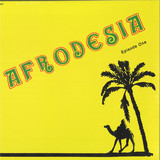
Here after a long time the first EP release on Best Record containing new unreleased music. Afrodesia project born from a close collaboration between Periodica Records and Best Italy featuring Mystic Jungle & Whodamanny.
Afrodesia took inspiration from the italian afro-movement that lasted for few years during mid-eighties expecially from those songs produced at the legendary Les Folies Studios in Milan. Afrodesia sounds balearic boogie afro and cosmic with heavy use of original past synths and drum machines programmed and played by Dario Di Pace, Raffaele Arcella and real acoustic instruments thanks to the musicians : Giulio Neri (Tenor Saxophone and vocals), Andrea Farias (Guitar), Davide Di Sauro (Bass) and the late George Aghedo (Percussion).
Agitation Free zählte in den frühen 70er Jahren zu den führenden Vertretern der deutschen experimentellen Rockmusik. Die Berliner Band entwickelte ab Ende 1967 lange, für diese Zeit ungewöhnlich freie instrumentale Improvisationen. Kult-Status erlangte sie bereits 1972 mit einer eigenständigen Mischung aus improvisiertem Rock gepaart mit Elektro-, Ethno-, Jazz- und Trance-Elementen. Umfangreiche Live-Aktivitäten verschafften der Band in ganz Europa einen stetig ansteigenden Bekanntheitsgrad. So trat die Gruppe im Sommer 1972 im kulturellen Programm der Olympischen Spiele in München auf, tourte Anfang 1973 zwei Monate durch Frankreich, trat im Mai beim "German Rock Super Concert" in Frankfurt auf, produzierte das zweite Album "2nd" und ging anschließend auf Tournee durch Frankreich und deutsche Großstädte. 1974 machten sich bei der Band Ermüdungserscheinungen breit, die Ende des Jahres nach einem Abschiedskonzert zur vorläufigen Auflösung führten. Obwohl eine Reihe von Alben (mit Aufnahmen von 1972 bis 1974) nach der Auflösung der Gruppe erschienen und das Studio-Album "River of Return" 1999 herauskam, dauerte es fast 35 Jahre, bis sich die ursprüngliche Band wieder für Konzerte zusammenfand. Im Februar 2007 gab Agitation Free in der Originalbesetzung von 1974 eine Serie von Konzerten in Tokio"s "Shibuya O"West". Im Rückblick zeigte sich, dass der Experimentier-Zirkel Agitation Free eine der wichtigen Bands der "Berliner Schule" und darüber hinaus Karriere-Sprungbrett für einige Deutsche Musiker war. So verhalf Christopher Franke der Band Tangerine Dream zu weltweiter Anerkennung. Michael Hoenig arbeitete mit Klaus Schulze und Tangerine Dream, ehe er nach einem Soloalbum in Hollywood als Filmkomponist bekannt wurde (unter anderem die Filmmusik für den Blockbuster "9 1/2 Wochen" mit Kim Basinger und Mickey Rourke). Axel Genrich wechselte zu Guru Guru, Burghard Rausch wurde Gründungs-Mitglied bei Bel Ami. Gustl Lütjens, tourte mit Shirley Bassey und Nena und fand später mit seiner New-Age-Band Living Mirrors vor allem in den USA ein großes Publikum. Lutz "Lüül" Ulbrich schloss sich Ashra an, arbeitete mit Ex-Velvet Underground-Sängerin Nico, produzierte neben Theatermusik Soloplatten und feiert seit Ende der 90er Jahre mit den 17 Hippies Erfolge. In der Besetzung Michael Hoenig (keyb, syn, el. perc), Burghard Rausch (dr, el. per), Lutz Graf-Ulbrich ((git, acc. git, bj), Gustl Lütjens (git acc. git, vocals) und Daniel Cordes (b, syn) wurde das vorliegende Studioalbum "Momentum" eingespielt.
- 01: Intro Descent
- 02: Live Eternal
- 03: Bigger, Stronger, Faster
- 04: Capture
- 05: Main Titles
- 06: The Brothers
- 07: Drone Interrogation
- 08: A Symbol Of Life
- 09: Heavy Weight
- 10: Reflective Dreams
- 11: Infinity Techno
- 12: Escape Suite
- 13: Aftermath
- 14: Rip Fights
- 15: Final Fight
- 16: Ascend Finale
- 17: Divinity 2 Infinity: The Odyssey
Der legendäre Hip-Hop-Pionier DJ Muggs und der häufige David-Lynch-Kollaborateur Dean Hurley haben gemeinsam den Original-Soundtrack zum 2023 beim Sundance-Filmfestival uraufgeführten Spielfilm "Divinity" geschrieben und produziert, der am 24. November über Sacred Bones auf CD und LP erscheinen wird. "Divinity" ist eine dystopische Science-Fiction-Odyssee, die von Steven Soderbergh produziert und vom visionären Regisseur Eddie Alcazar inszeniert wurde. Das Zusammenspiel von DJ Muggs und Dean Hurley ergibt einen Soundtrack, der "Divinity" über den Bildschirm hinaus zu einem multidimensionalen Erlebnis macht und den Hörer zu einer unvergesslichen Klang-Odyssee auf unbekanntem Terrain einlädt. Inmitten der außergewöhnlichen Ästhetik und Thematik des Films ist die Filmmusik eine zehn Tonnen schwere Hantel aus Klanggewichten. Mit 8-Bit-Samplern, Wavestation-Synthesizern, erweiterten Chor- und Streichertechniken schafft es der Soundtrack, wild zwischen den Arenen von Musik und Sounddesign zu pendeln. Ein Klangerlebnis, das die gleiche Intensität wie der Film einfängt und wiedergibt. Tracks wie "The Brothers" und "Reflective Dreams" überschlagen sich mit Vangelis-esken Tönen und malen mit breiten Strichen cineastische Erhabenheit und ätherische Wunder. "Main Titles" und "Infinity Techno" hingegen schwingen sich zu unerbittlichen, strafenden Klängen auf, mit brutaler, pulsierender Energie, die für das verdrehte, unerbittliche Streben nach Unsterblichkeit steht. Ein herausragendes Stück des Albums ist zweifellos "Divinity 2 Infinity: The Odyssey" featuring Kult-Hip-Hop-Legende Kool Keith. Der Song wurde speziell für den Film geschrieben und ist eine gelungene Reminiszenz an die End-Credit-Songs der 90er Jahre, die damals auf die Themen des jeweiligen Films zugeschnitten wurden.
Seit über dreieinhalb Jahrzehnten hat ihre unterm Strich verrückte Methode des Thrash einige der charakteristischsten Momente in der Welt des Metal hervorgebracht. Jetzt, in der zweiten Hälfte ihrer Karriere, zeigt sich die ganze Erfahrung mit SCORCHED, da es irgendwie reifer, raffinierter klingt und mit Andeutungen von mehr als nur Thrash Metal verschönert wird. „Es ist keine Aggression um der Aggression willen“, erklärt Sänger Bobby „Blitz“ Ellsworth, „es gibt viele verschiedene Elemente auf der Platte. Für mich ist es mehr Heavy Metal und weniger eine reine Thrash-Platte. Da ist verdammt viel Melodie drauf.“
OVERKILL erweitern ihren Aktionsradius, aber lasst euch nicht täuschen, die Band wird die dreckigen, massiven Gossen-Thrasher bleiben, die wir alle kennen und lieben. "Wir sind, was wir sind, und wir wissen, was wir sind, schon seit einer verdammt langen Zeit. An diesem Punkt unserer Karriere in der Lage zu sein, identifizierbar zu bleiben und trotzdem etwas zu machen, das anders ist, ist verdammt aufregend für die Band", schließt Blitz.
Er hat es wieder getan! „The Mystery Of Time“ markiert quasi den Rücktritt vom Rücktritt, den Tobi Sammet nach der AVANTASIA-Show auf dem „Wacken Open Air“ 2011 verkündet hatte. Mag Sammet damit zwar auch gewissermaßen wortbrüchig geworden sein, so darf man sich in diesem Fall dennoch darüber freuen, denn mit „The Mystery Of Time“ liefert der quirlige Frontmann einen absoluten Geniestreich ab. Jetzt als Reprint im Ltd. 10 Jahre Anniversary Red /Gold Vinyl 2 LP !
„ The dissonance, the discord, is the tongue in the cheek of Ralf Schauff's music. Be it that the transverse flute, always underestimated as an instrument of torture, is used or slow synthesizer automations shift the tonality in an agonizingly and unnecessarily cruel way. Without this intention to challenge the listener, the music would have been there before. There are the soundscapes of NEU!, Harmonia or Cluster, the modality of Can, Afrobeat and all kinds of electronics, but also the impression of „Weltmusik" associated with folkloric instruments like the didgeridoo or the recorder. But it's none of these things. It only reminds us of them. And it reminds us listeners that music is also produced. The meta level comes into play and gets in the way of consumption. This is much more amusing, surprising and enriching than the mere description suggests. This is a must hear. It's just insanely fun. " Frank Spilker (Die Sterne)
„ Die Dissonanz, der Missklang, ist die Zunge in der Backe der Musik von Ralf Schauff. Sei es, dass die als Folterinstrument immer wieder unterschätzte Querflöte zum Einsatz kommt oder langsame Synthesizer Automationen die Tonalität qualvoll und unnötig grausam verschieben. Ohne diese Absicht den Hörer herauszufordern wäre die Musik schon mal da gewesen. Da wären die Klanglandschaften von NEU!, Harmonia oder Cluster, die Modalität von Can, Afrobeat und aller möglichen Spielarten von Elektronik, aber auch die mit folkloristischen Instrumenten wie dem Didgeridoo oder eben der Flöte verknüpfte Anmutung von „Weltmusik.“ Das alles ist es aber nicht. Es erinnert nur daran. Außerdem erinnert es uns Hörer daran, dass Musik ja auch hergestellt wird. Die Meta Ebene kommt ins Spiel und stellt sich dem Konsum in den Weg. Das alles ist viel Amüsanter, Überraschender und Bereichernder, als die bloße Beschreibung vermuten lässt. Das muss man gehört haben. Es macht einfach wahnsinnig viel Spass. " Frank Spilker (Die Sterne)
Downloads