The year is 1989 and it's the peak of the Belgium New Beat craze. Not limited to records and clubs, the New Beat lifestyle was marketed to death with all sorts of fashion items, a plethora of accessories, and at least one erotic movie.
Fast forward a few decades. In the middle of nowhere, Switzerland, tucked inside a long-forgotten video store that closed its doors in 1999 and sat untouched for 20 years, we stumbled upon a strange treasure amongst tons of VHS hidden in the adult section. A mysterious VHS labeled "Erotiques New Beat."
What we found was pure 1989 Belgian erotica-low budget, fog-drenched, and neon-soaked. Minimalist sets. Girls in PVC. Flashing lights. Mirrors. Fog machines. Loud colors. It was erotic, sure-but also oddly sweet, almost innocent in its surreal, lo-fi dreaminess.
And then came the soundtrack.
That's what really floored us. A collection of New Beat gems, raw, simple, irresistible. Somehow, it captured the full spectrum of the genre: 100-110 bpm grooves with shades of EBM, sleazy coldwave rhythms, sensual synths, proto-Goa pulses, monk choirs, oriental melodies, and a healthy dose of movie samples. It felt alive. Timeless. Utterly perfect.
We had to know more. We dug, tracked down the source, and in 2020, reissued the soundtrack on vinyl. It sold out fast. Now, five years later, we thought about pressing one final batch. A special edition on picture disc, featuring the original smileys from the VHS.
Search:mach 2
432HERTZ BERLIN Returns With a Fierce Second Vinyl: “303rd Dimensions”
After the hypnotic depths of its debut release, 432HERTZ BERLIN surges back with a blistering six-track compilation crafted for the more daring corners of the dancefloor.
“303rd Dimensions” is a raw and relentless journey through acid-laced techno and electro, where analog grit meets mind-expanding energy.
The label continues to push boundaries, cementing its place in Berlin’s underground with a second release that’s as functional as it is uncompromising.
Side A: Acid Pressure and Dancefloor Dynamics
• A1: Cognitive Dissonance – Dan Piu
An acid-drenched techno voyage from Dan Piu, where 90s-inspired psycho vocals intertwine with layered pads and driving TB-303 lines. Tension builds, reality blurs.
• A2: Reverse – Rinaldo Makaj
Rinaldo Makaj delivers a raw analog workout with “Reverse”: pounding drums, sizzling acid riffs, and sensual vocal snippets collide in a late-night warehouse ritual.
• A3: TAR 1000 – Electric City
A full-throttle electro weapon — massive analog sound design, laser-sharp grooves, and pure machine funk engineered for peak-time destruction.
Side B: Acid Tension and Mind Games
• B1: Drop The Bass – Gela
Obscure, elegant, and acid-infused — Gela crafts a stripped-back electro trip that hypnotizes dancers with subtle menace and percussive clarity.
• B2: Pressure – Mathii
Mystical vocals echo through a lattice of electro arpeggios, as Mathii channels tension and atmosphere into a slow-burning, magnetic groove.
• B3: Functionality – Gianluca Pellerano
A masterclass in minimal effectiveness — Gianluca Pellerano’s contribution is pure dancefloor utility, built with MPS precision, rhythmic control, and vocal finesse.
A Testament to Underground Electronic Music
Curated by Rinaldo Makaj, 432HERTZ BERLIN's second vinyl release is a powerful testament to the boundless creativity and diversity of underground electronic music.
- 1: Holiday Party At The Cryptozoological Museum (Entrance) 0:22 Video
- 2: Abominable Snowman 0:38
- 3: Unholy Night - Mini Exhibit On Ritualistic Holiday Burnings 01:21
- 4: Coventry Carol For The Dead (Exhibit Hall A - Human Sacrifice As Holiday Tradition) 02:8
- 5: Hoofsteps Approaching (Mini Exhibit: Malfunctioning Yuletide Countdown Clocks) 01:06
- 6: Krampus Is Coming To Town - Exhibit Hall B 02:58
- 7: A Last Noel (Mini Exhibit: Collection Of Animatronic Christmas Decorations) 01:26
- 8: Sugar Plum Faeries: Friends Or Foes (Exhibit Hall C) 03:0
- 9: The Bells Toll (Mini Exhibit: Collection Of Vintage Holiday Carnival Games And Pinball Machines) 01:14
- 10: Christmas Luau (Snack Bar) 02:37
- 11: The Aritifical Aviary 01:04
- 12: God Rest Their Souls (Closed For Renovations) 02:42
- 13: Off-Limits Stairwell 01:14
- 14: Deadly Night (Members Only Ritual Chamber) 02:48
- 15: Cursed Artifiact Storage Room 01:21
- 16: Carol Of Hells Bells 02:53
- 17: Escape 01:21
Following the release of Haunted House Party, Bradley Thomas Turner was contacted by the Cryptozoological Society of New York City to create music for their museum’s holiday exhibitions. As enigmatic as they are controversial, the secretive society gave the composer free rein to create music that celebrated their profane (and, according to their critics, pseudoscientific) explorations of the darker side of yuletide folklore. The endeavour was denounced by religious groups, the scientific community and even parts of the cryptozoological community as “blasphemous,” “irresponsible”, and “a dangerous topic to make light of” respectively. Not much is known about the pandemonium that broke out on the night of the opening reception, but one journalist (who has been granted anonymity by request) infiltrated the event and captured the recordings that follow. Death cult ritual? Mishandling of cursed artifacts? Elaborate practical joke? Publicity stunt? No one can (or will) say for sure as no person in attendance has been willing to speak on record. Therefore, we present these recordings so the general public can decide for themselves.
- A1: Maria Kocic And The Mk Sound - Trust Me
- A2: Whadya Want - Open Spaces
- A3: Poets Of The Machine - Arabs
- A4: The Couch - Full Treatment
- A5: Sedation
- B1: The Igniters - Hakka Suru
- B2: Mumbo Jumbo - Wind It Up
- B3: Mix - Do You Do It
- B4: Cameron Allen And Graham Bidstrup - Bikini Atoll
- B5: Foot And Mouth - I Want My Mummy On Midnite Spares
2025 Repress
Australian music devotees András and Instant Peterson hold a candle to overlooked avant-pop and electronic works by antipodean artists and outsiders working through the 80s and 90s. Through co-presenting weekly radio show Strange Holiday, the duo slowly upturned their locale for inspiration - archives, country bookstores, private collections and convenience stores, searching for a place to anchor their own identities in the oceans of the island continent. The 10 tracks acknowledge a minor history, passed on via a network of friends, friends of friends, the libraries of radio station 3RRR and more often than not, the artists themselves. Renowned mixed media artist Maria Kozic enters with the mysterious downbeat of Trust Me, her husband Philip Brophy responsible for digital and analogue sonic construction. A recurring character in András and Instant Peterson's investigations, Brophy reappears with a score piece from his divisive feature film Salt, Saliva, Sperm and Sweat, recorded as (pronounced 'Tch Tch Tch"). Other links are thread under the surface. Melbourne inner north experimentalist David Chesworth explores his Australiana songcraft leading Whadya Want. The short lived project also featured Philip Jackson, whose husband-wife duo The Couch is restored from Fast Forward's dance issue - a pioneering cassette fanzine published by early-80s 3RRR personality Bruce Milne.
Norman Connors' Mr. C is a masterclass in sophisticated modern funk and boogie-infused soul that was way ahead of its time. Originally released in 1981, the album finds the renowned jazz drummer/producer at a creative crossroads, boldly diving deep into street-level boogie-funk without losing his soulful, jazzy touch. What once might have puzzled jazz purists now delights soul/funk aficionados; it has quietly become a cult favourite and now, nearly 45 years later, Mr. C sounds fresher than ever. Brimming with infectious heavy funk, lush arrangements and soul-stirring performances, it's an album that flirts with perfection, ensuring its enduring significance in the boogie/jazz-funk-soul canon.
From its opening moments, Mr. C makes one thing clear: this is Norman Connors at his funkiest. The majority of the album is a straight-up party: think dancefloor-ready beats complemented by punchy horn riffs and slick early-80s boogie vibes. There’s heavy use of synths and drum-machines, demonstrating Connors' gleeful embrace of contemporary funk trends. Each track shines in uniquely thrilling fashion, showcasing Connors’ versatility and happy knack for blending genres whilst crafting unforgettable melodies.
Irresistible thumper “She’s Gone” opens the album with a dyno-Rhodes electric piano groove and a seriously thick boogie-funk rhythm. Lush string accents and horn stabs weave through the funky bassline, while the vocals (handled by a young Beau Williams) soar with gospel-tinged emotion. Over four decades later, it endures as a masterpiece. Living up to its name, the shimmering “Party Town” brings deep Electro-Funk Energy by layering bubbling synth bass and shiny lead synth lines. The groove is downright addictive, a brisk, brass-kissed jam that implores you to move. Up next, the sophisticated funk of “Keep Doin’ It” is a low-slung post-disco glider, propelled by a sleek vibe, leaning into the late-night boogie sound. Funky guitar, tight drumming (with Connors’ jazz-honed chops in the pocket) and smooth vocals urge you to “keep doin'” whatever it is that's working. “Stay with Me” works a bit of island flavour into the mix, riding a thick Caribbean groove complete with tropical percussion and an upbeat tempo that could almost be calypsoul. The fusion of Caribbean rhythm elements into an R&B context demonstrates Connors’ willingness to experiment with global sounds while keeping things soulful and danceable.
Side B opens with the sassy funk-deluxe workout, "Anyway You Want" dripping with that soulful strut. Bringing a real quiet storm swagger, “Sing a Love Song” slows the tempo ever so slightly into a sexy, swaying jazz-funk gem, featuring a young Glenn Jones on lead vocals. The arrangement is elegant, built on warm keys and an undeniable groove. The celestial “Love’s In Your Corner” is all about soulful uplift. Featuring the legendary Jean Carn's powerhouse vocals soaring over a brass-kissed driving funk, it's an R&B burner. The refined, jazzy instrumental “Mr. C” is a slinky, smooth, funk-filled mid-tempo groove, with sax and warm keys gliding effortlessly. Connors combines jazzy arrangements into the post-disco/boogie framework one last time, and the result is sublime. It’s sophisticated and cool and, as a finale, “Mr. C” wraps up the album in classy style.
On release, Mr. C flew under the radar but time has been exceptionally kind to this record. DJs, collectors and soul connoisseurs alike have since rediscovered its magic. As ever, this crucial reissue has been lovingly remastered by Simon Francis, cut by engineer of the year Cicely Balston at Abbey Road Studios and pressed to perfection by Record Industry in Holland. Norman Connors was something truly extra. He was a visionary. And Mr. C is proof.
Slowly yet firmly blooming into focus, An Unfinished Rose is the new album from Australian duo Troth.
This is their first since relocating to Hobart, Tasmania and their introduction to Night School Records. With a detailed web of past releases on labels A Colourful Storm, Mammas Mysteriska Jukebox, Knekelhuis and Bowman’s own Altered States Tapes imprint, An Unfinished Rose is the group’s most realised and composed work thus far. While still drawing on the improvisatory and DIY practices that informed Troth’s beginnings, it points to a new incarnation of the duo’s music; an intentional language emerging from the fog of obfuscation and mists of uncertainty.
Over these 9 meditations on change, acceptance, renewal and rebirth, An Unfinished Rose finds Amelia Besseny and Cooper Bowman peeling back some of the roughhewn architecture that defined their earlier releases to reveal a masterful - if auto-didactic - use of space and melody. Composition and improvisation compliment and feed each other throughout, with locked-loop earworms providing the springboard for lines of clarinet or synth melody, and the negative space between chord clusters giving ample room for Besseny’s most confident vocal performances to date. Shaving off a little of the defining dissonance and tape compression of old reveals Troth’s music in radiant daylight, humbly accepting of its place in the world while yearning for better, more sympathetic modes of living. Leaning more heavily on acoustic instrumentation and post-production processes than previously, the result is a transcendent body of work infused with an almost zen-like presence.
Troth’s music exists in the border between forming and becoming, its goal to project a kind of preternatural beauty, leaving interpretation open to the listener. Field recordings, happenstance and improvisation may provide seeds for the duo’s compositions, particularly on Side A, but there is a deft touch of songcraft on show. Loam Loom Leaf Litter opens An Unfinished Rose, directly referencing natural cycles of life, death and regeneration, before the blissed-out drum machine groove of Gold Plum continues a discussion concerning the totality of nature and one’s place in it. Besseny’s vocal, swelling like an ocean churn in duet with itself is adorned with synthesised harp and a revolving synth pattern, conjuring plumes of medieval smoke. Thistle’s rounded, bass-heavy drums, nodding to the vast echo of dub, is a relatively new terrain for Troth. It’s propulsive and thumping, pulsing with a meaning and symbolism consistent with Troth’s past work, referenced overtly in Bessey’s lyrics - “Say it too much and it loses its meaning…”. Similarly, the sprawling modern-classical suite, Tides Reflected In Her Eyes, is intentional in its lyrical themes while traversing new ground, revelling in layers of bowed cello and vocal intonations. Side B’s 4 tracks feel like Troth’s most thoroughly accessible and affecting music to date. Leaning into their own detoured version of Synth Pop, Cocoonist explores downtempoisms via a crunchy low frequency synth, and dream-like, fuzzy trip-hop modalities, not unlike Besseny and Bowman’s other group, Th Blisks. Following on, Myrtle Mystes is an open and searching DIY pop song, forged out of drum machine, bass guitar and cello. (An) Unfinished Rose’s title-track is a clear stand-out, built upon an evocative rhythm sample that appears to change emotional resonance with each undulating repetition. Its cascading waves of affect, interjected with a subtle breeze of synth, bowed instrumentation and soaring, densely-layered vocals.
An Unfinished Rose is enveloping, warm, forgiving. Difficult, yet retaining a unique beauty. Troth’s music aims to celebrate the duo;s shared experiences of being in the world, despite the complexity often surrounding us all. Theirs is a message of hope and perseverance, learning and patience.
UK electro wizard Plant43 marks his 20th year in the game in the only way he knows how: with another wonderful album, his 10th overall. It comes on his own now five year strong Plant43 Recordings and as he continues to lay it down with his regular performances at Tresor. Feeding The Machines is full of signature excellence, from the lithe rhythms of 'Information Decay' to the jittery drums and introspective chords of 'Anthropomorphic Algorithms' via the dark, hurried urgency of the paranoid 'Absolute Inertia'. This is another long player that is as adventurous as it is emotive and cinematic.
Shawn Rudiman returns to Pittsburgh Tracks with his first full length since 2021’s Flow State.
“Reality in Quotes” is a complete statement from beginning to end... in the artist’s own words:
"Our perception, rational thought and intellect are the only way we discern what we even dare call reality. You can use any information you like, but we make our own realities from moment to moment.
Thank you to: my lady for understanding me; Pittsburgh Tracks for the friendship and wanting to release this album; Chase Smith for the great equipment help; Angie Linder / DTM for the live gig help and representation.
Thank you to everyone who has supported this release, and any release I've done over the last 27 years. It's humbling to still be able to make music and to play out.
Reality is the only word in the language that should always be used in quotes."
In 2047, amidst the deafening yet oh-so-familiar soundscape of the Movement Festival in Detroit, we met again: I, pdqb, and Scape One, known as two of the most respected electronic music composers worldwide. The air pulsed not only with the latest beats but also with a barely perceptible energy only the two of us knew. We hadn't simply flown in; we'd arrived with our fantastic "Diskmind" time-travel machine, an incredible invention, capable of effortlessly catapulting us through the centuries.
"It's unbelievable, isn't it?" I shouted over the bass, eyebrows raised. "A machine that lets us travel through all of history, and there isn't a single song that honors it! Not one!"
Scape One nodded vigorously, his gaze sweeping over the stage lights. "That's absurd! How can such a revolutionary invention remain unsung? It's almost an insult to music history itself."
We looked at each other, a silent understanding in our gazes. The mission was clear: The "Diskmind" needed its anthems. And who, if not us, who used and loved it, should create them?
And so, we decided to become the musical chroniclers of the "Diskmind," ready to tell the story of our time machine across four different eras...
For Synaptic Cliffs, it's an extraordinary honor to present these three Scape One variations of the original song 'Diskmind' (first released on The Electrifying Dojo, 2025). Each masterpiece was recorded in different future decades of the 21st century (of ourse with the help of the Diskmind time travel machine) and reflects the corresponding trend in electronic music. A1: A timeless, pristine Electro composition from the year 2035. A2: An IDM marvel from late summer 2075, recorded in the Zero gravity of Space Station 775. B: An Experimental Electronica symphony recorded at pdqb's Studio 577 on Mars Outpost 47A. Only musical equipment that doesn't currently exist was used for this release
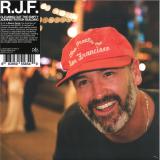
R.J.F. (ROSS J. FARRAR)
CLEANING OUT THE EMPTY ADMINISTRATION BUILDING
Cleaning Out The Empty Administration Building ist Ross Farrars neuestes Werk aus rohem, gesprochenem Wort und experimentellem Sounddesign, hier präsentiert unter dem Namen R.J.F.. Der Frontmann der amerikanischen Bands Ceremony und SPICE begann dieses Soloprojekt zunächst als persönliche Herausforderung: Songs von Grund auf selbst zu schreiben, sich mit Instrumenten vertraut zu machen und dabei zugleich sein Unterbewusstsein freizulegen. Dabei ging es weniger um musikalische Virtuosität als um Verletzlichkeit - darum, etwas Ehrliches aus einem ungeschützten, unbearbeiteten, unpolierten Moment zu ziehen, kompromisslos amateurhaft und rein.Diese Sammlung zeigt Farrar im offenen, poetischen Dialog: mit Drumloops und gefundenen Klängen, durchbrochen von Gitarren, Bass und Tasteninstrumenten. Nach über zwanzig Jahren in der vertrauten wie chaotischen Welt von Band-Kollaborationen, legt Farrar all das ab - als Experiment. Das Ergebnis ist unverwechselbar und bewegend.Farrars Punk-Pathos ist in Spuren vorhanden, doch seine deutlichsten Einflüsse stammen von repetitiven Musikformen: Drone, No-Wave, Avant-Jazz und darüber hinaus. Seine nüchternen Texte erinnern an Lou Reed, Rowland S. Howard und andere große Exzentriker. Farrars Texte kreisen um Liebe, Sucht, Vaterschaft und das Leben in der heutigen Welt. ,Ich wollte Bilder schaffen, die die Menschen klar vor sich sehen können", sagt er. Farrar unterrichtete früher Schreiben und Literatur - und wendet hier ein einfaches Prinzip an, das er auch seinen Schülern mitgab: Nicht zu viel nachdenken. ,Ich habe mir einfach gesagt: Diese Songs sollen Spaß machen. Sie sollen nicht stressig sein. Zwei, drei Takes aufnehmen und dann gut ist. Nicht über jedes Geräusch den Kopf zerbrechen. Mach einfach das, was natürlich aus dir herauskommt - und wenn es sich gut anfühlt, dann nimm es."Aus hunderten freier Songs, die Farrar in den letzten Jahren mit geliehenem Equipment aufgenommen hat, kristallisierte sich dieses Album langsam heraus. ,Es kam einfach immer wieder."Der Ton von Cleaning scheint die Zeit zu verbiegen, versetzt die Hörer in eine Art Gang voller Songs, bei denen jede Tür in einen neuen Raum führt - Räume, die oft auf unheimliche Weise vertraut wirken. Der gurgelnde Bass des Openers ,Advance" taucht auch in anderen Stücken wieder auf, etwa im gespenstischen ,Ovidian", benannt nach Ovids Metamorphosen, in dem Farrar über das Wunder der Veränderung sinniert - begleitet von fernen Glockenklängen. Instrumentalstücke wie ,Gravity Hill" - ein Flattern aus Synth-Brummen und statischem Rauschen - oder ,Frogs", mit Saiteninstrumenten und perkussivem Topfschlagen, wirken wie tranceartige Zwischenspiele und verstärken die Wirkung der Texte drumherum.,Exile" blickt zurück auf Verluste, die sich nicht mehr reparieren lassen: ,So much of your heart caught in my exile", singt Farrar mit sanfter Resignation - über einer einsamen Klaviermelodie und schlingernden Gitarrenakkorden. Es ist das strukturierteste Stück der Sammlung und erinnert daran, dass Farrar ein Gespür für melodische Linien besitzt.Das Album endet mit ,Traveling Light From Afar", deutlich schneller als alle vorherigen Songs. Hier, über einem stoischen Motorik-Beat, spricht Farrar das zentrale Thema des Projekts direkt an:,I've been so young in my old age / Selfish & self-pitying / But that's just narcissism - man."Genau dieser Balanceakt - zwischen schonungsloser Selbstbefragung und der Klarheit, die mit dem Älterwerden kommt - schafft Raum für Entwicklung. Farrar leert das Gebäude - Zeile für Zeile.
Lucy Duncombe and Feronia Wennborg compose a modern symphony for virtual choir on 'Joy, Oh I Missed You', muddling sound poetry with Nuno Canavarro and ‘Systemische'-style machine-damaged surrealism. Like a mashup of Lee Gamble's 'Models', Akira Rabelais' 'Spellewauerynsherde' and Robert Ashley's timeless 'Automatic Writing’ screwed to perfection.
Duncombe and Wennborg have been chewing over ‘Joy, Oh I Missed You’ for four long years, working their process until they were "queasily intimate" with their arsenal of artificial voice tools. Tracing the history of the technology, from voice synthesisers and chatbots to AI voice analysis tools, the duo experiment relentlessly to develop a digital-age response to IRL extended vocal technique - think François Dufrêne, Yoko Ono or Phew. Less interested in replicating human sounds exactly, they instead test how various tools might cough up their own idiosyncratic tics as they stretch and stutter through attempts to mimic their "fleshware" counterparts.
Duncombe's got prior form here, most recently re-synthesising her voice on the brilliantly oily 'Sunset, She Exclaims' 45 for Modern Love, following a stunner for 12th Isle in 2021. Wennborg brings along experience from her tenure as one half of microsound duo soft tissue, whose 2022 LP 'hi leaves' (Students of Decay) was a haptic treasure. These approaches mesh remarkably well on their first collaborative full-length, with Duncombe's eerie bio-electronic incantations providing the ideal foil for Wennborg's carbonated hardware processes. It's not completely clear where the human voice ends and the zeroes and ones begin on 'Your Lips, Covering Your Teeth', as rolling cyborg syllables tumble over OS-startup womps and surprisingly svelte outcroppings of glassy, synthetic glitches. The music is surprisingly mannered, a sonic reflection of the cover, where a mouth is pixellated until only colour swatches remain. Duncombe and Wennborg trace the gradual erosion of their voices, leaning into the chaos as their various tools veer off into unique patterns of failure.
What sounds like a far-off, ghosted folk rendition (we're reminded of the Icelandic laments that Rabelais chewed up on 'Spellewauerynsherde') is offset by gnarled, bitcrushed machine faults and pneumatic lip smacks on the brilliant 'Residue', and on 'Brushed My Hair', the duo massage the voice until it sounds like a flute. Assembling stutters and barks and sighs into a celestial chorus alongside time-stretched moans, they create a levitational atmosphere on 'Smell It', freezing the energy from bizarre pitch steps to configure a zonked vocal ensemble.
'Joy, Oh I Missed You’ is an album that, like its source material, constantly morphs, testing the boundaries of its concept repeatedly without bubbling over into conceptual goo. In fact, it's remarkably euphonious, even at its most theoretically abrasive; Duncombe and Wennborg wring out uniquely angelic formations through a process of trial and error that packs a surprising, hefty emotional punch.
Das dritte Album der äusserst produktiven und genreübergreifenden Musikerin Jane Remover erscheint in einer ersten limitierten Auflage auf dem jungen Indielabel deadAir und enthält ein Danny Brown-Feature ("Psychoboost"). Die in New Jersey aufgewachsene und in Chicago lebende Künstlerin vermengt Hyperpop, Dubstep, Noise, Hip-Hop und Alternative zu einem exzessiven Amalgam, das nicht nur die Kritiker begeistert. "Die experimentelle Künstlerin macht im Vergleich zu ihrem vorherigen Album eine komplette Kehrtwende und entfesselt ein Inferno aus rohen Gedanken, das alles – Rap, Pop, Stimme, ihre künstlerische Persönlichkeit – bis zum Zerreissen treibt." - Pitchfork
43°C, the debut LP by French electronic producer Basile3, is the result of a decade of cultivating a musical identity that focuses on hybridization, sonic recycling, and playfulness. The enigmatic title "43°C" signifies a haze of bliss (4+3=7, the producer's lucky number) backdropped by the ecological state of a world that’s grown slightly but surely warmer.
In this anticipation fiction, Basile3 offers a soundtrack that is an exploration of club music, electronica infused with r&b and ambient synths. The French producer warmly invites listeners to his state of mind, blooming with genre-bending floating soundscapes.
Featuring Telma Cappelo, Daisy Ray, Loydfears, Lucy Sissi Miller and Minor Science.
Collecting orders for Repress
"Upon at attempt to repair a broken DAT machine that was in storage for over 20 years, to Maaco's surprise there was a DAT tape still lodged inside! So what would one do? Of course pop that bad boy in a working machine and see what's on it! Enlightened by tracks that he hadn't heard in over 20-25 years, he's excited to share these once forgotten tracks with the world! It's with great pleasure for M.A.P. to introduce to you, the throwback tracks from the vault!!!"
UK producer Tom Carruthers delivers another masterclass for Skylax, diving deeper into the DNA of house music with Deepline, a 5-track journey that connects the raw futurism of the late ’80s to the deep innovations of the early ’90s. Known for his MPC-driven grooves on L.I.E.S., Clone Jack For Daze and Craigie Knowes, Carruthers has become a true guardian of machine funk — always stripped down, always pure. The title track Deepline captures the very essence of house, hypnotic and driving, right at the crossroads of 80s machine funk and early 90s deepness, a timeless groove that feels like the missing link. Dream 12 unfolds as lush and atmospheric, with pads that instantly recall the golden era of early 90s deep house, a reverie made for afterhours and smoke-filled basements. Experience stands as a raw reminder of the four pillars of house — drum machines, bass, minimalism and repetition — metallic, stripped, relentless, pure underground. On the flip, Fantasy explodes with wild energy, channeling the raw spirit of Trax Records and Armando, dirty and direct, a weapon for uncompromising dancefloors. Finally, Folx closes the record with a cosmic edge, its tough jackin’ drums colliding with spacey synth touches to create a bridge between Chicago basements and interstellar dancefloors. Once again, the visual identity is entrusted to the iconic H5 studio (Daft Punk, YSL, Logorama), whose bold modernist artwork perfectly mirrors Carruthers’ stripped yet futuristic vision. Vinyl only. No digital. No compromise.
After a moment of calm, De Lichting returns with the fourth instalment in its double LP album series, Vier.
Never losing touch with its roots in emotional dance music, Vier is a tribute to the electronic soul, something increasingly overlooked on today’s dancefloors. queniv’s Frequency Match opens the album as a gentle invitation, built on minimal drum work and long, stretched pads. RDS’s Aerial Reflections continues in the same vein, leaning into a more serious mood with old school flavoured rhythms.
The first heavier club moment comes from Human Space Machine with Test Rec. A more tense, primetime leaning, proggy groove unfolds, washed in nostalgic strings and trippy elements for both body and mind. Nathan Kofi follows with Kinesis, a proper Detroit infused techno track that pushes the experimental edge further, darker and more driving.
On the second record, the mood shifts into deeper melancholy with Eversines’ Lift The Veil, featuring classic deep house textures of Rhodes chords and FM basses. Nearing the end of the album, Proxyan’s Another delivers pure credits rolling, emotion drenched analogue funk electro, a track the rest of the group had to beg Robbert to include. We are glad we did.
As a kind of bonus track, RDS and Eversines close Vier with a tech house rework of their earlier track Missing. Released on vinyl for the first time, it was previously available only in digital form via Kalahari Oyster Cult.
White Mechatronica returns.
Introducing Cold Voltage - a new series wired for tension, circuitry, and raw machine emotion. This first volume sets the tone: cold, direct, and built for dark rooms.
On the A-side, Elena Siziva opens with "The Balls", an experimental descent of bouncing basslines and cavernous synth textures. Filmmaker follows, delivering his unmistakable dark wave electro signature - sharp, shadowed, and hypnotic. Violet Position & Echo Protocol close the side with "Into the Silent Blue", an electro vocal cut designed to ignite the floor.
Flip to the B-side: Jennifer Touch strikes with "Don't", a rolling, snare-driven machine track that hits without warning. Mr. Funghi pushes further into EBM/Techno territory with "Off for the Weekend", a relentless piece built to tear down walls. Closing the release, The Spy delivers "Track Reaper", a dramatic Italo wave finale that lingers long after the last note fades.
‘Absurd Matter’ is a labyrinthine sonic conundrum that spirals around the two poles of extreme noise and hiphop. It's Berlin-based Italian producer Shapednoise's first album in four years and confidently advances his narrative into the next chapter, building on the groundwork of his prior abstractions to emerge with a coherent genre-warped fusion of urgent rap, crushing bass weight and idiosyncratic sound design. After spending years scrupulously deconstructing club music, Nino Pedone has rebuilt it brick by brick in his image.
The album is the first release on Pedone's brand new imprint WEIGHT LOOMING, a multidisciplinary label platform that's set to explore the depths of bass music, textured noise and abrasive transcendence. It follows a slew of acclaimed releases for Numbers,
Opal Tapes, Type and his own Cosmo Rhythmatic label, and forward thinking collaborations with Kenyan beat alchemist Slikback and Hyperdub-signed Angolan producer Nazar. Pedone's most ambitious project to date, ‘Absurd Matter’ taps into kinetic energy from a hand-picked selection of collaborators, including New York rap duo Armand
Hammer, French DJ/producer Brodinski, Bruiser Brigade's ZelooperZ and vanguard Philly poet, musician, and activist Moor Mother.
On ‘Family’, Billy Woods and Elucid weave a dismal, apocalyptic landscape with their razor-sharp anecdotes. The duo’s macabre imagery is given artificial life by Pedone's industrial scrapes and rattles that curl around their worlds like thick smoke. It's still rap, just about, but lodges itself in the back room of a factory, machines running themselves to an early death. Pairing with techno-rap trailblazer Brodinski, Pedone edges further towards the sound system, spatializing rhythms in four dimensions around Detroit rapper
ZelooperZ's playful expressions. This is the Italian producer's sci-fi tinged liquefaction of radio echoes, a way to fire familiarity into the void and sublime the human voice into weightless mist. When Moor Mother arrives shouting "me me me" on the aptly-titled 'Poetry', it sounds as if all of Pedone's loose threads are being tightened into a knot. His misshapen neo-grime beats sound like a broken jet engine, but smartly cede power to Moor Mother's resonant rhymes. "You can't cancel me" she assures. ‘Absurd Matter’ is a defining personal development for Pedone that not only appraises his career so far, but diverts its logic into frighteningly new sonic territory. From great loss, the producer has determined his work's cardinal themes, and sounds more strident and far heavier than ever before.