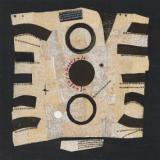
The patterns are direct recordings of the SPS1UW, drum machine solo, without any editing or external effects. The 100 patterns recordings, from number 1 to 99 are gathering in pairs, exception made for the number 1, alone on the first record.
The Opus are following the chronological order of the recordings.
Buscar:machine drum
Belgian talent Ilario Liburni looks to the release of his debut LP, 'Travel So Far', forthcoming on his own label, Invade Records. The eight track affair comes on a double vinyl pack as well as digital form which will follow a month later and proves the man behind it to be a superb producer with plenty to say.
Combining elements of house, minimal and intricate sound design, Ilario also heads up the Cardinal label and first emerged back in 2011 on Monique Musique. Since then he has gone on to release on a number of respected imprints (including Riva Starr's Snatch! And Memoria Recordings), has had his tracks licensed to compilations including Noir's In the House album for Defected and has continued to make a big impression as a DJ around Europe.
The album kicks off with 'Travel So Far', a synthetic and stripped back groove with lots of squelchy sounds, scurrying synths and feathery percussive lines all working their way into your brain. 'Sudden' is another Ricardo Villalobos style track that is elongated, intricate and immersive as it unfolds on soft edged drums. Next up, 'Carrie' is a smooth, dubbed out affair that demonstrates plenty of restraint yet really locks you into its hypnotic groove as static hiss and crackles alongside distant synths colour the spaces left behind.
'Steampunked Sewing Machine' ups the ante a little with a hollowed out drum line rocking back and forth on its heels, and 'Can't Fool Data' starts all waify and minimalistic before getting pulled apart to the sound of whirring machines, and then it drops again; you can imagine dancefloors going wild to its hooky rhythms. 'Jenndrum' is all about the pinging drum kicks and globular toms that make for a peppery groove, 'Pherthothal' toys with a sense of abstract funk and closer 'Schwalbe' is a gloopy, gluey, druggy fusion of slurred synths, hiccupping drums and dark textures that make for involving listening.
This is a genuinely inventive album riddled with fascinating sounds,
a real attention to detail and plenty of otherworldly moods that really stick with you.
Following on from his debut album, Miles Spilsbury returns to New Dawn with Spirit Level. A new project in collaboration with close friend Gorse Panshawe (formerly known as Slugabed - who also produced Miles Spilsbury's first album Light Manoeuvres).
Recorded over one weekend in a weaving shed in Frome, in the English countryside. Surrounded by reels of yarn, they explored saxophones, flutes, dusty old keyboards & drum machines. The resulting record conjures the murk and moss of Forestland and grounds with grooves from the Bongo setting on a Casio keyboard. Jake Long added mallet drums from his London studio to round off the album.
Trajectories collide in a wormhole as Tokyo-based Igaxx and Amsterdam-based Gropina converge on a crepuscular four-track 12-inch and digital release for Paesaggi Records. Igaxx drifts through near-beatless, spiralling psychedelia: “The Perception” is a slow-burn ascent, suspended in a state of perpetual anticipation, forever circling a climax that never arrives. “Someday in Time” settles into a steady pulse that glides outward, dissolving into the distance as if lost in quiet contemplation.
On the flip, Gropina reshapes the two pieces through his own sonic lens, like stepping through the looking glass. “The Perception (Version)” brings a supernatural, Kraut-inspired vibe, opening with a deceptive 2:35 intro before unfolding into Mother Sky-esque drums, primitive flutes, and reversed guitars. “Some Day In Time (Version)” is a dubby reinterpretation driven by a ’70s Ace Tone drum machine, a funky bassline, dub-soaked guitars, noir alto saxophone, and subtle details swirling through the mix.
Celebrating the 5th anniversary of Conway's legendary tape with DJ Green Lantern "Reject On Steroids" with a vinyl reissue in collaboration with Drumwork Music. Tape features guest appearances by Royce Da 5'9" and Benny, and productions by DJ Green Lantern. For the occasion we have two different artworks by Shk, limited to 1500 units each.
- 1: Memespawn
- 2: Wrigglers
- 3: Troublebath
- 4: Naut
- 5: Alice Drums
- 6: Puzzles
- 7: A Thinking Thing
- 8: Cranial Escape
- 9: Primordia
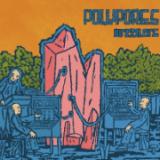
CrackedanklesRecords are proud to present Polypores “Wrigglers” - the latest emergence from Stephen James Buckley’s strange and overgrown brainforest, an artist who has seen recent albums crack the national top 40 charts.From the opening bars of lead single ‘Memespawn’, it is clear that this incendiary release is going to defy all precedent Polypores releases. Kicking off with a heady mix of woozy, slewed melody lines and a relentless Motorik beat, it soon breaks down into a gritty instrumental redux and a frenetic syncopated woodwind jazzathon before bursting out again into spine-tingling melody that resembles some deformed cousin of synth-pop. It’s beautifully melodic, whilst still maintaining Buckley’s trademark sense of the chaotic and the downright wonky. Endlessly listenable electronic music that breathes and moves like a physical organism, and always refuses to stand still. A restless misfit of an artist who inhabits the fringes of whatever scenes he inhabits, Buckley maintains a certain crackling unease throughout the whole thing, but it results in jubilant outbursts and freewheeling joy, tethered only by the mechanical constraints of the machines it’s wrought from, like some broken robots have cobbled together an orchestra and they’re writing a soundtrack for a film they haven’t seen.
After releasing their third album, Maintenant Jamais, and touring in Europe, the United States, Canada, and Mexico in 2025, Population II now announces Gimmicks, a new synthedelic rock EP.
Blending vocal and instrumental tracks, Gimmicks is a companion piece to the Montreal band's latest full-length. It's an extension of the electronic sounds we explored on Maintenant Jamais, with tracks like “13 1 3 1” and “Poudreuse Blues, explains Pierre-Luc Gratton. Even though we added upright piano and fuzz bass to some of the songs, our number one rule for this project was: keyboards and synthesizers, first and foremost! This is why they decided to ditch the guitar completely on these new songs, once again demonstrating the extent of their versatility.
Rhythm-wise, the use of a drum machine allowed the musicians to push their own boundaries and take this exercise in style to a higher level. It made us rethink our rhythmic habits and add bursts of intensity by experimenting with timbres and sound dynamics. The result is an EP at times unsettling, at times dreamy, but perfectly calibrated, where constraint gives way to ingenuity, freedom, and friendship. Although prog and krautrock fans will recognize the influence of Syrinx, Tangerine Dream, and Cluster, Gimmicks is, above all, the affirmation of a band capable of looking back to move forward.
- 1: Drown
- 2: Ashes Of The Night
- 3: Spellbound
- 4: Fists Like Feathers
- 5: Beyond The Mirage
- 6: Immortal
- 7: Lost Without A Light
- 8: Keep Up Appearances
- 9: Lurk
- 10: Bathed In A Tepid Pool Of My Own Filth
- 11: The Earth Is Breathing Beneath Me
It's a realisation that the ground beneath our feet is alive, and we're all just passengers on its pulse. It's that hum of dread and wonder that defines Armed For Apocalypse's fourth full- length album: a towering, grooved- out, post- metal monolith carved from grief, power, and purpose. Formed in Chico, California between longtime friends Nick Harris (drums) and Cayle Hunter (guitar), Armed For Apocalypse is a what- if turned war machine. Over the years, the band has endured enough shakeups and setbacks to bury most acts: relocations, divorces, day jobs, family changes and not to mention complete lineup overhauls. But where others fractured, AFA sharpened.
- 1: Broken Freedom
- 2: Key Of Fortune
- 3: Master Of Evil
- 4: Screaming For Mercy
- 5: Mindless Sinner (Demo 1983)
- 6: Higher And Higher (Demo 1983)
- 7: We All Go Back (Demo 1983)
- 8: Heavy Metal Will Never Die
- 9: City Games (Demo 183)
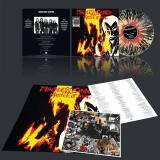
Purple Haze started out in Linköping in 1981. When singer Christer Göransson joined them towards the end of the year, they soon changed their moniker to Genocide (after the Judas Priest song of the same name) and supported local metal heroes Axewitch. A final name change was to follow: In August 1983, the band, now called Mindless Sinner, recorded a four-track demo entitled »Master Of Evil«, consisting of the title track, “Broken Freedom”, “Key Of Fortune” and “Screaming For Mercy”. This attracted Swedish label Fingerprint Records, and they in turn released the NWOBHM-inspired material as a mini-album with an awful cover and getting the band’s name wrong (spelling it Mindless Sinners). By then, the line-up of the band was Anders Karlsson (bass), Magnus Danneblad (guitar), Jerker Edman (guitar), Tommy Johansson (drums) and vocalist Christer Göransson. »Master Of Evil« originally saw the light of day on Fingerprint in January 1984. Christer Göransson takes us back to the early days of Mindless Sinner saying: “We wanted to record an album, but we couldn’t afford the studio cost. We were lucky to win a music contest, and the price money paid for the studio. I remember walking into the studio, and we thought it was like a spaceship in there, with all the buttons and flashing lights everywhere. We recorded the four songs that would become »Master Of Evil«. We then gave the tape to the Axewitch guys, and they played it to their record label at the time Fingerprint/Web Records and they liked it so much that they signed us as well.” Over the years, the music of Mindless Sinner has often been compared to the Tygers Of Pan Tang from England but Christer Göransson doesn’t see too many similarities: “We really love Tygers Of Pan Tang but I don’t think they were a big influence. It was more Judas Priest, Iron Maiden, Saxon, Black Sabbath, Ozzy, Dio etcetera. That kinda stuff.” In addition to the four tracks of the original edition of »Master Of Evil«, the current High Roller Records pressing also contains the five songs of the band’s first demo tape from early 1983 (including “Mindless Sinner”, “Higher And Higher”, “We All Go Back”, “Heavy Metal Will Never Die” and “City Games”). All nine tracks were mastered by Patrick W. Engel at his Temple Of Disharmony in November 2025. Cutting by SST Germany on Neumann machines for maximum quality on all levels ... The ultimate audiophile re-issue of this Swedish metal classic!
Mystic Force was a progressive power metal band from Baltimore, Maryland. After releasing several demo tapes, they signed a contract with the German label Rising Sun Productions. This resulted in two albums, “The Eternal Quest” (1993) and “A Step Beyond” (1995). Their third album, “Man Vs. Machine,” followed in 2001 on Siegen Records. After Mystic Force broke up, drummer Chris Lembach and guitarist Rich Davis formed the group Shift and recorded two albums with them. Rich then started his own solo project (for which he played all the instruments and sang), before looking for suitable fellow musicians again and releasing the CD “Inside The Upside Down” in 2024. Mystic Force was originally formed in 1984 by guitarists Rich Davis and Marc Rouchard together with bassist Keith Menser. After numerous line-up changes in the early days, they finally found suitable bandmates in Chris Lembach (drums) and Bobby Hicks (vocals). In 1987, Mystic Force released their first 4-song demo, followed by “Blind Vision” a year later. After selling large quantities of self-produced cassettes (the first 4-track demo is said to have sold over 5,000 copies), it was time for their first vinyl release. In 1990, the album “Take Command” was released on the English label C.M.F.T. Records, which included the first demo and four brand new tracks: “Take Command,” “Awakened By The Dawn,” “Immortal Souls,” and “Silent But Deadly.” Later that year, the 12“ single ”Shipwrecked With The Wicked“/”Eternal Quest" was released in a limited and numbered edition by the band's own company, Pro-duction. The widespread distribution of Mystic Force's material (also via underground distributors such as Oliver Jung's “Demolition”) led to an increasing number of labels taking an interest in the band. Ultimately, the choice fell on Rising Sun Productions, who released the debut album “The Eternal Quest” in 1993, featuring tracks such as “Shipwrecked With The Wicked,” “Another World,” and “Answers Of The Mystery”—a forgotten gem of progressive power metal somewhere between Fates Warning and Hades.
American jazz drummer Roy Porter hit a late career high with his first album Jessica. The classic record throngs with intricate rhythms and vigorous drumming that reveal a playful yet ambitious approach. The standout title track 'Jessica' - a long jazz-funk meditation written for his girlfriend - reimagined by the master, Kenny Dope, shimmers with melancholy and colour. Extended breaks and beefed-up drums give the mix extra punch, while the horns retain their jazzy flair and the vocal version on the flips makes it's 7" debut - these cuts have previously been album only and are well worth copping.
Flammer Dance Band saxophonist Bror Havnes opens a new chapter with his solo debut on Lyskestrekk Records...
Three evolving grooves that push the dancefloor into deep, spiritual territory, merging Afro-percussion, drum machines, synths and sax.
A devoted vinyl digger, DJ and Jazz improviser, Havnes channels years of global crate-digging and sound experimentation into an organic and cosmic sound that is completely his own.
- A1: Träumerei 02 31
- A2: Brenne 06 02
- A3: Taxi Driver 04 57
- A4: Sehnsucht 05 30
- B1: Entwurf Einer Ballade 05 06
- B2: Schock 04 17
- B3: Flüchtlingswalzer 05 13
- B4: In Die Disko 03 13
- C1: Der Lärmkrieg 04 46
- C2: Liebe Emmi 05 51
- C3: Im Atelier 03 54
- C4: Take The Red Pill 04 15
- D1: Ashley Smith 04 13
- D2: Zweites Vierteljahr 04 54
- D3: Da Fliegt Die Rakete 02 30
- D4: Die Erde Ist Mir Fremd Geworden 03 16
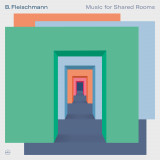
»Music for Shared Rooms« is B. Fleischmann’s eleventh solo album and his first since 2018. It is also not an album, or at least not in the conventional sense of the word. These 16 instrumental pieces provide a kaleidoscopic glimpse of a forward-thinking musician at home in many different musical worlds, including experimental and abstract music, pop and more classically-minded compositional forms. These pieces were culled from an archive of roughly 600 compositions for theatre pieces and films written throughout the past twelve years. The Österreichischer Filmpreis-awarded composer, however, aimed for more than simply documenting his extensive work in and with different media. To do so, he edited and re-mixed the individual recordings for this release, taking them out of their contexts and reworking them for an audience who can experience them in a different setting. »Music for Shared Rooms« makes it possible for its listeners to engage with the sounds and to fill the spaces they open up with their own imagination.
Roughly speaking, music for theatre or film can serve two functions: it either takes the lead, or underscores what is happening on stage or screen. The marvelous thing about these pieces is that they manage to do both. Fleischmann’s work as a prolific producer has always drawn on contrasts, at times combining pop sentiment with rigid experimentation, the seemingly naive with the intricate and complex. This approach also marks the tracks collected here: bringing together acoustic elements and electronic sounds, at times working with conventional structures but always de- and re-contextualising them, Fleischmann constructs a vivid dramaturgy out of discrete singular compositions, letting them interact across the record.
Take, for example, the opener »Träumerei« and the following »Brenne«: after the soothing acoustic sounds of the former, the latter quickly picks up speed with hard-hitting drum machine rhythms. It’s a stark contrast sonically and stylistically, however both tracks are tied together by a certain harmonic sensibility. This sort of dramaturgical interconnectedness of varied musical materials is the thread that runs through »Music for Shared Rooms«. A droney piece for string instruments like »Sehnsucht« is followed by a trip-hop beat, before »Schock« lives up to its title with skittering beats and piercing high frequencies. The differences between the pieces may be striking, but the progression from one to the other is subtle. It goes on like this through different moods and tempos. There’s soothing-yet-eerie piano pieces like the »Für Elise«-inspired »Der Lärmkrieg«, gentle house grooves, joyful synthesizer excursions and, finally, »Die Erde ist mir fremd geworden«, a collage of abstract textures and concrete sounds.
All these pieces create distinct situations through the juxtaposition of diverse musical elements, but are also bound together by a single vision. Writing music for theatre pieces or film requires a composer and his pieces to engage with people and their movements in space, which is exactly what Fleischmann offers on this record. He breaks down the fourth wall and invites his listeners into his world, a wide-ranging musical panorama. »Music for Shared Rooms« is indeed not an album in the conventional sense of the word, but more like a photo album in which each page opens up a new space to get lost in; recreates different scenes in which you can immerse yourself. These are shared rooms indeed.
Cititrax release Sand Clock, the new full-length album by Men With Secrets, the Italian trio of Donato Dozzy, Lino Monaco, and Nicola Buono (Retina.it). Originally emerging from a shared background in experimental techno under the name Le Officine Di Efesto, the three musicians turned toward classic post-punk, minimal wave, and synth-driven pop with the formation of Men With Secrets. Their debut album Psycho Romance (2020), released on Bunker Records, introduced a meticulously produced body of work that felt like a rediscovered European darkwave recording from the early 1980s—yet was entirely contemporary in its construction.
With Sand Clock, the trio deepen this language. The album leans more directly into the melodic clarity and romantic tension of late-80s and early-90s darkwave and synthpop while maintaining the stark restraint that defines the project. Icy synthesizers, shuddering basslines, and precise drum machine programming frame baritone vocals that are intimate, emotionally exposed, and quietly apocalyptic.
Balancing pop structure with gothic atmosphere, Sand Clock moves between shadowed dance floor momentum and solitary headphone introspection. It is not an exercise in revivalism, but a continuation—an acknowledgment that the emotional architecture of that era remains unresolved and still relevant. Written and produced by Donato Dozzy, Lino Monaco, and Nicola Buono and recorded in Rome and Pompeii.
The vinyl edition is pressed on clear 160-gram vinyl, limited to 500 copies worldwide. Each record is housed in a heavy printed jacket with a printed inner sleeve.
180 GR Records is proud to present a new release by N-Zino, reimagining two tracks previously released by Four Flies Records: Mo... and Living Disco Club, offering two distinct yet complementary interpretations. Mo... (180 GR Disco Mix) takes its cue from the original Banda Maje version, itself a contemporary homage to Peppino Di Capri, already given a club reinterpretation. N-Zino elevates the track with a nu disco approach, emphasizing its elegant groove and sunnier, funkier side, blending disco influences with pulsing basslines, shimmering percussion, and warm synth textures, all infused with contemporary sensibilities while keeping the original melody alive. The result is a bright, danceable reinterpretation designed for both listening and the dancefloor. In a different yet perfectly complementary direction, Living Disco Club (Don Ciccio Tribute Mix) explores a deep house dimension, turning Banda Maje's disco-inspired original into a hypnotic, late-night groove. Deep bass, soft drum machines, essential rhythms, and atmospheric pads create a rich, warm, immersive vibe, ideal for after-hours or more refined, introspective club moments. Together, these remixes highlight N-Zino and 180 GR Records' vision: celebrating strong musical roots, connecting Italy's musical past with contemporary club culture, offering tracks that honor the tradition and the originals released by Four Flies, while speaking directly to modern dancefloors.
2025 Reissue.
Münchenbuchsee, a suburb of Bern, Switzerland. Stephan Eicher is the youngest of three children. His father, a radio and TV repairman, is also a jazz violinist and a sound tinkerer in his spare time. In the family home's converted fallout shelter turned studio, Mr. Eicher experiments with homemade sequencers, tortures handcrafted drum machines, and abuses reel-to-reel tape recorders—all under the fascinated gaze of young Stephan.
The boy quickly develops a musical curiosity, exploring sound through various experiments and wanderings. Alongside his younger brother Martin, Stephan crafts audio plays on a homemade multi-track recorder (essentially several cassette decks hooked together!), which they write, record, add sound effects to, and perform for family and friends. Just a couple of nice kids, really...
Then comes 1972, and Lou Reed's Transformer album changes everything for the Eicher kids. For 13-year-old Stephan, it's a revelation—especially "Vicious", the opening track, which he plays on repeat for months. He convinces his father to buy him an electric guitar. Not stopping there, his father also builds him a tube amp using an old radio.
Then comes adolescence. A rough one. Stephan leaves home at 16 and moves to Zurich. With obvious artistic talent, he persuades his art teacher to help him get into F+F, a radical, alternative art school—despite his young age. Accepted, he starts learning video techniques, determined to become a filmmaker.
At F+F, Stephan organizes Dada-style happenings and concerts with a group of friends known as the Noise Boys. Among them: one of his teachers on bass, Veit Stauffer on drums (who would later found ReR/Recommended Records), his girlfriend Sacha on vocals, and Stephan on guitar. In one of their early performances, they release a remote-controlled mouse covered in dull razor blades into the audience to create panic and chaos. Keeping with this aggressive, confrontational spirit, they once played a concert while wearing headphones blasting Tristan and Isolde, trying to perform their own songs simultaneously—to maximize the cacophony. The goal was always the same: clear the room.
Their “songs,” if you can call them that, followed suit. Take "Hungeriges Afrika", for instance—performed entirely with power drills and some drum feedback.
To make ends meet, Stephan returns to Bern on weekends to work as a waiter at the Spex Club, the city’s main punk venue. On September 16, 1980, during a show by proto-electro group Starter, the police raid the club and arrest everyone. Stephan, who manages to avoid arrest, seizes the opportunity to “borrow” Starter’s gear left behind. He suddenly finds himself in possession of a Roland Promars synth, a Korg MS20, and a gorgeous CR78 drum machine, which he runs through a Big Muff distortion pedal to get that perfect gritty sound.
He then sets out to reinterpret some Noise Boys tracks, reworking them during impromptu sessions recorded on a dictaphone (yes, a dictaphone—now the lo-fi sound makes more sense, doesn’t it?). He ironically titles the resulting cassette "Stephan Eicher spielt Noise Boys" ("Stephan Eicher plays Noise Boys"). This gem features seven tracks, which are the ones reissued here.
Back in Zurich, he visits his friends Andrew Moore and Robert Vogel, who have a DIY cassette duplication setup. They make 25 copies of Stephan Eicher spielt Noise Boys for Stephan and his friends. Robert encourages him to visit Urs Steiger of Off Course Records and play him the tape.
Without much hope, Stephan shows up at Urs’s office. But Urs is instantly hooked and suggests releasing a 7” single. Due to space constraints, they reluctantly drop two of the seven tracks ("Hungeriges Afrika" and "One Second"). As for the musical score featured on the cover—it was randomly chosen and remains a mystery to this day. Calling all music theory nerds!
The 7-inch is pressed in 750 copies and released in the first week of December 1980—a date Stephan remembers well, as it’s the same week John Lennon was killed. Smartly, Urs sends a promo copy to François Murner, Switzerland’s answer to John Peel, who hosts a show on alternative station Sounds. Murner falls in love with the record and starts giving it airtime. To Stephan’s surprise, sales follow—and people actually seem interested in his music.
Even this modest underground success scares Stephan a bit. He stops making music for a year and moves to Bologna, where he works as a programmer at Radio Città, a feminist radio station.
Meanwhile, Stephan’s younger brother Martin, who’s also involved in the punk scene, joins the band Glueams as a singer and guitarist. Glueams, named after the fanzine run by two of its members (drummer Marco Repetto and bassist GT), eventually rebrands as Grauzone. Stephan is invited to their shows to project hacked Super 8 visuals live on stage.
Urs Steiger, now working on a compilation titled Swiss Wave – The Album, asks Grauzone to contribute alongside bands like Liliput, Jack and the Rippers, The Sick, and Ladyshave (Fall 1980).
For the album, Martin tasks Stephan with producing their recording sessions. Under Stephan's artistic direction, two tracks emerge: "Raum" and "Eisbär". During "Eisbär", Martin plays a minimalist bass line borrowed from post-punk band The Feelies (just an open string). Drummer Marco Repetto struggles to keep time. Later that evening, unhappy with the takes, Stephan builds a four-bar drum loop from a ¼-inch tape and uses it instead of the flawed original. He then adds bleepy synths and wind sounds to complete the track’s icy vibe before handing it over to Urs.
The Swiss Wave – The Album compilation is released quietly at first, but things snowball thanks to "Eisbär", which eventually becomes a smash hit—selling over 600,000 singles.
Meanwhile, Stephan plays in a rockabilly band called SMUV (named after Switzerland’s social security agency) and begins producing artists, including the debut album of Starter (1981), which includes a more pop-oriented version of "Minijupe".
By early 1982, Stephan starts spending time with the post-punk girl band Liliput (formerly Kleenex). They’re older than him, and he happily drives them around in his Renault Major, acting as their roadie.
By 1983, Grauzone—signed to the major label EMI, which turned out to be a misstep—is falling apart. Stephan begins to pivot toward a more mainstream pop sound with his debut solo album Les Chansons Bleues.
But that... is already another story.
- A1: Conway The Machine, Goosebytheway, 7Xvethegenius, Sk Da King, Lucky Seven & Kndrx - Hov Numbers
- A2: Jae Skeese, 7Xvethegenius, Sk Da King & Lucky Seven - Lonely
- A3: Conway The Machine & Benny The Butcher - Lalo (Feat. 38 Spesh)
- B1: Jae Skeese, 7Xvethegenius & Goosebytheway - City Grill
- B2: Jae Skeese, 7Xvethegenius & Rory - Rory Joint
- B3: Jae Skeese, Goosebytheway & Shots Almigh - Blue Glass
- B4: Goosebytheway, Sk Da King, 7Xvethegenius & Lucky Seven - Take It Back
- C1: Conway The Machine, Goosebytheway, Sk Da King - Elephant Man (Feat. Heem B$F & Rome Streetz)
- C2: Jae Skeese, Goosebytheway, Kota Savia, Lucky Seven & Sk Da King - This Is War
- C3: 7Xvethegenius & Kota Savia - Crown For Queens
- D1: Conway The Machine, D Smoke & 7Xvethegenius - Andre 3000 (Feat. Bangladesh)
- D2: Conway The Machine, Shots Almigh & Goosebytheway - Sudan (Feat. Lo Profile)
- D3: Conway The Machine, Elcamino & Shaun 2X - Far Away
As a torchbearer of gritty lyricism and unapologetic authenticity, Conway The Machine takes the helm to introduce the world to the burgeoning talents that make up the Drumwork roster, a powerhouse assembly of artists ready to reshape the landscape of rap music.
At the forefront of the album stands Conway The Machine, delivering blistering verses and commanding attention with his trademark grit and authenticity. But "Drumwork Collective" is more than just a solo endeavor; it's a collaborative effort featuring guest appearances by Rome Streetz, Benny The Butcher, 38 Spesh, and others. Each artist brings their unique perspective to the table, adding layers of depth and complexity to the project.
Behind the boards, producers like Beat Butcha, Graymatter, Trizzy Williams, and more craft a sonic landscape that's as gritty as it is innovative. From soulful samples to hard-hitting drums, the production on this compilation sets the stage for the lyrical onslaught that follows, blending traditional boom-bap aesthetics with a modern edge. Together, these elements form a cohesive tapestry that captures the essence of hip-hop's underground renaissance, proving that the beat truly does strike back.
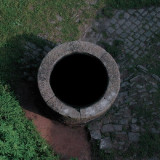
The album opens with the ominous guitar-driven Hollow Sky, accompanied by its haunting music video's verdant vistas. The song, with Iceglass ghostly vocals, shimmers with that sounds like an Omnichord flittering like sonic firefly lights and brooding bass. This perfectly scores the less traveled wanderings through the dark wooden path of Dante's perdition, leading to the titular well that graces the album cover. The Crater opens with an unsettling riff and bass, with low, repetitive frequencies on the synth create a sense of unease. Here, Iceglass recounts a fatalistic requiem for the king of romance that is cataclysmic and leaves a scar upon the earth. With Fall Industrial Wall, once again, Iceglass channels a silky and Nico-like emotive deadpan; against a dirgelike melody backed by minimal synth, bass, and drum. Almost medieval and plaintive, with its folk droning horns, deep and shallow in their resonance. This song is anachronistic, setting the scene of ruins centuries-old with crumbling edifices strewn about like memories lost in time. With the poetic lyrics of The Chamber do we find the eponymous abyss. Here, dualities are laid bare; besides love, there is heartbreak, and without this sorrow, what meaning would there be to love if one knows not what it is to lose? This song encapsulates the idea that love is heartbreak, and love lost is reaching the deepest chamber of the heart. This is carried through a sombre horn, minimalist drum machine, and deliberate bassline overlaid with Iceglass german and english lyrics. The Well is led in with a softly distorted bassline overlaid with eerie banshee howls give way to Iceglass otherworld vocal refrain, echoing through time as if emanating from a hole in the ground, and encircling that hole is a garden of woe and despair. The sinfully seductive song The Moor features a captivating SAX SOLO courtesy of Perseas; a welcome shift in tone, juxtaposed well with the intensity of Iceglass tenebrous vocal purr. This hitherto unexplored foray into dark sensuality takes the song into sordid mid 80s territory, bringing to mind a dusky drive along a serpentine road, with equally haunting instrumentations straddling time with icy fire. Broken Characters is an acoustic folk interlude featuring Selofan's Dimitris Pavlidis on guitar. Here we find a more gentle approach with its earnest and romantic lyrics. The song's melodic hook is a soft caress along with the forlorn horn elements highlighting Iceglass at her most Nico-sounding vocal yet, singing the sorrowful truth that most artists are indeed broken characters. Chimerical opens with dirgelike synth organs. The chill of winter has befallen the lamentations sung by Iceglass carried by haunting chord progressions and minimal percussion, plaintively beseeching the song's subject to remain elusive, idealistic, and a dreamer. After an album highlighting more Jill than Jack, our male protagonist finally makes his ascent in the sonorous and breathtaking Dark Hill, a masterful march of sweeping synth horns, and trepidatious drum machine with William Maybelline's bellowing voice cracking like thunder, rattling the atmosphere like his heart against his ribs. Spirals swirls in a cautionary knell of cathedral-esque droning synth dirge, with Icarian lyrics shining like a sombre ray of hope; like the sun's rays creeping into the darkest of places. The song, minimalist in its tight percussion, echoes with the solace of Larissa Iceglass vocal litany; invoking elements of the supernatural, almost like a Casio preset sequenced to the beating of an angel's wings.
- A1: Green Lantern Intro
- A2: You Kan't Live Freestyle
- A3: Love Freestyle
- A4: Rick Boxes
- A5: Spurs (Feat. Benny)
- A6: Dead Bodies
- B1: Ill (Feat. Royce Da 5'9")
- B2: Cooked In Hell's Kitchen
- B3: Preist
- B4: Not Humble Freestyle
- B5: Through It All
- B6: The Vision Freestyle
AQUAMARINE COLOR VINYL[28,78 €]
Celebrating the 5th anniversary of Conway's legendary tape with DJ Green Lantern "Reject On Steroids" with a vinyl reissue in collaboration with Drumwork Music. Tape features guest appearances by Royce Da 5'9" and Benny, and productions by DJ Green Lantern. For the occasion we have two different artworks by Shk, limited to 1500 units each.
- A1: Green Lantern Intro
- A2: You Kan't Live Freestyle
- A3: Love Freestyle
- A4: Rick Boxes
- A5: Spurs (Feat. Benny)
- A6: Dead Bodies
- B1: Ill (Feat. Royce Da 5'9")
- B2: Cooked In Hell's Kitchen
- B3: Preist
- B4: Not Humble Freestyle
- B5: Through It All
- B6: The Vision Freestyle
Celebrating the 5th anniversary of Conway's legendary tape with DJ Green Lantern "Reject On Steroids" with a vinyl reissue in collaboration with Drumwork Music. Tape features guest appearances by Royce Da 5'9" and Benny, and productions by DJ Green Lantern. For the occasion we have two different artworks by Shk, limited to 1500 units each.