Reissue of a lost hit by the British composer Kevan Frost, now championed and given a brand-new Dub Mix by Mark Grusane. Up for pre-order now and due late-March on our RSS series!
Kevan Frost grew up in Jos, Nigeria where he became a self-taught musician and developed a deep understanding of rhythm and melody. In the 90's, Frost was a session musician for many studios in London, one of these was unable to pay him so they gave him a few free days in the studio and the result was "Give It Up" as he explains:
"I went in and recorded all the music in a day, and the vocals and mix on day two. This was the days of only having 24 tracks available on tape so I programmed the drums, bass and keyboard parts on C-Lab which was only available on the Atari computer and the samples I made on my Akai S-1000 sampler. Full of floppy disks I went in early on day one and printed all of this on tape. I then recorded the guitar parts. Day two was me layering the lead vocals and Backing vocal parts as quick as I could before starting to mix."
However, the track fell into obscurity with no major label backing or marketing budget. A friend of Mark Grusane’s came across it in Brooklyn at the African Record Centre and it eventually ended up in Mark's hands and from there he edited the original track to a more stripped-back dub mix and began playing it out to great effect on dancefloors.
After a bit of digging, we tracked down Kevan and a fully licensed reissue is due on Rush Hour in late March 2026, including a brand new ‘Dub Mix’ from Mark Grusane.
Search:major rush
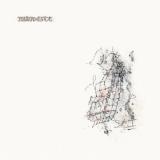
Australian composer-performers Judith Hamann and James Rushford have worked together in countless projects for two decades, perhaps most notably in Golden Fur, their trio with Sam Dunscombe. Black Truffle is pleased to announce Midmeste, their first work as a duo. Its title is Middle English for ‘the middlemost point’, alluding to how the piece builds on the points of overlap between the highly personalised musical languages Hamann and Rushford have developed in recent years. Performed on cello and a variety of pipe organs, Midmeste is a spacious, sometimes unsettling exploration of their shared interest in alternative tunings, psychoacoustic phenomena, the physical properties of their instruments, and the usually peripheral sounds generated by the performing body.
Beginning with a sequence of austerely vibrato-less harmonics from Hamann's cello, trailed by Rushford's whistling portative organ tones, the music soon expands into a slow-moving melodic wander, pausing at times to linger over an uncomfortable harmony or particularly resonant cello tone. Hamann and Rushford have long histories of engagement with pre-Classical European musical traditions, having in past projects performed and radically extended the work of Solage, Louis Couperin, Johann Conrad Beissell and other composers. Here they use a 15th century song by John Dunstaple, ‘O rosa bella’, which returns throughout the piece, distorted, aerated and splayed into new forms.
Developed while the two shared residencies at Akademie Schloss Solitude, Stuttgart in 2020 and La Becque on Lake Geneva in 2023, Midmeste integrates recordings made (at at the invitation of the Biennale Son) on the organ of the Basilica St Valere in Sion, Switzerland—the world’s oldest playable organ, built in the early 15th century. Played by both Rushford and Hamann, the instrument’s idiosyncratic features, including bellows pumped manually using massive wooden beams, are integrated into the music through amplification. Creaks and thumps locate the music physically both in the performers’ bodies and the specific site of its making. Moving through a series of distinct episodes across its forty-minute span, Midmeste makes space for near-silent duets of high harmonics and hissing air, moments where twittering high tones and rumbling sub-bass could be electronic, and static fields that unexpectedly blossom into almost Romantic harmonies.
Listeners familiar with Hamann and Rushford’s work will find many familiar features here: the stunningly rich cello tones, their patient sustain allowing heightened awareness of the inner life of sound and its interactions with the environment; the care with which acoustic space is activated, becoming at times a third instrumental voice; the attention to fragile, unstable sonorities that sometimes have a comic edge. A major work from two key figures in contemporary experimental music, Midmeste synthesises rigorous exploration of fundamental questions of sound and performance with an unapologetic embrace of beauty.
Forever Records
Music springs eternal. Recognising the enduring power of timeless albums to guide us through life, Forever Records is a reissue series dedicated to rediscovering lost musical treasures from across the spectrum of head-feeding, heart-rending electronic music.
Established by Rush Hour co-founder Christiaan Macdonald and Delsin founder Marsel van der Wielen, Forever Records places heartfelt faith in a carefully curated sequence of seminal, largely forgotten records from disparate eras, scenes and spaces within electronic music history. Tipped towards the mellow and introspective, these are albums that stop time when the needle hits the groove, stirring only when it's time to flip over before you sink back into the experience. That's what albums were always meant to be about, back then, right now, always and forever.
The Release:
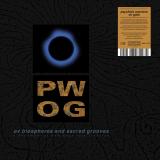
Dancing on the wildest edge of the 90s outsider techno zeitgeist while proudly independent of any so-called scene, Ov Biospheres And Sacred Grooves: A Document Ov New Edge Folk Classics is both of its time and out of time. Rooted in the experiments of electronic music pioneers, industrial culture and ethnic music from around the globe while responding to the house and techno explosion, Robbert Heynen, Reinier Brekelmans, Reinoud van den Broek and Tim Freeman's freewheeling masterpiece takes in lush electronica and murky abstraction on its singular voyage through parts unknown.
Forever Records presents an extensive reissue edition of the first 'fully released' Psychick Warriors Ov Gaia album. Originally released in 1992, this is the first time the full, previously CD-only, version of Ov Biospheres and Sacred Grooves will be pressed on vinyl. The original LP and CD artwork from the various editions released in the early 90s has been combined and designed by the band, and the audio has been remastered with their full approval. As well as a new LP edition of the album, there will also be a uniquely numbered, limited edition available housed in a gatefold sleeve that comes with a bonus 10" featuring two previously unreleased tracks.
Press response to Ov Biospheres and Sacred Grooves - A Document Ov New Edge Folk Classics:
“That’s Magick! The Psychick Warriors Ov Gaia are Holland’s best kept secret.”
Sherman, NME, UK 1992
“PWOG’s debut LP is an organic invocation rite — the soundtrack to a new world coming to life, an odyssey. Cross-cultural rhythms, ambiences and environmental samples segue into one another like a fluid relay, and unlike the majority of dance records, it never settles into a routine. It’s always evolving, always unpredictable, an indefinitely religious experience.”
John Selzer, Melody Maker, UK 1992.
"Grown men, who snorted their first ecstasy to this record, stammered with tears in their eyes about divine experiences and the cosmos, man."
Peter Erik Hillenbach, Marabo Magazine, Germany 1992.
Sacred Grooves’ introduces tribal dance music for the mind, body music leaning on the avant garde. Its ripples of sound drift through tranced out ritualistic beats into ambience and serenity resembling something akin to The Orb meeting Klaus Schulze at a brain tuning session.
Sherman, NME, UK 1992
"There's still dance for a moment, in the opening track "The Challenge," then Psychick Warriors roam the earth, where African drummers, tropical sounds, and science-fiction chords have found their place in a spiralling interplay of rhythms and sounds. A captivating, almost magical ritual." Corné Evers, Oor Magazine, Netherlands 1992.
"It's truly astonishing what these Dutchmen have come up with for their first LP. Their roots might explain the enigma, for Psychick Warriors are more in the tradition of Psychic TV than in the desolate temples of techno-house fetishists, to which they are wrongly relegated. Here, chromosomes dance, not instincts." CMK, Tip, Germany 1992.
"The transcendental essence of this album is spread throughout, with musical gravitations emerging unexpectedly from sonic experiments that are sometimes primitive, sometimes
futuristic in intention… But there is always an aura of cosmic magic that constantly puts all the parts involved in conflict and which, upon closer analysis, ends up being the main reason for the final result." Blitz Magazine, Portugal 1992.
Forever Records
Music springs eternal. Recognising the enduring power of timeless albums to guide us through life, Forever Records is a reissue series dedicated to rediscovering lost musical treasures from across the spectrum of head-feeding, heart-rending electronic music.
Established by Rush Hour co-founder Christiaan Macdonald and Delsin founder Marsel van der Wielen, Forever Records places heartfelt faith in a carefully curated sequence of seminal, largely forgotten records from disparate eras, scenes and spaces within electronic music history. Tipped towards the mellow and introspective, these are albums that stop time when the needle hits the groove, stirring only when it's time to flip over before you sink back into the experience. That's what albums were always meant to be about, back then, right now, always and forever.
The Release:
Dancing on the wildest edge of the 90s outsider techno zeitgeist while proudly independent of any so-called scene, Ov Biospheres And Sacred Grooves: A Document Ov New Edge Folk Classics is both of its time and out of time. Rooted in the experiments of electronic music pioneers, industrial culture and ethnic music from around the globe while responding to the house and techno explosion, Robbert Heynen, Reinier Brekelmans, Reinoud van den Broek and Tim Freeman's freewheeling masterpiece takes in lush electronica and murky abstraction on its singular voyage through parts unknown.
Forever Records presents an extensive reissue edition of the first 'fully released' Psychick Warriors Ov Gaia album. Originally released in 1992, this is the first time the full, previously CD-only, version of Ov Biospheres and Sacred Grooves will be pressed on vinyl. The original LP and CD artwork from the various editions released in the early 90s has been combined and designed by the band, and the audio has been remastered with their full approval. As well as a new LP edition of the album, there will also be a uniquely numbered, limited edition available housed in a gatefold sleeve that comes with a bonus 10" featuring two previously unreleased tracks.
Press response to Ov Biospheres and Sacred Grooves - A Document Ov New Edge Folk Classics:
“That’s Magick! The Psychick Warriors Ov Gaia are Holland’s best kept secret.”
Sherman, NME, UK 1992
“PWOG’s debut LP is an organic invocation rite — the soundtrack to a new world coming to life, an odyssey. Cross-cultural rhythms, ambiences and environmental samples segue into one another like a fluid relay, and unlike the majority of dance records, it never settles into a routine. It’s always evolving, always unpredictable, an indefinitely religious experience.”
John Selzer, Melody Maker, UK 1992.
"Grown men, who snorted their first ecstasy to this record, stammered with tears in their eyes about divine experiences and the cosmos, man."
Peter Erik Hillenbach, Marabo Magazine, Germany 1992.
Sacred Grooves’ introduces tribal dance music for the mind, body music leaning on the avant garde. Its ripples of sound drift through tranced out ritualistic beats into ambience and serenity resembling something akin to The Orb meeting Klaus Schulze at a brain tuning session.
Sherman, NME, UK 1992
"There's still dance for a moment, in the opening track "The Challenge," then Psychick Warriors roam the earth, where African drummers, tropical sounds, and science-fiction chords have found their place in a spiralling interplay of rhythms and sounds. A captivating, almost magical ritual." Corné Evers, Oor Magazine, Netherlands 1992.
"It's truly astonishing what these Dutchmen have come up with for their first LP. Their roots might explain the enigma, for Psychick Warriors are more in the tradition of Psychic TV than in the desolate temples of techno-house fetishists, to which they are wrongly relegated. Here, chromosomes dance, not instincts." CMK, Tip, Germany 1992.
"The transcendental essence of this album is spread throughout, with musical gravitations emerging unexpectedly from sonic experiments that are sometimes primitive, sometimes
futuristic in intention… But there is always an aura of cosmic magic that constantly puts all the parts involved in conflict and which, upon closer analysis, ends up being the main reason for the final result." Blitz Magazine, Portugal 1992.
- A1: Design - Premonition
- A2: Vision - Lucifer’s Friend
- A3: Richard Bone - Alien Girl
- A4: John Howard - I Tune Into You
- A5: Ian North - We’re Not Lonely
- A6: Selwin Image - The Unknown
- B1: Harry Kakoulli - I’m On A Rocket
- B2: Rich Wilde - The Lady Wants To Be Alone
- B3: Billy London - Woman
- B4: Alan Burnham - Science Fiction
- B5: The Microbes - Computer
- B6: The Goo-Q - I’m A Computer
- C1: Gerry & The Holograms - Gerry & The Holograms
- C2: The Warlord - The Ultimate Warlord
- C3: Die Marinas - Fred From Jupiter
- C4: Dee Jay Bert & Eagle - I Am Your Master
- C5: Peta Lily & Michael Process - I Am A Time Bomb
- C6: Sole Sister - It’s Not What You Are But How
- D1: Alasdair Riddell - Do You Read Me?
- D2: Karel Fialka - Armband (The Mystery Song)
- D3: John Springate - My Life
- D4: Idncandescent Luminaire - Famous Names
- D5: Disco Volante - No Motion
- D6: Dream Unit - A Drop In The Ocean
2025 REPRESS ON TRANSPARENT GREEN VINYL
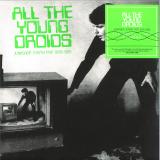
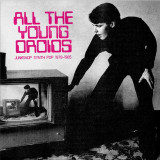
Compiled by Philip King “And then came the rise of synth pop : blokes with dodgy haircuts hunched over keyboard-operated machines stuffed with wires and do-it-yourself tone oscillators making sounds like a brood of geese passing gas in a wind tunnel. Whoopee! This is the way the ‘70s ended : not with a blood-curdling bang bang but with a cheap, synthesized, emasculating whimper.” NICK KENT, NME. All The Young Droids: Junkshop Synth Pop 1978-1985 is a new compilation that charts the underbelly of the epoch-defining sound of the synthesiser in 80s popular music. Compiled by Philip King (previously seen compiling All The Young Droogs, Glitterbest and Boobs - The Junkshop Glam Discotheque), the music here connects the dots between DIY synth enthusiasts grappling with new, cheap synthesisers at the tail-end of punk and wannabe, jobbing songwriters enthral to the new music pioneered by Gary Numan, Depeche Mode and Daniel Miller’s Mute Records. Featuring rare tracks of auto-didactic progressive pop music, proto-techno punk, shoot-for-the-stars-land-in-the-gutter chart flops and heralded, underground synth classics, School Daze paints a picture of beautiful failure. Complete with extensive sleeve notes written by King and never before seen imagery, all 24 tracks were remastered by RPM in-house engineer Simon Murphy, many from vinyl copies due to lost master tapes. The story told on All The Young Droids is one of the dawning opportunity presented by both the emergence to the market of cheaper analog synthesisers and the distribution networks plus indie labels that exploded with the advent of punk music in 1976. While the music that sprouted out all over the globe in the wake of these factors was decried as fake, plastic, a refutation of punk’s guitar-led revolution, it’s telling that much of the music on All The Young Droids.. was created in bedrooms, ramshackle studios and home-made set ups with often borrowed equipment. In the era of record labels jumping to capitalise on the success of The Sex Pistols, The Clash (both on major labels, of course) these artists struggled to stand out from a new gold-rush with next to no budget or PR team. With radio and labels desperate for the new Yazoo, what resulted was a testament to necessity being the mother of invention. At the time, the synthesiser was the music of the future, a shiny new machine that could paint like an orchestra with a single finger and a 4-track. In the hands of Manchester avant-pranksters Gerry & The Holograms it’s a pulsing, sardonic weapon.. the only instrument on the Messthetics classic lampooning of New Wave fashion. In Hamburg, a 16 year old Andreas Dorau used it to write and record (with his female classmates on vocals) a global smash in Fred Vom Jupiter (later licensed to Mute Records). The hard-to-find English version (Fred From Jupiter, natch) is included here. Many artists with alreadystoried careers caught the bug and recorded synthesiser-fuelled peons to space, computers, the future and, of course, love-interests. Harry Kakoulli, late of Squeeze, recorded a solo album in 1979 that included the incredible power-synth-pop smash-that-never-smashed I’m On A Rocket. Similarly, Ian North of Neo and American Power Pop stalwarts Milk ’n’ Cookies bought a Korg MS20 and used a tape machine to record We’re Not Lonely, an absolute lost-classic of minimal synth pop. We’re Not Lonely also features on the Junkshop Synth Pop sampler 7” twinned with John Howard unreleased track You Will See, released April 12th 2025. There are plenty of compilation debuts in evidence. Sole Sister were a mysterious trio who were featured on the Scaling Triangles compilation of female-fronted, queer-adjacent post-punk / underground music that also featured The Petticoats. Selwin Image were from San Francisco and featured members of the recently defunct power pop/punk group The Pushups. Their stupidly catchy The Unknown fizzes with New Wave energy - think XTC to Sparks but remains unreleased until now. Dream Unit’s A Drop In The Ocean is an early synth wave cut, positively teaming with Joy Division instrumentation, previously only released on a long-forgotten and super rare, self-released EP. Incandescent Luminaire’s Famous Names belies an archetypal struggle of a small-town trying to make it in a cruel industry but is a thrilling New Romantic-Synth Wave cross over with a OMD gloominess that’s a joy to hear. Feminist Minimal Wave track I Am A Time Bomb by performance artist Peta Lilly and Michael Chance is a revelation destined for new found cult status. It was released on 7” and lost until now. The flipside to the subterranean, never-made-it synth pop mentioned above are the ambitious, even fruity attempts at success that have a perennial elegance to their confidence. New Jersey-ite Billy London (real name Ed Barth) tried to cash in on the synth boom with Woman, released by a major label, a lurching new wave track built on the Louie Louie rhythm and a wonderfully camp Lou Reedstyle sleazy vocal before exploding in the synthesised chorus. The song bombed but with a chorus like this, you have to wonder why? Ex-Glitter Band member John Springate’s My Life is truly epic, with doomed chord progressions and massive sounding drums turning into at least 3 different songs in the course of the track. Before you wonder what’s going on the song resolves with a glorious return to the main refrain. The dry-ice-dressed dance floor is well catered for too. Design’s Premonition and Vision’s Lucifer’s Friend are stone-cold minimal synth bangers, well loved but given a new lease of life here. The Warlord’s The Ultimate Warlord was released in 1978, a homespun proto Hi NRG banger that was later re-recorded by The Immortals in Canada who had a club hit with it. One-man- band Disco Volante’s No Motion was re-issued by Synth wave label Medical in 2012 but makes its first vinyl compilation appearance here. Close your eyes and you can imagine what Lawrence of Felt would have sounded like with some cheap Korgs a little earlier in his career. Gibraltar-based trio The Microbes imagined a computer programming people to dance - how prescient - and ended up with a propulsive, robo-funk track with splendid rubbery bass playing over a tectonic drum machine. Previously picked up by Belgian label Stroom TV, Dee Jay Bert & Eagle’s heavily Euro-accented I Am Your Master demands the listener to “come to paradise!” In a frankly terrifying manner. All The Young Droids is the first compilation to peel away from the narrative that dour, Minimal Synth and Cold Wave were the only musical children of the first rush of synth pop. Philip King and School Daze Records describe a much more complicated world: along with the austere, Brutalist children of Daniel Miller (who produced Alan Burnham’s Bowie-Low-influenced Science Fiction here) was a plethora of desperate cash-ins, accidental mainstream hits, ambitious pop dramas and major label punts that went nowhere. Crucially, the compilation blurs the line between junk and treasure. What if the two things are interchangeable. What if it’s all science fiction?
I've always admired DJ Rush for one simple reason: he brings the Funk to Techno like no one else. His tracks are instantly recognizable. The Major’s off-grid grooves are wild, unique and downright irresistible. You just have to move when they hit. That's why I'm beyond proud and excited to present my own take on DJ Rush’s classic "Get On Up”. It’s a track that captures everything I love about his sound. Even more special: For the first time in 20 years we're also releasing the original (remastered) version by means of a strictly limited 12” picture disc. Thomas Schumacher.
Bushbaby's mixtape, 'EVERY TIME', is a statement piece from one of the UK's most exciting club producers.
Known for blending UKG, house, and raw rave energy, this 10-track project showcases the full scope of his sound.
The mixtape lands off the back of a huge 12 months. 'Shake and Slide' went viral on socials, 'Feel The Rush' showed his melodic side, and his DJ sets have lit up dancefloors across the UK, Europe, USA and Australia. With major support from Four Tet, Disclosure, Danny Howard, Chris Stussy, bullet tooth, DJ Seinfeld, NOTION, Y U QT, Ben UFO, Diffrent, Hamdi, Interplanetary Criminal and Sammy Virji, Bushbaby is leading a new wave.
Pressed to vinyl and backed by a full world tour, 'EVERY TIME' marks the start of a new chapter.
- A1: Design - Premonition
- A2: Vision - Lucifer’s Friend
- A3: Richard Bone - Alien Girl
- A4: John Howard - I Tune Into You
- A5: Ian North - We’re Not Lonely
- A6: Selwin Image - The Unknown
- B1: Harry Kakoulli - I’m On A Rocket
- B2: Rich Wilde - The Lady Wants To Be Alone
- B3: Billy London - Woman
- B4: Alan Burnham - Science Fiction
- B5: The Microbes - Computer
- B6: The Goo-Q - I’m A Computer
- C1: Gerry & The Holograms - Gerry & The Holograms
- C2: The Warlord - The Ultimate Warlord
- C3: Die Marinas - Fred From Jupiter
- C4: Dee Jay Bert & Eagle - I Am Your Master
- C5: Peta Lily & Michael Process - I Am A Time Bomb
- C6: Sole Sister - It’s Not What You Are But How
- D1: Alasdair Riddell - Do You Read Me?
- D2: Karel Fialka - Armband (The Mystery Song)
- D3: John Springate - My Life
- D4: Incandescent Luminaire - Famous Names
- D5: Disco Volante - No Motion
- D6: Dream Unit - A Drop In The Ocean
Compiled by Philip King
“And then came the rise of synth pop : blokes with dodgy haircuts hunched over keyboard-operated
machines stuffed with wires and do-it-yourself tone oscillators making sounds like a brood of geese
passing gas in a wind tunnel. Whoopee! This is the way the ‘70s ended : not with a blood-curdling bang
bang but with a cheap, synthesized, emasculating whimper.”
NICK KENT, NME.
All The Young Droids: Junkshop Synth Pop 1978-1985 is a new compilation that charts the
underbelly of the epoch-defining sound of the synthesiser in 80s popular music. Compiled by Philip
King (previously seen compiling All The Young Droogs, Glitterbest and Boobs - The Junkshop
Glam Discotheque), the music here connects the dots between DIY synth enthusiasts grappling with
new, cheap synthesisers at the tail-end of punk and wannabe, jobbing songwriters enthral to the new
music pioneered by Gary Numan, Depeche Mode and Daniel Miller’s Mute Records. Featuring rare
tracks of auto-didactic progressive pop music, proto-techno punk, shoot-for-the-stars-land-in-the-gutter
chart flops and heralded, underground synth classics, School Daze paints a picture of beautiful failure.
Complete with extensive sleeve notes written by King and never before seen imagery, all 24 tracks
were remastered by RPM in-house engineer Simon Murphy, many from vinyl copies due to lost master
tapes. The story told on All The Young Droids is one of the dawning opportunity presented by both the
emergence to the market of cheaper analog synthesisers and the distribution networks plus indie labels
that exploded with the advent of punk music in 1976. While the music that sprouted out all over the
globe in the wake of these factors was decried as fake, plastic, a refutation of punk’s guitar-led
revolution, it’s telling that much of the music on All The Young Droids.. was created in bedrooms,
ramshackle studios and home-made set ups with often borrowed equipment. In the era of record labels
jumping to capitalise on the success of The Sex Pistols, The Clash (both on major labels, of course)
these artists struggled to stand out from a new gold-rush with next to no budget or PR team. With radio
and labels desperate for the new Yazoo, what resulted was a testament to necessity being the mother
of invention.
At the time, the synthesiser was the music of the future, a shiny new machine that could paint like an
orchestra with a single finger and a 4-track. In the hands of Manchester avant-pranksters Gerry & The
Holograms it’s a pulsing, sardonic weapon.. the only instrument on the Messthetics classic lampooning
of New Wave fashion. In Hamburg, a 16 year old Andreas Dorau used it to write and record (with his
female classmates on vocals) a global smash in Fred Vom Jupiter (later licensed to Mute Records).
The hard-to-find English version (Fred From Jupiter, natch) is included here. Many artists with alreadystoried careers caught the bug and recorded synthesiser-fuelled peons to space, computers, the future
and, of course, love-interests. Harry Kakoulli, late of Squeeze, recorded a solo album in 1979 that
included the incredible power-synth-pop smash-that-never-smashed I’m On A Rocket. Similarly, Ian
North of Neo and American Power Pop stalwarts Milk ’n’ Cookies bought a Korg MS20 and used a
tape machine to record We’re Not Lonely, an absolute lost-classic of minimal synth pop. We’re Not
Lonely also features on the Junkshop Synth Pop sampler 7” twinned with John Howard unreleased
track You Will See, released April 12th 2025.
There are plenty of compilation debuts in evidence. Sole Sister were a mysterious trio who were
featured on the Scaling Triangles compilation of female-fronted, queer-adjacent post-punk /
underground music that also featured The Petticoats. Selwin Image were from San Francisco and
featured members of the recently defunct power pop/punk group The Pushups. Their stupidly catchy
The Unknown fizzes with New Wave energy - think XTC to Sparks but remains unreleased until now.
Dream Unit’s A Drop In The Ocean is an early synth wave cut, positively teaming with Joy Division
instrumentation, previously only released on a long-forgotten and super rare, self-released EP.
Incandescent Luminaire’s Famous Names belies an archetypal struggle of a small-town trying to
make it in a cruel industry but is a thrilling New Romantic-Synth Wave cross over with a OMD
gloominess that’s a joy to hear. Feminist Minimal Wave track I Am A Time Bomb by performance artist
Peta Lilly and Michael Chance is a revelation destined for new found cult status. It was released on 7”
and lost until now.
The flipside to the subterranean, never-made-it synth pop mentioned above are the ambitious, even
fruity attempts at success that have a perennial elegance to their confidence. New Jersey-ite Billy
London (real name Ed Barth) tried to cash in on the synth boom with Woman, released by a major
label, a lurching new wave track built on the Louie Louie rhythm and a wonderfully camp Lou Reedstyle sleazy vocal before exploding in the synthesised chorus. The song bombed but with a chorus like
this, you have to wonder why? Ex-Glitter Band member John Springate’s My Life is truly epic, with
doomed chord progressions and massive sounding drums turning into at least 3 different songs in the
course of the track. Before you wonder what’s going on the song resolves with a glorious return to the
main refrain.
The dry-ice-dressed dance floor is well catered for too. Design’s Premonition and Vision’s Lucifer’s
Friend are stone-cold minimal synth bangers, well loved but given a new lease of life here. The
Warlord’s The Ultimate Warlord was released in 1978, a homespun proto Hi NRG banger that was
later re-recorded by The Immortals in Canada who had a club hit with it. One-man- band Disco
Volante’s No Motion was re-issued by Synth wave label Medical in 2012 but makes its first vinyl
compilation appearance here. Close your eyes and you can imagine what Lawrence of Felt would have
sounded like with some cheap Korgs a little earlier in his career. Gibraltar-based trio The Microbes
imagined a computer programming people to dance - how prescient - and ended up with a propulsive,
robo-funk track with splendid rubbery bass playing over a tectonic drum machine. Previously picked up
by Belgian label Stroom TV, Dee Jay Bert & Eagle’s heavily Euro-accented I Am Your Master
demands the listener to “come to paradise!” In a frankly terrifying manner.
All The Young Droids is the first compilation to peel away from the narrative that dour, Minimal Synth
and Cold Wave were the only musical children of the first rush of synth pop. Philip King and School
Daze Records describe a much more complicated world: along with the austere, Brutalist children of
Daniel Miller (who produced Alan Burnham’s Bowie-Low-influenced Science Fiction here) was a
plethora of desperate cash-ins, accidental mainstream hits, ambitious pop dramas and major label
punts that went nowhere. Crucially, the compilation blurs the line between junk and treasure. What if the
two things are interchangeable. What if it’s all science fiction?
- A1: Head Rush
- A2: Black & Mild
- A3: Joyful Noise
- B1: Traffic
- B2: Cactus Water
- B3: Candy Paint Feat. Thundercat
- B4: Berghain Feat Barney Bones
- C1: Holy Moly Feat. Ty Dolla $Ign
- C2: I’m Him
- C3: Chain Hang Low Feat. Teezo Touchdown
- C4: Need U 2 Know Feat. Ravyn Lenae
- C5: Two Ways
- D1: Aspen Feat. Toro Y Moi
- D2: We Hungry Feat. Estelle
- D3: Type
- D4: Gold Daytonas Feat. Watr
- D5: Here
- Channel Tres releases his debut album Head Rush via RCA Records.
The album, which features the previously-released singles "Berghain" featuring Barney Bones and "Cactus Water" is the culmination of Channel's steady ascent since he first broke through to public consciousness with his cult-classic debut single "Controller." Head Rush features all of the sounds that have come to be hallmarks of Channel Tres songs, but finds him incorporating musical influences not heard in his prior catalog, as evidenced by "Berghain" and other songs from the album including the Ty Dolla $ign-featuring “Holy Moly,” a visualizer for which is out now. The album arrives on the heels of two recent head-turning Channel Tres collaborations as well -- his contribution to KAYTRANADA's "Drip Sweat" and Jay Worthy, DāM FunK & ATrak's "105 West" alongside fellow LA legends Ty Dolla $ignand DJ Quik exemplify his versatility. Head Rush is a richly layered record, but one that feels totally intuitive, without a trace of doubt or self-consciousness.
The way “I’m Him” shimmers is balanced by the Estelle-featuring “We Hungry,” which nearly growls; the spare, percussion-forward Ravyn Lenaeduet “Need U 2 Know” (the stylization of its title a nod to Prince, one of Tres’s major influences) at delightful odds with the easy ride of “Gold Daytonas.” Head Rush shows the staggering array of styles Channel Tres can evoke. But that versatility is not the point in and of itself—the point is that all these component parts can be reassembled into something that feels uniquely personal, and honest. Through his career, Tres has blended recognizable genres, textures, and points of view into a truly singular form all his own. Longtime listeners will recognize in Head Rush the hallmarks of a Channel Tres record: a mastery of rhythm, the rare ability to make songs sinister and fluorescent at once.
But this LP also opens a new sonic world, one rife with unexpected terrain and hairpin turns—see the way “Type” takes what sounds at first to be a simple romantic boundary and stretches it out into an alien landscape. Or take “Berghain,” a song that nods to the kinetic live shows that became must-see events—a crescendo of interest that included his momentous Coachella 2022 performance and culminated, at least symbolically, with his early 2023 set at Berghain, the legendary Berlin club that has long been a musical hub of the Western world. “Berghain” is delirious but thumps almost impossibly hard, in line with the album as a whole—always molting, always ready to turn from the claustrophobic to the communal, as the pivot on “Joyful Noise” accomplishes so seamlessly. Head Rush also features some of Tres’s most deeply felt vocals to date, like the veritable bloodletting on “Two Ways.” And so the record, which also features Ty Dolla $ign, Thundercat, Teezo Touchdown, Watr, Barney Bones and Toro y Moi, marks a new era for Channel Tres, personally as well as artistically. “I’m older now, and the things that I’ve accomplished tell me I’m ready to do this,” he says. “You’ve worked your whole life for this, you’ve been able to do these shows and walk into these rooms and make these songs. There’s no reason you have to live by the same insecurity that you had to use in years past.” Shedding that baggage accomplished exactly what it was meant to—lightening the load so we’re free to get heavier than ever
- A1: I Will Die With My Head In Flames
- A2: Stained Glass Windows In The Sky
- A3: I Didn't Mean To Hurt You
- A4: Space Blues
- A5: Autumn
- A6: Be Still
- A7: There's No Such Thing As Victory
- A8: Magellan
- A9: The Final Resting Of The Ark
- A10: Sandman's On The Rise Again
- B1: Don't Die On My Doorstep
- B2: Tuesday's Secret
- B3: Book Of Swords
- B4: Female Star
- B5: Fire Circle
- B6: The Darkest Ending
- B7: Bitter End
- B8: Rain Of Crystal Spires
- B9: Voyage To Illumination
- B10: Ballad Of The Band
Pink Vinyl[29,37 €]
Following a run with Cherry Red Records that featured a potential major label jump, guitarist Maurice Deebank quitting and rejoining multiple times, several pop stardom carrots just out of reach, mixing battles with Robin Guthrie, and a shocking entry into the record charts, Lawrence (just “Lawrence”, like “Cher” or “Madonna” thank you very much) knew he would be making a change with his band Felt. He would be seeing out his plan of ten albums and ten singles in ten years alongside a new partner in Creation Records. This compilation beautifully captures those years.
Creation was beginning a rapid ascent at the time, with Alan McGee serving as its hyperactive mouthpiece and focal point. McGee was all in on the band. “Lawrence achieved pop perfection, a breathless rush of sensitivity and intelligence. It was too understated to be commercial, too art to go pop, too pop to go art—in other words it was a perfect combination of all the music I loved at the time.” McGee was thrilled to have what he considered a real star on the label, and Lawrence was equally thrilled to have such an enthusiastic cheerleader. He funneled that enthusiasm into some of the most focused songwriting of his career, as well as some of his wildest experiments, all of which are on display here.
Reissue of Elizio De Buzios's "Tamanquiro". Remastered and pressed on 45 RPM!
Sitting a good 90-minute drive away from Rio de Janeiro’s crowded beaches and packed tourist hot-spots, Campo Grande is not a neighbourhood that attracts travellers from around the World. Traditionally it is home to the city’s lower middle-class, whose aspirations of moving up the social ladder were played out in a suburb that has always been solidly working-class.
Campo Grande is home to Elizio De Buzios, a Brazilian musician who started playing music in the late 1970s and early 1980s. De Buzios began as a drummer, before learning to play guitar and starting to compose and sing his own music. When he turned 18, De Buzios joined a local band formed by some of his friends and other like-minded local musicians: Sol da Terra. The band mostly played samba in neighbourhood bars and small venues around Camp Grande, but De Buzios was interested in more than just samba. While he naturally admired great samba composers such as Cartola and Beth Carvalho, his musical pass went far beyond Brazil’s national music. He also loved MPB and bossa-nova and at home he listed to Joäo Bosco, Milton Nascimento, Luis Melodia, Tom Jobim, and many bossa-nova singers.
In 1980 De Buzios was noticed by a local representative of international major label Polygram, who gave him the opportunity to record two songs. He was excited, so started searching for inspiration for the songs he would eventually lay down. He found that inspiration close to home while passing a neighbourhood shop which made and sold clogs. After noticing a display of then fashionable Portuguese clogs outside the store, De Buzios popped inside to talk to the owner. It turned out that he was a tamanqueiro – as clog-makers are traditionally called in his native Portugal – and was as passionate about music as he was about the footwear he made. Thus inspired, De Buzios returned home to work more on the lyrics and music.
The next day, he headed into the studio to record the song, with Vale Ribeiro, who later went on to produce tracks for Marcos Valle, behind the desk. With Ribeiro’s assistance, De Buzios managed to record two songs in one day: ‘Tamanqueiro’ and ‘Sou Um Louco’, a ballad with English lyrics blended into the mostly Portuguese text. From the start, it was clear that ‘Tamanqueiro’ would be the single’s A-side. Incredibly catchy and funky, with some subtle disco elements, the song remained distinctively Brazilian thanks to the use of the cuíca. Listening back all these years on, De Buzios’ lyrics seem almost spontaneous, carry the track forward, and make it almost impossible not to sing along. Its infectiousness and funkiness made it an instant hit with the first few people to hear it.
When it was released, responses to the song were enthusiastic, even if it never became the Brazil-wide smash it should have been. It resonated well in the local clubs and on the radio, but unfortunately the marketing was handled by an inexperienced Polygram employee who failed to adequately promote the track. As a result, the record sank without trace and De Buzios’ dreams of stardom evaporated. Having just started a family, he realized he could not live off the uncertainty of being a musician. Instead, he got a job at city hall as a civil servant, a role he continued until his retirement a few years ago. ‘Tamanqueiro’ and ‘Sou Um Louco’ remain the only two songs he ever recorded.
In the early 2000s, with the rise of diggers’ culture, ‘Tamanqueiro’ slowly surfaced again. It became a sought after, hard to find seven-inch single, finding its way onto the airwaves once more and into the ears of a new generation of listeners. Some started appreciating the song so much that it was referred to as the “best-Jorge-Ben-song-Jorge-Ben-never-recorded”. And they are right: ‘Tamanqueiro’ does have that Jorge Ben-straight-forwardness. It’s a completely honest song that’s almost impossible not to fall in love with. Thanks to this remastered reissue on Rush Hour, De Buzios may now get the props his sole record so richly deserves.
Now for the good news: De Buzios is still singing in local bars and clubs in and around Campo Grande. He is surprised, but also incredibly proud, that the record he had almost forgotten about is appreciated so much by a group of music lovers he didn’t even know existed. But above all, he is happy that more than 40 years after the recording session, the record lives on – not only on this re-release, but also in his weekend sets in the bars of Campo Grande.
- A1: Tank!
- A2: Rush
- A3: Pokey Dokey
- A4: Bad Dog No Biscuits
- A5: Cat Blues
- B1: Cosmos
- B2: Space Lion
- B3: Waltz For Zizi
- B4: Piano Black
- B5: Pot City
- C1: Too Good Too Bad
- C2: Car 24
- C3: The Egg And I
- C4: Felt Tip Pen
- C5: Rain
- C6: Digging My Potato
- C7: Memory
- D1: What Planet Is This?
- D2: Diamonds
- D3: Mushroom Hunting
- D4: Einstein Groovin’
- D5: Pearls
Milan Records is pleased to release this stunning vinyl edition of the soundtrack to the hit anime series Cowboy Bepop.
Originally aired in 1998, Cowboy Bebop became a critical and commercial success both in Japanese and international markets (most notably in the United States), garnered several major anime and science fiction awards upon its release, and received wide acclaim for its style, characters, story, voice acting, animation, and soundtrack
Seatbelts’s repertoire covers not only jazz but also rock, electronic, funk, blues, heavy metal, country and Jpop
- 1: Doors
- 2: Brand Name
- 3: Rush Hour
- 4: Two Matches Feat. Ab-Soul
- 5: 100 Grandkids
- 6: Time Flies
- 7: Weekend Feat. Miguel
- 8: Clubhouse
- 9: In The Bag
- 10: Break The Law
- 11: Perfect Circle/God Speed
- 12: When In Rome
- 13: Ros
- 14: Cut The Check Feat. Chief Keef
- 15: Ascension
- 16: Jump
- 17: The Festival Feat. Little Dragon
- 18: Royal Flush Feat. Vinny Radio
- 19: Cable Box
- 20: Carpe Diem
GO:OD AM (10th Anniversary) 3LP vinyl by Mac Miller. Includes 3 bonus songs from the GO:OD AM sessions.
Originally released in 2015, the album, hailed by the likes of Billboard and Rolling Stone as the best of his career upon its release, marked Mac Miller's first for a major label and was regaled as "one of the most musically appealing hip-hop LPs of the year" by The New York Times. After surprising fans and critics alike with his second full length Watching Movies with the Sound Off, Mac returned with another adventurous album in GO:OD AM that marked the beginning of a rapid artistic evolution that unfolded across 2016's The Divine Feminine and 2018's Swimming.
Each 3LP package includes a special triple gatefold jacket printed on silver mirror board with die cut, two inner sleeves with photos printed on silver mirror board and a yellow bonus vinyl with a custom etching on the back.
- A1: Miles Caton, Lynette Williams, Dc6 Singers Collective & Pleasant Valley Youth Choir Of New Orleans - This Little Light Of Mine
- A2: Ludwig Goransson & Don Toliver - Flames Of Fortune
- A3: Cedric Burnside, Sharde Thomas Mallory & Tierinii Jackson - Wang Dang Doodle
- A4: Miles Caton - Travelin
- A5: Bobby Rush & Miles Caton - Juke
- A6: James Blake & Ludwig Goransson - Seance
- A7: Hailee Steinfeld - Dangerous
- B1: Miles Caton - I Lied To You
- B2: Jack O'connell, Lola Kirke & Peter Dreams - Pick Poor Robin Clean
- B3: Cedric Burnside & Tierinii Jackson - Can’t Win For Losin
- B4: Rhiannon Giddens & Justin Robinson - Old Corn Liquor
- B5: Lola Kirke, Peter Dreams, Brian Dunphy, Darren Holden & Jack O'connell - Will Ye Go, Lassie, Go?
- C1: Jayme Lawson - Pale, Pale Moon
- C2: Jack O’connell, Brian Dunphy & Darren Holden - Rocky Road To Dublin
- C3: Jerry Cantrell & Ludwig Goransson - In Moonlight
- C4: Buddy Guy - Travelin
- C5: Alice Smith & Miles Caton - Last Time (I Seen The Sun)
- D1: Rod Wave - Sinners
- D2: Og Dayv & Uncle James - Troubled Waters
- D3: Brittany Howard - Pale, Pale Moon
- D4: Miles Caton - I Lied To You (Radio Edit)
- D5: Geechie Wiley - Pick Poor Robin Clean
Mutant, in partnership with Sony Masterworks, is proud to present the soundtrack to this spring's runaway sensation - the Various Artists soundtrack to Ryan Coogler's SINNERS
The album is executive produced by the film’s composer Ludwig Göransson (who also serves as an executive producer on the movie), Coogler & Serena Göransson and features original songs and recordings by Miles Caton, Rod Wave, James Blake, Don Toliver, Brittany Howard, Raphael Saadiq, Hailee Steinfeld, Rhiannon Giddens, Buddy Guy, Cedric Burnside, Eric Gales, Christone “Kingfish” Ingram, Jerry Cantrell, Iarla Ó Lionáird, Lola Kirke, Bobby Rush, Peter Dreams, OG DAYV, Jack O’Connell, Sharde Thomas-Mallory & others.
The soundtrack is available digitally from Sony Masterworks (visit Amazon or any other major digital music services to stream/download).
Mutant, and Sony Classical will also release a second album featuring original score by Academy Award® winning composer Ludwig Göransson.
SINNERS is written and directed by Coogler and stars Michael B. Jordan, Hailee Steinfeld, O’Connell, Wunmi Mosaku, Omar Benson Miller, Jayme Lawson and Delroy Lindo. The Proximity Media production will be released in theaters nationwide on April 18 by Warner Bros. Pictures.
Bushbaby's mixtape, 'EVERY TIME', is a statement piece from one of the UK's most exciting club producers.
Known for blending UKG, house, and raw rave energy, this 10-track project showcases the full scope of his sound.
The mixtape lands off the back of a huge 12 months. 'Shake and Slide' went viral on socials, 'Feel The Rush' showed his melodic side, and his DJ sets have lit up dancefloors across the UK, Europe, USA and Australia. With major support from Four Tet, Disclosure, Danny Howard, Chris Stussy, bullet tooth, DJ Seinfeld, NOTION, Y U QT, Ben UFO, Diffrent, Hamdi, Interplanetary Criminal and Sammy Virji, Bushbaby is leading a new wave.
Pressed to vinyl and backed by a full world tour, 'EVERY TIME' marks the start of a new chapter.
- A1: Malavoi - Te Traigo Guajira
- A2: Los Caraibes - Donde
- A3: Tropicana - Amor En Chachacha
- A4: Ryco Jazz - Wachi Wara
- A5: Eugene Balthazar - Dap Pignan
- A6: Roger Jaffort - Oye Mi Consejo
- A7: Les Kings - Oriza
- B1: Les Supers Jaguars - Tatalibaba
- B2: Super Combo De Pointe A Pitre - Serrana
- B3: L'ensemble Abricot - Se Quedo Boogaloo
- B4: Henri Guedon - Bilonga
- B5: Les Aiglons - Pensando En Ti
- B6: Los Martiniquenos - Caterate
In Guadeloupe, many people think that jazz and ka music are like a ring and a finger. To some extent, the same could be said about so called Latin music and the music played in the French West Indies.
Both aesthetics were born in the Caribbean and bear so many connections that they can easily be considered cousins. In constant dialogue, there are lots of examples of their fruitful alliance and have been for a while. The English country dance that used to be practiced in European lounges came to be called kadrille in Martinique and contradanza in Cuba. They both featured additional percussion instruments inherited from the transatlantic deportation. Drawing from shared feelings about the same traumatized identity – later to be creolized – it would be hard not to assume that they were meant to inspire each other. The golden age of the orchestras that graced the Pigalle nights during the interwar period further proves the point. As soon as the 1930s, Havana-born Don Barreto naturally mixed danzón and biguine music in a combo based at Melody's Bar. In the following decade, Félix Valvert, a conductor who was born and raised in Basse-Terre in Guadelupe, also worked wonders in Montparnasse with La Coupole, which was an orchestra made up of eclectic musicians. Afro- Caribbean performers of various origins were often hired on rhythm and brass sections in jazz bands, which used to enliven the typical French balls of the capital. In the 1930s and onwards, Rico’s Creole Band was one of them.
Martinican violinist-clarinettist Ernest Léardée, who would become the king of biguine music as well as the main figure of French Uncle Ben's TV commercials (a dark stigma of post-colonial stereotypes), had musicians from the whole Caribbean sphere play at his Bal Blomet – and they all enchanted "ces Zazous-là" (according the words of Léardée's biguine-calypso piece). In les Antilles (French for French West Indies), music history started to speed up in the 1950s, when trade expanded and radio stations grew bigger. The Guadelupean and Martiniquais youth tuned in their old galena radio sets to South American and Caribbean music. As for the women traders, les pacotilleuses, they bought and sold goods across different islands (the "passing of items through various hands" was thought to be most pleasurable) and brought back countless sounds in their luggage. Such was the case of Madame Balthazar, who once returned from Puerto Rico with the first 45rpm and 33rpm to ever enter Martinique.
Out of this adventure was created the famous Martinican label La Maison des Merengues, a music business she opened and undertook with her husband and which proved to be a major landmark. At the end of the 1950s, in Puerto Rico, Marius Cultier competed in the Piano International Contest playing a version of Monk's Round 'Midnight. He won the first prize and this distinction foreshadowed everything that was to come. Cultier, the heretic Monk of jazz, was quickly praised for writing superb melodies, always tinged with a twist that conferred a unique sound to his music. It didn't take long for the gifted self-taught musician to get to play with Los Cubanos, making a name for himself thanks to his impressive maestria on merengues.
The rest is history. Besides, in the late 1950s, Frantz Charles-Denis, born into the upper middle class in Saint-Pierre and better known by his first name Francisco, went back home after working at La Cabane Cubaine – a club located rue Fontaine where he had caught the Latin fever. Francisco's music was therefore heavily marked by his Cuban cousins' influence, which gave the combos he led a specific style and also led to renewal. Things were swinging hard in La Savane, located in the main square in Fort-de-France. He set up the Shango club close by and tested out the biguine lélé there, a new music formula spiced up with Latin rhythms. Soon afterwards, fate had him fly to Puerto Rico and Venezuela.
As for percussionist Henri Guédon (percussions were only a part of his many talents), he was born in Fort-de-France in May 22nd 1944, the day marking the celebration of the abolition of slavery. As an old man, he could remember that in " his father's Teppaz, a lot of hectic 6/8 music was constantly playing...". In the opening lines of his Lettre à Dizzy, a small illustrated collection of writings published by Del Arco, he highlighted the huge impact that cubop had on him as a teenage boy, around 1960. He eventually turned out to be the lider maximo in La Contesta, a big band steeped in Latin jazz. He was also the one who originated the word zouk to describe music which brought the sound of the New York barrio to Paris. It was the culmination of a journey that started in Sainte-Marie: "a mythical place for bélé, the equivalent of Cuban guaguancó". In the early 1960s, the tertiary economy developed to the detriment of agriculture. Yet rural life was where roots music emerged in Martinique and in Guadeloupe.
Record companies played a major part in the process of Latin versions sweeping across the islands – before reaching everywhere else. Producer Célini, boss of the great Aux Ondes label, and Marcel Mavounzy, both the head of Émeraude records - a firm which was founded in 1953 - as well as the brother of famous saxophonist Robert Mavounzy, were big names to bear in mind. Although there were many of them - all of whom are featured on this record - Henri Debs was definitely the major figure in the recording adventure. He proved to be so influential that he even got compared to Berry Gordy. In the mid 1950s, when he acquired his first Teppaz, he worked on his first compositions: a bolero and a chachacha. Then, he became the one man who made people discover Caribbean music, from calypso to merengue. He was among the first ones to rush out to San Juan, Puerto Rico, to buy records and distribute them through a store run by one of his brothers in Fort-de-France. He had members of the Fania All Star come and perform there, which he was madly proud about. He was also the first one to pay attention to Haitian music, such as compas direct and various other rhythms which would soon flood the market. As a result, many of the combos hitting his legendary studio would end up boosted by widespread "Afro-Latin" rhythms. However, he never denied his identity: gwo ka drums were given a major role, although they were instruments which had long been banned from the "official" music spheres. The present selection bears witness to such a creative swarming. Here are fourteen tracks of untimely yet unprecedented cross-fertilization: all types of music rooted in the Creole archipelago have found their way, whatsoever, to the tracklisting. Whether originating from the city or being more rural, they all go back to what Edouard Glissant, in an interview about the place of West Indian music in the Afro-American scope, called "the trace of singing, the one which got erased by slavery." "It is so in jazz, but also in reggae, calypso, biguine, salsa... This trace also manifests through the drums, whether Guadelupean, Dominican, Jamaican or Cuban... None of them being quite the same. They all point to the idea of a trace, seeking it out and connecting to each other through it. This is the hallmark of the African diaspora: its ability to create something new, in relation to itself, out of a trace. It may be the memory of a rhythm, the crafting of a drum, a means of expression which doesn't resort to an old language but to the modalities of it." The opening track features one of the emblematic orchestras of this aesthetic identity, criscrossing many music types from the archipelago. The 1974 Ray Barretto guajira – Ray Barretto was a major New York drummer influenced by Charlie Parker and Chano Pozzo – is magnificently performed by Malavoi, a legendary Fayolais group (i.e from Fort-de-France). Additionally, the compilation ends on a piece by Los Martiniqueños de Francisco. It symbolically closes the circle as it is a genuine potomitan of Martinique culture which also functions as a tireless campaigner for Afro-Caribbean music. Practicing the danmyé rounds (a kind of capoeiria) to the rhythm of the bèlè drum, it delivers a terrific Caterete, a kind of champeta of Afro- Colombian obedience which was originally composed by Colombian Fabián Ramón Veloz Fernández for the group Wgenda Kenya. The icing on the cake is Brazilian Marku Ribas, who found refuge in Martinique in the early 1970s, bringing his singing to the last trance-inducing track. These two "versions" convey the whole tone of a selection composed of rarities and classics of the tropicalized genre, swarming with tonic accents and convoluted rhythms. It is the sort of cocktail that the West Indians never failed to spice up with their own ingredients. For instance, the Los Caraïbes cover of Dónde, a famous Cuban theme composed by producer Ernesto Duarte Brito, has a typical violin and features renowned Martinique singer Joby Valente and his piquant voice.
The track used to be – or so we think – their only existing 45rpm. The meaningful Amor en chachachá by L'Ensemble Tropicana, a band which included Haitian musicians among whom was composer and leader Michel Desgrotte, also recalls how Latin music was pervasive in the tropics in the mid-1960s. They were the ones keeping people dancing at Le Cocoteraie in Guadelupe and La Bananeraie in Martinique. Around the same time, another "foreign" band, Congolese Freddy Mars N'Kounkou's Ryco Jazz, achieved some success on both islands by covering Latin jazz classics – such as their adaptation of Wachi Wara, a "soul sauce" by Dizzy Gillespie and Chano Pozo whose interweaving of strings and percussions can have anyone hit the dancefloor. How can you resist Dap Pinian indeed, a powerful guaguancó by Eugene Balthazar, performed by the Tropicana Orchestra and published by the Martinique-founded La Maison des Merengues? It also acts as a symbol of the maelstrom at work. Going by the name Paco et L'orchestre Cachunga, Roger Jaffory used to play guaguancó too: his Fania-inspired Oye mi consejo is one example of his style. Baila!!!!! Dancing was also one of the Kings' focus points. Oriza is a Puerto Rican bomba and a "classic" originally composed by Nuevayorquino trumpeter Ernie Agosto, which reserves major space for brasses, giving it a special sheen.
Emerging from the New York barrios crucible was also La Perfecta, a Martinique group originating from Trinidad, whose name directly references the totemic Eddie Palmieri figure as well as his own band, also called La Perfecta. Here they borrow Toumbadora from Colombian producer and composer Efraín Lancheros and interpret it by emphasizing percussions, which set fire to the track even more than the wind instruments. The same goes for Martinique's Super Jaguars, who use Tatalibaba – a composition by Cuban guitarist Florencio "Picolo" Santana which was made famous by Celia Cruz & La Sonora Matencera – as a pretext for sending their cadences into a frenzy. In a more typically salsa vein, the Super Combo, a famous Guadelupean orchestra from Pointe-Noire that was formed around the Desplan family and had Roger Plonquitte and Elie Bianay on board, adapt Serana, a theme by Roberto Angleró Pepín, a Puerto Rican composer, singer and musician also known for his song Soy Boricua. Here again, their vision comes close to surpassing the original. In the 1970s, L'Ensemble Abricot provided a handful of tracks of different syles, hence reaching the pinnacle of the art of achieving variety and giving pleasure. They played boleros, biguines, compas direct, guaguancó and even a good old boogaloo - the type they wanted to keep close to their hearts for ever, "pour toujours", as they sang along together in one of their songs. Léon Bertide's Martinican ensemble excelled at the boogaloo which had been composed by Puerto Rican saxophonist Hector Santos for the legendary El Gran Combo.
Three years later, in 1972, Henri Guédon, with the help of Paul Rosine on the vibraphone, tackled the Bilongo made famous by Eddie Palmieri. Such a classic!!!!! And so were the Aiglons, the band from Guadelupe: choosing to execute Pensando en tí, a composition by Dominican Aniceto Batista, on a cooler tempo than the original, they noticeably used a wonderfully (un)tuned keyboard in place of the accordion. On the high-value collectible single – the first one released by Les Aiglons under the Duli Disc label – there is a sticker classifying the track under the generic name "Afro". Now that is what we call a symbol. Jacques Denis
- A1: Design - Premonition
- A2: Vision - Lucifer’s Friend
- A3: Richard Bone - Alien Girl
- A4: John Howard - I Tune Into You
- A5: Ian North - We’re Not Lonely
- A6: Selwin Image - The Unknown
- B1: Harry Kakoulli - I’m On A Rocket
- B2: Rich Wilde - The Lady Wants To Be Alone
- B3: Billy London - Woman
- B4: Alan Burnham - Science Fiction
- B5: The Microbes - Computer
- B6: The Goo-Q - I’m A Computer
- C1: Gerry & The Holograms - Gerry & The Holograms
- C2: The Warlord - The Ultimate Warlord
- C3: Die Marinas - Fred From Jupiter
- C4: Dee Jay Bert & Eagle - I Am Your Master
- C5: Peta Lily & Michael Process - I Am A Time Bomb
- C6: Sole Sister - It’s Not What You Are But How
- D1: Alasdair Riddell - Do You Read Me?
- D2: Karel Fialka - Armband (The Mystery Song)
- D3: John Springate - My Life
- D4: Idncandescent Luminaire - Famous Names
- D5: Disco Volante - No Motion
- D6: Dream Unit - A Drop In The Ocean
Compiled by Philip King
“And then came the rise of synth pop : blokes with dodgy haircuts hunched over keyboard-operated
machines stuffed with wires and do-it-yourself tone oscillators making sounds like a brood of geese
passing gas in a wind tunnel. Whoopee! This is the way the ‘70s ended : not with a blood-curdling bang
bang but with a cheap, synthesized, emasculating whimper.”
NICK KENT, NME.
All The Young Droids: Junkshop Synth Pop 1978-1985 is a new compilation that charts the
underbelly of the epoch-defining sound of the synthesiser in 80s popular music. Compiled by Philip
King (previously seen compiling All The Young Droogs, Glitterbest and Boobs - The Junkshop
Glam Discotheque), the music here connects the dots between DIY synth enthusiasts grappling with
new, cheap synthesisers at the tail-end of punk and wannabe, jobbing songwriters enthral to the new
music pioneered by Gary Numan, Depeche Mode and Daniel Miller’s Mute Records. Featuring rare
tracks of auto-didactic progressive pop music, proto-techno punk, shoot-for-the-stars-land-in-the-gutter
chart flops and heralded, underground synth classics, School Daze paints a picture of beautiful failure.
Complete with extensive sleeve notes written by King and never before seen imagery, all 24 tracks
were remastered by RPM in-house engineer Simon Murphy, many from vinyl copies due to lost master
tapes. The story told on All The Young Droids is one of the dawning opportunity presented by both the
emergence to the market of cheaper analog synthesisers and the distribution networks plus indie labels
that exploded with the advent of punk music in 1976. While the music that sprouted out all over the
globe in the wake of these factors was decried as fake, plastic, a refutation of punk’s guitar-led
revolution, it’s telling that much of the music on All The Young Droids.. was created in bedrooms,
ramshackle studios and home-made set ups with often borrowed equipment. In the era of record labels
jumping to capitalise on the success of The Sex Pistols, The Clash (both on major labels, of course)
these artists struggled to stand out from a new gold-rush with next to no budget or PR team. With radio
and labels desperate for the new Yazoo, what resulted was a testament to necessity being the mother
of invention.
At the time, the synthesiser was the music of the future, a shiny new machine that could paint like an
orchestra with a single finger and a 4-track. In the hands of Manchester avant-pranksters Gerry & The
Holograms it’s a pulsing, sardonic weapon.. the only instrument on the Messthetics classic lampooning
of New Wave fashion. In Hamburg, a 16 year old Andreas Dorau used it to write and record (with his
female classmates on vocals) a global smash in Fred Vom Jupiter (later licensed to Mute Records).
The hard-to-find English version (Fred From Jupiter, natch) is included here. Many artists with alreadystoried careers caught the bug and recorded synthesiser-fuelled peons to space, computers, the future
and, of course, love-interests. Harry Kakoulli, late of Squeeze, recorded a solo album in 1979 that
included the incredible power-synth-pop smash-that-never-smashed I’m On A Rocket. Similarly, Ian
North of Neo and American Power Pop stalwarts Milk ’n’ Cookies bought a Korg MS20 and used a
tape machine to record We’re Not Lonely, an absolute lost-classic of minimal synth pop. We’re Not
Lonely also features on the Junkshop Synth Pop sampler 7” twinned with John Howard unreleased
track You Will See, released April 12th 2025.
There are plenty of compilation debuts in evidence. Sole Sister were a mysterious trio who were
featured on the Scaling Triangles compilation of female-fronted, queer-adjacent post-punk /
underground music that also featured The Petticoats. Selwin Image were from San Francisco and
featured members of the recently defunct power pop/punk group The Pushups. Their stupidly catchy
The Unknown fizzes with New Wave energy - think XTC to Sparks but remains unreleased until now.
Dream Unit’s A Drop In The Ocean is an early synth wave cut, positively teaming with Joy Division
instrumentation, previously only released on a long-forgotten and super rare, self-released EP.
Incandescent Luminaire’s Famous Names belies an archetypal struggle of a small-town trying to
make it in a cruel industry but is a thrilling New Romantic-Synth Wave cross over with a OMD
gloominess that’s a joy to hear. Feminist Minimal Wave track I Am A Time Bomb by performance artist
Peta Lilly and Michael Chance is a revelation destined for new found cult status. It was released on 7”
and lost until now.
The flipside to the subterranean, never-made-it synth pop mentioned above are the ambitious, even
fruity attempts at success that have a perennial elegance to their confidence. New Jersey-ite Billy
London (real name Ed Barth) tried to cash in on the synth boom with Woman, released by a major
label, a lurching new wave track built on the Louie Louie rhythm and a wonderfully camp Lou Reedstyle sleazy vocal before exploding in the synthesised chorus. The song bombed but with a chorus like
this, you have to wonder why? Ex-Glitter Band member John Springate’s My Life is truly epic, with
doomed chord progressions and massive sounding drums turning into at least 3 different songs in the
course of the track. Before you wonder what’s going on the song resolves with a glorious return to the
main refrain.
The dry-ice-dressed dance floor is well catered for too. Design’s Premonition and Vision’s Lucifer’s
Friend are stone-cold minimal synth bangers, well loved but given a new lease of life here. The
Warlord’s The Ultimate Warlord was released in 1978, a homespun proto Hi NRG banger that was
later re-recorded by The Immortals in Canada who had a club hit with it. One-man- band Disco
Volante’s No Motion was re-issued by Synth wave label Medical in 2012 but makes its first vinyl
compilation appearance here. Close your eyes and you can imagine what Lawrence of Felt would have
sounded like with some cheap Korgs a little earlier in his career. Gibraltar-based trio The Microbes
imagined a computer programming people to dance - how prescient - and ended up with a propulsive,
robo-funk track with splendid rubbery bass playing over a tectonic drum machine. Previously picked up
by Belgian label Stroom TV, Dee Jay Bert & Eagle’s heavily Euro-accented I Am Your Master
demands the listener to “come to paradise!” In a frankly terrifying manner.
All The Young Droids is the first compilation to peel away from the narrative that dour, Minimal Synth
and Cold Wave were the only musical children of the first rush of synth pop. Philip King and School
Daze Records describe a much more complicated world: along with the austere, Brutalist children of
Daniel Miller (who produced Alan Burnham’s Bowie-Low-influenced Science Fiction here) was a
plethora of desperate cash-ins, accidental mainstream hits, ambitious pop dramas and major label
punts that went nowhere. Crucially, the compilation blurs the line between junk and treasure. What if the
two things are interchangeable. What if it’s all science fiction?
- A1: Design - Premonition
- A2: Vision - Lucifer’s Friend
- A3: Richard Bone - Alien Girl
- A4: John Howard - I Tune Into You
- A5: Ian North - We’re Not Lonely
- A6: Selwin | Image - The Unknown
- B1: Harry Kakoulli - I’m On A Rocket
- B2: Rich Wilde - The Lady Wants To Be Alone
- B3: Billy London - Woman
- B4: Alan Burnham - Science Fiction
- B5: The Microbes - Computer
- B6: The Goo-Q - I’m A Computer
- C1: Gerry & The Holograms - Gerry & The Holograms
- C2: The Warlord - The Ultimate Warlord
- C3: Die Marinas - Fred From Jupiter
- C4: Dee Jay Bert & Eagle - I Am Your Master
- C5: Peta Lily & Michael Process - I Am A Time Bomb
- C6: Sole Sister - It’s Not What You Are But How
- D1: Alasdair Riddell - Do You Read Me?
- D2: Karel Fialka - Armband (The Mystery Song)
- D3: John Springate - My Life
- D4: Incandescent Luminaire - Famous Names
- D5: Disco Volante - No Motion
- D6: Dream Unit - A Drop In The Ocean
Compiled by Philip King
“And then came the rise of synth pop : blokes with dodgy haircuts hunched over keyboard-operated
machines stuffed with wires and do-it-yourself tone oscillators making sounds like a brood of geese
passing gas in a wind tunnel. Whoopee! This is the way the ‘70s ended : not with a blood-curdling bang
bang but with a cheap, synthesized, emasculating whimper.”
NICK KENT, NME.
All The Young Droids: Junkshop Synth Pop 1978-1985 is a new compilation that charts the
underbelly of the epoch-defining sound of the synthesiser in 80s popular music. Compiled by Philip
King (previously seen compiling All The Young Droogs, Glitterbest and Boobs - The Junkshop
Glam Discotheque), the music here connects the dots between DIY synth enthusiasts grappling with
new, cheap synthesisers at the tail-end of punk and wannabe, jobbing songwriters enthral to the new
music pioneered by Gary Numan, Depeche Mode and Daniel Miller’s Mute Records. Featuring rare
tracks of auto-didactic progressive pop music, proto-techno punk, shoot-for-the-stars-land-in-the-gutter
chart flops and heralded, underground synth classics, School Daze paints a picture of beautiful failure.
Complete with extensive sleeve notes written by King and never before seen imagery, all 24 tracks
were remastered by RPM in-house engineer Simon Murphy, many from vinyl copies due to lost master
tapes. The story told on All The Young Droids is one of the dawning opportunity presented by both the
emergence to the market of cheaper analog synthesisers and the distribution networks plus indie labels
that exploded with the advent of punk music in 1976. While the music that sprouted out all over the
globe in the wake of these factors was decried as fake, plastic, a refutation of punk’s guitar-led
revolution, it’s telling that much of the music on All The Young Droids.. was created in bedrooms,
ramshackle studios and home-made set ups with often borrowed equipment. In the era of record labels
jumping to capitalise on the success of The Sex Pistols, The Clash (both on major labels, of course)
these artists struggled to stand out from a new gold-rush with next to no budget or PR team. With radio
and labels desperate for the new Yazoo, what resulted was a testament to necessity being the mother
of invention.
At the time, the synthesiser was the music of the future, a shiny new machine that could paint like an
orchestra with a single finger and a 4-track. In the hands of Manchester avant-pranksters Gerry & The
Holograms it’s a pulsing, sardonic weapon.. the only instrument on the Messthetics classic lampooning
of New Wave fashion. In Hamburg, a 16 year old Andreas Dorau used it to write and record (with his
female classmates on vocals) a global smash in Fred Vom Jupiter (later licensed to Mute Records).
The hard-to-find English version (Fred From Jupiter, natch) is included here. Many artists with alreadystoried careers caught the bug and recorded synthesiser-fuelled peons to space, computers, the future
and, of course, love-interests. Harry Kakoulli, late of Squeeze, recorded a solo album in 1979 that
included the incredible power-synth-pop smash-that-never-smashed I’m On A Rocket. Similarly, Ian
North of Neo and American Power Pop stalwarts Milk ’n’ Cookies bought a Korg MS20 and used a
tape machine to record We’re Not Lonely, an absolute lost-classic of minimal synth pop. We’re Not
Lonely also features on the Junkshop Synth Pop sampler 7” twinned with John Howard unreleased
track You Will See, released April 12th 2025.
There are plenty of compilation debuts in evidence. Sole Sister were a mysterious trio who were
featured on the Scaling Triangles compilation of female-fronted, queer-adjacent post-punk /
underground music that also featured The Petticoats. Selwin Image were from San Francisco and
featured members of the recently defunct power pop/punk group The Pushups. Their stupidly catchy
The Unknown fizzes with New Wave energy - think XTC to Sparks but remains unreleased until now.
Dream Unit’s A Drop In The Ocean is an early synth wave cut, positively teaming with Joy Division
instrumentation, previously only released on a long-forgotten and super rare, self-released EP.
Incandescent Luminaire’s Famous Names belies an archetypal struggle of a small-town trying to
make it in a cruel industry but is a thrilling New Romantic-Synth Wave cross over with a OMD
gloominess that’s a joy to hear. Feminist Minimal Wave track I Am A Time Bomb by performance artist
Peta Lilly and Michael Chance is a revelation destined for new found cult status. It was released on 7”
and lost until now.
The flipside to the subterranean, never-made-it synth pop mentioned above are the ambitious, even
fruity attempts at success that have a perennial elegance to their confidence. New Jersey-ite Billy
London (real name Ed Barth) tried to cash in on the synth boom with Woman, released by a major
label, a lurching new wave track built on the Louie Louie rhythm and a wonderfully camp Lou Reedstyle sleazy vocal before exploding in the synthesised chorus. The song bombed but with a chorus like
this, you have to wonder why? Ex-Glitter Band member John Springate’s My Life is truly epic, with
doomed chord progressions and massive sounding drums turning into at least 3 different songs in the
course of the track. Before you wonder what’s going on the song resolves with a glorious return to the
main refrain.
The dry-ice-dressed dance floor is well catered for too. Design’s Premonition and Vision’s Lucifer’s
Friend are stone-cold minimal synth bangers, well loved but given a new lease of life here. The
Warlord’s The Ultimate Warlord was released in 1978, a homespun proto Hi NRG banger that was
later re-recorded by The Immortals in Canada who had a club hit with it. One-man- band Disco
Volante’s No Motion was re-issued by Synth wave label Medical in 2012 but makes its first vinyl
compilation appearance here. Close your eyes and you can imagine what Lawrence of Felt would have
sounded like with some cheap Korgs a little earlier in his career. Gibraltar-based trio The Microbes
imagined a computer programming people to dance - how prescient - and ended up with a propulsive,
robo-funk track with splendid rubbery bass playing over a tectonic drum machine. Previously picked up
by Belgian label Stroom TV, Dee Jay Bert & Eagle’s heavily Euro-accented I Am Your Master
demands the listener to “come to paradise!” In a frankly terrifying manner.
All The Young Droids is the first compilation to peel away from the narrative that dour, Minimal Synth
and Cold Wave were the only musical children of the first rush of synth pop. Philip King and School
Daze Records describe a much more complicated world: along with the austere, Brutalist children of
Daniel Miller (who produced Alan Burnham’s Bowie-Low-influenced Science Fiction here) was a
plethora of desperate cash-ins, accidental mainstream hits, ambitious pop dramas and major label
punts that went nowhere. Crucially, the compilation blurs the line between junk and treasure. What if the
two things are interchangeable. What if it’s all science fiction?
- A1: The Nails - Real Proof (Unreleased)
- A2: Fingerprints - Wasted On You
- A3: Naked Rush - Top 40
- A4: Spektr'm - What Do I Do (What Do I Say)
- B1: Fritz - Number Nine
- B2: Blue Rain - New Morning
- B3: Merrell Fankhauser - Calling From A Star
- B4: Nick Coluccio & Dream Illusions - Awaken
- C1: The Scam - Don't Quit
- C2: Angry Young Bees - Tell Me Tv (Unreleased)
- C3: Ted Paugh - Headin' - Down The Highway
- D1: Animal Logic - The Meaning Of Life
- D2: Holidaye - Times
- D3: Hangnail Phillips - Let Me In (Unreleased)
- D4: Sly Dog - Cryin' For Love
Jede Compilation-Serie hat ein Ende. Nach 10 grandiosen Ausgaben verabschieden wir uns nach diesem 11. Teil von der unter Sammlern und Musikliebhabern hoch geschätzten Praise Poems Reihe. Ganz bewusst wagen wir uns mit diesem letzten Teil an ein Genre heran welches wir bis dato nur in Ausnahmen mit einbezogen haben: Power Pop der späten 1970er und frühen 80er.
Los geht’s mit „Real Proof“, einem unveröffentlichten Song der ursprünglich aus Boulder, Colorado stammenden Band The Nails die einige Jahre später sogar unter Vertrag eines Major-Labels standen. Obwohl die Fingerprints ein ganzes Album aufgenommen haben hat es über 45 Jahre gedauert bis dieses schließlich 2022 veröffentlicht wurde. „Wasted On You“ stammt von einer der drei Singles die zwischen 1978 und 1980 veröffentlicht wurden. Ganz im Gegensatz zu den Fingerprints sind die Original-Singles von Naked Rush extrem selten. Dies ist wohl mit ein Grund warum keiner ihrer Songs bis dato auf einer Compilation zu finden ist. Schön, dass wir dies nun ändern. Dies gilt übrigens für die Mehrzahl der Songs auf diesem Album und generell für alle unserer Compilation-Alben. Fritz, Blue Rain, oder Holidaye machen hier keine Ausnahme. Speziell erwähnen möchten wir noch zwei Songs. Zum einen „Don’t Quit“ von The Scam der von William Garrett produziert wurde. Garrett war von 2016 bis 2023 bei Spotify als Senior Music Producer für die Einführung von Spotify Singles zuständig und hat in dieser Zeit mit Künstlern wie Elton John, Ed Sheeran, John Legend und vielen weiteren zusammengearbeitet. Zum anderen gibt’s eine tolle Geschichte zu Animal Logic. 1989 erfuhr die Band, dass Stuart Copeland von The Police eine neue Band gründete. Der Name? Animal Logic! Nachdem Bitten, den Namen nicht zu verwenden, ignoriert wurden, sahen sich die Jungs von Animal Logic gezwungen, die Angelegenheit vor Gericht zu bringen, und verkauften schließlich den Namen an Copeland. Noch viel mehr weitere, spannende Geschichten rund um die Bands gibt’s im Begleitheft der CD bzw. der LP-Beilage.
Mit “A journey into raw, energetic power pop from the 1980s” beenden wir nun unsere 10-jährige Entdeckungsreise durch die Musikgeschichte unter dem „Praise Poems“ Schirm. Wir hoffen sehr, dass euch unsere akribische Arbeit viel Freude bereitet hat. Geht eine Tür zu, geht eine andere auf. So wird es auch hier sein. Es gibt noch so unglaublich viel zu entdecken und so freuen wir uns jetzt schon auf viele weitere Veröffentlichungen!
TAMTEN, the master storyteller behind the synthesizers, extends his invitation to every curious listener to ponder the same questions that haunt him throughout his peculiar career: what impacts the sound of an era? How are we shaped by what we hear and see? Do we channel our collective feelings of longing and desire for higher purpose in accord or in opposition to major historical and political forces?
On "Wschodnia Fala: The Reimagined Vision of Eastern-European Wave Music" TAMTEN takes us on a kaleidoscopic voyage through a parallel universe where the symbols and echoes of days gone by are so much more than just archived exhibits of nostalgia. Through an array of meticulous, cut & paste rearrangements, the Warsaw-based artist manages to animate yet another fantastic world of "what could be", following his more apocalyptical take on the previous LP.
There is boldness in every aspect of the release. The saga-like story unfolds evoking the excitement of seashore autobahn ride, thrills of long-forgotten discotheque nights, rush of obsessive romance and intriguing, noir-inspired drama of introspection. The analogies between Polish wave music (with nods to Aya RL, Republika, Klaus Mittfoch, Papa Dance or even Bajm) and global disco-era top chart phenomenons like Kraftwerk, Grace Jones, Giorgio Moroder and Duran Duran, could spark hour-long musicology debates. The melodies and harmonies heard on the album resemble compositions everybody knows but also sound completely new and exhilarating, just as western music clips experienced for the first time behind the Iron Curtain and then collected compulsively on VHS tapes. The feeling of the author's frenetic attempt to capture sensations, memories, artifacts and ideas never escapes the listener till the very last minute of the recording.
"Wschodnia Fala" could pass for an eerie, anonymous late 80s lost-and-found cassette mixtape unearthed on any of the Berlin Wall's sides, if it wasn't for its crystal-clear, contemporary production value and the fluent, educated use of samples ranging from bizarre and opaque to deliberately retro-pop-influenced. Those elaborate winks of the eye for those in the know are already TAMTEN's trademark and they reflect his long-standing fascination with the dancefloor anthropology rather than just the dancefloor itself. Even though never leaning towards formulaic, easy-to-mix, club-ready stompers, his ideas are still groovy enough to make anyone move.
The album strives for some sort of unattainable totality - it's a ticket to a seance, an experience, a rite. It is a chance to time travel and dance with your ancestors in a glass labyrinth on acid or to watch an 80s teenage adventure, coming-of-age, road cruising film in the cinema of your imagination with only a soundtrack provided. A "the best of" CD compilation of hits from a childhood we remember from a different timeline. A comic book sketch, a diary of an archivist, an elegy for the times that never were and a party you wish you could go to right now. The adventure is always different with another listen.
Step in. Close your eyes. Reimagine.
Embrace the wave