The world keeps on turning... and we're at the same thing still.
If it's not your first (R.B. record?) you know what you're in for... for the first timers; enjoy the ride.
(malfunctioning-)machine tracks. sound at their best when played v loud!
Note: as usual the disc features two exclusive cuts (not available on digital)
Mastered By The Bastard
quête:mal e
MARMO, a collaborative project between Christian Duka (Vādin / Amoenus) and Marco Maldarella (Sinestesie), was born out of friendship and shared passion for music-making. Starting off respectively as the electric guitarist and singer in a metal band nearly a decade ago, the pair have worked their way through various flavours of electronic music inhabiting someplace between ambient and dance music, arriving at their singular aesthetic on this, their second album and first for Utter.
'Epistolae' - Latin for 'written letters' - was created between London and Bologna during the COVID-19 pandemic, an ode to friendship and as a way to keep connected during a time of isolated separation. The album is conceived as one continuous musical experience, with each track flowing effortlessly into each other in sequence as is heard on the final cut you are listening to now. A veritable sonic journey, as one might say.
The outcome is an undulating collage carrying emotion as its common thread, with rich ambient textures giving way to bursts of percussion, simmering with shrouded whispers and spoken word, embossed with rhythms and borrowing influences from downtempo, dub, breaks, techno and tribal electronica.
'Epistolae' is available on limited vinyl and digital formats, mastered & Cut by Anne Taegert at D&M. Artwork by Marco Maldarella.
Eric Clapton's Grammy Award winning 1992 MTV Unplugged album. Unplugged is the bestselling live album of all time with over 26M copies sold Worldwide.
RAUHBEIN sind nach ihrem Debutalbum, dass auf Anhieb Platz #20 der deutschen Album Charts erreichte, schnell über ihren Titel des Geheimtipps hinweggekommen. Mit Hits wie „Komm mit uns“ oder „Auf die Freundschaft“ erspielten sie sich die Herzen der Fans, eroberten die Charts und machten sich in Windeseile einen Namen.
Mit dem neuen Album „Herz eines Kriegers“ soll die Erfolgsgeschichte nun fortgesetzt werden. Auf den 13 neuen Titeln u.a. mit einem Gastfeature von In Extremo Frontmann Michael Rhein, beweisen Rauhbein gekonnt, wie sie die Elemente aus Folk, Rock und Metal miteinander verschmelzen lassen.
„Herz eines Kriegers“ schließt genau dort an, wo „Steh wieder auf“ aufgehört hat und beschert den Fans ein Album, das seines Gleichen sucht.
RAUHBEIN sind nach ihrem Debutalbum, dass auf Anhieb Platz #20 der deutschen Album Charts erreichte, schnell über ihren Titel des Geheimtipps hinweggekommen. Mit Hits wie „Komm mit uns“ oder „Auf die Freundschaft“ erspielten sie sich die Herzen der Fans, eroberten die Charts und machten sich in Windeseile einen Namen.
Mit dem neuen Album „Herz eines Kriegers“ soll die Erfolgsgeschichte nun fortgesetzt werden. Auf den 13 neuen Titeln u.a. mit einem Gastfeature von In Extremo Frontmann Michael Rhein, beweisen Rauhbein gekonnt, wie sie die Elemente aus Folk, Rock und Metal miteinander verschmelzen lassen.
„Herz eines Kriegers“ schließt genau dort an, wo „Steh wieder auf“ aufgehört hat und beschert den Fans ein Album, das seines Gleichen sucht.
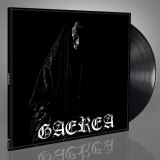
"Gaerea", das selbstbetitelte Debüt portugiesischen Post-Black Metaller, offenbart die Wurzeln der Band. Ursprünglich im Jahr 2016 veröffentlicht, ist dieses Album - die früheste Inkarnation der Band - deathiger und doomiger als der epische Black Metal, den sie heute verfolgen. Jetzt zum ersten Mal seit mehreren Jahren wieder erhältlich, mit erweitertem Artwork und einem Bonustrack.
- 1: On The Wings Of A Dove
- 2: To Fabled Lands
- 3: Son Of Perdition
- 4: Ars Moriendi
- 5: Once We Were Kings
- 6: Of Splendid Worlds
- 7: Dying Embers
- 8: Misterium Babel
Ein exzellentes Album, das jedem Black, Death oder Symphonic Metal Fan gefallen sollte! Zum ersten Mal auf Vinyl! Hollenthon ist eine Symphonic Death Metal-Band, die von Martin Schirenc von Pungent Stench gegründet wurde. Hollenthon debütierten 1999 mit "Domus Mundi" und erlangten mit ihrem zweiten Album "With Vilest of Worms" Kultstatus.mit ihrem zweiten Album "With Vilest of Worms to Dwell" im Jahr 2001. Nach diesem Album wurde es ruhig an der Hollenthon-Front, da Schirenc sich darauf konzentrierte, Pungent Stench wieder zusammenzubringen. Nach zwei Pungent Stench-Alben kehrte Schirenc jedoch zu Hollenthon zurück und "Opus Magnum" war das Ergebnis."Opus Magnum" zeigt eine neue Entwicklung des Bandsounds, da die symphonisch-orchestralen Elemente nahtlos mit dem gebotenen Death Metal verschmelzen. Das Album zeichnet sich durch großzügige Chöre, Synthesizer, Streicherarrangements und weiblichen Soprangesang aus, die sich perfekt mit Schirencs
klassischen und ethnischen europäischen Folk-Elementen verbinden. Das Gitarrenspiel hat ein neues Niveau erreicht, mit unglaublichen Soli auf dem gesamten Album. Das Album ist ein perfektes Ganzes, bei dem jeder Song anders ist, aber dennoch einwandfrei zusammenarbeitet. Hollenthon experimentiert auf diesem Album furchtlos mit verschiedenen Sounds, und das funktioniert unglaublich gut. Das Album ist ein durchgehendes, hochenergetisches Erlebnis, und jeder Song ist einzigartig und doch zusammenhängend. Fans von Therion und Symphonic Extreme Metal werden "Opus Magnum" lieben, das unserer Meinung nach sogar besser ist als alles, was Therion seit langem veröffentlicht hat. Insgesamt,"Opus Magnum"
ist eines der besten Extreme-Metal-Alben des Jahres 2008! Sehr empfehlenswert!
"With Vilest of Worms to Dwell" ist ein episches und majestätisches Kraftpaket! Dieses Album mischt Folk, Pagan Metal mit Death Metal Tendenzen.
Zum ersten Malauf Vinyl!Dieses Album ist ein Kraftpaket, ja, wir haben es gesagt... Mit Anflügen von Therion, gemischt mit melodischen Death Metal Tendenzen, bricht "With Vilest of Worms to Dwell" in seiner ganzen majestätischen und epischen Ausmaß und ist auch 22 Jahre nach seiner ersten Veröffentlichung im Jahr 2001 noch immer ein großes Vergnügen zu hören. Hollenthon demonstrieren ihre symphonischen Elemente von Anfang an, und die ersten drei Tracks sind geniale Kompositionen, die, obwohl sie unglaublich sind, dem Hörer Geduld abverlangen, die dann aber mit einer großen Belohnung belohnt wird. Hollenthon hat ein zugängliches Album geschaffen, aber man hört bei jedem Hördurchgang etwas Neues.Gleich zu Beginn springt "Y Draig Goch" mit einer wunderbaren "Aufbau"-Strophe heraus, bevor er in einen der headbangfähigsten, erhebenden Refrains mündet, die man seit langem hören wird.Zeit hören wirst. Klingt nach Power Metal? Weit gefehlt, Hollenthon spielen eine mitreißende Mischung aus Death Metal und orchestraler Musik, die an Therion meets Morbid Angel erinnert, aber viel, viel besser als dieser schlechte Vergleich klingen mag.
2023 will see the band releasing their new album I Want It All Right Now, produced by Grammy-winning producer John Congleton, on Glassnote Records and embarking on a North American stadium/arena tour with pop superstar P!nk.
- La Ballade Du Zwin
- Ein Kleiner Mann
- Ud
- Piume Al Vento
- Nelle
- Granvelle
- Sabina And First Variation
- Un Instant Sous La Hache
- Geuzenlied
- Sabina And Second
- Variation
- The Ff Boom
Part fantastical historic sonic biopic, part anthropologic
journey into the deep roots of Belgium’s monstrous
cosmic rock sound, this wholly individualistic concept
album combines the lead members of the mighty COS
(Daniel Schell and Pascale Son) with studio genius
Alain Pierre (Ô Sidarta / Des morts) and celebrated
Dutch progressive rock singer Dick Annegarn, for what
many consider to be both the overlooked hiding place
of Belgium’s deepest psychedelic moment and
European prog’s lost map to the ‘Franco-Flemish
Boom’.
Emerging from the wider musical family that counted
Marc Moulin, Placebo and Marc Hollander amongst its
creative kin, Daniel Schell’s most profound conceptual
project ambitiously combines the tale of the heroic
historical figure of Count Egmont (1522–1568), while
simultaneously tracing the evolution of the ud, or oud,
(‘the grandfather of the guitar’) in this multifarious
hallucinogenic epic.
Featuring key members of other collectable groups
such as drummer Felix Simtaine from Solis Lacus and
bass player Jean-Louis Baudoin from the mythical
Classroom (COS predecessor), this best-kept secret
vinyl release also harbours the voices of Dirk Bogaert
(of Belgian hard rockers Waterloo), as well as Catalan
singer Ilona Chale (Marc Hollander / Aksak Maboul)
before her later tenure as the COS front woman.
Initially released in 1978 via Zeuhl school distributors
Free Bird alongside French pressings of Don Cherry,
Jacques Thollot and CAN, it is plain to understand the
niche nature of this maligned ‘lost COS’ LP as it finally
blooms from between the cracked branches of
European jazz-rock-synth-psych-prog-pop history…
and beyond
Catorce reflexiones sobre el fin (Fourteen Reflections on the End) originated from an installation exhibited at the Museo de Arte Contemporáneo de Oaxaca, Mexico, in 2019. Fourteen magnetic bodies of tape that dialogued with the fourteen pieces of electroacoustic music now contained in this album composed from the sound anthology of Angélica Castelló. Thus, Catorce reflexiones sobre el fin is a complex piece consisting of multiple parts that, although articulated with each other, hold a life of their own.
Like every body, these have a unique history made up of mixed fragments spun by Angélica, ranging from field recordings, references, and self-references to previous pieces, experiences, and voice recordings made specifically for these compositions re-recorded in various formats, from lo to high fidelity, analog and digital, composed, decomposed and recomposed (Castelló, A., 2019). Likewise, as any body, they also reflect on their end, whether absolute or temporal, of the many ways of being finite and of saying goodbye.
During the Catorce reflexiones sobre el fin, Castelló takes you on a journey that is difficult to locate. An ethereal space between shattered glass, stridulation of cicadas, war drums, murmurs in French, Italian maledictions, and soft recitations in Spanish. From uproar to solace, all wrapped in a soft abstraction that only allows access to the subtle whisper of these expressions. A gesture between invitation and sharing because who does not recognize oneself in this emotional storm?
First, the approach of the winds, the first breeze that caresses the body. Then the bewilderment announced by the scent of uncertainty condensed in the air’s humidity. The prelude to the storm, to something that will shake you from head to toe, something from which there will be no return.
To the acceleration of the winds comes the percussions, the tremor of the storm with its lightning. la Ira (1). A vibration running through the whole body, unstoppable. This reverberating sound, resulting from its re-percussion with our body acoustics, owes its tones and echoes to the cavities and organs of different masses. From what is hollow and what is full; what is void and what is matter. There is no turning back. It is a dive into the void; to fight and resist because there is no other way to go. It is a matter of survival.
Ma fin est mon commencement Et mon commencement ma fin (2)
After this, the cicada resumes at the crack of dawn, a gentle breeze, and solitude, that temporarily musical silence of embraces (3) with hints of harpsichord and bells.
The breaking of the waves in Sicily is accompanied by the antenna that picks up radio transmissions that already invite other tastes. The Mediterranean and its currents mingle and divide tense routes of escape, exchange, and struggle between Blutorangen, tides, and birdsongs.
An immersion into deep waters.
And in the end, we all commit sins! Queste maledette! (4)
Lorena Moreno Vera, 2023
Hailing from the seaside communities surrounding Enoshima, a small island located 50 km southwest of Tokyo, Maya Ongaku is a ragtag collective of local musicians whose brand of earthy psychedelia transcends widely beyond the roots of their inner souls. The name derives not from any kind of ancient civilization, but rather a neologism defined as the imagined view outside one’s field of vision. The band—currently a trio of Tsutomu Sonoda, Ryota Takano, and Shoei Ikeda—finds sanctuary at the Ace General Store, a beachy vintage shop and salon-like space just hidden from sight from the bustling, touristy riverside Subana Street. Between discussions on music and art, curating the vinyl section and manning the register, and chatting up with locals young and old, the members find time to jam and record their spontaneous ideas in the studio tucked away in the back. It’s in this unlikely setting where Maya Ongaku finds its origins, the culmination of what Sonoda describes as 自然発生 (shizen hassei), meaning spontaneous generation, or the supposed production of living organisms from nonliving matter.
Approach to Anima, the group’s debut album released on Guruguru Brain, finds Maya Ongaku building a foundational groove while tapping into their innermost psyche. Sonoda’s malleable guitar and vocals, Takano’s sinuous bass lines, Ikeda’s floating woodwinds, and a sprinkling of delicate percussion—all coalesce into an aural experience that’s assertive yet abstract, calm but unsettling. The slow building, sax-laden “Approach” serves as an introduction to Maya Ongaku’s world, while the appropriately-named “Water Dream” floats its way toward the gentle finale of “Pillow Song.” It’s a concise distillation of their many interests and influences, from Neo-Dada and Fluxus, to where contemporary art intersects with the development of modern recording technology in the ‘60s and ‘70s.
As the title suggests, Approach to Anima is not intended to be a terminus; it’s merely the beginning of an exploration. The three childhood friends that comprise Maya Ongaku are always looking beyond the confines of the idyllic but rapidly gentrifying enclave of their beloved Enoshima. Feeding off of the energy that still radiates from the triumphant, decade-long journey of their label bosses’ band Kikagaku Moyo, who rose to global prominence from scrappy beginnings busking on the streets of Takadanobaba, they hope to go wherever inspiration takes them, to anywhere around the globe where their music can find a home.
Ultimately, Maya Ongaku’s uninhibited world-building will make it possible for us to see the unseen, expand the possibilities of the naked eye—all through the unbridled vibrancy of their music.
Tucked in the heart of Koreatown, Los Angeles, lies The Libra Hotel—the titular architecture of Nick Malkin's new album and site of his musical and psychogeographic exploration. Unlike most musical "site-specific" studies, Malkin remains wholly ambivalent to the documentarian approach, instead sharpening an auteur-like focus on the site as a conceptual and highly expressive backdrop. The Libra is musically explored as a space that houses a noir fragmentation of identity—the exhausted trope of a complicated protagonist walking through rain-soaked street corners and fumy neon lights—where an inner monologue is rendered in both miniature and at a cosmic scale. Casting aside stifling tropes around field recording, ambient, and improvised music, Malkin's work finds its own unique fidelity and emotional core through the assembly and reassembly of memory. Nearly every sound on the album—from frayed saxophones, lambent pianos, and dissected jazz drum kits—are multiplied, shattered, and reconstituted into shapes that adorn The Libra in a motion-blurred fog. The narrative of the Hotel suddenly appears as if out of the mist, with intersecting characters interacting within its walls by happenstance. Adminst the languid set pieces, wraith-like sonic grains gravitate around wide subbass beams that give structural form to The Libra, a narrative tension like when a scene is shot from hundreds of different perspectives: an image both luminous and veiled.
Much like Frank Sinatra's own spatial residency immortalized on "Live at The Sands," "At The Libra Hotel" showcases an exuberant view of entertainment, hospitality, and a form of masculinity, one that can quickly detourn into darkness. Knowing this, Malkin extracts a melancholic core out of The Libra locale. The flickering shadows of American decadence are shown in their ephemeral honesty, lines that trace how even in everyday life virtue is tested, sanity is tested, even reality is tested within the confines of desire, within the night. The album is draped in fleeting textures, carefully arranged with a trance-like microtonality, the faint inflections and articulations of a jazz band cascading into dissipated stillness. Voicemails about changed locations and covert eavesdropping on guests' whispered conversations provide an atmosphere of missed connection and voyeurism—a purloined letter of desire receding into a vanishing point. Like the music itself, The Hotel, a chapel perilous at the intersection of desolation row, the center of it all, yet simultaneously at the edge of town, becomes a structure between libidinous virtuality and actuality—our inevitable half-light.
Ultimately, the pensive atmosphere of "At The Libra Hotel," powerfully asserts a plea for the kinds of intimacy only possible in transient spaces. Here, memory cascades into a force that feels like something supernatural, perhaps even religious, yet always subject to the infidelity of our imagination. Here, the album opens into its primary psychodrama, the transient nature of subjectivity itself and how this becomes fractured in the tumult between our commitments and desires. Within this nocturnal space, to quote Louise Bourgeois, "you pile up associations the way you pile up bricks. Memory itself is a form of architecture."
Chupameeldedo is made up of former members of legendary Cumbia group Meridian Brothers (releases on Bongo Joe, Soundway etc). A side project dedicated to the strangest takes on Colombian music..
- 1: Title Sequence
- 2: Neomenia Moon Base
- 3: Moonquake
- 4: The Jobsists
- 5: Stay Hungry, Stay Foolish
- 6: Renate And Obi
- 7: Vestal Celestial Amelia
- 8: Moon Führer Is Back
- 9: Vril-Ya
- 10: Back To Earth / Crash Landing
- 11: Hollow Earth
- 12: 3310 Blue R7309170
- 13: The Promised Land
- 14: The City Of Agartha, Pt. 1
- 15: The Vril Banquet Hall, Pt. 1
- 16: The Vril Banquet Hall, Pt. 2
- 17: The City Of Agartha, Pt. 2
- 18: First Among Steves
- 19: Malcolm Fights Raptors
- 20: The Gate To The Holy Grail
- 21: Malcolm Fights Vril Jobs And Vril Hitler
- 22: The Triceratops Chariot Race
- 23: Escape From Earth
- 24: Sieg Heil, Mutterfückers!
- 27: Escape From The Moon / Iexcommunicating Wolfgang
- 25: Zeit Zum Töten
- 26: Renate Dies
Kultrocker orchestrieren Anti-Nazi Kampf auf der dunklen Seite des Mondes.
Nach der Veröffentlichung der 'Love Is Still Alive' EP präsentiert die slowenische Kultband Laibach ihr brandneues Album und den Soundtrack zu 'IRON SKY : THE COMING RACE.'
'The Coming Race' (Regie: Timo Vuorensola, 2019) ist die Fortsetzung des Films 'Iron Sky' (2012), in dem Nazis planen, die Welt zu übernehmen, nachdem sie in einer geheimen Militärbasis auf der dunklen Seite des Mondes geschlummert haben. Laibach wurden beauftragt, die Musik für die finnische düstere Komödie zu komponieren, die Kultstatus erlangte und über Crowdfunding mehr als 1 Million Dollar einbrachte, wobei ihr Original-Soundtrack weithin gelobt wurde.
Dieser Soundtrack ist genauso episch und cineastisch wie der erste und bietet eine musikalische Reise mit orchestralen Scores und Bonussongs auf der CD und dem Download, darunter der Track 'The Coming Race', der die kraftvollen Vocals der slowenischen Grammy-Gewinnerin Amaya in den Laibach-Mix einbringt.
Schwarze LP mit ausführlichen Linernotes und Download Codes für Bonus-Songs
Ein Album, das sich mit beiden Seiten von Liebe, Freundschaft und Erlösung beschäftigt, nicht mit Trostlosigkeit oder Verzweiflung. Allerdings gibt es in diesen zehn Liedern jede Menge menschliche Schatten. PJ Harvey hat drei Songs geschrieben. Nick Cave war Co-Autor von drei Tracks und seine Bad Seeds unterstützen bei diesen Tracks. Außerdem schrieb Faithful jeweils einen Song zusammen mit Damon Albarn von Blur und dem Komponisten Jon Brion. Neben Harvey und Cave halfen Rob Ellis und Hal Willner bei der Produktion. Die Lieder sind tadellos sequenziert und wirken alle wie ein Stück, verbunden durch emotionale Themen. 'Before the Poison' ist poetisch und beunruhigend. Es steht im Marianne Faithful-Katalog ganz für sich, ähnlich wie 'Broken English' - dieses Mal jedoch auf der anderen Seite des Spiegels. Die wertige limitierte 180 Gr.-LP-Neuauflage kommt in Clear Vinyl!