Поиск:mal one ’

Стили
Все
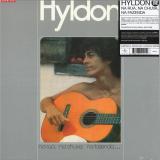
HYLDON - NA RUA, NA CHUVA, NA FAZENDA

"Na Rua, na Chuva, na Fazenda" is a landmark 1975 album by Hyldon, a key figure in Brazilian soul music. His debut release was one of the top-selling albums that year, capturing the vibrant musical spirit of the 1970s and reflecting the influence of the black power movement alongside artists like Tim Maia and Cassiano. With a mix of MPB, soul, and funk, Hyldon brought his unique sound to life, collaborating with influential artists and contributing to the Brazilian music scene. With a mix of MPB, soul, and funk, Hyldon brought his unique sound to life, collaborating with influential artists like Azymuth. The album, which features the iconic title track, is a celebration of love with timeless songs like 'As Dores do Mundo', 'Na Sombra de uma Arvore' and 'Meu Patuá.' Produced by Guti Carvalho with arrangements by Hyldon and Waldir Arouca Barros, the studio band included the talented musicians from Azymuth (José Roberto Bertrami, Alex Malheiros and Ivan Conti "Mamao"), making it a memorable piece of Brazilian musical history. This album has earned cult status over the years, securing its place as one of the most coveted Brazilian records of all time. Once incredibly rare and expensive, it's now at the top of every serious collector's wishlist. After being unavailable outside of Brazil for years, it's finally been reissued - don't miss your chance to own this legendary piece of music history.

нет на складе

Закажите сейчас, и мы закажем товар для вас у нашего поставщика.

28,53

Последний логин: 7 мес. назад
Malka Family - Planète Claire LP 2x12"

Since their reunion in 2015, Malka Family has been enchanting stages once again and releasing fabulous albums. Le Retour Du Kif (2018) and SuperLune (2022), featuring almost all of the original musicians, have marked their comeback.
Today, Planète Claire, a 16 tracks album, is undoubtedly one of Malka Family’s best works.
It was urgent for the great Funk families to return and give the new generations a lesson of kif…
Back to the Roots

In 1987, after organizing the Chez Roger Boîte Funk parties with Dee Nasty and Actuel/Radio Nova, Joseph Mannix and Isaac Ben Araz (then guitarist and trombonist of the group Human Spirit) decided to create a French-style Funk band.
The group quickly became one of the most spectacular live sensations of the 1990s.
Their self-produced debut album, Malka On The Beach, was released in 1991. Both the press and the public went crazy for these little funkateers, leading to a series of non-stop tours. Their concerts—wild, costumed performances—drew massive crowds. Warner France took notice and signed them.

Their second album, Tous Des Ouf (WEA), a true Space Opera P-Funk featuring guests like Sidney (Hip-Hop), Dee Nasty, Marco Prince (FFF), Juan Rozoff, and more, was released in 1992.

After touring the world multiple times, the band became independent again in 1995 and recorded an EP for Big Cheese Records: Fricassé De Funk.

By the late ‘90s, the rise of DJs and electronic music signaled the decline of large live bands. Due to its logistical weight—the band had over 14 members on their last tour—Malka Family was forced to part ways in 1997 after touring for their album Fotoukonkass (RCA/BMG).

But that was without counting on the resilience and extraordinary freshness of these Funk performers…

нет на складе

Закажите сейчас, и мы закажем товар для вас у нашего поставщика.

23,11

Последний логин: 5 мес. назад
TACOMA RADAR - NO ONE WAVED GOODBYE LP 2x12"
  • So Much Water
  • Take Your Time
  • Pilothouse
  • Who's Gonna Hold The Line
  • Ghost Channels
  • Left Unsaid
  • Past Worn Out
  • Falling Dead Stars
  • Loneliness Comes Without A Sound
  • Tuckahoe
  • It's Getting Dark
  • Radar Contact
  • Pilothouse
  • Some Things Last A Long Time
  • Who's Gonna Hold The Line
  • Tuckahoe (Live At The 13Th Note)
  • It's Getting Dark (Live At The 13Th Note)
  • Radar Contact (Live At The 13Th Note)
  • Pilothouse (Live At The 13Th Note)
также имеющийся в продаже

GHOST CHANNEL WHITE VINYL[32,35 €]


In der schottischen Musikszene der frühen 2000er Jahre, aus der Camera Obscura, Arab Strap und Belle and Sebastian hervorgingen, waren Tacoma Radar die stillen Erfolgreichen. Ihr einziges Album, No One Waved Goodbye - eine faszinierende Sammlung leiser Melancholie - wird heute als Kultklassiker gefeiert. Dieses Deluxe-Doppelalbum erscheint zum ersten Mal neu und enthält No One Waved Goodbye, beide 7"-Singles sowie das bisher unveröffentlichte Live From the 13th Note.

Сделать предзаказ26.09.2025

он должен быть опубликован на 26.09.2025

29,83
TACOMA RADAR - NO ONE WAVED GOODBYE LP 2x12"

TACOMA RADAR

NO ONE WAVED GOODBYE LP 2x12"

2x12inchNUMLPC2928
Numero Group
26.09.2025

In der schottischen Musikszene der frühen 2000er Jahre, aus der Camera Obscura, Arab Strap und Belle and Sebastian hervorgingen, waren Tacoma Radar die stillen Erfolgreichen. Ihr einziges Album, No One Waved Goodbye - eine faszinierende Sammlung leiser Melancholie - wird heute als Kultklassiker gefeiert. Dieses Deluxe-Doppelalbum erscheint zum ersten Mal neu und enthält No One Waved Goodbye, beide 7"-Singles sowie das bisher unveröffentlichte Live From the 13th Note.

Сделать предзаказ26.09.2025

он должен быть опубликован на 26.09.2025

32,35
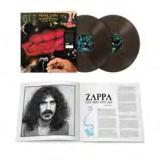
Frank Zappa - One Size Fits All (50th Anniversary Release) LP 2x12"

Frank Zappas episches Album „One Size Fits All“ aus dem Jahr 1975 feiert sein 50-jähriges Jubiläum
mit einem weiteren vollgepackten Multi-Disc-Box-Set mit 75 % unveröffentlichtem Material. Die Box enthält vier CDs mit dem 2012 von der Legende Bob Ludwig neu gemasterten Hauptalbum sowie anderthalb
Discs mit Studio-Outtakes, Live-Konzerten, Work-Mixes und relevanten Vault-Tracks. Die Live-Besetzung
bestand aus der klassischen 6-köpfigen Band mit George Duke und Ruth Underwood.Ruth Underwood
steuerte auch neue Linernotes für das Paket bei, zusammen mit historischen Essays von David Fricke und
„Vaultmeister“ Joe Travers. Das Booklet zum 50. Jahrestag enthält außerdem neu veröffentlichte Fotos
von Sam Emerson.
Die Blu-Ray Disc enthält brandneue Dolby Atmos- und 5.1-Mischungen direkt von den 24-Spur-Masterbändern
des Albums, Hi-Res-Versionen des Hauptalbums und zwei Bonus-Surround-Tracks mit alten Mixes von
Zappa selbst. Außerdem sind zwei Bonusvideos von den klassischen KCET-TV-Dreharbeiten enthalten, die
zum ersten Mal neu bearbeitet wurden, seit FZ 1974 das Material in die Hände bekam.
Die 2LP „black glitter“ Jubiläumsedition enthält einen brandneuen analogen Schnitt des Albums, eine
Bonus-LP mit den Highlights des Box-Sets und das Booklet der 50th Anniversary Edition.

Сделать предзаказ26.09.2025

он должен быть опубликован на 26.09.2025

34,03
Guerre Froide - Guerre Froide
  • A1: Ersatz
  • A2: Demain Berlin
  • B1: Mauve
  • B2: Peine Perdue

First time reissue of this French cold-wave / minimal-synth treasure.


November 1981 – In the heart of autumn, we set off in two cars along the Nationale 1 (!) to reach Choisy-le-Roi, where a 16-track studio was waiting for us—a place where, over the course of a weekend, we would finally be able to carve our own grooves into vinyl. We were quite nervous, as Guerre Froide had already been around for a year and a half. Our elders in Kas Product had already released two EPs—one with four tracks, the other with three—in 1980, even though they’d started only a few months before us. Admittedly, there wasn’t really a sense of urgency—some of us came from the punk movement, where the prevailing mood was still very much No Future, even if we’d long since stopped believing in it... And yet others had truly lost everything, like those from the generation before us. The reasons, ironically, were often the same: heroin and/or love—hard drugs, in both cases.

Speaking of which, I had a terrible stomach ache—due to nerves or some form of tension—which forced us to make a pit stop in the Oise region so I could rush to the toilet of a local café. That same stomach discomfort would hit me again once we arrived at the studio—whose name, incidentally, I’ve since forgotten...

We had gotten there thanks to the generous initiative of a friend, Sylvain S., known as “Perlin” (what a phonetic coincidence!?), who had specifically created the Stechak Products label to produce our record. Stechak because it was consistent with his earlier association called Tchernoziom, and Products as a plural tribute to the trailblazers from Nancy.

Guerre Froide originally consisted of four members: Fabrice Fruchart on guitar-synth (Korg MS-20), Patrick Mallet on bass, and Gilbert Deffais, known as “Bébert”, on Korg drum machine. At the time, I was already singing in a rock/post-punk band called Stress, and that’s how Guerre Froide picked up the bad habit of rehearsing in the same basement in Amiens as Stress. Within a month or two, we had half a dozen songs. We then had the opportunity to record a 4-track demo with a friend from Radio France Picardie, and to perform in October at a festival held at the Amiens municipal circus. Then came the now-legendary concert on November 11 at B.J.’s Club. After that, we self-produced and released 50 completely DIY copies of a cassette titled Cicatrice. A few concerts later—after Jean-Michel Bailleux had joined us on bass and Patrick had switched to guitar, which felt more natural to him—and with more concrete plans starting to take shape, we had to find a new rehearsal space and start renting a room.

Then came the moment when Fabrice told us he was leaving to go study in Lille... After the June 19, 1981 concert, which was naturally dubbed “Farewell to 2F,” Marie-José, Bébert’s wife, offered to take over on synth.

That’s when Perlin, who was a close friend of the Deffais couple and a great fan of our music, offered to fully finance the production of a 4-track 12-inch EP—covering the studio time, mastering, pressing, and artwork. What up-and-coming band would have turned that down? An improvised contract was signed with each member of Guerre Froide. The first step was choosing which four songs we would record. Berlin 81 was an obvious pick, having already become the group’s flagship track. We wanted to avoid reusing songs from Cicatrice, so the focus shifted to new material—some written before, some after Fabrice’s departure. Ersatz, for example, was his composition, but Mauve and Peine Perdue, which were also selected, were both written by Patrick.

Сделать предзаказ26.09.2025

он должен быть опубликован на 26.09.2025

20,97
Luisa - Luisa (featuring Azymuth) (7")

"This is brilliant" - Gilles Peterson

Azymuth bassist Alex Malheiros doesn't remember recording this single. It's understandable—the sessions happened over forty years ago, and at the time, Malheiros, Ivan Conti and José Roberto Bertrami were backing countless MPB artists throughout the genre's golden age. As one of Brazil’s most influential groups, Azymuth's story is well known. Vocalist Luisa, however, remains something of an enigma. She recorded this, her one and only single, in 1981 for Carlos Lemos' Piramide Label.

With Luisa’s powerful yet understated vocal, Bertrami's futuristic synths and José Carlos Bigorna's brow-raising tenor sax licks, the stirring early-80s pop ballad "Romantica" should have been a radio hit. On B-side, "Lenha na Fogueira", Azymuth lock into an exceptional samba-funk groove with legendary guitarist Paulinho Guitarra. The record also features backing vocals from the lesser-known vocal group Arco Iris.

Luisa will be reissued for the first time on 7" vinyl and digital on September 5th, 2025, via Far Out Recordings.

нет на складе

Закажите сейчас, и мы закажем товар для вас у нашего поставщика.

14,50

Последний логин: 7 мес. назад
Anderson .paak - Malibu LP - 2x12"

The two-time GRAMMY Nominated timeless album, Malibu. After dropping his debut album, Venice, in 2014, and then being featured on six tracks on Dr. Dre’s Compton album in 2015, 2016’s Malibu marked a major landmark moment in Anderson .Paak’s now storied career and paved the way for him to be the household name he is today. Known by many as one of the best live performers around, and with countless brand collaborations, sold out tours, chart topping albums, and even a joint album with the legendary Bruno Mars to his name, it’s safe to say that Anderson .Paak has reached Icon status. This classic catalog piece features appearances from Schoolboy Q, The Game, BJ The Chicago Kid, and more.

нет на складе

Закажите сейчас, и мы закажем товар для вас у нашего поставщика.

23,49

Последний логин: 5 мес. назад
GUERILLA TOSS - YOU'RE WEIRD NOW

Guerilla Toss

YOU'RE WEIRD NOW

12inchSPLPX1645
Sub Pop
12.09.2025
  • Krystal Ball
  • Psychosis Is Just A Number
  • Ceo Of Personal & Pleasure
  • Life's A Zoo
  • Red Flag To Angry Bull
  • Panglossian Mannequin
  • Deep Sight
  • When Dogs Bark
  • Crocodile Cloud
  • Favorite Sun

When NYC-based experimental dance punks Guerilla Toss, active since 2011, were in Vermont recording their new full-length album You're Weird Now, frontwoman Kassie Carlson would prepare what she called 'punk lunch': a communal meal made by raiding the studio fridge for whatever was left and assembling a sandwich from the most random ingredients imaginable. Regularly joining punk lunch were two legends from their own corners of the weird music world: Stephen Malkmus (Pavement, The Jicks) and Trey Anastasio, Phish guitarist and owner of The Barn; the recording studio where Guerilla Toss were making You're Weird Now, with Malkmus in the producer's seat. Engineer Bryce Goggin, who has worked with Malkmus since Crooked Rain, Crooked Rain, and Ben Collette, Phish's longtime engineer at The Barn, were also part of the crew. While the idea of the guy from Phish and the guy from Pavement sitting around with Guerilla Toss, congenially assembling sandwiches from random foodstuffs dug up from the depths of a studio fridge, might seem absurd, it also makes total sense. Because really, if there's any band that serves as the natural bridge between slacker punks who saw Pavement way before you did, wild-eyed wooks who've seen Phish more times than you ever will, and even the eccentrics in '90s drip following former GT tourmates Primus-it's Guerilla Toss. A band so imaginative and unapologetically themselves, they're basically the real-life manifestation of a utopian, post-snob world where all musical ideas are worthy of expression and everyone is welcome. You're Weird Now powers this message. Guerilla Toss' fifth album and second for Sub Pop is a hugely creative and joyful statement about the joy of creativity. With You're Weird Now Guerilla Toss reclaim the word "weird" for everyone brave enough to let their freak flag fly and stay true to their artistic vision no matter what-a way riskier act than it's ever given credit for, and one that requires a certain amount of serene self-confidence that it takes time and effort to cultivate and sustain. And they do so with the enthusiastic support of their musical predecessors: a standout moment arrives with "Red Flag to Angry Bull," which builds to a campfire sing-along-worthy outro featuring Malkmus and Carlson duetting over a chatty, classically Phish-y (there's really no better word for it) solo from Anastasio. The band hopes the message of You're Weird Now will resonate not only with music heads but anyone who struggles with feeling weird in a world where it will always be hard to be different. At the end of the day, it's all about the spirit of punk lunch: there's room for everyone because music is for everyone. "Everyone loves and appreciates music," says Carlson. "If you don't like music, you're kind of an asshole." That's not weird-that's just true.

Сделать предзаказ12.09.2025

он должен быть опубликован на 12.09.2025

24,79
Christer Bothén - Christer Bothén Donso n’goni LP

Black Truffle is thrilled to present the first ever solo Donso n’goni recording from octogenarian Swedish multi-instrumentalist Christer Bothén. Active in the Swedish jazz and improvisation scene since the 1970s, often heard on bass clarinet, Bothén travelled to Mali in 1971, eventually making his way to the Wassoulou region in the country’s south where he encountered the Donso n’goni, the sacred harp of the hunter caste of Wassoulou society. Though playing the instrument has traditionally been restricted to those who belong to the hunters’ brotherhood, Bothén found an enthusiastic teacher in Brouema Dobia, who, after many months of intensive one-on-one lessons, gave Bothén his blessing to play the instrument both traditionally and in his own style. Returning to Sweden, he would go on to pass on what he had learned to Don Cherry and play the Donso n’goni in a wide variety of inventive settings, including the driving Afro-jazz-fusion of his Trancedance (reissued as BT118).

The seven pieces of Christer Bothén Donso n’goni offer up a stunning showcase of Bothén’s work on this remarkable instrument, heard entirely unaccompanied, except for the final piece where he is joined on a second Donso n’goni by his student and collaborator, the virtuoso bassist Kansan/Torbjorn Zetterberg, and Marianne N’Lemvo Linden on the metal Karanjang scraper. Recorded in three sessions in Stockholm between 2019 and 2023 in richly detailed high fidelity, the instrument’s buzzing, sonorous bass strings make an immediate, overwhelming sonic impression. Hyper-focused on hypnotically repeating pentatonic patterns, the seven pieces are at once relentlessly single-minded and endlessly rich in subtle variations. The concentrated listening environment turns small details, such as the deployment of the instrument’s segesege rattle on two of the pieces, into major events. Six of the seven pieces are traditional, with Bothén contributing the remaining ‘La Baraka’, but the line between tradition and the individual talent is imaginary here: as Bothén explained in a recent interview with The Wire’s Clive Bell, ‘I play traditional and untraditional, and I play the music forward and backward’. While the traditional Wassoulou pieces provide the rhythmic and harmonic elements, Bothén’s individuality as a performer is alive in every moment, felt acutely in boundless variations of attack, improvisational flourishes, and unexpected accelerations and decelerations. Captured entirely live and bristling with spontaneity, this music is undeniably the product of almost half a decade of Bothén’s devotion to the Donso n’goni and its traditional music.

Accompanied by detailed new liner notes by Bothén and stunning colour photos from his time in Mali, Christer Bothén Donso n’goni is a stunning document of a remarkable instrument, played with an almost spiritual intensity by one of contemporary music’s great explorers.

нет на складе

Закажите сейчас, и мы закажем товар для вас у нашего поставщика.

23,11

Последний логин: 8 мес. назад
BARRENS - CORPSE LIGHTS

Barrens

CORPSE LIGHTS

12inchPELV292
Pelagic Records
12.09.2025
  • Memory Eraser
  • The Derelict
  • Sorrowed
  • Periastron
  • Apastron
  • No Light
  • Collapsar
  • Remnants
  • A Nothing Expands
также имеющийся в продаже

LTD PERIASTRON ED[24,79 €]


Gothenburg/Malmö-based post rock power trio Barrens return with Corpse Lights, the band's second full-length release following their critically-acclaimed 2020 debut Penumbra. Five years in the making, Corpse Lights sees Barrens strike a breathtaking balance between light and dark, beauty and brutality. Corpse Lights, Barrens' sophomore album, is somehow deeper, richer and headier; imbued with an alluring compositional patience that serves as unspoken testament to the combined creativity of the trio in their element, as something so much greater than the sum of its parts. Recorded and produced by Kristofer Jönson, who also helmed Penumbra, and mixed and mastered once again by Cult of Luna's Magnus Lindberg, shimmering synthesizers and sprawling guitars lead the charge propelled by exhilarating drums and percussion but Corpse Lights also finds Barrens using space, silence and atmosphere as another instrument if not as another band member entirely. `Corpse Lights' is the name given to the folk belief that small coloured lights often appear near the home of someone about to die, leading them along the path to their eventual resting place. Often considered to be evidence of the soul leaving the body, the concept of corpse lights embodies Barrens' approach to creating music as a cathartic release; not just writing music because they want to but because they have to. Their writing process is one of joy, light and release as much as it is dark, heavy and tense. The result is Corpse Lights, a collection of nine pieces that guide us through five tumultuous years of highs and lows, of loves and losses and victories and defeats without ever needing to say a word. FOR FANS OF Mono, PG.LOST, Caspian, Mogwai, This Will Destroy You, Russian Circles, Pelican, Scraps Of Tape, God Is An Astronaut. Vinyl is a gatefold, the sleeve comes with metalic ink

Сделать предзаказ12.09.2025

он должен быть опубликован на 12.09.2025

21,81
BARRENS - CORPSE LIGHTS

BARRENS

CORPSE LIGHTS

12inchPELVC292
Pelagic Records
12.09.2025

Gothenburg/Malmö-based post rock power trio Barrens return with Corpse Lights, the band's second full-length release following their critically-acclaimed 2020 debut Penumbra. Five years in the making, Corpse Lights sees Barrens strike a breathtaking balance between light and dark, beauty and brutality. Corpse Lights, Barrens' sophomore album, is somehow deeper, richer and headier; imbued with an alluring compositional patience that serves as unspoken testament to the combined creativity of the trio in their element, as something so much greater than the sum of its parts. Recorded and produced by Kristofer Jönson, who also helmed Penumbra, and mixed and mastered once again by Cult of Luna's Magnus Lindberg, shimmering synthesizers and sprawling guitars lead the charge propelled by exhilarating drums and percussion but Corpse Lights also finds Barrens using space, silence and atmosphere as another instrument if not as another band member entirely. `Corpse Lights' is the name given to the folk belief that small coloured lights often appear near the home of someone about to die, leading them along the path to their eventual resting place. Often considered to be evidence of the soul leaving the body, the concept of corpse lights embodies Barrens' approach to creating music as a cathartic release; not just writing music because they want to but because they have to. Their writing process is one of joy, light and release as much as it is dark, heavy and tense. The result is Corpse Lights, a collection of nine pieces that guide us through five tumultuous years of highs and lows, of loves and losses and victories and defeats without ever needing to say a word. FOR FANS OF Mono, PG.LOST, Caspian, Mogwai, This Will Destroy You, Russian Circles, Pelican, Scraps Of Tape, God Is An Astronaut. Vinyl is a gatefold, the sleeve comes with metalic ink, the Periastron edition is transparent "white" Vinyl

Сделать предзаказ12.09.2025

он должен быть опубликован на 12.09.2025

24,79
Various - Roxy Music - Then Out Of The Blue.. 1971-1976 Book

Author: Mal-One & The Glam Collective
Title: ROXY MUSIC – Then Out Of The Blue – 1971-1976 A CHRONOLOGY
Format: A5 - 232 Page Hardback Book

Who? What? Why? Where? When?

Roxy Music - Then Out Of the Blue… tells the story of the bands career, giving dates and a timeline to their events. The birth of Roxy Music just before 1971 upto 1976 including Bryan Ferry's early solo career.

A Who? What? Why? Where? When? Chronology of all their dates, places and times.

“I’ve got a favourite songwriter and band in England called Roxy Music with a character called Bryan Ferry who I think is probably spearheading some of the best music that has come out of England in years.” David Bowie.

“That was a band that broke so many barriers. They were poncy, pontificating, absurd, over melodramatic and absolutely adorably excellent.” John Lydon - Sex Pistols / Public Image Limited.

Сделать предзаказ12.09.2025

он должен быть опубликован на 12.09.2025

18,45
Phil	Collins - No Jacket Required

Phil Collins

No Jacket Required

4x12inch0603497817023
Rhino
12.09.2025

"40th Anniversary.
4LP inklusive raren Live Aufnahmen (u.a. Live Aid 1985).
Mit dabei sind Evergreens wie ""Sussudio"" und ""One More Night"" - neu gemastert und erstmals auf Vinyl in dieser Form.
Das Album erreichte damals auch in Deutschland Platz 1, gewann 3 Grammys und verkaufte sich bis heute 25 Millionen mal."

Сделать предзаказ12.09.2025

он должен быть опубликован на 12.09.2025

118,70
Various - 80s Rock Gems From Germany

Various

80s Rock Gems From Germany

3x12inchGCRBOX039
GCR Zyx
12.09.2025
  • Cannock - In A Discord
  • One Day In June
  • So Please
  • Blank Thoughts
  • Cycle Stealing
  • Love Devotion Ballad
  • Melancholy Evening
  • Subway Smell
  • Waiting For The Night
  • Japan (Bonus Track)
  • Digitalgefühle Im Synthetikland (Bonus Track)
  • Requiem - On This Earth (Introduction)
  • On This Earth (Hunters)
  • Angel
  • Crystal Ball
  • Bottom Line
  • Steven
  • Listen Boy
  • It‘s Hard To Imagine

Die frühen Achtzigerjahre waren für den härteren Rock aus Deutschland eine ganz besondere Zeit. Der ausufernde Progressive Rock und der sogenannte Krautrock waren am Ausklingen, der Punk musste dem New Wave weichen und der Heavy Metal begann Fahrt aufzunehmen.

Einige Bands saßen zwischen 1980 und 1983 zwischen den Stühlen und können gar als „das fehlende Glied“ bezeichnet werden. In diesem Boxset
befinden sich gleich drei Schmuckstücke und Geheimtipps, die heute sogar aufregender klingen als damals. REQUIEM kamen aus Stuttgart
und lieferten auf ihrer einzigen LP einen Mix aus Hardrock, Pomprock und Progressive Rock. Gitarrist Tommy Clauss wurde später mit Bands wie ZAR
berühmt, bei denen auch ex-Uriah Heep Sänger John Lawton dabei war.

SPHINX ist eine andere Geschichte, denn hier haben ein paar italienische Gastarbeitersöhne im Raum Stuttgart eine Band gegründet. So wurde
das Debüt „Here We Are“ vom Label als „Made In Italy“ verkauft, was natürlich nur eine Verkaufsstrategie war. SPHINX nehmen das voraus,
was uns Jahre später unter Anderem Dream Theater lieferten. Eine frühe Version des Prog Metal, oder ein Vorläufer davon. Das gleiche Album wurde
von einem anderen Label 1985 als „Burning Lights“ erneut ins Rennen geschickt; dieses Mal mit einem Heavy Metal-tauglichem Coverartwork.
LIMERICK aus Saarbrücken haben als Schülerband 1980 eine heute sehr rare Single aufgenommen. Das einzige Album erschien dann 1983 – mit
deutschen Texten! Regional war der kräftige Rock mit Dialekt im Gesang sehr erfolgreich und spielte Shows mit Kim Wilde und Climax Blues Band.
Die Gruppe ist heute wieder aktiv und wurde kürzlich im Magazin Rock Hard gefeatured

Сделать предзаказ12.09.2025

он должен быть опубликован на 12.09.2025

27,52
YS - BURN

YS

BURN

12inchPERF000
Perf
12.09.2025

Sticking a dirty thumb in the eye of fate, our third collaboration sees this marrow deep family malarky turn official as Pace Yourself teams up with YS’s own imprint ERF REC for a split release. As if our status as minor celebrities and footnotes of the underground could level off no further: the unification no one asked for is here. Sticking it to the man, handing your arse to ya on plate; cauterising infected suburban minds world over.

Burn is the second YS album and written as a direct follow-up album to Brutal Flowers. If their first album was an exercise in the incremental, a construction of poise and patience, Burn, should be taken way the fuck at it’s word: it quite literally finds catharsis in twisted reverse. Birthed out the malignant kick found in deconstruction and chaos. Evil twin, psychotic younger sibling, call it what the hell you like. It might take you a moment to get the lay of the land in this darkly mutated world. Like a bug eye’d native first confronted with a zippo, the hit is radical and instant: a new way for the world to go up in smoke.

Splice the Seattle slacker scene with the spliffhead soundsystem culture of the 90s Bristol trip-hop scene, then cross-breed that with the DIY optimism and glee in creation found in the cut-and-paste worlds of skate, graffiti and hiphop, now run that through the skitzo basement mind of John.T. Gast and you’re close to the kind of scorched earth and spiked suburbia that birthed Burn.

Dunno quite what YS have been ingesting of late but this massively twisted LP touches on a host of gloriously fucked totemic underground sources while not sounding much like any of them. It has the ballsy swagger and hard flipping of the script as Massive Attack’s seminal Blue Lines. Indeed, the eponymous album tracks sound similar - the opener ‘Burn’ is like a hard nosed jammed out redux of ‘Blue Lines’. Getting into a kind of slow-spinning overdubbed maximal euphoria ending with mumbled downer vocals, struggling to conceal their tongues in their cheeks there’s an air of paranoia and proto-conspiracy theory. It’ll leave you scratching your head, feeling like you’ve stepped into a New World Order governed by a cacophony of drop outs, dope fiends and apocalyptic stoners. A cracked out world somewhere between Richard Linklater’s movie Slacker (1990) and Marc Singer’s Dark Days (2001).

The rest of the album parts like a tongue on a wine glass: Smith and Mighty, Bandulu, ambient Luke Slater records, Wah Wah Wino, Nurse with Wound, Land of the Loops, Placid Angels, Adrian Sherwood, Urban Tribe and DJ Shadow can all be heard in momentary splatters - but Burn like other works by YS, is its own ritual beast. ‘Moth’, a track which has been knocking about the underground deejai circuit for many moons, is a real raw chopped and screwed slice of stoner erotica that reeks of obsession and unrequited desire. Elsewhere, on tracks like ‘Switch’, ‘Trying’ and ‘Drift’ the throughline from Brutal Flowers can be heard. Underneath the driving heavy gravity the trademark emotional intimacies of YS linger: eternal recurrence, ghosts of static and shortwave, worn memories of the playful and painful sort. The brief moments where flashes of orchestral ambience get out from underneath the swagger are so pure, personal and unguarded that for a moment they leave you completely lonesome. In the album’s closer ‘End’, you can hear the fleeting promise and DIY possibilities of an analogue world and embers of ash that flutter in its wake: where it seemed, for a brief moment, that collective of DJs, engineers, rappers, graffiti artists and skate crews were emerging from the streets, giving the middle fingers to the system, before just as quickly disappearing back to the doldrums of obscurity. ‘End’ is a bittersweet ode to early soundsystem culture, MCs and pirate radio - an out of step time where for a moment the underdogs and weirdos seemed to be kicking on the door of something bigger.

A veritable teenage doof suite dosed with desire, claustrophobia and deviance. Burn is a good old howl at the moon: lonely, raw, and out for blood; basement style exegesis at its best. A thump to the gut, a stud through your blood. A dubbed-to-death classic straight out of the annals of nowhere. A perfect post card from oblivion. A bleak, bold and personally ferocious vision of tomorrow and tomorrow and tomorrow.

This is everything that record collectors skip dates for. Fuck the scene and keep that shit underground. That’s what it is all about. Know what I mean, if you do? You’re in…

нет на складе

Закажите сейчас, и мы закажем товар для вас у нашего поставщика.

23,32

Последний логин: 7 мес. назад
Various - Dolores: Salsa & Guaracha From 70's French West Indies

In Guadeloupe, many people think that jazz and ka music are like a ring and a finger. To some extent, the same could be said about so called Latin music and the music played in the French West Indies.

Both aesthetics were born in the Caribbean and bear so many connections that they can easily be considered cousins. In constant dialogue, there are lots of examples of their fruitful alliance and have been for a while. The English country dance that used to be practiced in European lounges came to be called kadrille in Martinique and contradanza in Cuba. They both featured additional percussion instruments inherited from the transatlantic deportation. Drawing from shared feelings about the same traumatized identity – later to be creolized – it would be hard not to assume that they were meant to inspire each other. The golden age of the orchestras that graced the Pigalle nights during the interwar period further proves the point. As soon as the 1930s, Havana-born Don Barreto naturally mixed danzón and biguine music in a combo based at Melody's Bar. In the following decade, Félix Valvert, a conductor who was born and raised in Basse-Terre in Guadelupe, also worked wonders in Montparnasse with La Coupole, which was an orchestra made up of eclectic musicians. Afro- Caribbean performers of various origins were often hired on rhythm and brass sections in jazz bands, which used to enliven the typical French balls of the capital. In the 1930s and onwards, Rico’s Creole Band was one of them.


Martinican violinist-clarinettist Ernest Léardée, who would become the king of biguine music as well as the main figure of French Uncle Ben's TV commercials (a dark stigma of post-colonial stereotypes), had musicians from the whole Caribbean sphere play at his Bal Blomet – and they all enchanted "ces Zazous-là" (according the words of Léardée's biguine-calypso piece). In les Antilles (French for French West Indies), music history started to speed up in the 1950s, when trade expanded and radio stations grew bigger. The Guadelupean and Martiniquais youth tuned in their old galena radio sets to South American and Caribbean music. As for the women traders, les pacotilleuses, they bought and sold goods across different islands (the "passing of items through various hands" was thought to be most pleasurable) and brought back countless sounds in their luggage. Such was the case of Madame Balthazar, who once returned from Puerto Rico with the first 45rpm and 33rpm to ever enter Martinique.

Out of this adventure was created the famous Martinican label La Maison des Merengues, a music business she opened and undertook with her husband and which proved to be a major landmark. At the end of the 1950s, in Puerto Rico, Marius Cultier competed in the Piano International Contest playing a version of Monk's Round 'Midnight. He won the first prize and this distinction foreshadowed everything that was to come. Cultier, the heretic Monk of jazz, was quickly praised for writing superb melodies, always tinged with a twist that conferred a unique sound to his music. It didn't take long for the gifted self-taught musician to get to play with Los Cubanos, making a name for himself thanks to his impressive maestria on merengues.

The rest is history. Besides, in the late 1950s, Frantz Charles-Denis, born into the upper middle class in Saint-Pierre and better known by his first name Francisco, went back home after working at La Cabane Cubaine – a club located rue Fontaine where he had caught the Latin fever. Francisco's music was therefore heavily marked by his Cuban cousins' influence, which gave the combos he led a specific style and also led to renewal. Things were swinging hard in La Savane, located in the main square in Fort-de-France. He set up the Shango club close by and tested out the biguine lélé there, a new music formula spiced up with Latin rhythms. Soon afterwards, fate had him fly to Puerto Rico and Venezuela.

As for percussionist Henri Guédon (percussions were only a part of his many talents), he was born in Fort-de-France in May 22nd 1944, the day marking the celebration of the abolition of slavery. As an old man, he could remember that in " his father's Teppaz, a lot of hectic 6/8 music was constantly playing...". In the opening lines of his Lettre à Dizzy, a small illustrated collection of writings published by Del Arco, he highlighted the huge impact that cubop had on him as a teenage boy, around 1960. He eventually turned out to be the lider maximo in La Contesta, a big band steeped in Latin jazz. He was also the one who originated the word zouk to describe music which brought the sound of the New York barrio to Paris. It was the culmination of a journey that started in Sainte-Marie: "a mythical place for bélé, the equivalent of Cuban guaguancó". In the early 1960s, the tertiary economy developed to the detriment of agriculture. Yet rural life was where roots music emerged in Martinique and in Guadeloupe.

Record companies played a major part in the process of Latin versions sweeping across the islands – before reaching everywhere else. Producer Célini, boss of the great Aux Ondes label, and Marcel Mavounzy, both the head of Émeraude records - a firm which was founded in 1953 - as well as the brother of famous saxophonist Robert Mavounzy, were big names to bear in mind. Although there were many of them - all of whom are featured on this record - Henri Debs was definitely the major figure in the recording adventure. He proved to be so influential that he even got compared to Berry Gordy. In the mid 1950s, when he acquired his first Teppaz, he worked on his first compositions: a bolero and a chachacha. Then, he became the one man who made people discover Caribbean music, from calypso to merengue. He was among the first ones to rush out to San Juan, Puerto Rico, to buy records and distribute them through a store run by one of his brothers in Fort-de-France. He had members of the Fania All Star come and perform there, which he was madly proud about. He was also the first one to pay attention to Haitian music, such as compas direct and various other rhythms which would soon flood the market. As a result, many of the combos hitting his legendary studio would end up boosted by widespread "Afro-Latin" rhythms. However, he never denied his identity: gwo ka drums were given a major role, although they were instruments which had long been banned from the "official" music spheres. The present selection bears witness to such a creative swarming. Here are fourteen tracks of untimely yet unprecedented cross-fertilization: all types of music rooted in the Creole archipelago have found their way, whatsoever, to the tracklisting. Whether originating from the city or being more rural, they all go back to what Edouard Glissant, in an interview about the place of West Indian music in the Afro-American scope, called "the trace of singing, the one which got erased by slavery." "It is so in jazz, but also in reggae, calypso, biguine, salsa... This trace also manifests through the drums, whether Guadelupean, Dominican, Jamaican or Cuban... None of them being quite the same. They all point to the idea of a trace, seeking it out and connecting to each other through it. This is the hallmark of the African diaspora: its ability to create something new, in relation to itself, out of a trace. It may be the memory of a rhythm, the crafting of a drum, a means of expression which doesn't resort to an old language but to the modalities of it." The opening track features one of the emblematic orchestras of this aesthetic identity, criscrossing many music types from the archipelago. The 1974 Ray Barretto guajira – Ray Barretto was a major New York drummer influenced by Charlie Parker and Chano Pozzo – is magnificently performed by Malavoi, a legendary Fayolais group (i.e from Fort-de-France). Additionally, the compilation ends on a piece by Los Martiniqueños de Francisco. It symbolically closes the circle as it is a genuine potomitan of Martinique culture which also functions as a tireless campaigner for Afro-Caribbean music. Practicing the danmyé rounds (a kind of capoeiria) to the rhythm of the bèlè drum, it delivers a terrific Caterete, a kind of champeta of Afro- Colombian obedience which was originally composed by Colombian Fabián Ramón Veloz Fernández for the group Wgenda Kenya. The icing on the cake is Brazilian Marku Ribas, who found refuge in Martinique in the early 1970s, bringing his singing to the last trance-inducing track. These two "versions" convey the whole tone of a selection composed of rarities and classics of the tropicalized genre, swarming with tonic accents and convoluted rhythms. It is the sort of cocktail that the West Indians never failed to spice up with their own ingredients. For instance, the Los Caraïbes cover of Dónde, a famous Cuban theme composed by producer Ernesto Duarte Brito, has a typical violin and features renowned Martinique singer Joby Valente and his piquant voice.


The track used to be – or so we think – their only existing 45rpm. The meaningful Amor en chachachá by L'Ensemble Tropicana, a band which included Haitian musicians among whom was composer and leader Michel Desgrotte, also recalls how Latin music was pervasive in the tropics in the mid-1960s. They were the ones keeping people dancing at Le Cocoteraie in Guadelupe and La Bananeraie in Martinique. Around the same time, another "foreign" band, Congolese Freddy Mars N'Kounkou's Ryco Jazz, achieved some success on both islands by covering Latin jazz classics – such as their adaptation of Wachi Wara, a "soul sauce" by Dizzy Gillespie and Chano Pozo whose interweaving of strings and percussions can have anyone hit the dancefloor. How can you resist Dap Pinian indeed, a powerful guaguancó by Eugene Balthazar, performed by the Tropicana Orchestra and published by the Martinique-founded La Maison des Merengues? It also acts as a symbol of the maelstrom at work. Going by the name Paco et L'orchestre Cachunga, Roger Jaffory used to play guaguancó too: his Fania-inspired Oye mi consejo is one example of his style. Baila!!!!! Dancing was also one of the Kings' focus points. Oriza is a Puerto Rican bomba and a "classic" originally composed by Nuevayorquino trumpeter Ernie Agosto, which reserves major space for brasses, giving it a special sheen.

Emerging from the New York barrios crucible was also La Perfecta, a Martinique group originating from Trinidad, whose name directly references the totemic Eddie Palmieri figure as well as his own band, also called La Perfecta. Here they borrow Toumbadora from Colombian producer and composer Efraín Lancheros and interpret it by emphasizing percussions, which set fire to the track even more than the wind instruments. The same goes for Martinique's Super Jaguars, who use Tatalibaba – a composition by Cuban guitarist Florencio "Picolo" Santana which was made famous by Celia Cruz & La Sonora Matencera – as a pretext for sending their cadences into a frenzy. In a more typically salsa vein, the Super Combo, a famous Guadelupean orchestra from Pointe-Noire that was formed around the Desplan family and had Roger Plonquitte and Elie Bianay on board, adapt Serana, a theme by Roberto Angleró Pepín, a Puerto Rican composer, singer and musician also known for his song Soy Boricua. Here again, their vision comes close to surpassing the original. In the 1970s, L'Ensemble Abricot provided a handful of tracks of different syles, hence reaching the pinnacle of the art of achieving variety and giving pleasure. They played boleros, biguines, compas direct, guaguancó and even a good old boogaloo - the type they wanted to keep close to their hearts for ever, "pour toujours", as they sang along together in one of their songs. Léon Bertide's Martinican ensemble excelled at the boogaloo which had been composed by Puerto Rican saxophonist Hector Santos for the legendary El Gran Combo.


Three years later, in 1972, Henri Guédon, with the help of Paul Rosine on the vibraphone, tackled the Bilongo made famous by Eddie Palmieri. Such a classic!!!!! And so were the Aiglons, the band from Guadelupe: choosing to execute Pensando en tí, a composition by Dominican Aniceto Batista, on a cooler tempo than the original, they noticeably used a wonderfully (un)tuned keyboard in place of the accordion. On the high-value collectible single – the first one released by Les Aiglons under the Duli Disc label – there is a sticker classifying the track under the generic name "Afro". Now that is what we call a symbol. Jacques Denis
нет на складе

Закажите сейчас, и мы закажем товар для вас у нашего поставщика.

21,43

Последний логин: 67 дн. назад
Various - NECH032

Various

NECH032

12inchNECH032
TECHNO Records
09.09.2025

NECHTO returns with its second 12” vinyl compilation, continuing the mission of presenting forward-thinking techno from both rising talents and trusted names. Each of the six tracks adds a unique voice to the raw and honest collection.
Mecha opens the record with “All My Love”, a hypnotic debut techno track shaped by years in drum and bass. Contakt follows with “Peak Jam”, a one-take hardware jam built around the warmth of a signature synth. “16th Symphony” by Human Safari is a jazz-influenced cut intended for special moments in a DJ set. Unspent delivers “Moog Gorning”, a track that shifts from percussive 4x4 to broken rhythm, carrying deep personal emotion. ARGIE’s “Strangers” captures the tension of connection and distance with layered percussion and melody. Franz Jäger closes with “Get Simon to sync”, a rave-influenced hybrid track designed for peak-time impact.
With contributions from the UK, Poland, Malta, France, the Netherlands, and Sweden, this compilation once again highlights NECHTO’s dedication to showcasing both emerging and established artists while pushing the boundaries of modern techno.

нет на складе

Закажите сейчас, и мы закажем товар для вас у нашего поставщика.

13,24

Последний логин: 7 мес. назад
LA DISPUTE - NO ONE WAS DRIVING THE CAR LP 2x12"
  • I Shaved My Head
  • Man With Hands And Ankles Bound
  • Autofiction Detail
  • Environmental Catastrophe Film
  • Self-Portrait Backwards
  • The Field
  • Sibling Fistfight At Mom's Fiftieth / The Un-Sound
  • Landlord Calls The Sheriff In
  • Steve
  • Top-Sellers Banquet
  • Saturation Diver
  • I Dreamt Of A Room With All My Friends I Could Not Get
  • No One Was Driving The Car
  • End Times Sermon

It"s been six years since LA DISPUTE released their last album, Panorama. Since then, the Michigan post-hardcore band-made up of Jordan Dreyer on vocals, Brad Vander Lugt on drums, Chad Morgan-Sterenberg and Corey Stroffolino on guitar, and Adam Vass on bass-dealt with the stagnance of the pandemic, celebrated the ten-year anniversaries of Wildlife and Rooms Of The House, and began working on NO ONE WAS DRIVING THE CAR. The fifth studio LP is the first entirely produced by the group, and it came together in Grand Rapids and Detroit, the United Kingdom, Australia, and the Philippines: "I think the change in environment was really helpful to breathing new life into the process each time we came back to it," Dreyer says. Partly inspired by the 2017 psychological thriller First Reformed, NO ONE WAS DRIVING THE CAR reckons with malaise in the shadow of the looming apocalypse, which has noticeably been worsened by the advancement of tech. The title comes from a quote from a police officer Dreyer read in a news article about a lethal self-driving Tesla crash, an absurd event which raises questions about the amount of control we have in our own lives. In fourteen dynamic tracks, the band grapples with the existential topic and the human need to find comfort and a sense of security in an existence where we"re often thrust into chaos without permission.

Сделать предзаказ05.09.2025

он должен быть опубликован на 05.09.2025

26,01
DRAB MAJESTY - CARELESS

DRAB MAJESTY

CARELESS

12inchDAISC675
Dais Records
05.09.2025

In the smoggy orange light of a new millennium, the young Deb Demure would take the bus, once a week, from his home in crumbling Hollywood to his grandmother's apartment, nestled in the pastel pristineness of Beverly Hills. During these visits, Deb couldn't help but notice the disconnect between the glow of his grandmother's temple, and the downtrodden, alienated figures that populated the seats of the mass transit that took him there. Week after week, he would observe these characters: fading B-movie starlets, leisure-suited alcoholics and forgotten civil servants. But one fateful commute home, as the twilight waned to the purple Los Angeles night, he realized these figures were not as lost as they appeared - there was a nobility in their failure, reflective of the dignity of the city's vanishing golden era. They were survivors, in need of a voice: a spokesperson for every color of hope and hopelessness, transcendent of gender and time; Drab Majesty became Deb's musical podium for this undertaking. Raised in a music-centric household, Deb would find the time to teach himself to play his father's right-handed guitar upside down and left-handed; an unorthodox fashion from where his earliest understanding of chords and harmony were conceived. Exploring the bins of discarded vinyl in his neighborhood thrift stores, his toolkit expanded with the subterranean sonic gems of the recent past. Influences range from the virtuosic arpeggiated guitar work of Felt's Maurice Deebank and the grittier pop progressions of Red Lorry Yellow Lorry's Chris Reed as well as Steve Severin from Siouxsie and The Banshees. He also studied the harmonic oscillations and utilization of the occult power of vibratory frequency present in New Age sounds of Greek artist, IASOS. In terms of orchestration, he consciously culls from the seaside maximalism of Martin Dupont and mechanized grooves of early Depeche Mode. Like a dualistic pendulum, his vocals swing from a preistly baritone to a choir boy's falsetto reflecting the sepulchral ambiance of church visits with his grandmother. Currently the drummer for Los Angeles lo-fi rock ensemble Marriages and having honed an unorthodox home recording style, Deb sources his sounds from a repository of "mid-fi" synthesizers and other lesser-quality instruments. Following the release of his debut cassette EP, "Unarian Dances", he also shared a split 12" with synth pop forefathers, Eleven Pond. During the Spring of 2015, Drab Majesty signed with Dais Records and released his first single, Unknown to the I, as a introduction for his first initial foray into the album format, romantically titled Careless. Written over the course of 2 years, "Careless" is a compendium of songs that have outlasted a malicious burglary of his studio, his struggles with substance addiction, and most recently, the death of his beloved grandmother.

Сделать предзаказ05.09.2025

он должен быть опубликован на 05.09.2025

22,27
Продуктов на странице:
N/ABPM
Vinyl